ElevatePolk Podcast S3 E8 #74 The State of the City of Lakeland, FL
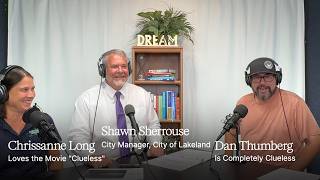
Shawn Schurouse, Lakeland's city manager, discusses the city's infrastructure needs, particularly two sewer projects designed to support 21,000 homes as the population grows. Lakeland keeps tax and utility rates in the bottom quartile compared to peer cities while planning major capital investments.
Chapters
Hey, welcome back. It is the Elevate Polk podcast, and I'm one of the hosts, Chrissanne Long, here with my buddy, pal, and expert in all things—
ah, come on, don't give me that—
Dan Thumberg.
All right, I am Dan. I, you know, I I know a little bit about something.
He knows a lot about a lot.
Need you to like and subscribe to our YouTube channel. Please follow us on Facebook at Elevate Polk. And of course we are streaming on Apple and Spotify and others that I don't know.
Yeah. Well, wherever we get picked up, we just get picked up. That's right. So that's, that's awesome.
All right.
And we're joined today by City Manager of the City of Lakeland, Shawn Schurouse. So we're going to dig into some really cool conversations around the state of the city and what is going on in Lakeland. We— our goal is to invite other city managers and other city officials to come in and talk about their cities around Polk County, but since we're starting where we are, we're starting in Lakeland. So welcome to the show, Shawn.
Great, thank you. And you're setting the bar low so the other city managers won't have any issues.
They're gonna—
they're gonna get over the bar that I'm gonna—
you guys are all gonna do great, so nothing to worry about here.
Yeah, well, thank you for the opportunity to be here with both of you. I had the chance to watch your last podcast with Tom Phillips and got a chance to catch up with Tom. Thought he did a great job.
Yeah, he did.
And so he said he brought us hats and Happy Meals.
You didn't bring anything.
I came from a city commission meeting like 10 minutes ago, so he saw— I haven't had lunch. I should have brought lunch.
He saw the one with Tom, but he hasn't seen the other one yet.
Yes, he hasn't. Well, there's one episode since that one that we just posted about, so it'll be an interesting— all right, it'll be interesting to hear your feedback on that one.
Look forward to checking it out.
We're rotating. Sometimes we do just the two of us and then sometimes we have guests. So that one was a guestless show.
Okay. I don't know if that goes well when it's guestless. We tend to have a lot better of a show when we have someone sitting in between us. If you let our minds start wandering and talking about stuff, the tough questions come out. So.
Gotcha.
So today I want to just kind of kick it off. You recently— there's several things that have happened recently in the city. One was the strategic planning session. That took place, and then there were some results that kind of came out of that through your consultants and conversations. So I want us to kind of maybe talk a little bit about that. It comes out some of in your State of the City slide deck, but then you also presented, I think, at the Chamber of Commerce for the Chamber of Commerce, the State of the City. And that's primarily what the first half of the show is going to be, just kind of dissecting some of those points, bringing them to the forefront for those that were not at that event. And then just adding maybe some more personal, you know, ideas or thoughts to, you know, I know you, when you're presenting at that level, you're kind of more very scripted, stay on, you know, have a time limit trying to get all of this information covered. We want this to be a little bit more conversational and less polished, although you will always be polished because I know you. But I just want to kind of talk through some of the talking points. And Dan, I think you've dissected a lot of these things. So can you kind of kick them off into the direction that you want to start?
Yeah. And of course, with the magic of video editing, we'll throw up some of the slides off to the side so people can actually kind of follow along when we go through some of this stuff. So just kind of, you know, state of the city. You know, I think that's the way that we want to kick it off. You know, you know, we get to the State of the Union, we get all this. The State of the Union is strong. So just kick it off for us right from the very beginning. The state of the city, how is it?
The state of the city is strong.
I love it. You know, that was easy enough, wasn't it?
It is strong, and I would say it is growing, and I don't think that's any surprise to anyone.
Right.
I also think it's becoming progressive. You know, we're dealing with issues that are literally hundreds of years old, and a lot of that infrastructure, you know, that we're dealing with, that's going to really kind of set the stage for Lakeland's future. You know, we've just gotten to a place where, again, you know, where our water and wastewater system in some places is more than 100 years old. On average, it's probably 78 to 80 years in total. You know, we're, we're, we've kind of inherited some things that we have got to correct, that we've got to fix, because that's going to be our ability, you know, to grow, but grow in a smart way. That's going to be, you know, good for the community. And so You know, I think we're being somewhat progressive in that. I mean, we have a lot of money in our capital improvement planning, you know, for, for that we're going to be spending over the next decade again to really kind of put us where we need to be so that Lakeland can grow responsibly and we can maintain the quality of life that we all enjoy so much, you know, here in Lakeland.
And we're talking about, I would say, unprecedented growth at this point in time. We've, we've had growth. We've always been a growing area. But we've just seen so much more growth, a ratio, I think, that is higher than we've ever seen in the past. Am I right?
Yeah, it's, it's, you know, we're around 124,000 population now. I've seen some Bieber reports already for this next year. That puts us up around 126,000. And so, you know, yeah, we've gone through a period of just rapid growth. And, you know, that's one of the things that might be a surprise to people, which is that, as much as we've grown, we've also in some ways been limited in how much we could grow. And it gets back to the infrastructure, right? I mean, I will tell you, popular or not, the reality is we have had businesses, we have had multifamily opportunities for development that, you know, have had to walk away for now because in some cases we don't have the capacity to be able to serve their needs. And so it's, it's also been a little bit limited, though it has still been pretty rapid.
Yeah, I mean, I know just, I live within the city and I had the trucks in my neighborhood. Was it last week or the week before where they were coming in and sleeving the sewer pipes, you know, running the new tubes in there to, you know, make them last another 100 years or whatever the case may be. And so there, it's def— it's obvious, and it's been obvious for the last couple of years that the city really has put a lot of money into infrastructure improvements to kind of, you know, update a lot of our ailing infrastructure. I didn't believe that it was 100 years old until we actually had some sewer issues over, over at the brewery. And when they popped that manhole cover and you look down in there, yeah, it's like, wow, that really is 100-year-old infrastructure right below our feet.
Yeah.
You know, but I, I think that, you know, people need to understand that Lakeland really was one of the very first major communities in all of Central Florida. I mean, we, you know, all roads were leading to Lakeland back in the day, you know, when, when Florida really was just starting to get its boom going.
Right.
And so our infrastructure really is from, from the '20s when you look at it.
Does this State of the City thing that you do, do you do this every year? So was there a different process that you went through this year that was, that is unique to— give us a story of the State of the City.
Yeah, so last year was the first time that the chamber invited me to join former Mayor Bill Muntz, and so we were at the Lake Mirror Center. It was a very large crowd and went pretty well, and so I was really pleased when the chamber reached back out this year to invite me to speak with now, you know, Mayor McCurley, which I was happy, you know, to mention the other day that, you know, following my working relationship with the former mayor, you know, to now serve as a city manager at a time when we've had our first elected female mayor is also special. And so I was really happy to be able to share the presentation with her for the chamber last week.
Okay, so we did that. And then there's also a community survey that we do every year. We've— you and I have talked a little bit about that. We saw a significant amount of greater input this year than years past. You do the community value survey every year. It has a new name now.
Yeah, yeah, we— it's been named various different things over the year. That's really kind of the kickoff to our strategic planning retreat that we just did, you know, for 2 days with the commission that we have historically done. And kick that off with the community survey. And this year, you know, was very intentional to try to ask some difficult questions that we wanted to know. And a lot of that, you know, kind of gets back to city services and what are people, you know, what's their expectation? Are they willing to pay more if we're trying to maintain the level of services or even if we want to advance or enhance them, you know, or would they rather, forego, you know, those, those cost increases, uh, and, and maybe we just, you know, continue to serve the way we are now. So questions like that were part of it. I wanted to make sure with those types of questions, which I have to say we used, um, Dr. Stephen Neely from University of South Florida. We've used him for a few years now. He does a lot of that kind of analytics type work, statistical analysis and the like, and he was complimentary and actually mentioned during the strategic planning retreat that there's a lot of cities and city managers that would have ran away from some of those questions. But we wanted— what I really wanted to happen this year, and quite frankly moving forward, is in the past we've used that to kind of gauge the satisfaction with the services that we provide.
Yeah.
Rather than that for staff, I want the commission to be able to be informed by the responses that we get from the community.
Okay.
So that when they're making budgetary decisions and other, you know, policy decisions that they have to make, they have at least some sense of what we heard from the community. So a little bit different process this year. We did have a great, over a 200% increase in responses. Still not enough.
Still low.
So if I have a wish list, that's one. I hope the community in the future, you know, our voting turnout is low. The community survey responses are low. We just, we need a, We need to cultivate a more engaged community. And we own some of that from a communication standpoint. We really stepped it up this year. And that's, I think, why we saw such a dramatic increase. But it's still not enough. So we have a lot to do. I think a lot of times, you know, we wait until it's getting close, and then we really kind of step up the effort. I think it needs to be more consistent throughout each year to try to get everyone more engaged in participating.
So I definitely took the survey.
Yep.
I did too. And the way that it came across my feed was, I believe it was a sponsored post. So if there was, you know, some advertising dollars put towards it, that would make sense as to why, you know, the survey count was so much higher. Now, I come from a customer service background. You know, I'm well-versed in the customer satisfaction surveys and the employee satisfaction surveys and all that good stuff. So when I look at an increase in the total number of surveys returned, it usually only means one of two things. People are really, really, really upset or people are really, really, really happy. So looking at that change year over year, were you able to kind of decipher from the increase in surveys, were there just people that were more vocal about their opinions or was there a change in overall customer satisfaction, if you will, amongst the city?
You know, I'm glad you mentioned that because I should have said that one of the changes in the methodology now is that in the past, if someone started a survey and did not complete the survey, it didn't get counted. It's been changed now, working with Dr. Neely, to where even if we get a partial response in a full survey, it now counts. So I think that's probably some of it, but also including some of the advertising that we did. I mean, we had people who went out to different areas in the community and libraries with paper copies and tablets for people to use. And so we really just tried to bring an awareness to everyone. But I also do think that methodology is a, is a, is a big part. As much as I want to take success for the staff who was involved in that, I think that's probably a part of the difference as well. Those partial responses now count.
Counting.
Sure. Because I mean, it was a massive survey. I know that I had to kind of take a break. I would roll through, do some questions, take a break, come back to it. But I think, you know, it took almost 30 minutes for me off and on to be able to get through it, which kudos to you guys because, you know, obviously the more data that you can get together, you know, the more advised, you know, things that you can do. It's not just like, well, you know, this is kind of a vague question and we can go ahead and extrapolate what we want from it. I mean, you guys were very pointed in what you're asking. And so I really appreciate the level of detail that went into it compared to other years.
I want to add too, over the years, one, back to our audience and the small businesses and the business community, I don't believe that that is an active effort that we take in the point that you're trying to make about getting more engaged. I always say, you know, if we want something, we have to follow along with what is going on so that we can understand. We can't just come in out of the blue, not paying attention. Well, where were you for the last 6 months? You know, as we were talking about this, now suddenly at the 11th hour, you want to come in with your ideas or your thoughts. So staying engaged and being a participating member of the community involves things like this, voting, but also taking this survey. I was pleased when I saw the results because for the first time I saw economic development, small business, yes, as one of the outcomes. So we'll get to that. But let's get into, let's get into the, the 5 strategic focus areas from your State of the City slide deck and how you guys landed on those 5 strategic focus areas.
So one of the things that, you know, we talked about at the beginning of the strategic planning retreat that in this conversation is easy to kind of get lost is that We're actually— this is kind of the second iteration of the strategic plan. So we had started this 2 years ago. That's one of the changes where now we're doing strategic planning every other year, and in the alternate year we're doing a deeper budget dive.
Okay.
And so it seems like this was the creation of a new strategic plan. It really wasn't.
Okay.
This was a review and kind of, again, a second iteration. And so most of the focus areas already existed, which comes from the city commission, the elected officials for the city. And so the 5 are infrastructure, culture, public safety, economic development, quality of life, and organizational excellence. And I would say the biggest changes, we used to have 4 areas and one of them was called culture.
Okay.
That one now is a little more better defined and really kind of into 2 areas, quality of life and then organizational excellence.
And so that breaks down quality of life for the citizens, but then organizational excellence is how the city operates.
That's right.
Okay.
Correct.
So when you look at kind of that, were there any really like callouts, like high level right from the very beginning? You know, especially when you look at kind of from a city standpoint, you know, some of the departments, were there ones that were just like, these guys are doing great, we need to wash, rinse and repeat?
Yeah, there was. But I also want to be careful about that. I understand. And I tell this story to people. Parks, recreation, cultural arts, that's always a big hit.
Yeah.
And our crew does it better than anyone. Matter of fact, I told the story this morning at the commission meeting to, to, to, to the city commission that we just had Fort Worth, Texas, which is a pretty cool place.
Mm-hmm.
And they had a citizen in Fort Worth who gave their parks and rec staff $25,000 and said, go visit cities that are known for their robust, you know, parks programs. And they used a report that was out there and they came to Lakeland. About a week ago.
That's awesome.
And we took them on a tour and made good relationships with them. But, you know, we do it better than anyone. So I want to start off by saying that to the staff is we do it better than anyone. However, you know, it's more of a popular subject, right? People love their public spaces. They love the parks that we have and the programming that we have and the rec centers that we have and the pools that we have and everything that we have. And so absolutely that stood out in the survey, you know, without surprise. Public safety, very proud of that. Our fire department and our police department fared very well in the responses that we got from the citizens. And so congratulations to both police and fire. And a couple of things about that I want to— I mentioned the other day in the State of the City that not everybody realizes is, for instance, let me start with fire department. Fire department, we have a rating, it's an ISO Insurance Services Office. It's an agency, a rating. We have a rating of 1. That is the highest and best rating that you can possibly achieve as a fire department, a fire agency. And let me tell you how really impressive that is, is out of 45,000 fire agencies in this country, there's only about 400 that have an ISO rating of 1.
Wow.
Impressive. And what that means is we're offering the best fire services we can. But what's really cool about that rating is it has a tie to your property insurance premiums.
Okay.
And so if you are serviced by a state or a department that has an ISO rating of 1, you actually get a discount on your premiums.
Oh, fantastic.
So not only is fire— Keep going, Chief Riley.
Thanks, guys.
So they're doing a great job. Police department. Most police departments have some form of accreditation. We actually have 3. Our police department maintains 3 different accreditations and they do a fantastic job. And so the survey point, you know, really demonstrated that. You know, we have been— and I tell people all the time, just, you know, Google City of Lake— City of Lakeland and just Google ranking list and see the things that we are now identified. And we're in the top 10 of just about all of them. And safe places is one of the ones that for several years now we're recognized for.
So we take that for granted. I mean, I think a lot of citizens don't really give that credence in the, you know, we want to pick everything apart. We don't really end up spending a lot of time talking about what's great because because it's, it's just invisible. Like, we just, it just, we just get to live it, right? We don't have to think about it. It's just a part of our, our daily life without it being something we have to call out. So I'm glad you called it out and were able to, to point that out. I'm, I think that's really cool to hear about the, the ISO rating of number one. And I'm always aware of like all of the different things that our police department is doing. So I think that's great.
You know, one of the things we, we all know that Lakeland is known for its parks. I mean, that is one of the reasons that that, you know, we decided to raise a family here was because it is just absolutely beautiful. You know, we live close to Common Ground. And I know whenever I have family that come in from out of town, that's the first place I'm taking them when they have their little kids with them, just because it's just such an open and accessible place for everyone. That costs money. You know, all of these things, these quality of life things, and we talked about it with Tom, is that these things cost money. And I know that we want to get a little bit into that conversation because it was part of your strategic planning session was, you know, mainly on the, on the water infrastructure, the, you know, the stormwater infrastructure. But I think when we looked as Lakeland as a whole, that when we look at our millage rates, we are low, we are very low. And it's almost, are we kind of being the loss leader in trying to have the great things that we're accustomed to, all of these wonderful parks, by not charging enough? And I think that's the conversation, right? Are we willing to continue to pay to have these nice things and to have the city of Lakeland as nice as it is? Or are we just going to kind of let things fall by the wayside?
Right. Yeah.
And let me just say, government is not immune to inflation in the market.
Right.
And so just like everyone and all of our personal budgets, the city's budget's the same way. You know, we're, we're paying much more now for sod and much more for fuel and much more for insurance and and labor costs and you name it. And so as that continues to grow and those costs grow, well, then it starts to be a little problematic for how and how much revenue we're generating. But I wanted to mention kind of back to the question before we get too far off, people love the parks program, people love our public safety. The one thing I want to be careful about is in the economic development kind of responses that we got and especially for our staff, because again, they're some of the very best, if not the very best. I think there's challenges, and even Dr. Neely talked about this, when you're having a survey like this, people, they love our parks, they love our firefighters, they love our policemen and women. When you start getting questions about permitting, I mean, nobody wakes up in the morning and says, you know what I want to do? I want to go to City Hall today and I want to pull a permit. So I think we have to temper some of kind of the responses that we get just based on things that people love and enjoy versus things that they're kind of required to do that have that regulatory feel to them. And yeah, it's hard to imagine we're going to get great feedback in those areas.
That's a great point. That's a really good point.
You know, it's kind of, you know, it's the same thing with the tax man unless you're paying Joe Tedder. I can tell you my wife absolutely loves every experience she has with Joe Tedder.
I think their tagline could be where shopping is a pleasure, similar to Publix.
I mean, they're in the old building. They might as well go ahead and do it.
Yeah, Joe's awesome. Joe is awesome. But I think where you were headed, Dan, you know, the other things that came out of the survey is people are concerned about traffic. They're concerned about growth. They're concerned about our infrastructure and our ability to, you know, offset or mitigate those things. And so that clearly came out, you know, in the surveys to no surprise, I don't think to anyone. And it goes back to my earlier comments is that, you know, it's expensive. Infrastructure, especially the physical infrastructure that people think about, you know, water, wastewater, stormwater, you know, those things. It's incredibly expensive. And so people are concerned about that. And we're all feeling some of the traffic. And, you know, there's projects underway that will help with that. And then just managing that into the future is kind of then back to quality of life, right? You know, but the unfortunate side of it is most of the time we're kind of playing catch up.
Yeah.
You know, and people don't really understand that. You know, there's a lot of people who are like, well, why did we get behind? Why, you know, why are we having to catch up? Well, part of that is because, you know, just kind of as time goes on, you're making budgetary decisions and you're prioritizing things. And sometimes, you know, hey, if you still have enough capacity in water and wastewater, well, we don't need to worry about that right now. Meantime, another year of age is going by, you know, and so it gets difficult and we are where we are. But we're, we're, we're making a lot of headway.
I would say that business owners probably have a pretty good understanding of that, right? That, that realization, like you either, you can either cut costs or increase prices. Those are your only two ways that you're going to make up money in the budget, right? That's, that's it. And then you realize that in order to upgrade your technology, upgrade whatever, you're going to have to incur those expenses. And that's going to require you to be a little leaner in certain areas. You just have those understandings as a, as a business person, recognizing we— that's why we can't have nice things sometimes. We just have to— we got to live with some of the older technology until we can get to that spot.
Well, not just that, but I mean, when you're talking about roads, it's not just the City of Lakeland, hey, go grab the paving machine, you out there, make us some new roads. You guys are working within the bounds of what the state and the federal government also need to be able to do, especially when you're dealing with anything that's FDOT-related. And, you know, they don't exactly work with the expediency, you know, there, you know, the bureaucracy is bureaucracy for a reason. And sometimes, you know, you kind of have to play within those bounds. I know that that's the reason for the South Florida, you know, the road diet, why it's taking so long. And I, I understand that, you know, we might be able to get a bump in, you know, kind of a reduction in timeline to be able to have a solution to that. But that is not just a City of Lakeland problem. You guys have to work within your state and federal counterparts to be able to get, you know, that State Road 37.
And you guys are always targeted for that, right? Like, oh, why is the city taking so long? And it's like, It sounds like a bureaucratic answer when you're like, well, it's really not us. We are waiting for the, you know, FDOT to do da da da da. Oh, well, that's likely story, right? But it's the truth. It's reality, right?
That's right. Yeah. Most people, they just, you know, they think, well, we're inside the city limits of Lakeland, so we must be on city streets. But the reality is, you know, there are state and county and city streets that are all connected to one another and within the city limits. And so the road diet is one. Do we want to touch on that? I mean, I do have some good news on that.
All right. Yeah.
Listen, I know a little bit about it, but listen, you obviously have just a little bit more inside information than I do.
Well, I will say that, you know, in almost now coming up on 6 years in the city manager role, the one thing that is consistent that I have been asked about consistently the most is about the road diet. And everybody is focused on that, and it has been an entanglement of kind of really who's responsible for it, right? It is a state road. It is a state facility, not a city facility. However, the city was part of the approval to the state when they put the concrete barriers in as a, as a test. I tell the story and I told it the other day. One time I was, I was down in Dixieland and I had eaten at Reece Cliffs and I had walked across the street. I won't say I was in one of the businesses there and I was listening to people talk and there was someone who was there from out of town and other people that were in the store was telling them, oh yeah, those things that you see out there, those are actually splash guards so that when it's raining and the cars come down the street, that doesn't splash up on our windows. And I didn't say a word.
I just—
sounds great.
Chuckled and do not engage. Let them go with that. But, you know, that's going to create for us just an opportunity for a very— another very vibrant commercial district in Dixieland that will definitely be safer for everyone, not just safer for cars and vehicles, but for pedestrians and for cyclists. You know, we've really got a great opportunity there. It has come with certainly some pains, but you know, when we agreed to do the test phase, DOT had never programmed into any of their funding cycles the money needed for the design and engineering and then for construction. And so what that tells us when we don't see that in one of their programs, then that tells us, for instance, right now That means it would not be until 2032 before they would program in for design and engineering.
Wow.
Now you've got a year and a half, 2 years of that before construction for 2 years. Okay. So we're talking, you know, getting into the late 2030s to see that project completed. But on this one, because it's been so sensitive, we actually— the city stepped in, we met with DOT, and we started negotiating. How can— is there some way we can get this advanced sooner?
Yeah.
And ultimately what happened was the city agreed First of all, we offered, look, we will manage the design and engineering work. DOT will manage that for you, and if you'll pay for it, we'll manage it. And they said, nah, that won't work. That's not enough. We're not going to be able to move the needle on funding. So then we went back to them and we said, tell you what, we'll also do, we will manage the construction for you as well. And that kind of piqued their interest.
Okay.
And then lastly, then when we started talking about some of our CRA enhancements, and where the city was going to be contributing about another $5 million toward decorative pavers and lighting and other things to really make that a recognizable district. With all of that kind of involved, DOT said, okay, we— that'll work. So they've now been able to move that funding up again where it wasn't going to start until at a minimum 2032. It is now in the 2027 DOT funding cycle. Which actually starts in July.
Okay.
So we're getting very close to being complete with design and engineering. We're going to go to construction. So right after Christmas time, beginning of this next calendar year, you're going to see shovels turning and work actually done. It'll take us probably a year and a half to 2 years to complete that project. But it's been a long time coming. Community and, you know, a lot of, a lot of people with questions and complaints and frustrations over it. But we can—
it's going to get worse before it gets better. So there's going to be that period of time that people are just going to have to— it's construction.
Construction. It is what it is.
Yeah. You know, and I think, I, you know, just for the sake of, of conversation, I think I mentioned it to you once, but, you know, really mindfully thinking, how can we make sure that we're supporting those businesses while that construction is underway? You know, just even if it's, you know, it's, we going, it's unprecedented. It's never happened. Hopefully it never has to happen again. Right. But then we, we take our, you know, effort and we say, right, well, let's wrap around some things that we can do for those businesses. Maybe give them a shout out. Through some channels on social media. Let's, you know, offer some ideas where the city staff can maybe go eat lunch and have a little bit of an extra because they're not going in the downtown. Whatever we can do to just make conversations relevant to supporting them when those— and I'll remind you when that actually happens because it's a while away.
Along with that, rather than just reminding me, and I mean, you did it just a moment ago, but I think that's another thing that we need. And when we talk about— and I know later we're going to talk more about kind of small business support Look, I've never ran a business. I mean, I run a large local government and it's like a business, but in terms of, you know, in terms of running a business where you are the owner, you know, that's not— most of our staff, probably if any, have that experience. So I say that to say, just like you did a moment ago, we don't know what we don't know. So come forward with those suggestions and let's talk about what things we can do to try to help as we go through that, you know, process of really redesigning, you know, rebuilding that Dixieland corridor.
Yeah, I'm glad you said that. I think it's important. I think sometimes it's just recognizing and acknowledging, hey, you know, we see you, it sucks, we wish we could do something about it, but we're going to come and buy something this weekend just because we care, you know, like that's sometimes all that we need. You know, there's, there's, it's just acknowledging it. So thank you for that. All right, let's, let's go.
I know we're going to go move into part 2 and we want to talk about economic development. Yeah, I know we want to take a little bit of a break. Yes, we're going to give these people a little bit of a break. Is there anything you want to cover before we go ahead and we run that fantastic commercial for CFLBE, which we're going to talk about in segment 2?
Well, I do want to say something that came to mind and I didn't want to interrupt the flow, but while we are sitting in traffic, there's this really cool podcast that people can listen to. So we are providing solutions to sometimes some of that over— overwhelming traffic that we're dealing with. So podcasts are a great thing.
What podcast is that?
This podcast called Elevate Polk.
Oh, this one right here?
Yeah.
Oh, the 17 people that listen to it?
No, there's more than that. I'm getting messages all the time from people. They're like, hey, I really— I had some questions about the last one that I thought were pretty interesting.
So yes, those were—
we're getting there. We're getting there.
No, we are 100%. All right, cool. We're gonna go ahead and take a little bit of a break. Stay with us. Uh, CFLBE commercial coming up, and we're gonna talk about it on the backside. See you later.
See you in a minute.
In 2025, you leveled up. Now it's time to break through. The 2026 Central Florida Business Expo, September 29th and 30th at the RP Funding Center in Lakeland, Florida, right in the heart of the I-4 corridor. Connect with hundreds of business owners in a massive exhibit hall. Learn from purpose experts, bestselling authors, TEDx speakers, and Inc. 5000 CEOs delivering keynotes you will not want to miss. Unlock the strategies, the connections, and the confidence to lead real transformational growth. This is your moment. Breakthrough, September 29th and 30th, 2026, at the RP Funding Center in Lakeland. Sponsor and exhibitor registration is open now at cflbe.com.
If you're running a small business, you already know there's never enough time in your day. It's 3 PM.io builds custom automations and workflows that save you time and money.
Stop working in your business and start working on your business.
Go to it's 3 PM.io to schedule a call today.
All right, and we're back. Thank you so much for sticking with us and those amazing commercials. We talked about CFLBE, and we're going to get into that because this is coming up here in September. And I know, Chrissanne, this is your baby over here, but you are not just doing it alone. You're doing it in conjunction with the City of Lakeland. So I definitely want to make sure that we touch on that.
Strategic partnership. I'm going to back up for a second though. I mentioned, I think on our first episode, kind of a little bit of the history of Chrissanne Long kind of always talking about where do small businesses fit in this conversation? You know, why aren't they— why don't they get a slide? I told the story on the first episode of being in Leadership Lakeland with Jason Willey, and he was kind of helping with the slide deck on Economic Lakeland Economic Development Day. And I'm watching the slides and sitting on the bus with him. I'm like, there wasn't even a bullet point at that point in time for small business entrepreneurship, any of that. It was all, you know, square footage and high, high skill, high wage, and a lot of that important stuff. But I'm like, someday I want there to be some conversations around small business and entrepreneurship. And so I think, you know, I just can't— I always describe myself as like the woodpecker who's like, don't forget, don't forget, we got to keep talking about these things. So it's kind of cool to start to see some things starting to move in the direction that they are with with, you know, there now being a department called the Business Resource Office. We'll talk about that. Conversations that we have had about, you know, really you wanting to position Lakeland as, you know, the resource, you know, the RP Funding Center, the amenities that the RP Funding Center has. And so that idea that came to you a couple of years ago of what can we do to kind of create a space that allows those entrepreneurs to come and be connected. Is now the Central Florida Business Expo. And so through conversations like that, so we've got to stay with things long enough. I guess my point is like, stay with things long enough to get them to a point where, you know, we're not building a highway, we're not doing a road diet, but we're doing some things that are really going to take some time to, for things to curve in that direction.
We're building a pipeline for the creation of small businesses, or at least to allow them to kind of ease the burden of getting into business. You know, the small business owners already have enough on their plate. It's like, I'm coming out, you know, I'm getting a second more mortgage on my house, or I'm spending my life savings, you know, I'm pouring everything I have into this, or I'm trying to build it while trying to, you know, have another job and support a family. And it's like, is there something that the city can do to kind of ease some of the pains of going into small business? Not to make it so easy that there are no barriers to entry by any means, because you want skin in the game. But that skin in the game doesn't need to be the friction that can be bureaucracy and red tape. And, and just from personal experience, I know what looked like, you know, almost 2 years for us to get Swan Brewing open when really that should have been a year or less, even with the rehabilitation and stuff that we went on. It was just kind of some of the processes and really almost a complete lack of any kind of business resource office or anything to kind of help navigate the system. Now, since then, because that was eons ago, you know, the system has changed. You know, there's new IMS that allows you to go in and, you know, know exactly where you are at all times, you know, to know where your permitting stands and to know where this stands. And it's not just making a phone call, hey, you know, turn this in 4 weeks ago, you know, whose desk is it on now? You can see exactly where you stand at any given point in time.
So, and through the conversation about permitting and ownership, like, business owners are relying on contractors to do certain things, and they expect that they're happening that way. And I've heard this very multiple variations of this story. So this isn't any one particular thing. But then the contractor blames the city and then the business owner thinks it's the city, but it's really the contractor who didn't do whatever it was that they needed to do. And so the IMS and some of these systems allow it to be a little bit more transparent for that business owner to have accountability of the contractors. So I love that progression. I love that things are moving in that direction. But talk about how BRO, Business Resource, you guys call it LBRO, how that came to be, what's kind of going on with that, what it's, what what it's designed to do. I know back in the day when Howard Wiggs was running for mayor, he was looking for there to be an ombudsman, kind of a person in the city that would help kind of facilitate things similarly to what was already being done for very large corporations. And so it seems like maybe it's not an ombudsman, but it seems like this is a variation of that.
Well, and that's kind of the position that Jason was filling for the longest time.
Right.
You know, right. And then he was there, don't get me wrong.
Yeah.
He was there when I— but he was still very limited in what he could do. You know, for small businesses, because we really were looking at attracting large businesses at the time. You know, small business is going to just like, yeah, go make it happen.
Go do it.
Yeah, go just compete.
What do you need us for, right?
Well, so everything that was mentioned there really is kind of a response to the effort or a response to the call, I would want to say. And I don't know if it's been advocates like the two of you. I think that's certainly part of it. I'm also, in my opinion, I think through the COVID experience, I think people really then kind of connected with the small businesses and that things that they missed that weren't available to them during COVID And so, you know, that I think that also generated some, you know, momentum or some energy. And, you know, and so at the city, you know, but believe it or not, we do not want to be regulators. We would rather be resources. And Chrissanne Long knows that's been my tagline now for a few years is that is that's exactly what we want to be resources, not regulators. We are charged with regulation. There's Florida building codes, there's laws, there's things that we have to make sure are accommodated. And so there is that part of what we do, but that's not all that we want to do. We want to be that resource. So both of the things that we've talked about, the business expo and the business resource office, are again a response to that call. So from the, from the, from the business expo, I'll start there, you know, is just the opportunity for how can we all get together in a big room, you know, from all different types of services, whether it's governmental, or, you know, I met a guy who makes, uses old pallet and wood and makes, you know, chairs that I now have on my dock. So just that ability to kind of connect and be a part of being the convener for that. And so hosting an FDRP Funding Center has gone well. We'll be, what, in our third year coming up? We started off year one, I think we had about 800 attendees or just over. This last one we had over 1,000. We've grown in terms of exhibitors and everything else. And so it just, it seems to be a good, honest effort by everybody involved to just interact with one another and see how we can, we can all support one another. So that's part of it. The other, the business resource office and kind of what are they and what do they do? It's a lot of what you talked about a moment ago, rather than it just being Jason Willey, who is awesome, fantastic. But, you know, what kind of team did we need to further that effort? You mentioned the IMS. And so now a part of that is the design review team. So that's a challenge for the contractors to come in, sit around the table with all the different reviewers from throughout the city, whether it's building code reviewers or it's fire department reviewers or it's, you know, electric reviewers to try to bring all that together so that we don't have the business owner or especially the person who's trying to start a business who's got to kind of figure out how to work around, you know, that circle of different people to interact with. And so the Business Resource Office, I've been kind of describing it, I almost want it to be like the concierge service, you know. And so back to that, come in and tell us what it is you want to accomplish. If you want to start a business or you're looking to expand, come in and start having, just start with that.
Yeah.
And let us figure out how we can help you maneuver through that entire process. And so, you know, they've had some good success so far. There's been a lot of businesses that they have been able to help get started up. I mentioned at the chamber the other day and even had some slides that would show a few of the others that are coming to Lakeland very soon that have been interacting with the Business Resource Office to again just help them. How can we help you? What do you need? And we want to be that, that concierge service.
It's just— and I don't know if there's one thing that small business owners need, you know, it's ever— it's going to be kind of individualized. But even having these initial conversations, is there anything that kind of is just like, it stands out? It's like, this is something that, you know, we might even like, not necessarily have a dedicated team, but maybe have dedicated processes for looking at or for taking care of for small business owners. So for example, navigating the permitting process, you know, it regard— it, it's a different permitting process if you're just moving into a vanilla space, right? Everything is built out. You're probably not having to put any kind of, you know, structure in, you're not having to move any sinks or put in any bathrooms or anything. It's pretty cut and dry, right? You know, you're going to get your CO, you go, you know, you go nail a couple of things up on the wall, put your cash register up, get your CO, you're ready for business, right? A little different process if, okay, well, you know, this isn't necessarily a vanilla space. I might have to move this over here. Maybe a few changes to some of the infrastructure. I need to go get, you know, some permits pulled to move electrical or move some plumbing, get inspection. Get your stuff in place.
I need a grease trap.
Grease trap, whatever the case may be.
I need some things that are going to be required.
Right. And then you have situations like where we're at, where the building probably was, you know, should have been torn down at some point, but we decided to save it because, you know, we felt the history really told the story of what we were trying to do. So it was a pretty significant renovation that we had to go through in converting an old auto repair shop into you know, a lakefront brewery.
Yeah.
You know, so there, you know, you have different levels of what small business owners are going to need. But not only that, you have business owners that are coming in, this might be their second or third business. You know, they know what it's going to take. You know, they get all their stuff together, they get all their paperwork, they got their GC ready to go. And then you've got, this is my first business, you know, I need some help. And, you know, they might have reached out to SCORE, they might have reached out to someone in the chamber for help. But really they're just coming with the little puppy dog eyes and not really knowing, you know, what to do.
I have a dream, but I don't even know how I'm going to get it started.
Right. It's like, so I don't know if there's anything in there that you kind of find, you know, happens amongst all of those different people. And if there's something that maybe you guys can kind of focus on to kind of help, or if there's, if there's something really within the BRO itself that's like, we understand how to be able to identify that and to be able to point you in the direction that you need.
Yeah, so, you know, other than— I think probably what I said, you know, at this point it's just come in and let us wrap our arms around you. Let us be a resource. And you touched on it, Dan, it's— no two situations are alike, right? I mean, you may have one that's just clean vanilla space, you know, it's easy and simplified. You may have one that's in a historic scenario and all of the codes that apply to that. You know, we might also be able to help someone find a location.
Yeah.
You know, if they need financial assistance and there's an opportunity to connect them and they might be interested in a property that's in one of the CRA districts, you know, there's some funding that can, that might be available to them. So it's really every situation is unique, but it's kind of back to almost everything that we do, right? Like communication is key. So just come in, meet with us, let us hear what it is you want to accomplish, and let us be that resource to help you maneuver through the process. Is it easy? No. And a lot of times, you know what happens, and I think you probably experienced it. It's one thing to sit around the table with just a white sheet of paper, and now we're going through a, you know, a design review team type scenario. But, you know, along that way, you're going to start one way, and then you're going to find something that changes that plan. And now everybody's got to shift, and that's where it gets kind of frustrating. But to the best we can, we want to be able to try to provide to a business owner, you know, everything we can upfront so that there's— there, we want to lessen as many surprises as we can through the process. But it is truly just unique. I mean, we need to sit down and have that conversation with every different business owner to help determine what we can do to help get them on their way. Way.
And the impetus is on the business owner, right? I think the question has been for years, where do I even start, right? So I think the LDDA at one point in time had a little, you know, Doing Business in Lakeland guide and the PDF and things like that. So it's like all of these different efforts, but to me, when it— when the true source is the city where so many things can get bogged down, and if you start there and you ask the right questions and you're, you know, you're kind of anticipating where you're going to be going instead of like just going through the slog as you go. You know, you'll, you'll get some guidance from people who know the way or can guide you in the path that you need to be guided. And I've said for many, many years, I've said sometimes success looks like deciding not to start a business because you're not going to sink all of your money into that. You might realize after that conversation or, you know, going down the path with the city who's there to kind of wrap these services and conversations around you to go, you know what, This isn't what I thought it was going to be. And that's a good thing for people to say this. I'm not going to sink my entire retirement into starting a business and then it not work out. But I know that, you know, we've heard of stories of people not anticipating how long it's going to take and then signing a lease and then those dollars going out month after month after month without any ability to recoup those dollars and get the, you know, the business open because they didn't have have anybody to ask those questions of. So I think as regulators, you guys know, oh wait, you can't do that. Oh wait, this isn't going to work. Oh, make sure that this is, you know, something that you, or you need to talk to this person. All of that happening just gives me joy, right? That there's somebody there. You can call Luis Cruz at the City of Lakeland, have this conversation with him. He can put you in contact with the people in the city and things start to move, even though the city isn't changing anything about the way the regulations are being done. They can just start to move in a way that seems like, oh wow, they care about my, my project, they care about what I'm doing.
Yeah, but what time— what time is money, right? So any, any amount of time you can reduce from the business owner having the idea, coming to the city and saying I want to do this, to the time that they can open their doors is, is one step closer to success for them. You know, if you can remove 3 months, 4 months, 5 months, that might be the make-or-break period for them, right?
So, well, and like I said, you know, when you go back to the old process versus what we have today, it was truly, you know, you would go in and, and who would you go to, right? You know, you would go start off trying to pull a permit, yeah, but you didn't really understand that you needed to also go over to LE and see someone over there and go to fire because there's all these different codes and regulations that we have to assure are met. And that's where it's different now, that we can, we can remove a lot of that by just come in Let us meet with you and then we will be that person to kind of help you maneuver. And in many cases, we'll be the ones even having the conversation if we need to call over to fire or to LE or to wherever, to water and wastewater.
Yeah.
You know, we'll be the kind of the convener to step in and help that out.
You talked a little bit about CRA and for anyone who has not had to work within the city or within a city, a CRA is a Community Redevelopment Agency. And the idea for a Community Redevelopment Agency is to go in and to provide support for different areas of town, not necessarily blighted areas, but areas that might need some economic attention to be able to go in and inject some, some cash into the situation, whether that be through, you know, enhancing streetscapes or providing incentives for facade improvements or whatever the case may be. There's all kinds of different ways that the CRA can help, right? Right. So, uh, for anybody who's listening, for the City of Lakeland, there are 3 main CRA zones, correct? We have Dixieland, we have Downtown, and we have the Midtown District, correct? Midtown being the largest area-wise out of all of them, correct? And, uh, and if you have been following along, then you understand that the CRA has gone through and done a lot of workshops over the last year, kind of, uh, highlighting some of the ideas that they have for the redevelopment, um, programs going forward, right? And so I know that they just released the Dixieland plan or the proposed Dixieland plan. I know that there was some conversations that you and I went to for downtown, downtown specifically, and then I know downtown is coming soon. And Chrissanne, I know you can speak a lot more intelligently about CRA for reasons, but, but let's, let's get into that a little bit then. Let's talk about CRA and kind of the city's kind of where our head is at, you know, what the ideas behind the CRA are and where we're putting our money, where does that tax dollars come from, and what are we actually looking at doing, you know, within these zones. So Chrissanne, I'll let you guys take this one.
Well, I think his answer will be pretty quick because I think he's just going to defer to staff and say, you know, maybe you should have Valerie on the show. But I want you to, I want you to speak to like your perspective on where the CRA fits within the city and you already kind of mentioned the CRA as far as, oh, you're— maybe you're looking for property, maybe we can point you in that direction. But, you know, go ahead and give your response. And then I think we'll, we'll, we'll have a follow-up.
Yeah. So maybe to kind of kick off, you know, what, what is a CRA and how does it work? And that is, you know, in a CRA, a Community Redevelopment Area and a Community Redevelopment Agency, a board, you know, that has some input into ultimately in our case, We have an advisory board and they make recommendations to the CRA board, which is the city commission. And so what happens in a CRA district is it's really, it's a taxing district. And so you have to define the boundaries of it. And then what happens is in, in year 1, when you start a CRA, whatever revenue and whatever the tax values were, they're, they're frozen. Okay. And everything that they were generating continues to go into to, for instance, the general fund. But then what happens is after that initial year, everything in terms of increased value and the increased tax revenue coming from that value then gets reinvested right back into that defined district. And so you have to determine different types of blight that you're trying to address through a CRA. And the whole kind of premise is that as you're investing those tax increment dollars, it is also then improving the area, which is then generating even more revenue to be reinvested back into that district to try to overcome those different types of blight that's in the original CRA plans. That's kind of a technical side of how we start it. That's good.
Well, no, instead of just hiding the money inside the general fund and being used for everything, it's actually taking it and reinvesting it intentionally. And not only that, but as you're reinvesting it, seeing the growth growth, and then continuing to reinvest appropriately, you know, but that has to— you have to continue to recertify that, correct? Every so many years, you have to, you know, otherwise—
there it will— each of ours, we'll get into that on another show. But yes, there is a process for the extension of a CRA district, which may or may not continue to happen going forward. But I was gonna say, just understanding, just to restate that, The whole goal is to reduce the slum and blight of that area. And so there are very many specific ways that it can be done. And then the things that you can't do, because there's— this is the way that the law reads that you're able to do those things. So it's very like getting into the technical weeds, which is a completely different conversation. But the fact that that resource exists, that there is a process to go through and how it has helped, I mean, it It has helped a lot of businesses, and a lot of businesses don't know that those resources are available to them until later, right? So it's hopefully the existence of the LBRO will help people to realize if I go to the city, they will let me know of things that I might not otherwise know about. So I think that's the importance of bringing that into this conversation.
Well, they are important because there are some significant incentives. And like I said, it's not just from, you know, sidewalk improvement grants, you know, hey, making the outside of the building look better. You know, at one point we had tax incremental financing that was even available for small business owners That wasn't just, hey, we're going to go build this massive warehouse and we're going to get a TIF for the next 5 years. You know, if you were going in and actually purchasing or rehabbing your property, you could have gotten a 5-year TIF. I know at least in the downtown district we were building, that's the way that it was.
Yeah.
So, you know, it might be one of those things that, you know, kind of makes it or breaks it for small business owners. And so just if anybody didn't know what a CRA was.
And it's kind of everything in between that was all just mentioned. I mean, it's everything from from the CRA paying for, you know, these different planning documents that kind of determine, you know, how can we advance the economic development of that particular district, all the way down to the things that were mentioned like paver bricks and decorative lighting and, you know, benches that kind of create the character of a particular community. It's intended and can be used for all of those things.
Well, and it's also, it kind of helps keep the aesthetic aesthetic as you're going through the city, right? See, and it's cool when you have different neighborhoods that have, you know, look different, you know, and all that. But essentially you still want to be able to keep that city aesthetic when you're going from one part of town to the other. And I think that that really is kind of what the CRA kind of helps to rein in just a little bit, you know, to make sure that we're matching that aesthetic. Let's talk about doing business in Lakeland, if you want to touch on that one a little bit.
Well, if we want to, you know, in terms of the city and reinvesting in you know, doing business with the businesses that are in our community. We've had some really good success there over the last few years, and, you know, congratulations to the, our City Commission, who a few years ago wanted to enhance our local vendor preference. And so we've had a lot of success in the last couple years with that and what that means in terms of the things, the goods and services that that the city, local government, needs to purchase. In 2025, we spent almost $97 million with vendors in Lakeland, and we're only just at kind of the halfway mark this year, and we've spent about $28 million in the community. So, you know, one of the ways that the city's going about kind of reinvesting in the, in the community and the economic development in the community is making sure that we're spending when we can with vendors that are also, you know, in the Lakeland community.
Talk a little bit about how people can become a vendor with the City of Lakeland. For any of those that might say, hey, I have these widgets that would be wonderful for you guys to be able to procure, how do I go about getting part of the procurement process or getting into the city?
Awesome. Good, great question. So if you go to our website and you can kind of navigate to iSupplier iSupplier. And in iSupplier, there's kind of a registration process that you go through to register your business. And then once you've registered, if you then are providing the types of goods and services that the city needs at some point, then we do a mailout to all of those who registered so that they know, hey, we've got a request for proposal or a request for qualifications, or, you know, we're looking to purchase whatever. And, and then, and then people can respond to that.
And some of these requests for qualifications and requests for proposals come in not this form of request for widgets if you have physical products, but there are also services that are needed and needed to be provided. And each government agency in Polk County has their own procurement process. So like if you wanted to do business with the City of Lakeland, you go through the iSupplier through the City of Lakeland. If you wanted to do business with Polk County Schools, they have a process. Polk County Sheriff has a process. Polk County government has a process. And so understanding that and realizing, you know, if you really want to get into government, you know, providing services to the government, it's a— it could be very lucrative. It could be a great opportunity, you know, and it also can be a lot of work. You actually need to have a person there to read those emails and understand what is this, you know, request for qualifications or request for a proposal asking. But I think it's very relevant for a lot of small businesses to understand because of of the fact that local preference is a priority of our commission. And they're wanting to make an effort to make sure that if you are a local vendor, that you can qualify to do some of these jobs locally, you get some points basically in the process in your favor over someone who's not local to Lakeland or local to Polk County.
Yeah, I was actually gonna be, my next question is, is there local preference? You know, if two vendors came in and basically, you know, price was identical, you know, or service commitment was identical, but this guy is based here in Lakeland and this guy's, you know, based here in South Florida, you know, is, is local preference going to have any kind of impact whatsoever?
Yeah.
Yes. And, and Chrissanne mentioned it.
Yeah.
The selection committees who go through those processes, there's actual points that are awarded to, uh, businesses that have a location within the city limits of Lakeland. Another thing that's interesting, kind of connecting to something Chrissanne said is We also piggyback a lot. So, you know, we will be looking for some goods and services and we will find out that the sheriff's, the statewide sheriff's purchasing program has done business and purchased something from a vendor. And so we can then use that rather than having to go through the request for proposal scenario. So the good news is it works the other way. If Lakeland has chosen to do business with someone, then the other governmental agencies can piggyback off of our contracts. And so you can find yourself expanding and providing goods and services even outside of Lakeland, Polk County, really anywhere throughout the state.
I've seen, following some that I just pay attention to, you basically, it goes by your, what's the code, what's the industry?
Your NAICS?
Yes, thank you.
You're welcome.
Your NAICS code, and you enter that information into the iSupplier, and then they start to send you it sends you things that would be relevant based on your NAICS code. And I get these emails and it's like sometimes it's events, you know, like they are needing support with event promotion, they're needing support with different things. So it's not like just fence or contractor type businesses. It's like other services that are needed throughout, throughout the year. So it's really something worth exploring if that's a part of your business that you are looking to, to find some new revenue streams.
You guys need to buy massive quantities of beer by any chance?
Not on the clock.
As we start to land the plane, as I like to say, I have kind of just one question that I want to float at you, Sean. There's a lot of conversations out there about different initiatives that have become important to us in Lakeland. We have bike-friendly, we have age-friendly, we have pedestrian-friendly, we have all these different programs. And I think these are like national programs that you go through and you get, you know, this process that you go and you check off all the boxes and then you, you apply and you get these things. Can you speak to some of those programs? Because I want to know if there is a small business-friendly certification that exists on the federal level. I know you probably might not know right off the top of your head, but I know that I kind of want to know how did we become age-friendly, how did we become pedestrian-friendly, bike-friendly, or whatever other things? And, and are there are programs that maybe the LBRO office can start to look at that can put us on the map to be the most business-friendly community in, you know, Florida or the country? Because, you know, that's what I would like to see.
Yeah, I don't know.
It's an out of left field question. He's used to them for me. So I'm just, I'm seeing what you got.
You're gonna need to edit this one for sure. You know, what I would say is something that I mentioned earlier, you know, a lot of those things that you're talking about are born from different advocacy groups, right? So people that are into cycling, well, you know, if we're bike-friendly, you know, typically we'll connect to some advocacy like that. We have all those different kinds of, you know, designations. Some of it is also related more specifically to the city government. You know, like we're a Tree City USA. We've enjoyed that for many years because of the work that we do, you know, with Parks and Recreation and Public Works maintaining all of that. So a lot of that has to do with advocacy. You know, I don't know that there would be anything that it would— if it's positive for Lakeland, certainly I think that the city and city staff would be happy to be part of any of that movement toward any of those programs that we may know. That if it's, if it's a small business community and Chrissanne Long is advocating for that and wants to talk with the city and work with city staff, you know, toward promoting that that as long as it seems, you know, beneficial. We're, you know, we— I don't think we have any restrictions on the good things that we're willing to work on for the community.
Let's go change the world.
Let's do it.
Yeah.
Yeah.
Before we get out of here, real quick, what do we still need to work on?
What do we still need to work on? I've talked about infrastructure, and we're going to be working on that for a good I tell a lot of the city staff that I really think that it's going to be our legacy, is that the current city staff that we have, we're going to be the ones who had to, you know, because of growth, because of aging infrastructure, you know, we had to solve that problem. It's expensive, takes a lot of time. We've talked about that throughout the episode today. It's not sexy, but it is, you know, it is our future. So, you know, just to give you kind of an example of that, that. Right now we're in the— with our sewer system, we're in the Western Trunkline Project, and once that's completed or near completion, we're going to start on the Eastern Trunkline, and that's going to provide the sewer services that are needed for the community for the future. So don't jump out of your seats, and for everybody watching, don't throw your phones because I'm just going to talk about an equivalency. I'm not saying this is what's going to happen. But for instance, in those two projects that I just mentioned, the Western and the Eastern, that will provide enough sewer services for the equivalent of about 21,000 homes. Now again, I'm not saying 21,000 homes are going to be built because of this, but it's an equivalency. There will certainly be commercial businesses, there will be multifamily apartments and hotels and the like that will all connect to that, but the equivalency of that is kind of speaks to the future and, and what, how we're going to grow in the future. And we're not going to be able to unless we have the capacity and the infrastructure system to serve all of that. So I think that's, we just have to keep our eye on the ball on that one. And, and it, and it's not, it's not the most fun thing, but it's critical. I mean, we have to have it.
Well, I mean, it's Lakeland's not going to stop growing. As much as we want to say, you know, stop building, stop building, give me my old Florida back, all of that, it's not going to stop. You know, we are going to continue to be the place that people want to go to. You know, we have all of the natural resources, we have all of the beautiful parks, we have all of these things that we enjoy. Others are finding they enjoy it too. So we either spend the money now and we go ahead and build out the infrastructure to be able to accommodate them, or we're going to be constantly playing catch Yeah, I mean, that's essentially where we're at, right?
Yeah, absolutely, absolutely. And, you know, the other thing that kind of goes along with that is back to, you know, talking about cost and how much all of those things cost and how do we pay for that. And so that's one of the things that I want to take an opportunity to mention because I try to when I go around and speak, because I don't think the community always realizes it, but we're constantly benchmarking what our governmental services cost our citizens and customers. And and we fare extremely well. Most everybody, for some reason, at least kind of with me as the city manager there, they seem to focus on, you know, what our tax millage, you know, rate is. And so we compare that. We have benchmarking that we do against other cities with electric utilities. We do a comparison that's based on kind of population peers. We do a comparison, the I-4 corridor, and, you know, our tax rate, we're in the bottom quartile of all of those comparisons. And when I tell you in the bottom. We're at the very bottom. There's, there's one or two cities that might be lower than we are, you know, but, but we're highly competitive. When we look at our water and wastewater rates, even with built-in increases that we have over the next several years, we're still in the bottom third. Lakeland Electric is in the bottom quartile. We're a very affordable, effective government, and a lot of that also then ties into quality of life. So back to kind of all the growth Well, when you have the quality of life that we have and you have it at the affordable level that we have it, people want to, they want to come live.
They want to be here.
That's what I'm saying.
It's like the secret is out, y'all. I'm sorry. They ain't going to stop.
Can't put that genie back in the bottle.
So, but that, that's also just a testament to the city staff that does such a great job and operates efficiently so that we can serve the public at those price points or those cost levels that I'm referring to where we're in the bottom quartile of just about every comparison that you would, uh, you would take a look at.
And I know you guys try your hardest to make sure that we can keep the cost of living as low as possible. The one thing that, you know, I always look at, and this is the business owner in me, is like, how long can we continue to survive like that? You know, it is the loss leader approach. Walmart did it great for the longest time until they couldn't, right? You know, you see the loss leader approach kind of just works until just, it doesn't. At some point, are we just, are we going to get there to where it's like, you know, our population has gotten so big, we've got this population who is accustomed to having all of these quality of life things. The bill comes due. I mean, we talked about it with Citrus Connection too, at some point. And I know, you know, looking down the line, and that conversation's not there yet, but we should start having it, is there could be a potential loss of revenue. And that's going to, you know, make an even tighter budget, you know, are we going to have to make some changes And I know that these are long-term conversations, not something that we necessarily need to answer here because you're just right down the road. We can just ask you to come back in there and be on the podcast. But, you know, these, these are things that I know are constantly going through you guys' mind as well. You know, making sure that we can keep things as, as cost effective as possible, but also be realistic, you know, in long-term projections. If we want to continue to have the quality of life that we have, to be able to grow Lakeland the way that we're growing it and to be able to keep up with our infrastructure We're gonna have to pay for it somehow.
Yes. And I want to bring up one point. I'm glad you brought that up about the benchmarking, because as we were preparing for this show, we mentioned on a previous episode the Innovation Index, and we tried to do some statistical comparisons. And one of the things that's, that's interesting, and I find it fascinating when you put the cities that you benchmark against on slides, or you have these conversations about— I think Gainesville comes up a lot, like Gainesville is, you know, very much which, you know, one of that we use to compare to. It's okay, Gainesville is a city, it doesn't only have to do with the Gators. But what I did was I tried to compare, and Gainesville is the only one that I was able to compare to from the Innovation Index because we're looking at it from an MSA to an MSA. And when you pull some of these other cities, you had, I think you had Davie in there, I think you had, you know, I can't remember, West Palm, or, you know, just some different cities and they all kind of fall into different MSAs. So they're individually not comparable because you're now lumping Kissimmee with Orlando, you're lumping—
it's not an apples to apples—
Sanford with Orlando. So you, you just really can't extract, which makes it really kind of interesting and unique because we're the Lakeland-Winter Haven MSA. And so it's kind of like we do have our own MSA, our own metro— metropolitan sampling, whatever. What does MSA stand for?
Service area. Metro area?
Metropolitan service area?
Statistical area.
Statistical area. Yeah. So it's just fascinating that these are the things that are going on, but I'm going to still continue to try and find ways to benchmark us in the entrepreneurial innovation kind of standpoint, but it isn't easy. And so congratulations to you for what you do do to— I said do do.
Oh, that's definitely going to be a GIF.
Trust me. Congratulations for what you do to make sure that we're looking at other areas that are doing things well, right? Because if I think if we sit ourselves inside of an echo chamber, we know, look how great we are, woohoo, we're not going to be able to continue to grow well.
Yeah, that's perfect. And be careful because I'll get on my soapbox and we will go extremely well. But I will say, and I talk about that a lot, and I talk about that with our affected officials a lot. Benchmarking is one of the best ways to compare because everybody's structured differently. It's kind of a matrix, you know. I'll give you an example. Stormwater rates, which we recently increased, though we're still one of the lowest. We increased it, but it kept bothering me that every time that I was looking at the comparisons, Jacksonville continued to be lower than us, and I could not figure that out. So I got to looking into it and I found out why. Because Jacksonville subsidizes their stormwater cost from their general fund. Ah, but that might be why their millage rate is like up over 11 points where we're, you know, down at 5.5.
Yeah, but you have to live in Jacksonville.
So, but you know, all of this goes back to, you know, all this discussion about property taxes and what's going to happen there. And, you know, the one thing that I would say about that is it is a quality quality of life issue. The things that we've talked about, what we pay for out of the general fund, you know, I mean, um, it is going to be quality of life. It is, can we continue with the landscaping type things that we do and have the parks the way that they look and the programming the way that it is? All of these things, it's back to that quality of life issue. And what I don't like about the conversation, or what concerns me about the conversation, is, you know, it's kind of this federal-level kind of Doge scenario, and we hear about that happening in Florida, and they go around and they claim, you know, well, we've got all these billions of dollars that we found in wasteful spending. Well, some of that may be true. Like, I've read about some kind of grant that was for therapeutic art and some other kind of grant that was for, you know, a movie that was filmed in one of the cities, and it was like a forgettable movie, and they spent like half a million $1 million. And so those things don't happen in Lakeland. I can assure you they don't happen in Lakeland, you know. And so look at where we are in terms of our tax rate. And I wish in the conversation that's going on at the state level now related to property taxes is, you know, fine, then, then take all the cities and, and kind of array what their tax rates are and take a look at the ones that are above the median on that. Maybe that's who you need to look at.
You look—
because it's not happening in Lakeland.
I, I, I'm such a nerd. I went through the entire budget I looked at the budget last week and I tried to look for things that were just like irregularities. I mean, the budget looked clean. You know, it looked like there was, you know, some areas where we were underspending and probably could have shifted a little bit. But I mean, you guys run a pretty tight ship over there.
And we have room. When I talk about being in the lowest quartile on almost everything except water and wastewater, we're in the lowest third. There's room in there that if we need to make adjustments, we will still stay in the bottom quartile or bottom third, even if we have to make those, those rate adjustments. But I also want to be careful about, you know, the conversation around what is wasteful spending, because kind of back to that, you know, DOJ will announce all this money that they found, and then you hear about some of the things that I mentioned a moment ago. But there was one that really piqued my interest, was they talked about Orlando and how Orlando had paid like half a million dollars for a tree tree study and how that seems kind of wasteful. Like, why would you inventory your trees? What's left out of that discussion is now there are FEMA regulations that when we have a storm go through and we have to go out there and clean that up and remove tree— well, you have to have the grid coordinates of each of those trees in order to get reimbursement through FEMA. So there's an example where somebody can look at the title of that and say, a tree inventory, that's absurd. Why would you spend half a million $1,000. But the real answer is the one that I just gave. And not everybody understands. But then people say, well, that's just wasteful spending. Well, is it?
Well, no, it's just people love headlines.
Well, that is true too.
There's a lot of truth to that.
All right. Well, I'm grateful for you to be on the show, to spend your time with us, to skip your lunch. Hopefully you get a chance to eat at some point today. And just, we will definitely want to have you back at some point in time. But just thank you. Thank you for being Thank you.
Well, I appreciate the opportunity to be here with both of you, both good friends, and hopefully I didn't bore you to death.
No, we love talking about it.
Or the viewers today.
All right, thank you again for watching Elevate Polk. I'm Dan, this is Chrissanne Long, this is Sean Long.
Please see you on the next show.
Like and subscribe to our YouTube channel. I'm not even going to read that whole thing again. I'll put it in the, I'll put it in the end card.
If you don't subscribe, you don't know when we're live or when we have a new podcast cast, so please do so.
There you go.
There you go.
Sounds great. Thank y'all.
More from Chrissanne

ElevatePolk Podcast: S3 E1 Episode 67 (Rebooting) the Podcast About the Podcast