ElevatePolk Podcast S3 E7 #73 | Meet Omar Arroyo
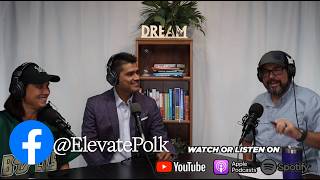
Omar Arroyo migrated from Mexico to Polk County at 14, built construction businesses, and became Florida's first Mexican-born mayor. He lost a city-commission race in 2021, won the next year, and now runs for county commission.
Chapters
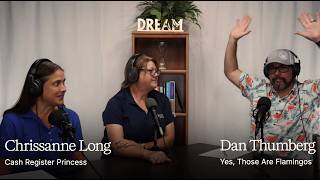
Hey, welcome back to the Elevate Polk podcast. I'm Chrissanne Long and I'm back with my buddy.
I'm Dan Thumberg.
And you're going to do the spiel, right?
Like and subscribe to our YouTube channel, follow us on Facebook at Elevate Polk, and of course we can only afford, uh, Spotify and Apple Podcasts, but we're on other streaming podcast service things to figure it out.
Just search for Elevate Polk and you'll find us wherever we are. Well, I'm excited because we have a guest. As you can see, we have a guest today. We are joined by Omar Arroyo, who is an entrepreneur in the Polk County space, but also you may know him as an, as a politician, a local politician. We're not going to talk politics, but we might kind of, there may be some conversations that kind of bump into that because the reality is that is who Omar is. And, but we're going to start with just a Omar, tell us a little bit about yourself. Like, what is your general introduction pitch? Like, if someone says, "Hey, who are you? What do you do? Tell us a little bit about yourself." What's that? What's that story? Tell us who you are.
Hey, not much, actually. I never kind of start a conversation like that. Nobody says, "Tell me about yourself." No, it's like, you know, just spontaneous there. But no, I'm Omar Arroyo. I've been in Haines City since 2001. I came from Austin, Texas, supposedly for a 6-month period, work-related, and I just love the city. I love the rural part of it, you know, totally different from Austin. It's a big city there and everything moves fast, and just going to Haines City, little city, and seeing cows and oranges—
I see a lot of those.
You know, I fall in love on it, and literally like probably 2 weeks after I arrived, I called my mother and I'm like, "Hey, I love this place. I think you're going to love it." So I'm like, "Just get a U-Haul and come on over." And, you know, she came with my 2 brothers and we've been there since then.
That's awesome. All right. So back up, back up for a second. So Austin by way of Mexico.
Yep.
So how old were you when you moved to Texas?
I was 14, almost 15.
Okay.
So my mom decided to come here. I was Honestly, never in my mind ever crossed coming to the north because we call the north over there.
El Norte. Yeah.
So I wasn't thinking on the north. I was, you know, we have a decent life there. And my mother, when I was out of, it would be probably 10th grade here, she's like, hey, we're going to the north. And I'm like, okay, we're going on a vacation or something. And it was a lot of luggage. So it was not a vacation. It was to stay and We came here, we stayed there in Austin with some family members for a little bit, then my mom moved to another place in the area there, and we enjoyed being there. I really love Austin, beautiful city. But, you know, life had different things for me, and we ended up here in beautiful Polk County, and I'm so glad that I came here. But yeah, I was probably 14 years when we moved from Mexico. I'm from the state of Mexico. So Mexico, there's 3 Mexicos in Mexico. Uh, the city—
That's not confusing at all.
No. So you got the City of Mexico, then next to it is the State of Mexico, which the capital of that state is Toluca. That's where I was born.
Okay.
But I wasn't raised in Toluca. I just always say I just breathe that air there for a few days, and we come from a very small village down, I would say, south west of Mexico City, about probably 3 hours, and beautiful place. I mean, the moment that you're there, you don't enjoy it, but it was just beautiful. You have mountains on it. There was literally a river on my back door.
Nice.
Like, you get out of the house and there's a river right there. So it was really nice.
Do you visit? Do you go back and visit frequently, or have you?
I have never been back to that little town. Okay. I've been back to Mexico, to Toluca. I was just there a few months ago. Mexico City and all that. That area, I'm always scared of going because it's like just one road to go in.
Okay.
And there is some people that are not so nice in that area right now. So I'm always scared. I mean, everybody goes, like literally, and I tell everybody, go to Mexico, there's nothing there. But for some reason, I have never put myself there.
Okay.
I will go one day because I would love to be there.
Take your kids back and let them see where you started your life?
Yeah, actually, you know, like right now, the little house that we had there, it has been there by itself for many, many years. And last week, a few months ago, somebody sent me some pictures that it was looking pretty rough.
And you could do something about that.
Yeah. So we started last week. They, you know, we contacted somebody.
Oh, wow.
We just making it look the same way it was.
Okay.
So one of my brothers wanted to do something like a two-story so we can see the river better and all that, a better view. And I told him, I'm like, no, no, I haven't been there. I'm like, when I go, I want to see exactly how it was.
Yeah.
So we're gonna remodel just the same look, no changes, just change the whole roof because the roof was caving in, and do some painting and some touch-ups. But, you know, when I go, I would like to see the same as it was, which I remember it being a big house, but my brothers, they have been there, and it's like, "Man, that house is so small." So in the family, you have two brothers. Yeah, I got two brothers.
Those are the only siblings?
Yep.
Okay, and where are you? Are you the youngest, middle?
I'm the oldest one.
You're the oldest, okay.
Yeah, I'm the oldest one, so I'm the one that always, you know, my parents always, everything was on me, so.
So you were 14, how old were your brothers when they left?
So it's 2 years apart, so they would have been 12 and 10.
Okay.
So.
So the connection for me, just to, as you're telling that, I'm connecting to my mom. My mom left Cuba when she was 14, and your Your reputation preceded you because I'm very good friends with Teresa Martinez and Martha Santiago because my mom was a Spanish teacher in Polk County and they were as well.
Oh yeah.
And so they were kind of like my, my tías growing up. And so they were asking me—
That is aunts for all of you white people out there.
Thanks, Dan. So they, I don't remember if it was Martha or Tere who asked me, have you met Omar? You need to meet Omar. You need to meet Omar. When you were running for commission or when you—
Yeah.
Understood it. Yeah.
Yep.
And lost the first time.
I lost the first one and then I won.
Ran a year later.
A year later and I won that one by a lot. So I got to say that, by a lot.
By a lot. So I love the connection with the Hispanic piece. So I really want to dig into the culture, the Hispanic culture, but also coming to Polk County at 14, at 16, because you had been in Austin for 2 years.
Yeah.
Got some work.
I got here when I was already 17.
17.
Yeah.
Okay. Got some work here, decided to stay, decided to bring your family, all of those pieces. But I really want to, kind of dig into for a few minutes of any of the challenges or barriers that you experienced coming here from Mexico and, and just kind of lay out the honest truth as you're kind of assimilating both into the United States but also into Polk County.
Well, you know, like if we started like in Texas, that was not a big challenge there. So of course it was difficult. Came from a small place to a bigger place. When it came to work, I started working at about 15, 16 years old. My parents have some issues and my dad basically left and mom didn't really knew what to do. So she started working as a maid and she was making like $300 a week. So that was not enough. So I had to quit school. I only went to school here probably I would say 6 months at the most when I quit school. And so there, the difficult part of there was the metrics, you know, because I started in construction and framing.
Okay.
So you have different metrics. You have metrics over there, you have, you know, inches and feet and all that.
So you had the metric system in Mexico. Yeah. And then we have, what do we call it in the U.S.?
The imperial system.
The imperial system. Yeah. Fantastic.
Yeah, so that was the kind of like the difficult part of it, but besides that, in Austin, everybody speaks Spanish, so there was not really a big need for anything. When I moved here, it was completely different. I mean, now it's a little different. You got a lot of Hispanic people here, but when I moved here, there wasn't that many. I mean, Hays City had quite a few, but besides Hays City, certain different areas, but in this area, really, for what I was doing, Nobody was really speaking Spanish. So, I got my crew in, so I learned pretty quick the trade, and I'm always been someone that wants to do something more and more and more.
Okay.
And so, learned the trade probably in 6 months. I start my own crew right away, so I got 5 guys and start my own crew in Texas, came here, Work for— when I came here, I worked probably 6 months for somebody else because it's a different way of framing in Florida than it is in Texas. Texas—
let me pause you for a second. Did you just say you started your own crew in Texas?
Yeah.
As a teenager?
Yeah.
So there was leadership then, like you were kind of like the take charge kind of guy?
Yeah.
Yeah.
I'm not going to sit around and wait for somebody else to figure it out. I'm going to figure it out and we're just going to go.
Yeah, right. Let's go. I got 5 guys with me. I mean, the youngest one was probably in his mid-20s.
Okay.
And the older ones were probably 40-something.
Wow.
So, you know, it was my 5-man crew and myself, so it was 6 of us. I came here, had to learn it, because in Texas you only get the slab. Everything else you have to do the walls, the roof, you have to cut the roof. You come here and you have block walls. and then the roof comes prefab and you have to deck the roof. In Texas you didn't.
Okay.
Somebody else did that part. So I worked for somebody else here for 4 or 6 months. As soon as I kind of felt that I had it already, I started my crew again. I was at that time already probably 18 already or getting close to 18. And that's how it started.
And there weren't any challenges along the way? Like, nobody stopped you and said, "What do you know? You're just a kid." Oh, no, no, no.
Well, that was a good part of when I— when I moved here. So my mom, all my family on my dad's side are in Texas.
Okay.
Mostly Austin, Houston, and Dallas-Fort Worth area. Basically everybody on my dad's side lives there. On my mom's side, it was Chicago, and then they started moving here. So my mom talked to somebody when— the reason I came, there was not work in Texas in the 2000, 2001. Hadn't worked for like 2 months. So my mom talking to an aunt here, she's one of my tías. So she's like, hey, I know somebody here that I think does the same thing as him. So my mom told them, okay, can You give him the number. So I call this person and that person didn't believe me. So I start talking to him. He's like, oh, how old are you? And I told him, like, and he's like, so, and you know how to do stairs? I'm like, yeah. You know how to mark the lines on the floor with the— read the blueprint? I'm like, yeah. And he's asking and asking and asking and asking. And I ended up knowing more than him. So when I came here, he's like, okay, if you do know that, I will hire you. So, okay, I came here. My first day, him and his brothers, because he's 4 brothers, they were on the business and they got there to kind of quiz me and they start asking, you know this, this, this? I'm like, yeah. And start checking the print and telling them. And come to find out, he didn't know how to build stairs. So he never built two-story homes. He only did one-story homes because he didn't know how to build the stairs and he didn't know how to do the exterior walls because they wood frame. And that was kind of like my specialty.
That was your thing.
So he's like, okay, we're going to go in this house and you're going to build the stairs.
Chrissanne Long, I don't know if you know, but there is artistry to building stairs.
Oh yeah, I can imagine.
You know, I mean, it's easy enough to throw a couple of 2x4s up against each other. —But to go in and do—
It seems like it's specialized. 100%. For sure.
Yeah, that's— I will do a lot of home improvement stuff. I ain't touching the stairs.
You're not touching the stairs?
No, I'm calling somebody.
Okay. So, you know, I start looking, I start building the stairs, and the whole day they were coming and kind of checking and checking. So finally they figured out that I did know.
You knew what you were talking about.
And then he started building a 2-story house. So, and I show him how to do the stairs later on. But that's kind of how I started. Now the challenges that started happening here, so after that I kind of got, 'cause the framing world back then, it was a small world. So kind of everybody knew everybody. So in the Hispanic part of it. So word spread that I was good and nobody questioned it because, you know, they could see me working. The biggest challenge was when I decided to open my own crew. Okay. To work for, I didn't speak any English at all, like nothing, because in Texas there was no need for it. Right, right. So trying to go here and working for the companies that were having the work, nobody speaks Spanish on that. So it was struggle and my brothers were in school, so they were already speaking some decent English. I would pay my brothers like $5 to make the phone calls and talk to this person and just tell them what they want. They call me a few times, I want to know what they want, so I would pay my brothers, and it started getting kind of like a little pricey, so— So you're like, I better learn this language so I can do it myself. So, and it just really came, but like I didn't go to school, so it really came by itself. I went and bought me this TV for my room, because I bought me a house. We were living in an apartment and I bought a house that I still have and I don't plan on selling that, probably never. So I went in and so finally I have my own room. I went into a yard sale and bought me one of those old TVs that are like this. The big tubes. Big and yeah, the back. But it, of course, didn't have a remote control. So when I connected, it had caps on it in English.
Oh, okay.
And I tried to get those things off and I never— I was never able to do it. So I would be watching, you know, cartoons and the caps were always on. And somehow I started picking one word, you know, matching it with the Spanish. And that's kind of— that's how I started learning my English. It came out of that. So I started learning it there, and little by little.
I kind of had a flash. Have you ever seen the movie E.T.? Yeah. I had a flash of E.T. trying to learn English, and he's just watching TV and slurping Coca-Cola.
Yeah, well, I mean, it's very similar to kind of how I learned Spanish. It was I would go and I would watch the telenovelas on Telemundo, and I would watch it with the English captions. Right. But I wasn't trying— I was doing it the opposite way. Yeah. You know, I was trying to— well, I guess it's kind of the same, but it's like the English is going through my head, but I'm hearing the Spanish. Spanish, and I'm seeing the English on TV trying to make that connection. So interesting. And I guess it's kind of the whole Duolingo approach, maybe? Yeah.
Well, I'm a fan of immersion. So eventually you stay in a country long enough, you're going to learn the language. My story, I was— mom was Cuban, but we didn't speak English. I mean, we didn't speak Spanish in the home. My dad was American, so we never really did. So you are no sabo. No. Pero, Better know. Martha Santiago's sister was my Spanish teacher, Delma, and Delma's classroom was right across the hall from my mom's. And so they were, you know, little chisme talking about Chrissanne and all of the, you know, attitude and teenage Chrissanne. And I remember going to Miami with my grandmother, my mom, and they were in the front seat and I was in the backseat. They were just going at it speaking Spanish. And I was like, we're in America, speak English. That's the attitude that I had as a 14-year-old, right? Brat. And then later on I went— God, a lot's changed. I'm still a brat. Yes. But then I got older and then I ended up really kind of falling in love with my Hispanic roots, right? Just the music and just really longing to be able to understand songs when they came on and feeling like I wanted to be a part of the conversation. I had an opportunity to go to Costa Rica for a 6-week period, and then I ended up falling in love, and then I stayed for an entire year. And my goal while I was in Costa Rica was that the taxi driver wouldn't ask me where I was from. So because you, if you have an accent, an English accent, an American accent, they're going me like, oh, ¿de dónde eres? Where are you from? And every time they did that, I was like, oh, they don't think I'm from Costa Rica. So I came home—
but the Ticos would never say that, you know, they would just say pura vida.
No, they would actually have more conversation than just pura vida. There was, there was more. But when I got home, my mom got mad at me because in Costa Rica they use usted, and I would— was using usted with my mom. She's like, I'm your mother, do not usted me. So, but that—
but, and you see, and that's the difference between cultures in, in, in Spanish In Mexico, you use usted for your mother and your grandmother. It's always usted. That's a sign of respect. But different cultures is different things. There are some other words that I will not mention that mean so differently from one country to another.
For the non-Spanish speakers, usted would be like a proper English— ma'am. Ma'am. Well, but it's even more proper than that.
It's a little bit more proper, but it's the easiest way to connect it.
It would be like how you were talking to your elders. It's a respectful form of speaking.
We were not taught in the home to say yes, ma'am. So it was for me, it was just yes. As long as I said yes and not yeah, then I was okay.
Yeah, like me until these days, usted is what you use. I mean, you don't tell my mom like, like just Somebody like, no, it's always usted. And it's same thing with grandma. It's always usted. So always, always like that, you know. Yeah.
So you learned English so you didn't have to pay your brothers. Yeah. To make the phone calls. What else? Like advance the— so now you are, you are still a business owner. You're in business with your brothers. Both of your brothers are in business with you.
Yep. Well, back then, back in, you know, early 2000s, it was me. So I had my business, it was my business. My brothers were in school. Okay, yep. And on the weekends or vacations, they will always go with me. So that's how they start learning. So every time they had a day off, there was no day off. They would— they got to go with me to work. And, you know, they were fine with some— something little. So I didn't really—
I was not a good pay with them. Do they remind you of that? Man, you used to pay us Twinkies.
But, you know, I was the one taking taking care of the house. Oh yeah. You know, I was like basically like—
Where did you learn this work ethic? I don't know.
I always, quite honestly, since I can remember, I can remember since I was probably 5 years old. And since then, I always had something in my head that I want to do something. And I would get with my cousin sometimes just playing, and my play was like trying to build a business, building things. Okay, that was always my— that's amazing.
But do you, but do you think it's part of the Hispanic culture as well, you know, to kind of just always be driven to just keep going and going and going and going for something greater? Because I, you know, like I shared with you, you know, before the show, some of the hardest working people I've ever had the pleasure of working with was on a construction crew, guatemaltecos, back in the mid-2000s. And I'll never forget those guys because I've never met a group of people who have worked harder or worked longer or had more drive and determination than they did.
Well, it's, um, see, the group of people that come here to North America from Mexico, Guatemala, and all that is you don't see people here from the big cities. You know, people in the big cities, they don't move here because there is really, there is need. In the big cities, but it's not that big. You can still make something. You can still go, you know, send your kids to school, have a house, and have a way of living. Now, most of the people come from little villages, and in the little villages, you're working, and you're working, and you're working, and you're working. Big cities, you have your job, kind of normal job, you know, I don't know, 8 to 5 or something like that, 5 days a week, just a normal work setting. When you are in the villages, completely different. It's you just work. Like, you're always doing something, even on Sunday. So it's basically a 7-day thing. So you have that part of you just kind of have to work. It's in the DNA.
It is. It's in the way.
And that's a part of it when they— when you get those people coming here, That's the way they go. Now, some of them get Americanized and change completely, but vast majority is that, you know, that drive. They have that drive and respect for work, because it's really a respect for work, because that's what is allowing your family to survive. And they just go at it. Like, they're not watching the clock, or you making too much money, I'm not making, you need to share. You get what you're going to get and you're okay with it, you're working that day. You know, you're not looking, oh, I did too much already, I got to slow down. No, you just go the whole day and that's the drive and that's what comes with it. So that's why it's, you know, you see, especially in the hard work, you see other people that go into it and they just don't, they just can't. Match it because they look at it differently. But the people that come here from, you know, countries like that, that's the way they have always been there. And that's the way they come here and they do it. And they're very appreciative of the opportunity of it too, because, you know, you're making some decent money compared to the country you come from and you can, you know, sustain your family there and all that. Like my story is completely different. We didn't really came for the money. My mom came running from domestic violence, so that's the reason she left. And money-wise, we were okay over there. Like, we were probably, I don't know, medium, medium-high class or whatever for the area. You know, if you compare us from the village to the city, you know, we were probably on the low part of it, but for our area, we were doing really good. So we didn't came with that really mentality of like sending money back. Like I never, I have never sent money back to Mexico since I've been here or had an account there or nothing like that.
Did you experience any, so the guy questioning you whether you could build the stairs, you know, that, you know, it's obviously just a skill question. Are you capable of doing the thing? But have you experienced, you know, any prejudicial like—
Oh, you're opening it up and we've only got 2 minutes left before we got to take a break.
I wanted there to be like just an acknowledgement of the experiences that you've had because I can't believe that you've just skated right through without having experienced something.
To be honest, to be honest, never. Really? Never. I have had the— See, it was a short answer. You know, the blessing, or I don't know, I never had any issues like that. Like everybody that I have got to it, they always been really nice to me, very supportive. The biggest opportunities I got was, you know, somebody that is not from my background. And people just, in my world of business and the construction business, really you don't, if somebody's like that, then they don't really last. Right. Because everybody is like, like the labor force is Hispanic.
It's right about how you can do the job.
Yeah. You know, so labor is Hispanic. Now you got the, and back then the owners of the companies were not Hispanic, you know, Americans. But they understood that, you know, that there is something there, a connection between both of it. And there was always respect to it. So I never really— until this day, I don't think I ever really felt anything. That's amazing.
I mean, but that's— but that's with inside the business world, obviously, outside the business world and in life itself. I'm sure that there have been some challenges. We know the immigrant story. We've heard the immigrant story over and over again. You know, the United States was founded on immigrants, but ever since the founding of the United States, it has been different groups that have been denigrated over time, whether it was the Italians, whether it was the Catholics, whether it was, you know, the Polish, you know, the Jewish people for a while there as well. And so, you know, we're kind of just in a new stage of where we're starting to feel that denigration. And I want to get into it, but we are reaching our time limit for this segment. So we'll roll in, we'll get us some commercials. When we get back, what I want to do is I want to finish up on your story because your story is not just about construction. You decided to jump into politics. Oh yeah. And you— the fun part— you have a— I just, when I was going through, I just couldn't believe the, you, the amount of stuff that you have accomplished. Yeah. And just, you know, the, the number ones or the first that you have started to check off your list. And I think that people need to hear about it because they're going to be voting for you in November. So back in a few.
Taking a break.
In 2025, you leveled up. Now it's time to break through. The 2026 Central Florida Business Expo, September 29th and 30th at the RP Funding Center in Lakeland, Florida. Right in the heart of the I-4 corridor. Connect with hundreds of business owners in a massive exhibit hall. Learn from purpose experts, bestselling authors, TEDx speakers, and Inc. 5000 CEOs delivering keynotes you will not want to miss. Unlock the strategies, the connections, and the confidence to lead real transformational growth. This is your moment. Breakthrough. September 29th and 30th, 2026 at the RP Funding Center in Lakeland. Sponsor and exhibitor registration is open now at cflbe.com. And we're back. We are with Omar Arroyo. You like how I rolled my R's?
You rolled your R's very nicely. Yeah.
Good job. Still trying to teach my son how to do that now.
Everybody in the politics, I guess they go, Mr. And it goes by the last name. Probably one of the only ones that is Omar. They don't want to say Arroyo.
All right. In this segment, we're going to get into— first segment, we talked about Omar's kind of transition into his life in the construction, starting the business, coming out of Mexico to Texas to Haines City. And now we're going to talk about what happened afterwards. We're going to talk about politics. If you don't know, Omar is running for, it is Polk County Commission seat number 4, correct? District 4. District 4, thank you. And the election is in November. Yep. And it was just announced that Martha's, Dr. Santiago, right? Yes, she is Dr. Santiago. Dr. Santiago is not gonna be seeking reelection. So you are going to be the one on the ballot for that seat. And I believe there is a write-in candidate. So you are not running unopposed. Oh no. So, um, you will see Omar in and about the communities, and I 100% know that he wants to talk to you. So, uh, stop him. Obviously very personable guy, and he would love to tell you everything you'd ever want to know about his candidacy. But, uh, I want to go ahead and get started, um, because you got into politics first in 2021.
Take us through that. Well, To be honest, I didn't know anything about politics, like at all. Had only vote, like I guess most Hispanics, for whenever is the president and the governor. That was kind of it. Everybody else on that whole list, you kind of circle some, some you don't even circle. I didn't know much about it. In the construction, being part in the construction, so I now I have multiple different companies, and one of them is we buy properties that are in distress and we fix them and we keep them as rentals with one of my brothers, which is my, you know, my business partner. And I bought a property in downtown Haines City. It's a 2-story building, old building, has retail on the bottom, 5 different businesses on the bottom. And on the second floor, the owner of that building, she got her business there. And she had the second floor. It's a big, pretty decent building, but the whole thing was completely full of stuff. So part of the deal is— because I got it for a really good deal— but part of the deal is that I was going to let her stay there for a whole year until she started moving her stuff. And I needed to do some work, so it was not a big deal to let that happen. She was running for city commissioner, and she started telling me about it, and I I'm like, "Okay." And she's like, "Well, can I have your support?" I'm like, "Yeah, yeah, yeah." But, you know, just giving the yeah, yeah, yeah. So every time I was there in that building, you know, multiple times a week because we were doing a lot of repairs downstairs and the roof and all that stuff. And she was always there talking to me about her campaign, her campaign. And she ended up winning by 2 votes. And after that, she started talking to me more about representation. You know, it's like, hey, Haines City is 50% Hispanic. There has never been a Hispanic on it. And she started pointing a few things around the city. If you know Haines City, it's kind of the east side is the Hispanic side historically. Now it's changing a lot, but she started pointing a few things and just telling me, and you should do it. And I was like, no, I'm so busy with work at this point of my life. Like I said, I already have quite a few companies that I was running. I was like the head of all the companies, so pretty busy. And but she keeps telling me, telling me. And then one day I get a call from the city clerk. He's like, hey, Miss Janie said that you will— that you were coming today because you're going to run for city commission. I'm like, No, I didn't say that. It's like, well, we are so excited. And she's— both of the girls start talking to me. So I ended up going to there and start looking at the paperwork. I'm like, okay, you know what, I'll try it. So we went on it without knowing absolutely nothing about how to run a campaign, nothing. Just put the name on it, got home, told my wife. And she's like, you know, you're crazy. I'm like, well, let's see how it goes. We did a campaign. At that, it was 5 candidates for that seat, the incumbent, and then there was the next second main candidate, which he was a previous mayor of the city, and then the other 3. And I was the only Hispanic on it. And Haines City has never been a Hispanic, not even a candidate. So I just went on it, put a bunch of signs and plastered the city with signs and just start meeting people, talking to people. And my brother was helping with the company, so it gives me some time to do my thing. And we ended up losing. We came in third place, so it was a runoff. Came in third place, but we came basically the same number as the other two. I lost by like 40 votes or something like, oh, I didn't make it to the runoff by 40 votes.
Yeah. I mean, it says right here by 4%. Yeah. Yeah.
So, you know, we got very close. But to me, that's— that was kind of it. As soon as that race was over, as soon as, you know, they finished with the runoff, a lot of people start calling. Hey, you're going to do it again? I'm like, no, no, you know, I'm going to get back to my business. Like, no, we would like you to try it. And, you know, you're going to get our support. So basically the other persons that were in the race now were— their supporters were calling telling me, "Hey, if you run it, we're going to go with you." And by that time, that little period of probably 3 months in campaign kind of got something in me that I really like the interaction with the people. And which is crazy because Before, I was horrible with people. Like, I had an issue with anxiety of talking. So, and I always joke with my wife that she's lucky that I couldn't talk to girls because I would froze when it was starting a conversation with somebody, I would froze and my stomach would be like, I don't know, feel really bad. But I was able to communicate with people in a different way. You know, just people come to you and tell you some things that they need and you see it and then you kind of go and try to do it. So all this support, so I'm like, you know what, I'll do it. So we went again, we put the campaign again for next year. And on this one, we— it was 3 candidates with me. And but the support was just from all over. And we went and just did basically about the same campaign. Plastered the city with signs. Until this day, you ask anybody in Haines City, they'll tell you the guy had the whole city plastered. But it was just great, you know, we wanted that one. We didn't even need a runoff. I mean, I won it on the first go.
And we started— You got the percentage of the win there? I don't have the percentage in—
It was a little over 50%.
That's crazy. So I got a little more than double than the second place, I think. And we started doing it. So, and just little by little, I started learning things and I love learning. So that's one thing that I have always loved. I love learning things. I love going and just the networking of it is amazing. If you do it, because there is people that get on those seats and nothing wrong with it. They get on the seats, they just stay looking at the city itself. And they don't get out of it. I went out of it, you know, I was going all over, that's how, you know, with Teresa and Martha, they introduced me to so many people and then I love learning about new businesses out there and new programs and it makes it so easy because the more you learn, it's easier to help somebody. Somebody comes with an issue, you really don't At some point you don't even need to do research. You already know where to go and you just tell them, okay, you know, this person or this entity can help you. So I really enjoy that part. In the beginning it was a little different because I was more about me, you know, I was being more about me and my family. So I was more concentrating always on how to make my business better, how to get my family to a better level. And that was always my concentration of it. When I came to the politics, in the beginning I thought that I was not going to do so good because I wasn't going to, you know, you don't get paid for it, right? You know, so you don't get paid for it. So helping somebody and putting— because you put a lot of time into some things. And in my head, I was wired off Every minute is a dollar. It's your ROI.
It's that question of what am I, you know, what, how much time am I putting into this and how much am I going to get back?
I'm a, you know, I'm a Christian and I'm a huge believer that God puts you, you know, God times are the right times. Yeah. And when it came to me, if I would have won that first year, I probably wouldn't do as good and I wouldn't enjoy it as much. And if he were, if that opportunity would have come Early on, I went down good because I was still raising my companies to a certain level. When it came, my companies were at a certain level that didn't really need me that much. So it gave me the opportunity to really pivot and stay on this course without going to the business part.
You were able to step away from your business to focus on something else?
Yeah. At 3 PM? At 3 PM.
You know, sounds familiar. And on top of that, when you accomplish something in business, it feels good, it feels great. You know, you got to the next level or you got this contract or you finished this contract and you did good on it. It feels really good, but then that's gone. Like you go to the next one. Right. And you go to the next one and like there is nothing really, not much attachments to it. When you accomplish something in service, it's a complete different feeling. Wow. And the moment I felt that, I don't know, I just love it so much. You know, when you see somebody that comes to you and tells you, I've been trying and I've been trying to get help and I keep calling or I keep looking or I don't know where to go. And you go and tell them, okay, you know, you go to this place or you point them where to go or you help them get whatever they need and they appreciate in a way that it makes you feel so different. And when you make something, especially when you were told that it was not possible and you go and start searching around and that's why I love networking because you might something that people have tried in certain area If you open your eyes to a bigger world, somebody else tried it and somebody else got it done. Right. So you're going there to conventions and all that stuff and you're talking. I always love talking to different people that I meet and just telling them the stuff that I'm trying to do or that my city is trying to do. And they have, you know, they give you all these ideas. So now you get to it and you get it done. You know, you bring it to— of course, it's not just you. You need another, at least another 2 commissioners that have the same vision.
And there's a feeling of satisfaction at the end.
Yeah, and it's completely different than business. It kind of stays with you in a way that is just completely different.
Well, civic responsibility can't be measured with a bottom line. That's, at the end of the day, that's what it is. You know, in business, we can sit there and talk about, you know, this is my increase in net revenue this year. and that is your metric. But in civil service, you really are just going by what you can do for your community within the time that you were given. How many different people can you— lives can you make better? That is all that you're looking at.
And I go back to God times are the right time. So he put you— at least he has put me in so many places in my life that are the right time to be at. And he had put so many things in me there at the moment I didn't understood, but eventually that was put there for something else. And another big part of love and service, it comes from my family. And I have 3 kids. My daughter is 19. We kind of have them very spread. So my daughter is 19. She's going to UCF. My middle— my oldest son is 13 and my little one is 6. So he, my little one, was born right when COVID was starting in 2020. So by the time I get to service, he's already 2 years old and he came with autism spectrum. So going went through with that part of it, of having to deal with his situation, it was so hard. And we have the resources. My wife doesn't work, so she has the time to go and check stuff, find stuff for him. And it was very, very difficult finding what to do. To start with, what it is, you know, what you need to do, where you need to go. So difficult. There are some resources out there. But it's so hard to find them. So that is the other part that I believe they helped me so much understand service because I see the frustration in so many people that come to me and talk to me about some issue that they have and they have tried and tried and tried, but they so lost because there is not a guide of, okay, you got to call this person or you got to go through this process. If you're not involved in that, you don't know anything.
And when you call somebody and that's not their job, "Sorry, I don't know. I can't help you." Click.
And, you know, and when you serve as a commissioner, you're kind of that person, you know, or you should be that person.
You get the opportunity to be that person. Not all elected officials take that opportunity and use it for that, but yes.
But you get the opportunity to help and guide them. So it's mostly about guiding people in service. You guide them where to go and, I mean, of course you do other stuff like, you know, you get a park done or you work in infrastructure and all that stuff. That's part of it. But a lot of the service part is guiding people that have issues and many times it's an easy fix, but the whole system is so big. Yeah. That it just— and when you don't know anything, it just gets so complicated. Yeah. And so that was something I was dealing with, with my son and getting to see people kind of struggling in the same way in different other areas. But with basically the same thing that we were going through, trying to figure out something without knowing even where to start. Right. And when you're in the middle of it, and you can guide them and say, okay, you go this, you go this. And the feeling that you start— that you get when they send you that message, thank you, and it's just completely different from business.
And you now in a position where, you know, and this is going to sound a little crass, but like now people are going to answer the phone, now people are going to help you, now people know who you are, so you have influence. That you didn't have before. Your name means something. So now as you're seeking resources for your family, you're realizing how the real struggle, right? There's a pain. You see your wife struggling, you see your son, you're wanting to help your family and you don't necessarily know how to do that. But yet now you can because you are somebody that people will help because of your position.
Doors get open. I mean, doors open a lot easier. That is for sure, and that's part of the networking. That's why I love networking, because if you can have the position, but if nobody knows you, right, really, that doesn't really open much. Yeah, it opens some things, but not as much. But when you go out, and since I started, I love going out of my city, you know, and I didn't stay just in my city. I went all over the county and beyond the county, going to Tallahassee, going to DC, So I would get in any convention that was here and there just trying to learn more and find about other things. And then people start to know you. I remember my first months when I used to go to like a dinner or a luncheon, and I felt like a fish out of the water because I would get there and just standing there, I see all these people there. And they were shaking hands and they were talking and I didn't really knew nobody. And there was this one of another commissioner in Haines City, Commissioner Morris West. He's been on it for many, many years as a commissioner and before that as a police chief. And used to look at him that he went and basically seemed to knew, that he knew everybody. I'm like, man, one day, one day. No. And, you know, now going towards all those events and doing that.
One day is here, you're there now, yeah.
And it opens so many doors. People start knowing you, so when you make that phone call, they do answer that phone call. Right, right. And they do help.
Some things that you said that I just wanted to kind of bring up and just kind of point out, like the first election failure, right? Got you back into the game, I think probably because of that entrepreneurial spirit. Like we don't take failure easily, right? So we're just going to go, how do I do this right? How do I do this better next time? And maybe it was a little bit with some resistance, like, I don't really know that this is what I want to do. But I think almost maybe the failure made you more interested in figuring it out, right? Like, it's just like, I'm not going to— I'm not just going to let it—
I'm not going to lose. But it didn't even stop there. Right. So it was, you know, failed the first campaign.
It's the transformation, right?
Won the second campaign, became Haines City's first Hispanic city council member, right? Representing, I assume you had a, your, your district is mostly Hispanic, correct? No.
So in Haines City, you don't have districts. Okay. All right. So Haines City is at large.
That's why he was able to run the next year.
Got it. Okay. So, um, but you didn't stop there either. In 2024, you ran for mayor and you won.
So in Haines City, which like many other cities, the mayors and vice mayors, it's called weak mayor system. Yeah. So only the big, big cities and some small cities do too. They do have elections for mayors. In the city, you get selected by the board. Got it. Every year you reorganize the board and then you get selected by the board. So my— usually you don't in my city before, you didn't get to be the mayor until you got to your second term. So I guess I'm, you know, blessed or whatever you want to call, but on my first year, commissioner. On my second year, I was asked, hey, would you like to try to be the vice mayor? And I was a little scared of it because now you have to run sometimes the meetings and all that, but okay, if it goes that way, I'll take it. So I got selected as the vice mayor, and then the following year I got selected as the mayor. So, you know, I just— I'm blessed to have been there.
Did you know at the time that that would make you the first Mexican-born mayor in the entire state of Florida?
Oh, I didn't know that.
I didn't know any of that. You didn't know any of that? Okay. So just, just so everybody knows that Omar is the first Mexican-born mayor in the entire state of Florida.
So in my politics, I have never chased the politics, you know, anything that is on it. I never like, oh, I want to be that. Like right now I'm running for county commissioner. That's not something that it was in my head. So I never thought about running for anything else. I was thinking, okay, I'll do my 4 years. I did some promises when I was campaigning. Thanks God, every promise had been, you know, I was able to accomplish every one of my promises. And that was kind of it. Like, I was like, I'm going to do these things and get it done, and then that's it. But then, you know, like I say, I love getting involved on it, and that, you know, built relations around. Build a relation with Dr. Santiago, with Marta, and she's been really my mentor. Every time I have an issue, that's the one I call and, hey, you know, how will you handle this? Can you help me on it? And, you know, part of that, the Sheriff Grady, start building a relation with him.
I want to say Grady gets coffee cups, and I don't know if you guys can see, I love my coffee cups too. They're just a little bigger. So if you want to send coffee cups instead of hats, coffee cups, hats, tumblers, jerseys. We're trying to get people to send us stuff. You know, Grady gets his coffee cups. We did have— we had Tom from Citrus Connection, he brought us hats.
You know, it's a good start.
Yeah, whatever, I'll take a tumbler if you want. I love it, I love it. Anyway, so, um, a couple more things before we get into it. So we're gonna have to wrap up, uh, quickly. Um, and was it 2025? You were presented, um, by the Mexican government. They awarded you the Mexicano Distinguido. Correct? Yes, sir. So that is— now correct me if I'm wrong— this award is only given to one person in the world every year from, from the Mexican government, and it's for outstanding achievement and for social causes, for, you know, civic life, for just naturally being a good person, correct? Yes. So talk to us a little bit about that, because I'm just, I'm just checking all of these things off. It's like, all first? I just want to know Hispanic Council.
I just want to know the phone call. Somebody calls you one day and—
I honestly didn't know what it was. I mean, I'll be honest, it's not like I got excited. Okay. Like, to me, you didn't really know what it was. It was like, okay, so, okay, okay, you know. And until it got— when it got closer to it, when people start talking to me about it. So like I say, I love going out all over. And the Mexican Consul is in Orlando, so they invite me to different events there. And they got the Colombian Consul, he invites me to his events. The Dominican Consul, he invites me to his events. The French Consul, he does some things there too. So I go to as many things as I can.
You get invited to all the ones that have great cuisines. Oh, yes. Oh, believe me.
Believe me, that is— that's the reason I go. But so relations got built in there and there is a lot of organizations around those consulates that same thing, they looking for something and they looking what to do or they have a plan or they want to start a new program and I always like, oh, I know this person, why don't you call her? Oh, I know this This place in Tampa, they doing something similar. Why don't you— I got their number, give them a call, tell them I told you about it. So that kind of helped get these, all these people together in different ways. And I guess that was a good thing for them. That's amazing. So I got the call one day and it's like, hey, we're going to— can you tell us which will be a good meeting for us to go? We're going to give you this award and blah, blah, blah. And I'm like, okay, let me check. It's not like I jump, so I didn't jump on it. And so I'm okay. So I'm thinking, because you get little awards here and there for what you're doing, and you get invited to things and they usually give you something, or so kind of get a little used to on it. And so I thought it was something Simple. I'm okay. So I set it off for like a month and a half later. And in that period, I went to like 3 events. And one was the Mexican Council. The other one, I think, was the Colombian Council. And they were talking to me about it. And everybody seemed to be very excited about it. So I started asking more questions of what it was. And then they told me. I'm like, oh my God. You know, it got me all nervous after that. So I was very like, "Okay, whatever, I'm getting recognized for something." And after I knew what it was, I don't know, the days seemed to be long days until that day. I was nervous about it.
Well, it's well deserved, and I think it's amazing that you have received that recognition in such a grand way because, It's obvious, I hope from listening to you, everyone is able to kind of hear the human being that you are, right? Like when we see people through social media or through news, which is, as we all know, is probably not always accurate. As a matter of fact, I have known Martha has not planned on running for at least over a year because she told me that a while ago. And then that's when she started to tell me, you know, you need to get connected to Omar because Omar is going to be running. And, you know, I would I would love for him to be able to take that spot. So I just, I feel like there's a lot of humility in who you are, but also there's confidence. And I love that example that you are able to set for the Hispanic community because we need that. We need confidence, but we also need to remain humble.
When I do something, I do it full on. Yeah. You know, I don't like to just sit on it and just be there.
So as we wrap up, if you have any words that you want to say, to the audience, just how to get in touch with you, how to follow you.
Yes, put your socials up there.
Where are your socials?
So, I really just use, on social media, it's just Facebook. Okay. So, I'm an old-timer on that. So, Facebook, just Omar Arroyo for Polk County Commission, and you'll find everything there. You can see where we're going, what we're doing. If you want to help, there is ways there. We have a website, which is electomarroyo.com. You can find a lot of stuff in there and just follow us on Facebook so you can see what we do. That's where we really post everything. And I'm just here to service. I love doing what I'm doing right now, and I really appreciate the opportunity, not just for service, the opportunity that I got in this country. Quite honestly, it's amazing. I always say when I go and speak, this is the land of dreams, and it really is the land of dreams. I've been to so many other countries now, and I see what they— I mean, I've been to good countries, but nothing compared to this one. Over here, you can be whatever you want as soon as you put your time into it. Yeah. All right.
We got to go. Thanks again for another great episode of Elevate.
See you on the next show, guys.
We'll see you later. Thanks for coming. Thank you.
More from Chrissanne



ElevatePolk Podcast: S3 E1 Episode 67 (Rebooting) the Podcast About the Podcast