Danny Warshay, a Brown University entrepreneurship professor, breaks down scaling ventures into three steps: See an unmet need through empathetic research, Solve it iteratively without rushing growth, then Scale using tools like the landscape exercise. He weaves in ikigai, the Japanese concept of meaningful purpose, arguing successful entrepreneurship requires alignment of what you love, what you're good at, what the world needs, and fair pay.
Chapters
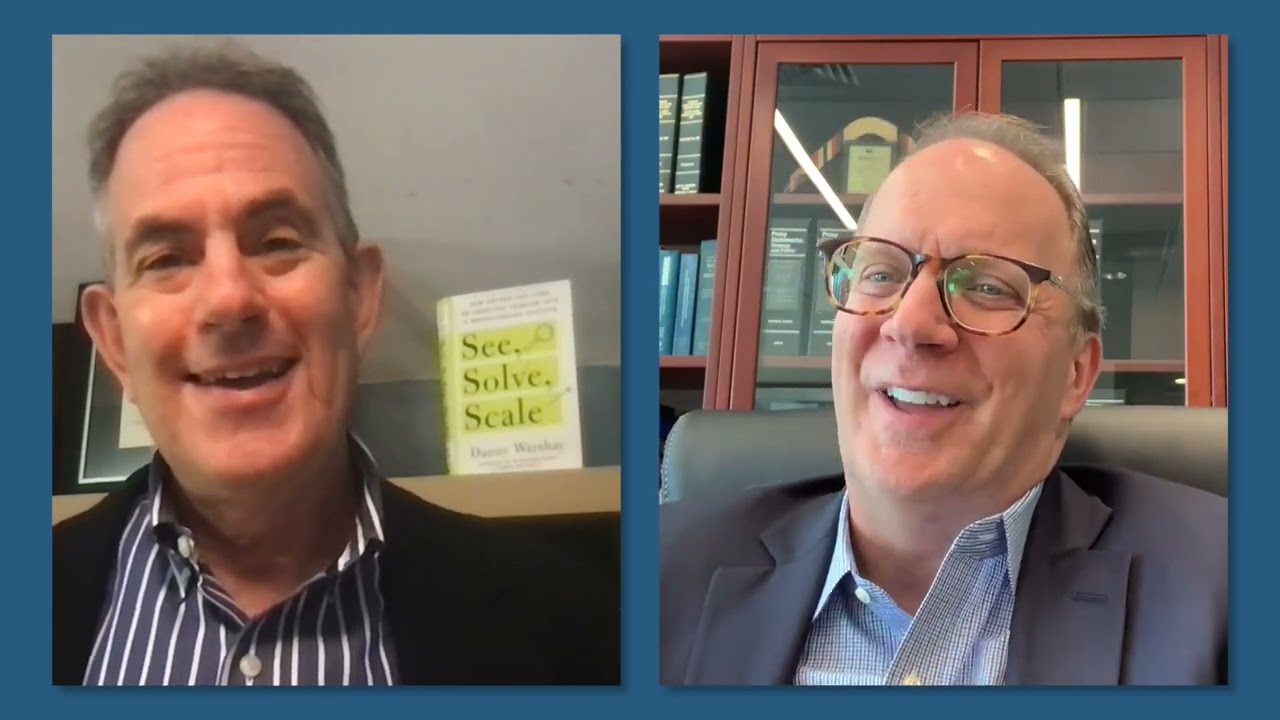
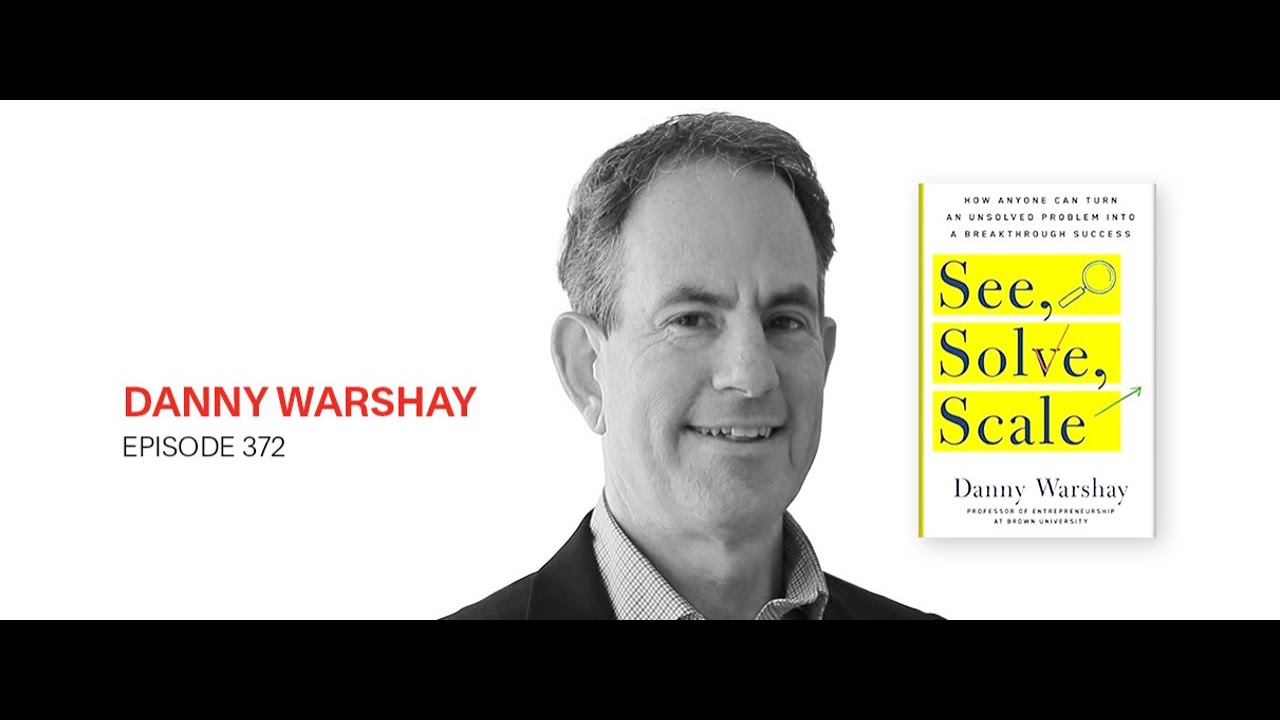
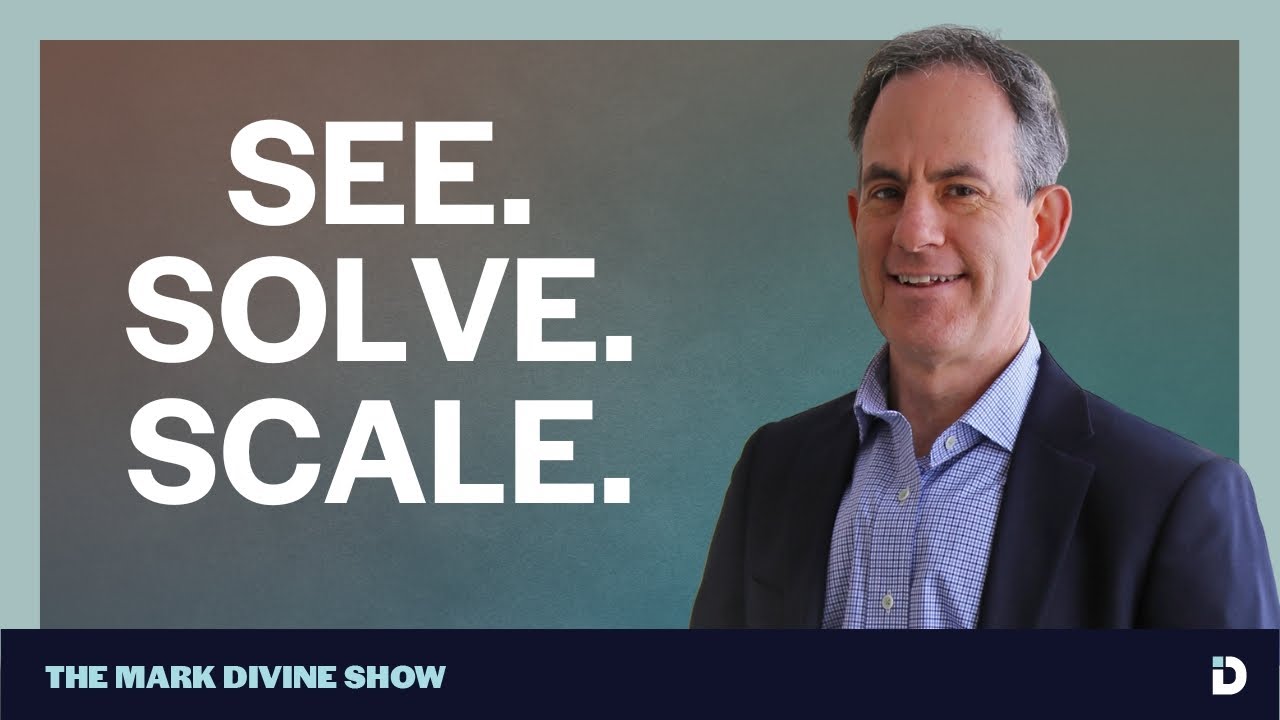
We're going to talk now to Danny Warshay. Danny is a professor of entrepreneurship and the executive director of the Nelson Center for Entrepreneurship at Brown University. He's also the author of See, Solve, and Scale: How Anyone Can Turn an Unsolved Problem into a Breakthrough Success. Welcome, Danny. So pleased you're here.
Thank you, Larry. Such a pleasure to be here.
Danny, tell us a little bit about what prompted you to write this book. You're a busy guy. You're teaching lots of classes. You're doing lots of research. Why did you stop and write a book about this?
You know, it was my students. My students pointed out that I was not doing the 3rd step of the process, scale. They enjoyed taking my class. They said it had meaningful impact on their lives, but they said you're doing it in numbers of like 35 to 40 at Brown and in corporate workshops and elsewhere around the world, but you're not scaling. And so it's really because of my students, they put me up to it.
Excellent. And you tell them, I'm sure, probably on the first day, as you told us as your readers, entrepreneurship is a process, not so much a spirit. Talk about that a little bit because it is a mindset when you sit down to read this and when you sit down to think about these kind of problems.
Yeah, that came about when I was asked 17 years ago by a beloved professor of mine at Brown to come teach entrepreneurship, and I had to think, What does it mean to teach entrepreneurship in a place that doesn't have a business school? I went to Harvard Business School. I had had a number of successful startups in my career. But in coming back to Brown, I had to remember that when I studied at Brown, I was a history concentrator. And so what would it mean to teach entrepreneurship in a liberal arts context? And I thought, well, I had heard this phrase entrepreneurial spirit. I'm sure some of your listeners have heard that. And I thought, well, Surely it can't be that I'm being asked to teach a spirit. I don't know what that would mean. And instead, I realized my faculty appointment— I'm a professor technically in the engineering school— and I thought, well, imagine if we were to teach somebody how to build a bridge. We wouldn't say, you know, just go out there and have the bridge-building spirit. Throw up a bridge, and if it crashes down to earth and it doesn't hold the trucks and the cars, then just go out there and have more spirit. I thought no one would trust us to teach anything. And I realized in engineering, if you're teaching somebody how to build a bridge, there's a beginning, a middle, and an end. All bridge building follows some principles that you can distill, even though there's lots of room for variation in one bridge to another. And I thought similarly in entrepreneurship, it can be a process for solving problems, and we can distill some common elements of that process from any venture that we've built, still with lots of room for variation among different ventures. And that's where the See, Solve, Scale method came from. And it fits really well in a liberal arts environment because it attracts people who ordinarily might not be attracted to entrepreneurship if it were pigeonholed as a It's just business core, right? Nothing wrong with business. It's just not only that.
Right. And I liked how you built that around sort of the C process. So, you talk about— I want to go quickly through the steps so people understand. There's so much rich text you've got to read. But the C step, you're telling people to really think about what the problem is that they're going to solve. And what I liked about See, Solve, and Scale is you're talking to people who might be tech entrepreneurs, social entrepreneurs. You're talking to heads of nonprofits. It's all the same, isn't it?
It is. In fact, I don't label any of those differently. I don't call it social entrepreneurship. I don't call it tech entrepreneurship. I don't call it big company entrepreneurship when I'm working with big companies or governments or nonprofits. It's all entrepreneurship because it's all about solving problems. And the first step in the process better be finding and validating that problem. Otherwise, I warn you against being what I call a solution in search of a problem.
Right.
And that's a very dangerous and expensive place to be.
Someone reading this who might want to be figuring out, well, I kind of know what problem I want to solve. How do I iterate from there to figure out whether or not I can actually solve it and who do I need to help solve it?
Well, first of all, the reason I say find and validate an unmet need or the problem is that you might know what you think a problem is. And yet I teach you some anthropological and empathetic approaches that actually I learned in probably the least entrepreneurial place I've ever been. in brand management at Procter& Gamble. And so I recommend spending a disproportionate amount of your time focused on that first C stage where you are figuring out what problem to solve. Albert Einstein is credited with a great quote. He said, if I had an hour to solve a problem and my life depended on it, I would spend the first 55 minutes defining the problem, and then the rest of the process to solve it will go smoothly. And it's similar in terms of the weight to this CSOLVE scale approach. But once you do find and validate an unmet need, figure out what problem you want to solve, I love the word that you picked up on from the second step, solve iterative. And too often, especially in big companies or governments or big organizations, people leap from, okay, I know what the problem is, Now let's go scale the very first idea they have for solving it. And instead, I teach in my teaching and also in this second stage of solve to iterate and to be very tolerant of initial failure. And so you don't layer lots of resources onto your first or even third or fourth iteration. You have to be very tolerant of the process that it'll take a little while to get right. And only then, once you've really proven that it's a solution that's worth scaling, do you move to the third step, which is scale. Because the approach I have in entrepreneurship is to teach you how to have big and long-term impact. And so even small companies, small businesses, We need them, but that's not what I consider entrepreneurship. I consider it entrepreneurship if you're having long-term impact at scale, and we're not born knowing how to do that. I share an exercise in the scale step called the landscape exercise that I credit one of my colleagues, Bob Johnston, with formulating, and I've adapted it to this approach of entrepreneurship, and it helps you to think And envision a long-term solution that has big impact.
I think that I really enjoyed the part of the book where you talk about the benefits of scarce resources and also the burdens of abundant resources. In keeping in mind all of these, in all of these 3 steps, can you really help us understand the What I think was really part of the core of the book, the one that I really took away, this concept of ikigai, this Japanese word that is so important and so evocative. What did you mean when you used it? Why did you use it?
Yeah, you can do all of the steps that I teach in the classroom that I've shared in this book. I also narrate the audiobook, so even in the audiobook. But in my experience, you will not be successful unless you do things that adhere to the 4 elements of this Japanese word, which I love, called ikigai. The definition of ikigai in Japanese is living a life with meaning or with purpose.
Wonderful.
Ikigai means doing something that you are really good at, doing something that you really love, do something that's going to add meaningful impact on the world and doing something that's going to pay you fairly for the value that you add. And in fact, I share some examples in the book. The book is, as you know, filled with stories of my students and other people who've used this process. And one of the stories I tell is of a really very capable would-be entrepreneur who was doing his startup as an academic exercise, and he lacked ikigai. It was something he was good at, but it was not something he loved. It was not something that was gonna have meaningful impact on the world. And so often I find in whatever walk of life, whether people are pursuing a startup or not, if they're not happy, if they're not satisfied, one of those things in the ikigai quadrant is off. It's not something that they're really good at, or it's not something they love doing, or it's not something that's adding meaningful purpose to the world. Or it might be something that's not paying them fairly. And I think that's a good guide for anybody in any profession. And it's absolutely necessary for any would-be entrepreneur to be successful.
I love that part of the book. It reminds me of that wonderful Frederick Buechner quote, where does your great joy meet the world's great need? Or even the wonderful and late Howard Thurman, who told all of us to listen for the sound of the genuine. In all of us. So this is genuinely a great book and I want to make sure that folks pick it up. Danny Warshay, thank you so much. And for folks who are listening to Authors and Innovators, please pick up See, Solve, and Scale at your independent bookstore. It's now both in hardcover and also audio, Danny, right? So they can pick that up. And then I know from personal experience, Danny is so generous with his thoughts, observations, and time. You can reach out to him on email as well. Danny, thank you for joining us, and I hope folks will get this book.