The Pissed-Off Entrepreneur: How to Turn Problems into Opportunities: Danny Warshay on PYP 513
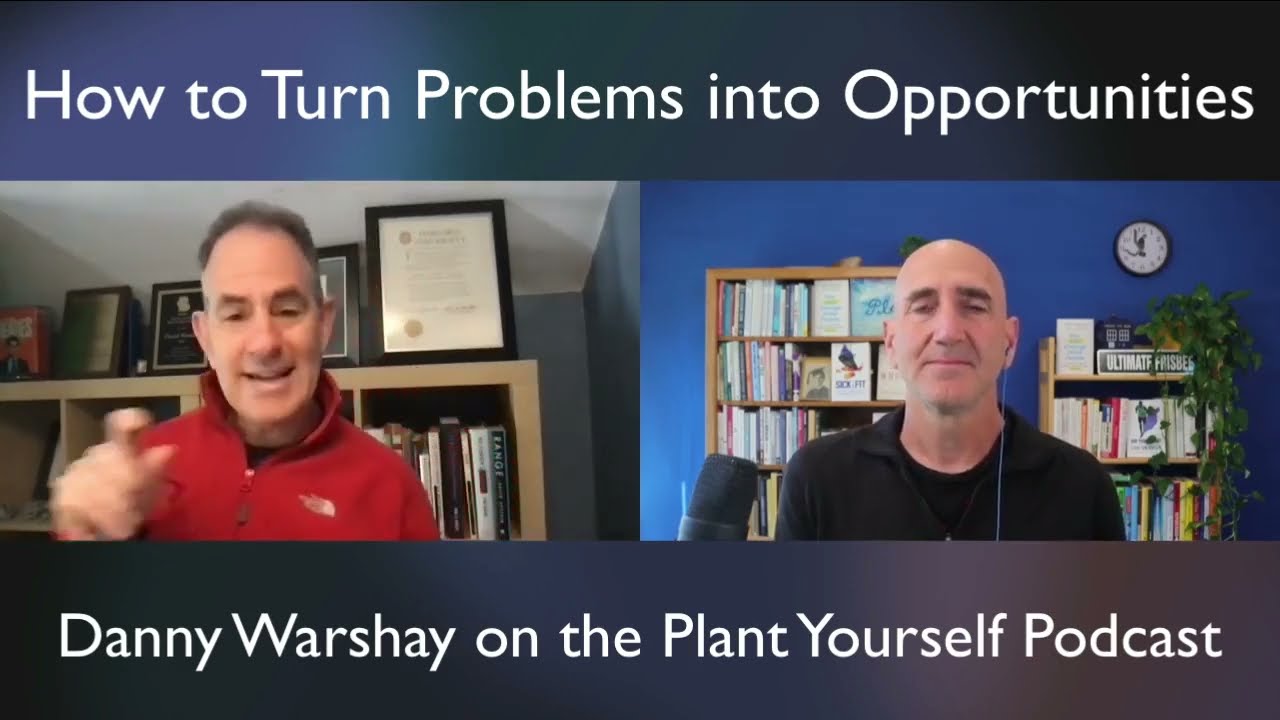
In this interview Danny Warshay discusses the origins and core concepts of his book C‑Solve Scale: How Anyone Can Turn an Unsolved Problem into a Breakthrough Success. He explains how his teaching at Brown’s Nelson Center for Entrepreneurship led him to redefine entrepreneurship as a structured, three‑step process—See, Solve, Scale—rather than a vague “spirit”. Warshay outlines eleven cognitive biases that block would‑be entrepreneurs and shows how scarcity of resources can actually be an advantage. He introduces practical tools such as Systematic Inventive Thinking, the Nominal Group Technique, and the Landscape Exercise, and illustrates them with real‑world case studies (the Pussyhat Project, Casper Mattress, Imperfect Foods, prenatal‑vitamin redesign, adaptive clothing, and others). The conversation also covers team formation, the importance of diversity and inclusion versus mere diversity, the role of weak‑tie networks, and how to design physical and virtual spaces that support both introverts and extroverts. Warshay reflects on how COVID forced a shift to online teaching, turning a constraint into a scaling opportunity, and he shares future plans for expanding the methodology globally. Throughout, he emphasizes that the method is meant for “anyone”—including those traditionally excluded from entrepreneurship—to identify consequential problems, prototype low‑resource solutions, and then scale them with values‑aligned resources.
Chapters
Danny Warshay, how's it going?
It's going great, Howie. Nice to see you. Nice to be here with you this morning.
Yeah, it's, uh, what is it, April 2022? When did you start working on this book?
You know, a lot of people have asked me that. In some ways, it feels like my entire life. At least it feels like it took that long. Uh, I'm pretty sure it was about 3 and a half years ago. I had just returned from Israel, where I had been teaching my annual summer MBA course and a whole bunch of students had been after me and they kept saying, you're not doing the 3rd step of the process. You're not scaling.
Yeah.
And I said, boy, that's true. What should I do about that? And they said, you should write a book. And so, I know you have written a number of books. I hadn't written anything since history papers in college. And I said, okay, I guess I'll just start. And I just started a big Google Doc. on my patio. And since then, I've been working very hard on it.
That's awesome because it's been so much fun sort of cheering you on from the sidelines and—
Oh, I drew you into the game. It wasn't sidelines. You were definitely in the game. As I acknowledge in the book, you contributed a great deal to the process and You were like my Sherpa along the way, but even more, my guide in all sorts of ways and my cheerleader. And as you know, there's a significant contribution of writing in the book itself from you. So, I'm grateful and I'm grateful for having me on this morning.
Yeah, it's been fun. And it's like, you know, like I just— you got to do all the hard work of selling the book now and I can just relax. And it's like very much like being like, you know, an uncle.
Well, you know what? All kidding aside, I do say that the whole process, including now, maybe especially now, has been a real joy. You know, I'm grateful to those students for nudging me. It's always wonderful when the students become the teacher and they recognize that I wasn't doing what I teach, which is the 3rd step of the process in See, Solve, Scale. I wasn't scaling. So that was great. It was great throughout the process of writing it, although it's taken a while. People ask, like, when did you have time to do this? I'm not really sure, but I remember being up late hours or early hours or even in the middle of the night. And part of that was just because I loved the process. I don't think I would have done it if it had been drudgery.
Yeah.
I even talk about that in the book. You have to do something that you feel is your purpose. And I enjoyed the process. No one was telling me to do it. I didn't have any requirement to do it for tenure at Brown or anything. And so, I really love that. And I love all of this. I love speaking and appearing places and being on a gazillion podcasts and on NPR. It's a real honor to be able to teach in a different platform. That's the way I think about it. And I even remember a few years ago when we were talking about scaling what I was doing in a different way and you scolded me. Maybe this was reverse psychology, but you said, shame on you for depriving the world of your teaching. And I thought, okay, that may be a good motivator to get me to expand what I'm doing. But it's true, I've loved all the interactions I've been having in all these different kinds of formats.
Yeah, cool. Well, you've teased the name of your book in the process twice. So I'm mindful of my audience going, what the hell is CSolve Scale? So first of all, CSolve Scale is the name of the book, which—
It is.
Yeah.
Well, and important to mention the subtitle too. It's CSolve Scale: How Anyone Can Turn an Unsolved Problem into a Breakthrough Success. And I know you even sweated over that title and the subtitle a lot, but the main word here is anyone, because the mission of my teaching, the mission of my being the executive director at the Nelson Center for Entrepreneurship at Brown, the mission of the book is to provide a methodology to anybody who wants to learn how to solve a consequential problem, and especially to engage those who've been ignored, neglected, in many cases, let's face it, discriminated against. And that feels consistent with what my mission for teaching has been, to enable many people who haven't been entrepreneurs because they thought they were excluded, in many cases were excluded, And so, I like underscoring the word anyone in the subtitle.
And you kind of add a little twist to the definition of entrepreneurship, I noticed, from the original, which was sort of pursuit of opportunity, to more like solving problems in which opportunity is a subset. But when did that come about?
When I first started teaching at Brown, and that happened Somewhat accidentally. You know, I had been in touch with an old professor of mine, Barrett Hazeltine, who is beloved at Brown. He said, we'd really like you to come back to Brown and be a professor and teach entrepreneurship. And I thought, you've got the wrong guy. I've never even taught Sunday school. And he said, no, no, you'd be a great teacher. And then I had to think carefully about what does it mean to teach entrepreneurship at all, let alone in a dominantly liberal arts setting like Brown. And it was a strange quirk. I thought at the time that my appointment was going to be in the engineering school. My father was a PhD chemical engineer, and he always laughed that I had an appointment as a professor of engineering because I don't know anything about engineering. And I thought about, okay, well, how do I teach entrepreneurship? I thought about the definition, and I thought a structured process for solving problems because That's one of the common elements that was germane to all the ventures that I had been part of. And most of my career, as you know, I've spent doing entrepreneurship, not only teaching it. And then I thought in the business school, imagine— I'm sorry, in the engineering school. Brown doesn't have a business school, which was interesting. In the engineering school, if we wanted to teach somebody how to build a bridge, we wouldn't do what I often heard around the world. was the way to think about entrepreneurship. People would talk about— maybe some of your listeners have heard this phrase— entrepreneurial spirit. And I thought, I don't really know what entrepreneurial spirit is, and I certainly don't know how to teach it. And imagine if in the engineering school, we were to teach somebody how to build a bridge, and we said, just go out there and have the bridge-building spirit. And if the cars and the trucks fall down and the bridge doesn't hold up, then just go out there and be persistent and have more spirit. And again, that's how I generally thought people were talking about entrepreneurship. And I said, no, no, no, it's a structured process for solving problems. Anybody can learn the rudiments of bridge building, even though there's lots of variation in every bridge functionally, aesthetically, operationally. And I said, in entrepreneurship, there must be some common elements to this process. It can't just be spiritual. And that's where I derived the elements of see, solve, and scale. And it is something that anybody— I've learned because I've been teaching it now for 17 years— that anybody can learn, they can master it, and then they can apply it to any context in which they're looking to solve a problem. So, that's where it came from.
Right. Although, to be fair, I'm suddenly— to defend the entrepreneurial spirit idea a little bit, It's not like there's a formula that will guarantee a successful entrepreneurial venture, right? As opposed to like, let's hope there's a formula for guaranteeing a successful bridge. So, is it that element? When I think about sports and superstition in sports, it's where there's the greatest variability and the greatest chance for failure. You think that— That somehow because not all entrepreneurial ventures succeed and even some brilliant acknowledged leaders in business come up with bad ideas and dumb solutions, that it's become mystified and all this sort of spiritual pray to the gods of entrepreneurship has come in?
Yeah, I think you're right. And that's actually— it even underscores more of the reason why I wanted it to be something that you could learn as a methodology. Certainly not does this process or any process guarantee success. I mean, we all know of bridges that do fall down, and that's unfortunate. We know of many sports teams that aren't successful. But if you just said to the Boston Red Sox, you know what, we're not going to have practice ever again, we're not going to hone the fundamentals, just go out there and have the baseball spirit. I don't know that it would tip the odds in your favor. I'm a Cleveland fan, so maybe we should— the Guardians should now use that approach because Cleveland teams don't do so well. So, maybe we shouldn't use the standard tried-and-true approach. I certainly don't guarantee in the book success, but what I do guarantee is that there's a way in which this methodology, if you learn it well and apply it well, will tip the odds in your favor. And I think, again, far more than just saying, oh, go out there and be spiritual about it. So there are things in here, either in the whole, all 3 steps, see, solve, scale, that can be useful in any walk of life for anybody looking to solve a problem. That can be, of course, in the kinds of standard tech startups, but way beyond that in peacebuilding organizations, Maybe in the opposite, in the military. I was just on a podcast recently where the military was interested in this approach. I talk about brain researchers I work with at Brown who use the CSOLVE scale method to do their brain research more effectively. The Pussyhat Project, which was started by a woman, a Brown alum named Janice Wyman, is a really good example I use in the book of a variety of elements of CSOLVE scale. So Again, I've seen this at Brown in, again, a dominantly liberal arts environment with no business school, that this approach doesn't guarantee success, but it tips the odds in your favor. And one of the things, again, that I'm most proud of is that it empowers, it engages, it inspires lots of people who would never have thought that entrepreneurship was something they could engage in. And that's something that the world needs. We need way more problem solvers. than ever before. And I'm hoping that on some level, this book can help empower them. Yeah.
And I think for me, the biggest obstacle that I have felt myself and I've seen in others is kind of the who, me syndrome, right? I was just talking to a friend who's in healthcare, working in continuing care, elder care. And working for, frankly, a shitty operation and is running the place. You know, there's a, there's sort of an absentee owner who takes all the money, who makes all the big decisions and leaves her to kind of keep everything going. And she's been doing a fantastic job burning out. And then, but thinking, um, like, well, and I asked like, if, if you were to have your own place, would you do things differently? Like, and she lit up like, oh my God, yes. So much. You know, it would be employee owned. And it would be, it would, it would have this characteristic. It would, you know, and she just, she just named a thing. Like, I was getting teary thinking about when my own mother was in continuing care, like, what amazing had she had a place like this. And so I was like, well, why don't you do it? And she's like, looked at me like I was stupid. She said, 'cause it takes money. And like, that's like a, a showstopper. for a lot of people that, well, to be an entrepreneur, you need to have lots of money. And one of the things you talk about in the book is constraints. So, let's address that upfront for the people who are thinking, boy, I'd like to make a difference in the world, but I just don't have the dough and I don't have trust fund friends.
Right. And that's a good example of one of the misconceptions that I try to overcome in the book. In fact, There are 11 cognitive biases that are in the way that inhibit entrepreneurship often. And I've studied them and I've written about them and I provide ways to overcome them in the book. And that's one of them that you perceive— many people perceive entrepreneurship as a process for which you need abundant resources. And one of the things that I do in my teaching and also in the book is to demystify that, to debunk that. And that is that, in fact, at least at the earliest stages where your friend is, for example, abundant resources can get in your way. And then, in fact, entrepreneurs benefit from scarce resources. And so, I tell a couple of examples in the book. One is of Jayna Zweiman, who started the Pussyhat Project. Why did she do that? Because she wanted to go to Washington to march with millions of others in women's marches around the time of the 2017 inauguration. But she had suffered a really bad injury and couldn't make it there. So, she might have just said, oh, it's impossible. I have to go.
I have to walk.
I can't do that. But because of that constraint, because of that scarce resource, she reframed the whole opportunity and thought, how can I empower myself? And then, how can I empower the many millions of others who may want to be supportive but can't. And that led to knitting circles, to her throwing up a website with patterns for knitting these pink hats. And that pink hat became an icon of that movement. I wore one in a march here in Providence. Maybe you wore one too. Maybe a lot of your listeners did. That scaled to the point where it had enormous impact. I mean, she— the pink hat was on the front of Time magazine. The front of New Yorker magazine. It's become an icon that people wear to this day. I was on a webinar the other day and I mentioned this, and a lot of people put on their pink hat because they had it nearby. That's a really good example of seeing a problem, solving it on initially a relatively small scale, and very quickly, within 56 days, that pink hat spread all over the country And lots of people began wearing it. And Jayna has also now reframed the whole opportunity to be much bigger than only the Women's March movement. But she's created a similar kind of politically mobilized community called the Welcome Blanket Community, which welcomes immigrants, refugees from other countries. None of that took a lot of her own money. if any of her own money. It mobilized a whole community of people who, with very little money, contributed in meaningful ways. And then the other one I mentioned in the book that I think is a good example of this is Casper Mattress Company. 2 of my former students, Luke Sherwin and Neil Parikh, didn't know anything about mattresses. And they had no money or no resources to reframe, reinvent the whole mattress process, mattress buying, manufacturing, distribution. And they did that. And Casper, at the time I wrote the book, was doing $400 million in sales. It was a public company. Eventually, it needed resources. Eventually, it needed a lot of resources. But in the earliest stages, where often people like your friend feel inhibited, fewer resources are better. And they don't get in your way. They don't bias you. They don't constrain you in ways that you look to protect those resources. They don't make you act conservative. And in fact, there is a second part of the definition of entrepreneurship that I didn't mention but is relevant here. It's a structured process for solving problems without regard to the resources currently controlled. And that's the distinction between Any old project development process and entrepreneurship. Entrepreneurship is explicitly, the way I define it at least, a process where you don't pursue it with regard to the resources either that you don't have or might be biased by, but you do it separate from those. And so, we can talk about what might be a good catalyst for getting your friends started, for example. But the main point of this little discussion right here is that entrepreneurship is a method that allows you to pursue it even if you don't have the resources initially that might be, you think, required to pursue that opportunity.
Right. Because when she's thinking about it, she says, well, I need a building. And I know how much a building costs because we built a building and it's millions. And then she says, well, there is investment in that, but the only investors that are around are the ones who want kind of a predatory return, right? Like, no one's interested in doing it my way because it will mean more money for employees, lower fees for families, and less profit, right? So, she's kind of like, well, that's not how the capitalist system works. No one is interested in funding that.
Well, first of all, that may all be true, but it may also not be true. And I would recommend, you know, the first part of this book is to not worry about how you're going to scale something, which is about having a building and lots of money and investors. That's part— that's the third step. What I might recommend to her is start with the first step, which is to make sure you really understand the problem you want to Because too often, especially tech entrepreneurs, fall victim to what I call being a solution in search of a problem. In her case, she might be so caught up in her own mind with all the failure points that she's a failure in search of a problem. But I would say no matter what, whether you're biased because you think you have a wonderful solution Or you're inhibited because you're worried about all the impediments in your way. Unwind all of that and start with, let's be anthropological, let's be empathetic. Let's not be biased by, for example, in her case, how she thinks the problem is operating. And she may know a lot because she's in that industry already, but she may be suffering from what I call the opposite, the burden of abundant resources. Her abundant resources She knows a lot about the way conventional caretaking works, and maybe it needs to be reinvented. Maybe it doesn't have to be supported by the kinds of predatory capitalists that you're describing. Maybe it doesn't need a building. Maybe it doesn't have to have the kinds of hands-on, exhausting type of intervention that's conventional? I don't know the answers to any of that, but what I would say is it's worth taking a step back and asking the right questions. You know, it was Albert Einstein who I quote in the book and in my teaching, and he said, if I had an hour to solve a problem and my life depended on the solution, I would spend the first 55 minutes defining the problem. Because once I do that, then the rest of the 5 minutes I can solve it. And in this case, I think it might be worth taking a step back and defining the problem a little bit differently from how she's framed it. It may, for example, and then once you've defined it clearly, the second step is to use a whole bunch of techniques that I share that help you to solve that problem. And one of those techniques that was at least developed, co-developed by a friend of mine named Amnon Levav, is called Systematic Inventive Thinking. And it's 5 creative patterns or templates that he studied that were the basis of breakthrough solutions in all sorts of innovations. One of those, for example, is called subtraction, where you delete one of the key components of an existing product or service. And that might be, in her case, delete the building and see what happens. I'm not saying you go forward and actually do it. But initially, what does it look like if you didn't have a physical location that's part of her assumed model? And that subtraction does something really important. It breaks what's called your mental fixedness. I don't know your friend, but I can tell she is human, I presume. And she, like all of us humans, has something called mental fixedness, which means your brain is trained to operate and perceive things in a certain way. And because you're human, this is one of those cognitive biases I warned about. It's hard to overcome that. And so, I provide a number of techniques in the book, including systematic inventive thinking, Whose purpose is to break your mental fixedness.
Mm-hmm.
I'd be curious to know if she does at least mentally do some of these stretches, what creatively comes out the other end about a different approach to doing the kind of work she's talking about that has a more innovative approach that may not require the kinds of resources that she assumes she needs. Or in the end, if she moves to the scale level, and is able to justify that she really understands the problem, she solved it on a small scale, my bet is there are ways for her to attract resources that will be consistent with her values. Because the last thing I would want was for her to imagine that she has to sell out or even compromise to attract people to her venture that don't have the same values as she does.
Love it. I hope she's listening.
After all that, I hope so. But even if she's not, there's some really good examples in the book of all of what I just described, of learning how to do bottom-up research so you can really understand the unmet need and understand it in a way that may be very different from how you've perceived it to this point. There's techniques in the solve stage that help you get beyond your mental fixedness so you don't do it conventionally and doom the small-scale solution to the fate that probably is the problem you wanted to solve in the first place. And the third step, scale, yeah, that is where you start to layer in additional resources that help you develop a solution that has long-term impact at scale. And that's really the whole mission of my teaching in the book is impact at scale. so that you can solve a problem that is strong and enduring and one that has consequential impact on the world. And all the examples in the book, I think, do that. They illustrate how all my students are identifying consequential problems. They're solving them initially on a small scale at a point that doesn't need and actually shouldn't have lots of resources layered upon them. But eventually, if they're going to have real significant long-term impact, They will figure out a way, and I teach you how to attract resources that will be consistent with your values and something that you'll be proud of engaging as well.
And one of the things I was struck by, you sent me that lovely one-pager for the Next Idea Book Club, is one of the blessings of constrained resources is that you have to play nice with others. When, you know, you might think, well, I've, you know, I want to— I want total control over this. And there's something, you know, lovely about it being yours and yours alone, but there's also something lovelier about having the humility to say other, other people's influence could— might make this better, as opposed to just diluting perfection.
Well, one of the things that I did in the book, which I'm proud of as a, um, I guess academic because I have never really done research for a living. But I wanted to present a methodology in the book, which is the basis of my teaching, that is supported by academic research. And so, lots of the academic research I share is about what you just described. Only 16% of new ventures are started as solo ventures. And those are much less likely to survive, let alone succeed. And then of the others that are created on the basis of a team, 65% of them fail because of team friction or team challenges. So, I share a lot in the book about how to, again, not guarantee success, but tip the odds in your favor on the basis of some really good advice about what it takes to form a successful venture team. Unfortunately, so for example, one of those is that diverse teams tend to succeed much more than homogeneous teams. There's a caveat there. Those diverse teams have to also be inclusive, and we can talk about the distinction there and why both are important. Unfortunately, Again, one of our cognitive biases, over half of venture teams are formed from friends and family. Even though those friends and family don't add the kinds of complementary perspectives, points of view, backgrounds, race, gender, religion, personality type, they tend to be birds of a feather who flock together. And those teams don't do nearly as well as ones that have members that come from different genders, different races, introverts, extroverts, different ethnicities, different skill sets. And so, there's a lot in the book and a lot in my teaching. I love talking about this, about guidance for how to form those teams. The phrase that Linda Hill, a professor of entrepreneurship and leadership at Harvard Business School uses, which I think is a good reflection of what you just said, Howie, is she uses the phrase creative abrasion. She wrote a great article called Collective Genius. And it's all about what you just said, that you need some humility to acknowledge that there's people who know more about a field than you might or might know less about a field but have something to offer that is nonetheless complementary, maybe abrasive in a creative way. The woman you were talking about, about the elder care community, it may be that she would benefit from having somebody on her team that comes from a very different kind of background, who could see the problem differently, who might be able to bring solutions to the table that aren't found in today's elder care industry. And again, that's what the Casper mattress founders did. They came to the table with a whole different point of view. And they were able to reinvent every step of the manufacturing, distribution, selling, branding process in ways that were, again, different because that— not because they knew more about the mattress industry, but because they knew less.
So, I'm getting the idea that the entrepreneurial spirit is really a willingness to be uncomfortable with ambiguity and abrasion, right? Like, I was trying to explain this to Elon, to my son, and I was saying, like, this research about teams. And so, I said, as an example, if Danny and our friend Rafi and I tried to form a company, we probably wouldn't succeed based on the the statistics. And he goes, well, that's bullshit. You guys would totally succeed.
Well, at least according to the data, we wouldn't. Or at least, again, it's not that we would be doomed to failure. We might very well succeed, but we would be less likely to succeed than if we pursued people from through what I would call what the research calls what a famous researcher at Stanford Mark Granovetter calls the strength of our weak ties. We're— our forming a team together would be a function of what most people do, which is what I said. Over half of the new ventures formed are formed just like you said. Oh, Rafi, Howie, I know you. Let's form a venture. We are connected through strong ties. We would be much better off, and this again is one of the guidance I have for overcoming this cognitive bias, pursuing people through our weak ties. And what's really unfortunate is LinkedIn, and I talk about this in the book, social networks like LinkedIn and Facebook, which are often where people default to, to find co-founders, are a means to pursuing those through strong ties. These social networks won't even let you connect with somebody who's not already a strong tie. And yet, if we were to pursue somebody who's a little bit outside of our immediate network, we would be much more likely to find people who don't look like us, don't speak the same language, come from very different backgrounds, maybe have different race, gender, you know, personality types. And the data would say that we're much better off to form teams on the basis of those weak ties than our strong ones.
Maybe someone should start a social network based on that principle.
I think they should. That's actually what I say in the book, which is if Facebook and LinkedIn were to really add value to me, it wouldn't be to remind me who I'm already sort of connected with and I want to press, sure, I'll friend you or LinkedIn with you. That doesn't add much value to my network. Much more value would be, say, Here's a person in Dubai you've never heard of. You're 5 connect— you're 5 network nodes away from them. They have complementary skill sets that might be really useful to you. You should connect with them. Imagine how many more people in our network who would be relevant and interesting and motivating. And, you know, a function of this creative abrasion we could add if, if, yeah, if LinkedIn and And Facebook did the opposite, and they connected us with people who we were almost never likely to connect with.
Although, to be fair, I do get 3 or 4 friend requests from sex bots a week, so.
Okay, maybe that's a problem we're looking to solve. I'm not sure. By the way—
They're definitely not in my network.
Okay, well, I'll mention very briefly the companion concept of inclusion. And I talk a lot about this in the book because, first of all, the statistics are pathetic. In the world of venture-backed startups, only 2.3% are led by women. Only 1.5% are led by Latinx founders. And only 1% are led by Black founders. Those statistics are abominable. And they're good evidence of what I said before where Lots of would-be entrepreneurs who are very capable of identifying consequential problems, learning how to solve them, and then would solve them are left out and have been forever because they've been neglected, ignored, and in many cases discriminated against. And so it's not good enough only to— it's a good first step, it's necessary, but it's not sufficient to engage a diverse team. In fact, I share some good research by a woman named Frances Frei and her partner, Anne Morris, also from Harvard Business School. And they demonstrate that inclusion is absolutely essential. Diversity, they like to say, is being invited to the dance. Inclusion is being asked to dance.
Hmm.
And they show how actually, in some cases, if you are a homogeneous team, you will outperform a diverse team that isn't inclusive. If you are an inclusive diverse team, you will more likely outperform a homogeneous team. So, what does that research— What does inclusion look like?
Go ahead. Yeah. What does inclusion look like compared to just diversity?
So, if I could show you, I would show you these really brilliant Venn diagrams where they show where in the first diagram, it's The diverse team that's not inclusive, and they only draw on where everybody in the team overlaps. And that's actually a very small part of what everybody potentially could be bringing to the table if you were engaging their authentic selves. The homogeneous team overlaps in exact ways, and they're going to be drawing on everybody's potential that they bring to the table because they're all the same. The diverse and inclusive team engages everybody to be their authentic self, even where they don't overlap. And they say, we want you to bring to the table all that you've known before, all that you might be able to contribute, all that you bring from your racial difference, from your gender difference, If you're a different personality type. And so inclusion means creating an environment of trust so that everybody feels comfortable expressing themselves by being their authentic self, not just for looking for ways in which they exactly overlap with everybody else. And that's not easy to do. But again, there's some guidance in the book. I'll give you an example. I talk about a a technique that I teach and that I use and I require of all my students when they're doing their initial thinking about different solutions to problems called Nominal Group Technique. It sounds very scientific, but what it breaks down to be is a way in which both introverts and extroverts will feel comfortable contributing. Introverts contribute very differently, not among everybody talking all at once in a team, Introverts tend to be most productive when they go off alone, when they work on something, they figure something out preliminarily, and then they come back to the team and feel comfortable sharing. That's an example of where both introverts and extroverts can be invited to be included in ways that they're their authentic selves, rather than subjecting them to the extroverted way, which is, okay, everybody brainstorm Let's throw a bunch of stuff on the wall in whiteboard or sticky note format, and then let's talk as loud as we can to out-argue the others. That works for some, but not for many. And so, that's just a simple example of where there's a structured approach to inviting people to be their authentic self and contribute in meaningful ways that wouldn't happen if you only had a diverse team of introverts and extroverts But you didn't invite them to contribute meaningfully.
Gotcha. So, it reminds me of— there was some research I was looking at around trying to get more women to STEM programs in colleges and universities and taking a look at the architecture and the design of the room. And there was Star Wars posters and sort of the metal desks. And then they, you know, would have the, the under— you know, the, the prospective students come in and just, you know, do some stuff and talk and, and then talk about would they be like, would they feel comfortable here? Do they belong here? Versus changing some of the rooms, putting in plants, putting in like nice artwork, like cleaning surfaces and like just, just those pretty much subliminal cues. helped women in particular feel like, oh, I could belong here. And I know, you know, you working at an Ivy League institution, there are lots of, you know, hundreds of years old with a heritage of a certain type of student, a very narrow slice of the world. And even to this day, you know, I went to Princeton, I see the same thing that People who are— people who don't look like people who traditionally went to Princeton get all sorts of signals like, I'm not sure I entirely belong here. Yeah, I'm really smart. Yeah, I'm really accomplished, but I don't exactly— I have to kind of mold myself in a certain way to be accepted. And what you're talking about is kind of just beautiful in its own right. This, like, let yourself be, let's create environments where people get to be fully themselves. Absolutely.
And you're right in terms of what the messaging is on a college campus. We were very conscious and very deliberate about that when we built our Nelson Center for Entrepreneurship and how we've decorated it internally. I don't know whether we've hit it on the bullseye, but we've tried very hard. I'm a white male. And if I don't feel like I have any kind of white privilege, just walk into what used to be on all the walls of the faculty club at Brown. Everybody looked like me. What if I'm a Black woman and I walk into the faculty club? You're right. I don't even think it's subliminal. It's right in your fricking face that you don't belong here. So, by the way, the faculty club has taken down those pictures. It has diversified the look of who's on their walls. And we in our building did the same. We very deliberately have I think very good diverse representation of lots of different founders who have been Brown students coming out of Brown, founding all sorts of things that look like the diverse kinds of community that we want to continue to attract in our center. And people have said how striking that is, that even very deliberately we've tried to do that. By the way, that extends to even into, and I talk about this in the book, The way you design where you want some of this creative work to happen. We spent a lot of time designing the interior of our building to not just be, you know, an open format, which is the way lots of new office spaces are designed. In fact, I share some data from Susan Cain, who's a wonderful author, wrote a book called quiet. And she talks about how lots of these open spaces can cause people to literally be sick. More evidence of why our building is good during now the— what I hope is the end of a pandemic. But it provides space for people to work as a group and also space for people to retreat. soundproof individual spaces for people to work individually, to be open to both introverts and extroverts and how they both contribute. So, I don't even think these are necessarily subliminal. I think these are overt. Well, there's some— Yeah, they're very conscious of the way that works.
Yeah, they're subliminal to the people who are included by them.
Yes, you're right. We don't notice. Like, okay, everybody looks like me. I guess that's the way it always should be. No, that shouldn't be the way it is. So lots of the approaches in the, especially the solve stage, are what I call mental stretches that enable you to break your mental fixedness. And I mean, I'll give you an interesting example, what I think is interesting, of a way in which it can be very subtle ways also to help break that fixedness. There were 2 psychology researchers at Harvard Ellen Langer and Alice Piper, and they divided a group into 2 cohorts. So the first cohort, they gave a pencil, a piece of paper, and they were going to have them write a few things down, and they knew they were going to make mistakes. And the third thing they gave them, they said, this is a rubber band. Only 3% of that cohort figured out that you could use the rubber band as an eraser to erase some of your mistakes. The second cohort, they did the same thing. They gave them a pencil, a piece of paper, and the only difference was they said, this could be a rubber band. That group, 40% of the people figured out that the rubber band could also be an eraser. So, the way to break your mental fixedness does not have to be hitting you over the head Or being like in your face about it. It can also be subtle. But think about the difference. 13 times the number of people figured out that the rubber band could also be an eraser just by that seemingly subtle shift in how they were handed the rubber band. And so, it's really important. And again, I share some exercises to before you start. And I'll go back to the woman you were describing, your friend in the elder care. Industry. Before she starts to embark on thinking about how you're going to do something different, or worse, in her case, be so biased by that she's just defeated before she's already started, it would be good to follow some of the techniques I share in the book to break her mental fixedness so that she could potentially see a different way of viewing the problem, as well as different ways to solve that problem. Can I mention one other real quickly?
Of course.
So, in the 3rd step, where you're starting to scale, where you want to think big, that is not easy. That's also one of these cognitive biases that I talk a lot about in the book. And I share why it's important strategically and also in terms of, you know, really fundamentally solving a problem. It's not easy. And so, I share a technique that I learned and I readapted from a good friend, an innovation expert named Bob Johnston. It's called the landscape exercise. And I won't be able to do it justice by teaching it here. But I acknowledge that just asking somebody to think big is not enough. Because again, we have fixedness. We're stuck on, oh, it's a small Maybe even we think there's some advantage to staying small, tidy, something you can wrap your arms around. It's less risky. Actually, I share a lot of evidence why that's the opposite, why thinking big is a much more significant strategic advantage. But just telling people that isn't enough. And so, I help you tap into the right side of your brain to think 50 years into the future and then reinvent backwards. And you end up at a place that's far further ahead, far bigger than where you ended up in the second step of solve. I collaborate now with a group called Long Now. Long Now blows my mind because I usually blow my students' minds when I say, I want you to project yourself 50 years into the future. Their mission is to imagine humanity 10,000 years into the future. In fact, they add another significant digit onto the date. So, today's date, today's year is not 2022, it's O-2022 because they are projecting life 10,000 years into the future. I was on a webinar with them a couple of weeks ago, and it's so interesting to see how they have broken their own human fixedness by projecting themselves way farther into the future than I've ever imagined before. And they are stretching their minds in ways that help people think big, that I think is really instructive.
They're the ones with the clock, right?
Yes, they have a clock that's tuned to 10,000 years into the future. And they think about things like mining asteroids and, you know, building Dyson structures and Climate change is in the distant past because they will have figured it out and we're traveling to other planets. But the point is, by stretching your mind, using some of the techniques I share, including exposure to Long Now in the book, you are much more likely to come up with a long-term scalable solution than just trying to empty what's in your mind and Doing something which doesn't work called brainstorming. I talk a lot about why brainstorming is not a successful technique, but the techniques like I've mentioned— nominal group technique, systematic inventive thinking, the landscape exercise— these are all, by the way, fun too. They're fun exercises that help you embark on something where your whole mental attitude will shift. And again, I don't mean to be picking on your friend, but it's just at least the way you paraphrased it. Sounded like she's just so bummed out. I can't imagine in that mental state how you could see the problem effectively, let alone see a solution or scale it. So, that's why— and she's human. I'm not criticizing her. I'm just saying she's probably falling prey to many of the 11 cognitive biases that I warn against and that I help you overcome in the C-Solve Scale book.
Yeah. And what occurs to me is that time is not commutative, like going from here to there. It's not like in Google Maps, you could hit that little little squiggle and reverse the destination and the starting point that like, and I see this in my coaching, when people think about where they are and then where they want to get to, they're often overwhelmed or discouraged. But if they start out by thinking about where they want to get to, and then you say, how'd you get there? Right? It's a could-be question. So, let's imagine you're there, tell the story of how you got there, then all of a sudden, the path appears.
Right. And that's why the title of the book is not See Scale. There's a middle level here called Solve. And Solve acknowledges it's going to be iterative. You're not going to get it right the first time. You might not even get it right the 5th or 10th time. It iterates. So, you take a couple steps forward, take a couple steps backward. I don't even ask you to think big or to think long-term until you start to embark on the 3rd step. And once you do that, you've already created, you've already identified the problem in a bottom-up research kind of way. So you feel more confident about knowing really what the problems are. You've already solved it on an iterative level using all these creative and innovative techniques that I've mentioned. At that point, you might be receptive to a technique that'll help break that mental fixedness and to project far into the future. And do it in a fun, artistic way. When I see my students do this, or I did it for the first time actually in London with a group of peacemakers called Seeds of Peace, whose mission was not to sell more widgets, their mission was Middle East peace. It was Palestinians and Israelis coming together to envision something. And I knew that just envisioning it 2 or 3 years in the future would be fraught with all sorts of executional challenges, like, well, what do we do about the checkpoints? And the governments are in disarray. No, I say, think 50 years into the future. And no one can challenge whether what you're envisioning is right or wrong. There's no executional judgment there. Although the first response out of the mouth of a woman who was putting together a bilingual Arabic and Hebrew kindergarten in Jaffa said, I'll be 80 years old then. It's very hard for me to imagine that. And I said, exactly. You want to get yourself out of your current state so that you can break that mental fixedness and think much bigger. That was the case of another educator named Patrick Moynihan from my Brown class who had started a Haitian school for disadvantaged young people about 20 years ago. And he couldn't raise enough money to think of expanding the school. And I said, you're thinking too small. You need to be thinking way bigger. We did the landscape exercise. I actually had one of my students work with him. He came back after breaking his mental fixedness about one school and said, you're right. We're now envisioning building thousands of schools and completely refashioning the way Haiti's economy works. its whole educational system. And with that much bigger vision, he was able to go back to some of the potential donors who just weren't turned on by one school. And he's now calling it the Haitian Network, not the Haitian School. And that much more expansive long-term vision enabled him to raise way more resources than he ever had before.
So you mentioned bottom-up research, and we haven't really gotten into it. We got to tell some bottom-up research stories because, you know, I think a bunch of people listening to this in the plant-based world may have, you know, a recipe and, you know, want to create a product or a line of clothing or something, or they, you know, something's bothering them that they want to change in the world. And we've, you know, you've seen like the breakneck speed of plant-based technology around food and faux leather and things like that. And I've seen so many, you know, bright ideas crash and burn because of, you know, talking about like falling in love with your idea, a solution in search of a problem. For folks who are listening to this who might have some, you know, they have a problem that they want to solve, like bottom-up research feels, it can feel really hard, but it can also just be so much fun. And it's absolutely critical. Can you talk a little bit about like What it is, where it comes from, how you were introduced to it, and some good examples?
Sure. I love that. And this is where that Einstein quote matters. If you had a problem to solve and you had an hour to do it and your life depended on it, I'd spend the first 55 minutes defining that problem. And that's why I spend so much time in my teaching, in my workshops, in big companies or in organizations around the world, and certainly in the book, It's the first step. It's C. It's being anthropological. It's being empathetic and listening and observing people behaving naturally in their own environments, trying your best not to be biased by what you are observing or listening to. And that's hard. Observing is harder than you think is one of the subtitles of one of the chapters in the book. And I share 3 really good examples, I think. 2 from my training in the least entrepreneurial place I've ever been, but a wonderful place called Procter& Gamble, where there's really smart people who observe people and listen to people behaving naturally in their own homes and figure out that there's some problems that the consumers that are observing don't even themselves know. I tell one story about the Tide brand that was looking to understand how people interacted with the cardboard box that contained the powder. And they discovered that there was a woman they saw, but also in big numbers, their consumers were stabbing the side of the box with a knife to open it. They had no idea before they started observing them. The Dawn dishwashing liquid people, another piece of P&G lore at least, were observing people washing dishes using Dawn in their homes. And they discovered a confusing thing, that there were a lot of these Dawn dishwashing liquid consumers using Dawn to wash fruits and vegetables. And they had no idea that people were doing this before they observed them. And then I also share an example from my course at Brown, a group, a group of students who discovered that women hate taking prenatal vitamins. They observed people women coming into the Whole Foods Market where they were doing this, taking prenatal vitamins off the shelf and looking really unhappy. And they discovered that women don't like them because they're very big, tough to swallow. They taste terrible. They exacerbate their nausea. They make them constipated. And they reinvented the whole way that prenatal vitamins are formulated into these very convenient powder packets that are now patented. The team has now raised over $10 million. They are outselling conventional pill-based prenatal vitamins and they have a— they use bottom-up research then to find and validate a whole range of other mostly women's-focused health products. And then the last one I'll mention, which I'm— which may also resonate, I think, with the specific plant-based community that I know we're speaking with now, of which, by the way, I'm a member too. One of my students named Ben Chesler was really puzzled and troubled by the idea that 40% of all US produce goes to waste, not because it's rotten or not good for you, but because it doesn't conform to the look of what the ideal apple should look like or the ideal cucumber should look like. And they discovered this by visiting farms and seeing these big piles of produce and asking, oh, what are those? And they said, oh, those are the apples that don't look right, and so we're throwing them out. And so Ben said, well, that seems crazy. And they used the CSOLVE scale process to do a little bit more bottom-up research to figure out really what the unmet needs were. Fast forward to today, and Imperfect now called Imperfect Foods, has raised over $200 million in venture capital. They're doing over a quarter of a billion dollars of annual revenue. They employ 1,500 people in 43 states in well-paying jobs. And I think if you ask Ben, and he will say this overtly, the thing they're most proud of is that they've saved well over 200 million pounds of produce that would have gone to waste. And they sell it, they have it sourced directly from farmers. They sell it for less than 30%, for 30% less than retail prices and ship it directly to consumers. And so that was— Ben took my class in 2015. He, as I suspect, much younger than most people listening to this podcast. And he was able to, through bottom-up research, find and validate an unmet need, iterate to figure out an initial solution that might work well. And then, as you hear, he was able to layer on resources that eventually scaled the solution and is taking a big dent out of climate contributions of all that wasted food, let alone— reclaiming lots of that food. So, I'm really proud of Ben. I'm really proud of the team that's doing Premama, the prenatal vitamins. And, a lot of that came from some excellent training that I had through P&G.
And, Ben was a guest on this podcast. I don't know how many years ago, probably 2016. So, he had just gotten started and you put me in touch. We had a fun conversation.
That's true. I forgot about that. Well, and that was at the stage It had to be very early where they were probably still maybe even just working out what problem they were solving, let alone how they were going to solve it, and probably nowhere near the point at which they were raising all this money. I love that example so much that I figured Ben himself would be the best person to frame it and write it in the book the way that I asked you to write a section of the book. Ben did, as well as others like Gwen Mukoti, who's a woman from Zimbabwe who was involved in our center and is tackling issues related to children's illiteracy in Zimbabwe. Emma Butler, whose company intimately figured out that there's a problem among women who have pain caused by illness and can't dress themselves through conventional clothing and has created a line of adaptive clothing for women. All of this came from that see stage, which, as you rightly point out, is based on bottom-up research or being anthropological and empathetic in a way that helps you see things that you wouldn't have seen if you were just biased by your own way of perceiving what that dynamic was like.
Yeah. And another thing that I kind of want to highlight as having an inside view of your world a little bit is like Emma Butler, looks really put together now, like a business person. And she gave a talk at the event that the Nelson Center put on that I attended virtually. And she's like, you totally see her chairwoman of the board. And she's talking about like the first time she came to her class, she was— your class, she was too nervous to speak. She thought, what the hell am I doing here? I don't know anything about business. I just kind of want people to understand How much this approach and your work busts stereotypes about who gets to play in this playground?
Again, that is the thing I'm most proud about. That is why I love the subtitle of this book, How Anyone Can Turn an Unsolved Problem into a Breakthrough Success. And there's no better example than Emma Butler. Emma, and I've shared that 2-minute video. Maybe I could have it— I can share it with you and you could append it to this somehow. But Emma says it so much better than I, but in short, you're right. She tells the story. She said she decided to experiment with my course because so many of her friends had taken it and enjoyed it. But she was a French concentrator, a visual arts concentrator, and she said, I was literally shaking walking in the first day of your class because I thought, who am I? You know, I don't know anything about entrepreneurship. I don't know what I'm doing here except so many of my friends said I should do this. And then slowly she began to realize, oh, I can do this. I can be anthropological. I can be empathetic. I can figure out a problem to solve. Oh, I can be creative and follow the instructions Danny has in the solve stage. I can iterate and risk some failure early on when the stakes aren't so high. And yeah, I can raise some money. I can get other people to be involved, people who, as your, again, elder care friend was concerned about, have consistent values with mine. She's now raised over $1 million in a pre-seed round of funding. These are from people who really do care and share the same mission she does about serving women with different shaped bodies and pain as a result of illness that are preventing them from using conventional clothing. And Emma is exactly, you know, a zealot of the converted. She is such a great example of someone who I hope this book in much bigger ways than I had been through, you know, a class here and there will have its own impact on by helping people realize, maybe like your friend in the elder care world, ah, I can do this. I can at least take the initial step. Maybe the initial step is reading the book, but the initial step of doing this kind of bottom-up research. Bottom-up research is really fun. It's interesting. It's like a treasure hunt. You don't know what you're going to find. And I know you've done some of this, Howie, through my guidance. And once you start doing this, you will see problems to solve everywhere that you may not have realized were there in the way that you had been biased against. And again, Emma and Ben and Gwen and Jana and Dan Aziz and all the others mentioned in this book, Micah Hendler, who was in that workshop I did for Seeds of Peace, who runs—
Yeah, he was also on my podcast. I'll put a link to him too.
Right, the Jerusalem Youth Chorus of Palestinian and Israeli teenagers. All these people have identified consequential problems. They've figured out an initial small-scale solution in an iterative way with tolerance for failure. And then eventually, they have figured out a way to scale their solution so that they can have much bigger impact in fundamental ways. The world needs more Micahs and Gwens and Bens and Emmas and Dans And Jana's and Luke's and Neil's. And that's why I feel good about finally doing what you nudged me and what my students nudged me to do for all these years, which is to start to figure out a way to scale my own teaching. And that's what makes me most proud of the book, See, Solve, Scale.
I'm gonna take another stab at defining entrepreneurial spirit, which I know you hate. I think maybe the entrepreneurial spirit is looking at problems as opportunities. As like, you could walk through the world and just be pissed off, or you could walk through the world and say, oh, wow, like, there's an unmet need.
Yes. And that's why, again, I hope I'm not embarrassing your friend who's nameless at this point. So maybe I couldn't, but maybe she knows who she is. I totally empathize. I get it. I'm incredibly frustrated by lots of what's happening in the world politically, certainly militarily, what's happening in Ukraine, the challenges that remain about healthcare and COVID. There's a gazillion challenges. I do think it's so much more productive rather than brooding in all that anxiety to think of these, reframing these, breaking your mental fixedness and thinking, hmm, These are some opportunities. And I hope your friend who's in the elder care business will think about that, that she owes it to the world. She owes it to herself. She owes it to all the potential clients and maybe employees who will own her company, too, to figure out a way to take an initial step. And even if all she does is the first step of C, doing the bottom-up research, My bet is that mentally, she will feel better about where she is channeling some of her frustration and anxiety and dissatisfaction. And then she can decide whether to take the second and third step herself. But once you get on a roll and you reframe this as a creative outlet, I do think— I mean, think of Ben or Jaina. If they had just said, God, I'm really pissed off. I can't make it to the inauguration protest. Oh well, I guess I'll just sit on my hands for the next 4 years. No, she said, I'm going to think of a creative way to empower others. And next thing you know, she's created a political icon that is probably going to be around forever. It's even in the Smithsonian, which is a cool thing. What if Ben Chesler had said, God, I'm so pissed off that 40% of our food goes to waste. He was pissed off, but he channeled that energy into figuring out a very sustainable, sustainable in every way possible process for overcoming that problem. And that's in the end what I do think. I think at its core, one of the reasons that I'm a plant-based eater and consumer is that it does improve the world. And you've taught me a lot about that. And I've learned a lot about that on this podcast. And I've learned a lot about that from this community. It's good for me. It's good for my family. It's good for my health. It's good for the world. And so, yeah, I do think this is a method for improving the world. I recently did a webinar with Brown Hillel. And at first, the question was like, what is this? What is Brown? What does the Jewish community have to do with entrepreneurship? And I reminded them of the phrase tikkun olam, which means to repair the world. And so, I hope it's not too grandiose to say, in fact, at one point, I had the name of one of the chapters in the book, Tikkun Olam. It's really important to be thinking about how are we going to improve the world. It needs to be improved. And at least the examples I share in the book are really wonderful people who are doing that.
Right. And the fact that this methodology opens it up to anyone, because the people who have been improving the world so far in the narrow definition of entrepreneurship have all been improving it in a particular kind of way that's limited. Right. Not to say that there haven't been great technological and business breakthroughs, but it hasn't encompassed all of what humanity values and has to offer.
Correct. And that's why, look, way back 17 years ago when Barrett Hazeltine tapped me on the shoulder and said, come back to Brown to teach, I had to think about that. The world does not need another business incubator. Nothing wrong with business. I have an MBA from Harvard Business School. I've spent most of my time in business. But entrepreneurship can, and especially at a place like Brown, should be much bigger, have a much wider net to cast, and to attract lots of people in an inclusive way who've been neglected, ignored, discriminated against. And of all we're doing at the Nelson Center, it's the thing I'm most proud of. And I think, again, if that's the mission of the book, I think it's a way to engage people to start solving problems in ways that are going to have significant impact on the world in a much more expansive and inclusive way.
Awesome. Awesome. And I think it's great that you guys named your center after a character from I Dream of Jeannie. I think that's— I love that.
How'd you guess?
I have an idea for your next book. Which is—
oh, God. Somebody asked me that yesterday. And I said, if I knew how challenging the process was, I'm not sure I would have done it. But now that I know, maybe you'll share what your idea is.
Well, that's probably true of practically every entrepreneur, right? They're like, if I had known how hard this was going to be.
That is true. I mean, look, earlier in the discussion, you said something about, is it possible? Can you guarantee success? No. In fact, there's big sections in the book devoted to failure and to learning how to manage it, even institutionalize it, motivate it. But the process is fun nonetheless. But I'm happy to hear your idea.
Well, so that you have all these stories from Brown alumni who've taken your course. And now you've got a book in the world. I would love to see Scene Solved scaled where you get stories of people who, you know, because people who are affiliated with Brown, even if they're diverse, have gone through a pretty narrow filter. And like, I would love to know if there's like a way that you're collecting stories from, you know, the neighborhood, from from the bayou, from, you know, a village in Africa where someone read your book and went through the steps. And like, I would, you know, I thought the—
I do like that.
The problem with your book is that it's too short, frankly, for me. Like, I wanted more examples, more stories, and, you know, I just, I'm just excited.
That is an interesting idea. I like that. Maybe it doesn't even have to be a book. I did create an online network of readers and supporters and listeners. I always say listeners because I narrated the audio version. And I'm intrigued to hear from them, as I already am, about what they are doing as a result of the book, how they're motivated and inspired. And what is— I showed this to my wife, Deb, last night. I said, isn't it cool that I see all the people applying to be in this network. Yesterday, there was somebody from Australia, the day before from India, all now becoming adoptees of this book and the methodology. That is evidence, I think, of what my students and what you nudged me to do, which was to scale this. I do want to point out that I was very deliberate in the book not only to feature brown graduates, my Brown students, because as you know, I do workshops around the world in all sorts of places. Sometimes I have to find on a map, like, you know, in Ramallah, Palestine, in rural China, in Kingston, Jamaica. I didn't exactly know where Bahrain was, but the US Embassy asked me to go there and do some training. I love all those places. I get to learn a lot from other types of problem solvers. When I was on NPR the other day, they asked me, does this approach, Seesaw of Scale, apply in different cultures? And I said, yes, I know that from having taught at least workshops all over the world. There are definitely some cultural differences. For example, tolerance for failure. When I go to China, no one wants to say the word failure. And we have to spend a lot of time desensitizing people. When I do that in Tel Aviv, Israel, or Silicon Valley, people wear failure on their sleeves like it should be, like a mark that helps them indicate how much they've learned. And there's not as much concern about having failed. But you're right. I think that would be an interesting follow-on book, Seen, Solved, Scaled. And maybe it is, as I hope is the case in this book too, a way to shine the spotlight, as I did in that event you were talking about, where it shined on Emma and Ben and Gwen, not on me, but on the practitioners of, and those who've adopted this approach to see solved scale.
Cool. So what's next for you while You know, as COVID may be waning or becoming endemic, you have plans or travel or new workshops?
We are back in the building at Brown in the Nelson Center, which is really great. I'm back in the classroom teaching. But, you know, as a result of COVID I'm not happy it was the impetus, but it was one of those systematic inventive thinking approaches of subtraction. We had to subtract the whole physical presence. This is where I was again thinking about your friend, What if you didn't have physical buildings? Is there a different way to conceive of that? We had to— I mean, this is a funny thing. Brown polled the entire faculty just weeks before the pandemic hit, not knowing there was a pandemic on the horizon. And they said, would you ever even consider teaching online? And fewer than 20% said they would ever even consider it. Well, then you fast forward just a few weeks, COVID hits, Brown's physical space shuts down, our Nelson Center shuts down. Faculty, 100% of the faculty had no choice but to teach online. And we figured it out. We figured out a way to do it. That's a good example of subtraction. I now do my workshops all over the world by Zoom. We're now talking You know, on a platform that enables us to do this. I did a workshop, the biggest one I ever have done, for PwC just a couple months ago. It had 2,400 participants. We had 300 breakout rooms. It was better, far better, because we were on Zoom. We could convene people so much more easily than if we had to fly everybody in. Even if we could have found a venue to hold 2,400 people, I don't think it would have been very easy to divide people up into 300 breakout rooms. You know, on Zoom, it's you flip a switch and everybody's in 300 breakout rooms. You flip another switch half an hour later, you're back together. There are some advantages to the way we've had to learn how to teach. I don't want to be disrespectful here. It has nothing— I'm not at all happy that it was as a result of a pandemic. But it was a way of turning a problem into a solution. that I think we should live with. The worst thing Brown could do, the worst thing Princeton or any other university could do would be to say, oh, that pandemic really sucked. Now let's go back to the exact same way we had been teaching for 250 years. The real magic is how do we retain some of the innovation? We had no choice. By the way, another example of scarce resources, the benefits. And so I'm looking forward to figuring out Really, how do we leverage a platform that enables us to interact with people remotely? Because that's a way for us to be able to have impact at a much bigger scale.
Cool. Well, I am delighted that this technology exists. I get to see you more often than our schedules otherwise allow.
Me too. I'm grateful for your support along the way ever since you and I— we didn't say it, I don't think, but you and I were roommates in college. When I was at Brown, you were at Princeton, and we came together in Jerusalem and we spent a year at Hebrew University of Jerusalem. And as I say in the book, I could not have done much of what I've done in my career, let alone the book, without you. So, I'm grateful for your support. I'm thrilled for your success through this podcast and through all the other ways in which you yourself are having big impact in the plant-based community and even broader than that. And so, thank you so much for having me here today, Howard.
Well, it's a pleasure. So, I suddenly got the urge to just play basketball with you.
Well, you know, you know, recently the Hebrew University alumni group asked me to be profiled, and I said the thing that I gained— they said, what did you gain most from your year abroad? And I said, the thing— polishing my jump shot. in probably the basketball court that had the most beautiful view of any around the world. It overlooked the Old City of Jerusalem. And so I think more than anything that year, you and I played basketball and that has wonderful memories.
Yep.
All right, man. So thanks for that little dribble down memory lane.
Sounds good.
Yeah, have fun. The book is See, Solve, Scale. You are Danny Warshay, and everyone should go get the book and read it and make the world a better place.
Sounds good, Howie.
Talk to you later. And here's that interview with Emma Butler talking about being a reluctant entrepreneur.
The book, as you know, is See, Solve, Scale: How Anyone Can Turn an Unsolved Problem into a breakthrough success, underscore anyone. And you always come to mind. In fact, I describe you in the book as a reluctant entrepreneur. Can you rewind and just share with us the short story about your first exposure to entrepreneurship in my course?
Absolutely. I had no idea that I was ever going to be an entrepreneur. I didn't know what entrepreneurship was. I didn't know anything about what the methodology of becoming an entrepreneur was. As a visual arts and French student at Brown, I really didn't think I was prepared to do the financial modeling, to think critically about entrepreneurship, to do the Harvard Business School case studies. I didn't think I had anything in me, let alone after the course, to build a company. But As I walked in quite literally shaking because I was so nervous that I was going to be called on or that I was— it was going to be too hard on the first day and I was gonna have to drop out right there and then. It'd be so embarrassing. I sat there and you briefly explained a little bit about this See, Solve, Scale methodology, and I thought, I can understand that. That's something that I can digest. And that's a great first step. See, I can do that. I can find a problem. I know a problem and it's unmet need. Okay, I got that. And so being able to break it down into these digestible steps was really great for somebody like me that was really starting at ground zero. The problem with Intimately, it was a personal one. About 10 years ago, my mom became disabled and it became extremely difficult for her to find clothing that she could get on independently that was both functional and fashionable. And so the problem that we're solving is Making sure that the 600 million women worldwide that have some sort of disability that affects the way they dress have options in clothing that is both functional and fashionable and can bring them confidence. And intimately, we're in the scale stage. We just closed our seed round of $1 million led by the British Fashion Council as their very first investment. I'm currently based in Paris. Our team of about 5 full-time women who are both disabled and non-disabled are living in the States. We've just released our first line that was launched in Vogue Business, Business of Fashion. We've been in Forbes, Glamour, Cosmopolitan, and we're ready to take this scale and go all the way with it.
More from Danny


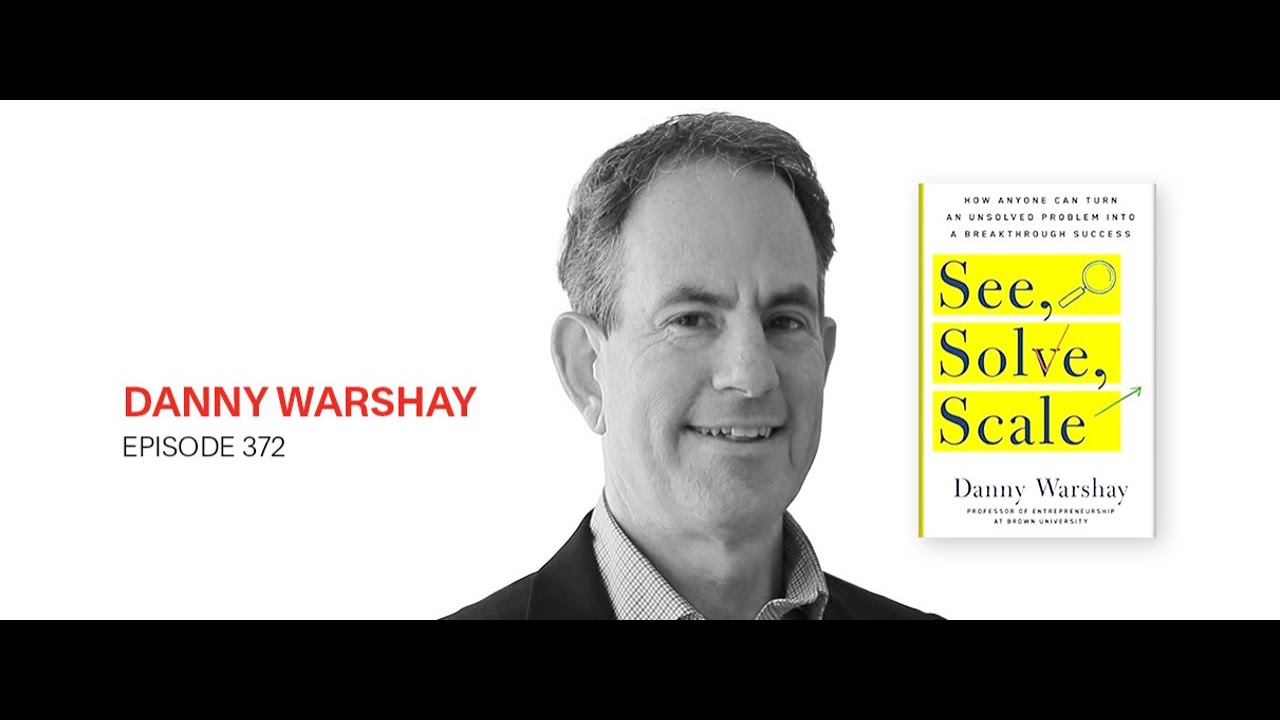

Changing Habits and Lifestyle Through the Entrepreneurial Process with Danny Warshay: PYP 315
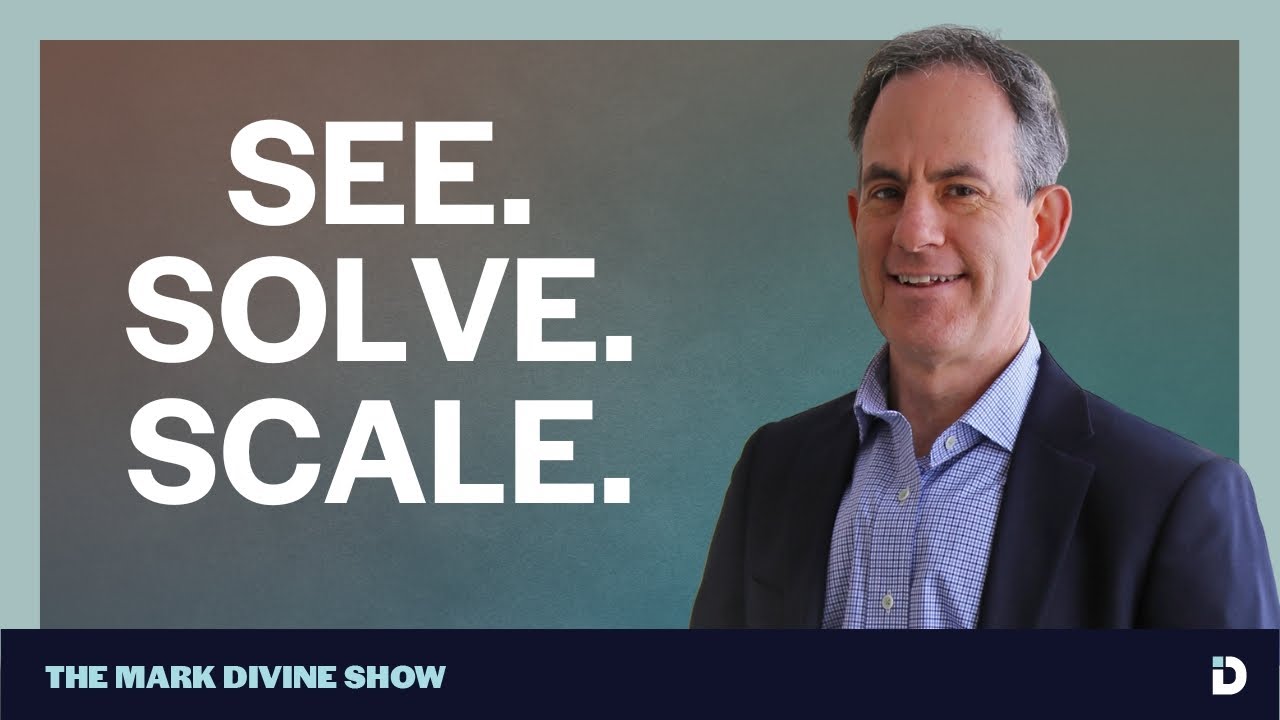
Interview with Danny Warshay, Brown University, Director of the Nelson Center for Entrepreneurship


