Who Can Be an Entrepreneur? with Danny Warshay

Danny Warshay, who co-founded a software startup sold to Apple and now directs Brown's entrepreneurship center, argues that entrepreneurship is a mindset, not a credential. His framework: See the problem through research, Solve it by designing solutions, Scale it for impact. A history degree taught him the observational skills that mattered more than an MBA.
Chapters
Each of us has a unique career story to tell. For some, these fly high like rocket launches. For others, they're more like the game of Chutes and Ladders, with advances and setbacks along the way. Either way, we learn countless lessons from these experiences, and that's what we put into the spotlight here at Career Sessions: Career Lessons. Join discussions featuring a variety of guests sharing their stories of ups and downs, as well as the secrets of their success and what drives them to continue Moving forward, we break down the tools and resources that will help you establish your dream career and realize your professional goals. Here's your host, JR Lowry.
I'm JR Lowry. This is Career Sessions, Career Lessons. Today I have the pleasure of welcoming my longtime friend Danny Warshay to the show. Danny's the executive director of the Nelson Center for Entrepreneurship at Brown University. He's a Brown University grad himself, and he dove into the entrepreneurial world immediately following school back in the late 1980s, co-founding a software firm called Clearview that was ultimately sold to Apple Computer. He then joined another startup that was ultimately sold as well. Following a stint getting his MBA from Harvard Business School, Danny made a brief foray into the corporate world as a member of the Duncan Hines brand team at Procter& Gamble. He then returned to the entrepreneurial world advising and helping to lead startups spanning a wide array of industries from publishing to nutrition and alternative healthcare to specialized shock-absorbing materials, among many others. Along the way, he started teaching entrepreneurship at Brown, where he continues to teach today. He's run workshops with groups all over the world, including in Europe, the Middle East, and Asia, and he is the newly published author of See, Solve, Scale, a distillation of the entrepreneurial approach that he teaches his Brown students. Danny and his wife live in Providence and are the parents of 3 grown children. Danny, welcome. Congratulations.
Thank you, JR.
First book published. That's exciting, exciting milestone, a long time in coming, I know.
I like your ambition to say first book, because that implies many others, perhaps. So for right now, I'm just super excited. And you've contributed to it in meaningful ways. So I hope it's a milestone for both of us.
I contributed to it only in the proofreading at a very detailed level. So not certainly in any form of the substance. So that was really it, just to set the record straight. But it was good to read it last— what was it, last summer when I was reading it, last fall maybe, you know, to give me a sense of kind of how you thought about things and what you teach your students.
Thank you.
All right. Well, let's, as I generally do, go back to the beginning. So you grew up in the suburbs of Cleveland, Ohio. Did you envision being an entrepreneur back then?
Yeah. First of all, being from a suburb of Cleveland, Shaker Heights, I guess I grew up What, probably 50 miles from where you grew up or something like that?
Not even. Yeah.
Not even, right. Yeah, I consider myself a Midwesterner at heart. So I always want to make sure I emphasize those roots. In fact, in my bio, you may have seen lots of people notice— it's funny how many people notice this— I describe myself as an avid and tortured Cleveland sports fan, which is true, no matter how much I try to shake that. And remember, I, I'm now just like you were for a long time in New England, right? So if there was ever an incentive to shake that, it would have been over the last decade. But I'm still a Clevelander at heart. Yeah, I mean, to answer your question, no, I didn't even know the word entrepreneurship. The closest I got to it was a good friend of mine and I, the summer between high school and college, we started a croissant baking business.
Really?
We delivered flyers to people's houses. And it was, at least at the time, a far better alternative to packing bags in a grocery store or some equivalent to that. And so maybe that was the first inkling I got that doing something like that, where you start something to address a need, you build it up on a smaller scale. I never got to the third step of the book title scale, right? Um, but I think that was my first little exposure, and, uh, it probably planted a seed in my mind that doing something like that on whatever scale, uh, would have appealed to me.
You were— you were baking croissants from scratch?
From scratch, yeah. We, we, um, modified a recipe.
You don't eat croissants anymore, do you?
I don't, right? I'm, I'm vegan and gluten-free, so there's nothing about a classic French croissant that I can even eat. But at the time, we modified a recipe that my friend and partner Matt Kirsch had found in his parents' gourmet magazine. And we even took a course on how to do it. And it is not easy. It is a 3-day process that involves all sorts of complicated folds and rising. And but we did it. And it was really popular. And it was really fun to start something from scratch.
Literally. Yeah.
Yes, literally.
That's, that's, uh, I did not know that. Um, how did you end up deciding to go to Brown and majoring in history?
You know, Brown was a really good fit for me. Um, in, um, in my high school days, um, I, I found Shaker Heights to be an amazing place to grow up and to go to school. I even mentioned in the book, um, the motto that the Shaker schools have is, a community is known by the schools it keeps, and Shaker Heights had a huge priority on top-quality education for a very diverse population, which was also a blessing to have experienced in my youth. But I will admit that high school for me was very intense and competitive, and I found the appeal of Brown to be almost impossible to believe—that it was a place where there wasn't very much competition. As you may know, grades have a different feel at Brown, different kind of grading system. It was a place where you could. explore all sorts of things without anybody telling you really what to do. And the emphasis on liberal arts— and again, I'm not sure I even knew what liberal arts were, wasn't that sophisticated. But now that I teach at Brown, and I've taught other places at Yale and at Tel Aviv University for most of the last summers for the last, you know, like 16 years, and in workshops, as you described, in all sorts of places all over the world, I've discovered, and it's part of what I teach, that liberal arts is a phenomenal background for just about anything. And I emphasize throughout my teaching that it's a really good background for entrepreneurship. And we could dig into that further if you want. But that was the appeal of Brown, and it lived up to its promise. It was an amazing place. It also enabled me to spend a year in Israel, which some of the other schools I was looking at were not too thrilled about. And, you know, as nice as Providence, Rhode Island is, it's hard to compare it to a year in Jerusalem.
Yeah.
And then I like to say when I got back from that year, 2 very life-changing things happened. By far the most important is that I met the woman who became my wife, Deb Herman, whom you know very well as well. And didn't know that Brown would afford me that opportunity. And then the other is I kind of fell into an opportunity to become part of the leadership team of that software startup you mentioned, Clearview, that eventually we sold to Apple. And when I mentioned that anecdote to students who are in their 20s, or even late teens, I have to clarify that there were computers back in the '80s, as you well know, but sometimes they don't, or they picture them as these big, huge machines in the middle of a room. And that was, I would say, other than croissants, the first experience I had in real entrepreneurship.
Yeah.
It was tech entrepreneurship, but I knew nothing about business. You know, I was a history concentrator who had just spent a year in Israel. And I knew nothing about computers or tech. So you might wonder, how in the world were you well suited to be part of this leadership team? And Again, we can get into some of that detail if you like.
Well, let's get into it. So, you know, you mentioned a few minutes ago that, you know, that having a liberal arts education can actually be helpful to an entrepreneur. You didn't have the benefit of taking a class like the one you now teach. So how did you, as a history major, you know, sort of earn your seat at the table in a startup software firm?
It's a great question. You know, part of it was actually the same person with whom I had started that croissant business had really been the founder, or early, very early co-founder of this computer company that emerged from some work that some of them were— that the tech people were doing in the early iterations of the Macintosh on campus. And they reached out to me because they said, oh, here's Danny, He's a smart person. He's really well organized. We need somebody to help work on the, the business side of this. And I picked it up as I went along. I mean, I knew nothing about accounting or benefits or payroll or any of that. But—
No.
It's true. I was well organized and was able to kind of figure it out. But I'm sure that I would have done it more effectively had I been privy to the kind of course that I teach or that you know, I talk about in the book, seesaw scale. In terms of the raw liberal arts training, I mean, if you think about it, and it's not necessarily only true for me, I think it's true for lots of my liberal arts students. You learn in liberal arts how to think, you learn how to identify a consequential problem, you identify how to do research in firsthand and secondhand ways to solve that problem. You learn how to develop a mechanism of communicating that solution. And so all of those raw skills are skills that I know I've benefited through— from through that first startup and all the way through the rest of my career that I think we're going to talk about in a way. And then for all the Pathwise contributors and enthusiasts, I hope that's a message that's useful, which is that you don't have to be trained explicitly as a practitioner in a specific field in order to succeed in it. If anything, I think people underplay and underappreciate the raw skills that they have, whether it's from their academic formal training or probably in most cases from the rest of their experience in their career.
Yeah.
And in many cases, a pivot requires seeing creatively how you might reapply some of those skills, even in areas where you don't have a credential to indicate you're qualified.
Yeah. And you make the point in the book around— I don't remember exactly how you said it, but either everybody is an entrepreneur, everybody can be an entrepreneur, and everybody is always doing some form of entrepreneurial— exhibiting some form of entrepreneurial behavior. You know, even if they're doing something different, right? There's always a bit of, you know, kind of doing your own thing that, that everybody has.
Well, first, to be clear about what do I even mean by entrepreneurship. When I was asked to teach at Brown, it was a beloved professor, Barrett Hazeltine, who tapped me on the shoulder back in 2005 and said, hey, we'd really like it if you would come to Brown and teach. And I thought, you've got the wrong guy. I've never taught Sunday school. And he said, no, no, no, you'd be a great teacher. And I think it's true. Sometimes professors know in us, teachers, mentors know in us some talent that we don't even recognize ourselves. That's probably useful to Pathwise people too. And you can't really say no to Barrett Hazeltine. So before I knew it, I had said yes. And then I had to think, well, what does that mean to teach entrepreneurship in a liberal arts environment? And I defined entrepreneurship as a structured process for solving problems. And in that respect, it appealed to a wide range of students on campus, and it still does. And, and then at the time, I was thinking, well, you know, how do I teach that? And we can get into it more. But you're right. If you think about it in those broad terms, then there's a very wide range of types of potential entrepreneurs, in all sorts of contexts where people are looking to solve problems. And through the years, you know, since for all these 16 years, I've had lots and lots of students come back to me and say, boy, I loved your class, but I wasn't exactly sure how I was going to apply that see-solve-scale approach, the structured methodology, to my work in public health, or the law, or in medicine, or government, or the arts, or the military, or wherever, because you know, Brown students, like lots of students, go off to do all sorts of things. But they've, in big numbers, come back to me to say, I'm using it as you intended, as a structured process for solving problems. And that gives me a ton of joy because the world is full of problems that need to be solved. And so that's really what I— what I teach entrepreneurship to do—
Mm-hmm.
Is to empower problem solvers to, first of all, go identify a problem, then solve it on a small scale, and then figure out a way to do it on a much bigger scale over the long term, so they can have really significant fundamental impact on solving that problem.
Yeah, you know, the see part of it, I mean, you describe in the book, you know, that you have to think like an anthropologist, right? And you go and exhibit people in their natural environment. You— I've heard you talk many times about, you know, the, the athletes who, you know, went into the grocery store looking for, you know, uh, something. And you can tell that story if you'd like, um, you know, observing people as they were doing their, their grocery shopping. Um, you know, the thing about the, the C part of seesaw scale is, you know, one of the, the sort of pitfalls people run into is, you know, as the adage goes, a solution looking for a problem. And the focus on seeing explicitly gets you out of that mode. It forces you to find the problem before you start worrying about how to solve it. And, and to me, that's a— it's a simple concept, but it's a powerful one.
Thank you. I agree. And in, in all the workshops I do all over the world, that's typically the part of the process that I focus on. Uh, about 3 weeks ago, I did a workshop at PricewaterhouseCoopers, PwC, online for 2,400 people. It was the biggest workshop I think I've done in a long time, at least.
Wow.
We had 300 breakout rooms and it was all on that first part of the process. There's an Einstein quote that talks about, if I had a problem to solve and my life depended on it, I'd— and I only had an hour to solve it, I'd spend the first 55 minutes defining the problem. Because once I've defined the problem, I'd have plenty of opportunity in the next 5 minutes to solve it. And that's the same way I think about entrepreneurship.
Yeah.
If you invest disproportionately upfront in understanding the unmet need, the problem you're looking to solve, then the rest of the process unfolds pretty naturally. And the opposite is definitely true. As you say, you don't want to be a solution in search of a problem. If you don't define the problem first, that's what you're likely to be. And it would just be sheer luck if you happen to align your proposed solution to a problem that you only hope is out there. By the way, your reference to my way of describing that first process as anthropological is another really good tie to a fundamental skill set. It's a liberal art.
Sure.
You may learn anthropology in school and figure, I don't know what the heck I'm ever going to use anthropology before— for, but in any problem-solving situation, and I suspect most of us are at one time or another in a problem-solving solution, anthropology is actually the most important skill. It's the ability to observe and to listen to people behaving naturally in their own habitat, their own environment, without trying to change or modify their behavior. There might be time to do that later on, but the first step is to perform what anthropologists would call— what I call bottom-up research, they would call ethnographic research.
Right.
And again, that's a really good example maybe for Pathwise folks to understand that a skill that you may not have known would be useful down the line Can be maybe the most important skill that you have. So I appreciate your mentioning that.
Yeah. Yeah. And it's, it's, you know, today you hear the expression meeting people where they are, right. Which carries some different meanings as well, but, you know, in a way there's some of that same element there of, of not sort of forcing them into your construct, but rather, you know, observing them in their own construct and trying to help them in their own construct.
Well, and the other word I use other than anthropological when I'm teaching that part of it is empathy. And, you know, the shorthand way, at least in Western cultures, we describe empathy as putting yourself in someone else's shoes.
Yeah.
It doesn't mean judging their shoes, you know, oh, your shoes are so 2016. Or certainly it doesn't mean pitching them on a new pair of shoes, at least at the point where you're really just trying to understand their issues. And by the way, one of the pleasures I've had in teaching all over the world in all sorts of different contexts is I learned different metaphors. So when I taught a group of Japanese faculty, they used the phrase synchronizing your hearts to describe empathy. And I just love that one too, right?
Yeah.
I mean, it conveys what you just did, which is, at least in the first part of the process, all you're trying to do is understand what other people are experiencing. And I would say just too often in interpersonal relationships or in any kind of endeavor, if people would stop and do that, they would be much more successful no matter what they're trying to do. And I hope that's a useful lesson for anybody on this podcast.
Yeah, definitely. You know, something that, that translates across a broad range of situations.
You— I won't tell the story unless you want me to, but you mentioned the folks from my course who started this prenatal vitamin company called Premama.
Right.
There's no way that they would have understood the problems that pregnant women and women who are looking to preg— to be pregnant are experiencing unless they had empathy, unless they were anthropological and listened and observed really closely. And out of that experience came a whole line of new formulated types of prenatal vitamins that are addressing the underlying problems that they discovered through that first see part of the process that they learned in the course.
Yeah, yeah. And, you know, I know the book has many, many stories that you tell along the way in terms of people going through a similar process.
Yes.
I want to go back just briefly, and we'll— to Clearview, because, you know, you were, you were an entrepreneur back before the venture capital industry really took off. I mean, certainly there was a venture capital industry back in the '80s, but Silicon Valley wasn't anything like what it is today. And the maturity of the industry wasn't anything like what it is today. And yet you guys managed just a few years out of college to sell your software company to arguably the big up-and-coming software firm, computer firm at the time, in Apple. How did you guys How'd you guys make that happen?
You know, what I often tell my students is they're in a much better position than I am now as a 57-year-old knowing all I know, because they just don't know any better. In fact, one of the principles of the book is that entrepreneurs benefit from the benefits of scarce resources, and that established firms and established, you know, really knowledgeable people are burdened by their abundant resources. So this benefit of scarce resources, which helps entrepreneurs, often is beneficial for very young people who are frankly too naive to know any better. And so to some extent, I think we just didn't know any better. You know, we didn't have a playbook. I think we would have been more efficient, we may have been even more successful, who knows, if we had had the CSolve scale methodology. But we— you're right, there were no other kinds of startups like us, certainly at Brown or even in Rhode Island, it felt like. I mean, when I tell the story, I describe us as mutants. Whereas today, you know, anywhere you look, there's lots of startups in Providence and around the world. I think we did benefit from 2 things. One is The tech— my tech partners, I was really the only one when I was part of the company not to be a tech person. But the tech people had the best training they could have gotten in the kind of software development that we were doing. Brown was excellent at the time at helping train software engineers. And they themselves, my colleagues, were super excited about the new Macintosh and took it upon themselves to translate some of what they learned at Brown into new development opportunities. And then for me, you know, as I say, I drew on my liberal arts training and learned along the way what all the rudiments of operating a business was like. And then I remember when we picked up the phone one day, because our intention was to sell our own products, and it was Apple calling. And they said, you know, they didn't tell us who it was at first, but they were interested in our products. They had just spun off a subsidiary called Claris. They expressed a lot of interest in our product. And that led to originally a license deal and eventually to our selling the company. Even in the discussions, which to us felt pretty heady, when a couple colleagues of mine and I went out to California to negotiate that deal, I mean, we didn't have a playbook. We really didn't know what we were doing. Again, maybe we would've done an even better job if we had had a course or a book to tell us.
Yeah.
But I think it actually gave me confidence to realize it's not like being a doctor where you better go to med school if you want to operate on somebody, or if you want to represent somebody in a courtroom, you better get a law degree. These days, I'm asked by a lot of people, should I go to business school? And I often say no. You know, I don't know what you think. We met in business school.
Yep.
I'm certainly very happy that I went to business school. Probably the most important thing is that I met wonderful people like you and several of our other friends who we're very close to and spend time with. I remember actually when I got into Harvard Business School, lots of people said, oh, well, you're going to go there for the network. And I was just too naive and too young to even appreciate what that would mean. And I thought, no, I've never taught— I've never taken a business class in my life. I've been part of 2 successful startups, but I have a lot to learn. The most long-lasting benefit of business school has certainly been, you know, the relationship with you and others. But, but in order to do entrepreneurship, I don't think you need a degree. I think you can be— your skill set can be amplified by some guidance, like what I teach, or what our center does, or what I have in the book. But you don't need to be credentialed In order to be a successful entrepreneur.
Yeah, yeah. And to your point, I mean, for me, you know, coming out of the military, business school was, you know, I described it sometimes as a halfway house to the real world, because the military is obviously a really different environment than the private sector. And, you know, you talk about being naive about the networking aspects of going to a a leading business school, I was probably naive about, you know, business in general. You know, I worked in summers and things like that, but hadn't really had that, that kind of experience. So for me, you know, I look back and say, heck yeah, it was a good investment of time and money. But I, you know, given how much school costs these days, and just the options that are available to people to sort of make their path in different ways, I think it's a really different proposition than it was when you and I both decided to go.
I think you're right. My military experience was at P&G. That was kind of my equivalent, I think, where for me, it was just a totally different world. And, you know, it gave me exposure to lots of things at a much bigger scale than I had ever been exposed to in either of those 2 software companies that I had been part of. And, and I remember being attracted to P&G when I was at Harvard. And I thought, because like, we— I don't know if you got this advice, but I got the advice, at least for the summer, try something really different from what you've tried. And I thought, all right, well, I've been part of 2 startups, I should go someplace big. Those startups were tech, so do something maybe consumer-facing and consumer products. And so P&G was the opportunity I chose. I went there for the summer, I got an offer to go back. As it turned out, I was actually not that happy going back and It was not the best, not the most fun experience for me, but I will say it was very worthwhile in that it taught me a ton about a perspective on growing a business that I don't think I would've figured out as quickly if I had just gone back to doing something from the startup world. And so I don't regret going to P&G at all. I met really good people. P&G is a fabulous company. It just wasn't a long-term fit for me. In fact, a lot of the bottom-up research training that I now do draws on some of the bottom-up— the equivalent kind of training, they didn't call it bottom-up research—
Right.
That I learned at P&G. Nobody in the world, I think, does it as well as P&G. And there's a little bit of P&G lore. I'm not sure if all the details are exactly accurate, but I share that in my training, I hope with a fair nod to the good work that P&G does. And it's— there's some of those anecdotes, as you recall, in the book.
Yeah.
And, and so it's another good example of, you don't know where your career is going to take you. And, you know, whether it's business school or P&G, I knew I wasn't going to spend my whole career at business school. And I also knew that I wasn't going to spend it at P&G. But I tried very hard to extract some learning That eventually, you know, paid dividends in ways that I couldn't have predicted back then.
Yeah. You were, you were there, I think, for roughly a year, and then you moved back to Providence from Cincinnati. At that point, did you have a clear view of what you wanted to do?
I never have a clear view of what I want to do. Let's just state that overtly. What I mean by that is, you know, I'm not willy-nilly, but I am very open to the idea that a career, that life zigs and zags, that there's periodic inflection points that you can't predict ahead of time, that life or a career is not linear. And that for me at least, and I would recommend this to others in general, that life and careers are interesting. when you see those inflection points and recognize them as opportunities that you may not have planned for, and that you may not have predicted or expected. I mean, when Barrett Hazeltine tapped me on the shoulder about teaching at Brown, I never even fantasized about the idea of teaching back at Brown. When 5 and a half years ago, the Provost of Brown approached me about being the founding director of this new Center for Entrepreneurship, the Nelson Center. I hadn't conceived of that as something I might do. I didn't even know what a provost was. And so the thing though, that I think I have done well, and, you know, my wife's a psychologist, as you well know, maybe she could figure out why, but I think I've recognized those opportunities.
Yeah.
When they hit me in the face. And rather than saying, oh, well, that's not me, or I'm not a teacher, or who am I? I'm not an executive director of a center, Or I ran a venture capital firm for a while. I'm not a venture capitalist. I generally don't say that. I say, hmm, I kind of size it up intuitively, and pretty quickly make a decision of, well, what's the worst thing that can happen? And I move forward. And in most of those cases, I've said yes. And I'm really grateful to the people who've asked me because things have generally worked out pretty well.
Yeah, yeah. I think, you know, look, anybody who thinks that they can perfectly plan out the whole of their career either, you know, plans to do one thing for their whole life or is deluding themselves. And as you say, you know, life happens and opportunities come at you that you wouldn't have expected. And, you know, you always have to at least give them a chance.
Well, here's another one. You know, I never believed— it's in the flesh here— I never believed that I could write a book. Like, you were a writer. You wrote For the Harvest at HBS. You have that reputation, you have that skill set. I, and I never would have even thought about it. And you know why I did think about it is a lot of my students came to me and they said, you're not doing the third step. You're not scaling the solution to teaching entrepreneurship that you've done on a small scale. So like in 3 weeks or so, or I guess in a month and a half, I'm gonna be an author published. I never would have imagined that. And if in, in the face of my students saying, oh, you should write a book, I had said, well, that's not part of my plan, or I hadn't really thought of that, so no thank you. I guess I figure again, like, and it's kind of the entrepreneurial process. Okay, there's a need. Let's start solving it on a small scale. I just started writing a Google Doc. That didn't involve a ton of investment. And so If I got to the point where I had to abandon that, no big deal.
Yeah.
But it's actually to the point where now I have a published book and it's going to be done. I think that if you ask me, what's my strongest advice to people who are listening here, who I know are bought into the idea of needing to learn how to transition or think later in their careers about what to do, I'd say, don't overthink the linearity of life. Because What makes life interesting is all these opportunities that aren't linear, and you didn't necessarily predict.
Yeah.
In fact, a couple— I think I told you this— a couple months ago, I was invited with a number of other Harvard alumni to go to HBS and sit in on a session of a class that is designed to help students kind of chart their career path. which is a great thing that a business school would teach. I wish all schools did that.
Yeah.
But what was notable to me is the word that kept coming up in my discussions, because we were at tables with some alumni and some students, the word that kept coming up from students was regret. And I thought, why are they— because they would ask, they kept asking, what's the, what's the career move you regret most? What's the financial investment you regret most? And I thought, Why do they keep asking about regret?
Yeah.
And I said, look, I don't live my life like that. I don't mean that I don't have regrets. I must. Or that I've done everything perfect. I have not. I've made many mistakes. But it's just not how I compute things. I don't think about regret as much as they seem to. And it made me worry that, boy, they're so risk-averse because they're so worried about making a mistake that'll make them regret something. So I hope that's useful to people who are listening.
Yeah. I think the aversity to risk, sort of over— maybe overemphasizing the downside and underemphasizing the good side. Some people do that and some people actually do the exact opposite. And they tend to be overly ambitious or optimistic. And it tells a lot about your personality and it's helpful whether you're one or the other, You know, to know that about yourself so that you can do a little bit of self-correction.
Well, as you know, I talk a lot about failure in the book. There's a whole big section, right? Because it's just inherent in entrepreneurship. If you haven't failed, it means you just have not tried. I failed. And, you know, it doesn't always feel good in the moment. But it often will help move you to another stage that you wouldn't have gotten to without that, quote, failure.
Yeah.
When I'm in other cultures though, boy, you can't even say that word. There's some cultures in which they're just so allergic to the concept. But it is part of it. And look, anybody who claims that they haven't failed is just lying. And so it's so much better to talk openly and transparently. In fact, one of the studies I cite in the book talks about these 2 groups of entrepreneurs that are pitching their venture, one of whom just talks glowingly about all their successes, the other one of whom talks a little bit about their successes, but is also honest about the failures they've had along the way, the challenges. And the group that is so much more appealing to investors is the second group, because they can tell they're so much more honest and sincere about who they are. And it always, I think, enhances the level of trust you achieve with another person if you're just honest, because No one can be— no one can pretend not to have had those challenges. So I just wouldn't worry as much about regret.
Yeah.
And just move forward and, and see what happens.
Yeah. You— when you were writing your book, at what point did you, did you go looking for a publisher? And how did you navigate that process?
So this is another good example of, I did everything backwards. I, you know, I didn't know the process even. I was too naive even to know what I was supposed to do to go do it. All I knew is that my students in some pretty big numbers were telling me how much the course meant to them, and then I needed to scale the approach.
Right.
And that writing a book was— so I started, I had been teaching in Israel, I think this was 2018 in the summer, I got back. And I just said, alright, what do I have to lose? I started writing a manuscript in a Google Doc. I remember writing like 10 pages and feeling like, alright, 10 pages, that's a lot. And then I hit 50 pages, and I thought, that's as big of writing I've done ever, bigger than any history project in college. Eventually, I wrote a 350-page manuscript, and I had written the entire thing. And then I figured, well, I don't know what I'm supposed to do now, but the opportunity before me came to, to figure out what to do next. And a, um, a, uh, pretty big, uh, agency, literary agency came to me and they said, we've heard you're writing this book. They had actually heard through the grapevine. It sounds like something that would appeal to us. Anyway, we hit it off. Uh, I hired them as an agent. They helped me reverse engineer the proposal I probably was supposed to write in the first place.
Yeah.
And, uh, they shopped it around to a bunch of big publishers. There was a lot of demand, a lot of interest, to the point where they had to do an auction. And, uh, St. Martin's Press, a division of Macmillan, won the auction. And then there have been separate auctions for the international rights in China, Taiwan, Korea, Japan, the UK, and a number of other places are in the works. Man, if you thought I could have envisioned that or had planned that out when I was on my back patio starting a Google Doc—
Yeah.
I had no clue about that. So the way you do it is the opposite. You're supposed to write a proposal, get an agent to shop it to publishers, they pique the interest of publishers, they agree to publish it, and then there's the whole process of doing that. So to me, it's another good example of don't sweat it if you don't know the process per se, but you know enough about the process to undertake it and Um, you know, I think it worked in my favor probably that I was naive about it.
Yeah, yeah. I mean, sometimes— I mean, look, I've heard people tell the story both ways. Like, they take a book proposal, you know, they go shop for publishers that, you know, they maybe write a chapter or two just to give them a sense of their writing, you know. And then there's the people who, like, work and work and work and work on something, and they, you know, they get it perfected, and some of them are actually able to convince a publisher to publish it and I mean, now the great thing is you don't have to do that. You can actually self-publish. You know, there's a whole industry built up around that. I know a lot of people who've self-published books and, and, you know, some of them are actually really good. And, you know, you can't, you know, you can't necessarily judge, but, you know, look, the art, the, the process of creating something, you know, in your case, 350 pages, um, you know, it's a huge effort.
Well, one thing I will point out is that they are not the same 350 pages that I wrote originally. I benefited tremendously from, I mean, you and several others who read it very closely, my wife, Matt Kershaw I mentioned, Bill Stone, Howie Jacobson, but these are all people who know me well.
Yeah.
A professional editor at— editing team actually at St. Martin's Press, Helped me re-engineer the whole book. So, if I had self-published even an advanced manuscript that I had just written on my own, it would not have been nearly as good as I think it became. I mean, a lot of people like it already. And it's to the point in the book, which is entrepreneurship is generally not a solo sport. It's a team sport. And a diverse team around you is really the secret to help propelling you onto entrepreneurial success. And I benefited greatly from a diverse team around me.
Yeah, well, it's everybody I know who's, who's written a book will describe the editorial process as being brutal, humbling.
Very much so. Yeah. But because, you know, my, my editor was smart. He kept telling me before I was really working with him, oh, your book's in great shape. It just needs a little tweaking. And I was so proud, like, oh, my book's in great shape. You know, who knew? And then he's like completely reworking and pulling it apart and critical and all over the place. I thought—
Yeah.
And I even said, I said, Tim, you said my book was in good shape. What happened? He said, oh, if I had told you the shape it was in, it would have freaked you out. You never would have wanted to work with me. But he was right, and it's such a better book than it ever could have been if it had just been reliant on me.
Yeah, yeah, I read a similar story. I can't remember whether it was— may have been Liz Wiseman when she was working on her first book. And I just read her book Impact Players a couple of months ago, and I want to say it was her, you know, similar story of, you know, you're a great writer, and then she gets in the room with, with her friend, you know, who's sort of a writer-editor, and he just rips it to shreds.
Well, I've got a friend of mine—
You got that same sense of shock.
Right. This, this friend of mine, Howie Jacobson, who's a prolific writer, he once said to me, he said, yeah, your book sucks. Not, not like it'll never be good. It's just, it's a great piece of writing, but it's not edited well. And he said, a whole editorial team is great at editing, And that's what this needs. And out the other end comes a book that is written well, but not edited well, but then it becomes edited well. And that's a different kind of opportunity.
Yeah. Well, you know, I know we're airing this right around the time your book is being released. So I'll look forward to how the book does in the market. Are you doing a book tour?
How's this for a shameless plug?
There you go. You've shown the book and you've shown the background.
So we've covered the basics. Yes, C Solved Scale. And my marketing team at St. Martin's Press said, use this on your Zoom calls, and it just feels too self-promotional, but maybe at least for a couple minutes it's appropriate.
Yeah, absolutely.
You were about to ask me something about it?
Yeah, are you going— are you doing a book tour or anything like that?
Yeah, although what's interesting is that this is kind of the format for the book tour.
Oh yeah.
You know, doing things remotely. Ordinarily, I'd be actually My wife Deb, who you're friends with too, was kind of bemoaning the fact this morning that we together wouldn't be traveling around the world as we often have done, because otherwise in normal circumstances we would be going to all different cities. And— but yes, the publicity and marketing people are lining me up for lots of podcasts and lots of media appearances.
Wow.
And, um, that's the way, I guess, that books spread in terms of their own Yeah, popularity. So, um, in fact, I'm told that podcasts more than any, so I'm grateful to you for having me on this one.
Well, you know, you're one of the early episodes, so I'm grateful for you spending the time. So I think we both win out of this one. Um, you mentioned a minute ago just the traveling you've done. You know, one thing I, I've always thought was really interesting about, about your background is some of the situations that you've, you've come into in terms of your teaching in different parts of the world. maybe spend a minute or two, kind of talking about some of the more unique groups that you've applied the entrepreneurial process to.
Yeah, well, first of all, as I mentioned before, one of the great pleasures of being able to teach, and again, I had no idea that this would evolve this way when Barrett Hazeltine asked me to do this, is that I've had the opportunity to teach in so many different cultures and contexts around the world. And I always say some in places that I have to find on a map, you know, like I've been to Slovenia, I think, 5 times to teach workshops. I didn't have any idea where Slovenia was the first time I was going there. I think I could find it on a map now. The U.S. Embassy asked me to teach workshops in Bahrain, and I knew kind of where Bahrain was because I've spent a lot of time in the Middle East, but had to find it. Doing things in unexpected places like that, you know, where I worked with a— in Bahrain, I did, I think, 3 workshops. One was teaching the faculty at the Polytechnic Institute how to teach entrepreneurship, because they had no idea. So it was a training the trainer opportunity. And I also did something for an economic development group. Because, as it turns out, I learned Bahrain is dependent on oil and their oil supply is drying up and they have no alternative for ways to think entrepreneurially.
Right.
They wanted the process that I teach. And by the way, that happened through a former student of mine from Brown who was working from the State Department— for the State Department and connected me with the embassy in Bahrain. And I did something for the banking industry there. When I go to— especially when I go to disadvantaged places, people that feel they are disadvantaged, that don't have a lot of resources, certain places in China. I teach in different places in Palestine. Often when I'm teaching for the summer in Israel, I go to Palestine to teach. Places that feel disadvantaged and therefore feel like they're not eligible or included in the opportunity to be entrepreneurial. When they hear about my duality between the benefits of scarce resources and even the burden of abundant resources, I can see their body language shift.
Yeah.
By the way, in Bahrain, they have the burden of abundant resources, too much oil wealth to be motivated to really think differently or try new things. They needed the approach that I was teaching them to help them understand that. If I'm going to places that feel disadvantaged, they need the opposite boost to feel like, oh, actually, your scarce resources are an advantage for this C-Solve scale. So I especially like going to places, which I didn't expect at first, where I can have big impact because they feel like they've been excluded from the entrepreneurial discourse. And sometimes, you know, just to share the breadth of the impact the teaching has had, I work a lot with this group I mentioned, Seeds of Peace.
Right.
And Seeds of Peace mission is not commercial. And so the, you know, it's, it is literally either Middle East or world peace. And so that's a pretty heady ambition for a problem to solve. That's why, that's one of the reasons I like in the third step of the process, scale. I don't call it a business model, I call it a sustainability model, which is defined as having long-term impact at scale. Because sometimes the outcomes, the purpose is not about starting a business. And that's why the, the subtitle of the book, as you see, is How Anyone Can Turn an Unsolved Problem into a Breakthrough Success. You know, the word anyone is really key there. Yeah, it's people in all walks of life. And breakthrough success is defined in all sorts of ways, depending on what problem you've identified. So I hope that's an answer to the question. Those are the places, those are the opportunities that I find really rewarding, where I can help move the needle in ways that I think were unexpected.
Yeah. And it's, as you say, it's just a Very broad situations, State Department, Seeds of Peace, places in China, PricewaterhouseCoopers, PwC. I mean, it's just a very, very broad range. And as we've been talking, I've been thinking about this point you've raised a couple of times. Your students told you that you weren't scaling. And I actually, I don't think that's completely true. And I'll tell you why. And I would love to get your thoughts. If you weren't scaling at all, you would be Danny Warshay, entrepreneur, solo practitioner, running your own little business. You grew some businesses, you bring other people in, that's a form of scaling, right? Ownership focus. When you came back to Providence, even before you got involved at Brown, you spent roughly a decade, basically coaching and advising and being involved in some operational way with a bunch of different startups. So you kind of scaled your knowledge, right? And gained your knowledge by working in that more advisory capacity. Then you start teaching and you've got group thousands of people now who've taken your class at Brown over the years, who've gone off into the world and applied your lessons. And some of them started very successful companies. So I would argue that Danny Warshay movement's actually been scaling for, you know, 25 years. So this—
Well, I appreciate your saying that. I should have had you alongside of me when I was getting accused by all these students of not following my own process. I guess you're right. And one way to think about it is that scale is relative. Yeah. And it's relative to the context in which you're envisioning yourself. And so you're right. At first, I mean, who was I to teach a course at Brown? I taught one course. And I thought, great. And then it began to scale incrementally because it was so well received. They said, could you teach each semester? And then I got involved more at Brown and I was teaching at Yale and then Tel Aviv came calling. And you're right, incrementally became more of a scaling process. I think the message from students, maybe this is said better, is there was much more potential in scaling even more than I had even recognized. And so I think that is probably a fair way to say it. But I think it is true though that I hadn't seen that or recognized it. It really took my own students to turn me on to that different perspective. And I think that's part of it too. Sometimes what I do is help somebody think bigger because they've been thinking at a small scale.
Yeah.
And I challenge them to say, well, what if you really dominated this opportunity? And dominated it in a way that would fundamentally solve the problem. If we always think back to this is a method to solve a problem, then I think it's really important.
Yeah, I like the fact, you know, that you and your class, I think your expectation is that they have a business idea which has the potential to be a $100 million business, right? Am I remembering that right?
That's right. Your son Zach took the class and he, he had to do that himself. And it's arbitrary, right? But it's designed to get people out of their own mental fixedness of thinking, oh, like the first semester I had student teams develop a business plan, or sustainability plan as I now call it. You know, I got a number of cafes on the main drag at Brown, Thayer Street, and that was big to them, right? I mean, that was their context. And I said, no, no, no, we're talking about a completely different level of scale. And so arbitrarily, I said, credibly, you have to do the research to credibly demonstrate that there's potential for $100 million in revenue by year 5. And that does get people out of their own mental limitations.
Yeah, yeah. It struck me when I read the book. And, you know, thinking about that, just, you know, how that process must have unfolded. So I think that is, it is a good way to get people, as you say, out of their mental fixedness.
You know, if you don't mind, um, I wanted to make sure that we mentioned one thing that may not have even been on our topics list, but it seems germane. Um, and that is this concept you may recognize from the book called ikigai, which is this Japanese word.
Yeah.
Yes. And so many people may be already familiar with it, but if they're not, it's a Japanese word that means living a meaningful life. And it has 4 components. The 4 components are, you do something that you're really good at. Second is you do something that you really love. Third is something that's going to have meaningful impact on the world around you. And 4 is that you're going to benefit financially from it. And I usually find, whether it's for myself or helping somebody else figure out what they should do or even diagnose why they're not happy doing what they're doing. At least one of those pillars is not in place.
Yeah.
They may be doing something they're good at, but they don't love it. Or they're loving it, but it's not actually having impact on the world around them. Or they're not making enough money, or one of those is just off. And so to me, it's such an important template as a framework for thinking through what you might think about doing next, or again, helping to diagnose why you're not fully satisfied doing what you're doing now. It seems so simple. And yet I think it's in its simple— in simplicity, it's elegant and really powerful. So I didn't want to end our podcast episode now without even mentioning it, because I write a lot about that in the book.
Yeah.
And it's so central to, I think, what makes a successful entrepreneur. And it's about living with purpose. And purpose is more important than passion. And passion is more important than drive. But at the top of the heap, it's purpose. And purpose, I think, is the central theme in this concept of ikigai.
Yeah, I think I actually read about it for the first time when I read your book. And I thought, what an amazing, you know, way of thinking about it. Since then, I've certainly seen it. But even, even, you know, to your point about maybe everybody knows that, I actually think a lot of people haven't heard of it. Even some of the career coaches that I, you know, have, have talked with, you know, in the course of, of doing this work is, uh, a lot of them have not heard of you guys. It's a really simple and powerful thing.
Great.
All right. Um, I think we're, we're past time at this point. Uh, I want to be mindful that you've got lots of other things going on. Um, so Danny, thank you for being a guest. I really appreciate it. It's been great you know, getting, you know, a little bit more of your sort of personal color on, on your history and, and on the book and the lessons in the book. And I, I hope it does great in the market. I guess we will see in the, in the days and months ahead, but I wish you the best.
Thank you so much, JR. Good luck with Pathwise. It's a pleasure to be working with you.
Great. All right. Thanks, Danny. Have a good rest of the day, everyone.
Thank you for listening to Career Sessions That's Career Lessons. We hope the nuggets of wisdom shared today help guide your path to the successful career of your dreams. This podcast series is part of Pathwise.io, which is here to help you live the career you want. We provide a comprehensive mix of career and professional development events, insights, tools, and exercises backed by a group of leading coaches and other career management experts. If you aspire to something more or just something different in your career, join us at pathwise.io. You can find us on LinkedIn, Facebook, and Twitter. See you again on the next episode.
More from Danny


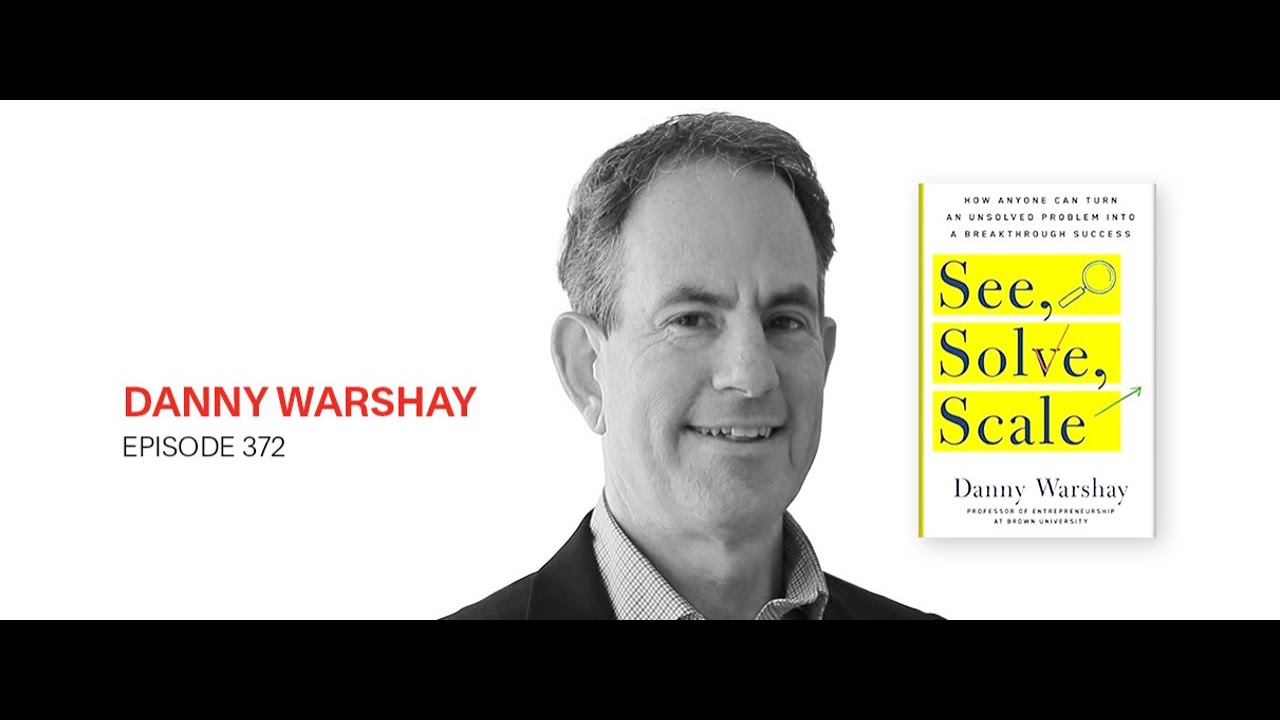

Changing Habits and Lifestyle Through the Entrepreneurial Process with Danny Warshay: PYP 315
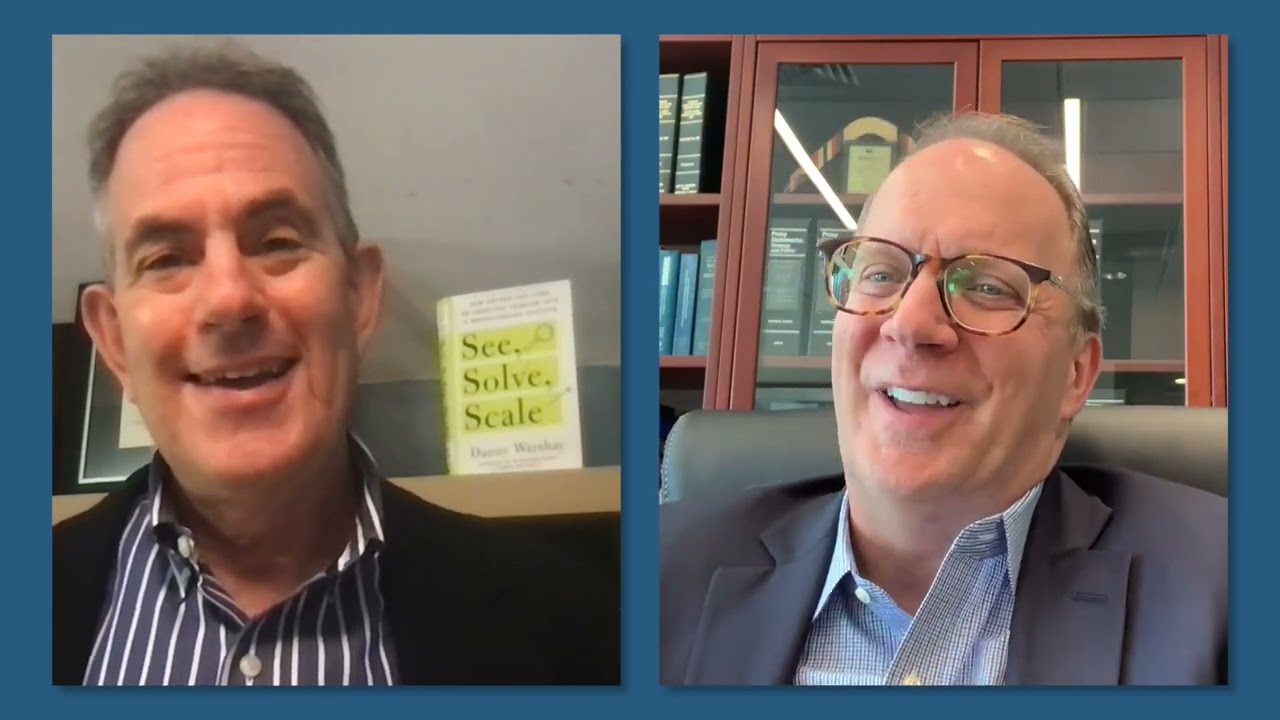
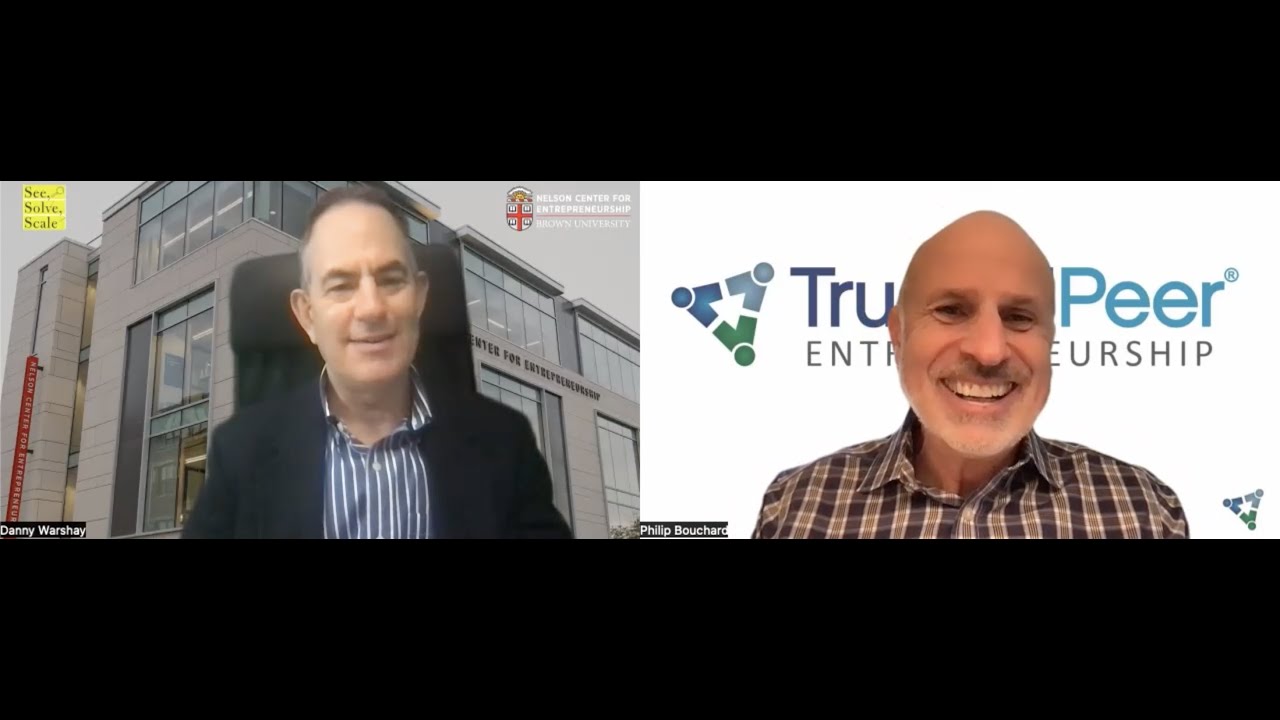
Interview with Danny Warshay, Brown University, Director of the Nelson Center for Entrepreneurship


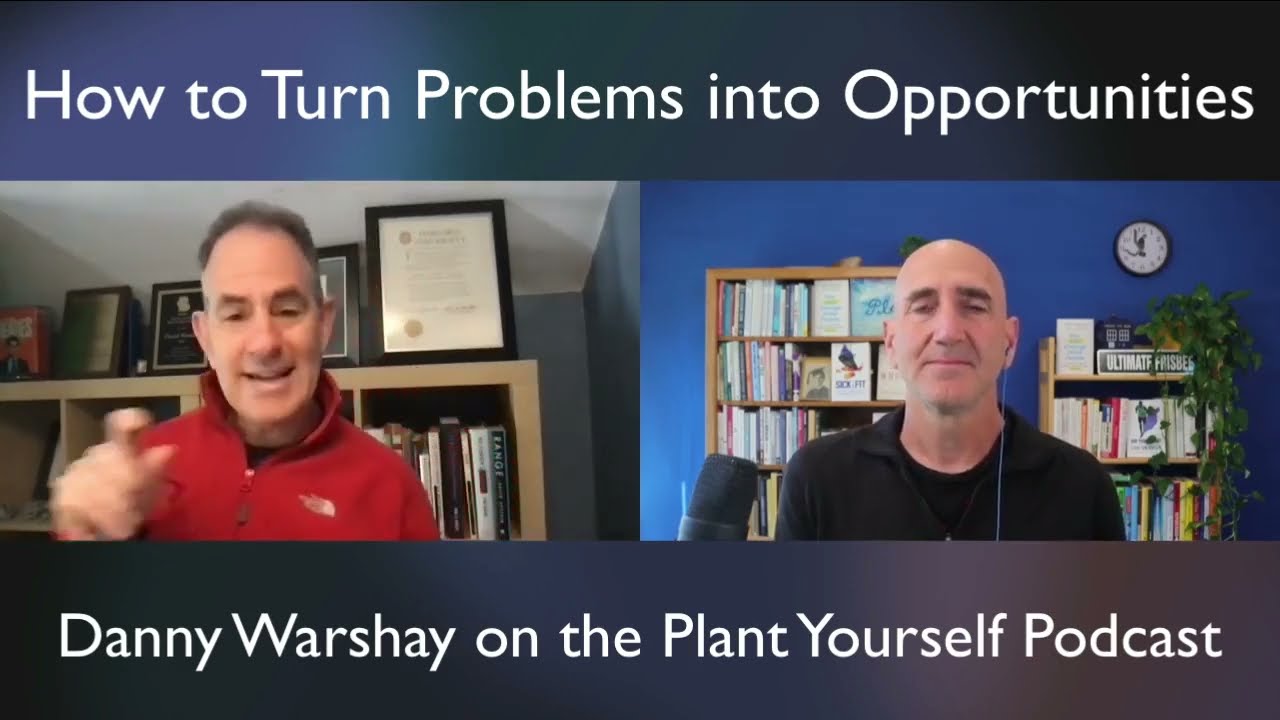
The Pissed-Off Entrepreneur: How to Turn Problems into Opportunities: Danny Warshay on PYP 513