Everyone is an Entrepreneur with the Right Tools (with Danny Warshay )
In this interview, Mark Devine talks with Danny Warshay, a Brown University professor and author of See, Solve, Scale, about a structured, inclusive approach to entrepreneurship. Warshay explains his three‑stage framework—See (anthropological problem discovery), Solve (iterative solution development), and Scale (resource‑aware growth)—and argues that anyone, regardless of background, can learn and apply it. He highlights how traditional entrepreneurship has excluded women, people of color, and non‑business majors, and shows how his method democratizes opportunity. The conversation covers the importance of building diverse, inclusive teams by seeking weak‑ties rather than friends, the paradox of scarce versus abundant resources, and systematic inventive thinking (SIT) as a disciplined creativity tool akin to TRIZ. Warshay shares multiple case studies—Premama, Casper, Imperfect Foods, the Pussyhat Project, and others—to illustrate the framework in action. He discusses the role of purpose (ikigai) in sustaining founders, the pitfalls of raising capital too early, and the need for emotional maturity akin to a hero’s journey. The interview also touches on Warshay’s teaching at Brown’s Center for Entrepreneurship, his global workshops (including the U.S. Air Force and Middle‑East institutions), and resources for listeners (website, LinkedIn group, audiobook). The dialogue blends practical advice, research findings, and personal anecdotes to make entrepreneurship a team sport accessible to all.
Chapters
Danny, thanks so much for joining The Marc Devine Show. I appreciate it. All the way from— well, you're not at Brown right now, but that's where you're perched in your current career.
I'm just a mile away. You're a mile away. So you could say— and out the window, I can see the Brown football stadium. So I'm kind of in the community even when I'm working in my home office. Yeah.
The closest I came to Brown when I was at Colgate was rowing crew. What's the river down there where you guys row?
The Seekonk River. And the crew team is really good. The women's crew team. have recently won the national championship. The men's have many times as well. And I know Colgate has a fantastic crew team too. So in fact, I often help with recruiting of crew members, and I even have some swag to prove it. I have a crew hat, I have a crew sweater, and it's a really interesting sport that takes a lot of dedication. It sure does. So yeah, I can't imagine Having done it myself, but I'm somewhat in awe of the people who have. And so I'm impressed by the fact that you've done it.
Yeah. Crew is a real gut buster, and it requires a lot of discipline and fortitude, but also cultivates those things, you know, in the, in the young athletes. So I, I think it's a great sport. I was a— we were the— I was the 2nd year at Colgate that crew existed. So it was just a club sport. So we were the pioneers who got the, the crew crew team going at the Colgate, and now it's a varsity sport.
Yeah, one of my students from my courses at Brown, Anders Weiss, was a crew student and also was in the last 2 Olympics.
No kidding.
For the US crew team. And boy, talk about training dedication. And he was a superstar student, great athlete, Uh, even did his MBA in London while he was training for the Olympics.
Good for him.
And I saw him at a book event that I was at in Boston. It was very kind of him to come. Uh, he was there with his girlfriend who had gone to Harvard, so there was a little bit of cross-rivalry, Ivy League rivalry there. But, um, it was really nice to see Anders, and, uh, he's an amazing person all around.
That's really neat. It's fun to hang out with people who are Achieving at that level, both athletically as well as academically or professionally.
Exactly.
And, I think it becomes almost commonplace when you're in an Ivy League East Coast setting, but it's not common for most of the world. And, I think it's really neat to get to talk to you. And, what I love about people in your position who've been there, done that, and then go back and teach is you're really able to distill the practicality of the theory and make it relatable and applicable. And also, you get people busy doing stuff. And I noticed in your latest book, C-Solve Scale, that you actually reference students who've gone out and done pretty cool things entrepreneurially, had some great success.
That's right. Well, first of all, I like the fact that you indicate that this is something that's meant for lots and lots of different kinds of people, many of whom I'd say have been ignored or neglected or left behind by mainstream entrepreneurship. I think the statistics are pretty pathetic when it comes to certain types of people, women, people of color. And so, very deliberately, I'd say the subtitle of this book, See, Solve, Scale, is how anyone can turn an unsolved problem into a breakthrough success.
Right.
And that's That's what I've been teaching at Brown for all these years. We can talk about even, you know, how did you get into that and what's it like to teach at a place that doesn't have a business school that's focused mostly on liberal arts.
Yep.
And that's what made me realize that the entrepreneurial process, the See, Solve, Scale process that I developed 17 years ago when I got a very unexpected tap on the shoulder to come back to Brown and teach, was something that anybody could learn, anybody could master. And then anybody could apply to solving a consequential problem. And you're right, don't believe me.
Yeah.
I'm not credible because it's my own book. But so much more credible are all the complete novices, students who came to my classes having absolutely zero background in entrepreneurship and left with mastering a methodology that they then went off to start companies or ventures like the Casper Mattress Company, Imperfect Foods, a women's clothing company called Liberare. The Pussyhat Project is another example.
I love that one.
A women's movement called the Pussyhat Project, as you know, a women's supplement company called Premama, all sorts of really good examples. And not just in business, because remember, if entrepreneurship is a structured process for solving problems, it can cut across all different kinds of contexts and domains. And in the book and in my teaching, I share lots of good examples of things that aren't commercial in nature, but are still solving problems.
I want to come back to some of those case studies and maybe look at them through the lens of one or different principles that you espouse in the book. But I do have a question. You made a comment earlier that a lot of people have been kind of left behind or left out of the entrepreneurial process. My view is that that is true, but it's also very different these days than it was, let's say, when I graduated from Colgate in 1985. The access to capital, the access to knowledge and wisdom like what you're bringing just didn't exist. And then I have an MBA from the NYU Stern School of Business. There was not an entrepreneurship class to be found. So, entrepreneurship just wasn't really something that was even a career path 20 years ago or something that you did unless you were one of those weirdos like Bill Gates or Elon Musk who just had this massive brain and this real unique kind of composition. And so, early on, entrepreneurship was considered to be— it was almost like the great man theory of leadership, right? You had to be like a genius.
Yeah.
like this special unique attribute. And then finding capital was really hard and et cetera, et cetera. Now, because of globalization and just the baby boomers and demographics and what we've created primarily in this country, then exported to the world, is this capacity for pretty much anyone to start a business. And it's even getting easier and easier every year that goes by because you have technologies that are incredibly simple to use and almost free.
Yeah.
You know, like when I launched NavySeals.com, which is my first business, 1997, I bought the domain for $37, but it cost me over $100,000 to build the website. You know, today you can buy the domain for $4 and you can put up the website for $9.99 a month. Anyways, what do you have to say to that? Part of this to me is just the nature of the times, and may those good times continue, I might add.
Well, I think you may be right. Certainly, there's some good tailwinds behind the effort to empower anybody to be problem solvers, to be entrepreneurs. You're right. I think the context suggests that there's room for lots of optimism. Well, first of all, we have a pretty significant list of consequential problems that we do need to have solved.
Good point. Absolutely.
And so it's a good thing that we're able to empower many more people who come from very diverse backgrounds backgrounds, lots of kinds of people who would probably not have felt that entrepreneurship was their course. Maybe they did feel back then— I'm kind of your era as well. I graduated from college in 1987, and there weren't a lot of startups around.
That's right.
I went to Brown. I was a history concentrator. I was a big proponent then and now of liberal arts as the background for just about anything. And I fell into an— I was not one of those, you know, big heads like Elon Musk or Bill Gates or Michael Dell. But I fell into an opportunity to be part of a software startup that we built up and sold to Apple.
Nice.
Again, this was in the late '80s. And to my students these days, I have to remind them that there were actually computers in the late '80s.
That's right.
But you're right, the whole content— there's no such thing as, you know, Y Combinator, or nobody would know what the word accelerator meant. It was just something in your car that you press down to make the car go. None of that context worked in our favor. I always say in Providence, where Brown's located, we were mutants. I mean, there was no other such thing as a startup. Nobody could understand what that would have been. Today, it's very, very common. It's built into the fabric of Brown now. I'm the executive director of the Center for Entrepreneurship. We have thousands of students who take our courses and our workshops.
And is that primarily undergrad? Danny, is it primarily undergrad or graduate or a combination of both?
It's a combination of both. I'd say the numbers reflect Brown generally. Brown, as you know, just like Colgate, is dominantly an undergraduate institution. So I'd say the students who come through the Nelson Center tend to reflect that. But we have really amazing PhD students and master's students and medical students who are also engaging in the process of entrepreneurship. So I am very optimistic. I think today more than ever, as you say, we have lots of the context that works in our favor, lots of resources and lots of community and ecosystem accelerators. I mean, that's true in Providence. It's true all over the world because I teach all over the world. In fact, yesterday I was on the phone with some people in Cairo asking me to come to their entrepreneurship boot camp and summit where I speak usually every year there. And now they're expanding to Riyadh, Saudi Arabia. So that's the other big change is this is not a US-centric enterprise if it ever was. And that's part of the mission of the book is to debunk lots of myths that I think still persist about Where you have to be from, what you have to have studied, what your background needs to be, what race or gender you're from. All those are not at all true. And unfortunately, they hold would-be really successful entrepreneurs back because they feel like they're not entitled to be involved. And again, hence the title, How Anyone Can Turn an Unsolved Problem into a Breakthrough System.
That's a place, a great place to kind of dive into one of the key principles and You know, I'm from the SEALs, right? And they call it SEAL teams for a reason, not SEAL individuals. And so, we know something about how elite teams kind of work and whatnot and the inclusivity and how everyone's voice is important and some of the best ideas come from the most unlikely corners. And so, one of the myths that I see that you dispelled right away is that you have to be a certain type of person to be an entrepreneur. In fact, It's the team that makes the dream— the teamwork that makes the dream work. So, talk about that.
Yeah, I certainly know that from the Navy SEALs in an acute way that is probably something I will never experience. So, I don't need to tell you anything about that, except that I think you're right. A big part of the emphasis of the book is how if entrepreneurship is a team sport, which it tends to be, Only 16% of ventures are started by solo entrepreneurs, and those fail more often than those started by teams. But the question is, how do you form a really successful team? And I walk you through that process. It's about following your weak ties, not your strong ones. So don't make the mistake of forming teams with friends and family, because those also fail more than the average alternative kind of approach.
I made that mistake.
I draw on lots of really good data from Noam Wasserman. But you're right, you touched on the 2 big watchwords, and they're words that unfortunately have a bit of a buzzword feel to them because they're somewhat overused, but they're important: diversity and inclusion. And I certainly support all the efforts of diversity inclusion for societal impact, but in the context of what makes a strong, successful, uh, team in entrepreneurship, it's diverse teams of every kind. They come from different backgrounds, contribute different skills. They embrace different points of view. They comprise different personality types, certainly races and genders. But it's not good enough just to be diverse. You know, the adage is diversity is about being invited to the dance.
Right.
Inclusion is being asked to dance. And the evidence is really pronounced that If you have a diverse team that doesn't actually allow people to contribute their true selves, all of what they come with, their backgrounds, their skill sets, their points of view, then actually the data suggests that diverse teams alone underperform homogeneous teams. And it's only when you have a diverse team that's invited to be their true selves where you embrace all of what everybody brings to the table, That inclusive teams outperform homogeneous and otherwise diverse teams. So it's really important to know all that.
Yeah, it makes sense. And I love the graphic that you have where you show that a diverse team, you know, with the 3 overlapping circles where everyone's focused on the differences or the sameness, you just get that, you know, you get the power of that circle where they all overlap.
Yeah, you just have a small area where you overlap. And if you imagine otherwise a homogeneous team, actually, those homogeneous teams overlap more.
Right.
And they tend to outperform just diverse teams. It's only where you have the inclusive teams where you're embracing everybody, everything that everybody brings to the table that those teams outperform. And that's work from Frances Frei and Anne Morris from Harvard Business School. And when I saw that graphic, I'm sorry we can't show it here. But it's really a powerful way of understanding why both diversity and inclusion are really critical. And in chapter 7 of the book, I walk you through some very specific insights and steps. And it's not about just relying on your close contacts on LinkedIn or Facebook because those are your strong ties. And those will lead you to people who, by and large, are just like you.
Right.
And so, you won't find people who are different. You won't— if you're an extrovert, you probably won't find introverts, and you need both. If you're a certain type of background, a tech person, and you're looking for somebody who's more of a humanities person, you may not, because your near ties, your strong ties, tend to look like you. And so, I recommend some approaches, and I walk you through them, of approaching your weak ties, not your strong ones.
Wow.
Bless you.
Yeah, thank you. I like that. So, um, what if you're— what if you are the founder person? You know, like, I've got this idea that I think is amazing, and, um, so are you suggesting that I go build a diverse and inclusive founding team, or that once I get the team up and running, or the company up and running, that I, I fill the staff up with the diversity?
Yeah, no, I'm talking about the evidence from founding teams too.
Okay.
And it's even more critical there for you to be able to set the stage, send the right signals to the rest of the team, benefit from all of the diverse kinds of input that you would get from other founders. So very much from the beginning, you touched on something or you alluded to something which is that if you have a really great idea, the way that I define entrepreneurship is a little bit different. It's a structured process for solving problems without regard to the resources you currently control. And so if it's a structured process for solving problems, you ought to start with what's the problem.
Not the idea, but the problem.
Yeah, otherwise you're what I call at risk of being a solution in search of a problem, right? And that's a really dangerous place to be, and hence the 3 different steps. SEE Solve scale starts with the first one, which is see, and that means be anthropological and empathetic to be able to observe and listen to people operating in their natural habitats and use that technique, which I call bottom-up research, to find and validate an unmet need, a problem that you may not have even known in detail. Start there. In fact, invest disproportionately at that stage If you do that first stage, the see stage, well, the solve and the scale stage will operate naturally. And if you don't do that well, it's like building a house on a faulty foundation. No matter how well you try to build the house, it's not going to hold up very well. So—
You're trying to fit your solution to a problem that may be better solved with some other solution.
Exactly. The first step has to be see. And I see the alternative a lot, especially among tech people. professor appointment is in engineering, and so I'm surrounded by tech people, and they're often very excited about all the new technology they're developing, and then they go out and look for a problem for it to solve rather than starting with a problem and then inventing something that can solve it.
Yeah, I can see that a lot with academic kind of entrepreneurial initiatives that, you know, are trying to take internally derived innovation and spin it out into a You know, an entrepreneurial venture. That is probably a classic problem where you have this tech and nobody's searching for a solution to put it—
Unfortunately, I see it beyond academia too. I do a lot of work advising and doing workshops in big companies, and they're guilty of it too. You know, they have homegrown technology or products or a legacy of a whole product line, and they then go look out for problems to solve rather than doing what I learned really well after business school. I went to Harvard Business School and then I worked at Procter& Gamble for a while. I didn't imagine that my work at P&G would have resonance later on in the entrepreneurship work I'm doing, but it does because P&G is great at doing that upfront research to observe and listen to people in their own habitats to figure out what problems to solve. In fact, in that section of the book, the first stage, see, I shared 2 P&G examples about products that are very well known. Your whole audience would know them. They're really surprising, the stories. They're really kind of fun and entertaining, and they're really memorable. Lots of my students come back and say, do you still tell the tide story? Do you still tell the dawn story? Because they're very memorable, kind of entertaining ways of remembering that you have to start by observing people in their own habitats, not just asking them, but observing them as an anthropologist would to figure out what problems to solve.
Yeah, I love the story of the Your 2 students who hung out in the aisle of Whole Foods or whatever the store was.
That's right.
And learned that women just didn't like a particular product.
Right. They hated taking prenatal vitamins.
Right.
And, by the way, you mentioned crew, the CEO of that company which evolved from the course, it's called Premama, Dan Azes. Dan was on the national championship Brown crew team.
No kidding.
And, what makes that story even better Although eventually, I encouraged them to have a diverse team, just like we were saying. But it was 4 guys, 4 athletes who knew nothing about what a prenatal vitamin was.
Right.
And they used this bottom-up research process that I teach in the book in the C stage to observe and to listen and to discover that women coming into Whole Foods who were pregnant or sexually active, looking to get pregnant, hated prenatal vitamins. They knew they had to take them for the health of their babies, But they made them constipated and nauseated. They were difficult to swallow. They tasted bad. They were broadcasting to everybody that they were pregnant. And they completely re— they figured out those were the problems. And then in the solve stage, I put them in touch with some product development people whom I know, and they completely overhauled the way you take a prenatal vitamin. Instead of a big horse pill, you take it through these powder packets. And then, they did some other bottom-up research to figure out other problems that women were facing. They had, again, diversified their team and were much better suited to do what I suggested earlier. And they've outpaced lots of the otherwise mainstream supplement companies who had more traditional ways of delivering those products. And what I love about that story, I'm so glad you remembered it, is that it demonstrates you don't have to be P&G in order to do this kind of—
Right.
C-stage bottom-up research. In fact, I find my undergraduate students the best at doing it because they don't know any better. They're happy to observe and test. That's right.
They don't have all the biases and the thought patterns that you might find in the internal teams that are trying to solve these problems from a P&G or something like that. They can think differently in other ways.
Exactly, right. And it also illustrates this tension I describe in the book, which is often a surprise to people, This concept of the benefits of scarce resources and the burden of abundant resources. And we can talk about that.
Yeah, I was actually— that was the next jump-off for me is, you know, you're sitting here listening to this and you're like, well, that sounds great, Danny, but, you know, I don't really— I'm not sitting on a war chest and I'm not really sure where to go. And I'm kind of a person who did, you know, I raised some money for my first business, which is a microbrewery. But everything else, I've really kind of been a scrapper. And it's been— there's been pros and then there's been cons because there's a point in time where you do want to go after some money and to be able to scale once you've solved the problem, right? And you need to grow that team out. But there are a lot of benefits to having scarce resources early on. You really just have to get laser-focused on figuring out a solution that will work and figuring out how to scale it before you waste a lot of money, you know, in trying to do the same thing. Exactly.
At the same time, the scale stage, third stage, in order to scale, that's when you might want to layer on some additional resources once you're really clear on what the solution is that's worthy of additional resources. But usually that's not immediate. In fact, once you've found and validated that problem that's worthy of solution, in that first see stage, like the Premama team did. Then you move to the solve stage and you iterate and you figure out how to take some small steps forward. You're usually not going to be successful right away. And that's something that entrepreneurs have to tolerate.
Right.
The tolerance for some failure, but it's iterative. And then once you do figure out how to solve the problem and it takes a little while, only then I recommend layering on some additional resources. But in the stage where you— in the first 2 stages when you're just figuring out what the problem is, and then especially in the second stage where you're iterating, scarce resources provide you discipline.
Yep.
To fail fast and fail cheap, as the saying goes, to iterate quickly and to discover an innovative solution that might be worth scaling. Scarcce resources also motivate you to collaborate with other people who bring complementary skills and experience. So that's also a way that you might bring in some diversity by looking for other people to collaborate with. And those people, in exchange, require you to share the risks and rewards of your venture. So that is related to the team issue we discussed. On the other hand, and it's, I know, somewhat paradoxical, it's surprising, Abundant resources, especially in the see and solve stage, can hinder you. And that's true at the kinds of big companies we talked about. They force you to be conservative because you were focused on preserving those resources. They prevent you from seeing new opportunities and innovations. And you might become too fixed on a particular outcome. They may make you overconfident. You know, some of the companies you're envisioning before, the established players, you might think, oh well, this is the way that it has to work and we're really good at that. I talk about a newspaper company called Knight Ridder in the book. And that to me is a really good example of a company that got overconfident because they thought, well, we're a newspaper company and nothing can touch us. And then came along the internet and it was actually the young startups who had scarce resources that did better. I mentioned the Casper Mattress Company. It was started by 2 of my former students, Luke Sherwin and Neal Parikh. At the time the book came out just a few months ago, they were doing $400 million in sales.
Nice.
They had been a public company. They completely revolutionized the way that a mattress company worked, how it sold the product, online instead of an awkward showroom, uh, how it was delivered in a box rather than, you know, through some delivery vehicle that you had to meet, uh, a 100-night trial. They knew nothing about mattresses except that you sleep on them.
Mm-hmm.
And that was their example of scarce resources. They also had no money, no capital, but in the early days, it disciplined them to Take a few steps, correct, course correct, hypothesize. And when it got time for them to realize, oh, we're on to something, we've revolutionized the way the mattress industry could work, they had a lot of people willing to share their resources. That's the second part of the definition.
Right.
Remember, the definition is a structured process for solving problems without regard to the resources currently controlled And so, all the listeners out there you mentioned who are worried, well, this all sounds good, but I don't have a big trust fund. I don't have a big bank account. Actually, they're in a better position than the people who have too many resources. And that's often the challenge I find when I work with big companies because they get arrogant and overconfident and they think, well, our resources will work in our favor. And they usually work against them.
Yeah. You know, any entrepreneurship program that I've kind of stumbled across, uh, in a university setting, you know, usually has like, um, fundraising and, you know, venture capital, uh, classes and, you know, stuff like that. Tech, you know, uh, how to do rapid innovation and agile stuff like that. And I think that, um, focusing on those as an entrepreneur is a real problem. And you're kind of like You're kind of reinforcing that with this principle that abundant resources is a burden. You focus on— because I was part of a software company brought in as an interim CEO, and then we went and raised a lot of money, right? So, I think $8 or $10 million from Sequoia Ventures. And Sequoia brought in a new CEO and charged him with spending all that money, and they did. And so, a year and a half later, they were out of money again, and they still hadn't figured out how— we weren't ready for that money, in other words. And so, it became a burden.
Right. And that's the problem.
If you focus on raising money as your first action, you're wrong, in other words.
Right. And then, and that money will bias you toward making decisions that you would not make if you didn't have that money.
Exactly.
And you can't fail fast and fail cheap if you have Sequoia's $10 million that they've invested, that they want you to spend.
They want you to spend it, yeah.
And they want you to spend it in a certain direction that attracted the money in the first place. It's not impossible, but it's much harder to go back to the board, to go back to Sequoia and say, our hypothesis was wrong. We're sorry we've invested your $7 million at that point. We'd like to change course with the leftover $3 million. They expect you to invest and get it right. And instead, I acknowledge that you're not going to get it right.
Right.
Rather than trying to line up the perfect one putt, That's right. Just acknowledge that it's going to be a 3-putt and do it quickly and inexpensively. And eventually, when you know what the solution is, yeah, that's the time when it's probably reasonable to raise the $10 million from Sequoia. But you're absolutely right. The mismatch is people often tend to leap from seed to scale, right? And they forget this middle part, which is actually where All the innovative action is. And I share techniques like the nominal group technique, which helps you integrate people who are both extroverts and introverts. Some of the work done in groups, some of the work done individually. I share an amazing technique, a really fun one too, called systematic inventive thinking that a team of Israeli researchers—
I want to talk about that because that reminded me a lot of something called TRIZ, which I studied a lot a while ago. Which is the theory of invention.
You are absolutely right. It comes from TRIZ, and it's the same basis. Okay, uh, in systematic inventive thinking, like TRIZ, the founders studied tens of thousands of patents, and they reverse engineered what are the patterns that these— the innovation patterns that these innovators used to come up with these breakthroughs and these patents. And it boiled down to 5. We don't have time to go through all of them, but they're really interesting to see. One is called subtraction, where you make a list of all the key components of a product or service that you want to innovate, and you remove one of the key components. And it has to be a key component. It can't be like, you know, change the color.
Right.
So an example might be, you know, you look at how banking was done a little while ago. with bank tellers in person at a bank. And you might say, okay, let's remove the bank teller. Now, what do we have left in those components? Well, that could be the basis of forming ATMs.
Right.
Or even these days, take out the ATM. Well, you might have, you know, something on your phone that allows you to scan and do everything on your phone. So, there's 5 techniques, 5 creativity innovation patterns that systematic inventive thinking uses. And I walk you through all of them. In fact, at the end of the audiobook, I narrated the audiobook version too. At the end, I have a bonus section with one of the founders of systematic inventive thinking, Amnon Lavav, and some really interesting insight comes from him. That's also available on my website, dannywarshay.com. But that's an example of a structured process.
Right.
SIT, systematic inventive thinking, belies the idea that brainstorming, just throwing a bunch of stuff up in the air in a random way, will produce anything useful. No, it asks you to be really strict about these structured processes, these 5 patterns. And it's amazing what comes out the other end. So again, I don't assume that anybody is born knowing how to be an entrepreneur at any of the 3 stages, the See, Solve, or Scale. I walk you through a process, a whole bunch of processes, That are things that anybody can learn, they can master, and then they can apply.
I love that. And I was deeply inspired by that TRIZ, the TRIZ or the systematic innovation, because it kind of blows a hole in the common theory that genius is a born trait and it's rare. And I think everyone has the capacity.
That's one of those myths again that I'm very explicit about debunking. We talk about that right up front in the introduction, that entrepreneurship is not something you're born with. It is something that anybody can learn. And it's sort of like saying, you know, otherwise, I remember when I was first asked to teach at Brown, it was in the engineering school. And I thought, well, what would it mean to teach entrepreneurship? And I remember this phrase, entrepreneurial spirit. You've heard entrepreneurial spirit?
I have, yeah. I certainly remember that.
Yeah. And I thought, I don't know what the heck that is. And I certainly don't know how to teach a spirit. And I said, imagine in engineering, if we were asked to teach somebody how to build a bridge, we wouldn't say, you know what, just go out there and have the bridge-building spirit. And if the cars and the trucks come crashing down to earth, then just have more spirit. That would be nuts. We wouldn't be allowed to teach anybody anything. Instead, in bridge building, you can distill some fundamental principles that all bridges have in common.
Mm-hmm.
A beginning, a middle, and an end with lots of room for all types of bridge variation— functional, aesthetic, operational. And I thought there must be similarly a coherent process that I could distill from basic principles of entrepreneurship. And it also could have a beginning, a middle, and an end with lots of room for variation of lots of different kinds of startups. And that's the basis of the CSolve scale method.
Yeah.
And it's not something that— like, you wouldn't say that, oh, you'd have to be born with genius talent to build a bridge. Or if somebody wanted to be a French pastry baker, you wouldn't say, oh, well, they're not born as a French pastry baker. You would say, no, you could teach them how to— like, what's the recipe? What do I do first? What do I do second? And why should entrepreneurship be any different? It's not this mystical you know, spirit that only certain people have access to. I know from now having over 3,000 students, some of whom I've just mentioned, that anybody can learn it, they can master it, and they can apply it.
Yeah. Well, what I would say if I were to be in like point-counterpoint discussion with you is kind of back to how we started this, is that the reason entrepreneurial spirit was even talked about in the early days was because the risk was so high. And so, you had to have an adventurous spirit. You had to have a risk-taking attitude and orientation in order to even consider going into an entrepreneurial adventure. And nowadays, it's just a very— there have been so many pioneers that now who have settled the entrepreneurial land and come back to teach and to share capital and share ideas and to support entrepreneurs and that it's a very different risk factor or risk equation. And so, it's much more accessible. There are people like you who have developed roadmaps that say, here's the steps. And so, now, it doesn't require as much of a risk-taking adventurous spirit where you're risking your entire life savings or your reputation. And I can even say the same thing about military special ops. When I went in the SEALs in 1989, I was MBA, CPA, and I turned my back. It was a huge risk to turn my back on all that and my family business, which was back East and had been around for over 100 years. So, I was basically turning my back on the money, My best friends from Colgate are running huge organizations. You know, one of my best friends is chairman, CEO, global chairman, CEO of EY. The other one's CFO at BlackRock. These guys, right, made it big. And I was turning my back on all of that. It was massive risk. And yet, you know, I came out of that experience and able to integrate my business experience with my Navy SEAL experience with, you know, a lot of my other stuff that I've worked on training and created business around that. Catching up, right, when it comes to the financial piece.
But, well, I mean, what, what an amazing, um, model you are for lots of people.
That's right. That's kind of my point.
You really care about— and it reminds me of another principle that I talk about in the book, and I think you're a good example. It's this Japanese word, ikigai.
Yeah, that's right.
I love that. Which is about living a life with purpose or meaning. And you certainly did that. I can imagine that was a lot That was the calling.
Yeah, that was the calling, the higher purpose, right?
Right. And so, ikigai is these 4 things. It's do something you're really good at. That might be drive. Do something you really love. That might be passion. Do something that has purpose that is going to add some useful meaning to the world. And do something that's going to pay you fairly for the value you add. And I think You knew that in yourself in 1989, which I think is unusual, but somehow you did identify— I don't know if you thought about it in ikigai terms, but I think you could—
I didn't come across that until much later. Yeah. I thought about it in a similar fashion though with even 3 different diagrams. One was purpose, one was passion, which both of those are in ikigai, and the third was my principles or my values, which became my ethos. And then, I said, at the center point of that is something that is my calling. And so, I didn't look at it in terms of a career or a profession or an avocation. It was a calling. And so, that calling was to be a warrior. And once I got clear on the calling, the profession started to define itself, right?
I think that's great. And I wish more of my students could learn from that too. But it's a really important section of my teaching and of the book. I talk about it now upfront, the very first day of class. There's a whole section in the book. Because let's face it, you could learn the CSOLVE scale method, but if it's not something that meets those 4 ikigai criteria, if it's not something you're good at, if it's not something you love, it's not something that's purposeful, if it's not something that's going to pay fairly, you're just not going to be successful.
Right.
Or at least the odds are much lower that you will. And I even talk about a case study in the book of somebody who came to me when I was in venture capital and in a very academic way had all the boxes checked, looked like he had nailed every element of the See, Solve, Scale process. And I chose not to invest because I could tell that this pursuit was not his ikigai.
Yeah.
And there's other really good examples. A woman named Emma Butler who was shaking on the first day of class, she says— I had her write her own section of the book because she wrote it so much better than I would have. There's videos of her on my website. She's created an adaptive clothing company for women who have different shaped bodies that make it difficult and painful for them to use mainstream clothing. It's doing incredibly well, and it's so clear that it's her ikigai.
Right.
Ben Chesler from Imperfect Foods was also one of my students. Um, you know, his mission was how do you reduce food waste, right? He learned that 40% of all U.S. produce is thrown out at the farm level because it doesn't look traditional, right? It's perfectly ripe and nutritious, but it's thrown out. And he created this Imperfect Foods company that's raised over $200 million from venture capitalists. It's doing over $250 million in sales.
Incredible.
It employs 1,500 people across 43 states. And the thing that he will tell you In the book and also on a short video on my website is most important to him and his team is that they've saved well over 100 million pounds of food that otherwise would have gone to waste. There's tremendous impact on climate change through all those kinds of things, right? It is very clear if you listen to Ben or Emma that they are pursuing their icky guy, right? And so I like mentioning that, and I don't always talk to somebody like you who lived that so well and so obviously early in their life. And as, as you say, that led to a career. But it's so central to, uh, the teaching that I do and to the book I wrote because I know it's not an academic pursuit. It's really important that this is something that you really love.
100%. And I agree that this principle of aligning with your passion, purpose, your calling, this ikigai principle, is essential to When we teach and we couch it in the terms of the hero's journey. And so, if you're going to go in and commit your life to starting a venture, you're on a hero's journey and you're going to have to go on a series of quests to overcome certain challenges. And those are mostly going to be around your emotional maturity to be the person worthy of leading this team to the other side of the ground that you're trying to get to. But also, the company is going to go through some serious challenges and crucibles. And they call that the dark night of the soul moment in the hero's journey. And that's when if you don't have a strong why, like Simon Sinek, it all starts with why. If you don't know what that why is because you haven't aligned your ikigai with your entrepreneurial pursuit, then it's very easy to quit.
It absolutely is. And I love Simon Sinek's work. In fact, I quote it in the book. I have all my students Watch his TED Talk on Start with Why. The value proposition elements I talk about in the second stage, Solve, are what are you developing, who is it for, and most important, why should somebody care? And sometimes, again, people miss that and it's the most important thing.
I love that. Danny, this has been a fascinating conversation. I really appreciate your time. Your book, See, Solve, Scale: How Anyone Can Turn an Unsolved Problem into a Breakthrough Success. Do you have a particular— you mentioned a number of videos on your website. Where would people— where would you like people to go to learn more about the book, learn more about your work, et cetera?
I think I'll share a link with you, but the best, easiest way to say it here is my website, dannywarshay.com, D-A-N-N-Y-W-A-R-S-H-A-Y.com. There's a whole section about the book, lots of bonus material, including short video clips from some of the students I had mentioned here. And also, there's a separate LinkedIn readers group that's been formed. You just search for CSolve Scale on LinkedIn, and there's people from all over the world, which is really interesting and gratifying. And it's my deliberate way of trying to nudge people together who come from different points of view, who might be able to support and collaborate with each other. So, I think those are the 2 best ways. And people often ask, how do you reach me? A lot of people are reaching me through my website, dannywarshay.com, or LinkedIn is a good way too.
Awesome. And I love, you know, you mentioned earlier that it's not just for entrepreneurship, you know, outwardly starting a venture that could go do something in the world, but intrapreneurship also. And even in— you said there's— you're finding interest within the military and government agencies and like how using this book as a means for innovation internally in an organization.
It's true. Last week, I did the first of what will be a series of workshops on See, Solve, Scale for the U.S. Air Force. The Army is also engaging me to do some things. I had no idea that the military would find this appropriate or interesting. You certainly have a better point of view on that than I. And then yesterday, I was in touch with a very large restaurant franchisor. Everybody would know their name. They want me to help train their franchisees. And then I work with governments all over the world. I mentioned Egypt and Saudi Arabia. I spend a lot of time in the Middle East, in Palestine and in Israel. I teach at Tel Aviv University.
Nice.
Usually each summer. And then I work with, you know, the U.S. Embassy in Bahrain. big companies, nonprofits, all of whom see that they have to solve problems and realize that their workforce isn't born knowing how to do that. And so, I think that's probably why the Air Force has asked me to do that too, because they realize that their Air Force people are trained in really expert ways militarily, but they don't necessarily have a new approach to identifying and solving problems. And that's what we're working on.
Great. And like you said earlier, there's no shortage of problems to solve in the world.
So we certainly need more problem solvers. And so that's my Onicky guy. If I think back on my own career, I think, wow, you know, I've been really thankful that I got that fateful tap on the shoulder 17 years ago to come back to Brown and teach, because I've had the opportunity, as I said, to teach over 3,000 students. As I've indicated, they're doing all sorts of amazing things to change the world, and I know I'm better off for it, and I hope we all are.
Yeah, awesome. Well, better off for your work and your book. Thanks so much for sharing your insights with us today. Super appreciate it. And, uh, I'm gonna go out and I've got a copy of the hard copy, but I love when I can listen to a book, especially in the author's voice. I imagine you read it. Did you read the I did.
You know, that was a weird thing. I've never narrated a— I never wrote a book before.
It's tricky. Yeah, I've done 4 of them now and it's like, it's a lot of work, right? Isn't it?
Yeah, it was my students who put me up to writing the book in the first place. They said, Professor Warshay, you're not doing this 3rd step. You're not scaling. And I said, oh, you're right. And then the publisher said, we'd like you to narrate the book. And I said, I've never done that. And they said, no, no, it's your material. You're used to teaching. Who else would do it? And I said, well, If you can't get Morgan Freeman, then okay. But it was during COVID and so they had to ship me a makeshift studio to set up in my basement. And for 7 days straight, we had 6 and 7 hour sessions with an audio engineer and a theatrical director on with me weighing on every word. And if I swallowed a syllable, they said, no, no, go back, we have to do that section over. So it was a really hard but really ultimately gratifying— process. And people have told me they enjoy the book in both formats. The funny thing is I had no idea how many people buy audiobooks. I said, what percentage of this—
It's the fastest-growing segment. It's huge.
Right. And they said it could be 50% of all the books in this— of this book will be audio. I had no idea. So there's some companion additional material that comes with it, including the bonuses that I mentioned before. But Mark, this has been a real Wonderful opportunity to get to know you and your work. Thank you for all you're doing to make the world a better place, and I'm honored to have been on your show today.
Yeah, likewise. I really appreciate your time, and, uh, we will, um, we will get this out there, and, and we'll let you know when we go live so that you can share it with your students or on your website or wherever.
I will definitely do that.
All right, thank you, sir.
More from Danny



Changing Habits and Lifestyle Through the Entrepreneurial Process with Danny Warshay: PYP 315
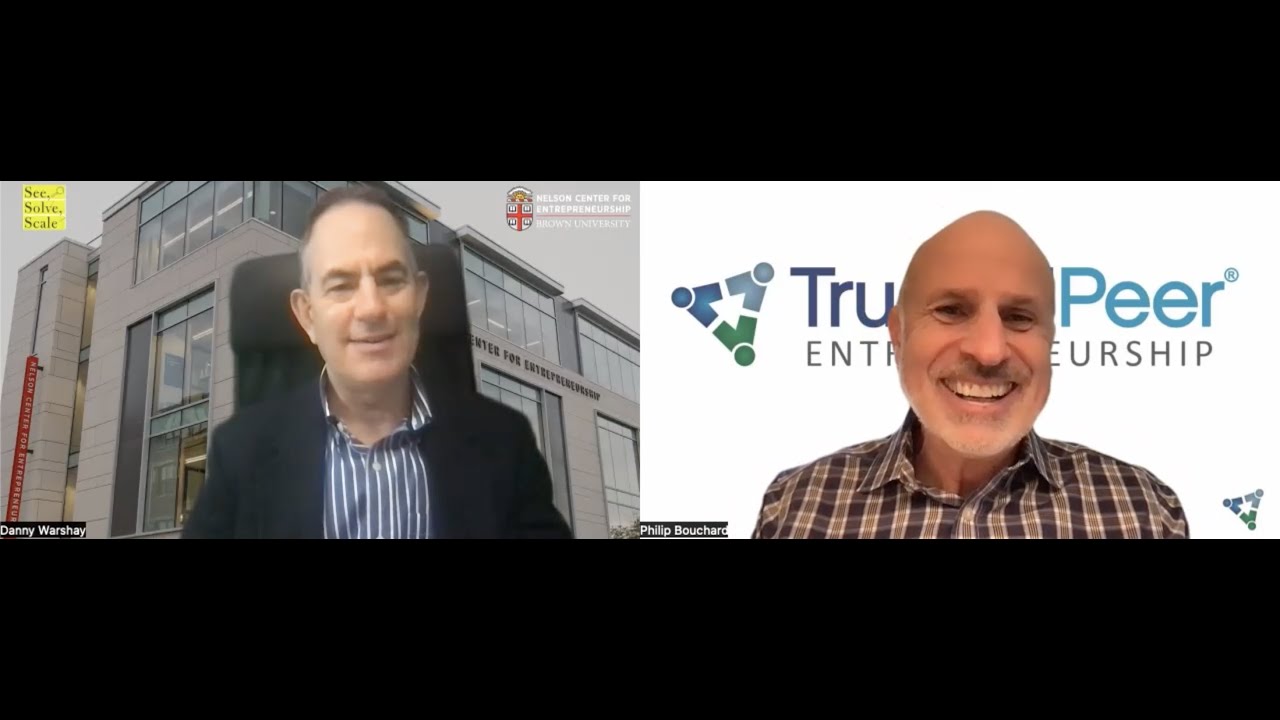
Interview with Danny Warshay, Brown University, Director of the Nelson Center for Entrepreneurship


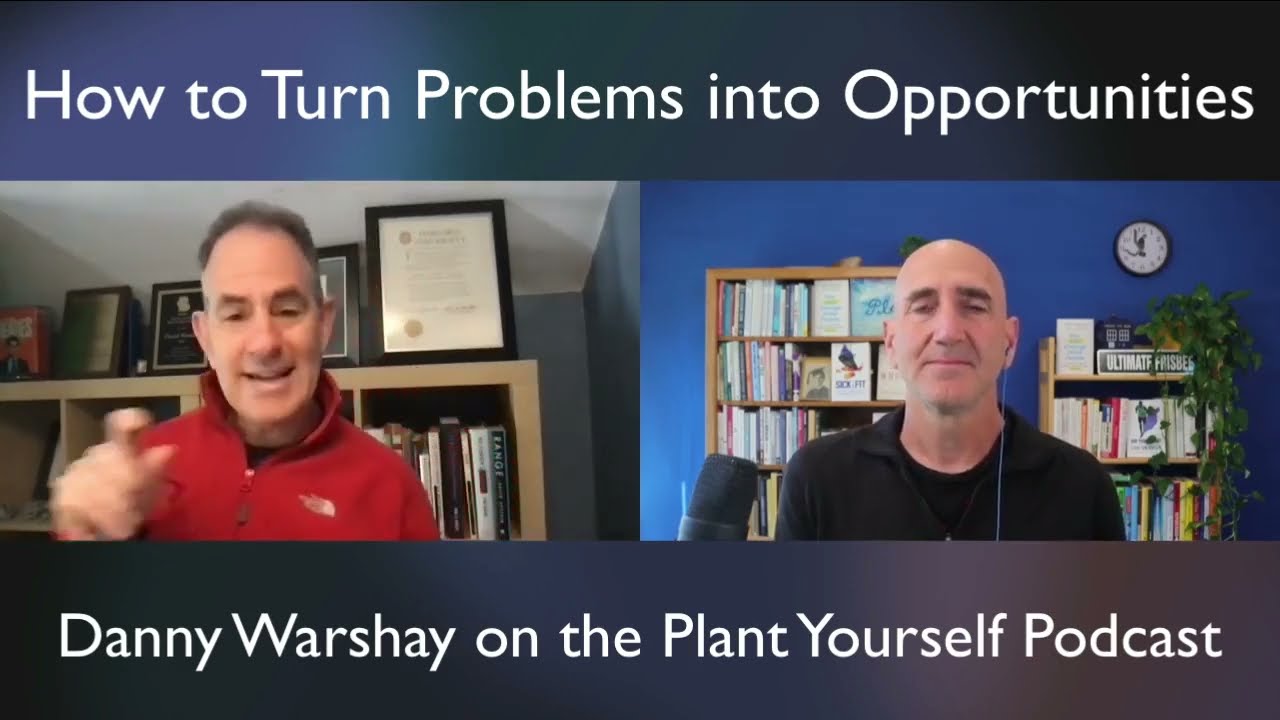
The Pissed-Off Entrepreneur: How to Turn Problems into Opportunities: Danny Warshay on PYP 513