Changing Habits and Lifestyle Through the Entrepreneurial Process with Danny Warshay: PYP 315

Danny Warshay, who runs Brown's entrepreneurship center, explains how the three-step process used to launch startups like Casper also works for changing your habits. The key: spend time understanding what you actually need before trying to fix it, test your ideas cheap and fast, and treat your constraints as creative fuel.
Chapters
Hey, welcome to Plant Yourself. I'm your host, Howard Jacobson. 2 quick announcements before we get to today's show. If you're interested in becoming a health coach, I'm offering another run due to popular demand for people who can't make 8 PM on Wednesday nights Eastern Time. So we're doing another run of the program which will meet— the practicums will meet at 10 AM on Wednesdays Eastern Time US, which means if you're in Europe or Africa, that might be good for you. Also, if you're in the US and evenings aren't good and you have free time in the mornings, either 7 AM Pacific time or 10 to 11:30 Eastern, then you can participate. If you want to find out more about becoming a wicked effective health coach, you can go to wellstartcoach.com. Second thing is, if you're not aware of it, Josh LaJanni and I have a book that is free on Amazon Kindle. It's called Sick to Fit, and if you just go to Amazon and search for Sick to Fit, you'll be able to download it for free and read it on any Kindle-enabled device, even a phone, smartphone, tablet, computer, whatever. All right, let's get to today's episode. This is the Plant Yourself Podcast. I'm Howard Jacobson of plantyourself.com and wellstarthealth.com. This podcast is part of my mission to help you live an energetic and entrepreneurial life. So one of the goals of this podcast is to help people live better lives, to adopt habits and Lifestyles, diets, exercise regimens, meditation, whatever it is that's going to help you achieve your health goals and allow you to represent, to represent a healthy way of living to your fellow humans. And a lot of the time we have guests who talk about, you know, plant-based living or exercise, so we're sort of inside the box. Occasionally though, I have guests like Chris Voss, who is an expert on negotiation, or folks who are experts at various business processes. And today I am thrilled to welcome to Sun Studio here in rural North Carolina my very good friend Danny Warshay. Hello, Danny.
Hello, Howie.
So today we're going to be talking about entrepreneurship. Danny is the, the what?
I am the executive director of the Nelson Center for Entrepreneurship. at Brown University. And I'm a professor of the practice of entrepreneurship at the same Brown University.
Awesome. I love it when I don't have to go and like find that on your website and then read it awkwardly.
Yeah. It's hidden. I tend not to own up to that too often. But here in rural North Carolina, I'm happy to disclose.
So, we have known each other for a long time.
A long time.
33 years?
Sounds right.
Okay, and we're not going to tell stories about the early days.
At least not, not, not for, uh, public consumption.
Right. Um, sorry, I just went down memory lane there for a second. I was remembering our plant, our houseplant. Anyway, um, so we're going to be talking about how to apply, um, Danny's entrepreneurial process to lifestyle change. And the impetus for this came to me because— can I talk about your book, man?
You may, yeah.
Danny has just written a first draft or some draft of a book on entrepreneurship. And in reading it, I was struck by how applicable it seemed to me to be to various processes in my own life where I'm trying to better myself. I'm trying to break free of old habits, and very often breaking free of old habits is breaking free of assumptions. And so that's what we're going to be talking about. Before we begin, a couple of quick announcements. One, of course, is that if you are interested in making lifestyle shifts and you'd like a little bit of hand-holding, or a lot of hand-holding as the case may be, check out wellstarthealth.com. We start new cohorts roughly every month. Another announcement is that we, the WellStar team, just got back from Texas where we did a bespoke day-and-a-half workshop for one of our corporate clients. We had about 40 people in the room and we took them through a day and a half, sort of a mini immersion, before taking them into the 12-week online program. And it was amazing. The energy in the room, the shifts that people made. And I'm going to be talking more about it. Right now I'm just starting to read the feedback forms to help us figure out how to do it even better next time. But I am going to be talking about this in some detail over the coming weeks because I think it's a new model for what we're going to be doing. And We may be opening it up to the public and we also will be looking for other corporate clients. So if you are the sort of person who has the wherewithal to bring 40 or so people from your organization and us into a room for a day and a half, I'd love to hear from you and tell you all about it. All right, let's get that out of the way and let's jump into talking about entrepreneurship and lifestyle. First of all, are you comfortable standing?
Yeah.
Because we've got a rocking chair and a Swiss ball.
Do I look that old that I— the ball might be more appropriate. No, I'm happy standing.
Okay, there's a yoga mat if you want to lie down.
Okay.
Well, you know, we'll take care of ourselves. So I was the one who brought this up, this idea that we can apply entrepreneurship, your entrepreneurial process, to lifestyle change, but you Immediately agreed and you said, well, it's basically a problem-solving method.
Yeah, that may be, first of all, a place to clarify for people who aren't even aware of the idea of there being such a thing as an entrepreneurial process that you can master and then apply in any context. So it may be useful to even talk preliminarily about that.
Yeah, let's—
What the heck does that mean?
Let's start there before we even get— before we even constrain ourselves by talking about health and lifestyle. Let's just talk about entrepreneurship and what it is and what it isn't.
Right. I often— I travel all over the world. I speak to lots of different kinds of practitioners and people who are interested in learning this process. And it's often surprising to them to learn that there is such a process. In fact, I usually poll the audience and I ask, how many of you ever heard of this concept or the phrase entrepreneurial spirit? And most people raise their hand when I ask them, and I have to admit that I have too, but I'm thrown by that. I don't know what to do with the concept of a spirit. I don't know how to learn it. I certainly don't know how to teach it as a professor. And so about 13 years ago, when I was charged with teaching entrepreneurship, I realized, well, I'm going to be doing that in the engineering school at Brown, and imagine if at Brown When you wanted to teach somebody how to build a bridge, you said, just go out there and have the bridge-building spirit. And people would think we're a little crazy if we advise people or try to teach people how to do that just on that basis. Go out there and put up a bridge, and if it holds up the cars and trucks, great. And if they— if the bridge collapses and the cars and trucks come crashing down to earth, then go out there and be persistent. And that's often, again, what you hear people advise if they're trying to encourage them to be entrepreneurs. And I realized in bridge building there's a structured process. There's a beginning, a middle, and an end. And all bridges are different functionally and aesthetically and operationally. And I could probably think of how to do that in teaching an entrepreneurial process too. I thought back to my own successes and challenges in my own entrepreneurship through the years. And I realized, yeah, if I tried, I could distill out the fundamental principles— a beginning, a middle, and an end— 3 steps that are fundamental to any entrepreneurial enterprise. And I did that. I call it the entrepreneurial process. We can talk about those steps. That's what I teach at Brown. I teach at Tel Aviv University and in intensive workshop formats all over the world. And that'll be the basis of this book that I'm in the middle of writing.
Okay. So let's even take a step back. So before we talk about the process, let's talk about the definition of entrepreneurship. Because, you know, you and I both think that we can apply it to lifestyle and behavior change. Otherwise, we wouldn't be— I wouldn't have pressed record. But, you know, like what is and what isn't it?
Well, again, I think it came out of this realization that it's not just a mindset, which is often what people think of. They say the entrepreneurial mindset is not just a spirit that you have to latch onto. The way I define entrepreneurship is a structured process for solving problems without regard to the resources you currently control. And there's a lot in that definition that we could spend a whole semester unpacking if this were a course. But the first part is really critical, that it is a structured process. Like I said, it's something that you can distill fundamental principles about, that you can teach people, that people can learn, master, and then they can apply that process to whatever problem they're looking to solve. And I find that's true in the wide range of people I've taught this to around the world, and even just on the Brown campus, who are in very wide ranges of disciplines and do all sorts of different kinds of things, face very different kinds of problems. All of whom are able to embrace, learn, master, then apply this structured process.
Okay, so for our purposes here, the sort of the core of the definition involves solving problems.
It is. It's a— it's, as I say, it's a method for solving problems. And that's why I think you and I thought perhaps we could apply this structured process to the kinds of problems that you and your podcast audience are looking to solve.
Cool. So, so, excuse me, even before we go there, um, like, let's just dive into the entrepreneurial process as you would teach it, because I'm imagining— I don't have to imagine, I know there's people who are listening who are on fire about health, on fire about whole food plant-based living, and they may, they may be thinking, boy, I'd love to make a living in this field. I would love to have this be my passion and my livelihood as well as just this hobby or this thing that I keep talking about and I keep thinking about. And like I spend more time on my Instagram than I do on my expense reports. And all right, so let's— we can keep those people in mind too if they're thinking about, well, how do I go out and have a business and start something that is going to fulfill me?
Yeah, well, one thing to say is for sure, and that's kind of the classic way that people think of applying this type of process to learn entrepreneurship and then apply it to something commercial. It might be you take a core technology, a discovery in a lab, an insight that you might have in another context, and eventually the outcome is you create a business. The way I've defined it here, and as you just heard, and the way we apply it at Brown and elsewhere, in my teaching is much broader than that. It's what I always describe as a liberal arts approach to entrepreneurship, where you have this methodology and you can apply it to a very wide range of problems that you're looking to solve. And we can talk about some of those if you're interested. It might make sense right now to define those core principles that I mentioned, because I think you'll then see if you understand those as those core parts of that process, how you could then apply them to a very wide range of challenges or problems.
All right.
So the, the 3 steps I always define are: the first is find and validate an unmet need. And that means essentially, if entrepreneurship is a structured process for problem solving, what's the problem? And defining that in the first step is, in my experience, not always a trivial step. In fact, in my experience, often people rush past that if they pay any attention to it at all, and they are a solution in search of a problem. And that tends to be a very dangerous, expensive, inefficient way of undertaking the process. So it's really important to identify the problem you're looking to solve.
Right. And there's a difference between problem and unmet need, right? Like, from my perspective, the fact that the world is eating poorly is a problem. But for the people who are going to pay me, if they don't agree, then my view of a problem is kind of irrelevant if it's not shared.
That may be true. That's again partly why we define it— I define this process as much bigger than a business generation factory. It is, in the case you just mentioned, to me the problem is The same as the unmet need. It is how do you feed people more effectively, and then we'll get to the third step of whether it's sustainable. But the first step is find and validate an unmet need, which again, to me, loosely is defining what the problem is you're looking to solve. And we even yesterday were qualifying, what do you mean by unmet need? Is it completely unmet, like it's not met at all? No, it could mean partially met but not fully met. And usually I don't have to parse that so carefully, but in case anybody's wondering, what does unmet need mean? It's that somebody has a problem that needs to be solved. The second step is what I describe as to create a value proposition. And that's maybe a fancy way of saying, what on a small scale is the solution to that problem? And I say small-scale because it's important initially to not fall in love with the potential of the, the big-scale potential of that initial expression of the solution. It's designed to be imperfect. It's designed not necessarily to last, but a first gesture toward solving the problem. And you have to be tolerant of not perfect success at that stage, of even failure, to realize that this second stage of creating a value proposition is iterative. And then the third step is once you have figured out what you think the solution is on a small scale, to create what I call a sustainability model. And it's a method of growing the solutions so that you have what we call impact at scale, so that you have really dramatic impact on lots of people's lives in a way that may fundamentally change the way that they live. And so those 3 steps— find and validate an unmet need, develop a value proposition, and then create a sustainability model— comprise the 3 steps of that entrepreneurial process.
Gotcha. Maybe, maybe give an example For each of those, like a nice case study from your own portfolio of students who've gone on to start companies or other ventures?
Sure. Yeah, I'll mention one that maybe some of the people in the audience are familiar with, especially any millennials, and that's the Casper Mattress Company. This was a company co-founded by 2 of my former students, Luke and Neil, who knew virtually nothing about the mattress industry except that you sleep on a mattress. And they realized by their own experience in buying a mattress that it was problematic. It was— there was an unmet need because you had to go into a mattress store, you had to be subject to the interrogation of a mattress salesperson who was motivated by commission. Once you purchased it on the basis of a really unnatural interaction with the mattress in the sales room itself, you had to have it delivered, you had to be home, and you're stuck with this mattress probably for the next 8 to 10 years. It's expensive. There's no such thing as returning it. They completely—
and there's all this, like, no 2 mattress stores sell the same mattress, right?
So you can't price shop, you can't just look for it in one place and order it on Amazon. That was the unmet need they identified. And not to mention that there were problems with the mattress itself that were causing health problems because people weren't sleeping well. The, the approach they took was to The entrepreneurial process. They did some what I call bottom-up research to find and validate that unmet need beyond their own experience. They created a value proposition which was, what if we reinvented the process for how you will purchase a mattress? And they reinvented every part of it. Everything from you order it online from the comfort of your own home. It is delivered to you in a box that compresses the foam mattress very conveniently. You have a 100-night trial in which to try it out in the comfort of your own bedroom, which is the natural place you would experience sleeping on a mattress. And if you don't like it, you can return it at their cost. They will pay to have it picked up and delivered back to them, which almost never happens, by the way. And then the third step of, all right, they kind of figured this out on a small stage, on a small scale. How do you create a sustainability model so that you can have big impact and change the lives of lots of people? The shorthand way of describing this is that Target offered them over, over a billion dollars to purchase the company. About a year and a half ago, almost 2 years ago. They had over $500 million in sales in 2017, and they turned down that offer from Target because they knew that the sustainability model they had created had more potential than was reflected in that billion-dollar offer. And so I think that is a good example of those 3 stages of identify the problem, solve the problem on a small scale, and then figure out how you're going to scale it so that it can have big impact on lots of people.
So in that second stage where they were creating the value proposition and kind of validating that it was going to work, it sounds like they didn't spend millions of dollars upfront to build the web infrastructure, to, to buy a factory, to buy the warehouse, to buy the trucks for distribution.
They didn't. Yeah, and I think that is the nature of entrepreneurship. It is the way entrepreneurial process works. In fact, if you skip that stage and jump to sustainability model where you're going to do all the things you just described and we're going to raise many millions of dollars, you may be wrong. And in fact, chances are on some significant level you will be wrong. And rather than failing fast and failing cheap, which is the adage I always advise in that second stage, building a value proposition, And figuring out by doing what you're likely to succeed at and what you're not, they prematurely might jump to the stage where you would fail in a very expensive way. And it may be at the peril of the company's success at all. I always recommend instead of pouring the concrete sidewalks up front, wait until you see the bare patches on the lawn. You know, essentially Where are people walking before you commit significant resources metaphorically to those sidewalks? And that is the nature of entrepreneurship. It's also a difficult thing to do, to move quickly and admit that you don't have things quite right at first. But it's by doing that you're going to learn what the right way is, not just by thinking in some strategic All right, talk a little bit more about bottom-up research, because I think this is going to be interesting when we talk about—
when we turn this lens on ourselves and our own habits and behaviors. But let's do it in its sort of natural state where you're trying to solve other people's problems or problems at scale, and you want to have an understanding of what they actually are.
Yeah, I'm asked by lots of different kinds of groups all over the world to teach this method that I call bottom-up research. Which is how I help people do that first step of finding and validating an unmet need. One way, one shorthand way I describe bottom-up research is to be an anthropologist. And if any of your listeners have studied anthropology or know of anthropology, it's a method of observing and listening to people behaving naturally.
Mm-hm.
In their own habitats. And so on one hand, it might seem obvious, simple, not very complicated just to watch people or listen to people behave normally. And that could be in their homes if you have permission to do that. It can be in a retail environment. It could be in an office environment. Wherever you are interested in finding and validating an unmet need, the approach is simply to watch and listen to people behave normally. Naturally.
So tell us the Premama story.
So the Premama story is a wonderful one. It's a nutritionally focused one. The Premama group is another group of students from my course at Brown. I like to emphasize, not in a sexist way, but it was 4 guys— even better, 4 athletes— who were interested in doing something in the nutrition space but had not quite clarified even what the problem was that they wanted to address, let alone what a solution might be. And I said to them, you know, go do some more bottom-up research. What I might suggest is go to the nearby Whole Foods Market, spend the afternoon anthropologically observing people, listening to people in the nutrition aisle, and just see what you discover. And they came running back to me after that afternoon very excited, and they said, Professor Warshay, we think we're on to something. We saw a steady flow of women, mostly pregnant women, who were pulling bottles of pills off the shelf and looking really unhappy. And I said, well, who were they? Tell me more. We asked them some questions. They said they listened very carefully and they realized that these were pregnant women or just sexually active women who were looking to get pregnant who needed to take what they learned were prenatal vitamins. They had never heard of a prenatal vitamin B4. To the best of my knowledge, these 4 guys will never be the target consumer for a prenatal vitamin. But the other word I often use in doing bottom-up research, in addition to anthropological, is empathy, because empathy is putting yourself in someone else's shoes. And if you're not the target consumer, you have no other way of understanding that unmet need other than being empathetic. So they were empathetic, and they learned that Pregnant women hate taking prenatal vitamins. They're big, they're tough to swallow, they exacerbate their nausea, they make them constipated, they're indiscreet to take and to tote around, they taste bad. And so, long story short, in the— even over the course of the semester, I put them in touch with a good friend of mine, Manny Stern, who's a food and nutritional products developer. He helped them formulate a new approach to taking prenatal vitamins in the form of powder packets that you could add very conveniently to any drink that you as a pregnant woman might be used to taking— orange juice or water or tea. And they even got a patent on that packaging. They raised over $6.5 million They became the leading prenatal vitamin supplier in this completely new format, and that was the basis of a whole line of women's-focused nutritional products, all of which they— the need for all of which they discovered through this technique of bottom-up research.
Okay, beautiful. Last thing I want to talk about before we go into applying this to lifestyle is this concept that is so counterintuitive for me and for most people about without regard to the resources that you currently control. Can you talk about that?
Yeah, and I think Premama, I think Casper are both good examples of that. Often people mistakenly but understandably believe that the more resources you have the better. That if you're a wealthy person, if you have lots of resources of all kinds— it could be money, it could be pedigree, it could be education, whatever you're measuring— the more the better, and that it positions you better to be successful as an entrepreneur. And in my experience and in my teaching, I've discovered the opposite is true. And so I talk a lot about the benefits of scarce resources. And that again could be money, it could be training, it could be experience. And the opposite is—
Meaning like the Casper guys, if they had grown up in like mattress-owning families, if it was like, you know, Luke Sealy and Joe Serta, right, they would have had a whole set of assumptions that they couldn't even see were imprisoning their creativity.
Well, and let's face it, those companies— Sealy, Serta, all the kinds of standard mattress companies— have a legacy of a business that's tough to overcome. They might have been able to think of what Luke and Neil did in reinventing the way you buy a mattress, but they were understandably so blinded by their current business model and all the stake they have in it that reinventing it was the furthest from their minds. And the fact that all Luke and Neil knew about mattresses was that you slept on them freed them to enable them to rethink the way that they— that people should more reasonably buy a mattress. And I also think that's true of Dan Aziz, the CEO of Premama. It's not in spite of the fact that he's a guy and never likely to be the target market for a prenatal vitamin. I suspect it's in some ways because of the fact that he is unlikely to be that target and not biased by the way that he as a woman, a pregnant woman might be experienced in having all those challenges that we described before, that he was able to identify a new opportunity. So I think it's counterintuitive, you're right, but sometimes there's a significant benefit to those scarce resources. And equally, there's a burden to abundant resources that you might think might work in your favor. None of the entrenched prenatal vitamin companies thought of what Dan did, and it's because they have turf to defend. They have an established business model that to that point was working well, and even to notice that there was a problem by doing bottom-up research They're not motivated necessarily to do that. They're motivated to defend the current approach that they've been enjoying for years. So yeah, that's that two-sided coin of benefits of scarce resources and burden of abundant resources. And I'll tell you, when I teach that concept in places like rural China or places in the Middle East that feel— where people feel understandably disadvantaged because they don't have a lot of resources, their whole body language shifts in the discussion and you can see them light up with more confidence about their ability to embrace this process, not in spite of, but because of the fact that they have scarce resources. So that might be something that relates to the audience that is listening now.
Right. Well, it reminds me of, you know, The Talent Code. by Dan Coyle, where he talks about like these hotbeds of talent, even when they're well-resourced, they don't pass on the resources in an overt way to the students who are learning because they wanted to be hungry. And I remember my dad, who grew up in New York, New Jersey during the Depression, saying he was on a sandlot baseball team. Whenever the other team came and had uniforms, he knew they were going to kick their asses. No team with uniforms was as hungry as his team was.
Yeah, I could see that. And that may be a different way of thinking about the same concept.
So we've got the idea of it's a methodology for problem solving, a process, a structured process for solving problems, which means it would be very well aligned with fixing our lifestyle issues. On the other hand, it's about empathy and not coming in with assumptions, which would seem to doom it. Like, the one thing I am an expert on is all the ways I messed up and all of my problems and all of the hundreds of things I've tried. Like, I've tried and I've tried and I've tried and I've tried. So in some sense, me changing my own lifestyle is a little bit like Sealy and Serta trying to change their own business model. So what advice do you have for kind of getting out of our own way so that we can find new expansive creative solutions rather than the ones, you know, I'm gonna go on a diet or I'm gonna set my alarm clock or I'm gonna join the gym, the things that we keep doing that aren't working?
Yeah, it's a great question. I love discussing this with you because I'm not an expert in the areas in which you are, and maybe I'm— you're not an expert in the areas in which I am. One thing that's a key ingredient for any entrepreneurial endeavor I'm part of or I advise is Having diversity of opinion, of experience, of point of view. So the fact that you and I have different kinds of points of view, of experience, maybe approach to solving these kinds of problems, by its nature and by my own experience, is a good thing. And so one thing I'd recommend is one way to get out of your own way or to avoid the biases that you just described is to make sure that you're interacting with somebody else who has Different kinds of biases or different kinds of training. Because I agree with you, one burden of abundant resource is your own experience. Just like the established players, the entrenched players in the prenatal vitamin business couldn't get out of their own way. If they had Dan Aises on their team with a different point of view, maybe a guy, not only a woman's point of view, might have been an interesting thing.
Yeah.
And then similarly in the mattress business, if you had had a diversity of kinds of points of view and experience, it might have been an interesting, diverse approach to solving the problem. There's a lot of evidence, there's a lot of literature, there's a lot of research suggesting that collisions of different points of view can yield at least the insight about what the fundamental problem is, if not the solution. So that's—
Hmm.
One thing that we didn't clarify up front, but I think is really inherent. Entrepreneurial success.
So you don't have to go it alone. You can probably find 10 other people you know very well who have the same problem.
Yeah, or similar problem, because you can borrow points of view and experience from other areas that may not literally be tied to your circumstance. And that may— that's one of the benefits of our center that we are building at Brown that will be opening as a physical center in a few weeks is that it's a place to enhance the chances of these accidental collisions happening. Somebody who's a music expert and somebody who's a neuroscience expert coming together and looking at the landscape, understanding the problem, being able to solve it more effectively than just having the neuroscientist, you know, in their own silo, or the music people just in their own silos. So that's probably— one thing that you could borrow from this process?
So I'll extract from that, like, find a group and be willing to share what your issues are. So one of the things that entrepreneurs tend not to have a problem with that people who are trying to change their lives is entrepreneurs aren't going around like ashamed that there isn't a better prenatal vitamin. Like, they're excited when they see a problem. But as individuals, when I have a problem, I don't get excited about it. I feel shame, I feel guilt, I feel like I want to hide because I don't see the problem as an opportunity to flex my creative problem-solving muscles. I see it as a character flaw.
Yeah, I think that's well said in terms of the opposite. In entrepreneurship, at least the way I teach it, the way I do it, is that it's like a treasure hunt. You're looking for an insight in that first part of the process that enables you to define what the problem is you're looking to solve in the first place. One of the things I do hope to clarify, and I often do in that bottom-up research workshop, is that we all have biases. And we're all blinded often to what's right in front of our eyes. And that's probably what you're describing, I think. In terms of our own circumstances of we've been struggling with diets or we don't get enough exercise or we feel like we don't have enough self-control, there may be a more fundamental issue that's right in front of our eyes that's difficult for us to notice, understand, define, identify, whereas again, somebody else who's looking at the same circumstance might be able to help us identify that.
All right, so my takeaways here are like to be entrepreneurial in your own life, like think of it as a treasure hunt. Like get excited about your— it's not like you have problems and nobody else does.
Everybody does.
It's not like you have better problems or different problems or worse problems. We all have problems. So to get excited, just that mindset shift of, oh boy, like look at me not getting up in the morning and wasting the first 3 hours of the day on bullshit instead of like doing the things that are going to get me what I want. How exciting.
Yeah, look, anthropologists are excited about what they do. They, you know, they watch people behave naturally if they're doing their own ethnographic research effectively. Again, that's what bottom-up research is. It's simply observing and listening. And it's interesting in this context of you're saying, you know, look at yourself, look at your own habits that way. Anthropologically. But remember, the other word I said is empathetically. And so maybe having empathy for yourself is useful too. So you can, you can understand really what you are experiencing rather than just always experiencing and wallowing in it. So the combination, I think, is always important when you're looking to find and validate an unmet need of being anthropological and also being empathetic.
Right. And I think also being— for an entrepreneur, you have to be rigorously reality-based. Like, you have to see what's really there. And very often when we're looking at our own shortcomings, we have this whole overlay of a story over it. Like, I'm the worst person in the world. I have zero self-control. I can't tell you how many people tell me, I have zero self-control. And yet those same people, like, they don't pee in public. They don't push the little ladies in front of buses.
Right.
Like, they go to work every day even when they don't feel like it. They pick their kids up from gymnastics even when they're tired. Like, they have incredible amounts of self-control, but in a certain domain. So to be able to, to be an anthropologist for yourself is like to look and see and state very, very clearly and factually what are the things that are happening, as opposed to I have no self-control, or I'm lazy, or I'm a slug and a couch potato.
Well, look, You're absolutely right. And one way in which I think this method, this 3-step method tends to work is that it separates the process of finding and identifying the unmet need from the first part of solving the problem. And so that may be helpful here as well, which is if you don't even mentally rush past that first part, And you commit simply to empathetically, anthropologically identifying the problem, finding and validating the unmet need, take a deep breath, and then eventually move past that to the second stage of developing a value proposition. I think it enables people to distinguish the problem from the solution without rushing past the first part. I always say, you know, in In my workshops, I ask people, what's that metaphor in Western culture that we use to describe empathy? And inevitably somebody says, putting yourself in someone else's shoes. And that's true, we're all familiar with that. And what I jokingly push the respondent about is to say, now, did you mean telling somebody how ugly their shoes were, or judging them, or, you know, worse, rushing past the shoes part and telling them they have a modern 2019 pair of shoes, you want to sell them? No, that, that would be all evidence of not empathy and of moving quickly to just trying to solve someone's problem. And I could imagine, because look, we're all human, that in the area where we're trying to make a change in lifestyle, we might rush past the empathetic stage to— maybe it's the sympathetic stage, maybe it's the judgment stage, maybe it's the Okay, I'm pretty sure I know the problem stage. I just want to go solve it. And I think there's some real value for sure in the entrepreneurial world, and I suspect in the lifestyle change world, of taking a deep breath and owning just that first step of making sure we really understand the problem that we're trying to solve.
Right, which reminds me of 2 things. One is, so at WellStart, our coaching methodology, the core of it is Peter Bregman's QUICK model, QUICC. And ICC, the last 3 steps, are identify options, choose an option, and commit to it. Those are the last 3 steps. That's how most people start, like, okay, I got a problem, what are the options to solve it? Or maybe they'll just choose the first one that comes to mind. They'll skip even the I. But the QU is question and understand. So as coaches, we are guiding them to not assume they understand the problem. Or not assume that the problem that they're trying to solve, like, I'm not getting up on time is the problem. Maybe the problem is your bedtime. Maybe the problem is the cup of coffee you have at 3 PM the previous day, which is keeping you up and preventing you from falling asleep. Maybe the problem is a tight calf that spasms at night. So to really dive deep and figure out, let's solve the problem that will scale.
That's true, and that's exactly— that's a really good example of what I'm saying, which is that if you don't identify the right problem, it doesn't make any difference how creative you are in developing a value proposition, and even worse, in creating a sustainability model, because you're just going to amplify the wrong solution to a problem that isn't your problem. And so I always say, if you're going to disproportionately invest in one of these 3 steps. Do so in the first, where you really understand the problem you're going to solve. And then it's not simple necessarily, but it's certainly more efficient once you move to the stage of wanting to solve it on a small scale, and certainly when you want to solve it on a big scale.
And one, one of the techniques we use when we're coaching people, when we sense that they're either being hard on themselves or they're not seeing the full picture, they're just fixated on some point, is an exercise we got from Chip Heath and Dan Heath's book Decisive, which, like, it's called advice to a friend. Like, what if you had a friend who had this problem? What would you suggest? What would you tell them? And it allows us to get a little bit of metaphorical space so it's not just us that we're dealing with.
Yeah, I'm sure that's true, that if it's just you, you're fixated on It would be very difficult to have a mindset of anthropology, to imagine you're observing and listening to somebody else. But if your mindset is to imagine you're observing and listening to somebody else, that's where you can be empathetic, because empathy is about putting yourself in someone else's shoes. So imagining you're putting yourself in somebody else's shoes, I think, would enhance the extent to which you would be empathetic.
Another exercise I remember, gosh, I must have done this about 20 years ago. It was a workshop led by Marshall Goldsmith, the coach, executive coach. And he had us all pick a problem in our lives. Like, you know, I drink too much coffee, I talk too much at meetings, whatever it is, just write it down. And then he had us all walk around this ballroom talking to each other. And, you know, I'm going to meet in pairs and I just say, Hi, my problem is I drink too much coffee. And I just shut up and you just give me solutions. And I write them down without agreeing with them, disagreeing with them, saying, oh, that one's good, or any sort of judgment. I just write them down and then I say thank you. And then you tell me your problem and off the top of my head I give you some solutions. And then we go off and we do it to another 3 or 4 people. Then we sit down and at the end, the debrief, Marshall asked, What did you learn? So who got some good ideas? Everybody raised their hand. And he said, now, how many of you, when you were giving advice to somebody else, there was a little voice on your shoulder saying, hey, Howie, that was a really smart thing you said to them. That was a damn good idea. How about you take that advice yourself? And every hand went up. Like, as soon as we were giving advice to somebody else, we had this untapped reservoir of insight that was completely applicable to all each of us.
Well, so maybe if part of the techniques in that first step, bottom-up research and finding and validating an unmet need, is to overcome everybody's inevitable bias. Part of it could be, as we were starting to say in the beginning, working with somebody so that you can push each other, you can see through the eyes of the other person, more readily what you would see than through your own eyes. But if you're not actually working through somebody, then it's imagining you were, and you're not just imagining yourself being obsessed with your own concerns, but you imagine that these are concerns of somebody else. That seems to be the definition of empathy, of putting yourself in someone's shoes, not literally and not even metaphorically. But imagining that you're putting yourself in somebody else's shoes could be a step toward overcoming your own inevitable bias.
Great. So the second stage is a value proposition. And what I hear you saying is, like, don't go all in. But in your book, you talk about creating a portfolio, right? So how might that apply? Like, if my problem is You know, at night I eat sweets, like I lose willpower and all the good intentions and good decisions I made in the day are, you know, just washed down by the pint of Ben& Jerry's and the toaster pastries and all the things that, you know, I don't even know why I have them in the house, right?
Well, I think that the portfolio approach is part of the understanding of humility, that we may or may not be right as we start to formulate potential solutions to this problem that we've identified. And so rather than diving in full force and putting all of our scarce resources into one potential solution, I recommend initially coming up with a handful, maybe 5 or 6. That you can test. And these are therefore hypotheses. They're not even solutions at this stage. They're what are potential solutions. And you are looking to, as I said before in the introduction, fail fast and fail cheap. If the premise is that you don't have many resources, then you will be judicious about how you expend them toward any of these one Solutions. If you have a lot of resources, this is where it's a problem because you will be less judicious about expending those resources into one direction because you might think you have— you can afford to lose them. But this is again where there's a benefit of scarce resources because you have no choice but to fail fast and fail cheap. And in the process of trying them on a small scale, seeing what kind of results you get, You'll narrow it down. You will— I always say that the watchword in the beginning is to diverge, come up with a number of different potential solutions. Eventually, you need to converge toward perhaps one that will be the one that you really do want to invest your scarce resources into. And but you will be doing it on the basis of having proven on a small scale what the hypothesis is that you are testing rather than just assuming and rushing past this middle stage toward the point where you're going to invest a lot of resources, either yours or somebody else's.
All right. So, so like one of the things I like about the idea of the portfolio of ideas is that so many people identify a problem and they might identify it correctly or well or appropriately, And then they try the solution and it doesn't work and they're demoralized. And they feel like now they're worse off than they were before because now they have proof that they're a failure.
Well, you know, one of the things here to identify is that it's often not binary. You know, ultimate success or abject failure. When I say fail fast and fail cheap, it could be that one of the portfolio items is just not worthy of You're continuing to pursue. That's fine. But if you have 5 others, then again, your mindset could be much more of an excitement mindset than a dejected mindset because you get to move on to the next one and figure out if that's the— if that is a potentially good solution. But often it's not a question, as I say, of absolute success or absolute failure. It might be 2 steps forward, one step back. one step back. Like, yeah, this was sort of right. It didn't quite fit my need. But I learned something along the way about partial success.
Oh, that's the hardest thing for people to do.
Is that right?
Because I'll be coaching someone and I'll say, how'd your week go? And they'll say, it was terrible. It was the worst week ever. I totally failed. Oh my goodness, what did that look like? I had chocolate cake on Monday night. And on Wednesday, we went out and I had a cheesecake with you know after lunch. Like oh my gosh! What what else? Well, that was it. Says wait. So out of the 21 meals you ate, there were two things that you ate that were like how does that compare to a month ago? Oh, much better. Right? So but they will like any taint on the perfection. It's either 100 or 0, and people don't— people often don't see that they're making progress, and therefore they don't learn from the things that they've done that have been constructive.
Well, we could probably have a whole other podcast, let alone a whole podcast episode, about failure and the virtue of failure. And I'm sure that's the case, that there is virtue in failing fast and failing cheap in entrepreneurship. And my suspicion is that it's true in modifying behavior. But it may be a different mindset, a different approach to it, that you're counting the 19 meals, not the 21, and not the 2 that you failed at. But even the 2 that you failed at, maybe there's something— there inevitably will be something to learn from those 2. And however you code it, In the entrepreneurship world, we are encouraging failure, but failure on a scale that's very small in terms of how you expend resources, and failure that's very small on the timeline of how long it takes. So if you're going to fail, much better to know sooner than later.
So one example of not failing fast and cheap, of sort of pouring all your resources into a solution, is very often people will go to some sort of event and they'll see the light about how to eat and they will come home and they will do a pantry clean-out. Now, I suspect for some people this works, but for most people it does not. It's very expensive, right, because now they've got to go and probably go to Whole Foods, which is quite expensive, it's not their local grocery store. And they're going to buy all new stuff and all healthy stuff, and they're going to discover in 2 weeks that that wasn't the problem, or it wasn't the root of the problem, or it wasn't the entire problem, that there's something underneath it. And now they have, you know, their new pantry. They're still sinning. They can still figure out how to go to 7-Eleven and pick up a pint of ice cream on the way home, or even at 2 in the morning to find the 24-hour Wawa. And that the thing that they did, that they put so much energy and effort and money into solving, isn't really the problem. And in fact, now they have these abundant resources that are just, you know, getting in the way.
Reinforcing the solution that's not actually the solution.
Yeah.
In fact, that to me is such a good example of pouring the concrete in the sidewalks before you see the bare patches in the lawn. And that metaphor is very much tied to this middle step of building a value proposition on a small scale without committing huge resources that don't point you in a direction that's difficult to navigate away from or to shift even slightly. So now you have all new pots and pans, a giant new pantry. What's the likelihood that you're going to even be open to looking for other solutions now that you've invested all this time, money, effort into remodeling your kitchen? You're going to be pretty dogged about trying to make that work, even if it's probably not the right solution, and then it's probably destined to fail. So if you had instead lightly shifted some design in your kitchen and tested whether that was the likely solution, if you discovered that it's not, not a huge harm done. You haven't lost a lot of your scarce resources. You haven't taken a lot of time to do it. You haven't invested a lot of your ego into it. And you can move on to the next one.
All right. Now, one of the things I hear in entrepreneurial circles is the idea of like burn your ships, right? That if you're not committed, you're not going to be able to maintain this initiative for the long haul. And so when I think about people making changes, very often They're not committed in their lifestyle. Like, well, I'll try it, which is kind of a line when I hear people say, well, I'll try that. Like, to me, that— I said, well, you know, I challenge them. What does that mean? Like, okay, I'll do it, right? Or, you know, oh yes, I will do it. Like, you're looking for that language of commitment. How do you balance making commitments to I'm going to see this through with the idea of fail fast, fail cheap?
I think it's a question of where you are in this entrepreneurial process. And I think if you have already proven what the fundamental problem is you're looking to solve, you've done that in that first stage, find and validate unmet needs, anthropology, empathy, and then you've disproportionately invested there. So you're really clear on what the problem is you're looking to solve. And you've gone through a portfolio approach to building a value proposition. At that stage, once you start to transition to step number 3 of creating a sustainability model, it could be appropriate to have a mental commitment that that's— now that we've done the first 2 stages— what I'm really clear on in terms of what I'm going to make change in my life. The problem, I think, is when you are looking to get somebody to make a commitment before they've done any of that. Maybe even before they've defined what the problem is, and— or at least before they've understood which of the 5 or 6 portfolio opportunities they should be making a commitment to. That's usually where I find the problem of premature commitment. It's not that commitment's a bad thing. It's when you commit too early. It's again where you're pouring the concrete, which hardens like a rock and is tough to rip out. That is a commitment. If you do that too early though, That's not a recipe for success.
So if I discover that my late-night eating is— I don't solve it by removing food from my house because I can always go to the store down the street, or because I can always eat the nuts in the freezer till I'm sick. And I discover it's not because I'm hungry during the day. I've increased my lunch, I've increased my dinner, but I'm still noshing at night. I discover that when I— the trigger is always sitting down in front of the television on the couch with the iPad in my lap. Like, that's when I start feeling peckish again and I can't get the thought. Like, at that point, I might want to say, let's move the iPad out or turn, you know, have the screen time on so that I can't use it at that hour, or make a rule about watching television as opposed to— Well, I tried everything else, so let me sell the iPad and the TV.
Right. I don't know how you describe this in the world in which you focus, but in our world, in the entrepreneurship world, I describe small changes as catalysts. And you know, in the world of biology or chemistry, you can have a very minute substance called a catalyst, and it can have disproportional impact on the outcome. might be necessary for the chemical reaction or the enzymatic reaction to happen at all. I think that sounds similar here. If you can identify the right, in my language, catalyst, you can have very significant disproportional impact on behavior change. If you don't identify the right catalyst, you can pile in a huge amount of the substance and the chemical reaction won't happen or it'll happen really slowly. So again, I think it comes down to identifying what the real fundamental problem is. It's a— use the word, do you say trigger? In my own mind, I think, you know, the iPad is a trigger.
Yeah.
That's equivalent to a catalyst. And then if you eliminate the trigger, you eliminate the results of that trigger. And so That again comes down to making sure you really understand fundamentally what the problem is. It's a good example of that emphasis I say on if you're going to invest, disproportionately invest in identifying the problem. Because if that person had identified it's not about nuts in the freezer, it's not about hiding the car keys so you can't get to 7-Eleven, it's not about selling the TV, it's about—
Money.
making sure the iPad isn't quite as accessible in the evening, then the rest of the process of figuring out the solution on a small scale and even on a bigger scale kind of writes itself.
Mm-hm.
So a quote I always like from Albert Einstein in this respect is, if I had an hour to solve a problem and my life depended on the solution, I would spend the first 55 minutes determining the proper question to ask. For once I know the proper question, I could solve the problem in less than 5 minutes. And so similarly here in this process, and maybe in behavioral change process, if you know the right question to ask, if you know the right problem to solve, the rest of it seems like it's not trivial, but it's so much easier than if you rush toward a solution on a small scale or big scale. especially big scale, that's not addressing the fundamental underlying problem.
Yeah, that really resonates just in terms of people messing around with different solutions. And when you discuss— it's almost like it doesn't seem realistic. Like, we went to a Systema class today where Like, the use of force is kind of weird. It's not the way we think of it. And in the same way, in lifestyle change, we can work so hard to try to achieve something, but almost always there is a much more elegant, effortless way to eliminate a trigger behavior or to substitute something else so that the hard part doesn't even have to happen.
Exactly. I mean, how hard is it? It may not be Again, trivial, but compared to some of the other kinds of challenging solutions you were talking about— selling your TV, you know, emptying the freezer, getting rid of your car— doing something with the iPad so it doesn't trigger your behavior every night is comparatively simpler, right?
Right.
The other thing, the other quote that I often share in my work is is by Isaac Asimov, and he says, the most exciting phrase to hear in science, the one that heralds new discoveries, is not eureka, but that's funny. And that often relates to entrepreneurship, to this process, and maybe it relates to behavioral change too, that it's rare that— it's almost never that I see a successful entrepreneur who tells me that she has discovered this Eureka moment where they fell upon an unmet need out of the blue. It's much more a pattern of something they see over time. Like, I probably told it inaccurately, the pre-mama story. It wasn't a eureka moment in the aisles of Whole Foods. It was a pattern of behavior that they observed through the course of an afternoon, and then validated over several other observations to see these pregnant women looking so unhappy pulling prenatal vitamins off the shelf. That was a, hmm, that's funny pattern of behavior.
Well, it's almost like you're watching someone roll 2 dice and there's more 9s than 7s, right? You would— if you just saw one roll of the dice and it was a 9, it was a 5 and a 4, you'd go, okay, that's normal.
Yeah.
But if you— if like the bell curve was skewed over time, You would, you would see, it would become very unusual.
Well, but in the analogy, in the— I think the comparison to behavior of diet, exercise, health here is if people are waiting for that eureka moment where they're out of the— there's a bolt of lightning and they see, oh, it's the iPad, silly— that may not be realistic, let alone the implied solution. It may be more a pattern of, hmm, that's funny. Look at that. The iPad is the trigger there. I didn't— I really never noticed that. And that's again where it might take somebody else observing with you to pay attention to those details that you hadn't noticed in your own personal conduct.
Right. Well, another one of the tools we use in Well Start Coaching also from Peter Bregman is the FAST assessment, which is to look at a moment, a particular instant in time, and it could be the— it could end up being the relevant moment. Very often we discover through the FAST assessment that there's a prior moment that was actually the catalyst moment. We just ask, like, what was I feeling? How was I acting? What was I sensing in my body? And what was I thinking? And very often people discover when they go back, oh, I was stressed, or I was bored. Or, I drove past the Sonic, or the thought was, you've had a hard day, you deserve this. Right? And so once we, once we have pinpointed through this, you know, sort of self-anthropology, then we can start to generate hypotheses for solution.
And you see again, whether it's the value proposition of building the solution on a small scale after a portfolio approach, Failing fast, failing cheap, or eventually the third step, which is sustainability model, having impact over the long term on a bigger scale. It all stems from that original part of finding and validating the unmet need. If you get that right, it tends to work well. If you don't get that right, it almost inevitably fails. I mean, really fails fundamentally.
Right, and one way you can think about scaling, as we talked about before we started recording, is scaling Scaling to other domains of your life. And so, you know, in my experience, the things that we do that are unhealthy for us are all because we're trying to not feel a feeling, right? We're trying to get out of an unpleasant state or not get into that unpleasant state in the first place. So whatever it is, in the end, it's— we're going to have to face some form of I have to be willing to feel this feeling without trying to make it go away through dopamine or sleep or sex or overwork or gambling or porn, whatever. And once we get to that level of the problem, that instantly becomes scalable to every other problem that has the same root.
Well, it strikes me that the example you described before would have that potential, where somebody identifies a piece of electronic equipment that they're interacting with triggering the need to eat something, could I imagine be applicable in other parts of their life. If they're at the office on a computer, or if they're, you know, taking a look at their phone and suddenly they're hungry or they need a cup of coffee, maybe those triggers happen in other places, not just on their living room couch. And maybe there's even something more fundamental about that kind of trigger.
Yeah, to be able to ask the question, where else does this happen in my life?
Yeah, and maybe not literally. Like, it may not be iPad triggers nuts eating, but it may be similar kind of masking of some discomfort that, you know, something related to electronic equipment is triggering.
Right. So maybe the solution is get good at meditation. Right, for example, that might— the ability to come back to focus and to not go off into long discursive rabbit holes of desire thought, but to settle back into the body might be the solution to everything.
Yeah, I think what you're saying is that there's beneath the symptom of iPad is something more fundamental. And that if you can address that, something fundamental with a substitute, then you're more likely to be healthy, feel good, or at least you can tolerate the discomfort that you said you were identifying that the iPad experience was emblematic of.
Right, right. And the other way to scale, I think, is to Scale your health outside of yourself, right? So, which I think can happen naturally when you suddenly start looking better, feeling better, losing weight, having more energy, having a better mood. As long as you don't go around now forgetting everything you learned and not being empathetic to others, right? If you start to give them your solution, you're likely to hit resistance. Well, you're right.
You can be a model for your behavior. I mean, that can start in your family. If it's you as a parent, what are the implications for your children? Sometimes, in my cases, it's my children modeling their behavior that influences their parents, which I'm happy to see. And I myself am now 2 months into a plant-based whole foods diet and feeling great. And, you know, I owe that to my daughter who I think was a good model for me. So you're right, scaling can be not a self-centered enterprise. It can be something that— it should be probably inevitably something that has influence beyond you. It could be, as I just mentioned, family, it could be friends, it could be community. But I do think you're right, it requires empathy to make sure you're not trying to solve everybody else's problem with the same imprint, assuming that they have the same problem in the first place. Let alone that the same solution is the right approach for them. Right.
So before we finish, I just kind of want to double back to where we started around entrepreneurship in general. And now I'm thinking about all the folks who want to, like, turn their whole food, plant-based, healthy lifestyle passion into a livelihood. And I want to talk in terms of scale. Like, you've got a number that you tell your students to project What, 5 years out? Uh, can you talk about that?
Yeah, when I first started teaching, uh, the business plan sustainability plan process in my course was a staple of the course. And, uh, I had students who, because they didn't know any better, and I don't blame them, were thinking small. To them, a big opportunity was a cafe on Thayer Street, which is the main artery of the Brown campus. And I realized that in order for me to get them to think big, because again, that's the nature of the entrepreneurial process I teach, it's not about a tidy little solution, it's a big solution to a significant problem. I had to artificially fictionalize the target in year 5 for the size of the venture I wanted them to create. And I had to— they had to do one that would credibly predict In year 5, $100 million in revenue. And at first, maybe that sounds to you too like an enormous amount. You can't even picture that. That was true for my students. That was way out of their sense of reality because you can't relate to $100 million. But soon they were able to do the kind of research we do in this process. And And construct a value proposition, and then for sure use the tools that I teach them in the sustainability model part of the process to credibly predict and project $100 million in year 5. And that changed their whole mindset in terms of the kind of scale we were talking about.
Yeah, and I like that for, for those of us who are trying to make the world a better place, because everyone in Whole Food Plant-Based, they're not going Oh, this I think is the next big money-making opportunity. I mean, maybe there are some people, you know, in the fake meat world who are thinking like, oh, I see a big opportunity here. But for most of us, it's like, yeah, I probably can make more money doing other things, but here's where I want to— here's where I want to move the needle on the world's well-being and happiness. And with that comes this feeling like of humility, like I want to be small, like I don't want to I don't want to scribble all over the universe with my own crayons. That's untoward. I'm just going to do my own little local business. I'm going to teach people. I'm going to take people on supermarket tours. And what we need though is $100 million thinking, even if you don't get there, right? Right.
There is a mindset that's important here. That's not all of what the entrepreneurial process But the mindset of thinking big will inevitably help you to have big impact. Because if— remember, if what we're talking about entrepreneurship is as a methodology for solving problems, why not solve big problems? Why not create solutions that are going to have big impact on people worldwide? Needless to say, the world has lots of those. And so using this approach can solve problems around sustainability and water accessibility and climate change and food access and all sorts of issues, environmental and others, that appeal to your audience and appeal to me and appeal to you. So why not do that on a big scale? There's no reason to apologize for doing that, and there's lots of evidence in the entrepreneurial world that suggests that Doing so on a big scale is a way to mitigate risk, which is counterintuitive. Often people think that if you do something on a small, tiny scale that you can control, it is less risky. The reality is it's more risky. And so even just in terms of that word sustainable, the bigger you think, the bigger you act, the bigger you achieve. The less risky the enterprise over time. So I think there's no trade-off there. You can do well by doing good, and there are plenty of examples of that in my experience and also in the literature.
Cool. So how can people follow your work, stay in touch with you until your book comes out?
They can read about the Center for Entrepreneurship at Brown at entrepreneurship.brown.edu. They can email me at dwarshay@dewventures.com, D-E-W ventures dot com. And I hope to be able to publicize my book. Maybe I'll give it a mention in short order.
All right. Well, Danny, thanks for coming down, for visiting here at Sun Studio, and for sharing all your wisdom with us today.
My pleasure. Thank you for having me.
All right. I hope you found that useful. If you enjoyed this episode of the Plant Yourself podcast and you'd like to support the mission of the show, one easy Free thing you can do, just take a couple minutes, is to subscribe and leave a review on iTunes, on Apple Podcasts. For more information about WellStart Health, check out wellstarthealth.com. Also, we got some show notes for today's episode with a bunch of links at plantyourself.com/315. If you're new to the show, you can catch up on hundreds, hundreds, I tell you, of archived episodes over at plantyourself.com. So you'll notice there's no advertising on the Plant Yourself podcast, no product placement, just me doing editorial without having to worry about who I'm upsetting or who I'm making friends with, just telling the truth as I see it. And that's because I rely entirely on support from my own self and from the listeners of this podcast. And so, as I have been saying recently, the podcast is Free for those who can't afford it and supported by those who can. So if you would like to be in the latter category, if you can support this podcast to help me keep it free for everyone, then you can do so a couple of ways. You can go to plantyourself.com and just look on the right sidebar for the Patreon button, or you can go to patreon.com and you can just search for Plant Yourself and become an ongoing sustainer of the show. That would be— Just awesome. Okay, what else we got? We got garden news. It's been raining for the last couple of days, which has meant we haven't been able to put anything in the ground. But we do have about 48 basil plants growing under grow lights in the dining room, and we also have a bunch of herbs. And we got some potatoes that we're going to cut up, and as soon as the ground dries out a little bit, we're going to put those in. And of course, the peas went into the ground, and we're waiting to See them pop up and give us a promise of some, some green munchies this spring. In running news, I have plantar fasciitis. Yes, I'm very excited because now I get to empathize with other people who say, I have plantar fasciitis. And I learned how to spell a new word, fasciitis. And I'm doing lots of stretching exercises, working on my calf, and also working on strengthening the arch of the foot. So hopefully I will have good news about that. Soon. All right, thanks. Thanks, of course, to Danny for agreeing to be on the podcast today. He's still here in the back, uh, on the, on the comfy chair in Sun Studio in North Carolina. Uh, thanks, of course, to Will Reidenour for allowing me to use Sabali Dawn: The Dance of Peace. You can find more of Will's music at his website, willreidenour.com. And of course, thanks to all of you Plant Yourself podcast patrons. This is the first time I'm ever doing this with a live audience, so I hope it goes well. Kim Harrison, Lynn McClellan, Anthony Dissen, Brittany Porter, Dominic Mauro, Barbara Whitney, Tammy Black, Amy Good, Amanda Hatherley, Mary Jane Wheeler, Ellen Kennedy, Melissa Cobb, Rachel Berenskisi, Nielsen, Tina Scharf, Tina Aheron, Jennifer Linovsky, David Beisig, The Mysterious Michelle X, Elsbert Feldman, Victoria Dolmanova, Leah Stoller, Alan Christensen, Colleen Peck, Michelle Andrews, Rosina, Julianne Rowland, Stu Dolnick, Sarah Durkus, Rhymes of Circus, Kelly Cameron, Wayne Patterson, Leanne Peterson, Janet Selby, Claire Adams, Sam Franzek, Jeanette Bedden, Gila Sert, David Donahue, Blair Cyberdoron, Avizov, Geo and Carolyn Argentati, Jody Friesner, Ruthann Thunderbird, Misha Rosen, Michael Warabek, Equally Mysterious Tracy Z, Alicia Lemus, Rebecca Hughes, Val Leneman, Rhymes with Cinnamon, Nick Harper, Stephanie Holmets, Martha Bergner, Nicole Ramsey, Susan Aman, Molly Lavigne, Inscrutable Harry R, Susan Laberty, The Panda Vegan, Craig Kovach, Adam Scharf, Karen Berry, Heather Moorthorpe, Ashley Corker, and Kelly Machia, Diane Norton, Bonnie Lynch, A Plant Happy Oregon, Sabita Kurtzels, Nigel Davies, Marion Blunt, Theresa Copal, Shel Roodles, Julian Watkins, Pete O'Connell, Brian Sheridan, Keshan Hirschman, Kate Rosland, Ayat, Julie Langholm, Hedegaard, Isa Touzain, Connie Heinlein, Erin Greer, Alicia Davis, Medvila L, Heather O'Connor, Carolyn Jensen, Sherry Olakowski of Plant Powered for Health, Karen Smith, Scott Mirandi, Karen, Joe Crabtree, Tonya Lewis, Kirby Burton. Theresa Carell, Kevin McCauley, Elizabeth Rothschild, Kelly Baker Miracle, and Jesse Cheryl Dwyer, Jenny Hazelton, Valerie Peltier, Peter W. Evans, Colleen Harrison, Justine Divich, Ashwaq Sommermeyer, Dennis Byrd, Darby Kelly, Lori Fanny, Linnea Lundquist, Valerie Hummel, Debbie Casilla, Emily Iaconelli, Levi Wallach, Rosamund McAtee, Dan Bocconi, Stephen Lean, and Patty DiMartino, Mike and Donna Karski, Anne Bishop, Bill Briel, Gunter Schmidt, Marjorie Lewis, Kelly Molden, Tricia Adams, Ian Kramer, Nancy Sheldon, Lindsay Bashore, Gunmari Hagen, Tracy Gulledge, Laura Heeden, and Meg from Mama Says for your generous support of the podcast. That's it for this week. As always, be well, my friends. All right, time for thanks. Thanks to Will Ridenour for allowing me to use his beautiful song, Sabali Dawn, the Dance of Peace. You can find more of Will's music at his website, willridenour.com. And of course, thanks to all of you Plant Yourself Podcast patrons: Kim Harrison, Lynn McClellan, Anthony Disson, Brittany Porter, Dominic Mauro, Barbara Whitney, Tammy Black, Amy Good, Amanda Hatterley, Mary Jean Wheeler, Ellen Kennelly, Melissa Cobb, Rachel Behrens, Christine Nielsen, Tina Scharf, Tina Ahern, Jen Falkinowski, David Weisek, the mysterious Michelle X, Alice Beth Feldman, Leah Stoller, Alan Christensen, Colleen Peck, Michelle Energy, Josina, Sarah Durkus, Rhymes with Circus, Kelly Cameron, Wayne Pedersen, Janet Selby, Kara Adams, Frank Fonseca, Jeanette Benham, Gail Acert, David Donahue, Blair Cyborg, Toronaviso, Gio, and Carol Ojatati, Jodi Friesner, Ruthann Funderburk, Misha Rosen, Michael Warabek. The equally mysterious Tracy Z, Aviva Lael, Alicia Lemus, Rebecca Hughes, Val Leneman, Rhymes with Cinnamon, Nick Harpers and Martha Bergner, Susan Ahmad, Molly Levine, the inscrutable Harry R, Susan Laberty, The Pandavigan, Craig Kovach, Adam Scharf, Karen Burry, Heather Morgan, Kelly Macchia, Deanne Happy Oregon. Sabina Kurtzels. Nigel Davies. Marion Blum. Theresa Copal. Julian Watkins. Frieda O'Connell. Shannon Hirschman. Nanda Ayat. Colm Hedegaard. Isa Tuzawakani.
Hainline.
Aaron Greer. Alicia Davis. Heather O'Connor. Carolyn Jensen. Sherri Orlikowsky of Plant Powered for Health. Karen Smith. Scott Marani. Karen and Joe Crabtree. Tanya Lewis. Kirby Burton. Theresa Carell. Kevin McCauley. Elizabeth Rothschild. Anne Jessie. Cheryl Dwyer. Jenny Hazelton. Valerie Pelletier. Peter W. Evans. Colleen Harrison. Justine Divitt. Joshua Sommermeyer. Dennis Berg. Darmee Kelly. Laurie Fanny. Linnea Valerie Humble, Emily Iaconelli, Levi Wallach, Rosemond McAtee, Dan McCormick, Steven Lehman, Patty DiMartino, Mike and Donna Karts, Deanne Bishop, Bill Brielf, Gunter Schmidt, Marjorie Lewis, Kelly Molden, Tricia Adams, Ian Kramer, Nancy Sheldon, Lindsay Bashford, Gunmarie Hagen, Tracy Gullich, Laura Heeden, Meg from Mama Says, Rochelle Kennedy, Diana Goldman, Stacy Stokes, Ben Savage, Michael K, Holly Butler, Diana— David Hughes, Connie Rogers, Claire England, Sally Robertson, Paranganchi, Amy Daly, Brian Tourville, Mark Jeffrey Johnson, Josie Dempsey, Karen Schmidt. Pamela Hayden, Emily Perryman, Olga Sidorowska, Allison Corbett, Richard Stone, Lauren Vought of Edible Musings, Aaron Hasty, Sean Owen, Sagar Nayak, Erica Piedra, and Danielle Roberts for your generous support of the podcast. That's it for today. As always, be well, my friends.
Thank you.
More from Danny

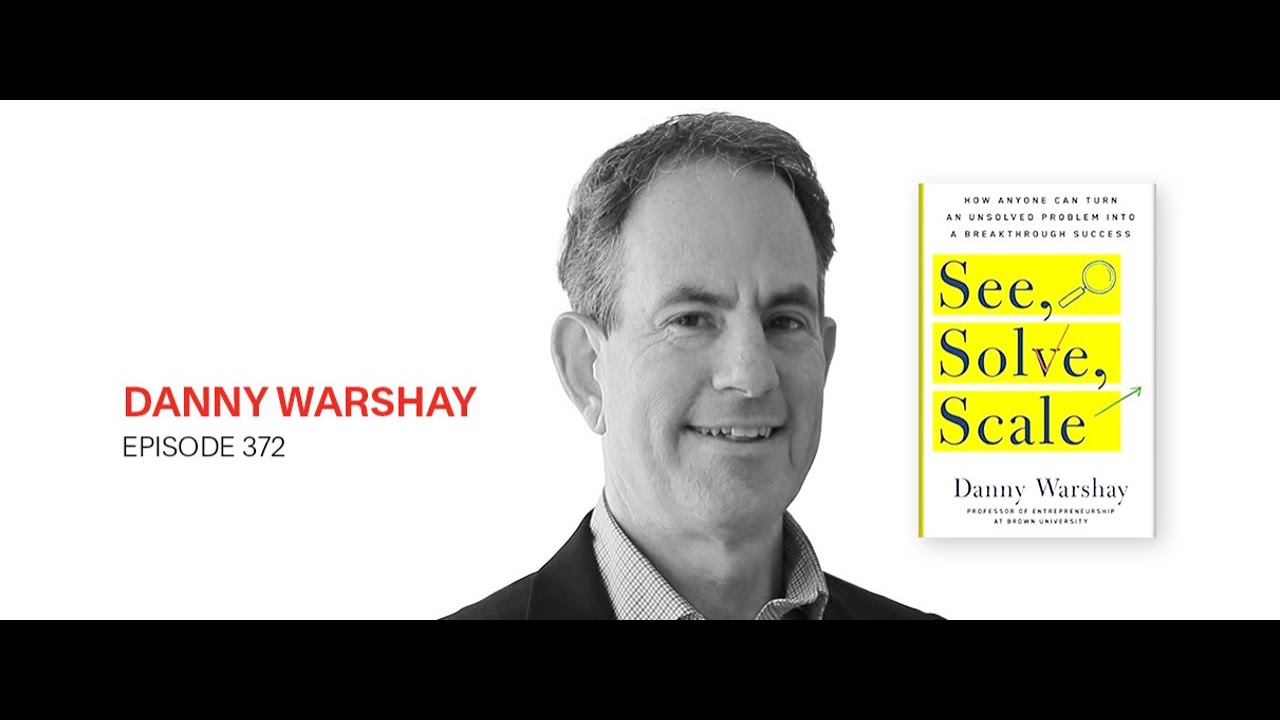
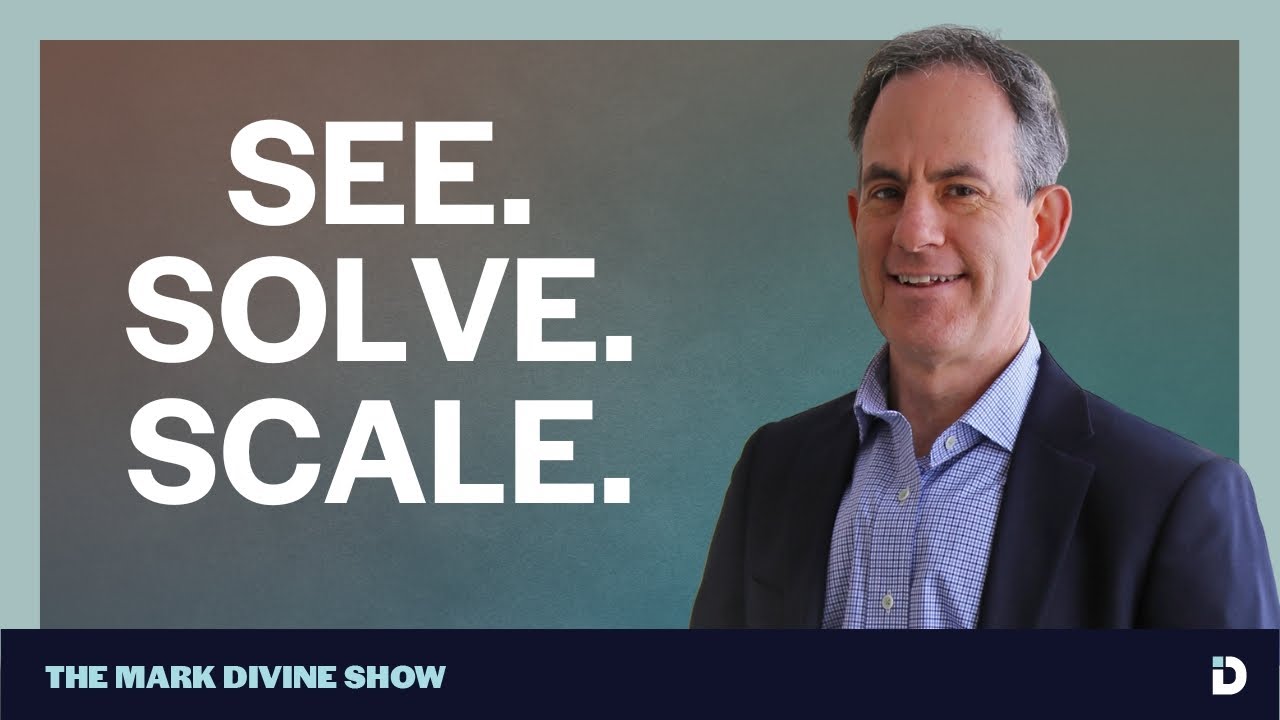
Interview with Danny Warshay, Brown University, Director of the Nelson Center for Entrepreneurship


The Pissed-Off Entrepreneur: How to Turn Problems into Opportunities: Danny Warshay on PYP 513