Entrepreneurship is not a "Spirit", it's a process with Danny Warshay

In this hour‑long interview on the Beyond Innovation podcast, Danny Warshay – professor of the practice at Brown University, executive director of the Nelson Center for Entrepreneurship, and author of See, Solve, Scale: How Anyone Can Turn an Unsolved Problem into a Breakthrough Success – explains why entrepreneurship should be taught as a repeatable three‑step process rather than an undefined "spirit." He outlines the See‑Solve‑Scale framework, connects it to the Japanese concept of ikigai (the intersection of what you’re good at, love, purpose, and fair compensation), and shows how the method applies across domains from startups to large corporations, nonprofits, and government. Warshay discusses the pitfalls of abundant resources, the importance of iterating on a small scale, and the cognitive biases that block innovators. He emphasizes building diverse, inclusive teams, sharing concrete techniques (e.g., nominal‑group brainstorming, weak‑tie recruitment) and illustrates the ideas with real‑world cases such as Casper Mattress, the Pussyhat Project, EmboNet, and student ventures. The conversation also covers effective pitching – the three‑document approach, common mistakes, and the disproportionate impact of delivery over content. Throughout, Warshay stresses humility, continuous learning, and the role of ikigai in sustaining entrepreneurial energy.
Chapters
It's a Japanese word called ikigai. It's kind of fun to say, first of all, but ikigai. And ikigai is a Japanese word that means living a purposeful or meaningful life. And it comprises these 4 elements. The first is do what you're really good at. We might call that drive. Mm-hmm. The second is do what you really love. We might call that passion. The third is do something that's going to have meaningful impact on the world. We might call that purpose. And the fourth is do something that's going to pay you fairly for the value you're adding. Those 4 elements are so critical and often, I think, overlooked.
Today, I have the pleasure of speaking with Danny Warshay, a leading expert in entrepreneurship and author of a new book, See, Solve, Scale: How Anyone Can Turn an Unsolved Problem into a Breakthrough Success. We dig deep into the finer points of entrepreneurship, discuss why an entrepreneurial mindset is valuable beyond business, and explore the Japanese concept of ikigai. Welcome to Beyond Innovation, a series that breaks down the mystique, explores what works, what doesn't, and what innovation really means with experts who live it every day. Welcome everybody to another episode of Beyond Innovation. My name's Justin Siroton. I'm really excited about the guest that we have today. I've known Danny Warshay for a long time. He and I have had hours and hours of conversation over the years, and I'm really excited that he was able to come on and share his wisdom with all of us. Danny Warshay is a professor at Brown University. He is also the executive director of the Nelson Innovation— the Nelson Center for Entrepreneurship, where he has educated future entrepreneurs for, Danny, 20 years?
17 years.
17 years. He's also the author of this new book, See, Solve, Scale, which you can see mine is a little beat, 'cause I was fortunate enough to get an advanced reader copy, so good for me. And I have put this through the wringer for the last, I don't know, 2 and a half, 3 months anyway. And really excited to have you on and looking forward to talking about something that's passionate, that I'm passionate about, that I know you're passionate about, obviously, because you just spent a long time working on it. So why don't you give us an introduction of yourself and then we'll jump right in.
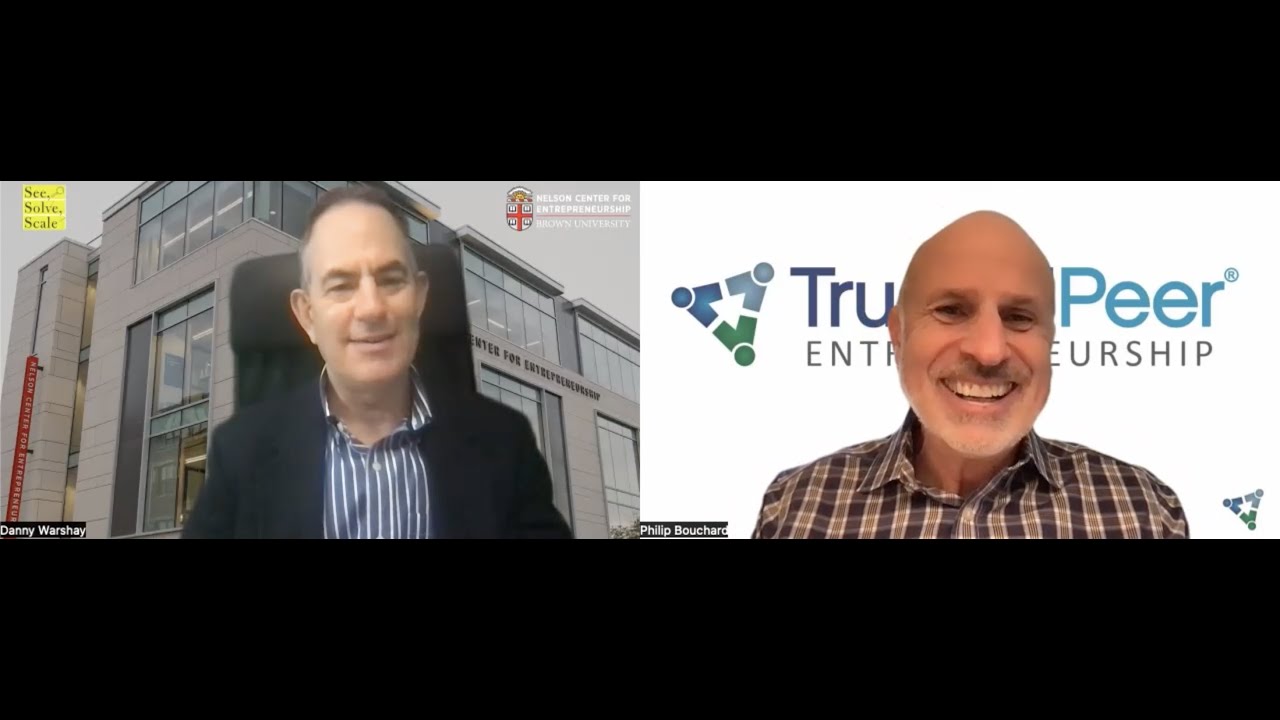
Well, thank you, Justin. A real pleasure to be here today. It's an honor. I've known you for many, many years. As you say, we've collaborated together. We've known each other in all sorts of local Rhode Island contexts as well. You've been very generous to my students through the years and to other startups that I've been involved in. I'll give you the snapshot of who I am. You started at the end, and I will too. I'm the executive director, as you say, of the Nelson Center for Entrepreneurship, which is depicted behind me in virtual form. I'm a professor of entrepreneurship. In fact, I'm what's called a professor of the practice. which means I practice. And that is that for my whole career, I've been mostly focused on starting things and then getting them funded, forming teams around them, building them to solve problems, and then scaling them to the point that they would be attractive for acquisition. That started— I'll rewind— way back when I was a student at Brown. I was a history concentrator. I'm a big proponent, as you know, of liberal arts for grounding for any eventual profession, and especially for entrepreneurs. And I fell into the opportunity to be part of the founding leadership team of a software startup. I knew nothing about computers. And I knew nothing about business. It was a very Brown thing, I guess. In fact, these days, when I tell the story, I have to clarify to my young 20-something-year-old students that there were computers back in the late '80s. They don't always know that, or they picture them as these big behemoths in a room somewhere with punch cards. Wasn't exactly the case. But anyway, we built that company up and we sold it to Apple. And that was really my very first experience with what I didn't even know was called entrepreneurship. And most of my career I've spent doing that kind of thing, either joining the early stages of an existing startup or helping to start one. And going through the stages of a process that I didn't really identify at the time was a regimented process. And then in 2005, I was asked out of the blue by a beloved professor that some of your listeners, I'm sure, already know, Barrett Hazeltine, in the engineering school. And he asked me to teach entrepreneurship at Brown. And I was very honored, but I was a little dubious because I had never taught anything. And he said, no, no, you'd be a great teacher. I had gone to Harvard Business School and have an MBA from Harvard. I worked a little bit at Procter& Gamble, and as I say, mostly my career to that point was done in the trenches of entrepreneurship. And so he said, you, you know, the vibe at Brown, the ethos, the interest in solving problems, and you should take one of your HBS courses, you know, its case studies, and apply it to what would be useful in the Brown curriculum. And before I knew it, I was going to be in front of a group of eager Brown students. And that's what I did. And if you'd like, we can talk a little bit more about that. And then the book, which you mentioned, I'll show you my hardcover version, is called See, Solve, Scale. And the subtitle is really important too, How Anyone Can Turn an Unsolved Problem into a Breakthrough Success. And we can talk about all the words there. But See, Solve, Scale is the methodology, the structured process that I devised to teach entrepreneurship, especially in the context of Brown's curriculum, which is mostly focused on liberal arts. So I'm honored to have been able to do that, honored that I've been invited to speak and be on lots of podcasts, and especially honored to be on yours this morning.
Yeah, great. I love it. I mean, I think what this book does that That, that I really appreciate is even, you know, as you mentioned before, I've gone through this a lot. I've built 3 businesses. I've had to navigate this process over the years. And what I have— what I had started to come to realize over the course of the last probably 5 or 8 years of my career is just how process-driven this whole method is. And what this does really nicely is it distills it down into very tangible, accessible ideas that you can then apply to whatever it is that you're trying to solve. And you don't end up in this lofty academic space, and you also don't end up overblowing entrepreneurship into what sometimes becomes a little bit over-celebrated. I think we sort of put people on pedestals in a way that's unhealthy. And we take our entrepreneurs and we put them in some lofty spot that they are somehow wildly different than a lot of other people.
Well, again, that's probably why I chose the subtitle, How Anyone Can turn an unsolved problem into a breakthrough success. First of all, the definition I use for entrepreneurship, and that I had to think of way back then when I was asked to teach, was how does entrepreneurship apply to an environment where you have lots of people who wouldn't think of themselves as entrepreneurs? Because there is no business school at Brown. So I realized it can't be a narrow definition like we might have at Harvard Business School, or at Stanford, or Wharton, or Babson, all really good places, but where there's more of a focus on business and tech. And so I devised, I created the definition, a structured process for solving problems. And then there's a second half of the definition, without regard to the resources currently controlled. And we'll talk about that, I know. But what I discovered was, that first part of the definition, a structured process for solving problems, see, meaning what's the problem, Right. Solve, solve it initially on a small scale iteratively. And then 3, scale, which means have big impact, because you want to solve the problem in a more significant way. That approach was something that any of my Brown students, whether they were studying philosophy, or comparative literature, or biology, or computer science, or engineering, or economics, anything, they could embrace, they could learn, they could master, they could apply it then to any of a very wide range of problems that Brown students— and I discovered lots of others in all the workshops I do in big companies and governments and nonprofits around the world— anyone could learn this process, they could master it, and then they could apply it to solve really consequential problems. And so it's not about putting any one type of problem solver on a pedestal at all, just like you say. It's about whether you're in public health, or the military, or government, or law, or Wall Street, or you're a doctor, or all the different kinds of professions that my students have gone into. They've come back to me in big numbers through the years to say, wasn't exactly sure how that See, Solve, Scale process would influence my career. But I use it all the time. And that's part of what helped reinforce that I was onto something. And then when lots of students told me to write this book, because it wasn't even my idea, lots of students said, you had big meaningful impact on us. But you did it on a small scale, you know, classes of like 35 at a time. They said, you're not doing this 3rd step, you're not scaling. And I said, oh, you're right. How interesting when the students become the teacher. And I said, what should I do? And they said, you should write a book. So the students were so attentive to the process, See, Solve, Scale, that they called me on the fact that I wasn't doing it. And I'm really glad they did.
Yeah, that's a really, you know, I mean, That's the first time I've ever heard that, by the way. And I mean, I don't know how many times we talked about this book and how many times we talked about this process. I had no idea that that was sort of your epiphany in this process was understanding that you weren't doing it yourself. And we certainly—
I didn't want to put myself on a pedestal. I mean, again, I figured I wasn't a teacher until Bear Hazeltine tapped me on the shoulder and then I became one. And I think I'm a good one. And, you know, I get good feedback on my teaching. And it became interesting enough that, you know, everybody from the US Embassy in Bahrain to Palestinian NGOs and Slovenian high-tech companies all over the world were asking me to come teach them this. And that's rewarding. But I never pictured myself as an author.
Right.
Until my students encouraged me to become one. So, you know, I'm a practitioner of my own process too now, and that's a good thing because I can identify and empathize with what my students are going through. And good for them for calling me on it and nudging me to do it. And I'm, I'm glad I did it. I mean, I— it took 4 years to write this book. This was not easy, um, because teaching it is different from writing it. And there's also an audio version, which I learned was very different when I narrated it during COVID with a makeshift studio that the publisher sent me to set up in my basement, and there was a theatrical director and an engineer on with me the whole time over Zoom, making sure I was honest to every syllable. So every medium even is different. Uh, I'm learning it all as I go, just as my students do, and, uh, I hope that is a good indication of the value of the process that I embrace myself, because I wouldn't impose it on somebody. If I didn't feel like it was useful.
Yeah. I want to touch on a couple of key pieces on the process side and then move into some of the ideas that you've presented here. So, thing one that I think is really important is being a practitioner of your own ideas requires you to evaluate the way that you communicate those ideas in a different and more meaningful way than if you're just someone who documents other people's ideas. And I think too often, We cite successes without the full context of the process that someone used to get there. And if you're the person who did it, then it's much easier for you to then cite the context under which you were able to achieve or not achieve certain goals within, within a certain process. And I think as a consulting company, which is what I run, consultants far too often have not been practitioners of their own practice and therefore provide bad advice or get or deliver improper process steps. And I think the same happens in academia. And so the fact that you're acting through a process yourself forces you to reevaluate how you then deliver that process to others. And that's a That to me comes out in the way that this book is written.
Well, there's 2 things that I think are really important about what you just said. One is, again, this is a process. When I was asked to teach at Brown, I was going to be appointed as a— at the time, a lowly adjunct lecturer. Now I'm a professor.
Hey, I'm a lowly adjunct lecturer at RISD.
Okay, so I have enormous respect for lowly adjunct lecturers because I was one for 10 years. And in fact, lowly adjunct lecturers, I find, have way more to contribute often than the full-fledged academics. I'm a fake academic. I couldn't do research if my life depended on it. But one thing I knew was that I couldn't do what I heard all over the world, which was teach something called entrepreneurial spirit.
Right.
You've probably heard that. I don't know what that is. And yet I kept hearing it a lot. And I certainly don't know how to teach a spirit. So I realized Imagine if in the engineering school, we wanted to teach somebody how to build a bridge. And we just said, you know what, just go out there and have the bridge-building spirit. And if the bridge collapses, and the trucks and the cars fall down to earth, don't worry, be persistent and have a little bit more bridge-building spirit. Of course, that would be insane. We wouldn't be trusted to teach anything at that point. And yet, that's how I heard people advising me to teach entrepreneurship. It's just to kind of tell anecdotally your own story and get people charged up. And I was like, that's crazy.
Right.
And so I realized in bridge building, you could distill some very common principles that every bridge in any process follows. And sure, there's a beginning, a middle, and an end to building any kind of bridge with lots of room for aesthetic, operational, functional variation. Every bridge is different from every other, but you can distill some common principles. And I said, entrepreneurship must follow the same kind of logic. And so I thought about my own experience. I thought a little bit about the research that is in entrepreneurship, and I read a lot of it. And I distilled these 3 principles: see, solve, scale. It should start, if it's a problem-solving methodology, with identifying the problem.
Right.
And then, and that's often missed. In fact, lots of technology people rush to the second step, and they're a solution in search of a problem. And then you should have a second step, which is, yeah, solve it, but first on a small scale, don't layer in lots of resources, and have tolerance for failure and iteration. And then eventually, yes, have layering resources that allow you to scale over the long term. So you can have really big impact. And I realized, okay, that's a process that I could teach. I use the same Harvard Business School case study methodology. I had students do entrepreneurship in the classroom. And that's what we've been doing for 17 years. So I realized there has to be a process. And it has to be one that you can learn, you can master, and then apply. And so, you know, that, that's one thing about what you said. The other is that it has to be something that can apply across a very wide range of different kinds of problems, and not just even in business. And so at the Nelson Center, we're agnostic about what sustainability model you create. We don't even call it a business model. I don't call it a business model in the book either. Whatever it is, it has to enable some long-term sustainability, whether you're a nonprofit, a social venture, you're in a lab and you're a researcher dependent on NIH funding, you may be in the military dependent on government funding, you may be in the arts, whatever it is. Entrepreneurship, the way I teach it as a methodology for solving problems, is not only something that is rigorous and routinized, and still with lots of room for variation, but it— and it can apply to a very wide range of contexts, including one that I know you wanted to talk about, which is established organizations, companies, nonprofits, governments, universities, where I have a lot of experience running workshops and consulting and teaching to all these different kinds of organizations. And they have different kinds of challenges, but I've seen them, I've helped them work on those challenges by using the same See, Solve, Scale method.
And one of the, one of the things that I think, you know, we as a, as a, as an organization have a split client base. We've got startups, that we work with, but the vast majority of our work is done with more established organizations. And those organizations have this funny problem, which sounds backwards, but you touch on it in the book, which is that they are, they are encumbered with too much resource and therefore have a hard time dealing with the process the way that you've described in 2 ways, in 2 spots. One, we also work a lot with technology companies, and technology companies love to have a technology in search of a problem. That's a common attribute of technologists and technology companies where we'll walk in the door and say, this is great and amazing, but who cares and who's it for and why should they want this? Which is a— inverted structure to that process. But ultimately, the place where I see the most challenge in larger, more established organizations is actually in the solve phase, which is that once you've tried to— once you have found a problem and you have started to come up with solutions to that problem, most large companies leap to the platform solution that we're gonna roll out to millions of people. We're gonna do $500 million in sales over the course of 10 years. Because we're gonna build this massive entity out of it.
So that's a really good example of often the cause I see of why, especially in big companies or big organizations, they're a 2-step process. They go directly from see to scale.
Scale, yeah.
And they miss this very critical—
Absolutely.
Middle process. By the way, they may even just be a 1-step process. They don't even pay attention to what the fundamental problem is, because they're blinded by their abundant resources of their existing infrastructure, their existing distribution channel, their existing way of manufacturing. You know, a good friend of mine, Bob Johnston, who's a collaborator and contributor to the book, has this saying that if you're the head of a big company or big organization, you have 2 challenges. One is to sustain the fortress, The other is to invent the future.
Right.
And it's very tough to do both. And if you're the head of a big organization, you tend to spend most of your time sustaining the fortress. And as a result, you've got all this bias toward the existing way of doing things. You also have bias toward, okay, we have all this money, resource, profits, and we can afford, you think, to layer it into a nascent solution to, you hope, a problem, not being a solution in search of a problem. Let's grant that you might be that. And you scale prematurely.
Right.
The opposite end of the spectrum is what I talk about a lot in the book with examples like the Casper Mattress Company, the Pussyhat Project, others where they have scarce resources. They can't afford to layer on too many resources to an immediately scaled solution. And as a result, they have no choice but to do what I teach in this second part of the process, to start small, to take small steps, to, you know, as the adage says, fail fast, fail cheap.
Right.
To try something, realize it's not quite right, but you haven't bet the whole company. And then you take a step backwards, you adjust. By the time you get to the point that you've iterated quite a bit, and you've now demonstrated what really is a solution, now you're ready to start layering on additional resources by raising other people's money through, let's call it, an NIH grant in the research field, donations or other kinds of injections in the nonprofit field, grants, government grants could be if you're in, again, the military or other parts of the government, or more classically, venture capital and other kinds of capital in the for-profit world, by doing it under the constraints of scarce resources, that is true entrepreneurship. Doing it the other way, where you're leaping right from a problem to a scaled solution, that may be called product management in some cases, but it's not what I call entrepreneurship. That's often the toughest challenge I have when I work with big companies who say, okay, we want to be able to do all that startup stuff. And I say, okay, well, you're going to have to learn to have a different approach, a different strategy, a different mindset, a different structured approach that will limit the amount of resources you make available in the early stages, especially because that's the only way that you're being truly entrepreneurial. And I, you know, I mentioned Casper Mattress. Casper Mattress was started by 2 students of mine, Luke Sherwin and Neil Parikh. They knew nothing about mattresses except that you sleep on them. And all they figured out was there's a problem here. It doesn't make any sense that you would have to go to a showroom, lie on a mattress in front of everybody with a salesperson breathing down your neck, make a pressured decision in the moment on a product that costs many hundreds of dollars, if not more, and have to live with it in your house after it's awkwardly delivered to you for 8 to 10 years. They said, that's crazy. This is how mattresses work? And they knew nothing about the way that the supply chain worked, distribution channel, brands. They reinvented everything because they weren't burdened by the resources that the established mattress incumbents were burdened by. They had the benefits of scarce resources, They started with no money. And that made it incumbent upon them to iterate, to try things, to do bottom-up research, to really understand the problem. But by the time they launched, they really understood the problem, they really understood a completely novel solution. And they raised many hundreds of millions of dollars in venture capital, they eventually went public. When I wrote the book, At the time I wrote the book and interviewed Luke and Neil, they were doing $400 million in mattress sales. And they revolutionized the whole mattress industry.
Right.
The other quick example is the Pussyhat Project, just to indicate that this doesn't have to be even about commercial entities. Jayna Zweiman, another Brown grad, right around the inauguration in 2017, unfortunately, had had a health injury that was going to prevent her from participating in the women's marches in Washington. And she said, but I'd still like to contribute. And because of, not in spite of, but because of the constraint of this health injury, she thought about this approach where she could engage knitting circles all across the country, give them a template for creating a knitted version of this pink hat, And it spread like wildfire. Talk about scaling.
Yeah.
In 50-some days, there were millions of people all over across the country. I was one of them, by the way, who had a pink hat and was walking to marches. And she figured out a way to see the problem. She solved it initially on a small scale. She scaled it like crazy. And now she's replicating that same model of using crafting as a political movement with something called the Welcome Blanket that is advancing issues related to refugee challenges and other issues too. She's a fabulous example of the benefits of scarce resources because she had no resources, even the ability to walk and to travel, and it's because of that constraint that she was able to think of a really fabulous solution to the problem.
Yeah, we end up, we end up in this place, at least in our organization, quite often, which is There's a natural tension that has to get built between how much money and time you're allotted and the goals that you have. And you want that tension to make you feel like you never have quite enough money and you never have quite enough time. Because if you don't, if the inverse is true, you have the ability to wander wildly. And that wandering costs money, takes time.
Yeah.
And distracts.
Money and time, and that those are very, very expensive, especially in a startup context. You know, on the other end of the spectrum where you started, abundant resources can actually hinder you. And I know that sounds crazy, because when people start, they feel like, I'm paralyzed because it feels like I need resources. And yet again, those resources can force people to be too conservative. Often you're so focused on preserving those resources, they prevent you from even seeing new opportunities. I mean, think about it. Those incumbent mattress companies who had been around for generations, why didn't they see what Neil and Luke saw?
Right.
Well, because they saw the world through the lens of the way their business currently works. And they become very fixed on a particular outcome. It's called mental fixedness. And I talk a lot in the book, and I share some exercises that can help you overcome that mental fixedness. They also— having so many resources will cause you to— will remove the incentive you might have to share risk, maybe with other companies or with other people. They can make you make bets that you would not make if you had scarce resources. And you miss the opportunity to collaborate with others that can bring new innovations to the table. So I spent a lot of time in the book, as you'll recall, on creative approaches to breaking that mental fixedness. Because if you're in a big company, and okay, let's say you believe what I just said, what do you do about it? Well, there's a lot of a lot of section in the book that helps you overcome what I call cognitive biases. And the burden of abundant resources and thinking those resources will be to your advantage is one of those cognitive biases. I detail 11 cognitive biases that entrepreneurs in all contexts suffer from. And again, I don't just warn you about them. I share some techniques that I've used through these 17 years to help people overcome them. And those seem to be really valuable to people who've been reading the book.
I think I just want to interject one quick shameless plug, which is— so I've been working in the product space and the technology space and the innovation space for about 25 years. I started in Rhode Island in 1997 working for another agency Founded by 2 very clever guys who came out of RISD, whom we both know. I know them well. Yeah. And back in those days, the number of Brown-based entrepreneurial ventures that went anywhere, I could count on one hand. '97, '98, '99, 2000, 2001. We had one that I can recall that started to get some traction around 2004, 2005, which was sort of a precursor to where we're going now with a lot of bio measurement that we do from a, from a, from a company, I can't remember the name, that they changed the name to Zeo, I think. And, and so if I look—
I remember them well, sleep measurement.
Sleep measurement. So if I look back at those times, right, so '97 to call it '07, the number of companies coming out of Brown, or the number of startups coming out of Brown, that got anywhere meaningful, that had any meaningful legs, was relatively small. And now when you look at Brown as an entity creating net new ideas, not just net new ideas that generate venture capital money and revenue, but that, that have impact, I in this community can feel that shift. that has occurred. And that shift is, is in part due to the building behind you and the efforts of you and your team and the strategies that have been employed in what, remember, is otherwise a liberal arts college. And I think that's a really important thing to— because, because in my, in my business, we have a super, super widely diversified team here. We have people with highly technical degrees sitting next to someone with with a painting degree working on the same project. And I think there's, you know, I, I've been harping on this now internally and in my own circles for a long time that we are overspecializing our world and that overspecialization means we're going to limit innovation because we are losing the ability to look left and look right and really understand the world in a different set of contexts. And so I kind of just want to touch on this notion of You write about it in the book about how you manage diverse personalities and how you manage diversity as a part of an organization. And I'd like you to just kind of expound on that.
Yeah, let's talk about that. First of all, thank you for the shameless plug. Not shameless, it's generous. And that is the intention of the Nelson Center, to make entrepreneurship accessible to many different kinds of people on a university campus, including RISD students, by the way, who participate. And it's not a by the way. They add maybe the special sauce. I'll tell you an example of one. There's a, there's a student team, now graduates, called EmboNet. It's a great example of the benefits of diversity and inclusion. The best part about them is, first of all, they identified a medical need, which is that during open-heart surgery, there's embolic debris that's released into the bloodstream, and it can leak up into your brain, and it can cause a stroke. And they devised a way of creating a mesh that will go into your bloodstream and filter out that embolic debris. The best part about them, and I think the reason they've been successful in trying to figure this out, is the composition of their team. It's 2 biomedical engineers, 2 Brown medical students, and 1 RISD textile grad.
Interesting.
And I'm sure the textile grad is the secret sauce that makes it all work. But, you know, what we talked about when we built this building was, it's a place to encourage— and I talked about this in the book, too— accidental collisions. For the, you know, as you say, the painting person, and the computer engineer to meet up and realize they could complement each other. A big, big part of what I talk about in the book is about why teams matter. And what are the secrets behind creating the sweet spot of a team composition? First of all, only 16% of startups, according to Noam Wasserman, one of my mentors from Harvard Business School, are solo. So this is a team sport.
Wow.
But unfortunately, one of these cognitive biases that people suffer from is, Over 50% of the teams are composed of family members and friends. And, and those teams perform worse than teams that are composed of former coworkers. And here's the weird thing, teams of friends and family members tend to perform worse than even teams composed of people who never knew each other previously. So perfect strangers perform better than teams made out of friends and family. So that's one of those cognitive biases I warn you about. Okay, so what do you do about it? The real sweet spot is composing a team out of some people who've worked together, and some people who come from completely different backgrounds who've not worked together. And the real sweet spot is diversity of all kinds. And that is different personality types, introverts and extroverts, different races, different genders, different skill sets, backgrounds, socioeconomic status, as diverse a team as possible. And unfortunately, again, if we default to using what are called your strong ties, network connections that come from, let's say, social media, where they're biased toward people who are only a couple of network nodes away from you, you're going to largely find people who look and behave and act like you. And that's unfortunately one of the things that contributes to the pathetic statistics we have in the world of venture-backed startups, where only 2.3% are founded by women, only 1.5% are founded by Latinx founders, and only 1% are founded by Black founders. A big part of the mission of my teaching, of the Nelson Center, of this book, is this subtitle again, How Anyone Can Turn an Unsolved Problem into a Breakthrough Success. And so in the team composition section, chapter 7, I talk a lot about guidance for how to attract members to your team that don't come from your friends and family, don't come from your strong ties, but come from weak ties. There's a second part of that, though. If it's okay, can I mention, and maybe we even have a graphic that will help us illustrate this. You've got the graphic on your end. There's a wonderful professor at Harvard Business School named Frances Frei and her colleague, Anne Morris. And they created this graphic that to me is brilliant. And it demonstrates why diversity alone is not enough. In fact, diversity alone can backfire. In the far left part of this image, you have this Venn diagram where just the middle part of this diverse team is embraced. And it's a relatively small part of what's available to embrace, but it's just where people overlap, just where they share kinds of skills in common. Surprisingly, in the middle, you have a homogeneous team. where people are all from the same kind of backgrounds. And actually, they overlap much more than if you just look to where people have things in common in diverse teams. And the really sad part is that these homogeneous teams outperform diverse teams that aren't what I would call inclusive. The real magic happens, as Frances Frei and Anne Morris show us here, in the far right, where you have inclusive teams, where you encourage people to be their authentic selves, to bring their full complement of skills and background and identity to the table, whether they're introverts or extroverts, no matter what race they are, no matter what gender they are, no matter what skill set or background they have. If you encourage everybody in a diverse team to feel included and bring their full self to the table, all of what you have represented here is engaged in this venture process. And so I talk a decent amount in the book, and we, we try to live it at the Nelson Center, about not just having diverse teams, but to having diverse teams that are also inclusive. You know, the way to think about it is this metaphor that I hope is okay. Diversity is being invited to the dance. Inclusion is being asked to dance. And it's really critical, not just to have diverse teams, but to also have inclusive teams. And again, I see this over and over and over. We just finished up the semester at Brown. We had 7 venture teams in my course. At the beginning of the process, when we divide up into teams, I try to live by what we just said. I have— I don't have friends and family form— friends and family members form teams. I look for people who don't know each other, and, or ideally, maybe even have worked together on something else. And we try to make sure that we provide them with the tools, the skill set that I include in the book to engage everybody on the team. There's one called, for example, it sounds esoteric, nominal group technique. Which is a way of structuring conversations and brainstorming so that you are engaging not only the extroverts who tend to dominate team conversations, But you're structuring it in a way that you're also engaging introverts, where some of the work you do in that process is done alone, and then you come back together to share. Whereas in most techniques, everybody's just thrown into a team and it's everybody fight for airtime, and that's not a good way to have solutions come out of that process. So I really appreciate your asking me.
Yeah, and I really— this is an important topic and one that, at least for me as a business owner, I think doesn't get— it doesn't get grounded enough, which is that it's a conscious choice. Like, when I first started my company, I only employed male RISD students, not because that was what I wanted long-term, but because that was who I had access to. That was who I—
Strong ties. That was where you had a strong tie to.
I was on faculty at RISD. I had access to that student body. I was able to very quickly scale up a very small team, but they all came from the same fundamental background. And about 10 years ago, I, as a business owner, had to make a conscious choice to say, okay, we are going to diversify away from RISD. RISD is a great place to recruit employees because we've got, again, a very Competent, capable, eager, well-built team coming out of RISD. And so, I had to consciously move away from RISD and I had to consciously diversify the backgrounds of the team both in all ways, not just from where, what university they came from, but their educational background, their gender, their race, their their technical competencies there. But that was, I think that's what sort of gets undervalued is that the executives of the organization, it is a conscious choice.
Well, I'll share an example about that that I love in a video that I usually share to my students and that I abbreviate in a quote from Dharmesh Shah, who's the founder of HubSpot. I share the quote, In, in the section that's about diverse teams, Diverse Venture Teams Are More Successful is the title of the section. And he says, the best possible time to start being mindful about diversity is time is equal to zero, when you're just starting.
Just starting.
Starting a new company, starting a new team, starting a new project. But the next best time is now. And he shares a really funny story about when they were starting HubSpot. he looked at the composition, the backgrounds, just like you, exactly the same RISD bias, but he and his co-founders were all Sloan, MIT, MIT Sloan MBAs, all of them. Right. And he said, you know, maybe we had diversity in slight ways, but we were the least diverse team you could think of. And he tells this great story and he shows the graphics, you can Google the video. And he says, in the very early days of YouTube, a weird thing happened. that about 12 to 15% of all the uploaded videos to YouTube ended up upside down. And the YouTube development team was stymied. They're like, is there some weird glitch in our algorithm? Or is this maybe based on time of day? Or— they couldn't figure it out. And yet, I don't know if you want to guess, but what they realized was about 12 to 15% of the population is left-handed. And they were taking the videos in a completely different orientation from what the right-handers were. But most of the YouTube talent team was also right-handed.
Of course.
And they designed the whole uploading process to account for right-handers, not left-handers. That's, that's obviously not the most serious egregious problem, but pretty significant because they didn't have any left-handers on their development team.
Right.
And so imagine if they did. Imagine if— imagine that as kind of a silly example, but imagine how limited that team was. Imagine how limited your team was when it was just RISD students. And, you know, I look through all the venture capital firms that are espousing how important diversity is these days, and they all look like me. They're all white males with MBAs from Harvard or Stanford. I mean, come on, if you want diversity and you want to model diversity, do it yourself and start writing some checks to diverse teams who deserve much more support than the pathetic statistics I mentioned just earlier.
Yeah. And I think, you know, as you said, like, it's, it's a— the approach that I had to take was, okay, the time is now, right?
Like, because I didn't start it that way.
And I didn't— it wasn't, it wasn't conscious. Like, it wasn't some decision that we made at the beginning, that I made at the beginning of starting this company to say, okay, I'm just gonna go only hire People from RISD.
Of course not. That's the scary part. That is why it's such a good example of those 11 cognitive biases that I articulate in the book and then I warn you about and then I also share techniques to overcome because most of us experiencing those 11 biases are just behaving naturally. We're not being evil.
No.
We're just doing what we think feels right and following our intuition, especially in this CSOLVE scale method, can often lead you down a bad path. And so breaking that mental fixedness is really important. And sometimes it's not a really complicated intervention. I'll just tell you one example. And there's several in the book. There was some really good research from 2 women psychology professors at Harvard, Langer and Piper. They divided a group into 2 cohorts. They gave the first group a piece of paper, a pencil, and a rubber band. And they said, this is a pencil, this is a piece of paper, and this is a rubber band. And they said, you're going to record some things, you're going to make some mistakes. To the second group, they said, you're gonna get these 3 things, and you're gonna record some things, and you're gonna make mistakes. This is a pencil. This is a piece of paper. And this could be a rubber band. The only difference was this is a rubber band, or this could be a rubber band. In the first group, only 3% of the participants realized that you could also use the rubber band as an eraser. The second group, 40% realized that you could use the rubber band as an eraser. And the only difference, remember, was the first group was told this is a rubber band. The second group was told this could be a rubber band.
Interesting.
So that sometimes is all it requires to break your, quote, mental fixedness. There was some intervention, some recognition you had that if I hire all sorts of people from RISD and they just look like me, That's not going to result in something useful. I know that the techniques I share in the book are really good interventions. They don't require, you know, enormous effort. They just require paying attention in a different way.
And so— Yeah, I think that's the best thing that I get out of this is this ability to flip back and forth. You know, I mentioned this to you a few times now, like, I don't read this in a linear way. I sort of go in and out of different chapters as the context of those chapters is real— is relatable to whatever it is that I'm trying to manage. And it acts as this really helpful reminder, number one, but also it sort of forces you to rethink little decisions that you're making across a whole wide range of topics. And I want to make sure we have time for this, and I want to make sure that we get into this because I think what you just said is a good segue to it, which is this notion of how language matters and how presenting your ideas matter and how you have a number of sections in the book that talk about pitching. And the first section that I read back before this was published, the first section that I read was all in the section of pitching. And I want to make sure that for the audience, it's qualified or quantified that I pitch all the time. Like, my job is to pitch my business to other businesses. My company's business is to pitch ideas within their projects to our clients. I teach a course every week at RISD, which is a little bit of a pitch of ideas to a bunch of students. And I found the pitching section to be extremely helpful. And, um, provide some, some direct, tangible ways that you can improve that. And I think that, um, you mentioned this in here about pitching is something you have to do all the time in any site, in any world that you live in. Pitching isn't just for startups. In fact, if you work in a big organization, I think that is a lost art in big organizations is if you want to make meaningful change, you have to get comfortable pitching your ideas with some consequence?
Well, let me give you an example of that. First of all, big kudos to a colleague of mine at Brown who's been really supportive of the course and also contributed a great deal to this section of the book, Professor Barbara Tenenbaum. She's a legend at Brown. I took her course from her colleague Nancy Dunbar when I was a student back in the '80s. And her course is absolutely essential for anybody going off to do anything else. So I agree with you. I, you know, I grew up in a household where my father was a NASA engineer. And he one time was asked by our school district— I recount this in the book— to comment on what are the most essential skills to teach in a new science magnet school that the district was trying to develop. And without pause or hesitation, he said, oh, the most important skill you should teach in this science magnet school is how to write. And the administrator said, oh, maybe you didn't hear me. I know you're a NASA scientist. This is going to be a science school. And he said, with, again, without hesitation, he said, writing is the most important skill that scientists can master. Because no matter how much chemistry, physics, or biology students have can learn, if they can't communicate what they have learned, if they can't communicate what they've learned or discovered, none of that will matter.
Right.
And my father drilled that into me many, many times throughout my life and career. And I think that has been the case, even from the very first time I started to teach at Brown, the very first elevator pitches that my students did back in 2006 were terrible. And it wasn't because the content was bad, it was because they didn't know how to pitch.
Right.
And I panicked. And I ran to Barbara Tenenbaum's office. And I said, can you help? And she herself, and then she has asked some of her graduate students to do a one-session workshop on pitching. And that's actually what's encapsulated in the book. You know, the quote I have at the beginning of that section is from George Bernard Shaw, and I love it. It says, the single biggest problem in communication is the illusion that it has taken place. And that's so true that, you know, we may be conscious of the fact that we're not good at pitching or presenting or writing, but we may not be. And we may think we've communicated something. People in the tech world, people in the science world who surround me, especially because I'm— again, I'm in the engineering school. God bless them. They're doing incredible work. But they're really— they tend to be really bad at presenting what they're doing, especially because they just fall in love with their tech. So you're right, I have a section in the book that's all about the methodology that I recommend of 3 documents. We could get into the details, or I could just refer people to the book. 3 documents, which I think most people find surprising, but once they think about it, and once they do it, they realize, wow, that is such a smart idea. I hear amazing feedback from people all over the country in all sorts of contexts, whether they're a scientist presenting their grant proposal to the NIH, or they're in a big company presenting to upper management, or they're in a, you know, a tech startup that's presenting to a venture capitalist. The 3 documents of an executive summary, a slide deck, and a longer business plan, I know is a little bit old-fashioned, but I provide a lot of rationale and guidance for why it's so important. And then the other is that I detail— I wasn't even sure to put this in the book. It was a little bit of an afterthought. But through the years of teaching at Brown and now elsewhere all around the world, I've accumulated a detailed list of what I call pitching mistakes to avoid. So I've kept track of like all the kinds of typical mistakes that my students have made through the years. And it's quite a substantial list. And I put that in the book. And, uh, and I always say to my students, I don't expect it to be perfect. Make new mistakes and I'll add those new mistakes to the list.
Okay.
But this is like the answers to the test. Don't make these mistakes. And among lots of people who've read the book or listened to it in the audio version, They've come back to me to say that's one of, if not the most valuable part of the whole book, the pitching mistakes to avoid section.
It really is. And I think, you know, I'm involved in a handful of accelerator-like programs, which means I get exposed to a lot of business plans and I get exposed to a lot of pitches. And I can't tell you how often, especially in the technology space, I feel like it happens more often in the technology space than it does in other segments that I, at least from from what I get exposed to. But you hear the pitch and you require another conversation to truly understand what the value proposition is. And that's like, that should never happen. I mean, you should, from the pitch, be able to succinctly articulate the value proposition. And if we take this out of the startup community and we put this into any Any organization, any organization of any style, if you can really master this idea of how to present and pitch, you have the ability to then move the needle in wherever you are because you present the idea properly.
Right. And I'm on some nonprofit boards. I've used this to good effect in helping those organizations to pitch for more funding. There's a really good example in the book of a school in Haiti that a good friend of mine, Patrick Moynihan, from my class at Brown started. And he's an amazing person. I mean, he's literally doing God's work. He's a Catholic deacon. It's a Catholic school. It's been doing great through the years. He had some challenges raising money to go to the next level. And I use a number of the techniques I used some of those techniques with Patrick to help guide him to take the Haitian project to a much different level. Part of it was thinking much bigger, because I thought, you're thinking too small. And there's some techniques I use in the 3rd step of scale, one called the landscape exercise that I got from, again, that good friend Bob Johnston, who I mentioned earlier. And I modified it for the entrepreneurial world. And he did that, and he did it to good technique. And he has now shifted the whole orientation of the of the venture, the school, to be not a school, but to be a network of many schools all across Haiti, whose mission is to redesign the whole educational system of the country, and in the process, to have big impact on the entire economy of the country. So you're right, the pitching parts of the book are meant very much, just like the whole book is, for people in all walks of life. And we're always in the— just like you said in the beginning of introducing this section, we are all often in the position of trying to influence other people to do something. And I think all of the examples in the— in this section of the book are really useful. And it's not just the content, as I said. As it turns out, Barbara Tenenbaum always taught me, the numbers are a little bit flexible. But there's some great research out of a researcher, I believe from UCLA, who demonstrates that actually only 10% of the impact of a pitch is the content.
Right.
60% is how you look. I'm standing right now, by the way, at my standing desk because I know I have much more energy when I look better when I'm standing, at least I hope I do. And then 30% is how you sound.
Yeah.
So 90% actually has nothing to do with what most people in a university spend their time doing, researching the content. And so disregarding that, the 90%, is obviously foolish. And there's a lot of detailed guidance in the book from, again, kudos to Barbara Tenenbaum, thank you to her, that there's a lot of guidance that she's used with her students through the years that I've borrowed and am now sharing with all the readers of the book.
And I think that that's a Pertinent lesson learned from all of this, which is, if you have aspirations to interject or become a part of new ideas in solving problems, you have to learn the skill of pitching. And it doesn't mean you're manipulating. It just means— because I think sometimes in the in the established business world, like, it starts to get twisted around a little bit. But instead, it's like, you're just being able to articulate and present your idea in a way. And the way that I talk about it in my RISD classes, you have to understand very closely the language of your audience.
No question. You know, she talks a lot about how you can— how there's 2 things you have to be aware of in your overall for any presentation, goal and audience.
Yes.
You can change one of them, not both of them. You can change your goal, you can't change your audience if you're in front of them. And so your goal may have to be a little bit malleable depending on the attitude and approach of your audience. And it isn't— she would never tell anybody to compromise their ethics or their personality or their identity. But you might have to empathize with the people you're speaking to. The other thing she always talks about, and I included in the book, is the acronym WIFM— what's in it for me?
Right.
And that means for the audience. So make sure you're empathizing with the audience about what's in it for them. Because too often, especially again, not only, but technology people just fall in love with their technology and somewhat arrogantly think, well, everybody's gonna love Well, maybe no one's going to love this because first of all, it's not actually solving a problem, but you're not speaking the language, as you say, that will empathize with the people who are listening. So I think that's a really important adage.
Yeah. If you're pitching to a room of developers, your pitch is one thing. If you're pitching to a room of finance people, it's got to be something else, even if the topic's identical. And I think that's—
And you're not compromising your values there. You're emphasizing different things. things that will relate to the audience there. I know we're just about out of time or overtime, but I wanted to make sure we could interject a section that I didn't know I would be including and that now I emphasize even more in our teaching about ikigai. Is that okay?
Yeah, please. Let's talk about it.
So, I deal a lot in my classes— in fact, just yesterday as I was closing the last class, a number of students came up to me and they said, gee, I knew I'd be learning something about entrepreneurship. I didn't really know that I'd be learning so much about how I should think about my life trajectory, and what about what will make me happy and satisfied and feel content in my career. And I thought, well, I'm glad to hear that has that impact too. And I thought about that in writing the book too. There's this word which I love, and I've now integrated into the lexicon of my teaching. It's a Japanese word called ikigai. It's kind of fun to say, first of all, but ikigai. And ikigai is a Japanese word that means living a purposeful or meaningful life. And it comprises these 4 elements. The first is do what you're really good at. We might call that drive. The second is do what you really love. We might call that passion. The third is do something that's going to have meaningful impact on the world. We might call that purpose. And the fourth is do something that's going to pay you fairly for the value you're adding. Those 4 elements are so critical. And often, I think, overlooked when anybody teaches entrepreneurship. Often people teach entrepreneurship, if they teach it as a structured process at all, and not a spirit, they teach it very mechanically. And they miss the point that you really do have to do something that's going to feel like it's something you're good at, you love to do, that's going to have meaningful impact on the world. And yes, that's going to pay you fairly for what you're, what you're delivering. And when I deal with students who are, and others in big companies or wherever, often they miss one of those, or at least one of those, and they rush to go do a profession or pursue something that feels like it's going to check one of those 4 boxes, or 2 of those 4 boxes, but not all of them. And I think it's a very helpful checklist for entrepreneurs in all contexts of all kinds, to make sure that you're doing something ideally, that will hit all 4 of those. And again, I hear from readers now, there's a LinkedIn group, CSolve Scale, that readers from all over the world are starting to join. And some of them are telling me that that was a really helpful part of the book, And again, students tell me it's a very helpful part of my teaching. What I often find when students come back to me, and fortunately, it's not that many, and it's fewer, I think, now that I try to intervene earlier. But still, some come back to me and they say, you know, I'm not happy doing what I'm doing. I went off to investment banking or consulting, and I'm just not really happy doing that. I'm not totally surprised, honestly, if those are the paths. But, you know, we'll say— I'll say, look, let's, let's layer what you're doing up against those 4 ikigai components. And maybe it's something they're good at, but they don't really love doing it and they don't feel like it's delivering any value to the world. Yeah, maybe it's paying them a lot of money, but at the expense of the other 2 elements. And so I commend that to the readers, to your listeners here, to think seriously about this Japanese component, this Japanese approach of ikigai, which has been a very helpful rubric for helping me to convey the importance of this. I describe a case in the book where, when I was doing venture capital in the consumer health space and natural food space, I had a really, really sharp, smart, experienced would-be entrepreneur approach me about funding about something. And you would think that I would have funded him because he had all ducks in a row, an amazing business plan, He really made a compelling case for why there was a need. And yet it was very clear that this was not something he cared about, that was going to add real value to the world, that he was in love with. And I, I passed because I said, it's not enough academically to check the CSOL scale boxes. Ikigai is something that is probably as important as any of the parts of the process. So I just want to make sure that we included that.
Yeah. And I think if you— and, you know, I have the benefit of hindsight, which is the amount of energy, enthusiasm, effort, and emotion that you pour into creating any business. I don't care how big the business gets. If you aren't in it for those reasons, You cannot sustain the effort. And, and because the effort is high, and it's intense. And it can be a big roller coaster. And so that, that foundation that you've described allows you to maintain that intensity that's required to carry on when things otherwise might tell you—
Well, that's why I totally agree. And that's why I think the bedrock definition I use of a structured process for solving problems. The other part, without regard to the resources currently controlled, deals with that benefits of scarce resources and burden of abundant resources.
Right.
But if you are really committed to solving a problem, if you're Janice Wyman, and your mission is to empower people all across the country to participate in women's marches, whether or not they can actually get to Washington, by knitting hats that other people wear, or creating an iconic image that will carry those marches well beyond the time-limited marches, that's going to sustain you. I mean, to the point where, you know, she had very— she had such significant health problems in the time that she was doing this, she couldn't walk.
Right.
Or at least walk for serious amounts of time. it's not good enough to just put together an academic proposal. What sustained her, what sustains the Casper mattress people through thick and thin, because they've hit some challenges too. I talk about Imperfect Foods, a company that was started by one of my students. I talk about Gwen's— Gwen Mugodi from Zimbabwe, who's dealing with issues of child illiteracy.
Mm-hmm.
I talk about Emma Butler, one of my students, a French and visual arts concentrator who was shaking the first day of class because she thought entrepreneurship is not right for her. Who is she? She's now created a company with well over $1 million of seed funding that is addressing issues that women with different shaped bodies and illnesses that make it difficult for them to dress, how she can create an adaptive clothing line that will make their lives better and easier. All those people are changing the world in ways that will sustain them, that won't be sustained if it's not truly an ikigai component.
Yeah. Yeah. Well, I think that's an excellent topic to close on because I think it is at the sort of core of everything that you talk about in the book. If you don't have that enthusiasm and that passion and that willingness to put yourself out there because you really believe in it, and it also contributes to whatever your financial model is, personal financial model, it becomes unsustainable. It's only sustainable for a period of time if you don't have all 4 of those pieces in place. So, Thank you very much for spending the time.
It was a pleasure to be here. I hope people found even just this last hour or so to be useful, or maybe we'll divide it into 2 half hours because we talked a lot. And, you know, I'll hold up the book again. It's published by St. Martin's Press, which is a division of Macmillan, and it's also in audiobook form. If you liked hearing me this past hour, The audiobook form is narrated by me, as I mentioned before, and happy to hear from people who are interested more. And if they've become a fan, or at least read or listened to the book, they can join that CSolve Scale LinkedIn group, which is convening people from all over the world.
Fantastic. We'll put it in the notes so that everybody has access to it. Really appreciate All of your perspective and your time. And I know I learned something in this last hour, and I'm sure everybody listening did the same.
Well, I did too, by the way. And that's one of the things I love most about my teaching and about the writing is that it was— I was the student as much as I was the teacher. And I always try to be in the most humble way I can. So that's certainly true when I do these corporate workshops or workshops in different countries, I'm as much the student soaking it up as the teacher is. So that's one of the reasons this is my Ikigai because I love doing that part of it so much. I hope it shows.
Love it. All right. Well, thank you very much. And we will— well, I will see you shortly. Okay. Thanks, Danny.
More from Danny


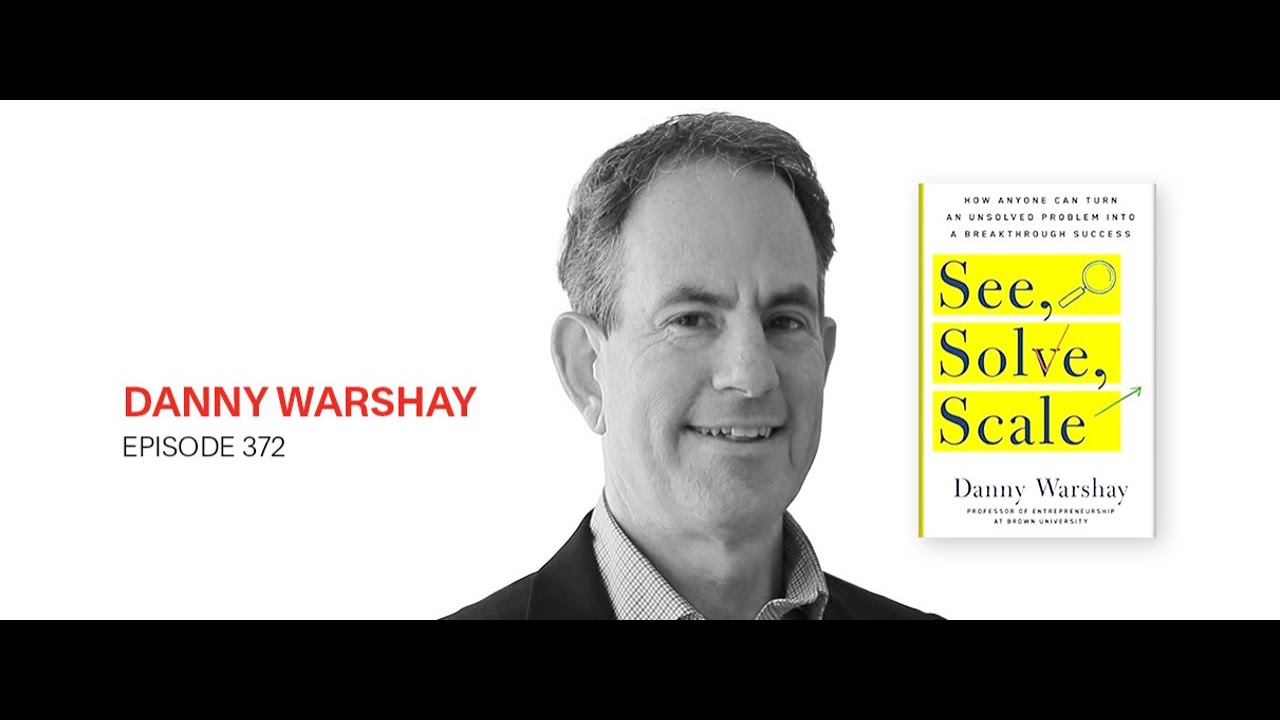

Changing Habits and Lifestyle Through the Entrepreneurial Process with Danny Warshay: PYP 315
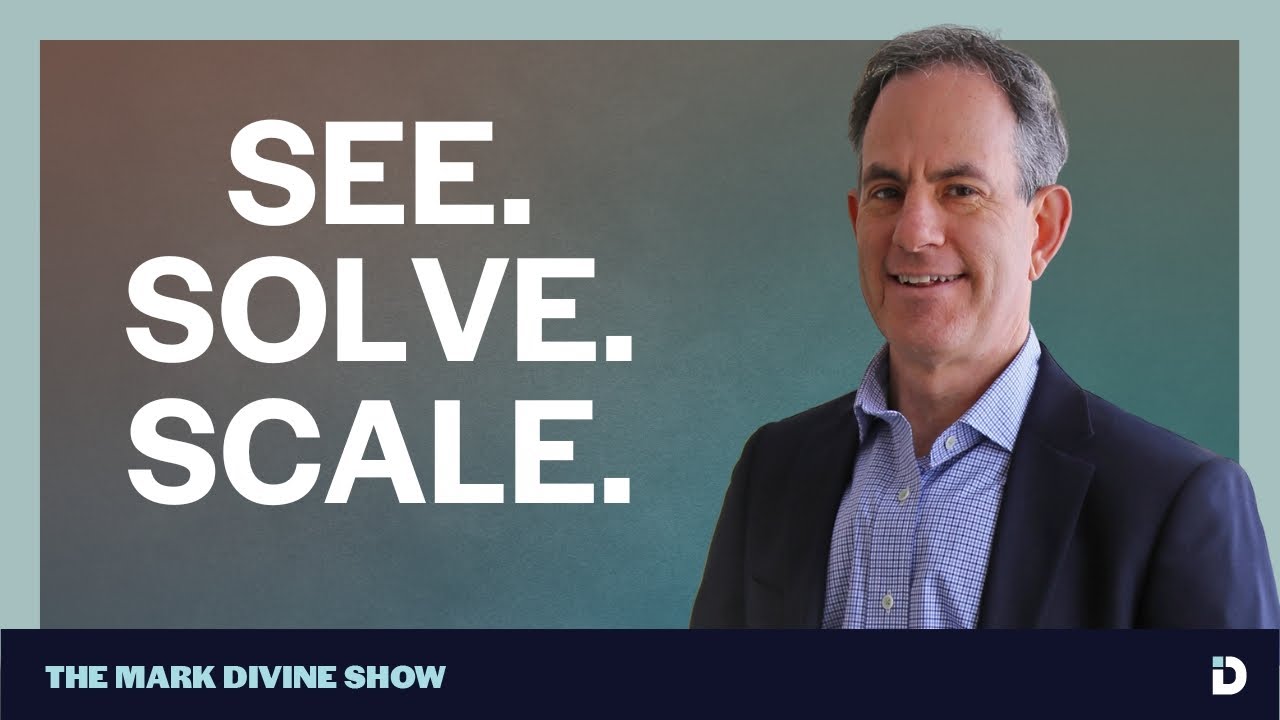
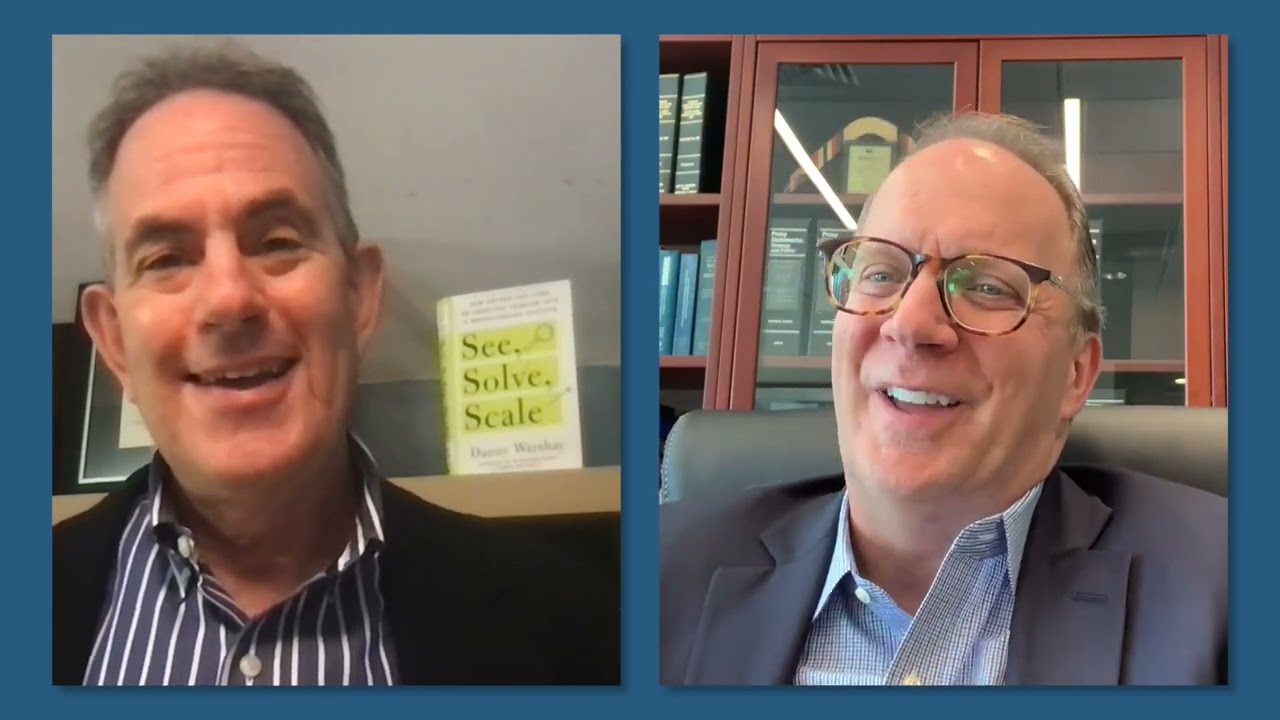
Interview with Danny Warshay, Brown University, Director of the Nelson Center for Entrepreneurship


The Pissed-Off Entrepreneur: How to Turn Problems into Opportunities: Danny Warshay on PYP 513