BizBooks Episode 13: Danny Warshay
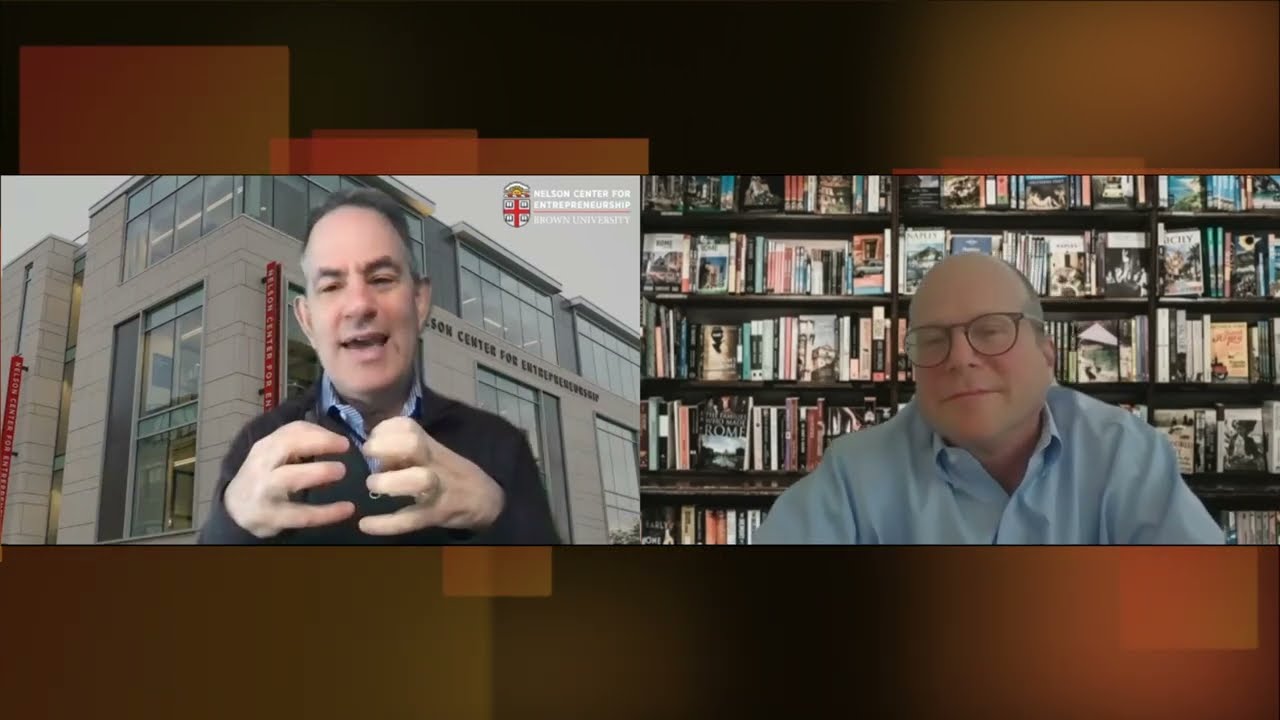
In this BizBooks interview, host Gene Marks talks with Danny Warshay, executive director of the Nelson Center for Entrepreneurship at Brown University and author of See, Solve, Scale: How Anyone Can Turn an Unsolved Problem into a Breakthrough Success. Warshay shares his personal journey—from a liberal‑arts history major at Brown, through a software startup that was sold to Apple, to an MBA at Harvard and a stint at Procter & Gamble—explaining how his eclectic background shaped the three‑step methodology he teaches. The conversation delves into each step of the See‑Solve‑Scale framework: See – Emphasizes anthropological, bottom‑up research (observing real behavior) over surveys, illustrated with examples from P&G, the prenatal‑vitamin startup Premama, and the mattress disruptor Casper. Warshay argues that scarcity of resources can spark creativity (Casper, R&R) while abundant resources can become a burden (Knight Ridder). Solve – Warns against jumping to a solution; instead, it promotes divergent thinking, structured idea‑generation techniques such as the Nominal Group Technique and the Systematic Inventive Technique, and careful crafting of a value‑proposition using a three‑question template (what, who, why). Scale – Highlights rapid, sustainable scaling through policies like Olin College’s “expiration‑date” rule, the Pussyhat Project, and the importance of long‑term sustainability models. Warshay stresses that scaling is not limited to profit‑seeking firms; NGOs and social movements can apply the same process. The interview also covers team building: diverse, inclusive teams outperform homogeneous ones, and the importance of mixing familiar collaborators with fresh perspectives. Warshay introduces the Japanese concept of ikigai—the intersection of skill, passion, purpose, and fair compensation—as a fourth pillar that boosts the odds of success. Throughout, Warshay provides concrete case studies (Casper, Premama, Imperfect Produce, R&R, Knight Ridder) and practical advice for entrepreneurs, educators, and corporate innovators. The dialogue ends with a recap of the liberal‑arts mindset, resource scarcity, the three‑step process, value‑proposition design, scaling, team diversity, and ikigai as the overarching framework for purposeful entrepreneurship.
Chapters
Hey everybody, and welcome back to another episode of Biz Books, where we talk to great authors who have written great business books that I have read and love, and I have lots of questions. My name is Gene Marks. Thank you again for, for watching. Let's get into it. I've got Danny Warshay here with me. Danny, first of all, Thank you for joining me. I appreciate the time you're taking out.
Oh, thank you, Gene. It's a real pleasure to be here on BizBooks and happy to talk about See, Solve, Scale.
Yeah, me too. Me too. So the book is called See, Solve, Scale: How Anyone Can Turn an Unsolved Problem into a Breakthrough Success. You know, the book was recently released. And Danny, so first of all, before we dig into the book, I do like to ask, you know, about the author, you know, itself, like, you know, why we should be reading this book and who exactly you are. you know, who wrote this. So tell us a little bit about yourself and how the book came to be.
Sure. I am the executive director of the Nelson Center for Entrepreneurship, depicted here behind me. And I'm a professor of entrepreneurship at Brown, as I've been for about the last 17 years. I'm not really a born academic. Most of my career, I've been doing entrepreneurship. In fact, I went to Brown I studied history, and maybe we'll talk a little bit about my excitement and enthusiasm for liberal arts as a background for anything, and especially business and entrepreneurship. I have an MBA from Harvard. And when I was at Brown as an undergraduate, I fell into this opportunity— I described this in the book— to join the leadership team of a software startup. And it was a very Brown thing. I knew nothing about software. I knew nothing about business. But Some friends of mine were starting this venture, and I joined them, and we built that company up, and we sold it to Apple. And so when I teach entrepreneurship at Brown, I feel like I have some street cred that I did what I advocate our students to do at the center and in my courses. And most of my career I've spent doing entrepreneurship, starting something, building a team, developing a product. raising money, all the kinds of things that I describe in the book, with a little bit of detour. As I say, I went to Harvard Business School, and I worked for a little while in brand management at Procter& Gamble. And I even in my teaching draw on some of the teaching and training that I got at Procter& Gamble, which I think is arguably the least entrepreneurial place I'd ever been, but a place that does wonderful teaching and at a big scale. That's the third step of the process. builds big brands. And so my career has zigged and zagged some. I never conceived of myself, imagined myself a teacher, much less at Brown. But I, again, I talk about that trajectory in the book.
Right.
And I didn't really conceive of myself as an author until my students in pretty big numbers told me that the course had a significant impact on their lives. And they pointed out that I wasn't doing the 3rd step of the process, I wasn't scaling. And I thought, that's true. Thank you for pointing that out. And I said, well, what should I do? And they said, you should write a book. And so just about 4 years ago, I started that process.
Well, I'm really glad to hear that. I think you and I have a lot in common as well. I mean, I went to Lehigh and I was an economics major. I'm a CPA. And now besides running my own business, I have 10 employees. I write in a lot of different places every week, like The Hill and the Philadelphia Inquirer and Forbes and Entrepreneur cover small business. But my dad instilled in me a liberal arts background. And you mentioned liberal arts. My degree at Lehigh, the economics degree, was actually in the College of Arts and Sciences, which meant that not only did I have required economics courses and accounting courses, which I used for the CPA exam, but I was required to take a lot of liberal arts courses in humanities and arts and sciences. You say that entrepreneurship is a liberal art of its own. in the book. Can you expand on that, why you think it's so important?
Yeah, you know, just last night I was recording a tribute to my favorite history professor who recently retired, and I quoted from the book. Is it okay if I quote from the book?
Of course.
To tell you a little bit of the point of view. The point at which in the book I described this sequence was when I was asked to teach at Brown kind of out of the blue. And I was a little stumped at first about how do you teach entrepreneurship in a liberal arts environment? And I say, it was then that something important dawned on me. The point of a liberal arts curriculum, as the former president of Harvard, Derek Bok, had put it, was to create a web of knowledge that will illumine problems and enlighten judgment on innumerable occasions in later life.
Hmm.
It was about critical thinking and solving and problem-solving skills unrelated to a specific body of knowledge. And so that's the way I began to think about teaching entrepreneurship at Brown. It wasn't a trade or a pre-professional pursuit. It was a skill set that you could then apply to anything you would do later in life. The way I define entrepreneurship, and we can get more into this if you'd like, is a structured process for solving problems. And that meant that it would appeal to anybody on Brown's campus, no matter their background, where they came from, their interests, what they were studying, where they intended to go after Brown. And that worked really well, because having taught these courses at Brown that is now codified in the book, I know— because I'm in touch with many, many, many of my former students who are off doing all sorts of things— that they eventually realize that this See, Solve, Scale method is something they could use to solve problems of all kinds. You know, I have students who are in public health or the law or big companies or the military or the arts, or they're physicians, or they're working in, you know, kind of tech startups or nonprofits, social ventures. Almost anything they do, they come back to me and they say, you know, that process that you taught us, the See, Solve, Scale method, is something that I'm using in all those places to identify consequential problems, to solve them on a small scale, and then to figure out how to scale them over the long term so that they have big meaningful impact. And so, you know, I've seen this in practice from my students through the years. And in that respect, it's something that any student, and now anybody, can learn, can master, and can apply. And that's why I think of it not only influenced by liberal arts in all the kind of standard ways liberal arts would influence any pursuit, but it itself is a liberal art because you can learn it and then pursue all sorts of paths where you might apply it.
Makes sense. It makes sense. Now, I want to get into the, you know, to the methodology of CS, you know, of CSolve and SCaLE. Before we do, you have a You do have a section in your book that talks about resources. And you take— you give some examples, R&R, Knight Ridder is another example of a case study where you're showing that, you know, having too many resources can actually be a burden to a business. Can you give us more thoughts on that?
Yeah, I love this dynamic, these poles, because they're often very surprising. First of all, on the one hand, I describe the nature of entrepreneurship is the benefits of scarce resources. And that's often, again, very surprising to people, especially people who lack resources.
Right.
They could be my students who, you know, don't have a lot of money, don't have a lot of training, don't have a lot of experience or pedigree. And you're right, I cite a case called R&R, whose founder, by the way, just called me yesterday.
Bob Reith.
I've been in touch with him for many years. And it's an— it's a wonderful case study that I use in all of my teaching all over the world in all sorts of contexts, big companies especially, to help them realize that having fewer resources is often a benefit because you're not constrained by the normal way of doing things, or having to, as a good friend of mine, Bob Johnston, an innovation expert, would say, having to sustain the fortress, which is, you know, maintaining the current business, all the legacy assets, and resources that you think might work in your favor, but actually can work against you. I tell the story of the Casper Mattress Company. You're familiar with Casper Mattress?
Of course.
Yeah, and so the 2 founders, Luke Sherwin and Neil Parikh, were my students at Brown. And I like to say the only thing they knew about mattresses was that you slept on them.
Right.
They had no experience in the mattress industry, no expertise really in any industry. They had no money, no physical resources, no manufacturing capacity, no distribution channel. They were able to start from scratch and question every part of what they realized was kind of an idiotic process of having somebody come to a public showroom at a retail spot, open only certain hours, have to lie on a mattress in front of everybody with a salesperson breathing down your neck, ordering a mattress on the basis of trying it out for just a couple minutes, spending maybe $1,000, and then having to wait at home for a delivery. that's really, you know, inconvenient. And then again, being stuck with it, even if you realize later it wasn't a good purchase. They reinvented every part of that process, not because they knew a lot about the process, but because they knew very little. And that to me is a really good example of the benefits of scarce resources. There's many others in the book, especially citing my students who start things.
Right.
The opposite side of the spectrum is what you said, a company like Knight Ridder.
Knight Ridder, right.
You know, a big newspaper company. You couldn't imagine a better position, basically a monopoly in every city where they operated, huge profit margins, big barriers to entry. And eventually comes along this thing called the internet, which disrupts things. And they ended up being worse off than the pure internet startups who are constrained by their lack of resources. And if at the beginning of that case study, I asked my students, hey, who do you think is better suited to pursue an opportunity in this new information age? A newspaper company that has lots of salespeople and lots of writers, Pulitzer Prize winners, all sorts of ways of getting information and then distributing it? or a random group of people at, you know, UC Berkeley or at Stanford who have no money, no resources, no experience? I think most of us, if we were honest with ourselves, would have bet on Knight Ridder knowing nothing else.
Sure.
And in fact, a lot of the purpose of teaching that case is to teach the burden of abundant resources, because we all know the newspaper industry is fading. And, you know, it's media like this that you do, Gene, and biz books that have supplanted that. And, and so that's, that's, I'm so glad you started there, because it's a dynamic that I talk a lot about in the book that often surprises people in both places. Early-stage startup people are surprised to learn that they're actually better suited to pursue a new opportunity. And I do a lot of corporate training in big companies who think that they're better off like Knight Ridder because they have all these resources. And in fact, through my— I do the R&R case and I often do the Knight Ridder case back to back in these big companies. And sometimes it's at the board level. And right during the Knight Ridder case, I see light bulbs going on around the board participants who realize, oh my God, we're Knight Ridder. And what do we do about that? And so that's a lot of what the rest of the book is. What do you do about that? Whether you're on the scarce abundant side of those resources.
Interesting, because it's, it's, you know, it's a fat and happy issue, you know. I mean, it's, it's where you have all these resources in-house. It's, it's Kodak went through it, you know, taxi industries in big cities, you know, um, were disrupted significantly. Um, other companies that are, you know, uh, the book industry, you, you feel like you have so much resources that you can handle any issue, and it just, it, it sort of clouds you from, as you say, seeing you know, needs that are out there.
Yeah, you become biased about the way the world should operate. I mean, is it impossible that the incumbent established mattress companies could have reinvented themselves?
Of course they could have.
The way that Luke and Neil did? Not impossible, but really unlikely, because they're so burdened by their current supply chain, their current distribution model, their current way of manufacturing. It's not that they're stupid people, they're probably brilliant. They're just narrowly focused, given, uh, even unconsciously what they're protecting, let alone consciously, because they have shareholders who demand quarterly returns, who are expecting basically the old model to continue.
You know, and, you know, as I said earlier, like, you know, I cover small business and my firm has about 600 clients, and So, I learned from some of the best of them, Danny. And some of my best clients, as they build up cash in their business, they sweep it out. They get rid of the cash, put it into, distribute it to their partners, save it. They get it out of their eyesight, as it is, so that they just keep the minimum amount of cash in their business. And if you ask any of them why, it's because they like to operate their business as if they're as hungry as they were on the day that they started. because it helps them innovate that much more. You look at a big—
That's right. And if you get— I think that's, you get a little— I think that's really a smart approach.
Yeah.
I mean, if you think about the pursuit of LBOs back in the '80s, that was a similar kind of mindset, which is we're gonna push ourselves to the wall to the point where we can't have a lot of freedom to pursue things that might be frivolous. I'm not sure I'm advocating that. I think it's kind of the opposite. method, but at least the, the, the rationale was similar. I'll tell you one last thing.
Go ahead.
And there's lots of guidance in the book for big companies or small companies who want to get big using the same method. I cite an approach that I think is brilliant, that was adopted by a new engineering college called Olin College of Engineering. And they adopted something called the expiration date policy. When they started, they said, we're not going to set in motion an established curriculum or other parts of our new college that will be there forever, just continuing on the basis of inertia instead. And we're not even going to trust ourselves. It's sort of like you just said about your clients. We're not going to trust ourselves to sunset these things when it feels right. We're going to establish an expiration date at the beginning. And so that in 7 years, everything expires and we have to anew create it and be assertive about the fact that, uh, we'll be without resources again, you know, no established curriculum, no established rules of the way the faculty operates. And the, the college has thrived.
Yeah.
And I, I wish more established organizations— I mean, imagine if that took place in government or the military or the arts, or big companies or healthcare, all sorts of places at least should be forced to come to terms with whether their established resources are the ones they should continue to protect, or are they a burden and they should use an approach like CSolve Scale to invent themselves from scratch. If Knight Ridder or any— I don't want to pick on Knight Ridder. Tony Ridder is probably brilliant. But, you know, if any other newspaper that is struggling or struggled out of existence, had established an expiration date and said, we're going to abandon our newspaper model because we have to, and we're just going to force ourselves, they'd be probably in business now as internet companies, but they didn't do that.
Right, right. All right, let's talk about the actual process itself, the See, Solve, and Scale. And we'll stop— we'll start with step 1, which is seeing, which means finding and validating unmet needs. You know, you have an interesting, you know, observation about surveys. You're not a big fan of them. Can you tell us why?
Well, first, thank you for starting there, because too often I see especially technology people, you know, my faculty appointment is in the School of Engineering. I actually don't know anything about engineering. It's just where Brown happens to put my faculty appointment. But I'm surrounded by technology people, all brilliant people, you know, inventing new molecules and nanotechnology. But technology people especially, not only, but especially fall into the trap that I call being a solution in search of a problem. And that's really dangerous. I understand the appeal and maybe seduction of new technology, but don't start at the point where you're creating something and then go searching for a problem to apply it to. If entrepreneurship is a structured process for solving problems, I say we better start by identifying what that problem is we're going to solve. In fact, Einstein had a quote that I include in the book. He said, if I had an hour to solve a problem and my life depended on the solution, I would, I would spend the first 55 minutes defining the problem. Because once I've done that, I could spend the rest of the 5 minutes solving it very effectively.
Seems so obvious.
It does seem obvious, doesn't it? And yet, look around us, and you see evidence of lots of kinds of products that are clearly dreamed up in a lab somewhere or a makerspace. And they look really cool, but they're not necessarily solving a problem.
Right.
And so the C step of the process is a step where you are being anthropological. You're observing and listening to people behaving normally in their own environments. It could be at their house, it could be in their office, it could be, uh, in a store, it could be in a hospital setting, wherever they're behaving naturally. Be an anthropologist and be empathetic. That means put yourself in someone else's shoes. Or when I teach in Japan to Japanese faculty, they share another metaphor they use, which is synchronize your hearts. And I love that.
Hmm.
But it means to be really observant of the way people are just basically living their lives. And if you do that, you're going to notice things that you hadn't noticed before.
Okay.
You will not do that if you conduct a survey or a focus group. Those are very contrived, artificial ways of trying to gather information. They are very biased. They lead the witness. They constrain the conversation to just the questions I'm asking. And the questions you're asking may be actually irrelevant and not able to reveal new problems that you'd want to identify. And so there may be a good time to do a Google survey or a SurveyMonkey, but don't do it in this first stage when you're trying to relax your own bias and just watch people and listen to people behaving naturally. And I have 3 really powerful examples in the book, 2 from Procter& Gamble, which I mentioned.
Tide and Dawn and Pre-Mama. I don't know if I've ever heard of Pre-Mama before.
Okay, so yeah, the Tide example and the Dawn example are just classic iconic examples and a really good reflection of what I said before about wonderful training that I learned at P&G. P&G does this kind of thing as well as anybody in the world. But then I began to worry that you'd have— I was giving the impression to my students and workshop participants everywhere I teach around the world that you have to somehow be P&G with all of its capability and resources and training and expertise. And nothing could be further from the truth. Actually, the, the people who do bottom-up research, this first step of CSOF scale, better than anybody are my Brown students with— and again, it's the benefits of scarce resources. They don't know any better. So they listen, they observe, and they see things and hear things that they've never heard before. And Premama is a nutritional supplement company that came out of my class, where the students went to Whole Foods and just did some bottom-up research. They did the C-step. And they observed pregnant women looking really unhappy about pulling prenatal vitamins off the shelves.
Hmm.
They didn't know anything about what prenatal vitamins were, but they learned that women hate them because they're tough to swallow. They're big horse pills. They taste terrible. They make them constipated. They exacerbate their nausea. And then they, you know, broadcast everybody that they're sexually active, looking to get pregnant, or they're pregnant already. And this team figured out that that was a significant problem because it's the standard way of delivering prenatal vitamins. They reinvented the whole product in these little, now patented, powder packs that you can just carry around discreetly, dispense into any drink you like, taste good, don't make you constipated or nauseated, don't broadcast to the world that you're pregnant or trying to get pregnant.
Mm-hmm.
Then they used more bottom-up research to gain insight into other needs that women, and now men, have in different kinds of inflection points during their lives. And those prenatal vitamins, they raised over $10 million in venture capital. They are doing really well, and they're outselling some of the more standard delivery vehicles in that category.
So I have my question for you on that before we get to the next step, though, is you keep referring to bottom-up research, bottom-up research. And, you know, we mentioned like top-down research, you talk about where, you know, that's like the surveys, you know, bottom-up is actually, it seems to me, it's feet on the ground, observing, watching behavior. Is there any other methodology to bottom-up research that people can do? Short of what you just mentioned, your students going and, and watching how consumers are buying or using certain products?
Yeah, I appreciate your mentioning the distinction. Top-down research is secondary research. It's basically going into what in my day, we used to call these big buildings, things on campus called libraries, which people don't really know too much about these days. But, you know, you would dig up journals and articles, research that somebody else did firsthand and prepackaged for you. And it's usually what people do when I go around the world and I say, how are you finding a new opportunity? They say, oh, we're doing some research on Google. Because these days, you can do it on Google on your phone in 15 minutes, 15 seconds even.
Yeah.
And it's— I would say it's not necessarily going to do any harm, but it's not going to do much good.
Right.
Bottom-up research is doing what I said. It is observing yourself firsthand. Now, I also caution at the end of this chapter, don't let perfection be the enemy of the good, which is to say, if you can't do perfect bottom-up research like the Premama team did, or the Tide team did, or the Dawn team did, going into people's houses and observing them interact with the product. That's a pretty high level of bottom-up research. Do some. So I'll give you an example. I was in South Africa doing some work with some friends of mine who invited me to come along and do some of this training for a big healthcare products company. They make soap and shampoo and lotions. And they were hooked. They totally got the bottom-up approach. They couldn't wait to go out and do it. And this woman from the back of the room said, hey, I love this idea. I'm supposed to go observe people using our product, but I'm in charge of our shampoo line and people use it naked in the shower. How am I supposed to go observe people using the product? And we workshopped it a little bit and we came up with another idea, which was maybe short of that, which would have been the ideal perhaps. is another woman at the back of the room said, hey, part of our product line is shampoo for infants and newborns. I bet we could get some parents to allow us to watch them shampoo the hair of their newborns.
Right.
And that's what they did. And they discovered that there were some new insights they gathered. So it's actually not that complex. There's not that many challenging pieces. But, um, I do caution in the book, and I don't want to ruin the surprise because there's a couple of QR codes there that encourage you to go watch a short video and look at an image that I've stored. Um, but I caution that observing is actually harder than you think because we're all biased.
Yeah.
We're all used to seeing the world in a certain way.
Yeah.
And so this is designed to help you overcome some of your bias that inevitably is just part of being human. And so some of the guidance I have in this C chapter helps you do that. In fact, it reminds me, you know, from reading the book that I, in the book throughout, have these cautions about human error. There are 11 of them. I caution about 11 of the most typical mistakes that entrepreneurs make, not because they're doing anything wrong that they can't overcome, but they're being human and they have bias, cognitive bias that drives them to make those 11 mistakes. And more than just telling you about them, I help you overcome that human bias. And this is one of them, by using bottom-up research to overcome the bias we have of seeing the world in a certain way. And it's a real— it's the most important part of the process. If you get this C-step part of the process right, then the rest of the solve and the scale step will go well. If you don't get this right, it doesn't matter how well you execute the solve and the scale steps, you'll build a house with a faulty foundation. So get the C-step right.
Yeah, if you don't do the right level of bottom-up research, I believe what you're saying is, I mean, you could be identifying a problem that even doesn't exist. You might not have the right type of data to even say that there is a problem or that it's a problem worth solving. It's almost like a doctor, like misdiagnosing, you know, something and then, you know, providing something to solve that, you know, that issue that the doctor diagnoses, and it's completely wrong. So I understand—
That's a really good metaphor. I like that a lot. That is absolutely right.
Yeah. So the seeing step is obvious. You know, it makes sense. And it came across very clear in the book that it is the most critical step. But okay, so let's, let's, let's assume that we've seen this, you know, we've done the research, we've observed it, we've seen a certain problem, we know that it does exist. So now you go into step 2, which is solving the problem. Now, you talk about, you're not a big fan of the term value proposition in the sense you think that people often misuse the term, right? And you also go on—
It's not that I'm not a fan of it. It is— I am concerned people misuse it.
Yeah. That's— yeah, I should have been more clear about that. And then you go on a rant about all of this.
Yeah.
Give us— I don't want to give away— people would sign up for your class now, but I would love to hear a little synopsis of your rant and your thoughts on value propositions and some of the things that inhibit entrepreneurship when you're trying to solve for whatever problem you identify. So, Give us—
Yeah, so, so let's imagine you've done the step we just described, the see step, really well. You've done some bottom-up research, you've been anthropological and empathetic, you've put yourself in someone else's shoes, you really understand the problem. That's great. And that's probably the hardest part. A really fun part, actually, is the next step that we're going to talk about, which is solve. But the key is to realize you're not going to solve it immediately. the first attempt. You're going to develop a very wide range of potential solutions. In fact, I quote Linus Pauling, because I say you'll learn to diverge before you converge, in the spirit of 2-time Nobel laureate Linus Pauling, who said, the best way to have good— a good idea is to have lots of ideas. And so the first part of the process is actually a structured— I don't like brainstorming. Brainstorming is kind of chaotic and not directed. This is structured. And you'll use a couple of techniques that I illustrate in the book. One is called nominal group technique, which is a way of engaging everybody on your team, whether they're— no matter what background they come from. A big part of team formation that I talk in the book is the critical importance of diversity and inclusion to invite everybody to participate on from your diverse team in ways that might be different from others. And so nominal group technique is a way of engaging people perhaps who are introverts, who are often ignored or not taken seriously or not allowed to participate in these because they're dominated by extroverts. So nominal group technique is a structured process I have in the book. And then there's another one called systematic inventive technique. which is a really surprising technique. And that has 5 creative templates that you would think would constrain your ability to think divergently. And actually, I quote the founder of Systematic Inventive Technique, a colleague of mine named Amnon Lavav. And in fact, in the audio version of the book, there's a bonus section at the end with an interview between the two of us. But Systematic Inventive Technique is— we don't have time to go into it in too much detail. But it'll blow the minds of the readers and listeners because it is— and there's great examples of what comes out of that approach.
What do you mean when you say diverge before you converge?
Well, this is again one of those cognitive biases that we have as human, which is, okay, we're so excited, we figured out a problem that really needs to be solved. A human tendency is to rush to solve it with maybe one or maybe two kinds of approaches. And often, the best approaches to solving something come after you've generated— Adam Grant, who I also, who's in your neck of the woods in Philadelphia, Penn, I also quote in the book. And he says that the best ideas come after your first 200. So diverge means to at first think very broadly and very expansively about lots and lots of potential solutions to the problem you've identified. Again, because usually the most creative, the most innovative, the most effective solutions aren't among your first 5 or 10 or even 50. And again, as Adam Grant would say, they come after your 200th suggestion. So divergent thinking is about thinking very broadly and expansively, and engaging anybody, everybody on your team to do so. One of the things I require of all my students is among all the solutions they have in what I call this portfolio of solutions, to include ones that I would call wildcard ideas, right? Ones that are a little bit wacky, kind of crazy, maybe demonstrably not feasible. And those often even themselves might eventually be a viable option, or they might at least break some of your mental fixedness, which is another one of those cognitive biases I talk about, to help you see new opportunities that you wouldn't have seen as potential solutions if you had converged too quickly to just the 1 or 2 or maybe 5 that are obviously feasible. Bob Johnston, that innovation expert and collaborator, periodically would say, it is far easier to make an innovative idea feasible than a feasible idea innovative.
Got it.
And so sometimes we make the mistake of constraining and converging too quickly in areas where we think we have to worry about feasibility. People in big companies, established organizations often do that. Because they think in terms of, oh, well, it has to fit into our supply chain. Oh, it has to fit into our manufacturing mechanism. Sometimes if you pretend those don't exist and you don't worry about feasibility, you'll come up with much better, more expansive ideas.
So Danny, before we move on to step 3, which is scaling the idea, I just, you know, I want to leave our listeners and our viewers just with some advice from you. I mean, when you're solving for something, for a problem that you've seen, um, you know, you give some, some thoughts on developing a value proposition. You used an example in your Brown class, like a good example of one. I think they called it Achilles. It was a—
Yes.
But right, like a data analysis tool for the restaurant industry. Give us— talk to us a little bit about that. Give us some advice for the, the business owner, the manager who, again, they've identified the problem, And now they do want to come up with a good value proposition. What would you tell them to do?
Well, a value proposition, again, is one of these things that people are very glib about. And when I ask them, okay, what is a value proposition? They tend to, you know, they get halting in their conversation, and they don't quite know what it means. I talk about a value proposition as, as the way to define the solution to the problem you've identified. And you identify answers to 3 questions. What is it? Which tends to talk about the features of the product or service. Who is it for? And it's very important to be clear about who your market target is.
Right.
And then why somebody will care about it. And those tend to focus more on benefits than features, maybe psychologically, what's in it for them. And so I, in the book, have a template, an exercise. You just referred to the example I use of Achilles, which was this restaurant technology company started in my class. And I asked you to write 3 sentences, and I won't belabor it here, but the template, the exercises in the book, And it tends to be really helpful for people to define the value proposition. It may also be a useful exercise for people listening, your clients and others who are running established companies.
Right.
I challenge established companies where I do workshops, write a value proposition using the template that I provide for your existing products. And sometimes it's very difficult for them to do that. And it reveals weaknesses in either the features, or the target, or the benefits. And so value proposition is a very specific thing that I describe in the book. It is pretty much the basis for the second step, solve, that we just described.
Got it. Okay. We have about 10 minutes left. And I want to make sure that we cover obviously, you know, step 3 of this, because it's, you know, we've seen the problem, we've solved for the problem, now it's time to scale that problem. You loved what's called the Pussyhat Project from Jana Zweimans, which you say is a fabulous example of developing a, you know, creative sustainability model. Tell us a little bit about that. Why do you like it so much? And why do you feel like it is so important for people that want to create that long-term sustainability model of their— of an idea?
Well, there's so many things I love about what Jana did. Jana Zweiman is a Brown graduate who I met at a graduation weekend event that we hosted a few years ago. Jana is a brilliant person, studied all sorts of things at Brown, and also got a degree in architecture at Harvard. At the time of the Women's March in 2017, she had had an injury that was going to prevent her from attending. And she figured out a way for her to contribute and express herself and also to empower, as it turns out, millions of people to identify iconically with the Women's March by wearing— by knitting and then wearing or giving to other people this iconic pink hat that she called a pussy hat.
Mm-hmm.
And there's all 3 steps of the project— of the process here. She identified a real significant problem, initially born out of her own experience by her inability to physically be at the march. She figured out a potential solution, which was to engage knitting circles around the country to knit these hats in ways that they could then contribute to other people who were going to go to the march or wear the hats elsewhere. And a key was to then scale it really quickly. And she did. She had a matter of just a few weeks to do this. In the book, I actually am a little bit cautious about saying that it is a great example of the sustainability model that I want people to develop in this 3rd step, because the 2 features of the sustainability model, and both are important, are for sure to do what Jana did, which is to scale really rapidly. so that you can have big impact and address the strength of the need that you've identified. But it's really important also, if you're going to fundamentally solve the problem, to figure out a way to do that over the long term.
Right.
And there's all sorts of ways that I train people to do that in my teaching and in the book. And so that, again, the 2 features are scale and do it over the long term. One of the really nice things that Jaina did, And by the way, I mean, her predicament of not being able to attend herself was one of those scarce resources that worked in her favor.
Right.
Because if she had been able to, she would have been one person at a march in Washington. Not being able to actually led her to scale an approach and develop an iconic image that was on the front of Time magazine and all over the place. But Jayna realized she had mobilized and empowered a whole group of people to create a political movement. And they then shifted the focus over time to expand beyond the women's movement to immigration. And she created another project very similarly using a similar model called the Welcome Blanket. And so Jana is a really good example of an entrepreneur. One of the reasons I'm, I'm happy that you mentioned that is As you read in the book, and as I emphasize all over the place, entrepreneurship as a structured process for solving problems is definitely not limited to just business.
Right.
Janice Wyman creating the Pussyhat Project, the Welcome Blanket Project, wasn't in it to make money, was not doing a commercial enterprise. But lots of my students, lots of the readers of the book already, because I'm hearing from them, are using the Seesaw Scale method to help in NGOs and in nonprofits and in government and all over the place. There's some examples I talk about with a group I'm involved with called Seeds of Peace, whose purpose is not to make money. Their purpose is to help Palestinians and Israelis live peacefully together. I'm really proud of the fact that CSoft Scale is about more than just business.
Right.
Look, I have an MBA from Harvard. I've spent most of my career in business. There's nothing wrong with business, just like I know you have, Gene. But the purpose of CSolve Scale is to empower problem solvers all over the world doing all sorts of things, no matter what kind of sustainability model entity they create in order to do the third step.
One final question on scaling, though, you do, you know, and this kind of ran a little bit different to what Jana was doing. You talk about teams and how important it is to have a team to, to help you build, you know, and, and scale, uh, whatever model that you have created. And then you do have some thoughts on, on teams, which I did find interesting, Danny. Like, you know, for example, you said that, you know, family and friends, not the most stable choice for people that are being on your team. You recommend more, you know, past coworkers would be, you know, more enduring members of your team. Um, you want to have diverse teams. as well. So just give us some final thoughts on, on, you know, again, if you're, you know, you're identifying the problem, you're solving for the problem, then you want to scale it. Give us some thoughts on building a team in your, in your company or organization for accomplishing all of that.
Yeah, I'm so glad you asked that. You're right. And actually, in the team section, I talked about several of these cognitive biases that people unfortunately have get in the way of making successful choices. The most important factor, and I back this up with lots of research in the book and in my teaching, in forming a successful team is diversity of all kinds. And what do I mean by that? I mean, we hear a lot about diversity in lots of contexts. The key part of What I mean by diversity is teams whose members come from different backgrounds, contribute different skill sets. Maybe they embrace different points of view. They comprise different personality types, introverts, extroverts, like I said before, races, genders. And they draw on these differences. And then if you do that, and those are both diversity and inclusion, you know, you're invited to the dance, but you're also asked to dance. Those teams outperform any other kind of team. And unfortunately, as you just said, one of the key mistakes teams who are getting founded make is they invite people from their friends and family or close networks.
Right.
To form the team. And those people are likely not to be very diverse, represent different backgrounds. And those teams do worse, not better. One other thing I'll say, Is it okay if I share my screen?
Yeah, sure, if you want to.
This is a graphic that I find absolutely brilliant by a professor at Harvard Business School, Frances Frei, and her colleague, Anne Morris. And this actually demonstrates that homogeneous teams can outperform diverse teams that are not inclusive. And that's really surprising. So here on the left, we have this Venn diagram. It's a diverse team, But it's a team that's only drawing on where the teams overlap, what they have in common.
Right.
Here's a homogeneous team, and actually it has a common store of knowledge that's fully shared, and it will outperform the diverse team that's not inclusive. On the right here, we have the Venn diagram. That's the thing we should be striving for. It's an inclusive team that's inviting everybody to contribute their authentic self, even where they differ and don't overlap. And that's what we're really looking for. And in those cases, diverse and inclusive teams will outperform homogeneous teams. And there's some really good guidance in the book that will draw on research about what the sweet spot is. For example, the sweet spot is have some people who've worked together in the past.
Right.
Have some people who haven't worked together, And have some people who don't know anything, you know, like Luke and Neil of Casper don't know anything about that industry. I talk about one really successful student of mine and their team. Ben Chesler from Imperfect Produce, he was one of the founders. And he did all these steps just phenomenally well with his, with his team and At this point, I mean, they started from nothing. They didn't know anything about the fact that 40% of all produce in the United States gets thrown out because it doesn't look good. Now they've raised over $200 million in venture capital. They're doing over $250 million in annual revenue. They have 1,500 employees in 43 states. And they've saved over 100 million pounds of food that would ordinarily get wasted. They've got an amazing team that is diverse and able to see the world differently and operate, you know, collaboratively. And so that to me is such a wonderful example of that third step. They found the problem by using the see approach anthropologically. They iterated, they didn't quite get it right the first few times, they diverged before they converged. Eventually, they got it right. And they figured out how to— a way to build a quarter of a billion in growing revenue company at this point.
Danny, we're almost out of time. So let me see if I can recap what I've learned from this conversation. You know, entrepreneurism is really all about having a liberal arts view of life and drawing on the influences that you've had with humanities and arts and sciences to really make, you know, entrepreneurship is a liberal art. There's, you know, great entrepreneurs operate as if resources are scarce, because scarcity, you know, helps with innovation and avoids us from being sort of fat and happy. Those are the things that we get started with. Then you talk about, you know, in the book, you know, the 3-step process for being an entrepreneur, seeing, using bottom-up research to evaluate whether or not there is an unmet need, solving for a specific problem. And by solving it, you're talking about building a true value proposition that actually embraces the ideas of identifying what the problem and how it's going to be solved and who's going to be affected by that problem. And then of course it's scaling it, and scaling it means you have to have a sustained organization and a sustained model over a long period of time. People have done that regardless if they're running a business or nonprofit. But again, I feel it all comes down to your people and the teams that you build around them and the diversity of those.
If it's okay, I'll inject one other, one other concept.
I was just gonna ask you, like, what did I miss?
Well, there's one really important concept. You can do all of these things really well. You can identify a problem, solve it on a small scale, try to scale it. You can put together a team that's diverse, and inclusive. A magical ingredient that is so important for my students, and I think it's true for everybody, is a Japanese word I call— I've learned called ikigai.
Okay.
Ikigai is living a purposeful life. And no matter what you're doing, it's not limited to entrepreneurship, it has these 4 components. The first is drive, doing something you're really good at. The second is passion, doing something you really love. The third is purpose, doing something that's going to have meaningful impact on the world. And the fourth, at least for many people, is making money in a way that pays you fairly for the value you're adding. And if you do all 4 of those things, that will overlay the CSolve scale process in a way that will be, well, enhance your ability to be successful. I talk about an example where this one entrepreneur who came to me for funding when I was a venture capitalist had checked all the other boxes, but it was very clear he wasn't doing this in an ikigai way. I didn't fund him. There's other examples of a woman named Emma Butler who took my course. I describe her as a reluctant entrepreneur. She is— she's now created a company called Intimately, which is creating adaptive clothing for women who are suffering from disease and chronic pain in ways that make it difficult for them to dress themselves with mainstream clothing. Emma is one of the most impassioned entrepreneurs I've ever met. She tells the story herself in the book about how she walked into my class shaking. Because she was so initially intimidated and worried that entrepreneurship wasn't herself. And she's now raised over $1 million in seed funding. She's been featured in Glamour and Entrepreneur and Forbes. And she's changing the world of fashion to enable women who have different shaped bodies to be able to dress themselves more comfortably. I talk about a woman named Gwen Mugodi from Zimbabwe, another student of ours at the Nelson Center, who identified a problem in her country of Zimbabwe of children's illiteracy. And she's created a platform, a publishing and media platform called Toriwa, which is clearly focused on an ikigai element for her, which is a mission to improve literacy. I mentioned Ben Chesler and Imperfect Foods. We mentioned the Pussyhat Project and Jaina Zweiman. Almost all of the entrepreneurs I feature in the book are good examples of ikigai— doing something you're good at, doing something you love, doing something that's going to have meaningful impact on the world, and doing something that's going to pay you fairly for the value you're adding. And so I'd be remiss if we didn't end with that because it is such an important concept for probably anything your listeners and viewers are doing. And if you did everything else but didn't include the ikigai component, my bet is you wouldn't be successful. If you do include the ikigai component, your odds of success go up pretty radically.
The book is See, Solve, Scale: How Anyone Can Turn an Unsolved Problem into a Breakthrough Success. The author is Danny Warshay. Danny, thank you so much for joining. I've learned a lot in this conversation. It was just great. Thank you.
I have too, Gene. Really appreciate your inviting me on to be on BizBooks. Thanks so much.
Of course, and good luck with the book. Thank you again. Uh, everybody keep— stay tuned. Uh, again, we come out with a new BizBooks episode every other week where we talk to great business authors like Danny and the great books that they write. So thank you for watching. We'll see you again next time. Take care.
More from Danny


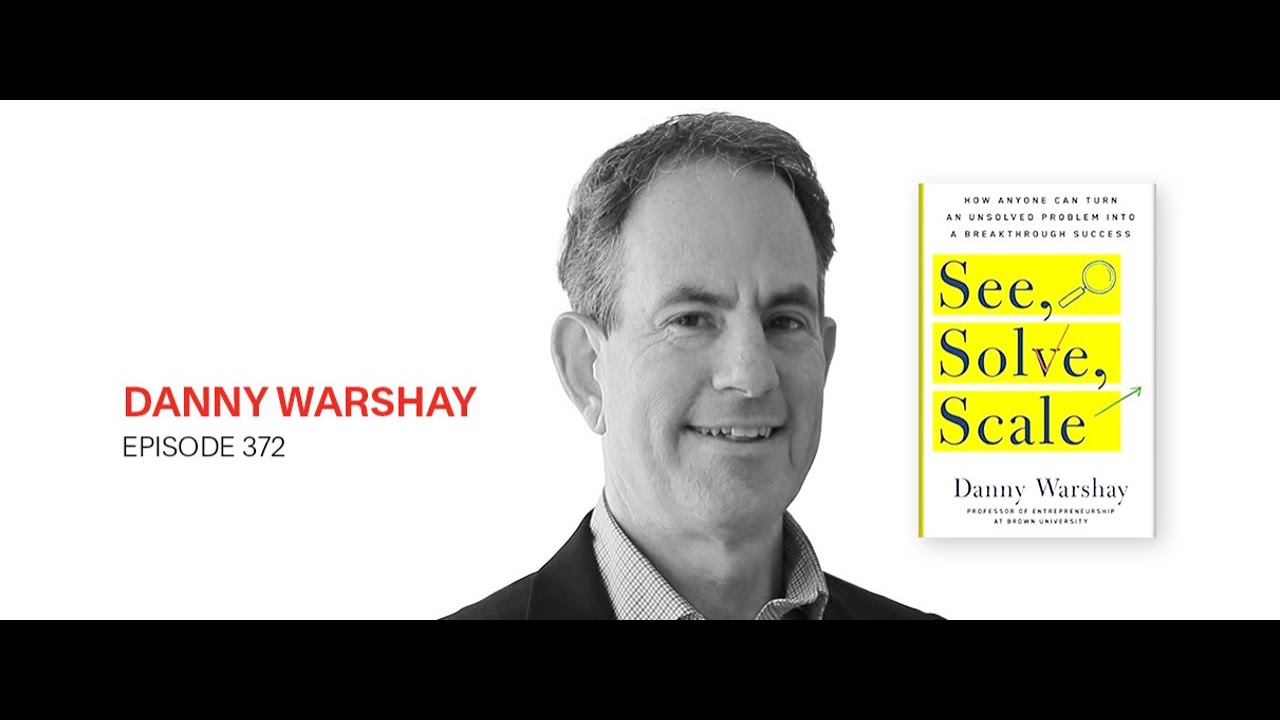

Changing Habits and Lifestyle Through the Entrepreneurial Process with Danny Warshay: PYP 315
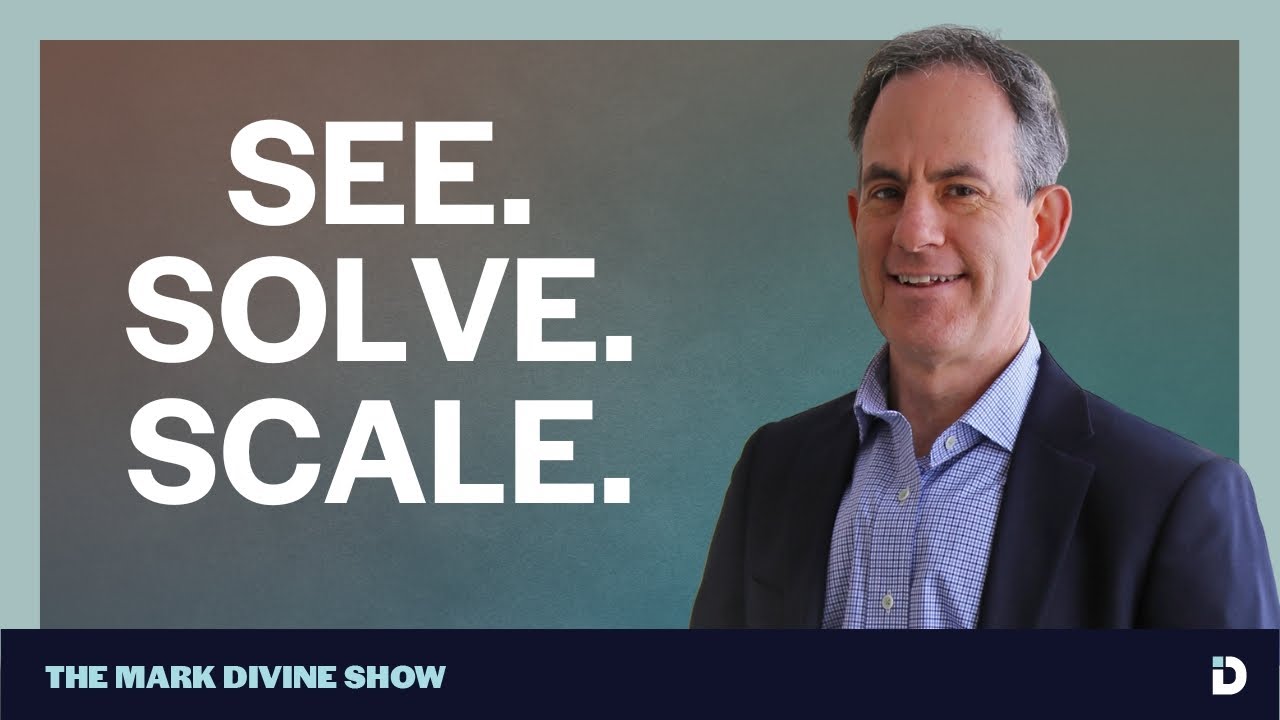
Interview with Danny Warshay, Brown University, Director of the Nelson Center for Entrepreneurship


