Danny Warshay & Brown University Students | Innovators to Educators
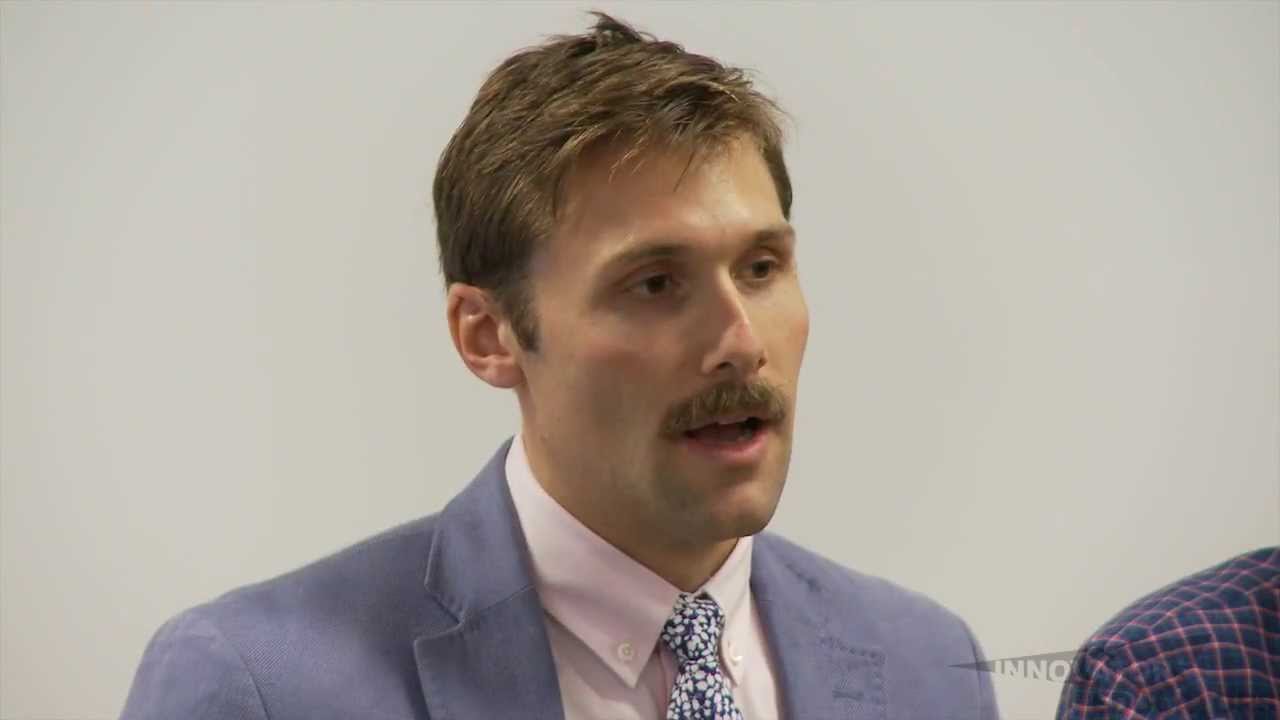
Danny Warshay and five Brown University alumni discuss their startups: Sir Kensington's premium ketchup, Stamped's iPhone recommendation app sold to Yahoo, Dear Kate performance underwear, and ventures in bug food and prenatal supplements. They credit hands-on tinkering, asking for help, and Brown's network for their success.
Chapters
Wow, it's really a privilege to be here. And I was thrilled when Stephen asked me to do this, especially to come and help wrap this up, which is really a challenging task in many contexts. But in this one, I think it'll be a lot of fun and it'll be interesting. So the method that we're going to use to do that is I'm just going to tell you very briefly about who I am, but mostly I have the pleasure of reuniting with some of my students who are doing amazing things. And I am truly privileged to be able to do what you just described, which is to teach in a context like Brown. I'm privileged to be able to teach at all. And let me just tell you, it's not always the way I introduce myself, but the way it even came about that I had the opportunity to teach. I was doing entrepreneurship in a variety of different contexts, starting a number of companies of my own. And then out of the blue, I get a call from one of my own cherished professors. I suspect all of you also had the same professor, Barrett Hazeltine. And he said, Danny, I'd love to talk to you about teaching at Brown. And I swear I thought he was joking. And I even told him so. I said, I've never taught anything, like not even Sunday school. You must be kidding. And he said, no, I just see it in you. I think you have a spark that would lead to your being a great teacher. And you can't say no to Barrett Hazeltine. He's been teaching at Brown for generations. He's taught over 30,000 students. And he started the concept of teaching this management and entrepreneurship approach in the context of teaching engineering at Brown. I teach in the engineering school, which is kind of a joke because my father is a real engineer. He's a chemical engineer. He worked his whole career at NASA. And he thinks it's kind of funny that I teach in the engineering school at Brown. But it's a real privilege to be able to do that. And so, I'm going to let each of my former students introduce themselves and tell you a little bit about what they're doing. And then, I'll highlight a couple of things that I think might be germane for what I'm doing. As I said, I do entrepreneurship and I teach entrepreneurship. The doing is I have a portfolio of companies in which I have a variety of different roles. Sometimes I'm the founder, sometimes I'm one of the founders, sometimes I'm neither, but I've join the company to help them help the company prosper. And I like each of those roles. The teaching, I'm officially on the faculty at Brown, and I also am on the faculty at Tel Aviv University where I go each summer and teach in the MBA programs to executive MBAs and also to regular MBAs from a variety of different countries. And if you think I have to pinch myself at Brown, I really have to pinch myself when I'm in Tel Aviv each year. having the privilege to teach there. And even more, that's led to my being in really far-flung places to do workshop versions of my entrepreneurship teaching. I've done that a number of times in China, a number of times in Egypt, in Portugal, and in 2 weeks from today, I'm going to be in Bahrain teaching courtesy of the US Embassy that invited me to come there and work with aspiring entrepreneurs in Bahrain. who are looking to learn about this concept of entrepreneurship. So, the doing and the teaching is something that I'm just not sure I ever dreamed about being able to do, but I'm really happy that I can do it. The most inspiring part of being able to do that is to work with people like each of the folks you see seated here. And that's true even when they're my students, then to do what Steven said happens and see what happens when they go out into the world following my teaching and do all sorts of amazing things to change and improve the world and to prosper as entrepreneurs in their own right, that's really gratifying. I think probably all of you would say that I'm obsessed about staying in touch with all of my students, and that's true. And it's become mechanized. I mean, I do it, I hope, naturally and sincerely, but a couple of years ago, one of my former students who saw me struggling to keep in touch with students in the old-fashioned way by emailing every student I've ever had, said, Professor Warshay, we need to bring you into the 21st century. And he and a couple of other computer science students created this thing that I'm almost embarrassed to say is called the Warshay Innovation Network. And it's a platform that all of my alumni from all of my workshops and actual classes and other contexts in which I've taught people stay in touch and can collaborate. And so I have my Portuguese alumni contacting people in Turkey. I have people from China interacting with people in Israel. And I like to say I'm hoping that someday I'll in earnest have a lot of my Egyptian students collaborating with my Israeli students. That hasn't quite happened in the numbers that I would like to see, but it's a fantasy of mine and I'm working on it. So I think what we're going to do is have each of you tell us just a little bit about what you're up to and maybe draw some connections between your education and the innovation and entrepreneurship you're doing now. So maybe we'll start with Scott, and you can just tell us quickly who you are and whatever you'd like to share with us.
Okay, sure. Thank you, Danny. Can everyone hear me?
Okay, great.
Well, thanks all for gathering today, and thank you, Danny and Steven, for helping organize. So my name is Scott Norton and a couple of years ago, I started a company called Sir Kensington's. And it was started with the premise that if you look at the market for ketchup in America, which is about a $3 billion market, there's really only one option. There's one brand that we all know, we all grew up with it. And in fact, if you look at what's in it, it's a lot of synthetic ingredients. There hasn't been innovation in ketchup in about 50 years. whereas every other category of food has moved forward. And so, we have an all-natural premium ketchup that we sell across the country in places like Whole Foods. We work with a lot of Michelin-starred restaurants and chefs. And earlier this year, we launched a mayonnaise as well. And I don't want to spend too much time talking about this because, you know, when we were asked to be a part of this panel, a lot of the emphasis was about early childhood experiences and education. And so I wanted to take some time to reflect on, you know, what I had in my life that kind of got me to the point of, you know, starting a company, building a brand, and innovating in this space. And it started out when I was a little kid. My dad taught me how to use a lot of tools. So screwdrivers, woodworking tools, nails, glue guns, all those kinds of things. And from a very early age, I spent a lot of time building things with my hands. And, you know, as a little kid, that's a— it can be a really empowering experience. And as I grew, I did it more and more, and I practiced this muscle of taking raw materials and turning them into some kind of vision. And it's at some point in this process that you start to realize that you need to work backwards from the vision that you have in your head and say, how do all these pieces fit together? And what do these raw materials need to look like in the start and how do you combine them? And someone was talking earlier about, as an educator, how do we prepare people for the workplace and to be in a commercial environment? And as someone who is doing that and also someone who's looking for talent and hiring on a fairly regular basis, this is something that I always look for is people's ability to take raw ingredients and turn them into some sort of a final vision. Second of all, I think that, you know, my parents were very dogged about exposing me to art and to things like theater, musical theater, and performance. And also interacting and doing the same thing for improvisation. And what I find is that, you know, especially in my own purely educational background and what I see in other people in job interviews and things like that, is this focus purely on text and the written word. And so much of what I do to build my brand is visual. It's about performance. It's about theater. And really, I think in schools, children are communicating in very, very narrow ways. And things like drama are seen as part of the arts rather than being what they really are, which is part of human face-to-face communication, which is a critical skill. And that's something that from my background that has helped me tremendously. And then finally, third of all, when I was a little kid, my handwriting and still is atrocious. And I had these when I was in second grade. I had these piano lessons that I went to, and my piano teacher told my mother, "You know, Scott isn't progressing. You should stop sending him to piano lessons." And it turns out that I was diagnosed with some pseudo syndrome called small motor dyspraxia. And so from that point. Years before any of my peers, I started composing my written assignments on the computer because I couldn't write in anything that people could read. And so that led me to understand, you know, to discover things like HTML and Photoshop and the Adobe suite of programs. And I was lucky to grow up in a household to have those things. But I was able to really discover the internet before a lot of my peers did, and that has completely tremendously changed the way that I run my business and think about my business. as being technology-enabled. And so I think that, you know, working with children to understand that a computer just isn't a tool for things like email and Microsoft Word, but there are a tremendous amount of ways that one can communicate that isn't scary if you start early enough. And so that's a little bit about my background.
Thank you, Scott. Bart.
Sure.
So I'm Bart. Thank you for having me. Thanks, Danny. Thanks, Steven. So, I mean, I'm currently a product manager at Yahoo. I came to Yahoo after selling a company I had started called Stamped to Yahoo about a year ago. And my sort of story through entrepreneurship started— I always thought I wanted to be an entrepreneur. I never really figured out what that was until high school. And then I really figured it out in Danny's class when I was at Brown. A lot of it involves emailing strangers. That's sort of the theme of my— story of entrepreneurship. In high school, I really got into technology. I knew I wanted to be a technology entrepreneur. I grew up reading books about Apple Computer and Steve Jobs and Intel. And I read an article about a really cool wireless radio technology, which was cool to me. That tells you a little bit about my social life in high school, but it was cool to me. And I read about it and I thought it was really cool. And I was a sophomore in high school and I emailed the author of the article who was an Intel engineer. And we ended up forming this sort of mentorship relationship for 2 years. He helped me work on this research project in high school where I researched the technology that he wrote about with his help, which ended up being the catalyst which I think got me, actually got me into Brown. I mean, that was like the number one thing I wrote about in my application and it was a really cool project. And then I went to Brown. I started off engineering. I ended up deciding I didn't want to do that. I switched over to do economics and business. And then I, my first summer internship when I was at Brown was because I was a big fan of David Pogue, who is the technology columnist for the New York Times. And I emailed him. And I said, hey, I want to work for you this summer. And he responded. And so I ended up working for him. He was actually, ended up being from the same town that Danny is from in Ohio. And I ended up taking Danny's class. And in my application again to Danny's class, I said I had worked for David Pogue. And so there was that thing that helped me get into Danny's class. And so then I ended up working, then I ended up taking Danny's class where I was a student sophomore year. I was the TA for it my senior year. And there I met a venture capitalist by the name of Scott Friend who was at Bain Capital Ventures. And a couple of months after Brown, I emailed him. I ended up staying in touch with him and he ended up funding my first company, Stamped, which was in April of 2011. He was the lead investor from Bain Capital. And Stamped was a software company that built an iPhone app that allowed you to recommend your favorite restaurants, books, movies, music to your friends. And that company we built over the course of 2 years, sold it to Yahoo last year. The theme that I've learned a lot from my educational experiences is don't be afraid to ask people you don't know for help. And really getting the most out of your education often involves going out of your immediate class and your immediate, you know, professor into their network, into their, you know, legion of people they know. And so, I think it's a pretty interesting thing that usually that starts in college, but for me that started when I was 15. And so, I think it's an interesting lesson I learned about education through that process.
Thanks, Bart. Julie?
Hi, I'm Julie Siegel, and I'm the founder of Dear Kate. We are a high-performance line of underwear for women, and you all should have received a postcard in your welcome packet today with a discount on it. So check us out online, and men, feel free to buy for a significant lady in your life. I actually have a pair here, and this is a sneak peek. It's not on the market yet. But it's from our upcoming sport line, which is launching in about 3 weeks. So all of our products have our special fabric in them. And it came as an idea in Danny's class when he said, the best business plans that I've seen provide solutions to everyday problems. And so we started brainstorming and realized that every woman has a horror story during that time of the month. And how come no one's making better underwear for women? So Danny was a really good sport about this.
No, more than a good sport, I was a total idiot. We can say that plainly because I thought, is this really a big idea? And of course it's an enormous idea. And Julie demonstrated that to me.
So yeah, so we went on to spend about 2 years doing product research with major fabric companies and then launched our first product in January 2011 and then launched our second line in December of last year. So it's been really cool. We have shipped underwear to about, actually, customers in all 50 states and 32 countries. And it's really cool to see people write in. And so many new moms are like, oh my God, I love your technology. I just had a baby and I was pressing on my bladder for 9 months. So pretty much any woman of any age can use a pair of underwear that, all of them, they have a built-in breathable liner. So it protects like a panty liner and they're super comfy and luxurious. So that's what we do. And my background in education as it pertains to innovation and creativity, my background is a bit nontraditional because I grew up in a household where I was homeschooled from 1st through 8th grade. And it's actually my father that taught me. My mom was a lawyer and went to work and my dad— stayed home and took care of me from the time I was born through when I went to public school in 9th grade. And so looking back and thinking, you know, what are the things that he did that ultimately led me to be interested in pursuing entrepreneurship, one of them I think is— was exposure to role models and people who were doing things. So oftentimes he would read the newspaper every morning and give me the highlights of, oh, did you— What did he do? telling me, educating me about, you know, so-and-so that's doing something interesting. And a family friend gave me a subscription to Zillions Magazine. And it's the kids' magazine from Consumer Reports. And it basically profiles all of these kids who start companies. And so I remember reading these growing up and didn't really have an idea or didn't know how someone would start. I remember specifically this girl had a company that monogrammed polka dot luggage for, you know, which is when you're 10, you really want a pink polka dot monogrammed luggage bag. And so I really didn't understand how could you actually do that, but I had these role models and thought that would be really cool. And then, so the second thing that when I'm reflecting that my dad gave me in this educational form was the freedom to explore what I wanted to learn. And so if I was interested in doing something, he would never ring the bell and say, OK, got to stop that, move on to the next subject. And so he would give me as much time as I wanted to delve into it. And along with that, along with the amount of time that he gave me to spend on things, was also the emotional freedom and support to really engage with things and to know that I had agency to make things happen. And so, I don't know if powerful is the right word, but I was always implicitly— it was understood that I had the power to make something happen and do whatever I wanted to do. And looking back, I think oftentimes he did that by way of comparing me to other students. And I don't know that that has served me well. You know, he would always say, oh, you're in the 99th percentile in this or whatever. And so implying, well, you're destined to do great things. And so that's great, except then you get into a mindset of comparing yourself to people. So I think the positive takeaway was more that you have the power and the agency to make things happen and change the world. And so If you put your mind to it, you can achieve it. And then the third takeaway that I would say is persistence. And I sold Girl Scout cookies when I was little. And so my dad, you know, would drag me around and I was so shy. And if someone would say no, I learned that that didn't mean no. It meant, oh, why don't you want to buy any cookies? And they would say, oh, well, actually I'm diabetic or I'm trying to watch my weight. Of course, you're like, oh, well, you probably have grandchildren, right? I'm sure they would love some cookies.
Right.
And so there are multiple answers to the word no that didn't mean giving up and turning around. And so in order to do something that's creative and entrepreneurial and different, there are lots of stumbling blocks in the beginning. And so you can't get, can't get discouraged if the first few things don't work out. And you have to be really persistent. So I really, liked that and appreciated that when I was growing up.
Thank you, Julie. Before I turn it over to Giles, I do want to say that I've had the pleasure for the last several years also to have RISD students in my class, students from the Rhode Island School of Design who are allowed to cross-register for any Brown course they want. And it's been a really interesting addition to the dynamic in the class. I am eager to have as diverse a class as possible, and at Brown, That's pretty easy in and of itself with people from all over the world, from all walks of life, and also all different kinds of disciplines that they're studying. Technically, as I said, it's in the engineering school, but I have liberal arts students from every discipline you can imagine, plus other humanities students, other science students, and now a decent flow of RISD students. And Giles was one of them, now a 5th year architecture student, and in his own right added a great deal to the dynamic in the course, and is going to describe a little bit about his background and what he's doing now. But I wanted to say that represented here is not just officially Brown, it's also RISD as well. So thanks for coming today.
And thank you, Stephen, for organizing as well.
So I'm Giles.
In Danny's class, I actually worked on a bug food startup, which kind of gives you another example of the real breadth of projects that start to come out of that. After taking this class as well, I took a year and a half off from school and founded an e-commerce startup. It was a blogger monetization platform where people could go on, select items that they were interested in promoting, and get 25% commission on any sales that came through their sort of sharing of those items. I recently decided to go back and finish my education at the Rhode Island School of Design in a 5-year B.Arch program. And I, like Julie, have sort of a very non-traditional experience growing up. And it's sort of reminiscent of my childhood when people are up here saying an outrageous idea about what the future of education is going to be like. It's like, oh, well, that's what I was doing 10, 15 years ago. Where I grew up in a homeschooled family, but in the Boston area, it was very much more of a sort of communal network of parents that each would have a specialty and would teach 8 to 10 kids at their house, maybe like on a Wednesday afternoon, kind of together to spread their expertise amongst a much larger community. So I then moved on and started at RISD, and that's a little bit of my story. Great.
Thank you.
Dan.
Hello, everyone. I'm afraid I'm going to knock this thing a bit wide up top, but I'm from Canada, actually. I'm here on an H-1B, but I started a company out of Danny's class. I went to Brown. Kind of unlikely company to start. I actually have my own prenatal supplement company. So, created purely out of market research. I'm not pregnant. I don't even have a girlfriend. So, it's— It really isn't, you know, it's just, you know, we're a very different group of people and there's always different ideas. But this was a— Literally created purely, you know, I always say this, it's not a romantic story. It was created to make money, which is why businesses are started.
Uh-huh.
We found that through doing a market research study with Whole Foods and then at other pharmacies that 96% of women who take prenatal pills, there's 4.5 million of them a year who do, at least that number, 96% of them hate the pills. They can't swallow them. They get stuck in their throat. They're called horse pills. And there was really no solution to this. So we created a powdered system. That actually we then buffed up to have extra ingredients to not only not be a pill and be easy to consume, but to be clinically proven to reduce morning sickness and be non-constipating, which are the 2 main daily issues that women go through. So again, nothing I personally experienced, but all came out of Danny's class through a lot of market research and what he calls bottom-up research, which means really getting out there like it was kind of alluded to earlier. talking to people, going approaching strangers and seeing what problems are out there and face-to-face conversations and how to solve them. We won the Rhode Island Business Plan Contest in 2011. We've done, I'll call it a raise and a half so far. We're in Whole Foods. We're about to launch into another very large store. Working on a deal right now with Duane Reade as part of Walgreens. We've got some good traction. It's still an uphill battle, but one thing I've learned is I think I've had almost every bad thing. I've taken a lot of bad punches. I think my education when I was younger helped me prepare for that. I've had investors sign term sheets, agree, and then back out. We get into legal battles. I've had a partner quit. I've had missed shipments that I had to get in at 3 in the morning, go pick up myself, and then drive down to Philadelphia so it got to the warehouse in time to make it to the stores. And I'm not a truck driver, so I literally bore in someone's Jeep. I've slept on the ground for 9 months in my friend's apartment when first getting started. So I've done— if we make it through, it'll be a great story, but we're seeing some good success now. Yeah, so, but basically, you know, it's a tough life being an entrepreneur, and I don't think there's anything that can really teach you to think to make change. I mean, there's definitely things that can be done, but my life in terms of being an entrepreneur, I've always seen— I always look at products. I'm like, that would be better if this happened or this could be better if that happened. So, I've done that. It just is innately in me and I can't point to anything specifically. But I went to a very good— I'm very fortunate with my family. I went to a very good prep school. I went to private school my whole life. My dad said that there's gonna be no money for us when he's dead, but he'll pay for anything education-wise. So, I'm very happy to have that. And at my prep school, Which was in Canada, they actually did some things differently. You had to play on a sports team. I was an athlete my whole life. I rowed at Brown. I played hockey as well. I rowed for Team Canada. And my school made you have athletics. You were there— we were at school from about 7 in the morning until 6:30 PM every day. And that was not boarding. And then in your 12th grade, they actually make you board so you learn how to be away from home. and educate and still do well in class before you go to university, which is something that's pretty unique too because I literally lived 6 minutes down the road from my school. But my school has people from everywhere. My hallway was just— I was basically with a lot of kids from Hong Kong, Jamaica, the islands, so you get a really cool mix. But what I thought was unique is they made you do athletics and they made you do clubs. So everyone from all walks, whether you're an athlete or not an athlete, or whether you were musically talented, no matter what, you had to do everything. And I think it really opened up a lot of— opened my eyes up a lot. I played sports that I normally wouldn't play because we were a trimester school, so you had a sport every trimester. I was in chess club. I did dance club. I was one of 2 guys in dance club. But I think that was a pretty good call on my part. So I thought that was one thing education-wise that was very, very cool about my school. I've got a lot of friends that went to prep schools, public schools, homeschooled, and I don't think that's something that's often done where you're literally forced to do something that you may not normally be comfortable doing, but it opens up your eyes to different experiences and helps you, as Julie said, persevere. I think entrepreneurship is really about persevering, staying steady when you have awesome news and bad news and trying to handle it. And also being an athlete my whole life, I think that Definitely plays a role in it. So I would suggest if your schools do have athletic programs, encouraging kids to get in that because when you build a team, you have to learn to work together and it's working together towards a common goal. For us, it's an exit. It's building the company. It's building a brand. In athletics, it might be winning the varsity championships or it might just even be learning to play.
You had to make a detour from your favorite sport to business school.
Yes, I did. My life is pretty perseverance, I guess. I broke my neck when I was 14. Actually, the first time I was in this city was for Bobby Orr's prospect camp for the top 20 kids in North America. From that camp, every single one plays in the NHL now except for myself. I was paralyzed, hung from behind a boat, so it was pretty bad, but I persevered. It took me a year and a half to get back to normal, but had to quit all contact sports. How old were you when that happened? I've got about a 10-inch scar up the back of my head here and then switched to rowing.
The way you put it is, in rowing, you don't have to turn your head.
Exactly. It was a perfect fit. It's the only sport where you don't need to be on a swivel and keep your eyes open. It's better to be dead straight and I'm pretty good at that now. And non-contact, although I ended up breaking 3 ribs in that too, which is just another story. I'd say education. I think it was really cool that my school did that and actually my school had a class kind of similar to Danny's but on a much smaller scale where you had to— the whole class was broken into teams. And this is in 9th grade. Broken into teams and you had to create a product. And you had to present it. You had to create a commercial for it and all that. And you had to do it by the time the trimester was done. So it was a really, really cool experience. At the time we created— I was into weightlifting, so we created branded weightlifting gloves. So we thought we could sell them to the Maple Leafs to have their own Toronto Maple Leafs weightlifting gloves for when they lifted or for the Boston Bruins. So we had all these samples made up. We made a commercial because my hands from rowing are disgusting. I've got tons of calluses. So I was holding hands with this girl. She hated it. She left me for a guy with softer hands because he was using the gloves. So it was like just a cool way to like get to know how to get a product, how to actually build something and try and— I mean, we never sold anything, but it was a really cool class that I actually took away from education. So I would say You know, in short, just everything, we're kind of alluding to the same thing, just, you know, getting a ton of different experience, learning how to be persistent, and learning how to persevere. And there's tons of different ways to teach that. And so those are just a couple from my childhood that I remember fondly.
Great.
Thank you, Dan. And thanks for what I think are interesting and inspirational and also nice walks down memory lane for me.
More from Danny


Changing Habits and Lifestyle Through the Entrepreneurial Process with Danny Warshay: PYP 315
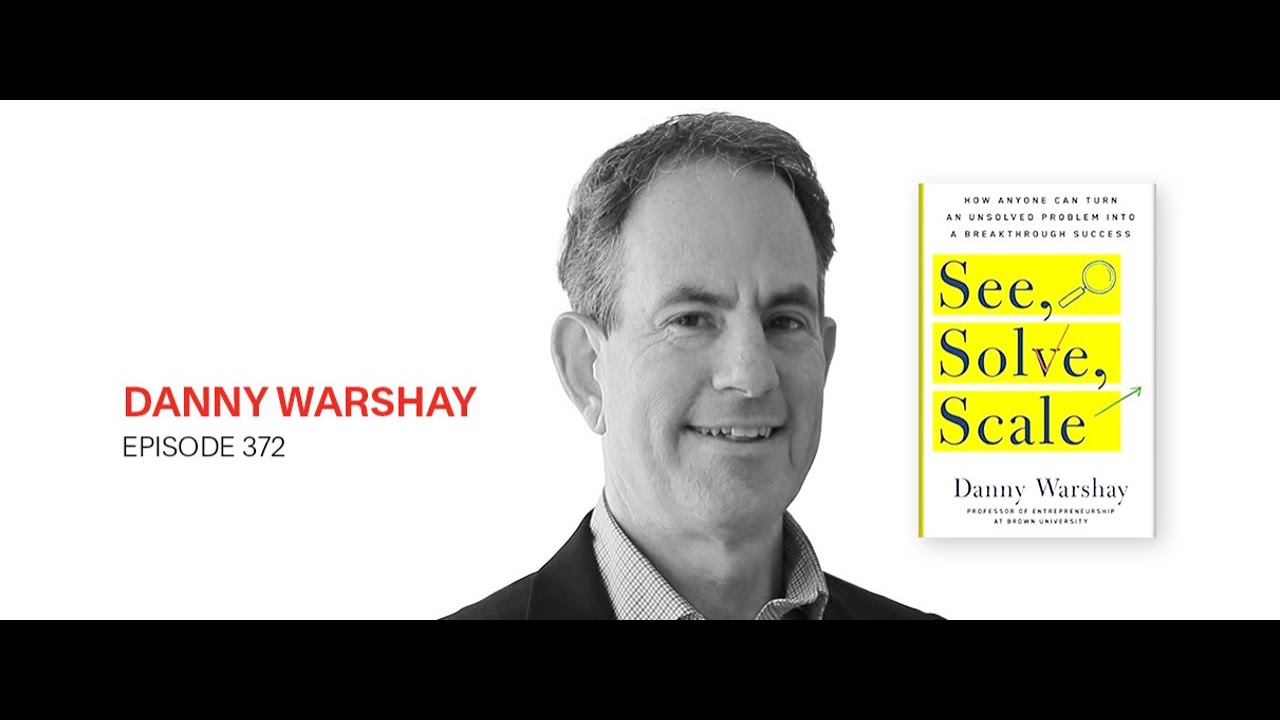
Interview with Danny Warshay, Brown University, Director of the Nelson Center for Entrepreneurship


