Entrepreneurship Speaker Series: Danny Warshay and Gabrielle Warshay
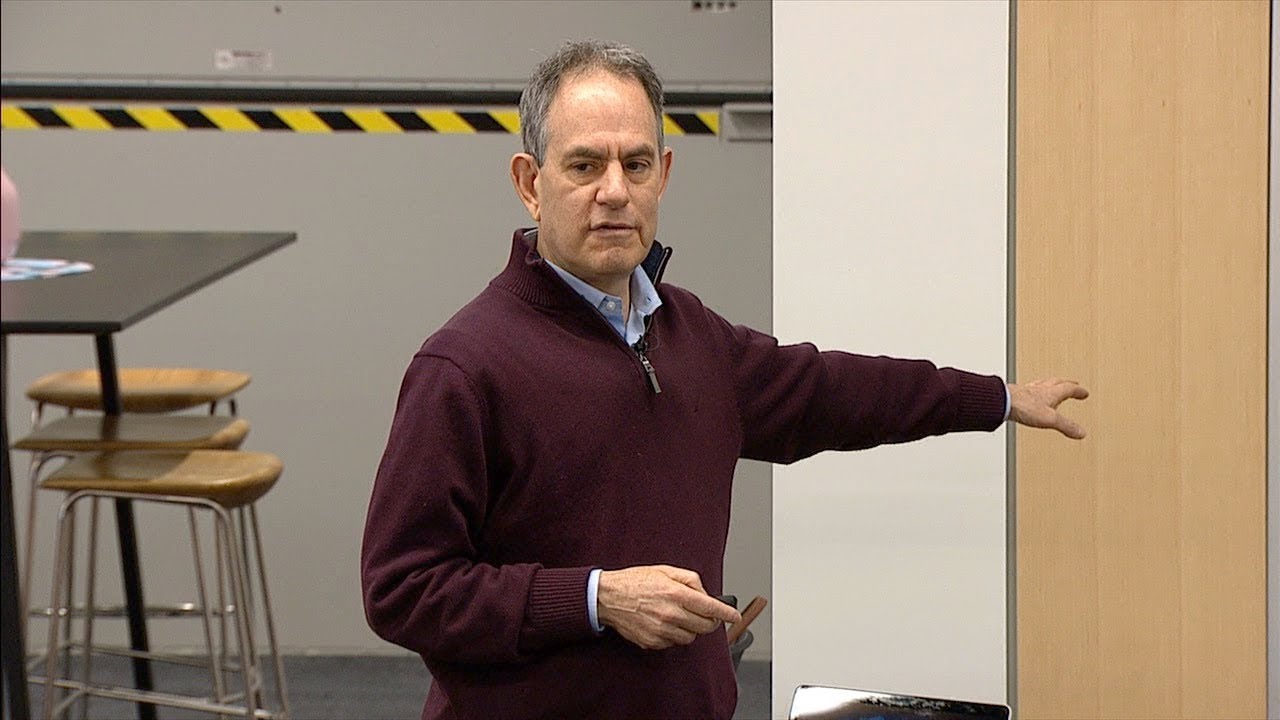
In this live session hosted by Michael Goldberg, Danny Warshay (with Gabby Warshay) presents a compelling case for "bottom‑up research" as the foundation of successful entrepreneurship. The talk weaves together cognitive‑bias insights (the "gorilla" experiment), the importance of framing the right problem before jumping to solutions, and a three‑step market‑research framework (discover unmet need, validate, then develop a sustainable value proposition). Multiple vivid case studies illustrate the method: P&G’s discovery of a hidden pain point in Tide’s powdered detergent packaging leading to a new form‑factor; Dawn dishwashing liquid’s unexpected use for washing produce, which sparked a dedicated product line; and a student team’s observation of pregnant women’s frustration with prenatal vitamin pills, resulting in a patented powdered supplement. The speakers emphasize that scarce resources and fresh perspectives (e.g., undergraduates) can be an advantage, and they provide practical guidance for applying the approach across B2C and B2B contexts, building research skills, and crafting concise value propositions (what, who, why, how). The session concludes with a call to action for participants to join the Warshay Innovation Network and continue practicing bottom‑up research.
Chapters
It's really great on a cold, wintry, Arctic Cleveland morning that we've got a group here of folks gathered. And I will ask everyone to introduce themselves because we have a small group here, but it's such a pleasure to welcome Danny Warshay back to Cleveland and Gabby Warshay to join him in conversation, and she's based here. My name's Michael Goldberg, and I am the Executive Director of the Veale Institute for Entrepreneurship. We're a new entrepreneurship institute on campus, and this is part of our Case Western Reserve University Entrepreneurship Speaker Series. You guys are our 3rd participants in our speaker series. We were joined by Hallie Teko earlier this week, who founded Rock Health, a healthcare accelerator. We had Mike Fisher, who's the CTO of Etsy. Our next event is next Thursday with Joe Mondato, who's a board member here and venture capitalist. So we're so excited to have you guys as part of this. Before I get to Danny and Gabby, because we have a small group, and for those sort of streaming on Facebook, and I'll pass the microphone around, if you guys wouldn't mind just sort of introducing yourself and maybe why you're here. Some were forced by Danny and Gabby to come because they're in their family. But it's really wonderful to have a mix of people here. We're on— for those who are watching on Facebook Live, we're on the 6th floor of TIER's ThinkBox, which is our 30,000-foot community open makerspace, and a lot of our events are here. And so we welcome you. And for those who also are on Facebook, please feel free to ask questions along the way. My colleague Doug will be sort of monitoring the comment stream, so we'll be able to interject questions.
Great.
questions, because knowing Danny, this will be interactive, I assume. So let me start over here with Allison. We'll just sort of pass the microphone around for quick intros.
Hello, my name is Allison Girvin. I'm the CEO of The American Independent, which is a digital media company that is headquartered in Washington, D.C., but I live here in Cleveland, and I'm wanting to get to know a little more about the entrepreneur environment here in Cleveland. So That's why I'm here. Cool.
Todd Schwartz here. I was the formerly— former interim executive director of Veo. I'm an investor with Refinery Ventures and help with commercialization here at Case.
I'm Jill Schwartz, and I was not forced to be here, but Danny is my first cousin, and I'm honored to be here and spend the morning learning more about entrepreneurship.
Len Bernstein, uncle. James Huang, I'm here on staff at Case doing medical device prototyping, and generally have a tech background interested in entrepreneurship and intrapreneurship.
I'm Anna Goldberg, that's my dad, and I'm a high school student at Laurel School, and I'm working on a project on entrepreneurship.
I'm Sid Sen, I work for the WEAL Foundation, particularly the WEAL Youth Entrepreneurship Forum, which does entrepreneurship for 9 to 12 grade-wise in Northeast Ohio. and interested to hear about research on entrepreneurship.
Hi, I'm Amy Young. I am a Venture for America fellow. I know Gabby, so always down to meet a friend's parental figure. I also work at Magnet, and I work with physical product startups, and I am interested in starting my own company, so here we are. Morning, everybody.
I'm Sisong.
I'm a senior human-computer interaction and business management major, and I'm just passionate about waking up early and learning more about entrepreneurship.
Hi, I'm Emily.
I'm a senior mechanical and aerospace engineering major, and I just have an interest in entrepreneurship.
Hi, I'm Adrian. I'm also a senior business management and marketing. I'm actually accepting my fellowship for Venture for America today. And so I came here because I saw that you were speaking, and I'm really excited to hear from you. Did you tell anyone?
I told everyone. Good morning, I'm Mandy Varley. I'm a PhD student in organizational behavior here at Case. I'm also an executive coach. My dissertation has been on how a group coaching program for PhD students can help you make progress and also be well simultaneously. And I'm trying to figure out how to commercialize my findings and take them to industry, essentially, possibly in the entrepreneurship world, the tech startup world. We can be well and make progress simultaneously, but I'm trying to figure out how to make that business case and pitch to organizations.
Good morning, I'm Nikki DiFilippo.
Michael asked me to be here, that's why I'm here today, but this is in my area of interest and expertise. I'm an alum, I work with the Alumni Association, I also have my own company working with early-stage tech companies and helping them with marketing and business strategy to accelerate growth.
Hi, I'm Rosie. I'm the first-year graduate student in the business analytics. I'm interested in the digital marketing.
I'm very happy to spend morning to learn about entrepreneurship. Thank you.
Good morning. I'm Doug Suna. I'm a friend of Danny's from business school, and I went to Brown with him, but you can probably tell I'm a few years younger than he is, so not at the same time. And I'm also— very important responsibility— I'm his conduit to Cleveland sports, which is usually less pleasant than more pleasant. So yes, my day job, I work at EDGE, which is a nonprofit That's aimed at growing mid-sized companies in Northeast Ohio by providing training, education, and development to them.
I'm Susan Warshay. I'm one of Danny's younger sisters, and I have never had the opportunity to hear my brother speak, so I thought this would be a great opportunity.
And I've never heard my niece speak either, and I work with Pampered Chef. Hi everyone, I'm Aida Warshay. I'm Danny's mom. I'm a retired social worker.
And believe it or not, I'm also a Warshay. I'm Alisa Warshay. I'm Danny's sister, and I thought it would be a nice opportunity to see the professional side of my brother.
Thank you.
Great.
And I think you guys are mic'd. So again, Danny and Gabby, thank you so much for joining. We'll turn it over to you and look forward to a great conversation this morning.
Welcome.
Thank you.
Thanks everyone for being here and giving a nice little introduction. It's good to know who's in the room. So like Michael said, I'm a Venture for America Fellow. This is my second year in Cleveland, and I work for JumpStart, which is a venture development firm working with technology businesses and small businesses across the state of Ohio. So I'm excited to be chatting with my dad this morning. I was thinking back to the last time we had done a business collab, which I believe was the time he had helped me with my financial projections for my line of American Girl doll So it's nice to be back in business with you.
I'm really happy to be here as well, and it looks like you've progressed from American Dolls quite significantly. By the way, I also wanted to mention that there's Case alumni here, several alumni who have graduate degrees from Case, at least those who I know in my family, including double for my uncle, who I think went to undergraduate and medical school here. my mother and my sister who have master's degrees from here, and maybe others, so it's— and, and as well, so it's nice to see students and alumni and others. And yeah, happy to chat a little bit about entrepreneurship and what you're doing, and maybe a little bit about what's happening in Cleveland.
Totally. So, you know, I moved to Cleveland about 2 years ago to work at JumpStart, focusing on entrepreneurship and economic development, and I came to this job through my experience in public health and environmental science. So people often think, like, why are you working at a venture capital firm? Well, I was really excited by the fact that startups could really initiate change from the bottom up, unlike policy in the government space. So that's kind of how I came to work at JumpStart and be interested in startups. You came to it a little bit differently. You studied history at Brown University and then took the very natural path of working at a tech startup after that. What was that like graduating college and working at a startup in Providence?
Sure, maybe I can even rewind a little further. I don't normally mention this when I'm in crazy places around the world like Bahrain or Slovenia, but it seems appropriate given that I'm in Cleveland. My family members will remember that my first entrepreneurial endeavor was a croissant-making business called Doughboys. I think my cousin and uncle and sisters and mother will remember that. Maybe there's a food theme because you were thinking about granola bars for American girl dolls. I don't think I knew that that was entrepreneurship, but that was an interesting opportunity. It was right before I went off to Brown. I had a very typical and wonderful— and Doug can reinforce this— Brown University undergraduate experience where I focused on liberal arts. And you're right, I studied history. I spent a year in Jerusalem my junior year, and I got back my senior year, and I always say 2 life-changing events happened. The most important— and it's a shout out to my wife who is watching over Facebook Live, that I met her. We lived across the hall from each other senior year, and that's of course the most momentous thing. And certainly for you too, that's the most momentous thing.
Thank you.
But the other is that you're right, I fell into this opportunity to help start a software company, actually with the same person I had started that croissant baking business with, Matt Kirsch. And We built that company up with some help from Brown, and there was no such thing as JumpStart in Providence, really no entrepreneurial community. I like to say that we were like mutants. There was no tradition of entrepreneurship in Rhode Island. And that was, you're right, maybe unexpected that a history concentrator would at Brown start a software company with some colleagues. That's what happened. And I'm not even sure at that stage I knew that that was called entrepreneurship. But I'm happy to talk more about that, and I like to see different backgrounds among the current students who are here. I'm a big proponent of liberal arts as a background for any endeavor in life, and too few students focus on liberal arts, and especially for entrepreneurship, I think it's really important.
Sure. So after practicing entrepreneurship for several years working at a variety of startups, you are now looking at entrepreneurship from the other side of the room, teaching that at Brown and across the world. So can you teach entrepreneurship, and what's that like?
Yeah, it's interesting. I, I get that question a lot, and I've been teaching entrepreneurship for about 15 years, so I hope the answer is yes, that you can teach it. And whether it's at the Veale Institute or at Brown, or elsewhere around the world? The answer is definitively yes. And I'm gonna talk a little bit more about that in the workshop part of what we do in a few minutes. But the way I was asked even to get into that was something that I think the Brown folks who are here will identify with, and that is that I got a tap on the shoulder in 2005 from a beloved professor named Barrett Hazeltine, who— had a tradition of teaching management courses at Brown on an island. There was nothing else like that. As I say, it's mostly a liberal arts context. And he said, would you be willing to come join the faculty and teach entrepreneurship? And I was a little caught off guard, 'cause I said, I have 2 questions. One, why me? I have no history of teaching anything. I had never even taught Sunday school.
And—
He said, no, no, I know you. You'd be a great teacher. And then the second question that was looming was, what do you mean teach entrepreneurship? Is that even possible? And I'm not sure I had a sense for that. And I'm going to, again, share a little bit more detail in the first part of our workshop together. But yeah, the answer is yes. And the way I devised the approach, I think, was a good fit for Brown. It's a good fit for people from any background, whether they have explicit business training in their undergrad experience, whether they're like I was, a liberal arts concentrator with zero experience in doing entrepreneurship, or whether they're later in life, or maybe at a big company, or the kinds of folks that you're serving at JumpStart. So I feel so passionate about that, that eventually I decided, with some very significant nudging from some students, to write a book about that. And that's a book that's going to be out in about a year, published from St. Martin's Press, an imprint of Macmillan. So I could probably talk the whole day about can you teach entrepreneurship, but in a few minutes you'll get a taste of what that teaching looks like. How about at JumpStart though? You do some of that as well.
Yeah, so I would say we do similar teachings outside of the classroom. helping validate ideas and thinking broadly about problems. And what's great about JumpStart, I think, is the collaborative nature, especially in Cleveland. You know, JumpStart's one of several other business assistance organizations across the city and across the state. So being able to work with so many talented and smart people to learn, because, you know, my background is not in business, has been such a blessing. And that's why I've been so excited to be in Cleveland. But I think what's cool also is just the proximity to state Like, Cleveland is such a small, big city that, you know, if you want to talk to anyone, whether it's in policy or manufacturing or literally anything, you'll have that connection, if not one step removed, two steps removed. So, it's been great to be tapped into that and work with so many talented and inspiring entrepreneurs. Quick question about the teaching part. Are there any specific lessons or nuggets of knowledge that you feel like you've kind of debunked for students? People come in with a certain idea about entrepreneurship and leave thinking something else?
Yes, lots. And I'd say one, and maybe it's appropriate given their— and I'm not biased, but caution— is that especially among people who identify as tech experts, which the world's abuzz about and should be because there's a lot of good things that come out of technology, but unfortunately Lots of tech people lead with a solution instead of leading with a problem, and they're a solution in search of a problem, and that's very dangerous. And the method that I teach, again, maybe born out of the fact that I had no tech background, so I'm biased there as a history concentrator, is start with a problem, and then you'll see the different steps that I've articulated in what I share with you in a few minutes.
And we're gonna start with the first one in some training Yeah, and I love how we sort of flip-flop from places, you from Cleveland to Providence and me from Providence to Cleveland. I think there are a lot of similarities between the two cities in terms of size and innovation and, you know, VFA presence as well. Shout out to Venture for America. So what would you— what do you think is similar between your experiences as an entrepreneur in Cleveland and Providence, and what's That's a great question.
Yeah, there are definitely some things in common and definitely things where the 2 cities diverge. I'd say the place where the 2 cities diverge is— I've lost count how many New England sports championships that you and your siblings have experienced. You're so used to it. You didn't know what to do during the Super Bowl. There was no Patriots in it. But it's true, you know, that's— That's a pretty significant difference between the 2 cities. What they have in common though is a theme that is another part of the book I wrote, but also what I teach. And it's something I believe and have experienced myself by doing some of my own startups in various places, is a concept I've coined called the benefits of scarce resources. And the opposite of that is the burden of abundant resources. And it's a shout out to Michael and his research and his book about doing startups outside of traditional places that are the hotbeds of entrepreneurship like Silicon Valley. And you all know very well that there's tremendous benefits to be affiliated with a university as wonderful and as, you know, as advanced as Case. We in Providence know that affiliated with Brown, you can really stand out in a city like Providence, and I presume in Cleveland too. It's much harder to stand out in a place like Cupertino or Palo Alto, where, yeah, there's abundant resources of capital and other things, but there's a ton of demand for them. The infrastructure is really challenging because everything's very expensive. I mean, I won't tell people explicitly what you pay for rent, but you may want to. I mean, you couldn't even rent part of a bathroom in Palo Alto for the amount of money you pay in Tremont. No, no, no. By the way, that's another thing. When you told me that you were moving to Cleveland as a Venture for America fellow, I was excited to hear that, and your grandmother and aunts and cousins and uncles were also very happy. But I, I heard you were moving to Tremont, and I grew up in Shaker Heights, went to Shaker Heights High School. I thought you might have gotten the city wrong because I, I never heard of Tremont. But man, what a cool place, and what an amazing lifestyle is available to entrepreneurs. So I think there's huge benefits to being able to start something in an environment like Cleveland, like Providence, where there is the benefit of scarce resources. And it's, you know, double-sided. Sometimes the opposite is true too, but more often than not in my experience— and I teach, you'll see on the right-hand side, all sorts of workshops and places that I think would describe themselves as having scarce resources, like rural China or Ramallah, Palestine, or places that don't think of themselves, because they're not, as a hotbed of entrepreneurship. And yet those are the places where I think you can really stand out and develop something of serious consequence.
Yeah, that's very important. And, you know, you take your relationships with students at Brown and in other classrooms and create these long-term relationships. I think my dad is probably like the best networker in the world, always chatting with people in line for the supermarket. He always wins the game when we go places, who knows someone first, that's— he'll win. But I think that is just a reflection of your passion to keep relationships in the long term, and you do that in a coaching capacity. So whether it's a student who started a business plan for his final project or her final project and taken that full-time, Or whatnot, if you're working with them. What's that like? What is it like to continue this relationship long-term and see these businesses grow?
Boy, it's so wonderful to hear you say that because that is true. That is such an important part of who I am and, you know, maintaining relationships that are now over 25 years and many that are from birth. And it's something I care deeply about. It's, I think, because I like the word you transitioned to from network. I don't think of it as network because that sounds so cold and calculating, like I have X number of LinkedIn contacts and it's a game of some sort, but no, it's really the second word you said, which is relationships.
Mm-hmm.
Relationships, if they're valuable, are mutual, and that means that somebody is maybe providing something to me and I'm providing something to them. It's one of the reasons I love teaching as much as I do. Developed with some help from students, actually it was their initiative, something called the Warshay Innovation Network, which I'll invite you all to be part of. Because I have now over 3,000 former students, and every single day I'm a little bit bombarded by emails and now different media to, you know, stay in touch and help them with something. I love that. I always say the course that I teach is just the introduction to that relationship, and There's many students who were in my first class 15 years ago at Brown who I'm still in touch with, and they're on our board at our Center for Entrepreneurship, and they're launching amazing stuff. And that to me is what makes life worthwhile, is the people you interact with. So we didn't even talk about that in anticipation this morning, but I'm so glad you mentioned it because it's something I care a lot about.
And just for the, the audience and the people online, could you give us a taste of what types of businesses you work with?
Yeah, I think it's partly a function of where I started, which is to say that entrepreneurship as a liberal art, the way I teach it, is grounding for participation in any kind of business. I'm never the domain expert. I wasn't the champion croissant baker. I wasn't a coder, so I knew nothing about— I couldn't even turn on a computer when we started that software company. Literally true. And there are media companies, there are food companies of different sorts, and all of them have other people who are deeply expert in the domain in which they're operating. I'm the person who understands that there is a process that you can undertake to commercialize something that is addressing an issue of consequence. I think I came by that honestly because that's what liberal arts and history teaches you, to immerse yourself in an ambiguous set of data, to draw some conclusions, to learn how to communicate it effectively. And besides, it was fun. So I'm also a student at heart, and so I love learning new things. And so whether it's, you know, the nutritional advantage of a new bar, or how do you take a non-Newtonian chemical and turn it into padding that can help protect your body against sports injuries? I love learning about that, and again, that's the nature of liberal arts, which is that you have a lot of understanding about a lot of things rather than a narrow and deep understanding of a few things. And so I think as a result, my involvement in all those kinds of things continuing as a coach I don't have time to be day-to-day involved with a lot of startups, but I'm still very involved as an equity holder, as a board member, in some cases as a founder, in a whole variety of different kinds of startups.
I think in the past few years you've had the opportunity to be exposed to probably tons of ideas through your involvement as the executive director of the Nelson Center for Entrepreneurship at Brown University, coaching, working with students. So talk a little bit about that.
I think maybe it's evident from my life history, but I suspect everybody in here. Students, I think, at the age at which you guys are, think— they tend to think— I'm not accusing you, but my experience is that students tend to think very linearly about, I'm going to go to Google. I'm going to be there for 3 years. I'm going to get some experience. I'm going to apply to business school. And then I'm going to do this for 5 years. I'm going to go to VFA. And that's That's just not the way, at least for me, life has tended to happen. It's much more zigging and zagging, and maybe others can echo that. First of all, I think that's a good thing, and if you can relax a little bit about needing to know how to play the chess game 5 moves ahead, it makes— it provides opportunities to see things along the way that you wouldn't see. I got these fateful taps on the shoulder along the way. I never knew that I'd be a good teacher. Until Barrett Hazeltine told me I would be and tapped me on the shoulder. I didn't really even know what a provost was until 4 years ago, and the provost called me and said, hey, we'd like you to run this new Center for Entrepreneurship that we're starting at Brown. And he's an amazing person, I discovered. And without much intellectual thought, I think more trusting my gut, I just said, That sounds like a really cool startup idea, and I have a lot of experience running startups, and I've been teaching at Brown for then 13 years, and it seems like this is a platform from which I could launch more things and have more influence and work well with students. So again, before I knew it, leaving his office, I had said yes. And I think that's also the secret sometimes to entrepreneurship, is not doing too much research. We're gonna talk in a minute about doing some research, But just starting and navigating along the way and not worrying too much about having every item lined up ahead of time.
Yeah.
So the center, I could talk more. I'm sure it's like the Veale Institute. We're an academic center, so we have some curricular focus. There's an academic rigorous underpinning. We're hiring faculty. We're teaching way more courses than just mine. Open field running with lots of co-curricular activity, workshops, speakers, events. And then I like to say we're not only motivating students to learn about entrepreneurship, we're motivating them to do it. And so similar to the resources at Case, I'm sure, we have a summer accelerator, we have a Brown Venture Prize, a $50,000 pitch competition, we have a student-run venture fund called Van Wickle Ventures that invests in Brown-related ventures. Incredible numbers of mentors and expert alumni who come back to campus or even remotely. Imagine 21st century, you don't even have to come to Providence. And so a ton of activity. We send students internationally to do internships in Sweden, Germany, Israel. We pay for them to do those internships at startups. We take students to Spain and to Great Britain, and we're now launching Tokyo. So a ton of activity. Entrepreneurship at Brown is just in the air. We're not inventing it, but we're stewarding it, we're championing it, we're making it more coherent and accessible to every possible student you could find who's interested in entrepreneurship generally.
It's very exciting. I'm glad that's in Providence and now in Cleveland. That was a good segue into transitioning to a workshop that my dad will lead. And just a quick note about that on bottom-up research, I think that's That's sort of like your essence and something that I've really taken to heart growing up. I remember my brother was saying that someone, a friend of his for a class, was trying to do some research, figure out a problem, and was like gonna send a survey. And he's like cringing, like, no, you can't do a survey. You need to figure out the problem, use your anthropological skills. And I think Matthew is a reflection of that. And I like to believe that I also think in that way and appreciate problem solving. from the bottom up. So I'm excited to hear you do your workshop.
Sounds great.
Thanks so much for talking.
My pleasure. I've never had that opportunity to have my daughter introduce me and collaborate, so I'm so thrilled to be able to do that and so proud of what you're doing.
Thank you.
I was thinking about this and it occurs to me the last time I was speaking anywhere near here was just up the street at my bar mitzvah at Park Synagogue. Interesting thing, maybe even more, is I think half of you were at that event too. So, but it's really wonderful. I mean, you see that the last section over here says workshops, and in addition to doing all the formal teaching I do at Brown, and I've done some teaching at Yale, and I teach pretty regularly in Israel at Tel Aviv University, I do these kinds of intensive versions of my teaching In all sorts of places, and there's sometimes places that I have never seen on a map. I didn't know where Bahrain was. The US Embassy asked me to go there and to teach this kind of workshop with a whole series of different groups because it turns out that they knew that Bahrain was running out of oil and didn't have any tradition of entrepreneurship. I found it on a map, and with a little bit of negotiating with my wife Deb, I went and I took Gabby's sister. Gabby's sister, as I often take each of my kids around the world. I didn't know where Slovenia was, and now I've been to Slovenia 5 times, and I do all these kinds of workshops. So it's really fun to be able to come back to my home turf and to be here with all of you. I'm going to move relatively quickly because I know we're a little pressed for time, although I don't know if we could go a little longer just because we started a little later. And if you have to leave, I'm not offended, but feel free to stay. I always start my teaching, and I hope it's okay to refer to this as teaching, to make sure we're clear about our intentions, because I really appreciate on a cold morning you're coming out, and I want to make sure you get a ton from the next few minutes. So just take a second to digest these intentions and think to yourself a minute about how we'll interact together. I'm gonna have a water.
Okay.
I'm not going to quiz anybody. That's not fair to do. And I'm not even here to say that there's one particular definition. There's not. I'm going to share with you my definition of entrepreneurship, but I'm always curious wherever I go all over the world, whether it's in Jordan or rural China or Israel or You know, Bahrain, what's a word or thought that comes to mind when you hear the word entrepreneurship?
Innovation.
Innovation, okay. So anybody else go to Shaker High School here? You did, and— or US actually, I know he went there. So my Latin teacher, Dr. Strader, would be— did you have Dr. Strader? I never had him. Okay, he would have been very proud to hear the word innovation because it has a Latin root. Which comes from the word new, and that's partly what innovation means, right? And that's partly what entrepreneurship means. Great. I can't say I will derive the Latin root for every word you say, but—
Let's try.
Okay, so what else? What else is a word that comes to mind when you hear that? And there's no right answer, there's no wrong answer. What word comes to mind?
Independence?
What is it?
Original.
Original. So innovation may be similar. It's original and it's new. Yes?
Independence.
Independence. Interesting. So maybe that's aspirational. You'd like to be able to work on your own or create something on your own. Yeah, good. What else?
Leadership.
Leadership. Okay, so maybe that's a little different from independence because you're leading a group and it presumes there's other people there that you're leading. Yeah, what else?
Solution.
Solution. Okay, I like that because you anticipate some of what I'm about to say. So it's a solution. It's creating something that's new, but presumably something that has value to someone. Yeah. Exactly. Maybe one or two more. Anything else?
Risk.
Risk. That's often a word that's on people's minds, and you know that as a business person yourself who started something. You took some risk, and some— there was something at stake. And maybe the other side of that is reward. At least you hope there is. Yeah, what, maybe one more?
Iteration.
Iteration. Good. So it's not necessarily that it's a eureka moment out of the blue where you've created something original or new. Gives you independence. Maybe there's a solution. There's some risk involved, but it takes some different back and forth. You're not going to get it perfect the first time. Great. That actually is a really good segue into what I define as entrepreneurship that I think might reflect well on all of what you've described. This is not the right answer, but I like sharing it. It took me a while to figure this definition out, actually several years, and I didn't know it off the top of my head when that Barrett Hazeltine asked me to teach at Brown. I had to think about it. And it's a structured process for solving problems. So there's that word solution. Without regard to the resources currently controlled. And that last part reflects that focus I mentioned on the benefits of scarce resources. If we had a whole semester together, we would take a long time to unpack this. We would use a lot of Harvard Business School case studies. And we would illustrate a whole bunch of nuances here, but the part of that definition that often surprises people is this phrase, structured process. And that's also, I think, implied in some of what you all mentioned. And the reason is because— and I see this all over the world— often people don't imagine that there's a structured process that's behind entrepreneurship. They think of it as sort of a chaotic, creative endeavor that's like way more right brain than left brain, and there's some of that for sure. But I realized when I was asked to teach at Brown that I have to think a little bit more deliberately than what I often hear. How many of you have ever heard the phrase entrepreneurial spirit? Yeah, we all have, right? And I had too, but then I thought Well, I will be letting Barrett Hazeltine down if all I do is try to imagine how do I teach somebody a spirit, because I don't know what entrepreneurial spirit really means, and I really don't know how to teach somebody a spirit. And then it dawned on me that at least at Brown— maybe you don't know this— Brown does not have a business school. And to me, it's another good example of the benefits of scarce resources. In my experience, it works to our advantage that we don't have a business school because it doesn't pigeonhole or focus us too much on the way we have to define entrepreneurship or teach it or learn it or who it's appropriate for. Instead, at Brown, traditionally, Barrett Hazeltine's courses had all been taught in the context of the engineering school. And there's a very famous course, Engine 9. Maybe you took it, maybe others have taken it, and And so I thought, well, imagine if we were to teach somebody how to build a bridge in the engineering school. Imagine if we just said to them, you know what, go out there and have the bridge-building spirit. That would be kind of ridiculous, right? I mean, just go and throw up a bridge, and if it collapses and the cars and the trucks crash, don't worry about it. Just be persistent, have more spirit, and go out there and try it again. And yet that's what in my experience I kept seeing people trying to do. They would encourage people to be independent, take risks, and iterate a little bit, but they would essentially say just go out there and give it your all and have an entrepreneurial spirit. And so I said, well, I'm teaching in the engineering school, and instead in engineering you could distill some fundamental principles, some concrete fundamental steps that every bridge builder would take. There's a beginning and a middle and an end to every bridge building process, and that leaves lots of room for all sorts of variation— aesthetic, functional, operational. No bridge is exactly like any other, but still we could all understand that if you're learning how to build a bridge in engineering, it would follow certain principles, fundamentals. And so I thought there must be a similar approach to teaching entrepreneurship. And that's what led me to that definition. And I thought really what entrepreneurship is about is about solutions. And it implies that it's a solution to a problem. And it can be a structured process for solving problems. And so I thought from my own experience, a little bit from my Harvard Business School training, What could be the equivalent to those 3 fundamental steps in bridge building that you could use in entrepreneurship? And so I devised these 3 steps. Find and validate an unmet need, which essentially means if this is a problem-solving methodology, what's the problem you're solving? And you better start there. And that's not at all a trivial step. In fact, what we're going to spend the next few minutes doing is illustrating how it is the most important part of the whole process. Finding and validating an unmet need. The second step is develop what I call a value proposition or a small-scale solution to that problem. It's iterative. That's a really important concept. It's Alison that you mentioned that I think is really important. You don't get it right the first time, and so tolerance for failure and ambiguity and trying again is really important. But it's a small-scale initial foray to try to develop a solution. And the third step is eventually create what I call a sustainability model. It's a model through which you can have impact at very big scale. And that's something that often undergraduate students at least have a little bit of a challenge with. But we get them there. And so it's these 3 steps that I devised as a method of solving problems. And so that's the nature of everything I teach at Brown and elsewhere. It's the nature of the book that I've written, and it's the nature of what I'm going to share with you in the next few minutes we have to learn how to do this first step, because it's where the whole process needs to start, of finding and validating an unmet need.
Okay.
No matter where I go, I ask people, how do you find an opportunity? What's the basis of discovering that first part of the process, finding and validating an unmet need. And Bill Solomon is a guru at HBS. Did you have Bill Solomon? I mean, I think we both had the alternative to Bill Solomon. But Bill Solomon is a real guru of entrepreneurship at HBS, and he says this— and no disrespect to Bill Solomon, I know this is recorded and being broadcast all over the place, maybe Bill Solomon's watching— I love Bill Solomon, but I'm not really sure that this is terribly engaging or empowering of entrepreneurs to just say, well, opportunity is everywhere. It sounds a little bit like entrepreneurial spirit to me. And so instead, what I often ask people, again, whether I'm in Jordan or London or China, is where do you start? What's your process for finding and validating an unmet need? And inevitably I hear people in any cultural context tell me something that sounds like this: top-down research. And top-down research is a form of research that you guys as students are awesome at. You could win the top-down research Olympics. And top-down research is essentially prepackaged secondary research that other people have done for you. In my day, maybe in Uncle Lenny's day, you would find it packaged in journals, and in books, and it would be housed in these big buildings on campuses like this called libraries. I know you may not be familiar with those big buildings, but my bet is you could win the Olympics just based on pulling out your phone and accessing some quantitative data about, let's say, an industry. Let's say you wanted to start up something in the pet food industry. I bet within 20 seconds you could tell me— I'm not asking you to do this, but— I can do it. You could tell me a little bit of quantitative indication about some numbers about that industry, right? You could probably tell us all how big's the market. You could probably tell us how big is it growing. Is it— how fast is it growing? Is it a small market but it's getting bigger? Is it a big market but getting smaller? What are some other numbers or indicators you could probably find out really quickly? by doing this kind of top-down research. What else could you tell us other than, you know, some numbers, some industry indicators? What else could you tell us? How much people spend on their pets. Okay, so what are the consumer habits? How much do current customers spend? So not only is it an aggregate number, but how might it be segmented into dogs and cats like Shay, who's Gabby's cat, and Equine spending or iguana spending. How might you segment this among different kinds of consumers? Sure. What else might be something you could tell that might be— Companies are in this space.
Okay.
Is there activity already? Are there competitors? Yeah. Without really trying too hard, you could tell, really within seconds, some nuggets of quantitative indicators about this market. No matter where I go around the world, maybe in different languages, that's essentially what people tell me when they say they do some research about an opportunity. And I'm here to say that although I think it's maybe important, it's not all that important. And it's— although it's maybe necessary, it's definitely not sufficient. But unfortunately, that's the limit often that I hear from people about the kind of research they do. And maybe that's what some people in here do. And I'm not criticizing you for doing that kind of research. But I am here to offer you a different additional kind of research that I think you'll find way more important, way more breakthrough, and actually much more fun and rewarding to do. So if top-down research is really not the thing, the thing is bottom-up research, or what I call market-inspired entrepreneurship. And Gabby's right, I talk about this all over the place. I mean, not only all over the world in these kinds of settings, but at the airport when I'm, you know, noticing things and At dinner at our house. And so my kids kind of get sick of it. You could turn off your ears right now if you want, but, but I'm telling you that it is the kind of thing that you will get passionate about and you'll be able to do even tomorrow. So let's dive in. I know we're running a little late, so I'll try to accelerate a little bit. Bottom-up research. So remember that first step of the process I outlined: find and validate an unmet need. And that's really what this bottom-up research technique is designed to do, to empower you to find and validate an unmet need. Now, I want to be clear as well, not all needs, as you know, are created equal. In fact, what I'd like to encourage you to do is to find and validate needs that we would describe as strong and enduring. Now, why do you think I say that? Why, why strong and enduring? Why not weak and whimsical. In fact, let's start with strong. Why do you think I would encourage us to find a strong need rather than a weak need that we're going to address?
To solve it.
Okay, people will be motivated. Tell me your name again.
Mandy.
Mandy. Mandy says people will be motivated to solve it. They will pull their credit card out, maybe spend some money to solve that need. The numbers are growing all the time. When I started doing this about 15 years ago, way smaller, and now with online media, way higher. Maybe digital marketing, you understand that. The numbers on average are that every single day we are exposed to about 5,000 forms of advertising that are appealing to us to address some need that they are imagining we have. And so our defenses are pretty strong trying to resist those appeals, and so we're used to warding them off. And so in order for us to cut through that clutter and that defense, it's important for us to be addressing a strong need rather than a weak one. Now, why do you think I say enduring? Again, like, why not faddish or whimsical?
They haven't found a way to solve it yet.
Okay, that could be right. What— and why else? Why enduring? Why a need that's going to last a long time?
Sustainable business?
Yes. So that's that third step of the process. You read that very closely. Yes, the third step is, remember, create a sustainability model. And so if we're going to invest— and some of you have— our money, our pedigree, our reputation, our opportunity cost, our friendships, maybe we might as well do it in an environment where we're addressing a need that's going to be around for a long time rather than one that's going to be short-lived. Now, it doesn't mean that we can't develop a new opportunity that's going to address a weak need or even a want. We can think about lots of examples that do that, but in general, better to steer toward a strong and enduring need. Okay? So the second thing, and I love that Gabby remembers this and highlighted it, foreshadowed it, was how many of you have ever taken an anthropology course? I know you have. I know you have. Excellent. How many others have taken anthropology? So one, um, one shorthand way I describe bottom-up research is being an anthropologist. Now, a couple years ago, in doing some of these teachings around the world, I was asked to go teach in Lisbon, Portugal, with a world-class anthropologist named Lina Fruzzetti, who teaches at Brown. And we were supposed to teach a course on cultural entrepreneurship. And I figured a world-class anthropologist must know what that means. And she was doing some research in India. I couldn't reach her. We were gonna meet up in Lisbon. It turns out she didn't have a clue what that meant. And she thought that I, who had some experience teaching entrepreneurship, must know what cultural entrepreneurship means, and I didn't. And nevertheless, we taught a successful course. And one of the things that I learned, because that's what I said before, I love— I'm a student at heart, I love learning— is that anthropologists are great, and maybe those of you who have taken anthropology courses know, you are great at doing ethnographic research, which allows you to observe and listen to people behaving naturally in their own environments without looking in a way to intervene and change their behavior. So bottom-up research is a form of anthropology which allows you to observe and listen to people behaving naturally without trying to change their behavior. There'll be time at some point down the line to look to change behavior, but right now when we're in this first step of the process, all we're looking to do is to observe and listen to people behaving naturally. Second word I always use is this word empathy or empathize. And I love disclosing this and describing this in other contexts and other cultures, because there's all sorts of metaphors that different cultures have for empathy. In Western cultures, there's a— there's one that we're probably all familiar with, right? If you wanted to describe to somebody what empathy means, what's a metaphor that we often use to describe empathy?
Walk in their shoes.
Yes. So walk in somebody else's shoes. Put yourself in somebody else's shoes. It's Mandy?
Yes.
So Mandy says put yourself in somebody else's shoes. What do you mean by that? You don't mean literally put yourself in someone's—
No, I mean having cognitive empathy as opposed to emotional empathy. So you're taking on someone else's cognitive perspective.
Okay, so you're seeing through their eyes. You want to— right, you want to understand what the other person is experiencing. Now, Mandy, I didn't hear you say judge somebody's shoes.
No.
You're not telling somebody Man, your shoes are so 2016.
That's accurate.
Okay, what can I say? Everybody gets lucky now and again. But you're not judging somebody else's shoes. You're not trying to pitch them on buying a new pair of shoes. Maybe there's time for that later. All you're looking to do— I like how you said that— is cognitively, maybe emotionally, putting yourself in someone else's shoes metaphorically so you understand and feel what they're experiencing. Yes?
Yeah.
Great. So that's what empathy is. And I said I love hearing metaphors in other places. I was working with some Japanese faculty members from a Japanese university, and we got to this part in the presentation, and they said they have a different method, which is synchronizing your hearts. And I really like that. Isn't that great? And so I always share that with other people. Isn't that great? So they didn't understand the shoe thing, but they understood the hearts thing. And I think synchronizing your hearts is a really nice way as well. So that's a really succinct way, as we all know, of understanding what empathy means. Okay, observing and listening, that's what we mean by bottom-up research. And here's an important caveat, don't pitch. And I'll remind everybody where we are in this 3-step process. We're only at the stage where we are trying to find and validate an unmet need. There will be time to solve it, create that solution iteratively, maybe independently, maybe with a team. But for right now, we're not looking to sell anybody anything, not sell them a new pair of shoes, just observe and listen. But why do I caveat this with don't pitch? Why is it hard, and I consider myself one, for any entrepreneur in this room or aspiring entrepreneur to resist the strong temptation to pitch people even at this really early stage? Why do people want to go pitch?
Self-interest.
Okay, it could be self-interest, right, that you have an interest in solving a problem and you want to just get out there and do it. What else? You want to lead the witness. You just have an innate tendency to want to lead people to think, oh yeah, that's a good idea. Yeah, so you have our own— we all have our own biases, especially if we're self-interested. What else? Education and awareness of the problem. Sometimes they feel the person they're listening to doesn't even know that they face the problem, so— So we all want to educate people. We want to tell you, I know your situation maybe better than you know your situation. Could be. And why else?
You're excited and passionate about it.
Yeah, if this is a method for solving problems, I don't want to mess with all this preliminary stuff. I just want to get out there and solve it, right? And so yeah, everybody in this room— I consider myself one too— is guilty of having this tendency, whether it's leading the witness or being self-interested. And so I, I want to make sure we all understand that it's very important to resist that temptation. It is hard, but I want to acknowledge it. The other is, and you mentioned this with Matthew, I love that you remember this, no surveys or focus groups. There might be time later on down the road for surveys and focus groups, not now. And why do I say that? I'll tell you in a second. And even this is a surprising one, no feedback. And again, that may be surprising, but let me tell you why. So why no surveys? Well, if we're talking about being an anthropologist, and interacting with people, observing and listening to them in a very natural way. Surveys are about the most unnatural way I can think of, of interacting with someone, right? It's completely contrived. We are biasing, we are leading the person to talk about what we want to talk about in a way that we want to talk about it. We are narrowing their focus. We are asking them questions that don't let them respond in an articulate way. So no surveys. And I put this caveat in here when I was doing this training at Google, and I realized, boy, this is a challenge because a big part of Google's business is doing surveys online, and it's so easy you could do them like in your sleep. And so I put that in here to caveat that, and also because sometimes people would listen to this workshop and they would come back very excitedly and say, Professor Warshay, I'm so psyched, I did a SurveyMonkey I said, what part of bottom-up research did I not explain well? Because that's not bottom-up research. The other is no focus groups. Very similarly, focus groups are about the most contrived way of interacting and biased way of interacting. There might be time later on. You may have seen before I worked at Procter& Gamble. We did focus groups. We did surveys, but not in the earliest stages when you're just trying to find and validate an unmet need. And no feedback either. And the reason is, first of all, feedback on what? All we're trying to do right now is find a problem to solve. So there's not even ingredients on the table, let alone a cake in the oven. So I worked on the Duncan Hines brand, maybe that's a good metaphor. And then the other is, if you are asking people for feedback on something in a really early embryonic stage, you're likely asking your friends, your classmates, your mother, and what's likely to be the response? What's that? They all like it. Of course! You think my mother would tell me I have a terrible idea? I hope not. But that kind of universal big enthusiastic thumbs up is useless. It's worse than useless because it may mislead you, and there's again nothing to give you a big thumbs up on. The other is it might— you might get a big thumbs down, and that's because again, this is like really embryonic and somebody might feel that you're pitching them and they get defensive. So don't ask for explicit feedback. That's not what we're trying to do here. Okay, so usually at this stage of the presentation and interaction, people are sort of nodding, they get it. Yes, Mandy.
Quick question. So I understand not using surveys early on because you are making the questions and And kind of pigeonholing what people might say. We're also in a day and age where it's hard to get people's time, so the ideal would be to sit down and have coffee with someone and see what they tell you their problems are, so open-ended. What do you think about using open-ended responses in a survey?
I don't like it, and I'll show you a little bit more detail about what I mean. I'm not talking about coffee either, because coffee tends to be also unnatural. I mean, if you're thinking about doing something in the restaurant industry, perhaps, but I don't know if people live their life naturally by having coffee. That also could turn into a verbal survey. So what I'm talking about is, again, being anthropological. You might camp out in Starbucks and just watch people coming in and out and ordering and carrying things out with them, and you're going to pick up some indicators of unmet needs. But the litmus test I have for whether you do bottom-up research effectively is, are you listening more than 80% of the time?
Yeah, because I think of it as qualitative research, so that's interviews, but sometimes you do interviews through—
But again, I'm not talking about an interview because an interview talks— sounds again like a survey but in verbal form. You have standard questions and you're asking them. I'm talking about something that's much looser, more fluid, and much, much more anthropological. I'm going to share some examples, and I think you'll see them. Okay, so usually at this stage People are sort of nodding, they get it, but maybe not totally convinced. And I want to prove to you that even though it sounds so simple, right, what could be easier than just watching people? Observing is harder than you think. And so I'm going to play a short video for you. Some of you might have seen this, and if you have, don't shout out the answer because it's important for everybody to have a chance to see this. for themselves. And there's 2 teams playing basketball. One team is wearing black shirts and one team is wearing white shirts. And your job is actually fairly easy, but the video is going to go by really quickly, so I want you to focus. And I want you to watch the people wearing white shirts and count how many times they throw the basketball back and forth to each other.
Okay?
It's gonna go by really quickly. I want you to focus on the people wearing white tossing the basketball back and forth to each other. We'll see if we can do this. And unfortunately, the sound's not working. All it will do is just give you the instructions, and then it'll tell you the answer at the end. So just watch instead of worrying about listening. Okay. Okay, so focus on the people wearing white and count the basketball passes. Okay, I'm a guest here and I don't want to be rude, so I'm not going to ask anybody who saw the gorilla, but I was looking around and I could see that some of you missed that gorilla. And I'll tell you, the research suggests that on average half of us in this room missed— over half of us in this room missed that gorilla. I missed the gorilla the very first time that I saw that, and I thought That had to be a trick. There is no way that I was staring at that screen counting basketballs and a gorilla walked right in front of my face and I missed it. And yet I did, and I know some of you did. The question is, how is that possible? Well, observing is harder than you think. We all have bias, and I biased you. I primed you. I said, pay really close attention to the people in white. Throwing basketballs to each other. And so that's what we're focused on. And so no matter how open-minded and anthropological and empathetic we think we are, it's actually much harder to be than we think. And so relaxing— we all have bias of all sorts: gender bias, racial bias, ethnic bias, tech/non-tech bias, Cleveland-Providence bias. We all have bias. We all think we're out there with open minds, just looking for things that are going to inform us, and yet we are bringing to the table all sorts of bias. So observing is harder than you think. I'm going to share one other example with you. A few years ago, there was a team of researchers at Harvard Medical School, and they showed board-certified radiologists through a microscope a piece of lung tissue that they're all used to seeing and staring at, every single day of their career. And so they said, tell us what you see. Are there any anomalies in the kind of lung tissue you see here? Anything unusual? And 83% of those board-certified radiologists missed this. Can you see that?
Crazy.
Now, I'm not sure why everything's a gorilla, I have to admit. But that's pretty astounding. These are the smartest people in the world who look through microscopes and see this kind of tissue every day of their career. Now, my contention is it's partly because of that. That's again this theme of the burden of abundant resources. We have so much training in one particular direction. We see a ton that's relevant to our trained eye, and we miss things that aren't. Another way to think about it is again, we are totally biased. to see what we're used to seeing. And something that's really different, anomalous beyond what we would ever see in a lung tissue, we'll miss. But that's astounding. It's not buried in the noise. 83%, like almost all of them, missed a gorilla in the upper right-hand corner of a piece of lung tissue. So again, observing is harder than we think. Okay, I want to share 2 quick quotes for you— with you, and then 3 quick examples. One is, and this is again maybe the liberal arts approach in me, the most exciting phrase to hear in science, the one that heralds new discoveries, is not eureka, but rather, hmm, that's funny. And I share that because it's evident of partly what we just explored and what this process is like. In doing bottom-up research, it's very rare that you'd be sitting in that Starbucks Or in somebody's home, and you'll get a lightning bolt hitting you across the head. It's much more typical, and you're going to see this in a couple of the examples I'm about to show you, you see something that's just unexpected, and you don't quite know what to do with it. That's when you know you're doing bottom-up research right. And nobody expects you to know what the conclusion is of what you're going to do next, the value proposition stage, the iterative stage. All we're expecting at this point is just pay attention. And even if there's these anomalous circumstances that you're not quite familiar with, write them down, and you might see a trend that may be useful. The other quote is from Albert Einstein, and he says, if I had an hour to solve a problem and my life depended on the solution, I would spend the first 55 minutes determining the proper question to ask. For once I know the proper question, I could solve the problem in less than 5 minutes. That's what bottom-up research is. Focus on the problem first. You know, inevitably students will be excited, will come to my office, and other entrepreneurs will, and the first thing out of their mouth is, here's my gadget, or here's my technology, or here's my app. I'll say, no, no, no, I don't want to hear any of that. What's the problem? And so if you have to choose where to invest Invest disproportionately in this process. Invest upfront in this first part, finding and validating the unmet need. If you do that well, the second and the third step will flow very naturally. If you don't do that well, don't even bother with the second and third step because what's the point of rushing to create a solution that's in search of a problem rather than an unmet need that you can solve, that solution part that you mentioned before? Excuse me, can we ask, or can I ask Gabby if she's witnessed that within JumpStart?
Sure. Yeah, good question.
Great.
The path that— this 3-step process is very similar to the process that we coach. We call it market research or customer discovery. So as a venture capital firm, that's like the bread and butter, again, of like what you need to do. Not only is it going to help you, bottom-up research, create a sustainable business model, It's the proof for anyone who's going to invest time or money into your business. So yes, and that's, I think, important in JumpStart too. Yeah.
You were following the instructions at the beginning of the intentions of being interactive, so I appreciate that. Yeah, Doug. Maybe this quote kind of answers my question, but I would bet the majority of businesses aren't necessarily solving Some unmet need. Otherwise, there would never be a new hamburger restaurant. There are plenty of successful hamburger restaurants all the time. So maybe it's just they're thinking of the question differently than, oh, the world needs another hamburger restaurant, which it does not. Well, I don't know. I'd be curious to ask them, like, what was the motivation? And maybe they have found a need in a niche or some distinction or a slice of market share that is addressing a quote need. I mean, I said I worked at Procter& Gamble. Why are there 10 different kinds of laundry detergents instead of just one? I mean, all we need is clean clothes, but we need some, I guess, that smell really good, and we need some that have stain protection. So I'm not sure they're doing this, but if you reverse-engineered a process, if they're successful, my contention is on some level they are addressing an unmet need, even if they hadn't really thought it through that way the first time. I'm going to share quickly 3 examples, and maybe we'll see some indication of that there. In fact, 2 of the examples are P&G products, so you'll see that. But that's a good question. My contention would be, if I were looking to invest in one of those kinds of businesses, if they're really not fulfilling an unmet need, they're not going to be successful. And so I think that's another way to put your investor hat on to think about whether this is going to be a sustainable business. If— so we're on a university campus, and I've learned by being a professor that data rules the day. And so I'm going to share with you the top reasons that startups fail. So if you don't believe me, these top 2 reasons I'm going to share with you are a perfect advertisement for bottom-up research. First is ignoring your customers. Now, I'm the first to say, and actually the examples I will show you are indicators of where it's not good to swallow whole everything a customer tells you. You remember Doug and I were in Clay Christensen's first class that he ever taught at Harvard Business School, and he would always say, don't always listen to your customers. And so that's true, but I don't think he would have endorsed ignoring them. Ignoring them is probably an extreme version of that, but it's shocking. That's the first cause of startup failure, the number one reason.
Whoops.
The second reason, which to me is just a perfect advertisement for bottom-up research: no market need. And again, that's mind-boggling. Like, it's not buried down here among these tiny little reasons. It's the second most important reason that startups fail: no market need. So again, I would say if you're seeing a business or a venture that's not addressing an underlying market need, It's probably an indicator that it's not going to be a sustainably successful one. So I'm going to share with you 3 quick examples that I guarantee you, you will never forget. Now, how do I know that? Again, I've been teaching at Brown for 15 years, and my students from my first classes still come back and they say, do you still teach the tide example? I'll never forget that. So my bet is you will never forget that or these 2 others. Tide, we're all familiar with, Cincinnati company. I worked at Procter& Gamble for a little while over the summer between 2 years in business school and then shortly after that. And Tide's the biggest brand at P&G. It's been around at the time of this case for 30 years, so a long time. And it at this time came as powdered laundry detergent in a cardboard box. And P&G is great at doing bottom-up research. It's where I learned a lot of this kind of method. And they do it throughout the entire history of a product, not just at the early stage. They always troll for new insights about unmet needs. And so they were curious to know something about the way that people liked or didn't like the cardboard box that this powdered Tide came in. And they actually followed the Warshay litmus test I mentioned before, which is listen more than 80% of the time. And pretty much people were satisfied with the way the package worked. They were fine with it. But the P&G Tide brand people did a smart thing. They didn't believe what people were telling them, and they said, with permission, could we come into your house and watch you use the product? And so they did, and one woman who was fine with the box said, sure, come watch me wash my clothes. And so she unpacked the box and Put it on the kitchen counter— on the laundry room counter, and pulled open a drawer, pulled out a really sharp knife, and she stabbed the side of the box and starts boring a little hole in the cardboard box and pouring the powder into a measuring cup. And the brand Tide people were horrified. What is this crazy woman doing by stabbing the side of our box? And the woman who was watching the reaction was confused. She said, I don't understand. This is the way that I always open the box. I've always done it for 30 years. And by the way, I'm fine with that. So that insight led to not only a different package, but the development of a completely different form factor of this product. So what are the learnings from this? What are the key insights from this quick case study? 3 really important things. First of all, again, what I mentioned was they had been doing this forever, for 30 years, these brand people. Trust me, the Tide brand people are the most knowledgeable people in the whole world about laundry detergent. They're like laundry nerds. They didn't know that this was happening until— the second insight is Just asking and listening, one part of the bottom-up research part I mentioned before, wasn't enough to reveal that there's actually a problem. Now, this gets at what you were asking about interviewing, and, and that's— you would say interviewing even would be very different. It's essentially what they were doing to ask questions. They didn't see that there was a problem until they went into people's houses and anthropologically They watched and observed people interact with the product. The third really critical insight is that the woman herself didn't know that there was a problem. She didn't know that there was a problem, and just asking her wasn't going to reveal it. I'm going to share one other P&G example, Dawn dishwashing liquid, same drill. The Dawn team went into people's houses. were watching people interact with Dawn dishwashing liquid, and a surprising thing emerged. In pretty big numbers, people using the Dawn dishwashing liquid product were washing it— were using it to wash fruits and vegetables.
Hmm.
Now, there's nothing on this label that says, oh, and by the way, good for washing broccoli, and yet that's what a lot of people were doing. And so what happened? The brand team could have just disregarded, ignored the gorilla walking in front of them, but they didn't. They remembered that Isaac Asimov quote, hmm, that's funny. They didn't know what they should do with that information at first, but eventually, with a little more research, they realized there's a product category, an unmet need of washing fruits and vegetables, and they created a completely new product that is made for washing broccoli. So again, the other alternative could have been, oh my God, you're not going to believe what I saw, these crazy people washing broccoli with Dawn dishwashing liquid. But they didn't. They paid close attention to relax their bias and to see the gorilla walking in front of them. Now, the last example I'm going to share with you comes right from my Brown undergraduates. And I share this all over the world because I was worried that in sharing these 2 P&G experiences, I worried that somehow I was implying that you had to be P&G in order to do bottom-up research. You had to have their pedigree, their experience, their resources, their name, and nothing could be further from the truth. In my experience, the people who do bottom-up research best are you guys, undergraduates who have less experience, the benefits of scarce resources. And so don't be inhibited by the P&G examples. I'll share with you a quick example from my undergraduates at Brown. So in my class at Brown, the undergraduates in teams, we do Harvard Business School cases to understand the process, and then in teams they develop a business that they pitch to venture capitalists at the end of each semester. There was a group of 4 guys, and I'm not being sexist when I say guys, you'll hear why, it makes the story even juicier, and they were athletes. Who wanted to do something in the nutrition space, and they hit a little bit of an impasse. And I said, you know what, go do more bottom-up research. Go observe people in the nutrition aisle at Whole Foods on Waterman Street up the street. I don't know what you're gonna find, but consider it a treasure hunt. And so they did, and they came running back to me after spending the afternoon at Whole Foods in the nutrition aisle, and they said, Professor Warshay, we think we're on to something. I said, really, what? And they said, we saw a steady stream of women, mostly pregnant women, coming in the nutrition aisle, pulling bottles of vitamins off the shelf, and looking like this. I said, like this? They look like they're pretty unhappy. They're in pain. They're dissatisfied. They're pissed off. And they said, exactly. Turns out, and they didn't know this, that women have to take vitamins, prenatal vitamins, when they're pregnant. Or when they're just sexually active, looking to get pregnant. And we learned that women hate doing that. They told us that these pills tend to be really big, horse pill-like, tough to swallow. I see women nodding here. They taste terrible. They exacerbate your nausea. They make you constipated. You're toting them around and it's broadcasting to everybody that you're pregnant or looking to get pregnant. A whole bunch of unmet needs. And they did that by mostly observing and then asking a few, as you said before, and I'm glad you clarified, open-ended questions. Just getting somebody to start riffing. Hey, you know, I'm a student at Brown University. I'm doing a little research. Can I ask you about the product you're about to buy? You don't look terribly happy. What's that all about? And they were fed all sorts of information. And remember, These 4 guys, as far as I know, will never be the target consumer for this product. And again, benefits of scarce resources. The less they knew about the particular category, the more they were able to see the gorilla walking in front of them. And that led eventually, I put them in touch with Manny Stern, who is an expert product development person in the food industry, who helped them formulate a completely new approach to taking prenatal vitamins that come in powdered form, in these packets. The packets are now patented that you can tear open, dump into any beverage of your choice, tastes really good or like nothing at all. It allows you to be discreet in toting them around, doesn't make you constipated, doesn't exacerbate your nausea. All of that came from this initial bottom-up research intervention and observation in Whole Foods. They used the same technique to now raise a whole bunch of venture capital. Venture capitalists come into this too. And by the way, what was persuasive, as you said before, Gabby, about their pitch wasn't, here's a really cool out-of-the-blue technology that I think maybe will appeal to pregnant women. No, no, no. It started with the unmet need that they found, they validated, and and that they then could provide a solution to. Empathy is so central to Dan's— the former Brown student who's the CEO still— to what they do that I love quoting this right from their website: We listened and we learned. I mean, you couldn't think of a better definition of the metaphor of putting yourself in someone's shoes. Now it turns out that Dan is acutely empathetic in ways that I think some of us may not be born to be, but we can stretch our muscles in all sorts of ways that help us learn to be. Especially Dan is in the healthcare arena. I'll tell you a quick story. It's a happy ending, not such a great story initially. He was— Dan was an all-star teenage hockey player in Canada before he came to Brown. And one summer he was wakeboarding behind a boat at a summer house That his friend had, and accidentally the rope got wrapped around his neck, and he was jerked behind the boat, and he broke his neck, and he was paralyzed face down in the water. And thankfully, somebody who was with him knew to right him and keep him breathing, and he had a life-saving operation, and actually it was almost like new, with the exception that he had a couple of his vertebrae in his neck fused together. You actually can't really tell. And he was told not to play hockey again or any contact sports. But the good news was he was still very athletic. Actually, Gabby knows Dan really well. You did an internship at, at this company. And Dan realized that he could be a rower. And Brown has really good crew teams because all you got to do is sit in a boat, look straight ahead, and row like hell. And it turns out that Dan was on the NCAA championship team. And so good ending to that story. But I think because of that experience, naturally Dan is a little more empathetic than the rest of us. I don't wish that empathy training on anybody, but it's an empathy muscle that you can flex no matter what your background is. Now I'll end by saying a quick example of— first of all, this is a technique that I encourage you to use all throughout the supply chain. You don't have to do it consumer-based, which is the examples I shared. This works really well in business-to-business environments. It works really well in service environments. It works really well in digital and online environments. You might have to modify the approach slightly, but if we had some challenges here and we workshopped it, I've never seen a circumstance where we couldn't apply bottom-up research. And here's the ending story I'll share with you, which is I was doing this training at a big consumer health and beauty aid manufacturing company in South Africa. And I got to this part of the presentation workshop, and I had them. They just couldn't wait to get out there and do bottom-up research. And this woman from the back of the room said, I am totally sold. I can't wait to get out there and to do this. I said, oh great, what's your product? She said, well, that's the problem. I'm in charge of our shampoo line. And you've told us that the method is to go observe people using the product.
Yeah.
And so I'm not sure how I can go observe people using shampoo naked in the shower. And so I said, that's a good one, but I guarantee you we could workshop that and figure it out. And we did. So another woman from the other side of the room said, you know, one of our product lines is shampoos for newborn babies, and I bet we could ask parents' permission to watch them use that product. And she said, it's not exactly the perfect application of what you've said, but it's good enough, I suspect. And I said, yes. And the adage to leave you with is, don't let perfection be enemy of the good, which means you may not know exactly the perfect way to apply bottom-up research, but there's always a way to apply it in some way. And I'm here to say that in my experience doing and teaching, and you hear it echoed in Gabby's work and others nodding around the room, and I'm sure that the Veale Institute would endorse this too. This is a way that you can start the process. In my mind, it's the only way to start this process. So I will leave you with the invitation I teased you with before. This is a snapshot of a group on LinkedIn that some of my students started. I mean, I wouldn't have started it myself, but they wanted a way to stay in touch. You're now considered students. Gabby said— I'm a student. that she remembers that I like to stay in touch with people, and that's true. Here's one way to do it, and no pressure, but you're welcome to just go to LinkedIn, search for Warshay Innovation Network, and if you're interested, it's a private network, so I'll admit you. I'll leave you, and I don't know if we have any time for— We probably have time for a couple questions. Okay, or comments or whatever. Maybe use the mic so people who are streaming can hear. Any questions? Mandy's got another question. Excellent. Don't be sorry. You're following instructions well.
I just love an example of B2B because you gave a couple of B2C bottom-up research examples. If you have a B2B one, I'd love that.
Is there some specific one you're thinking of?
I would like to take my research and consult organizations, and it's on well-being practices. Effectively, if I was going to do anthropological study, They'd have to let me be in their organization and watch them, and I don't know how open they would be to that.
Well, some might. You might surprise yourself.
Yeah, you never know.
Sometimes there's a reluctance even in the consumer realm, especially for students to say, you know, I'm doing this new Middle Eastern food product I'm thinking about, and, you know, that's an area where I have some passion, and they don't even want to go watch people in a supermarket. Dan Aziz and his team did a little You'd be surprised what people will let you do. Watch them in the shower? Probably not. But, you know, you probably know some businesses that would allow you to just sit in a staff meeting or hang out in their office at lunch even, and you see what people are eating or what they're doing for exercise. You don't know what you're going to find. So again, I'd say just don't let perfection be the enemy of the good. Start with places that you do know.
Mm-hmm.
And would allow you to do that, you'll probably see at least some form of a gorilla walk in front of you. And then it's amazing what people even who you don't know will allow you to do if you offer them something in return, or even if not. If you're a sincere, earnest researcher and you say, I'm doing some research, I'm looking to learn something— that's especially true for students, right? I mean, I've never seen anybody turn down a student who is sincerely and earnestly looking to do a little research, and maybe you say, I'm willing to share some of that research for you— with you. It's the same method. It's observing and listening, and so you can promise them that you're not going to intervene in ways that are going to be disruptive, because if you are, you know you're not doing it right. Does that make sense?
Yeah, thank you. That echoes what I was thinking of doing.
I think observation may be useful in product reviews, but if I want to know the motivation behind our customer, how to observe it? So I think what you're saying is, how do you really interpret what you're seeing to know what the motivation is? Even if you see some action that looks interesting, you might not really know what the underlying need is. It's not as obvious as somebody washing fruits and vegetables with Dawn dishwashing liquid. Yes? So if, you know, I think that's where this takes a little bit of time and effort, and it's not the eureka moment. You have to do multiples of these. I don't think it was maybe the fairy tale version of what I told, that the very first time somebody watched somebody washing clothes, they stabbed the side of the Tide box. This is maybe the abbreviated version. It's a little bit of P&G lore. So I, I agree with you, and sometimes I think it's good to make sure you have more than one person watching and observing, because it's amazing how we see things differently. Some of you saw the gorilla, some of you didn't. I bet on that intervention, that observation in washing fruits and vegetables, one person on the team saw it and somebody else didn't. If I had you guys go out here and just Watch cars go by, some of you are going to notice one thing and others are going to notice something else. I think it's pairing up. Not only might you see the same thing, then you can help each other interpret. I also think there, and I'm not so orthodox that it's forbidden to do the interview-like interactions. Let's face it, that's what Dan and his team did. The interpretation could be, hey, I just saw you pull a bottle of vitamins off the shelf. It looks like you're not terribly happy about that decision. Could I ask you why? And why isn't a yes or no response. Why is tell me what you're feeling, tell me what you're experiencing. So some of it is the follow-up to ask for them to help you interpret rather than just guess what's on their mind. Sound good?
Yes, but sometimes I'm looking for the new customers, not just Just our current customers. How observing my current customer will help me to find the new customers?
Again, it's a good question. All the customers I described here, or even potential customers, because remember Dan and his team didn't have anything. They didn't have a product. They didn't even know what the problem was. They were interpreting their observations based on what somebody else's existing customers were experiencing. The woman stabbing the Tide box, she wasn't a customer of liquid Tide, but eventually that's what product was available to her. The people who were washing Dawn dishwashing— using Dawn dishwashing liquid to wash fruits and vegetables, they didn't even know there was going to be a product named Fit. No one did. They eventually interpreted that behavior to lead to that, and probably most obvious Dan Aziz and his team, all they were doing was trolling for new opportunities. There was no product even, and they were interpreting their observations about the dissatisfaction people had with a certain product category to develop a variation for something new. So let's, let's see if we can—
I just had a suggestion for you.
Great.
I think for business-to-business, I don't know if Cleveland has like WeWork, or any sort of community spaces, but being able to go into those sorts of areas and watch and interact. I know I've been in communal workspaces sort of like this one here where you just observe what people are doing. Or also, you know, the healthcare industry here is so big. Go to a hospital. There's so much interfacing with the people who work there just in the public spaces that you could observe and maybe use that as an in and see what you see in some of the Or the Apple Store, or, you know, there's places where you can observe workers where you don't have to actually be in their staff meeting.
That's a great addition. I appreciate it, Allison. Yeah, really good suggestion. There you're not going to worry about HIPAA. You could say, well, if you really wanted to do it, you should be watching Uncle Lenny do surgery. Well, it's probably not going to happen, so don't let perfection be the enemy of the good. One step removed from there and you're still going to find all sorts of interesting issues. In your 3-step process, I've heard a lot of different versions and descriptions of value propositions. What would you describe yours as? Just a short version. I love that because there are so many. It's become a buzz phrase. I think a value proposition is answering 3 questions. What's the product? Essentially, what are the features? Who is it for? Who's the target market? Most important, why do they care about it? What are the benefits? So it's what, who, and why. And I think if you answer those 3 questions, you have a really good value proposition. It's amazing how many startups— you probably see this all the time in your evaluation of startups— how few entrepreneurs can articulate succinctly what this is, who is it for, and most important, why do they care. And I think if you embed those in what you would call a value proposition, you got one. And if you don't, you definitely don't have one. By the way, the 4th question I would embed in that 3rd step, create a sustainability model, is how. So it's what, who, why, and how. So we'll go to James for the last question. Danny, this was a fantastic presentation. Totally sold on the bottom-up research thing. I'm just wondering, how do I go about building up the skills to do bottom-up research? I mean, you've made a very compelling case that most people kind of aren't able to see the gorilla. And how do you make— how do you develop the skills to make sure that you are in the minority, that you can, you can find ways to extract that deep insight? So like, what kind of resources or training? You know, obviously part of it is just going out and doing, but is there stuff that will help you to kind of maximize those experiences? I appreciate the question. Without sounding too glib, you've got the resources now. And, you know, you have nothing more than Dan and his team had in my class, nothing more than all the other teams that have emerged from my class. Everybody know the Casper Mattress Company? So, you know, those guys were my students too. They just went public. And they will say— and, you know, I'm the coach, they're the players— they will say it's through bottom-up research, knowing no more than you know right now, that they were able to go out and realize This whole mattress process is totally screwed up. And it is. And so I wouldn't sweat getting a PhD in bottom-up research. I would just go do it. And, you know, it won't be perfect the first few times, but so what? You're gonna learn something, you're gonna see something. And here's the last thing to say on this. Even if you— I sometimes see students and others who come talk to me, and this is the mantra, this is exactly what Gabby said, this is what I always lead with. It's the first section of my book, it's the first I know it works. And they're skeptical, and they say, yeah, yeah, but I'm the rare entrepreneur who knows exactly what the unmet need is. I don't need to go in and do this. And I say, you know what, humor me. Even if you go out there and you 100% validate what you think you already know, that's going to be useful. It'll give you more confidence, and you can share that with others. But I know No, that never happens. 100% of the time, they will go out, they will feel a little uncomfortable at first, they'll observe and they'll listen, and every single time they come back to me and they say, you know, I was skeptical, I thought I knew it all, I didn't believe I would learn anything, and it is unbelievable what I found. I just didn't realize that I wasn't observing and listening closely enough. So you know everything you need. You just need to take a step in that direction. And I'd be very happy to hear from you to learn what you discovered. So I'm going to end by thanking Michael for inviting me and Gabby to be here this morning. And thank you all for coming today. It's a pleasure to be with you all.
Good.
Well, thank you so much, Danny and Gabby. This was awesome. Thank you all for coming who are in attendance. Thanks for those who are watching via the stream. We'll be back next Thursday with Joe Mondato at 5:30 PM for anybody who can join. And hopefully under the new Kevin Stefanski era, we'll get you back for some Browns playoffs. And ever the optimist Cleveland sports fans. But it's great to have you back in Cleveland. And thank you also for all the help that you're providing the Veale Institute and giving us advice as we grow and hear about the things you guys are doing at Browns. So it's great to connect with you.
I'm in your class. Great.
Sounds great. Very good. All right, have a great day. Thanks.
More from Danny


Changing Habits and Lifestyle Through the Entrepreneurial Process with Danny Warshay: PYP 315
Interview with Danny Warshay, Brown University, Director of the Nelson Center for Entrepreneurship


