Family Weekend Forum 2016: Bottom-Up Research: The Most Critical Skill in Entrepreneurship

Danny Warshay, Brown's entrepreneurship director, argues that bottom-up research—observing people's actual problems without intervention—is the most critical skill entrepreneurs lack. He cites how P&G discovered liquid detergent by watching how consumers opened Tide boxes, and how a student team's vitamin-aisle research raised $5.5 million. Top-down market research alone fails because startups die from ignoring what customers actually need.
Chapters
Good morning, everyone. Good morning. I know we have some additional people filtering in. There's plenty of seats down front. And I want to make sure that we get you on to your next event on time, so I'll make sure that we start on time. Certainly, absolutely, as people knock on the door, they're welcome to join us. Just by a show of hands, for how many of you— and this may be the case for some families— Is this your first time on campus at this time of the year in October? Oh, lots of you. Then I am safe to say that the weather is never like this in Providence. It's always balmy and sunny, and this is very unusual. So, but nevertheless, happy to have you here at any time of year. I put up some intentions for our brief time together, and I thought you might just take a quick look at them. I see some familiar faces, some students of mine currently, some former students, and you're all familiar with my commitment to making sure that you get a lot out of any time you spend with me. And I do know that we have a limited amount of time, so I do want to make the best of it, and I want to encourage you to be interactive. There's mics there, although I think we actually don't even need to use mics terribly formally. And so I'll be asking you some questions. I described this in the brief description as a discussion. So I hope that'll be the case. I'm going to share with you some information, and I hope that you'll share with me some as well, which is why I was roaming around and getting to know people from various places, all the way from Silicon Valley in San Francisco, and lots of Massachusetts up in that corner. 2 families from Baltimore here, and I think the family that wins the award for traveling the furthest is from Sweden. So, although maybe somebody beats that. London. So maybe even beyond that. I thought what I might do to be— what is it? Vancouver. Vancouver. And so that's also quite a distance. China. Excellent. I think you win. Well, I'm certainly so flattered that you all came from China and Sweden and London just to hear me, and maybe you've had some opportunity to spend with your children. I'm going to describe a little bit of my background so you know where I'm coming from. The little description in the brochure, I think, told you a little bit, but I hope we'll get to know each other in a little bit more detail. The word that most people use to describe what I do professionally in all sorts of expressions is entrepreneurship. And I'm really proud of that. I'm also humbled by that. And I know that I'm in company of excellent entrepreneurs yourselves. Someone just showed me a picture from Baltimore of an entrepreneurial venture that they've got going there. And I know we have lots of other people with us today who do entrepreneurship. And I— whoops. I start by saying that I've done it, and that's not to brag, but it's to clarify that I always describe teaching entrepreneurship as a participation sport. It's not a spectator sport. So I clarify that, at least to some extent, where I'm coming from is from the point of view of having done entrepreneurship. And I'll emphasize it especially for all of you, that I did it starting in the position that many of you students are in right now. I went to Brown back in the early and mid-'80s, and I had the occasion as a history major, history concentrator, to help start a software company. And when I'm among Brown family, that doesn't strike anybody as odd at all, because it's not. But when I travel around the world, sometimes people think it's notable that I studied history, but then I fell into this software opportunity. And we built that company up, and in the late '80s, we sold it to Apple. And I thought, wow, I don't really know what you call that phenomenon. I now know it's entrepreneurship. And that's mostly what I've done throughout my career— start things, get them funded, build them, and sell them. So I'm partly coming from the point of view of being a practitioner. The second point of view is that I teach it. And in terms of what I do professionally, it's what I love doing the most. And that came about through a way that many of you will identify with, which is about 11 years ago, I got seemingly a random but fateful tap on the shoulder from a beloved member of our community, Barrett Hazeltine, who said to me, we're starting this new discipline focused on entrepreneurship, and we'd love for you to teach entrepreneurship at Brown. And my reaction was that I thought he was joking because I had never taught anything. I said, Barrett, I've never taught Sunday school. And he said, no, I know you. You'd be great. Take one of your business school classes and morph it into what would be appropriate at Brown. And I did that. And I haven't turned back. And it's the thing that I love doing most. You'll notice that I'm also on the faculty at Tel Aviv University's MBA program where I teach each summer. And then most recently, I was appointed as the inaugural executive director of something that's new at Brown called the Jonathan Nelson Center for Entrepreneurship. And I'm enormously proud of that. I'm incredibly humbled by the gesture for me to lead that into its first several years of existence. And I know many of you are supportive of that, and I really appreciate Your support. I coach it, so I work with a portfolio of startup companies, new ventures in all sorts of disciplines all over the world. And I do this, which I would call a workshop, in every corner of Earth, which is across the United States, throughout the U.S. I work with Israelis. I work with Palestinians, some in Ramallah, some in Tel Aviv, sometimes together through a group that I know is represented here called Seeds of Peace. Seeds of Peace is a wonderful organization that brings Israelis and Palestinians, and now people from all other places around the world, to a camp in Maine. And I work very actively with their alumni group in Jordan, in London, in East Jerusalem, and in other places. The mission there is not profit. The mission there is much more expansive. It's really Middle East and in some ways world peace. So entrepreneurship, at least at Brown, is very distinctive in that it has applications across all sorts of disciplines way beyond business. Business is important, but it's much more expansive than that. And sometimes I find myself in places like Bahrain or Slovakia Slovenia that honestly I had to find on a map. But I go there regularly. The U.S. Embassy brought me to Bahrain, and the mission there was to foster a culture of entrepreneurship that didn't really exist. And then a couple of other quick things. I went to Brown, I mentioned briefly, class of '87. My wife is sitting up there too, Deb Herman. We met when we were at Brown. We were in the same class. I proudly wear this designation today along with all of you, that I'm a Brown parent as well. I went to Harvard Business School and I worked at Procter& Gamble, so I have a little bit of traditional classic business training. And I don't know if anybody— anybody know what FRSA is, or anybody a member of FRSA? FRSA means that I'm a Fellow of the Royal Society of the Arts. And I didn't really even know what that was until about 2 years ago that I was asked to join this. And the shorthand way they described it was, well, Benjamin Franklin in the 1700s was the head of this thing. And I said, you got me. And so last year when I was in London, I visited the headquarters, and I do some work with the FRS fellows around the world. Now, anybody who may have checked me out on the internet will realize that there's actually one line in my bio that needs some modification, and perhaps you can help me do that. And that is, That it says, yes, I like yoga, but I'm also an avid and tortured Cleveland sports fan. And I'll modify that a little bit with that, recognizing this. And man, what an amazing time. I know there's at least one person who's also a native Clevelander here as well. And we are basking in a renaissance that we can't really even explain. But I'm not going to try to explain it. I'm just going to roll with it. So, So we need to modify my bio a little bit in terms of where I come from and what it represents. We have a lot to cover in just a short amount of time, and I thought I might start with prompting us for the concept of what is entrepreneurship. And I'm going to share with you the definition that several of my students who are here with us today know, but this isn't a quiz. I really do want to hear from you. not about how you would define entrepreneurship, but just simply what are some words or thoughts that the word entrepreneurship prompts? When I say entrepreneurship, what word pops into your mind? Yeah? Leadership. Leadership, that's a good one. Yeah? Creativity. Creativity. Inspiration. Inspiration. Yes, I love it. You guys are well-versed in this. Risk-taker. Risk-taker. Freedom. Freedom, that's an interesting one. What else? Problem solving. Fundraising. Fundraising, yes. It sounds like you're an experienced entrepreneur. Passion. Passion, yeah. Anything maybe from up in that corner? Yes. Practical. Practical. You know, all— yeah, one more. Save at the expense of your spouse. Okay, sounds like you're an experienced entrepreneur as well. Yeah, all these words resonate in ways that I know are authentic for all of you. As I said, I'm in the good company of many of you who are entrepreneurs. And throughout a whole semester's course, as some of my students know, we'll touch on all of these. And we don't have time to dwell and dig into all those details, but it's not uncommon. This is a session on something that is popular. It's in vogue. It's something that for sure at Brown has been part of our fabric for many years, for generations. And so it's not foreign to us. We're familiar with it. But I do want to ground us, because this is a university, in something perhaps even a little bit more rigorous than you've thought about with regard to what entrepreneurship is definitionally. And I have several students of mine here with us today, and I could probably wake them up in the middle of the night and say, what's entrepreneurship? And they will reflexively recite, pursuit of opportunity without regard to the resources currently controlled. Now, I have to admit, I borrowed this definition from Harvard Business School, and I've been using it at Brown for now 11 years and all over the world in all my teaching. And we're not going to go into too much detail about what it represents, but just think of it this way, that there is sometimes a benefit to scarce resources. And that may sound a little bit odd, but those of you who've been through my courses will know that we spend a lot of time talking about the potential benefits of scarce resources. And that resonates with students because just like I was a student with scarce resources at Brown, many of those folks leverage the fact that they have scarce resources. And it can work well on the other side too, that there's some organizations that have too many resources. To be entrepreneurial. And you could probably think of how that could be the case, that too many resources could make you protective of those resources and afraid to take a risk, which is one of the words that came up when we asked you about that. So we're not going to dwell on it, but one word here that I do want to focus on is this: opportunity. And at least rhetorically ask, where do opportunities come from? And one way to think about that is from one of my professors in business school, which is Bill Solomon at Harvard Business School. And he says, in a way that actually I don't find terribly satisfying, but it's maybe a little bit inspirational, and that is opportunity is everywhere. And I think to some extent we've experienced this. It's on college campuses. It's in all the countries represented here that you have come from. All the states, all the places. It comes from all these kinds of places. But it's not very motivating to just hear that. And so what we're going to do today is unpack a little bit of a methodology for where you can find opportunities and how you can validate them. Now, whenever I travel around the world teaching entrepreneurship— by the way, I see people standing in the doorway. There are definitely other seats. So you're welcome to come in and we'll find you some here. Whenever I travel around the world and I help people in governments or nonprofits or big companies or startups or NGOs, like I mentioned Seeds of Peace, we work a lot on how do you find and validate new opportunities. And one way that people typically tell me is they do some research And they do what I would call top-down research. And top-down research is the kind of secondary, prepackaged research that every Brown student excels at. And that's the kind of research that you would do these days if you just went to Google and you wanted to know things like, how big is a market? Or how fast is it growing? Or other characteristics that are accessible through secondary research. You can go to Google. If you wanted to know something about the pet food industry, I'm sure I could challenge anybody in this room, and you could tell me the market size of the pet food industry in probably a minute. And in our day— I was class of '87, as I know some of you are from that same era— we would use these big buildings that were called libraries, and they would package and house books and journals and articles. But these days, it's so easy from our phone to find out things like how big is a market, how fast is it growing, how might you segment that market if it's the pet food industry, how might we think of the dogs and the cats and the equine part of that, how many potential customers are there, who might those customers be, and maybe something about competitors. And inevitably, when I ask people, in the various places where I teach how they start to find ideas, they start to tell me essentially about top-down research. And there, too, I don't find it particularly satisfying. It's necessary. If you ask any investor the kinds of general characteristics they're looking for, they're going to say, yeah, tell me how big the market is. Tell me how fast it's growing. How big is this opportunity? But although that technique of top-down research, which all of you are excellent at, is necessary, it's by no means sufficient. And I'm going to spend the rest of our time today helping us uncover a different technique that I find has breakthrough results in terms of what I'm able to teach my students here and what I'm able to convey to people all over the world. And the best thing about it is it doesn't take a lot of time, doesn't take much money if any, doesn't really take much more training or sophistication than I'm going to share with you today. And it's the kind of thing— and I know this from some of my students who are represented here, because they're embarking on bottom-up research, which is what I'm going to talk about in our class right now, and I'm going to share with you some of those results. So, the other approach that we're going to talk about today is bottom-up research, or what I call market-inspired entrepreneurship. Now, let's uncover a little bit of why that's important and what it even means. Fundamentally, what bottom-up research represents is a technique to find and validate unmet needs. And I want to clarify that the kinds of needs we're talking about are strong and enduring. And we won't get into too much, but why do you think I clarify that we're looking for strong needs? Why not weak and whimsical? Why strong and enduring? Why do you think we're looking for a strong need? Yeah? Persistent. Okay, so a strong need— maybe that even deals with the next qualification, which is enduring. 'Cause you used a really good word, which is persistent. And if it's whimsical or faddish, then it may not form the basis of a long-term opportunity. So that's good in terms of enduring. Why do you think we say strong? Why not a weak need? Yeah? Buying decisions will be easier. Yeah, so they'll be really motivated to take their credit card out of their pocket and say, yeah, I want to buy something, because we're faced with those kinds of opportunities All the time. A friend of mine, a venture capitalist, says, I want to invest in needs that are like somebody's hair's on fire. Because if your hair's on fire, you really need a bucket of water to put it out. And anything short of that might be a weak need or maybe a want. And it isn't to say that you can't build a successful business around a want, but in general, we're looking for strong and enduring needs. Now, the shorthand way I describe bottom-up research is by being an anthropologist. How many of you have taken an anthropology course? Yeah, many of you. I was asked to teach in Portugal a few years ago with a world-class anthropologist maybe some of you have taken, Lina Fruzzetti. And Lina helped me to understand that what anthropologists are great at is essentially doing bottom-up research. And that means that anthropologists are really good at observing and listening to people in their own habitats without intervening, without changing their behavior. Anthropologists are great at understanding the way people live their lives. And so, one shorthand way I describe doing bottom-up research is to be an anthropologist. The other is, I love this word empathy, to empathize, And this is the other point of view, another way of my describing shorthand what bottom-up research is. Now, there's some metaphors that exist in lots of different cultures, certainly in Western culture, about what empathy is. When I say the word empathy, how do we often describe the way that we could describe what empathy is? Walk a mile in their shoes. Where was that? Walk a mile in their shoes, right. That's often a Western, way of thinking. You want to put yourself into somebody else's shoes. Now, Rafi is my senior year roommate and my best man, my best friend. So I didn't prompt you though. You stayed with us last night and you didn't know this. You've never heard— exactly. I don't have a number between 1 and 10. Yeah, exactly. Now, putting yourself in someone else's shoes. Now, Rafi, you didn't say criticizing someone else's shoes. Or saying, oh, your shoes are so 2010. Or you didn't say, have I got a better pair of shoes to sell you? I want to pitch you on my version of shoes. You just said putting yourself in somebody else's shoes. Now, the other day, I helped some Japanese researchers on this same topic, and they told me they had a different cultural way of describing empathy, which was synchronizing your hearts. And I really liked that, and I said, I'm going to share that with all of you today. So it's not only one way of describing what empathy is, but empathy is another way of describing bottom-up research. It's not wanting to change anybody's behavior. It's simply putting yourself in a position where you can understand and feel what they feel. A couple other specifics. What we're really talking about is something that actually shouldn't be that difficult. And that is to observe people in their own way of living and to listen to them. And my litmus test for doing this is that we listen more than 80% of the time, which might mean we listen 100% of the time, and that means we're observing. So think about it in that way. We're observing and we're listening, not trying to change behavior, not trying to pitch them on anything new, just simply understanding the way that people live their lives. Now, a couple things I clarify. We're not talking about surveys, and we're not talking about focus groups, and I'm going to share a little detail about why I mean that. And here's one that often interests people. We're not even talking about getting feedback, and I'll explain to you a little bit more about what I mean by that. I inserted this slide a little while ago because I would give these kinds of presentations, and people would say, man, that's the most insightful thing I've heard about entrepreneurship, and they would rush off and they would do a SurveyMonkey. And I'd say, whoa, what did I say that conveyed that that was bottom-up research? It's not. And so, I'm not talking about surveys. Why? Because we're looking to observe and listen to people living their lives naturally. And nobody lives their life naturally by conducting a survey or filling out a survey. It's a contrived way of observing people. And similarly, focus groups. Nobody lives their life normally around a table listening to some joker who's dominating a conversation in a focus group. That's not the normal way that people live their lives. Instead, we're looking simply to observe and listen to people in their normal conduct of how they live their life. So no surveys either. And even feedback is something that I don't recommend at the earliest stages of entrepreneurship. And the reason is, you can imagine, when you ask somebody for feedback, inevitably, they give you one of two extremes. One is they say, man, I love it. What a great idea. And why do you think they say that to you? What was that? They don't want to hurt your feelings. They don't want to hurt your feelings, right. They don't want you to look bad. And so one thing to avoid is simply asking for feedback, because normally people will say, I love it. It doesn't cost them anything. The other is they might say the opposite, which is, I hate it, and it's because what we're presenting at this time is not baked. It's not ready for feedback. So remember not to pitch with the intention of getting feedback. Now I want to share with you an insight through a video that I think you will find instructive to illustrate that observing is actually harder than you think. And so I hope. The sound works. But if you've seen this before, please don't shout out the answer. What I'm going to show you is a number of people throwing basketballs. One group is wearing white shirts and one group is wearing black shirts. And your job is actually pretty simple. I want you to focus very clearly on the people wearing white shirts, and it's simply count the number of passes that the people in white shirts are making, okay? And then I'm going to see how many people get the right answer. So if the media people are here, maybe we could just turn down the lights a bit. I hope the sound works. This is a test of selective attention. Count how many times the players wearing white pass the basketball. 1, 2, 3, 4, 5, 6, 7, 8, 9, 10. How many passes did you count? The correct answer is 15 passes. But did you see the gorilla? Now, this is family weekend, so I'm not going to embarrass anybody. But I could see that many of you did not see the gorilla. And I will admit, and in fact, I think I'm seeing one of my good friends from business school. I think we may have actually seen that together in business school a while ago. I didn't see the gorilla the first time I saw that video. In fact, I swore it was a trick. There is no way that that gorilla just walked in front of my field of view and I didn't see it. And so the truth is that observing is actually harder than you think. Here's another example. There was a group of Harvard researchers who wanted to test this kind of thing with board-certified radiologists, and they showed them some lung tissue under a microscope and asked them to tell us what they saw. And here's what they showed them. They showed them some lung tissue, and they were looking for some anomalies. 83% of the board-certified radiologists to whom they showed this slide missed this. I don't know why everything's gorillas, but— Here's a gorilla right there. How could you, as a board-certified radiologist who's so used to seeing this every day, miss the gorilla right in front of your face? And why is that? Well, we can imagine that we all are guilty of this lots of times. We have a narrow field of view. We converge before we diverge. We miss things that are so obvious. And so I do caveat what seems like it's so easy to say that actually observing and listening is harder than you think. Now, it's not impossible, and I'm going to share some really good examples that you'll never forget, but it's not easy. I also want to share with you a quote from Albert Einstein. that I think encapsulates a little bit of why I think bottom-up research is so important. And it says the following. It says, if I had an hour to solve a problem and my life depended on the solution, I would spend the first 55 minutes determining the proper question to ask. For once I know the proper question, I could solve the problem in less than 5 minutes. And that's the orientation of my emphasis on this kind of bottom-up research, which is to say, yeah, it's really important, especially lots of us who come from the point of view of a technology, which is part of a proposed solution, but make sure that we spend enough time, maybe the dominant time, initially framing the problem. Because if we frame the problem incorrectly, no matter what solution we devise, it's going to be a foolhardy approach and not one that will succeed entrepreneurially. Now, if you don't believe me, remember this is a university, and so data kind of rules the day. I want to share with you the top reasons that businesses— business startups often fail. And this is just the perfect advertisement for bottom-up research. Top 20 reasons that startups fail. The number 1 will shock you. How could that be the case? Like, how could smart people ignore their customers? The other one is very much related, which is no market need. And again, not like buried in the noise down here, but the top 2 reasons. And when I saw this a couple years ago, I thought, wow, if you don't believe me, believe the data. And we want to make sure that we avoid these kinds of problems. So in the time we have left, I want to share with you 3 quick examples And my students and alumni who are here today will laugh because I guarantee you, you will never forget these examples. Here's one. I mentioned I worked at Procter& Gamble. Tide, as most of you may know, is the largest brand at Procter Gamble laundry detergent. And at the time of this example, it came in a cardboard box and in the form of powdered detergent. P&G is awesome at doing this kind of research. It's really where I got my training in this. And so P&G's brand wanted to know how people were interacting with the box that was what Tide was packed in. And by and large, they did a really good job of following my litmus test of listening to people more than 80% of the time. And generally, people said, we're fine with the way that Tide is packaged. But they did a smart thing. Despite that kind of insight, they went a step beyond. And they went into people's homes, with their permission, and they watched people interact with the product. And so one woman pulls the box out of a bag. She puts it on the counter. She pulls a drawer open, pulls out a really sharp knife. And she stabs the side of the box, and she starts boring a little hole and pouring the powder into a measuring cup. And the brand people who were observing were horrified. What are you doing? You're a crazy woman stabbing the side of a box. And she was confused because she said, "I've been using your product for 40 years, and this is how I've always opened the box." Now that insight led eventually to something called. Liquid Tide. Different form factor, different delivery mechanism, different packaging. And that story, I always like to emphasize, has several lessons. One is the P&G teams know that you never stop doing bottom-up research. I mentioned they'd been around for 40 years. That insight came well into the history of that brand. The second is they did a good job of listening more than 80% of the time. But they didn't rely only on that. If they had only relied on that, they probably would have missed the big insight. They went a step further and watched and observed people anthropologically, empathetically, in their own homes. The other, and probably the most important lesson here is, the woman herself didn't know she had a problem. And simply asking her, do you have a problem, didn't elicit the insight that led to Liquid Tide. It's not her responsibility to know she has a problem. It's not her responsibility for sure to solve the problem. It's our responsibility to be empathetic and to be anthropological, to observe and listen in ways that discover a problem. Now, here's another quick P&G example. Many of us are familiar with this brand called Dawn dishwashing liquid. Same technique. This brand team went into people's homes, and they noticed something very interesting. That the people using Dawn dishwashing liquid, in pretty big numbers, were using it to wash fruits and vegetables. Nothing on this label suggests any intended use for washing fruits and vegetables, but they made sure not to ignore the gorilla walking by. They could have said, oh my God, these people are totally crazy. They're washing broccoli with Dawn dishwashing liquid. But they didn't. They noted it, and they compared notes with their teams across the country, and that led to a completely new brand called Fit, whose purpose is explicitly for washing fruits and vegetables. Now, I found myself telling these stories all over the world, and they resonated. People got it. And my alumni, through a network I've established, Actually, my students have established will write to me and tell me, "I still remember that Tide example. I'll never forget it." I still remember the people washing fruits and vegetables with Dawn dishwashing liquid. But I worried that somehow my conveying this as PNG examples would somehow mistakenly convey that you have to have the resources of something like PNG—the intelligence, the experience, the sophistication, the money, the team—and nothing could be further from. the truth. And my students who are here today will tell you that they are using this technique in class, and there's really good examples in increasing numbers of bottom-up research producing outcomes from my class of new startups that are solving problems. Here's one that I want to share with you. There was a group of 4 guys in my class a few years ago, and I say guys Not to be sexist, but I think you'll understand why I say so— who were interested in my class developing a business plan in their team related to something around nutrition. And they hit a little bit of an impasse. And I said, you know what? Go do some more bottom-up research. Go spend the afternoon in the nutrition aisle at Whole Foods Market down on Waterman Street. They did. And they saw a group of people coming into Whole Foods in pretty big numbers that looked like this. And they paid attention. They observed. They listened. And what they saw was they were pulling off bottles of vitamins that are intended for when you're pregnant. These guys didn't know what a prenatal vitamin even was, but they noted that the women who were pulling those vitamins off the shelf were really unhappy. And they asked some questions and they listened and they learned that women who are pregnant need to take prenatal vitamins, even women who are sexually active and not yet pregnant need to take prenatal vitamins. And they make them sick. They exacerbate their nausea. They're tough to swallow. I see the faces of several women around here who don't look very happy. And they make them constipated. They're embarrassing to tote around. And so these 4 guys, who couldn't possibly ever be in the market for themselves for prenatal vitamins, developed a completely different delivery mechanism for prenatal vitamins in the form of These nice little convenient powder packs. That delivery mechanism now is patented. I put them in touch with some product development people. They have a scientific advisory board. They taste good. They don't make you constipated. They're really easy to tote around discreetly. They come in different flavors. They've now raised $5.5 million. They're growing at a very quick clip. They're selling in lots of mainstream places. They're competing on par or better than leading brands that themselves have the old mechanism for delivery. They've also developed a full line of now additional kinds of vitamin supplements meant for women roughly at that same age, also using this same technique of bottom-up research. Now. In some ways, Dan, who is the CEO now, one of the four who is the CEO, is an excellent example of deploying this approach that I call empathy. Daniel's unusually empathetic, and I'll explain one reason why. But you don't even have to go further than their website to see it. And I loved seeing this on their website when I saw the way they describe their mission is. We listened, and we learned. And if you think about it, that really is what, Rafi, you said— putting yourself in someone else's shoes, listening, and learning. And I was extremely gratified to see that on their website. It's a really good example. One of the reasons I love telling that is those 4 guys, as Brown students, had nowhere near the resources of P&G. They had never gotten any exposure to business or to entrepreneurship before their exposure at Brown. They were never going to be the target for a prenatal vitamin. And they used empathy to discover, to find, and to validate an unmet need that was really acute among women. And they did it simply by observing and listening to people in a habitat that enabled them to cue in to a problem that the most sophisticated vitamin manufacturers in the world didn't know. And so I'm enormously proud of them. I do want to emphasize that in many ways Dan is extremely acutely empathetic. And so I want to share with you a quick story which ultimately has a happy ending, at first a bit of a tragic problem, which was an insight for me as to why Dan was so acutely empathetic. Dan is from Canada. He was a star hockey player in his early teens. He was destined to play in the NHL. And one summer at some friend's lake house, he was wakeboarding behind a boat. And accidentally, the rope got wrapped around his neck. And he was dragged behind the boat and he broke his neck and ended up face down in the water unable to breathe. And thankfully, somebody who was with him knew enough to gingerly right him to get him breathing again. And he had a life-saving operation that proved to have almost no side effects. Really a miracle. One side effect was he had to fuse his neck. And so he was told he could never play hockey again, never play any contact sports again. But he came to Brown, still a really star athlete. And he realized that there's one sport that he could play really effectively. And that is he joined the men's varsity crew team. Because if you imagine, all you've got to do is look straight ahead and just roll like hell. And he did. And his varsity team won the NCAA championship. And so Dan's got his business here in Rhode Island, really proud Brown alum, continually gives back to our class as a star mentor, and is really a great example of empathy. Now, the last thing I'll mention, and then we'll open it up for some questions, Is that it's really important to think of bottom-up research as something that you can do even beyond the would-be customer. So the examples I shared with you are customer examples, but you can and should do bottom-up research all throughout the supply chain. So that would mean talk to manufacturers, maybe go observe a manufacturing process, observe how the distribution logistical network works, talk to people who are managing the retail locations, talk to competitors. And so, there's a lot to be said for bottom-up research in relation to customers, but there's also a lot to be said for the way it can interact throughout the whole supply chain. And sometimes I'm asked, well, the examples I gave— and it's true, because I think they're notable and memorable— are consumer-focused. There's nothing that stands in your way of doing this kind of research with business-to-business or service examples. And I've always been able to work that through with people who have specific examples. If this were a longer period of time, we might even workshop it some. If I do this in big companies, we'll spend some time focused on their particular examples. And I'll end before the questions with one particular one, which is when I went to South Africa, I was asked to do some of this training with a very large consumer products manufacturer. They made soaps, lotions, shampoos. And they were absolutely convinced. The woman who runs the shampoo division from the back of the room raised her hand and says, I'm totally on board. I really want to do this. I just don't know quite how to observe my product in use because people use shampoo when they're not wearing any clothes. And so do you have any suggestions? And I thought, that is a really good question. And we workshopped it a little bit. And one other woman from the back of the room in South Africa said, you know, we have a line of shampoo that's meant for newborn babies. And although it's not exactly watching adults using the shampoo for themselves, I bet some new moms wouldn't have a problem with us watching their— shampooing their newborn babies' heads. And that's exactly what they did. And that led them to some insights that were really phenomenal. And so the— The last thing to end with is, it may not be possible to do bottom-up research exactly like I've described, the ideal, the orthodox way. That's OK. The adage I like to think about there is, don't let perfection be enemy of the good. And so, even if you can't think of the perfect way to do bottom-up research, do some. And think about that South Africa shampoo example, because they gained real important insight, even though it wasn't precisely on mark for the way they do things. Thank you. So, I will end there and I will see if there's some microphones. I don't even know if we need microphones. You could just ask a question, shout out a question. But if you have specific questions, comments, anything also beyond bottom-up research about Brown, about entrepreneurship at Brown, about the new Center for Entrepreneurship at Brown, happy to entertain those as well. There was a question there. Yes. Just tell us where you're from. You're from Baltimore. I'm from Baltimore. I have a lovely business. But anyway, I just wanted to say, if this is something that people were interested in, NPR just came out with a podcast that's excellent called How We Built This. And it's just got 5 episodes, and it comes out every Monday, and it's terrific. Awesome. That's wonderful. So I'll give you a card. Maybe you can email it to me. Maybe there's a way we could post that and get it out to people. Thank you for saying that. Yes? Just tell us where you're from. Vancouver. Oh, you're the Vancouver folks. Yes. South Africa originally, all right. How important is acceptance of failure? Is that something you teach? In entrepreneurship generally, so not with respect to bottom-up entrepreneurship? I mean, it goes without saying, but we'll say it. Failure is inherent in the whole entrepreneurial process, and we do talk about that. We talk about that. I teach all Harvard Business School case studies, and I admit I teach more successes than failures, but we do talk about failures. We do have examples of failures because The way that entrepreneurship works, the process that we undertake, is that it's iterative. And it's almost never— you would be lucky if you just had a eureka moment, which is not the way I teach entrepreneurship, because you can't predict or actually cause a eureka moment to happen. But it builds on this iteration. And so in some ways, the examples— for example, the Tide or the Dawn dishwashing liquid examples— sound like fairy tales. And they didn't happen exactly like I told them. It wasn't like one day they noticed Dawn dishwashing liquid users washing broccoli, and the next day they had fit. It took some further insight, further investigation, and some failures to finally get to the point that you had a successful product. Premama is a good example, too. The first version of their product was a bottled beverage. And it turns out that that was not a viable way of delivering this product. It was big, bulky, cost structure was off, the shipping was difficult because it broke along the way. And the real insight that was also bottom-up was— I'll never forget this— we were in my office, and the administrative assistant from the concentration walked in. She said, oh, what are you guys working on? And I said, oh, this is a good opportunity to see what she thinks. And we didn't ask for explicit feedback, but we kind of danced around the issue. And she said, oh, a bottled beverage? I don't want to broadcast to the world that I'm pregnant. I don't even want to broadcast to the world that I'm trying to get pregnant. And so the discretion that she wanted to have about using a prenatal vitamin was really important. And they had to shift gears completely away from their first version, which was a bottled beverage. So yes, it's inevitable. And I'm not even sure I would want to call it failure. Because the way I teach is a deliberate, structured process. And that kind of iteration is inevitably part of the process. I'll say, too, that that resonates with Brown's ecosystem very much. That Brown encourages all of the students represented here today to take risks and to try things where life's not going to end if you, quote, fail. In fact, you can't fail here. You know that there's no F. There's an NC. And it doesn't show up anywhere. And so— It's one way in which entrepreneurship very much resonates with the ecosystem at Brown. And so I wouldn't even call it failure. It's so Brown of me not to. I would call it part of the inevitable process of entrepreneurship, just like trying things and not succeeding is part of the educational process at a place like Brown. Rob. Can you talk a little bit about the process of Interrogating somebody that you're observing, and how do you do that without changing what they're saying? Without interrogating them, perhaps. Yeah, it's a really good question. And this is where this takes some practice. Because at first, when I have people in my classes role-play, they do sound like they're interrogating them. They have a list of questions, and they end up getting kind of yes/no responses. And that's not what you want. What you want to do, if you're going to say anything in that 20% of the time you're going to speak, Is to prompt open-ended kinds of responses. Just get people riffing on a topic without any kind of convergence toward a particular kind of subtopic. So if it's laundry detergent, you just— what's it like for you to do laundry in your house? And that's an open-ended conversation that probably people, especially if they have strong opinions on it, might go on for a little while. You might not say anything, as I said. You might just simply watch people, and then you don't have to worry about that interrogation. But it's a very insightful question, because too often when people dive into this, they feel like they have to quickly go through a bunch of questions, and it's as if they're asking people to fill out a survey. So don't think about it as eliciting any particular kind of responses. Look at it as simply opening up a conversation that enables the other person to share things with you Like a gorilla walking in front of your eyesight that you might not have even predicted. And that's why this is really fun. This is like a treasure hunt. Now, it's so ingrained in me that I can't turn it off. Everywhere I go, I've got my bottom-up research vision on. My family is sitting up there and it drives them crazy. We'll be at the airport waiting in line at security and I'll be noticing, oh, that's Interesting, people have got their toiletries in a clear bag. And my kids will say, Dad, we know it's bottom-up research. Give it a break. And so if you treat this as a chore, it'll be a chore. But if you treat this as kind of a fun discovery process, it's really a wonderful opportunity not to interrogate somebody, but simply to gather insights with which you don't know what you're going to do. Wow, a lot of questions. Yes? So I'm from Chicago. Go Cubs. I'm an Indians fan, so I may have to shut you off right there depending on the— but they're not there yet. So you may have spooked them. It's your fault if that happens. So I'm curious to know how you apply this to a service because you mostly talked about consumer goods. For instance, I'm a life coach and I work with women in midlife transition. And so beyond going and talking to women in midlife and going through the empty nest transition, for instance, how How do I apply the supply chain to something? So it's a really good question. It's like I said before, sometimes these are not quite as accessible or easy to translate, but I've never seen a circumstance when we couldn't. If we had more time, we could workshop that. I think the principles still apply, which is really to keep your ears open and keep your eyes open. Now, you're currently a service, but there's plenty of examples of product businesses that have evolved from service businesses. In many ways, you're at an advantage, not a disadvantage. Because you're constantly interacting with people in much deeper ways than somebody just pulling a vitamin off of a shelf. So I think it's the same general approach, which is be empathetic, which I'm sure you are as a life coach. Be anthropological. Take note of the gorilla walking in front of you. Wow, that's a weird pattern that, you know, this week 5 people mentioned the need for, you know, how do I schedule things with my family because I've got so many things distracting me from the primary focus of what I'm trying to do professionally. So I don't know the answer explicitly, but I do know that the principles still apply in the same way if you think about observing and listening, being anthropological, and being empathetic. I hope that's reasonable at this point for a Cubs fan. Yes? You, um, at the beginning you talked about wanting it, uh, having it be We were in the same Newsner class freshman year. Yes, I know. It was a traumatic experience. So strong and enduring. But then you said, you know, then you talked about a want and how a want was less than that. And I'm wondering, a lot of businesses, a lot of entrepreneurial ventures are based on wants. So what do you do if your business is actually a drive? So it's a really good clarification. And I think what I said is there are plenty of businesses based on wants. And so it's not to completely discourage the idea of wants. Plenty of really big businesses, successful ones, tend to focus on a want. In my experience, in my experience with investors, they tend to want to see something, for the reasons that we heard before a little bit anecdotally, that is going to be highly motivating for somebody to address. Rather than whimsically, where there might be a little bit of fad or luck involved. So I wouldn't discourage you from observing those trends, because there may be things that you would classify as a want or a weak need or something that doesn't really rise to the level of hair on fire. For sure, pay attention to those. So even in my class, there's good examples of those. I'd say prenatal vitamins tend more toward the need. approach, but there's others. There's a company that's evolved from my class called Runa you may be familiar with. It's an energy beverage derived from an herb that grows in Ecuador, and they've now raised over $20 million in capital. They have Channing Tatum and Leonardo DiCaprio behind them. They've operated a fair trade supply chain in Ecuador. Admittedly, people can live without Runa. It's a want, not a need. So it's a really good example, I think, of what you're describing. By the way, it has, in very Brown cultural terms, a double bottom line. They are buying runa supply from farmers at a fair wage for the first time ever, and they're reforesting big sections of the Amazon in the process. But I still would classify it as a want, not a need, and I'm enormously proud of them, so I wouldn't demean their business at all because it's a want. So I'm happy you emphasized that and clarified it. I'm just saying that in general, if we can tend toward the need stage, it may offer more sustainable kinds of opportunities. But I think it's a fair way of caveating. I'm just noting that we're essentially out of time. And so what I'd like to recommend is I will stay here for a few more minutes and entertain additional questions, perhaps up front. What I do want to end with, though, Is this, which is— this is how to get in touch with us at the Center for Entrepreneurship. If you have questions, comments, things that we didn't cover today, if there are ways in which you'd like to be involved throughout the whole ecosystem as a parent, as a student, as an alum, faculty, staff, member of the community at large, we are here to serve you and we're excited to do that. We've been around 60 days and I feel like we've hit the ground running. Sprinting. Sprinting. So we have a lot underway already. Happy to share with you our schedule. For now, have a wonderful rest of your time on campus. Thank you very much.
More from Danny


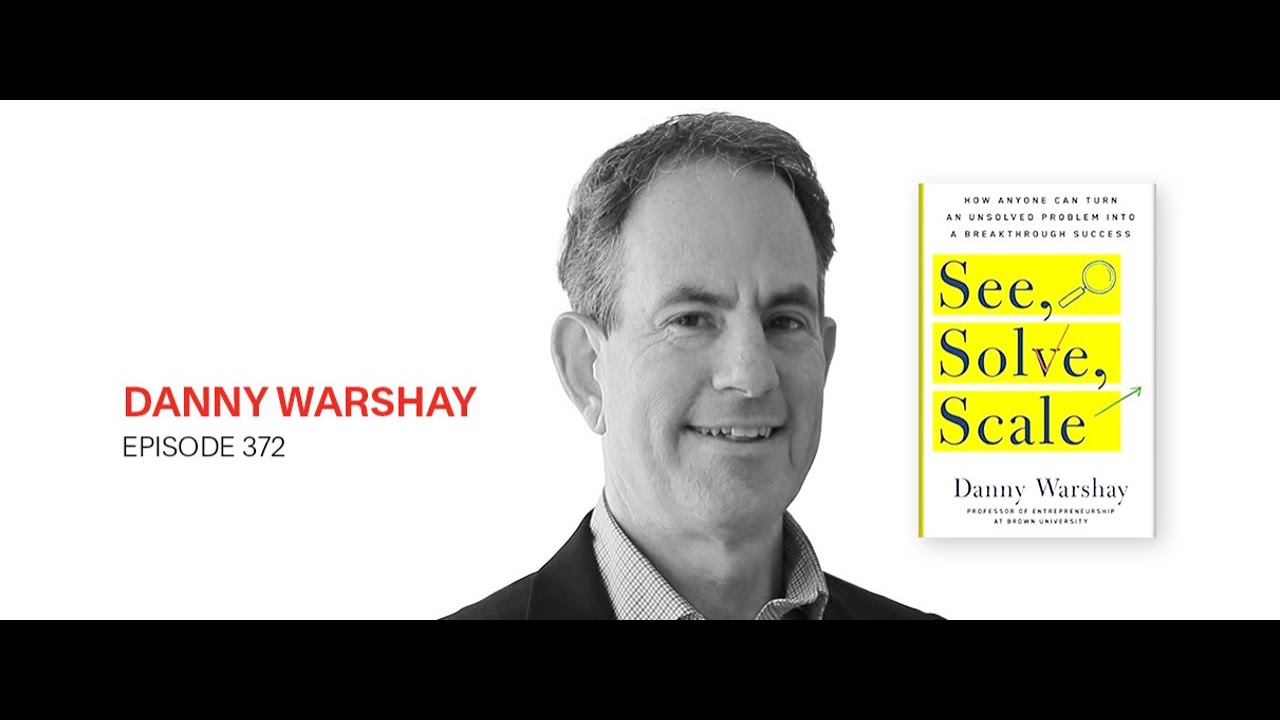

Changing Habits and Lifestyle Through the Entrepreneurial Process with Danny Warshay: PYP 315
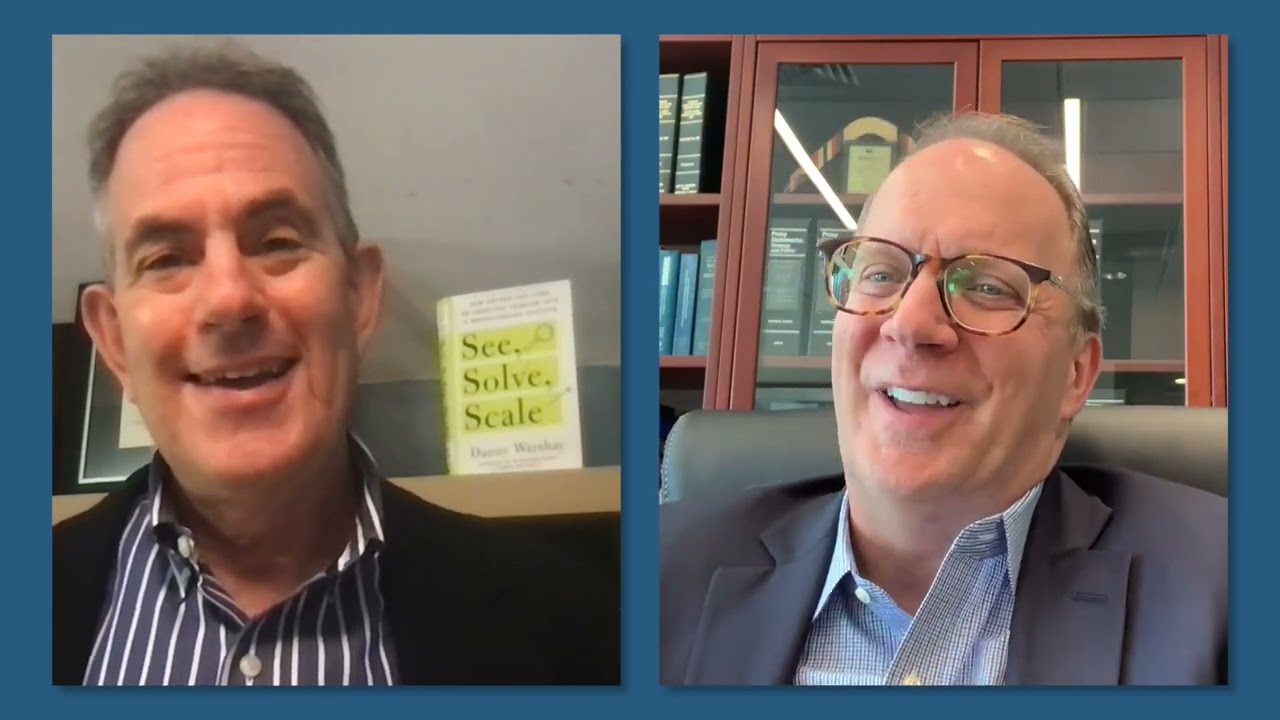
Interview with Danny Warshay, Brown University, Director of the Nelson Center for Entrepreneurship


