Fireside Chat with Danny Warshay

Danny Warshay, Executive Director of Brown University's Nelson Center for Entrepreneurship, breaks down his three-step framework: See, Solve, Scale. He argues that scarcity breeds better problem-solving than abundance, and shares why student ventures like Casper and Premama succeeded by finding "hair-on-fire" problems first, not solutions looking for problems.
Chapters
Come on in, make yourselves at home. All right. Hello and welcome, everyone. I hope everyone's having a great day, ready for an incredible conversation on entrepreneurship and so much more. My name is David Almonte, and I'm one of the co-founders of Fountainhead Rhode Island. We're incredibly excited to be providing the space for such an amazing conversation with Danny Warshay. National entrepreneurship expert, as well as a professor at Brown University. As we do before each of these conversations, I want to take a moment and provide you with a brief overview of Fountainhead Rhode Island and who we really are. Fountainhead Rhode Island is a nonprofit 501 organization located in Rhode Island, and we're proud to be celebrating our 5th year as an organization this year. The goal of our organization is to connect like-minded individuals with diverse backgrounds that share similar passion, vision, and ambition for moving Rhode Island forward. Which we're really excited to see has expanded into a community of members all over the world. In just 5 short years, our community has grown to over 1,100 individuals. In addition to the live educational events like the one here today, we also spotlight individuals and organizations in the communities doing really cool things. Over the last 5 years, we're very proud to have done over 50 spotlights since the beginning, including our most recent one with One Tough Cookie, where in addition to the spotlight that we actually did, we partnered with them as well. To drop off more than 120 care packages to kids with cancer and their caregivers at Hasbro Children's Hospital, located right here in Rhode Island. If you're not doing so already, please be sure to follow us on Facebook, LinkedIn, and Twitter @FountainheadRI, as well as visiting our website, www.fountainheadri.org. We're very active on social media if you follow us, so please feel free to take out your phone, live tweet, post on social, be sure to tag us all in it. to keep the chat going, as well as utilizing the chat function within Zoom if you have any questions or comments as we go through. Joining me today is my fellow co-founder Jason Dodier, who has a few last-minute items before we get started. Jason, all yours.
Thank you, David, and it's a pleasure to be here today and such a privilege to see how the community continues to grow and thrive. As you've heard me say over the years, a big, big thanks to our sponsors. I want to start there, the Washington Trust, and the higher. Without you, the Fountainhead community would not have been able to do the things that we do on a daily, weekly, monthly, and yearly basis. So big thanks to our sponsors for making this happen. And with that, I want to introduce somebody, somebody very special to our community, to the state of Rhode Island, and the world, is a gentleman named Danny Warshay. Danny is currently the Executive Director of the Nelson Center for Entrepreneurship at Brown University. And before I even give a little bit more clarity and background on Danny, I just want to say, you know, for me personally, and I'm sure for David as well, you know, mentors don't necessarily have all the answers, but they can help you find your own answers. And that is really one of the things at the epitome of what Danny has done over the years, having an impact with so many people. We'll talk about some of those people such as Ben Chesler, Scott Norton, Luke Sherwin, Gwen McGody, all these folks that he's taught over the years in his class. But Danny, first and foremost, you know, began his career in an entrepreneurial pursuit. You know, many people don't realize that Danny actually had a business in the early days while he was an undergraduate at Brown University as a member of Clearview. It was a software startup leadership company, and they were acquired in 1989 by Apple. And since that time, you know, Danny has co-founded and sold companies in fields ranging from advanced materials to consumer products and media. And he's been teaching since 2005 in an official capacity and leading workshops outside of the work he's doing at Brown University, both locally and around the world. Brown's Critical Review has recognized his course at the Entrepreneurial Process as the highest-rated course on campus at Brown University. In addition to all this, though, what really makes Danny tick is his family. You know, his, his wife, Dr. Deborah Herman, class of '87, 3 terrific children, avid and at times maybe a troubled Cleveland sports fan. And not to mention, Danny has 3 wonderful children. And as a tie throughout his book, the work that he has done and things that he continues to do to clear his mind in yoga and other meditational practices. So, with that, David, I'm going to turn it back over to you to begin this conversation with Danny Warshay.
Yeah, awesome job, Jason. Really appreciate that intro. Danny, first of all, welcome. Congrats on the book. Absolutely amazing. For those that don't have it, we will share the link. Just really, really big shout out to you for putting all your hard work into writing, which is really, really hard sometimes. So really appreciate you sharing your story with the world and for allowing us to be part of it. I just want to start with just saying welcome. Appreciate you being here.
Well, thank you so much, Jason and David and Fountainhead and The Hire and Washington Trust. 2 real committed sponsors of Fountainhead. I think I go back to the very beginning of Fountainhead, maybe to the very first event that was ever held. And so I feel honored to be here now, all these years later, and with— wow, what did you say? 1,100 members. Come a long way. I mean, I think you're probably living the 3 steps of the book that I've written. You saw an unmet need, a problem to solve. You solved it on a small scale, and then you are scaling it now to have big impact. As you say, not only even within the confines of little Rhodey, but all over the world, because I know there's people who are tuning in from everywhere. So thank you to all of you. I mean, it's a real pleasure to be here. And an honor to be here to talk about the book, See, Solve, Scale, and the teaching that you mentioned I've been doing at Brown and around the world.
Of course. Well, let's get started with the book itself. So I'd love for you to tell the audience about what led you to write the book. I know students are a big, big part of what you do. I'd love to hear the story about what led you to write it and then why it's important to share that CSolve scale method with the world.
Sure. If it's okay, maybe I'll even just refer back quickly to even why was I teaching? How was that a thing? Was I imagining doing that to begin with. Is that okay to tell that origin story real quickly?
Of course.
Yeah. So Jason mentioned briefly that in most of my career, I've been spending my focus on doing entrepreneurship, dating back to when I was part of that startup at Brown when I was a history major as an undergraduate. I'm a big proponent of liberal arts for just about anything. And then through my career, I've had a number of successful startups and have focused on the doing of entrepreneurship. And then a little bit out of the blue, a beloved professor of mine, who I'm sure people on Zoom right now know, Barrett Hazeltine from Brown, asked me to come to Brown and teach, and teach entrepreneurship. And 2 things there struck me as funny. One is I had never taught anything, like not even Sunday school. And I said, I think you have the wrong guy. And then I said, what do you mean teach entrepreneurship? Is that even possible? And we talked about it a little bit. And before I knew it, you can't really say no to Barrett Hazeltine. I had said yes. And then I thought, oh man, what did I just agree to? And I had to think about what does it mean to teach entrepreneurship, especially at a place like Brown that didn't have a business school. I had gone to Harvard Business School. I have an MBA from Harvard. I worked a little bit in a big company, Procter& Gamble, aside from all the entrepreneurial things I had done. And I took a little while to figure that out. And that's a lot of what you'll you'll see in the book is the methodology that I've been teaching for now 17 years since that consequential tap on the shoulder. But to answer your question, it's really my students. I never would have dared to think about— first of all, I never would have dared to think about teaching. That's why I prefaced the answer with that. But also, I never would have thought about writing a book unless it was up to my students who kept tapping me on the shoulder and saying, hey, Professor Warshay, your class had real significant meaning for me. I'm doing all sorts of interesting things in my life, and I think a lot of that is due to the course I took with you. You're not doing the 3rd step of the process. You're not doing this. You're not— see if my camera can see this. There it is. You're not scaling. And I said, ooh, how interesting for the students to become the teacher. What do you think I should do? And they said, you should write a book. And this was about 4 years ago, and I thought, I don't really know how to write a book, but I'll just start. And I did it. I wrote a manuscript. I did it all backwards, by the way. I wrote a manuscript first. It attracted an agent who was really excited about it. The agent helped me reverse engineer a proposal and shop it to all the big publishing companies. There was a lot of interest. There was an auction. St. Martin's Press won the US rights, and then it's also being published in the UK with Little Brown, and then a few other places including China and Taiwan and Korea and Japan. And I, again, I never would have imagined that except for my students who said, you need to do the 3rd step of what you've been teaching us in the CSolve scale process. So it's really due to my students.
Well, Danny, you and your students have gone viral. Anybody that's following you and the book online have seen so many. It's going to make you feel so happy to see these students sharing all of the culmination of those pearls of wisdom that have helped get them where they are today. And the book is scaling rapidly. So, congratulations to you on what you've already accomplished in such a short period of time after launching the book. And obviously, from and center of our conversation today is the topic of entrepreneurship, as David mentioned. And I want to open it up to the folks that are attending in the chat. We'd love to get your feedback and maybe write in how you define entrepreneurship, right? Because one line I pull out of the book, Danny, when you walk with purpose, you collide with destiny. I love it. It's powerful. It sticks. But when you think with entrepreneurship and business being synonymous with for-profits and a solo venture versus team dynamics, you know, and the idea of traditional entrepreneurship. I mean, talk to us a little bit more about how you define entrepreneurship in simple terms. What is it? What does it mean to you?
Yeah, that's a great question. In fact, that's one of the challenges I had when Barrett-Hazeltine asked me to teach in a liberal arts environment. If it had been at my other alma mater, Harvard Business School, or a lot of wonderful places that teach entrepreneurship in a little bit more classic ways like Babson and Wharton or Stanford, MIT, All good places, but Brown didn't have a direction to point me in terms of how we should define entrepreneurship. And the way I've defined it then, and I do now, and I do in the book, and I have in all my teaching, is a structured process for solving problems. And that resonates really strongly with lots of people across a very wide range of contexts and industries and entities, big companies, nonprofits, government entities, researchers in a lab, and of course, kind of more typical tech entrepreneurs who are looking to do something along the more Silicon Valley classic approach. But when I defined it as a structured process for solving problems, I did it because I realized I was being asked to teach in the engineering school. That's where Brown put me when they asked me to be a professor. And which was a little funny to my father, who I also acknowledge in the book, because he was a PhD chemical engineer. And he laughed that I was being asked to be a professor in the engineering school. He was kind of right to laugh. But I thought, you know, how many of you on this Zoom call right now have heard the phrase entrepreneurial spirit? My bet is that many of you have. My bet is that David and Jason have. I certainly have. The problem is I have no idea what it means. Like, I travel all over the world and I hear entrepreneurial spirit, and if I ask somebody, what does it mean, they have no idea either. And I really had no idea how to teach a spirit. So I thought, it can't be a spirit, because I thought, imagine if in engineering the school were to teach people how to build a bridge and they said, you know what, Just go out there and have the bridge-building spirit. And if the bridge falls down and the cars crash down to earth, then just go out there and be persistent and have a little bit more spirit. And I thought, well, if that's the way we taught people how to build a bridge, we would lose our accreditation. Brown wouldn't have an engineering school anymore. And so I said, in bridge building, there are some fundamental principles of beginning and middle and an end, even though there's lots of variation across every kind of bridge, functionally, aesthetically, operationally. And I detected the same was true in entrepreneurship, that there were some fundamental principles we could distill into a structured process that we could teach people. And in that way, I really— and even though there's lots of room for variation, just like I said, in bridge building across lots of different kinds of process related to solving problems, every startup does follow certain principles. And the 3 principles I extracted were these 3 in the title of the book: see, solve, and scale. See is you better start with the problem. Otherwise, you're at risk for being what I call a solution in search of a problem. And then I spent a lot of time in the book, I spent a lot of time in my teaching, I spent a lot of time in the workshops I've done, around the world, in big companies especially, to teach a methodology that I call bottom-up research to help people find the problem that they're going to solve. The second step is a value proposition, solve on a small scale first iteratively, with a lot of tolerance for failure and not getting it perfect the first time. And then the third step is to scale, is to have big impact over the long term. And so Those were the 3 steps that I detected 17 years ago, and that have been a staple of all my teaching in any place around the world. And that my students urged me to embed in this book, See, Solve, Scale.
I love that. And you actually touched on the next question that I had too. And I know that when the 3 of us caught up about a week ago, we had this conversation because I was taking the one side on the mindset. about how important the mindset is, and you had reminded us that mindset without strategy is somewhat meaningless, and to your, to your bridge example. So I appreciate the context there with the bridge example. Thank you for doing that. As a follow-up, I just, I wanted to share a short quote, and Danny, I'm sure you're like us, love to read. We love our quotes, and it's by Shunro Suzuki, and it says, in the beginner's mind, there are many possibilities. but in the expert's mind, there are few. And so I think a lot of us, we are all wide open to possibilities in the beginning, and then something happens along the way and we kind of lose sight of that. So how can we maintain a beginner's mindset long after the start?
Yeah, it's a really good question. I think that relates to 2 principles that I teach that I think are a bedrock of the way that you have to think about entrepreneurship. And it's, it's not always easy on either side of the extremes. If you're just getting started, if you're a beginner, you may feel at risk because you lack resources. And if you are on the opposite side, if you're at a big company like you guys have had experience working in, or I have at Procter& Gamble, you may feel a little bit too confident because you have lots of resources. And the 2 polar opposites that I teach One is the benefits of scarce resources, and the opposite is the burden of abundant resources. And both of those may sound a little bit funny, especially if you're on the opposite side. But the benefit of scarce resources is related to this Suzuki quote, which is that if you're a beginner, you actually are not burdened by seeing a traditional pathway. So I'll give you an example. 2 of my students, Luke Sherwin and Neil Parikh, are the founders of Casper Mattress Company. I suspect some of our participants today have a Casper mattress. Well, in the very early days of even thinking about this, Neil and Luke would like to say they knew nothing about the mattress business, the, the manufacturing, the distribution, the branding, the delivery, none of that. The only thing they knew is that you sleep on a mattress. That's about as much as they knew. They really had this Suzuki quote. They had a beginner's mind. But as a result, they were able to see all the problems that people faced when they walked into a showroom and were told you have to lie on a mattress and try it out in the middle of everybody looking at you and having a salesperson breathe down your neck. And then you had to make a commitment to a $1,000 product in the span of just a few minutes and have it delivered to your house in an awkward way. And then you've committed to it, you can't return it. And they said, this is crazy. Why would anybody conduct a process like this? And they completely flipped the whole process on its head. They had that beginner's mind. And at the time I published the book, I wrote the book, it was doing $400 million in sales and it was a public company. And they were outpacing all the traditional companies who had the opposite. They had the burden of abundant resources. I mean, if I asked you from scratch, who do you think would be better suited to actually innovate and to create a whole new approach? You might say, well, the established companies that have all the established resources and distribution channels and branding. And yet it was somebody like Luke and Neal who had none of that. And I talk a lot about different other examples in the book. lots of my students who initially would have thought they were at a disadvantage because they didn't have money, they didn't have training, they didn't have a well-oiled distribution channel, they didn't know how they were going to manufacture a product. And actually, it's they who are better suited because of the benefits of scarce resources. And it's the incumbent established companies that they competed against, who were in a position they thought to do better, but actually they were in a position to do worse because they were burdened and biased and overconfident by all their resources.
Yeah, it's an incredible, incredible example. And I always laugh when I think of the beginner's mindset because it reminds me of my 7 and 5-year-old. If you ever want to see a beginner's mindset, look at children because everything is possible to them. And they ask—
I agree. You're absolutely right. And, you know, they're not necessarily 3 and 5-year-olds, but I, but I agree with you, with 3 children of my own. Often it's children who can help you see things that you didn't know. But that's true, too, of my 18 to 22-year-olds at Brown, who in many cases have absolutely no prior experience. They're the people I really wrote this book for. I would say that the people who have in many cases felt ignored, and neglected, in some cases discriminated against because of their race or their gender. You know, the statistics about venture-backed startups are pathetic. Only 2%, 2.3% of venture-backed startups are led by women. Only 1.5% are led by Latinx founders, and only 1% by Black founders. And so there's a lot of discrimination. and also a lot of neglect and ignoring of lots of people who are very capable of identifying and solving problems and scaling those solutions. And there's really good examples in the book of people who, before they took my class, never would have imagined themselves as capable of doing that. And, you know, Emma Butler of a clothing company called Intimately, she was a visual arts and French concentrator. She tells the story, I had her write her own story in the book. She tells it so much better than I would, of her shaking, literally so nervous walking into the class, 'cause she thought, I'm not really the classic entrepreneur. And she did a phenomenal job in the class. She continued through the Nelson Center, and she now has a really successful adaptive clothing company that's meant for women who, from disease and other reasons, have different shaped bodies and need different shaped clothing. And so the entrepreneurs in the book who I'm most proud of, and who I think also help demonstrate to a lot of others, are the ones who demonstrate that you don't have to have abundant resources. In fact, the scarcity of their resources, especially their own expertise, can work very well in their favor, along the lines of the Suzuki quote that you mentioned, David.
Yeah, I was going to add one more thing, Jason, before you go on. I was thinking about examples in the book and how we were talking about mindset a lot, and for our community we've been talking about that a lot. And so there's an example in there that touched on conditional thinking that I thought was just really incredible about how we have to be careful about how we preface certain things with our family, our friends, our staff. And so in the book, there's the example of the rubber band example, and it's basically a group of participants that perform a task with a pencil. in which they made mistakes, right? And so the first group of students, they had the rubber band. This is a rubber band. And so 3% actually used that rubber band as an eraser, whereas the other group said that this could be a rubber band. And so 40% of that group actually realized that it could be a rubber band, it could also be an eraser. So just to be really, really careful about how we word things as a leader and an entrepreneur to our people.
That's really— I love that example. It was an experiment conducted by Ellen Langer and Alison Piper at Harvard, 2 psychology professors. And the only thing they did that was different in those 2 cohorts was change the wording, as you mentioned. This is a rubber band, or this could be a rubber band. And over 13 times the number of people in this— in the second group that were told this could be a rubber band recognized that it was also possible for it to be an eraser. That is called breaking your mental fixedness. We all experience mental fixedness. We're all human. In fact, there are 11 mistakes, classic mistakes that entrepreneurs make that I identify in the book that are a function of cognitive bias. Bias that we're all human and all have therefore, but it's important to recognize that and to overcome that. So that's one of the mindset approaches that I do think is germane and really important. while you're undertaking this process is to realize where we have bias, where we are seeing things in a certain way because we've been told they should go that way, or they, you know, of course you have to go to a showroom to buy a mattress. Of course, women's clothing looks a certain way. Of course, it's impossible for Palestinian and Israeli teenagers to sing together. Of course, it's impossible for prenatal vitamins to come in a form that won't make you constipated and won't make you, you know, exacerbate the nausea that women feel. All of those are things that entrepreneurs that I focus on in the book and who've been my students overcame because they broke their mental fixedness. They shed some of the bias that they were trained to believe was true. And I do think that is one of the mindsets that's really most important. And there's lots of examples of how you can do it, not just cautioning you against these 11 mistakes that people classically make in entrepreneurship, but training you how you can overcome them so you don't make those classic mistakes again.
And you talk a little bit about bias. That's actually a great lead-in to where we want to go as we get more to the C part of the book. There's obviously a quote that you use in the book. It's pretty well known, especially in business circles, from Henry Ford. If I had asked people what they wanted, they would have said faster horses. Now, you alluded a little bit to top-down versus essentially looking at different, you know, a bottom-up research methodology. This is highlighted in the book. David and I have both gone through different iterations of this over time, as I'm sure many of the folks that have joined the call and are in other business school programs. Can you share a little bit more, Danny, about the advantages to the bottom-up research approach, especially as it relates to not only strong and enduring needs, but a concept from our mutual friend, Thorens Barkmann from the Slater Fund, when he says the hair-on-fire needs? And I want to preface that because it's a really potent point. So I'd like to get your perspective a little bit more on this piece of the book.
Sure.
I love that question because it's so much staple of what I'm asked to teach about in workshops all over the world. Typically, when I travel all over the place and I ask somebody, how are you thinking about finding an opportunity to focus on to begin with? I hear a lot about what I would call top-down research, which is secondary research that you could find— I remember in my day in these big buildings on campus called libraries. There aren't much attention to— as much attention to libraries, but it's basically secondhand research. How big a market is, how fast it's growing, what the segmentation looks like, what are some of the competitors, maybe what some of the existing products look like. And the problem is that that's usually the only thing that somebody will do. And again, I call that top-down research. It may be necessary, but it's for sure not sufficient. And it's actually not very useful for finding a new opportunity. Typically, you're just going to find variations of what already exists. And so I teach what's called bottom-up research. It's an anthropological and empathetic approach to observing and listening to people firsthand, directly in their own habitats, doing what they normally do, not asking them to change their behavior. You may not even say anything, But for sure, you're going to do the listening more than 80% of the time. And I tell several stories in the book about how this approach has been really instrumental in helping people to observe and listen to the point where they can find a problem that they want to solve. There's a company still in Rhode Island, happy to say, founded by some of my students a few years ago called Premama. They're the example I mentioned just previous about discovering that women hate taking prenatal vitamins. They observed women going into the aisle at Whole Foods down on Waterman Street, and they noticed women taking the bottles of prenatal vitamins off the shelf looked very unhappy. And they discovered by asking a few open-ended questions, just listening really well, that yeah, women hate them. They're big, they, they're hard to swallow, they taste terrible. They make them constipated. They exacerbate their nausea. All the women online now, I know, are identifying with this. And they reinvented the whole approach to prenatal vitamins. They've now raised over $10 million. Again, they're still in Rhode Island. They won the Rhode Island business competition a number of years ago. And that wouldn't have happened without their bottom-up research of listening and observing anthropologically, empathetically, to the way people just naturally behave. It is the hallmark, it is the C step of CSolve Scale that enables people to do this. And this is a process that's useful no matter what context people are in. I know people are with us today from big companies and maybe working for the government or in a hospital. Any environment you're in, you can use the C step of CSolve Scale which I detail in the book, and I guide you through in order to be able to find a problem that you may not have seen otherwise if you were just doing some top-down research. So I appreciate that question, because it is such a standard part of my approach to entrepreneurship. The thing you want to avoid that I alluded to before is being rushing to the second step, the solve step, before you really know what problem you're addressing. And in that stage, You might be at risk of being a solution in search of a problem. And if you are, you're just lucky if you happen to stumble on a problem when you've already established this, the solution. So start with the problem and start by doing the kind of bottom-up research technique that I share in the book, and you'll be in much better position.
Yeah, Danny, for the next question, it's really focused on thinking big. And how to actually, you know, what that even means. So I know for you and for the audience in the book, so for your entrepreneurship class, you ask them to create something that's going to generate $100+ million revenue in 18 months, which sounds daunting, I am sure, to a lot of people. And a lot of— I'm sure a lot of students struggle with that. So can you talk about where that concept came from, why it's so important, and maybe some of the struggles that students see when they're approached with that?
Sure. I'm the first to say that my teaching has evolved, at least incrementally, if not, you know, more over time. And that's good, because remember, the solve process is iterative. And if you're stuck on one approach, then you're probably not getting it right. When I first taught at Brown in 2005-06, I did ask students to develop their own business plan that they would pitch to venture capitalists. And I got a lot of companies of the scale of what you might call a café on Thayer Street, not really thinking of the scale that I was imagining. And I didn't fault my students. I mean, for many, that was a big opportunity, right? I mean, whatever that scale is, it's bigger than anything they'd ever done. And so I somewhat arbitrarily, you're right, I said, no, no, no, I want you credibly, not just arbitrarily, to develop a venture that has the potential of doing over $100 million. And I want them to do that because I want them to be focusing on— this relates also to the hair-on-fire need that Jason mentioned before that I got from Thorn. I want students to be focused on a need that has 2 significant qualities: it's strong, Meaning that it's meaningful, it has consequence, and that it's enduring. It's not just a faddish need. It's something that's going to be around potentially for a long time. If you have the choice, why not do that? And again, as Thorne would say, I'd like to invest in something that's solving a hair-on-fire need, because why not? It doesn't mean that you can't do something that's a weak need or a whimsical need or even a want, not a need. But all things being equal. And so in order to get to $100 million, that meant you probably are going to need to focus on something that's a strong need and an enduring need. And that worked. I got— I mean, the Premama opportunity that came out of my class, or Scott Norton, who was one of my students and then my TA and went on to start Sir Kensington's with Mark Ramadan, another Brown student, and sold it to Unilever for $140 million. You mentioned earlier Ben Chesler and Imperfect Foods. At the time I wrote the book, just a couple years ago, Imperfect Foods had raised over $200 million in venture capital. It was doing $250 million in sales. It had 100— I'm sorry, 1,500 employees all over the country in 43 states. And it had already salvaged and repurposed and resold over 100 million pounds of food that would have gotten discarded. These are students who are thinking big. And thinking big is counterintuitive. Again, it's one of these biases we have that— I mean, why did students default to having a cafe on Thayer Street? Because our bias is if we think about something as a small, tidy little venture, it may not get noticed. be able to wrap our arms around it and protect it. But actually, the data I share in the book, and I share a lot of research in the book, because I don't want this just to be the Danny thinking, the data show that the most successful ventures are the ones that early think big and are challenging the status quo to shift what might be the standard ways of doing things. And we can talk, if you'd like, in a follow-up about a technique that I use called landscape exercise that I got from a significant mentor of mine, an innovator, an innovation leader named Bob Johnston from Strategy Innovation Group, who always helps me to teach. And it's a methodology that I outline in the book too, because it's not easy to think big. It's, it's again, one of those biases, one of our cognitive limitations that keep us from actually achieving a high-scale entrepreneurship venture, that we're trained more instinctively to think small. And so it takes some real training to think big. And I do that in my classes, in my workshops, and now in this book, C-Solve Scale.
And Danny, on the concept of thinking, which by the way, depending on what you're thinking about, could be a monumental or Herculean task at times. I know David and I have gone through that as we brainstorm over the years, different things for Fountainhead, but diversity, the art of thinking independently, together. We talk about the team game. You've mentioned it multiple times on this call and in the book. One of the concepts is essentially around diversity, right? It's a big part of our community here and surrounding yourself with people who think differently. And one of the benefits of that too is identifying blind spots and false confidence and reimagining how things could be done and building that toolkit of an identity. You know, looking at, you're giving us all these the knowledge and tools and skills to hone that identity, like a Sir Kensington's as an example, which you just mentioned, or Runa, which is a great case study in the book with what the Runa team went through. Talk to us a little bit more about this perspective about entrepreneurship as a team game and what you're seeing around diversity, equity, inclusion, and results there in these entrepreneurial pursuits and teams.
I'm so grateful for the question. It is a major part of the focus of the Nelson Center that's depicted behind me, to engage and empower many students who, again, may never have thought of themselves as being able to be an entrepreneur because they were neglected or ignored, or in cases, certain circumstances, discriminated against. So it's a big part of the mission of the book, just as it's been of my teaching, to engage and empower and inspire many people all over the world who never would have thought of themselves as entrepreneurs. There's so many topics to cover related to this concept of teams and diversity and inclusion. I'll try to scratch the surface, and I hope people will be inclined to read the book because there's a lot more there, not only in terms of why it matters, but how to do it, because it's not always easy to do it. For one, only 16% of ventures are started by solo founders. And for good reason, because solo ventures do less well than team ventures. So to begin with, founding a team versus founding a venture on your own is important. At the same time, though, this is one of those areas where there's cognitive bias, because over— despite what I just said, and despite the fact that diverse teams perform better than homogeneous teams in the fields of entrepreneurship in any context. By the way, that's true in any area in general, not just in entrepreneurship. But despite that fact, over 50% of venture teams are founded by family and friends who know each other. They're a function of our strong ties people who are close within our networks. Those tend to be the default for the kinds of teams that get founded. And those perform less well than if we were to rely on what I would call our weak ties, people who aren't immediate connections in our LinkedIn or Facebook networks. And so to begin with, that's a warning, which is that it's better to found a team rather than start as a solo. It's better to found a diverse team because diverse teams do better than homogeneous teams. But the other is that it's not enough just to have a diverse team. And by the way, again, I talk at some length and detail about more, more of that research that illustrates that. And also, how do you reach out to people beyond your standard networks, your family, or your friends to do this? But it's not only diversity. The other companion word that we hear a lot these days, for good reason, is inclusion. You know, the difference is the adage people say is diversity is being invited to the dance. Inclusion is being asked to dance. And inclusion means that you are asked to provide and contribute part of your authentic self, who you bring to the table. And by the way, diversity, I mean in all ways. Yes, I mean gender diversity. I mean racial diversity. I also mean personality diversity. I talk a lot about a wonderful book called Quiet by Susan Cain about the impact that introverts make in working on teams, far more than they're often asked to. In fact, introverts are often neglected on teams, and I share a technique called nominal group technique that helps you to have a combination of group activity as well as independent activity. I'm going to share— if it's OK, I'm just going to share real quickly a graphic that I think illustrates a point that is so critical about— can people see this?
I certainly can.
OK, so this is from Anne Morris and Frances Frey at Harvard Business School. And it's a pretty sobering illustration of why it's critical to have not just diversity, but also inclusion. Here you can imagine a diverse team that is only leveraging where people overlap, what they have in common. And as a result, they're able to leverage only a small part of what all these diverse people bring to the table. Diversity in all these ways I mentioned. gender, race, personality, as well as expertise, experience, what they've done previously. This is the real sobering part. Imagine a homogeneous team. This is actually what they are bringing to the table that outweighs what the diverse team brings if you're only looking at the part of the Venn diagram where people overlap. What you really want is an inclusive team here. where you see everybody invited to be their authentic self, not just where people overlap, but in all aspects of what they bring to the table through their gender diversity, racial diversity, personality diversity, experience diversity, ethnic diversity, national, international diversity. If you as an inclusive and diverse team allow people to be their authentic selves and bring their full selves to the table, this team will far outperform a homogeneous team. If all you do is allow people to bring just the part to the table where they overlap, then unfortunately the homogeneous team is going to outperform the diverse and uninclusive team. I think to me, when I saw that and I asked permission to use that graphic, it did better for me to understand the benefit of inclusion and diversity than anything I'd ever seen before. And so there's a lot of guidance in the book, See, Solve, Scale, especially in the scale part when you're starting to scale up the members on your team. And remember, this isn't just for a random software startup. It's also for people in big organizations, in governments, in universities, in nonprofits, in the military, in the arts. All of us can learn about the benefits of not just diversity, but of inclusion as well. And, and when we do that, I'm looking for those numbers that I mentioned before, how pathetic among venture-backed startups, women, Latinx, and Black founders, for those numbers to go significantly higher, because it benefits all of us to include members from diverse backgrounds onto our teams. Those teams will perform better than any of the— as long as they're invited to be included and not just checking a diversity box.
And Danny, I think it's also imperative to highlight to what you just said, and for the group, I mean, the absence of conflict is not harmony, right? It's almost apathetic because you want to drive diversity of thought, right, at all areas of the process, because this, you know, this could also prevent being trapped in these overconfidence cycles and these teams that have this level of task conflict and diversity will tend to make smarter choices and drive more creativity, which is at the heart of a lot of these projects that have evolved.
Well, the phrase that I use in the book that I borrow from a professor of mine, again, at Harvard Business School, Linda Hill, is creative abrasion. And it's the idea that it's good to abrade. It's good to come at a problem from different directions, from Different experience levels, different ethnicities, different nationalities, maybe different races, different genders, different personality types have different approaches to even understanding the problem, let alone solving it. And so I agree with you, often the approach that works best is— and that's again where it matters that people are invited to be their authentic self. If they're only invited to essentially mimic what other people at the table are doing, you're not going to even find the problem in the see stage, let alone solve it in the solve stage.
And Danny, sometimes leading into the next topic, abrasion left on its own merits, that is one thing that could certainly lead to failure, but failure in the sense of maybe not coming out of it. When we talk about entrepreneurship, you hear fail fast, fail cheap, or fail your way to success. And there's— look, there's a crack in everything. And that's how ultimately light gets in. And when you look at the experiences you've had, how valuable is failure in building success and what can we learn from our failures? And I want to highlight one of my favorite points of the book or something that really hit me that you don't even think about that made me even feel good about some of the ventures I've pursued is the Bessemer Ventures example. And I'll let you touch on it. I don't want to steal the thunder because a lot of people on this call may not even realize what Bessemer passed up on because they are one of the oldest VC firms, highly prestigious. Maybe talk about this a little bit for the listeners.
It is one of the most important parts of entrepreneurship. And you're right, it runs the risk of sounding cliché. Fail fast, fail cheap. Oh, that sounds wonderful, but who wants to fail? The truth is failure means different things in different cultures. When I'm in China teaching, I almost can't say the word failure because people shudder. They don't want to imagine themselves failing because in certain cultures it does feel like it's hard to recover. In other cultures, like when I'm in Israel or when I'm in Silicon Valley, it's recognized as a staple, as part of the process inevitably. If you're going to iterate on solving a problem in that second stage, especially the solve stage, you're inevitably not going to get it right the first time. It's again the benefits of scarce resources. If you don't have much invested in one particular iteration, then you're willing to, quote, fail because there's not a huge amount to lose. That's the fail cheap part of fail fast, fail cheap. It's also the big mistake that lots of well-established organizations make, whether you're an established mattress manufacturer, or a newspaper company, as I illustrate in the book through Knight Ridder, or a big government. You know, the US government, the embassy in Bahrain asked me to go to Bahrain because Bahrain's running out of oil, and they need another approach. And they didn't know how to iterate or to fail fast. The concept of failure was completely foreign. There's, again, a researcher who I know well, Teresa Amabile, another professor from Harvard Business School who I'm indebted to, whose research is in the book. I also share adages about X, Google X, that rewards its participants and its employees for failing, because it's recognized that in order to think big and have impact on those strong and enduring needs, you're just not going to get it right the first time. The key is, and this is maybe one of those mindsets that David was asking me before, And that we were talking about even before the call started about the 2 monks that, you know, weren't— one monk was able to set aside what he was angry about and the other monk was not. I also even asked my yoga teacher, a woman from Rhode Island who's here in Rhode Island teaching yoga, Shawna Green, a beloved teacher of mine, to share an approach that meditation and yoga can have called aparigraha, which is not clinging, not coveting, to have the ability to leave something behind that you might have been angry or upset about, non-attachment. And so that is a mindset that I think is worth learning and adopting. Big companies should do this, because imagine if newspaper companies had been able to be unattached to their current newspaper model, they might have been CNET, or Yahoo, or Google, instead of these completely new companies who came from nowhere and had the benefits of scarce resources. So failure is an extremely important part of the trajectory of leading to success. The key, though, is to know which part of the 3 steps— see, solve, scale— to fail in. You want to avoid failing when you've layered on a lot of resources, You want to fail when you're not sure of what the solution is, where you can iterate inexpensively. I always say, you know, it's like if you're building a house, you don't want to identify a fail element once you've built it, once you've put in the foundation, once you've put up the structure. You want to do it at the stage where it's just a blueprint, where it's a plan, where it's in the making, and then you can move things around and adjust them. And I use that metaphor in some of the teaching in the classroom and also in the book. But I appreciate the question because it's such a critical part of the process. The one last thing I'll say, though, is I share a really wonderful piece of research where some researchers measured who was more credible in front of an investor doing a pitch. Somebody who stood up and just talked about their successes glowingly, you know, I graduated from X school, I have had all these successes in my startup career, or one who had some of those same successes, but also was more transparent about their failures. And it turns out that by far, the groups that the investors would much rather invest in were ones who were balanced. Sure, shared some of their successes, but were honest and transparent about what their failures were, Because they were human. And failure is just about being human. We're all going to be human in that way sometime in our life. And so if you pretend you're not, if you pretend you're going to be all successful all the time, you're much less likely to be credible. And so a lot of what's in this book, I think, is about helping us to overcome those biases that we think we need to perform, like being successful all the time, and to realize actually there's a lot of benefit from admitting our failures and being transparent about them.
Yeah, I love that, Danny. One of my favorite quotes when it comes to failure is, show me someone who has never failed and I'll show you someone who has never tried anything new. Albert Einstein. I love that quote. And I actually started doing— when I pick my daughters up from school, I actually ask them, I say, what did you fail at today? It's part of the conversation that we have. And the first time was just funny because they're like, Dad, we're not supposed to, like, that's not a good thing. And so we got into the conversation about how—
And if you think about a place like Brown these days, there's not a lot of failure there. And I think that's too bad. It's a difficult thing sometimes to get our Brown students who've never failed at anything to trust what I just said, that an inherent part of entrepreneurship is failure. You know, I wish that part of the application to get into Brown weren't, tell us about all your successes, but just like you ask your, your children every day when you pick them up from school, tell us about some of your failures, because that will tell you much more about the character of someone than just telling them— telling somebody about your successes.
And it's important to stay humble, right? Because it's never— what you've come to the table with is never going to be what your vision is initially. These things change over time and there's a constant evolution. I guess, you know, one more I have on my side and I'm going to turn it over to David to round us out and we'll open up some questions. This is a big one, Danny, right? Because it's an area that you see it all the time. If you do this wrong, it can really come back in a multitude of fashions. And that is when you require capital, right? And looking at bringing on investors at different stages, predominantly when you see Pre-seed, seed, I've heard super seed, and then obviously Series A and so on. You talk a lot about this in the book. You really do a nice job of articulating this in a very easy manner. But for this group and those that haven't had the opportunity to read the book yet or are just maybe starting out in their entrepreneurial pursuit, what are some tips to look for in an investor and maybe red flags to be aware of, knowing full well that money is time? I want to hammer that point because money is time and it can really run the gamut in a multitude of ways. Danny, would appreciate if you could shed some light on this question.
I do speak about this, write about this at length in the book, and happy to at least scratch the surface in the couple of minutes we have. First of all, it's really important, and I tell some stories about this in the book, to consider the investors who you are inviting in to be part of your team. And just like you would scrutinize any team member and look for diversity and inclusion among team members, as I said before, you shouldn't be thinking any differently among investors who will be on your team. They will be on your board. They will be asking you to do things. You'll be engaging them. And ideally, they will be a value-added investor, somebody who's contributing much more than just the check they're writing. I talk at length about what does that mean and what kind of value should you be looking for. But to begin with, I think it's remember that they're going to be doing a lot of scrutiny on who you are. You ought to be scrutinizing who they are as well. And again, I tell a couple of stories in the book about where people had some doubts about whether they were going to be able to work well with them, but they felt pressured to take the money. And I said, no, no, it's really important. If you're not comfortable at the stage where you're sort of courting each other, what's it going to be like when you have actually engaged with each other. And so I think it's really important to think about investors just like any others. You should be doing diligence on them, especially with companies that didn't do so well in their portfolio, not just ones that they advertise on their website as big successes. What is it like when they experience failure? Are they going to be there to support you? Are they going to run away and hide? So there's a lot of, again, details in the book that I share about that stage. Another is just the idea in general about should you be raising money and at what stage. This is again where the see, solve, scale divisions are really important. All those times, all those stages that you just mentioned, pre-seed, seed, super seed, Series A, Series B. Sometimes it's just not the right time to be raising money, and you don't want to end up having the burden of abundant resources. If you raise too much money too soon, you will be burdened by abundant resources, and you will be limited in terms of how well you can tolerate failure. So make sure you're raising it at the right time and from the right people. This is true, by the way, of all sorts of contexts. I talk about this for researchers who are raising money through the NIH or other government agencies. I talk about this for nonprofits. Who are raising money in a different way. It's not only the classic venture capital or angel investors that you've alluded to, but it's for any context in which people are solving problems. I do think ultimately you have to also consider this dilemma that Noam Wasserman wrote about in a book called The Founder's Dilemma that I quote pretty significantly in the book, which is you will undoubtedly have to give up some control. over the entity that you created. And if you're going to bring in other investors, and that's true again, if you're raising money for research from the NIH, there's certain control that you're going to have to give up, let alone if you're raising venture capital. And you have to be comfortable doing that. You know, as Noam Wasserman would say, do you want to be rich or do you want to be a queen or a king, meaning like in control? And I'm not here to tell you which is right. But often you have to make that decision, and not making that decision and thinking you can have both often can result in some tension that's difficult to, to manage.
Yeah, and Danny, for the last question, I'm actually going to give the power to the audience. I don't know if there's a 30-second, 1-minute response to this, but thank you for— Jesse, you win the question award for asking one, so thank you. How has the process of entrepreneurship changed with the permeation of technology? And they mentioned, you know, the internet promotes access to both information and misinformation. Any advice towards qualifying business ideas in today's environment?
Yeah, I like the idea of qualifying because, again, I think the biggest mistake I've seen is what I alluded to before, is the idea of being a solution in search of a problem. It's so much easier to formulate a, quote, solution, but it's much harder in certain circumstances to qualify them as actually addressing the problem in the first place. And so I would rely on that bedrock first step of see, especially among technology investors. I say that in the book. I say that in every interview. I've been on lots of podcasts and NPR and the media and recently since the launch. And the thing that I find most people resonating to, understanding, and I hope that means they're going to implement, and I hope that's true in the form of this question too, is do the first step really well. I quote Albert Einstein in the section of the book too, not just in the part that you alluded to before, where he says, if I had an hour to solve a problem and my life depended on it, I would take the first 55 minutes defining what the problem is. Because once I really understand the problem, then I can in 5 minutes solve it. And that's the same approach that I take with the emphasis on bottom-up research. And so I hope that's a reasonable answer. I think it approach— it relies— it relates to every kind of context, especially, Jesse, as you're asking, in the context of technology, because I see technologists fall prey to being a solution in search of a problem as much as anybody. I hope that's a good quick answer. Again, some of this is quick because we're limited to an hour, but at the risk of sounding too self-promoting, I do think that's the reason my students asked me to write this book. Because they said a lot more people than just we need to have access to all of this approach. And so CSolve Scale is definitely intended to do that. And it, by the way, it followed its own methodology. I did do bottom-up research, I solved it on a small scale. And now the book is designed to to scale it even further. And as I mentioned to Jason, I narrated the audio version. So if you're willing to put up with 12 hours of Danny Warshay, it feels a little bit even more like the teaching that you might not have had access to at Brown or Yale or Tel Aviv or anywhere else around the world.
And it's refreshing, Danny, when you get to listen to a story from the voice of the individual that actually wrote it, right? And Service to others is the rent you pay for your room here on earth, and you've certainly been doing it. You've been doing it for a long time, and this book is just the outputs of a lot of that. So on behalf of David, myself, our entire Fountainhead RI community, we want to thank you for carving out this slice of time, and thank you for all the support that you personally given our organization. It's hard to believe it's been so many years now to see how things have evolved. So, so, Danny, Much appreciated to all you do. And hopefully, I'm going to tease this in a minute, our upcoming event, and I think it's right in your wheelhouse. But I want to thank again our sponsors, Washington Trust and The Hire, for all that they do. And we've got off to a great start this year, and a lot of it's thanks to their continual support. And I just want to tease, as many of you know, we are back in the process of doing some in-person sessions. So on May 31st, I'm really proud to share we have a self-care event announcement. The event is titled Putting Me First: An Inside Look at Self-Care for the Everyday Professional. In an effort to really streamline these events, you know, we want to get it out early, give people opportunity to register. And Danny, the core ambition of this event is to understand how to further embrace well-being, cultivate resilience regardless of the stressful environments that many of us are seeing on a daily basis today. And our panel of experts and thought leaders are going to hone in on tools and wellness mechanisms that you'll be able to embrace today, providing more than momentary present but altering experiences running the gamut of a variety of different things. The event will start at 5:30 sharp with some networking. We'll go into the panel, and then after that, as usual, networking and the optional self-care experience. So again, big thanks to Danny Warshay for your time. Get the book, See, Solve, Scale, or listen to the book if you want to hear more of Danny's voice. And we will be posting this live on our YouTube page. So those of you who want to watch it again, share it, and scale it amongst your networks, feel free to do so. Danny Warshay, thank you again for your time.
My pleasure, Jason and David and Fountainhead. Really a pleasure to be with you today. Thanks for all you're doing for Rhode Island.
Thanks, Danny. Congrats.
Thank you, Danny.
More from Danny


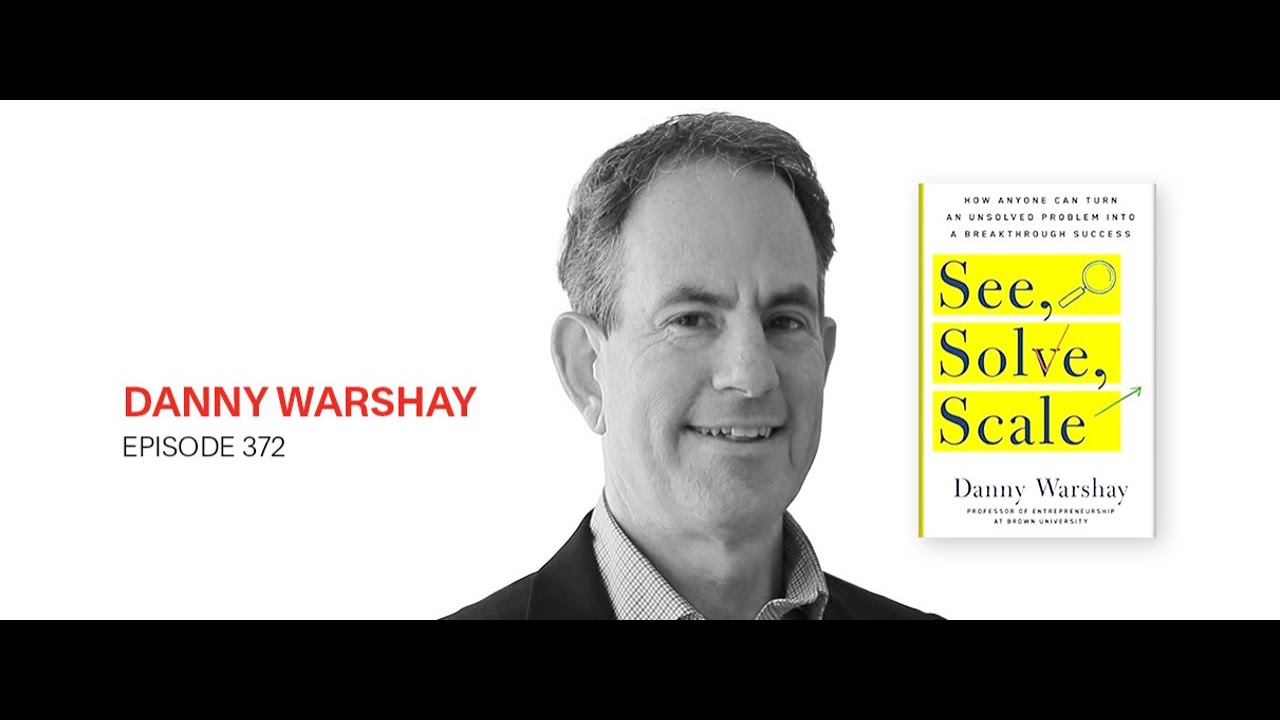

Changing Habits and Lifestyle Through the Entrepreneurial Process with Danny Warshay: PYP 315
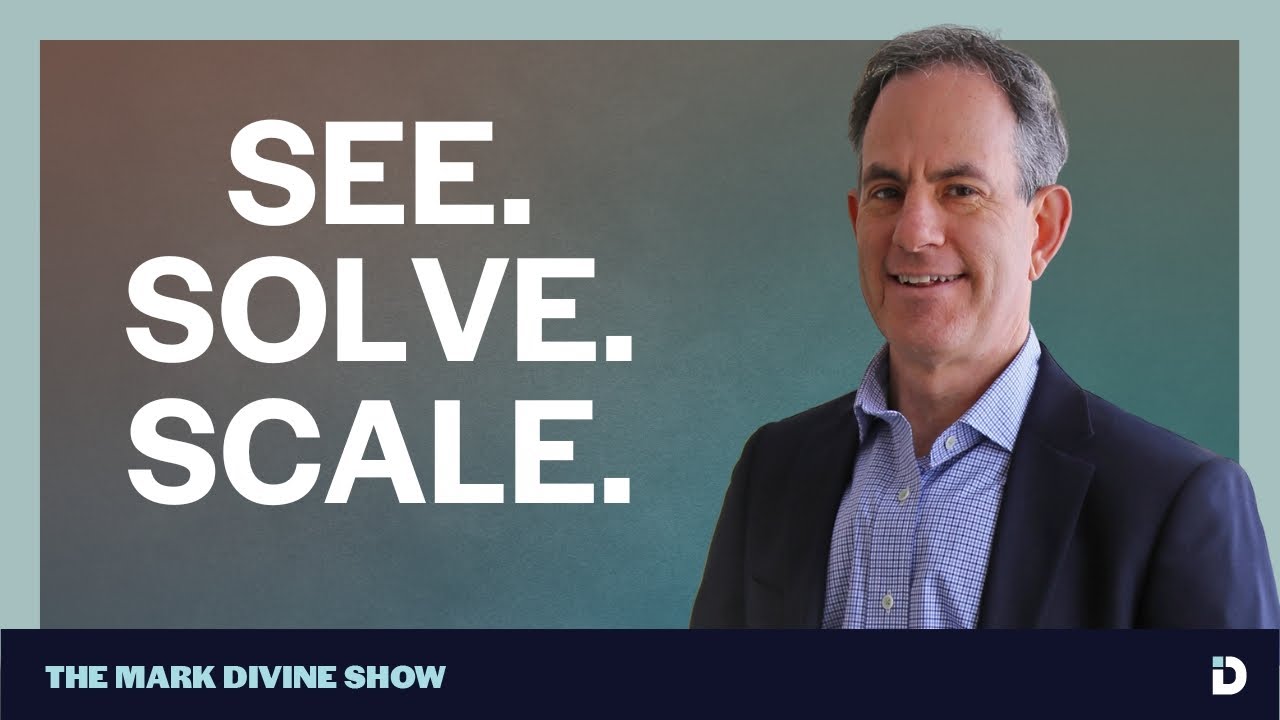
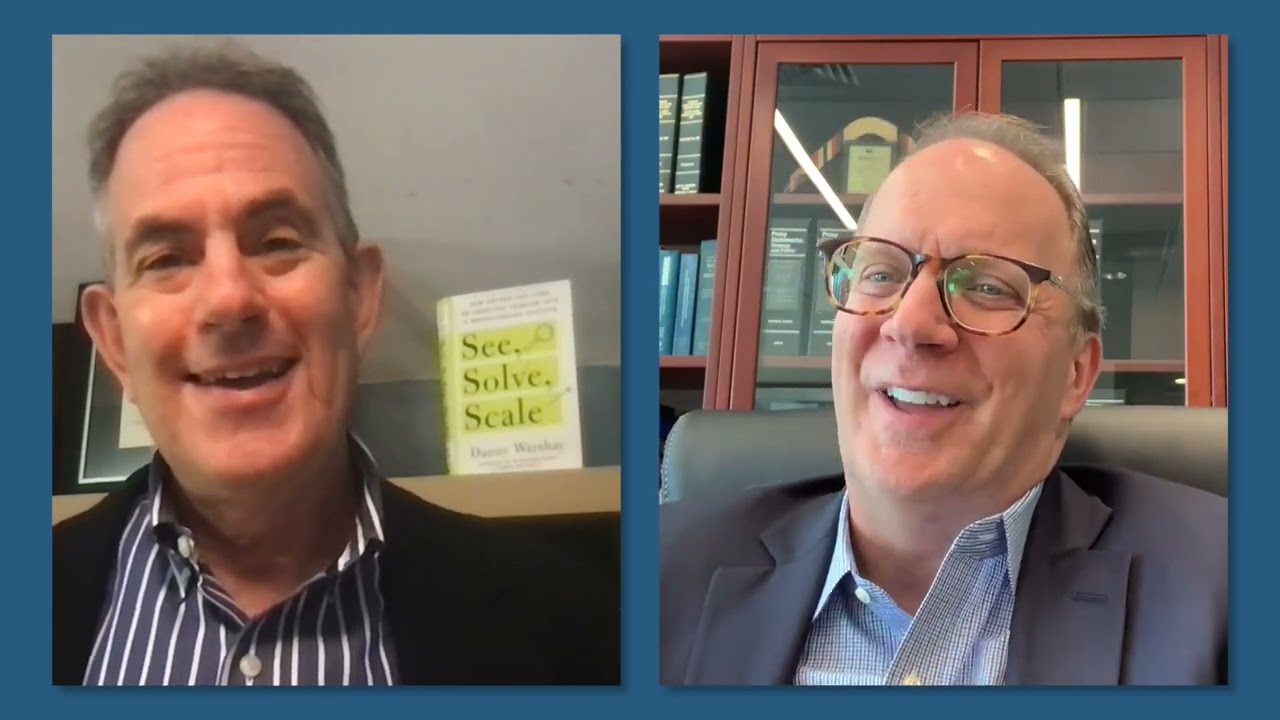
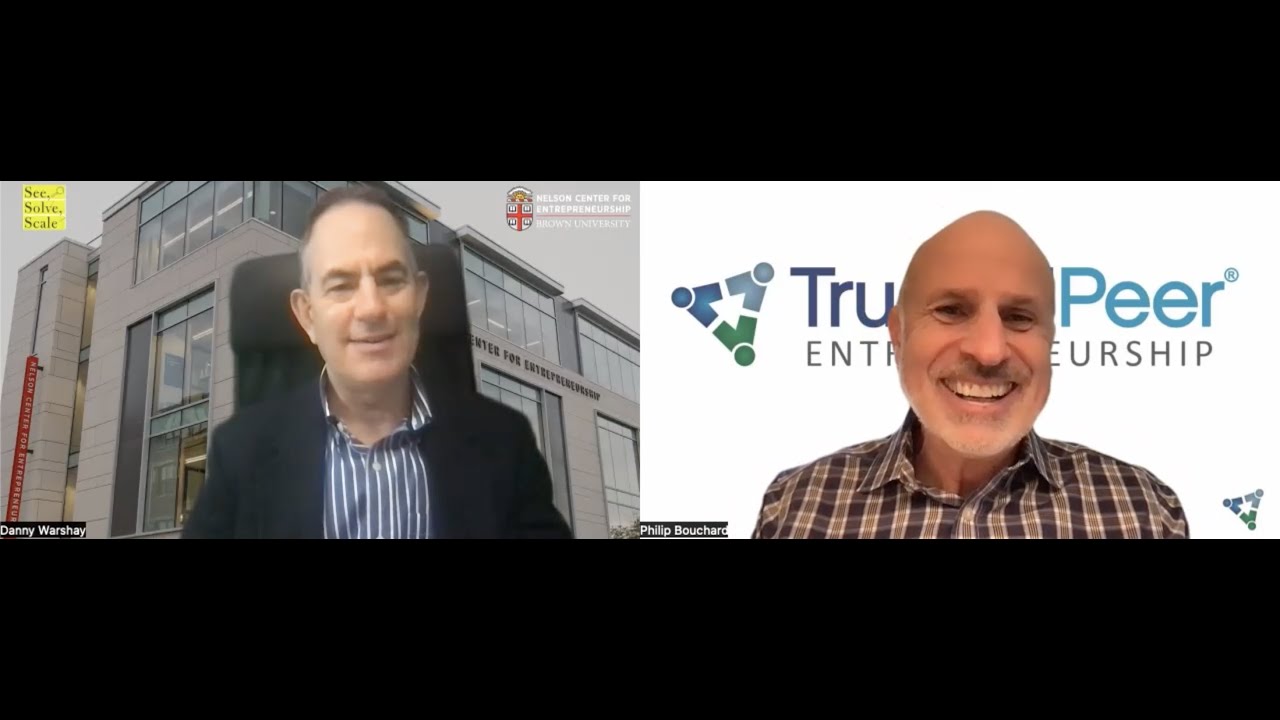
Interview with Danny Warshay, Brown University, Director of the Nelson Center for Entrepreneurship


