Closing the Health Gap in Black Communities | Thrive on Plants #50
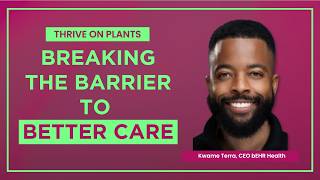
In this episode of the Thrive on Plants podcast, Dr. Daphne Bascom interviews Kwame Tera, the CEO and founder of Bear Health, about the persistent health disparities affecting Black Americans and the innovative, community‑driven solutions his company is building. Kwame defines public health as “the art and science of prolonging the desire to live” and outlines the stark life‑expectancy gap—about six to eight years—between Black and non‑Black populations in the United States, translating to a loss of roughly 268 million years of potential life. He recounts his personal journey from a health‑conscious family in New Orleans and Houston, through an HBCU education at Xavier, to a master’s in public health focused on health equity, and how those experiences seeded Bear Health. The company’s core product is a “health score” (0‑1,000) that aggregates daily lifestyle data into a Black Electronic Health Record (BEHR), enabling real‑time community‑level health monitoring by zip code, city, or partner organization. Kwame explains how Bear Health leverages community‑based participatory research, storytelling, and gamified challenges (e.g., the 2‑million‑step world‑record attempt, the upcoming Barathon, Run‑Club Versus Challenge) to motivate behavior change. He describes the Bear Connect coworking/wellness spaces, the concept of “Bear Zones” modeled after Blue Zones, and the plan to scale nationally through targeted marketing, strategic partnerships, and modest subscription pricing. Funding milestones (seed investment, $550 k raised, recent Camelback Ventures round) and the financial model (cost‑per‑acquisition, ROI targets) are discussed. The conversation ends with reflections on desirability versus access, the environmental impact of plant‑based diets versus AI usage, and a call for broader support—donations, voting, and partnership—to accelerate the closing of the Black health gap.
Chapters
Welcome to the Thrive on Plants podcast. I'm Dr. Daphne Bascom, and I am so excited that you took the time to join me today. I know your time is valuable, and I appreciate that you take a few minutes of your day to listen to the conversations that I am blessed to have. So today's conversation is going to be one that I know you're going to enjoy. I had the opportunity of interviewing Kwame Tera. Kwame is the CEO and founder of Bear Health. If you haven't heard of Bear Health, you will learn a lot about his journey, about his why, and about why it's important to have these conversations and about what you can do today or tomorrow in order to help support the efforts of the Bear Health team. Now, one thing that I really loved about the research and learning more about Kwame and his team was looking at his perspective on public health. So Kwame defines public health as the art and science of prolonging the human desire to live. I'd like to add to that, that it is the art and science of prolonging the desire, prolonging the human desire to live in good health. Now, our conversation today was really exciting to me because I have had a passion for this space for years. And whether it was while I was at Cerner working on population health, whether it was the time I spent at the YMCA, really understanding what community and population health was, whether it was really exploring while I was at St. Luke's, what are the factors that may prevent us from being healthy as a community. This conversation has been years in the making. And yes, though, you know, we've been talking about the fact that your health is determined more by layers of code than your genetic code. We've been talking about the social determinants of health, but we haven't made substantial advances in improving the health of the Black community, at least not to the level that I think is possible if we really invest the time and effort. And that is what Kwame is trying to do. So today we're going to talk about, we're gonna hear more about Kwame's journey, about his why. He's gonna share about what Bear Health is and what it will become. And he'll also talk about the Bearathon, which is an amazing opportunity for all of us to come together as a community and to support the efforts of Bear Health to try and achieve not only the next goal as a company, but to try and engage us all as a community in moving more and having these conversations and learning that what we do in terms of education, how engaged we become, helps us all become more empowered. So with that as a preface, and I know that was a lot, I really want you to Take a minute to sit and listen and enjoy my conversation with Kwame Tara. Kwame, welcome to Thrive on Plants. I am so excited you had an opportunity to join us today.
Yeah, no, I'm excited to be here. Thanks for having me.
Uh, so we were talking offline, you're just coming off Mardi Gras.
Mm-hmm. Still, still coming off Mardi Gras. Absolutely. Yeah, no, it was a great time this year. Really go— the core of Mardi Gras goes from the Thursday before Mardi Gras Day and then all the way through Mardi Gras Day. And back when I was younger, when I was in college, I was able to kind of make it through the entire weekend, but I can no longer do that. I take at least a day or two off throughout the week, the 5-day weekend.
Are there a lot of plant-based options available during Mardi Gras?
During Mardi Gras, not necessarily. You know, there are tons of like food trucks and stuff like that throughout the city, but most of them aren't catering to vegans. I do work with one plant-based chef here in New Orleans. Her name is Asia. She has these phenomenal jackfruit tacos. Mm. Yeah, she's actually been doing a pop-up here at our space over the past month now. And I just can't get enough, honestly. But other than that, and you know, honestly wasn't even thinking too much about eating while I guess we're out bleeding it. Uh, I, I definitely ate enough though overall.
Well, I have a feeling you'll be walking it off, uh, in April, so.
Absolutely. Mm-hmm.
Absolutely. Tommy, talking about April. Can you— I'll be honest with you. I did not know a lot about you until I heard an interview with you on Carina Ingster's podcast. And as soon as I heard you, I got all excited. I think I was in the gym. Um, can you tell our community, the Thrive on Plants community, a little bit about who you are, what Bare Health is, and how you got to this place of wanting to really advocate for the Black community in terms of how do we become healthier.
Yeah, that's a good question. And it's going to be a complete 180 from what we were talking about just a couple seconds ago.
Not Mardi Gras.
Not Mardi Gras, not alcohol, none of that. Yeah, so I was born in New Orleans. I grew up in Houston, Texas, grew up in a family of runners, and my dad was very health conscious. And I would say it's probably the first seed planted as it relates to health and my passion for it. He always made sure that we were the kids having like the grilled chicken salad or sandwich versus the, you know, the burger or the fried options. And obviously, once I went to college and was on my own, I obviously started to do more whatever I wanted to. Until I started, you know, doing some self-education and ended up going to Xavier University, Louisiana for undergrad. And Xavier, for those who don't know, produced the most students who go on to complete medical school, Black students that go on to complete medical school at any university. I didn't know that.
Okay.
Yeah, yeah. It's a very powerful statistic because the school only has maybe 2,000, 3,000 undergraduate students. Um, and so to produce the most Black students that go on to complete medical school, it's a pretty impressive, uh, pretty, pretty impressive accomplishment. It is. Our, our, uh, our former president actually just passed yesterday in '94, Dr. Norman C. Francis. He was actually the longest standing president at a university, um, in history. And so just wanted to shout him out as we're talking about his accomplishments.
Oh, thank you.
Thank you for introducing that.
Yeah.
Yeah. So, Xavier, again, a very, very STEM-focused institution. It's an HBCU. And when I got there at first, my goal again was to become a physician, but early on I was introduced to research and started developing like an appreciation for solving problems from the root of the issue as opposed to treating the condition in the clinic. And, you know, I was a little naive at the time and, and, you know, didn't really think I could, or didn't know that I could do both, right? I didn't know that I could be a physician and still do public health work. And so, but I just fell in love with the idea of research and understanding, you know, the depths of problems and how to build better systems to prevent, you know, most of what we deal with in the clinic. Setting. And so, yeah, I mean, when I learned that, you know, we spend about $400 trillion per year on healthcare in this country, and 90% of that is spent on treating preventable conditions, that just didn't make sense to me. And then eventually it became my, you know, goal as a public health practitioner is to get that number as close to zero as possible, right? How do we set up society? How do we design systems such that We can spend the majority of our healthcare dollars on conditions that we don't understand and treat and develop solutions for those things that we don't know what causes them, don't know how to treat them instead of wasting the majority of our money on things that we know how to prevent. So that was kind of the seed. And then after I graduated from undergrad in 2015, I actually started this organization called Full Disclosure: Be the Change. And it was basically once you know better, you do better. Uh, cuz in, in undergrad, again, during this research, these research experiences, uh, I was like, oh, I think we know a lot. We know so much about, you know, our experience and we could be doing a lot to make it better right now. And so let's just apply what we already know and we can make it a lot better. And very, you know, very simple, very straightforward. Once you know better, do better and share that information with others. Ended up traveling to a variety of universities, conferences, all related to science, health, social justice. I went to the Ivy League Vegan Conference a couple of times. I don't know if you've been to that or heard about that. I don't, I don't know if they're still doing it, but it's one of my favorite conferences. Introduced to a lot of influential people in the vegan community there, plant-forward and vegan community there. But that was a really good conference. I went there a couple times. Uh, I called myself a satellite student for a while where I would go to fly to a city, either crash on a friend's couch or, uh, do a, a work, a work exchange situation where I could, you know, work on a farm for a couple hours a day in exchange for room and board. Mm-hmm. And I would just go to lectures or events at these universities. I did this at UC Berkeley, Stanford, um, Vanderbilt. I had a friend that was at University of Arizona, and so I went to Arizona and yeah, just kind of was trying to determine not only, you know, as much as I possibly could what the truth was, but also what I wanted to spend my time doing with my life. So you could say I spent about 6, 5 or 6 years or so trying to find myself, or at least determine exactly what it, what I wanted to spend a significant amount of my time doing. Um, so fast forward 5 years, uh, the pandemic hits. Um, I had just moved back to New Orleans from San Francisco. I was working at, uh, United Airlines for a while, for a year out there, and I transferred to New Orleans and I was about to just go travel for a couple years. Just, you know, work 2 weeks, travel 2 weeks, work 2 weeks, travel 2 weeks. That was gonna be my No, my life for a little bit. And then the, and then the pandemic hit. And then, uh, about May of 2020, my aunt texted me and said, hey Kwame, I think this would be a great time for you to kick off your healthy eating initiative again. She's talking about me being vegan. And, uh, that text, uh, was it the seed of Bear Health? And this is more or less the healthy eating initiative that I came up with. And, you know, my first thought was that I don't think we know how bad we're doing as it relates to our health in the Black community. We know we're not doing our best. We know we should be exercising more. We know we should be eating better. But there's no urgency around this emergency. And I think it's because of a lack of awareness. And so, you know, my first thought was I want to communicate clearly to the Black community our current health status. Whatever it is in a way that we can all understand. And that's where I came up with the idea of a health score, kind of like a credit score, but for your health. Obviously I wasn't the first person to ever think of that. So there was a company that I Googled and connected with and, and started building a relationship with, which since then they've invested about $250,000 in our company. But what just started as a cold email outreach. You know, in 2020, a few things happened after that, that kind of just made all of this make sense. The, the track and cross-country coach at Xavier reached out to me that summer and asked me if I'd be interested in going to school, cuz he'd pay for it if I coached. Now, I wasn't planning on going to school, but you know, it's the middle of the pandemic. Nobody really knows what the future holds. Um, have an opportunity to get a free education, why not take it? Um, and I, and I had run cross-country and track at Xavier in undergrad, so that's how he was familiar with me. And yes, I looked into the programs. I wasn't planning on getting a master's in public health at the time, but that was the program that made the most sense. And since I had just come up with this idea, I, I more or less, my personal statement to apply for the program was, uh, me outlining Bear Health and my vision for it. Which at that time, and, and still more or less is, is again, I wanted to communicate clearly to the Black community our current health status, but I didn't want to just start another workshop or webinar series. Like, I wanted to build a system so that we can primarily follow up with people after they are engaged at a webinar or at a event or a meet, you know, community wellness event because people get excited for a couple of weeks and then Life happens again and that's okay, but we need systems to be in place to be able to engage with someone when we see a significant dip in their activity. Not just when they show up in the clinic later on because they're not taking care of themselves or they're, you know, really stressed with life. And so I knew I wanted to build a system and, and that's where we came up with the idea for Bear Health Systems. Bear stands for Black Electronic Health Record. It's a quasi-electronic health record. I would just say it's a bit more comprehensive, a health record. Typical health records are more medical records, right? Most of the data in there are the data from, you know, clinical visits, whether those are your annual checkups or, you know, when you're going in for something specific. But I wanted a more comprehensive record of someone's day-to-day life, which has way more impact on their health outcomes than, And when they go to the clinic, and I know you know this, but 10% of health outcomes are— only 10% of health outcomes are determined by your engagement with healthcare. The, the, the rest of it is you, like your genetic makeup and how you engage with the world. And so that's 90, you know, 90, 80, 90% of your health is determined outside the clinic. And so why aren't we measuring outside the clinic more regularly? Right. And developing interventions to solve that aspect. That was my perspective at the time. Then I did the Master's of Public Health program and it's a concentration in health equity. So it's not just a general Master's in Public Health, which honestly, I highly recommend this program to anybody that's interested in public health. It properly orients people to solve health problems, population health problems through a health equity lens. Which is the most effective approach because it takes into consideration every aspect of someone's life, not just when they end up in the clinic. So that program was great. That took about 2 years. I more or less refined the idea of Bear Health while I was there and then kind of hit the ground running after I graduated in May of 2022. Yeah, that was a long, long answer. So.
Well, no, and thank you for— some of that I had uncovered as I was preparing for our call, but you added— I mean, there's so many things to unpack in what you just said. What— first of all, what is the state of Black health today?
Yeah, I'm glad you brought it right back there. So I was just on a call before this, and the way that we frame the problem now is that You know, the life expectancy, average life expectancy in the US is about 78 years. I think it just went up to 79, um, based on the recent report. Um, that's the average life expectancy in the US, but the average life expectancy in the Black community is 72 years.
Mm-hmm.
So that's about a 6 to 7, 8 year life expectancy gap between Black people and the rest of the population. And for someone say, you know, in their 20s and they're like, oh, well, what's 72 to 76? You know, what's 72 to, to 79? Well, you know, again, we, we say, well, we're already old, so, you know, you know, what, what is it? But when you extrapolate that across the entire population, you know, we're on track right now to, as a community, lose 268 million years of time that could have been used to build wealth, that could have been used to pass down wisdom, that could have been is for any opportunity that comes up for us to help us reach our full potential. And when I, once I framed it that way, and I even for myself, once I saw it framed that way, it really helped me understand what we're doing and we created Bear Health to recapture that time because time is our most valuable asset and doesn't, well, I'm certain that our current system isn't going to help us reclaim that time. That was one of my biggest takeaways from my public health program is that our current system that we quit just wasn't designed to solve this problem. And that's absolutely not okay. And also, it's our responsibility to fix it. And so that's more or less my vision for Bear Health is to create a comprehensive healthcare resource that's free from the shackles of racism that infect our current system and really seamlessly integrate health in the Black culture, right? How do we get as creative as the racist policies were with how we create health in Black communities? How do we be as targeted as the racist policies were and many still are for promoting health in the Black community? And so that's more or less where we got to at this point.
And Karmi, when I think about, and I heard your statistic around 269 million years of life lost, and I'll be honest, it almost made me want to cry because when you, when you think about that and the fact that it's actually a running curve, it's not static, that's growing, but What, you know, I've been doing this for years and I re— you know, 10 years ago I got excited when people were talking about, you know, your life expectancy is more determined by your zip code than your genetic code. And we, you know, we started talking about the social determinants of health. And yet I feel like we haven't made a difference.
Yeah.
What, where are you? How are you starting and what can we do? Because this, this, this is not Kwame alone. So how do we come together to actually make a difference and stop talking and start doing?
Yeah. I think first and foremost, just introducing more people to public health and getting them in programs like the one that I went through at Xavier. Again, it's just the proper perspective on the issue. And without the proper perspective, I don't think you can really solve the problem. So that's, I think that's probably, that's probably first and foremost. What we've built with Bear Health, the concept has evolved a bit. So again, what initially was designed to help individuals track their health and improve their own health has expanded, largely influenced by my time at Xavier, to a way to measure in real time the influence of policy practices, solutions, interventions on that— the impact that they have on Black health. And so each individual gets a health score. Right? You get your personalized health score between 0 and 1,000. Let's say it's 650. And then we have thousands of users on the platform. And so we take all of that data and turn it into what we call the Black Electronic Health Record or the health score report, which is a real-time database of the community-level data, health data that we have in our, in our user base. So we'll see the average health score in the city of New Orleans. and we'll see the average health score in the city of Houston and by zip code and by partnering organization. And so we're gonna be able to see really in real time the impact of different moments and, and the effect that they have on health as far as, um, you know, activity, for example. There were, there was, there was one month where we saw, uh, probably like a 10 to 15% dip in total steps within our user base. Now, we had some assumptions about why that happened. That happened actually 2 times in December of 2025, or 2024, and then also in, in May of 2025. Now, obviously, you know, we know what's happening during those times, right? Holidays in December, people are traveling, people are at home more, spending time with their family. But to see it in real time and then see it bounce back in real time in January was really enlightening for us because, you know, again, we, you have a vision for something, or you say, I want to build a platform where we can measure in real time the health trends of a population, but for it to actually be a reality and it be taking shape in the way that it has is really encouraging because since we've been measuring the average health score Uh, within our population, the average score has gone up by about a point per month in over the past 16 months. And, and nothing is really as encouraging as that. I literally, every time I say it, I get chills every time. I just, just now I did. And again, to your point, so, you know, how do we, what do we do and how do we know that we're making a difference? And this tool, this platform, Bear Health, um, I think is part of that because it allows not only the work that we're doing to be evaluated in real time, um, other initiatives that are happening throughout the country can also be measured as well. And then we can learn which ones are working the best and continue to invest in those or modify them based on the information that we're getting from the community. Because once we do see a dip or a change in any negative way, or even a positive way, we go and talk to the community and learn as much as we possibly can about why you're doing well or why you're not doing well. And that's really rooted in, uh, this is the approach to research and development called community-based participatory research, which I'm sure you're familiar with, right? And for those who don't know, it's an approach to research and development where you invite the community you aim to serve in as equal partners in the design and development of solutions. So instead of just saying, hey, you guys need to take more steps in the winter break, it's like, no, hey, what do you think is the reason that you aren't as active over the winter break? And what are some things that you've tried to do in the past that maybe haven't worked, you know, to try and stay active during the winter break? And what kind of, what kind of challenge could we create for you to, to keep you, keep you on track during that time? Um, or maybe it's, hey, I just wanna enjoy my time with my family, but I need to ramp it up. In January and the following months. It's really going in there and learning, even, again, even from people who are already doing well. And in fact, I want Black people that are doing well in America to be on our platform, or especially early on, more so than those who are struggling because they figured it out, how to be healthy Black in America despite everything that we're up against. What do you know that the rest of us don't? And how can we then take those learnings, share them with the others, and, and, uh, see if that translates? 'Cause Black people are more willing to do what other Black people are willing to do. You know, a lot, a lot of this health stuff is kind of like white stuff sometimes. And you know, I think that's ignorant, but it's, it's the context that we're working in. And so how do, how do we, how do we talk to Black people that are doing well that can relate to other Black people that aren't? And share some of that wisdom.
And do you think— I'm glad you shared that because I was wondering when you— as I got my score and I keep looking at it, I'm like, well, I can do better than that. But so you're not really worried about a healthy user bias because you want the healthy users to come in. You can learn with them. And then I'm assuming part of that is how do they within their community start to— I mean, my motto is always you have to engage, educate, and empower. So how do you share back with the community those things that are working and contributing to a healthy— I don't want to say better, contributing to an upward trend in your health score?
Yeah. Yeah. I mean, we do that in a lot of ways through content. So as we're witnessing different trends within the community, we'll share those stories. Like, stories are really powerful. So again, to your point about engagement, like, someone can see themselves in someone else's story, then they may feel again more empowered to give it a go themselves. Um, so I would say documenting stories of everything, of all the stories that happen here. Same, like for example, with, with the, with the steps. Uh, in 2024, 6 people on our platform lost 20 pounds in 30 days from doing 1 million steps in 30 days. And that was originally just an idea so that we could raise some money for the company. We wanted to take a million steps in 30 days to raise a million dollars in 30 days for the company. And I was actually working with a doctor here in New Orleans and he's like, oh, I'll help you, you know, train for it or prepare for it or strategize for it. So in, in April, no, in May of 2024, he did 1 million steps in 30 days. He's like a 55-year-old man. He lost 20 pounds, got taken off his blood pressure medication. Mm-hmm. And that's a part originally.
Yeah.
Yeah. What originally was a, a campaign idea, um, Changed his life. And then others followed suit, losing 20+ pounds. And, you know, when I think about what our goal as a company is, which is to predict, prevent, and reverse the chronic conditions that plague our community, you know, we did just that through Ray Steps' challenge. That was not my original strategy for doing it, but it happened, and now it's a story, and now it's something that others can use. To change their lives themselves.
And I know your aunt was the one who encouraged you to start that healthy eating initiative. What has been the ripple effect on your own health? And I mean, you're in New Orleans, which is maybe not the healthiest community in the States.
Maybe not. Yeah.
Uh, but what has been the ripple effect from your work, both in your family, in your immediate community, and how do you, I mean, how do you start to create little pockets of that around the United States? Because there's, I mean, this is a big problem and you need, you need foot soldiers to help continue the work.
Absolutely. Yeah, I think, um, yes, locally here in New Orleans, we've, we've had a significant impact. I, I can't even, like, it's not calculated yet. Like it hasn't showed up in the data yet, but you know, the run club trend that started a few years back, I feel like I've been a part of nearly every run club that has started in this city, including my own. And, you know, I think one measuring stick that I can use for the ripple effect was actually when I was at homecoming for Xavier last November and everyone was walking up to me like, man, you really like transformed the landscape of health in the city, like single-handedly, which is not true. It's not single-handedly at all. But that is the perception, at least from the, you know, the amount of online promotion that that we're doing here. And you know, a lot of people will never say something and say that like, you're the reason that I started running more, you're the reason that I started eating better. But like, and I, and I'm not actually too worried about credit. I want, I want the problem solved. And, and then the Bear Health community, the Bear Health app may not be it for everyone, but so long as everyone is finding their way. We can be a successful company, you know, without everyone on the platform. We want everyone on the platform so it could be a true representation of the Black electronic health record, and we will have to develop new models for monetizing our platform in order to enable everyone to be on there. And because right now it's $40 for 90 days or $100 for the year, which isn't expensive, but you know, just, it's just a barrier in and of itself. And so, yeah, I mean, like, that's been really rewarding to witness the shift in the city. And again, I'm not the sole, sole person responsible for that at all, but what I want Bear Health to be and what it's evolving to become now, especially here in the city of New Orleans and eventually as we expand, is a platform for people to find their communities and build their communities centered around health. Because over the past 2 years, what I've really determined to be the solution, to your point about how people think they're coming to lose weight when they really come to find a community, is that in order to achieve health goals, it has to be integrated into your life. It can't be this extra thing that you do for your health. It just needs to be the way that you live. And I really saw that play out in building a few wellness and fitness communities here in the city. People need an objective. They need, they need some specific, you know, way to improve that they're, they're working towards. So that could be, I want to run more or I want to lose weight or whatever it may be. Then you need a time-bound test or measure of that objective. You can't just say, I want to, be better and not necessarily say when. Um, and because your body just won't get ready, your body won't put the pressure on if not. And then most importantly, you need a community of people to do it with, whether they're already there, whether they're already on that level that you're trying to get to. And then just naturally by being around them, you start to pick up on everything that they do. And it just, just, you almost feel obligated to, to be more fit, to, to eat healthier just cause like, man, And you're judging yourself. They're not, they're not saying anything. They're just living their best life. And then, and then you start to feel like, you know what, maybe I should not eat that fried chicken today. Maybe not today, you know, or maybe I should go on this run. And then it's easier too because you're not doing it by yourself. You're not the only one making the sacrifice. And I think we need that because these journeys can be lonely because the, the, the, The majority of us aren't on that journey, right? And so, yeah, witnessing that and taking those learnings, we ended up opening up a, more or less a community center. Seems like what it's going to end up being, but we call it a coworking wellness studio. So we had an opportunity to open up a space on Bayou Road in New Orleans. Bayou Road is actually the first road paved, well, not paved, laid in New Orleans. It's a brick road. Oh, wow. And it's home, it's home to exclusively Black-owned businesses here in the city. And so we're now, we're a new one on the block. And this wasn't necessarily in our plans for 2025, 2026, but when the opportunity presented itself and I knew I wanted to have like a nationwide network of clinics all connected to the app. So long as you know your health score, you're on our platform, you know, you can go to any clinic, we'll know your history and be able to provide you tailored care. but when I knew that we weren't at this, the stage where we wanted deliver healthcare just yet, medical care, but I knew we could do something with the space based on what I was learning about community. And so now Bear, it's called Bear Connect. Find your community, build your community at Bear Connect. Anybody that's a member of Bear Health can come into our space 9 to 5 and work. 'Cause, you know, we didn't know what we were gonna do with the space during the day. I'm like, well, what are people doing during the day? They're working. Well, you can come work over here if you want. And everything about the space is health-promoting, right? Healthy snacks that you can have, drinks, water, so on and so forth. Like, trying to create one space in New Orleans that's all about health. And in addition to that, which I think is ultimately gonna be a more power— even more powerful aspect of what we're doing, is our community host platform. So everything in my mind is really, how do I build a platform that people can then build on top of? Um, and so now at our space, anybody can host a meetup for free as long as they're a member of the app and have an active account for 90 minutes. This can be a yoga class if you're a yoga teacher. This can be a run club meetup if you're, you know, If you lead a run club, it can be a conversation about civic engagement. It can be, it's whatever it is that you feel like we need to talk about or we need to be doing, you can come host it here. Just one rule, everyone has to download the app to attend.
Mm-hmm.
And I mean, next week is, we have two events a night next week, you know, and like to watch this start to unfold in, again, an organic way. We're just curating this in a, in a, in a health-promoting environment. And the, the, the central point, connecting point is, is a health app, but that's kind of in the background. The focus is the community building, it's the problem solving, but we're measuring the impact of that in the background. 'Cause you have to have the app to participate in the experience. And so, you know, when I think about, again, my training and education from Xavier with the health, the health equity program, I really feel like I've modeled it per— almost perfectly with that concept in particular. Because we're sourcing solutions from those who are dealing with the problems that we're trying to solve. And yeah, I can't wait to see that scale, not only here in New Orleans, which I think it'll take place relatively quickly because it's a really small city, but to see, to pop up a Bear Connect nationwide and I go do stints in those markets and learn from the communities because each city's going to have different challenges, right?
Exactly.
Different barriers to health. And that also keeps my work very fresh and exciting because, yeah.
And that's the fun part. I mean, as you were, I loved when I was reading about the Bear Connect sites and I'm excited to see the fact that you're getting such traction, um, where it's becoming a hub for people to gather. But as a byproduct of that, you're getting more people coming, you know, you're the centerpiece with, with there, but now all these spokes are going out, which is really neat. But the, what came to mind was a little bit of a I was thinking bear zone, like a blue zone, because we saw that.
I like this.
When, when the blue zone concept first started and they started going to cities or going to civic leaders and saying, how do we launch a blue zone initiative in your city? That's how it started. And a bear zone would be great. You're, you'll be going into places that our Blue Zones. But, you know, the concept is really, really exciting because when you have people coming together, you know, to your point about how do you change behavior and make it sticky and make it— I don't want to say make health the easy thing to do. So if you have healthy snacks and You know, you're— I don't want to make assumptions, but you don't have vending machines that have Takis and everything else that are available. Because we have to show that integrating health into our lives is how you prevent disease. If we wait to treat disease, that's— I mean, that's definition of insanity. It's what we've been doing. How do we get up front and use the Bear Songs as an opportunity to bring people together and then show what Black health looks like?
Yeah, I love that. And I'm gonna take it and I'll gang it up. Don't worry. You know, cause it's funny. So in, in a program that I, uh, recently participated in called Next Cube. I had two great mentors. Oh, and one of them was connected directly with, uh, I don't know if he's the director of the Blue Zones Institute. Oh, then, um, but he may be, it's a Black man. And so he and I got to speak and I told him that I wanted to do a documentary where we go and find Black Blue Zones.
Yes.
But we could call them Bear Zones.
I think Bear Zones you need to differentiate yourself.
Mm-hmm. You're right. No, I appreciate that wisdom. Yeah. So yeah, we're definitely gonna do that. We're gonna create them. We're gonna find them, the few that might exist in this country, and institutionalize them. Yeah.
Now going back to their help, it sounds like you— my understanding is you partnered with Dacadu.
Mm-hmm.
How— what other avenues are there to help get more people on the app, whether it's—
Yeah. Yeah, so last— so we launched our beta app in January of 2024. And so for about the next 18 months, we were able to get a little over 2,500 users on the app, uh, primarily here in the city of New Orleans through different initiatives like conferences, Essence Fest, different challenges that we do, so on and so forth. And about 98, 99% of our users are Black people. I honestly would be surprised if there are more than 20 white, non-Black people on the platform. And then we're, and it's not that we don't let anybody, like everybody on the platform, it's just where we market and what we stand for. And so that was the initial model, but there was one particular issue with our, our beta platform, which we're absolutely grateful for. It's just that it was called Dacadu, right? So Dacadu had let us use their reference app as our, as our product for a year and a half. Until we were able to raise the money and, and get the traction to get our own, which we, we do have now.
Yeah.
Uh, we released that officially in, in, uh, October. The official launch I would say is this April though with the Barathon. And, um, you know, we'll talk more about that in a second. Yeah. But yeah, how, how we get more people on the platform, you know, so we're a startup company. Every dollar that we spend matters. And we have to be smart and, and it's challenging to raise money as a Black founder. Um, and it's just challenging to raise money in this market when you're not going after a potentially trillion dollar, you know, problem. Um, most of the feedback that we get from investors is like, you know, is there enough opportunity in the market? And I'm like, well, there, there are 50 million Black people. If, if 100, if everybody pays $100, total addressable market's like, couple bit, you know, a few billion dollars, you know, and it's an underserved opportunity. No one's going after it like that. So, but you know, some don't, some decide not to invest, but some do. And that's why we've raised, I think, $550,000 now in cash and in-kind contributions from investors. Angel investors have been absolutely beneficial. Incubator programs have been phenomenal for us. Because not only do they come with grants and investments, they also come with access to new networks, information, just so that I don't make the same mistakes that other companies make, because I can't. You know, this isn't just a company that I'm trying to start and sell in 5 years, you know, for $20 million and go live my life. Like, I'm trying to build something that'll last forever. And so, yeah, it's, it's been about getting that foundation and we just got our foundation at the end of last year. That's really what the first 3 years of building this has been about and establishing that foundation with me in, in our team in control, not necessarily at the mercy or under the pressure of, of, you know, a financial institution that has one primary objective, which is to return capital to their their investors, which is fine. I, I don't think there's anything wrong with that. It's just not the pressure that I want on what I'm building with Bear Health. And so now that we have that foundation and now that we have consistency between our, our online presence and our app, now we can be more aggressive about marketing and promoting. And because we're only pointing everybody to one place, download the app, participate in our experience. And so this year in New Orleans, we just got another investment from Camelback Ventures. We'll use most of that money to do as much as we can to reach 5% or so of this market over the course of a year. Again, 'cause things travel faster. So we'll invest a significant amount of our capital into that over the next year. Really, really establish a footprint here. And then after that, it's gonna be wherever we start to see the most growth organically throughout the country. Got it. That's, that's what will influence where I do my next steps. I could realistically see Houston. I grew up in Houston and so familiar with it and can leverage a lot of relationships I already have there. It's a huge market and a lot more, I would say, open to health and wellness. I would say nearly everywhere is a lot more open to health and wellness than the city of New Orleans. Maybe not, maybe someplace in Mississippi. I don't know, but I always told people, if I can figure out how to do it here, I can do it anywhere.
I would agree with that.
I think that that's a true statement, honestly. Yeah. Uh, and so our goal this year, we have, we have a couple campaigns. Again, the reason that I said we're still a startup company is because we, we have to, we have to just show measurable progress until we can get a significant amount of capital to scale. And the reason that I've waited on trying to bring in so much money, like a million dollar investment or something like that, is because when, like right now, we don't have much data around our ability to turn $1 into $4, right, for an investor. And now that's more or less what we're going to be testing over the next 3 months. How much do we have to invest in our marketing, promoting every aspect of what we offer, right? So the discounts, the coworking, the health and wellness meetups, you can host your own meetups. Health Transformation, and we'll run an ad on each one. Uh, we'll evaluate that cost per click and see what that leads to from a new user subscription perspective. And so we'll spend probably like $10,000 over the next 3 months investing in, in marketing. And hopefully we reach about 200, at least 300 or so new paying members. And if we do that, then we can go raise real money because they're all, they're going to be looking for like a 1 to 3 or 1 to 4 ratio. If every dollar you spend in marketing leads to $3, um, in revenue, then, then they will invest in that. And then, but then I'm now I'm going into the conversation with a lot more leverage. I'm not saying, hey, I have this concept that I think people are going to engage with. It's like, no, I have data on 300 customers from this particular type of marketing style that we've used. Around these value propositions that we have, and I wanna scale to the next level within this market, and I need exactly this much money to do it. So, but in addition to that, this year, we have the Barathon, obviously, coming up in April. We'll talk, yeah, we'll talk more about that, but then I had this other campaign idea. Run clubs have been a significant part of our growth. Over the past couple of years, and we do challenges all the time. And I'm creating the Run Club Versus Challenge. So we're gonna have run clubs go head to head in a challenge on our platform.
Okay.
Total participants that sign up, total miles completed by the community, uh, highest average miles by the community. And then we're also gonna incorporate some sort, some sort of like creative aspect. They either have to put together like a really cool piece of content or they have to make a song because it's, you know, we're kind of leaning on the versus, like the artist versus battle. So why not, why not every club have to come up with like a short song about their club or something like that for people to vote on? And yeah, we'll do that. Like, who runs this city? Who runs Houston? Who runs LA? Who runs Baltimore? And Uh, yeah, just get a campaign going again. Then I will be able to see where we're getting the most traction and then go double down on that city. So those are the two campaigns I have right now.
And I do want to talk about the marathon, but for the, for the run campaign, can it be virtual? I love the idea and—
Oh, the run, the run campaign? It is virtual. Yeah. Everything takes place on the app.
Oh, sorry. I meant the, um, the run club. Can they be even, can the club be virtual?
Yeah.
Okay.
Yeah. It's your community. Yeah, yeah, yeah. I think, uh, the whole who runs this city concept only came about as a second, second layer of, of a competition, but it, it could be, yeah, it could be any type of community. Like the, the, every chapter of Black Men Run throughout the country can do a competition against each other, you know?
So I'll have, you'll have to share more because I'd be happy to post it on. I've been using the app and I will, I can tell you I enjoy the app. I think he's done a good job for, I don't know if this is V1, V2, but the, whether it's the questionnaires, usability is high. The integration with my apps is awesome because it's motivating when you see Oh, I got 7,000 steps just on my morning run, or I just finished taking your nutrition questionnaire. And so I would encourage anyone listening to download the app. And even if you get insights onto what your current health status is, because I think it's easy to think you're healthy, but when you get that question, So how many fruits and vegetables did you eat in a day? It makes you think.
Mm-hmm.
Yeah.
And we just want people to reflect on that once a month, every month, you know, at the end, go through and update your answers in each category. And I think that habit in and of itself of checking in with yourself is powerful for improving your health because again, It's the awareness. Um, so yeah.
So tell me more about the Barathon. Um, I actually shared it with our community this week.
Perfect.
We're doing, um, we like, I love to do challenges as motivation.
Yeah.
Not challenge, but you're challenging yourself.
Um, but can you tell me more? Yeah, the Barathon. So I came up with the Barathon about a year ago when I did the 2 million steps, the world record attempt in 30 days. So I already told you part of the backstory of how I even came to be doing 2 million steps in 30 days. It was, it was influenced by the folks on our app who had done 1 million steps in 30 days in 2024. At the end of that year, we all were talking like, hey, you know, What do you think the world record is? And do you think that any of us can, can, can take it on? And I was at a talk in March of last year, um, at a, at a conference here, a local entrepreneurship conference here. And so then, and one of the speakers was talking about like the importance of influencers and building, and influencers building businesses. And, and in fact, the importance of being an influencer to build a business because you just have so much attention. You can really build any business and you're, you're an, as an individual, it's okay for you to be in a variety of industries. Like if Bear Health was like, oh, I want to do alcohol, everybody would be confused. Or if Bear Health wanted to do a fragrance, that would be confused. But if Kwame Tero, the entrepreneur, wants to do a fragrance and a, and a health company, like he's a human being. We're all, you know, dynamic and unique in our own ways. Yeah. But with a variety of passions. And so I was like, well, what is something I could do to garner a lot of attention? That is in alignment with what I believe in. Um, cuz you can get attention for doing stupid things and, you know, and we had been having those conversations. I knew I wanted to do it last year at some point, and April was just the most available month that I made based on my calendar. And so literally 3 days later, I decided to go after the world record for the most steps in 30 days. And, uh, I didn't know if I could do it. I was just gonna try my best. And, and that's really my whole philosophy around anything, just try as hard as I possibly can. Because then you can sleep at night no matter what, you know, no matter the outcome, because you gave it your best. You can't do much more than that.
100% agree.
And so, but my best was enough to, to break the, the previous world record, which was 1,971,000 steps in 30 days, about 66,000 steps per day. And I ended up doing 2,007,178 in 30 days. And to be honest, Had I been a lot more prepared and structured, I could have done more. I don't think that that's the extent of human ability when it comes to walking in 30 days. I don't think so. Now, I mean, I did walk like 14 hours a day on average. I, I, oh, I would say I slept, I laid down 6 to 8 hours a day. I was only able to really be seated for 3 hours a day during the waking part of the day. Like every, anytime I was sat for more than 30 minutes, I started getting anxious. I was like, I gotta get up and walk. I, it's just so much. I got the hang of it after a while. I started, you know, walking a bit more efficiently too. Um, first 5 days were very brutal though, because I, again, I wasn't prepared, so I wasn't fueling properly. With hydrating properly.
Yeah.
And I was so focused on trying to get the steps in, but no, I started getting sharp pains in my head first 5 days, 3, 4, 5 days. Um, but then people started bringing me food and making sure that I was taken care of. Again, that community piece, I don't think I would've, yeah, I don't know if I would've gotten it done without the community. And I, I just, I know at, at minimum though, that the community helped cuz every time That I walked with somebody, it made the rest of the walking after that easier. And I thought that was such a powerful insight for like life because nothing, nothing reveals more about how you truly feel and, and how you, what you're truly experiencing than when you are in incredibly stressful situations, right? Like doing 2 million steps in a month. And, and so you're hyper-aware of how everything is affecting me because you're, again, you're, you're feeling a lot. From all of the stress. And one thing that stood out to me a lot was that anytime I walked with somebody, it got better. And I was like, no, that's— life is better with people in general. So, um, that was a big takeaway. And then, uh, the second big takeaway was the importance of inspiration. And when I, when I did this challenge, I wasn't thinking about inspiring people. I was thinking about raising awareness about what we're going to be launching soon in our health app. I wasn't thinking about the fact that this would give some people more reason for being, more to go after in life. And that's important because the definition of public health is the art and science of prolonging life, right? That's the, the flat definition. But I, uh, Added a component to that in my definition, which is the art and science of prolonging the desire to live, because the desire to live is the root of longevity, right? Without that, it's hard to get somebody to care about any of this stuff that we're talking about. And so I recognized that a few years ago, but I didn't really know what the vehicle or, or yet, or how to deliver that desire, how to, how to allow it to come organically from the person so that we can leverage that motivation to help them create change for their, for their lives. But it was during that challenge when I would be walking throughout the city, people would come up to me like, oh wait, are you the walking guy? Are you, are you like the— yeah, it's hilarious. I know. Yeah. Are you the walking guy? I was like, yeah. Yeah. I, I feel you, you're, you are me and my friend's inspiration.
Oh, wow.
And that really stuck with me because, you know, and I don't know, maybe this is like strategically, it just required now there's less work to do because their inspiration is driving them, right? To learn more. You know, the resistance that we have to learning new things or trying to cook better or healthier for ourselves, like a lot of it's because we don't truly internally want to deal with it. But if, if the, if inside of you there's a strong enough desire and you're willing to do anything, you're willing to change anything for, for what you, what you want. And so yeah, that was really, that was a really powerful moment. Unexpected. Uh, we had just lost some money, uh, unexpectedly lost a grant. And so we needed to also raise money. So we raised money as part of the campaign as well. And then got another investment in, in May. Um, so the last day of that challenge, someone asked me, so just to answer your question, you know, how the Barathon came to be, or question I gave, um, someone asked me at the end of the challenge, like, what's next? And I was honestly like, what are you talking about?
I'm done.
Yeah, I just, I mean, literally we're, we're at a, at a bar. Actually ran into Brent Faiyaz, the artist there, and he was like, bro, are you serious? You just did what? That's crazy. How do you feel? I'm like, bro, I don't even know you right now. I don't really know how I feel right now. KFC wrote us our first 5-figure check in 2023 through a program. So it was kind of a full circle moment with that, with me again there. But yeah, when people kept asking me next, again, like I recognized that this had gotten people really engaged and they wanted to see more, wanted to see what's next. And that's actually where I came up with the idea for the Barathon. And because people were so moved by the world, a world record attempt, I was like, well, what if we do another world record attempt but just involve a lot more people? And so the, the ultimate objective of the Barathon is to break the world record for the most people participating in a virtual, um, run/walkathon across multiple venues. So the vision is like a global month or global day where everybody that's a part of the Bear Health community around the world is walking in an attempt to break this world record. That's the ultimate goal. The record is actually pretty impressive. It's 777,000 or something like that, people participating in a, in a walkathon. Pretty impressive. Yeah. Our first goal though with this year, the theme for this year is Bear Health to the moon. So this is our official launch. And, and with our official launch, uh, we wanna see if we can reach the moon. The moon is 239,000 miles away, and if we have a couple thousand people on our platform and everybody does 7,000 steps a day, 7,000 to 10,000 steps a day, we can reach the moon as a community over the course of 30 days. And so our objective right now as a company, now that kind of the first part of the the new year is over is to get to where we have about 2,000, 2,500, I think 2,500 is a safe target for the marathon. And we're not gonna be able to do it without partnering with larger communities that already exist. And so that's really the campaign over the next few days, or next few days, next month, next few weeks. And I'm excited about it. we're gonna livestream. I'm, I, I've been saying I'm gonna go after my record again. Oh no. Yeah, I've been saying that. I've been saying that cuz I wanna livestream it. Uh-huh. Uh, yeah. And, uh, yeah, I just wanna livestream it and get it on an official record. But we will see if I do it again. Uh, cuz again, I also don't think that it was my best. I think I could, I think I could go farther with a lot more preparation. Um, uh, so yes, we would love everyone's help for that. Again, the Appistry for the first 30 days, we'll probably do something to where, like, if people come on now, um, and like for any reason they aren't in a position to pay, we just want there to be 2,500 active members on, on the Appistry.
Over the course of the month. Yeah.
Over the course of the month so that we can, we can achieve that. And so yeah, that's, that's our main focus right now. Yeah, the app is free for the first 30 days.
Okay. Top community, you just heard you have to go out, download the app.
Yep.
Starts April 1st.
Mm-hmm. April 1st through April 30th. And yeah, we'll probably have a, a variety of, uh, we'll, you know, we'll probably give away some money. We always give away some money for just participating. Um, and so maybe it's like, we, as long as you hit 100 miles for the month, you're entered in for a chance to win some prizes and see if you can get some different partners, um, to participate in that. Just been so busy. I have, I haven't gotten all the, all the sponsors and stuff like that in place, but, um, we'll be able to put a couple things together to get, get enough people on there to where we can. Hit our goal. But yeah, I'll be, I'll be really happy to do that.
And it's a great month for people to get out. The weather's nice. Get in your 6,000 to 7,000 steps.
Yeah.
Bring some friends with you.
Mm-hmm. Exactly.
Let's, uh, if we could talk for a couple minutes about desirability versus access, and then we'll wrap up and I'll give you some time to get ready for your next meeting.
Sure. Appreciate it. I think, um, desirability versus access. I actually believe that desirability is part of access.
They have to. Yes. I think they have to go together. Um, so how do you—
and what I, yeah, what I mean by that is there's, I mean, there's 3, I, I think there are 3 aspects of access. First one is availability, right? Are there healthy grocery stores nearby? Then there's affordability, right? They're there, cool. But like, am I gonna spend $15 on a head of lettuce?
Nope.
You know, not that it then, I don't think that exists anywhere, but just, just, you know, for sake of argument, right? Not yet. And then there's, and then there's desirability, which is the component of access that is honestly the most challenging because it, again, our, our minds are so complex that even when something is available and affordable to us, because of our experience, we might not even want it or even know to desire, know to prioritize that. And so yeah, I actually do put them on some level together, but I guess a different, different aspect of, of access. And that comes with, again, desirability is largely influenced by our social environments, right? What are our friends doing? What, what, uh, what are the people that we admire, what are they doing? And that has a lot of influence on what we decide to do or what we're willing to sacrifice, um, that we already have. And so Again, I, I think it's really hard to try and like change individuals one by one. However, you know, I'm an individual that changed one by one. I watched documentary film called Cowspiracy, and, and that's ultimately what led me to start eating a plant-based diet. And, you know, the health aspect of it came later, but it was really, you know, I don't wanna contribute to potentially making it harder for us to inhabit this planet. And, and, and it's a really powerful way to reduce your impact, environmental impact. I always tell this story now because my, my interns make fun of me or judge me or whatever because I use AI so much. And they're like, I'm a, I'm a ChatGPT warrior. That's what they, that's what they refer to me as. And they're like, well, you just killed a whole village or you just flooded a whole village or something like that. And you sent the whole village into a drought because you, you needed to get a logo made or something like that. And so, you know, knowing that I care about that stuff, I asked, I Googled how much water it actually does, you know, use to make a call on ChatGPT or an AI. And then I Googled how much water I save By eating a plant-based diet.
Yeah.
Anyways, it's like 220,000 gallons of water per year that I saved from not eating animal products. And I would have to send like upwards of a million messages to ChatGPT just to catch up. I don't, I forget how many that is a day, but I don't do that many a day. And, and so it just really puts things— so that's why I just think it's such a powerful way to make a difference. And it is measurable because everybody's freaking out about using AI and the impact that's having, but they're still eating meat 3 times a day.
And thank you for saying that. We were having this conversation internally recently, and I said the same thing compared to what, if you compare the resource utilization for using AI with how we fuel ourselves, there's no comparison.
It's not even close. It's not even close. And so, yeah, I think it's, it's a matter of curating environments. Desirability is about curating environments. And there are, you know, just like anything else, there is gonna be a percentage that are first movers, highly engaged. They are gonna, you know, be the trendsetters sometimes for these things. Um, I think what needs to happen is they need to start building communities to, to sustain the change that they're creating for themselves and other people. Because while people are looking at them for guidance, whether they know it or not, Um, people don't always know which way to turn, and when they have a space that is based around that idea, based around that improvement or whatever it is that they want, then again, you don't have to think as much to achieve it. And, and that's, I mean, yeah, I think half of it is desirability, but the other half is, um, just like baseline resistance that we have to change. And, and so, you know, one thing I, um, like an additional business that I have is called Ovalo. And, and our goal at Ovalo is to remove every barrier real or imagined between people and their full potential. This is actually the idea. This is what I came up with while I was doing all that personal reflecting. Bear Health is the, is the second thing that I came up with, but Ovalo is actually the first thing. And it's not an operating company right now, it's just a concept. And it, but it will be, um, and it's more general. It's for like, it's not just focused on the Black community, but there's so many barriers that are, that people don't even recognize. Um, which is why I think it's so exciting what we're doing here in New Orleans with Dare Connect. Um, because one barrier that people have to starting something is like they don't have space to do it, or it's just expensive to get the space. And yeah, if this model works here in the city, I think it's gonna, I, I think it has the, the potential to really create significant change. Um, and again, break down those barriers, um, as much as possible. Cause the desire is there, but there's fear fighting in the other direction. I think that's a big part of it too.
I would agree. You know, listening to you, I actually, the, um, I don't know if you're familiar with the Dancing Guy video.
The Dancing Guy video?
It's, um, Derek Sivers did a TED Talk maybe 15 years ago, and it's all based on how to create a movement. And it all starts with this guy dancing wildly on a hillside.
Oh, yeah, I know what video you're talking about. I know exactly. Yeah.
But that, that is, you are the dancing guy and kudos to you. Um, because you're, you are going to do amazing things.
I appreciate that.
I will let you go, but before I let you go, how do people get in touch with you? How do they get involved in the marathon? And more importantly, I want to push back on one thing you said for just for anyone listening. If we impact Black health, that is an investment that has billions of dollars of return. So if people are listening and they want to donate, contribute, learn more, how do they find you?
Yeah. Yeah. So you can find us on social media at Bear Health, pretty much across all platforms. You can find me at Kwame Terra. So pretty straightforward on both of those fronts. You know, I'm going to start spending a lot more time thinking about what folks, you know, outside the Black community can do to support the work that we're doing here. I mean, donating is one thing for sure. Voting is one thing as well. And to your point about the benefits that solving this problem has on the rest of the population, it's a topic that comes up often because again, it just, it kind of ruffles feathers a little bit that, you know, we're focused on the Black community and for different reasons it ruffles feathers. And when people ask me, I have two answers. And the first answer is this is the problem I'm interested in solving. You should be okay with me being interested in solving this problem. It's a huge problem and you should want everybody to be in their best health. So just off that and you should be okay with it. There are tons of programs designed specifically to solve for niche communities, whether that's the obesity community or the people who are dealing with mental health issues. Like the focus is right. So Black people have a particular experience and focus on that problem. Second is, you know, the, the pol— again, the policies, practices, and beliefs that created these problems were targeted targeted as anything has ever been, and the solutions need to be equally targeted and equally creative. And that's not racist, that's efficient. And if someone has a better way to do it, I'm absolutely open to do it. But until I find a better way. And then the third one, I guess the more politically correct answer is when you solve problems or create solutions, for, um, the, the most dispossessed among us, the learnings can scale upward to, to other demographics, other socioeconomic statuses. But if we develop solutions for upper middle class, right? Or let's say the person, the, the demographic that would be most apt to engage with a health and wellness app, let's say white women in LA, right? Right? They're all on the, well, they're all known as Health Amongst Insults. Their entire identity. But if I design the solution for them, sure, I might build a successful business in a shorter period of time, but what I learned from there won't translate down to those who deal with greater barriers to health. And so, and so it, it, it eventually becomes like a, a tool that not only is solving that particular problem, but it is a a source of information that everyone can benefit from. And so, um, yeah, I appreciate you bringing that point up.
You are welcome and thank you. Thank you for the gift of your time. Kwame, I have really enjoyed this conversation and—
Yeah, same.
Look forward to having you back on the podcast because I have like 3 more pages of things that I wanted to talk about.
Yeah, sounds good. Looking forward to it.
Thank you so much.
The information shared on the Thrive on Plants podcast is intended solely for educational and informational purposes. It is not medical advice, and it should never be used as a substitute for personalized guidance from a qualified healthcare professional. Always consult with your physician or healthcare provider before making any changes to your nutrition diet, exercise routine, supplement use, or your overall wellness plan. The opinions and advice shared by our guests are their own and do not necessarily reflect the views of The Vegan Gym or its team. While we aim to bring you high-quality, thoughtful conversations, these perspectives are not intended to replace professional medical care. Thanks for tuning in, and remember, you have the power to thrive on plants. And live with purpose.
More from Daphne


The Adaptive Fuel: How Exogenous Ketones Support Healthspan | Thrive on Plants #60

Could Yeast Replace Whey? The Science and the Story Behind Spacemilk | Thrive on Plants #58
Why "Eat Less, Move More" Stops Working After 40 (And What Actually Does) | Thrive on Plants #54
Triple Negative Breast Cancer: How She Caught It Early and Came Back Stronger | Thrive on Plants #53