What Every Cancer Patient Should Know About Exercise | Thrive on Plants #57
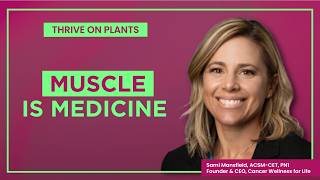
In this episode of Thrive on Plants, Dr. Daphne Bascom interviews exercise oncology specialist Sammy Mansfield, founder of Cancer Wellness for Life. The conversation traces the evolution of exercise recommendations for cancer patients from the outdated “rest” approach to the 2022 ASCO guidelines that endorse exercise, nutrition, and weight management during active treatment. They discuss why implementation is the current bottleneck, emphasizing the need for clinicians to green‑light exercise and for patients to receive practical tools. Key concepts include muscle as an endocrine organ that releases myokines with potential anti‑tumor effects, the minimum effective dose of about five minutes of daily movement, and simple functional assessments such as grip strength, sit‑to‑stand, and affordable body‑composition scales. The dialogue expands to lifestyle medicine’s six pillars (exercise, nutrition, sleep, stress, social connection, risk‑reduction habits), menopause‑related changes, the distinction between screening and true prevention, and the role of equity, telehealth, and AI‑driven coaching in scaling access. Practical advice is offered on growth mindset, nutrition myths, resistance versus cardio, sleep hygiene, and fostering community support. The episode ends with resources for listeners to connect with Sammy’s program (mylifestyleshift.com) and a call to empower cancer patients to thrive, not just survive.
Chapters
Welcome back to another episode of Thrive on Plants. I'm Dr. Daphne Bascom, and I so appreciate that you took the time to join me today. This is a show where we translate healthspan science. Notice I didn't say longevity, but healthspan, longevity, lifestyle. We help you translate them into practical plant-powered strategies that you can use right now. Today's episode is one that I've been looking forward to for a while. My guest and I have known each other for over 10 years, maybe a little longer. We've sat in the same rooms, we've wrestled with the same questions, and we've watched this field evolve from fringe conversations into guidelines published by ASCO, the American Society of Clinical Oncology. Guidelines that have been downloaded more than 100,000 times. Early in my career, I was probably one of those physicians who told patients to rest. I had the privilege of treating patients and their families who had had neck cancer, and I probably said, take it easy, to eat whatever sounded good. Um, you know, I thought I was being kind because at the time I did not fully understand that I was taking away some of the most powerful tools available to them. Now that I know better, I'm trying to do better. My guest today understood that before most of us did. She started this work back in 2003, before we were comfortable even having conversations about exercise during cancer treatments. She built programs inside of academic cancer centers, opened the first standalone cancer wellness fitness facility in the US, and now she's taken the work globally. She's co-authored the ASCO guidelines on exercise, diet, and weight management during cancer treatment. She consults with hospital systems and nonprofits around the world, and she is absolutely one of the clearest thinkers I know on the interaction of lifestyle medicine, cancer, and what it actually means to thrive. Now, what we cover today is not just for people navigating a cancer diagnosis. It's for anyone who wants to understand what their body's capable of and what lifestyle choices are actually doing at the cellular level to protect their health and extend the years when they feel fully alive. We talk about muscle as medicine. We talk about the difference between early detection and true prevention. We talk about what happens to the body during treatment, therapy-induced menopause in particular, and what you can do about it. And we talk about what it means not just to survive, but to optimize. Sammy Mansfield, welcome back to my world and welcome to Thrive on Plants. Sammy, welcome to Thrive on Plants. I am so excited to have an opportunity to speak with you today.
Thanks, Daphne, for having me. So excited to be here and just be part of your community and learn from you as well.
Sammy, I was looking, reflecting back and trying to think, I think we've known each other over 10 years, which it doesn't seem that long, and maybe I'm aging both of us, but I know you well and I know a lot of the amazing work that you've done. Would you share with our community a brief history of who you are, how you got where you are, and most importantly, why? What is your why?
Yeah. So simple terms or simple, simple pieces. I started my work in cancer in 2003. So, you know, as we're recording this, I'm thinking, wow, you know, we're 23 years in, right? Like that's a full adult. Like, Totally self-employed adults. But I started my work in cancer exercise before we were comfortable talking about exercise in cancer. It was exercise after cancer. And I could not tell you if I could give someone the path that I took because so many things have changed, which is fantastic. But I just knew when I met my very first individual who had a cancer diagnosis, I talk about her a lot, her name is Kim. Kim and I talked on the phone for 5 minutes. I was working at a gym and she was referred to me and told me all the things that cancer had changed about her body and wanted to know if I could help. And I don't know if I was confident or crazy, but I said yes. Kim is still a friend of mine to today. I recently found out she's a grandma for the second time and we are still great friends.
Aw.
But she made me aware of the power of exercise and lifestyle for individuals that hadn't been impacted by cancer that weren't maybe told they should do it, but didn't really put those pieces together. I've morphed my career to be into all of lifestyle because I believe we can't have one piece of lifestyle without another. So I, I focused on that and I've been able to work in everything from community organizations and large health systems and academic medical centers and consulting and nonprofits. And really now have decided that I'm gonna focus on what's most important to me, which is education and empowerment. And so I want people to be educated on the power of lifestyle, right? And be empowered of how to do it. Not just the people that are affected by cancer as patients, but caregivers and healthcare professionals as well. And so I've just realized that I've, I learn as I go and every opportunity I have to kind of talk and talk through these topics. And to your point, share in a world that we feel like we have all the information, but we really don't have always the right information and most importantly, the hows. So that's why I do what I do every single day.
And Sami, I will be honest, I was, I mean, dating myself, 30 years post, post, you know, graduate education. And I was one of those providers who initially used to think, Oh, you've been diagnosed, you need to rest, you need to eat whatever you want.
Yeah.
You were part of a group that helped craft the most recent guidelines from ASCO on exercise movement during cancer. Can you share a little bit about how we've evolved from, you know, go sit down and rest to what I remember when you were doing We Build and you had women throwing around iron? Like there was no tomorrow.
Yeah.
And thriving through it. Yeah.
I think it's such a great point. You know, 23 years ago, I was not working with people during cancer treatment. And again, I say this, cancer and exercise had a conversation, but it was like an after, right? It was like, you do A and then you do B. And to your point, rest, take it easy. And I think we felt so bad. About beating the heck out of people with cancer treatments, that we thought that we were gifting them the time to heal and recover, not really realizing that we were actually taking away critical tools for the fight against cancer, if you wanna call it that, depending on your context. And really most importantly, the experience after, which is where we started, right? So the ASCO guidelines that you mentioned were published in 2022. They were a review actually of really looking at safety and efficacy in exercise. To be truthful, the guidelines for the community were exercise, nutrition, and weight management. Nutrition, weight management were kind of an afterthought. We just didn't have— I mean, they, they— we didn't have anything earth-shattering. And also we recognized that, you know, we were taking— we were having people do diets where they couldn't eat fresh fruit because we're worried about their immune system. I mean, we just were so dated. So nothing really changed with nutrition. We didn't have enough in weight management when we published those guidelines to say anything meaningful. I think that would change here in 2026, but exercise, these were the first guidelines for exercise during active treatment. That was remarkable because the, that trend of you do cancer and then you go exercise was really, you know, a disconnect, not just for the individuals that were experiencing it, but the clinicians.
Mm-hmm.
So these guidelines were written. They were not necessarily earth-shattering from the recommendations, which are the same globally, but they really encompassed the cancer individual on treatment. This allowed us to then start talking about people with advanced cancer who are never gonna be off treatment or going through things like a bone marrow transplant or more complex, um, types of treatment. So those guidelines really were earth-shattering. However, 2026, I checked recently, they've been downloaded over 100,000 times. And I always say like, it's amazing, but what have we changed? And I think because we've started talking about exercise, but we're still not moving the needle, which is why we are talking about this. And I think there's a lot of reasons why, but we do need the grounding of science. And that was really stepping us forward. Um, but. The work is in the implementation, in teaching people the actions. And that's really, again, why we do what we do is, okay, now what do we do? How do we handle this?
But who do you think, um, and thank you because I agree with you that implementation science is the struggle. The guidelines are here and in particular, and I want to make sure that You share a little bit about your focus on lifestyle medicine because I, I 100% agree with you that this isn't just an exercise conversation, but who needs to hear this message and who should be the biggest proponent of ensuring that exercise is as important as coming in for your chemotherapy or going in for your radiation? and not deferring it until post-treatment, but understanding that maintaining great metabolism, making sure that you're not getting sarcopenic, that all should be going on during therapy.
It, it should be going on from the day of diagnosis, right? Exactly.
Yeah.
There's, we talk about nutrition, but we talk about nutrition to prevent malnutrition, but we don't talk about exercise to prevent sarcopenia, a loss of muscle, right? So I think the mistake that we have made, and I don't know if it's a US thing, 'cause I see this globally, is that we put everything on exercise. I've talked to your doctor before starting an exercise program.
Mm-hmm.
And is that sort of a liability? Is it because, you know, we're worried about major adverse events? And I think that puts a lot of burden on medical professionals who, A, are not trained, you know, in medical school other on the, other than the basics of exercise. Right. I feel that that's maybe changing, but at the end of the day, when I think about my oncologist and I have great relationships with oncologists, they treat cancer. That is their job. That is their training. That is their focus. That's the journals that they read. So yes, exercise is a tool in the toolbox. To help with cancer outcomes, but that's not the training that our oncology professionals have. So I think we've put too much emphasis on the oncologists and we, I believe, need to think about, yes, supporting them, sure, but more of supporting them to greenlight exercise, to greenlight the conversation. But I wonder if now in the world that we live in, we've got I'm, I don't even know the data points. I totally should know this, but if I know of, of, of the cancer survivors in the United States, I think in 2026 we have an estimate in the United States, 25 million. Don't quote me on that, Daphne. You can fact check me, everybody. I think globally we're like, I mean, we're gonna be in the 40s to 50 million, right? Like there's much higher, it's gotta be higher than that. If we have all of these cancer survivors and even diagnosed and alive, why are we not educating them? Everyone. Yeah. Right. And of the importance. And, and I think that we're putting too much on the responsibility of the clinical care teams navigating health systems across the globe that are not designed for lifestyle. And it's an excuse. Well, sorry, medical system's broken. We don't pay for it. It's not okay.
We just pay for the downstream consequences of not implementing it. Yes.
Totally.
So where do, um, do you call yourself an exercise oncologist or?
Exercise, not an oncologist, but, oh, well, I, yeah, I call myself an exercise oncology specialist. That's my certification, my training. Okay. Um, but I always really tell people like my hat is lifestyle. And so I do a lot of work in exercise, but I really believe that to really achieve the full benefits, we've gotta have some components of Lifestyle, you know, the other pillars, as you know, here, it's just not a silo, but my specialty is definitely exercise. I mean, I, I love talking about exercise. I'll probably put it first in many conversations, uh, followed by, you know, our nutrition pillar.
Right, right.
But that is because that's my training. What's interesting is the training is also still very, very slim and is less implementation, even in the most credentialed organizations that credential cancer exercise specialists. They teach you about cancer. I don't need to understand all of the side effects of chemo as a cancer exercise professional, right? Mm-hmm. I need to know how to assess and implement, and most of the trainings don't assess, help teach you how to assess and implement the individual, and they lack behavior change coaching, which a lot of our medical professionals lack, right? Exactly.
So, so it's nice to know the theory.
Mm-hmm.
But if it's not applied, then it's not going to benefit the individual.
Yes.
So the, you know, I know cancer exercise specialists, there, there are multiple organizations that have that designation.
Mm-hmm.
And if there are any provider groups listening and wanna know, well, how do I get a SAMI as part of my extended care team? Are, are there 100 of you, 500 of you? And if not, what is the alternative to, you know, incorporating someone with your expertise as part of that extended care team?
Yeah, so there is a couple of great organizations globally, particularly based in Europe, UK, Ireland, where the majority of the professionals is a group called Can Rehab. And although we think in the States, you know, rehab, they are very much in exercise community, Not just a rehab from an injury, right? That's actually what they are. And, uh, Anna Campbell, their founder, has been certifying professionals for, for as long as I've been in my work, probably a little longer. Um, the American College of Sports Medicine that writes the US guidelines that contributes to global guidelines also certifies, um, trainers such as myself. And interestingly, CAN Rehab, um, and I was part of their recent certification, just put out a new certification for cancer exercise. Through the American College of Sports Medicine. So they have a directory of certified professionals. And what's exciting about that is I was able to deliver the implementation module. And so there is a little bit of implementation because a struggle that we see globally is there are people like me, but they're trying to figure out how to turn this into a career or a profession that can be sustainable. And part of it is getting experience. Mm-hmm. Part of it is making sure that they have their, you know, they get paid for. So there's a little bit of a rock and hard spot. So I think that now with telehealth and global platforms, there's more availability, but there are really good people out there right now. There are thousands of cancer exercise professionals. My one piece of guidance for anyone listening is ask the individual amount about the experience that they have.
Mm-hmm.
Because there'll be people that are certified for years, but maybe don't actually have the experience. They just want to do it, or they want or they've had a personal experience, but there are really good people out there making really massive changes. I think the disconnect is they're still in the after, and we're really still not seeing them in from that point of diagnosis when we could mitigate downstream. So we have to keep pushing upstream, and I think that that's happening, but we just need to be very creative. Definitely keep going. Yeah.
And I feel like we've been going since we've been talking about this, which is—
A long time.
A long time. Um, but, but you've made great progress. And I think I love the fact that you integrated all of the pillars of lifestyle and I want to get a little geeky for a minute. If you could actually explain to anyone listening or watching, because we keep using the words lifestyle and behavior change. What do you mean by lifestyle in terms of what are the specific— I don't use the word pillars, but what are the specific life streams that I need to be thinking about? Because it's not just exercise.
That's right.
And then how does that apply? You know, what physiologically do you believe exercise is doing? In order to help. And we can talk about prevention separately, but what I saw working with you was both a mental and a physical change in the women going through your program. That was, it was amazing. And I mean, I, I know you've done research and I know it's hard to quantify from a cellular perspective, but what are these lifestyle pillars? doing for men and women who are implementing them.
Mm-hmm.
At the, you know, as soon as they're diagnosed and then making that part of an ongoing, this is who I am strategy. Yeah.
So I'll back up one second. No, that's okay. Well, we'll, we'll see if we can get through, you know, and catch me if I, you know, menopause brain, you know, might derail me, but we'll come back. Oh, we'll go there too. Yeah. So one of my favorite topics. So for anyone that, you know, you hear my bio, my primary organization, my umbrella organization is called Cancer Wellness for Life. And I've had people debate me in this wellness word. And I will say for years ago, you know, you, from years ago, wellness got a little bit of kind of a sort of spa-like feel.
Mm-hmm.
But if I think about the definition of wellness, wellness is by its purest definition, the actionable steps and habits and strategy to live your best life. Wellness is action. Wellness is, and I tell people like, bring me a verb. I don't need a bunch of adjectives, bring me a verb. Let's take action. So wellness is that, in my mind, having personal wellness is what are the action steps I take to lead a healthy lifestyle, okay?
Mm-hmm.
Whatever that means to me, that healthspan word, thrive, whatever, whatever words mean. We do that through the 6 kind of habit, as you talk about, you know, action lanes. So I believe that lifestyle— or I'm sorry, wellness is the umbrella. And then under the umbrella, we are like, what am I going to work on today? Or what am I going to work on now? And sometimes our brains, we can't digest everything, right? We learned this in working with behavior change. People like, oh, I want to, I want to do this. 7 things, like, pick one, right? 2 minutes. Okay. So those 6 sort of areas would be exercise, nutrition, sleep, stress, connectedness, and then avoidance or reduction of unhealthy or risky habits. And my definition of probably all of these are a little different than even like the American College of Lifestyle Medicine, both because of cancer and because of the work that I do. But these are the 6 lanes. Exercise at its purest form. I really believe, although we think about nutrition because we need to have nutrition multiple times per day, that exercise is sort of thought of behind nutrition. But if you think about exercise and the predominant reason that we exercise, certainly it's heart and lung health. Sure. But we think about skeletal muscle. I always argue with people. What do you think gets you out of bed? What do you think gets you on and off the toilet? What do you think helps you tie your shoes? And as I'm having parents that are almost 90, Daphne, you've heard me talk about my mom and dad and I see the frailty.
Oh yeah.
And this, the lack of skeletal muscle, you're like, oh shoot. So if we think about exercise, a couple of things, yes, it's function, but we are talking and you and I have talked about this really fun word. I love this word called myokines. And we talk about the signals that exercise produces. So a lot of my colleagues say to, you know, constantly, and you'll see this on social media and we'll talk about this offhanded, if exercise wasn't a pill, everybody would take it. First of all, probably not. There'd be a thousand reasons people wouldn't take it. Yeah, I don't know what side effects or costs or blah, blah, blah, blah, blah. But it, you know, even if you put exercise in a pill and you take the exercise, the exercise pill for the benefits of skeletal muscle. You lose the signal that happens from your muscles to the rest of your body. And the signal happens through myokines. So myokines only activate when you stimulate muscle. So it's great that we have muscle. There's a lot of benefits, but when I signal my muscle, I do a squat or I do an arm curl, or I put my shoes on, or I get off the toilet. I activate muscle that sends a signal to my brain. How nice. To my immune system. How beautiful. To, you know, my, my neurotransmitters. And so every time you activate muscle, particularly through some form of resistance training, you actually get the benefits of these myokines. So it's almost like this little pharmacy that you can activate as well. But the trick is you have to use your muscles. In cancer. We are starting to understand that myokines have some anti-tumor properties. Again, newer research and certainly observational, right? But we know that if we have put someone through an exercise session, Australia does this so well. Exercise in oncology in Australia is light years ahead of us in the United States.
Mm-hmm.
And even across the other countries in the world, just from some of the professionals that are there. They have studied the level of myokines in the blood after one session of HIIT, high-intensity interval training, right? And again, HIIT is subjective. We don't have to be jumping jacks, everybody, but intensity. In one session of HIIT, you get enough myokines that can create these anti-tumor properties, and they go to those tumor sites and are like, hey, yo, you know, back off. And they can really help that cell proliferation or cell growth. And I think that— When we think about that, people say, oh, is that science? It's science and it's trending science. Do we know exactly? No. But how great is it that I can actually do something that's functionally good for me, that improves my brain health, that improves my mood, that improves my immune system, and by the way, can fight cancer? I would take that dose in a second. But what we lack is we don't tell people that cuz we're like, oh, I don't know, it's not solid science. But guess what? Like, it's still a really good empowering thing and we're giving them a prescription for exercise that doesn't hurt them. Why would we not do that? You know? And I think that's a really cool thing about what we can do in a cancer level. And of course there's other cool things about exercise, but that really on a cellular level to me is fascinating and exciting.
I love, I mean, the concept of myokines and what they can do. So first of all, just to recap what Sammy was saying, your muscle is an endocrine organ. It is actively— when activated, it secretes chemicals that travel all throughout your body, but you have to use your muscle in order for them to be released and for those effects to be manifest. So just sitting is not going to be effective. Now, Sami, I can anticipate a question that we would have to answer in the chat. So I would love to hear your thoughts, and I know you're not anyone's coach or you're not anyone's trainer. Is there a minimum effective dose that I need to be thinking about in order to optimize while I'm— and we, we'll go back to prevention in order to optimize my therapeutic journey? Hmm.
Gosh, such a good question. The research has been a little all over the place, you know, depending on, again, type of cancer, age. A lot of people are coming in already frail. I would say also the benefits are mental. And like you mentioned, you know, thinking about the gym, when we own the gym, A third of our population was advanced cancer, which I didn't expect. Yeah. You know, it just happened. And so there was a mental benefit as well. Yes. I believe without the solid science behind this, that the minimum benefit that I would, or the minimum dose that I would give someone as a recommendation is 5 minutes every day.
Which is doable.
Totally doable. And it doesn't have to always be, say, standing. There's a lot of seated exercise that we can do. And I think that, you know, I love to get people up and moving, but obviously sometimes if you might have like neuropathy, that numbness in your extremities from certain chemos, maybe you, you know, have some certain nauseas, whatever that may be you're feeling, you need to move in a chair. You can move in bed. But I think that if you— the planned, the planned movement 5 minutes a day is really where I start people. Surprisingly, not surprisingly, but a lot of people are like, once they start with 5, as you and I know, Daphne, they'll do more. What's really interesting, if you look at some of the stress management kind of components of lifestyle, and we talk about cortisol levels, we see in cortisol curves, we see sometimes a, depending on the intensity, but a nice drop-off of, of kind of that cortisol spike. We get a little boost of cortisol from exercise, the good benefits, and then we see it at drop off around, or that lower after 10 minutes. And so sometimes people say, oh, 1 to 5 is so hard, Sami, and 5 to 10 isn't bad, but then I can feel like I can do anything. But when you tell someone 10 minutes or 20 minutes or 150 minutes per week, people just shut down. And so again, 5 minutes has always been my benchmark with people and then giving them permission to keep going if they want to. But just starting there is a really meaningful difference.
You mentioned something, and I know we didn't talk about it beforehand, so if, if you're not certain, I apologize that I'm just bringing it up, but in the guidelines, are— is there any recommendation for a body composition assessment as people are starting, whether it's radiation or chemo, and then doing that assessment at intervals either during or after, because we know— and, and you've seen it— women are going to experience— and I'm using women in general for everyone listening, it's women and men— but increasing in visceral fat, um, increasing in total body fat, decrease in lean mass, potentially depending on what modality of therapy you're going through, you may see a de— a decrease in bone mineral density.
Right.
But we don't know where people are when they start. And could that be a motivation or a driver to— because we know that, that 5 minutes a day, it can be 5 minutes a day done consistently. It can help mitigate some of these other changes that may be occurring. Right.
So there are no recommendations for any form of body composition. We have started to look at, and this is not new, this is probably the last 10 years, maybe longer, um, 15 years about looking at CTs, particularly those CTs down in, you know, that abdominal area and looking at a muscle called the psoas, which for our community is in the hip. And we're looking at the change of that particular muscle because it supports really such a, a significant area of our body being the pelvis and the spine and changes in the size of the psoas muscle. and how that can be a predictor of frailty, falls, which of course are key indicators and happen for us as individuals, but also in health systems. So it's a, it's kind of a health system language connection, but you know, we have to have enough consistency to do it. And not everybody gets CTs in the abdomen, but it's something that I've done quality projects and things like that on. So sometimes that data's available. I think that we would do better. When I think about access, I'd love everybody to have a body composition, you know, I really would. I think it would be amazing. However, we know that there's just layers of barriers to that and access. And so, you know, thinking about the work that we do, Daphne, and accessibility, I think we can also do a lot of really good baselines on people to understand their skeletal muscle, their strength, like a grip strength test, which for anybody out here, you know, it's called a dynamometer. You can buy them on Amazon and other global places for inexpensive, for a digital one, like $30, $35, and test your grip strength. And there are normative numbers.
Mm-hmm.
And in cancer, they are predictor of mortality or death. And so if someone has a low grip strength coming in, it's also another indicator of, ooh, we need to really be aware. There's some other functional tests that we have done, like sit to stance. Also known as squats that have standard measurements. Dynamometer is much more clinical friendly because my nurses are much more likely to do a dynamometer. I'm much more likely to do a sit-to-stand, but sometimes, you know, clinics, clinics have definitely embraced these pieces and we've seen more and more data that shows us, um, the benefits of a sit-to-stand as an example. And sometimes it's kind of a fun test. I will say that I don't think that the— we're gonna get places with body composition anytime soon because again, you know, from a cancer perspective, I do argue that we are starting to see frailty sooner, or the risks of frailty sooner. And there is— there's always been talk on the side in like clinical conferences where we've reviewed patients of like, ooh, we gotta really be watchful of this patient. But I think there wasn't a standard. kind of process. And I think the standard processes are coming that we're now like, we need to really get subj— not just subjective, but objective measurements. And then the last key to this is educate the patient because patients are really intrigued when you show them dynamometer and the scale. They're like, oh, then they're invested. And that helps us with the continued conversation. So I think this is a bi-directional conversation.
But to your point, and you know, this is where I want to encourage everyone listening to hear what Sami's saying, because we've done this with our Healthspan Toolkit. If you, you as an individual could get a dynamometer, you as an individual could do a sit-to-stand test. You as an individual could test your balance. You as an individual, we can get a body composition scale off Amazon for about $35. So your work has been empowering individuals. If your care team's not doing it and you know, you know, know better, do better, the individual could do that as part of, if even if there was a page in their cancer handbook that asked them to track one thing, yep, not to make it complicated, over the course of their therapy and post, couldn't we put put this back in the hands of the individual and their family to try and track it if it's not gonna be done in the clinic visit?
100%. So I think there's two win— two opportunities to this if we kind of take this lane. One is the individual. So a lot of individuals will say, well, you know, my doctor never talked to me about exercise. And I kind of am like, okay, but did you ask? Right? So sometimes it's sort of a little bit of like a, mm. I mean, I just, I just think like in the world that we are in cancer care, and I think this is healthcare in general, the time is very limited and sometimes the complexity of cancer treatment is a lot. Not an excuse. However, we do education with patients across the board on every treatment that they're gonna get, whether it's an IV chemotherapy, an oral chemotherapy, or radiation, whatever that may be. We, we do an educational visit, what are the 27 side effects that you might experience, when to call 911, right? Kind of things. I believe, and I have done this in practice, that if we pair in the lifestyle pieces with the education, you get two things. One, it then identifies that they are both important equally.
Right.
But two, so many times people are like, oh my gosh, there's a list of all the cancer side effects. And then they just sit and worry, worry, worry, worry, worry. And we don't give them anything to like work on for themselves. They just sort of let, you know, they get on the cancer ship and they just go along. And I think that people just don't know and they expect their oncology team to tell them maybe what's important based upon the type of cancer and their experience, right? So the more that we just talk about the basics and again, educate on the importance of reducing inactivity and sedentary behavior or exercising or adding in nutrition. Mm-hmm. I know, and I have seen not just the individual, but the caregivers also feel invested in this journey. So I think there's a lot of wins to do this. And at the very least, if people ignore it, then they ignore it, but they've now had it. The other kind of key piece to put together is when you want people to track it, give them the tracking tool.
Mm-hmm.
And then don't forget to ask them about it because patients are individuals and all the communities I work with are so proud to bring me their 30-day exercise log. They are so proud of this, right? And you're just like, that's awesome. Why do we not integrate this into our care? You know, I mean, we know some of the reasons, but I think we could do better. We have people do 30-day medication logs. Why not add some exercise in there or whatever lifestyle habit? Doesn't have to be exercise.
Well, when I put on my population health hat, I mean, if I'm looking at lowering the total cost of care, it makes 100% sense.
That's right.
And, you know, part of it is that bundled— if I'm looking at just treatment start to treatment end, but not the tail, which really we should be looking at because we're not looking at the downstream consequences of not taking action during treatment. From a population health perspective, all of these lives are important to me. And whether I'm intervening for this cancer treatment or I'm intervening to reduce their risk of post-treatment cardiac disease, which we know is also an issue. So it's not, it's not just that point in time that this, that these interventions are important. This is a longitudinal life journey. Investment that taking what you're saying and implement it early and making those behavior changes and having them sustained will also help with some of the potential post-treatment sequelae that may, they may experience long-term.
And also potential post-treatment costs.
Cost is, we, we should be thinking about that. Huge.
And so there, there's a, there was a study. I can't quote the year off my head, just, it didn't, you just, since I didn't prepare for it, we could share it. I think it was published maybe 2015, give or take. And basically what it looked at was for individuals of early stage breast, prostate, and colorectal, which is the big ones that we tend to study first. It looked at for those that were meeting exercise recommendations, which at the time had no resistance training in 'em because resistance training recommendations and cancer were not. Resistance training was not included in cancer recommendations until 2019.
Okay.
So this is pre that it was just the 150 minutes and again, patient reported.
Okay.
But the individuals that met exercise recommendations had an estimated, I, I know it was more than $1,500. I think it was closer to $2,000 of out-of-pocket health-related costs.
Mm-hmm.
Per year. So if you think about. Taking that number just from a very practical sense and how people are living, you know, paycheck to paycheck, trying to make their bills. And we know the costs of cancer are tremendous, substantial. And many of the costs that we try to get people, you know, referred to like cancer rehab in the United States is one thing. It's not free. People go, it's covered by insurance. I'm like, it's not free. It's still a copay. It's still time. But if we can show people how to use lifestyle, particularly I think exercise and nutrition are those. To save money in the short term, there's a bigger buy-in. And I think that for people is a really powerful understanding. So we've done some quality improvement work in this, looking at certain medications related to side effect management, um, anxiety, depression, and sleep.
Yeah.
And showing that patients just wanted quality of life and they were willing to take the medications, but when we're presented with an alternative, were willing to do the alternative and, oh, by the way, saved the money and overall felt better. But it's again, like not just giving them a prescription and going, take this. It's, it's, wait a minute, let's take a breath. Let's figure out what we can do. But the cost savings for people is a hook. And I don't think we should miss that step, um, as sharing with individuals, because it matters.
It really does, especially long-term.
Yeah.
And before we switch to, I wanna talk a little bit about prevention because I think a lot of times when people think wellness, they think prevention. And also a little bit about your interest in equity as it relates to oncology prevention. Just one dream big question I have for you. Given, you know, just listening to this conversation and, and Again, I, this question I probably should have put in our notes to think about, but why couldn't some of these recommendations— I wear this thing 24/7.
Okay.
If my WHOOP knew I was a cancer patient going through active therapy, why couldn't AI, you know, as part of WHOOP Coach, and I'm, I'm not advertising for any one device, whether it's WHOOP or whether it's a new Fitbit or, whatever device you use that may have some underlying tie to a large language model, why couldn't it be my coach in part while I'm going through treatment so that I don't necessarily have to rely on my care team? But there's so many things we could be doing. You know, Sammy is over here in my AI window telling me, Daphne, you need to go do 5 minutes of squats today. or go for a walk. What do you think is the opportunity with AI that we should be thinking about that we haven't implemented yet?
I think the opportunities are huge. I believe, and I've seen it, that we have this incredible time in our world to take, again, these different pieces of— you're talking about clinical care indicating You know, if someone indicates a certain symptom or side effect, say for a set period of time or severity to trigger something, right? We, we know that. We know that we have certain things like a Whoop or even an Apple Watch or an Oura Ring, like all of these things to collect data.
Mm-hmm.
Where we struggle is how do we collect the data meaningfully to, again, not just help people with like optimization and longevity, but But to really think about when they are in the fight of their lives, to give them a tool in that day and a coach and an encouragement piece, right, of what's going on and what should you do now? Because I think more people would be confident to say exercise and make some of these habits more— they would do more if they sort of felt in that moment that they were safe that they were, it, it was like the right recommendation. You know, that's why supervised exercise has gotten so popular. So my pie in the sky dream would be, I think somebody's gonna do it. I think cancer is just too lucrative to not, and I don't say that in a bad way. I, I just don't. I mean, when I, you look at systems policy or like systems policies and systems change and like the research in this area. Mm-hmm. Most systems are built on revenue, right? That's just like, you know, GDP. And so I think that it's a revenue-producing structure. Where I think we're going to get ourselves into a little bit of a rock and a hard spot is most of the things in lifestyle are largely speaking to a more affluent and probably a more health literate and more educated population. Right? Like the people that we, we feel like are already gonna be looking for these tools and resources.
Yeah.
Where I think the miss is, is where can we really even tackle the middle class where these are a lot of individuals that are balancing out, you know, I'm a full-time parent, I've got like child taxicab duties at night. I'm trying to work my job full-time. I'm also, you know, trying to fit in treatment or, you know, meal prep or whatever that is. And I, but I'd like to do this. Like, tell me what to do. I cannot tell you the number of people that are just like, tell me what to do. And we're like, well, we'll do 150 minutes of exercise per week. And you, oh, by the way, here's your sleep hygiene, 7.5 hours. Yeah, that's not telling me what to do. That's telling me what I should do. Right. And so I think AI, and I'm really fascinated with this. It's like, we're kind of piloting some things in my program work about thinking about how can I train, you know, a chatbot by me to be the add-on when Sammy's not available at midnight on a Sunday.
Mm-hmm.
And I think that that for me is gonna be much more equitable. But to your point, I do feel there's a powerful piece of data that can be included, even if maybe it would be someone records an exercise and the coach could say, oh, hey, pull your shoulders back, or, you know, try this. And I think that those systems are They're there. We just need to put the pieces together. But again, listen, cancer's a moneymaker, let's be honest. And it's not slowing down and the treatments are getting more expensive.
Yeah. So it's definitely not slowing down.
It's not slowing down. And so we need to take advantage of that and not feel bad and just recognize that.
Well, that's a good segue into prevention. Why, why is cancer not slowing down? Oh, sorry.
So many reasons. No. Where do I begin?
How long do you have? How long is this podcast?
I mean, it's really disappointing to me sometimes that, you know, we, so for the community, I know we're mostly women, but cancer is, colorectal cancer is the number one cause of cancer-related death in men under 50. For a lot of us, this is our person. This is our children. You know, our children are gonna be coming up on this. Um, this is our community and people we work with, et cetera. And it is also, it is the number 2 cause of cancer-related death in women under 50. Okay. So this is not like just a gender discussion. And unfortunately we are talking about this for the last 5 years and everyone's like, well, we just don't know why. Oh my gosh.
Mm-hmm.
We're just not sure. But it's like everything, it's multifactorial. So we know that a lot of these adults were given high amounts of antibiotics. We know we have our fiber intake is, you know what, 9% of adults in the United States are meeting minimum fiber recommendations.
If that.
If that. Yeah. That's on a good day. That's, you know, self-reported. We know that we're more sedentary. Our alcohol use, not that it's higher, but it's significant. It's, you know, people say, well, it's going down in certain generations and then But are we— ultra-processed foods are going up. I mean, so it's like this, so a lot of these lifestyle pieces are gonna compound. We also think that, you know, lack of muscle, the sarcopenic obesity, is— could be another factor, as we mentioned, for things such as myokines. So again, multifactorial. But the other biggest challenge I see is we have taught people that cancer prevention is a screening. And so you walk in and I'm, you know, I'm a 40-year-old female. I mean, I'm older than 40 now, but at 40. Yeah. I go get my prevention mammogram and then 364 days later I show back for my prevention mammogram.
Mm-hmm.
I wanna be clear, we do not have a key exact framework on cancer prevention. We don't believe there is actually a true prevention prescription. We believe that we can lower our risks through lifestyle habits. We can lower risk of primary, we can lower risk of secondary, but we just don't know if we have an exact prescription. I think we could get pretty into the weeds and say if we followed a lot of the recommendations around, you know, the, the key habit lanes, we could get pretty close, but we can't be prescriptive. It's not, you know, solid science, but we have trained people globally at prevention is a screening. And it's not, it's early detection.
Yeah.
And then also people don't go because, oh my gosh, how much does that cost me? Right? So there's all of these things that, you know, we take the responsibility and put it in weird areas and call it a, call it like a, a, a prevention measure. So I think that's one of the key things. I really am at a passion, a point of we need to risk mitigate right now, wherever you are. I don't care if you're my 89-year-old mom who's never had a cancer diagnosis. To be truthful, she's also never had a mammogram, which is on her, you know, right. But she's still doing her thing. Um, to, you know, our son who's 24, almost 25, and like, how is he, you know, mitigating his risk? I think that we need to educate people on risk mitigating habits, habits to do, but also habits to avoid. Cause sometimes we're all about do, do, do. And we don't get into the, okay, but here's the things that are risky. And so I think that that's the conversation. The thing about it is screenings create revenue. And so we know that we have a system of that, but we could put, and we've done this, lifestyle in with a screening and people really appreciate it because they're there like, oh, I'm, I'm good for a year, but here's what I can do in between. And it can't just be obesity, everybody. It can't just be weight. It needs to be the actionable habits, not just achieve a healthy weight. So. That's kind of been my— we have a lot of work to do in risk reduction/prevention.
And that is a very sobering thought that we've trained people to think that screening is prevention.
Yes.
As opposed to really the prevention is what you do 364 days between the screenings.
That's right. That's right. And even for someone in my community that's had a cancer diagnosis and this happens all of the time when I'm in patient-facing work, they celebrate the screening. Like the, the, you know, 'cause that's a lot of anxiety for them as we've talked about.
Mm-hmm.
You know, they go into that next screening and they're, they remember when they had the bad call.
Mm-hmm.
They remember that day. And so I think that's such an important day for people and we need to support that. But I remind people, my community, the 364 days too is where you're continuing to do the parts that are giving you the best possible outcome to keep that in check. I mean, there's clinical things too, sure, but that's, that's the part that's on you, the individual. And also it rolls into like their families and their communities. And I love when they're talking about influencing their children or their friends, right? So I think that we're, we're seeing that tertiary prevention as well.
We call that the ripple effect.
Yes. Love it.
Yes. Love it. Sammy, you, you jokingly mentioned a little bit about your brain fog, which could be menopause related. Um, I'm sure you also have had an opportunity to engage with women who not only are they, whether they've gone through surgical menopause or chemical menopause, they're hit with, I have a cancer diagnosis, I'm going through therapy. And dang, now I'm in menopause too.
Yes.
What, what does that look like for women? And knowing not only now are you thinking about, I'm losing my estrogen, I've lost my estrogen and my prog— you know, all the other things that go with having an early menopause secondary to a treatment intervention.
Mm-hmm.
To me, that's an even greater imperative to implement some of the strategies that you're talking about.
100%. I think in truth, you know, we throw people off the cliff. Like when nor— normal menopause, you know, we say it's average of 8 years. Depends. Obviously we're all a little bit different on the menopausal journey. Um, in cancer, a lot of times we throw people off the cliff. We also throw them off the cliff. In conjunction with many other things that make them feel pretty crummy, you know, such as chemotherapy or radiation or taking a medication or the, the just the pure stressor of having a cancer diagnosis.
Yeah.
I mean, every and everything that goes with it. So when we throw them off the cliff, we also are like, this is your new normal, which I just find to be such a slap in the face. And people are like, whoa, whoa, whoa. I, I didn't want a new normal and it shouldn't have to be a new normal. So first of all, I think we need to help understand, like, when we think about estrogen, right? There's multiple kinds of estrogen. Estradiol, the main estrogen, the estrogen that we lose in menopause is what I refer to as the queen bee. And I don't know, Daphne, if I've called you, you know, I've probably, we've talked about the queen bee, but the queen bee that does everything. We, we've got a women community. Y'all know what a queen bee is. Queen Bee does it all and nobody really notices until the Queen Bee decides that she's done with the hive, right? That's estradiol. It does so many jobs and it does jobs without being prompted. I think two key jobs that our community cares about, one is related to muscle. So estradiol is what we call an anabolic hormone, meaning anabolic. It helps grow muscle. Mm-hmm. So whether you ask it to, it, it's, it's gonna help you grow muscle. So we start to kind of see that decline really in our thirties, and that's because we start to, you know, our estradiol levels are starting to come down, especially related to, you know, in the— maybe I'm not gonna have a baby after 30. Obviously a lot of women do, but that anabolic hormone effect starts to decline.
Okay.
Number one. Number two, I think, is we don't recognize what happens from like a nutrition standpoint that my body just becomes that more insulin resistant. I can't— it affects my metabolic properties. So what I normally used to kind of eat for a weekend of fun and not really notice a difference in my belly the next day, uh, wait a minute, right? It's so the jobs that were being done naturally in say the first 40 years of our life, um, that queen bee is gone. She's done. She is fully retired. She not coming back. And so what happens is that now the things that used to happen without the manual levers now require a manual lever. So we have to have programmatic focused resistance training. Like we have to work harder. And we also have to recognize that we, we need to make sure we have adequate protein. And we need to also think about the other sort of nutritional components too. So it isn't just protein. But most importantly, we really wanna think about the levers of strength training and the fuel of that protein for the muscle as one of the key things that worked really well without us thinking about it and now requires us to work much harder on it. Estradiol also does a lot of things that change, you know, inflammation or estradiol is an anti-inflammatory.
Yeah.
So we see so many musculoskeletal difficulties. I mean, honestly, menopause had brought me this stupid plantar fasciitis that just doesn't wanna go away, and I have to tend to it all the time. So I found myself needing shoe inserts and stretching and other things that before I could sort of get away with. So in cancer, we throw all of this at people at once, and then we rec— we've, we don't ever put the pieces together, but we don't actually put the pieces together also a lot in natural menopause either. But I think in cancer in particular, yeah. We almost are like crude in just kind of telling people almost like to accept it. And there's this sort of acceptance, like you've survived cancer. And Daphne, people tell me regularly, depending on how much patient-facing work I've done, almost like they wonder if it was worth it. You know, they wonder if the risks of keeping their ovaries or the risks of not taking these medications that make every day that are horrible are really worth it.
Mm-hmm.
Which is sad, right? That is. And so I really feel like we've got to help people understand like, what are the changes in estradiol? And there's more, you know, we won't go into all of these, but most importantly, what do you do about it? And, and give them the new tools because I hear this constantly, and this is pre-post-menopause. What used to work doesn't work. I used to just do a lot of cardio and I'd starve myself. Well, now when we eat too little, our body is like, what if I'm gonna hold onto that fat? Cuz I don't know when I'm gonna need it. And that's annoying, but you've gotta teach people cuz what used to work in their 20s doesn't work anymore in menopause. And I think that's a hard pill to accept, but I think once we teach people, they feel so empowered. They feel so empowered.
And to prepare them before, uh, because I, that's something else I've heard is I didn't know this was going to happen. Right. And which I think is is almost worse or as bad. Um, because all of a sudden you're right, the queen bee is gone and you are feeling like doo-doo.
And I, I, again, like we normalize it, but normalizing it only just, it's like I'm hands off now. If I'm normalizing it as your clinical team, that means it's just normal and therefore there's nothing I can do about it. I wanna tell everybody, particularly if you've had a cancer diagnosis, you've had chemical menopause, you've had medical menopause, you're on an aromatase inhibitor, other hormone blocker, you can still achieve a higher quality lifestyle. You can still get your brain back. We call it chemo brain. That is so wrong. It is, it is menopause brain. It is not just chemo brain, cuz many of these people don't have chemo. They, it's menopause and you can achieve a— healthier body composition. It is simple but not easy. The framework is actually not that complicated. It's just not easy, but it's doable. And if it's worth it to people, then the tools are there. And I think that's— I want people to have hope in that community because a lot of the communities I see is not that right. And I think the, the weight management medications are giving us some tools. But even with the weight management medications, not without lifestyle. We really aren't seeing true changes without lifestyle and how people feel. They might be smaller on the scale, but they don't necessarily feel that much better. They can feel a little better, but not that much better. So I think we need to educate people, but like you said, give them the tools to—
To kind of, to underline what you just shared is that common does not mean normal. So these may be common side effects. These may be common observations, but it doesn't mean that is not your new normal.
Right.
And I completely agree with you. You know, working with someone like you and your team, you can achieve— and I, I don't want people to think we're not talking about body composition from aesthetics perspective. We're talking about body composition from— was actually writing to a colleague this morning. I know everyone's using Healthspan, I want people to think about peak span, you know, because you, you want to, we don't just want to be population level normal, healthy. I want people to be optimal. And I don't think we always clearly differentiate normal from optimal. Um, I don't want people, I don't want the people I coach to be normal. I want you to optimize your health span.
Yes. We have one chance on this world. Let's just live it.
Yeah. As far as we know.
Yeah. Well, I mean, heck, you never know. Like hopefully come back, do, you know, a little bit of a do-over in a different way. But, but the other, my, my other kind of comment on to kind of, you know, wrap that up in a pretty bow is this. I always say, and probably a lesson I've learned in clinical care is what would I want if it were me with all of the information that I have? And if I were diagnosed, what would I want? And I've always operated when I've met with people, if it were my person, my best friend, my mom, you know, whoever it was that's sitting in front of me, what would I want for them? And I think that often people don't know that the possibilities exist, right? Like they don't know that there's this sort of piece, and I don't think they've thought about, like, to your point, Daphne, what does peak span mean? I mean, but that's a conversation for people to get them thinking and help drive their why. Yeah, I want people to live the best life they can. Absolutely.
And I hope listening to your conversation that they will be motivated to think more about it. Sami, I know your time is valuable, and I would love to wrap up with a little bit of a rapid pillar— I'm calling it a rapid pillar round. And by pillar, I mean, In the Vegan Superhero Academy, we have a framework which we call the Plant-Powered Blueprint, and it focuses on 7 pillars: mindset, nutrition, exercise, sleep, stress management, social connection, and health intelligence. I have some questions for you, and I would love your response to each one of these questions.
Rapid fire. Let's do it.
Okay. You've used the phrase, and I'm quoting you, small steps, big living in your survivorship work. What does a growth mindset look like for someone who's just been told they have cancer and how do you help them access that?
Biggest thing that I always tell people when you think about small steps is action. So, you know, it's, it's like that whole, when you're lost and you're in the middle of a place that you can't see what the path is forward, you just have to start walking. I think people are so afraid to start walking a direction, like they might be wrong, but they don't go anywhere. The mindset that I want people to really think about is just take a step. Just think about the mindset of, okay, one day at a time, one hour at a time, just start moving forward. In cancer, when your life is threatened, it's really easy to sit on your heels.
Mm-hmm.
But the small steps to big living means I'm gonna take small tiny steps are going to take me towards big living. And as I take steps, I'm going to find my path. You just have to take steps. I think that's such a key message.
And sometimes you may need help and don't be afraid to ask for help.
Absolutely.
You are fortunate in that you bridge community and clinic. Um, what is one nutritional myth that you still see being propagated in the clinics? That you wish would go away?
Oh gosh. Honestly, I think the biggest challenge that we see for people is still this eat whatever you want.
Yes.
I mean, it's like we feel so guilty, so we're gonna give you ice cream. And people are like, you deserve the cookie. I'm like, I deserve to feel well. So I think the biggest piece about cancer is like when you eat well, you feel better. So especially when you're getting treatment or you're taking an oral medication, Or you're just tired and you're stressed out. Well, we don't give ourselves nourishment. You know, food is fuel. We are not optimizing our engine. So I think the biggest mistake is, is that sort of cop-out of things. I think on the far flip side, we tell a lot of people, you know, really get on the whole food. Like everything has to be basically like just prep from scratch. I think sometimes we need to really think about where people are.
Yep.
And being mindful of who they are, where they are, what they have access to, how much time they have, maybe what their situation is. So I think sometimes we just need to listen, um, and the people in front of us. But first of all, like, I mean, don't get me wrong, you wanna have ice cream once in a while, sure. But you're probably not gonna feel very good. So food is fuel, and I really think people need to hear that message, especially in cancer, especially.
Couldn't agree more. I think you've answered this one already, but resistance training versus cardio. So if a woman in her 50s could only add one type of movement to her week, what would you tell her and why?
Always resistance training because you need the skeletal muscle. You're going to get more bone density benefits. You also are gonna have more metabolic benefits, as you mentioned. I mean, muscle's an endocrine-sensing hormone or organ. And I think that for people also in 50— I'm going to be honest, like, I'm not quite 50, be 49 this year, but I will say that mentally, the benefits of lifting, they just feel me— they feel a little bit more like I've got a little more Superwoman, right? Like a little bit. I just feel a little bit mentally stronger in this time of my life. And so I think there's something also mental about lifting and strength training. And I know it's not all about aesthetics, but it is kind of nice when you look in the mirror. I will add a little longer definition or a little longer thing to this is I think resistance training is the only form of exercise that gives you a bit of a crystal ball. Meaning when you're in front of that mirror doing some arm curls or whatever exercise you do and you see that like muscle pump up, embrace that. Why? Because that is what your muscle is going to look like at rest. As you train it. No other type of exercise gives you a crystal ball. So why would we not like that? People are like, I don't wanna look in the mirror. I'm like, oh no, no, look in the mirror besides form, but allow yourself to feel accomplished. I think that's really good for us. I don't know, women in our fifties, I'm not gonna call us middle-aged, but women in our fifties.
I, yes. Middle goes, you know, middle will extend as we live longer. So that's right. I agree with totally. Uh, you mentioned sleep and sleep disruption is common in both menopause and it's common for women and men going through cancer treatment.
Sure.
Do you have some evidence-supported recommendations for people that are struggling with their sleep?
So the main evidence-supported recommendation is sleep timing, being consistent with your sleep schedule. Mm-hmm. I've feel for people like that's really probably honestly well known. Little harder to do, and I, but if you can do it, it really is where we have the most data. However, I teach a lot of my community about the bookends of sleep. So, really thinking about the first, you know, the morning and really the first 15 minutes of your morning and really the last 15 minutes of your day as like the starting points. First 15 minutes of your morning, get your butt outta bed, Don't scroll on your phone, get some light. If you can get sunlight, amazing. But you know, we all came through winter. We know what that's like. Also hydrate and move central nervous system, activate your brain, reset your sleep clock. Before you go to bed, make sure that your room is set up dark, cool, calm. I cannot tell you the number of people that have 35 things on their nightstand. So thinking about that last little end of your evening is really key. People are like screens. At the very least, don't have 3 screens, have 1. So don't watch TV and scroll your phone. Get on 1 screen if you're gonna be a screen person. But I think the bookends are really, really key and making sure you wake up, but then also you create calm. If you can do longer than 15 minutes, great. But those are my minimum, my, my MVP, my minimum viable product of recommendations for people is that bookend. And sometimes the day is busy. That's okay. Focus on your bookends.
And consistency is key.
It is.
Last question. Oh God, I could ask many more questions. Obviously, given all of the programs you built, social connection is important to you. What have you observed about the role of social connection in the communities you've built that, that you feel, whether it's measurable or whether it's not necessarily hard data, but how has this impacted outcomes, um, just from the, the individuals that you've been able to engage with over the past 20-something years? Yeah.
And connectedness is one of those things that there's— so it's twofold in my opinion. One for connectedness is that there is just It feels good to be around people that get us, you know, that's sort of that tribe mentality. I mean, the original human— think about like how we, how we started in our like tribes that required that we needed tribes to survive, you know, to eat, you know, to hunt, to make food. But we really do need our tribes of people that also get us, that can be understanding and supportive. In the various communities I work in, these tribes look slightly different. You know, they might be cancer or they might be very specific young moms with colon cancer as an example. There's something about, about knowing someone gets you, right? As a connectedness. The other side of this is that when we think about lifestyle behaviors, particularly in the world that we're living in now, where it's actually, it's again, we know, but we're set up in a world that it makes it more challenging in some cases. Like we need to kind of get rid of a lot of the distractions, get rid of a lot of the stressors. or we're just managing a lot of the stressors, we're more likely to be compliant and consistent when we are part of a community, um, of others that are doing it. We find motivation, we find support, we find encouragement, we find accountability. So I see that anecdotally. We also know that physiologically we are gonna see differences in blood pressure. We're gonna see differences in inflammatory hormones. We're gonna see cortisol. I mean, we're gonna see IL-6. I mean, we're gonna see all of these things, right? We're gonna see exciting things. I think people, as much as we are used to being alone, don't really wanna be alone. We also know in cancer, um, in a retrospective study that isolation, the amount of isolation in individuals with cancer from a health outcomes perspective is as risky as smoking a pack of cigarettes a day.
Mm-hmm.
So just because you could order DoorDash doesn't mean necessarily that you should. But I think that, you know, it is really the connectedness side, but there's just something empowering about it. And the communities I'm building, it is empowerment. And I think that that's just a really cool piece of this. It's a new level of the support journey.
And that is one thing I've loved most about the work that you've done. Final question, my friend. What does it mean to you to live with purpose?
She asks these hard questions with no— no, I'm kidding. I will say, actually, although I do so much, you know, I think about the community, like, and then the work that I do, I've really gotten good at the last 10 years also about self-care and really learning for myself and testing things myself and really recognizing that, that whole, you got to put your oxygen mask on first kind of gig, really.
It's true.
I need to walk the talk. I need to know that piece. And in order to be a good coach, I need to be, you know, that very coachable and also walk the talk. I also feel like my job is like, it's really hard to get down, sad, disappointed, frustrated when you work in the community that I do, because daily people just say really nice things to me about how much I've changed their life. And it reminds me that— 2 million people will be diagnosed with cancer in the United States in 2026. And my job is big. And if there are very few people doing that work, then I wanna do that work. So I need to take care of me to do that work. I need to make sure that I'm not letting the chemo brain, menopause brain, and not chemo brain, menopause brain derail me, say menopause brain. And I'm not letting that, you know, distract me. But when you work in the work that I do, and I know you've had your toes in this water too, It's really hard to lose sight of our purpose. It's always in front of me.
Yeah.
And the, even though I'm 23 years in, I'm probably more motivated now because the science has started to catch up. We have new technologies like AI, and I wanna be darn good at this because I see them as tools for my community. So I think my motivation has changed. I think what I'm better at is not just working 70 hours a week and actually taking time for myself. And really, again, getting out in nature, making sure I take my time to, you know, do the things that are nourishing for me. So that is really, again, my purpose, um, also is individually as far as that. And so be— it's okay to be selfish is my whole point.
No, it's not selfish. Um, you have to fill your cup so that you can help fill others' cups.
Definitely.
Sammy, I could talk to you for hours and I will let you go because I know that you have many things to do. If people want to learn more about your work, more about you, where can they get in? Where's the best way to get in contact with you?
Best way to get in contact is probably to find us on the program website I have, which is mylifestyleshift.com. Um, that is my lifestyle program that I have available for people that have been impacted by cancer. Um, anyone that's also part of our program, whether it's on demand or we offer live coaching, is part of an online community and I think that's a really fun part of what we do. We're always doing new things and teaching people about, say, macros or challenges, and our community will drive that, that drives that piece as well. And I think that's a really fun side. So mylifestyleshift.com is the homepage for all things, um, related to that, that work.
Sammy, thank you so much. Um, thank you again. You have given so much back to so many communities. And I love to see the fire that is lit under you 23 years into it.
You just gotta keep going. Yeah. Thank you, Daphne, for having me.
Take care and we will talk again soon. The information shared on the Thrive on Plants podcast is intended solely for educational and informational purposes. It is not medical advice and it should never be used as a substitute for personalized guidance from a qualified healthcare professional. Always consult with your physician or healthcare provider before making any changes to your nutrition, exercise routine, supplement use, or your overall wellness plan. The opinions and advice shared by our guests are their own and do not necessarily reflect the views of The Vegan Gym or its team. While we aim to bring you high-quality, thoughtful conversations, These perspectives are not intended to replace professional medical care. Thanks for tuning in, and remember, you have the power to thrive on plants and live with purpose.
More from Daphne


The Adaptive Fuel: How Exogenous Ketones Support Healthspan | Thrive on Plants #60

Could Yeast Replace Whey? The Science and the Story Behind Spacemilk | Thrive on Plants #58
Why "Eat Less, Move More" Stops Working After 40 (And What Actually Does) | Thrive on Plants #54
Triple Negative Breast Cancer: How She Caught It Early and Came Back Stronger | Thrive on Plants #53