Why Women Have to Fight for Their Hormones | Thrive on Plants #52
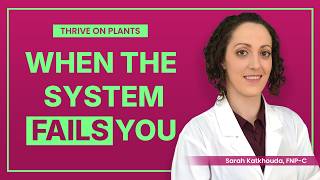
In this episode of the Thrive on Plants podcast, Dr. Daphne Bascom interviews board‑certified family nurse practitioner Sarah Kakuda, who has personally experienced surgical menopause after a hysterectomy and oophorectomy for pelvic congestion syndrome. Sarah recounts her year‑long struggle to find effective hormone replacement therapy (HRT), describing the rapid onset of severe symptoms when a high‑dose estradiol patch caused anxiety, hot flashes, and genitourinary distress, and her subsequent trial of gels, the Femring vaginal insert, and compounded testosterone. She details the insurance obstacles she faced—denials for gel, limited coverage for Femring, and the need to purchase out‑of‑pocket prescriptions or use the HRT Club. Sarah explains the clinical reasoning behind titrating estrogen first, then adding progesterone and testosterone, and shares specific lab values (e.g., estradiol ~100 pg/mL at peak, total testosterone 10 ng/dL, free testosterone <1 ng/dL) that guided her adjustments. The conversation expands to the underlying condition of pelvic congestion syndrome, the importance of a full vascular workup, and the paradox of removing estrogen‑producing ovaries while estrogen may fuel the disease. They discuss the scarcity of research on surgical menopause, the need for baseline hormone panels, and how to individualize dosing (patch vs. gel vs. Femring vs. compounded products). Sarah highlights the profound mental‑health impact of hormone deficiency—depression, loss of motivation, sleep disruption, and panic attacks—and how cortisol, progesterone, and sleep hygiene interact. The episode also covers the role of testosterone in women (muscle maintenance, mood, libido) and practical dosing strategies, including compounded micro‑doses versus FDA‑approved male formulations. Sarah emphasizes muscle as a “organ of longevity,” linking adequate hormone levels to muscle preservation, bone health, metabolic rate, and injury prevention, illustrated by her own severe quad‑tendon tear. Throughout, she models patient advocacy: tracking labs, preparing backup medication supplies, confronting insurance, demanding vascular imaging, and educating providers. The hosts conclude with a rapid‑fire segment on plant‑based recovery meals, the importance of self‑advocacy for all patients, and Sarah’s personal sense of purpose and meaning in turning her health challenges into a mission to help others.
Chapters
Hello and welcome to the Thrive on Plants podcast. I'm Dr. Daphne Bascom, and I so appreciate that you are taking the time to join me today. In today's episode, I am honored to be joined for a second time by family nurse practitioner Sarah Kakuda. If you saw our first episode back in 2025, you know that Sarah shared a powerful story of resilience. Since then, she's been through a life-changing surgery, navigated surgical menopause, and made a pivotal career shift to dedicate herself to midlife women's health. Sarah's journey is a masterclass in what it means to advocate for yourself in the healthcare system, a system that too often fails women. Just to remind you, Sarah is a board-certified family nurse practitioner with nearly 10 years of clinical experience spanning primary care, eating disorder treatment, and women's health. She's a member of the Vegan Superhero Academy and a plant-based athlete. And most importantly, she's a patient who has lived through the frustrations that many of us face when we're seeking answers to our health concerns. Sarah has recently joined Middie Health, a leading telehealth platform specializing in perimenopause and menopause care. And Sarah is bringing her lived experience directly to her clinical practice. By the end of this conversation, you will walk away with a deeper understanding of surgical menopause and what comprehensive hormone therapy may look like, concrete strategies to allow you to advocate for yourself when the healthcare system perhaps dismisses your concerns, and You will walk away with inspiration, inspiration from Sarah's story of turning personal health challenges into a mission to help other women. So let me ask you, what happens when a healthcare provider becomes the patient and discovers firsthand how broken the system can be? Sarah's answer, you fix it. Sarah, welcome back to the Thrive on Plants podcast.
Thank you. Happy to be here. Uh, lots to share.
And it's strange that it almost has been exactly a year. Yeah. Um, because we spoke at the Zion retreat last February.
Mm-hmm. Yeah, absolutely. At the end of the, at the end of the month. Yeah, absolutely. Crazy. Full circle.
So I have a feeling that your year has not been dull. Do you wanna, do you wanna bring us up to date on what has transpired since the last time you had an opportunity to talk to the community?
Yeah, absolutely. I think like many, 2025 is a year I wouldn't wanna repeat. And that's not to say that it was all horrible because as I thought back on it at the end of the year, there were some really positive moments. But my health journey, my fitness journey itself was really challenging. I came out of the surgery, um, completely prepared for a life without pain, and I was hopeful. I think when we last spoke, I was at a point where I was like, hey, I'm about 90% better, 90% pain-free. About a year ago, I was, you know, just under 12 weeks out from my surgery, and then things got worse. I decided I was going to go get care through Middie Health for my menopause, which was amazing. It's been amazing. And I, you know, I had— last we spoke, I was working with a concierge provider who was doing compounded products for me, estrogen, progesterone, testosterone. And I told myself, I want to go the path of using my insurance. I want to get FDA-approved products. I really want to be able to use what I can that I know has been studied and validated. And so I went to Middie, I met with an amazing provider. She's so wonderful. She's been such a great addition to my team. She's one of those providers who, when you talk to her and you say like, hey, these are the things going on, she goes, look, you're a provider, tell me what you need, I will help you. And I— she also guides me, you know, it's not just like, hey, you're in control. She goes, well, you know, maybe we should try this first. So it's been a really nice relationship. But in doing that, I personally chose to pull myself off of the testosterone temporarily to get myself optimized on estrogen first. And I had learned through my journey, both personally and as I was starting to work at Mitty, that that is a really important path to take. You really want to get to the point where your estrogen is optimized your progesterone's optimized, and then add the testosterone, even if you've gone through surgical menopause, because of the interaction between estrogen and testosterone. Um, it tends to muddy the water if you do them at the same time. So I just thought, hey, let's start from the beginning. So we switched from a compounded product to the highest patch dose, and within about 2 weeks, I was miserable. I reached out to her. I was like, I can't sleep, I'm anxious, I'm having panic attacks, I'm having genitourinary syndromes, everything burns, like syndrome symptoms. Everything burns. I feel like I have a UTI. This is miserable. I can't do this. I'm having hot flashes every day. And it was, it was pretty incredible how quick that happened. But again, when you don't have ovaries and you're not producing your own estrogen and you're dependent on things that are exogenous, it, it's quick, right? It happens quickly. The thing that got me was the maximum patch dose is thought to be the maximum that a woman will need. Mm-hmm.
You were, you just had one of those patches on.
I just had one on. Yep. Yep. And so I said to her, hey, I need something else. Like, this is not working. So we went up to 1.03, 0.1375. So the patches are like 0.1 is the max when you do the semi-weekly patch, the weekly as well. And then you get 0.025, 0.0375, 0.05, and so on. So we, she was like, hey, let's just skip 0.025. I feel comfortable with that. Let's just jump up. So we jumped up and this was end of August, right before our like full VSA retreat where I increased it to 0.1375 and I got a little bit of like an energy surge and I felt pretty good for a little bit. And within about a month downhill again. But I was like, hey, I'm gonna try it out. We're gonna see what we can do. At that time, as I was talking to her, I said, my biggest issue is I can't recover from my workouts. I'm feeling like no matter what I do, I can follow all the rules and I'm sore for a week and I am getting weaker. I can't even lift the same weight that I could lift a year ago, and I'm just not okay. Even if I'm consistent, it's, it's not working. What's happening to me? So of course, knowing what I know, I was like, you know, clearly my estrogen's not where it needs to be, but I probably need some testosterone. And she was really quick to say, let's increase your estrogen. But I kind of paused and I said, I wanna check my testosterone first. And I also wanna make sure I'm absorbing my patch because we are now above the maximum dose. Like what's actually happening here? So we did some blood work and when you have the 0.1 milligram patch on and you're measuring at the right time, which would be the day that you change your patch, 'cause that's the day that you're going to be at your lowest level. You should be— most women should be somewhere in the total estradiol range of about 80 to 100.
If you're absorbing well.
If you're absorbing properly. I was 100 in the peak of my patch because I forgot and went in within 24 hours of changing it. So like about 24 hours after changing it, and that's when you— that you have peak absorption. Mm-hmm. So I was like, hey, if this was peak absorption, I'm clearly dropping really low. This is not like, I'm not absorbing this and I'm above 0.1. So I'm not in the toilet in terms of my levels, right? But I'm definitely not where I need to be. Um, and at that point she said, hey, let's try and do the gel. So we tried to get estradiol gel and in converting doses up to where I was on the patch, It came up to be like 2 packets of the maximum dose gel, which is 1.25 milligrams, plus an additional of the lowest dose gel packet. And my insurance said, no, this is not medically necessary. We are not going to cover it. All you need is 1.25. She appealed it. They said no. So then I was fighting the battle that everybody seems to be fighting these days with insurance where I was trying to get my life sustaining medication covered. And clearly I was not okay. So I found this place called the HRT Club online where you can, you can pay for your hormonal hormone replacement therapy out of pocket. You do have to have a prescription. They have a membership program, but is it a discounted price? And I told myself, you know what, I'm transferring my prescription there. I'm going to pay for it. It was getting close to the end of the year at this point. It was literally the end of November at that point. So this was September to the end of November for this like fight. Yeah. Um, so yeah, very slow drawn out process of waiting for people. Um, and I finally ended up buying it and waited for my insurance to change because it was due to change at the new year. And in the interim, weirdly enough, my provider said, hey, let's try Femring. Let's try this vaginal insert. It is both locally active and systemically active. Let's give it a go and see what happens. 'Cause she's just like, let's get you something. Like, you need some support. So they had rejected the gel, but they approved the Femring, which was the weirdest thing because they almost never approve that for people. So, um, there we were. I had the ring. I was able to use the manufacturer savings card, get it for $25. It was amazing. Unfortunately, yeah, unfortunately they only cover one ring every 90 days and there's two doses. So if you have to change a dose in less than 90 days, because that ring is active for 90 days, you have to pay the full out-of-pocket. Not the end of the world. My insurance was covering it, but because I knew my insurance was changing, I had her send in another one before the end of December so I could get it. And I ended up paying like $175. So at this point I'm paying like $300 out-of-pocket for gel, $175 for a ring. And the sad thing is I was paying for insurance. It's ridiculous, to be quite honest, because I don't have a choice. I have to be on these medications. It's not like I'm just controlling symptoms. I need it for my health and wellbeing.
And you were fortunate that you had the means to even be able to do that.
Yes. Yeah, exactly. And the ability to reason through all of these. Yeah. To like work through these steps to troubleshoot it all, because there are people who, I've had a pa— I had a patient recently who went through surgical menopause who didn't have her patch for an entire month in December because of—
She didn't before her surgery?
Well, she did, but she had been on a patch for years. And then there's a worldwide shortage right now and she wasn't able to get it filled. Oh no. And because she couldn't get it filled and she didn't know of any other options, she just suffered.
She didn't say, Anything.
Anything. And when she came back to me, she was miserable and I could tell, I could tell. And I was like, hey, no, this is not optional for you. We need to get you a backup. Like, let's figure out a way to stash something in your house, whether it's a gel, whether it's a compounded product, something that we know you will have in case this happens again. And that's what I have now. I have the gel hanging out in my bathroom. I have patches. I have the Femring.
Just in case.
I'm like, I'm set, right? But it's still not the right dose. That's the unfortunate thing. And so, you know, as I've progressed through all of this, I've also come to realize with the differences in formularies, I'm also going to have to keep fighting this battle, just like many people with GLP-1s are fighting, where all of a sudden their insurance changes and decides to cover something different. So still can't get the gel covered at the dose that I need. The patch is covered, but now my new insurance doesn't even cover Femring. Fortunately, I have a backup and I can go until probably May of this year. So I have time to fight it, but I don't know what's going to happen come May.
Yeah, but fighting again.
Fighting again. Yeah, it's never— it hasn't ended. It hasn't ended. And so then, you know, of course, with all of that, I got testosterone added back in, which was a whole nother dramatic event because I work at MIDI and you would think where you— when you work somewhere, you have like the inside scoop. And I do. I've had a wonderful, wonderful network that I've built up that has helped support me through this and get me appointments. But you don't get special treatment to a degree that— to the degree you think you would, which it is what it is like that companies are that way. And I respect them for that. Like everybody is important, right? I'm not more important than anyone else. So no hard feelings there. Um, but I got to the point where I got a little snippy, and I'm not gonna lie, like, I won't sit here and pretend I'm above anyone. I— December came around. I had my labs done in September where my testosterone was checked, and my total testosterone was 10, I believe. Um, and my free testosterone was under 1, so very low. Um, and they say most women will have symptoms at a total testosterone below 25. I was at 25 when I stopped the testosterone back in July of 2025. That was with testosterone on board, so it dropped really low. And I had been waiting from September until December. I had an appointment in November. I was super excited. It got canceled at the last minute. It got rescheduled to December. Then my appointment in December got canceled at the last minute, and then they didn't reschedule me with anyone. I know, again, I'm a healthcare provider. I know I get sick, stuff happens. But somebody was— somebody had left. Multiple DEA providers at MEDI had left. And that's the thing that I think, you know, is really important to know when going to MEDI for treatment is testosterone is super important. But at MEDI, we cannot prescribe testosterone in all 50 states currently. So I'm fortunate enough to be in Maryland, which is one of the states where we can. Prescribe it. And we only have a number of DEA providers in Maryland who can prescribe it. So it's limited appointments. So we had 2 people leave, and then I'm one of the DEA providers, and I literally couldn't find anyone else to schedule with. And I was like, I can't treat myself.
No, I was going to say you can, but it is frowned upon.
Exactly. So I got a little snippy. I, again, I won't lie. And I was like, do I have to go elsewhere? Like, I can't treat myself. They were so wonderful. Everyone jumped in, got me an appointment. I was set, but I didn't see anyone until the second, third week of December. And again, that is a long time. Like I was almost a full year out from my surgery.
Yeah. Oh. Sarah, let's— you mind? Can you mind if I ask a couple questions?
Yes, please. Go right in. Go right ahead.
First, just in case people don't know, what is Middie?
Yeah, Middie is a telehealth organization that is primarily focused on women's midlife healthcare. So we focus mainly on menopause, perimenopause, midlife transitions. But we also look at longevity for midlife women. We do treat some younger women as well, 18 and above. We do treat, you know, just basic women's health, PCOS. We do treat weight struggles that typically come with midlife changes more than anything else. Right. It's not like we are a weight loss company, but we do work with women who, you know, one of the transitional body changes in midlife with all the changes in our hormones and the imbalance of insulin resistance, cortisol, estrogen, progesterone, testosterone, that whole crazy network, uh, leads to weight gain and leads to insulin resistance. And so we have a lot of people who come to us who are like, I'm on hormones, I am doing everything, nothing I've ever done before for my fitness and health is actually working to keep me in my healthy body. Yeah. Um, so yes, it is accessible to everyone in all 50 states. We take insurance, one of very few hormone replacement therapy providers who do take insurance. And really quite a blessing because it was created by women for women. Most of the providers are women. Most of us are going through the same changes. So there's a definite understanding of what's happening.
And, and thank you for explaining that. Yeah, because MIDI is one of the companies that, you know, there's several of them available, but they're— I know MIDI is evidence-based. They have very clear protocols.
Yeah.
So it's one that we would, we would recommend.
Yeah. Yeah. I definitely would even go there. I would get treatment through MIDI even if I didn't work at MIDI, honestly.
And why do women— I mean, sometimes I'm sure there, there may be people listening who are saying, Why is she worried about her testosterone levels?
Yeah. Um, so a number of reasons. The main one being I got extremely depressed without testosterone. I was unable to function, mm-hmm, for lack of a better way to describe it. Mm-hmm. I actually told my parents the other day, I said, for the first time in months, I've been able to keep my sink empty for like a week straight. It was overflowing with dishes. My kids were like, can we do something about this? And my kids are 11 and 13 and they were, they would come home from visiting their dad or with their dad for half the week cuz we share custody and, um, they would wanna jump in and help, which is great. Kids should do that. But it also was really disheartening because this is stuff I wanted to be able to do. This is stuff I used to be able to do. I've always been that person who can't sit still, can't keep myself from multitasking. And I was living a life of every free moment of my day that I wasn't committing to taking care of patients. I was sitting on the couch or laying on the couch. I couldn't, I couldn't do anything. I had days where I just laid in bed and stared at the ceiling. I had no motivation, super depressed, no energy. I could sleep for 15+ hours and still be tired. Um, and a huge part of that is testosterone. Testosterone does have a link to your dopamine levels. And so in the absence of testosterone, we see dopamine deficiency-like symptoms, right? That lack of concentration, those worsening ADHD symptoms in people with ADHD, that depression, lack of motivation, low energy. And then on top of that, I didn't have any support for my muscles. So when I was able to mentally and physically get myself to actually work out or do anything, I, I couldn't, I like, I, I had no, I had no stamina. My muscles were dead after like 1 or 2 lifts, whereas before I was a super active, hyper, hyperactive individual. You couldn't keep me still.
And for those of you that don't know Sarah, Sarah is someone who can almost do a human flag.
So it's, yeah, I mean, strong.
You are strong.
Yeah. Yeah. And I, you know, I, I am strong, I would say in all the ways you can be strong, but my physical strength right now is not near what it, what it has been in prior years because of the deficit in hormones. Months.
But your mental health took a huge hit.
It did. It did. And that was the one that hit me harder because I expected the body changes. I expected hot flashes. I expected even changes in libido, right? We all hear about these things as we get older, so we identify them as that transitional set of symptoms. But I, I felt mostly the mental health stuff. I didn't feel much of the physical, physical stuff. It was like my body changed in the first month after my surgery, with the exception of muscle wasting and lack of stamina and inability to build muscle. The shape of my body didn't continue to change. My— the way my body seemed to function, my gastrointestinal tract, like everything else I felt like was, was still the same. I was a, I was a shell of myself. And that sucked, for lack of a better description.
No, because I mean, when we spoke in February, you were like 90% of yourself. So what— I mean, you are privileged to have the knowledge to advocate for yourselves.
Yeah.
Why? Why are lab tests important? So if anyone's listening, And I probably should ask you to take a step back and explain what pelvic congestion syndrome is, why you chose a surgical approach, and where you are now in that journey. Because I think that's a— you're about to start another chapter in this exploration too.
Yeah. So pelvic congestion syndrome is the diagnosis I was given in September of 2024 after about 12 and a half years of trying to find an explanation for my chronic pelvic pain. Mm-hmm. Um, and I would say that the most interesting thing is from the very moment that the pain started years ago, over a decade ago, I have been able to pinpoint the exact spot that is sensitive and tender. And I've told people that, and I would tell providers who were doing an abdominal exam, like, if you push right there, I can feel it radiate everywhere else. Else. Like, that is where it hurts. I could draw a circle right there, right above my pubic bone. Boom. Right in the middle. Doesn't matter. And it will radiate out. It will affect all of my other organs, it seems, cuz my gastrointestinal tract is impacted. Like, I get bloated, really bad IBS-like symptoms, which I learned later can be linked to pelvic congestion syndrome. So going back then to, I was given this diagnosis as an answer. Pelvic congestion syndrome ultimately is venous insufficiency in the pelvic cavity. So the veins are not fully competent. The valves are not fully competent. You get pooling of blood and essentially varicose veins throughout your pelvic cavity. In most cases, the reproductive organs are the most effective— affected, not effective, affected. And As a result, one of the interventions for treatment is hysterectomy and oophorectomy, removal of those organs. The thought is then also that estrogen fuels pelvic congestion syndrome. So when you remove the ovaries, you remove estrogen production. The problem there is it is most common to find pelvic congestion syndrome in premenopausal women. Of childbearing age into their 30s, probably at the oldest. I've found in the research that I've done two documented cases, literally just two in history, of women who are postmenopausal diagnosed with pelvic congestion syndrome, which, you know, supports the case that estrogen is one of the factors that, that plays into it and puts you in a position of trying to figure out, okay, well, what do I do when I remove these ovaries?
Yes, that's the question. Do you replace the estrogen?
If estrogen's fueling it, you do need estrogen to live. So what balance are we then trying to find? And this is where we don't have— we don't have answers, we don't have research, we don't have any kind of data about— I think it was, what, 2 weeks ago maybe I sent you an article that was published like 10 days after my surgery. The craziest thing that said surgical intervention is not favorable. 2 weeks too late. Yeah, because here I am now. So ultimately there are other things that can be done. Embolization, less invasive procedures. Sometimes they'll do a bypass of the veins affected. And what I later discovered, which I should have known, and you know, we, we've talked about this, you and I, but you really need a full vascular workup if you're diagnosed with pelvic congestion syndrome. You need a full vascular workup because it may not just be the veins in your pelvis. Many women with pelvic congestion syndrome have vulvar, um, varicose veins. They'll have varicose veins in their lower extremities. I didn't have any of those, but you never know. Could they be up in my abdominal cavity further? Could they be affecting other veins? I have a strong family history of stroke. Could they be elsewhere? One of my relatives died in the very early years of his life. I will say under 50 after multiple strokes. My dad has missing veins in one of his legs, which can be a normal variation, but also something's off there, right? And I didn't have that full workup, so my bad there, but also I should have had some guidance.
No, and again, we were talking earlier and in our conversations, I think I had made an assumption that a vascular workup had been part of that pre-surgical pathway.
It should have been. Yeah.
Sarah, I would— you experienced pelvic pain for 12 years and as a provider, there was a question that was posted in our school community a couple weeks ago. Is pelvic pain normal?
Oh, um, not persistent pelvic pain.
I was— yeah, this is someone who's chronic. This is chronic pelvic, chronic and or persistent pelvic pain. Is that normal?
It is not. It is not normal. No. Um, and I think we're made to believe it is. I think that from what I have experienced in my journey, much of what I've been told was, that's just what happens, right? The biggest one that I got was IBS, anxiety, and then also, oh, your anatomy changed after having children. And I was like, cool, so this is life. So, and I refuse to accept that. I accepted it for a little while, um, but I'm at a stage in my life where I'm not going to accept that anymore. Call that hormonal impact and lack of a buffer because I don't have the same hormone levels as before, or just being tired, but I'm not— I have— I'm not even 40. I turn 40 next month. I have so much life left. I'm not gonna live my life this way. It's not okay. And I do have moments— I'm not, again, I'm not gonna like be unreal and make it all seem flowery and wonderful. I have moments where I'm like, what's the point? I truly said to someone the other day, I would be okay if I didn't wake up tomorrow.
Oh no, don't say that.
And I'm, I'm honest about that because I also know I would never do anything to harm myself. I've been through those stages in life. I've been suicidal. I've done that. I have the support. I have people to lean on. If I was gonna do anything, I wouldn't have said anything, right? Um, and I have reasons to live. So it, it's just an issue of feeling so low and hopeless and I share this because I want other people to know they're not alone. I'm in the field. I've been dealing with this for such a long time. I have so much more knowledge. I spend so much of my free time doing research, and I have a big file of articles on pelvic congestion syndrome, postmenopausal pelvic pain, like all the things because I can, but other people who are going through this, may not have that or may not have the understanding. And I want everyone to know that they're not alone.
Mm-hmm.
And I'm on their team too if they just keep me in mind, right? Like just Sarah would, Sarah has, Sarah has been, but also reach out to me. You can put my contact info on the, on the podcast and thank you. You know, like I'm here, I'm happy to talk to people. There's a support group out there. We need each other.
Well, thank you for sharing that, number one, because I do think people— one, I think people are told it's either a normal part of life or that's just what happens as you get older and you need to live with it. But 40 is not older. And so I would encourage anyone listening to what Sarah said, if you are having chronic persistent pelvic pain, it is not normal. And you need to speak to a provider, and if you're not heard, and I'll definitely share your information in the podcast notes so that people can reach out and maybe see a MIDI provider. Yeah. But how do you, how do you encourage people to advocate for theirselves? Because I think it's one, it's scary.
Yeah.
Because no one, no one wants to tell their doctor you're wrong or you're not helping me or, You know, thank you for everything you're doing, but I still feel like doodoo.
Yeah. Yeah.
Rather than just sitting back and sitting on the bed for lying, staring at the ceiling for 15 hours and thinking, this is my life.
Yeah. Yeah. I am a very big proponent of feeling your feelings. I think it's super important. I did some work in mind-body medicine just for my own learning many years ago, and I truly believe we need to feel things, we need to experience them so they don't get trapped inside and just escape like an exploding balloon, right? But what I have told my patients is once you've had that moment, once you, once you felt it, once you've had time to be like, you know what, this sucks, I hate it, I don't want to deal with it, but this is my life and I'm going to make it better. I have control over some things. The conversation I always have is if it feels like it could be better, it can be better. And you are not alone. I am on your team. Whatever age you think is old, that's not old. We've been told it's old because we lose estrogen. We've been told you hit 40 or 50 and you're old and your joints are supposed to hurt and that's just part of aging. It's not if you have the right hormones. But what is most important for me in these moments where I've felt miserable, I've lost control, I feel hopeless, is to then say, okay, I felt it. Now what can I control? What can I do? What direction can I go with this? Um, and it's something as simple sometimes as a test. Blood work, an ultrasound, scheduling an appointment with someone, finding someone else to give you a different opinion, right? Doing some research. Like I said, I have a folder of everything. Sometimes that's the only way I feel like I'm in control. Like I sit on my phone and I literally will be laying in bed staring at the ceiling and I'm like, pelvic congestion syndrome, scholarly articles. Like you, you do what you can to feel like you have some power. And that's, I think, what's key.
Control the controllables.
Yes.
Yeah. And Sarah, just for anyone listening who may be about to have a surgical procedure where they go into surgical menopause, is— do you recommend that they get a baseline hormone assessment to see where they are today? Because how are— so this is an interesting question, and I know we were chatting a little bit before we started, but How do you titrate? How do you know when you're getting enough estrogen, or do I need to add testosterone, or should I add progesterone? I feel like, especially now that the black box warning is off, there are all these women wondering, should I, can I, when is it too late? How do you, how are you starting to unravel this with the women that you're speaking with?
Yeah, this is a, actually it's a really, um, it's a really controversial topic, to be honest, in the women's health world. And no, it's okay. It's okay because, because I think, you know, I'm, I'm always kind of in the middle on things. I'm not gonna take one extreme or the other. I'm gonna use reason and, and rationale, rational thinking, right? To figure things out. And I always say the more information you have, the better, as long as you're not just looking through a pinhole at that information and using only that to make a decision. So, if knowing your hormone levels before your surgery will help you better control your sur— your levels afterwards feels right to you, there's nothing wrong with doing that blood work. I wish I had those levels, to be quite honest, because what I know now is the unfortunate thing that the menopause world treats surgical menopause just like natural menopause. And it's not. And we're doing a disservice to women who have gone through surgical menopause or who have experienced premature ovarian insufficiency, premature menopause. Um, but I think part of it comes from a lack of understanding. I encountered someone who unfortunately I think I offended by responding to their comment, but it was in a, in a support group who they said, yeah, my provider told me I went through per, uh, premature menopause at the age of 48. And I was like, whoa, whoa, whoa. No, that is normal menopause age. Premature is under 40. Early's under 45. Like, but the provider, this person said, well, that's what my doctor told me. Mm-hmm. So it goes to, it goes all the way back to like what we as providers are telling people and teaching people.
Yeah.
And if we are not educated, how will we ever give people what they need? Right. Um, and so that's my struggle. That's my struggle is like, I wish I had that baseline because at this point in my life I'm having to fight so much more for myself to feel okay when everyone's telling me you are fine, this should be enough. I got gaslighted into believing that my symptoms weren't actually low estrogen because of a need for more. It was really just the patch was the problem. I needed a different brand or a different manufacturer. And I was like, no, because I had actually low levels even with other forms of estrogen. Like, I'm still feeling this way. It's not just about the patch. And again, I think that's— it's a lack of understanding, right? And we need to fix that. That's my life mission.
I was just going to ask how. Yeah. I mean, I, so I'm so proud of you that you've turned your pain into passion. But how do we start to, let me make this a multiple-phase question. How do we get our healthcare providers better educated? How do we better educate women with good information? Not some of what we see on social media. Because advocacy and being able, being empowered to speak to yourself is one of the best things that you can do in life. But you need to, you need the knowledge in order to be comfortable having those conversations and to be prepared to walk in and say, hey, I want to talk about this. And here are the 1, 2, 3 reasons why this is important to me.
Yeah. Yeah. I think the unfortunate reality is that as women we need to ask, and I think I, I, I say this all the time, I say this to my patients even when they're with me, like we need to ask all the questions. Mm-hmm. Don't ever accept that the person who's talking to you, sadly, unfortunately, cuz I also hate it when people question me, but I like it when they question me. So my own problem there. But, But it's important that we question everything.
I would agree. Yeah.
We need to have a justification, right? It's important to understand why, not because we're questioning, do you know what you're doing? But like, please explain to me why. So I will, for example, when I have patients come in and they're like, well, I'm having heavy bleeding and I feel like my estrogen's too high. And let's say it's a perimenopausal woman who is on an estradiol patch. And what we have learned is in perimenopause, you need higher levels of estradiol. To regulate your symptoms than a woman who's postmenopausal because we have a built-in sensor. I always call it the built-in sensor, and it's a negative feedback loop of your body is going, hey, do I have enough estrogen? And if your body is not sensing it has enough estrogen, let's just say your hypothalamus is detecting things, sending messages to the pituitary gland to kick out some follicle stimulating hormone to cause the ovaries to produce estrogen, and then you have what you need. But in perimenopause, it's a very reactive, chaotic process where your body may be sensing, I don't have enough estrogen. And by the time the message gets to the ovaries who are exhausted to produce more estrogen, it's already changed a little bit. So you get this big surge and then the body goes, whoa, whoa, whoa. Like, hold your horses. Slow down and then you get a complete cessation. And it's this like back and forth, back and forth, almost like the all or nothing thinking. And as a result, we get irregular periods, we get hot flashes, we get weight changes, we get all of these symptoms. The, the truth is low estrogen causes the symptoms, but so does fluctuating estrogen.
Mm-hmm.
And so in a perimenopausal woman, our goal is to get that baseline level up high enough that the body goes, I am good, I don't need to react anymore. It doesn't care if it's exogenous or endogenous estrogen, as long as it's estrogen and as long as it's enough. And that prevents those fluctuations. So I explain this to people so that they understand, because when they come back to me and they're like, my breasts are really tender and I'm having irregular bleeding, this is too much estrogen, we have to talk through, okay, actually it feels that way. Yeah, because you're probably at a peak right now. But let me tell you, if you are at a high, you definitely definitely had a low and you're gonna have another one. So we have to get you up higher. And that's where labs don't always come in handy.
Yeah. Well, especially as you said, because that up and down, especially during perimenopause, it can be very, I don't wanna say volatile, I think is the word to use.
Yeah. It's just chaotic. Chaotic. Yeah.
And do you, Do you think there's any change in estrogen receptor sensitivity as we're going through midlife that contributes through to, you know, almost similar to the fact that we become insulin resistant as our estrogen changes? Do we also become somewhat resistant to estradiol as we're going through this midlife period?
I think we do. I mean, I think, you know, there's definitely evidence out there that estradiol is metabolized differently by different people when we do exogenous forms. right? Whether you do it orally or you do it transdermally or you do injectable, body fat impacts that, activity level impacts that, overall health and wellbeing, and even some medications compete for binding sites, right? We know GLP-1s compete with estrogens, SSRIs compete with estrogen. So there, I don't see any reason why not, right? I think as we get older, everything gets desensitized. It's just, that is actually part of aging. That is part of aging. That is one thing that changes. No, I mean, I do think that, I do. And we see it in men with testosterone too, right? It's not just a lack of production, it's just in general, our bodies cannot process things the same way.
And thank you for that because, you know, I think it speaks to multiple pieces of the puzzle because there's so many changes that are going on. Yeah. Your n-of-1 experimentation. You have to do it because—
I know.
No one's written the textbook on Sarah. So you may be deviating from textbook medicine, and now we have to treat Sarah as an individual and navigate Sarah's need for exogenous hormone. I won't even call it, you know, we were talking about this in Menopause Mastery last a week or two ago, because no one questions that we give people thyroid hormone, or no one questions that we could keep it insulin. But damn, if we want to give people some estrogen or progesterone or testosterone—
huh, testosterone's even controlled.
Well, I was gonna— that was the next thing I wanted to touch on, because you said you need a DEA to prescribe testosterone. Why?
Oh gosh, Lord knows.
Am I going to use too much and get fat?
Right. And that's the thing is it goes back to— it goes back to men. It goes back to Olympics and competitive athletes. And the unfortunate thing is that we once again are looking at the way healthcare has come about and how women's healthcare has always been dependent on men. And we've done research on men and we've then just tried to transpose that onto women and it's different. Our bodies are different. So to say, hey, women are going to misuse testosterone, let's be real. Like, the biggest thing that I hear from my patients when I start them on testosterone is, I don't want to grow a beard. I'm scared my voice is going to get deep. And I'm like, look, we are using minuscule doses, like so itty bitty. And, and I will say, you know, there is a lot of, a lot of talk out there about all the ways that you can do testosterone as a woman. And a big question that I often get is, is, well, can I just use Testim or Androgel because they're FDA approved for men and I can get a whole box or a whole tube for an affordable amount and it'll last me a whole year? And the reality is, until we get rid of those DEA requirements, we're technically not following DEA guidelines for prescribing if that happens, because we can only prescribe a 3-month supply. And if a box of testosterone gel for men lasts a whole year, for a woman, you need to find a pharmacy that's going to break it open or you have to lie in your prescription. And I'm not about to do that. So I always tell people like—
risk your license.
Yeah, exactly. The best, the best way to start out with testosterone is a compounded product, whether we like compounds or not, because it is the easiest way to dose it very, very in very tiny microdoses. And then when we figure out how much you need, then we look at other ways to do it. Maybe you need a lot more and we can do something more highly concentrated. Maybe you need injectable. Maybe you need a pellet. Like, I'm not going to judge the way that anyone does it. I like the compounded product, but everybody feels better in their own manner with whatever version that they use.
And do women need testosterone?
Yes. Yes.
I mean, leading question.
Yeah, right. I mean, so like, let's think about this. This is what I always think is so crazy is that we treat women in menopause so differently than we treat women in reproductive years, where you see people who go to fertility treatments actually need testosterone support. You see them need progesterone support. Like, we do this at other stages in life. It's so crazy to think that we suddenly just have decided that once you stop having a period, or once your period gets irregular and your hormones drop off those things don't matter anymore.
Now, your body's cells still have testosterone receptors too.
Absolutely. Absolutely. And you need it for more than just libido and more than just muscle, right? That's the thing is it's an androgen deficiency. It's not a low libido issue.
Correct. Which I mean, heretofore, I won't— we've always treated these hormones as sex hormones, which I think is You know, we're, we're now changing the narrative that they are hormones, period. Period. Uh-huh. And you need to understand what you need as an individual to function optimally.
Absolutely. Absolutely.
Sarah, do you mind my asking, is, um, you know, I, I know that mental health has been quite a challenge during this time. Was it tied to sleep at all? Is your, As you've been going through the time since your initial surgery last December, how has your sleep been impacted? And if, if it has, what have you done? Because I personally think sleep is so misunderstood and so vital that sometimes we don't address it when really getting a good sleep can solve so many different problems.
Yeah. My sleep was significantly impacted at first when they just had me on estradiol and no progesterone, which, as you remember, that was a big fight. We talked about that in the last, in the last podcast episode. But once I got the progesterone on board, my sleep was pretty good with the exception of moments where I didn't have enough estrogen. And I don't know, I still don't, but I can tell even more so when my levels are really low because I have the middle of the night wake up up between 2 and 4 AM when our natural level in a 24-hour period is at its lowest. So I always tell people when they come in and see me and they're like, I keep waking up at 3:04. 3:03.
Yes.
Yeah, you need more estrogen, my friend. It's that. It's estrogen, right? And there's this common conception that progesterone is the answer to that because progesterone can make you drowsy because it increases that GABA concentration in your brain, kind of settles the body, and you chill out a little bit. We need both. We need both. Too much progesterone was actually what initially led to my low mood, because when I was having a lot of panic attacks, instead of upping my estradiol, they upped my progesterone and they took me from 100 to 300. And I listened because I didn't know better. And I was so sedated. And I'm going to say this, and it's, it's embarrassing as it is, I'm just going to throw it out there. I was so sedated I almost wet the bed one day.
Oh no.
It was bad. Like really bad. So until I realized it was my progesterone and decided to pull back on it on my own, I was a zombie. I was a zombie. And I've described it to people like I went to sleep. I was sedated for my surgery. I was anesthetized for my surgery and I never woke up. And I'm still just in a fog. And I can mask and I can pretend I'm okay and I can laugh and joke and share things. And I am functioning much more than I would be if I was anesthetized, let's be real, but I'm still not there. And so, you know, going back to the sleep piece of things, I am at a point now where thankfully I figured out a good pattern for sleep specifically because I have done my own experiments. I know that I have to take my progesterone every night right before bed. If I miss a progesterone, I'm not okay. If I take too much progesterone, I have restless arm syndrome. It's weird. I don't— doesn't— there's no explanation for it, but one of my arms doesn't want to rest. I don't understand it, but I'm going to write a paper about it one day. But, but then, you know, as long as my patch— I am still doing a patch with the Femring. So I'm on like mega doses of estradiol right now. And every once in a while I'll throw a gel in there and I just like like slap it all on, play the Tetris game, do whatever I can to feel okay. Um, but if my estrogen level is really low, I'll wake up in the middle of the night. If I don't take my cortisol supplement, I wake up in the middle of the night, or I have really, really crazy heart rate fluctuations. So I wear, I wear, um, a Whoop as well as my Garmin watch, and I look at everything. And I did my own experiment over a period of 2 weeks where I have these cortisol gummies that I got. They're vegan and they're green apple flavored and they're amazing. And the bottle says take 2 every night. And I did that at first and I was like, this is not doing anything for me. And they taste so good. I was like, I mean, ashwagandha, L-theanine, magnesium, like, is that harmful? So I took 4. I don't recommend that people play around with their meds like that. I did it because I also knew the doses of ashwagandha and L-theanine that were most beneficial and it wasn't optimized. When you get things over the counter, it's never the maximum or recommended therapeutic dose. It's always like half of it or a quarter of it. So I took double. And as I watched my heart rate change throughout the night on my Whoop readings, you could see that I had these massive spikes in stressful sleep when I was not doing any. When I did just 2, it was like a little less. And when I take 4, perfect.
Interesting. You'll have to share those gummies.
I will.
And I was laughing, not at you, but there's a whole thread on our Menopause Mastery Community now. Yeah. Why am I waking up at 3 AM?
Yeah, it's true. It's a combo of estrogen and cortisol. Right? It, it really truly is. And, and they, they, they're connected. They're connected. And I've had a lot of people say, can you check my cortisol? I'm like, I could, but it's probably not gonna feel great when you see a normal result because it's really hard to pick up the abnormals. But we know it's happening, period.
And thank you for saying that because I'm, I'm hoping anyone on that thread who's listening, you now know that there are things you can do.
Yes.
Let me keep track of time because I want to make sure I get you back to your patients.
Yeah.
Do you have a few more minutes?
I do. I absolutely do. I have a couple more minutes.
Yeah. There were— before I do some myth-busting quickfire rounds.
Okay.
Or actually, we'll do a lightning round. I would love if you would just touch on, because This past year, I wanna say muscle being the organ of longevity has been the kind of the, the catchword for 2025.
Yeah.
And I think that's gonna go into 2026 too.
Mm-hmm.
Why is muscle so important for women and how do you as a, a provider at Middie talk to women about the need to, um, and I think I had it in one of our slide decks that It's muscle. I'm not gonna call it the organ of longevity because we need all of our organs for longevity.
Yeah.
But how do we focus on understanding that the more muscle, the more muscle we retain and gain, the better our cardiometabolic health will be, the better our overall health will be, the easier our weight maintenance strategies may be. Yeah. Is this part of the conversations you're having now?
Yeah, absolutely. Absolutely. And it, it ties into our hormones as well. So it's, it's absolutely a very important conversation. There's multiple reasons why that is the case. We know that women who maintain adequate muscle mass have better outcomes with their bone density. Muscle supports the structure of the bone. It's just basic mechanical, like, Basic, basic mechanics. I can't even speak properly. Basic mechanics. And in addition to that, when you are also weightlifting, when you're maintaining your muscle mass, some of that muscle helps with balance. Some of that muscle helps prevent falls. We know that there's that story of the little old lady who fell down and broke her hip, right? Part of that is not just the bones. Part of that is also the muscle. If you don't have the muscle, you can't maintain balance and coordination. So really important for that, again, from a mechanical standpoint. But then also we're looking at, you know, your heart's a muscle. So you need that, right? And we want to make sure that from a metabolic standpoint, we are balancing out calories burned versus calories taken in. Muscle impacts your basal metabolic rate. It impacts what you're burning, how much you're burning. Um, and so I hear from a lot of people when they get to this point in life too, hey, I can't lose weight, or I'm doing everything that I always did, but it just seems like I'm not getting anywhere and I'm gaining all the weight around my center, around my gut. And I always tell people the biggest, best thing you can do there is one, balance your hormones, and two, lift weights. Because if you balance your hormones, you have the ability to maintain your muscle. If you balance your hormones, you have the ability to build muscle. If they're not balanced, you will have more muscle wasting. It doesn't mean you can't do it, but it's going to be much more difficult to maintain that muscle and build the muscle. Um, and if you are maintaining that muscle mass and building that muscle mass, you are then giving your body optimal metabolic support to maintain a healthy weight, to burn that fat, to get rid of that visceral body fat, which we see as part of this wonderful midlife transition.
Exactly.
Yeah.
Thank you. And for anyone who doesn't follow Sarah on Instagram, she's a beast. So she's not just talking the talk, she walks the talk. And I mean, lifestyle is, needs to go hand in hand with managing your hormones intelligently.
Absolutely. Absolutely. And I will say, you know, just to kind of throw this in there, like the, I, I keep saying hormones and muscles are connected. And we didn't touch on this, but I know you and I had talked about it a little bit and it's part of my story over the last year. You know, in addition to everything else that I've gone through with my hormones being as low as they were, I, suffered an injury that was pretty extreme.
Forgot about that.
From a mechanism that wasn't quite aligned with the severity of the injury. So I have always been an athlete. I, softball has been my sport my whole life and I took a break from it and then got back into it and I was really excited. I was playing in a co-ed league. It started in September, actually August. I was really, really happy. And I kept getting hit. I kept getting injured, but it wasn't, it wasn't a situation where it was like me being clumsy. It was, hey, the ball's coming at me, right? Normal. It happens. And then this one day when I was running from home to first after hitting the ball, I injured my quad.
And it was not, not just injured.
I tore my quad. I tore my quad and my quad tendon. And it was the most traumatic injury I think I've suffered in any sport. Not because of the severity of it. I've broken bones, things like that. But it made no sense. It made no sense. And once again, I was stuck advocating for myself because it didn't make sense to anyone else either. I didn't twist weird. I wasn't like stopping and going. I literally hit the ball. I wasn't even racing against time to get to first. It was an easy run. I didn't push myself as hard as I could. I've always been active. I had been weightlifting, but I tore my quad. Yikes. And of course, being who I am, here's an example. I kept playing on it for like 2 hours and then I went home and my leg blew up and the bruising was delayed. And essentially I was non-weightbearing for 2 months, which impacted my ability to function as well. They had me on crutches. I had an MRI and the MRI that was actually 2 months later still showed the tear. That is how severe the injury was. And so in talking to my orthopedist, I shared with her my medical history. And it was funny 'cause I saw a physician at an urgent care who said, I think you just have a muscle strain. Here's a muscle relaxer. Cool. I took it upon myself to make an appointment with an orthopedist. 2 days later, I saw a physician assistant. Yeah, you have a nasty tear, but we don't need to do any imaging. Just stay off of it. I go back 2 weeks later, I see a nurse practitioner. Oh my God, why didn't we get an MRI? So it's so interesting not to like bash anyone, but it's always so interesting to see the difference in the way that people function and what we do with, you know, the training that we've had. I think everybody had a portion of the picture and so they, nobody did anything wrong. It's just, it didn't make sense. The whole situation didn't make sense. And in the defense of the nurse practitioner, urgent care provider, I didn't have bruising yet when she looked at it. It was swollen and it hurt, but it wasn't bruised.
But it bruised like big time.
Bad. Yeah. Yeah. There's still discoloration and this injury was on September 30th and today is what, January 28th? So yes.
So it, it also makes you wonder about changes in muscle and tendon quality. Yes.
Which we know happens. Yes. And that's what the orthopedist was saying when I was talking to her. She was like, "Definitely, I think this is hormone related." The injury was mechanical, sure, but it wouldn't have been so severe and it may not have even happened if my hormones were balanced.
Another reason to make sure you optimize your hormone health.
Mm-hmm. And stay active.
And, and stay active.
Yes.
And I don't know if you posted a picture of your leg on Instagram, but— I know when you sent me the picture, I won't tell you the words that came outta my mouth.
Yeah, it was terrifying.
Oh my gosh. Yeah.
Yeah.
That's, it looked like you, someone ran over your leg. That's how bruised it was.
Yeah. Yeah. It was bad. It, I mean, yeah. And I'm, I'm still recovering.
But thank you for reminding me about the other thing that happened this year because Ladies, we have to keep moving, whatever that means to you. Maybe you're not a softball player, maybe you're not doing a human flag, but maintaining your movement is so important for your strength, for reducing your falls, for preventing frailty. We can go on and on. Sarah and I will come back and do a podcast just on that.
Yes.
But know that your hormone health is tied into your musculoskeletal health. You can't separate them.
Mm-mm. Not at all.
All right, Ms. Sarah, I, I will get you back to your patients. A couple of quick lightning round questions. What is your favorite plant-based meal for recovery after a hard workout?
Ooh, I'm a big bowl person. I love to put a bunch of different ingredients in a bowl and eat it. And so I do like a massive salad. So tons and tons of greens and then a little bit of brown rice and And I'm lazy when it comes to cooking, so I do just like squares, cubes of tofu that is straight out of the package because again, I'm lazy with it. But I like to put a little bit of hummus in there as like part of my dressing, like a dressing. And a trick that I learned from someone in the community is using the juice from like pickles or what are they? Banana peppers. Pickles or banana peppers, pouring that on there to kind of like liquefy that a little bit and mixing it in. And then a little bit of nutritional yeast. So just like this big colorful plate of everything.
Dr. Greger would be proud of you. Is there, Sarah, is there anything? I have one last question for you, but before we get there, is there anything we haven't talked about that you think you want to make sure anyone listening today hears? Male or female, about advocating for their health at whatever stage of life they're in?
Yeah, um, I think, you know, the key is just always remembering that it shouldn't have to be this way, but it is. And I think that's the hard thing for me. That's the obstacle that I always face. I'm stuck having to advocate always. You're always fighting for yourself. It's nonstop. I'm starting that new journey now with the recurrence of my pelvic pain and now having to look into it even further, which is a whole nother story. But, um, it can be disheartening. It can be disheartening when you feel like you're constantly fighting. It's like, can I just take a break? Can I get a break? Can I, can I rest? Can somebody do the fighting for me? Um, especially as a healthcare provider, and I know not everybody is a healthcare provider who's fighting for themselves, but I will say, you know, as a healthcare provider myself, I get to the end of my day and I'm like, I've been taking care of all these people. Mm-hmm. Do I still have to take care of myself? Like, can someone take care of me? Can someone fight for me? Because I've been fighting for them. We're fighting political battles to try to get things covered. We're fighting insurance, we're fighting, you know, like literally every battle. And then you get to the point where you're like, oh, my medical provider should be fighting for me and they're not. It's getting better. It is. More awareness is out there. There's some states that are actually requiring menopause-specific continuing education for renewal, renewal of licenses now. So it's, it's— we're getting there. But we always expect our medical providers to be there to fight for us. And the unfortunate, sad truth is healthcare feels a lot like a business when you are the medical provider and you're just trying to survive. We're all just trying to survive. So Remember that it shouldn't have to be this way. We want it to change. And unfortunately, this is the way that it is. And if we can't change the system as quickly as we can just push and fight for ourselves, we— that's what we have to do.
Yeah. You need to fight for yourself. Final question. What is meaning with purpose? What does living with purpose mean to you today?
Oh gosh, I think this goes way back to even just beginning my journey with the Vegan Gym, honestly, um, because I lived so much of my life in survival mode and I hit a point in life where I realized the things that I want most are happiness, which is a choice. It's not something that's conditional. So I have to choose that and time with my family and to live quality years, not just quantity. So I wanna be able to move. I wanna be like my mom who is in her late, she's in her 70s, she turned 70. I can't even do basic math today, but she just turned 70 and she's climbing on playground equipment with her grandkids. Her neighbor who is in her 80s is jumping on a pogo stick in the middle of their cul-de-sac. Like, that's how I want to be. And for me, getting to that point means putting every effort into living every day now my best, um, treating my body with respect, giving it what it needs, trying to find answers when things aren't right, even when I feel miserable and disheartened and hopeless, feeling those feelings and then moving on, putting a timeline on it. Like, this is it, I'm giving myself an hour, and then I'm gonna go kick some butt and get back to it, right? Because that's the goal is you have to really know what you want and what is most important to you. So identifying those priorities, those core values, and then focusing on, okay, how do I get that? And for me, I've just always thought, one, my family's the most important, but two, I wanna leave this planet with a mark. And maybe I'm leaving a mark on every single person I meet. I think we all do. But I need it to be huge because that's who I am. I, I'm that person who's like, I'm going to go to space one day. I am going to invent something. I am going to start a business. Like, I'm going to do something big. It's going to happen. When? I don't know, but I'm getting there. And every step of the way, is one step closer.
I love that. And I mean, your CEO is a great example. There's no limit on when you can make an impact, Sarah.
Yeah.
And I know you're going to, 'cause you already are. Thank you. Sarah, thank you so much for joining me again on the Thriving on Plants podcast. I mean, I hope you know how many of us look up to you. I know you share only a portion of probably what you're going through, and I really appreciate it because I think it's easy to— you hear the good and everyone posts the good, but no one ever hears what people are really suffering through.
Yeah.
And the fact that you continue to dedicate yourself to seeing your patients every day to being a great mom, to being a great partner, to being a great role model. And I just wanted to say thank you.
Thank you. That really means a lot. It does.
So I will— I hope we can have you back to hear part 3.
I will keep you posted.
And we can talk about some of the wonderful things that you're doing at MITI.
Absolutely. Can't wait.
Thanks, Sarah.
No problem. Thank you.
The information shared on the Thrive on Plants podcast is intended solely for educational and informational purposes. It is not medical advice, and it should never be used as a substitute for personalized guidance from a qualified healthcare professional. Always consult with your physician or healthcare provider before making any changes to your nutrition, exercise routine, supplement use, or your overall wellness plan. The opinions and advice shared by our guests are their own and do not necessarily reflect the views of The Vegan Gym or its team. While we aim to bring you high-quality, thoughtful conversations, these perspectives are not intended to replace professional medical care. Thanks for tuning in, and remember, you have the power to thrive on plants and live with purpose.
More from Daphne


The Adaptive Fuel: How Exogenous Ketones Support Healthspan | Thrive on Plants #60


Could Yeast Replace Whey? The Science and the Story Behind Spacemilk | Thrive on Plants #58

Why "Eat Less, Move More" Stops Working After 40 (And What Actually Does) | Thrive on Plants #54
Triple Negative Breast Cancer: How She Caught It Early and Came Back Stronger | Thrive on Plants #53