The Adaptive Fuel: How Exogenous Ketones Support Healthspan | Thrive on Plants #60

In this episode of the Thrive on Plants podcast, host Daphne Bascom interviews Dr. Lapp Mansour, research director at HVMN and developer of the exogenous ketone supplement Ketone IQ. The conversation traces Dr. Mansour’s personal journey from growing up in Malaysia with a family history of obesity, diabetes, and cardiovascular disease, through his academic training in physiology and biotechnology, to his work on chronic disease mechanisms and later on elite military performance under a $6 million Department of Defense contract. The interview explains the biology of ketone bodies—acetoacetate, acetone, and beta‑hydroxybutyrate (BHB)—and distinguishes endogenous ketogenesis (liver‑derived during fasting or ketogenic diets) from exogenous ketone supplementation, which can raise blood BHB without dietary restriction. Dr. Mansour describes how BHB serves both as a mitochondrial fuel (converted to acetyl‑CoA for the Krebs cycle) and as a signaling molecule that can modify gene expression via beta‑hydroxybutyrylation, influencing pathways related to metabolism, inflammation, and longevity (FOXO, sirtuins, mTOR). He reviews emerging human data: acute improvements in cardiac output and ejection fraction in heart‑failure patients, enhanced cognitive performance (accuracy, reaction time, vigilance), appetite‑suppressing effects (GLP‑1, ghrelin, leptin), and metabolic‑flexibility benefits (up‑regulation of fatty‑acid‑oxidation genes). The discussion also covers variability among users (non‑responders), optimal blood BHB thresholds (0.5 mM for nutritional ketosis, 1–2 mM for therapeutic effects), dosing limits (≤3 shots/day per GRAS), and the synergistic use of caffeinated versus non‑caffeinated formulations. Practical considerations such as cost, accessibility, and the role of ketones as a tool alongside foundational lifestyle interventions (diet, exercise, sleep, stress) are examined. Finally, Dr. Mansour outlines future research plans, including collaborations with Dr. David Sinclair on longevity biomarkers and a vision for comprehensive multi‑system studies to map ketone effects across the human body.
Chapters
Welcome back to Thrive on Plants. Today we're talking about a molecule that most people have heard of, probably very few people, including myself, actually understand, and that no one I think is really talking about in terms of its potential impact on healthspan and peakspan. We're gonna be talking about ketones. So I will be honest with you before reaching out to today's guest, Dr. Lapp Mansour, who is a fellow graduate of the Department of Physiology, Anatomy, and Genetics at the University of Oxford. I didn't know a lot about ketones myself. Full disclosure, I've been taking Ketone IQ. This podcast is not sponsored, but I saw what I felt were positive benefits, started doing some research, did even more research in preparation for today's conversation, and I wanted to share it with all of you. Here's the premise: ketones are not a diet and they're not keto. They are molecules that your body has been making since the beginning of time. They fuel your brain when food is scarce, they power your heart during fasting, they signal your cells about how to use energy efficiently. But the science is now showing they do something even more remarkable. They act as signaling molecules that influence gene expression. They reduce inflammation. They touch biological pathways that are directly connected with how we age. My guest today grew up in Malaysia surrounded by chronic disease. His father died of a stroke when he was 17 years old. His half-brother died of a heart attack at age 43. His mother's side of the family carries a history of obesity and diabetes across multiple generations. Dr. Lancer spent many years in training in biotechnology, in physiology, and while he was at Oxford, he was studying the diabetic heart under hypoxia. Hypoxia is low oxygen and what happens to the heart when it runs out of oxygen. So, He has gone from chronic disease research as a graduate student to now studying elite military operators for a $6 million Department of Defense contract. He's come full circle and he's using everything he's learned about peak performance to help build the science of prevention. So Dr. Latt Mansour is the research director at HVMN, the company behind Ketone IQ., and I had an amazing conversation today. I hope you enjoyed as much as I did. Please join me in welcoming Dr. Lapp Mansour to the Thrive on Plants podcast. Dr. Lapp Mansour, I am so excited to have this opportunity to speak with you. I've been following you for some time, and welcome to the Thrive on Plants podcast.
It's an honor to be here. Um, and you pronounced my last name correctly. You didn't even ask. Uh, a lot of people mispronounce that. Uh, so yeah, thank you for having me, and I'm excited to talk about the science, the, you know, your work, how it intersects with my work, and help people understand more about the ketone science.
Well, I think that's a great place to start. Would you, I always like to ask people why, why do you do what you do? So how, what was your journey to working for HVMN, focusing on ketones? Because I'm sure there's a compelling story behind it.
Yes, indeed. Um, so I was born in Malaysia. I grew up in Malaysia. I was born to a family with a very high prevalence of diabetes and obesity and cardiovascular disease. So my mom's side, uh, most of my family members are obese and has diabetes and have been living with it for decades. My late father died when I was 17 from stroke, and he had a heart attack prior to that and had an open heart surgery. My half-brother on my father's side also had a heart attack and died at the age of, I think, 43 or something. So it was a very personal journey for me growing up overweight as well, all my life until I was 22, until I was in university in my second year of my undergraduate where I started learning about physiology. I started learning about metabolism. I started exercising for the first time ever in my life. I used to hate exercise. I hated physical activity and PE classes. I would just come up with almost any, every reason that you can come up with, kind of misused my brain capacity then. And I started losing weight and I, in the process also of losing weight, I also gave up smoking. Mm-hmm. After smoking for 7 years. So it was a quite big change in my life when I was in my early 20s. And as a result, I was very interested in the whole concept of metabolism and physiology and how it affects— at that point, all I've learned was like, okay, how does this progress into chronic disease? Yeah. It was less so from a preventative point of view is how does disease progression happen?. And after I learned more and more about it, the more I realized that there are things that you can do even when your genetics are on— are not on your side. There are things that you can definitely do within your power to shift bit by bit how your genetic expresses— how your genes expresses itself. Because epigenetics is a thing and there's a lot of research around it and how you can switch on or off or turn up up or down certain gene expressions that will eventually affect how your body behaves, how your body metabolizes different substrates, and how your body gets more susceptible or resilient against certain diseases. So then fast forward, after my degree in biotechnology from University of Nottingham in the UK, I decided to do a master's in biotechnology as well. That was in Columbia University in New York. And I have, um, during that, that, that, uh, one year and a half program, I learned a lot about drug development and regulatory processes. And, and I always thought I want to go into the area where I can help people. So, you know, medicine and, and pharmaceuticals and helping chronic diseases. And then after my master's, I had the opportunity to do a PhD at University of Oxford and specifically looking at the link between diabetes and cardiovascular disease.
Yeah.
Which essentially is what I'm made of, right? My, my dad's side has the heart attacks and the cardiovascular disease, and my mom's side has the, um, diabetes and, and obesity. So looking at and being at the forefront. Of research looking at the link between those two. As we all know, if you have diabetes, you have 4 times a higher risk of developing cardiovascular disease and all the comorbidities that comes with it and complications that comes with it. So I was very much interested in cardiac metabolism and how the diabetic heart metabolizes different substrates like glucose or fats, especially in hypoxia. So at that point in my PhD, my research was around hypoxia, which is low oxygen environment. Why do I measure how the heart metabolizes substrate in low oxygen environment, you ask? It's because I use low oxygen environment as a subset of ischemia. And ischemia is, uh, essentially the lack of blood flow into your blood, into your heart. And that's usually how a heart attack would start, like myocardial infarction. And hypoxia as a component of ischemia is a very quick response because our body needs oxygen so much that when you cut off oxygen supply, you will see a response really quickly. And therefore, I can measure the difference— how the difference of how a diabetic heart responds to hypoxia, how a normal heart responds to hypoxia. Mhm. So that was all around chronic diseases and preventative, um, and, and really understanding how does the, the disease even begin, and therefore looking at the root cause, how can we tackle it. And then after my PhD, I worked for a health tech company in Singapore. I went back to Southeast Asia, and I worked for a year and a half as a director of business development for this company called Hormuz. And they essentially have an app that helps diabetic patients track their food, their activities. They have access to, um, dietitians and give them advice, uh, very personalized advice based on what they eat and what they log. And, you know, basically, um, help them come off of medication or even reverse their insulin resistance. And then in 2019, I got introduced to HVMN, which is Keto IQ now. I mean, the company name is still called Health Via Modern Nutrition, HVMN. And they were looking for a scientist who also had experience in a startup or a more entrepreneurial side of things because they are a startup that at that point, and they wanted a scientist to be the PI of the $6 million contract that they just signed with the DOD, essentially looking at exogenous ketones and its effects on physical and cognitive performance. So how, When I moved from chronic disease to sort of high performance in elite soldiers, for example, that was when I realized everything is on a spectrum.
Mm-hmm.
If something works for you on a, or something works for human beings on an elite athlete level, it should also help on the other end, which is the metabolic dysfunctional., population. Same thing, if something is good for the metabolic dysfunctional group, then if you apply it to a healthy person, it should also increase the productivity, increase the output of this healthy population as well. So that was when I was, um, getting really into the ketone metabolism and ketone research and how we use exogenous ketones to bypass their diet in order to get into ketosis and just get the benefits without having to restrict yourself onto a very low-carb diet and still get the benefits directly from the ketone as the molecule itself. And as time goes by, and that was in 2019, so that was about 7 years ago, and we started seeing improvement in cognition, improvement in physical activity, um, and performance. As people use exogenous ketones, there are more researchers popping up all over the world using exogenous ketones because now we can isolate the effect of ketones in and of itself rather than the whole overhauling of a, of a diet. So they, they can tell for sure, okay, I'm gonna add exogenous ketones to this experiment and therefore whatever change that comes with it, it's due to the ketones. Whereas if you have a whole diet change with ketogenic diet, Are you looking at because you're cutting out carbs? Is it because you're lowering insulin? Is it because you're lowering inflammation because of those actions? Or is it because of ketones?
Mm-hmm. Right.
But when you have exogenous ketones and everything else remain the same and controlled, you can then isolate the effects of ketones. And then a lot more, a lot more researchers popped up all over the world looking at the effects of ketones on other areas, because now we are looking at ketone as an energy fuel. As an effective and preferential fuel for your brain, for your heart. People are looking at using it for cognitive impairment. People are looking at appetite suppression. People are looking at heart failure. Our biggest study yet is a heart failure study at University of Aarhus in Denmark. We're putting 250 heart failure patients on Ketone IQ for 30 days, and they published a paper last, uh, December, uh, just one dose of Ketone IQ on a heart failure patient, in a heart failure patient, improved their cardiac output, their ejection fraction, and stroke volume, which are all very important parameters when you look at risk of mortality and complications. So ultimately it came full circle. Where I left, you know, as an obese student, or not obese, overweight student, unhealthy student in my undergrad, to a healthier version of myself. And then leaving chronic disease, going into performance, and then now coming back into using what we've learned in high performance, using ketones to solve chronic diseases.
That's an amazing journey. Um, and I have so many questions to ask you in follow-up. Um, I want to start with just for my own knowledge, in Malaysia, is the incidence of chronic disease equal to, greater than the US?
I don't know if it's equal or greater. I think it's slightly lower. However, Malaysia is now ranked second most obese country in Southeast Asia, which is not good.
No, it is not good at all.
Um, I think, um, Malaysia, we, we are very proud of our food. We have great food, but that also means we have, you know, excess of calories. And the weather is always— it's tropical, right? So it's always hot and humid. Nobody walks outside. You literally go in a car air-conditioned, drive to the mall, go back into air-conditioned. You maybe walk the mall for a bit and then you go have lunch and then you walk a little bit more, but then you, you know, you have snacks here and there and you've got this cute cafe. You want to sit down and try the snacks as well. So I think that combination is not the best.
So this is a lifestyle issue, not necessarily a genetic issue.
I think so.
I think so. A combination. Yeah.
Yeah. I think, I think Malaysia just in the past decade or so has risen quite drastically, um, as a sort of overweight nation in the Southeast Asian region.
I'm sorry to hear it.
Because if you look at genetics, I think we are genetically very similar to everyone else in the region. And if you look at like Vietnam, I think the overweight, like, rate is like 3% or something versus like maybe 70% in Malaysia. Wow, that's a big difference. Yeah, yeah. So I think it definitely— and that reinforces the notion that there are actions that we can do and there are lifestyle changes that we can make that affects our gene pool and how it's being expressed. And again, coming back to epigenetic factors and, and how we can influence how our body reacts to certain stimulus, certain nutrition, certain lifestyle. Um, and, and that's, I think, very, very important for people to know. And I know a lot of people, they don't want to know because they're like, give me the magic drug, give it, give me the magic pill and give me the shortcut. Give me the Ozempic and I'll lose the weight and I'll call it a day. You know, don't ask me to go walk 15,000 steps a day. Don't ask me to go to the gym.
The— well, I know you've done— you've been along that journey, so you know it's completely doable. Um, but it, but it takes intention and it takes consistency. But yes, talking about the magic pill or the magic potion, can you articulate, because I don't know that people know what are ketones and the fact that it's not necessarily one single type of molecule.
Yeah, great. So let's start with Ketone 101. So ketones are essentially, like I said earlier, is an energy fuel. It's a macronutrient that your body makes and metabolizes for energy, and it creates ATP, right? So ATP is the energy source that is in your cell. If you think about glucose, fats, and proteins, your cells can use them and metabolize them, break them down, and the process of breaking them down creates ATP. So ketones act exactly the same way. And our bodies make 3 types of ketones. They are acetoacetate, that usually comes out of your body via urine, acetone, which comes out in your breath, And beta-hydroxybutyrate, which is the main ketone form that is being circulated around the body because it's the most stable and it also is being metabolized for energy. So when people talk about measuring ke— blood ketones, they're measuring beta-hydroxybutyrate. And then if you're measuring like urine strips, usually it's acetoacetate. And, uh, ketone breath meters are usually for acetone. So tho— those are the three main types of ketone bodies, we call it. That our bodies create. And traditionally, our bodies don't just create ketones out of nowhere, right? It requires certain conditions to create ketones. And that condition is that our body's glucose supply and glucose storage is very low. When you're, uh, when you're fasting, when you're on a keto diet, which means you're severely restricting your carbs, then your body blood glucose level will be just as on baseline, and your insulin level will be very low because obviously you have no sugar spikes. And that is when keto— ketogenesis kicks on. And your liver is the organ that is responsible to convert your fat into ketones. Why do you create ketones? It's because when you are low on sugar, your brain primarily runs on sugar. But when you're low on sugar, your brain needs more fuel and fats cannot bypass the blood-brain barrier because the molecule is too huge. So it gets broken down into ketones, get transported into the brain and get preferentially taken up when you are on low sugar. So that means that whenever, you know, in, in the hunter-gatherer age when you don't have a lot of food storage, when people have to actually go out and hunt, when you run out of food, you are in that fasted state, but also in the ketotic state where ketones are powering up your brain and you're not really going through this fatigue, lethargic, oh, I am really tired because I haven't eaten state, but instead you're in this focus mode where you need to hunt and get food. And that's usually how I explain to people how ketones are useful. And over the years where we started looking at exogenous ketones, so whatever I, I explained is endogenous ketone, which is, which means it's internally made and produced. But through technology, we started creating exogenous ketones, which are external source of ketones. So think about. How your body makes glucose via gluconeogenesis, but you can also literally drink sugar and that's external and exogenous keto, exogenous glucose. So same thing with ketones. You have endogenous ketones, which your liver makes, and you have exogenous ketones, which you can directly drink and increase your blood ketone levels. So through, um, this technology, then people are able to run experiments and look at what are the results or what are the effects of ketones even when you're not on a ketogenic diet. Can it affect you? And yes, the answer is yes. The, the, the exogenous ketones can affect you even when you are not on a ketogenic diet. And when you're on ketogenic diet, a lot of people use it to complement the diet because that they get them deeper into ketosis or helps them bridge between, you know, meals to get into ketosis or, or in the beginning of a keto diet to, to sort of bridge that keto flu going into ketosis.
So exogenous ketones, when consumed, digested, enter the bloodstream, they can presumably cross into cells, but what are they actually doing? Is this an impact on the mitochondria? Is it an impact on gene expression? Because it's, I mean, the, just looking at the breadth of the science and even talking about the short-term impacts that you saw from one dose.
Mm-hmm.
Of Ketone IQ on cardiovascular function.
Yeah.
These are very immediate effects.
Yep. That's a great question. And initially when we first learned about ketones, I mean, ketones has been around for It's more than a century. You know, people have been using ketogenic diet to treat epilepsy for more than 100 years. So people know of the existence of ketones. It's just that they never really thought of using it for performance or never used it for certain therapeutic areas because it comes with the restrictive diet. Not until exogenous ketones are available that people are able to use it exclusively for the ketone effects. Right. So, um, how does it affect the body? So initially when we knew about ketones, we know that it gets converted. So beta hydroxy, beta hydroxybutyrate gets converted into acetyl-CoA, uh, through a series of biochemical reactions and acetyl-CoA enters the Krebs cycle in the mitochondria. Mitochondria, as you know, is the powerhouse of the cell. It creates energy, right? It's a factory that creates ATP. So it enters the mitochondria the same way that glucose or fats enter the mitochondria, gets broken down, gets through the Krebs cycle and the electron transport chain, and produce ATP. So that was all we knew about until I think about maybe 5, 6 years ago. Um, John Newman from Buck Institute, they were specifically looking at the epigenetic factors of, of beta-hydroxybutyrate and ketones. And they're looking at ketone as a signaling molecule. And this is when we realize that it is more than just a fuel. We are also looking at metabolites as signaling molecule, which means it is signaling different parts of the cell, different pathways, and even on a DNA level, how it affects expressions. And this is when we realize there is a mechanism called beta-hydroxybutylation. It's a mouthful. It's essentially a beta-hydroxybutyrate binding onto certain regions of the DNA and affects its expression. So, when you think about our DNA, it's— when you watch movies, it's always a double helix, right? But what people— what a lot of people don't know is that the double helix of the DNA is always crunched up. It's coiled up together. And whenever the cell needs to express certain genes, it will uncoil it. And certain compounds would bind to the DNA to uncoil it so that the, so that the mechanisms can start reading the genes and translating it into RNA and then RNA into proteins, right? So what happens is that they have found beta-hydroxybutyrate binding directly on a DNA level and coil certain regions of the gene and expressing certain genes and create certain proteins. So, um, recently, last July, there was a paper published by, um, Dr. Bina Zhou from, um, University of Toledo. And she looked at animal models and, um, she used butyndiol, which is the active ingredient in Ketone IQ. And she saw the gene— she, so she looked at genomics, she looked at proteomics, um, and all in between, and she saw that butyndiol actually affects a lot of genes, uh, especially the fat metabolism related genes as well as immunology related genes. So, which is very interesting. Um, we have a paper that just got accepted into Journal of Physiology looking at using Ketone IQ for recovery, but they also ran a, um, uh, transcriptomics and, and, um, genomics, uh, analysis on it. And they saw that Ketone IQ affected up to like 300 different genes. Well, as to what they are and how they affect the long term and the, the, the, the enhancement of it, um, there's still going to be like the next step basically of, of the studies. So yeah, um, acutely you are already affecting how your cells behave on a DNA and genetic level. And I know a lot of people who are not in the genetic space, they'll get freaked out. They're like, Oh, I'm altering my genes. I'm gonna be a mutant. I'm gonna start, you know, growing a third head. No, that's not gonna happen. It is very minor. And it's usually associated with energy metabolism in a good way. Because a lot of these therapeutic studies, you're looking at diabetes, looking at Alzheimer's, we are looking at better efficiency at metabolism, better efficiency in using ketones and increasing the, um, insulin sensitivity, for example. So, so there's nothing to really be worried about. I mean, I'm taking it every day, um, for myself, for my cognitive, you know, performance. And I think it is a very important way of looking at fuel, not just looking at it, looking at it as an energy source that creates ATP, but also as a signaling molecule that affects downstream processes and over long term actually sets the rule what your cell or how your cell behaves and, you know, how you age and how you metabolize different fuels when you need them, whether you're sprinting or you're just walking or you're sleeping.
So do you, do you think it's impacting metabolic flexibility? And so So many questions. If it's impacting, do you think it is impacting metabolic flexibility? Because that, I think so.
Yeah. I mean, from, from Bina Joseph's paper last July using the Dahl rat, the fact that it upregulates fatty acid metabolism related genes, mm-hmm. That in and of itself, you are looking at metabolic flexibility.
Mm-hmm.
Right? Because you are just putting ketones in, you're not increasing fat metabolism, which means you are now upregulating your ability to burn fat without actually jacking up the fat. Because if you put in more fat in people, automatically you are upregulating fatty acid metabolism, right? However, a lot of time, a lot of times when you jack up your fat intake, you're also jacking up the overall Calories and excess in calories, and that caused the storage and that, you know, that's a whole cascade of event including inflammation and insulin resistance and all of that. But if you can just increase fatty acid metabolism with just one dose of ketones, mm-hmm, then you are slowly increasing, you know, on a low level, your fatty acid metabolism. And then if you couple that with exercise, change of lifestyle, nutrition, that would be a very powerful tool. And I always use this word— it is a tool. It is not the magic pill, it is not the answer for all your problems, but it is a very powerful tool that you can use.
It can be combined with all of the lifestyle interventions to support your efforts at body composition changes.
Exactly.
And if—
and even if you're just purely looking at a energy point of view, you are essentially providing your body with energy. It has calories, it provides ATP. Therefore, if you're on a fasting, or if you're on a fasting sort of lifestyle, you're on a keto diet, or you're on a calorie deficit, you are essentially training your body to be more metabolically, metabolically flexible. But inevitably a lot of people don't talk about is that while you're training your body to be metabolically flexible, your body is still inflexible, which means it is still inefficient in using fuel, which also means that you will go through fatigue, you will go through low energy times because your body is not efficient yet. So having ketones provides you with the energy to uplift you while you are going through that low energy times.
So going, if I can just hit a couple organ systems to talk through this a little bit. Mm-hmm. BHB crosses the blood-brain barrier, which is why, so I'm assuming, you know, just looking at some of the data from your website in terms of the rise in the level. So you consume Ketone IQ, it actually has a sustained rise in elevation. When you're looking at those changes in cognition, those changes in focus, one, how are they measured? And two, is this something that happens in everyone, or are there some people who, I don't wanna say are more resistant, but for whom the changes aren't as impactful as other people, if that's even something that you've been able to study?
We, we have, um, there are non-responders. There are some non-responders. Um, why that is, we still don't know. Whether it— if it's their liver that is not very efficient at, at, at converting the, the butyrate into BHB, or if their body is just so efficient that it mops up all the ketones before you can even measure it in the blood. We don't know. But in terms of cognition, we are seeing more and more research coming out showing that people on, um, ketones, exogenous ketones, have better cognitive power, whether if it's accuracy, whether if it's, um, reaction time or vigilance. We're in the process of coming up with quite a few more, um, studies that are very focused on cognition because I think nowadays especially cognition and brain power is What people care about most, especially in this age of AI where people are afraid of being replaced by AI, you know, you have to be smarter than AI. And therefore, whatever they can do and whatever they can take to improve their cognitive performance and productivity, people will do it. So we are trying to really push the frontier of science, of ketone science, to really prove that point. Especially, I think ketone is especially powerful when you are already tired. So when you are out working out for an hour, for 2 hours, your body is depleted of fuel and then you have to go to work. So you do that in the morning and you go to work. People found that they, when they have Ketone IQ at that point, it really elevates their brain power to make sure that they're still productive and 100% present.
That's fascinating. And I know you, we talked a little bit about this offline and you probably don't have an answer, but we're hearing a lot about women going through perimenopause and menopause and brain fog. And, you know, I, so I use Ketone IQ, um, been using it for some time. I love it because I take it in the morning before I train. It, it doesn't even bump my blood sugar. I mean, I've had my Ketone IQ And my blood glucose is still 79, 80, no change, but I just feel alive, by the way, unpaid, unpaid sponsorship.
Yeah. Um, unpaid marketing.
Do, do you think that, I mean, the, the energetics, the brain energetics and women going through midlife changes are still being sorted out. But my thought is that this could be a supportive, it could be a tool in the toolkit to help?
Yeah, no, absolutely. Um, I can't speak to perimenopausal and menopausal women. However, I have had anecdotal experience where I worked with the special command operators who have had TBI, so traumatic brain injury, concussion, and they very often go through brain fog and have like this, um, like dis coordinated brain essentially all the time. And they found that whenever they are on Ketone IQ just even one shot really clears up the brain fog and let them focus on what they were doing and, and doing it sort of consistently. So that's definitely an area that I think we're going to see more research done around. We're happy to look into. Um, and if you have enough people to try it, happy to send you the product. Uh, you know, whatever we can do to really help people, at least for me personally, I think that's the most powerful thing that one can do. If for a scientist, you know, what use is the knowledge if it's not impacting people?
100% agree with you, Liat. Um, And you also mentioned that you think in non-responders it's either potentially the butanediol isn't converted to BHB in the liver, or it's mopped up so that it, it, it doesn't reach effective levels. Do you think that there's a threshold level, you know, whether it's circulating level that people have to reach to achieve a level of, you know, cellular benefit?
Yeah, I think the consensus is nutritional ketosis is above 0.5 millimolar, right? But I think for therapeutic uses, between 1 to 2 would be ideal. Anything more than 2.5, if you hit like 3 or 4, unless the situation really calls for it, there is no need. And it will be very expensive to hit that high. And to sustain that is also going to be expensive. In our study with the military for the $6 million contract, what we found is that we use Ketone Ester at that point. And Ketone Ester is a very powerful exogenous ketones that can raise your ketone levels beyond 5. But what we have found is that a lot of these soldiers, even, you know, with their strong bodies and minds, when they reach like 5 and above, they start puking because your body is just rejecting it. It's just too high. And, um, same thing with glucose. You can overdose with glucose in terms of, you know, have too much and you start feeling sick. So your body will automatically like reject it. And that's why I like Ketone IQ, because your liver acts as the filter, because your liver gets signals from all over the body whether you need the energy. And if you don't, it won't convert the, the butanal to BHB and or it will convert it slower so that it's a, a slow release.
And do you think, and again, this may not be something you've had an opportunity to study given the prevalence of MASLD. So, you know, just people with fatty liver, Could there be some impact of having a less healthy liver on the ability to convert the all to the BHB?
Actually, University of Alabama looked at muscle D and ketones and they saw an improvement in biomarkers related to muscle D. And we did, we did apply for a grant to look at muscle D as well, but unfortunately that didn't get funded. So we'll continue to try. Looking at that. And I, I do believe the, you know, between the rat model improving fatty acid metabolism related genes and how much it helps with metabolic flexibility, it will be useful, useful for, for cases like muscle D.
And oh my gosh, this is just really fascinating. And then I was intrigued that you mentioned that you saw cardiac benefits with a single dose.
Mm-hmm. Um, I can send you the paper too. I can send you all the papers actually after this. So you can put it in the footnotes.
Which, which other body systems? So I'm just thinking from, again, you know, you've gone full circle from preventing disease to treating disease, but. Do you, do you foresee any preventative capabilities of using ketones either for someone with early stage insulin resistance, early stage cardiovascular disease? You know, is there, I always, you know, one thing we hate is to wait until someone has advanced disease.
Exactly.
But again, adding to the toolkit of nutrition, sleep, stress, exercise, could this be something we could use for prevention?
That is definitely the goal, the long-term goal. Um, but again, I, we don't want to make any therapeutic claims.
I know.
Because then it will go into the territory of being a drug and we want it to stay a food and being accessible to everyone. And of course, you know, you can definitely use it as a tool, but I also think even between all the tools, it probably won't affect the results as much as your foundational tools, which are the lifestyle, the nutrition, the sleep management, the stress management. Those I think would affect the outcomes way more than a single shot of ketone.. But will using a single shot of ketone make you more adhered, adherent to the lifestyle changes that you're trying to make? Absolutely. Right. Would it make you feel productive even though you're on a calorie deficit and trying to lose weight? Yes, absolutely. Will you, will it make you, you know, will it clear your brain fog while you're on Ozempic? Absolutely. Right. So those are the instances where you can use it. To really enhance your day-to-day productivity. And, and it's funny because like a few days ago, um, our management team and we had a management meeting and we were just talking about how expensive is a bad day to you.
It's—
to a lot of people it's very expensive, right? If you have a bad day because you lack of sleep or you went before, you know, a bender and had a bit of a lot of alcohol and you have a hangover, like it will cost you, like depending on how high of an achiever you are, it will cost you a lot of money, right? So having this tool to make sure that doesn't happen, that the bad day can get mitigated even if you have had, um, or if you made some bad choices the night before, that would make a difference.
The, the cost of a bad day is priceless. So yes. And I mean, that leads me into another question. How do you, how do we democratize some of this and make, I mean, Ketone IQ is not inexpensive, although I think it's the least expensive exogenous ketone that I've seen avail, at least is immediately available to me. Yep. But democratizing a lot of the opportunities that we have to help people improve their health. I mean, I 100% agree, foundation is first. Um, you know, going into a community, focusing on food, focusing on movement, all the things we've been talking about, but I just feel like there, the gap between the haves and the have-nots is growing in a way. When it comes to access to some of these additions to the toolkit that can be helpful?
Yeah, I think the pricing right now is obviously, it's funny because I've been getting a lot of DMs from, they've been using my ads on social media and I've been getting a lot of DMs. They're like, oh, well now make it cheaper, but now make it cheaper. I'm like, we would love to make it cheaper.
I'm sure you would.
But think about it, right? Like $5 per shot. And how much are you paying for Starbucks? How much are you paying for snacks, right? Starbucks is like $7 and above. Um, and that's just sugar and sugar is way cheaper and they make way more margin than us basically because we have to make sure that the, um, quality, every batch is being tested, third-party tested. The quality is high. The purity is high, it's off standard, everything is being monitored. Like, we don't want people to have shitty quality products, right? And that is how I would see it. And if, like you said, if the cost of a bad day is priceless, and if I can pay $5 for it, it's worth it. Yeah, exactly. I would definitely just think of relative, like how much are we paying for certain things that may not even be good for our health.
But Latt, you mentioned earlier that everyone wants the easy pill.
Everyone wants the easy pill. Yeah, I know, I know. Don't we all? I would love to just, you know, do nothing and just be absolutely ripped.
Well, that's a great segue into weight loss. I know you've had your own weight loss journey and you mentioned earlier that Ketone IQ could be, you mentioned Ozempic brain, or, you know, could it help, could it, could it be a useful adjunct for many of the GLP-1 receptor agonists that people are taking today?
Yeah. I think it can absolutely be an adjuvant of treatment. Together with, um, GLP-1 agonists, because when you are low on calories, when you are low on fuel and energy, you will go through the brain fog. Because as we talked about earlier, your brain is very active, right? It uses up to 25% of your daily calorie intake of the entire body, but it only weighs like, what, 10% of the weight? So it is a very active organ and it needs to constantly be working. And whenever you cut down calories, you are cutting down the overall fuel supply to your body. So what gets affected most? It's probably the organs that uses the most calories, which is, you know, the brain, the heart, and all, all of that. And if you exercise, obviously the muscles as well. And then you have to divide that resource, that limited resource. So having ketone there to mitigate that, that sort of downtime that your brain is having would be very useful. And then another usage when it comes to weight loss, we just finished an appetite suppression study, the manuscript, and we are planning to submit it to a publication already. We saw Ketone IQ, and this is, I'm excited talking about this, we saw Ketone IQ having a direct effect on, uh, GLP-1, on ghrelin, on leptin. And, um, I'm waiting for the results for the overall calorie consumption. We want to see if the changes in the hormones also directly affects the calorie intake. Then it's a sort of full picture, because sometimes you can see the difference in hormones, but it doesn't— it was small enough that it doesn't necessarily change the overall calorie consumption.
So were these metabolic ward studies or were they free range? Free range.
So I believe they were given ad libitum so they can eat whatever they want, but they, they, they were tracked. Okay. Yeah.
That will be interesting. 'Cause I mean, I notice I'm not, it does suppress my appetite a bit.
Especially if you take it, um, before a long period of sedentary, uh, work. So if I take it and then I sit down and just do, you know, office work for the next 6 hours, I would feel that I'm not as hungry. But if I am exer— if I take it before exercise, I find that it doesn't affect my appetite as much.
Got it. That makes sense.
It almost adapts. I call it the adaptive fuel. It almost adapts to what your body needs.
So if someone was— do you mind my asking, what is your supplement stack?
Um, my supplement stack is a secret. No, I'm just kidding. Um, it's, it's not, it's not. It's literally, um, in the morning, um, I'll take a multivitamin, uh, from TMW Longevity. They use a liposomal technology that increases bioavailability. So I tested them for 3 months first before being the scientific advisor. So now I'm one of the scientific advisors, but I tested that for 3 months. They literally, 'cause I was taking vitamin D supplements before, 'cause I'm, I don't go out to the sun in, in the sun often. I'm pale. So I, I knew I was always lacking vitamin D. So I was taking over-the-counter from Amazon and it was doing well. I was getting like 30, 40 sort of on my blood test. And then I tried TMW and they are using, I believe, like a fraction of the vitamin D supplementation content compared to the over-the-counter. And I was like, is this, would this work? After 3 months it actually worked. So I was like, I'm like, you know what, there, there, you know, there would, there might be something here. So I take that and then I'll take my fish oil and then my fiber.
Your makeup fiber. Perfect.
Yep. And then, um, I also take, um, cherry tart.
Tart cherry juice. Mm-hmm.
Yeah. Not juice. Um, I take the tablet forms.
Okay.
Yeah. And those are just the mornings. Uh oh. I also take my ketones before my fasted workout. Got it. So sometimes I take with the caffeine, sometimes I take without. But I can't take it every day with caffeine because I'll get a perpetual headache. Otherwise, I'm really sensitive to caffeine.
That was another question I had for you. Why is there any addition aside from the benefits of the caffeine alone? Is there any additive effect that you get from having a caffeinated version of Ketone IQ versus the non-caffeinated?
Yes, I'm going to get back to that in a bit. I'm just going to finish off my stack that you want.
Oh, your stack wasn't over.
Okay. No, I also take creatine and whey protein. Well, actually, yeah, creatine and whey protein. And then at night I take red yeast rice pills. That's for my lipids because I— family has always been struggling with high cholesterol. But as of recent, I managed to decrease from like 200+ cholesterol level to 170 now.
Awesome. That's, that's great.
So anyway, difference between caffeinated version and non-caffeinated version. So caffeine, as a lot of people think of energy, it actually does not provide you with energy. Caffeine is a stimulant. It upregulates your need of energy. It increases your heart rate, increases your blood pressure, and increases all the systems that uses energy, but it still takes up the energy from within your body. Ketones, on the other hand, is not a stimulant, but it provides energy. So you see where the synergy, synergy comes in. One increases energy demand and the other one supplies the energy. So that's why we have the caffeinated version, but the caffeinated version is also only 5 grams of ketones. So usually I take one of that and then one of the non-caffeinated version. Got it. To get 15 grams of total ketones and then the 100 milligrams of caffeine. So, it works synergistically, especially for people who are, you know, very good with caffeine. I've got friends who are hyper metabolism, hyper, hyper, hyper metabolizers of caffeine. They can take it before bed and sleep like a baby. I can't. So, it depends on your goal. And some people love their coffee, right? And that's fine too. So, you can take the non-caffeinated version and get your caffeine from coffee.
Okay. So, the— and I didn't mean to interrupt you previously. Sorry.
Oh, no, no, no.
It's okay. I'm so excited talking about these things. So you're taking, what is your recommended total daily dose from someone who's thinking about starting ketones or someone who's already taking ketones?
We usually recommend not more than 3 shots per day. Mm-hmm. Um, that's the sort of, um, allowed, um, sort of allowance by FDA GRAS, uh, that we have. Uh, however, we have athletes who are using it for training for races, um, who are taking way more than that. Yeah. But that's up to your own discretion. Discretion.
Got it. And switching to another topic, which is a favorite of mine, um, healthspan.
Okay.
Going back to understanding, and again, longitudinal studies. I know we've known about ketones for centuries, but for a population that is looking to optimize their healthspan, are there— do you think that there are benefits of ketones that whether it's its impact on mTOR, its impact on sirtuins, its impact on how we're metabolizing NAD+, are there things that you are excited about learning that could have an impact that may also encourage people to add ketones to their supplement stack?
That's a very interesting question because we just recently signed, um, with Dr. David Sinclair from Harvard. Oh, as a scientific advisor. So we'll be running a study with him and his lab using his longevity models and seeing how ketones would affect different longevity biomarkers.
Okay.
But we know, we, we know that they are publications out there already showing preliminary data that ketones does affect, uh, FOXO, uh, it does affect sirtuins, it does affect different sort of longevity biomarkers, uh, and mTOR to a certain extent. Although mTOR area is a more complicated area. To understand because people— because mTOR is essentially an energy sensor, right? And it goes up or down depending on the need of your body at that moment. So for example, after you exercise, you want to turn up mTOR to help with protein synthesis and recovery. But as you age, they said you should turn down mTOR to really conserve energy and really use, you know, the energy for everything else rather than building. It's more like maintenance. So I think it, it is still, um, up in the air in terms of what we know about mTOR and how adaptive it is to everything else in your life. And then with regards to longevity.
Hmm. As someone who's getting older.
Yeah, no, tell me, tell me about it. I'm living my 40s very happily now.
Yeah, I just, whenever I hear, I always just worry that we don't want to build as we get older. Yeah. I just think that's I don't know if that's the right answer.
And I agree, I agree, because there are data that show that resistance exercise and increasing muscle mass also increases the, um, BDNF from the brain, which, you know, eventually— which, which also decrease the risk of neurodegenerative diseases. So you are actually growing older, you have more muscles to support your mobility, but you are also decreasing the risk of neurodegenerative diseases, which directly would affect the quality of your life as you age. So that's, that's where I, I said like there's conflicting data and there's definitely need more of a, of a solid sort of data set to, to, to conclude what we actually need.
Yeah, no, when I, when I started reading about it, the impact that it has on FOXO and mTOR. Again, these are things I had never realized and I was, it just made me wonder what other things that we can discover. So I'm fascinated to see what you're going to be revealing in your work with Dr. Sinclair's lab.
That's gonna be fun. Yeah, no, absolutely. And with everything we've talked here for you, for yourself and your listeners, feel free to just Google it, you know, whatever like keywords that I just mentioned, like those studies, you can literally just Google it and you will find those papers.
And I'm, I'm happy to provide them. I, yeah, of course. I took a deep dive on a, a lot of your work just to, because I had to educate myself. I, I'll be honest, the, even though I've been using Ketone IQ, I don't think I really had dug into the science as much as I've done over the past several weeks. And it's, it's become even more fascinating to me about what this little molecule can do. Um, you know, especially as we're starting to understand more about mitochondria, mitochondrial health, about aging. Um, it, it, it's just really, I feel like an open book in terms of what other opportunities there may be to leverage it for brain health, heart health, metabolic health. Weight maintenance, um, lots of other things.
I think it will reach a point where it'll be like protein, right? When we talked about protein supplementation, that wasn't a thing, you know, before like protein supplementation was a thing, right? And then now we're looking at how people are undersupplementing with proteins and how, you know, making sure that you have enough proteins will help with everything. Including, it's not just for muscle, it's for your brain health. It's for, you know, your every, because protein is being used for everything else, you know, that makes up your, your hormones, your enzymes and everything. So hopefully ketone will reach there one day where it's fully accessible at a very accessible price because of the scalability, um, of things. But also, you know, having the understanding. Enough for people to simply grasp that, okay, this is good for me, for health, and there is no side effect, and therefore I should just make it as part of my daily stack.
In lat— second to last question, because I wanna be respectful of your day. Have you in any of your studies actually looked at the impact on inflammatory markers? Whether it's hs-CRP, IL-6, from a regular, from a consistent, from consistently taking Ketone IQ?
We have a study that is coming up looking at inflammatory biomarkers for exercise for recovery. So that's one. And then if you look at If you Google the effect of ketones on NLRP3 inflammasome, that has also shown to decrease inflammation. So we know that ketogenic also has quite a— ketogenic diet also has quite a few papers that show direct decrease in inflammation. But we— I don't think we have measured, you know, apart from that, I don't think we have measured anything specifically on on Ketone IQ and inflammation except for this new paper that's coming up, or new study that's coming up.
Oh, so you'll be looking at the new study will be, uh, looking at training IL-6, looking at, you know, um, uh, C protein and all of that. Awesome. This, I could keep asking you questions, so I'm gonna wind it up.
Um, we should save it for, for part 2, right?
For part 2. Um, last question. If you had unlimited funds, what would be the one study you would want to launch today?
That's a great question. I don't want to just want to— once I know that's, that's— if I've got unlimited fun, I'm gonna launch 100 studies because you will find— because every study has their strengths and weaknesses. Yeah.
Right.
Depending on what you're looking at and you're looking at different experimental designs, different clinical trial designs and different populations. I wanna look at a, you know, I wanna design 100 studies that capture the whole picture from different organs to different systems and different biological pathways and really paint out how ketones affect all this and have this whole big poster of a human body and how ketones impact the different pathways and biological systems. That would be cool, wouldn't it?
That would really be cool. Because it, you know, just listening to you, I was thinking, how could, you know, I have some women in a program who have gone post-chemotherapy, post-radiation. Would this be helpful for them? Just, just understanding the different organ system impacts. Because it's a very benign supplement to take and trying to find ways to improve everyone's life with small consistent changes.
Yeah, exactly. And, and it's, you know, a lot of people, they think about it, oh, it's like, it's so useful. Surely there's a drawback. But no, there, there isn't because it's not a pharmaceutical drug. It's not a small molecule that's directly impacting your receptors or your pathways that in a way that your body needs to compensate for, you know. Um, yeah, I think the way people should look at it, especially if you're not a scientist or if you, if you feel like the science is too heavy for you, is think of it as an energy molecule that also helps with inflammation and signaling, and therefore any activity that you use energy for, whether it's brain energy or your muscle energy, it will ultimately help you.
And that is a drop the mic. Um, Lad, if people are interested in learning more about your work, about Ketone IQ, how can they get in contact with you?
Uh, they can just find me on any social media on, uh, @lattmansor, L-A-T-T-M-A-N-S-O-R. And our website is keton.com. So, no, the one and only.
Well, I so appreciate you. Uh, I've learned a lot just from our conversation today, from learning more in preparation for the conversation. And please reach out anytime if we can support your work. Um, got a whole plant-based community that is focused on peak span, not just health span, but really reaching optimal health. And I am excited to see all the wonderful things you're going to be doing in the years ahead.
Thank you for having me. Appreciate it.
The information shared on the Thrive on Plants podcast is intended solely for educational and informational purposes. It is not medical advice, and it should never be used as a substitute for personalized guidance from a qualified healthcare professional. Always consult with your physician or healthcare provider before making any changes to your nutrition, exercise routine, supplement use, or your overall wellness plan. The opinions and advice shared by our guests are their own and do not necessarily reflect the views of The Vegan Gym or its team. While we aim to bring you high-quality, thoughtful conversations, these perspectives are not intended to replace professional medical care. Thanks for tuning in, and remember, you have the power to thrive on plants and live with purpose.
More from Daphne


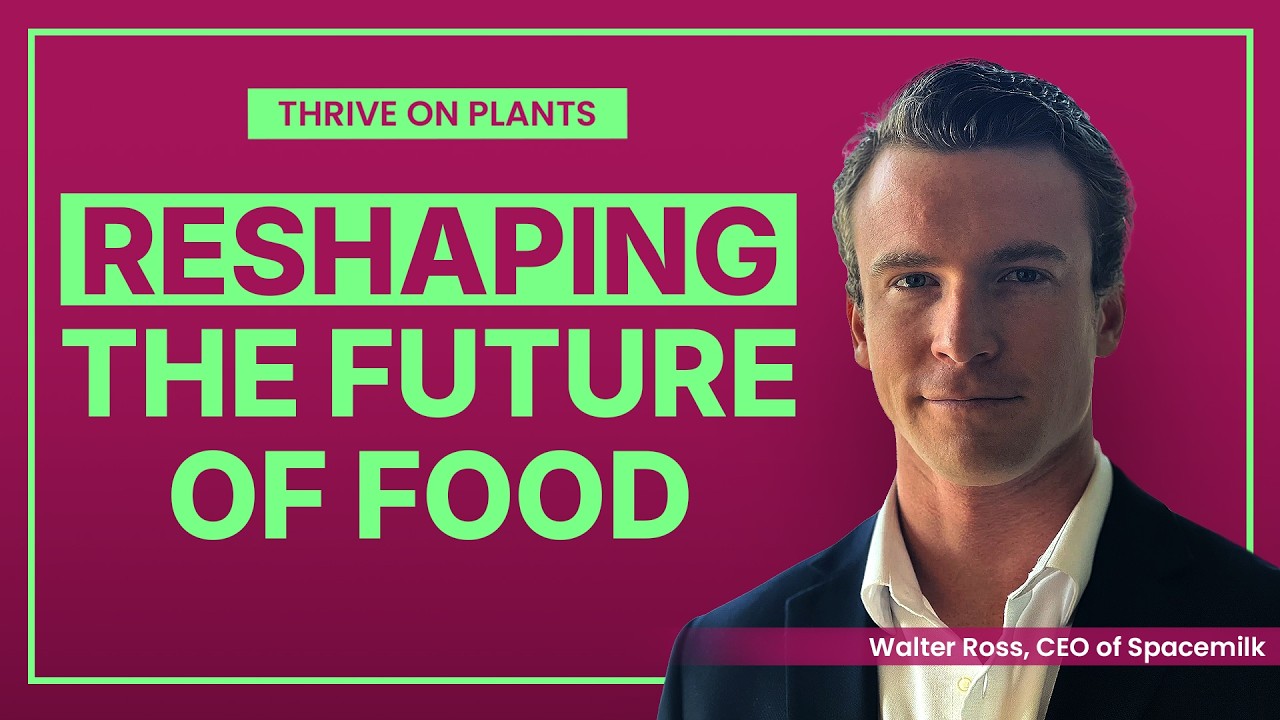
Could Yeast Replace Whey? The Science and the Story Behind Spacemilk | Thrive on Plants #58

Why "Eat Less, Move More" Stops Working After 40 (And What Actually Does) | Thrive on Plants #54

Triple Negative Breast Cancer: How She Caught It Early and Came Back Stronger | Thrive on Plants #53