The Cellular Secret to Better Aging | Thrive on Plants #61
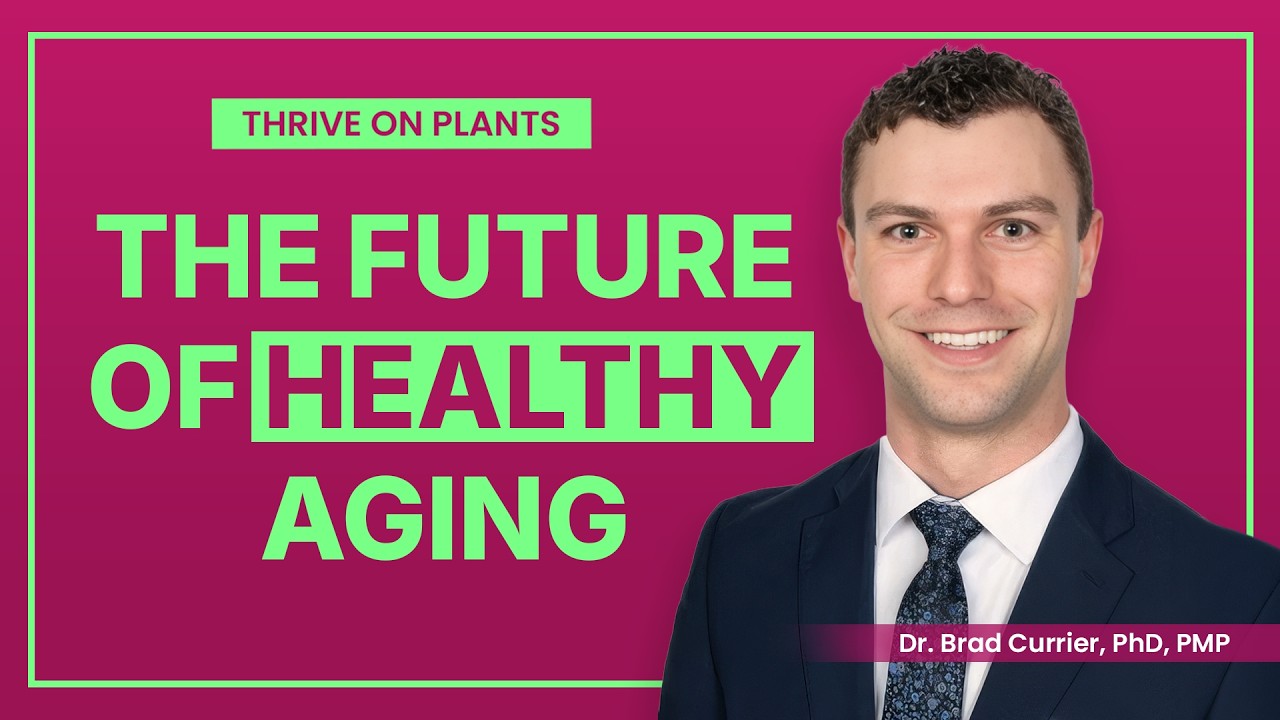
In this episode of the Thrive on Plants podcast, Dr. Daphne Bascom interviews Dr. Brad Currier, a clinical research lead at Timeline, to explore the cellular underpinnings of age‑related muscle decline and how a novel postbiotic, urolithin A (commercially known as Mitopure), may help. The conversation begins with a clear definition of three key muscle‑aging terms—sarcopenia (loss of muscle mass), dynapenia (loss of strength), and powerpenia (loss of rapid force generation)—and why they matter for functional independence. Dr. Currier explains why functional assessments (timed‑up‑and‑go, five‑chair‑stand, VO₂max, 6‑minute walk) are more informative than pure body‑composition measures for tracking muscle health across the lifespan. The discussion then moves to mitochondria, describing their life‑cycle (biogenesis, fusion/fission, mitophagy) and the PINK‑Parkin pathway that tags damaged organelles for removal. Measuring mitochondrial function in humans is highlighted as a major challenge; invasive muscle biopsies, 31P‑MRS, and indirect VO₂‑based proxies are mentioned, but none are yet practical for routine clinical use. Urolithin A is introduced as the only clinically proven molecule that stimulates mitophagy. The host and guest review the metabolic pathway: ellagitannins from pomegranate or walnuts are converted by specific gut microbes into urolithin A, but only a minority of people (≈10‑15% in many countries, higher in France) are “producers.” Clinical trials with Mitopure show that a month of supplementation improves mitochondrial biomarkers in muscle biopsies, while 2‑4 months can modestly increase muscle strength, VO₂max, and 6‑minute‑walk distance. The conversation also touches on the variability of metabotypes with age, the limited utility of dietary sources alone, and the need for supplementation. Comparisons with other longevity supplements (creatine, NAD precursors, CoQ10) emphasize that only urolithin A directly activates mitophagy. The episode ends with rapid‑fire questions about over‑rated metrics (epigenetic clocks), the most neglected resistance‑training principle (consistency), and the biggest unanswered question in mitochondrial science (practical quantification of function). Throughout, Dr. Currier stresses the importance of early, consistent resistance exercise, functional testing, and the potential of Mitopure as a tool to extend healthspan, while acknowledging the current limits of evidence and the need for further research.
Chapters
Welcome to the Thrive on Plants podcast. I'm Dr. Daphne Bascom. If you're new to the channel, welcome. I am so glad you joined us today. And if you are someone who's been listening for a while, thank you. I really value your time and energy and your interest in learning more about your health, your healthspan, and how to optimize your health. Now, I am so fortunate. I have the ability to spend time with all of you. And most importantly, I have the ability to spend time with the amazing guests who join me on this podcast. And that opportunity allows me to continue educating myself, to pushing the envelope of what I know about Health, longevity, healthspan, fitness, you name it. I just love learning and I love that people are willing to share what they're doing and thinking about with all of you through the Thrive on Plants podcast. So thanks to all of our amazing guests and thanks to all of you for joining me every, every other week. Today's guest in today's conversation was so much fun. Today I was joined by Dr. Brad Currier. Dr. Brad Currier earned his PhD studying muscle aging and nutrition with Professor Stuart Phillips, one of the most respected names in the field. Dr. Currier was part of the team behind the latest American College of Sports Medicine resistance training guidelines. And today, he heads clinical research at Timeline, a company in Switzerland that is focused on cellular health. We covered a lot of ground today, and I'll be honest with you, we, as usual, we only covered a fraction of what I had outlined in terms of questions. Is it my time management or is it that the topic is just so deep or a combination of both? Regardless, I know you're going to enjoy the conversation. We started with muscle, not just muscle size, but muscle function. Dr. Currier walked me through 3 words worth knowing: sarcopenia, the loss of muscle mass; dyneupenia, the loss of strength; and power penia, the loss of power. These are all important to how we age. They're important. at multiple different points in our life. And recovering from my Tough Mudder injury, I really have a better understanding of why they're important for our functional capacity. Now, the last one I mentioned, power penia, matters more than most people think. It's what helps catch you when you trip, and it's something that we can measure and protect. And there's simple tests that you can do in under a minute. Then we went deeper. We went all the way down to your mitochondria, the tiny power plants inside nearly every cell. We talked about a process called mitophagy. That's your body's way of clearing out old damaged mitochondria so it can build fresh, healthy ones. And it's one of the housekeeping systems that we lose with age. And it turns out that there's a molecule that can help. That molecule is urolithin A. Brad explained where it comes from, why most of us can't make enough of it from food alone, even if we love our pomegranates and walnuts, and what the clinical research actually shows. We kept it honest. We talked about what is strong evidence, what is still emerging, and where the open questions remain. Now, one note before we begin, Dr. Currier is an employee of Timeline and he shares that openly. And we talked about the science on its own terms, including its limits, which is one thing I love about the transparency of the company. By the end, my hope is that you'll understand your muscle and your mitochondria both in a new way and that you'll have a practical ideas that you can put to work this week. So please join me in welcoming Dr. Brad Currier to the Thrive on Plants podcast. Dr. Brad Currier, welcome to the Thrive on Plants podcast. I have been following you. I think your name first really surfaced to me as I read the new ACSM guidelines. Thank you for that work. And thank you for taking the time to meet with me today.
Daphne, thank you so much for having me. I'm really looking forward to chatting and I'd be remiss if I didn't shout out right off the bat that the ACSM guidelines was a massive project and only made possible by the huge team around it. So like any, any good scientific work, teamwork makes the dream work. It's multiple people involved in all of it.
Well, let's put it this way. Many of us in the industry appreciate it. Having a revision to the guidelines has been, you know, just reaffirming for everything that we all know is an important part of health and having that landmark work that all of you invested time in is really helpful.
Well, I appreciate it and more to come now. Now that it's written, let's, we can put it into action.
But you have accomplished so much more and I will definitely share your bio and your extensive list of publications in Google Scholar in the show notes. But what I'd love for you to, as an introduction for the community, can you share a little bit about your journey and why health and health optimization are so important to you.
Absolutely. And my journey started in Canada. I grew up just outside of Toronto, Ontario, and I was very fortunate to have such a wonderful family to grow up in. And I mentioned that because that's in large part my why it continues to be through professionally and personally. But I, I, my journey from there brought me down to St. Louis where I was on a golf scholarship at the time, but I wasn't a very talented golfer, you know, naturally. And so I was looking for any way to improve my performance and that really led me into exercise science, nutrition work. And I had the opportunity to work in a lab there studying some of the top athletes in the country, which was Wonderful. And after spending a few years doing that, my motive kind of shifted and I realized it was a lot more exciting to me to try to contribute to work that had the potential to impact hundreds of thousands of grandparents instead of just try to get someone a gold medal instead of a silver. So it led me to do my PhD with Professor Stu Phillips, who's a world-renowned expert in the field of muscle aging nutrition. And it really allowed me to develop some new skills in that space of looking at the chemistry that we were using in our metabolism work, but taking the study of exercise and nutrition in various contexts, whether it be athletes or older individuals or people who are immobilized in the hospital and get an understanding of what's going on from a cellular level right out to a functional level. And so, that was my journey and my motivation remains family, the role that my parents, grandparents, siblings all had in my life. I just feel so fortunate and anything I can do to maximize the chance of me having a similar impact but also helping give people some tools where they can have a similar impact in the lives of the people they know. That's my motivation and what brought me now to Switzerland where I work for a company called Timeline and I oversee our clinical research on our new and existing technologies.
That is quite a journey. And I love your why, because I think some of the most personal whys are what keep us motivated to keep learning and to keep exploring new opportunities. But your background in the work that, you know, Professor Phillips does in his lab, it's amazing. And I would say this past year, 2 years maybe, as muscle as the organ of longevity, although we need all the organs to really have an optimal healthspan, Yeah. But I think muscle sarcopenia, dynapenia, power penia, they're becoming part of the vernacular of more communities. It's not just in the exercise science labs anymore. And it's not just for personal trainers. This is an understanding that our strength is part of the equation for how we age well. But what really called, you know, what really struck me about reading some of your data is that it's not just muscle mass that's important. I think everyone thinks if I get bulky, I'm, I'm done. I've done my job. But you had, there are nuances to that understanding. And I'd love if you could talk a little bit about sarcopenia, dynapenia, power penia before we dive into the role that urolithin A may play in helping us age with strength over time?
Absolutely. And the, I agree completely. Muscle is not the only thing, but a very important organ when it comes to healthspan and maintaining good function and quality of life through, through many years. So maybe just to start with some of those definitions and how they differ, because they all sound similar, or actually I'll take one step back. Muscle is incredibly important. We all can think we need it to move, but it does a lot more than just move our body around. It's an incredibly metabolic organ. And so things like blood sugar, you know, muscle is one of the biggest sites that we store sugar in our blood. It's a huge reservoir of amino acids that we need for all our tissues to function. And so much where muscle is not just a little motor that's making us move. It really is a key part of our functional and metabolic health. So when we look at how it changes over the lifespan, you talk about those terms, sarcopenia, dynapenia, power penia. Enia, we can, it's just a loss with age. And the classical definition would be sarcopenia is a loss of muscle mass. Dynapenia is the loss of strength and power apnea is the loss of power or the ability to generate force quickly with age. The sarcopenia definition has been operationalized and refined a bit more over the year where it was the predominant one. And now we'll include components of not just muscle mass, but also muscle function and strength. But that's kind of the origin of those words and what they mean. And really the main point is that our muscle changes with age. And they, I think that the increasing discussion around things like power penia are directly reflective of what the scientific community is learning about. What are the most important parts of muscle and power penia or the ability to generate force quickly? Muscle power is increasingly appreciated As really key to maintaining our function with age. And I think a great way to think about it is look at falls, right? Falls are one of the most disastrous things that can happen to an aging individual. And if you imagine someone tripping and falling, sure, you need strength to be able to catch yourself, but sticking your leg out, that's not just being able to lift a certain amount of weight. That's being able to generate force quickly to jump.
Mm-hmm.
They catch our body weight. And so muscle power is, is an increasingly appreciated characteristic of muscle health that I think is particularly important as we get, as we get older.
Now, both in your graduate work and in your work at Timeline, you study individuals from You know, young males to 90-year-olds. But do you think that we have to become sarcopenic? So, I know we say these things are a part of aging, but one, do they have to be? This is going to be a 3-part question and I apologize. Okay. 2, how should clinicians be incorporating this better? as part of annual assessments so that we don't wait until someone has reached a frailty line and they tip over or they have the fall or they have that sentinel event, because these are things that you can monitor and measure over time if they're changing. So the first question is, is it really an inevitability? Second, how should we be better monitoring this Prospectively. And third, I think there's been this expansion of lots of tests like body composition DEXAs, but those look at muscle mass. They don't look at muscle function. And to your point, it's important how, you know, whether you're typing about, talking about slow twitch, fast twitch, looking at function is as important as saying, yes, you've got mass there, But that mass may not be able to function optimally.
Yeah. And I'll come back to the second and third point, but I would argue function is even more important than mass. To, to your first point about, is this a natural part of aging or is there anything we can do about it? Does it have to happen? Say, honestly, I don't know. I think there are, there's definitely some intrinsic component of aging where things will change over time. But the key in my mind is that we can significantly influence the trajectory on which we age. And, you know, we've probably all seen the grass roots, you know, you get better as you, or you get taller, you get heavier, you get stronger as you're going through the first few decades of life. And then over time, we just start declining. And insert whatever functional organ, whatever outcome Aging in many ways follows a similar trajectory. And what I would argue is that the trajectory on which we age can be vastly different and we can alter that trajectory. So if our muscle health declines inherently, or it's something that can be completely avoided, I don't know. But what we do know is that we can still improve strength. And muscle health through the entire lifespan. And the longer we can stay on a higher trajectory of aging where we don't cross a threshold after which we are not able to be independent, or we have components of our life significantly impacted, I would focus more so on the fact that across the lifespan, it's never too late to start, but the earlier we start, the better. It's like an investment account, you know, where the higher threshold we can start from and the more we can slow that decline, the better our chances are of good muscle health for the longest possible life.
Agreed.
And that's question one, I'm realizing there, there were 2 others.
And I'm sorry, I didn't mean to throw them all together.
I'm a goldfish. I'll lose that, lose it in my mind. But I think the second and third question can actually I would answer them a little bit in tandem where what can be done in the clinic to maybe look at a glimpse of this before it really manifests to the point that someone is, yeah, they cannot function independently. And what are those tests? So the function, like I said, is much more important to me because at the end of the day, Muscle mass. Most people have enough muscle mass where it's not the limiting factor of how metabolically efficient are they, how well can they function. But the ability to get up out of a chair is very important and typically not limited by muscle mass. So to me, the function is most important. And when it comes to looking at it in a clinic, It would be things that can obviously be done in a very short amount of time and a very small space. So things to me like the timed up and go, or even 5 chair stands, these are things that as they're used more and more in trials, we can see the, we can do all the epidemiological work and see how they're related to different disease or functional or long-term health outcomes. Endpoints. But these are tests that you can do with just a chair in an office, takes less than a minute, don't require a warmup, very low injury risk, but can give you great insights into not only where someone's at, but then how they're changing over time. And that are very relevant to daily life. So that's where I would say most importantly, how do we apply this? in the field because there's always going to be the big bells and whistles. We can do all the crazy things with MRIs or stable isotopes and look at all that, but that's great for research and when needed in a healthcare setting, but something that we can reliably measure in a short period of time with very little resources, that's where I think the most impactful ways to apply this to a clinic lie.
100% agree. Or even, I mean, some of those tests could even be done community health settings. They don't necessarily, I want to keep people out the clinic if possible, but as part of an annual wellness visit or as part of a health fair, just having the opportunity to see where you are. You know, it's funny, we were talking before about I was traveling last week and I know you travel a lot with your fiancé and just watching people move in the airport.
Yeah.
I really appreciate my mobility because when you lose that, getting up and out of your airplane seat, navigating, even going to the restroom in some of these settings, these are functional skills that we take for granted while we can do it. But when you can't, it really becomes an impediment to doing all the things that you want to do when you're 70, 80, or 90.
Yeah, absolutely. Our health is very difficult to— it can be very difficult to fully appreciate until we lose it. And I completely agree with the function, the function playing such an important role in that.
Now, one thing that has started to, I won't say started, that I've been fascinated with for a couple of years are mitochondria. And I remember learning about mitochondria as the powerhouse of the cell back in high school biology and didn't really, I mean, no one, even in medical school, I didn't learn about Pink and Parkin and about the fact that mitochondria have estrogen receptors. I just thought of mitochondria as these little things that became part of who we are millions of years ago, probably through some accident. But what role might mitochondrial health have in this, our functional metabolic health, our functional, you know, musculoskeletal health? As we grow older? Yeah.
You already hit the big one, which same thing. I remember the high school biology classroom, mitochondria, powerhouse of the cell. And they do a lot of the, most of the energy that all our cells need to function, with the exception of red blood cells, is provided by the mitochondria. And the mitochondria is where we take the nutrients we're eating and and convert them into energy for that cell to do its job. If it's a muscle that could be contracting, if it's an immune cell, that could be whatever role it's playing in our immune system to counter a pathogen or a toxin across the board. Mitochondria power these cellular activities, but they do more than that. And, you know, whether that's supporting protein folding for things that are being built in our cell, whether that's the kind of redox balance and maintaining oxidative species within each cell. These are all things that they're needed to help the cell function. And I think it's very evident when the cell is becoming unhealthy, how the mitochondria can play a role. If we think of a little mini nuclear power plant in each of our cells, We know that nuclear energy is fantastic in many ways, but like everything, if it goes wrong, there are consequences. And the mitochondria is no different. And I frequently like to reference Gerald Shulman, who's a professor at Yale and has wonderful research kind of showing that mitochondria dysfunction, the impact it has on the oxidative species and reduced energy availability within the cell have a massive impact on things like insulin sensitivity and how the kind of the pathogenesis of so many of these big killers or, you know, whatever they're called, cardiovascular disease, type 2 diabetes, insulin resistance in so many ways are directly impacted by compromised mitochondria. So mitochondria, yes, they're the energy factory, but they're incredibly important for our overall cellular health and we're just an accumulation of cells. So if the mitochondria as a whole are in worse and worse shape, it's not the best spot to be in.
And so what is, can you describe a little bit about the life cycle of the mitochondria? Because, you know, I just to make sure people understand one, that They die. I'll just turn it over to you because you know much more than I do. What is that life cycle and why is mitophagy important?
Yeah. So we can, we can think about this just like we would any other part of our body where in so many ways we're in a constant state of turnover, of synthesis and renewal. Hey, you know, if you, if you scratch your finger while you're cutting your nails or something, you're going to have some of that dead tissue there in the next day or two. But over time that, you know, all of a sudden it gets renewed and there's healthy tissue. There's always this building of new parts and removal of old parts, both in our body and in each cell. And the mitochondria is no different, or when a mitochondria is created, it's called mitochondrial biogenesis. And that mitochondria, like everything, it's an accumulation of proteins, some special ones, but our body builds new mitochondria. And when that mitochondria is existing in the cell, it undergoes processes, things like fusion or fission, where it helps build this fantastic and more efficient network of mitochondria within a cell that helps improve and adapt the mitochondria's function to whatever that cell needs. But when that mitochondria is getting old, like anything, you know, dysfunction or parts that aren't working, they accumulate. And that's where we would start to see some of these consequences of mitochondria dysfunction. That's a very natural process. And in those cases, the mitochondria would need to be recycled. And this happens through a process called mitophagy, like you mentioned.
Mm-hmm.
Which is the body's selective process of breaking down dysfunctional mitochondria. So, we might have heard of autophagy. It's a bit of a buzzword right now in particularly the longevity field. But autophagy literally just means self-eating. We have a little recycling part of our cells called lysosome that will engulf, break down part of our cell into its main parts so we can rebuild it into a new healthy version. And mitophagy is just the selective autophagy of mitochondria. So, like everything in our body, the mitochondria are constantly going through this state of turnover where there's synthesis, optimization, and eventual aging and breakdown to restart the whole process.
Do we— sorry, so many questions came up. Do we have a way of actually assessing the health of someone's mitophagy? I mean, it's probably organ-specific. Well, maybe these are questions. Can mitophagy be measured or monitored? Does it vary by organ? And what are some key nutrients that play a role in supporting healthy mitophagy?
So that's the, to your first point of how do we measure it? Are there ways we can measure it? Yes. But as a whole, I would say this to me is probably the unanswered question I'm most interested in mitochondria. Because it's very difficult. For example, when, when we've done clinical trials and we want to measure the mitochondria function in someone's muscle, one, it's going to— the best way involves a muscle biopsy, which is an invasive procedure.
Right.
And very delicate lab work that you have to actually work with this tissue Within a few hours of collecting the biopsy to get a sense of how the mitochondria is functioning. Of course, we can look at how much mitochondria there is as well, but it's very invasive. There are some non-invasive ways, but they're not really friendly for the clinic and actual practical applications. There are techniques we can use with MRIs or 31P-MRS, it's called. That we can actually look at how quickly certain parts of our cell that the mitochondria works on are being resynthesized and use that as a proxy for mitochondrial function. But a lot of, we can also look at oxygen consumption because that's the mitochondria's role, why we breathe oxygen. It's because our mitochondria need oxygen. There are different ways we can look at it noninvasively. But none, I would say, are very either accessible to apply just practically in a large scale. And second, like anything, they've got their limitations and actually being able to detect change in someone's mitochondrial health over time or after an intervention. It's not something we've fully worked out yet.
Interesting.
So, I think the best proxy when it comes to applicable things is, it's imperfect. It is not by any means the perfect measure, but is some of these functional tests because the muscle is one of the highest concentrations of mitochondria. If we can isolate with something, even like a VO2 or a repeated exercise test, try to isolate the physiology of where mitochondria is, we might be able to get a sense. But again, we're quickly entering the territory where this is not something like checking blood pressure and can be done very quickly. But I think it's incredibly important, especially as we learn more about how important the mitochondria are. that we crack this. How can we figure out the best way to measure mitochondrial function? It's an un— it's an open area of work, to say the least.
And where in this schema does urolithin A play a role in mitochondrial, in the life cycle of the mitochondria?
Yeah. So you mentioned nutrients and what they can do for the mitochondria's health and mitophagy specifically you ask about. So urolithin A is a natural molecule and the long and short of it is it's the only clinically proven molecule we have that stimulates that mitophagy process. There are other activities like exercise stimulates both The removal of bad mitochondria and addition of new. But urolithin A is really unique in that it is the molecule that tells our cell to get rid of these dysfunctional and damaged mitochondria. And that in turn kickstarts the process of building new healthy mitochondria. So overall, urolithin A improves our mitochondrial health. There are other nutrients, of course, that'll impact mitochondria function. You know, vitamins, minerals, a lot of these will have roles in how the mitochondria is functioning. And the mitochondria health is quite reflective of our diet because if we think of that, what we're eating, the way we convert that into cellular energy is through the mitochondria by and large. So if we're eating good things or bad things, that's going to be reflected in our mitochondria health. But Urolithin A is a really unique molecule in that it stimulates that mitophagy process. And I would emphasize too that mitophagy and the removal of debris is frequently an area we see in whether it be muscle and protein synthesis or mitochondria health, that removal and recycling process is one of the things we'd lose with age across the body.
So we become less efficient. Well, you're creating so many more questions for me. So one, we become less efficient at removing unhealthy mitochondria. So senescent or mitochondria that somehow have met their end of life, that function declines with age. So is there a tag or is there a marker when mitochondria are ready to undergo mitophagy? Are they labeled with either something on the cell surface? Is it something, is it programmed within the mitochondrial DNA? Is the senescence of mitochondria pre-programmed or is it You know, as you mentioned, because we can improve mitophagy through exercise and other interventions, is it just a natural part of the cellular life cycle? But we can accelerate that cleanup through these either nutritional or exercise interventions. I don't know if my question makes sense.
We'll go with it. You tell me if I'm making sense because you're making perfect sense. I'm probably going to be the one that gets rambling. To your first point on the, on mitophagy, well, actually, no, sorry. Now I lose my train of thought. Mitophagy, if there's a signal or something, how does that happen? Yes. And we can get into the mechanisms or whatever, as much as you want, but one of the most common cellular mechanisms that we will remove mitochondria Is this PINK/PARKIN-dependent mitophagy? And PINK and PARKIN are proteins. And really what they do is, yeah, when the mitochondria gets to that end of stage where it needs to be recycled, puts a flag up on its outside, that's recognized by that thing called the lysosome. And that's what kickstarts the mitophagy process and recycling of that mitochondria. PINK and PARKIN are the proteins that are key in that process, that mechanism that we can easily measure in the lab and samples and whatnot. And that we know are directly involved with this mitophagy process. So you can steer me if you want to go more or less into that. But I think the main thing that I would highlight in this and where I was going to go initially is that the removal of debris or macroautophagy, as we would call it at a cellular level, is one of the key changes we see with aging, where the ability to remove this garbage dysfunctional in our cell is a canonical hallmark across different cell types. It's considered one of the, it's one of the main, you know, cellular harm, 12 hallmarks of aging. And I, you know, if you think about it, whether it's like your house and you've got this accumulation and accumulation of garbage, eventually it's going to become more and more difficult to function in that house and you need to take out the garbage. But that's the, one of the key processes that we lose the ability to do as we get older. And so something like mitophagy is very important for the mitochondria. And urolithin A is one way that we can stimulate that process in our everyday life.
Have you, and I want to go deeper into urolithin A, but just a quick aside, could pink and parkin activity be a proxy for Mitochondrial health. I mean, I know that we don't have tests for how, you know, what is the turnover and whether it's in your gut immune system, whether it's in, you know, your ovaries, whether it's in your muscle, but is there a cellular signal about the pink and parkin that could be proxies for the rate at which that cleanup is either accelerating or decelerating?
Yeah. So there, there is a, it is a signal and it is something that we can measure done in multiple studies where, whether it be in a muscle biopsy or actually in an immune cell. The team here just published a great study in Nature Aging on urolithinase impact on an aging immune system and looking right down the, all the, those levels of What are these proteins doing? And if we have more pink Parkin, that could be one indication that mitophagy is increased. Protein content is not everything. It's just one, it's a piece of information about what's going on in the cell. If it's viable as a way to look at this in the clinic, I don't think so yet because Collecting the tissue where we would be measuring that, you know, blood is the easiest, but anything else, it's, we're likely looking at biopsies and the analytical methods for that. I only know from budgeting out enough of these studies, it doesn't come cheap.
Yes.
So I, it's a, it's a great idea. It's a, it's a signal we can use along with other pieces of information. Not something that we could roll out into the clinic tomorrow.
Got it. That makes sense. Thank you. Now, one of the questions I had, 'cause I actually asked our community, I shared with them that I was, you know, having the privilege of speaking with you and what did they want me to make sure that we had a conversation around? One question was, well, I eat pomegranates and I eat walnuts. Isn't that enough to make all the urolithin A that I need?
Super question. And quite frankly, it's one of the most important questions to ask when you hear about anything like this, in my opinion. Urolithin A was discovered and really started going through this intense research and development process by the team at Timeline almost 20 years ago now. And it came about from studying the pomegranate. Urolithin A is what we call a postbiotic. So when we eat things like pomegranates or nuts and berries that contain these polyphenols, specifically ellagitannins, our gut microbiome in theory should convert those into urolithin A, which is marketed as Mitopure. Mitopure just is pure urolithin A. It's the one with all the FDA approvals and whatnot. So Mitopure is synonymous with urolithin A. But the key question after the team had done about 12, 13 years of this research, taking it through all those preclinical models and looking at, okay, this is having a tremendous effect. First question was, is it safe and bioavailable in humans? And check, it's extremely safe molecule that's rapidly absorbed and distributed throughout our body. But the second question was, well, can we just eat a bunch of pomegranates? And I am the biggest advocate food first, whenever possible.
Same.
There's more things in our food that are benefiting us that we don't even know exist yet. So whenever possible, food first. And this was something that the team here at Timeline wanted to answer. And so they ran this clinical study where they had people in a a randomized crossover design. So everyone did every condition. And what they did is on one day they took a dose of Mitopure, they collected their blood after, you know, for the day or so after. And then they repeated this again with pomegranate juice. And this is in a randomized blinded order, you know, no carryover effect. But what the team found was that when people drank pomegranate juice, a really rich source of these dietary precursors, that over 60% of people could not produce N-acetyl-L-tyrosine. And those that could produce it, the unicorns I call them because not many of us are, they produce a very small amount relative to the one dose of Mitopure to the point where you'd have to drink a— you'd one have to be a producer, which the vast majority of us are not. And if you are a producer, you'd have to drink a liter and a half or about a gallon of pomegranate juice to get the same exposure as the, you know, the one dose. So there's things that come with that, but Mitopure urolithin A really is one of the very few cases that we cannot access it from our food alone. And direct supplementation is needed to unlock the benefits of this molecule. Another great example of this is creatine. Most people not getting creatine has remarkable benefits. That's probably the most well-studied supplement, particularly for muscle health. Most people will not get enough creatine from diet alone and everyone's individual, but certainly it's something that a lot of us would benefit from, from adding to our routine, but they're very few and far between. Where, yeah, where supplementation is actually the best choice.
And one thing I learned in preparing for our conversation was that your metabotype changes with age or it changes over time. So even if you may have been one of those unicorns in your 20s, it doesn't mean that post-menopause or in the later stages of life, man or woman, that you're still a type A. So could you talk just a little bit about the fact that this is really tied to, you know, we all love the microbiome, but that—
Yeah.
That change in one, your baseline metabolism, your ability to produce urolithin A is Predicated on having specific species of bacteria as part of your microbiome. And that because our microbiome is dynamic, that metabotype labeling, whether you're a unicorn or like the rest of us, that too can be a moving target over the course of your healthspan.
Exactly right. And certainly the gut microbiome, that's what makes that conversion of those polyphenols into your lithonine. The gut microbiome changes over time. I'll say first and foremost, I am not a gut microbiome expert.
Me either.
And it is absolutely a really important area of study. What we know, or what I can say with confidence as a non-expert in this, Is it on 2 things? Does it change? Yes. How exactly does it change? You know, how much can we improve it throughout our life? I don't know.
Okay.
What happens to urolithin A? And if we are a producer or are not a producer, this is something that the team here has looked into and is actively looking into. Is, is it a particular species that allows someone to convert it? Or a combination of certain species in our gut microbiome? We don't know the answer exactly yet. The things in this early work where we do deep dive on the gut microbiome and the shotgun sequencing of what's going on in someone's microbiome, we see that an increased richness and diversity, of course, Well, maybe not, of course, but the people are better producers if they have a more rich and more diverse gut microbiome. Now, are there particular species that bring them to that categorization? We don't know yet, and we'll work on it and try to figure it out, but we don't know what makes someone able to be a producer. And we don't know how much we can change that. We're looking at it and many others are around the world too, but we don't know yet. And that's—
Nope. There. And Brad, I apologize if I missed this in doing my homework, but have you— has Timeline had an opportunity to look at metabotypes in the blue zones? I mean, are Are those areas which traditionally are labeled as blue zones? Are they unicorns in the way that they are able to process these polyphenols? Yeah.
So we've started doing some work on that and not specifically on the gut microbiome, or I should say not a deep dive on the gut microbiome in all of these areas. But what we have looked at is just the prevalence of urolithin A producers around the world. And that study I mentioned where you get pomegranate juice one day and a dose of Mitopure the next, or vice versa, see how much urolithin A someone makes. This has been replicated in numerous countries around the world. So multiple cities throughout the US, Canada, Europe, Asia, And we do see a difference. You know, the highest rate of producers are typically the highest that has been seen is France.
Oh, interesting.
I don't know, red wine, maybe it's a justification for those who want it, or, but it is a cleaner diet in many ways. Who knows exactly, just an observation, about 40% of people were able to produce urolithin A to a high level.
Okay.
In other countries like the United States, my home, Canada, India, these countries are in the neighborhood of 10 to 13% producers. And so, much higher, almost 90% of people cannot produce a meaningful amount of urolithin A after just eating pomegranates. So, it does change throughout the world. Why exactly? Unclear yet. But the blue zones are one where you do typically see this richness in diet or healthier gut microbiome that could improve the chances of someone being a converter. But that's all we know from a data standpoint right now.
Understood. Thanks. And would, so We hear a lot about Mitopure urolithin A, and for anyone who doesn't really understand what the product is, would you mind explaining a little bit about what Mitopure is?
Sure.
Who would, who would, who could benefit from it? And if you are taking it, what might be some Benefits or some, you know, how do you know if it's working is really one of the questions I got.
Absolutely. And so what is Mitopure? Mitopure is just highly purified urolithin A. It's the only urolithin A with FDA GRAS approval. And it's the urolithin A that's used in the now dozens, well, hundreds of clinical trials on Mitopure. So it really is the safest calculated dose. And the product itself, they, we sell 3 different types. Obviously, maybe this goes without saying, I'm an employee of Timeline if I didn't mention that off the top. So full disclosure, but the nutrition product comes in 3 formats, a powder, soft gels, little capsule, or gummies. And each of these are bioequivalent All have been studied and demonstrated in multiple clinical trials. How does someone know if Mitopure is working? I think when we look at the time course, and I tried, I tried to look at as many of the questions, great questions that you had sent in. So I'll try to combine an answer to a few of them that were submitted in this. Over the course of it, in human clinical trials, what we see is after 1 month, Taking those muscle biopsies, that's when we see the improved mitochondria health. So after 1 month, we've got that renewal of the mitochondria and a better cellular energetic state. When we go longer, that's where we start to look for more functional endpoints. So at 2 months and 4 months, there've been some, some of the significant results are things like improved muscle strength, But like research, you know, not everything always hits significance and that's why we're doing this. We're trying to better understand, you know, is this truly having a benefit and where might that be? So some of the things that are improving in these studies are things like VO2 max or 6-minute walk. And, you know, in some cases these are things where we have a 30 or it was a 42-meter increase in 6-minute walk. In that particular JAMA Open paper, like it's not statistically significant, physiologically perhaps meaningful. We just need more data to understand. And I mean, the ultimate goal is to figure out the best way to improve someone's healthspan. And, you know, this certainly, there's seen enough supplements come and go. I was blown away with the the data and definitely I'm thinking there's a signal here and just trying to better understand it. But that is one where anecdotally, how could someone feel a benefit? Certainly some of the things we've seen increase significantly in trials like the muscle strength or endurance or function, you know, you might feel that. Personally, I actually just, noticed that my recovery from workouts is a bit more seamless. I travel a lot. Jet lag is less impactful and I've recovered a bit better. That's an anecdotal thing where I would say most people tell me that they recognized benefit was after they'd been on it for 2 or 3 or 4 months. And they, those, There's enough time for those benefits to accumulate. They weren't really feeling anything, so they stopped it. And after stopping it is when most people have actually told me, I didn't realize what it was doing until I stopped it. So I think that's one where we can go about the clinical trial data and what does it say on average is happening. Everyone's going to have an individual experience with it. And the ways that we can measure things like mitochondrial function, not just in the context of Mitopure, but as a whole, as a field, are things that we think will really help this. So, I'm rambling a bit now, and I think you did ask who could benefit from it. The short answer is pretty well everyone. We've studied that at Timeline. We just kicked off our 29th clinical trial.
Okay.
And, Over the last couple of years, there's 4 or 5 times as much research being done by people not affiliated with the company as there are in it. We can only do so much. Following some of the earlier work where it really was about the biology and the safety and the efficacy in a variety of healthy populations from Olympians to 90-year-olds with low physical function, Some of those, the positive results now are being built on by us. Yes, but also others. So we partner with the true experts because we know our stuff, but, you know, there's a lot of things that urolithin A, Mitocure could be beneficial for that we don't have the expertise to do. So we've partnered now on, we've got studies ongoing at the moment with the NIH, the National Cancer Institute, and then so some other, some other top academics around the world where they can really take Mitopure to that next level in their field of expertise. So like anyone, I'm not a physician, talk to your doctor for anything you do, but the safety profile is immaculate. And I really do think that a wide, wide range of people could benefit from Mitopure.
Agreed. And I mean, I just want to give you kudos, you and your team, because not many investing in understanding the molecular level function and then understanding how that translates into whole organism function, that's a lot of investment. And, you know, being transparent in your publications about the fact that You know, sometimes your predicted primary endpoints were not, as you said, maybe didn't achieve statistical significance, but they did, they achieve functional significance. And those can be 2 different things, especially if you're someone who, you know, if you're doing this on the frailty line, a little push to the positive side can be huge to you, even though it may not be statistically significant. So, you know, from a scientist perspective, understanding, you know, we know how this works in the Petri dish and now we want to translate it into a whole human, which is so complex. And making sure that, you know, I know a lot of your studies have been rigorous in terms of ensuring individuals weren't on other drugs that could impact absorption or conversion in, you know, how the drug may, how urolithin A may be acting and then generalizing it to the population at large. That's a lot. And having those key partners to understand and advance this to the next level is crucial.
Uh, it's, uh, it's research. As we say, it's 2 words, re and search. It's, uh, it's not a one shot and done. And that's, yeah, like I said, that's the objective is at the end of the day, we're scientists at heart and by training and applying that repetitive process to refine and have more confidence in our understanding. Yeah. That's the way that we're going to accomplish our ultimate goal, which is how do we improve our healthspan? Yeah. Does MitoPure have a role in that? Yeah, I think it does. It's not the only thing. And so, understanding that the big picture is improving healthspan, how long we spend in good health. There's a lot of tools that we can put in our tool belt and we're going to keep working to better understand each of them.
And would you be able to comment if you're comfortable on, you know, there's a lot of conversation too. First of all, do you still have a little bit of time? Are you okay?
Yeah, I have like 10 minutes if that's okay.
Okay. Then I'll go fast. Do I want to bother with the NAD question?
The advertising agency? Well, we, whichever one you want, advertising agency or the precursors, fire away with whatever you want. I can, I can speed it up too and get—
Well, just the, I mean, the NAD, NMN, NR, you know, it's kind of like Throwing, you know, having engines that don't work well and trying to put fuel into them, you still need the mitochondria. And so when people, when people ask, well, I'm taking TruNiagen, I won't, I won't use the product. I'm taking NMN or I'm taking NR. Do I need to take Mitopure too? What is your thought on some of these precursors that do have evidence of improving cellular health, but not necessarily optimizing your mitophagy.
Yes, you would need to take Mitopure and you just said the answer. Mitopure is the only one of these that improve, that stimulates mitophagy. We've talked throughout this whole episode about how important mitophagy is for, you know, supporting good health. And MitoPru is the only one that does that. You said it perfectly, throwing NAD at a broken mitochondria is like putting gas in a broken down engine.
Yeah.
And you know, the, the evidence for each is mixed and they each have a different level of evidence and a different mechanism of action. NAD tries to give the existing mitochondria more fuel. Early evidence in that. CoQ10 tries to make the existing mitochondria a bit more efficient. Mitopure has been shown in all the human studies to stimulate that recycling process. So they are different. Definitely, I would say Mitopure is unique in that setting.
And I, yeah. I'll cut it off there because I want to ask you a couple of rapid-fire questions. And my, my brain is just going down so many little pathways about how this could be beneficial for anyone's health. But I do have to say the gummies are dangerous because you can't, you can't eat just 2.
No, they are. I'm with you there. I don't know how our team here came up with that, like to have a sugar-free gummy that tastes that good. I don't— I can, we've done the study. It's bioequivalent. You get the same dose as what you would with any other format. It's really a credit to the team here. I, I'm not a food scientist like that. Clean label and sugar-free and tastes that good. I don't know.
I can't buy the gummies because I eat them. But I'll be respectful of your time. I just want to ask you a couple of rapid-fire questions.
Yeah.
And then again, I can't thank you enough. This is, the science is so fascinating and I just love the fact that we're learning more about how we can impact the hallmarks of aging. And I don't know if people really take that away when they think about this isn't just another supplement, that it really could have an impact on so many different body systems.
Well, I appreciate it really. It's been a treat for me and I hope we get to connect again sometime. Yeah, sorry, the last bus does leave from the office here, so I'll let you get to the rapid fires.
Okay. Quick one. What is the most overrated metric in longevity science right now?
Epigenetic clocks.
Interesting.
There's a lot, there's great promise. I think there's tremendous opportunity there. The vast majority are unreliable and clinically useless.
Thank you for that one. What is one resistance training principle that almost nobody applies correctly?
Specific? Well, no, I would say consistency, which is the most important. And you mentioned the new position stand and guidelines that our group recently published. For the American College of Sports Medicine. The take-home point for anyone not wanting to read the paper is anything is better than nothing. And most of us do nothing. So if we can get doing something regularly, even bodyweight exercise, home-based resistance bands, immensely beneficial. So consistently doing something is what I would say to that.
Agreed. Second to last question. What's the most exciting unanswered question in mitochondrial science right now?
Yeah, I think I would probably just go back to something I mentioned briefly earlier, which is the ability to actually quantify mitochondrial function practically. How could we do this in the clinic, in the field? To me, that's what I'm most interested in. I'm sure the The mitochondrial biologist down the hallway from me here definitely would have some more fascinating answers. But for me, how do we translate this into something that we can put into action? I'm intrigued by that.
And final question, what does living with purpose mean to you?
Living with purpose for me is living with Intent, excitement, and love.
Appreciate that. Dr. Brad Currier, I appreciate your time. I know that we touched on so many topics very superficially, but I think you shared some of the excitement that you bring to the clinical research space at Timeline. I know we're excited to follow your journey, to see what your team is doing, and to explore these next partnerships that you've developed with industry partners, large organizations, to see what the science will help us understand about how we can all prevent some of the decline that we seem to think is inevitable, but which I really think is partly secondary to the way we live.
Well, Daphne, I can't thank you enough. This has been such a pleasure for me, and likewise, congratulations on everything you're building. I really look forward to following along and hope we can connect again sometime. This has really been a treat for me, so thank you for having us.
Thank you so much. I really appreciate it. Take care.
Take care.
The information shared on the Thrive on Plants podcast is intended solely for educational and informational purposes. It is not medical advice, and it should never be used as a substitute for personalized guidance from a qualified healthcare professional. Always consult with your physician or healthcare provider before making any changes to your nutrition, exercise routine, supplement use, or your overall wellness plan. The opinions and advice shared by our guests are their own. And do not necessarily reflect the views of The Vegan Gym or its team. While we aim to bring you high-quality, thoughtful conversations, these perspectives are not intended to replace professional medical care. Thanks for tuning in, and remember, you have the power to thrive on plants and live with purpose.
More from Daphne


The Adaptive Fuel: How Exogenous Ketones Support Healthspan | Thrive on Plants #60

Could Yeast Replace Whey? The Science and the Story Behind Spacemilk | Thrive on Plants #58
Why "Eat Less, Move More" Stops Working After 40 (And What Actually Does) | Thrive on Plants #54
Triple Negative Breast Cancer: How She Caught It Early and Came Back Stronger | Thrive on Plants #53