Conquering the Invisible Illnesses: Fibromyalgia and Chronic Pain | Thrive on Plants #47
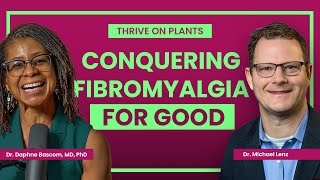
In this episode of the Thrive on Plants podcast, Dr. Daphne Bascom interviews Dr. Michael Lenz, a board‑certified internal‑medicine‑pediatrics physician and lifestyle‑medicine advocate who specializes in fibromyalgia and other “invisible” or nociplastic pain syndromes. Dr. Lenz shares his personal health awakening in his 30s, his transition to whole‑food plant‑based nutrition, and his certification in clinical lipidology and lifestyle medicine. The conversation defines nociplastic pain, distinguishes it from nociceptive and neuropathic pain, and explains diagnostic tools such as the Widespread Pain Index, Symptom Severity Score, and the Fibromyalgia Impact Questionnaire Revised. They discuss the high prevalence of overlapping conditions—IBS, migraines, chronic pelvic pain, POTS, ADHD, autism, menopause‑related hormonal shifts—and how neurodivergent brains often co‑occur with autoimmune and neuroimmune dysregulation. Dr. Lenz emphasizes narrative medicine, urging patients to write their life story to uncover patterns that span childhood colic to adult chronic pain. He describes his outpatient practice model (flexible visit lengths, use of Epic dot‑phrases, a PA to extend capacity) and the importance of listening, validation, and co‑creating treatment plans. Evidence‑based lifestyle interventions are highlighted: whole‑food plant‑based diets (e.g., the “Hallelujah” raw vegan study showing 44% improvement on the Fibromyalgia Impact Questionnaire), the Plants for Joints trial showing rheumatoid arthritis remission comparable to biologics, and the role of exercise, sleep, stress management, community, and toxin awareness. Dr. Lenz also addresses barriers to plant‑based eating in semi‑rural settings and the need for personalized coaching. The episode ends with a lightning‑round: debunking the myth that chronic pain isn’t real, recommending Dr. Greger’s “How Not to Die/How Not to Age,” encouraging listeners to strengthen social connections, and providing contact information for virtual visits in Wisconsin. Throughout, the tone is educational, compassionate, and hopeful, aiming to empower clinicians and patients dealing with chronic, often dismissed, pain conditions.
Questions this video answers
It's real and there's hope.
How Not to Die (and its sequel How Not to Age).
Strengthen social connections and nurture relationships as a core lifestyle‑medicine pillar.
Yes. I see patients through Frater Medical College in southeastern Wisconsin, offer virtual visits, and can be reached by email.
Chapters
Hello and welcome to another episode of Thrive on Plants. I'm Dr. Daphne Bascom, and I am so glad you're here today. I have a very special guest that I am excited to introduce you to, Dr. Michael Lenz. Dr. Lenz is a physician who has dedicated his career to caring for people with fibromyalgia and other quote unquote invisible illnesses. He's unique in that he's trained in both internal medicine and pediatrics, and he practices lifestyle medicine, meaning that he blends the best of traditional medicine with healthy lifestyle changes like nutrition and exercise to help his patients heal faster. In fact, Dr. Lenz often works with whole food plant-based diets and tailored exercise as part of his standard treatment protocols. He is also the author of the book Conquering Your Fibromyalgia and host of the Conquering Your Fibromyalgia podcast, where he aims to educate, validate, and empower those struggling with often misunderstood conditions. Now, why is this particular conversation so important for our Thrive on Plants community, especially for those of us in midlife? Well, fibromyalgia disproportionately affects women. Some estimates say as many as 80 to 90% of fibromyalgia patients are women, and its symptoms can intensify around menopause. Many of you have either dealt with unexplained pain, fatigue, and brain fog yourselves, or you may know someone who has. And Dr. Lenz truly understands these struggles. His own journey led him here. After facing a personal health wake-up call in his 30s and discovering the power of nutrition by age 40, he became a passionate advocate of lifestyle medicine. More importantly, he's driven by a patient-first mission to really listen to patients, believe them, and help find solutions together. In our chat, you'll hear Dr. Lenz's deep why come through. He's on a mission to help provide hope and healing to people who've often been told that their suffering isn't real. He believes in validating his patients' experiences and guiding them toward better health with compassion and evidence-based care. This episode is all about hope, and empowerment for anyone dealing with fibromyalgia or chronic pain. I know Dr. Lenz's expertise and heart for patients will leave you feeling informed and inspired. Dr. Michael Lenz, thank you so much for joining me on the Thrive on Plants podcast. I have heard so much about you, and I'm glad we were able to make time to connect.
I'm so glad that we're able to connect too, and thanks so much for having me.
You're welcome. I feel, as we were talking offline, I feel like I know you because I've been doing a deep dive listening to your podcast, reading your website, and just having an opportunity to educate myself because I will be honest with you, a lot of the information you are sharing, I did not learn when I was training. I'd love if you could introduce yourself to our community. Um, what drew you to medicine? How did you get fascinated with medical mysteries, and what was your journey to where you are today?
Yeah, so what drew me to medicine— I've always been interested in science, very curious like probably most doctors, and wanting to help people and try to go beyond just surface level, diving in deep. And so kind of one of those early ones, probably in middle school, already was on that path to wanting to do that. And was able to get into an early acceptance, uh, program called Target MD at University of Wisconsin-Milwaukee and went to the Medical College of Wisconsin where I got a chance to, uh, have 4 great years there. And then I went on to pick a residency like everybody does, and I was thinking of primary care, and then I heard of this thing called Med-Peds, which is a combined program where you get to be double-boarded in pediatrics and internal medicine. It gives you always the option to potentially specialize and gets 6 years of training condensed into 4 because there's enough overlap. And that actual training has really helped me with what we'll be talking about today, uh, those invisible illnesses. But I got a chance to get trained in taking care of infants through adults and everywhere in between. So I'm boarded in pediatrics as well as internal medicine. I don't do surgery. I used to do a few procedures like joint injections, but I don't do that anymore. It's for time-wise. And, um, I just have always been wanting to learn in depth, I guess. Graduating AOA in my med school, I've always loved learning. That whole early problem-based learning was instilled in me some in med school. So that kind of actually, um, curiosity— I remember in high school looking at my grandma, who was a farmer, but she had a National Geographic and It was, I remember reading about HIV back in the 1980s and just learning about medicine and those mysteries and what those were along the way. And then, you know, now I work in an outpatient-only practice. I finished my residency year 2000 and I kind of did everything. I was able to, I started my day rounding in the ICU in adults, Then I'd go to med surg, then I'd go to the newborn nursery and the peds floor. Then I'd go to the clinic, see patients. And if I was on call, which was every third day, I'd go back and admit people. Nobody does bed anymore. We got hospitalist, um, along the way, which was perfect. I could bend at the same time my son was going into fifth grade. I could actually coach some of his stuff and of some of his sports. So I got a chance to do that. And, um, And then what I also do along the way, and I know one of the questions you had is at age 33, I found out through advanced lipid and cardiovascular testing that I had a very high LDL particle number despite having on the surface of cholesterol was 169 and LDL of 113. But my particle number was 2,100 with a high lipoprotein(a). I had a moderate sensitivity C-reactive protein. And I wouldn't recommend a 33-year-old to do this. But when you keep getting your— the cards dealt and like, ooh, that's not good. I, on my own, went, got a heart scan, which I wouldn't recommend, but it showed a little bit of calcium already, a score like 6 or 7. And then I'm like, oh, well, all of these people that had heart attacks in their 40s and 50s who on the outside, when I was in residency, who didn't have all of the risk factors, I'm like, okay, I'm glad I'm finding out because if we can prevent that— and that was some of the things we were understanding with early prevention, atherosclerosis, statins and stuff were going on with that. So that drove me to want to get expertise and become a board-certified clinical lipidologist to learn in-depth those things so I could pass that on. So I become certified in clinical lipidology, passionate about that and know about that. Backing up from the lifestyle medicine. And when I turned 40, I— two things happened. There were two studies that came out. One, two studies on niacin in prescription form in addition to statin had no added benefit for cardiovascular prevention. And my wife, who's a dietitian, was doing her continuing education and she said, hey, I just read this book called The China Study. You should check this out. So, in the back of my mind, in the 1990s in med school, pre-internet, I think I read an attending mentioned this Dean Ornish and reversal of heart disease, but he said, you know, it's— who's going to really do it? It's really hard. You practically need a dietitian to do that. So, I married a dietitian. No, that wasn't why I married a dietitian. But it's funny that I did. I had to find a study and I was in convergence that, wow, we just have residual risk, which means you're on a statin, you have pretty good, but healthy lifestyle, which was Mediterranean eating. I'm lean, I'm fit, but you know what? Stuff happens. People still sometimes have heart attacks. It's just one of those kind of, even though you're wearing your seatbelt, some people die in car accidents. It's just part of what happens. And but then I read about, oh wait, reversal. Then I like, all of this was happening. I'm like, I'm doing this. And I could much that, uh, late early summer started adopting a plant-based diet and, um, have been doing that since. And then got reading in-depth, self-learning all about lifestyle medicine and the role of food and plants and passion and all the people that you probably— we've met at conferences and have written great books, um, did the deep dive in reading about that information with that. And so applied that, and then I got certified during COVID with lifestyle medicine. Now, along the way, there has been a group of patients that were mystery patients that I was taking care of in the '90s, I heard about fibro. And one of the things about internal medicine and peds, a lot of our training is inpatients. We don't get admitted for a migraine typically, or IBS, or fibromyalgia. But turns out in primary care, as more and more less hospital work, and I'm doing all outpatient, people who come to the doctor for outpatient visits often have chronic health issues. Along the way, as part of my general practice as a pediatrician, I had normal training. Not a lot of doctors have had this as working and diagnosing and treating ADHD at understanding autism and more of a stereotypical older view, understanding that more updated, um, understanding of some people who would have less support, higher IQ. It turned out these these people I were taking care of were having a lot of these overlapping conditions. And then again, getting back to that problem-based learning, recognizing, oh, these are a lot of co-occurring overlapping issues. And when you treat one, you help another. And then I looked into what was being written out there. I'm like, there's not a lot being written on this topic. It's sort of a big empty wasteland of nobody. It's kind of, and it turns out, as I talk about on my podcast, surveys of doctors and medical students, uh, out of Norway, which probably represents a lot of the Western and even world medicine, when they rank the most prestigious types of illnesses, um, fibromyalgia has for 30 years always been ranked at the bottom of the list. It's those invisible illnesses. And kind of going back to my faith and heart back and caring about people, I always, uh, had a heart for people who were kind of on the outside wanting to not fit in and caring for people who are struggling, you know, and trying to, you know, if you're coaching a kid, uh, and they're not doing a play right, the head coach might be yelling at them, like, get your head out of your butt. And I'm thinking, you know, this kid's parents are divorced, they're struggling, maybe needs a hug, not a, um, not a scolding on doing something wrong and recognizing, you know, what is the backstory and And that's the neat part of primary care is you get to get to know patients and the backstory and caring and, and then when you're able to implement and help them. So that's where I used to have, as I was got, um, learning about fibromyalgia and these related illnesses, I used to have a 2-page handout that I gave. It was like a dot phrase in Epic that I could pull up and all these paragraphs. And then I increased it to a 20-page handout and I'm like, well, that's really not enough. Well, okay. Well, I wrote a book, so that's even longer. And because I'm like trying to explain a complicated thing. And in the world of plant-based medicine, if I had somebody who had diabetes, I could say, oh, here's a great one for diabetes. If you want to look at plant-based, if you want to look at from a heart perspective, you want to do it from autoimmune, whatever illness somebody has, even though it's basically the same type of food. But there wasn't a great resource in my opinion that was really comprehensive and up to date when it came to fibromyalgia and overlapping pain syndromes, which if you're not familiar, we updated term are these nociplastic pain syndromes. These are syndromes that don't have any tissue damage or could do the pain and trouble is out of proportion, but it's body pain that's more chronic, but it's also associated with problems sleeping, brain fog, cognitive struggles, and it's really disruptive in life. Familiar things that people think of are you are having atypical chest pain, you go to the doctor multiple times, they do stress tests at the ER, and they're like, you're fine. And you just have a little anxiety, but it's, you have chest pain. It's real, but it's, you're not having a heart attack. So, talk to your doctor. Or a migraine— you don't have a brain tumor, but it's bad. Or irritable bowel syndrome, or painful periods, and chronic pelvic pain, and all of that. And, uh, as a part of these overlapping— and I call the 5 alarm fire— is when you don't have just one area that's hurting, your whole body is hurting. And that's where we got into it. So, so then I thought, we shouldn't write a book. Oh, that's— I've never written a book before. And then COVID hit and I said, God said, if you can't get this done, when are you going to do it? Because you're, there's nothing to do. You're watching these shows that you never would watch, you know? And so I'm like, all right, I got to get it done. I finished that. And then, and then I was done. My wife's like, all right, you're done. Right. And then podcast for a business he was working with. And I'm like, I'm going to do a podcast. I think I'm going to try this. And then here we are, what's years later, trying to help. And I thought, how much content is there? But, um, and that's where I started this podcast and now trying to do more stuff on YouTube and doing education to help this group that they're listening, that often is neglected. Um, that is shuffled and it's just, they deserve better.
No, and Dr. Lunds, that is quite a journey. And what I love is that it started with— you've been on your own journey at the same time. And I feel like as you've lifted up the covers on your own health and you've seen all of these other things that you've just been called to try and fill in the gap in areas where you noticed there wasn't anything to serve this community. But if you wouldn't mind, because I'm not certain that everyone understands, if you could explain a little bit further, what are these silent illnesses? And then if you could just explain what nociplastic pain is, because I don't think a lot of people have heard that term before. And it really is something that I want everyone listening and watching to understand.
Yeah. So. Starting with just what is pain, and often people don't know there's different types of pain. You know, if you're an Eskimo, there's like 17 words for snow, and we just think it's snow. And then you realize, oh, there's all this text. Like, pain is pain. Pain just means something's injured, right? That's just what it means. If I have pain, there's something injured. But that's what we call noci, which is a word for pain and scepter. It's like there's a tissue being damaged, like if it's your skin's being burned or you fractured an ankle and it's swollen, there's tissue damage. So we think of that as well. Isn't that just every pain is that? That's nociceptive. Neuropathic has to do with a peripheral nerve that's leaving the spinal cord or out of spinal cord connected to the spinal cord that's injured. The most common ones we think of and most common are diabetic neuropathy where there's glucose attaching, shingles or herpes zoster, peripheral nerves being injured. And you can have some rare autoimmune diseases like Wegener's granulomatosis where you have it, and then maybe a herniated disc pushing on a nerve going down. Those are what we call neuropathic. And then you have nociplastic. That's a newer term or up-to-date term. Would have been called back in the '90s up until then, central sensitization. Sensitization syndrome, but it has to do with how the brain and the central nervous system process information and assess, is this sensory sensation, because pain is a both of, is a emotional response and it's brain interpretation of information, that is this harming me or is this not harmful? And we're trying to assess that. and it's that perception. And sometimes that's not always in link. And one way we, we, we can understand that, boy, the brain's super complicated. And one of the things that made this real, that people could not say this is just a figment of somebody's imagination, was in 2002 when first Sentinel paper was published where they had patients with fibromyalgia and people without controls, and they put pressure on the thumbnail with a gauge that could apply pressure with increasing pressure. And they compared the two groups and looked at activation in parts of the brain in this functional MRI. And what they found was that people with fibromyalgia had reported pain at half the amount of pressure, and there were different parts of the brain were being activated in response to that? Well, if you push hard enough on somebody's thumb, now you could injure, break their thumb if you have, but it's that— think of it as a pain amplifier, that volume is turned up. So the pressure is interpreted as even more potentially injurious than it actually is. Now, it's not just pain, but there's a profound amount of fatigue. And brain thought and cognitive, which is concentration, focus, a lot of overwhelm that goes along with, a lot of insomnia that can go along with. And these are a lot of overlapping co-occurring conditions that are intermixed. Um, and so like I mentioned earlier, when everybody comes— with somebody comes to the doctor, making the diagnosis of fibromyalgia is pretty easy. A careful history, right? We always have to do a clinical history and and do an exam. But if you have pain for more than 3 months, multiple areas, and associated with this, and there's something called the Widespread Pain Index Symptom Severity Score updated in 2016, you can go through the checklist and you can not only diagnose it, but also assess how bad it is, right? If you hurt 19 out of 19 areas and have severe fatigue, And brain fog, that's going to be worse than somebody with moderate. And then I also use something called the Fibromyalgia Impact Questionnaire Revised score, which assesses how severe it is. It's a tool to help. And then under that, smaller things, and often what many people initially have, and many— this is a 2 to 1 ratio of women to men, although historically it was 9 to 1. They use old criteria where you did trigger points, where you push and people would, oh, coke people, and some still mistakenly are doing that. If you do that, women will have a higher percentage. Men are less physically tender, but the ratio is probably 2 to 1 of men— women to men. But in my practice, I think men are less likely to come to the doctor for this. Like, they're less likely to complain. They may be more stoic, and not to belittle women, but I think it's just men, unfortunately, that doesn't help. There's maybe silently struggling. So, um, so, and, you know, Dr.
Lenz, listening to you, well, I agree. I think part of it is that many men don't come and seek care until they need to, um, or unless they're encouraged by someone in their life that who loves them, that they need to find out a root cause for what they may be experiencing. So I hope that men who are listening to you also acknowledge that, because I think there may be, I don't want to say a misperception, that fibromyalgia is mainly associated with women, whereas it, it can be men or women or any of these invisible illnesses is, I love the word that you use to describe that, but listening to you describe the presentation, it could also be, you know, You know, something that I hear a lot of women complaining about are similar symptoms going through perimenopause and menopause. How do you tease out what may be primary nosoplastic-related symptoms, or which of their, which of the symptomatology, and I know there's gonna be an overlap, may be hormonally related, and I know that change in hormones is going to impact our perception and our, how we manage pain, um, our serotonergic system, our dopaminergic system. But it's when a woman walks into your office and has these complaints, how do you not end up sending them to 5 different specialists and can actually look at them holistically and help them understand what's going on, whether it's fibromyalgia plus or minus perimenopause or menopause, so that we don't feel like we're going crazy?
Yes, well, I've just did some episodes starting this spring talking about that and highlighting some— I did some YouTube videos recently on, um, the FDA expert panel. They talking about menopausal hormone therapy. Interestingly, about 20% of women have their fibromyalgia start at menopause. When you look back, it's a short time. Sometimes it's funny when, uh, one of the neat things I talk about on my podcast is narrative medicine. And if anybody's in Wisconsin area and wanted to see me, I have to say, write down your story going back to childhood. Because what often people don't realize is they think it comes out of the blue. I was fine. I never had issues. And then I suddenly did. And I got COVID and we realized long COVID really is like fibromyalgia. So, but often you look back and for women it might be, oh, I had stomachaches. When I was a kid. And then I got puberty and then I got bad period pain and I started getting migraines. And then they might have been coasting along. Maybe they were athletic in sports, had occasional migraines, but they could manage. And then they get married and then it's still okay. And then it's one or two kids. Suddenly that happens. And then adding stress and stress crisis. Now they can't work out as consistently. And some of these other factors. They, many people have what I, there's a neurotype or a genetic predisposition. Many of people who have this are neurodivergent, have an autistic style brain and nervous system or ADHD style brain, which through healthy lifestyle may be like able to like a duck paddle their feet fast enough, running up, exercising up. They have the perfect lifestyle, the perfect support, and don't have Karens that are aging right when they're going through menopause, needing help with kids that are trying to navigate adolescence and adulthood and stay on track and you have these things and you're like, and you sometimes look back and you have somebody might be now a young woman who I saw recently who is in her 30s who's like, well, I had some issues when I was 14, but when you're 14, you really don't have to worry about life, like big grown-up stuff. Like, am I going to get kicked out of this apartment? Because my landlord's going to sell my duplex. So I have to find a new place and get my two dogs suddenly and I'm stressed out. Like, that stressful, right? Suddenly you're like, oh, mom and dad aren't just going to take care of it. I do my own 14-year-old life. So what ends up happening is often you're having that part of it. And as we are learning more about overlapping ADHD is that for many women, it becomes much more apparent at menopause. Estrogen affects dopamine, for example. And so for many, it becomes more intense. They're like, am I getting early Alzheimer's? Cause now I'm really struggling. And the higher IQ and all these things in place, and suddenly it gets more challenging. And so we're learning more about ADHD, and, um, up to 80% of people who have fibro and the more severe fibro have ADHD. And people who are more likely to have more intense, um, more intense menopausal struggles, especially cognitive, have higher rates. And these are all part of these things that take into account, right, when you are looking at that. So, and so then you go, well, what is the intervention? And I'm very supportive that for women who would benefit, who don't have major contraindications to be in on hormone replacement, that is a good tool to strongly consider because a study out of Brazil, for example, shared that there's a 35% improvement in the Fibromyalgia Impact Questionnaire in that. And if you're not sleeping well because you have dysregulated estrogen, it's hard to have the energy then to go for a workout. And have— if you're having cognitive impairment, like, this is real things that people are struggling. Like, now how am I supposed to organize a meal plan and eat healthy and not stress eat? And, and, um, so yeah, so I guess it's like a good history and teasing out and hearing and writing, hearing the story and Likely with many of the stories, there might have been undiagnosed IDS, undiagnosed migraines that were just, oh, I get these severe headaches where I just have to go in a dark room for 8 hours. That's called a migraine. And a lot of people don't even know that they've been living with these things because they just have had it since they were a kid, getting intermittent stomach cramps, which would probably meet the diagnosis of things like IBS. Um, but rarity. And the people who, where it does hit out of the blue, they have had what we would call in lifestyle medicine a great healthy biopsychosocial spiritual environmental thing. They've been doing all these great stuff and then it's menopause throws its part at them. So, and so, and so part of this too, and, and I guess talking about the biopsychosocial spiritual environmental model of this, helping people like this. It is so against the simple biomedical, like Rickards and like, oh, you have a strep throat, here's amoxicillin, you have COVID, take Paxlovid, you know, that's the easy reflexive part of this. This is kind of a muddy art of medicine where you're trying to, you know, all of these factors. And that's part of why I, I did the book and podcast is there's so many things to take in to help understand. How do you explain it? There was a study that showed about 25-30% reduction in fibromyalgia symptoms by just what they call a pain neuroscience education, talking about and understanding how your brain works. And not everything that hurts is painful. So sometimes people might get— I was worried to do something, so I was worried that was going to make it worse, so they stop exercising, right? They stop doing the healthy lifestyle.
So I just have to ask you, because it sounds like you are an amazing clinician, how are you seeing your patients in 15 minutes, 30 minutes, an hour? Because that narrative, hearing people's story takes time. And it's so important to hear the story because as I was trained, and I'm sure that you were trained the same way, 90% of the time the patient will tell us their diagnosis. If we can actually listen and assimilate what's been going on and not necessarily in the past 3 months, but maybe in the past 30 years. Do you, are you in a practice where you're doing the churn and the, you know, the Q15 minutes, or are you able to take time and sit down?
So it's interesting, you know, we get the, I'm in an academic community associated, you know, uh, type of practice where but connected with an academic center. And so it's, you know, you get RVUs for how, you know, how many complexity in that. So as you're seeing complex patients, it may be a level 5 if you're spending more time and follow-up and some are follow-up of complex issues, maybe less time, but you're still doing a follow-up. So I'm over the 90th percentile for seeing that. But like when you eat 2 cups of oatmeal and a cup and a half of blueberries for breakfast and a big smoothie, that can get me to 3 in the afternoon sometimes if I can't quite get the lunch in. But sometimes I'm having a quick little sweet potato with black beans and salsa for a quick little lunch in the microwave. So I'm going over. I do spend time like, and I, somebody sees me and they're like, shoot, he's a half hour behind, but they'll go, yeah, I know you spent time with me and you probably were taking extra time with somebody. And, and that's— but sometimes, and then sometimes I will, you know, it'll be last case of the day and you get that extra time. So it's like having it, but I always am working with that. Okay, I want you to hear some things that I need to get more information of, and some of that is writing down this backstory. I had a patient of mine who I got a chance to go, and she— and people are coming to me with fibro diagnoses, and they come to me now like, oh, I would— had a patient, this is the first time I've ever had a patient, uh, how did you find me? ChatGPT. And I'm like, okay. And she's like, you were the only doctor that it listed. Oh wow. It's kind of a sad thing because she thought she had ADHD, she knew she had fibro, she put those in and I was the only one showed up. And there's very few people who want to put on there what diseases do you DE, fibro. It's like everybody's standing in a line and then everybody takes a step back forward and you're the only one standing there. And, and, but, um, so it's like, and patients feel that. So, um, so I had a patient of mine talking about narrative medicine. She— I said, come back and write your story, and it's therapeutic. One, a doctor wants to know that. But then she said, you know, Well, my migraine started in my 30s when I had a couple little kids, and well, that's when my husband started having a drinking problem. Well, his liver started failing in his 40s, and that's when I got diagnosed with fibro. When I guess I went through menopause around that 50 mark, which I was so mixed because his liver was failing and trying to get a transplant, and then he got the transplant, and then he cheated on me after that. And then he eventually died. You know, Dr. Lenz, I've been through a lot in my life, which until she wrote it down and then you start to go, yep. And you know, but you're just in the mix of it, right? You don't even like what is normal. And one of the things that I love, and so part of this is you start to see patterns. You start to recognize I work with I'm going to be hiring a PA that will help me extend my practice and help see more people. Is once you start to see this, you're like, oh, and I, I do see people like this. I should probably talk about it and see where they're at and what are they're doing, because often what they have, if you're looking at a purely historically, what is approved for the treatment of fibro? Oh, you have Cymbalta, you have Lyrica, melnacipran, that's it. And try to not get stressed and sleep and exercise. And that's not very— that, like, what dose, what this, how do you— what— that's not a very helpful explanation. And how do I pace and exercise? How do you treat them? Do you recognize all these other co-occurring, um, conditions that are in there? But one of the things I love to do is I love helping the grandkids of some of my patients. Because I'm a pediatrician, when you have now an 8-year-old or a 2-year-old, you're already seeing these early signs. The earliest sign of these nociplastic pain syndromes is infantile colic, that higher difficulty to sensory regulate. I mean, I don't know how many pediatricians in the country, when their baby's colicky, is like, so, hey, do either mom or dad have a history of IBS or migraines? Well, the studies show they are co-occurring. Oh, well, right off the bat, you might know with your infant through the rest of your lives, this is a kid that's not going to do good at sleepovers. They're going to need a regular schedule. They're going to have to eat healthier. They're going to need more exercise. They're going to have to have these ducks in a row. And that's, and maybe some other co-occurring things. So it keys you in on that. And that's part of actually why having the podcast and the YouTube channel to help people learn more in between visits if they could. You know, I'm not supposed to self-promote my podcast to patients because it— but many people are finding me through that and learning more about this so they can grow in their understanding of these complicated things.
And probably the fact that you are med peds helps with the narrative medicine because you see people across all life stages, um, and you're able to make that connection. Because I remember being an ENT, when you had kids that were very colicky, usually they would end up with being scoped, they'd end up being, you know, being put on a medication. I never asked those questions that you just talked about, about the migraines, about the IBS. It was usually just, well, we have a baby that is either having reflux or colic, and let's treat them, not looking more broadly at what other indicators or what other factors do we see that we need to put together that may be related to the parents.
Yeah. And hopefully this will be part of maybe Medicaid medical school curriculum. I get medical students and residents who shadow me, work with me, first-year medical students getting experience, seeing the stuff, and they get the message of this. And hopefully people are listening, hopefully like you listening to the podcast, who I try to be smart enough that a clinician can learn, but also explain some things to patients, but not dumb it down so much to patients that that you're getting a 6th grade education. You want to get a more sophisticated— I want more than just a gloss over. I want to explain more in depth the science in a way that's understandable. But you're right, you know, I'm getting a chance to speak in 2 months at the International ADHD Conference because it's overlapping. And one of the slides I say is, you know, if you have a child who has chronic abdominal pain, you should strongly screen for autism because those are so co-occurring. And well, is the GI doctor trained in developmental medicine to be thinking of that? No, because they're so— now once you get out of primary care, you're so tunnel focused. Like what's the most common? I have a slide like in the talk, all the specialties and what's the nociplastic pain syndrome. So What is the nociplastic pain syndrome for an ENT doctor? Do you know what it is? What would fall— what they would be— that you guys as ENT, if you're ENT, right? What would be the nociplastic pain syndrome that you guys would diagnose?
That— I'd love to see that slide because that, that is actually very interesting.
So it's TMJ.
Oh, that makes sense. Wow. That's— that is even more interesting.
Then the other one, which is much more rare, and I don't know how often you've seen it. I've only had one patient in my career. It's Burning Monk Mouth Syndrome.
I've read about it. I've not seen it.
Yeah, but again, very rare, relatively speaking. But it's a hypersensory overload. That's not any tissue damage and not a lot of written on it. And then if you go to— and so if you go to, um, a urologist, it's chronic pelvic pain. Uh, a GYN, it's going to be painful periods or dysmenorrhea, vaginal pain with intercourse. Um, a GI doctor are all the disorders of the gut-brain interaction, the functional dyspepsia, the irritable bowel syndrome, that whole continuum. Of those. And the cardiologist is POTS, atypical chest pain. The genetics doctor is diagnosing Ehlers-Danlos and hypermobility. The pulmonary doctor is diagnosing long COVID, or the ID doctor is diagnosing post-Lyme or long COVID. Um, trying to name all the specialties here. Ortho is going to have failed back surgery syndrome. Um, chronic low back pain. So, but if you, I think there's a little more being recognized in some of these worlds, like yes, but they often aren't then saying, and then if they go back to the primary care, if they're not understanding what this often we call now a neurodivergent brain and nervous system, how they interpret the world, well, they're not getting training. So they're left with who do you go to? And in fact, there's very few adult psychiatrists or psychologists just in adults who have any training in understanding neurodivergent adults, autistic and ADHD adults who are masking, which means on the outside you wouldn't know that they're struggling socially, but their amount of effort to get through a social interaction is so exhausting. They internally get exhausted when they get home. And many of them actually work in the medical field. They may be a nurse who's highly empathic, that they're drained and they're just exhausted. But when they take a week off and go into a cabin with their pet, outdoor therapy, they feel better. And you're like, oh, I guess I always have been more sensitive. And now with my younger patients, like a couple yesterday, I will just ask questions. Um, but I sometimes older patients like, hey, have you ever wondered Like one of the questions I'll ask, and it's not perfect, but how uncomfortable is it for you to make eye contact with people you don't know well? Well, yeah, it's kind of weird. Have I been making bad eye contact? Like, no, you're doing great. But when I ask that to my non-autistic patients, they're like, what do you mean? Well, if I have to explain that there's something about eye contact, then you don't even think about it. But if you think about it, It's one trait that maybe you have that. And then have you ever wondered if you might be autistic or have ADHD? Yeah, actually I have. And they were afraid to even maybe bring that up to their therapist or psychiatrist, like, oh, you're just watching too much TikTok. Oh, you can't. And it's like, and then you start the conversation. And then when you get to have The patient's perspective, like, oh, he knows about people. I don't have to mask.
Right.
And I said, you know what? You don't have to ever look at me in the eyes. I don't care. Because when you look at me in the eyes, it's hard to listen, isn't it? Yeah, it is. I can, if I look at the wall, I can listen to you better, but now I'm staring and thinking about your eyes and your chin and your nose because it's And it's overly stressful. So having that recognition is like, oh wow. So getting back to the enthusiasm, which is— that's a cool part, I think, in the world of primary care. A lot of people like, who wants to do primary care anymore? Everybody wants to do specialty care. But this is that gap where I think if somebody can get those understanding in the world about patient care and understand this, there's a rheumatologist that I connected to from the Twin Cities area. I'm in the Milwaukee area. And he found me online and he's referring patients who can cross the border and do virtual visits with me. He's like, wow, I get this. He's a rheumatologist. He works with— and the second most common diagnosis by a rheumatologist is fibro. One of my patients yesterday said, yeah, I was told by the rheumatologist, oh, you're fine. You just have fibro.
You just have fibro.
You just have fibro. It's like, you know, Or you might be like, oh, you have just have TMJ. You know, I just saw 3 people with throat cancer, tongue cancer. You got to leave TMJ. Nobody dies from TMJ, right? You should just be happy. I just had to have bad news that, you know, we're with somebody. But so.
Well, I want to actually pick your brain a little bit about plant-based nutrition and its role in managing fibromyalgia. You mentioned the sweet potatoes and black beans and you're, you're making me hungry, but You, you chose lifestyle medicine. You personally chose a route that is primarily plant-based. How do you integrate that into your practice? And what are the data for men, women who are managing fibromyalgia or many other nociplastic, many other conditions that may be associated with nociplastic pain in terms of helping mitigate or even reverse some of what they're experiencing?
Yeah. So there was this study, uh, first one I, uh, one of the ones back in was a observational study. Wasn't a blinded study, but it was about 30 people. It was called the Hallelujah Diet. So it's probably easy to remember. And they put them on a, what they called a raw vegan diet. They threw in some barley, uh, and carrot juice sort of in there. I don't know why, but otherwise it was, they called it a raw diet. I think we probably call it more of a whole food plant-based diet. And there was a 44% improvement in what we call the Fibromyalgia Impact Questionnaire score, which is pretty impressive. And another sort showing that also we know that it has benefits with IBS, right? A lot of people have much improvement through that, and that's part of how plant-based diet works. And it does help with Osteoarthritis, rheumatoid, and autoimmune. And many people who are neurodivergent actually have much higher rates of autoimmune, that hyper-responsive nervous system. Sometimes that immune response is part of that. We call it the neuroimmune response. Now you got an interesting look like, wait, tell me about that. So, but they do co-occur. So it's not uncommon for somebody to have Crohn's and IBS, for example, and rheumatoid arthritis and fibromyalgia. It's not yes or no, but it turns out auto— neurodivergent, autistic, and ADHD-type brains are more likely to have autoimmune and these other ones. And there's this thing called the neuroimmune response. It's the nervous system and the immune, the connections with that is that hypersympathetic— there's a sympathetic overdrive with less parasympathetic activation. So there was just a study that came out. I just looked at and I'm doing a podcast episode on where they look at resting functional MRIs. And what they found is that the resting brain activity in fibro patients was higher. And so that higher tone compared to controls, and these were people waiting to go into an MRI scanner where before they even did, any eliciting factors through this huge biobank looking at brains and all that. So it's like, oh, when I talked about that higher set point, I kind of look at it— getting back to explaining fibro— it's a little bit like having soup. And somebody without fibro, it's not that warm on the stove. But people who have this neurotype, it's simmering. And so when stressors hit, it's a little bit like turning up the heat a little bit and suddenly it boils. Well, there has to be more stuff, more temperature raising to hit a boiling point. Now, getting back to the autoimmune part, I just did a— it was this last January, an interview with a doctor in the Netherlands who did the Plants for Joints trial. I don't know if you heard about that.
No.
Okay. So it was a really good trial where they looked at rheumatoid arthritis and osteoarthritis. They actually presented at Dr. Barnard's conference in August of 2024, the data, and they showed the equivalence of the biological agents for rheumatoid arthritis reversal with a plant-based diet. But also it showed the benefits similar with osteoarthritis, because we know some of osteoarthritis has an inflammatory component. It's not necessarily classic autoimmune, but part of that inflammatory component. And it was just remarkable. If you get a chance to read that data. And I'm at— so that's a huge part of it. And so I have patients where that helps in so many aspects, and it's the same diet that helps somebody, um, with their diabetes and their blood pressure. It's so fun to talk to people. I just had a neat patient who was, um, from the Netherlands. He's working in the U.S. for, um, uh, his job. He's in his like 60 or so now. And I said, oh, there's a study. I want you to follow one of your countrymen. He did this Plants for Joints trial. You know, maybe you'll listen to that. And he's lost 30 pounds. His acid reflux went away. And he completely got off his asthma meds. Now, he said for 3 months, his rheumatoid went in remission. He has rheumatoid arthritis. Unfortunately, it did activate and not everybody perfect. And there's other who knows what's going on. And I said, what I learned about the Netherlands is that they have— they're like Wisconsin. They have a lot of dairy in their food.
I was going to wonder.
He had a fair amount. And so it was just neat to see him. And he actually worked with my wife, who's a dietitian and coaches people and And so, so there are benefits on that. And then it's so fun when, you know, how do you coach people? I've learned kind of from my wife, you know, when we learn all of this information, you're like, oh, well, you should just do this. Come on, just do this. And you realize, wait, where is this person coming from? And so she's like, you got to kind of cozy up to them and say, you know, my patients who do this, you know, they get off blood pressure meds. And they don't need to be on them if they're 33 and their blood pressure is 152 over 93 and they're only 33. You probably have pretty young arteries that we could get. You might not— in, in a couple weeks you might lower it and reverse your prediabetes. And when they come back and you talk to the wife on the phone the first time, hey, do you want to do this? Because if the wife does it with you and they're worried about the husband's got high blood pressure And they come back with smiles, 15 pounds lighter, 2 months later with a blood pressure of 120 over 80, and they're not on any meds when everybody in my family's on high blood pressure meds, Dr. Lenz. And then you think, wow, and I feel better.
Yeah.
But not everybody does, right? You know, and so you just say, hey, and then you recognize what are the barriers, like, hey, it's hard. And one of my patients who, is basically all plant-based. And she's like, yeah, I have a little bit not because I don't want to— I didn't want to offend my kids and not eat what they served. And sometimes it's hard to find in the semi-rural town in Wisconsin a restaurant. And I said, yeah, it's hard unless you're in a big urban area to make money with a smaller percentage of people who want to do that. But you sometimes have to be creative and find stuff on the menu. So, and then when it comes to exercise, you know, when you're looking at lifestyle, when it comes to this is starting low and gradually going up, not this, hey, Biggest Loser, you're going to go crazy and work out really hard. This is a little gentler. And so those are— what are those? How do you coach somebody up and actually get into lifestyle medicine? And is a lot of that personal coaching? Knowing where you're at, acknowledging the struggles and the difficulty and the challenges, and then say, hey, that's okay. We're doing the best you can and life's hard and we may never, you know, one of the questions you said conquering, conquer, what did I get interested in that I wanted to conquer these illnesses? Actually, I like the word conquering because it's an ongoing battle. That often people are dealing with, right? The challenges of like, I'm genetically prone to heart disease and diabetes. I have— it isn't like the biomedical, oh, you took this, now you're cured. It's like, I always will have these things. And you live in a culture and environment where it's easy potentially to make bad food choices and not exercise and the challenges. So All of these are, yes, I'm more prone. And so I'm not prone to any of these fibromyalgia syndromes. I did not inherit that, but I'm very prone to cardiovascular disease and diabetes. But at age 33, like, hey, my dad and his dad had bypass surgery. I am not on that path. I don't think I'll ever have bypass surgery. And I hope that I will not get diabetes or can push that off as long as I can. Can by making these good choices, right? And all of those things like, oh, well, that's a neat thing if you don't have to do that. And if you do it yourself, it's like, oh, I think there's a higher success rate in your patients, like, yes, if you do it yourself, like, as well.
You're, you're leading by example. And your wife sounds like a very wise woman in terms of meeting people where they are, which is key. And we've all learned that any of us who are part of ACLM or who want to practice lifestyle medicine, it's not a matter of build it and they will come, but how do we help them find a path from where they are to what they could achieve if they look at all of the pillars, whether, you know, within the Vegan Gym, we focus on mindset, nutrition, movement, sleep, stress management, community, understanding your data, and then also toxin awareness. So everything that you're doing in terms of your holistic care model, it's, to me, it makes my heart happy because I can just imagine that your patients are getting, not only, they're not only being heard, but you're providing them with a path forward. And the fact that you, I love that you clarified that nuance, conquering, not conquer and done, because most of what we go through in life, it's always evolving. It's never, you don't check the box and say, my heart disease is, I'm done. This is going to be something that you have to navigate until you're 120.
Yeah, 100% agree.
Let me be respectful, and I don't know if you have patience this afternoon, but I was wondering if we could wrap up with some, a lightning round of questions where you can give a one-word answer, you can give a 10-word answer, you can give a 10-minute answer, but just some things I would love to close out our conversation, uh, for our community to listen to.
Sounds good.
First one, what is one common myth about chronic pain that you want to be sure that we can debunk?
It's real and there's hope.
Oh, thank you. And I hope there are, there's so many people in our community that are dealing with chronic pain. And the fact that there is hope is so important. What is, if you could recommend one book to every plant-based person that you think that they should read, whether they're a provider, whether they're a community member?
So one book, there's the book that I like, How Not to Die and How Not to Die at the Parallel. Those give the basic for some foundation for these chronic illnesses. If you wanna like, you know, you have to buy into making these and you are, before you make that investment of a lifestyle change, here are great data. And then getting some of the nuances in the dieting and some of the hurdles. I think those are kind of a volume 1 and volume 2.
We would agree. We, we just had Dr. Greger with us at our annual retreat and, uh, we were all treated to learning more about How Not to Die and How Not to Age. So that was a lot of fun. Lastly, is there anything that we have not had time to talk about today? And I know there's a lot. But is there— I always like to end the podcast with one thing that people listening or watching can do today that you think would be of benefit to their health and their wellbeing long-term.
Yeah. You know, it's getting back to those pillars of lifestyle medicine that you talk about, having connections with people, really developing your relationships. And looking at your relationships and trying to grow that, you know, that spiritual, the, the social part, connecting. Um, one of the things from the fibromyalgia chronic pain standpoint that listeners can do is that is if you can look at subscribing to the YouTube channel and sharing that, checking with the podcast, because I was just at a class reunion, my 8th grade class reunion, kind of a funny story, but Um, there are several people there who talked about their fibromyalgia, their parent having struggled with that. And so they had go, I had no idea that you wrote a book and had this. I was diagnosed. My mom has this. And so likely there's somebody that you probably know who probably has this, who's silently struggling, putting on a face. And you're like, you know, there's this doctor. Who's not selling supplements. He has a book, he has a podcast because he just has a big heart and he's caring for people. And that you might be able to help somebody, um, going through this because the sad part— there's hope, but a lot of people who are struggling with these overlapping conditions have higher thoughts of self-harm and suicide and all of those things. So this can be, you know, a serious part, you know, to recognize these are real struggles. And if you have somebody like this and your brain never works like this, you hardly ever get anything except the nociceptive pain from tissue damage and you're healed from it. Wow. Hope we have a heart and hear some of the stories. If you're a doctor, I integrate stories of some patients of mine who've gone through this, but also people that I just share their story. I'm not their doctor, just to validate. Yes, Dr. Lenz knows there's other people that are really still struggling. But hey, he gets us. And yet there's hope.
Yes. And Dr. Lenz, I will definitely include a link to your YouTube channel, the book, your website in the show notes. Are you still accepting patients? And if so, what's the best way someone could get hold of you?
Yeah, so I'm accepting patients. I'm with the Frater Medical College in the southeastern Wisconsin. I do do virtual visits. You have to be in Wisconsin to do that. One of the biggest emails and information or contacting me are something like, my daughter's 12, you do virtual visits to Miami, Florida. We've been to all these doctors and nobody knows what's going on. And they said, you just have to learn to live with pain. Do you know anybody in Brisbane, Australia, who does what you do. And honestly, I don't know very many people. I know one of your colleagues now who does nurse practitioner work in Virginia near DC, and there's a doctor, some, but there aren't a lot. And if there are some, it'd be great. I think many people who are in the lifestyle medicine, if they can start to integrate some of this and expand their horizon and learning a little bit about more neurodivergency and recognizing it, I think would be a big help. And I'd love to— you can contact me by email. I can't give per se medical advice, but if somebody is out there and they just want— if somebody's out there who's a doctor and they just want to learn, or nurse practitioner, PA, and they just want to email me, I'd love to chat with, uh, you and help you and help you on your journey as best I can with answering some of the questions you may have.
Will you be at ACLM this year?
I am not because it's overlapping with the conference I'm presenting at.
So, oh, your ADHD conference.
So that's like overlapping. So I'm like, I would be going there. I went to the, there's so many good ones. I've been to the Plantrition. I haven't been to ACLM because of the timing with that. I was at Neil Barnard's conference. But I'm pretty sure next year I probably will go to it, which is— it's once a year. It'll be November. So I'll probably go to it the next year. And Adam, and I know, you know what, I was talking with Laura. She said you should speak at the LyCell Medicine Conference on this topic. And so I don't know all the individuals in there, but if you know anybody, I don't know how integrated you are, but if you know anybody that know if it's something that you, they would think would be a topic. I'd probably have to put in a proposal for something like that, which is a ways down, but I don't know if that's, this type of topic would be something that people would be interested in learning about.
I think it would, and I would be happy to make sure that, that usually for ACLM, the request for submissions opens up pretty quickly after the meeting. Um, but I'll be honest with you. First of all, thank you. I have learned so much in just preparing for our conversation today. And I think what you have to share would be something that all of us who do lifestyle medicine would benefit from learning more about because we, to your point, we want our, our patients, our clients to know we see you. And I love that you see everyone who comes to your door and you are an N of 1. So you need to continue to propagate what you're understanding and what you've learned so that more and more of us can have similar conversations.
Awesome. Well, I, thanks so much for having me on the podcast and sharing this with others. And like I said, if anybody wants to reach out and pick my brain, email me, um, and, uh, I'd love to talk to them.
We appreciate you and thank you. I hope to have you back sometime because we touched on a little bit, but there's so many other things that I would love to learn. So Dr. Len, you are a vegan superhero. Thanks for joining me on Thrive on Plants.
Thanks for having me.
You're welcome.
Wow.
What an enlightening conversation. Dr. Lenz shared so many insights and practical pearls. Let's recap a few of the key takeaways from our discussion today. One of the most profound messages today was how healing it can be to have your pain validated. Fibromyalgia patients are too often dismissed or told nothing is wrong, but Dr. Lenz shows that simply listening and acknowledging a patient's pain can spark hope and relief. As we heard, many people feel hope for the first time when a doctor truly gets it and when they realize that someone finally believes them and understands their struggle. We also learned that fibromyalgia is a very real medical condition. It's a form of nociplastic pain, meaning that the nervous system is amplifying pain signals even when there's no obvious tissue damage. Historically, it's been misunderstood and even dismissed as all in your head, which has caused quite a bit of frustration and despair for patients. Dr. Lundz made it clear that this is not a nothing disease. When doctors don't understand fibromyalgia, patients get ping-ponged between specialists or told just to live with it. And that is truly heartbreaking. The good news is that our understanding is improving and recognizing fibromyalgia as a distinct syndrome is the first step toward effective care. Now, a hugely empowering takeaway is that lifestyle changes can make a real difference. Don't get me wrong, medications have their place, but Dr. Levins emphasized a holistic approach approach combining appropriate medical treatments with healthy habits. We heard how things like a whole food plant-based diet, regular gentle exercise, better sleep, and stress management can significantly improve fibromyalgia symptoms. In fact, effective fibromyalgia care integrates lifestyle medicine with conventional care, addressing not just physical symptoms, but also mental and emotional wellbeing. The bottom line, there is hope for feeling better. With education, support, and gradual changes, many people can reclaim an excellent quality of life. Dr. Lenz's message really underscores that you are not powerless, that there are actionable steps you can take to start healing. I hope you found this discussion as educational and uplifting as I did. If you wanna dive deeper, I encourage you to check out Dr. Lenz's book, Conquering Fibromyalgia, as well as his podcast of the same name. On his Conquering Fibromyalgia podcast, Dr. Lenz provides real hope, understanding, and solutions for pain, fatigue, and brain fog. We'll put links to his book and the podcast in the show notes for you. Finally, a gentle call to action for anyone who's still listening. Remember that you have the power to reclaim your health. Maybe your next step is adding one more plant-based meal to your week, reaching out to a supportive healthcare provider, or even just giving yourself permission to rest without guilt. Thrive on Plants is all about small, sustainable steps that help you thrive. As Dr. Lin showed us, even in the face of chronic pain, There are many paths to healing and thriving. You are not alone on this journey, and every positive change, no matter how small, can lead to better health over time. Thank you so much for joining us today. If you enjoyed this episode, please share it with someone who might need a dose of hope and validation. Until next time. Keep thriving, and remember, every day is an opportunity to take charge of your well-being. Stay well, and I'll see you on the next episode of Thrive on Plants. Take care. The information shared on the Thrive on Plants podcast is intended solely for educational and informational purposes. It is not medical advice, and it should never be used as a substitute for personalized guidance from a qualified healthcare professional. Always consult with your physician or healthcare provider before making any changes to your nutrition, exercise routine, supplement use, or your overall wellness plan. The opinions and advice shared by our guests are their own and do not necessarily reflect the views of The Vegan Gym or its team. While we aim to bring you high-quality, thoughtful conversations, These perspectives are not intended to replace professional medical care. Thanks for tuning in, and remember, you have the power to thrive on plants and live with purpose.
More from Daphne


The Adaptive Fuel: How Exogenous Ketones Support Healthspan | Thrive on Plants #60

Could Yeast Replace Whey? The Science and the Story Behind Spacemilk | Thrive on Plants #58
Why "Eat Less, Move More" Stops Working After 40 (And What Actually Does) | Thrive on Plants #54
Triple Negative Breast Cancer: How She Caught It Early and Came Back Stronger | Thrive on Plants #53