Elite Gymnast to Vegan Coach: Fuel, Fitness, and Food Choice | Thrive on Plants Episode #34
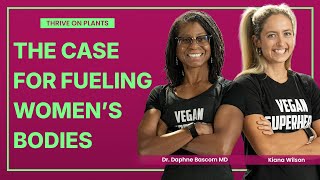
Transcript of a Thrive on Plants podcast interview (host Dr. Daphne Bascom) with coach Kiana Wilson. Kiana recounts her background as an elite/acrobatic gymnast, transition to veganism during 2020 after watching an Earthling Ed talk, subsequent master's in nutritional science focusing on plant-based meat alternatives (antinutrients), and her current work as a vegan coach combining fitness, nutrition, and activism (school talks, community gym ideas). The conversation also covers practical coaching guidance (evaluating plant-based meat labels, protein targets, resistance training recommendations, and lifestyle habits).
Chapters
Welcome to the Thrive on plants podcast. I'm Dr. Daphne Bascom, and I am so excited that you are joining us today for this amazing episode. I have had the opportunity recently of sharing with you three new coaches in our vegan Superhero Academy coaching program. And today you are going to have an opportunity to learn more about coach Kiana Wilson. Kiana is an amazing human being. She's a former professional gymnast, acrobatic gymnast, and when you learn more about what that is, you'll realize that she's an epitome of strength, power, and flexibility. She has a master's in nutritional science and she is a personal trainer. But I think what's most important about Kiana is the joy and energy she exudes in wanting to share this message with anyone who will listen. The food we put in our body is information. It's not just fuel. It is something that will help us grow, it'll help us thrive, it'll help support our health span and our lifespan. And for that reason, it is really important to prioritize understanding the foods that we put in our body. And I think that is something that Kiana brings as an important part of our coaching team. And I know she's going to continue to delve deep into these topics as I invite her as a guest on future podcast. But for now, I'm excited to bring you my interview with coach Kiana Wilson. Kiana, welcome.
Hi, Daphne. Thank you so much. That was a really nice introduction. I'm super excited to be here.
Well, we are over super excited to have you on the team.
Oh, that's so nice. Thank you.
Kiana, you are actually, you're the second newest coach on the team now.
Second newest?
Yes. And I would love for you to share a little bit about your journey to becoming a vegan, a little bit about your fitness journey with our community.
Okay. Yeah. So, yeah, I started my kind of fitness journey in gymnastics. So I grew up doing gymnastics, so I did that from 6 till about 18, and then I was lucky enough to qualify for the World Championships, and that's when they represent the Canadian team in acrobatic gymnastics. After that, that was my big goal in gymnastics. So when I achieved that, I was like, okay, I think I'm kind of ready to move on a little bit.
What is acrobatic gymnastics?
So it's a discipline of gymnastics, so it's not in the Olympics, but it's just a floor routine and you have partners. So I was with two other girls. I was a base. And then there's another Base and a top. So we do dynamic, which is any kind of throwing movement. So we throw the. Does some flips, and then static or balance is the top climbs on you. And she'll do different static movements, so like handstands or just different holds. And then we just have dance and tumbling. That's also involved in the routine, too.
So it requires a lot of strength, coordination, balance.
Yeah, exactly. Yeah. It's a good. Yeah. I think gymnastics is such a great foundation sport because it really covers all of that strength, power, flexibility, mobility. So awesome. Yeah.
Okay. Sorry, I didn't mean to interrupt you.
Oh, no, it's okay. So, yeah, after gymnastics, then I went to. I just wanted to go to university. So during my gymnastics career, I lived in the UK for a couple years, and that's where my sister and I trained a little bit. And I had a really nice experience living in the uk. So I was like, oh, it'd be nice to go back for university. So I went there and I did my undergrad in sport and exercise science. I chose that because I was like, I like sports. I like moving. That was kind of like the first thing I could think of when thinking of something to study. But then the more I was actually in the program and learned a bit, I was like, oh, this is actually really cool. Just learning about the science behind exercise. And then this was before I was vegan as well. And then it was at the end of my undergrad year. So this was around 2020. Started the pandemic. I just came across this YouTube video, so randomly, I don't know why it popped up. And it was by this animal rights activist, Ed Winters. He goes to my. Yeah, Earthling Ed. Yeah. And it was him giving a TED Talk about what goes on in the meat and dairy industry. And I was so shocked. Like, I had no idea. Especially with dairy, the animal abuse that goes on. And I was like, oh, my gosh, this is, like, crazy. I need to change right now. So I never really thought about that kind of thing. I sort of just ate, I guess how most people eat just meat, fish, dairy products. But I also was under the impression that that's what you need to eat as well, if. Because after gymnastics, I was like, okay, I need to do something. So I got into the gym and started weightlifting. But I was like, this is what you need to have. It's what you're told to have, right? To build muscle. So I saw this video, and I was like, I can't keep buying these products. Like, there's no way I can keep contributing to this industry. But then at the same time I was like, but this is what we need to be eating in order to stay fit and healthy and build muscle. So I was kind of in this dilemma a little bit. But from that video I was like, it doesn't matter. I need to make a change because I cannot keep contributing to this industry. So it wasn't like an immediate switch for me to veganism. It took me a little bit of time. I was vegetarian. Vegetarian for a bit. And then I think it was about six months after that I was like, okay, I'm fully in. But then at that time I was like, there. I need to look more into this and just do a bit more research about how veganism works on a nutrition and health aspect and how I can eat this way, but also support my health and fitness goals. And then that's when I became just so interested in this topic. And then I was like, I just want to learn more about this. So then I decided to do a master's in nutritional science because I really just wanted to learn more about nutrition because my nutrition knowledge before just came from like YouTube videos from bodybuilders and stuff.
But. But let's wind back. Yeah, you were a national level athlete. Was there a nutritionist on the team? What were they? When you were competing at that level, you were probably training for multiple hours a day. How were you feeling your body?
Yeah, that's a good question. And we didn't have a nutritionist on the team.
We did not, no.
And looking back, I'm like, that would have been so help because our nutrition advice came from our coaches and they were amazing coaches. I really, really respected them and they were so, obviously they were so knowledgeable about the sport of acrobatics gymnastics. But the nutrition side, I just feel like we didn't get the best nutrition advice. And it was not at all their fault because, you know, we're told certain things and if you don't know enough about nutrition, then it can be a little bit complicated, I guess. But the nutrition advice was more like try and stay away from carbohydrates, don't eat added sugar, eat lots of fruit and vegetables, which of course is a good thing as well. But the in acrobatic gymnastics as well, you're judged for how you look.
I was going to say.
So it is that kind of sport. Well, so you need to look a certain way, which is usually pretty thin. Long legs. Yeah, basically being thin was a huge part of it. So our coaches really drilled in try not to eat too much, basically. So that was our nutrition advice. The less is more, less is more. Exactly, yeah. So that was a bit tricky and I think growing up, hearing that as well was always like, okay, we need to eat less, then this is. And even after gymnastics as well, I was so scared that I was just gonna gain a lot of weight because we were training so much. It was four hours a day, six times a week. Then I was like, when I stop this, I'm just gonna gain a ton of weight. So that's also when I was like, I really need to understand nutrition a little bit better so that I can continue to stay a healthy weight. So, yeah, basically the nutrition advice was there. It just wasn't in depth enough. And yeah, we basically had to look a certain way. Okay. Yeah.
And I'm sure for the top, she had to be even super light.
Okay, you're right. Yeah. Tops definitely had it harder. So I was a bit luckier being a base.
Okay.
Yeah.
Okay. Sorry, I didn't mean to interrupt you. It's just that when you think about the level at which you were competing and, and four hours a day, six days a week, you need the power, you need the energy. But there wasn't the focus on your nutrition exactly.
Yeah, there was such a focus on looking a certain way. So being thin, but where are we getting the energy from to actually be able to perform? And that component wasn't there, so. But it wasn't something that any of us thought about because we were younger and we're just like, our coaches are the experts, we listen to them. So.
Yeah, but that took you to university where exactly?
And then that's when I really got to learn more about it, which was so cool. And the master's was amazing. It was just a year program and it wasn't specific towards plant based nutrition, it was just general nutrition. But to learn more in depth about the science behind nutrition was really cool. So it was a great experience for me.
And did you need to, did you have a specific focus during your master's? Usually you do a thesis or something of that sort.
Yeah. So we got to choose our topics, which was really exciting. And because at this point I was vegan, super interested in plant based nutrition, I decided to do a topic around that. And one of my lecturers actually worked for this company called Corn. You know corn? Yeah. Okay. So it's really big in the uk, but it's a plant based meat alternative made from mycoprotein. So he worked for that company. So he knew a lot about plant based meat alternatives. So I was like, okay. So he was my supervisor so I wanted, or he kind of advised me to do a topic around plant based meat alternatives. And I was like, this is so cool. So I took a range. I think There was about 30 different plant based meats and these are based in the uk so it was beyond meat was in there a lot of corn products. I think there was some impossible meat, just like all the different brands and items of meat alternatives. And I look specifically at the anti nutrients in these plant based meat alternatives.
So can you tell our the audience what an anti nutrient is?
Because at first I was like, that doesn't sound like a good thing and it's not. So an antinutrient is a compound that's found in plants and it's naturally present in plants. So it's things like phytic acid, oxalate, tannins, polyphenols as well as. So they're naturally present in these plants, but if you have too much of them, they can affect the absorption of certain nutrients in our body. So things like iron, zinc. And because these plant based meal alternatives are such a new product, they don't know the levels that are in these products. And a lot of these alternatives are made from things like soy, legumes, peas, wheat. And that's where these anti nutrients are found. So basically I just kind of took these products and we're in a lab, so there's lots of fancy equipment, but I kind of just analyzed each one, mixing a lot of different chemicals together to find these certain levels. So I looked specifically at phytic acid and oxalates. And the good thing about it, the end of my research was that there are levels of these anti nutrients, but not enough to affect the absorption of these nutrients, which is amazing. So there needs to be more research on this topic. And it's not like I came up with something like, oh my gosh, this is like the best thing ever. It was just my individual research project and hopefully there'll be more information about plant based meal terms in the future. But I think that's a good thing that I found was that okay, these meat alternatives are good and having one serving of it per day is not going to impact our absorption of these nutrients, which is a really good thing.
I was just going to ask if you looked at a dose response in terms of, you know, is it. I have one Beyond Burger a day. I have 10 Beyond Burgers a day.
Exactly, yeah, that would be something really cool. So I didn't Look, I didn't. All I did was analyze these meat alternatives. I didn't look at it. Its effect on humans, which could be the next thing. So hopefully, if there's. I mean, maybe even now there might be some more research on that, which would be really cool because then we can see how much can you actually have to see if it would affect the absorption.
Interesting. And were you the only. Were you the first vegan in your family? Were you the only vegan in your family? How did this transition? And kudos to you. I mean, earthlingette is amazing.
He's amazing.
And making. I'm sure making that transition with intentionality was aligned with your values, but I'm certain that there were elements of your environment that also weren't changing at the pace of you.
Yeah, absolutely. Yeah. So when I saw that video, right away, I was at home in Canada because we went back for the pandemic, and I was like, everyone's back to Canada. So I showed my parents right away. I was like, you have to check out this video, because it's crazy. And they had the same reaction as me, which at the time, I didn't think anything of it. I was like, yeah, it makes sense. You saw this video. It's shocking, and we. We need to make a change. And they had the same reaction, which was so cool. So I was like, great. Everyone who watches this video is gonna turn vegan. Like, this is amazing. Let me just spread this, like, everywhere. And unfortunately, that wasn't. Yeah, unfortunately not. But at the time, I was like, oh, my gosh. This is, like, great. Everyone needs to see this. So I was so fortunate that my parents felt the same way and my siblings as well. So I'm like, this is amazing to have, like, I mean, again, it wasn't like, we watched this video and instantly everyone was vegan. It was definitely a process of.
Okay.
Because we grew up eating, like, a lot of fish, and we had Greek yogurt, like, that kind of stuff. So it took time just to find some different replacements and stuff. But now our. Yeah, our whole family is vegan, which is incredible. And I'm so lucky to be part of a fully vegan household. It's really nice. But, yeah, obviously, when I tried to spread the message to other people, it didn't quite cross over as well. And there were some people who were a little bit, like, they. They understood the idea. They're like, yeah, that's so bad, but we need meat. Exactly. Yeah. Not enough to make a change, unfortunately, but that's okay. I'M really grateful because I know there's some vegans out there who don't have a supportive community. Community. Yeah. So I think I'm really fortunate that way.
And so that happened when you were in Canada during the pandemic, then you went back to the uk.
Yeah, exactly. Yeah.
What is. And Ed Winters is from the uk, so I'm certain that you had a different type of community when you went back.
Yeah.
And resumed your training.
Yeah, exactly. Yeah. So I think, actually, I don't know, I feel like the UK is just so good for veganism and I just feel like more people are on board. Not that many people. It's still a very small community of it, but more people are on board with it. And so many restaurants in the UK are just, they have different vegan options. Where in Canada it's not great. So I don't know what it is. Like, it'll, you'll see like plant based burger and then on it it has cheese and then a brioche bun. Wait, okay. We were so close. Yeah. Didn't quite happen where the burger was plant based. Exactly, yeah. So, yeah, I feel like the UK is a little bit better for that, which is great. I don't have many vegan friends, unfortunately in the uk.
But.
Yeah, but in. Yeah, but basically I think more people are kind of aware of the topic there, which is nice.
I remember corn when I was training in the UK and that was, I mean, I was in my 20s, so that was almost 30 years ago.
Yeah, yeah. I think it actually has been around for a long time, which is really cool.
Question then, based on what you know about plant based meats, do you recommend, do you eat them and do you include them as part of your nutritional recommendations for clients that you coach?
This is a good question and I'm glad you asked this actually because I am a supporter of plant based meat alternatives and I think a lot of the time vegans and non vegans can be a little bit intimidated by them because they're such a new product. And I think people get a little bit scared or nervous. I don't know what it is about. And I felt this way too at first. I'm not just saying it's other people because it's a new product. People are like, what's it made of? There's so many ingredients, is it fake? All this kind of stuff. And I think there's a lot of misinformation about it out there. But I think the important thing with plant based meat alternatives is you have to look at them on an individual basis, just like we would with any food. So anytime you look at a food product that you don't know the nutrition facts for it, just look on the nutrition label and see what it's going to provide for you. And I think we need to do the same thing with these alternatives too. So there's going to be some ones out there that maybe aren't the best for us, but some that actually can be great for us and can definitely be incorporated into our diet. And I think the important things to look for when you're looking at nutrition label is look for saturated fat first. So we want to make sure that's a little bit lower. So around 2, 2 to 3 grams is good. And that will also reflect the calories in it too. So that's a good thing. And then protein. So sometimes you'll see a plant based meat alternative and it might be like a fake chicken or something and you're like, okay, you'll probably assume it's similar nutrition facts to chicken, but it won't be, it'll be very low in protein. So look for protein next. So around 15 to 20 grams would be amazing. And then also check sodium too. So sometimes plant based meat alternatives can be a little bit high in sodium. So if we're keeping it under, if you see around like 800 milligrams, that's to a thousand. It's probably a little bit too much. Yeah.
For one.
For one serving. Exactly. Yeah. So try and look for ones that have a little bit less than that. But yeah, I really, I think they definitely can be incorporated into your diet because they offer a great source of protein and a lot of the time they have fiber in it as well, which is really cool. And that's the difference between plant based meal alternatives and regular meat. And meat, there's no fiber at all. So which is really cool. So it's another way to just add a bit more fiber into your diet.
So if I can recap if you are plant based meat alternatives do have a place in the nutritional program for whether you're vegan or non vegan. If you're evaluating a plant based meat alternative, look at the fat. Because some of them can be very high fat.
Exactly, yeah.
And keep that around 2 to 3 grams. Then look for protein. Because even though it says meat alternative doesn't necessarily mean that there are. That it's high in protein. Exactly. So you know, look at that 15 to 20 grams of protein and then I agree with you, the sodium content in some of the products can be very high. So try and look for products that are lower in sodium so that you can keep that, you know, total daily sodium goal under 2000 milligrams or so.
Yeah, exactly. And the one other thing I want to add with that is because plant based meat alternatives are considered an ultra processed food.
They are.
And I think sometimes people also associate ultra processed food with something that's really bad for us, which a lot of the time that's true because there's all the candy and chips and all that kind of stuff that is ultra processed and it's not good for us. But then there's the thing with the system is that like something like whole wheat cereal, that's considered an ultra processed food, but actually that's really good for us. So just because it's ultra processed or processed doesn't necessarily mean it's a bad thing. And then another thing people criticize is the ingredients list. So sometimes people see, oh, there's so many ingredients in it that must be bad for us. But just because ingredients list is long doesn't mean that that's not good for us.
And how do you teach? And that's a good point because I know one of the things we encourage in our program is learn how to read the label.
Exactly.
How do you, based on your knowledge, you know, having a master's in nutrition, how do you educate people on understanding what is important in the list of ingredients? Because we know that they're categorized by the highest volume and to the lowest volume. And it may be that there are multiple things on the label. But simple is good. But more doesn't always mean bad.
Exactly. Yeah. And that's a good question. I know that can be a hard thing too when you're looking, because there's a lot of complicated words on there that most people won't understand what it means. A lot of the time the plant based meal alternatives, the added ingredients in there are actually just added vitamins and minerals, which is really cool. So. And those names usually have complicated terminology. So it might sound like it's something scary, but actually it's just added vitamin B. Exactly. Yeah. Like that sounds scary, right? So I think, don't freak out about that. I would say most important is look at the nutrition labels. So what I mentioned about lower fats, lower sodium, higher protein. So look at those kind of things. And then, yeah, I would say, I don't know, it's kind of tricky. It's kind of tricky with the, the complicated terms. And I understand that it can be an intimidating thing.
Ask your coach. If you have.
Exactly, ask your coach. Yeah.
If you look back to. And I'd love to learn more about, you know, as you emerged out of your professional career, how you sustained your activity or how you transitioned from training four hours a day, managed to maintain your physique, but also how did your nutrition change as your knowledge changed? Because it sounds like you were really focused on your physique, weight management early in your career. You still look amazing, you're healthy, but your knowledge base is so much broader.
Yeah. And I think it, the hardest time for me was transitioning out of gymnastics because I just thought, I was like I mentioned before, like, if I'm not training this many hours, how can I stay fit? Like, I just didn't get it because it was always my whole life up to then was that intense training. So, yeah, that's when I, I began weight training and I was like, oh, this is cool. You can just do 45 minutes or an hour a day and still look good, like you can still build muscle. And I, I didn't understand that before. Interesting. Yeah, so that was really cool. And then, yeah, like I mentioned before, when I became vegan, I was very skeptical because everything I always heard was like, the protein comes. Exactly. Where are you getting your protein from? And I was like, I don't know, I was like, I, I didn't get it. I was like, I don't think this is going to be sustainable for me. But at the same time I knew that I had to, I had to be vegan. Like, I had to, I couldn't keep living this way knowing that that's what goes on in the animal industry. So. But then when I did a bit of research, it was just, it was all there. Like you can get everything that you need from a plant based diet and more. Like, it's so incredible. And I'm like, oh man. More people need to know about this because it really is amazing.
Are you, I don't want to make an assumption, but it sounds like you weren't really doing resistance training when you were doing gymnastics.
Yeah, so we did conditioning and that was a lot. Like it was 45 minutes at the end of our four hour training sessions. And I mean, I guess it was resistance training because we, we did all the pushups and pull ups and different ex and stuff. As a base, you had to have that strength and power. So we did do resistance training, but it wasn't like, I don't know, how do I describe it? Like it wasn't, it Was just more just training for the sport. But then after the sport, I was like, realized you can actually just do weight training just to look good. And I thought that was really cool. Okay. So I like doing just different. Targeting different muscle groups and yeah, just learning different. Different resistance training activities.
And as a competitor, I'm sure you still have a little bit of that competitive spirit in you.
Yeah.
How did your routine change? No longer a competitive athlete. What are your goals now? How do you keep the fire burning? To stay in the gym and keep training?
Yeah. So after gymnastics, I was like, I think I'm good. I don't need to compete anymore. But then at some point I was like, it would be kind of nice to like, I missed that competitive edge a little bit, I guess. But I mean, I was just training in the gym for maybe four years, I guess, not doing anything competitive. And then I had a friend in at university who was like, oh, you should join the Olympic or you should try out Olympic weightlifting at the university. And I was like, okay. Like, I was like, no interest in any of those kind of movements. So I was like, I'll try it out. And I went like once or twice. And I was like, actually, this is kind of fun. So I joined the university Olympic weightlifting team and I learned to snatch it clean and jerk. And then I competed a couple times with the team, which was also really fun. And I enjoyed that so much. Like, the competitiveness, I was like this. I like, I felt like I was really missing it. Actually. I'm not very good at all. Like, I'm not good at all at it, but it was just fun. Like, I was like, this is nice. You're working towards something, which I thought was really cool. And then after that, I. Another friend was like, oh, you should try CrossFit. So I joined a CrossFit club, continued the weightlifting there a little bit. And then I met some people who told me about the sport called Hyrax, which I hadn't heard of before because it's pretty new. So I'd also done a couple competitions, competitions in Hyrox too. So I'm. Yeah, I guess I was missing the competitiveness. I just didn't realize for a while, but now I'm back in it, so it's hard. Yeah, yeah.
And Kiana, what would you. Going back to your years in gymnastics, you probably see a lot of women coming out of the sport who either had red s lea maybe spending so many years in a relative energy deficit, in a way, maybe low bone mass for women in the 20 to, let's say 35 year old age group. How do you encourage them to understand that you're forming the foundation for your future musculoskeletal health now? And you need to fuel, you need to be in the gym, you need to move or do some type of resistance training. But how does, how did you weave that into your coaching?
Yeah, so I think that this is such a great topic and I think for people in that age category, resistance training is so important. And if you haven't started yet, that's okay. But I would encourage you to start and you don't have to do too much two to three times per week. Strength training is amazing and just doing that is so good. And especially as we get a little bit older, resistance training becomes even more important because our muscle mass starts to break down a little bit and it's really important that we preserve that. So resistance training is huge, but then also so is protein intake and the two really go together. So also as we get a little bit older, increasing our protein is also really important. So resistance training, not too much is great. You can start off two to three times a week and then just making sure that you get enough protein. I would say that's.
And when you say enough.
Yeah, good question. Enough. Um, yeah. So protein requirements, I mean, it depends on how much, well, what your specific goals are and how much resistance training you're doing. But I usually just say one gram per kilogram of body weight per day is good. And then as we get a bit older, increasing that amount, 1.2, 1.4 grams per day is going to be good. Okay. Yeah.
How. And then in terms of even looking at your own mindset, I still find women tend to undereat.
Totally.
How do you, how do we coach women to get them to understand that less is not more and that we need to get over this societal pressure to be small and that being thin doesn't necessarily mean being healthy. Exactly. I think we conflate thin with health for sure, but at the same time that under fueling is also detrimental over the long term.
Absolutely. Yeah. Yeah. With that I really like, because I, I mean obviously I felt that same way after gymnastics. I was like, I need to stay thin because that was my idea. And that's the, the pressure we have in society as well as a woman to stay thin and look a certain way. I think how my mindset changed and how I encourage other, other people to change their mindset is if you have goals that are focused around fitness or health or. Sorry. Or Maybe not health, but fitness related goals. So something like learning a resistance training movement, learning a pull up, increasing your strength, things like that. Like that's the things we need to focus on, which I think is really cool. And that's just so much more motivating as well, I find. So kind of just shifting our focus on, instead of looking a certain way, try and feel a certain way. So feel strong. And I think also too, when people start resistance training and they see that change in how they look muscle mass wise, they start to fall in love with the process of building muscle, which I think is so cool. So I think, yeah, just trying to focus your goals more on something related to fitness. It doesn't have to be strength training necessarily. It can be doing a starting a sport, starting tennis, something like that, and having goals more that way rather than, rather than changing how you look, I guess. Right.
It could be hiking, walking.
Exactly.
Anything that you love to do.
Exactly. Yeah. And that's, that's a huge thing too. Like everyone, you'll find something you love. And I think that's such an important thing to remember is that like I personally love running, but I know that's not for everyone, so I don't think everyone should do it. But there's something that you will enjoy doing. So you just have to find that one thing and then once you find it, then stick with it and then it'll be good.
And it may change over the years.
Exactly. Yeah, it might change. Yeah.
Is there an area of nutrition that still you find fascinating or that you want to continue to explore more?
Yeah, that's a good question. I think when I did that master's, I realized that there's so much I don't know, which is cool.
We all feel the same.
Yeah, yeah. Because I think like maybe even before starting that program I was like, I think I know like a lot about nutrition. And then when I actually started learning about it, I was like, oh, I actually really don't know a lot about nutrition. So I think there's so many topics out there that I would love to explore more of. Even the plant based meat alternative world. Like when I was doing that stuff, I was like, again, so much stuff. I don't know. But I was like, this is cool. Maybe I can, I would love to just go more.
Deep dive.
Yeah, deep dive into that. Because I just know like I mentioned before, people are just a little bit intimidated by it, which is completely understandable. And it's so new. It's such a new thing. So to, to learn More about that would be really cool, I think.
And I know I didn't prep you for this question beforehand, but did you, did your thesis advisor talk anything about the cell based meat alternatives? I mean, I feel like there's a lot of the next generation after totally. The plant based meat. I'm seeing a lot around, you know, using single cells to start to grow.
Yeah.
Different types of meat alternatives.
Yeah, that was actually covered a little bit in our course and I did find that topic so interesting. And yeah, once you bring, once you mentioned that, I was like, actually that is a really cool topic because I don't know much about that at all. Yeah. But I think if that can start, it would be incredible because I mean that way we'd be able to replicate foods that already exist. We can increase their nutrient content, which is super cool. But then we don't have that animal abuse side. So I think, I wish maybe that is something I can maybe learn a little bit more about because that would be really cool. But I think that would be a great thing for us in the future.
I think that there are a lot of people exploring that area and I don't know a lot either. I mean, I, I also find it fascinating to see where we're going going forward because. And I'd love to hear more about your ongoing activism. I feel in some ways that what we do at the vegan gym is a form of activism.
Totally. Yeah.
But where, where is your heart? Where is your. What continues to fuel you and how do you weave activism into what you do every day?
Yeah. So I think when I first became vegan I was so like, I need to tell everyone about this. Like, I am like fully on board. But then it became a point where it was kind of exhausting and difficult and I just found that I was getting into like, not arguments with people, but just like, well, I guess it kind of was arguments like, you know, and any vegan would understand that. Like, it's just, it can be kind of exhausting talking to people who are not vegan and not willing to change. So then I came to a point where I was like, I just don't want to talk about it. Which I also didn't like, but it gave me peace of mind to not talk about it. So when I was worked before I worked with the vegan gym, I was working in a gym doing personal training and nutrition coaching. And I didn't tell anyone I was vegan. I just really kept that to myself. Even my clients didn't know because I just didn't I just didn't want to have that conversation, which I didn't like. That was the problem. So that's when I was like, I really just. I know I need to do something around veganism. And so I joined this animal rights group in the UK and what. I'm new to starting it. I only started it maybe five months ago, I guess, but I go to schools and I talk to kids about plant. Well, plant based eating, veganism. So that I find incredibly rewarding because it's, it's already part of that organization. And it's not because we're talking to young children. It's not like telling them everything. It's just telling them how we can treat animals in a kind and compassionate way. And I really like that side of it. And I think talking to kids about it, like talking to people at such a young age is a really good thing because then they're the ones who are more willing to take in information and maybe make a change themselves, which I think is really cool. So I'm doing that, which is nice. I would. And of course, working with the vegan gym is incredible because it's already working with people who are already vegan. So we can skip that conversation, which is nice. And then we just go right into health and fitness and nutrition, which is great. But I would like to do more, something more with activism. I'm just not sure what else to do yet.
No, I think so. I love that you're working with children and because I think similar to you most and myself included, you don't really think about what is the origin of what's on your plate. Totally the. We've separated ourselves. There's so many degrees of separation from the food that we eat, whether it's plants, whether it's animals, whether it's ultra processed food that I don't think children know what food really exactly is meant to be.
Yeah, yeah.
So that's great work that you're doing there.
Yeah, it's cool. And I would love, like, it would be amazing if this was talked more about in schools, I think, because you're right. Like, we, especially at a young age, were taught to be nice to dogs and cats. There are pets. Well, all animals we're taught to be nice to, and that's our natural reaction. But then you're eating a hamburger and just not making that association of, oh, that animal actually had a life. So I think it's about, it's a hard thing because we're, we're brought up that way. And if we can get it from an early age and get kids to understand. I think that would be really cool.
They can make more informed decisions.
Exactly. Yeah. Yeah.
I also remember when you were interviewing that you talked about starting a plant based gym in community space.
Yeah.
Is that still an aspiration for you or.
Yeah, I would love to. And I think, I don't know. When I was after gymnastics, I was like. And I became super into fitness. I was like, starting my own gym would be incredible. So that's kind of always been an idea. And then when veganism came in and I became super interested in that, I was like, how cool would it be to have a gym that's fully plant based? So I mean, that doesn't really make sense. But you have a gym and then you sell supplements that are all vegan and maybe the people working there. All vegan. Something like the vegan gym, but something physical. Yeah, yeah. So I think something that would be incredible in the future. And yeah, I just kind of like the idea of people coming in and then seeing that, oh, this is a fully plant based space. And maybe people who aren't vegan might see that and go, oh, this is cool. Like you can actually eat plant based but then still hit your health and.
Fitness goals too, I think. I mean, I love the fact that you want to bring community and veganism together. Because that's what we do here.
Exactly.
And doing it in the context of events, like we're here now at the vegan superhero retreat and really being with a group of people that you don't have to have that conversation.
Exactly.
You're all aligned.
You're all aligned. Yeah, that's the best.
Kiana. As we wrap up, I'd love, if you're open to it, to go through a lightning round of questions and you can just say the first thing that comes to mind. So no right or wrong.
Okay.
What is your go to? Pre workout? Meal?
Pre workout. I usually have a banana. Half a banana before I work out.
Even before you run?
Okay, if I'm running then. Sorry, my answer is changing a bit. So normally cough. Sorry, I shouldn't say coffee. Like I have to have coffee before anything. So coffee first. And then if I'm running, I would just go with just coffee. If I'm going to the gym, I'll have half a banana first.
Okay.
Yeah.
Side question, no longer lightning round. Do you have opinions? Because I think that I'll let you answer on women training fasted.
Kind of. So I think I used to do that. I used to. Well, I mean, I would have coffee and then go to the gym. I think it depends on a lot of things. Like if you're waking up 5am and you know you're working out right away, you wake up and go to the gym. I would say it depends on how you feel. It depends on the day before. Have you fueled enough? How are you feeling in that morning? Do you have enough energy? I think if you fueled enough the night before, you're feeling good in the morning, then I think it's okay to go to the gym fasted. Usually for me, if I'm awake and I'm having coffee, spending a little time not going immediately to the gym, then I'll eat something a little bit before. Yeah. So I think it depends on the night before and how you're feeling in that morning.
Yeah, sorry. That was a sign. It's such a big topic.
Totally. Yeah. Yeah, I agree.
I agree with you. I think. I think there's a lot of science around the benefits of fueling your body appropriately. But I do agree with you that it's an individualized conversation.
Yeah, for sure.
And not to take a blanket, you must. And applied it to everyone.
Yeah. Because I think for a lot of people, they struggle eating in the morning. So if that's you, then I would say just don't, don't force it. Because if you feel like it's not going to benefit you anyway and you'll feel too full because you don't want to feel too heavy going to the gym either. So, yeah, definitely take it on an individual basis.
Along similar lines, what is your favorite recovery food?
So normally I will go to the gym in the morning, and then when I come back I have overnight oats. So that's been my morning routine for like the past five years, I think. Always have the same thing with protein powder, with protein batter. Yeah. So I mix oats and chia seeds and then soy milk usually. And then I'll mix a protein powder in and then just top it with different berries and different fruit in the morning.
Antioxidants.
Antioxidants, exactly.
Yeah. And your omegas, because you got your.
And Omega 3. Yep, exactly. Yeah. With the chia seeds. Yeah.
Is there a book, podcast, or resource that you would recommend to women who are wanting to thrive on plants?
Yeah. So there is this book that I actually found in the library when I was a real library. Libraries really exist.
I love libraries.
Yeah, they're still a thing. Yeah. And I mean, I'm sure you can find this book online, but it's called Plant Based Nutrition in Clinical Practice. And that was just a book that I kind of first picked up in my masters that I found and I was like, oh, this is really cool. But it just goes into the science of plant based nutrition and how it can support health, which I think is really cool. And yeah, I really like paper books, actually. I know it's maybe not for everyone, but I like just physically reading through things and I found this one really helpful.
If you look in the trunk of my car, I brought books. I'm the same way. Yeah, I'll get them digitally and I'll listen to them, but I have to touch a book.
I feel the same way.
Yeah.
Okay, that's nice.
Second to last question and then I promise I'll let you go soon.
Yeah, it's okay.
What does a day in the life of Kiana look like in terms of focusing on all of the pillars of the plant power blueprint? So your mindset, your nutrition, your movement, your sleep, your stress community.
Yeah. So I think there's a few different important things to cover in the day. For me, waking up and exercising the most important thing. And I mean, that's not for everyone. Not everyone's a morning person. Some people like to work out in the evening. But for me, working out first thing, I find I'm most motivated. In the morning, I'll wake up and do it. If I'm wait later in the day, it's probably not going to happen. So. And again, that's not for everyone. For me, I like to wake up, work out first and then that way too. My, I don't know, mood and mindset just is just ready for the day. And I notice that if I don't work out, then I'm a little bit less motivated to do other things. I find if you work out first, then you're ready to take on more challenging tasks of the day, which is good. So then I also find that I'm able to stick to healthier eating that way as well. I find that sometimes if, you know, you know, don't do a workout, then you're more likely to eat something that wasn't planned. And yeah, so I always say for me, working out first is the most important thing and then having breakfast and then starting whatever task it is for the day. So now working with the vegan gym will usually just start right away after I eat and then, yeah, I like to meal prep foods as well. And I think that was a huge kind of thing for me because. And I know a lot of People struggle with that as well. If you don't have an idea of what you're eating, or if you haven't prepared your food, then you're more likely to grab something else that maybe wasn't the healthiest choice. So I like to prepare in advance what I'll be eating for the day. And then again, I'm much more likely to stick to actually eating well, which I think is helpful. Yeah. And then. Yeah, I think so. Yeah. Now, since I'm working mostly online, it's a lot of time indoors, so I've. After the end of the day, I just make sure that I go for some kind of walk. And since I've been in Canada these past few months, I have dogs at home, which is really nice. So it's a perfect excuse to go outside and walk them. And I think just going outside, moving again, getting fresh air is something super important. So I really like to do that. And then. Yeah, that's pretty much it. I think that's kind of like a day in the life of me.
Do you prioritize sleep?
Yes, that's a good question. I forgot to mention sleep, definitely. I did used to have this not so good habit of going on my phone at night in bed, and I think that was something. I don't know. I used to just not have the best sleep ever. But I didn't really make the association that going on my phone right before I go to sleep was the bad thing. But then I was like, maybe I should not do that. So, yeah, I try and stop looking at my phone at least an hour before going to bed. So I'll still lie in bed on my phone, but then put it to the side and then just do even. I'd usually just lie there for a little bit. And then it's just so much easier to fall asleep because I think that screen can sometimes affect us a bit. So, absolutely, it was not a good habit. So, um. And the habit I still need to work on is I'm really bad with alarms. So I'll set an alarm in the morning and then just turn it right off, but then have multiple alarms keep going. So it's. It's so bad. And that's something that I'm like, this needs to change because it's. It's not a good habit.
So you're not waking up yet, just without the alarm?
Yeah, exactly. Yeah. So. And I'll set an alarm earlier, knowing that I won't get up at that one so that I'll get up on like the fourth or fifth one, which is just a disaster. So, yeah, it's really not good.
How are your cabin mates taking this?
Actually, you know what, I've been good with it so far because I know that if other people in the room, they would be so annoyed at that. So today it was one alarm and I was like, okay, I have to get up. So it's actually good.
A little conditioning's happening now.
Yeah, now it's good.
So in Kiana, final question. What does it mean to you to be a vegan superhero?
Good question. I did have a answer for this one. So a vegan superhero, I would say a leader who shows others that kindness, kindness and compassion can be strong. So for me, veganism came from the compassionate sides, the ethical side with animals. And then I was able to make that connection with combining compassion and fitness and health. So for me, just being able to.
Combine those two, that's wonderful.
Yeah.
Kiana, thank you so much for joining all of us today on the Thrive on Plans podcast. It's been wonderful getting to know you more and we are excited that you're on the team.
Oh, thank you so much, Daphne. Thank you for having me. It was really nice to be here.
You're welcome. And I hope all of you enjoyed getting to know more about Kiana Wilson as much as I did. I would love to know if you want to put a drop a line in the comments, if you would like to learn more about plant based meat alternatives, let us know because I think it would be a good conversation for us to dig into in a little bit more detail on a future podcast. If there were any other topics that we discussed today that were of interest to you, please feel free to leave notes in the comments. We read all your comments and we value bringing you the topics that are most important to you. But in the meantime, remember to, like, subscribe so that you don't miss any future episodes. And if you are wanting to learn more about Thriving on Plants, please feel free to join us and our Thrive on plants community@thriveonplantslife.com we'd love to welcome any woman into that community, but until then, I hope that you continue to thrive on Plants and live a purpose. Take care. The information shared on the Thrive on Plants podcast is intended solely for educational and informational purposes. It is not medical advice and it should never be used as a substitute for personalized guidance from a qualified healthcare professional. Always consult with your physician or healthcare provider before making any changes to your nutrition, exercise, routine, supplement use, or your overall wellness plan. The opinions and advice shared by our guests are their own and do not necessarily reflect the views of the vegan gym or its team. While we aim to bring you high quality, thoughtful conversations, these perspectives are not intended to replace professional medical care. Thanks for tuning in. And remember, you have the power to thrive on plants and live with purpose.
More from Daphne


The Adaptive Fuel: How Exogenous Ketones Support Healthspan | Thrive on Plants #60

Could Yeast Replace Whey? The Science and the Story Behind Spacemilk | Thrive on Plants #58
Why "Eat Less, Move More" Stops Working After 40 (And What Actually Does) | Thrive on Plants #54
Triple Negative Breast Cancer: How She Caught It Early and Came Back Stronger | Thrive on Plants #53