From RED-S to Resilience: A Story of Healing, Hormones & Strength | Thrive on Plants Episode #32
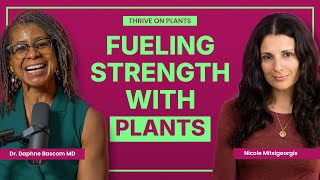
This podcast episode (Thrive on Plants Ep. #32) is an interview between Dr. Daphne Bascom and coach Nicole Mitzi Georges. Nicole recounts a long history in competitive sport (taekwondo at national/international level), disordered eating and RED-S with prolonged amenorrhea, her gradual shift to a plant-based and then ethical vegan diet (first tried vegan eating in 2012), and a later accidental second sporting career in competitive road cycling (started competing at 30, raced ~7 years). She describes healing through improved nutrition, mindset work, community support, and practical habits (sleep, recovery, fuel timing). As a coach she emphasizes progress over perfection, self-compassion, contextualizing food (timing for performance), and small consistent actions as the path to thriving on plants.
Questions this video answers
2012.
Since 2009.
The Commonwealth Championships (taekwondo).
Over five years.
She started competing in cycling at age 30 and competed for about seven years (stopped recently).
Chapters
Welcome back to the Thrive on Plants podcast where we help you unlock your full potential with the power of plants purpose and community. Today, I'm excited to introduce you to someone very special. Coach Nicole Mitzi Georges. Nicole is a nutrition and fitness coach here at the vegan gym and she is deeply passionate about helping women build strength, confidence and resilience all through a plant powered lifestyle. What I love most about Nicole is that her journey hasn't been a straight line. She's walked the path of transformation herself, and now she uses her story, her expertise and her heart to guide others. In our conversation today, we'll dive into her personal journey, the lessons she's learned along the way, and the practical strategies Nicole uses to help women step into their own superhero potential. Nicole, welcome to the Thrive on Plants podcast. I'm so excited to have you here.
Thanks, Daphne. I'm really excited to be on here.
Nicole, I know that some of our community has gotten to know you a little bit, but can you take us back to the beginning and share a little bit about your vegan journey?
Yeah, absolutely. So I grew up in Adelaide in South Australia. I've lived here pretty much all my life. I grew up in a family who was pretty active and into sport. And that's, I guess, kind of how I got involved with health and fitness is just growing up in a family that was very involved in sport. At a young age, I took up martial arts training, specifically taekwondo, and from there I actually went on to compete at a national and international level. So I represented Australia at the Commonwealth Championships. I did a lot of other sports as well, but taekwondo was like the main one where I put a lot of my focus into. And yeah, that took up a whole chunk of my life. Like it feels like a lifetime ago, but it had a huge part of my life and it really helped, like shape me into the person that I am today. But with that, it also had its downsides. So being a sport with weight divisions, eating disorders were very common. And I developed disordered eating, just trying to constantly make weight for competitions. And I just developed a really terrible relationship with food and with training. So I was over training in combination with undereating. So back then they didn't really have a specific name for it, but now we know that's called red S. Yeah. And yeah, just eventuated into a massive burnout and I ended up having to walk away from a sport that I dedicated over 10 years of my life to. As a result, I. I suffered with ongoing issues of my health and my body image, my Relationship with food and exercise. I, I had a menorrhea for over five years as well, so I was suffering with hormonal imbalances. But at this point I, I started to research ways to help naturally heal my body and also just improve my relationship with food. Um, and yeah, that's kind of, I guess at the point where I started looking at different diets and researching health and fitness more and eventuating me eventually going vegan.
That is quite as. I, I didn't realize that you actually had to leave the sport because of some of your health challenges. I'm sorry to hear that.
Yeah, I left this for, from a competitive sense, but I mean, my friend was operating a school here in Adelaide, so I ended up teaching for a while. So I was taking like kids classes and teen and classes for teenagers and stuff. But I eventually had to leave that. Not so much because any kind of issue I was having with it. But being a personal trainer, it got hard to balance taking classes and also training clients because they were both at very similar times.
And when you were exploring, did you go from omnivore to vegan or what was. What about becoming fully plant based? Did you learn?
That was a process. So, um, I, I first went vegan back in 2012.
Okay.
Um, and yeah, during this time I was struggling with my health. I, I just retired from competing in taekwondo, but I was also working as a personal trainer. So I'd been a personal trainer since 2009. Um, and just being in that industry, I was working at a commercial gym at the time. So I was surrounded by other trainers and you know, they were all kind of following their own fads or whatever was on trend at that point. Which, which back then was there was a lot of Paleo going on during that era. So I was kind of also eating that way, which actually, it did actually help me make some improvements to my health. But I, I don't think it was more so of the diet that I was eating, but what I was excluding from my diet because I, you know, naturally with Paleo, you cut out a lot of processed foods. I removed dairy from my diet as well. And I think the improvements I saw was mainly from just excluding those foods. Not so much eating a lot of meat, but it did actually make me feel better. But then a friend of mine who wasn't a personal trainer, just completely out of that friendship circle, she got a job at an organic cafe and a lot of the staff there were vegan. So naturally she started to experiment with a plant based diet. And when I caught up with her a few weeks after she had started changing her diet. I noticed changes in her straight away. So she just looked a lot healthier, like her complexion, her skin. She had lost a little bit of weight and it kind of inspired me to try what she was doing because I was just so desperate to try and make some changes for myself. We were both doing yoga together as well at the time and we went on this yoga retreat in Bali. And yeah, it was really nice, a week long retreat. And they served us exclusively vegan food on this retreat. So that was the first time I ate nothing but plant based food for an entire week. And it was very helpful that it was all prepared for us so I didn't have to think about it or anything. And yeah, it was amazing. And that just kind of after that week I just felt so amazing that I decided I wanted to try and give it a shot, like long term. But I would say at this point I was more just eating plant based but not really vegan because I hadn't really explored the ethical side of what I was doing. I was just trying to find food that would make me feel better and overcome the issues I was having. But not long after that I ended up watching a lot of different documentaries, including Earthlings. And anyone who's seen that knows that it exposes you to the ethical side of veganism. And that kind of converted me, I guess, from just eating a plant based diet and more or less becoming vegan for a greater cause than myself.
That's amazing. Yeah. And do you mind sharing? So what, how do you think that eating plants helped you heal? And it sounds like you were healing both physically and maybe mentally and emotionally.
Yeah, I mean, going plant based definitely helped. I felt a lot better. I, I lost a lot of weight as well that my body had been holding onto. I just felt a lot less inflamed. I guess a good way to say it, but I, I don't think it was just a diet that really helped me because when you're dealing with like disordered eating and body image issues, it's not just a diet. It's got a lot to do with your mindset. Yeah. And I think addressing a lot of that stuff that's going on inside your head is really important in addition to making changes to your diet and your exercise.
I agree. And do you think so you had been. And it's interesting that you were already a personal trainer and so in some ways you probably knew.
Yeah. To be fair, back then, I don't think personal Trainers knew as much as they needed to about nutrition and some of the advice, I mean, some of the advice that was floating around the gym where I was working was insane. Looking back, I think personal trainers are definitely a lot more, or they're choosing to be a bit more educated about nutrition nowadays. Now it's a little bit more important. But yeah, back then I just saw all types of things. I just look back at, it's like, I can't believe trainers were recommending that.
What got you interested in becoming a personal trainer? Was it your competitive time in Taekwondo and, or, you know, did the two go together or was it true? True and unrelated.
Definitely somewhat related. I got into personal training, I guess I went and studied exercise and sports science when I completed school. And I think that mostly came from my interest in, in fitness and sport growing up. I was just, I just really didn't, didn't see myself doing anything else just because I had so much involvement in sport growing up and also just involvement with helping like coaching other athletes and teams and being in a mentorship role. So that's just really appealed to me and also just wanting to learn more about the human body, about fitness and nutrition for my own interest as well. And then from there I also became accredited personal trainer as well as getting my degree and because I just wanted to start working straight away.
And as I recall, you, although you're no longer competing at a national level in Taekwondo, another sport.
Yes, that was by accident.
What happened by accident?
In my late 20s I started riding a bike and that was just to, to be fit basically, because once I stopped doing Taekwondo, I just wanted to find something that I could do in my own time to maintain some fitness, some cardiovascular fitness. And then it's through cycling that I actually met my now husband through some mutual friends and he was actually competing at the time, so he was competing for a national road series team here in Australia. And I naturally just got very fit from trying to keep up with him. Um, we go out guys together, um, and he kind of like told me, oh, you know, you should try and get into some local racing. And, and I was actually very hesitant to get into any type of competitive sport just because I did have that big burnout when I was doing Taekwondo and he kind of just said to me, oh, just do one race and if you don't like it, I'll never bother you again, just do one. So I did one local race and then because I'm so competitive, I just really enjoyed it and I was like, oh, like I want to see if I can improve and do it again, like. So it just, yeah, escalated from there and then within a year I was racing on a national road series team.
And for, for anyone listening who doesn't know what that means, is this trails or bike or road racing?
This is road racing and it's basically the national level within Australia.
That's amazing in a year. And how long did you compete as a competitive cyclist?
So I started competing when I was 30, so I recently stopped competing this year. So about seven years.
Is 30 late to start competing?
It was very late. So when I, yeah, I was racing against a combination of women who were around my age but had already been racing for like a decade. So they were kind of coming towards the end of their careers and then also up and coming juniors who were, you know, like 18 years old. So it was, yeah, a bit of a combination. But there weren't many women my age with such little experience of racing.
Well, kudos to you.
Yeah.
So I, I'm assuming then that you were able to heal your body and you know, whether it was through a combination of nutrition mindset. But why do you mind explaining a little bit about what red S is and then maybe sharing. Because some people feel that a plant based lifestyle, being vegan, they consider that restrictive. Where I actually think it's not. I think it's probably. I eat more diverse now than I did when I was an omnivore.
Yeah, yeah, I totally agree. I feel like it doesn't really matter what diet you are diet you're on, it's how you approach that diet that makes it restrictive or not. And I think as long as you're including a variety of different foods and you're fueling your body. Right. Veganism is definitely not restrictive to me. And I, I can, I mean I've done other diets. Like when I was doing a paleo style thing, I found that way more restrictive than a vegan diet because there were just so many things that you had to exclude. Even what I would call very healthy. Like it's grains, beans, there's certain fruits and veggies that they're afraid of eating and you just look at that's insane. That's healthy. I don't see why they're cutting that out. But yeah, I found it way more restrictive.
And how does all of, how does your health journey impact how you coach today? How has it changed your philosophy whether it's men or women? But what did you learn along your journey that you're trying to improve? Either help prevent or help encourage and women as they work with you as a, as a coach.
I think the most important thing I've learned is trying not to be too perfect, like chasing perfection. I think as well like coming from being an athlete where and most athletes would be able to relate to this. You're constantly chasing perfection. You're always trying to do everything to the T and 110% just to get the upper hand on your competitor.
And.
That can lead to burnout and can hinder your progress ultimately. So I think just focusing on progress over perfection is probably one of the biggest things I've learned.
And Nicole, mindset is huge and it plays a big part of how we coach here at the vegan gym. How do you, I completely agree that perfection can either be paralyzing or it can cause you to develop behaviors that are actually probably maladaptive. Whether it's nutrition over training, you know, chasing the next, how to get, how to become the next best you can actually become. It can be a double edged sword. How do you talk with women about the opportunity to let go of perfection but yet achieve their capability, their possibility by not feeling restricted or limited by either things that society tells us we can or can't do or things that our internal dialogue tells us that we can or can't do.
Yeah, that's a good question. Yeah. Look, I think you can have the best nutrition and training plan in the world but if your mindset isn't in the right place, if it's rooted in guilt, a common one. I see. Is that all or nothing thinking, self criticism, then you're not going to be able to stick to it long term. It's just not going to be sustainable. I like to talk to women about really developing some self compassion, identifying and celebrating small wins and focusing on what their body can do rather than what it can't and using those smaller wins and yeah, just having that bit more self compassion and not being so hard on yourself is really important, I think. Yeah. If every woman understood that, I think that approach health not as punishment or restriction but as self care and empowerment.
That'S huge. Self care and empowerment. Yeah. Where are you today in terms of your relationship with food? Do you feel and, and this is a complex conversation too because I, I, I feel that so many women have a poor relationship with food and their body. Do you what has helped you inter on along your journey and what work do you feel that you still have in front of you to continue to heal?
My relationship with food is a lot better than it Used to be. But I feel like it's always like a work in progress for a lot of people. I actually found when I met my husband Anthony, that actually really helped me improve my relationship with food because he had a very carefree approach to eating and. And didn't he. He grew up not analyzing every ounce of food that he was eating. Like, I think it's very common in women especially. I think it's just something that's. Yeah. Just from how he grew up in society and especially through the 90s and early 2000s, you know, constant. People just want to be skinny. Yeah. And you're always looking at your food and. And I. I know some guys struggle that. Struggle with that as well. But it is a little bit more in women more so than men. So he just had a very relaxed outlook on food. Wasn't like overthinking it. And I think that helped me really relax around food and helped me improve my relationship with food. And having said that, he. He's vegan, so he's obviously, you know, he puts thought into what he's eating from an ethical standpoint and likes to eat healthy because he is also an athlete. But other than that, he's. Yeah. Doesn't overthink it. Like I tend to.
You're not alone.
Yeah.
Do you have. Is there an area of coaching that you. That is your passion or is there. You know, is there we all bring. The thing I love about our team is that I feel like we're such a eclectic group where everyone kind of brings a special piece of the puzzle. What is your special piece of the puzzle that you bring to the vegan gym coaching team?
That's a really good question. I think. I like to draw on my own experiences, obviously. But, I mean, there's always going to be situations where clients are going through some. Going through something that I can't relate to. But I do try and draw on how I felt in my situations with struggling with my own health or my own weight or my relationship with food even, and just trying to be empathetic towards the client. But having said that, I still want to push them to get through whatever they're getting through. Not holding their hand the entire time, but helping them to work through whatever they need to so that they can still achieve what they want to achieve and get past any. Any triggers or anything that is holding them back.
No, that makes sense. It. And that's. Sometimes that's where the hardest work is. It may not be the training or the nutrition. Yeah. But all the things are you want.
To help people and be empathetic, but at the same time they don't want someone there just to like, have a shoulder to cry on, but they want someone there in their corner to push them past it. So. So it's just trying to find that balance with some clients.
And going back to your vegan transition, were you working in a gym where there were a lot of other vegan coaches or were you the, were you the sole one that was eating a different way?
Yeah, so when I made the transition to being vegan, I was actually also transitioning from a commercial gym to more of a private studio. And the private studio where I was working, they did have a dietitian working there. So I actually wasn't allowed to give out any dietary advice because they did have someone there that we had to refer to. So it wasn't really so much of an issue. And in all honesty, the dietitians were mostly supportive of what I was doing and if they weren't, they didn't really say anything. I did have some clients who would just joke around about me being vegan, but I mean, I always took it as just light hearted banter. But you. Yeah, it did, it did make it a bit difficult when clients would be saying, oh, you know, I'm following this keto, you know, thing, and you kind of want to speak up and say, oh, I don't think that's going to be beneficial. But it's not in your place to say it. Right. You just don't want to step out of your scope of practice. Yep.
Understood. Yeah. But you could also, I'm assuming people saw your achievements and your accomplishments and how you fueled your body, because I mean, I can't even imagine with the level of training you were doing either in Taekwondo or as a racer, that you had to fill your body significantly.
Yes. Yeah. Like a lot of people were amazed by how much food I was eating, especially with cycling. I think at, when I was racing at elite level, the most I was doing was about 20 hours a week on the bike and that just requires so much fuel. It's just ridiculous.
20 hours a week on the bike. Yikes.
It was like having a part time job.
Yeah.
In addition to my day job. But yeah, if you weren't fueling properly. Yeah. You just feel like a zombie the rest of the day.
So that's a, I mean, that's a great question because that's something else that, and I know you, you saw, you see it all the time when you're coaching that for many Women, they want to be smaller so they eat less rather than healing their bodies to grow stronger and allow themselves to eat more.
Yeah, yeah, sometimes if you do, especially if you have a performance goal, eating less is actually going to hinder progress. And I think it's really important to look at the timing of food, particularly if you are doing a lot of exercise and making sure that, you know it's fine to be eating more. Just make sure that you're timing it before, during, and after your workouts, where you're getting your fuel in. That's when your body's going to need it the most to adapt and recover. And also just holding some context for certain foods, there's no real. Not labeling food as good or bad, but realizing that it's different situations, different contexts. If I was on the bike, I'd be having, know lots of gels and lollies and stuff because my body needed that instant fuel there and then. But it's not something I would see as food off the bike. So it's just trying to see things as, okay, well, this is fine in this context. But, you know, when I'm off the. I'm not training, I'm off the bike, it's focusing on whole foods and micronutrients and making sure I'm recovering properly. So I think, yeah, just trying not to label foods is really important, especially chasing performance goals, looking at the timing of your intake of protein and carbohydrates around your workouts and not being afraid to eat a little bit more to reach those performance goals because your body does need that little bit more to function.
Agreed. And you touched on three of the other pillars. And I love to hear your philosophy around sleep stress management. And then I don't know if.
In.
Your cycling career, if you raced in a peloton or. But community, you know, so how important was community or how important is community to you as part of a holistic health approach for encouraging people to meet their goals and continue to, you know, get those accomplishments that they're striving for?
Yeah, community is really important, I guess, having a support team, if you're looking at it from an athlete perspective. I was lucky enough to be on a team where you got teammates that you race with, but you've also got a coach, a team manager, and there's a lot of different people working behind the scenes to make sure that the team is working as a whole and that everyone's supported, even sports dietitians as well, making sure that we're actually fueling ourselves appropriately. When you're under eating. So I think that's a bigger focus nowadays is there's a lot of sports dietitians especially overlooking female athletes, making sure that they are actually meeting their needs. Especially in sports like cycling where there's a lot of pressure around being a particular body weight especially. Yeah, especially with road racing because as if it's a hilly race, your power to weight ratio becomes really important. And we can even see that there's actually been some controversy around the recent women's Tour de France. The winner of that Pauline Fran Provost came like she was a dangerous, dangerously low body weight at the moment. And she's even said news that it was intentional for the Tour de France, but she's accepted it's actually not healthy. She won't be staying that weight for very long. It was just for that performance gain. Yeah. So. And there's been a controversy around that where they've actually said to the woman who think she got second, like why didn't you do the same thing kind of thing? And she's already very lean and it's like, whoa, I can't believe people would even ask her that. Um, so yeah, there's a lot of pressure to be like quite light and lean in cycling. Um, just to, yeah, get those extra, extra performance gains. Um, so making sure that yeah, you're fueling really well so you don't fall into that red s that we talked about before where you're under fueling over training and ending up with. You can end up with a lot of issues with your hormones.
I was just going to say that, I mean that's a short term gain that can impact your long term health because it's. You were, you had amenorrhea. Some women don't menstruate for years when they're competing at that level and that's just not long term healthy for your bones, your heart, your brain.
Yeah. And the scary thing is, is a lot. I'm not sure if it's the same now, but back when I was struggling with it, a lot of GPS kind of dismiss it because I would, I'd ask my doctor about it and he would just say, oh, but you're an athlete so it's fine. And it was just dismissed as it's okay. You used to do lots of exercise and I look back at that now and I go, wow, I can't believe they were saying that.
Well, I'm glad you, whoever helped you or if you helped yourself, I'm glad you were able to heal because it Gave you the chance at a second sports career, which was amazing.
Yeah. Totally by accident.
By accident, yeah. Nicole, I want to be respectful of your time. Do you can. Do you have time for a couple more questions?
Yeah, for sure.
Okay. I always like to make these conversations practical. You know, I want the community to get to know you. And if you want to learn more about Nicole and her story, definitely go to our website at the vegan gym and under our team, you'll be able to see all of the amazing coaches that are on our team. But in terms of practical takeaways, if someone listening today feels stuck, what is one small step that you could recommend they could take to help shift their momentum and start making forward progress?
If someone feels stuck, I think the best thing they can do is just take one small doable step. Something so simple that they can't even fail. That could just be going for a 10 minute walk, maybe drinking a glass of water or writing down one thing they're grateful for. I feel like big change can feel overwhelming, but momentum builds from tiny actions. So once you prove to yourself that you can do one small thing, it creates the confidence and energy to take on the next. So it's about breaking the cycle of inaction and just showing yourself that progress is possible just in the smallest ways.
I love that progress is possible.
Yeah.
Do you have any daily or weekly habits that keep you grounded and thriving?
So like just my normal habits, obviously. Making sure I fill my body with wholesome plant based foods. Making sure I get in some kind of daily movement, whether that's riding my bike or going to the gym or just simply walking my dog and practicing mindfulness through journaling, gratitude, sometimes meditation or breath work. One area I've been working on is sleep. It's always been a challenge for me. Sleep. So I actually recently started using a whoop to keep myself accountable. And I'm trying to build a stronger evening routine. So just having those small daily practices really helped me stay balanced, energized, and aligned.
Welcome to the WHOOP family.
Yep.
Nicole, final takeaway. If every listener or viewer could walk away with one message today that you would want to share, what would it be?
If there's one message I would want people to take away, it's that thriving doesn't come from perfection. It comes from consistency. Just focus on the basics. Nourishing your body with simple wholesome food, moving every day, taking care of your mindset. You don't have to overhaul your life overnight. And small steps done consistently create massive change over time. So just Believe that you're capable of more than you think and start with just one action today.
Awesome. And that as a drop the mic takeaway. Nicole, thank you. This has been a pleasure to get to know you better. And I know that everyone listening and watching will enjoy learning a little bit more about you if there's other places they can find you. Are you on Facebook? Instagram? How can people connect with you if they want to learn more about you?
I am on Instagram. I think it's probably the main thing that I'm on. I'm just Nicole Mitzi on there. Yeah. Yeah, that's about it, really. Okay.
Nicole Mitzi on Instagram.
Yeah.
Well, Nicole Mitzi, thank you so much for joining me today and I'd love to have you back maybe on a future episode to talk about redus, because maybe red S&LEA, because I think those are good conversations to have, especially for women in our community.
Yeah, for sure. And it's not just something that athletes struggle with. It's definitely common with just a lot of women in general just under fueling themselves.
100% agree. Thank you so much. I appreciate you and thank you. Can't wait to have you back on another episode.
Awesome. Thank you, Daphne. I really enjoyed that.
You're welcome. Take care, Nicole.
Thank you.
I am so glad I had the opportunity to sit down and learn more about Nicole's journey, and I hope you enjoyed learning about her too. For those of you listening, thank you for being part of the Thrive on Plants community. If today's conversation resonated with you, please please share it with a friend or someone who might need a little inspiration right now. And don't forget to subscribe so you never miss an episode today. The key takeaway is to remember your potential is always greater than you imagine. And when you fuel yourself with plants, community and purpose, you can truly thrive. I'm Dr. Daphne Bascom, and this has been another episode of the Thrive on Plants podcast. Until next time, keep thriving on plants and living with purpose. The information shared on the Thrive on Plants podcast is intended solely for educational and informational purposes. It is not medical advice, and it should never be used as a substitute for personalized guidance from a qualified healthcare professional. Always consult with your physician or healthcare provider before making any changes to your nutrition, exercise, routine, supplement use, or your overall wellness plan. The opinions and advice shared by our guests are their own and do not necessarily reflect the views of the vegan gym or its team. While we aim to bring you high quality, thoughtful conversations, these perspectives are not intended to replace professional medical care. Thanks for tuning in. And remember, you have the power to thrive on plants and live with purpose.
More from Daphne


The Adaptive Fuel: How Exogenous Ketones Support Healthspan | Thrive on Plants #60

Could Yeast Replace Whey? The Science and the Story Behind Spacemilk | Thrive on Plants #58
Why "Eat Less, Move More" Stops Working After 40 (And What Actually Does) | Thrive on Plants #54
Triple Negative Breast Cancer: How She Caught It Early and Came Back Stronger | Thrive on Plants #53