Rim-to-Rim Ready: The Smart Way to Train for Elevation and Endurance | Thrive on Plants #45
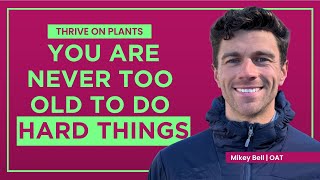
In this episode of the Thrive on Plants podcast, host Daphne Bascom interviews Mykie Bell, founder of Outdoor Adventure Training, NASM‑certified personal trainer, corrective exercise specialist, professional mountain guide, and long‑term vegan. Mykie shares his personal journey from a city upbringing, a grand‑mal seizure, and a shift to outdoor adventure leadership, to becoming a plant‑based outdoor performance coach. The conversation covers a comprehensive framework for preparing for long, high‑elevation hikes such as a rim‑to‑rim trek. Key pillars include: (1) kinetic‑chain assessment starting at the feet, footwear selection, and correcting pronation/valgus; (2) building single‑leg strength, neuromuscular activation, and eccentric control for downhill stability; (3) periodized training that progresses from basic glute bridges and planks to strength‑endurance, plyometrics, and rucking with weighted packs; (4) using heart‑rate zone (5‑zone) cardio rather than mileage, with emphasis on Zone 1‑2 aerobic base; (5) progressive overload of pack weight expressed as a percentage of body weight (10‑15% safe, >30% high risk); (6) equipment practice – lightweight trail shoes vs. rigid boots, trekking poles technique, and stair‑stadium alternatives for elevation work; (7) plant‑based fueling strategies, carbohydrate loading, fiber management, and on‑trail nutrition timing; (8) recovery tools, notably acupuncture, and mindset principles such as consistency over intensity. The episode ends with practical take‑aways, a lightning‑round of personal preferences, and resources for listeners to engage with Outdoor Adventure Training.
Chapters
Welcome back to the Thrive on Plants podcast. Today we're talking about something I love and something that also makes a lot of people quietly nervous. Big hikes, a long distance, serious elevation, the kind of day that you can feel in your muscles even before you get to the trailhead. My guest today is Mykie Bell, the founder of Outdoor Adventure Training. Mykie is an NASM certified personal trainer. And corrective exercise specialist. He's a professional mountain guide, and he holds a master's degree in outdoor adventure and expedition leadership. Mikey's been plant-based for over a decade, which means that he understands both the physiology and the practical reality of training, fueling, and thriving on plants. In our conversation today, Mikey shares simple guidance that makes hiking training feel clear, rather than overwhelming. We talk about how to build joint resilience with single leg strength and eccentric control, how to train intentionally using heart rate zones, how to think about pack weight and progressive overload, and how to dial in nutrition and hydration so that you can get to the summit healthy, happy, and enjoying the adventure the entire trip. I think this is one of those episodes you may want to listen to twice. Once with a big picture and once with a notebook. Mikey, welcome to the Thrive on Plants podcast. I am so appreciative that you're taking the time to join us today.
Yeah, thank you so much for having me here. Super excited.
Mikey, I would love to know how you became attracted to outdoor adventure. Um, my first foray into Being outdoors was when I was in graduate school, and two friends of mine talked me into going to Everest. We can talk about that another time. But how did you get interested in— and how did this become what is your passion?
Yeah, great question. And I think like most people getting into the outdoors, it wasn't a very clear path. I was born in the Bay Area in California and was a normal city kid, played team sports like baseball and football, and I got exposure to the outdoors like on Mount Diablo. And my parents took me skiing in Lake Tahoe as a kid. And that's really what sparked my interest in the mountains, was being out there in the winter and in the snow and fell in love with that pretty quickly, but was still very much in the city for a good chunk of the time and As I got older and eventually became a personal trainer, I wanted to start applying my fitness into meaningful pursuits like getting outside and going backpacking in Desolation Wilderness. And that was kind of the start for me and had a big trajectory shift when I had a grand mal seizure. And that was a really eye-opening experience and really shaped the trajectory of the rest of my life, not knowing it then. Um, but I lost a lot of basic privileges like driving and riding my bike and was not recommended to go out into the backcountry. And I took that as an opportunity to not accept labels and prove that you can break through those barriers regardless of whatever diagnosis you've been given. And that prompted me to kind of put the personal training on the back burner and follow a whole new career pursuit and pursue a degree in outdoor adventure leadership at Southern Oregon University in Ashland, Oregon. So I went full on into the outdoor industry and thought that that was the best thing that I could do with my life, was be outside in nature and experience everything this beautiful world has to offer. And through that experience, I also became a mountain guide on Mount Shasta in Northern California with Shasta Mountain Guides. And in that experience, I would get a lot of clients that were really gung-ho on making it to the summit, but clearly did not invest anything in their physical preparation and ultimately would fall short of reaching the summit and be very disappointed. And I learned this through my own experience, having trained in the gym and playing conventional sports and then transitioning into a mountain guide and an endurance athlete, that it's a very different style of training. And there needed to be some sort of service, uh, and that we could provide the tools and resources necessary to train effectively for mountain adventures, which is how Outdoor Adventure Training was born. And that's kind of my progression into the outdoor industry in a nutshell.
And what kind of adventures have you been on yourself?
Oh man, many. I think my whole life is one big adventure, just like everyone has that same opportunity. Um, of course, hiking and backpacking is the foundation of everything. A lot of skiing, a lot of backcountry skiing, so climbing up and skiing down under your own power. Um, mountaineering, and then kind of combining all these skills into ski mountaineering. Um, I'll dabble occasionally with some whitewater paddling stuff, but that's not really my forte. Whitewater scares me, to be honest. Um, But I do love anything in the snow and the mountains, rock climbing, most outdoor activities I have at least dabbled with. But yeah, I would say like, you know, trekking, backpacking, trail running, mountaineering, skiing. Those are like at the top of my list. Yeah, 100%. One of my favorite quotes is from Dr. Joe Dispenza, which is, what if the worst thing that ever happened to you was also the best thing that ever happened to you? And I think adopting that mindset and, and that's really all it is. And I could have easily fallen into the trap of like, I can never go into the backcountry again. I need to be really careful because this could happen at any time. And I did have a seizure in the backcountry while I was backcountry skiing and 5 miles out into the wilderness and I was okay. And not that I want to push what's possible and I don't want to get myself into dangerous situations and I certainly don't want to put anybody else at risk. But at the same time, like, you need to live your life and pursue the things that you're passionate about. Because if you're just going to not do the things that really fuel your soul, what's the point? And I think that's kind of the message that I try to get across to anybody that I come in contact with, and definitely with our clients, is like, regardless of what injuries you've had or what hand you've been dealt, I mean, people do all kinds of amazing things with less than privileged opportunities to get out there and do it.
And thank you for that, because I think that sometimes we, especially someone who's been diagnosed with a condition, they become the diagnosis. And that, that is not what any of us are advocating for people. You can do whatever you want to do. You just have to do it safely. And it is, I, when I found your channel and I, learn more about your story, that was one thing that impressed me so much is that you didn't say I can't. You said I can, and here's how I can do it.
Exactly. Yeah. And I think that whole situation too also made me focus that much more on my health and in my mental and spiritual health as well, which was a big component that I was missing because I was a personal trainer and I was fit and I was strong and You know, I was like the perfect, I don't know, like the epitome of healthy. But in hindsight, there was a whole bunch that was missing from that equation. And that got me into meditation and really made me go all in with the plant-based diet. So, and those are like the things that I'm most passionate about in life now. So had it not been for that experience, I certainly would not be having this conversation with you today.
Well, you are a definite vegan superhero, so plant-based superhero.
Appreciate that.
Let's— so there's so many things I would love to talk about, and I framed it a little bit. I love alliteration around P's because my first trek, which was when I was in grad school and I joined a group called the— it was Everest Marathon. And when you hear that, you're just like, oh, I'm going to join, I'm going to go and I'm going to backpack for 20 days. It was one of the hardest things I've ever done in my life. And so within the Vegan Superhero Academy, we have launched a number of opportunities for our clients to challenge themselves. One of them, we have a masogi that we undertake in February, which will be in Zion. And then in September of next year, we're actually going to do rim to rim in a day. Nice. And I thought that you would be the perfect person to share with us what you know about posture, because I think, you know, I see people training and they're doing this. I get very concerned about people's understanding of how even your baseline posture will translate into just your movement in general. And then talking a little bit about preparedness and what do you need to do to prepare for some of these adventure hikes so that you can enjoy it, not just survive it, but you can enjoy it. So, you know, just with that as kind of a starting point, how do you incorporate posture and preparedness into the programs that you provide for your clients?
For sure. Yeah. And I think a lot of people, when we talk about posture, everyone thinks upper body hunched forward, which we can call upper cross syndrome. But to me, posture starts with where we interface with the earth, which is our feet. And that's the first thing I'm looking at whenever we're doing a movement assessment or identifying muscle muscle imbalances is how are you interacting with the outside world? What shoes are you wearing? What are your feet doing? Even just statically, not walking, when you're standing there, do you have the tendency for your arch to collapse or your feet to overpronate? And pronation by itself is not bad. It's, it's a natural range of motion, but when it becomes excessive, it can be a problem. And this is where things like orthotics and footbeds can be a quick, quick correction to get you into a more supinated position and help support the rest of the body. But when we have dysfunction, in the feet and ankles, it's a perfect recipe to send dysfunction up the rest of the kinetic chain. And not that all dysfunction starts with the feet and ankles. That's just where I like to look first. So can you maintain a good arch even if you're flatfooted? You should be able to stay in a somewhat supinated and controlled position, just barefoot static standing on two legs and then trying it just on one leg. And then we can keep working up the kinetic chain. So up to the knees. And again, like, still looking at a, a static postural assessment here. What are your knees doing? And I talk a lot about valgus collapse of the knee, which is a combination of multiple things of a little bit of tibial, so your shin bone, a little bit of medial rotation there, internal rotation of the femur, and those two things can contribute to your knees collapsing in or, or knock kneed. And That's a really good way to set yourself up for both a chronic or an acute knee injury, which we can correct all of these things as we work up the kinetic chain. And then, of course, with the lumbopelvic hip region around your hips, really often we see what's called anterior pelvic tilt, which is excessive lordosis in the lumbar spine and shortened hip flexors and a lack of glute activation. So can you get into a more posterior pelvically tilted position where you're getting glute engagement and abdominal engagement. And then from there, we can look at the upper back. And we do need to strengthen the mid and upper back to make sure our scapula stay retracted and depressed, shoulders back. And then that's really posture through the entire kinetic chain.
That is an amazing breakdown. And let me start from the core, from your feet. Do you have— so what are your thoughts on hiking boots versus kind of these adventure sneakers or trail sneakers that a lot of people are wearing today?
It's a great question. And like with a lot of things, it really depends on where you're at and what your experience level is. There's pros and cons to both. Boots, like a traditional boot with either like a half shank or 3/4 or full shank through the sole of the boot provides a lot of rigidity and structure and takes a lot of the work out of your feet and your ankles. They're also quite heavy. So it really depends. Like when I'm mountaineering or on snow or, you know, glaciated terrain or when I'm skiing, like boots should be strong and stiff and robust because we need that extra support, especially if you're wearing crampons. And I don't want to get too technical, but there are applications where boots are, are really important, or someone who's very new to hiking and they haven't built up that baseline stability, that extra support could be really critical. It could be the difference between them having success on a hike or not. And then on the other side, trail running shoes or, you know, lightweight hikers are great because they're really light. And I like to say a pound on your feet is like 10 on your backpack. So, and it, and it's true, it really does add up if you're gonna go on a big hike and you're logging 20, 30, 40,000 steps in a day, an extra pound on each foot is astronomical by the end of the day. So if we can shave a little weight in our feet, makes a big difference. We get better ankle articulation. I like a, a lower stack, so less foam in your shoe, and that helps me feel more grounded and get better contact and articulate on uneven terrain. and something that you can't really get out of a, a big bulky boot. So, but I would say that it's a progression to get into a more lightweight trail running style shoe. It doesn't mean you have to be a trail runner. Um, and there's plenty of great lightweight hiking boots that kind of mimic how a trail runner works and moves, but that is something that should be approached with caution. And just like how we do in all of our training programs, we need to periodize that approach and slowly titrate you into a lighter shoe over time if that's a desired goal.
Understood. So you, you need to train your feet like you train the rest of your body.
100%.
And Mikey, what are— so let's say I'm a 60-year-old, I am generally physically fit, and in 10 weeks I have a 20-mile hike that's gonna take me up to a couple thousand feet of elevation. Given what you just talked about in terms of not only posture, but how do I prepare? What should I be doing? Do I just need to throw on 30 pounds and start hiking in order to get ready? Or is there more complexity to assessing where I am and then creating a plan that will get me to the summit or get me to where I'm going safely and so that I enjoy it?
It's an amazing question. And, I think that's great context of, of where you're at. Someone who's fairly active, maybe goes to the gym regularly, but it's not necessarily focused towards trail-specific performance. And that's a great place to be. And, you know, 10 or 12 weeks is kind of a good timeframe to actually move towards those adaptations we're looking for. If someone's totally sedentary and coming off the couch and has signed up for this huge objective, Uh, we want more time than that. And, and the more time, the better really, cuz it takes time for your body to adapt. Um, but in that short period of time, for example, in a lot of our training programs, we have a 12-week progression. And I mentioned this term periodization, which means we're focusing on one particular adaptation for some amount of time before layering in another particular adaptation and progressing and slowly increasing over time. So, If into your example of loading up a 30-pound backpack and going for your first training hike might not be the best idea if you have no exposure to that. So we want to periodize not just our workouts, but also our training hikes and ease into it slowly. There's no perfect recipe of how many days per week you should be doing, uh, hiking versus gym workouts versus recovery days. It really depends on the individual and the task and objective that you're training for. But few good rules of thumb is focus on the foundational movements first.
Mm-hmm.
We start off really simple, glute bridges, planks, and really focusing on neuromuscular activation. Can your brain fire one particular muscle or more likely a group of muscles in synergy altogether and really feel good activation? I've worked with tons of people who have trained for a long time and have a ton of hiking experience, and they've never really felt their glutes engage while they're walking uphill. So that's where the gym workouts and the stability workouts are so key in laying down that neurological pathway so you can actually fire those muscle groups, which is going to unlock more endurance, greater stability, and all the things you want on your hike. So spending some time generally 4 to 6 weeks or longer, depending on the individual, of just focusing on the basics. Single leg balance, going slowly. This is really key. Repetition tempo is something we talk a lot about, and especially on the eccentric phase, which we'll get into more of slowly going down into the move, like in a lunge, for example, like not just rushing in and out of it, but taking it super slow on the eccentric phase. And that's what really drives that neurological adaptation to fire those muscle groups. And then eventually we can start layering in more strength endurance work, uh, to really build muscular endurance for the demand of walking up and downhill. So it needs to be done in a slow and methodical way. And, and the ego doesn't like that. It wants the hard workout with a pool of sweat on the floor when you're done, because it feels good and it gets the endorphins going, and that's great. But we don't wanna add strength to a dysfunctional movement pattern. So kind of getting back to the posture, we need to work on the stability and the balance, but we also need to mobilize the tissues that are likely overactive. And that could be hip flexors, hamstrings, calves, lumbar spine, and, and that's very case dependent depending on the individual's habits and their lifestyle.
Okay. Let's see if we can unpack some of that. I'm certain anyone who is getting ready to hike is saying, oh my gosh, can I do this? Or what do I need to be doing to do this? So starting with that neuromuscular activation, which you're right, it's not picking up heavy weights and throwing them down. And what's interesting that you actually said that people that you've worked with who are longtime hikers aren't really good at activating their glutes. So what I'm hearing you say is the first line is getting that mind-muscle connection and knowing that you can engage with your calves, understand how to power your glutes, use your thighs and your quads appropriately, engage your core. And that really starts to be a foundation for probably assessment and then also programming.
Yeah, 100%. And, you know, to that point of assessment, we would maybe even do that assessment first. A really simple assessment is an overhead squat assessment. We do this when, when we do our movement assessments with clients of just putting your hands up overhead and dropping into a squat naturally. Minimal cues. I'm going to see how you move naturally. And that's where we can look at every kinetic checkpoint in the body, just like we talked about feet, ankles, knees, hips, mid, lower back. And we can really assess where those muscle imbalances might be and then prescribe specific movements to help correct those muscle imbalances. And, and I don't wanna overcomplicate it for any of the listeners because it's pretty simple and there's a lot of the same pain points for most people. Hip flexors is a big one. If you spend excessive time sitting, like working at a desk. Yeah, I do. Yeah, exactly. There's a really good chance that your hip flexors are overactive and shortened. So lengthening the hip flexors through mobility techniques like foam rolling, active dynamic static stretching, and then looking at the antagonist muscle of the hip flexors, which would be your glutes, and getting more glute activation. And when we combine that more holistic approach of lengthening one side, strengthening another, then we start to see that natural human movement restored.
Okay. So starting, we start with assessment, which is a great, and, you know, an overhead squat is a good way to see how people move, look at the kinetic chain from floor to the top of your fingertips, understanding where there may be opportunities. So you're also looking at, do you have any valgus deviation? Do you have tight hip flexor, flexors, which I do. Is your core stable? Where do you go from there?
Yeah, great question. And it really depends on what the individual is training for and preparing for. And in this case, we'll focus on hiking and backpacking, assuming that most of the listeners are focused on that. That's when we need to start moving into more trail-specific movements. And this is that SAID principle, which is Specific Adaptations to Imposed Demands, um, or the principle of specificity, which means your body adapts to the specific stimulus that you expose it to. So that's where I talk to a lot of people that or doing squats and deadlifts and bench press. And those are great movements by themselves if you want to get better at squats and deadlifts and bench press or other power movements, but they don't directly translate to the trail. So that's where we can really start prescribing movement-specific exercises like step-ups and reverse step-ups and lunges and things that directly replicate how your body is going to move on the trail. So when you get out there, it's not the first time your body has ever been exposed to these ranges of motion. So a lot of single leg work and really challenging your balance and your proprioception, which just means your body's awareness of where it is in space, is really key. So if you find yourself tripping over roots and rocks, which I do often, and most people do, that's just your body not maybe also not paying attention to what's on the trail and looking at the beautiful views, but building that relationship from your mind and your body to understand where you're at in space. And so if you do trip on a rock or root, it doesn't turn into a fall and you can catch yourself and kind of get back in the rhythm. So layering in more sport-specific movements and doing things that maybe put your ankle in an awkward position and focusing on deeper dorsiflexion and things that your body will need to do on a hike like the Rim-to-Rim Trail.
So just to repeat what you said, the SAID, S-A-I-D, specific adaptation to imposed demands, which means you need to train for the task. You mentioned the importance of eccentric movements. Why is that important? And the other, as you address that, I know a lot of people think about the challenge of climbing up. How do you also counsel your clients on the challenges of descent?
Yeah, the descent's what gets everybody. And I think there's a lot of reasons for that. I think people get worried about the climb because it is more physically demanding. You're gonna burn more calories because there's a huge cardiorespiratory component to it where you're working uphill. That's where you get like the lung burn and the burn in your legs. And there's also a mental and emotional component to this too, of climbing uphill is hard. You get to the top of the climb or to the summit of whatever the thing is, and, and it can be an emotional release. I've shed many tears on summits and I've seen many others have that experience. So there's this big high on the summit and then you realize, I got to go back down and you can see the trailhead off in the distance. Oh man, that's going to be a doozy. And so I think there's multiple, multiple components of you're obviously more fatigued than you were when you started. And then maybe there's been a little bit of a mental shift and now we have to undo all of that, which is where the training is so important. So when it is time to go downhill, your body knows what to do, whether your mind is all there or not. And getting back to the training, the eccentric motion, which is going down. So in a squat, it's the way down in the squat, or in a push-up, it's as you're going down. And that's the, the emphasis that we place in stabilization phase of taking 4 seconds on the eccentric phase and slowly going down, because that's really where you get stronger in movements because you're resisting that elongation and you're training your body to absorb those forces, which is really key because as you're going downhill, you have to absorb all of that impact as you're going down. Um, and you want to do that with your muscular system, not your skeletal system and your joints and your ligaments, which is where we need to train all of these systems together. We love utilizing plyometrics for this too, which is just hopping and jumping, which intimidates a lot of people. But if you're hiking and particularly going downhill, it's not necessarily always a super low-impact experience. Of course, we want to be soft, but we need to be able to handle those forces and demands. And plyometrics are a great way to do that because it trains your body to absorb those forces and slow things down. We're, we're strengthening the tendons and ligaments, which does take time. And, and I think ultimately preparing your mind and plyometrics doesn't need to be a big, intimidating thing, you can start with a two-legged hop with a soft, stable landing, and then eventually migrating to a single-leg hop with a soft and stable landing. We can do a single-leg hop down off of a small surface, and all of these things help train that eccentric motion to prepare you for the downhill.
So to recap, we've talked about neuromuscular activation. So you know, getting those muscles activated. You wanna incorporate some unilateral muscular activity. So doing some single leg movement, making sure, because walking, hiking, running, it is unilateral, it is single leg movement, which we often don't think about. Understanding and incorporating eccentric movement where you're resisting that downward and really learning how to stabilize at the same time. Incorporating a little bit of instability work, whether it's, you know, I frequently see you on the Bosu ball or, you know, challenging your ankle stability, your knee stability, getting those hips and that core engaged. Are you doing all of this with or without your pack or not?
Great question. So external resistance is great. I think that's how we get stronger for the trail, especially if you're going to be carrying a backpack, which most people do when you're in the mountains, hopefully, especially if you're going backpacking and you're going to be carrying some amount of load. We need to train for that. And even if you're just planning a trekking trip where maybe you're not carrying your own luggage and you have a porter or baggage transfer service, if you can kind of train above the weight that you'll be carrying, inevitably it's going to be easier on the trail. So it doesn't have to be doing every single workout with a weighted backpack. And there's value to doing training hikes with and without your backpack, uh, or heavy load, I should say. But you can also use dumbbells and kettlebells, resistance bands, anything that increases the resistance and the demand of the exercise. And to be clear, in stability work and stabilization phase, what we talked about earlier of slowing things down, we generally don't add a lot of resistance there because You don't need resistance always to feel more activation. Sometimes it can be nice, but we like layering in more of that added resistance once we get into more strength endurance work. And to make it simple, if you're gonna perform an exercise, aim for that 12 to 20 rep range. Mm-hmm. And you should be nearing muscular fatigue near the end of that set. Really common. I talk to people that are doing the same strength program for the last decade, and they're doing 8 to 12 reps, and there's no— there's not much more to it than that. So by definition, in the eyes of National Academy of Sports Medicine, it's 50 to 70% of your 1 rep max for 12 to 20 reps. So you don't need to max out to know what that 1 rep max is. Kind of a better metric is, are you nearing or getting very close to muscular fatigue? Not total fatigue and failure, but you're feeling the burn, maybe doing a few more reps and combining that over the course of a workout and weeks on end, you will feel that adaptation with muscular endurance.
So 1 or 2 reps in reserve when, when you're thinking about getting to that point of fatigue.
Yeah. If we're going to full muscular failure, then we're getting more into hypertrophy training, which can be valuable in the right context and the right individual and in the timing relation to the objective you're training for. But for most hikers, building muscle mass and size isn't always appropriate. The one exception might be if you're going to high altitude and you're going to be spending weeks at high altitude where weight loss is inevitable. That's when it might make sense to pack on a few more pounds for reserve in case you get sick and just knowing you're going to lose weight while you're out there.
Okay. And then where within this training program do you incorporate cardiovascular endurance? So, I mean, should I— in addition to 30 minutes incorporating a lot of the exercises that you just talked about, do I need to be hiking? Do I need to be on the treadmill? How do I make sure that I have the cardiorespiratory fitness to get to the, to do the distance, whether it's 20 miles or whether for some people it could be 2 miles.
For sure. Yeah. And we don't program anything by miles or, or distance. Uh, it's usually done by time and heart rate zones, uh, because those are, you know, objective across the board. Whereas if I program 3 miles for you, is it different than 3 miles from the next person? Mm-hmm. Um, so we like to look at it as duration and then intensity and heart rate zone intensity, which is, really important and it's all over the internet now with, you know, zone 2 training, which is legit. And it really does work to help improve your aerobic base. But all 5— and I usually use a 5-zone template— all 5 of those zones are really valuable and each one drives different physiological adaptations. But kind of as we talked about in stabilization phase early on and you're building your base, that's when we should focus more on that aerobic cardio work. So heart rates zone 1 and 2, and to really make a difference there, there's no upper limit to how much aerobic cardio you can do because it's low intensity. It should not get to a point where it fatigues you so much that you can't train the next day. Once we get into the higher heart rate zones a little later in the program, that's when fatigue is a real thing and there's more energy utilization. You're gonna deplete your glycogen storage. And then we need to think about what the aftermath of that is going to look like. But early on, just logging those zone 1, zone 2 hours is really, really key. And it's also worth noting that it's an adaptation that takes a long time. And I don't want to sugarcoat it, and I also don't want to scare anybody, but it's, it's a lifelong pursuit to build cardiovascular endurance. It takes years. Um, having been a professional mountain guide for 8 or 9 years, I, I can speak to that of like, it, it takes years to really build that solid aerobic base. So don't let that intimidate you. It doesn't mean you can't make changes in a short amount of time, but as far as longevity, we need to keep up on it over time.
And, and thank you for that because, you know, distance is not the goal. Training to heart rate zones, training to intensity. If I live someplace like Florida, which is flat, uh, how do I train within the zones but also challenge myself in terms of elevation?
Mm-hmm. Yeah. We work with a lot of people that live, um, in areas where they don't have easy access to hills and mountains, and people can still find success. So, If you have access to a gym, the treadmill, incline treadmill, and StairMaster is, is kind of a no-brainer to utilize those tools. And we can still apply everything we're talking about here following heart rate zones, which I also should mention, having a heart rate monitor is really key to doing that, especially early on when you don't have a lot of context. It's really nice to get that objective data because we can also look at RPE or rate of perceived exertion. But that's often skewed by how well you're fueled, how well trained you are, how well you slept the night before. So early on, getting that objective data from a heart rate monitor is really key. Wrist data is not extremely accurate, and that's where a chest monitor is pretty key. Um, so we can still apply that same methodology. Treadmill, StairMaster, at least a few sessions a week should be enough to move the needle. And then we're a big fan of programming at least one longer aerobic effort each week, which could come in any form that could be on a StairMaster or treadmill, could also be done just walking around town or in your neighborhood. Or if you do have access to trails, that's kind of the time to get out for, for your training hike. But to your point of how does one prepare when you don't have access to going up and down in elevation outside, it is more challenging and you do need to be more diligent. And that's when we can lean more into the strength and stability training where we can fall into those sport-specific movements of walking uphill and walking downhill. And that's kind of the best supplement to build the muscular endurance and also programming rucks where you're, you know, like we've talked about with a weighted backpack and moving for some amount of time. Which is great for building muscular endurance, not as effective when you're just doing it on flat ground.
And I think I've seen in some of your videos, you even encourage, go find a stadium. So go to the middle school, go to the high school. You can walk the stairs and do some of your unilateral movements and your other training at the same time.
Yeah, that's a really good low-cost, oftentimes free resource that exists all over the world. Uh, you can find them in parking garages or stadiums, local colleges, high schools. A lot of these resources are open to the public, particularly on weekends if there's not a sporting event or some other activity going on. That's, that's a really, really good option that I live in a place where there's mountains and sometimes it's a great way to get in a quick and hard workout because the thing that the StairMaster and the incline treadmill are missing, they don't get you back down. So it's good for building the cardio engine. But not good for that replication of actually going up and back down, which the stairs do a great job of.
And, and Mikey, in terms of those ruck workouts and, and some of those longer workouts, one of the videos that I loved was when you explained how to determine how much load you should carry. And this is an important conversation and I'd love to hear your thoughts because One of the parts of our misogi is the— we want to carry our limiting beliefs up the mountain and leave them there. So we challenge our clients, is that weight that you're carrying, is it 20 pounds? Is it 30 pounds? Is it 40 pounds? But at the same time, there needs to be some measured assessment on an individual basis. Yes, the weight of my limiting beliefs are heavy, but physically, I weigh 120 pounds, should I be carrying 50 pounds in my pack all the time? So when, when you, could you walk us through your framework? And I'll share the video with the show notes on how you help people understand the green zone, the yellow zone, the red zone in terms of how much should I safely think about carrying?
Yeah, great question. I think you're referring to our packs, pounds, and percentages video. We also have the PDF that has all those images in there, which I can share to share with you, uh, to share with the listeners. And it's an amazing resource. And that whole resource is born out of a recent objective back in March where we were doing multiple ski traverses. Um, Emily and I were— we did the Garibaldi Neve Traverse and the Spearhead Traverse, which is glaciated travel on skis through the mountains, multiple days, carrying all of your own stuff. And it gets heavy because you have ice axes and crampons and ice screws and carabiners and your tent and your sleeping bag and stove and fuel and 3 days worth of food. It gets heavy. My backpack was over 60 pounds for the first trip. Emily's was 40, but I'm 190 pounds carrying a 60-pound pack and she's 112, 113 pounds carrying a 40-pound pack. So we— the whole time we were talking about, man, these packs are— they're pretty heavy. And we had trained for this for sure and built up our pack weight and had at least touched carrying that weight in several training hikes before going out there. But we started looking at it more so of like, rather than how much weight you're training, because it's all relative to what percentage of your body weight are you carrying. And that's really a better metric. And but it's still subjective because there is such thing as a strength to weight ratio. So someone who is maybe carrying more weight on their body but doesn't necessarily have a lot of strength, then that number could get skewed as well. But from what we see, most people can safely carry 10 to 15% of their body weight for training hikes, you know, provided it's not weeks long and they, you know, they have trained a little bit for it, or if they're coming into it cold, shorter efforts at that weight should be fine. But once we start getting over 30% of your body weight, that's when the risk of injury goes up. And the metabolic demand kind of skyrockets. So, and the RPE, so how difficult things feel. For me personally, carrying 20 to 30% of my body weight is fine. And then once I cross that threshold, I notice it and I feel it in my hips and my shoulders and just the challenge of walking up and downhill. And we need to be mindful of that. So rather than thinking about like, I want to carry 30 pounds today, we need to strategically increase over time. And once you kind of get into the groove, you'll have a better understanding of like, I know I can pick up a 50-pound backpack and go for however long, but it takes context and time and that body awareness and how you're feeling, the technicality of the trail. The more technical the trail gets, the steeper it is, the looser the rocks. That's when a heavier pack exponentially gets more challenging. Or if you're moving through loose snow, soft snow where you're punching through, the risk for injury goes up, which is something we really wanna be aware of.
And do you think of that pack weight as in terms of progressive overload? So start low, go slow, but understand when you're gonna, before you get to the red zone, understand what that threshold needs to be.
For sure. Yeah. So that progressive overload is a, a great way to look at rucking and, and training hikes with a weighted pack. For sure, slowly increasing over time, but also undulating that approach. So it doesn't need to be— and progress never is linear. It needs to go up and down. So maybe that's going up to 20 pounds and then the next week going down to 15 and then maybe touching 30 pounds for maybe a shorter consolidated effort and then bringing it back down to 20 pounds for a couple of weeks, letting your body adapt. And that's really common, especially when people are on a time crunch. With a set date for their objective is they want to increase, increase, increase. And the body doesn't respond like that. Otherwise we'd all be superhuman and be able to carry however much weight. Like you're going to plateau at some point or you're going to get injured. So we need to undulate that periodization and give yourself enough time to build up that tolerance. And mostly through all of the other structures, not just your muscles, but your tendons and ligaments need to be strong enough to handle that load. And that's really what's most at risk when we start stacking on weight too quickly.
And that's something that I don't think we often think about, that the tendons and ligaments are what really— that's where we're gonna get injured first.
Mm-hmm. Yeah. And they take time. So tendons and ligaments are avascular structures, meaning they don't have their own blood supplies. So if you ever look at an anatomy chart, muscles are nice and red because they have all these capillaries and blood flow delivering oxygen and nutrients. But tendons and ligaments are white because they don't have that same blood flow. They get it indirectly from bones and, and muscle tissues. But it takes longer, which is why if you tear a muscle or break a bone, it's much more quickly to heal than a torn ligament or a torn tendon or even a partial tear. And with surgical intervention, it takes a long time for those things to heal and they adapt the same way. They take longer.
[Speaker:DAPHNE BASCOM] Now let's throw one other variable into the mix, and that's hiking poles. Because I've had situations where people show up at the hike, they've never used the poles before, which isn't always helpful. How do you incorporate— let me reframe that. Are hiking poles helpful for general hiking? And I'm thinking day hikes like going to Zion, doing the Rim to Rim, and If the answer is yes, how do you start to introduce them to an athlete so that they can understand how to use them appropriately? And do you recommend that they actually go get fit so that they have the right size, so they know how to use the handles, and they're not just kind of winging it?
Mm-hmm. I love trekking poles. We, uh, we've made, not so much on our YouTube channel, but on Instagram, we have a, a whole ABCs of trekking poles, and I came up with 26 reasons, A to Z, of why you should definitely use trekking poles. Um, yeah, I'll share that one with you. It's pretty fun. It's some of it's funny, but for the most part it's very legit and I feel very strongly about trekking poles. Um, let's start with kind of the more extreme side of it, of when I'm guiding a trip on Mount Shasta and I get a group of clients, trekking poles is on the gear list. And of course, I get one stubborn person every trip of like, I don't want to use trekking poles, I don't need them, you know? And if you're going to go on a climb with me up Mount Shasta, you are going to have trekking poles in your hands. Maybe not the whole trip. If you want to have them in your backpack at first, that's fine. But they are coming with you for sure. And I've never had anybody that was reluctant to use trekking poles at the end of the trip still not use them. Um, usually by the end they're like, I am so glad I have these things. So they're really great. But that's in a mountaineering context, carrying a heavy backpack on uneven snow, lots of elevation gain, lots of elevation gain or descent. So on a day hike, I kind of look at it in terms of elevation gain and loss and then total time on feet. So if I'm going for like an easy you know, 5 or 6-mile hike with minimal elevation gain, I'm probably not going to use my trekking poles. Now, that could change for someone who is maybe recovering from injury or, you know, has a propensity to trip and needs that extra stability, or they're kind of just getting into it. Probably still really beneficial to use. But other than that, you probably don't need it. But once we start adding in more elevation gain, if you're getting into like 2,000, 3,000, 4,000 feet or more, can make a huge difference in efficiency in uphill and downhill. And there is, there's minimal science and evidence-based research on the use of trekking poles because it's also pretty subjective on how efficient you are at using them. And it's, it is a technical skill and it takes practice. And as you get more efficient with them, and I've spent a lot of time using trekking poles and they're extensions of my body, it's another point of contact for me to interface with the world, to know where I'm at, and the biggest thing they do is increase your stability and balance to prevent a trip or a slip from turning into a full-fledged fall. So reducing injury in that sense, there is some evidence to supporting that going downhill. Trekking poles can help reduce the pressure on the knees. Uh, but I wanna make one thing clear that trekking poles are not gonna help you get up any big climb. Um, we're not moving uphill with our lats. uh, in our triceps, but they can help reduce session cost in the legs, um, for sure, both from an RPE perspective and then actual DOMS, delayed onset muscle soreness. And there's a couple articles I found that support that, and I'll share those with you. But, um, yeah, trekking poles, game changer for most people. So like rim to rim hike for sure, where you have big descent. Big climb, really clutch for the longevity of the hike. Even if starting off you're like, I don't really need these, it's going to add up over 8, 12 or more hours on the trail. And if you're doing a back-to-back objective or you're backpacking or a multi-day trek, it's going to help reduce leg fatigue and soreness day in and day out. So big advocate of trekking poles, but they do take practice. Like you said, getting fitted for them. In general, for most people, like arms at a 90 is great, but it's all personal preference. I like mine a little bit on the shorter side personally, going uphill especially because I'm reaching out in front. I've seen a lot of people with poles that are too long and they get into that hunched position and their shoulders start to get fatigued, which is a challenge. And then generally going downhill a little bit longer so you can reach and come in contact with the ground and have solid points of contact. Before stepping down to meet your poles and kind of repeating that process. Pole straps can be great. I like pole straps the most on moderate sustained climbs and on flat ground when I can not use my hands and grip the poles, but just place my poles on the straps correctly, which again, we're kind of getting into this. It is a technical skill and it takes practice. So on your training hikes, on your rucks, it's really important to use those trekking poles and get the hang of it. Pole placement is important when you're going downhill. I like to get those poles out in front of me and make sure you have solid points of contact and then slowly lowering your feet and the rest of your body back to those poles. But I think the big thing to emphasize here is that using your poles is a technical skill, and any technical skill takes time to master it. So don't shy away from using the poles, even if it feels a little awkward at first. There is the one downside of trekking poles is that they are maybe more metabolically demanding. You might burn a few more calories because you're moving your arms, but I promise you, as you get more efficient with it, you won't even think about that and it will just make the day that much better. I also want to mention too that if you're going into the wilderness or the backcountry, trekking poles are a safety resource as well. We can use them to make splints in case of an injury. Um, I've used it to fish water out of a well, um, or fend away snakes and other predators. Uh, it's, they're really good tools to have and they're multifunctional. They're more than just trekking poles. There's some tents nowadays where you can pitch your tent up with trekking poles. So, um, yeah, there's, there's more uses than just aiding your walking, but they need to be incorporated into your training program. For sure. Getting some context on training hikes, you know, practice like you're gonna play. So if you're planning on using trekking poles, doing the real deal that you're training for, uh, yeah, for sure. We wanna integrate those into your training.
So we've talked about, we've, we've covered a lot of things. The, you know, the general foundational principles of understanding our neuromuscular activation and integration. You've touched on, and thank you because these are all, I think they're things that because people walk and they hike and in particular within the Vegan Superhero Academy, we're all moving. So movement is one of our core pillars of our Plant Power Blueprint. But preparing for a 12-hour hike is different than going to the gym 3 times a week or walking on the treadmill for 30 minutes. This needs to be intentional training starting with your assessment, understanding where you may have areas of opportunity, whether it's your ankles, your knees, your hips, could even be your upper body in terms of anywhere along that kinetic chain where you may have postural weaknesses, doing that training that is specific to hiking because it, it's not necessarily gonna be going and doing trap bar deadlifts. It's doing those eccentric movements. It's doing the unilateral movements. It's doing the things that will allow you to climb up, climb down, navigate laterally, go over the rocks, and do all that safely. On top of that is your cardiovascular training. And using a heart rate strap like a Garmin strap in order to really understand your heart rate zones. The wrist straps, the Whoops, you know, we all love those, but they're not as accurate as throwing on a chest strap and really knowing, is my heart rate 90 or is it 120? 'Cause those are big differences. And then if you are, as part of the training, understanding how much you can carry and how you progressively overload during your training program, and incorporating key equipment like good shoes, hiking poles, in order to make sure that you're doing this safely.
Nailed it. And, you know, hearing all of that back, it's like, this is kind of complicated. And I think it's easy to fall into that trap of like, what do I do? Where do I start? Keep it simple. You know, a couple days a week of training your lower body and your balance, diversifying your exercise selection, making sure you're moving in different planes of motion. Keep it— keep your body guessing. Variety is really good. Get out a couple of days a week for some easy training hikes and mix that up as well. Have one session that's kind of your aerobic anchor, maybe 60 to 90 minutes of that easy effort, and then have one session that's a little bit harder, whether that's incline treadmill, StairMaster, stadium stairs, or getting out on the trail and trying to move at a faster pace. And then making sure you're giving your body time to recover and adapt. Focus on mobility. We program a lot of foam rolling and stretching, and you're gonna do great. Just try not to overcomplicate it and fall into the trap of there's too much and I don't know where to start, 'cause it can feel that way at times.
Yeah. We just, you just went through a lot and it's amazing. You mind if I ask a little bit about your plant-based journey?
For sure.
When did you— Yeah. Can you share a little bit about that?
For sure. So I was, you know, I was raised with like, eat more, eat more protein, get stronger, get bigger. Playing high school football, it was like the more protein, the better, right? Like I got up to eating like 300 grams of protein a day. Like that was the whole thing throughout high school and like early in my personal training career. And I had one personal training client that I was training in the gym. I was like, why do you eat so much meat? It was like really challenging me on it. And she was like, you should try being vegan. I was like, fine, I'll try it. And so, so I gave it a shot and I went 2 weeks and I was like, it's pretty great. I was just eating a bunch of sweet potatoes and carrots and beans and lentils, like foods I loved anyway. And after 2 weeks I made kind of the same dish, but I added chicken back in. And subconsciously at the end of the meal, I realized I had picked around all the chicken. And ate all the veggies. And I was like, hey, maybe there's something to this. And then I started doing more research, and kind of the 3 variables that have really kept me going with it is number 1, the health component. And I feel better, and I have better energy, and I generally feel like I can do a lot in a day. And I contribute a lot of that to my diet. And I would say even bigger than myself, the other 2 big reasons are the ethical reasons of the animals and the environment and the planet on which we live on. And really, that's becoming the biggest driver for me is the sustainability impact. And obviously, and I'm sure your audience is well versed in this, is it has a tremendous impact on the environment in many different ways. And I think as outdoor adventure folks, we need to advocate that more, especially skiers that are complaining about warm winters and lack of snow. We need to do something about this. And I think a huge mechanism, and of course not the only mechanism to slow the rate of climate change, could be through a plant-based diet.
Love it. Kudos to you. Um, and as a plant-based outdoor adventure master guide, how do you talk to your clients about fueling? Because if you're gonna be out trekking, you know, Zion's one thing that's, you know, maybe 4 to 6 hours, but if you're gonna be going for 12 hours, that's a situation where, or more, 18 hours where fuel, endurance, and hydration become important. Do you have any recommendations for your clients, anyone listening around how to do that as a plant-based plant-based outdoor enthusiast because, um, we definitely don't wanna be having lots of things that could cause GI upset, but you need to be making sure that you're fueling your walk, otherwise you're gonna bonk.
Yeah, bonking is a real thing. Uh, the good news is if you are plant-based or at least like have a plant predominant diet, you're already in pretty good alignment for what endurance athletes need. A carbohydrate-heavy diet, um, and some fat and protein to balance it out. And all of your micronutrients are really key. But for sure, as we get into more bigger day objectives, it is really important to make sure our glycogen storage is topped off. So like oatmeal, rice, uh, other grains and starchy vegetables like potatoes are really good to make sure that we're entering the objective with our reserves topped off. And that's really key. And Everyone knows about carbo-loading, and it's usually like the big pasta meal the night before, but truly it starts days in advance. So it's not just the night before, it's 2 or 3 days before. Slowly start onboarding a little bit more. And like you mentioned, the GI issue is real. And I've dealt with that a lot of experimenting with and sometimes overdoing it and eating too many carbs, especially in the form of fiber the day or a couple of days before. And kind of tapering off the fiber. Like, I eat a ton of legumes and lentils, but they do have a lot of fiber. And that's one of the challenges. And so leading up to it, just taper off of the fiber a little bit, just so things are a little bit smoother when it comes to objective day. And then of course, refueling with carbohydrates and protein. And then on the trail is really important to fuel. Obviously, I think there's a lot of research out there on you know, 30 to 50 or 50 to 90 grams of carbs per hour. And I think that can just get really complicated really quickly. And my secret sauce is I eat well all the time and my blood sugar is generally pretty stable. And when I'm out there, I don't need to stop every 60, 60 minutes to eat 50 grams of carbohydrates. Of course, I have fuel that's accessible in the form of sugar, minimally processed sugar, usually in the form of dried fruit or dates. It's kind of my go-to. Um, and then trail mix and other snacks to keep me going, but I'm rarely stopping every hour to make sure I get my dose of carbohydrates. And, um, and this also ties back into the training component of as you become more aerobically efficient, your physiology adapts, your cells are better at processing that energy and energy utilization. And you might find that you don't need to eat as much on these hikes as you train more and your body continues to adapt. And so it's not a blanket statement for everyone of you need this many carbs per hour, but it's really case by case and you need to experiment on your training hikes and on the days that you're training of what do you really need to fuel and feel your best? Because 50 grams of carbs per hour could be way too much for for most people, really.
That can cause GI effects too. Uh, Mikey, are you okay on time? Do you have a— you have a few more minutes?
I'm ready.
So if I am planning to embark on a 12-hour hike, um, what should my— and I'm thinking about marathon training by comparison— do I need to do a 12-hour walk to know I can do it? Or how much time on feet do I need to have achieved to know that I'm not going to get to the bottom of the Grand Canyon and say, "Oh, I'm done." Because that's not good.
No, definitely not. We don't want the helicopter coming in. That's not sustainable either, which is a huge part of training is like if we look at the first ethic of Leave No Trace principles, it's plan ahead and prepare. And I think that's where physical fitness training comes in huge of increasing our safety margin when we're out in the outdoors. And that's a huge part of what we do and recognize at Outdoor Adventure Training. Like, we're promoting the outdoor industry and getting people out there, but we want them to do it safely and have that margin for error if something does go wrong, because it's not just you that's the only variable. It's the weather and the terrain and other people. And anything can happen when you're in the mountains. Um, even when you think it's a beautiful sunny day, you never know. Um, so having that extra margin is really key. So as far as like how much time on feet do you need to do a 12-hour hike before your 12-hour hike? No, definitely not. I think it's all about layering in that volume in more of a weekly perspective rather than in a day. So if you can do a 6-hour hike and then the next day follow it up with a 4-hour hike and feel pretty good on that third day, that tells me like you're going to do great come game day. And there's also oftentimes I've seen it a lot, a flip gets switched in people when they show up and they've trained and they've built that grit muscle, which I think is really important. And knowing that you can push through when things get tough and, you know, most people never find that full edge of what they're really capable of. And as long as you're spending that time each week and back-to-back sessions, then we can guess, and usually pretty accurately, that you're gonna do great on, on the actual objective.
I like that objective day. Um, Mikey, is there anything I have— I'd love to ask you a lightning round of questions, but before we go there, is there anything that we didn't cover that you think is important for anyone listening? Who is thinking about doing a long hike, considering Outdoor Adventure Training. And it doesn't matter how old you are. This is something that's accessible whether you're 35 or 85. You just need to understand where you're starting from and how to get there safely.
For sure. And I think that's really key is don't accept those labels. I get a lot of people that sign up and that are like, I'm too old for this. And it's not true. A couple of years ago, I guided a 73-year-old woman to the summit of Mount Shasta, and she just did Machu Picchu in Peru. And she's a great example and just one of many examples of people kind of not subscribing to that idea. And it's not just age. If you have never done any of this stuff and it's piquing your interest, start small. And really what it's about is consistency and not falling into the streakiness of fitness culture of I'm going to train for this thing and then afterwards I'm done. And then it's like, oh, the next thing pops up on the calendar and I'm going to start training again. Just adopt a healthy lifestyle where it's a part of your lifestyle. And we're all about not saying no to opportunities when these things come up. And when you have that baseline fitness, you can say yes to more things in life. So Start small, stay consistent, don't overcomplicate it. Any movement is better than no movement. And then when that thing does come on the radar of this big hike or adventure that inspires you, then we can start migrating more towards training specifically for that objective.
I love that. Great words of wisdom. All right. Let me ask you a couple questions just so everyone listening can get to know you even a little bit better. What is your go-to pre-hike breakfast when you want steady energy?
Oatmeal. Uh, there's no coincidence that OAT, Outdoor Adventure Training, also says oats. Um, yeah, oatmeal with chia seeds, a little bit of honey, flaxseed, hemp seed, uh, blueberries, a little peanut butter. That will keep me going for many hours. And I get that oatmeal doesn't work for everyone, but Um, it's really affordable. It's super light. It packs well. I've eaten oatmeal in just about every continent.
Awesome. And what is one strength exercise you'd keep if you could only keep one for hikers?
If I could only keep one, it would have to be the lunge for a number of reasons. One, there's so many different variations of the lunge. We can go forward, sideways. We can play with repetition, tempo. It works a couple different things. Like I mentioned early on, it's gonna help activate your quads and your glutes and simultaneously get your knee behind your hips, open up your hip flexibility. It's unilateral, gonna work on balance. If there's only one, like a walking lunge is a great exercise.
Love walking lunges. What is, you mentioned, and thank you for mentioning that Part of your journey has been related to mindset and your overall health. Is there one recovery habit that has really changed your training the most?
Yeah. And it would be acupuncture, believe it or not. Yes. Acupuncture has completely changed my life. Uh, I was dealing with some low back pain kind of randomly with like no clear mechanism of injury and started going to acupuncture and got lucky with a great therapist in Ashland, Oregon. Shout out to Simon. He's a hero. And going in weekly, man. So, so ultimately the only thing controlling your muscles is your nervous system. And if your nervous system is in a constant flight or fight state, your muscles are going to be tight and you're going to feel locked up. And when we can kind of downregulate that, everything else just flows. So all the foam rolling and stretching and mobility and massage and all the other great things that I've done for my body, nothing even comes comes close to the impact that acupuncture has had on a systemic level, um, for my recovery.
That is interesting. Okay, thank you for sharing that. Is there a favorite adventure location that continues to humble you?
Yeah, it would have to be not some big grandiose thing, um, but the street right behind my house in Ashland. It's called Park Street. It's probably one of the steepest streets in town, and it gets me up to the trails in the watershed, which eventually goes all the way up to the Pacific Crest Trail. But it gains over 400 feet in like 0.3 miles. It's super steep and it's just a road. And I recently looked on Strava and I've done it like 177 times or something ridiculous like this. But that one always kicks my butt and it always humbles me. And has been like my go-to training ground. And I, every time I drive by it or walk by it, I'm like, that is where dreams come true. And I think that's important for anybody who is training for anything, having your go-to loop or routine. That's kind of like your baseline litmus test of where, where are you at today? How are you feeling? And then using that as a point of reference of like, I felt really good on Park Street today. What did I do in the last 5 days that set me up for this success? Or like, I am really slogging today. Like, did I not sleep well? Did I not fuel well. So that's probably my go-to favorite adventure. And of course there's many others, but I think that one's simple and means a lot to me.
And it's right one street behind you.
Yeah.
For anyone in our community who is planning on either joining us at Zion, doing the Rim to Rim, or maybe one day doing one of a hike with you, What's one mistake you hope after watching or listening that they will try to avoid?
Hmm. That is a great question. I think the biggest mistake I see people make is just not being consistent, and that's the big one. And, and of course, injury and illness and family matters and things are gonna happen, but it, it doesn't take much. Uh, but keeping the habit, doing something every day or most days of the week, that's going to move you one step closer to your goal. Even if it's like a 20-minute short session or a short walk outside. But, and it's not always about having more progressive training necessarily, but just, just put one more drop in that bucket that's getting you closer to that goal and keep it simple. Uh, I think that would be my one piece of advice is, and I see it a lot of people are really motivated, they get excited and then they just kind of like fall off the face of the earth. And I, and I don't hear from them for weeks and then it's like scramble mode. I got to try to cram my fitness, which it doesn't work that way. So just be consistent, small bouts on a regular basis, and integrate it into your lifestyle.
Love it. And it's— I'm glad you're saying it and not just me. So thank you.
It's true. It's, it's really key.
Mikey, this has been wonderful, and I want to be respectful of your time, so I will let you go. But thank you so much. The— I mean, just the opportunity to speak with someone with your experience being certified in Outdoor Adventure. Um, you are such a great wealth of information, and if anyone wants to learn more about you, about Outdoor Adventure Training, where can they go?
Check out our website, uh, outdooradventuretraining.com. We have a bunch of resources on there. You can book a discovery call with me. I love talking to people. It's probably my favorite part of my job is talking to people all over the world about what they're training for, what their struggles are, and ultimately what we can do to support them in their pursuits. And that would be the best place to start. Our YouTube channel has a ton of amazing free resources as well. And I would say between those two resources, you could start patching together a lot of great things to fill your time with.
What's your next big adventure?
Next big adventure? Tomorrow we're heading out on a a 2-night, 3-day hut trip in the backcountry. Uh, have a big snowstorm coming in, so we're gonna head in there on our skis, spend a couple nights, drink some warm drinks, and hopefully do some powder skiing. Um, and then kind of bigger picture down the road, uh, there's something brewing for some sort of big Himalayan expedition in the fall. I would love to do like a big trek and climb, but that's still in the works, but it's on our radar.
I would love to go back one day.
Yeah. Ever since I've gone, it's like every day I'm like, I gotta go back.
Mikey Bell, thank you so much. This has been an honor. I really appreciate you and you are welcome in our community anytime. So please stay in touch. It's not often I get to speak with other people that are plant-based and wishing you all the best tomorrow. Be safe. And I will touch base with you soon.
Thank you so much, Daphne. It's been a pleasure. Really enjoyed the conversation and we'll definitely be in touch.
Take care. You too. If you are still listening right now and thinking, okay, I can actually do this, then Mikey and I did our job. Mikey shared a lot today, but there are 4 key lessons that I just wanna recap with you before we close out today's episode. First, the downhill is not a detail. We all train for the uphill because that's what we get worried about, but you can't ignore eccentric control. That's when your knees and your hips are gonna start talking to you. You need to build downhill strength on purpose. Key takeaway number 2, posture is not just stand up straight. It's alignment under load. And it starts at your feet, and it's something that you should think about assessing. So as you're building your hiking training program, talk to your coach and make sure that you understand your feet, your knees, your hips, your core, your shoulders. That entire kinetic chain is involved when you're in hiking. And if you need any corrective exercises, you can introduce them into your training plan. This is all trainable. Number 3, practice with your gear. Nothing new on the day of the hike, please. Poles and pack weight should be familiar to you. Training is where you gain your confidence, and so you need to train to the test in terms of using equipment and the pack weight that you're going to carry on your hike. And then finally, and it's something that sometimes we don't think about with hikes, you need to fuel like it matters and hydrate. So top off your glycogen days in advance. You need to make sure that you reduce any GI surprises by practicing your plan. If you're gonna be using gels, goos, chews, or anything other than whole food, make sure you've tried it on a training hike. And then finally, don't rely on willpower as a nutrition strategy. You don't wanna get 10 miles into a 20-mile hike and realize that you didn't fuel with intention. The other thing, and this was the thread that Mikey kept going back to, consistency beats intensity every single time. If you want to connect with Mikey and explore outdoor adventure training, check the show notes. We've linked his website, YouTube channel, and Instagram so that you can go deeper. There's a lot of amazing content. Content that he shares. And if you enjoyed this episode, I would love it if you would share it with a friend who's training for a hike or someone who's thinking about training for a hike. And finally, please like, subscribe, and leave a review. That's how this message reaches more people who might benefit from it. Okay, that's it for this episode. Thank you for spending time with me today. I'm Dr. Daphne Bascom, and this is Thrive on Plants. And until next time, keep thriving on plants and living with purpose. Be well. The information shared on the Thrive on Plants podcast is intended solely for educational and informational purposes. It is not medical advice, and it should never be used as a substitute for personalized guidance from a qualified healthcare professional. Always consult with your physician or healthcare provider before making any changes to your nutrition, exercise routine, supplement use, or your overall wellness plan. The opinions and advice shared by our guests are their own and do not necessarily reflect the views of The Vegan Gym or its team. While we aim to bring you high-quality, thoughtful conversations, these perspectives are not intended to replace professional medical advice. Care. Thanks for tuning in, and remember, you have the power to thrive on plants and live with purpose.
More from Daphne



The Adaptive Fuel: How Exogenous Ketones Support Healthspan | Thrive on Plants #60


Could Yeast Replace Whey? The Science and the Story Behind Spacemilk | Thrive on Plants #58




Why "Eat Less, Move More" Stops Working After 40 (And What Actually Does) | Thrive on Plants #54
Triple Negative Breast Cancer: How She Caught It Early and Came Back Stronger | Thrive on Plants #53