Struggling to Stay Consistent? Try This 3-Step System | Thrive on Plants Podcast #21
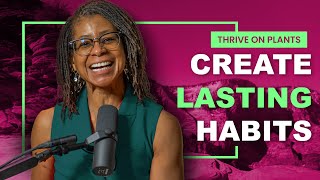
Solo episode of the Thrive on Plants podcast (hosted by the channel "laughing-jewelry") that teaches a three-step framework for sustainable personal growth: Commit, Improve, Maintain. The host defines each step: commit = make a specific decision and take an initial action; improve = small, consistent progress and learning (embracing a growth mindset and progress-over-perfection); maintain = consistent, identity-linked practice and flexible adjustments over time. The episode includes personal anecdotes (learning to run during the pandemic, stair/parking-garage workouts), concrete micro-habit examples (15-minute walk, add a serving of vegetables, set bedtime reminders), guidance on setbacks (use self-compassion, course-correct), a CTA to join the community (thriveonplantslife.com), and a medical-care disclaimer.
Chapters
Hey there and welcome back to Thrive on Plants. I am so happy you're here. I hope that you are enjoying today's episode while you are out taking a walk, making dinner meal prepping, or doing something that is your time. Because I want to make sure that I am. I want to make sure that you know how much I value your time and I appreciate you spending this time with me. Today we're going to be talking about growth and some meaningful steps that you can take toward becoming the best version of yourself and I. This is going to be a theme for the next couple of solo episodes, so I hope that you enjoy them and I look forward to your feedback. Today I'm going to share something that has shifted my perspective on personal growth. It's a simple but powerful mantra and you may have actually seen me blog about this. I want to say maybe back in 2023, but I think that if it's fully embraced, it can be a total game changer. And it's this. Commit, Improve, maintain. These three words, when put into practice, can create real, lasting transformation. Now I know personal growth, it can feel sometimes overwhelming. I've got a whole bookcase of personal growth books and I don't know how it feels for you. Maybe you have big dreams for your health, for your mindset, or to just the way you show up in the world. But sometimes the idea of making lasting change feels daunting. We set goals, we start strong, and then life happens. Motivation fades, we fall off track and before you know it, we're back where we started, feeling frustrated. And I've been there. I. I've been there. And partly this is why I love this three step approach. Commit, improve and maintain. It's not about quick fixes, it's not about all or nothing thinking. It's about creating a framework for sustainable long term growth. One that works with real life. Now, this isn't completely my idea. I first came across this in Greg Hardin's book Stay Sane in an Insane World and it instantly resonated with me. Because the truth is, no matter what we're working toward, whether it's feeling stronger in our own bodies, shifting our mindset, or making time for the things that truly matter, it all starts with a decision to commit. So today I want to break down what commit, improve, maintain means, why it works, and how you can start applying it today. So if you've ever struggled with staying consistent, if you've ever set a goal only to lose momentum, or if you're just ready for a fresh perspective on personal growth, I think this episode is one you're going to enjoy. Let's start with commitment. Commitment is that igniting spark, is that pivotal moment when you decide, yes, I'm doing this. But here's the thing. Commitment isn't just about setting a goal. It's not about saying, I'll start on Monday or I'll wait until I'm ready. It's about making a decision and taking action. And that action can be a tiny, small step forward. But you need some action to move forward. And I can't tell you how many times in the past I've hesitated before making a change, especially a change I knew I needed. And maybe you can relate. I'd think, well, maybe I need to start stretching again, or maybe I should stop working late at night so I can get better sleep. But instead of committing in that moment, I'd overthink it. I convince myself that I needed to wait for that perfect time. And I know that probably sounds familiar, but here's the truth. There is no perfect time. Life does not pause to give us the perfect moment to start something new. The longer we wait, the easier it is to stay exactly where we are. Think about a time you made a big change in your life. Maybe it was switching to a plant based diet, starting a new workout team, starting a new workout routine. Not routine, or setting stronger boundaries in your relationships, or working with a coach, looking for a new job, moving to a new city. What made the difference? Was it waiting for everything to be just right? Or was it deciding in a single moment that you were going to commit? The moment you say, I'm in, not I'll think about it, but I'm doing this. Something shifts inside you. Commitment creates momentum. And momentum is what carries you forward, even when things get tough. Now, commitment's powerful, but it works best when it's clear and specific. Saying I want to be healthier is great. It's a great intention, but it's too. It's way too vague. Our brains love clarity. When we define exactly what we're committing to, we're far more likely to follow through. So instead of saying, I want to move my body more, try I'll go for a 15 minute walk every morning before checking my phone. Instead of saying, I want to eat healthier, say I'll add one extra serving of vegetables to all of my meals each day. When we get specific, we remove the mental wiggle room that can lead to procrastination. And this leads me to something that we need to talk about that's really important. The resistance that often comes up when we commit to something new. Because, let's be real. Commitment is easy when we're feeling motivated and excited. It's kind of like that January 1st commitment. But what about when the doubt creeps in? Or when old habits start to pull us back? Here's what I want you to remember. Your brain will try to protect you from change, even when that change is good for you. Our. Our minds, our bodies, we love the familiarity. It feels safe. So the moment you commit to something new, expect a little pushback from your own thoughts. You might hear, what if I fail? What if I can't keep this up? I've tried this before and it didn't work. Does that sound familiar? If so, you're not alone. And this is because your brain is doing its job. It's trying to keep you comfortable. But comfort doesn't lead to growth. So when that resistance shows up, instead of letting it stop, you acknowledge it and move forward anyways. Say to yourself, yes, this is new. Yes, this feels uncomfortable. But I am choosing to commit anyways. And remember, commitment doesn't mean perfection. It just means showing up. Even when it's imperfect, even when it's messy, and even when you don't feel like it. Because once we commit, we step into that next stage, improvement. And this is where the real work begins. And let's be honest, this is also where a lot of people get stuck. Because improvement requires patience, improvement requires consistency, and improvement requires the ability to be okay with not being great at something right away. One of the biggest reasons people struggle with improvement is that we live in a world that glorifies quick results. Everywhere we look, we see 30 day transformations or overnight success stories. No one gets to success overnight. Real lasting improvement doesn't happen in a week, it doesn't happen in a month, it may not happen in a year. It happens over time through small, consistent actions and failures that add up. Let me give you an example. When I started running, I was terrible at it. I remember it was back during the pandemic and the gyms were closed. We had. I had to do something. And I started. I lived in an apartment, a multi story apartment building. And first I started by walking the stairs. That was good. I needed a little more than that. So I started running in the parking garage. I didn't start running, I started walking and then I walked and I ran and it was hard. And I thought, I'm not just, you know, I'm not good at this. And I probably thought I'm too old to be doing this. And then I realized that improvement isn't about being perfect. It's about showing up, even when it's ugly and messy, even when you know the security guards are probably watching you on the camera and giggling. So instead of judging myself for not being a perfect runner, I committed to improving little by little, one minute at a time. And over time, it got easier. Not because I suddenly became a perfect runner and expert, but because I gave myself permission to grow gradually. And it was ugly. I remember some of those runs in the parking garage just even trying to get up the ramp. And that's the key to improvement. Embracing progress over perfection so let's talk about a growth mindset. Dr. Carol Dweck discusses this idea in her research. A growth mindset is the belief that our abilities and habits aren't fixed. They can be developed through effort and persistence. Think about a time when you struggled with something at first, but over time you got better at it. Like my running. Maybe it was cooking. Maybe it's exercising. Maybe it's learning a new skill, like doing doing these podcasts. Whatever it was, you improved because you kept going. And the same applies to any routine, any habit, or any goal. But here's where a lot of people go wrong. They try to change everything at once. And I get it. When you're excited about making a change, you want to go all in. We want to overhaul everything in our routine overnight, and that may work for some, but it doesn't work for everyone. When you try to do too much at once, it can feel overwhelming. And when we feel overwhelmed, we're more likely to quit. That's why I usually recommend focusing on one small improvement at a time. Let's say you want to improve your morning routine. Instead of trying to wake up at 5am Drink a green smoothie, meditate for 20 minutes, journal exercise, do a cold plunge, do a sauna, and read all in one go. It gives me anxiety. Start with just one thing. Maybe it's drinking a glass of water first thing in the morning, or stretching for five minutes. Once that becomes part of your routine, then you can start to habit stack and add another habit. Small, consistent improvements create momentum, and momentum is what leads to lasting change. And of course, there will be setbacks because progress is not linear. Maybe you've committed to moving your body every day, but then you get busy and you skip a few workouts. Or maybe you've been improving your sleeping habits, but then you have a few nights where you fall back into scrolling on your phone late at night. Or you Have a project that you need to work on at work that requires you to stay up late. This is normal. It doesn't mean that you failed. It just means that you're human. And here's what I need you to remember. Improvement is not a straight line. There will be days when you feel like you're making huge progress, and then there will be days when you feel like you're moving backwards. And that's okay. The key is to keep going anyway. When you hit a setback, don't beat yourself up. Instead of beating yourself up, ask yourself, what can I learn from this? How can I adjust and keep moving forward? Improvement isn't about never messing up. It's about learning from your experiences and continuing to go. So here's my challenge for you. Think of one area in your life where you want to improve. It could be. It could be any of the pillars. Your mindset, your movement, your nutrition, your energy, your sleep, your stress management, whatever feels most important to you right now. And then ask yourself, what is one small action I can take today to improve in this area? Not next week, not tomorrow, today. Maybe it's setting a bedtime reminder on your phone so you can get more sleep. Maybe it's as simple as taking five deep breaths before you start your day. Maybe it's adding an extra serving of vegetables to your meals. Whatever it is, start small, because small improvements done consistently lead to big transformations. So we've talked about commitment, making us making a clear decision and taking action. We've talked about improvement, embracing the process of steady progress and small changes. Now we're at the most challenging part of the journey, which is maintenance. And this is where so many people struggle. Not because they don't want to maintain their progress, but because maintenance requires something that is just not exciting or sexy consistency. So think about it. When you start something new, it feels fresh and you're motivated and you know you've got your new stuff and you've got your new things and you're excited and you're inspired. But after a while, the excitement fades and the real challenge begins. Can you keep going when the novelty wears off? Have you ever set a goal, made great progress, and then somehow found yourself right back where you started? Maybe you committed to a daily meditation practice. I'm speaking, speaking for myself here. And you did it consistently for months, and then life got busy and you missed a day and then another, and before you knew it, the habit was gone. Or maybe you worked hard to make a positive change in your routine, like cutting back on processed Foods, getting more sleep, or setting boundaries around your time. It felt great at first, but over time, old patterns started creeping back in. This happens to everyone, and it's not because we lack willpower or discipline. It's because maintaining change requires ongoing effort and intentional adjustment. But here's the good news. Maintenance doesn't have to feel like a struggle. If we approach it with the right mindset, it can actually become the most empowering part of the process. And one of the best ways to make maintenance easier is to shift from thinking it as something you have to do to something that is simply a part of who you are. Let's say you're committed to moving your body every day. Instead of thinking, I have to work out today, shift it to I am the kind of person who moves my body daily. When a habit becomes tied to your identity, it stops feeling like an obligation and starts feeling like just what you do. So instead of saying, I have to eat more whole foods, say I am someone who nourishes my body with whole foods. Instead of saying, I have to work on my mindset, say, I am the kind of person. Person. I'm the kind of person who protects my mental energy. And this includes small mindset shifts because this makes maintenance easier. You can't rely on motivation forever, but you do have to rely on discipline. You do have to rely on consistency. And you do have to reinforce the belief that this is simply a part of who you are now. One common mistake I often see people making when it comes to maintenance is believing that they have to keep up the same level of intensity forever. It's not possible. The truth is that consistency matters fast, far more than intensity. Let's say you've been going to the gym five days a week, and suddenly your schedule changes and you can only manage three days. A lot of people would feel like they're failing at maintaining their progress, but in reality, as long as you keep showing up, you're maintaining. Or maybe you've built a habit of journaling every morning. But life gets hectic, and you can only do it twice a week. Instead of thinking, I've fallen off track, remind yourself that you're still maintaining the habit, even if it looks a little different right now. Maintenance is about staying engaged, even when circumstances change. It's about adjusting without quitting. And one of the most powerful things you can do to stay consistent is to check in with yourself on a regular basis. So usually on Saturday or Sunday, I will plan my meals for the week. I'll write my workouts for the week and it's a good time. Whenever you had that chance to sit back and reflect, to take a few minutes to ask yourself, am I still aligned with my goals? Is this habit still serving me? Do I need to adjust anything to make it easier to maintain? By reflecting regularly, you can catch small slips or, or you know, make small adjustments before they turn into full blown backslides. Because maintenance doesn't mean never adjusting. It's not like you get on this track and you go forever with you know, you're never. You're going around in a circle. You have to be flexible and you have to evolve your habits as your life changes. The goal is to keep your positive habit sustainable, not rigid. It's not possible because life will get in the way. Because, let's be honest, at some point we all slip up. Maybe it's skipping a workout, maybe it's falling back into old habits, maybe it's even losing momentum for a few weeks. But here's the most important thing to remember. One One slip up doesn't erase all your progress. What matters most is what you do next. Do you use it as an excuse to give up or do you course correct and keep going? The best way to bounce back is with self compassion. And instead of beating yourself up, acknowledge it, learn from it and start fresh. I like to remind myself that missing one day is a mistake, missing two is a choice. So if you miss a habit once, don't stress it's okay. Just make sure you don't let it turn into a pattern. So let's take a step back and look at the big picture. We've talked about commit and improve and maintain as a three part process for transformation. But more than that, this isn't just a strategy, it's a mindset. And I, I really would encourage you to read the book. It's about the way you approach growth in every area of your life. Whether you're working on your health, your habits, your mindset, or even just how you show up for yourself every day, this framework applies. So let me break it down for you one last time. Commit. Make a decision and take action. No more waiting for the perfect time. The moment you decide to change is the moment you start moving forward. Improve. Focus on steady progress instead of overwhelming yourself with huge changes. Take small consistent steps. Progress happens one choice at a time. And then maintain. Stay consistent. Check in with yourself. Adjust when necessary. Long term success isn't about being perfect. It's about being adaptable and staying engaged with their goals. So I want you to think about applying this to your daily habits. This approach works because it's realistic. It doesn't rely on motivation or willpower. It helps to build habits that actually stick. Now, I want you to take a moment and think about one area of your life where you know you're ready to make a change. Maybe it's your daily routine, your health habits, your mindset, whatever comes to mind. And then I want you to ask yourself, what's one thing I can commit to today? What's one small way I can improve in this area? How can I maintain this change in a way that feels sustainable? It doesn't have to be a massive shift. Small steps create momentum, and momentum leads to transformation. Now, before we wrap up, I want to leave you with this Personal growth is not about being perfect. It's about showing up. Some days you'll feel unstoppable. Those are the days I put on my red. Other days you'll struggle. And then that's when I really need to put on my red. And that's okay. The goal isn't to do this flawlessly. The goal is to keep moving forward, one step at a time. So as you go about your day today, I want you to remember this. Every decision is a chance to recommit to your growth. Every small improvement adds up over time. And every effort you make to maintain your progress is a win. I believe in you. You are capable of growth. You are capable of change. And you have everything you need to commit, improve and maintain, starting right now. So I'd love to hear from you. What's one takeaway from today's episode that resonated with you? Send me a message. You can share it on social media, but tag me. I love hearing your thoughts and I love cheering you on. If you want to come into our Thrive on Plants community and really have this conversation, you can go to thriveonplantslife.com but I want to thank you for spending this time with me today. Keep committing, keep improving, keep maintaining, and until next time, keep thriving on plants and living with purpose. Thanks so much. Be well. The information shared on the Thrive on Plants podcast is intended solely for educational and informational purposes. It is not medical advice, and it should never be used as a substitute for personalized guidance from a qualified healthcare professional. Always consult with your physician or healthcare provider before making any changes to your nutrition, exercise, routine, supplement use, or your overall wellness plan. The opinions and advice shared by our guests are their own and do not necessarily reflect the views of the vegan Gym or its team. While we aim to bring you high quality, thoughtful conversations. These perspectives are not intended to replace professional medical care. Thanks for tuning in. And remember, you have the power to thrive on plants and live with purpose. It.
More from Daphne


The Adaptive Fuel: How Exogenous Ketones Support Healthspan | Thrive on Plants #60

Could Yeast Replace Whey? The Science and the Story Behind Spacemilk | Thrive on Plants #58

Why "Eat Less, Move More" Stops Working After 40 (And What Actually Does) | Thrive on Plants #54

Triple Negative Breast Cancer: How She Caught It Early and Came Back Stronger | Thrive on Plants #53