The Healing Power of Plants and Purpose with Dr. Scott Stoll | Thrive on Plants Podcast Episode #15
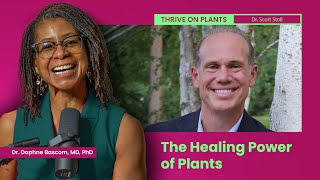
A podcast interview (Thrive on Plants) featuring Dr. Scott Stoll and host Dr. Daphne Bascom about plant-based whole-food nutrition, lifestyle medicine, epigenetics, and health equity. Stoll argues that genes are not destiny, that whole-plant plates can rapidly alter gene expression and physiology, and that hope, purpose, community, experiential education (potlucks, farming, garden projects) and health‑equity initiatives are central to preventive healthcare transformation. The episode mixes personal stories, practical suggestions (potlucks, immersions, community produce distribution), and philosophical themes (hope, kintsugi, biophotons) to promote actionable change at individual and community levels.
Chapters
Welcome to the Thrive on plants podcast. I'm Dr. Daphne Bascom, and today's episode is a powerful reminder that our health is not set in stone. We're not victims of our genes. We are the authors of our health story. My guest is Dr. Scott Stohl, physician, speaker, author, co founder of the Plantrician Project and a true leader in lifestyle medicine. But beyond the credentials, Dr. Stoll brings something more. He brings heart. He's someone who believes in healing at every level, from the cellular to the spiritual, from the individual to the global. In this conversation, we explore how foods we eat can turn genes on and off. How hope, purpose, and community fuel transformation, and why we need to radically reimagine our healthcare system. We with nutrition at its core. Whether you're tuning in to take better care of yourself, support your community, or just plant a seed of inspiration, this episode is a reminder that the future of health is within reach. And it starts with what's on your plate. So, Dr. Stohl, thank you so much for, you know, taking this time to join the Thrive on Plants podcast. I really appreciate you being here with us today.
Oh, thank you, Daphne. It is such an honor to be with you. I can't tell you how delighted I am to be a part of your podcast. And I just really want to appreciate all the amazing work you do and especially the heart that you bring to the science. I really see that in your work and it's very meaningful, and I just want to recognize that at the outset.
Thank you. I love giving back to the community, as I know you do, and I know that they're going to enjoy learning more about you. Not just what you do, but who you are and the person behind all the amazing work that you've been doing for past 30 plus years.
Thank you.
But I wanted to start with a little bit of fun. And as I shared offline, I stole this from Zoe because I think it's. It's a nice primer. I wanted to start with a myth busting quickfire round of questions that are true, false, and hopefully there's no right or wrong answer.
All right, good. I'm getting sweaty palms with the back to medical school true false answers.
So true or false? Your genes determine your health destiny.
That is false.
True or false. Food can actually turn genes on and off, like flipping a switch.
Very true.
True or false. Chronic disease is just an inevitable part of aging.
Very false.
True or false? You can't make a global impact just by changing what's on your plate.
That is false.
And last Question true or false? Health equity is only a concern in developing countries.
False.
Agreed.
So how do you get 100%?
You got a. Well, we're gonna, we're gonna dive into all of these. You got 100% from the way I wanted to answer the question. But each one of. I wanted to peel back the layers on each one of these a little bit because as I was preparing for this conversation, each You've shared so many profound thoughts about this intersection between health, food equity and I wanted to take a deep dive into some of them. And one of the first quotes that I would love to explore with you is you shared there's no pill more powerful than a plate of whole plants. So what do you think and what in what is your view on what's broken in our current healthcare system and what do we need and we collectively to be doing to prevent and treat disease?
Yeah. Wow, that's a lot. And I'll try to start kind of macro and then we'll go to micro and talk about why that plate is so powerful and why I get so excited about the impact that the collective plate can have across the globe. I was just thinking recently about our healthcare system and trying to understand what's good and what's not working. I think early on in my journey maybe influenced by some of the fire brands that start movements. You need the fire brands. I think there was a little bit of a misconception that this idea that healthcare is not working in reality, like we, we have like some amazing health care that's accessible today. We have incredible ICUs, we have surgeries, you know, all too well, we have antibiotics that can save our lives. We have incredible, you know, cutting edge diagnostics that can identify things early and treat them, you know, sufficiently before it becomes a problem. So we have a very, very good reactive healthcare system. And that's kind of what I came down to is like the healthcare system that we have today is built around reaction, injury, accidents, life threatening problem, you know, diagnostics. It reacts appropriately and then intervenes. But that's not how we create well being. So the part that's missing if we're thinking about cogs just in a very like simplistic nature, is the proactive component. We have reactive, but we don't have a proactive component which is really about health promotion. And we have to have a proactive health promotion component to balance the reactive component. Because the reactive healthcare doesn't take care of any of the things that you and I are so passionate about. Coaching people through lifestyle changes, helping Them make a transformation in their diet, understanding the impact of stress, learning how to improve their sleep. Only 30% of physicians ever ask about sleep in a comment. That system is not designed for that. As you know, healthcare professionals get at most 19 hours of nutritional education in their undergraduate and medical school and none of it is what we talk about. So it's, they're grossly underprepared to be proactive. So you and I and, and this whole movement is trying to work lifestyle medicine to build out this health promotion, proactive component which is, you know, at the core of that is the power of the plate. And I love lifestyle. You and I love fitness. You know, we love sleep and movement and, and stress reduction and they're all interrelated. But the most thing that someone can do to transform their, their life is to change what's on their plate. And we have both worked with people, right, Daphne, that couldn't move because of weight or pain. You know, their sleep was interrupted, they had stress in their life, but changing their food allowed them the capacity to begin doing some of those other things. And so, you know, now more than, gosh, almost 25 years of trying to study and understand the power of the plates, I've just come to this beautiful recognition that what we put on our plates not only affects us down to our DNA, and we're going to talk about epigenetics in a minute, turning on and turning off those switches within four to six hours of eating food transforms every system in our body, optimizes the way our cells work. But looking at the greater potential of that food system, from the way that we plant seeds in the soil and take care of the soil and how we treat the soil and the environment and the families and the people that are creating that food and the distribution chain that gets to our plate, what we do with the waste of our food, how the food changes us and how we feel emotionally when we eat well and that changes relationships, impacts the financial health of families, the financial health of businesses, the financial health of countries. And I just imagine I always have a picture in my presentations of a plate at the center of a spider web because that whatever we choose, it's 100 bites a day to put on that plate. We're voting with our dollars, how our food is grown, how it's processed and how it gets to our plate. Then with the health and vibrancy of a plant based plate, we have energy and vitality to show up, to share our gift, to be more, to give more, to help. And I, I don't understand this, but there's a spiritual component to this as well, that when people start eating this way, there's a compassion and an awareness and an openness that. That comes along with that transition to a diet where people begin looking at the world through more compassionate lens. And I've seen it so many times over the last 20 years that there's. I understand it, but I know it happens. And the changes that occur inside of somebody lead to, you know, significant impacts in the communities around them.
I feel like we. I've observed the same thing, and it was interesting because I was listening to your interview with Janae Clayborne, and sometimes I feel that when we make this change, we actually vibrate at a different resonance. Something happens, whether it's at the cellular level, and that cellular level is translated into the vibrational energy that we have in how we engage with the world. I 100% agree. And you want everyone to feel that and to be able to go out in the world and make those similar changes.
Yeah. There are things in plants, you know, we talk all about the phytochemicals and polyphenols and flavonols and minerals and vitamins and fiber and. But there are things in plants that we still don't even understand, like biophotons. Have you heard about biophotons?
I haven't.
Fritz Albert Popp was a biophysicist in Germany who developed a photography technique to capture the light in living things. And so they're able to measure the amount of light in food. And they found that wild foods had, like, five times more light than organic, and organic foods had 10 times more light than conventional foods. And the way you prepare foods affects the light. And people eating lots of plants had very bright light that was measurable, and those that were sick had very low light levels.
Interesting.
Talking about vibration, then light, photons and energy. That is exactly what that is. It's this photonic, biophotonic light frequency that is flowing in our bodies that we don't understand, but it is changing us.
And so that that concept of change ties into what you were talking about with epigenetics, because there are I. I see a lot of patients, clients now, communities who feel that their destiny has been predetermined. And I think one of the quotes that you shared is we are not the victims of our genes. We are the authors of our health story. How do you start to break the concept? Whether it's in the United States or in other parts of the world, that. Or how do you start to share the knowledge that our whole foods affect our gene expression, our lifestyle affects how our genes are expressed. And we are not the victims of our genes, but we have the ability to impact that expression and the output in terms of the proteins those genes are making that can help make us healthy, or they can help lead us down a path of. A path of less helpful.
Yeah, I think this whole field of epigenetics is one of the areas in this plant based nutrition and lifestyle that is. Is the most impactful for people when they begin to understand it. You know, you and I both, Daphne, when we're in medical school, you know, the kind of the common teaching was this person has a family history of heart disease, therefore it's almost inevitable that they're going to have heart disease. Coach them on don't smoke, don't eat too much fat, get a little exercise, but more than likely they're going to end up with heart disease because it's in their genes. And I got the sense going through medical school, as I think all of us did, that this is genetic, it's hardwired, it's really not modifiable and therefore accept it and try to do a few things. And it's medicine's job to now come in and rescue with a lipid lowering medication and blood pressure medications to stave it off. And we have solutions. If you have a heart attack, we can put a stent in or we can bypass you. So medicine is the superhero and the individual just has to go through in this kind of predetermined life. And it's very hopeless. In fact, along this line, you know, we had a. I had a gentleman recently came to my immersion. He was in his mid-30s and no male in his family had ever lived past 50. And so he was very thoughtful person. And in his 20s he said, well, gosh, what's the hope if I'm not going to live past 50? And so he found himself, you know, addicted to drugs, homeless on the streets of San Francisco, and had some assistance, got off of drugs and ended up with a job at Whole Foods. Came to our immersion and I taught him about epigenetics and the power of our lifestyle to turn on and turn off these switches that live above our genes. And these switches, you know, are not only turned on and turned off by our actions, but by our grandparents, as I'm sure you've taught your audience so well, that, you know, it's a transgenerational really opportunity for us when we make these lifestyle choices to flip the switches that we're giving to our children and our grandchildren, which is such an exciting opportunity. So, and the, the message for him was that even though your, you know, every male in your family, your father, your grandfather, died of a heart attack and you may have inherited that same genetic susceptibility, the lifestyle choices that you make today can turn off all of those switches. In fact, from a lot of the research, we know that you can positively impact more than 500 genes in 12 weeks with lifestyle choices. And he said, he said to me, said, that is the first time in my life that I've actually been able to envision my life beyond age 50. He said, I can see myself doing something at 60 years old and at 70 years old. And he said that gives me hope for the first time because of that message of epigenetics. He said that I realized that my destiny is in my hands with the choices that I make, and it's not because of the genes that I inherited from my father. And that is a very hope filled message he actually shared with me too. The ancient art of kintsugi. Have you heard of that, Daphne?
I've heard of kintsuji.
So for the audience, kintsuji is this incredible art where the Japanese will take a broken bowl and they repair it with precious metals so that the gold and the silver line the cracks. And in doing so, the broken bowl becomes more unique and more valuable than it was in its previous state. And so it's such a beautiful philosophy too, for all of us that have experienced challenges and difficulties in our lives where we have broken pieces, put them together the right way. With gold, we become more valuable, more precious, more useful in our brokenness, which we all are as humans than we were before. And so he said to me, he said, you know what? This information about epigenetics and lifestyle medicine has Kintsugi me. He said, I feel like I am so much more valuable and I have a vision now because of this information. So it's really an exciting study. And I know you've communicated so effectively to your audience, but I love to share, especially for mothers that are beginning their journey, mothers and fathers with their children, it's the greatest opportunity to give your children a generational inheritance of health by the choices that you're making before they're even born. And you're giving your grandchildren the opportunity to have this vibrantly healthy life by making the right choices today.
And are those concepts that you share, I know you have, I share a lot of resources that you provide around your potlucks. Around the immersions. How do we. How do we communicate that to people? Because, you know, that gentleman is probably not the only one who feels hopeless, and that that hopelessness probably contributes to some negative feedback loops related to the trauma of losing his father early, but also the stress that he has of not seeing a future. How do we get over that? And how do we. When I think about the generation, you know, two generations below us, how do we help children understand about the power of food? Because they have a huge opportunity to see far beyond where. Even where we are. And by implementing those lifestyle changes now, by understanding really where their food comes from and the impact of what they're putting in their bodies, not what they're seeing in terms of the fast foods, the ultra processed foods, but going back to whole foods and understanding that in it, you know, I. The phrase is overused, but food is medicine.
Yeah, Yeah. I think with children, you know, one of the great opportunities is it's stories and experience. You know, I was just remembering the Rodale Institute, which is kind of one of the leaders in organic education and agriculture globally, has a program where they sponsor communities in the inner city to come to the farm and actually pick the fruits and vegetables. And, you know, they always tell stories about, you know, some of these kids coming that didn't know carrots grew in the ground. And so they had the joy of, like, reaching down and they pull up this giant carrot and they're like, wow, the carrot grows in the ground, and then they dust it off on their pants and they get to take a bite, and it is delicious. And so in that moment, like, they. They are connected to the food chain in a brand new way. And I believe that, you know, connecting them with that process really is the way to help our children appreciate and value food and taste how good food can be. And. And then it's the perfect teaching moment, you know, to talk to them about food and creation and soil. And what happens when that food goes, you ate the carrot. Now what happens when it goes down into your body? What is it doing for you?
Exactly.
And those are the priceless moments that we can't miss. And it. It is far different than trying to do an education class in a school. I heard another great story. I've done some work in Haiti, and there's this little village that decides to do a project around planting seeds as a part of a biology project with kids. And so they taught the kids how to plant seeds and grow food. And the kids took food home to their parents, and the parents said, well, where did this food come from? Like planted seeds in the dirt. Parents had no concept, well, we should do that too. So all the families started planting food and now the community had excess food they fed themselves. And so they would go down into the big city of Port au Prince and they began selling food and now they had economic resource.
Exactly.
And so what started out as this little science project, teaching kids about the power of planting seeds, changed the entire community. And I just think that's we have to go back to some of the roots on these things and not start in the middle and say, oh, we're just going to do a good education program for kids and teach them about phytochemicals. Like, yeah, that's. They need to pull this stuff up, they need to pick it, they need to pluck a BlackBerry and eat it and say, this is incredible and be connected to life. So I think that those are ways to inspire people differently than, than just education. Education we both love, but I think the experiential component is really important.
And you know, listening to you reminded me of another quote that you've shared. Because whether you're talking about the young man whose life in what you did for him, allowing him to see life beyond 50, that's amazing because that, you know, I, I think many of us, especially those of us who are plant based, we're looking at living toward 90 and 100 because we know that we have the opportunity to do that. If, if I thought that my life was limited by something that had happened in my past with my family past, that that gives you no hope. But you've also shared that we're not just changing diet, we're changing identity, hope and destiny. And to me, that's very profound because we don't often in healthcare connect the emotional and spiritual dimensions with the healing. And I do think as you were talking about that resonant energy that you sometimes see in people as they're making these lifestyle changes. If you don't mind sharing, how does you know, purpose, faith, community? How does this intersect in your why and everything that you do and the things that make you get up every day and just have the energy that you share whenever I get to see you.
Thank you, Daphne. I think let's start here too, because you're so right about health care and we've both heard this, that patients come to us and they will say things like, you know, my doctor said this is the worst case they've ever seen, or my doctor said that, you know, it's only going to get Worse from here, you're going to be on this medication for the rest of your life. This is the pathway that it typically follows. And so they come and they have no hope that things can get better. And we know when people don't have hope that it actually turns on the systems in their body that are stressed. It's a distress. Cortisol levels go up, adrenaline levels go up, inflammatory markers go up. You begin to erode your microbiome, like your body starts actually decomposed. In that time of hopelessness, hope is essential for having any kind of motivation. And I've realized, you know, doing these health emergence that I've done for whole foods for 15 years, that so many people are truly hopeless around their health because the health messages they receive from health care is, this is what you've got, like we said, your genes, your destiny. You're going to be on this medication for the rest of your life. Even though you feel crappy taking it, so you have to take it and you may end up with these problems. And so, gosh, why in the world should I even worry about what I eat? And why should I even care about making any changes? Because it's not going to get better. And even in my immersions, I often ask people, I said, well, how many of you actually thought about how long you want to live? And it's probably 20% of people. Most people have not even considered the idea, like, I want to live to 90. They're just day to day. And then I asked them, like, how many of you actually have thought about what you want the last five years of your life to look like? And nobody's thought about that. Maybe they thought about, you know, I want to live to 80 because other people in my family have lived to 80. Nobody's really contemplated, how does my life look in the last five years? What kind of quality am I enjoying? Because as you know, the research shows that the average person today spends the last 20% of their lives in poor health, which is such a tragedy. Most people are working most of their lives and they want to Enjoy the last 20%. But the last 20% is spent seeing doctors and tests and surgeries and complications and infections. I really began to see that as I'm educating people. I can't just start with, here's the science of plant based nutrition. We really have to go back a little bit and start helping to rewire the brain about beliefs about who they are, what's possible, and that there is hope. As you know, even when somebody is lonely and hopeless, the equivalent stress on their body is like it's equivalent to 15 cigarettes a day or six alcoholic beverages. So it has, takes a tremendous toll on the body. Stories like we've told about epigenetics gives people hope. Telling stories about people like them that have reversed disease gives them hope. I've really come to believe that we need to become very good storytellers because that is the seed of hope. They've actually measured hope. They found hope in the brain with functional MRI scans. It's in the orbital frontal cortex right here. And it's exciting when hope gets turned on, when people can see a bright future. The parts of their brain that get activated are involved in planning, strategic planning and organizing and overcoming obstacles in belief that I can do it, agency and personal resilience. So that very process, it's not just a feel good or I have more hope for my future. Your brain actually starts to work on ways to get there. And it is an essential component for people that we often miss in lifestyle medicine because we're so excited about all of the amazing microbiome research and angiogenesis and inflammation and helping people understand. But we've got to help them get hope first. Part of hope is changing identity as well. One of the simplest things I do at my immersions, I just try to ask, I tell people, I just want you to start talking to yourself instead of listening to yourself, talk to yourself and say, I'm a very healthy person. And if you hear the response to that, no, you're not, you say, no, I'm not going to listen to that voice. That's the negative Nelly, negative Ned. I'm a very healthy person. And if you keep repeating it, just that simple thing, there's obviously a lot more. And you begin reviewing stories of other people that have changed, you can begin wiring hope into your brain and into your life. And then we can come around side around you with the evidence and the lifestyle application and the strategies and tactics to put a lifestyle together. Nelson Mandela said this. He said, let your choices reflect your hopes and not your fears.
Exactly.
I think that's such a powerful statement for all of us that we begin thinking about a hopeful future. And I'll just end with this too. One thing I really encourage people to do, and maybe if the listeners have never done this, is to just imagine yourself in high definition 20 years from now, 30 years from now. How do you look? What are you doing? What are you capable of? How does your body feel? Where are you able to go? How are you sharing your gift in the world let that high definition vision of who you can become inspire hope in you today. And that gives relevancy and context and power and motivation to the choices that you're making today.
And it powers you to be consistent and to persevere. Because you know, Dr. Stoll, what you just shared is so powerful. Because I think the mindset piece, and you're right, we do a lot, we talk. There's so many parts of lifestyle medicine that we focus on. But if you don't have the mindset, if you don't have the hope, if you can't see yourself in a condition other than you are today, all of the tools that we have in our toolkit won't be as effective as if we have actually been able to change that mindset into a more hopeful mindset where people having that orbitofrontal lobe lighting up and being able to see a path forward. That's when you can start to see your why, when you can start to plan and envision yourself at 85. And most of us don't. Most of us don't really think about how do I want my last years to look. I feel like we're passively allowing ourselves to get there, whether act, you know, rather than actively creating a path forward that defines how we want to live our lives.
Right. Can I share another story that's around her? It's such a great story. I had a patient a number of years ago who came to see me. She had acute rheumatoid arthritis flare. So all of her joints were inflamed. She couldn't close her hands. Her son was 19 and somebody started him on Vicodin. He was taking four to six Vicodin pain. She was going through a horrific divorce, living in a camper, no financial resources, terrible healthcare, couldn't afford any disease modifying drugs for rheumatoid arthritis. And she's crying and saying, Dr. Sowell, can you help me in those moments? You're like, gosh, as you know, as a physician, this is really a tough case. What am I going to do? Obviously, the lifestyle, it's the foundation for at least building some resilience and vibrancy and health and energy to tackle the other social, relational problems that she was facing. And while I couldn't understand how to like fix some of the financial problems, I knew that if I could give her hope, that together with some hope, she would find resources. So I told her a story about somebody just like her that had come to me who was able to send her rheumatoid arthritis into remission. And that after just, you know, a couple of weeks on a really good, robust, whole food plant based diet, all of the inflammation went away and she had her hands back. And that I'd had other patients who were able to get off Vicodin by using plants as the powerful anti inflammatory tool. And so she and her son said we have to do this because we don't have another option. And they had hope. They saw a different future than the one they were currently in and it was very attractive because they didn't have any other way out. So they figured out, and I don't know how they did this, that there was a grocery store in town that threw away their beautiful organic produce at 2 o' clock in the morning. And so they would drive up to the dumpster at 2:15 and they would pull out this beautiful produce. They would take pictures for me from their little camper and sent to me all the amazing produce. And they started making smoothies and stir fries. And she reversed her rheumatoid arthritis. It went into remission. All of her pain went away. We got her son off of Vicodin and she was strong and vibrant and now she had the energy to be able to face some of the other challenges and rebuild her life. But it's the power of hope to help us find solutions that we would not find otherwise. Because we realize that's the future I want. And when we want something like that, resources will come and God will help us to find that pathway.
And it's amazing that you gave them the agency to actually find hope and seek solutions. And sometimes that's all we need to do for people.
Yeah, I think as doctors we need to become much better storytellers. We're great at giving information, but we need to become storytellers because storytellers, even the research on storytelling, if you tell stories around the prescription, the adherence rates go up dramatically. You know, it's their stories wire things into people's brains, these six regions of their brains when they hear a story and only two regions when they hear information.
So, and that's key because a lot of storytelling, so you tell a lot of stories. And I what I love about attending some of your conferences like the help conference and I, I'd love to hear more about why health equity is such a personal focus for you. But what I see there are people sharing stories and they're sharing stories of challenges and successes. You know, I never want to create a misperception for people that it's all Rainbows and unicorns, because that's not life. We. The challenges that we encounter, I really believe, make us stronger. Sometimes we don't always know why. And you just have to believe that you are carrying this burden for a reason. But when you hear stories of people overcoming and you hear stories of people taking action and making change, that's when we gain the agency to do the same for ourself. But you've worked with amazing other groups of physicians. And when it comes to health equity, why is it important to you? And as people are listening to us talking today, what can they do as individuals? Because I worry that in the big scheme of everything that's going on in the world, we lose individual agency. But I think we can all still do a little bit to continue to move the message forward, even if it's, you know, in our building, in our small community. If we don't keep moving this conversation forward, we're never going to change where we are today.
Yeah. You know, health equity for me goes back to some core beliefs and values in my life. And some of those are, I believe in the inherent value of every single individual and that every person has been created with an amazing gift to bring to this world. I believe the irrefutable opportunity to have freedom in life. And a lot of freedom is around food. Food brings health and vibrancy, access and affordability. I really want people to have freedom and the freedom to be who they are. I believe in creating systems that enable and empower people toward individuality and freedom. I've always had a heart for people that were struggling from the time I was young. And I remember I was in Haiti right after the earthquake, doing some, some work there. And you know, it's. When you're a Western doctor going in these situations, they give you a little box of medicine and you have a line of 700 people that are waiting to see you. And I was shocked when I was in Haiti. I was like, these people are very unhealthy. They have diabetes, hypertension, heart disease, they're overweight, arthritis. I'm giving out medications. I said, how is this possible when there's so much food insecurity in this country? And I look down the line and I see them drinking Coca Cola's and eating chips and cookies and like, where's this food coming from? It's being shipped from Western countries to these places that are food insecure to temporize a food need. But we're giving them food that's making them sick now, making them more dependent on Western Doctors to come with a little box of medicine every single month to give them medicine. We've not done anything to set them free. And so I look under their feet and there's this beautiful, rich soil in the country of Haiti. Oh, my gosh. They're standing on their solution for freedom, for vibrancy, for life, for economic opportunities. I think that was one of the moments I realized, if we can help tie together this whole food system for people, planting the seeds and growing and creating autonomy, independence, and freedom around food production, which leads to affordability, accessibility, and vibrancy of health, then we have really begun to change the system. And I think that's where it started for me. And as I've gone through even this lifestyle medicine, you know, for years, we had a food ministry outreach. We did an inner city Allentown. And so every month, we would give away £20,000 of organic produce.
Wow.
We set it up like a farmer's market because we also realized that, you know, when people are in the system and they are receiving, you know, food from a donation, oftentimes it's very impersonal. They get a box, and in the box, there's a bunch of, like, packaged garbage that's not very good, makes them sick. And then they have to go see doctors and be on Medicaid insurance, which isn't great insurance, and they get stuck in this spiral, and they have a number, and nobody treats them like an individual. So we set up a. It's like a farmer's market. So people would walk around and we would give them and say, these are blackberries. Have you ever tried a BlackBerry? And it was so fun to see little kids take a BlackBerry and eat it and say, wow, this is amazing. And we would teach them how to cook, and we would share with them, we would talk to them, we would minister to their needs. I would take boxes to their house. I'd show them how to cook sweet potatoes. And, you know, in those moments, you realize, like, this is how we need to help empower people with food that's grown in the soil. By meeting them where they are, treating them with value and recognizing their autonomy and empowering them with skills and helping them to eventually learn how to grow their own food so they're not even dependent upon people bringing food in. And so then, you know, as we've gone along, you know, I just. We hear about so many challenges with health equity in these neighborhoods. Not just, as you mentioned earlier, not in Haiti, just in Haiti or Jamaica, where I'm doing projects, or Africa or all These places where they're struggling, Bangladesh, but just in our own hometowns. Every one of our hometowns has people struggling, and there's an opportunity for us to come alongside of them in a meaningful way. And so we started the HELP conference, Health Equity through Lifestyle Project. Not as a conference to talk about the problem. In fact, I tell all the speakers, as you know, 10% of the conversation is about the problem, because we do have to be aware and understand the roots of the problem, but we want to talk about the solution. How can we do something today? Where's the simplest place to start? How can somebody go home and start a project that is working with somebody? Because it doesn't have to be big, but if lots of us start small projects, small projects can grow into big projects. And so it's just. It's my desire that this health equity project, you know, working closely with my good friend, as you know, Columbus Batiste, Dr. Columbus Batiste, and his wife Danette, and plantation project staff, to just create a conference that really becomes, you know, a North Star for action and helping to begin to just start with, hopefully, like, agricultural projects that allow people to start growing food, pulling out carrots, realizing how amazing it is, and you plant one sweet potato and you get 15.
Yep.
You know, it's just such an exciting project that I think sets people free. And it, like, you know, going back to your idea of energy and the frequencies when you're in the ground, working with plants outside in the sunshine, it changes you to the core. And we know even the research done at Louisville, when they just planted trees in a neighborhood, CRP levels went down, inflammatory markers went down just because people were living in proximity to trees. We know from research that when people work in the soil, it changes their microbiome, which changes their mood. It builds neurotransmitters that they didn't have before. And there's something that happens to the core of a person when they feel like they are providing for themselves and connecting with the flow of creation. It's powerful.
It's incredibly powerful. And I. I don't think we. I don't think we focus on it enough. And to your point that these are things that don't take huge investment, they getting a bucket of soil popping in a potato and, you know, helping people grow their own food, yes, it sounds daunting, but if each one of us does a little bit about sharing that message, there's so many communities in all of our cities that could be positively impacted.
And one of my favorite things that I like to Recommend. I'll challenge your audience on this too. A simple place to start bringing change into your community is to start a potluck. Yes, I love potlucks. I'm famous for only one thing in my life. I would love it to be potlucks, because it is one of the most impactful, powerful ways to build community. And out of those communities can come action and change. On Plantation Project, we have a downloadable quick start guide on how to start a potluck. I was challenged after a presentation on potlucks that I did a couple of years ago at our conference by somebody living in national area that came up and said, hey, Dr. Stoll, I'll help you start a potluck. And so Luke, Comfort and I, she and I started a little potluck. And it has been so fun, Daphne, to start this potluck and see who comes and see how the resources of that little potluck group support each other. You know, finding nurse practitioners and doctors and sharing recipes and growing and inviting people to a farm. I mean, it's just been incredible to see the exponential impact. And it only takes two people to start a potluck, right? You invite somebody over and boom, you got a potluck with just two people and it can grow from there.
And I've shared your resources with many people, so I agree you will become famous for the potluck. But I think anyone who wants to start, I'll have a link with the show notes so that you can have access to that.
On Plantation project, we have a map. And so if you start a potluck, put it on the map. Because my vision is to create the safety net of potlucks around the world so that if somebody wants to go to a potluck, they can look on the map and find somebody nearby, which would be great.
Dr. Stoll, I want to be respectful of your time and I know I've, I've taken up more time than I planned to.
Do.
You have time for three final questions and I'll let you go.
Absolutely.
This may be a big question, but what gives you the most hope about the future of healthcare?
Yeah, I think what gives me the most hope is seeing the trend of change that we all have seen, especially in the last five years. There are more people that are open. The next generation of healthcare providers that are in training give me tremendous hope because they are embracing these messages of lifestyle, plant powered plates, connection of the system. They are very aware of the current limitations of the existing system and willing to look at other options. And so in working with, you know, the upcoming medical school students and people in undergraduate programs and health coaches. And I see that there is a lot of hope on the future. We have change that is moving forward. We have more people that are open. We have, you know, I go to medical schools and health and hospitals to talk and the room is full and people are asking questions. You know, 15 years ago everybody was in the back of the room like this and the questions came like dark barbs and arrows like, you know. But now there's an openness, there's an awareness, there's an interest. And the next generation is what really gives me hope. I always tell people that, like you and I, Daphne and all the others, we're just preparing the fields and they're going to actually plant the seeds and see the harvest.
I agree. What's one book, practice or mantra that keeps you grounded?
You know, one. I think one thing that I do is every morning I get up early and I sit outside, as you know, when it's as often as possible, even when it's chilly. And I just sit and I breathe and I pray and I ground myself in what's most important. That is what, that's what settles me for the day. And when I can, I love to cold plunge in the creek at the bottom of the hill. And I love it. I just lay on the limestone and I'm just down there with the birds and nature. I always joke with my son, I say it's like the perfect thing when I go with him because we're, we have community connection. We're forest bathing and we're cold plunging, all of that.
I almost thought about talking with you about cold plunging red light therapy, but we can do that another time.
I would love to come back and talk about that.
And then finally. And you've already planted a lot of seeds. But if you could leave our listeners and our viewers with one seed that they can plant in their lives or their community, what would it be?
I think I would just like to have people plant the seed of hope in their lives, hope for their future and hope for the future of others, and understand that all of us can be like Johnny Appleseed with this message of whole food plant based nutrition that we can understand through epigenetics, through the power of phytochemicals and plants, the impact of our microbiome, how it optimizes our system and that when we do that for ourselves, we are changing the way we feel today, which changes everything around us and gives us hope for a brighter future and we can, simply by sharing stories, plant seeds and other people. And that is incredibly powerful when you can give somebody hope. Because once they have hope, all things become possible and they're emotions and attitudes change and they begin thinking completely differently than in the world. So I would encourage people, just take the seed of hope that you've heard today planted down in the good soil, cultivate it by listening to more stories, coming back to listen to all the amazing things that you have to share. Daphne, and your community, connecting with other people, starting a potluck, turning a potluck, and then through your personal story of transformation and the stories around you, just share that seed with somebody else, plant it in their life and then invite them to walk the journey with you. Because that's where connection, connection cultivates that seed. And that's how we begin seeing exponential change. And that's why I'm hopeful. Not because I think that, you know, we're going to change the systems by going from the top down. But I believe because as you, that we've seen what, how quickly this can spread when people experience renewed life and hope for a different future. And that can create a groundswell movement that pushes change to the top.
And that's the best way to do it. Dr. St. Thank you. I. I can't thank you enough for taking the time. I know how busy you are. The Thrive on Plants community thanks you too. And I will be sure to share one thing, links to the conferences that are coming up, but also all the wonderful resources that you have available on the Plantrician Project website and links to the books that you've written so that whether it's alive, whether it's the cookbook, I think there's many dimensions to you that many people don't know. And we'll be sure to share that with the community. So thank you so much.
Thank you, Daphne. I really want to appreciate you for digging deeper and taking the time to create such a meaningful conversation. This has been one of the best interviews that I think I've ever had and it's because of all of all that you have done and the person that you are and you bring into the conversation. So I really appreciate you and I want to tell your community how blessed you are to have Daphne continuing to sow into your life. So thank you.
I appreciate that. Thank you so much. Take care.
Have a beautiful day. Thank you.
You too. I hope you feel as inspired as I do after that beautiful, thought provoking conversation with Dr. Scott Stoll. His work reminds us of what's possible not just in reversing disease, but in rebuilding hope. We talked about the power of food to heal, not just physically, but emotionally and spiritually. We explored the reality that genes are not our destiny and that the choices we make today can shape generations to come. Dr. Stoll reminded us that health care needs to be reimagined not as a system that simply reacts to illness, but one that proactively nurtures wellness with nutrition at its foundation. He reminded us that purpose, connection and community are not optional, they're central to healing. And he showed us that we all have a role to play in expanding access to this knowledge, to this movement, and to this hope. So if this conversation resonated with you, please share it with someone you love. Talk about it. Start a potluck plant a seed, Literally or metaphorically, because when we change what's on our plate and we change everything. Don't forget to check out the show notes for links to Dr. Stoll's work, to the Plantation project and to that potluck starter guide. And if you love this episode, please subscribe, leave a review and help us spread the plant powered message even further. I'm honored that you decided to spend time with us today. So thank you, thank you for joining us here on Thrive on Plants and you can continue the conversation on thriveonplantslife.com but until next time, keep thriving and keep believing in the possibility of a healthier plant fueled world. Be well the content provided in this podcast is intended solely for informational and educational purposes. It's not designed to replace professional medical advice, diagnosis or treatment. While I'm a doctor, I'm not your doctor. Always seek the guidance of your physician or other qualified healthcare provider with any questions you may have regarding your health, medical conditions or treatments. Our goal is to provide accurate and up to date information. The discussions and views shared on this podcast reflect the opinions of the host and guest and they may not align with your unique health needs. Decisions related to your health and wellness should be made in consultation with your healthcare team because they understand your specific circumstances. Thanks for joining us on this journey to Thrive on Plants and I hope you enjoy the future episodes.
More from Daphne


The Adaptive Fuel: How Exogenous Ketones Support Healthspan | Thrive on Plants #60

Could Yeast Replace Whey? The Science and the Story Behind Spacemilk | Thrive on Plants #58
Why "Eat Less, Move More" Stops Working After 40 (And What Actually Does) | Thrive on Plants #54
Triple Negative Breast Cancer: How She Caught It Early and Came Back Stronger | Thrive on Plants #53