The Health Conversations Women Were Never Taught to Have | Thrive on Plants #49
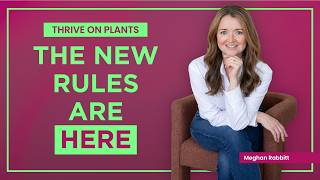
In this episode of the Thrive on Plants podcast, Dr. Daphne Bascom interviews award‑winning health journalist Megan Rabbit, author of The New Rules of Women’s Health. The conversation frames women’s health as whole‑body health—covering heart, brain, bone, metabolic, gynecologic, and breast health—and critiques the historical male‑centric bias in research and clinical care. Megan explains why she created her comprehensive guide, emphasizing the need for accessible, jargon‑free information and actionable steps. They discuss the lack of female representation in research, the impact of biased AI health tools, and how women can increase participation in clinical trials. Practical advice is offered for preparing for medical appointments, including creating a health binder and using digital trackers wisely. The dialogue moves through nutrition and body‑image, the transition of menopause, bone health, heart disease, brain health (including Alzheimer’s risk), mental health, environmental toxin exposure, and attitudes toward medication versus “natural” remedies. Both hosts stress patient advocacy, the importance of asking the right questions, and the power of community support. The episode concludes with reflections on purpose, self‑care, and a call to share the book and conversation to empower women worldwide.
Chapters
Welcome to Thrive on Plants. I'm Dr. Daphne Bascom. Today we're talking about something that affects every single woman listening, your health, and specifically why so much of what we've been taught about women's health is either incomplete, outdated, or just plain wrong. My guest is Megan Rabbit, an award-winning health journalist and author of the just released book, The New Rules of Women's Health: Your Guide to Thriving at Every Age. Megan spent over 3 years interviewing more than 100 female health experts to create what I think is one of the most comprehensive, accessible resources on women's health that exists today. And here's what I love about this conversation. We're not just talking about gynecologic health or breast health. We're talking about your heart, your brain, your bones, your metabolic health, because women's health is whole body health. We're also talking about something equally important, how to advocate for yourself in a healthcare system that wasn't designed with women in mind. If you have ever walked out of a doctor's appointment feeling unheard, if you've ever powered through symptoms thinking they were normal, or if you just want to understand your body better as you move through whatever phase of life you're in, this conversation is for you. Megan, thank you so much for joining me today on the Thrive on Plants podcast.
Thank you for having me. I'm thrilled to be here.
I, as I shared offline, I have literally been binge watching or binge listening to all of your conversations about your new book, The New Rules of Women's Health. And for anyone who hasn't picked it up yet, first of all, it's a big book. Um, and I have no idea how long and how vested you are in bringing this to life, but I think my first question for you would be, why now? Why at this point in your career did you embark on putting this amazing resource together.
Well, thank you, and it was, it was a labor of love for multiple years. So over 3 years, um, reporting, writing, revising, fact-checking, and interviewed over 100 experts, um, uh, all female, to really try to meet this moment, right? Because I think we are living in a time where we are bombarded with information we are also bombarded with misinformation and even disinformation. And I think it feels more important than ever before for women in particular to have really the knowledge we need to care for ourselves and also to truly feel empowered and confident that we can advocate for ourselves when we go to the doctor.
And Megan, you've been doing this for 25 years, and I know that You know, it was commissioned by Maria Shriver, but why do you think it took this long for someone to step up and actually start a movement or start this conversation in a way that allows this information to be accessible to everyone? Because I think that's something that I feel it's very important. The data, the information has to be accessible to all women.
Yeah, I think that's such a great point because a lot of times when we get medical information or health information, it can sound a little complicated, or a lot complicated.
A little.
Exactly. It can be what we call it in, in journalism, jargon, you know, even though it's, it's very technical, but it sounds kind of jargony. And if we don't have a— if we haven't gone to medical school or additional education to be in a healthcare, you know, um, job, it's really hard to, to understand. And I think that's where journalists like myself come in and we try to talk, you understand the information, talk to experts to help give that medical information context so that we can then bring it to the public in a way that feels understandable, digestible. I feel really passionate about making the information actionable. So I think it's one thing if you hear health information and you say, okay, I should do this, but like, how, how do we do it? You know? And I think that feels really important. And, you know, as for why it's taken so long, for years and years, medical research has focused on men and, and been— we have researched men, we have created treatments and developed medical devices that are all based on the male model, and we have been applying that data to women. And, you know, finally that started to change. And I think that as it changed, we've seen more information specifically designed for for women. But, you know, what we now refer to as bikini medicine is what we used to think of as women's health. It was breast health, gynecologic health, sexual health. We have an amazing tome called Our Bodies, Ourselves, which has been updated throughout the years. I know my mom gave me that book. I think so many women have read that book and relied on that book, and it's an incredible book. But what Maria Shriver asked me to do is go a little bit further. We actually now have research on women's hearts and brains. We still have a long way to go. Do we have as much as we should have? No, but at least we've made some tracks. And so she asked me to put together a book that was a little bit more comprehensive. You know, what do women need to know about our gut health, our skin health, our, you know, our immune health, our hormones, and base it in what we finally do know about sex-specific differences.
And you know, you actually just, I have so many questions going through my head now, but I want to dig into your topic about research a little bit more because one, how does this help launch more of an initiative to include women in more research? Part one. Part two, as I'm looking at, you know, artificial intelligence and these large language models where we're looking at predictive data. So, you know, those models are based on information already available. If we don't have the data on women, how accurate are some of those predictive models going to be? And helping women understand how these AI tools can assist us in identifying when there's opportunities to address both prevention and disease management.
Yeah, I mean, what 2 great, great questions there. I think on the first one, you know, we— when it comes to researching women, we finally have more women at the table deciding what gets researched. Right. And so I think that's really important. As I write about in the introduction to my book, what I learned is that, gosh, there's the reason we don't have— one of the reasons I should say, one of the reasons we don't have research into conditions like endometriosis as much as we should have is because you know, men who are deciding where to allocate the research dollars don't deal with crippling pelvic pain and trying to spend years getting a diagnosis for conditions like endometriosis, say, or even autoimmune conditions. Right. And so thankfully, we have an understanding now, a better understanding than ever before, that women are not small men, that we need research into our bodies that look at female bodies to help us understand women's health better. And so I think, again, that's changing, but we still need more of us to demand that research, right? We need to make more progress. And I think it's going to take more, um, female and male researchers and scientists saying like, we need to get answers to this, so let's put more research dollars here. You know, I think when it comes to AI, I'm excited about the era we're living in. You know, I do think we are going to be able to harness AI for good. But you bring up such a great point, and a point that when I talked to an AI specialist who's, who's a researcher at MIT for specifically for the book about, you know, we're consulting ChatGPT like we used to consult Dr. Google. Now we're using AI models to help us understand our health. But you bring up such a great point that she brought up as well, which is these models are based on years of biased data. And so we have to keep that in mind. There's not a really good solve for it right now. The hope is that these models continue to get better, but these models are based on, on racist, sexist data, and we have to keep that in mind, you know. So I think we have to just— knowing that can help. It's not to say we shouldn't use these AI search tools, um, to help us understand our health, but we can't take it as as the word of truth, then we have to go another step and be like, okay, am I getting accurate data here? How, how does it apply to my own health journey? And I think, you know, these are important questions. Is it fair that we have to do this extra work? No, but it's crucial.
And it's true for women, it's true for people of different colors, races. I mean, only as we get the knowledge will the models become more intelligent. Yeah. Which it, you know, in your research and talking to the experts, what can you share with anyone listening or watching about if they want to get involved in research trials? How, how can I today, um, go out and maybe participate in a trial on heart disease, or I've got thyroid disease? Were there, did you get any guidance on how we get more women involved in these trials so that we can accelerate the knowledge?
Yeah, it's— I love this question so much, and this is something I feel passionate about personally. If I can join clinical trials, I do, because this is how we get more data, right? By women like us joining the trials so that researchers can understand. So I joined the Wisdom Study, which is a fantastic long-term study out of UCSF, I believe, and it's looking at who develops breast cancer. And so what I do is I upload my mammogram report every year or other breast imaging that I have, and then I answer questionnaires. It's pretty low. It's a low lift for me. And I feel like I am now contributing to science that's going to help my nieces and their daughters understand, you know, breast cancer prevention and screening tools. So I feel like across the board for any disease, there are amazing studies going on. I think the best way to find out how you can get involved is to talk to your doctor. Hopefully you're seeing a clinician who can help you find a study you might be eligible for. And I think, you know, there's a lot of fear sometimes around studies and oftentimes rightfully so. There is a history of, of medical mistreatment in our country, unfortunately, and And I think a lot of people can say, I don't know that I feel comfortable with this. Understandable. And so I think it's just like the researchers doing the studies want to ask us questions to find out if, you know, we're a good candidate for the study. We should be asking them questions. What is involved? What's the time commitment? You know, what do I get out of it? Because that's the other nice thing about a lot of these studies. The Wisdom Study, for example, I got genetic testing. Which often costs a lot of money, but it came for my, you know, when I enrolled, it came with— I got my breast cancer genetic screening done for free. Now, this is something that I think if I had done myself would have cost me well over $1,000. And so I think that's the other thing more of us need to understand is that a lot of these studies, there's major benefits for us when it comes to perks, let's say. And not only that, but I interviewed a doctor for this section on clinical studies in my book, and she said if you have a health condition, oftentimes if you— in order to qualify for a study, they'll actually help you get your health condition under better control. And so you're getting all of this amazing care that's ultimately helping your health, um, and then you get to give back by joining and taking part in the research as well. So I think it's— I love that we're talking about this because I, I wish more of us would talk about this topic in particular.
And I love that you dedicated your book to your nieces because they are going to benefit from the work that you do today. Um, and I would agree, they will. There, there has, there, hope is not a strategy. So we are strategically asking women to become involved in helping contribute to this body of knowledge.
Yeah.
Um, and I, I think I agree with you, you know, the challenge in a doctor's office with having these conversations, as you know, is time. And I think, you know, another question, even knowing your background, I know you shared on a podcast about your own tendency to, um, delay seeking help because you think, oh, it's normal, or I can deal with it, which I think a lot of women can tend to, to do because we're busy, we're taking care of children, family. What mindset or what motivation or what growth opportunities did you identify as you were researching the book that you wanna share with women to say, you matter and you have to put yourself first at some point because none of us wanna wait until we retire to get healthy cuz that's too late.
Yeah, absolutely. You know, I, I have been really open about a lot of my own symptoms that I ignored and I powered through. They had to do with my menstrual health. And one part of it was just I didn't fully understand the symptoms I was experiencing would set off a red flag for most physicians. And so I didn't bring them up. And I think part of it, something that I haven't talked a lot about, but as I think about why I ignored a lot of my symptoms or didn't bring them up with my doctor, is that I identify as, as a high-achieving go-getter. I'm the oldest daughter. And I think sometimes even in my appointments with healthcare providers, I like want to get a gold star. Like, look at me, look at how good I am, look how perfect, right? And it's so silly because what kind of care did that prevent me from getting for years? Because I was thinking like, oh, my period happens every 28 days, that means my body is great, right? You know, meanwhile, I was, as I called it to my husband and friends, hemorrhaging for 2 days a month to the point of having anemia. You know, like, this is not normal. This is something I should have talked about. But I think for a lot of other women, there's also this sense— there can be a sense of shame, like, what— for whatever, you know, whatever you're dealing with, there can be a sense of like, gosh, this shouldn't be happening to me, or I'm ashamed that this is happening to me. And I heard across the board from experts I interviewed, all doctors want us to drop that. They've heard everything, they've seen everything. They want you to bring up what you feel ashamed to talk about because they're not going to judge you. They want to help you, you know. And then I think there's another category where sometimes we just don't want to know the answer. We're afraid of what the answer is going to be. And so for all these reasons and more, I think we put off going to the doctor or we don't tell the whole story. And I think it's time to change that. You know, a big new rule of women's health is talk about all the things. Bring your symptoms to your doctor. No, nothing. There's nothing to apologize for. There's nothing that is going to make you seem like too much. Or a failure, you know. And I think, I think that's— it can be easier said than done, right? But I think if we can all aim to do that, um, especially in midlife, because that's the other thing you bring up which is so important, which is that in midlife we have this beautiful window of opportunity to take care of our health now so that we don't have to see specialists down the road, right? You know, and I'm sure you see this. It's like, don't you want to see a woman who's in her 40s making changes now so that diabetes and heart disease and, and all the other conditions don't develop later on.
I want to see women in their 30s having this conversation.
Fabulous.
Because the, you know, it just even lifting up the covers on a couple chapters of your book and I'd love to do that. But the sooner we can have these conversations, even I was talking to, you know, one of my clients about sexual education in the high schools and health education. We need to be sharing what's in your book with our young girls, because that's when they're developing their peak bone mass. That's when, you know, they have an opportunity to learn how do I optimize my nutrition and my movement and my sleep at a young age so that I'm not playing catch-up when I'm 30 or 40 and trying to fix things. Yes. When we can prevent most chronic diseases.
Yeah, absolutely. I mean, and across the board, you know, I think what's interesting is that sometimes when we hear about the lifestyle habits we should be doing, you know, like exercise and good nutrition and sleep, we can tend to be like, oh, roll— I'm going to roll my eyes now. I know, I know. But I am here to tell you that across the board of over 100 interviews, there is a reason we hear about these things. These lifestyle steps. And the earlier we start, the better. You know, that, that's not to say it's ever too late. You know, what I also heard is that even if you are in your 60s or your 70s, you start picking up light weights, that's going to help you. You start just adding one more vegetable to your diet every day, it's going to help, you know. And so I think, I think it's important that when we talk about these lifestyle habits, you know, yes, the earlier you start, the better, but it truly is never too late.
In going back to your comment about have the conversation with your healthcare team, because there, there is no shame, which is 100% true in this era of telehealth too. Um, we're now at a point where we don't always lay hands on people. So one, what advice would you have for women on how to prepare for that conversation? Because if you have, you know, if it's a well woman exam and maybe you have 30 minutes to an hour, you can squeak in some questions. If you have 15 minutes, it's hard to say, hey, I have some concerns and I'd like to talk about them. What did you learn from the experts you interviewed that people can take away and say, you know, do I go on the portal and send them a letter in advance, or do I come in with a list? And then secondly, now that we are doing non-face-to-face care. How do we, um, you know, I'm thinking about your thyroid health, your abdominal health, your vaginal health. You still need to see a provider. So telehealth is awesome, and I am all for digital technology, but there are some things where someone needs to touch you. Yeah.
Yeah. I, I have dedicated a few sections in this book to what you're talking about because it is so important. So first, we're all frustrated that appointments are shorter than ever. You know, I don't know any woman who isn't like, okay, how am I going to speed through this? You know, 20 minutes I get, you know, hopefully a little bit longer if it's an annual visit. But oftentimes we feel rushed. Yeah, it's quick. Maybe the doctor is running behind. It is really unfortunate. And I think when I talked to a doctor about this, she said, look, what I want our— your readers to know is that we feel the same way. We wish we had more time. And so I think as patients, if we can understand that, it can help us, um, be a little more compassionate as well and, and not necessarily get mad at the doctor. We should be mad at the system that's making the doctor give us shorter and shorter appointment times. Um, but in terms of what we can do, there's a lot we can do to actually optimize that short visit, and a lot of it comes down to the preparation we do before the visit. So A lot of doctors have told me, you know, you would never imagine, you would never dream of going to your tax appointment without bringing your tax documents, right? For a lot of women, we wouldn't even imagine going to the hairdresser without bringing some inspiration photos if we're looking to change our hair color or style. But yet we go to our doctors just saying like, what do you got for me, doc? You know, meanwhile, in an ideal world, if we really want to make the most of those visits, we have to come with a plan. You know, and, and a realistic plan. And so that means a list of symptoms that we're experiencing, a very quick and easy, you know, here's my family health history, here's my personal health history. In an ideal world, you'd have that printed out so you could just hand it over to the doctor to make things more efficient. And then when it comes to talking about what's going on, being realistic, saying, you know what, I've got a list of 15 symptoms I want to talk to you about, but here are the 3 or 5 that are most important that feel like they impact my life the most. What do you think? And you could even take it a step further and say, I know we might not have time. We likely won't have time to go over all of this. I'd love to cover what we can, but then let me know if I might need a follow-up visit.
Right.
And I think that really what I heard is that that really builds a bridge between us as patients and you as clinicians, and it makes everything go smoother. It helps you understand that we know where you're coming from. But it also helps give you as doctor a better picture of what's actually happening for us, you know. And I think telehealth really comes into play when it's like, oh, there might be a follow-up to that visit where you don't need to lay hands on me because you already have. And if there's something where, let's say it's mental and emotional health or, you know, something where you just don't need to physically examine a patient, then maybe that's a prime example of when you can get in a little bit quicker. And do a follow-up visit that just looks at 3 other symptoms you're going through over the computer.
100% agree. Yeah. And that, and it's funny when you, you know, talked about going in for your tax appointment, hadn't thought about it like that, but very few appointments, very few other appointments do we not go in pre-prepared with questions and it needs to be the same when we go in for our healthcare appointment.
Yeah. And I think too, you know, I, my mom, has what she calls the binder. And good for her. I know where the binder is. My dad knows where it is, but it's actually her and my father's health history. And if she gets a mammogram report, she prints it out and puts it in the binder. If she— when she does blood work, any new medications. And in the front of that binder, she has a list of all of her medications she's taking, a list of all the medications my dad's taking. And what's so cool is that she has told me, she's like, Meg, when I go to the doctor, I bring my binder, and these doctors, like, their eyes light up and they get so excited. But I think that's another way we can really, you know, for someone listening who, let's say, tucks in and out of my book and is like, okay, I understand a little bit more, maybe it inspires them to make a binder. You know, if that's one thing you do and just sort of say, okay, I'm gonna start now and I'm gonna, I'm gonna keep track of of my health, what's happening, what medications I'm on, and then bring it to my doctor. And then hopefully you're working with doctors who say, oh, you know what else should be in your binder? This. And then you print that out. It's just this way that you're taking ownership of your health in a way that makes— I think it makes my mom feel like she's on it. And it also makes her doctors say, oh gosh, this is amazing. Like dream patient, you know?
Exactly.
Yeah.
And you, toward the end of the book, you do talk a little bit about tracking in terms of digital health, because right now, and I think you mentioned you have an Oura Ring, um, there are so many devices that we can use to track our health. Where do you think these smart devices have, you know, can play a helpful role in, um, both allowing us to learn better about our bodies and then providing us with information, useful information that we can use in conversation with our healthcare team without overwhelm. Because I know that, you know, there's probably device orexia that is occurring for some people where they become so fixated on the device that it becomes a stressor. And, you know, I, I love technology. I, I've I've got 4 devices on right now, but they don't rule me. They are information. They are not judgment. They are not telling me I'm good or bad. It's just actionable data. Did you come away with a different perspective on how this digital native approach can be helpful or hurtful?
Yeah, I love my Oura Ring, but as you'll notice, anybody who's watching, I don't have it on. And I will tell you why. So when I tapped into the research on all of these devices, first of all, I think it's important for women to know that a lot of times the data isn't necessarily sex-specific. And so while I think we should be, you know, using or can be using these devices to get information that can inspire us to stick to our healthy lifestyle habits and such, take the data with a grain of salt. It's not necessarily as personalized as we think it is or sex-specific. But when I interviewed a sleep specialist about sleep trackers specifically, she said a lot of times what she's seeing with her patients is that anticipation about good data, like, really stresses her patients out. And I was like, oh, I started— I really— I got off that call and was like, I think this is happening to me. So what I— I'm a good sleeper, thankfully, knock on wood. But I, I was in a stressful period when I was working on this book. I'm in a stressful period now with a lot going on in terms of travel and podcasts and such, talking about the book. And so when I know that I'm already just kind of going full bore and I am worried that the sleep data is actually going to— anticipation and stress about what my numbers are going to be is like keeping me up later at night, I just take it off and then I'll put it back on. I think, you know, when I'm— when life calms down a little bit, for me, it does offer, you know, this sort of external, like, gauge of how I'm doing that I really enjoy. But I think that's really important for a lot of women to hear, is that if it's stressing you out more than it's helping you, if you're feeling anxious about it, you know, just do an assessment. Is this really helping me more than it's hurting me?
100% agree.
You don't have to be like Daphne, wear 4 devices, but be like Daphne if, you know, all those 4 devices are actually going to keep you working out consistently, going to bed at 9 PM. You know, I think one big, like, um, gosh, it was a very big eye-opener for me, uh, years ago when I first started wearing the Oura Ring, is that I noticed that even if I had one glass of wine Oh yes, mess my data up so much. And it really prompted a habit change. And so these are ways that some of these trackers can really help, you know, inform better habits for us. Um, but the other thing I learned, and I think it's important, is that again, when it comes to the accuracy of the data, the sleep specialist I interviewed said, you know, don't necessarily trust that however much REM sleep or deep sleep these, these trackers are telling you you got is actually accurate, you know. And I think, I think that can be helpful because my husband wears one and he's like, Oh, I only got 20 minutes of deep sleep. And I'm like, I don't know about how true that is, you know? And so we have to take it all with a grain of salt.
Agreed. They're getting better. It's not the absolutes, it's the directional changes that 9 times outta 10 are most helpful.
Yeah. Yeah. The motivation, right?
The motivation. And I wanna come back to something you said, which is action, because it I mean, you can wear 100 devices, but if you don't know how to act on the information, then it's just data that's causing you stress.
Yeah, absolutely.
There's one question. I mean, I have two questions. I, I jotted it down, and if you're not comfortable answering this, please feel free to decline. But how did you have an opportunity to meet with any executives? You know, you interviewed mainly physicians, but now I'm thinking of our health plans, our pharmaceutical companies, are the incentives aligned in a way that is really driving health, not care? And how do we— I have my own perspective on this, but how do we ensure that we are focused on creating an environment of health? Because sick care is sick care. And you know, our sick care system is amazing, but so much of what we can do from our own agency is health. Yeah.
I don't think we're ha— we have a system that is proactively looking out for our health. I mean, that's, that's, uh, and I'll just, from my reporting, from what I see from my own personal experience in our healthcare system, it's, it really is, seems broken to me. Um, and, and unfortunately what that means is that we as patients need to take we need to spend even more time and take even more control and take the reins ourselves versus feeling like we're in a system that is going to care for us. We have to care for ourselves in a system that is not built for us, I believe. Yeah. And I think that's a shame. And I think we have to name that. That really is a shame. You know, when we get a medical bill, it's not enough to just say, oh, okay, I guess I'll pay it. We usually have to tuck in and say, is this accurate? Am I getting charged? I personally had an emergency room visit over the course of working on this book, and I, I got charged for procedures that I didn't even have. Yeah, I mean, that's shocking, you know? And it's just like, it's not unusual. And not unusual. And so again, it inspired a section in my book. It's like, what exactly do I need to do when I get a medical bill? Um, because, because we are working in the system we're working in. And I think you bring up such a great point in terms of, you know, we're great at sick care, but what about prevention? What, what about these conversations we should be having about what I can do to stave off the disease later on, to prevent myself from having to take a bone medication in my 70s? What can I do now in my 30s or 40s? You know, um, even something— I'll give you a specific example that I learned, uh, reporting the breast health chapter. So I didn't— in all my years, I was in my mid-40s when I reported this chapter. Not one doctor had talked to me about my lifetime risk of breast cancer. This is something that has become more popular, thanks actually in large part to Olivia Munn for talking about it. But a lifetime risk of breast cancer is a simple assessment tool that's actually available to all of us online. The Tyr-Cusick model is is a— I'd say the most popular one, but there's another one as well. And you can go online, take this quiz, an assessment, and it spits out a score and a percentage, which is your lifetime risk of breast cancer. And when I did that myself, I was like, okay, first of all, no doctor has told me to do this, but my score was fairly high and I brought it to my gynecologist at my annual appointment and said, look, I just did the Tyroccusic model. This is my score. I also know I have dense breast tissue. And what do you think? And sure enough, it, it resulted in me getting my first breast MRI. And so why is that not being done proactively for all of us? You know, we— it just points to how we really need to educate ourselves, understand what we— what questions we need to be asking and then ask those questions so that we get the preventive care we deserve.
Agreed. And I'll be sure to put a link to that in the show notes so people can reference that, because I would probably say 90% of the people listening have never heard of that before, unless you followed Olivia Munner, unless they happen to read your book.
Yeah. And it's something honestly I have talked to all of my girlfriends about. My mom, my sister, and because I mentioned it to them, they've all brought it up. And similar situation where it's like even my mom, you know, brought it up and her doctor said, oh cool, like, yeah, let's talk about this. So it's like our doctors want to be talking to us about this, but because of the system is just like, once you're 40, you get your annual mammogram. Like, that's what prevention is. Meanwhile, that's screening, right? But this test is going to help us create a screening plan that that's more personalized to us.
Personalized.
Yeah.
And which actually brings up a great question because we're both wearing red. And while breast health is something that every woman needs to pay attention to, heart health— this is American Heart Month. What did you learn about heart health? You know, maybe you knew most of it from your years of reporting, but was there anything that you think given that we have an opportunity to share with women that heart disease is still the number one killer of women, despite the fact that I think not many women think about it.
Yeah, yeah. I learned so much reporting the heart, the heart health chapter. So yeah, most women do not realize that, that, that heart disease should be on our radar. We think it is something that happens to older women. If it's going to happen to us, it'll happen way later. But Nope, nope, and nope, right? And so, yeah, so, and there were a few really— number of really surprising things as I tucked into reporting this chapter. First is that our awareness that heart disease is our number one risk of mortality is actually going down. So that's shocking, you know, like, how in this era of information do we have less awareness about this really important health risk for us as women. And so I really took a step back and said, gosh, as a journalist, I need to do a better job. I need to be pitching more stories about this to, to really help women understand that this needs to be on our radar. Another really surprising thing, which I was like, how is this shocking to me? But the more I talk to women in my life and readers who are, you know, I've been lucky enough to talk to after this book came out, most of us don't know that our gynecologic health history actually is something that we should be talking about in relation to heart health. Exactly right. And so things like pregnancy complications or a history of miscarriage, even if pregnancy complications cleared up, and so things like preeclampsia, just gestational diabetes, even a lot of women who have gone through that think it cleared up right after I gave birth, no big deal. So you're shaking your head. No, these are things we should be talking to our doctors about because they can impact our risk of heart disease later on during menopause. A history or recurrent hot flashes, you know, consistent long-term hot flashes can actually impact our heart. What we know about hot flashes is that this is a full-body inflammatory response that impacts our heart. And so it's not to make everyone scared and say, oh my gosh, I had a pregnancy complication, I'm going to die of a heart attack. No. But what it is— what I do think is so crucial that we know this is so that we can be proactive. You know, we're talking about how important it is for us to really take the reins and bring these things up with our doctors. Unfortunately, your doctor might not ask you these questions about your gynecologic health history and as they might relate to heart disease. And so you need to bring them up.
Yeah. And that is so important. And I hope everyone listening hears that because I think one point that I really took away from that chapter was that we, you know, it's easy to break up our body systems into different medical systems. So your gynecologic health is here. Your heart health is here. Your hormone health is here, but we are one body. Um, and it all works together. And keeping track, that binder that your mom talked about. For anyone listening, it could be a digital binder, but when you have these events in your life, just keeping track of them and making sure that they are part of your past medical history, that they don't just go away because that information may precipitate an additional evaluation, an additional test. It may stratify you differently because there are also calculators to help you understand your cardiovascular risk. And all of this information is meaningful. And it, it really, you know, if I think about the area under the curve of my life risk, all of these points need to be under that curve.
Yeah. Yeah. And it's like, I love that interconnectedness of it all. Right. And, and I think unfortunately, because our system is quite siloed, sometimes we think, that our health is siloed. If I'm at the gynecologist, all I should be talking about is my vulvar health and my vaginal health. If I'm at the cardiologist, let's just talk about my heart and the stress test I need or whatever it is. But yeah, but you know, it's— again, it points to we need to know what we have to bring up or what we should be bringing up. And, and once we do, the good news is that even if we have that baseline understanding, I think it helps feel really confident. It helps us walk into those doctor's appointments like, hey, I heard this information and I think it's really important that we talk about it. And how cool is that? Like, that's really— that's what it means to be an empowered patient, right?
And Megan, I'd love to pick your brain a little bit about nutrition because most women— and, you know, maybe I'm overstepping my bounds and misspeaking, but I think that we are always thinking about how do we get smaller, Um, let me reframe that. When I was younger, I used to think about how do I lose weight? Whereas now I'm thinking about how do I get stronger? And part of it is not being afraid to feel my body and understanding that how I feel my body doesn't just affect my waistline, but it's affecting my heart and my bones.
What did—
were there any new lessons that you learned about the importance of nutrition, number one. And how do we change the mindset, especially, you know, I'm thinking of your nieces being small and skinny. That's gone in my mind. You know, strong is the new skinny to me. But how do we change the mindset? Because I still think women are afraid to feed their bodies.
Oh, you're so right. And this needs to change. You know, I think that I got the same message when I was growing up that smaller is better. How can I shrink myself? You know, I look back and I see pictures of young Megan. And, you know, back then I would pick out, you know, what I wanted to change versus what was so strong and vibrant about how I was, you know. And so, yeah, I think when it comes to the nutrition chapter in my book, interestingly enough, I wrote a first draft and then pretty much scrapped almost the whole thing.
Interesting.
Yeah, because when I really looked at it and thankfully had really smart editors looking at it as well, I started worrying that I was feeding into diet culture again, you know, talking about what women most needed to know about macronutrients and micronutrients and how much to get of each. And, you know, I think these are important conversations, but what the chapter was missing was how to nourish ourselves when we're eating, you know, how to think about weight stigma that so many women have faced, you know, in our system, how to eat for enjoyment in addition to the protein goals that we're all being told we need to have and the, and the fiber, you know, how important fiber is. And so I really walked away from that chapter with a new relationship myself to eating and how I think about eating. And, you know, I'll give you an example. In, in one of the dietitians I spoke to says a lot of her clients, they're so hyperfocused on either getting smaller or losing weight or, you know, not eating so many carbs or things like that that we've been taught. Right. And that we start to, like, justify our eating behavior in front of our girlfriends and even our guy friends and partners. But what she said she recommends her patients do is just, can you just take a piece of bread from the bread basket when you're out to dinner and not justify that why you're taking that piece of bread? You don't have to say, I'm doing a hard workout tomorrow, so I'm going to hit the bread basket, you know, and we all do this, but it's like, no, I'm going to have a piece of bread because I want a piece of bread. And, you know, I'm going to try to, you know, yeah. And so I just think That's my hope for, for certainly for my nieces, is that they grow up in a world where they're not so beholden by diet culture, where their bodies can be their bodies, where they learn how to nourish themselves, um, to help fuel the sports they want to do and to, to make them happy and not look a certain way.
Oh, we still have a lot of work to go there.
Don't we? We've got a long road ahead, but you know what, we're talking about it, and I think that's step one. And I see in younger women much more body acceptance than I had when I was young. I don't know about you, but like, I see women who— young women who aren't trying to hide, you know, anything. They're just like, yep, this is what my body looks like. And I'm— and I think that's so great.
I'm proud of it. Yeah.
Yeah.
And the same has to apply for— because I feel like there's a second wave of that when we get to menopause. So a lot of women, perimenopause, menopause, as you know, you go through that shift of our fat from our hips to our abdomens. I feel like there's a second wave of, oh my gosh, I'm fat and I need to do everything. I need to do more cardio. I need to eat less food. So I almost feel like it's biphasic. It happens in the first P when we're early on in our teens, and then it happens again. In our 50s and 60s.
Yeah. Oh, you're so right. I'm about to turn 47 and I have so many girlfriends who and myself were talking about this, you know, and what would I try to remind my friends who start saying like, oh, I can't— my— like, I can't— no matter what I do, I can't get rid of this little pooch that has now formed, you know? And it's like what I try to say is based on my research, which is actually it's your body's genius way of holding on to a extra fat because fat cells produce hormones. And so our fat cells are actually producing some estrogen that is declining during the menopause transition. So can you have a little more love for your new little pooch? Easier said than done, right? But also, like, gosh, we're our own worst critics. Like, I don't— oh, yes, that pooch on my friend who I hike with all the time, you know, it's like she's hyperfocused on it, but nobody else is noticing it. You know, and what's it keeping her from, from doing or feeling or how confident she is when she puts herself out in the world because she's focused on, on that. And it's like, mm, such a bummer.
And you mentioned your age. So in, you know, you're in your late forties. One of the things that you had the opportunity to meet with some great orthopedic surgeons and, and have conversation, endocrinologists to talk with them in your book. Did that motivate you to get an earlier assessment of your bone health now and not wait until you're 65?
It sure did. It sure did. And so, yeah, and it is inspiring better conversations now. So I'm about to have my annual primary care physician, uh, you know, visit, and I am— I have a bunch of questions when it comes to bone density and, and what I'm doing and where I'm at and what I can be doing more of because, you know, my mother is in her 70s and she's— she has osteoporosis. And, and she's taken great care of herself all of her life, though I will say she was of the generation where they were sweating it out to Jane Fonda and not lifting weights, you know. And so I'm really trying to lift weights. So I am, um, yeah, making different decisions now to try to, to stave off that in, in my future. Um, and I think it's so important for us to be proactively talking to our doctors about things like osteoporosis and heart disease. You know, I'm taking a statin now because my cholesterol is, is high. It's higher than it should be. And I resisted. And a lot of women resist that statin, thinking, I'll just do it with diet and exercise. I tried that. It didn't work. And now I'm on a low-dose statin and I have no side effects. I think we all, you know, worry so much about that. You know, it's quite personal, but they're very well tolerated and they're proven to work. And I think, you know, yeah, I definitely— I could go on about the new rules I've set for myself. After working on this book.
And so another new rule I would love to get your thoughts on are, you know, it's easy. There seems to be some women who feel like I have to do it all natural, or, um, you know, giving into medication is a sign of weakness, or, you know, I, I don't want to take any drugs and I just want to take supplements And I know it's not necessarily a specific chapter in your book, but as you had these conversations both with the experts and as you talk to women that you interact with in your life, or that maybe you have an opportunity to meet as you're on your book tour, how do we, how do we encourage women that it's okay whether you're thinking about a statin, whether you're thinking about hormones, whether you're thinking about doing something that isn't perceived as natural, it's okay?
Yeah, great question. I think it does. Maybe it circles back to what we talked about before in terms of how we try to— we identify so much with how we think things should be. And it's okay if we have to switch gears a little bit, you know. It's like, it's okay if we, if When something goes wrong, I think it's really— I think we can really feel like our body's betraying us. And I think that, that tends to work into this as well. It's like maybe there's a part of it where we think if we have to take a medication or get a certain treatment or screening, it's like our body is betraying us. And I think we have to try in whatever way we can to drop that. You know, the human body is so complicated and miraculous and Yeah, complicated. And so in a complicated system, sometimes things go awry, you know. And not only that, but we have— we only have so much control. There is also our genetics that play a part, that there's certain things we can't control. And so I think the more we can say, okay, you know, let's get the team of doctors in place that we feel is our real, you know, posse of healthcare people who are in our corner, who are listening to us, who we can trust. And then I I think we have to do the trusting. You know, I looked at my doctor and said, if you were me, would you take this statin? And she said, 100%, without question, I would take the statin. And so I was like, okay, I'm gonna have to do this. This isn't a failure. This is me being given the gift of living at a time where we have this medication that saves lives, right? Yeah.
Yes. And doing your homework in advance So that you, you know, if you have questions, that's okay. And I'm, I'm not pushing drugs and I'm not pushing supplements. I just want people to have the best body of knowledge so that you can make an informed decision that's personal to you.
Yeah, absolutely. And I think that that's so key, right? It's in an ideal world, it's very personalized. It's not just you're following some, you know, cause what I need is different than what you need. Yeah.
And I, you know, as we're coming to the top of the hour, I would also love to get your thoughts on brain health because whether it's brain health, stress, I feel like there's a lot, there's a lot that goes on up here. And I don't know that— I know that we're learning more and you interviewed some amazing people that focused on mental health, that focused on brain health, and I'm separating those intentionally. But what did— did you learn anything new in terms of how you were thinking about your own brain health as you go through perimenopause? And/or going back to saying it's okay that if you are struggling with your mental health, that it's not a failure of you, but that it's okay to seek Yeah, absolutely.
I think when it comes to brain health, another, um, another fact that surprises too many of us as women is that two-thirds the cases of Alzheimer's disease are women. And just, you know, that's remarkable. And what we finally are doing is researching the female brain so that we're starting to get a better understanding of why. For years, doctors said it's just because women live longer. And that is just not true, right? And what we now understand is that the midlife transit— transition— that the menopause transition is a pivotal point for brain health for women. And what we now are also understanding is that Alzheimer's disease is a disease of midlife. It starts in midlife, and the symptoms show up later. And so again, it's not, it's not a dark doom and gloom statement there. It actually should inspire us all to say, okay, so If Alzheimer's starts now, what can I be doing now to prevent that? And there is a lot we can do. So personally, after looking at the research, talking to brain health experts, what I do is prioritize exercise as number one. It really does impact brain health for the better. And so I try to get cardiovascular exercise in. I'm strength training. I got a great tip from Jessica Caldwell, who's a PhD and remarkable brain health researcher, who said Try to do— when you're exercising, exercise with other people. You get a double whammy effect from that, right? Because socializing is really great for our brains. And so I took up pickleball when I was reporting this book. Oh, good for you. Amazing cardiovascular exercise. And it's fun. I do— I play pickleball with friends, you know. And so that's— those are a few things that I've changed. I think when it comes to mental health, there's so many stigmas still around mental health, which is just so sad. You know, women disproportionately suffer from depression and Alzheimer's disease. We— ADHD goes undiagnosed in us for years because a lot of times it's, it's boys who have the typical signs of ADHD. And so girls go under the radar. And I think I personally am continuing to educate myself around symptoms so that I can speak up about it. You know, I think the old, the old rule of women's health is that we just have to to suffer through it. We have to power through. We have to just feel blue, and that's going to be what we have to deal with, you know. But it's— but to get the help we need, we have to understand that suffering is not an option anymore. The new rule is to talk about what we're feeling so that we get treatment.
Agreed. Suffering— can you say that again?
Yeah, suffering is not an option. Exactly right. It's like, we've gotta ditch the suffering, this idea that we're not tough if we complain. You know, when I interviewed Dr. Vonda Wright, an orthopedic surgeon, she said it's women who are her patients who brag about their pain like a badge of honor. We have to rip that badge off of ourselves and say, "No, I'm in pain. What do you got for me? How could I treat this?" It's okay, right? And not only is it okay, it's ideal because when we treat our pain, when we treat our symptoms, they get better. Pain that goes untreated, physical pain that goes untreated, just gets worse and worse, you know, and we get sensitized to that pain. And then less stimulus creates more pain over time. And so really, really important. And, and when it comes to our mental health, you know, I think also, even for women listening who aren't necessarily dealing with depression or anxiety or PTSD, but who just feel like they have the weight of the world on their shoulders, there's a scientific concept called mental load and how much that impacts our brain health and not only our mood, right? And just this feeling of pure exhaustion and nonstop stress. But we know cortisol, we know stress actually impacts our brain health. And so these are not things to just power through. These are things to talk to your doctor about, to try to find ways to manage so that you're focused on your health now and also later on.
Given you spent years writing a book and now you're on a book tour, how do you de-stress? What, what are your— what tips did you learn to help you manage? I mean, because the rest of your life didn't go away. So, you know, and it is—
oh, it's such a good question. And I, I'm just gonna preface this by saying I don't do a great job of this all the time, but I do try to right? And so I picked up pickleball. That's a real great de-stressor for me because I'm moving my body and I'm having fun. And so I say that's, that's one big thing is movement for me helps me kind of move through all the stress. Um, I do try to prioritize healthy eating. I can't tell you, I get like ornery if I'm not eating enough vegetables. Like my husband will say, do we need to get you some veggies? You know, because I really, I get moody and angry. I think my body just, it starts saying like, you're not eating me nutrients, you know. Yeah, exactly. And so plants, you know, I thrive on plants, I will tell you for sure. Um, you know, another one I will share, I got an electric blanket. So I had a hysterectomy about a year ago. I had fibroids that, uh, the only treatment option for me was a hysterectomy. Turned out to be a fantastic, best health decision I've I've ever made in my life, you know, my adult life. And I got myself a heated blanket for my recovery. And what I try to do now when I'm feeling stressed, when I'm feeling just the weight of the world, I get under that heated blanket. Even if it's warm, I just feel like I feel cocooned by the heat. I think for some women or others, it might be a weighted blanket, but there's just something about that as a, as a sign for me, because I used it in a during a time of healing in my life where I just climb under that blanket and say, like, what do you need right now to heal? You know, to feel a little more grounded, to feel a little more calm. And so, yeah, that's what I personally do.
And that sounds so comfy.
It's comfy, especially in winter in Colorado.
I also notice, and I don't know if she was interviewed or if I maybe I just saw a testimonial from her that you spent time with Dr. Ailey Cohen.
Yeah.
And in terms of what we are, what we as women are exposed to in our environment, did that change anything that you're doing in terms of your personal hygiene, your exposure to obesogens, endocrine disrupting chemicals? Was that kind of an aha moment for you?
Yes, it was. Because when I interviewed Dr. Ailey Cohen for my book, she said, you know, we're talking about these chemicals as endocrine disruptors, and they are. They're also immune disruptors. They are, right? And I, I really believe that whatever I can do to help my immune health is going to help my overall health. You know, it's like if I can try to be as anti-inflammatory as possible, that's what I'm aiming to do. So yeah, I do love Dr. Cohen's approach in that, you know, we have to live in the real world. Right? We have to, we have to live in this world. So on my list of to-dos is to get a reverse osmosis water filter. I have not made that happen yet, but I do feel like that's a low— it's a low-hanging fruit. It's a bit of an investment, but I'm saving up to, to buy myself a reverse osmosis water filter. Um, I think other than that, I, I'm doing the basics, you know. I'm trying to choose organic when possible. I'm not microwaving food in plastic. Trying not to, you know, doing things like the simple stuff. But I'm also keeping in mind the 80/20 rule. You know, if I'm traveling and I need to buy a plastic water bottle and that's my only option, I'm doing it, you know. And I think even Dr. Cohen would say, yeah, it's not— has to, you know, if you have to, you do, you know. And I try not to sweat it too much. But yeah, she's a remarkable expert. And I have tried— I have her voice in my head now when I'm thinking about different chemicals. That we're exposed to.
And Megan, what does success look like for you in terms of the impact of this book on moving the meter? Because you, you know, your heart and soul went into this and you wanna make a difference. What, what would you feel, how would you feel that you have been successful in terms of getting the message out there?
I really believe that if women tuck into my book before a doctor's appointment and they feel more confident when they're talking to their doctor, like, that's— I can walk away feeling good. I feel like if someone turns to my book before a breast MRI or a procedure like a colonoscopy or some kind of cancer cancer screening and says, oh, okay, I understand what I'm in for. You know, I understand why this is happening and feel a little bit more prepared. That's a win. I also feel like if a woman feels like she can give a chapter, you know, this book, and say— says to her husband or her son or her best guy friend, read this chapter because I need you to support me on this health journey that I'm on. That's a win, you know. Um, so really, yeah, I, over anything else, want women to feel like this is a resource that they can use to have— get the education they never got about their bodies and their health, and then use it with the right language to help them feel confident to not only take care of themselves but also get the care they deserve.
The care they deserve. Yeah.
Yeah.
I mean, I think in the foreword, Maria Shriver says, I believe in the power of women. Um, we believe in you. So any woman or man listening, we have the power and we have to remember that.
Oh yes. And actually I'm reminded of the quote that I opened the book with that I want to read. Um, because I just think it's so powerful. It's Michelle Obama. And she says, communities and countries and ultimately the world are only as strong as the health of their women.
Amen.
Amen to that, right? And, and yeah, like, I just— it's so true.
Is your book being translated into other languages? And I hope so.
I don't know as of now, it just came out, but that's the hope, is that, is that other— it will be translated.
I, I hope so because it applies to women worldwide. I know that there are definitely probably cultural differences that, but the message is the same.
Yeah.
Megan, I have kept you for quite a long time and I could chat with you forever because I really truly feel that this is a guide for women thriving at every age and whether you're whether it's a niece and, or even a nephew, because I do think the more men understand women's health, the more they can help women advocate for themselves and realize that Michelle Obama's quote is correct. I think the health of women's society is what helps drive society and is what will help keep us thriving forever.
Yeah. I couldn't agree more. I've, I've loved this conversation and I also could keep talking to. We could go on for hours, I feel like. But I'm so grateful to have the conversation. It's so— yeah. And I think that's the thing too. It's like the more we talk to each other about these topics, the better, right? We take all those formerly taboo topics out of the shadows, put them right onto the table. Let's, let's get real with each other, with our doctors. And yeah, I'm here for it.
Last question. What does living with purpose mean to you?
Living with purpose means living in integrity, you know, taking care of ourselves, listening to ourselves, listening to our bodies, listening to the— not only the symptoms we might be having, but also what that inner longing is, you know, and then doing what we can to to live, to, to get after it, you know, to live in a way that helps us feel good in, in all kinds of aspects.
Agreed. And, uh, I want to thank you for helping us all thrive with purpose in terms of focusing on our health. I think it's a great month for women in particular to pick up this book, and even if you just go to the heart chapter, but there There's so many words of wisdom and it is a good resource. This isn't a book that maybe you're gonna read cover to cover, but as life comes at you, be prepared, have the conversations, be empowered and be educated.
Thank you so much, Megan.
Thank you for joining me on Thrive on Plants, and I hope someday we'll be able to get to play a game of pickleball.
I would love that.
Take care of yourself. Well, I hope you enjoy that conversation with Megan Rabbit as much as I did. I, I could have talked to her for hours and I hope that with her next book or with some upcoming opportunities for conversation that we'll be able to have her share more with us about why women's health is so important. Megan shared so much wisdom today, and I want to recap a few things that I think really stood out to me. First, suffering is not an option anymore. Whether it's physical pain, heavy periods, or mental health struggles, you don't have to just power through. The old rule was to tough it out and not complain. The new rule, and she's written the book, is to speak up and get the care that you deserve. Second, preparation is everything. Think about it. You wouldn't go to your tax appointment without your documents. You shouldn't go to your doctor without a plan either. Bring your symptom list, your health history, and your questions. Make that appointment count. You can even do what Megan's mom has done and create your own binder, either physical or digital. Third, your gynecologic health history matters for your your other body systems too, including your heart. Pregnancy complications, recurrent hot flashes, even a history of a miscarriage can impact your cardiovascular risk later. These aren't separate systems. Your body is connected. Make sure your doctor or your doctors know your full story. Fourth, midlife is a window of opportunity, especially when it comes to your heart and brain health. Alzheimer's disease starts in midlife, and even though the symptoms show up later, heart disease is our number one risk. But here's the good news. What you do now matters. Movement, strength training, nourishing your body, managing stress, getting good sleep. These aren't just nice to haves. These are essential. And finally, let go of the diet culture. You do not need to shrink yourself. You need to nourish yourself and build strength. Now, if you want to dive deeper into everything we've discussed today, I highly recommend picking up Megan's book, The New Rules to Women's Health. It just came out in January 2026, and you can find it at her website, newrulesofwomenshealth.com, or wherever books are sold. This is truly a book every woman should have. Have, not to read cover to cover necessarily, but to turn to when life comes at you, when you need answers about your heart health, your bone density, your hormones, or how to talk to your doctor about something you've been too embarrassed to bring up. Consider it your new health companion, your reference guide, your reminder that you deserve to feel informed, empowered, and in control of your health at every age. So thank you so much for listening to Thrive on Plants. If this episode resonated with you, please share it with the women in your life and the men in your life, your mom, your sister, your best friend, your daughter, because communities and countries and ultimately the world are only as strong as the health of their women. Until next time. Take care of yourself because you're worth it. Be well. The information shared on the Thrive on Plants podcast is intended solely for educational and informational purposes. It is not medical advice, and it should never be used as a substitute for personalized guidance from a qualified healthcare professional. Always consult with your physician or healthcare provider before making any to your nutrition, exercise routine, supplement use, or your overall wellness plan. The opinions and advice shared by our guests are their own and do not necessarily reflect the views of The Vegan Gym or its team. While we aim to bring you high-quality, thoughtful conversations, these perspectives are not intended to replace professional medical care. Thanks for tuning in, and remember, you have the power to transform your health. Power to thrive on plants and live with purpose.
More from Daphne


The Adaptive Fuel: How Exogenous Ketones Support Healthspan | Thrive on Plants #60

Could Yeast Replace Whey? The Science and the Story Behind Spacemilk | Thrive on Plants #58
Why "Eat Less, Move More" Stops Working After 40 (And What Actually Does) | Thrive on Plants #54
Triple Negative Breast Cancer: How She Caught It Early and Came Back Stronger | Thrive on Plants #53