Vegan Vibes & Vibrations: Reclaiming Joy with Jenné Claiborne | Thrive on Plants Podcast Episode #14
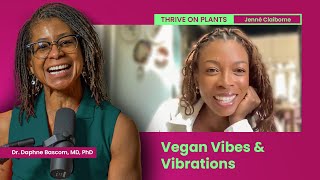
Interview (Thrive on Plants podcast Ep. #14) with vegan chef/author Jenné Claiborne about her new cookbook Vegan Vibes and her plant-based lifestyle. Jenné recounts Sweet Potato Soul’s origins (blog started 2010), early cookbook deal (2016), motherhood (daughter born 2019), an intentional 18‑month break from YouTube, and a move back to Atlanta. The conversation links a spiritual, gratitude-based approach (“raising your vibration”) to practical eating: a colorful “rainbow”/plate method (50% non-starchy veg, 25% plant protein, 25% starch/whole grain), strategies to reach ~80+ g protein/day without powders (edamame, Ezekiel bread, soy milk, hemp/flax, nut butters), and an 80/20 (Jenné prefers ~90/10) guideline to favor minimally processed whole foods. They discuss feeding children (sneaking vegetables into familiar dishes), cost-saving tips for homemade plant foods (homemade seitan vs. packaged meat alternatives), and intuitive health tracking (annual bloodwork, vitamin B12 and D checks, feeling/energy, sleep). Episode closes with lightning-round favorites and links to SweetPotatoSoul.com.
Questions this video answers
April 30, 2025.
2010.
2016.
2019.
About 18 months.
Chapters
Welcome to Thrive on plants. I'm Dr. Daphne Bascom, your guide on this journey to vibrant health through the power of plant based living. Today we have an incredibly inspiring guest, Janae Claiborne, a vegan chef, author, and the radiant force behind the popular Sweet Potato Soul blog. In today's episode, Janae will share the colorful world of her book, Vegan Vibes, a cookbook that's not just about recipes, but about a lifestyle that nourishes the soul. We'll dive deep into the art of crafting protein rich plant based meals that cater especially to nourishing the mind, the body and the spirit. Janae, welcome to the Thrive on Plants podcast.
Thank you for having me. I'm so glad to see you again.
I'm glad to see you too. And you just got back from the vegan cruise.
It was so much fun. I was, you know, I was just working on a video that I'm going to release, sharing my experience on it. This is our second going and it was just so relaxing. It's really fun to also connect with, you know, my community on the cruise. So many people told me they saw my first video from 2024 and decided to join this time. So it was like a whole party. There were so many people who I'd, you know, known from emailing back and forth with each other or Instagram, even YouTube comments. It was really fun.
Were you teaching on the cruise or were you just there? Okay.
Yeah, because I taught three cooking classes. Yeah. And I also did a, a book signing for the new cookbook, Vegan Vibes. It was great. And my daughter is in the new cookbook. I don't share her on social media or the Internet, but she's in the cookbook. So she was there signing cookbooks as well.
Oh, my gosh.
She was at her little pen and her name was so cute.
I have followed you for so. I mean, Baby J, I almost feel like we're part of your family because we've watched her grow up.
Yes.
You know, we've. So I've watched you and I would love to, you know, I'd love to start by just hearing a little bit about you. You took a step back from the spotlight a couple years ago, so I have your book here, Sweet Potato Soul. That's, you know, when you started, when you launched Sweet Potato Soul, that's how I got to know you. And then we all got to know Baby J. But then you took some time away.
Yeah.
And what was the impetus for that? And then what brought you back with Such energy that you wrote Vegan Vibes.
Yeah. Well, okay, so living in. Let's see. When I started Sweet Potato Soul, you know, I lived in New York in Harlem, and I was really young, and it was when I real. When I first started it. Thank you. When I. When I first started it way back in 2010, it was just a hobby. I had no intention to ever make it a career because nobody was doing that. I mean, there are maybe four people on the planet who were doing a blog as a career. We didn't. It wasn't a clear path to making money. It was just for fun. It was a way to commit, like, create community and share what you were cooking in the kitchen. It was people, pure hobby. And likewise with my YouTube channel, same. But yeah, back then it was very much for fun. And then eventually it took off around the time that I got my first cookbook deal in 2016. And, you know, by the time my daughter was born in 2019, I had built something where, like, my. My original goal for Sweet Potato Soul, but just for my life and career in general, has always been to help other people discover this way of living, which to me has given me so much freedom and, you know, great health and energy and clarity of mind, clarity of purpose, and I wanted to help other people find that. And it also brought me a level of success that when my daughter was born, I was able to take off from work for four, four months and, you know, this financial freedom that. That I knew I always wanted, but it wasn't like part of the original plan. So basically, my daughter was born in 2019. I took off for a few months. Then it came back pretty strong. People are super interested in Baby J and how was my vegan pregnancy and home birth and all these things. But shortly after that, her father and I said separated, and then we ended up moving here to Atlanta, which is my hometown and which has been a dream. I love it. I mean, it's. It's. It's great for. I love living here because I'm from here, but it's also an amazing place with the part of town we live in is like a small town. It's so like quaint and walkable. And her father and I are like movie, like storybook co parents. Like, we have like the best co parenting relationship. I thank God every day, all day, because it is. We've come such a long way. But in that process of moving here, of separating, of eventually getting a divorce, of moving across the country, of becoming a single mother, all these humongous shifts in my life. I was like, I need a break. I need a break. And part of this lifestyle that I've built. You know, like I said, I really want to help people, but it's. I. I've also, like, been able to develop, like, financial freedom. Not completely. Like, I'm not. Like, I don't. I wouldn't retire today, but I had such. I always think of my life as, like, I try to focus on, like, the positive stuff. Like, not so much, oh, I need to do this. I need this. I need more of this. I need more of that. Instead, in that period of huge shifts for me, I was like, I need a break, and I have the resources to take that break. You know, if I step away right now, what's the worst that could happen? Everybody could forget about me because I went away from YouTube for, like, 18 months. Everybody could forget about me. However, I now am at the place in my life and in my career and as. As Jana that I know that I could rebuild. Whether it be the same thing, it might not be the exact same thing. It could be something completely different. But, you know, I had gotten to that point where I really do trust that I can always come back. And that means that I can always take a break and I can always take time for myself and my family, because that ultimately is my. My large, my biggest value family. And, you know, my daughter and, you know, now living close to my. My parents there, we're all, you know, so, yeah, that's why I took my break and took it with, you know, such. Took a. Such a long break and. And to get with, like, with a lot of chill, you know, like, I even, like, during that time, I renovated this house. I bought this house when we first moved here, and I took, like, you know, months to renovate it. We had to move out, but it was cool because it wasn't. I didn't need to use the kitchen as I wasn't filming.
Right, exactly.
So I was able to really step away, take time. And my daughter, she didn't have to, like, go to daycare or anything. I was able to be here at home, and if it wasn't me or her father taking care of her, my family, my grandmother was taking care of her. And I really just leaned in to that as out of really a place of, like, gratitude and abundance because I really feel like God gave me this life and I'm going to be grateful and I'm going to make the most of it. And now I'm back.
Engine. First of all, kudos. To you, because I think, you know, so many times we're afraid to step away for all the reasons you said, you know, whether we don't have the financial means, whether we don't. Whether we're afraid that what are we going to come back to?
Right?
Is everyone going to forget about me? But you came back strong. And I. I almost feel like there's a different energy to you now. Maybe that's what the genesis of vegan vibes was. But, you know, I. I've seen the maturity. I've seen the. The shift to really focusing on health, nutrition, wellness. Was that a byproduct of you taking that time for yourself and seeing why it was important?
Yes, you're right. I mean, taking that time gave me so much clarity. And it wasn't sitting home just, like, with the baby or anything. I was so many things. But in that pursuit of all these other things, like, I'm telling you, random. I love hobbies, right? I. Even. I. Even one of my hobbies became real estate investing, which didn't go right. It went very wrong. Okay. Okay. It was like a disaster. It wasn't a disaster, but it was an almost. It was. It was. It was terrible. It was very difficult. Okay. I had a lot of struggles in that time that I was taking a break. And I also want to reiterate, like, or just say, like, making the decision to take 18 months off of the YouTube channel, which was like my main consistent form of income. I did it out of a place of faith, but it wasn't easy. It was really hard. Okay. I think I forgot to say that.
Nope.
But there were. I just did so many random, difficult things and fun things also in that time off. And it really help me find clarity of, like, clarity of purpose. What do I actually want to do? What is actually, like, what are my. My actual skills? What am I actually good at? What did. What really lights me up? How do I want to spend my time? How much money do I want to make? Like, do I want to stay in this little teeny, tiny house? It's kind of. Some people, It's. It's like 1600 square feet. So compared to, like, where my parents live, this is tiny. Or do I want to, like, make a lot of money and get a big mansion someday? You like clarity, right? And then I came back to, like, okay, I love connecting with my audience via camera. So on YouTube. That's great. I love taking photos. So doing the blog. I had had that blog. I've had my blog since 2010. I did not post consistently on the blog until last March. March 2024 was when I made a full commitment. I'm posting three times a week. I've taken off like one week out of year when I was on cruise last week or two weeks ago. But yes, I was like, well, I love photography. I would, I see the potential in the blog and you know, all these, this, it just all became clear. I don't want to be a real estate investor. I don't want to do tik tok. I, I don't want to, I don't want to like work so hard to like afford that mansion. Like I'm, I want to be able to have a lifestyle where I kind of feel like halfway retired. Like that's, that's what I'm going for. I'm not like, you know, there's struggles. Sometimes I'm like working, you know, it feels like 24 hours in a day, hardly get any sleep in. But then there's other times that I'm able to take a seven day vegan cruise and you know, get paid to work. Right. So it's, it's that time off gave me a lot of clarity and I'm, I'm constantly like trying to, you know, I'm shifting and seeing what works and what doesn't work and recognizing that I don't have to hold so tight to, to things.
You know, you're embracing change.
Embracing change, yes.
Theory. Yeah.
Yes. And then you know, you mentioned the health and vegan vibes to cookbook me leaning more into health and wellness. That came out of that for sure because I've always been very. The beginning of my journey before starting Sweet Potato Soul was this desire to be healthier, to, to be able to eat whatever I wanted because I love food, be able to eat whatever I wanted. No guilt. There must be way. There needs to be a natural way of living. That's, that's, that's easy and I don't have to think deeply about it and I can feel my best, look my best. And so I basically came right back to that and in part of the finding hobbies and doing different things while I was on my, my time away, I did get way more into yoga. I started practicing yoga in 2008 and I've never stopped my practice. But I, I basically took my practice to the next level spiritually and physically. And then likewise, you know, not in that break but recently, like a year ago, I also started playing tennis. So now I'm, you know, now I'm an athlete. So now I've always been an athlete. Thank you, thank you. But yeah, like I think I was definitely started looking at and embracing health and wellness taking a little bit more seriously. Also when my daughter was, when I was pregnant with my daughter, that I think was the first move back to that because I was making a lot of videos and sharing content around what do I eat as a pregnant vegan. And it, to me it was, it was so fun like this that I will never get tired of talking about eating and nutrition and you know, optimizing health and feeling good. Like even if I don't want, even if I'm like. Because, well, that goes back to my original goal. It what my original like mission has never been to have a YouTube channel or to have a vlog or to write cookbooks. My mission has always just been to help people through, to eat better and to live better and to be their best selves. Right. I used to have a like elevator pitch. I can't remember what it is anymore, but it was basically that. So yeah, I just, however I can get there, I'm happy.
And it's funny because there's a, I mean when you're talking about your elevator pitch and the fact that you're a yogi, there's a quote from your book that really stuck with me and I think it aligns it to me. It kind of revealed where you are and I, I'd love to hear what you were thinking when you wrote this. It's. You are what you eat. So the best way to start feeling your best and raising your vibration is to eat foods that support the proper functioning of your body and mind.
Yes.
That was powerful and thank you. So what is raising your vibration mean for you in terms of your daily life and then how does it relate to the vibration that you get from fueling your body with the right foods?
Yes. Well, first it always starts with gratitude. My, you know, it's a cookbook, so I'm focusing on food. But you know, in my actual day to day life and practice it's starts with spirituality and gratitude. So number one, right? And then for me, like I said before, like looking at life and approaching life from a place of abundance, which I try to highlight in that I'm trying to like make all these spiritual concepts like raising a vibration, gratitude, abundance in the cookbook, I'm trying to like tie it in with food. But yes, so living my life spiritually and with gratitude in connection to, you know, God and you know, source, but then living with abundance. And I think when you I think that's the first step because so many of us are using food and our lifestyles too to cover something else up. Right. And it sounds great to like pick up the vegan cookbook and make all the healthy food and you know it's going to change your life. You're gonna lose weight, you're gonna have more energy, whatever. That's great. But I don't, I, like from my experience, I used to be a health coach working one on one with people in my experience and in my, you know, my personal life, real change will not actually happen and stick long term if you don't actually change your, you know, that emotional connection with food in your lifestyle and your outlook on life and your mindset, it all begins there. So I, yeah, that line, I think I'm just trying to like pull in my, my spiritual, you know, way of looking at the world and bring it into nutrition. But maybe I should have written more about that in the cookbook because that is really, that's where I come from and I think that is where we all need to come from if we want to see long lasting, heal. The issues that we have inside address anxiety that so many of us have, whether it be about our life or things happening in the world or even a lot of times with food. And then we can start to, you know, see these lifestyle changes actually stick.
And I mean, to your credit, I, I get this, I get those feelings from reading.
Okay.
For anyone who reads the first part of your book, not just go right to the recipes, you can feel that thread.
Okay, good.
And your message around healing your relationship with food, which I do think many people don't have the best relationship with food. And I agree with you. One of the things that we have a structure within our coaching program, we call it the plant powered blueprint mindset is first, because if you can't change mindset, if you can't change, you know, how you're looking at the world, it's hard to make all those other changes stick. So completely aligned with everything that, that you're writing and the vibes are there. And it's interesting because the, you know, you also talk about a plant based plate.
Yeah.
And I just finished a challenge. I actually talked about the plant based, plant based energy plate. But when you're, when you're encouraging anyone who's picked up your book or people that you talk to in terms of how do you fuel for energy or how do you fuel to support that level of vibration, that's positive. What does that plant based plate look like to you? And then with that plate you also mentioned the 8020 rule.
Okay, so for the my ideal plant based plate, I always tell people to think of a rainbow, right? It's got to be colorful. And it, your meals don't actually have to be very colorful day to day. Like every meal doesn't need to look like a rainbow, but it's a good starting place to envision. Like if you're unsure of, you know, what you should be eating to think about color. So for example, if you made, let's see, just like yesterday on Instagram, I posted this recipe for this black bean corn salad, right? So, so when I'm creating recipes and when I'm eating I'm like, okay, let's say the corn syrup, it's got beans, it's got corn. Those are two beautiful colors because the colors of these plants, these foods indicate are indicative of their nutritional value, right? Like black beans. The black is anthocyanins. This is a really potent antioxidant. And then you know, put cilantro in there. And then there's, I'm going to put peppers, I'm going to use red peppers because they're bright and pretty. You could use any color. And I really think like that. And then when I go to actually eat the meal, I'll probably, I won't, I probably wouldn't just eat a bowl of the corn salad by itself. So I'd put it with rice and maybe some tofu that's been cooked with like a marinade that makes it like a nice rich red color or just something I just, I'm trying to always make my food colorful, but I also recommend for. It might be even easier for people to think about like this plate method. The plate method where 50% of your plate is non starchy vegetable. So it can be kale, broccoli, cauliflower, whatever. It can be a blend of those things, right? You don't have to choose one. It could be a blend, but 50% of that plate is a non starchy vegetable or combination of some. And then a quarter of that plate is a plant based protein. Could be any, could be a mix. And then the, the remaining quarter is a starchy vegetable or whole grain which are starches. So brown rice, black rice, red rice, sweet potatoes, butternut squash or a combination of all of those things. And then you can add a little bit more color on top. So I'll usually do a like a, you know, avocado slice of avocado, guacamole, tahini Sauce, put some seeds and nuts on it to add more crunch and maybe finish it off with a little bit of sauerkraut or kimchi for my healthy, you know, good bacteria. But I, that's another really easy way to build a plate. Either think of a rainbow or use the plate method.
And it's, I mean, what you just described is important too, because people eat with their eyes first.
Yes.
And I, I, yeah, A lot of times people feel, whether you're plant based or vegan, it looks good plain, but it really should look exactly the picture you just described. The blues, the blacks, the yellows, the greens, the reds. It should look, it doesn't have to look beautiful every day.
Right.
But that plate concept, it's a simple one to think about when you're doing, you know, looking at your meal for the day is half my plate. Those cruciferous vegetables, the greens, the reds, get my tofu, start my protein. And I'd love to.
Yeah, you talked about that.
Yeah, let's talk about protein. Because the P word, you know, protein, fiber and fat are definitely keywords for 2025.
Oh, yes.
But when it comes to women and you're a tennis player, you're a yogi, I, I see those muscles popping on your biceps, your avi.
Yep.
They got guns.
Guns are good. Got guns.
How do you, that quarter of your plate, that is protein. Do you prioritize that? And then you've been doing some great videos on how you get more than 80 grams of protein a day, which I think some women struggle with.
Yeah. So I, the reason I started making those videos is I wanted to prove that it was possible. Right. Without trying like super hard to make it happen. You know what I mean? Without being like, I gotta figure this out. I need to do protein shakes and I need to do, you know, only eat high protein meals. I can't eat any. Whatever. I wanted to prove it, but at the same time, when I made the first video, I wasn't totally sure I wanted to make it authentic. So I just ate and I calculated I ate normal food. Like I ate what I always eat every day. And it just turned out that indeed I do eat over 80 grams of protein a day. There's a couple things I always tell people, though. Like, depending on your activity level, you might need more, you might need less, depending on your hunger. And then the other thing I always tell people is if you are eating, and I try to prove in those videos that if you're eating a wholesome plant based diet where you're really Focusing on, like we described that plate method, eating loads of vegetables and whole greens and, you know, these vegan proteins, then it isn't that difficult. I don't do protein powders, I don't like protein powders and I, I don't have any difficult time getting enough protein. And then the next thing would be to make sure, you know, you can look at your, your meals and your snacks and try to optimize it even better. Like, for example, for my snacks, when I get home from yoga and tennis, in tennis, I usually just take it in the car with me. Not every time, but let's say four days out of the week, I will have edamame right when I come back because I love, you know, I know there's a different nutrition science, like what to eat before exercise or to eat. There are sciences. Is a whole, it's, it's a whole field. But I follow what works best for me and I know that I have such satisfaction if I eat a nice protein snack after I exercise. So, and that is edamame 99 of the time, because it is so easy. I buy frozen edamame, which are for people who don't know, just soybeans in the pod.
That's it.
Buy it at Costco and you boil it for like five to seven minutes and then just eat the beans out of the pod.
That's it.
Put salt on it and that's it. But there you go. Like, I can't remember off the top of my head how much protein like those little bags I have are, but it's something like, I don't remember, I want to say like 12 grams of protein for those little bags and then another high protein snack. Because snacks are a good way to optimize because I think a lot of people will be like, I'm going to have a salad for lunch. I'm going to have like oatmeal with flaxseed and walnuts for breakfast. Great. It's got protein. But then you fall off on the snacks. You might not have a snack, you might not be hungry, or you might choose something junkier because you feel like you're eating so well throughout the day. But you really could be adding more protein and nutrition, taking advantage of that by optimizing the snacks. So edamame is my favorite. Another favorite is Ezekiel bread toast. I love Ezekiel bread. One slice, I think has 10 grams of protein and I put, you know, almond butter and jam on top. Or I'll do avocado on top. I love it. It's Simple. It's like, I mean, it's even easier than Ezekiel because you don't have to boil water, just have to toast in the toaster oven. But yeah, and for people who do like smoothies, though, you can, you can use smooth protein powder. Like, there's nothing wrong with protein powder. I just for my, myself, I, I don't really love how they taste. They're very expensive. And I do just generally, I like to eat. Is if I can eat all wholesome, like minimally processed food, that is what I prefer. However, you could also up the protein in a basic smoothie without a protein powder by adding almond butter or any nut butter. Peanut butter, hemp seeds are super high. It's a complete protein. Using soy milk, especially these. You know, I buy the soy milk at Trader Joe's. It's got soybeans and water. That's it. No natural flavors, no nothing, no sugar, no nothing. Organic soybeans. Use the soy milk. That one cup of soy milk, I think it's eight grams of protein, and do that instead of water right in your smoothie. Add. I had another, I had another. So I said, I said the hemp seeds, oh, flax seeds, nut butters, soy milk, vegetables have a little bit of protein in them, but you're gonna also get more fiber. And there's just, there's little ways that you can optimize your protein intake in a wholesome way without having to invest and powders and such. And before you ask me about the 80, 20, 80, 20, or I'm more like 90 10, but what that is, is like 80% of the time, no less than 80% of the time, I recommend that people focus on eating wholesome, minimally processed food. So basically, foods that you can prepare at home, or you did prepare at home, or foods that if you wanted to. Usually I'm talking about foods that you do prepare at home, but ingredients like tofu or tempeh or soy milk that if you wanted to, you could prepare at home. You do not need a laboratory or factory to make it, you know, and so no less than 80% of the time, we should be eating these wholesome, nutrient dense foods and then reserve the highly processed, ultra processed foods and alcohol for no more than 20% of the time. That way you don't have to have cheat days and you don't have to, you know, feel like you're restricting yourself. But, you know, maybe, maybe you eat really healthy all day and you have, you know, a little chocolate. Some people have a glass of wine at night. Or go out to eat a couple times a week, but you know, throughout the rest of the week you're on point. Like you don't have to worry because the thing about eating healthy and the reason a plant based diet is not a diet like a weight loss diet is you're eating nutrient dense foods that like I said before, like you read that line, you are what you eat. You're giving your body not just the fuel it needs for the day, but the nutrients it needs to be healthy to, to aid in detoxification. So when you do eat, you know, less than nutritious food or alcohol or you know, are in a smoky environment, whatever, your body is able to be as optimized as possible. The, the healthy food is not just for, so you can be thin or so you can have energy and you can lift lower weights. It's, you know, it is to keep you healthy and to offset the negative effects of everything else we encounter just being human. Right. So that's, that's, that's my 80 10. I'm. Like I said, I do like 9010 or so. That's my 80 10. I do like 90 some weeks. I do 95, 5. I probably will never, I never do like 8020 anymore just because I don't really like eating out that often. Yeah, I love to cook at home. You know, this is my job. I don't drink alcohol very often, very seldom. I'm not, I don't have a sweet tooth. I used to, I don't anymore. Because this way of eating you kind of lose like. Yeah, I still like sweet tooth, but I've basically lost all of my cravings, you know, because I eat so clean and just like consistent. So. Yeah.
Your microbiome is happy.
My, Exactly. My, my microbiome is happy. And it's not craving and asking for, give me, give me, give me nutrition.
Nutrition.
Yeah.
And I mean you were setting such a great example for baby day.
Yeah, thank you.
Because the, you know, I look at our kids now and I don't have children, but just seeing, you know, having opportunity to work in settings like the Boys and girls club or seeing children even walking around the airport, I just worry about how they are going to, how are we helping them be helpful by setting a good example for, by what we help them put in their bodies.
Right. It's, it's actually scary. It's, it's disappointing. That's one area that I feel almost overwhelmed by. Powerless. I try to, you know, I know how to like talk about what I eat and share you know, Baby J and how I've raised her. But, you know, these children are essentially addicted to this ultra processed food. It's not so much as in Americans in general.
Right.
It's so difficult for you to be living a standard American, having a standard American diet, eating just all this, all the stuff. And your kid is also addicted. You're addicted. And then you want to make a change, but you really need to change yourself from the inside out before you can ask your child to do so. And then it's an extra level of the fact that it's a child difficult. It's even more difficult to like to ask them to go against the grain and do something totally different from their peers. My daughter is not like that because she's born vegan. She's always been vegan. Her mom, both parents are vegan. She really understands why we're vegan. And I think what I, what I can see from her, she has a lot of pride of being vegan. This is, she feels like this is, makes her special. Right? But yeah, if it's, if you're, if you're coming from a place of like, I'm trying to just turn it all around. 180 shift. I, I, I know it can be done, of course, but I myself, I'm like, oh, I wish I could help more because I don't really know what people should do.
But you can help. I mean, we were talking about this book, Good Energy before we got on the call. I mean, you have a voice. And I think the, I mean, it's one of the things that Dr. Casey means talks about in the book. One, the importance of understanding what we put in our body. And the thing I've loved about your cookbooks is that you focus on whole foods and the fact that you can fuel your body. You can be healthy, you can eat 90, 10, 80, 20, but you can still incorporate the good things that you, if you have a sweet tooth. Yeah, you can do that.
Grandma's cakes and cookies cruises cruise. Yes, vacation. That is so true. And you know, speaking of her in general, so, you know, lately we've seen, I think, positive potential, positive shifts. You know, they outlawed, what is it, red number 40 from food or something. And so I feel like for, so I'll use an example from my life. My, my niece, she is almost nine years old. She'll be nine in June. This is my brother's daughter. She is, has a standard American diet, right? And her mother and her, her father, you know, he and I grew up eating the Same food, so very clean. Also, we, we ate, we ate like standard American processed food. We've never had red meat, but we ate those foods. But as treats, you know, we, we drink soda, we had Kool Aid, we had cereal, but those are special treats. And you know, we knew that this is treat, right? We can't have a, we're not gonna, Our parents wouldn't allow us to like, you know, eat Frosted Flakes every morning for breakfast. You have to have oatmeal and then you can exactly flakes after. That's how we were raised. But anyway, so my niece is very, very picky and we go to the grocery store and she's like, like tells and shows me everything she wants. And I'm looking at the ingredients, my eyes popping out of my head. And I think one of the first steps that we need to do as a country is to remove all the extra, not necessary toxins that are in the food supply, especially the foods that are marketed specifically to children. Because the children and their parents like making a major shift to change your, the way you eat and your lifestyle. First off, I think a lot of people aren't gonna, aren't at the place to want to do that right now. Maybe don't have the bandwidth. And even for the people who are there, it's going to take time. But at the very least, if we just cleaned up the foods that the kids are going to eat anyway, I think that would be the step in the right direction. And I don't know how that would affect, like, would they still be addicted to these foods or are these things causing addiction to food? I don't know. But at least, least like it feels to me like removing like, you know, there's, there's like flame retardants in some children's clothes, especially night clothes, which, you know, can. Are linked to adverse effects. It's like, okay, take the flame retardant itself. The kids are still going to wear the 90s. The grandparents are still going to buy them. Everybody's going to buy them. So take out the harmful chemical, but you can still sell your product because so many people are not yet at the knowledge, right, that we are, that you are what you eat. You can make these changes. It's really not that difficult. You can still be satisfied and you can feel so much better. Your life outcomes will be so much better if you prioritize your health, your eating and your lifestyle. Like, you will most likely have a better life if you do that. But like so many people, like in my Family are not there yet. So I'm like, if we just took out just the littlest thing and then we go from there.
But the 100 agree. And the thing that we need to remember, we control what we put in our body. I mean, to the extent that we can definitely.
Yeah.
Though I agree with you.
Especially food.
Exactly. Yeah. That is, that is a choice and it's not that. I mean you can eat very inexpensively and eat primarily plant based. So it can extend.
Probably save money.
Yeah, I would agree.
Yeah.
Especially now, especially now. A dollar an egg.
I know they're always complaining the, the meat eaters and they're always complaining about the meat is expensive now, the eggs are expensive now. Like you know, the milk. Complain about the food scramble. You can make your own milk at home. You can do the tofu scramble. You can literally make your own, you know, just egg, the liquid product. You can make it at all too. Yeah, with like pumpkin seeds or mung beans. Exactly. But that's why I'm so committed to and love health so much. Because it is the one area that we do have control over and it's not fair to the people. Like, you know, there's always this, this, I always hear this, this discussion about. Well, it's in the brain. Food is addictive. The people can't change. Because I don't want to say that I think some people haven't gotten to the place of wanting to change. But it is not true because that, that is I think disrespectful. For to all the millions of people who were completely addicted to whatever food standard American diet and have changed and have started eating healthier whether they be plant based or not. It can be done. It just, it is that education and it is, you're right. Like we do have power. We have a. I have a platform and it is like, you know, I. There's a level of discipline and self worth, you know. And going back to what we were talking about before, it's that mental change. You have to be able to change your outlook and recognize that I am in power. Like I don't have to buy this. I can save money. Another new video that I actually have on my, my calendar coming up is how to save money. Basically, like cheap. How much cheaper eating, eating vegan can be. It is in regular plant, standard American diet. Because I'm trying to like, hello. Knock on. Wake up you guys. You don't need those eggs. Those, you know, $12 for a dozen eggs. It's unnecessary.
No, I made two big loaves I mean, for people that like seitan and can eat gluten. I made two big loaves of seitan last night. That'll be one out of one block of tofu and you know, a third in a cup of vital wheat gluten.
And it's funny because it's some these products. That's why. This is part of why there's a cons, like a misconception that eating vegan is expensive. Because when you go to the store and buy the seitan, it's like they've fancy package and you know, $8. Like I love those field roast sausages. I love those. But like for four sausages, like $8 and I can go home with my bottle wheat gluten and I do my sausage with beans and the wheat gluten and I'll put like some vegetables in there and spices. How like the, the entire. I'll make four for let's probably 75 cents. A dollar. Yeah. Versus eight dollars at the store. But people see it at the store and they're like, oh, oh my God, this is so expensive. But thank God for Google because now we can go to the store and be like, I bet I can make this at home. Exactly.
And you can add. You know, I threw in some rice cauliflower. So you got a little fiber in there.
Yeah.
Don't know. No one knows it's Andrea seitan.
That sounds so good. Yeah, I need to try that.
It's. It's yummy. It just, I mean, because rice cauliflower has no flavor.
Yes.
But now you've got your protein, you got your fiber.
It makes it more moist, probably, right?
It does. It does.
Yeah.
Not quite as dry.
I like that idea a lot. I would love to try it.
I, I will be happy to share the recipe, but you'll, you'll take it to the next level because I'm not a cook. I just, if it's in the kitchen.
I'm like, yeah, let me. Okay. And by the way, also with seeking of children, you can't. I have had good luck with my niece. I actually have multiple nieces, but I was just talking about one who's I'm even closer with. I have had success with them with products like, you know, the vegan sausages and you know, store brought chicken nuggets and stuff. They don't know the difference, you know, so for a lot of the time for children, you can start to transition them. And I like that you mentioned adding that cauliflower. A big question that people ask me Especially here in the neighborhood because they know how my daughter eats. People are constantly asking me, how do they get their children to eat more vegetables? They're not worried about going vegan. They don't want to be plant based. At the very least, how can I get my kid to eat more vegetables? And I'm always saying, like, I just got to add it to things. Like, I Sunday, I made sweet potato biscuits. My daughter love your sweet potatoes. She don't even like sweet potatoes.
She doesn't? No.
Sacrilege. I know she does not like sweet potatoes. However, they're so nutritious, right? I make all sorts of stuff with sweet potatoes because she loves them. Any child can be tricked. Just, you know, I heard our neighbor is so freaking picky and she'll come over and I'll make smoothies. She apparently has never had a non. Just, you know, a smoothie that had vegetables in it. He started coming here and I always put spinach or kale in our smoothies. She doesn't know. She thinks it's a blueberry banana smoothie, you know, so cauliflower in your seitan. Sweet potatoes. And the biscuits, veggie burgers. You know, I make these tofu nuggets. They're easy. They taste like chick fil a chicken nuggets. And my daughter's friends never have. They've never had tofu. Like, this is. This always happens. I always make it when the children come over because it's easy and they love it and they think they're eating chick fil a and they think my daughter's cool because it's a chick fil. A connection. They have never had tofu before this. No child has ever disliked my tofu nuggets. Ever. There's a lot of ways, you know.
You, your point again is that it's a decision. Yeah. And it's how you communicate it. There's so many. I mean, we could have a conversation just around how we start to feed our youth.
Yes. So important.
It is. It is. It is. Before we wrap up, I would like to know because you have been reading. Good energy. Do you have. So looking at you, everyone can see you're vibrant, you're energetic. Do you measure your health in any standard way? Because I know Dr. Means talks about your blood work, your DEXA scan. How are you confirming that you are as healthy as you feel?
Right? Not really. I get my blood work done once a year just because I have insurance. And they do that for free. And I'll ask them to check for B12 and vitamin D. But. And then obviously I reading that book, I'm only halfway through through. But I did consider doing a continuous glucose mon. I've never had any issues with, you know, glucose or. And even when I was pregnant, I. So when, you know, when you're pregnant, they make you drink. I don't know if they still. Yeah, I'm sure they still do it. They make you drink this like glucose drink so that they can test your, you know, how your body responds to it. Because diabetes and pregnancy is horrible. It's super duper dangerous. I refuse to drink the drink because I'm. I don't drink stuff like that. I. I don't know. I mean, it was. I think it's. I can't remember how many grams of sugar is in that beverage. Plus artificial food dyes. It's like a red. Yeah. And in other countries, I think it's clear.
Big red therapy mess.
Yeah. But in the us, even artificial colors. I'm pregnant. I'm not drinking that. All this sugar. No. And I actually had a home birth and I worked with a midwife rather than a. I did go to Kaiser for like ultrasounds and because I have the insurance, you know, didn't have to pay extra for it. But my whole. Everything else was the midwife. My midwife was like, Jana, well, we have to do it. It's like part of her license. Like she has to make sure they do it. She said, but if you don't drink it, you could also just, you know, do your finger. Your glucose. Yeah, by the print. Back then, I don't think we had the continuous glucose monitors that you. We. And if they did, they were probably super expensive. But if I ever got pregnant again, then I would do that instead. And I, Like I said, I did consider just cure out of curiosity. Reading that book makes me do. Makes me want to track more. But no, I don't. And basically the way. I'm very intuitive and the way that I track how I'm doing is how I feel. How I feel. Do I have energy? Like a lot. I'm. I come from a very energetic family. Okay. So. But at the same time, I think when you are naturally energetic, you can misread the signals because you're energetic anyway.
Right.
So I do try to pay attention and like, you know, you know how I eat. But yeah, it's basically me intuiting how well I'm doing.
You're checking your vibrations.
It's all the vibration. Exactly. If I need to sleep more. And also because I'm A co parent rather than like a, you know, I guess nuclear family situation. I gotta say it is a blessing. I did not know it would be such a blessing because when I need to sleep in, let's say the night before, I didn't have, I didn't sleep so well. I'll just ask my ex, I'll be like, can she spend at your house tonight? He's always going to say yes. He will never say no.
He has never said that's beautiful.
So I, I'm so blessed. I don't have, my daughter has to get up at 6:30 to get to school. I don't have to do that every day. And there are some days when I feel like, oh, I just, I need a lot of rest. I know that for sure. I don't need to track that. I need at least eight hours of school sleep. And if I like two nights ago, I only had seven last night I had to go to bed a little earlier to make sure that I would get it all. But if like, and sometimes I'll just have him do it so that I can like sleep in and maybe have to work late maybe. I know I, I know I can't get the eight hours unless I wake up at 8am so yes, I'm very blessed.
I love that you get so know seven to nine hours. Sweet spot.
Good for you. Thank you. Thank you. It's important. My mom tells me that I've always been very like since I was a baby. I was about that sleep. She said it's part of my personality apparently.
Well, she, she obviously did a great job.
So thank you. Thank you.
Before I let you go, I would love to wrap up with just some lightning round questions. Whatever comes to mind. There's no right or wrong answer. It's just an opportunity for our community to get to know you a little better.
Okay, Sounds good.
Okay, what's your go to comfort food when you've had a long day?
Chips and guacamole.
Okay.
Yeah.
What's one ingredient always in your fridge no matter what?
Ooh, miso.
Ooh, good one. Your 15 minute dinner when you're exhausted but you still want to nourish yourself and baby Jeff. Okay.
My 10 minute lentil tacos. That's what I call them.
Oh yes, I've seen that.
And you top them with guacamole, of course.
And last thing, what's one thing you hope everyone who picks up vegan vibes will walk away with?
Inspiration. Inspiration to eat more plants and, and trust that they can make a positive change through food in their life and.
You did a great job. Thank you Janae, thank you. It's been a pleasure reconnecting with you and I know our community is going to love seeing what you're going to be doing next. I will share all of your social links link to your book, but if anyone wants to connect with you, is there a great way to find you and follow you? Yes.
Sweet Potato Soul.com hundreds of recipes. You can find me there. My email's listed there as well.
Janae, thank you. Thank you for joining us on Thrive on Plants and I know that you will continue to thrive on Plants and live with purpose.
Thank you.
Take care.
Take care.
Thank you so much for tuning in today's episode of Thrive on Plants. It was an absolute pleasure to have Janae Claiborne with us sharing her passion and expertise in plant based cooking. We covered a lot of topics, including debunking some common vegan myths to detailed advice on creating a perfect plant based plate that supports our health through all stages of life. Janae's personal stories and insights remind us that our food choices are not just about nourishment, but about joy and connection. If you've been inspired by today's conversation and you're curious to learn more about Janee and her work, be sure to check out her book Vegan Vibes and to follow her on social media. We'll have the links to her website, to her blog, and to where you can purchase her books in the show Notes. I'd also encourage you to share this episode with a friend who may need some inspiration on protein rich plant based vibes in her life. And remember, every meal is an opportunity to bring vibrancy and health into our lives. Keep thriving on plants and until next time, live with purpose and eat with joy. Take care. The content provided in this podcast is intended solely for informational and educational purposes. It's not designed to replace professional medical advice, diagnosis or treatment. While I'm a doctor, I'm not your doctor. Always seek the guidance of your physician or other qualified healthcare provider with any questions you may have regarding your health, medical conditions or treatments. Our goal is to provide accurate and up to date information. The discussions and views shared on this podcast reflect the opinions of the host and guest and they may not align with your unique health needs. Decisions related to your health and wellness should be made in consultation and with your healthcare team because they understand your specific circumstances. Thanks for joining us on this journey to Thrive on Plants and I hope you enjoy the future episodes.
More from Daphne

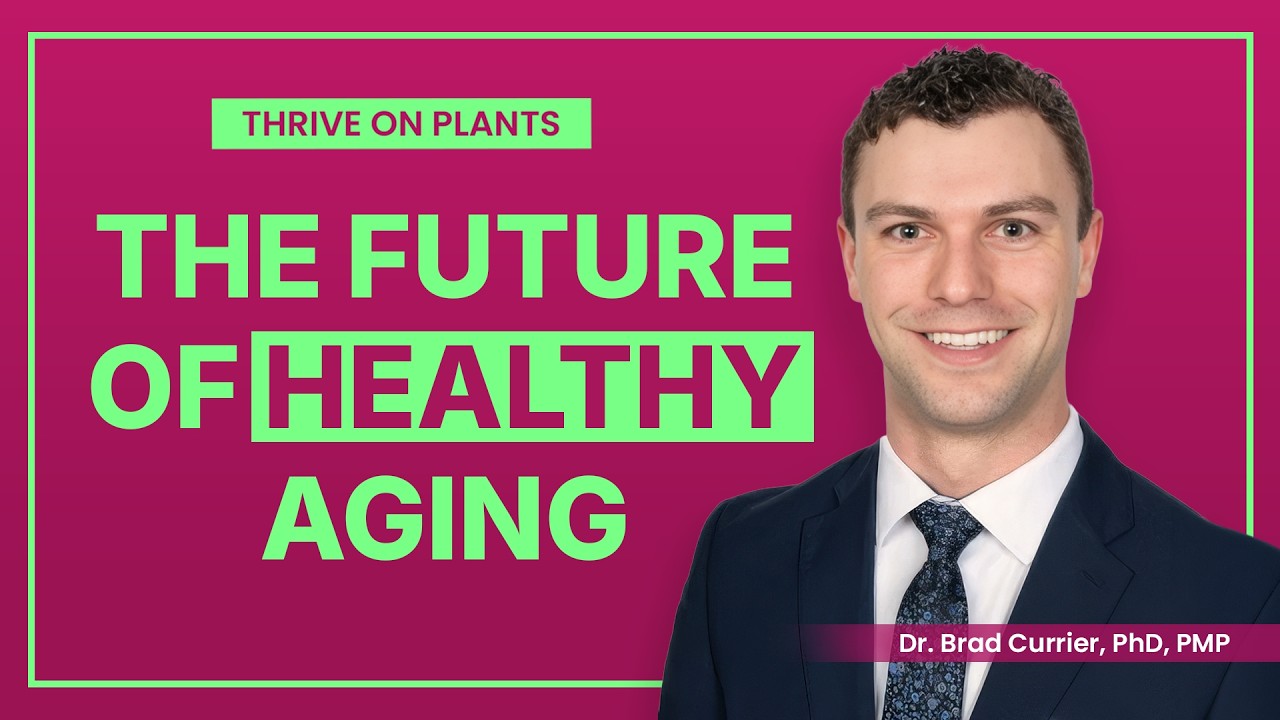

The Adaptive Fuel: How Exogenous Ketones Support Healthspan | Thrive on Plants #60

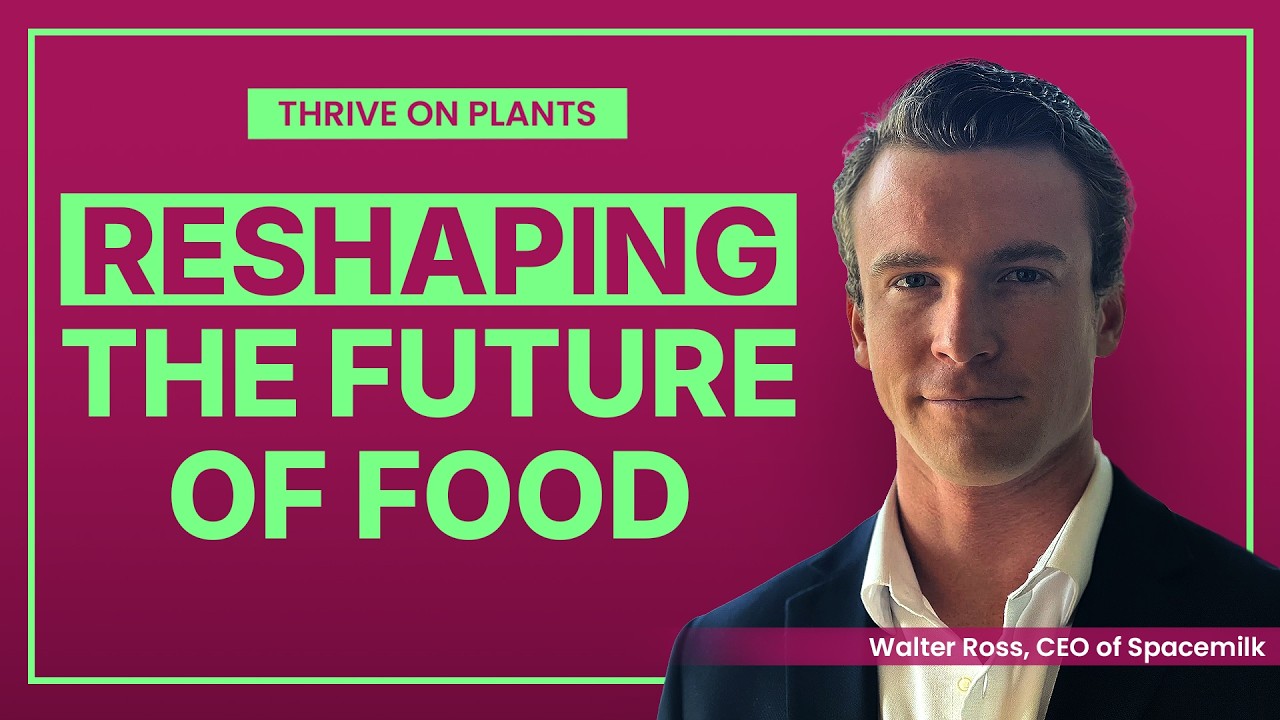
Could Yeast Replace Whey? The Science and the Story Behind Spacemilk | Thrive on Plants #58
Why "Eat Less, Move More" Stops Working After 40 (And What Actually Does) | Thrive on Plants #54
Triple Negative Breast Cancer: How She Caught It Early and Came Back Stronger | Thrive on Plants #53