Weight Loss vs Weight Maintenance: Lessons from 10,000 People Who Kept It Off | Thrive on Plants #46
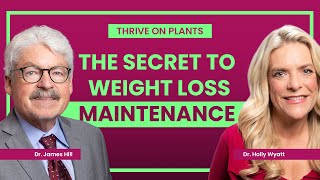
In this episode of the Thrive on Plants podcast, host Daphne Bascom interviews obesity researchers Dr. James Hill and Dr. Holly Wyatt about the distinct challenges of weight‑loss maintenance, especially after stopping GLP‑1 medications such as Ozempic, Wegovy, or Zepbound. The conversation reviews data showing that many people regain weight after discontinuing these drugs and introduces the authors’ new 10‑week "Losing the Weight‑Loss Meds" playbook, which offers a step‑by‑step framework for transitioning off medication while preserving loss. They outline three archetypal user profiles—"nonstop food seeker," "sedentary sitter," and "setback cycler"—and provide tailored strategies for each. Physical activity emerges as a non‑negotiable pillar, with the National Weight Control Registry indicating that successful maintainers average about an hour of intentional movement daily; the hosts reframe this as a positive, manageable habit rather than a chore. A core theme is the evolution of mind‑state from "victim" to "victor" to "voyager," emphasizing mental resilience and identity shift. Dr. Wyatt introduces the concept of "living large," encouraging listeners to tie healthy behaviors to joy and purpose rather than scale numbers. The scale itself is positioned as a tool, not a judgment, with 96 % of maintainers weighing themselves regularly. The episode closes with concrete next steps: obtain the playbook, explore the Weight Wisdom podcast, join the Thrive on Plants community, and share the episode to expand the movement. Legal disclaimer clarifies that the content is educational, not medical advice.
Chapters
Welcome back to Thrive on Plants. Today's episode is one I've been looking forward to for a long time. We're tackling a question that millions of people are asking right now: What happens when you stop GLP-1 medications like Ozempic, Wegovy, or Zepbound? The research is sobering. About two-thirds of people regain their weight within a year of stopping. But here's what you need to know. It doesn't have to be that way. My guests today have spent over 30 years studying exactly this, the science of weight loss maintenance. Dr. Holly Wyatt is an endocrinologist and professor at the University of Alabama at Birmingham. She was the medical director for ABC's Extreme Weight Loss and has personally navigated her own weight loss journey. Dr. James Hill is one of the world's foremost obesity researchers with over 700 peer-reviewed publications. He co-founded the National Weight Control Registry, the largest study of people who have successfully lost weight and kept it off, tracking over 10,000 individuals. Together, they just released Losing the Weight Loss Meds. A 10-week playbook for transitioning off GLP-1 medications without regaining the weight. And what I love about their approach is that it's not about dogma or one-size-fits-all rules. It's about building skills across three pillars: food, movement, and what they call mind state. In this conversation, we cover a lot. We get into why weight loss weight loss maintenance are fundamentally different skills. The 3 profiles that predict where people struggle and which one you might be. Why physical activity, not diet, is the number 1 predictor of keeping the weight off. And what mind state means and how to move from victim to voyager. And why they moved Colorado— from Colorado to Alabama to prove their methods work anywhere. Whether you're on these medications, considering them, or supporting someone who is, I know this conversation will change how you think about sustainable weight management. Dr. Wyatt and Dr. Hill, welcome to the Thrive on Plants podcast. I am so excited that you were able to join me today.
We're happy to be here.
Yeah, no, I'm excited.
Well, I would love if you would take a minute and introduce yourself to our community. I, I feel like I know you because I listen to you every week on your podcast, and I had the benefit of spending time with your book, Losing the Weight, Lost Meds. But if you would introduce yourselves, your background, and most importantly, why this book is so important, because I think it is very important for anyone who is prescribing or taking these medications to take time to read?
Jim, you go first. Okay.
I'm Jim Hill. I am a professor in the Department of Nutrition Sciences at the University of Alabama at Birmingham. I've been working in the weight management research field for a long, long time, decades. In fact, I say when I started in this field, nobody really cared about obesity. It wasn't anything people talked about or cared about, and it's really changed. I've done a lot over my career, but some of the things that are meaningful to me is with my colleague Rena Wing in the 1990s, we started the National Weight Control Registry, and this turned out to be an amazing project because we identified people who had actually succeeded, not just at losing weight, but at keeping it off. And we've studied over the years over 10,000 of these people. We've published dozens of research articles, and it really got me interested in how weight loss is different from weight loss maintenance. And we'll talk about that, I'm sure, as we get into the conversation. But I've been, I've been around this field for a while, and it's nice to see us developing new tools and really increasing our ability to help people lose weight and keep it off.
Thanks, Dr. Hill.
And I'm Dr. Holly Wyatt. I'm also a professor at the University of Alabama Birmingham. Um, I've also been involved in weight and helping people lose weight and body weight regulation my, my entire, um, career. I'm an endocrinologist by training, so I'm an MD, and metabolism and, um, body weight regulation along with all the hormones kind of go into that specialty, diabetes and thyroid and everything. So that's how I'm trained. I got into this field because personally, I struggled with my weight my whole life. And so I was always trying to figure it out. Even before I got into medical school, in high school and in college, I was like, why am I different? What's, what's, what's going on with my metabolism? Why did I have friends who seem to be able to eat anything they wanted, and I was having to be so strict about everything that went in my mouth? And I was like, there's got to be something different. So I was asking a lot of questions, looking, didn't really know even in medical school that body weight regulation and obesity was something I could study because like Jim said, it wasn't really mainstream in the medical community then at all. So I was going to medical school, but also really interested in diet. And I remember I was on all kinds of different diets trying to figure out why I, I struggled with my weight so much. And then it was when I got at the University of Colorado and I was in my residency that someone said, you know, Holly, you can put those two together. You know, that was always talking about the, you know, talking about my diets and talking about my metabolism and then doing my medicine stuff, my medical education. And someone said, you know, you can put them all together, you can be an endocrinologist. And I was like, wow, that is what I want to do. Because it's always great if your career is something you're really interested in and passionate about. So that's how I got involved. Was really fortunate to have Dr. Hill as a mentor for many, many years and, and got to learn from him how to do research 'cause I knew how to be an MD, but I had no idea how to do research. He taught me all of that, got to work with the National Weight Control Registry, and then really got to take the science and put it into things that people could use. I like that translational piece. So here's the science that says you should eat more vegetables, let's say, and we have data to show this. How do you do that? That's really what I love, and that's what excites me because that's what I was searching for. For so, for so long. So that's what I've gotten into. And the book and the timing is so perfect. Because for the first time, I'm an expert in weight loss maintenance. I've done a lot of weight loss, but I really liked it. How do you sustain it? Nobody really cared, to tell you the truth. Everybody was like, I haven't lost enough weight. You know, let me lose a little bit more weight. And then I'll come talk to you, Holly, you know, then we'll, we'll sit down, we'll have a really good conversation about weight loss maintenance. And for the first time in my whole career, 25, 30 years, people are now saying, okay, I've lost a good chunk of weight. How am I going to maintain it? And I'm like, finally, the time is here. So that's why I'm here. And that's why I think it is really good timing to talk about weight loss maintenance. And for those who are using the drugs to lose weight, for those of you losing weight other ways, it's still time. How do you keep it off?
You guys have had an amazing career, and it's interesting that you were in the state of Slim. So you left Colorado and went to Alabama, which definitely has some different demographics, and I'm sure it was a great opportunity for you to apply what you learned to a whole different community.
Yeah, you're exactly right. It was so different. You know, when we were in Colorado, Daphne, the the peer pressure was almost to get outside and climb a mountain or to do something active. Um, that's not the same peer pressure in Alabama. And, you know, it, it makes me understand how much cultural environmental pressures affect us. It's much easier to follow a healthy lifestyle in Colorado than in Alabama, but we have to help people everywhere do that. And we aren't going to succeed unless we can do it both in Colorado and Alabama.
You know, when I used to give talks, or when I give talks at like Obesity Society, when I lived in Colorado, and I would talk about the success of State of Slimmers, I would talk about, you know, we published data on it. People would come up to me and say, yeah, but you live in Colorado, the majority of those people are from Colorado. And so I almost took that as a challenge. And I said, okay, let me go somewhere else. And, you know, we're going to deliver this. And I always said the State of Slim, yes, it was about the state of Colorado, but really it was about a state of mind. And it was kind of a play on words. Yes, the physical state and the physical environment does matter, but you can create that state anywhere. And a big chunk of that is, is your mind state. And so it really was a challenge to come here and show people that.
And I want to get back to mind state because as we were discussing before we started recording, that is the foundation. Without a— without your mindset and your mind state being ready, weight loss and weight loss maintenance are going to be a challenge. But I'd love to hear your perception on, one, what is— what is weight loss maintenance? And two, how does that differ from me being on a plateau? Because I know we have a lot of people that we coach who, they lose some weight and then they hit this plateau and then they're like, well, is this where I maintain? Is this— so how do we explain to, you know, people who are on a weight loss journey, what's the difference between how do I get out of a plateau and understand I need different strategies to navigate through that versus I've achieved my weight loss goal, Because weight loss is not linear as much as I think some people would like it to be. And at some point you have to transition into, this is my life going forward.
Yeah. So great questions. These are, these are the questions we love. And, you know, weight loss maintenance is where you're gonna be living your life. People always say, you know, I wanna be good at weight loss. I'm like, yeah, we wanna be good at weight loss. You really wanna be good at weight loss maintenance. That's where you really want the skills to be the sharpest. But we spend all of our time, and in my opinion, sometimes too much time trying to lose weight or in the weight loss phase. And as I'm sure we'll get into, what you do to lose the weight and what you do to maintain the weight loss are very different. And so sometimes when you're trying to lose weight and you're doing the skills required, the strategies that are specifically for weight loss, you may plateau. You're trying to lose weight, you're, you're doing those strategies, but the weight loss stops. And there's a whole definition on what is truly a plateau. Sometimes people think they're plateaued when they have not yet, because of what you've talked about— weight loss is not linear, even water and all the things that can masquerade, and people think they're not losing fat, but they still are. But, but let's say at some point you do hit a plateau, meaning the behaviors you're doing to lose weight are producing a body state that is in balance, which— with how much energy you're burning, where the intake is matching the expenditure. And at some point, I tell people that can be a sign that it's time to move into weight loss maintenance. Stay in weight loss maintenance where what you're eating needs to match what you're burning, and you do strategies that help you do that, and then potentially go back into weight loss in the future when you've got to do some different things. Most of us can only be in weight loss for short periods of time without medication. I would say 3 to 6 months in the, the data, the literature would support that tends to be the amount of time the body kind of lets you stay in weight loss before it starts pushing back and then starts to plateau, meaning you're still trying to lose the weight, you're still doing those things, but the scale is not moving. That can be a clue at that point to go into weight loss maintenance. Don't just keep trying to lose weight. Now, the new GLP-1s have extended that period a little bit. Now we see weight loss going longer, but it's the same thing. People will plateau on the drugs maybe at 8 months, or maybe, you know, a year, and then they come to me and they say the drugs aren't working anymore. And I'm like, "No, no, no, no, they're working, they're working." They only produce so much weight loss, and then you're gonna plateau. So it's not a drug failure, it's just the amount of weight loss the drug produced in you, and it produces different amounts in different people. And now it's time to go into weight loss maintenance, perhaps, or you've got to change something. You got to do something different to start the weight loss again.
We learned in the National Weight Control Registry that— that's where I began to learn the difference between weight loss and weight loss maintenance. When, when we started it, I thought, I'm going to identify the diet that works and I'm going to be famous at identifying the right diet. Well, what we found is there was no consistency in how these people lost weight. The consistency came in how they were keeping it off. And unfortunately, when people look at weight management, they look at, well, I go on a diet and stick with that diet forever. You cannot do that. You have to switch. Weight loss we talk about is a temporary thing. It's like holding your breath. You can do it for a while just fine, but you're not going to do it forever. Same thing with weight loss. You can avoid going out, you can do all these wonderful things short-term, but with weight loss maintenance, you have to live your life. So you've got to find a way of of dealing with life's challenges and everything that comes along in your life and still keep the lifestyles you want.
So I, I would— I love that, by the way, that because if you had found the perfect diet, you'd probably be retired by now.
Exactly. I keep, I keep failing. I keep trying and I have to keep working.
We tried. We studied. We really did. I think the whole field really was trying to find what's the best diet.
And I think we know for sure right now, any diet works if you follow it because you eat less. So, you know, choose your diet. Whatever diet you can stay on is okay for weight loss. We used to worry about, are there best ways to lose weight? You know what? I don't think it matters. Get the weight off any way that works for you. And then look at how you're gonna keep it off long-term.
We'll say there's some safer ways. We don't want it to be extreme. Yeah, exactly.
Holly always makes sure I don't say—
Okay, let's not go crazy. But in general, there's multiple ways to safely lose weight.
You know, listening to both of you and reading your body of work, why are we where we are today? I mean, you've been doing this 20, 30 years. What haven't we learned or what do we— what haven't we implemented that we know, but it's not sticking that we are still an obese country and it doesn't seem to be getting better.
Oh my gosh. We could I could talk for days on this topic. I just gave a talk at the Obesity Society about the environment and obesity. You know, our genes haven't changed. What we've done is to create an environment where food is readily available, it tastes good, it's relatively expensive. We've created an environment where you do not have to move to be productive in life, and in that kind of environment, It's amazing that anyone can avoid weight gain. And I think it sets up an interesting conversation about the weight loss medications are wonderful at producing individual weight loss. The question is, are they going to affect this environment at all? Are people who are taking the medications going to want healthy food and activity and the environment changes? Or not. I guess I'm a little skeptical, but I think the real cause of our obesity epidemic is the environment. And we have to at some point get serious about addressing that. I mean, even with the medications, do we wait till people become obese and then we treat them? What about prevention? And prevention, it's going to require changing the environment. But that is— that's not going to be easy.
I do think it's important to say that physiology is involved, because for so many years, people thought, oh, it was— it's just about my environment, or it's just about my willpower. It's about your environment. But certain people do have a physiology or metabolism that makes it harder to maintain a healthy weight, lose weight in this current environment that really is kind of pushing body weight up. And some people don't. So this— the new drugs, I do think, were very helpful in and showing that, wow, you can change physiology and change body weight and that it is playing a role. And it isn't all about willpower. It isn't all about, you know, suffer and sacrifice. We're, we're, we're different. We have different wiring, you know, metabolism-wise. And I do think that that's where the medications play a role, but it's not just about that. There is other factors like the environment that I think sometimes people are not bringing, you know, not, not paying attention to.
And Holly, I'd love to, you know, have you walk through some of the principles in your book too around this, but going back to the environment. So if we can't change the environment to prevent obesity, how can we change the environment to optimize maintenance? Because if we're putting people back in the same environment, how are we— I mean, I feel a little bit like it's the definition of insanity in a way. Unless we've changed how they approach their environment or how they approach their mindset or mind state or something, because the, you know, the obesogenic nature of our food system and of our less mobile communities, that isn't changing.
Yeah, I think you're right on. And I would say that the environment that's optimum for preventing obesity is the same environment that's optimum for preventing weight regain. But the question is, what do we do with that? I mean, one of the things I always point out is we created this environment. This wasn't aliens that came down and did it. We created this environment because there are many aspects of it we like. We like having great, good-tasting food. We like having all of our labor-saving devices, etc. So you talked about earlier the why. That's the big question for me is why do we want to change the environment if people are enjoying it? Is the emphasis on weight and what comes along with a healthy weight strong enough to want us to change the environment that's produced all this wonderful stuff that we actually like?
Yeah, I mean, I agree. I think It takes looking at a bunch of different things and the environment's one piece that we do talk about re-engineering. And sometimes there are easy, I say easier, at least things you can do in your own environment that can set you up. I would say if you're at a new body weight and you're living a new life, you need a new environment to support those behaviors. And I do think there's things people can do in their environment to help them with that. Yes, there's global environmental change that we need to work on. But you can control your, your home and your car. And, you know, maybe your desk, there's definitely pieces of the environment that you can control. In addition to doing things with food that can help with your appetite, doing things with movement that can help with your metabolism, doing things with your mind state, working on working on your mind just as much as you work on how much you move, that can help you make these changes permanently and like them and feel good about them and feel like they're part of who you are, not something you have to do. The thing— people come to me and sometimes they say, you know, I'm hanging on by my fingernails. I've got this. But you know what, if the wind comes in, it's over, you know. And I'm like, that's not gonna work. And who wants to live their life like that. So we've got to figure out how we can make some changes so it does become easier and fun and feel better. And that's really why we made this a playbook. So it's not a struggle sacrifice book, you know, this, this let's go, we're going to battle book. It actually can be fun and it needs to be fun for it to be successful.
One of the analogies we often make with the National Weight Control Registry is imagine swimming upstream against a strong current. These are the people that are best able to do that. Most people are getting swept downstream. The current is the environment and they're getting swept downstream. So there are a couple of things we can do. We can teach better swimming skills, but we can also lessen the environment. And it would be great if we could do that for everybody. And ultimately, I think that's what we're going to have to do. But what Holly's talking about in the book, we talk about how you can impact your own environment. Now, it's not taking on society, but you can create your home environment, your social environment. One of the things that people don't think about is the people around you are huge, huge influences on what you do. They're a big part of that current in the stream. And so you may not take on societal change, but you can take on looking at things in your own environment you can do to create an environment that's more supportive of your new skills.
And I mean, so the playbook is the key because I think, and I would encourage providers to also understand this playbook because I think we need to help coach our patients, our clients to understand how to implement the playbook. But would you, would you walk us through the 10-week, you know, the core elements of the playbook and breaking them up, breaking them up into big buckets would be great too. But before we get there, how do you, based on what you've learned and, you know, the strategies that you're implementing, in the programs that you teach today, how do you start at the beginning and get someone ready to think about stopping? Because I always feel like you start with the end in mind. And I don't know that we actually, you know, with the prescription in hand, I don't know if we start with the early conversation that at some point we need to think about what does it mean to stop?
I want Holly to address that, but I want to hit one thing you said early on that's important. This book is written for people who wanna manage their weight, but it's also written for healthcare professionals.
Yes.
We're big fans of registered dietitians, for example. We've just worked with registered dietitians our whole career. So what we hope is that registered dietitians will take some of the strategy in the book and apply it in their own work as they're working with patients, et cetera. Holly was just telling me stories about, going for some of her own healthcare visits and the providers were just gaga over the book. So it's, it fits for both the providers and the people managing their weight.
The whole care team.
Yeah. And I love that you said the playbook concept because this is a big switch and it's something that I think is really important and that people don't maybe recognize, you know, it's not about dogma, it's not about saying, do A, B, C, D. We know that doesn't work. We know that you need to reach out to where someone is, what they're ready to do, what they need. And it's, it's hard sometimes to figure out how to write a program that's going to do that. It would be much easier to say, here are 5 rules you must do. And I'll admit it, State of Slim had a little bit of a dogma in it. We've evolved, we've changed. And I think the science is showing that individualization— and we don't all need the exact same thing at the exact same time. We need a plan, we need strategy, we need to begin with the end in mind. And if we are going to come off the medications, we need to have a plan to do that. But that plan may be different for different people. And that is such a big part of this playbook is how do you write that so that you can give people options, they can see what needs to happen, but they can make it work in their own life. And it's not rules and regimented and say it's possibilities. Opportunities. And that's part of the mind state, right? To see this as the possibilities and the opportunities of what you could do. And it makes it hard when you come on a show to say, well, what, what, what do you do? Because it's not like 1, 2, 3, 4. And it is about going in there and saying, okay, what's going to fit me? And we talk about 3 different profiles in the book for that specific reason. So people kind of may see themselves in this profile, which may give them some help in which of the plays might work for them. But it's not set up where you have to do all the plays. It's not set up where, you know, we give you some options if you want to do it this way or you want to do it that way. So we can give you some guidance, but you get to pick. And that really is what makes this book, I think, different than books we've written in the past or any other book out there right now, is it's more of a container than a, than a, this is the way you've got to do it.
And would you mind going through those profiles? Because they, I think they resonated with me so well with what I see even in, in our community.
Yeah. So the first profile we talk about is the nonstop food seeker. And I've seen this person so many times. They really think about food all the time. Okay. And a lot of times when they've gone on the GLP-1 medications for the first time in their life, they're like, I no longer think about food all the time. So you talk about food noise and they talk about the food noise may be decreased or, you know, may have gone away and they're like, wow, this is a very weird situation for me. You know, I've never been like this. Those cookies aren't calling my name 24/7. And the appetite therefore comes down and therefore food intake decreases and they, and they lose weight. A lot of times these are individuals who've been on multiple diets in the past and they've struggled. A lot of times they, they've lose some, but it's hard. It's a, it's a battle because they're constantly pushing back against that physiology that's really heavy into, I want more, I'm thinking about food, where is the food all the time. And so there's certain plays that if that's the case, the, the medication comes in and helps with that. Now, if you're going to go off the medication, you need something that can replace it so that your appetite won't be as high as it was before the medication. It probably won't be as low as it was on the medication. It's going to be in between. But some specific plays that can help with that, if that's where you struggle. So that's one profile. And you may see yourself, we, we kind of have, we describe that we have a person that we've put out there so people can read and you may say, yeah, that sounds like me. And so that kind of gives you a direction to go in. The next one I'll let Jim talk about is the sedentary sitter. This is his favorite.
Yeah, the sedentary sitter. You know, these people are interesting because losing weight is no problem. They go on a diet, it's fine. Food's not calling my name. I'm following this diet. A lot of men do well there.
A little bit, but not a lot, right?
Yeah. It tells me what to do and I go and do it and it works, but I can't keep it off. And I can't keep it off because I'm not physically active. I'm sedentary. And so what happens as you lose weight, you have a smaller body, you need less energy to maintain that smaller body. So And after you've lost weight, you can't continue to eat at that low level. You're not physically active to burn more calories. So go right back to where you were. You start eating more and you go right back to it. And so these are people that are good at losing weight. They're just not good at keeping it off. Losing weight is largely driven by diet. Keeping weight off is largely driven by physical activity.
And Jim, how much physical activity?
Okay.
Yeah, we deal with that in the book, and I'm going to answer that. But physical activity does two things. It burns calories, which is tremendously important, but maybe even more important, it optimizes your metabolism. If you're overweight and sedentary, your metabolism isn't working well. Your insulin sensitivity, the number of mitochondria, how fuel is circulated through your body. All that thing, all that gives you what we called a sluggish metabolism. You can't maintain weight with a sluggish metabolism. So physical activity overcomes that. In terms of amount, in the National Weight Control Registry, the average, they were keeping off an average of 70 pounds. So these are people that kept off a lot of weight. The average was about an hour a day of physical activity. Good news, it was spread over. It didn't have to be all at once. But it has to involve some intentional activity. You can sit less and you can be more active in daily life, but to keep off a lot of weight, you've got to go beyond that. So in the book, we recommend that you try for an hour a day of planned intentional activity. Doesn't have to be all at once. And again, this is where mind state comes into play. So an hour a day, oh my God, that's awful. An hour a day. Or only an hour a day and I can maintain my 70-pound weight loss. You see how, how you approach it actually affects how you're going to integrate it into your life.
In those— and I would agree, we are fortunate to be able to move for an hour a day.
Yeah.
And it doesn't have to be a chore. It can be integrated into what we do. For those that maintain that weight loss, Did you see also a correlation between retaining lean mass? So part of that metabolic engine being their lean muscle, that, so their skeletal muscle mass, and then, you know, they've lost the body fat. So it's not just scale weight, but it's the right weight, if that makes sense.
Yeah.
We, we don't have body composition on the National Weight Control Registry, but there's a ton of data suggesting that's the case. Number one, muscle burns more energy than fat. So the more muscle you have, the more calories you burn. As you lose weight, without a doubt, you're going to lose some fat and some muscle. The goal is to lose as much fat as possible and as little muscle as possible. And that's where physical activity comes into play. It can minimize the amount of weight you lose during weight loss.
And did you see— was that the same—
minimize the amount of muscle you lose?
Muscle?
Yeah, muscle.
Sorry.
And that's the same whether I'm 35 or 85?
Yeah.
You know, the interesting thing is there's been work done with 90-year-olds and physical activity actually works to maximize muscle mass, whatever age. And I think, you know, as a member of that group, Older adults need to particularly focus on physical activity and resistance training as well, because that keeps you functional as you age. Resistance training is, is a key for everybody, but especially for older adults.
And you're not old.
Oh, yes, I am. And proud of it. It's better than the alternative.
That is true. But AJ is just an elder.
He has a good mind state about it. So, which, so we've talked about nonstop food seekers and then sedentary sitters, but I, I wanna make sure we get in the setback cyclers.
Yep. The third appetite.
Because this is a group that I think most people don't think about that. And they, so they may not rec— they may easily recognize that they're in one of those other two groups, but this one sometimes people aren't, aren't aware of. But this is a group that I've seen often in my clinic that they lose weight, and they even maintain it for some period of time. But the minute a crisis, or what I like to say, a curveball— and life throws us curveballs, we don't control when they're coming or even how many are coming— and it gets them off. And so then they get completely off, and then they have to reset or cycle back. And so it's really kind of life and how they're handling life, the emotions around life events. A lot of times, these are individuals who maybe use food to cope when they have certain emotions. They may be emotional eaters. And so life throws them something where they're, you know, have some emotions that they're dealing with, and they deal with them with food. Or they may not have some emotional kind of regulation, some strategies to be resilient. Emotional resiliency is lower. And so you want to work on those types of skills, but they'll be successful. But you can see this pattern develop. That when life comes, and you know, life is happening to us all the time. And when those events come, it throws them off, they may get off for a year or 2 years or whatever, and then they come back, they cycle back. So a setback cycler. And what I really encourage those individuals is let's work on the mind state for sure. We may still throw in some other plays around the food and the physical activity. But let's make sure while you're on the med or as you're transitioning off the med, or even if you're just trying to maintain a weight loss and has nothing to do with the medication, let's work on how we're going to see things, how we're going to respond to life, how we're going to perceive life, and how we're going to respond to life. And what are some strategies to make our mind stronger? So when those setbacks happen, and they will, you're going to respond differently. And so yeah, actually, third one, talk about different kinds of mind state.
And first of all, mind state is a word Holly and I made up. I mean, we looked at mindset. Mindset's wonderful, but we actually thought mindstate's a little broader than mindset. It certainly includes mindset, but maybe more. In our work, we've identified 3 kinds of mindstate. The first one is the one we call the victim mindstate. And these people are amazing. They'll come into a program and say, okay, I'm in your program, but I know it's not gonna work 'cause I lost weight before. Probably isn't gonna work this time. And you know, I don't like all these, I get it. And then the first thing that happens, oh my gosh, life is against me. It's not my fault. It's something happened external to me and I've lost it. And I'm the victim here. It's not my responsibility. We find that we can convert a victim to a victor. And these are people that learn the skills to do it. And they become that they know they have the skills. They know these challenges are going to come. They look at a positivity, et cetera. But sometimes these are the people that Holly's talking about. They're just hanging on. It's like, I can do it, but gosh, I just worry that any little thing is gonna cause me to set back. And the third one is the one we're seeing more of, and these are the voyagers. We call them the voyager mind state. And these are the people that don't just get through the challenges. They actually embrace the challenges as growth. They see it as, as a challenge. And the other thing we found, these are the people that actually enjoy their success more. We talk in the book about what is success. Is success really the number on the scale? Is that what you're after? These people are the ones that get the number on the scale, but they look at other aspects of their life. And in the National Weight Control Rich, we find that about 96% 90% of people say life is so much greater after I lost the weight than before. These are the Voyager people. It's a challenge. They're going to get through it and they're going to make the most out of life.
And how do you— and I don't know how your program is structured. We have— because I agree with you. And I was— as I was reading your book, when I picked it up, I'm like, mindset versus mind state. I had to actually look at the definitions and try and understand how they're differing. But I can see mind state in my mind is you're dealing with life every single day. Yes.
Yes.
And that mind state can change for whatever happens the minute I wake up, that my mind state can be different based on what's happening in my environment.
It can change during the day. It can change over time. It's totally flexible. And you can go from a victim to a voyager.
Yeah. Yeah.
But how do we get people to move from a victim to a Voyager?
Holly, that's your—
Yeah. So there's, there's—
please tell me.
Holly taught me about mind states. So she's the expert here.
It's, you work on it. It's just like physical activity, how you become stronger or how you become faster or how you become cardiovascularly more fit. You have to work on it. So in the book, we talk about mind minutes. You know, we all know there's, you need to do, you know, we talk about physical activity minutes and, and that's pretty well established in the literature and for different reasons, but we work on our mind the same way. And so in the book, we propose that you should be doing mind minutes, which are different ways to strengthen your, your mind state. You know, I think of mind state is it's while we think, it's how we feel and it's how we respond. So it's the whole bucket, you know, it's that whole thing. And so you can learn skills for all 3 of those things, working on what you're thinking about, practicing that, having strategies that help you get stronger in doing that, how you feel, really being able to be present, aware. So many people, when I say, how, you know, how are you feeling? They're like, what? I don't know. Am I feeling anything? They'll say, no, I'm not having any emotions. I'm like, oh, yes, you are. We are just not really able to be in the moment and be present and, and to understand what you're feeling, which is a critical piece to being able to survive.
Which is awareness. You have to start by being aware. So many people aren't even aware of their emotional situation.
Yeah. And then the third is how you respond. And that's a lot of those emotional resiliency strategies. And we know you can build that. There are things you can learn. That are going to make you more resilient. So while there's not one thing I can tell people to do, I think of it like fitness. There's— you've got to— you build up to it. You can do things to be faster, you can do things to be stronger. Same thing with your mind. You can do things to be more resilient. You can do things that really work on how you think. You can do things that help you recognize what you're feeling and that awareness piece.
And Holly, in the strategies for improving mind state, I want you to talk about one that you put there. And that's living large. Why is that important?
Yeah, because it's, it's your whole life. I had so many people that, you know, came in, they lost the weight, and then their life shrunk. And weight loss maintenance is your life, right? It's going to be the forever piece. It's going to be the years, not the months. It's going to be the years. And so if anything, as you get smaller, we want your life to get bigger. And to recognize what does that mean? What does it mean to live large? What brings me joy? I have talked to so many people and I've said, what, what would your life look like? All they can identify is their life, what they don't want in their life. And when I say, what would, you know, live large, bring joy, satisfaction, clarity, all that can be part of it. What would that look like? Working on that and starting to put that in and tying that, and this is a key, tying that to behaviors you're doing that may also help with your weight, but then they're not going to be about your weight. You know, tying physical activity to something that makes you live large instead of, oh, I've got to go do some physical activity because Jim Hill said I got to do that so I don't regain the weight. Yay me. No, I'm going out and getting physical activity because it does help me with my weight. And that's important to me. And I'm doing it because I— when I walk with my friend at lunch, I feel that connection and that brings me joy to be outside and spending time with my best friend. That's just one example. It may not be what brings everybody joy, but you've got to figure that out. And that's what I mean by live large. That's the key. If I had to say one key, I would say that's probably the key— figuring out how to make the behaviors, the lifestyle fit with living large.
And that involves changing your mindset and your mind state.
Yes.
So many people are, have a limited mindset that they can't see what living large is. Yeah.
They don't know. They don't know.
We have a whole chapter where we talk about reimagining success. We talk to a lot of people who start the medications and we've started asking them, what's your long-term plan? And the answer is they don't have one. All they're looking for is getting the weight off. And so we tell people, okay, just for a minute, assume the meds are going to work and you're going to get the weight off. What then? What's next? And people don't have to have a plan they stick with, but I think right from the beginning they need to think about that. And if you lose weight on the meds, you're feeling good, everything's great, you want to continue the meds, great. But so many people don't, and they don't have a plan for what happens when they stop. And what we know is they regain the weight. In the clinical trials, it's like two-thirds within a year. I think in real life, it's probably even worse than that.
It's funny because right before we jumped on the call, I was— the SURMOUNT-4 abstract just popped up in my email. Do you think— I mean, is there a population of patients who maybe will never come off these meds.
Absolutely. And I think that's okay. I mean, we do that with blood pressure meds and diabetes meds. I think if the meds work for you and you reach the weight you want and you reach the happiness that you want in your life, I think it's totally fine. And I think absolutely there will be a population of people that stay on them forever. And do really well. I just think at least right now, that's not going to be everybody.
Mm-hmm. And I think, I think there's some people who don't want that, and we want to give them the best shot they can at getting off of them, not because they have to, because they want to. And I do think there are things you can do to replace the medication. But if we don't share what that is, then I'm not going to bet on you in Vegas. It's going to be really difficult You gotta, you do gotta begin with that in mind. You do have to put some of these things in place if you want to give yourself a shot at maintaining off the medication.
Yeah, we say that it doesn't matter why you want to stop them. If you want to stop them, that's your business. You don't have to justify to anybody why you want to stop it. You may not like being on meds. You may not handle the side effects. We're seeing a lot of people that miss food. It's like, oh my gosh, I used to enjoy going out to dinner with my friends, and now I don't, I don't enjoy food that much. And so it doesn't matter why you want to stop. If you want to stop, it's up to you. The other thing we talk about is these aren't absolute decisions. If you want to try it for lifestyle and you need to go back on the meds, I mean, to me, the future is how do we integrate medication and lifestyle and use both of them? And I think that is a wonderful opportunity for people in the future.
And, Jim, how do we use that approach to prevent obesity too? God, sorry.
No, this is what keeps me up at night. How do we use that approach to prevent obesity? And a lot of the clinicians would say, well, you use it whenever you get a bad risk factor, you go on the medication so you don't ever get that. But I still think, what about our kids? What are we going to do with our kids? Are we just going to wait until they get obese? And then we treat them. I think it comes back to how can we use the fact that people on these medications have more energy, they have more knowledge to begin to change the environment. And it's that why. Can we get enough people who see the why that we need to change that we can do it? So don't get me wrong, I think these medications are wonderful for individuals. What will they do for society? I don't know the answer to that.
And are you seeing— I mean, it's interesting in the, um, where you are at UAB, because as you're out in the community and as people are losing the weight, are you seeing a change in how that is impacting families? Because I feel a lot of this, um, and correct me if I'm wrong, is that for some of the lifestyle, it's not that it's my genes why I'm overweight, or it's my genes why I'm hypertensive, but it's the lifestyle in the family. So for the groups that you're working with, how much is— how much of this is translating into changes in how the family unit is working? And are you seeing a little bit of that ripple effect so that maybe we're preventing some of the next generation from having some of the same challenges that our generation is?
So we're still studying that. I mean, we don't have solid data on that, but I think one thing you're bringing up is just because you're on the medication doesn't mean your lifestyle is optimal. It doesn't mean you have the physical activity. It doesn't mean that the food you're eating is, you know, what's nutrient dense, you know, to, to help you, you know, be the best in terms of your life. Doesn't mean that you're getting vegetables in. It doesn't, you know, it doesn't mean that. It doesn't mean you're working on your mind state. So it doesn't require you to do that to be successful. So that worries me a little bit because you can have success in terms of the weight, and that's missing a big chunk. Now, I do think there are individuals who take these meds and then they really work with it. And that's what I would recommend. Even if you're on the med, let's it's just let's let the med help with the appetite, but let's also add in, you know, working on our, the quality of our food since we can, the, the medication helps with the quantity. Let's really work on the quality of what we're eating. Let's really work on how much we're moving. Let's really work on our mind state so we can create that, that whole package. And I do think it absolutely can have a ripple effect. We know we have great data that the social environment's important. And one of the things I teach people, and I think it's even in the book, is the be the change kind of component to this is go out with the behaviors. Don't tell people you need to be doing this. They don't like that. You need to be, you know, you need to eat this, you need to move, just do it. And just watch how contagious it can be. I always say it's stealth. I like to do it and not tell a soul and just see how impactful I can be in a meeting when I start bringing healthy foods in. Or when I, you know, I suggest, oh, what, you know, let's, I'm gonna go make I'm going to do a quick 10-minute walk. I'll be right back. And first, no one does. And everybody's like, well, can I go with you?
And I go, right on.
I didn't tell them to do it. So I do think that ripple effect can be powerful. We've just got to get more people doing it. And then I do think it could spread. But I don't know that we have data, Jim, on this.
And even though we wrote the book for people coming off the weight loss meds, you can do this stuff while you're on the meds too. And it works. But yeah, I read these articles about how the meds are going to change, gyms are going to be packed, and the food industry is going to give us healthier food and so forth. I'm not seeing that right now. And I don't know if that's going to help or not, but we need to do that. If we're going to have a societal effect, we have to spread it. It has to spread from the person on the meds to the people that they are influencing.
[Speaker:DAPHNE BASCOM] And with the current cost of the meds, I mean, it's one of the things that I'm interested in, which is health equity. And I don't know that there's been an equitable access to— I think the meds are great. And I, which is why when I, you know, found your podcast and read your book, I was like, these are my people. But how do we, I still feel like there's a large component of our community that doesn't have access to the benefits of the medications.
That's what I worry about. I worry that we're just distinguishing more of the haves from the have-nots. I mean, people say, oh yeah, it's only going to cost $300 or $400 or $500 a month. Well, come on. I mean, you know, people aren't going to be able to afford that even if insurance pays part of it. So I, I worry, how are we going to reach the people that need it most? Because this could create more problems in equity if we don't figure that out.
I am with you. Something else that— and of course, being plant, you know, I'm a vegan, so it made my heart happy when I saw that you talked a lot about energy density and about eating 20 different types of plants a day. Was that something that you found in your data, or—
So, you know, this book is a combination of science, and we've been involved in weight loss maintenance science. We know the literature there, but the science is incomplete. So we use science wherever we can, and then we use some of our own personal experiences. I think this came up when we were interviewing for our podcast someone who works in the microbiome and said, Well, that would be the optimum for the microbiome if people did that. So we said, what the heck, let's challenge people with doing it.
Well, really, we came up with, with multiple things. We did have some data that when you're in weight loss maintenance, variety is actually good. You know, in weight loss, people can just eat the same thing over and over again. But in weight loss maintenance and living large and enjoying life and some that you want some consistency, but you also want some variety. But also, we've always been big and we have a lot of data about vegetables in the National Weight Control Registry. So that was kind of coming in. And then the microbiome just said, this is, this is a home run. And how can we make it fun? So when I've done this play with some of my Status Slimmers, trying it out before we wrote the book, so we've, you know, done this play, they love it because it's a little bit of a challenge. It's like, okay, how do I, how do I work this in? And, and how can I have fun with it? And it's doing so many things. Yes, fibers being— is higher usually with this, so that, that affects appetite in many ways. The nutrient density and the energy density is affected. You've got the variety going in, and then you have the microbiome. So it's like a win-win-win-win-win, which really makes a good play. So you do one thing, and you get the benefit of multiple reasons, multiple science behind it. That's what I love when I can come up with a creative play where I'm hitting multiple things. And I like to do what I call the Holly Happy Dance because it's like, oh, here's one thing, and I'm going to get all this bang for my buck. So that was a big one. And I was excited when we came up with that one.
And vegans have a leg up on this. I mean, they've got a great head start. So great.
But the issue now is we're seeing so much vegan junk food coming up that—
Go figure, right? I mean, this is America where we screw up anything if we're not careful.
The, I mean, all of the thing, all of the good things about being vegan are being overcome by, you know, it's wonderful, especially for the transition foods, but when they become the predominant way that people are eating, we're going to recreate a lot of the chronic disease issues.
I didn't think about that, but that is interesting.
Well, Jim, it's the snack wall thing kind of living.
Yeah, it is the snack wall thing.
You know, the So yeah, happening again.
It, it's, and we all, I mean, we, we all remember SnackWell's. Yeah.
Yeah. You know, one thing I, I think the vegans, I mean, can really embrace, and this is what's exciting to me, is this microbiome. And I think of the microbiome now as being a second brain. I, so you've got your own brain controlling your appetite. I think the gut is that second brain controlling your appetite. And what you eat really impacts that microbiome and that plant-based diet, I think, is where it's at to get that really powerful microbiome and second brain, you know, working for you.
Well, if you ever wanna study an amazing group of vegans, let me know because we've got lots of them.
We'll keep that in mind. That could be interesting.
But one more thing, I, and I wanna be respectful of your time, but before we, I I have a series of rapid-fire questions I want to ask you, but one thing I was flipping through my folded-over pages, I've noticed that quite a few people, when they get into maintenance, they feel like they have to stop measuring or monitoring. Uh-huh. But one of the things in Losing the Weight, Lost Meds that I noticed is that you can't stop looking at the data. Uh, in the data's agnostic, the data's not judgmental, but saying, I've reached my goal, I no longer have to weigh myself. What are your recommendations on that?
Yeah, that's when you wanna weigh yourself. I consider it a safety net. It should feel good. People are like, oh, I'm not gonna weigh. I'm like, no, you should feel good. This is about if something starts to change and it's not about a single weight, right? You need the data, you need a data point. Just like I need multiple blood sugars for me to help a diabetic. So a patient with diabetes, I need, you need multiple weights. To be able to figure out what's going on. But it should feel good. You're not going to, you know, I would say wake up in 2 months and see that you've regained 20 pounds. You're going to catch it early, and you're going to be able to intervene at a time when it's going to be easier to figure out what's going on. What can I do to make a change? And it's going to feel better. It's going to feel empowering. And people in the National Weight Control Registry, they've told us that. They're like, you know, I do have to think about it a little bit. I do have to weigh myself, but I know what to do. I catch it. And it's empowering. So weighing yourself and monitoring— and I like to monitor my, my mind and my life state, we can we track that too, just like the weight. But monitoring that should make you feel good that you can intervene early and not, oh my gosh, this is something that I no longer have to do. So it's really going to take a shift to get people doing that, but I think it's important.
Virtually everyone in the National Weight Control Registry weighs themselves regularly. And I remember asking one person, well, why do you do that? And he said, well, how the heck am I gonna know if I'm gaining weight if I don't weigh myself? I mean, sometimes it's real simple, but the scale is not any judgment. The scale is a tool like a screwdriver or pliers. You use it when necessary. Says nothing about your character or willpower or you as a person. It's simply a tool.
And I agree, but for many women in particular, that's so hard.
I know. I know.
And it gets easier though. This is what I tell people. It is hard. And I, I, I don't want to ignore that. That's real. And, but the more you do it, the more you practice it, the easier it gets. You know, so I now, when I'm brushing my teeth and I'm going to brush my teeth, I just get on the scale. It's just like, oh, Holly, look, you've got a lot of tartar. You're, you know, I don't judge, you know, oh my gosh, no, I just get on the scale. I tie it to that. And it, it can be difficult at the beginning, but I promise it does get easier and you start to have more data and you start to recognize that. So sometimes you just kind of have to dig into that one. And experience it, and you can see that it can develop, it can get better over time. What I think some people do is they do it episodically and that doesn't get 'em there, but doing it every single day makes it easier.
And you can see the trends over time.
Absolutely.
Yeah. I wanna go back to one question that I would really value your input for anyone listening who is really focused on prevention. I mean, it's one of the reasons I'm at the Vegan Gym, because I want to prevent disease, not wait until people manifest disease. What can we do to help advance this conversation from a systems perspective so that— I mean, we'll be on the fourth generation of our GLP-1s in 2026, and, you know, this will continue, but how do we stop the tide as opposed to just continuing to put a patch on the bleeding?
Yeah, again, um, you know, the book, uh, is a weight loss maintenance book, but it's also a weight gain prevention book. The 3 pillars are what you need to do that. So the way I think we need to think about it is, if that's what people want to do, what can we do at a societal level to make it easier for them to do? And that's where you have to look at systems. Everybody talks about the food system, and food system's very, very important. We know we're going to need policies involved, although sometimes I'm not sure we know the right policies. But what can we do on the other side? Physical activity. I'm a big fan. I do not think we can do this without physical activity. I see everybody focusing on diet. How the heck are we going to make it easier for people to be physically active in society? I worry about that one. And then the mental health, the mind state, what can we do to do that? So I see societal efforts as trying to do what we can to remove barriers on achieving all 3 pillars we talk about in the book. And it's going to take policy. It's going to take the will of the people wanting it. It takes both a top-down and a bottom-up approach. It's challenging, but I think you're absolutely right. If we we don't focus on that, we're not really going to succeed in the long run.
Leave it there.
Okay.
So I have a couple of lightning round questions I would love to ask you. And Jim, what's the first thing you do when you wake up in the morning?
Okay. I promise I'm not making this up. I go to the bathroom and then I weigh myself every morning, first thing. And I will tell you, my weight varies from day to day by probably up to 4 pounds. So as long as I'm in the range, I'm okay. If I'm not, I take some action.
And do you have one of those smart scales that shows you?
I do, but I don't use it. I just— and Holly would tell me I need to write it down and I probably should, but I know the range I'm looking for. And so I know what to do if I exceed my range.
And Holly, going back to movement, what's your favorite way to move your body?
Well, I love— I'm a runner, and you don't have to be a runner. I always hesitate to say, people like, oh my gosh, I could never run. But I believe when I started running, it was my way— I was getting my moving meditation. And I would run and I could get into a place where I would, would think a lot. So it kind of served as a moving meditation for me. And then I also started tying it to— I like to travel. So I would plan for a race or do something and I would I would, you know, practice for it or prepare for it, and then be able to travel. So I really tied moving and races and being able to go somewhere to something I love, which is travel. So that's what I do. Although as I'm getting older, I'm trying to kind of broaden the base a little bit, so that I am easier on my joints. But so I do some, some walking, and I do love a good intense kind of fitness class thrown in there.
That's fair enough. Jim, what is a food you eat almost every day?
Easy. Nuts. My favorite snack.
What kind of nuts?
Holly's looking. Every kind. I love every kind of nuts.
This is a treat.
Only thing, you have to be careful because you can overdo it with nuts, but as a snack, it would be my number one go-to snack.
This is true for Jim. He's, he's telling the truth. I would, I would tell you if he wasn't, but it couldn't be nuts for me. Nuts, I will overeat and I'm a volume eater. So a little handful of nuts, I'm like, and what's next? I mean, it's not gonna, it's not gonna work for me, but perfect example. It works really well for Jim. And that's why we gotta get away from dogma. You gotta figure out what works, you know, for each person.
This is all personalized there, which is why I love the fact your concept of a playbook, a blueprint, it means that you can flex it to each individual. We need everyone where they are.
Come up with more plays on your own. We just came up with a few. We, we, uh, I'll, I'll tell you, we, we started, um, uh, a website, weightwisdom.com, where we want to collect more of these plays so that people can tell us their plays and we can share them, et cetera.
Sure.
And I will be sure to share that link with the show notes too. Holly, what is your best recovery practice for a busy week?
Best recovery, my best, I'm about prevention. So when I know I have a busy, busy week, I lean into my morning ritual and my morning ritual is where I get my mind right. I make sure I get up with enough time, even, you know, the typical thing, if I'm having a really busy week, you, I might say, oh my gosh, I don't have time. To do my morning ritual, which involves a cup of tea, it involves a journal, it involves setting my intention for the day. And when I'm the most busy or the most stressed or curveballs are coming, I have learned over time, sometimes because I didn't do it and, you know, learn just as much from what I didn't do it from what I did. I've got to lean into that. So I guess it's both prevention and treatment. The thing I do in the moment is pause. I have to just pause sometimes. I'm a big reactor and, and life is throwing me curveballs and it's like, what can I do? What can I do? What can I do? And sometimes I just gotta step back and say, pause for a minute and let myself breathe and figure out what the next step is. So those would be my two.
You must have written that section in the book.
I probably did.
Because I, we, it's easy to react. Sometimes that pause goes a long way.
Yeah. Yes.
Okay, here's one for— I would love for both of you would reply to. If you could go back and give your 40-year-old self one piece of advice, what would it be?
Mine would be trust yourself more. Don't doubt yourself. Trust yourself and go with it. Go with your gut.
I think mine would be enjoy the ride more. When I was in medical school and residency, it was all about getting to the outcome. And I did that really well, but I missed out on a lot of life. So I think I would say, okay, let's enjoy the process and not— you can still focus on the outcome, you know, getting, getting my degree or, or publishing a paper, getting a grant. Those are all great, great outcomes, but I would try to focus more on the process of getting there than just the outcome.
Did you both enjoy the process of writing the book?
Yes.
There were times where, I mean, the chapter on metabolic flexibility, I bet I rewrote 40 times to try to put it in a simple way. But every time I learned. So yes, I enjoyed the process.
Yeah, it was a good process. There's moments, there's moments when I've edited that chapter and we're ready because we kind of would alternate chapters. You know, I would take a lead on one, he would take the lead, and then we would edit. And then I would have worked really hard and edited and he's like, I'm starting over. And I'm like, well, you could have told me that before. So there's moments, but overall, I did enjoy the process. And, you know, you said something at the beginning, I did feel like when it finally arrived on December 16th, that was our date that the book finally arrived for people to be able to order it. I did feel like it was like a baby. I was like, oh my gosh, 2 years in the making, it's here. And I did enjoy the process.
I was actually going to ask about metabolic flexibility, but then I thought maybe that was getting too technical.
Well, no, it's an important concept. So metabolic flexibility is your body's able to use the fuel that makes the most sense for the situation. And if you do that day in and day out, it's like a little bit of rounding of the corners. The example I use is your thermostat. If you have a really good system, you put your thermostat, say in the summer, you put it on on 68, boom, it gets there right away. If you have a slower system, put on 68, it gets there, but it takes a while. And it's that taking a while that ends up storing just a little bit more energy each time. And it's your metabolism, your whole metabolism contributes to your metabolic flexibility when it's operating optimally, when you're insulin sensitive, when your fat cells are working, when you have a lot of mitochondria, where your microbiome is Boom, you have an optimum metabolism and you have metabolic flexibility.
But how do I know? How do I know if I'm metabolically flexible?
You're metabolically flexible. There's— I could measure you if you come to our lab and I can do tests and everything on you, but it's not easy. The easiest way to know you're metabolically flexible is you go out and you overeat here and there and you don't suffer a lot of consequences. In other words, your body's working for you. You overeat, your body burns just a little bit more of the calories and so forth. So you're metabolically flexible when you find it's pretty easy to maintain your weight even though you're not always doing exactly what you should be doing.
So does that mean for those of us that struggle with our weight that we're not metabolically flexible?
No, no, you can be metabolically flexible. It helps. It's not the only thing. So it's not the easy way out. Out, but it helps. It's your body working with you rather than against you.
And I get that question, how do I know? And one of the ways we practice it in State of Slim and some of my patients is I always start people with an 80/20 kind of rule. So they— 20% of their calories or 20% of their meals, they're kind of eating what they want. They're having some flexibility, you know, eating more calories. And we just monitor that weight and it's going to go up and down. It's going to be— it's It's gonna, but, but it stays below what we call a take action weight. And then after a while I say, let's go to 70/30. Maybe you're that flexible. So I'm gonna test the system by saying 70% of your meals are gonna be pretty structured about what, you know, helping you maintain the weight loss, but 30% are gonna be, you know, you go for whatever you want kind of thing and see what happens to your weight. And you're monitoring your weight every single day and you're watching it go up a little bit because of water, come down a little bit because of water. But stay below what we call a take action weight. And then I say, let's go to 60/40. So it's how low can you go? How flexible can you be? So you can kind of dial it in and experience it and feel that metabolism or that metabolic flexibility working. What I don't say is let's not just overwhelm the system. Let's not go from a really structured diet and then 100%, you know, off plan. You can kind of work into it and see and feel it working for you and dial in. How much you can be, where your diet can be and still have that flexibility.
Now, what's the key is you gotta have that physical activity going while you're doing movement, right?
The movement's what's allowing you to do that. So you've gotta make sure you're getting that movement in while you're trying this experiment. I love that top.
It's, I love metabolism. So sorry to throw that one in at the end. That's all right.
I like it.
Since this is the Thrive on Plants podcast, I would love to ask both of you, What does thriving mean to you?
Holly, you go first on this one.
Yeah, so thriving to me means it's more than success. It's like you're succeeding and you're moving forward in a way that has meaning to you, right? It's bigger than just getting by and it's bigger than even just success. It's that thriving piece where you are doing beyond that and you can feel it when you thrive That's what my definition would be.
Thank you.
When I think of thriving, I guess I think of a balance. I'm a balanced person. I think you're thriving when you have things in balance, where your career and your family are in balance, where your productivity and rest are in balance, where your mind and body are in balance. I think you're thriving in those situations where you've achieved this balance.
Thanks, Jim. And two other, you know, another topic that we didn't get a chance to explore was sleep, which I'm certain you talk a lot about. Yes.
Yeah.
Very important.
What is one word or one sentence to describe your hope for the future of weight maintenance?
I'm going to say collaboration because I think one of the things that has frustrated me in our field is we're so siloed. The nutrition people over here, the physical activity people over here. They don't pay attention to the mental health people. That if we're going to get it right, we have to break down these silos and figure out ways to work together. And I think that could be the biggest thing that could move things forward.
I love that.
And I think for me, I would say an individualized strategic Strategic but fun plan.
Uh-huh.
You know, really, you know, not just flying by the seat of our pants, but having it individualized. It fits you. Um, and it's fun, but there's some strategy to it. And I always say it's like putting on those pair of jeans that fit you just right and you just know it. You just slip them on. You're like, yes, these are my jeans. Finding that, I think that can help with weight loss.
A collaboration to create an individualized plan. I love it. Yeah. Nope. And that's what we do. I mean, I'm blessed to have a vegan RDN, a team of coaches, and focusing on mindset, nutrition, movement, sleep, stress, community, and avoiding toxins, and data. That's kind of our foundation.
I'm with you on all those.
And you get it. I love that. It's not just one thing. Everybody wants to stand on one soapbox or whatever. Blame one thing or say this is the magic thing and it just doesn't work. So that's just, that's just exactly what I think is gonna help everybody is to start thinking of it that way.
Well, I wanna thank you. I mean, again, I really loved reading your book. I've abused your book. It's all highlighted and pages folded over. Is there anything about losing the weight loss meds that you wanted to share that we didn't get to cover today?
Well, I think that just be open to it, try it. You know, I know sometimes there's been so many things, you know, people just don't know, they're worried. Just give it a try. Just give it a read. Just give it a try. Be open-minded.
And if you're thinking about going on the medications in the new year, as I think a lot of people will, oh yeah, read this book. Foot because it'll help you, maybe not right now, but it'll help you down the road with some decisions about how you're going to keep your weight off.
I think both those are amazing pieces of advice.
Yeah.
Dr. Wyatt, Dr. Hill, I went way over time and I apologize, but I want to thank you so much. This has been amazing and I could talk to you for hours because I love this topic, but thank you for the body of work that you have provided for those of us that are trying to help people maintain their weight loss. And if there is ever anything I can do to support all— both of you, please let me know.
Oh, I enjoyed this conversation so much, and I'd throw it right back at you. If there's anything we can do to help you or your community, we would love to do it. And a final comment: don't give up on the environment societal piece. We've got to crack that one. I'm actually I'm actually thinking about doing some writing on that because I think the whole medication thing raises those issues about the medications are great, but how's that going to help us in the long run?
I won't give up. I mean, years ago I worked at the YMCA when the DPP was first being rolled out.
Yeah.
So I'm a, yeah, you know, what does our build environment need to do to change? What do we have to do to bring this to the communities that need it.
Good.
We'll never stop.
Good.
And that's where I think we'll make a big difference in preventing a lot of the diseases that we're struggling with today. Thank you both. I hope you have a wonderful new year and look forward to seeing what you're going to do next. What a conversation. I am so excited. I could have kept up this conversation for hours. I am so grateful to Dr. Holly Wyatt and Dr. James Hill for sharing not just their decades of research, but their genuine passion for helping people maintain their health for the long haul. We did cover a lot, but let me summarize. Here's what I want you to take away from today's conversation. First, weight loss and weight loss maintenance are different skills. As Dr. Hill said, weight loss is like holding your breath. Breath. You can do it for a while, but not forever. Maintenance is where you live your life. That's where your skills need to be the sharpest. Second, physical activity isn't optional for maintenance. The National Weight Control Registry shows that successful maintainers average about an hour of intentional movement a day. And here's the mindset shift: It's not, I have to exercise for an hour. Think about it that it's only an hour a day and I get to keep my 70-pound weight loss. It's all in the reframe. Third, you have to work on your mind state. Know which profile you are, nonstop food seeker, sedentary sitter, or setback cycler, and build the plays that address your specific challenges. And remember that you can move from victim to victor to voyager. It takes practice, just like physical fitness. The fourth point: as you get smaller, your life should get bigger. That's what Holly calls living large. Tie your healthy behaviors to things that bring you joy, not just to the number on the scale. And finally, the scale The scale is a tool, not a judgment. Use it. 96% of successful maintainers weigh themselves regularly. It's your safety net, not your enemy. So those are the key takeaways from today's conversation. But here's what I want you to do next. Grab a copy of Losing the Weight Loss Meds. It's a great book. Whether you're on GLP-1s now, thinking about starting, or looking for a framework to maintain any weight loss or even to lose weight. This playbook is evidence-based and practical, and you'll find a link to where you can purchase it in the show notes. I'd also encourage you to check out their pro— podcast, Weight Loss and. I love jumping into their conversations every week. And you can also find them on their website, weightwisdom.com. Where they're collecting plays from people like you who have found out what works. And if you're a woman in midlife who wants support on this journey, I'd love to have you join our Thrive on Plants community. We're all about collaboration, bringing together nutrition, movement, mindsets, sleep, stress, community, toxin awareness, and data to help you thrive. You'll find the link in the show notes. If this episode helped you, please share it with someone who needs to hear it. That's how we grow this movement and reach the people who need these tools. And please don't forget to subscribe to the Thrive on Plants podcast wherever you listen and leave us a review on Apple Podcast. It really does help more people find us and it would mean a lot. Thank you for being here. Thank you for your commitment to your health. And remember, you have more control than you think. Until next time, keep thrivin'. The information shared on the Thrive on Plants podcast is intended solely for educational and informational purposes. It is not medical advice, and it should never be used as a substitute for personalized guidance from a qualified healthcare professional. Always consult with your physician or healthcare provider your doctor before making any changes to your nutrition, exercise routine, supplement use, or your overall wellness plan. The opinions and advice shared by our guests are their own and do not necessarily reflect the views of The Vegan Gym or its team. While we aim to bring you high-quality, thoughtful conversations, these perspectives are not intended to replace professional medical care. Thanks for tuning in, and remember, Remember, you have the power to thrive on plants and live with purpose.
More from Daphne


The Adaptive Fuel: How Exogenous Ketones Support Healthspan | Thrive on Plants #60

Could Yeast Replace Whey? The Science and the Story Behind Spacemilk | Thrive on Plants #58
Why "Eat Less, Move More" Stops Working After 40 (And What Actually Does) | Thrive on Plants #54
Triple Negative Breast Cancer: How She Caught It Early and Came Back Stronger | Thrive on Plants #53