In this solo episode, Daphne Bascom explains why she is intensely focused on health‑tracking gadgets. She traces her motivation to personal caregiving experiences: first her mother’s COPD diagnosis, then her father’s progressive decline and eventual death. Daphne describes how she used a suite of digital health devices (scales, pulse oximeters, Fitbit, blood pressure cuffs, EKGs) to monitor her parents remotely, noting specific moments when the data revealed health changes—nighttime step spikes indicating nocturia, blood‑pressure trends preceding a GI bleed, and an old EKG that helped clinicians interpret a cardiac event. She reflects on the missed opportunity to act earlier because the data were not aggregated or flagged, and argues that a unified, intelligent health‑data ecosystem (potentially powered by AI alerts) could surface such signals in real time. Daphne’s broader vision is to shift healthcare from reactive treatment to proactive, preventive healthspan extension through disruptive technologies, better data integration, and community‑wide innovation. She calls on listeners, industry, and herself to keep experimenting with devices, turn raw metrics into actionable insights, and ultimately keep people out of emergency rooms, aging with strength, independence, and community.
Chapters
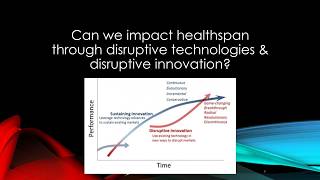
Hello Thrivers, I wanted to record a brief solo episode in follow-up to a question that I had on Facebook several weeks ago. I actually recorded an episode related to that, and then, um, I recorded it on my parents' anniversary and realized that my energy was not high when I recorded it, so I decided to re-record it. And to provide, uh, what I hope is a reasonable response to the question I was asked, which was, why am I so gadget focused? And are these gadgets driving my decisions and are they compelling me to make changes in my life, or is it just a nice to have? Well, for those of you who don't know me, I'm Daphne Bascom. I like to think of myself as a health innovator. I've been in this space for a long time. I was looking back and if you remember blogs like Overblog and oh my gosh, I can think back to when blogging first became a thing. I initially started blogging simply because I like to write, but even back then, one of the things that I enjoyed talking about was healthspan, digital devices, how we can be smarter with our data. And so I've been thinking about these things a long time now. I will admit, I love to try new things. I am definitely one of those Quantified Self people, but my why is not just because I can. I think my— if I think back to really when I started thinking about this in detail, um, I mean, at a different level, was when my mom became ill. And I remember reflecting on times that we would be sitting in the kitchen and watching television at night. Those were the days when they used to say on television, it's 10 o'clock, do you know where your children are? Um, but I would watch mom fall asleep and I would see that she had some pursed lip breathing. And, you know, at the time I don't think I thought anything of it, but when she was diagnosed with chronic obstructive pulmonary disease, then I started to put together more pieces about just incidental observations that I'd had, which I just wondered if I had more data, if I would've been able to put the pieces together sooner. And for years she did great, but as she declined, we started introducing some digital monitoring with a scale, with saturation devices and other things. And I recognized, because I wasn't living in Buffalo at the time, the value of that virtual care opportunity and how I could participate in care and decision-making without being there. So fast forward again, um, you know, after we lost mom and I moved dad closer to me, I put in place some digital monitoring for dad and, uh, partly, you know, we're both, we were, dad was a techie too. He was an engineer. And so when people say seniors don't like devices, I say, whooey. If we can articulate why and what the devices do and introduce them in a way that integrates them into life, then it doesn't become a thing. And so whether it was taking blood pressure, whether it was putting on his Fitbit so I could see how many steps he was taking on a regular basis. Because even then I was traveling a bit and wasn't able to check in in person every day, but I could always log in to look at his blood pressure data. I could see what his Fitbit was showing. I could see when he was active. You know, I even was able to preliminarily diagnose that he was having some nocturia because I started noticing step counts in in the middle of the night. My point being that this digital ecosystem that we have an ability to tap into, it isn't just for fitness. It should and can be a way to look at proactively changes in behavior, changes in biometrics. How do we start to skate where the puck is going, both from a optimizing health perspective, but also preventing decline. So it was back years ago. Um, and the reason I have this slide up is that after dad passed, I went back and I looked at his data. And what I realized is that I should have been able to see what was going on. Um, there were clear evidence that he was in decline, which whether it was me, whether it was, you know, now with artificial intelligence alerts or something indicating that there was a change in his steps, there was a change in his blood pressure. I really feel that these tools can be helpful in ways that, you know, we need to be more innovative. And that is what I had shared when I gave this talk many years ago, which I called Bill's Story. And at the time I was talking about electronic health records and talking about the evolution, the revolution. I use Bill's story, you know, that's Dad's story as a case study, but then also The call to action was how do we innovate in this space? And Bill's story is one that first reflecting on healthcare value. We've been talking about value in healthcare for a long time and whether it's increasing quality, improving safety, reducing variance, decreasing risk, what we never really talk about is health care from the perspective of keeping people healthy and not simply waiting until they're in a state of decline and then intervening. So my real passion has always been how do we empower people with the knowledge to be healthy and stay healthy? And then how do we use data to proactively identify opportunities to intervene sooner before decline occurs. So Dad's story is a complicated one. And, you know, I tried to map out both the digitalization of the information and the progression of his health changes over time. And, you know, there was key inflection points. You know, I remember at a time when Dad had, I'm assuming, was in a mild acute cardiac event when we were at a restaurant. And, you know, he was taken to a local emergency department. And fortunately, I had digital copies of his old EKGs because when he got to the emergency room and they saw this right bundle branch block, and, you know, of course they had no frame of reference, but I could pull it up and say, hey, This isn't new. Um, let's look for other reasons that this episode may have happened. So when we talk about having that binder of information, whether it's a paper binder, whether it's a digital binder, having your comprehensive health data set is important because we are a disaggregated system at this time where our information lives in nodes all over the place, and unless you curate and bring together those nodes of information, no one else is going to do it for you. And you know, that's the other thing I love to do is using some of the apps that are aggregating information with the hope that it's not just a dumb data repository, but that those aggregated data can somehow be used intelligently to give me insights. And I think it was the lack of insight into Dad's data that continues to be one of my drivers today. So, you know, there were a lot of changes that we were looking at in terms of his mobility, his activity. I had Dad measuring his blood pressure sometimes once a day, sometimes twice a day. But when I went back and looked at his blood pressure data from, you know, mid-November 2014 to when he was hospitalized, what I saw was changes over time that I should have been concerned about had I been looking at them. And these are, you know, if you look at 657 readings, you know, he participated in his healthcare, but I wasn't looking at it daily. His healthcare team wasn't looking at his daily. There wasn't any digital avatar who was checking in and saying, you're moving less, your blood pressure's going down. Um, you know, Daphne, you need to check in. His weight was going down. I had clues that should have cued me in that something was going on. And what was going on was a massive GI bleed, which I'm thinking was probably secondary to his radiation therapy. I don't know that to be the case, but in any case, I You know, I just wonder if I had seen these changes sooner and had been able to intervene sooner, would he have had more time on this earth with me? So that is the reason. And part of it is also encapsulated in this talk I gave, um, not long after Dad died. So, you know, it's been over 10 years. That these, I've been ruminating, maybe ruminating's not the right word, that I've had these ideas about, you know, I've got all these digital tools that I experiment with and I experiment with them not just for kicks and giggles, but because I truly believe that we can't solve the problem of being healthy if we use the same kind of thinking we've always used about just waiting for people to get sick and walk in the door and thinking that we can fix them. I'd rather, I'd much rather prevent disease through a combination of intelligent data use, nutrition, movement, all the things I talk about on a regular basis, sleep, stress, community, toxin awareness. Those aren't things that, they're not just buzzwords to me. They are the reality of how we can intentionally intervene in our health to stay healthy. But we can't solve the problem of becoming a healthy community if we keep doing the same darn thing we've always been doing. So this was the question I posed over 10 years ago. How can we impact healthspan through disruptive technologies and disruptive innovation? How can we impact healthspan through disruptive technologies and disruptive innovation? I don't know that we're there yet. Um, I keep striving and I keep exploring and I keep hoping to find an answer because I believe we can get there and it is going to take all of us to do it, but I know through my own health journey and, you know, just seeing how digital devices helped me after I broke my leg and started to develop a wound infection. Part of that was identified sooner by my, the devices I was wearing in the hospital. Not through someone taking my temperature or looking at my wound, my body's inflammatory response and my body's physiology was changing and that was detected in my data. And even had I been looking at it more closely, it probably would have taken me less than 48 hours after the changes started occurring for me to detect it. So what's the bottom line? To answer the question, the reason I do this is because this is my why. My mom, my dad, The hope that maybe I can help someone else identify opportunities to improve their health or identify proactively opportunities to intervene before someone declines, because we have the knowledge. We can disrupt with technology. We can disrupt with innovation. We can change healthspan in ways that I think are meaningful to all of us. We just have, we just have to prioritize it and we just have to make it something that is in the forefront of not just looking at these tools as, you know, am I gonna get a better workout today? But what are those data telling me and how can I make them actionable? And getting into my 60s now, I'm thinking about Well, I don't have anyone else watching out for me, so I sure as heck better figure this out so I can keep an eye on myself. So that's the answer. I hope that you continue to innovate with me. I'm excited about what I'm seeing in the industry in terms of what we can be doing, but let's back this up and let's prevent disease. Let's reverse disease. Let's proactively identify opportunities to intervene before people decline. I don't wanna wait until people walk into the emergency room. I wanna keep them out the emergency room. I wanna keep you in your home, aging with strength, aging with independence, aging with community. And that is my why. Thanks for listening to my little rant. I hope you're doing great and Hopefully I'll find some time to share another solo episode sometime soon. Be well.