Why We Struggle to Love Ourselves: Cultivating Self Love | Thrive on Plants Podcast Episode #17
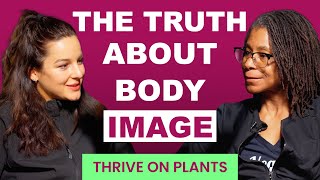
This is a podcast episode (Thrive on Plants) in which Dr. Daphne Bascom interviews coach Tiana Braden about women’s struggles with body image and practical ways to cultivate self-love. They combine personal stories (eating disorders, dance culture, family messages) with concrete exercises (thought ladder, letter to your body, affirmations/high-five habit, bead jar, social‑media curation) and a community-oriented closing call-to-action.
Chapters
Has anyone ever told you that the most powerful relationship you'll ever have is the relationship you have with yourself? What are your thoughts on your body image? Do you love who you are? These are questions that we want to explore with you today. Hi, I'm Dr. Daphne Bascom, and welcome to the Thrive on Plants podcast. I have with me coach Tiana Braden. Hi, Tiana.
Hi, Daphne.
And we are here today to talk with you about a topic that has actually come up in several conversations this weekend, and that is body image. Tatiana, what conversations have you been having? And as our team expert on a lot of these topics, I want to turn it over to you and let's have a really deep conversation about body image.
Thank you, Daphne. Yeah, I think this is something that comes up so frequently and oftentimes I think people think that they're the only ones struggling with this. And then we start talking more about it and sharing more about it, and there's just so many commonalities that all of us share. So I think that's why it's important to have these conversations. But body image is essentially how we think and perceive and feel about our bodies and ourselves. And I wouldn't say it's a destination that we just get to. It's a practice, it's a journey. And getting to the point where you do feel self love towards yourself and treating yourself with kindness and respect and honoring what your body needs, it takes time to get to that point. And I think it's so common nowadays to not feel comfortable talking about body image or struggling with it or struggling with self love. So I'm really excited for this conversation. Because of him.
Have you struggled with body image at all?
Oh, absolutely. A lot. I wish I can say that it's. It's always like, perfect. Even now, it's not. I think, like I said, it's a. It's always evolving, and it's something that takes time. But I have struggled a lot throughout my life with different eating disorders. And with eating disorders come a lot of struggles with self love and body image. I grew up as a dancer, and so I think the community, the dancing community is just everything is about your body image, and you are looking at yourself in the mirror in the dance class, hours on end every day, and, you know, tearing apart every single pose that you do and how your body looks like in certain positions. And I think it's really hard to create a perfectly healthy relationship with you. Not. It's not impossible, but I think it's really hard to get out of that not feeling a little bit scarred from some of the. The comments or some of the, you know, just comparison between other. Other kids or other dancers. So I have struggled a lot with it. I. You know, and reflecting back through. I turned 31 a couple of days ago, and just reflecting back on, you know, starting dancing at a young age to now, I. It took me a really long time to just respect my body. I never was happy with it. I was. When I was thin, I was too thin. When I was curvy, I was too curvy. When I had muscles, I had too much muscles or too little muscle. Like, it was. It was never, ever enough. And, you know, you opened up with a quote I think I read somewhere. Like, you've been treating yourself. You've been going through life hating how you look like and not loving yourself. And can you imagine how your life would be if you flip that around and if you start treating yourself with kindness on self and respect? And that. That really spoke to me a lot because, yeah, it doesn't matter what size I was. I never was happy with myself or respected myself or my body. So I have struggled a lot with it. I think a lot of women that we talk to go through a similar thing.
I would agree. And I think part of it, too, is our community may look at us as coaches and think that we have never had these issues. And, you know, part of making it real for everyone and knowing that you're not alone is that we've been through the same thing. I mean, I. I know I've shared. When I was younger, I was the heavy one in my family, so heard the bubble butt comments and the thunder thighs comments. And those are. And it's. It's funny you mention it because I. As I was getting dressed today, I caught myself looking in the mirror and thinking, ooh, are my thighs bigger or is my butt a little bit bigger? And you have to stop. And you're like, where is this coming from? Those. I don't want to say those scars, but those subliminal messages about your body and about what is a perfect or a good body, it's hard to erase it. And even though now I am so comfortable with who I am, I love having female muscle. I love the fact that my thighs are big and powerful. I love the fact that I still, you know, at 50, almost 59, have a curvy butt. If curvy butts are good, that's okay. But those messages, you know that sometimes that those words in the head don't go away. And you Just have to fight them back.
I think that's so powerful, what you mentioned, because I think that's the key, right? It's never going to disappear. Maybe sometimes we set, like, unrealistic expectations that, oh, I'm just going to get to the point where I'm always happy with my body and always confident and always just have this, like, you know, great, great self confidence. And then it doesn't work that way. But when you get to that point where you notice yourself having those thoughts, like, oh, why am I. Like, why am I bringing this up? Like, I am confident, I am happy with myself, and those thoughts can pop up still, but you just don't give them as much power. I think that's the ultimate goal is not to have a perfect relationship with your body. It's to just get to the point where you fully accept who you are and honor yourself and acknowledge that those thoughts are going to come up, but that you're not going to give them the power to ruin your day.
And Tiana, what shapes our body image? Where do these messages come from that we as women struggle so much? And I don't want to paint a broad brush and say every woman, I'm sure there's some women who maybe don't have these feelings, but 98% of the women I speak with, this is something that comes up, whether they're 29. Are there 79?
Absolutely. And we had, I think it was a couple of weeks ago, a powerful conversation with women from our community about where the messages about their. Their bodies came from. And what came up with a lot of it is how we grew up, whether it's the media that we consumed or even from our family members, usually women in our life. For me, it was my mother, and, you know, she was influenced by the media and by the needing to be thin and needing to diet and needing to be a certain shape and size. And then I'm growing up and seeing all of that. And, you know, it's. It's hard not to pick up on some of those. Some of those messages. So it's. It's really. I think it's really hard to not be influenced by it. I think maybe some people just are able to naturally get to the point where they don't give those things as much power. But like you said, I agree. I think it's a high percentage of women who struggle with it. And whether it's the comments from our parents about our bodies, about the food that we are putting on our plate, or it's watching women on TV and being a certain size and shape or just how women are treated in society when they're a certain size and shape also plays a role. I think all of that plays a huge role. Would you agree on that?
100%. And as you were talking about, I had examples of each one of them that I've had conversations with people about. So what in your experience are tips that we can offer to women in our community to cultivate self love? Because I feel, I feel that women beat themselves up more than they bring themselves up.
Absolutely. Well, I think what you mentioned there is the key because we cannot hate ourselves into change. I think it's okay to want to improve certain aspects of your life. And you know, for some people that does mean losing weight because that's going to improve their health. Oftentimes, you know, working on, sometimes I think working on body image and self love gets confused with not wanting to improve yourself in any way. And that's not true. You can love yourself and still want to improve your life and your health, but you cannot do that while you hate yourself. So it's that journey, not the destination thing. Again, you cannot wait to be a certain shape and size to start loving yourself. Because if you don't start practicing that self love through the process of working on changing yourself, it's not going to magically just appear once you get to that destination. So I think that's the first step is to get rid of that mindset of I'll be happy when or I love myself when. It's not going to just magically flip 180 and starting to implement some of the things that can help with self love right away. No matter where you at, your journey is going to be the key. One thing to to mention is that it is a practice. So like you're doing your workouts and lifting weights. It's a muscle, right? So that like self love and self confidence, it's practiced. And like yourself, you said, you know, you looked at the mirror and you had those thoughts and you know then what to do about it. And so I think that's the key is just learning how manage it. Couple of the things that I like to mention is that you might not be able to get to the point where you go from I hate my body to I love my body overnight. Like that might seem very fake at the moment and that's okay. So maybe you're not able to just start saying daily affirmations in the mirror tomorrow, I love my body or love myself. If you're right. Now at the point where you hate your body. So I think having a more gradual approach, it's called a thought ladder, where you start with the goal or start with a current thought and you work towards the goal thought. So maybe the current thought is, I hate my body, but then you can work through. I accept my body. I am open to believing that my body can change. I like my body and then I love my body. Right. So that process, it's going to be individualized how long it takes you to get from one point to the other. But if you can start slowly building it up and then start just gradually adding more and more self love, whether it's through affirmations, whether it's through writing it in a journal, I think that way it feels a little bit more real and it doesn't feel so much like fake it till you make it. You can, you can do it in a little bit more of a gradual way. Do you have any advice on that as far as implementing that process?
Oh, I agree with you. It's not a change that you make in a day. And I think the things that I like to do, so I do, I believe in affirmations. I think that what you speak to yourself, you can actually manifest. And so the first thing is, you know, knowing that you're. I always start by knowing that I'm safe and I'm loved, which includes me loving me. And then I actually like Mel Robbins high five habit. And there are days when after I'm out the shower, I'll look myself in the mirror, I'll give myself a high five, because I'm doing everything I can to be as healthy and fit in this body that I've been given as possible. And they're always going to be challenged. It's never going to be. I'm not trying to be perfect. I am trying to be the best me that I am today. And every time I fuel myself healthily, I go to the gym. I think positively those are steps in the right direction.
And that's another big part of it is focusing on what your body can do for you versus just how it looks like. So focusing more on that performance aspect. I mean, just thinking about these past couple of days, how many amazing things did we get to experience? And none of that had anything to do with the shape of our body size. Exactly, exactly. And that is so powerful to reflect on that. I think oftentimes we take that for granted. And at the end of the day, movement is a privilege. Not everyone has that privilege. And we have a Body that moves, that does amazing things for us. I think reflecting on that frequently will help you when it comes to that slow mindset, shift from I hate my body to I love my body. So gratitude towards that is huge. And whether you want to say it in the mirror or, you know, write it in your. In your journal, reflecting on it as frequently as you can and even when you have those negative thoughts, how can I flip that to? What did I. What did my body do for me today? Um, I actually love the exercise. If you're struggling with this, of course, writing a letter to your body. So what would you say to your body? Dear body, I appreciate you so much. I'm grateful for everything you have done for me so far. I know I have not always treated you with kindness and respect, but I am determined to continue treating you the best that I can right now and then continue evolving. And so putting something like that on paper really helps you with that perspective. And you can do it in the opposite way as well. Writing a letter to yourself from your body. So like, what would your body want to tell you if it could. That can be a helpful exercise to. To do?
I. I think those are both. So the thought ladder and the writing a letter to yourself are both great exercises that anyone listening could implement today. I do think the affirmations help for. And I'm not, I'm not a woo woo person, but I, I firmly believe that they have helped me through tough times in life, both with body image and many other things.
Absolutely. I also love a bead jar where you can add. So and this can. You can even implement this for really any habit that you're working on. But if you're working on implementing more of these practices like affirmation, put a bead in the jar for every day that you did your affirmations or every day that you did your gratitude journaling, whatever you are implementing and it starts to stack up and you notice like, okay, look what I have done for my self love. I just started one for something that I'm working on this year. And like January was very low. I'm like, oh, this doesn't feel like anything. But I'm hoping that when it comes to December 31st this year, I'm going to be so proud of all of the beads that I have in my jar. And visualization helps a lot. So I think having some type of representation like that can help a lot. And then I also think, you know, simple things like just wearing the clothes that feels good, you don't need to I've worked with a lot of women, and they're always like, oh, I want to fit in my high school jeans. Why throw them away? You don't need them anymore.
What is the goal of fitting into your high school jeans exactly?
No. No point at all. And I think sometimes it can be hard to let go because we have that ideal in our mind again, whether it's from the media or from expectations or from our family. Like, I should. Like, this is what a right size should be like. Me feeding into this gene would define my worth or define how good I am. And get rid of all of the clothes that doesn't fit you anymore. And in feeling, wearing what feels comfortable and what looks good on you and what makes you feel good, it. It's so powerful. And it doesn't have to be like, you don't have to go and get a whole new closet, but just getting a couple of pieces that you really enjoy. I think that's. It has the power to change your mood during the day. And if you start your day feeling good, it's going to be a little bit easier to then dismiss those thoughts that you mentioned, which is why, if.
I really want to feel good, I put on something red because it's my power color. So regardless of how I may think I feel, even just putting on a red top, a red dress, red socks, it brings me joy, and it just makes me feel better about everything because I feel stronger. And maybe it's the alter ego coming out when I put on my red anything.
I love that. Yeah. And for me, I'm like, if I can wear leggings to an event, that's my type of event. That's the comfort. Yeah, exactly. I'm not going to squeeze myself into jeans unless I absolutely need to. So wear what makes you feel good throughout the day.
I don't own jeans. Yeah, they've never. And I'll be honest, jeans have always been triggering for me because when. When I was heavier, I struggled to find jeans that could fit. So to fit my thighs, they didn't fit my waist. It was always. It was never a good thing. So I just stopped buying the jeans. Why am I trying to torture myself mentally and physically trying to fit into a piece of clothing that I'm just trying to do it because everyone says I should wear jeans. I don't need to wear jeans.
Exactly. That's the key. You don't need to do what everyone else is doing or what media is telling you or what society is telling you. Do what makes you feel Good. And do wear things that are going to make it easier for you to cultivate that self love.
And Tiana, when you're working with your clients, do you advise them at all on what's on their social media feed as it relates to body image?
I think this is really hard because it's hard to escape it. You know, in an ideal world where you can just like block everything and like only have the positive sources, I think that will be ideal. But the reality is you probably are going to experience a lot of maybe things that are maybe not so healthy for your mindset and self confidence on social media, but there is things that you can do. You know, you, you can unfollow people. And, and I was, you know, funny enough, we were talking about things that we did this morning. I did this morning like in, in bed as I was getting, you know, getting ready to attack the day. Scrolling Instagram probably shouldn't do that. No, just trying to wake up a little bit. And you know, I was just, I saw just, you know, the, these pictures of this girl that I follow and she's great and I'm like, but why am I really following her and looking at different pictures that she posted on her story? I'm like, this is not how I want to start my day. Right. And sometimes you like, you know that that's not what you're supposed to do, but life is going to like, you know, teach you the lessons over and over and over. And so yeah, I am, you know, nothing against her, but this doesn't help me start my day on the right foot. Right. So don't be afraid to unfollow people that are not serving you and fill your, whether it's Instagram feed or Facebook feed with things that are actually putting you in a good mood. So, you know, for me it's a lot of quotes, it's a lot of affirmations. Again, it's going to be unavoidable to see those pictures. But as much as you can filling your social media feed with positive things, I think it helps a lot.
I agree. And I try not to be on social media just to the extent I have to do it for what we do. But other than that, it's easy to go down a rabbit hole and it's easy self comparison. It does steal your joy because whether it's your body, whether it's what other people have, you, you can always feel less than when you're comparing yourself to others as opposed to just being comfortable where you are now. I mean, you Know, part of body image, not just physical body, but one thing that popped up on my Google. You know how Google sometimes will show images from years ago after my dad died, I lost a lot of my hair. And you know, there's almost bald Daphne. And now looking at how my hair has grown in back then I. That tied into my body image because here I am, you know, hair is so worshiped in this culture, in many cultures and I had not much of it, but the. It doesn't necessarily serve me to see anything on my feet. That doesn't help fuel me in a positive way.
That is so interesting. I have a similar experience with hair. After my eating disorder, my hair started falling out like pretty much in chunks because I was eating zero protein and very minimal calories and it took away my self confidence while I was already in a very vulnerable space dealing with all of that. And yeah, I actually like sometimes just kind of use it more as a, as a positive reminder of what I overcame. And you know, it's. Yeah, those things don't define us, but it's powerful to reflect on. And yeah, hair is a big part of it too.
Yeah, we could have a whole conversation on hair. But Tiana, one of the things. So your journey has taken years. I've probably got 30 years on you, so my journey again has taken years. How do you encourage people to be patient that this isn't. And you mentioned it before, you don't step from I hate my body to I love my body in one day. How do you give yourself grace as you make this transition and understand that it is a journey?
I love this question, Daphne. I was actually just talking to one of our amazing clients and this retreat about this is like, I think we put a lot of expectations around having a perfect road to whether it's a recovery or a perfect journey to self love. And I think sometimes setting those expectations actually makes it more challenging for us to succeed because this journey is going to be anything but perfect. It's going to be messy. Like we just mentioned the weak moments that we had this morning. Right. And we are, we've been doing this for a while. So releasing that pressure that your path has to be perfect makes this process so much easier. Knowing that you're going to have human moments, you're going to have learning moments and when they do happen, like genuinely take them as is a learning opportunity. Like, okay, what did I learn from this? What went well, what didn't go so well and what do I want to apply differently next time? So releasing the pressure that it's ever, that it's ever going to be a straight line. Kind of like when we talk about weight loss, it's, it's not going to be linear. I think that's important to mention is that you're going to have those moments where you feel, you don't feel confident. And I mean, even just thinking about how many people who are in a perfect shape and, you know, skinny and have an ideal body type based on the, the societal standards, how many of them feel unhappy and not confident or, you know, not, not proud of themselves. So it's really not about that final picture, that like perfect body image and, and releasing that helps a lot. And so I think just embracing that it's going to be a process. Right? These, we didn't just, we didn't just come here overnight. These thoughts have been with us for a while. The messages from social media or from our family or from the diet culture, there have been part of our life for a really, really long time. It's. And they're probably going to continue to be right. So it's, we are not going to just get rid of this, but we can learn how to manage it better and how to notice those thoughts that pop up and know how to redirect them. So giving yourself grace that it's going to be a process is the key.
And I don't know that people know how to do that well, because one of the things that I think I heard a lot from our clients this weekend is I am not enough. And I feel frequently that, that I am not enough is tied into, partly tied into body image. And how do we get people to separate their, even looking at their health and fitness journey success? In terms of what I see on the scale, what I see in the mirror is not the determinant of are you successful in meeting your goals, but there's so many intricately tied together in the, you know, in our minds that it's hard to separate. If I don't see. And if I see anything over 120 on the scale, I failed. You know, my body is not. My body's fighting against me. Why are you doing this? How, how do we get out of that kind of circling that spiral that we're always chasing something that. And not necessarily feeling like, you know, those don't dictate that we are enough.
Right. Well, I think embracing the fact that how we look like is actually the least interesting thing about us. Right. I am not going to think about like, oh, Daphne's thighs looked an inch wider. This morning I'm going to remember the kind conversation we had on this retreat and all of the wonderful moments we shared that wouldn't even cross my mind, right? But we put so much meaning into it and we feel like other people are going to judge those details of our body. I would never even. That would never. Would never even cross my mind, right. That thinking about, like, oh, her body is looking different today. It's funny when we say that, right. It sounds ridiculous, but that's what, that's the story that our brain tells us.
That, oh, everyone's noticing.
Yeah, everyone. Oh, my gosh. Everyone's not just. They're not noticing that I'm feeling a little bit bloated today. Right? It's. No one notices that. No one. And if they do, who cares? It doesn't define your worth. It doesn't. And again, it's a hard shift, but I think sometimes putting it into that perspective, and as funny as it sounds, I think that's helpful. It's the conversations we have, the actions that we do, the acts of service, you know, the community that we built, that that matters and in our life, not what size of jeans that we wear or, you know, how, how bloated we were that morning. Like, no one's going to remember that when we are done with this life. They're not going to be talking about, like, oh, yeah, she could have lost five pounds. They're going to remember all of the wonderful thing you created and did for them. And, you know, that's. It's a shift, but I think it helps to shift that perspective.
It's a big shift because I, and I think it's hard to get people feeling comfortable saying they love themselves. And partly because it may feel unnatural. It's easy. It's probably easier to say we love someone else than it is to say, I'm comfortable with who I am and I love myself.
Right. But that goes back to that first quote that you opened up with, is this is the most important relationship that we have and it's going to reflect on all of the other relationships in our lives. You know, if we hate ourselves and don't treat ourselves kindly, how are we going to treat other people kindly and with respect and love? So it all starts with us. And yeah, I mean, I think this. That's why that thought letter would be powerful because it's going to feel uncomfortable. If you're right now at the point where you feel like my body is not enough or I'm not enough, it's probably not going to be super easy to start saying tomorrow, oh, I love my body. I'm amazing and I'm powerful. So start slow. Like I am learning how to accept my body. Some days I feel okay about my body. So build it slowly and gradually and give yourself grace and meet yourself with compassion every day, knowing that you're gonna have those human moments where you just have a hard day and you. It's harder to cultivate that self love that's going to happen, but it's a process and you don't stop and you just add another beat to the jar and do your affirmations or journaling or, you know, whatever you're working on. Slow and gradual.
So, Tiana, with what would be three things or maybe even just one thing that you would encourage anyone who's listening today, who's struggling with their body image to put on their goals for the week or the month? I'm trying to keep it simple because there can be many things, but I know having people do one thing that's impactful. What would that be?
I would say start with that letter to your body. That will help you get a little bit more clear on how you feel towards your body. And it's, it's a good starting point. And then from there you can start implementing affirmations or, you know, gratitude, journaling, the, the beach are. Start with just getting clear on where you add with our body because I think a lot of time we're afraid to explore these topics. And if you put it on paper and really just write a letter to, to your body, I think you can start getting a little bit more clear on where you at and then from there you can proceed. And, and one more thing that I want to add. I know I said one thing, but okay, I will, I will add one more that we haven't mentioned. And it's a big part of what we do here is having supportive people and community around you. A lot of the conversations that I had these past couple of days, it's funny because people feel like, oh my gosh, I'm the only one struggling with this, or no one else has thoughts about food or no one else is questioning about how their body looks like today. And as a coach, I have those conversations daily. So for me, it's really interesting to see how it's not something that's often talked about or discussed. And I get it because it's one vulnerable. It can be shameful. It's hard to talk about these things. But having a community of people where you can openly discuss this with it is so powerful to just know that you're not alone. And I think that's the most valuable part of our community is how open and willing to share everyone is. And then we get to see, like, okay, I'm not alone. I don't have to go through this alone. I have support and other people know what I'm going through. The worst thing is feeling like you're alone and feeling like no one else.
Understands you feeling different or less than I 100% agree. Which is why this podcast in this topic is important. Because I don't think I listen to a lot of podcasts and I don't know that I hear people talking about body image that often. And it can be a huge impediment for people, for women in particular, as they're trying to navigate their journey to health. And I'm saying health, not to a specific body weight or a specific number, because you have to, you do have to love yourself in a way. You have to be being able to give yourself that high five in the mirror and say, damn, you're good. It's worth it.
It's so worth it. Yeah. And just again, reflecting on all of the amazing things your body does for you, that is so, so, so powerful.
Well, Tiana, thank you. Thanks for kicking off this conversation. I've had a lot of people, I've had a lot of conversations this weekend with women too, around these topics and continuing to explore not just our body image, but how we fuel our body, our mindset around our body. Those are conversations that will be coming and I think that they're important conversations that we need to have. And let everyone know that you are not alone.
Exactly. Thank you, Daphne. I think this is a really important topic to discuss and I'm glad that we're talking about it and helping people not feel like they're the only one going through it.
And I hope you enjoyed this conversation. Also know, number one, you are not alone. Know that there's a whole community of plant based women just like you who are here to lift you up, to celebrate with you, and also to hold you accountable for trying to meet your goals. If you'd like to become part of this thriving community, Please go to thriveunplantslife.com where you will learn how to thrive on plants and live with purpose. Thanks for joining us today and we look forward to seeing you in the next episode.
Be well. The content provided in this podcast is intended solely for informational and educational purposes. It's not designed to replace professional medical advice diagnosis or treatment. While I'm a doctor, I'm not your doctor. Always seek the guidance of your physician or other qualified healthcare provider with any questions you may have regarding your health, medical conditions or treatments. Our goal is to provide accurate and up to date information. The discussions and views shared on this podcast reflect the opinions of the host and guest and they may not align with your unique health needs. Decisions related to your health and wellness should be made in consultation with your healthcare team because they understand your specific circumstances. Thanks for joining us on this journey to Thrive on Plants and I hope you enjoy the future episodes.
More from Daphne

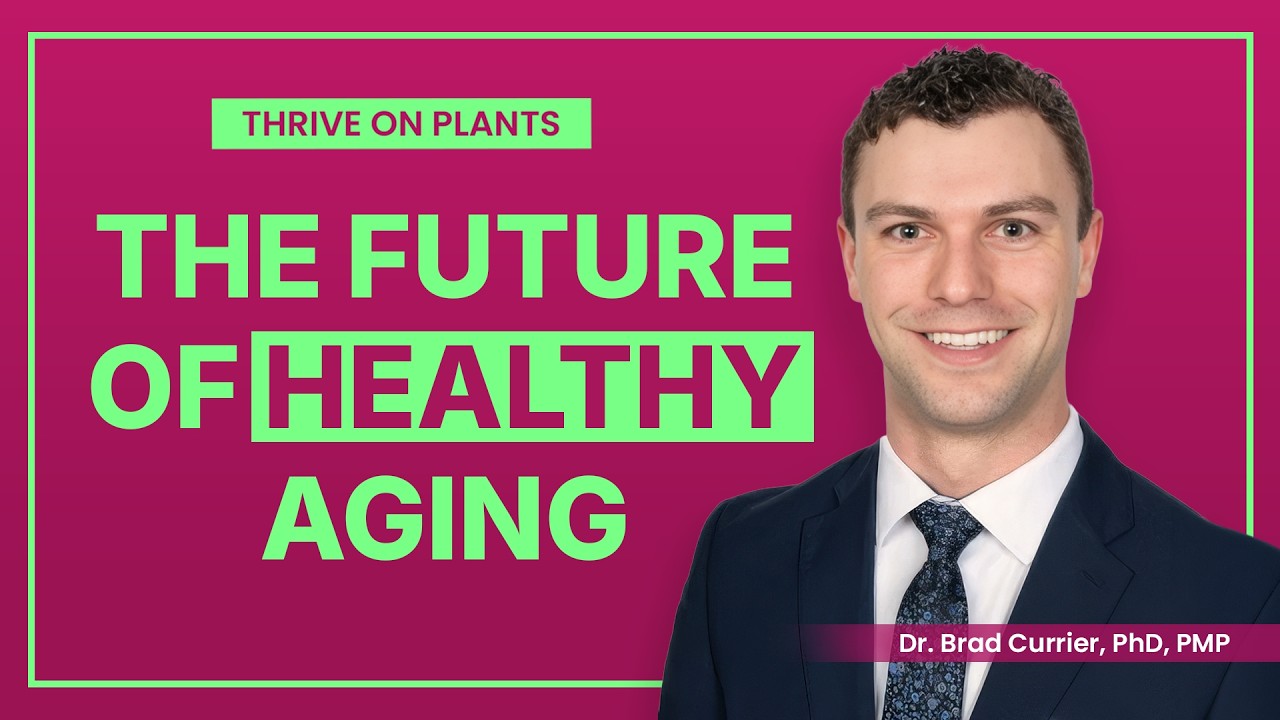

The Adaptive Fuel: How Exogenous Ketones Support Healthspan | Thrive on Plants #60

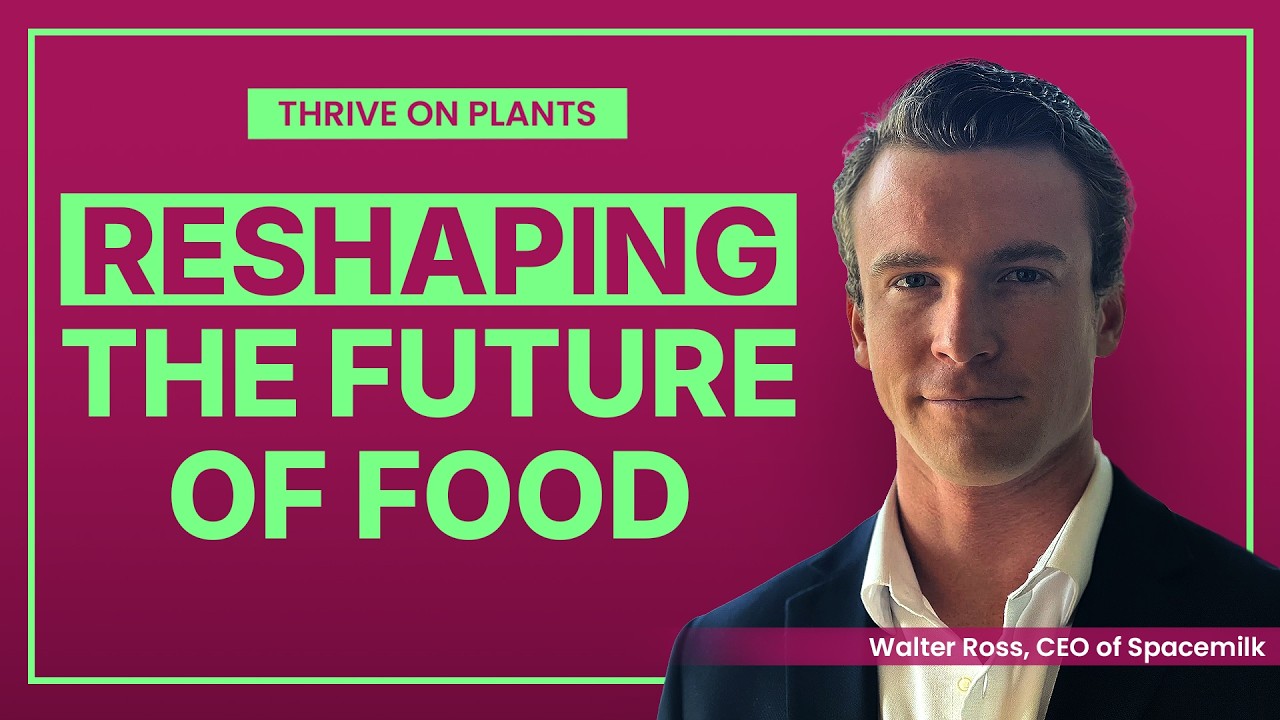
Could Yeast Replace Whey? The Science and the Story Behind Spacemilk | Thrive on Plants #58

Why "Eat Less, Move More" Stops Working After 40 (And What Actually Does) | Thrive on Plants #54
Triple Negative Breast Cancer: How She Caught It Early and Came Back Stronger | Thrive on Plants #53