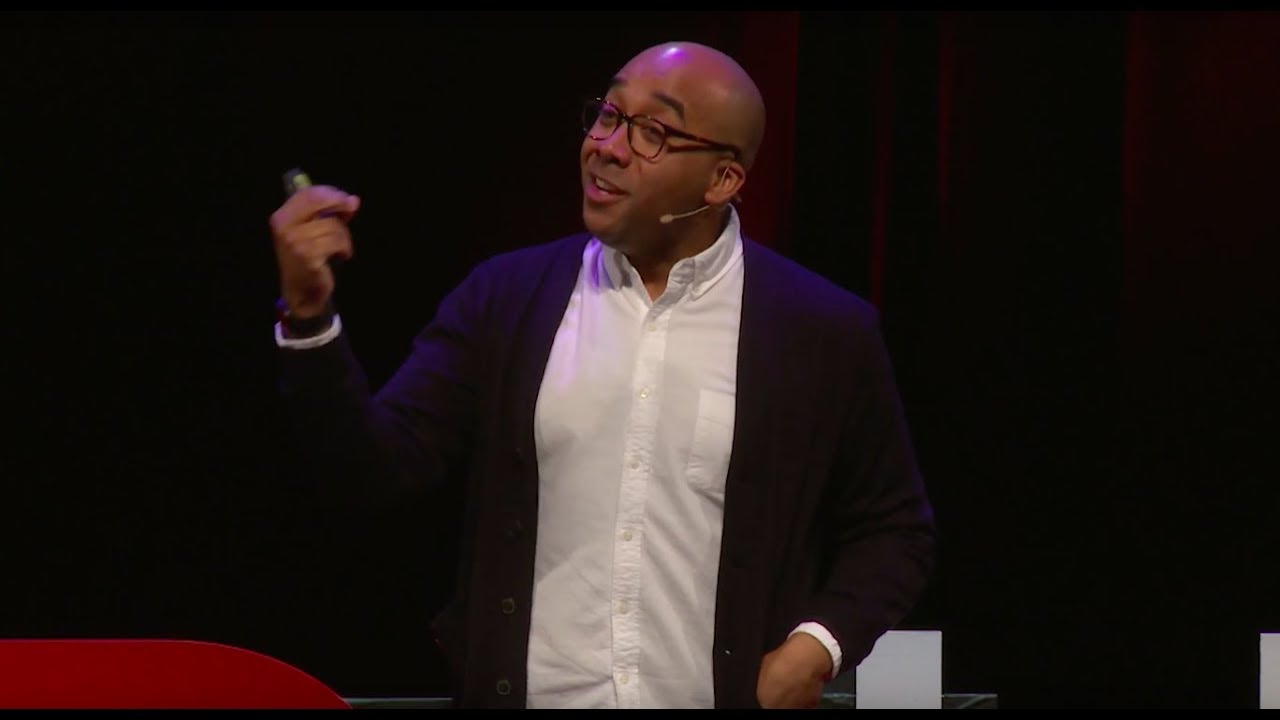
Ep 363: For The Culture ft. Marcus Collins
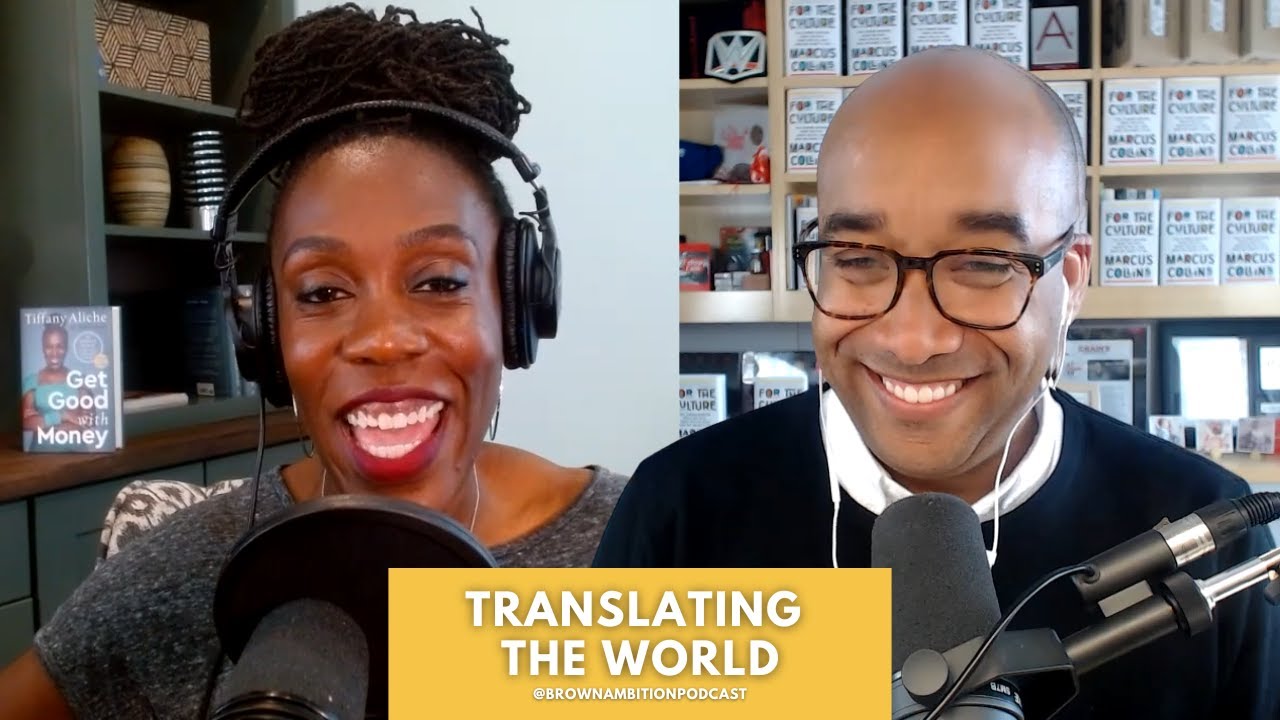
Marcus Collins, a cultural strategist, explains how brands and people use consumption to signal status and identity. He breaks down why Nike gets culture right while fast-fashion chains don't, and introduces a media-diet inventory exercise to help you notice the stories you're actually consuming.
Chapters
Hey, hey, hey, we're back. We're Black. We're brown, but extra brown because Mandy's here. You know, Mandy's only half brown. Anyway, ambition, ambition, ambition, ambition, ambition. No shade to you, Mandy, but you know. Welcome back to Brown Ambition. I am cutting up, which means that Mandra is not here. And so that means Auntie Tiffany is in the stew, but not by herself. I'm in the stew with a guest today. Let me introduce this. I was looking at this guest, like, little mini bio. I was like, well, damn, come into the room. So our new guest today has a book called For the Culture. It's been endorsed by the CEO of McDonald's. Boom. Reddit, boom. Delta, boom. Home Depot, boom. And many more major companies. But bigger than that, y'all, he's run social media strategy for the B of Yon of the Say, OK, for many years. Queen Bey, child. All the rest of that stuff, I'm like, yeah, yeah, yeah, CEOs of all these billion-dollar corporations. We don't care about that. We care about Beyoncé around these parts. It's like, we care about it all. But how amazing is that? His name is Marcus Collins. And he's here to talk to us today about culture and what do we— Why do we do the way we— what we do? Why do we navigate the way we navigate? How does that affect our finances? And about his book. And so, I'm super excited to welcome Marcus into the studio. Hey, Marcus.
What's happening? I'm so glad to be here.
Thank you for coming. So, Marcus, first of all, let's get down to the nitty-gritty. What was it like working for Beyoncé?
It was awesome. It was awesome. I mean, she— you know, I worked at her— I worked with her at a time before she was Queen Bey.
Okay.
She was still, you know, Beyoncé, though iconic. And I feel like in those moments, you get to see a rare thing where someone elevates and transcends into something otherworldly. And to be able to work with her, and she's just so lovely and so amazing beyond her talent. She's just a really good human being. I felt very fortunate to have a front row ticket to seeing her Transcend to Queendom.
Wow, that's awesome, honestly, because Mandy and I, we have tickets to go see her, you know, next month.
Okay.
Look at Mandy. She's just going to drop the baby and just come on to the concert. But whatever. She knew what it was when she got them tickets.
Priorities. Priorities.
So, so what would you say that you do if you had to? Like, I call myself a financial educator. Like, what would you call yourself?
I think of myself as a cultural translator. And I do so in an effort to help people realize the best version of themselves.
Okay.
Whether I'm in the classroom as a professor, which I am at the Ross School of Business at University of Michigan, or an advertiser, which I am at the head of strategy at Wieden+Kennedy in New York, or whether I'm on stages. I mean, ultimately, I'm leveraging the power of culture, translating it from one entity to another and back again to help marketers be better versions of themselves, help students be better versions of themselves, and help individuals be better versions of themselves.
Oh, that's awesome. So, I guess what does that— what does that— so, I know for Beyoncé, it looked like, you know, you did her social media strategy. But what does that look like so much so that the CEO of McDonald's and Reddit and Delta, like, what does that look like when you're working with those type of organizations?
So, as a strategist working with these companies, I'm helping them see the world through cultural lenses, right? Realizing that the world around us is not objective. It's subjective. That is, we see the world through the meaning frames that we have, the beliefs that we hold, the artifacts that are meaningful, the ideologies, stories we tell ourselves help us translate the world, which is why for some, a cow is leather, for others, it's a deity, and for some, it's dinner. But which one is it? It's all of them based on their cultural subscription. So, for brands, I help them see the world through other people's lenses, help them understand how people make meaning of the world around them and how their brands are translated through these lenses. So that when our— when these brands are communicating to consumers, they get a better understanding of how people see the world and how they're translating the world.
I understand. So, so for example, I remember the first time that Ford, it was maybe like 6, 7 years ago, they reached out to me to like partner with me because they were like, we're going to be at Essence Fest. And I was like, Ford? Essence Fest? Because, you know, Ford is— that's the white boy car, you know, like. And so my little spidey sense was like, oh, y'all done sold to all the white boys already. Ain't nobody left to buy this truck. So, you need to mosey on over to see us sisters over here.
What's so interesting is that even the way you translate it, that Ford is the white boy truck, but Ford, it inherently isn't that. We just give it that meaning because of how we see the brand.
Right.
And it's, and it's helping brands navigate the meaning that people associate to them so that people like you who go to Essence that are like, oh, this brand is for me. Right. So, when I pull up in my Ford, people aren't like, Tiffany, what are you doing driving a Ford? Instead, they're like, oh yeah, of course you would drive a Ford because of who you are. That congruence between what the brand wants to mean and actually mean in the minds of people is extremely powerful, especially when we want people to buy. The same thing goes when we want people to vote. The same thing goes when we want people to subscribe. The same thing goes when we want people to join our church. I mean, all of these things, which I argue in the book, they're all driven to get people to adopt behavior. Ultimately, that's what we're after, behavioral adoption. And the truth is there's no force No external force more influential to human behavior than culture. And the more likely we are to tap into it, the more likely we are to get people to move.
So, is that why you wrote For the Culture? Because you wanted to kind of like share that like nothing is happening coincidentally, that people are shifting and moving and adopting new ways and new behaviors based upon these external forces and internal like desires? Like, can we tap into those things intentionally? Like, what's the intention of the book? What do you hope people get?
That's spot on. I mean, essentially, as a marketer, that's the field that I work in, we often use words like, let's get our idea out into culture and let's make sure our idea is informed by culture or what's going on in culture, culture, culture, culture, culture, culture. And even people say things like, I'm doing it for my culture or I'm doing it for the culture, right? Which is why I called the book what I called it. But if you ask 5 people to define culture, you get 35 different answers. Mm-hmm. And that's our problem.
Mm-hmm.
Right? Because we can't define a thing concretely, how do we ever leverage, fully leverage the sway, the power that culture has? So, I wrote the book to unpack this for practitioners so they get a better understanding of what culture is, have a better Rosetta Stone to talk about it, and therefore, be able to operationalize it. But then, as I was writing the book, I started to identify that there are some personal reasons at play here as well. Right? So, I'm born and raised in Detroit. Detroit, the D! That's right. What up, though? And I had a penchant for math and science as a kid, right? And in those days, if you did well in math and science and you were Black, oh, you're going to be an engineer, full stop. So, that's what I went into studying because I thought that that's what I was supposed to do. But once I got into school, I realized I don't think I want to do this. My parents were like, well, just wait till you finish your— wait till you get through your Um, get through your core courses. After your first year, you'll love it. And I go, okay. My mom's an academic. And I go, all right, great. You know what, mom, dad, I trust you. So I go into my second year and I go, oh, I definitely don't want to do this. Right? I thought it was interesting, but I wasn't, I wasn't excited about it. I didn't want to do it for the rest of my life. So I took some music theory courses to offset my terrible GPA. And I fell in love with major 7ths. I was like, oh, I want to be a songwriter. And I went home that summer and said, mom and dad, I know what I want to do for the rest of my life. I want to be a songwriter. They're like, oh no, you don't. That is not happening, fam. No, no, you don't want to do that. So I finished my degree in engineering begrudgingly. And as soon as I graduated, I went right into the music industry.
Okay. And
what I realized some 20-odd years later is that I didn't have the language to describe what I was experiencing. What I was experiencing were the cultural forces that dictate, mandate in some ways, what's acceptable behavior for people like us.
And
for people like me, and for many of us who look like us, Tiffany, is that if you want to be successful, you pursue certain career trajectories. If you do well in math and science, then you're either going to be an engineer or a doctor.
Yes.
Like, that's just what you do. And anything outside of that
Mm-hmm.
Anything outside of that is frowned upon. And this is really what culture is. Culture is this system of conventions and expectations. That's acceptable behavior, acceptable trajectories for people like us. And as a result, we take on those behaviors. We do those things. And because I didn't have the language to describe what was happening to me, I didn't have a lot of agency to navigate through it. All I had was that my parents is tripping, right? But what was really happening is that my parents themselves were adhering to the cultural forces of what good parents are supposed to do.
Yeah.
You're supposed to push your children towards things that are going to be potentially the most beneficial for them, even if it's not what they want, right? And we're all being influenced by these forces that tells us what it means to be normal. And I thought that This book would help not only practitioners be better at their jobs of getting people to adopt behavior,
but
it'll also help us individuals, citizens navigating this cultural world that we live in, navigate these forces that tells us what people like us ought to do.
Well, what would you say as being— I'm assuming you're a Black man. I mean, you never know. I'm a Black man, yes. I mean, you never know.
I self-identify, yes, as a Black man. And I do have melanin in my skin.
I mean, right? So what we like being in this industry and like we're just shifting gears toward like what, what you've seen culturally, what has become the norm for what you'd say for Black Americans and the way we navigate our finances? Like what has been the norm and how can we start to— and has that norm served us well? You know, so what's been the norm? Has that norm served us well? And if you wanted to shift that norm for yourself and say, I actually don't want to adhere to that. What are some things that people can do?
Yeah. So you're right. The norm has not served us well. One gentleman by the name of Kanye West, the old Kanye, by the way, don't judge me.
Not the new Kanye.
The old Kanye. You know, he said it in a very, very profound way. And he said, and I spent $400 on this just to be like, you ain't up on this. And the idea is that we consume as a way of signaling where we are in the social hierarchy. Now, the interesting part about that is that that wasn't always the case, not for humanity. So I'm a professor, so I can't help myself. No, do it. If we go back in time, for centuries, the global GDP was zero, practically nonexistent, which means that people were not entering an exchange. We weren't buying and consuming things. If we were, it was very, very minimal, and we were doing it for utilitarian purposes only, right? Functionality. And that was, of course, until the 19th— until the 16th century, where Queen Elizabeth in Elizabethan England says, yo, I can use consumption as a means of aggrandizement, as a means of power. And here's how it worked. In her mind was that royalty had everything. They had all the wealth. And the people closest to royalty, that was nobility, that they would have a little bit less. Mm-hmm. And the people way beneath them, the peasants, had nothing. And the idea is that it will keep royalty in power because they had the most. It will force nobility to keep consuming so that they can stay close to royalty. And it will keep the people at the bottom, the peasants, looking up, aspiring to be more by consuming more.
Mm-hmm.
Right? And then Queen Elizabeth could ration out, uh, uh, commerce or ration out capital to people, and they would love her for it because it would help them rise up the social hierarchy. Mm-hmm. You fast forward a couple centuries later, uh, you start seeing a little bit of uptick in economics in the, in Northern Europe, and they started— businesses start to make more money, so they paid their employees more money, and their employees started to spend more money. So businesses made more money, employees started making more money, so they spent more money. You start getting this cycle of consumption. It massively explodes during the Industrial Revolution. Mm-hmm. goes today. Because the point is that people weren't buying way back in the 16th century, they weren't spending or consuming for functional needs. They were consuming for psychological and sociological needs as a way of signaling who they are and where they sit in the social hierarchy. The same thing goes today, that we buy, we consume as a way of signaling who we are in the world and where we sit in the social hierarchy. And the further you were down the social totem pole, the more, uh, and the, the, the more motivated you were to consume as a way to signaling that you weren't at the bottom. And you take marginalized communities like people of color, people like us, we then say that I have to consume as a way to signal who I am. And I spend $400 on this just to be like, you ain't up on this.
You ain't up on this.
Right. So what does that mean for us? That if we know this, if we are now aware that these are the forces that are motivating us to consume, that they're not within us, they're without us, they're pushing on us, then we can subvert them by having much more discretion with what we consume or how much we consume of it. Not to keep up with the Joneses, as it were, but to signal our understanding of these forces and also create new communities around people who decide not to consume just for the sake of consumption.
Yeah. And it's hard. I get it. Because, you know, you grow up not having, and then you tell yourself, one day when I do have, I'm going to— I want to wear it externally. I was watching this, um, not that I usually get advice from Young Joc. I was like, I was shocked. I was like, oh, you know, well, even a clock is right twice a day. So, Young Joc—
I mean, if we listen to Kanye, we're taking Kanye advice, we could take Young Joc advice today, I suppose.
So Young Joc, surprisingly, it was like this YouTube clip. He said something that I was like, this is really profound. And I'm glad he understood. He said that this community that he's in of hip-hop artists and rappers and things like that, he was like, it took him a while to realize that the things that he was wearing, that the— like the Lamborghini, the whatever, the things he's driving, that it really didn't indicate that he had wealth, that he has money. Mm-hmm. He said it indicated that he had money because he's now exchanged it for this thing. He was like, my Lambo, my dress, my— My outfit, it's a receipt
to
show I once had hundreds of thousands, if not millions of dollars, and now I have stuff.
That's right.
And I just thought that was so— like, those things are really a receipt of wealth once— not that you want to keep money and not do anything with it, but I just thought that that was like— I was really shocked at his insight. You know, that like—
He's right. He's spot on. I mean, I would argue, and I do in the book, that brands are They're— the most powerful brands are receipts of identity. They're ways of signaling to the world who we are, right? They're badges to say, I am this because of the meaning associated to these brands and the economic associations that we have in our minds with those brands. So, if you— if I'm driving a Lambo, you're like, oh, that dude's doing it. That is, I am higher up the social hierarchy, thanks to Queen Elizabeth. And the irony of this, I suppose, is that the people who have the most, who are most well-off, they actually live more innocuous. Yeah.
Yes.
Lives, i.e., you don't see the labels. You don't see what they have, right? Like, I saw somewhere, it's like, they don't wear a bag, a Louis Vuitton bag, when they go into an event in New York City because they leave their bag in their driver's car.
Mm. Right?
So it's almost the ability to not, explicitly show wealth is a sign of wealth. But when you don't, when you don't explicitly, when you don't have wealth, at least where you're trying to signal it, you use consumption as a way to do that very thing.
Yeah, it's really interesting because there's just been this— I'm sure you've seen on social media, there's this huge debate right now between quiet luxury. You know, like, that's what everyone's talking about. Like, oh, like, quiet luxury is, to your point, like, they're like, oh, look at Bill Gates, you know, like, nondescript khakis and whatever sweater versus like Gucci down to the socks. You know?
That's right. That's right.
And so like there's been this push, but there's a lot of classism, you know, like, like looped into like quiet luxury versus, I guess what, what, you know, almost like being ghetto fabulous or whatever. Like, what does that mean? So what's your take? I mean, have you heard of this quiet luxury movement and what's your take on what that, like how that reflects on personal identity and brand and culture?
Yeah. I mean, there's an episode of Succession where a woman in the show, in the scene, she has like a very flashy bag. And one of the characters, one of the main characters in the show goes, looking at her like, what is she doing? Like, come on. Like, if you had wealth, you wouldn't need that bag. Mm-hmm. And that's kind of what— this is the cycle of consumption that's happening. This is the aggrandizement. that Queen Elizabeth was after, that we consume as a way of signaling where we are in a social hierarchy. And we have these social and psychological wants to feel like we're part of something, to feel like we're accepted, right? And therefore, consumption helps us do that very thing. You know, I go back to Kanye because that song is just so powerful, All Falls Down. He said, you make us hate ourselves and love your wealth. That's why shorty's asking where the ball is at.
Yeah.
I mean, the idea there is that Consumption becomes a way by which we ingratiate ourselves into society and try to find means to raise our social status so that we get more access to things. But at the same time, when you have it, you don't need to show it.
Mm.
So, you find, you know, Warren Buffett drives like his same Oldsmobile from forever long ago because he's like, why would you need multiple cars? Plus, as soon as you buy a car, it decreases in in value, right? Most cars. So you drive it off the lot, it costs less. It depreciates. It depreciates as soon as you drive it off the lot, right? So all of these things require a certain savviness that comes with privilege. And when you don't come from a privileged place, you just say, I just want access to it, right? So you can't fault people. You can't— I mean, I'm glad that Young Joc got to that realization, but you can't fault people who are trying to navigate it. Because I want to be on 106& Park pushing the bins. I mean, you go right back to All Falls Down, right? Such a profound statement that song is. And this is the power, by the way, of cultural production, right? The way that we express who we are and where our identity is subscribed. I mean, you stick on the Kanye piece.
Mm-hmm.
When my wife and I had our eldest daughter, we were driving a small little hatchback car living in New York City. So we had like a little bitty car and my wife was like, you know, I think we need to get to, I think we probably need to get an SUV. And I agreed. And we had a list of SUVs that we were considering, but there was one SUV that we would not buy. Not even, it wasn't even on the consideration set, even though empirically it performed well. And that was a Toyota RAV4.
Why?
Because Kanye told us, what do you think I rap for? To push a effing RAV4?
I mean, that's
the power of cultural production. Like, It signals to us what we ought to have. And look at the dominant cultural production of the predominant Black culture.
Yeah.
It's hip-hop music.
Yeah.
And hip-hop tells us what to wear.
What's cool and what's dope.
Exactly. And consumption becomes a way of signaling that. Now, I don't want to be sort of the wet blanket on consumption, because consumption also signals or helps us make our culture material, right? If you're a Muslim, right, you would wear a hijab as a way of signaling— not only— it's an outward expression of an inward belief, signaling who you are and what you believe. Like, that's super powerful. And hijabs can either be created by hand, or you can consume it by someone who made it by hand. Consumption in that manner or in that way makes one's culture material. And that's super powerful, right? Like, I grew up watching Spike Lee movies as a kid. I consumed those Spike Lee movies, but those Spike Lee movies helped give me an understanding of race relations in this country, right? So, consumption isn't all bad. But as they say, all, you know, anything in excess can be problematic.
So, in your book, do you offer up solutions of what people could do? Like, one, I know there's probably solutions for brands of how they can connect to culture more effectively. But do you offer up solutions for individuals about what they can do to help self-define culture for themselves?
Absolutely. I mean, the idea in the book is let's get some language that we all can describe this thing that we're experiencing, whether we know it or not. And if we have some language, then we probably understand the mechanisms that are a part of it. And with that, with the ability to pinpoint these mechanisms, we are now empowered to do something about it. to leverage them in powerful ways, whether you're a practitioner or an individual navigating this cultural landscape that we live in. And particularly thinking about the stories that we are told, the stories that we tell ourselves, and then how we use those stories to make sense of the world around us. I do this exercise with my students here at the University of Michigan. I have them do a media diet Inventory.
Mm-hmm.
Where I tell them to think about all the shows, all the movies you've watched in the last 3 months. Like, write them down, um, and then identify who is the main character. What's their age, their race, their gender, their, their origins? Who are they, right? Um, and then look at the, the antagonist, the villain, their age, their race, Their gender, their origins, their ethnicities, right? And then what are the stories that are told about each one of them? And then do the same for the stories that you tell, what you post, what you don't post, what you post about, and who is the main character in those posts, right? And as you put those 2 things together, you start to ask yourself, oh man, the stories that I tell about myself, about who I am and how I fit in this world, is oftentimes informed by and shaped by The stories that I ingest, the media diet that I consume. And if those things be the case, if those things seem to be incongruent, which they mostly are, at least with my students, then you tell yourself, okay, I need to start taking in different media, listen to different stories, watch different things, listen to different things so that my worldview might be shaped differently because of what I ingest.
So, it's like you are what you eat, literally.
That's right. Literally, literally, 1,000%. And as a result, that gives us agency. It gives us lots of agency to say, okay, I'm not going to take that in. I'm not going to take this in. Right? You know, I'm going to protect my space and protect my peace. And by doing so, that means getting rid of things that could potentially be harmful to me.
It's funny because I— so I am Nigerian. Both of my parents were born and raised in Nigeria. I was born in Newark, New Jersey. Brick City, stand up.
There you go. Holla.
But I remember the first time I went to Nigeria, I think I was 21 right after college. And I was so shocked at what my cousins in Nigeria thought what America was like. It was a caricature. And I remember thinking like, this can't be what you guys think. And then you see what— that my mom was like, well, of course they think this because how else would they know? They're watching and consuming the media that's pushed out about Black Americans.
That's right.
And I was like, it just never— because, you know, I'm living here. So I'm like, I can see what the reality is, that there is a, you know, we're not a monolith. There's so many different types of people. But if all you ever watch are like the robber, the gangster, the, you know, it's Black. And the thing I just couldn't believe because I'm like, but because in my mind I'm like, we all look alike. And it's like, yeah, but in America it seems like everybody is so terrible. And I just thought, wow, that's what— that was the first time that it hit me.
Yeah.
It's not just— it's just a movie. It's not because this is what we're showing the world what to believe about us. And so, yeah, it was just like really like mind-blowing.
The literature refers to what you just experienced as public pedagogy. It's how we learn about other people without experiencing them for ourselves.
And
we learn about them through the media that we consume. And as a result, we create these frames around who those people are. That's how you get stereotypes. Like you get these frames around who these people are. For instance, I went to to, uh, Austria for the first time last year.
Okay.
And when I got there, I was really uncomfortable because the whole time I was thinking about, yo, Nazis were up and down this place. You know what I mean? Like, yeah, yeah, they were— they resisted for sure, but like Nazis were up and down this place. I just felt so uncomfortable. And in that split second, I realized, oh man, if I were coming to United States, I would be super uncomfortable too. It's like, y'all enslaved people. Y'all were hanging people from these trees not that long ago, by the way.
It's
like, this is what y'all was doing. It was a part of your normal cultural practice. It was acceptable, right? And, and as a result, I go, man, I'm over here, you know, feeling uncomfortable in a certain way about Austrians. When they come to the States, they probably feel a certain way about us.
Mm-hmm.
And that's the thing is that, you know, we are all a villain in someone's story, depending on the stories that are told about us. And the idea is that if we want the world to take different shape, then we have to change the way that we see the world. And oftentimes that requires us hearing new stories and telling ourselves new stories. Because as a result, the world changes accordingly.
My therapist calls that corrective experiences.
Yeah, exactly.
I like that.
You know?
She was just like, you know, you believe, you know, the experience has told you when you were 10 years old, when I go here, this happens. When I go here, this happens. And it's like, yeah, that actually wasn't true. They weren't really related. You know, maybe like every time you wake up, you know, you sneeze and you think, oh, I must be allergic to waking up. But that's not really true until you get older and you are not sneezing when you wake up. Maybe you had a hamster when you were a kid. Yeah. And it was— you were sneezing because there actually was an animal in the room. But a corrective experience will show you like, I wake up and I didn't sneeze. I wake up and I didn't sneeze. So then the new experiences teach you that This is the new— this is the new norm. This is the new belief. And so, so I just wanted to pivot and talk about like, because I have my own business, I have several businesses, and I'm curious as to, you know, with your lens, what brands are getting it right when it comes to like connecting to culture across the board? Like, what brands do you see that you're like, this is what— they're getting it right? And I mean, I don't know how comfortable you feel. What brands are not getting it right and why? You
know, the brands that get it right are the brands who have a point of view about the world.
Okay.
Right? If we think about— I mean, you, you just nailed it when you talked about, um, um, the idea of, of perspective, right? Like, Anais Nin says it this way, that things aren't the way they are, they are the way that we are, right? That is, the world manifests based on how you see the world. So if you change your worldview, the world will change, right? And it's no surprise that culture is Anchored in our identity and the foundation of culture is our beliefs, our ideologies, right? And because of our beliefs and ideologies, we show up in the world a certain way. We dress a certain way, we act a certain way, we talk a certain way, and we express our cultural subscription through the cultural production that we take in, which I talk in great, great length in the book.
Mm-hmm.
So, which brands fare the best? The brands that fare the best are the ones that are congruent with the beliefs that people have.
Okay.
That is, I wear this brand, I use this brand, not only because of what it is functionally, but what it says about who I am, that it becomes a shortcut to my identity, right? So, the most powerful brands are the brands with the point of view about the world.
Okay.
Right? They become those identity marks we talked about earlier, this identity mark that signal luxury. And those things are fluid based on what is considered luxurious, right? Like 5 years ago, Supreme was the thing. Now, not so much. Supreme isn't— isn't considered luxury streetwear as much as it once was.
You
have the longstanding ones like, you know, Louis Vuitton and Gucci that stick around quite longer. But the ones that are most powerful are the ones that become extensions of my identity.
Okay.
Take Nike, for instance. Nike believes that every human body is an athlete. That's what it believes at its core, that we're all athletes, big, small, short, tall, we're all athletes. And as a brand, Nike helps people realize their best athletic self. So, when I'm tying up my Nikes before my run, even though I am not a good athlete, I was a swimmer, not a runner, right? I still, I kind of feel like I could do this thing, right? Because of the thoughts and the feelings that are evoked when I engage with the brand Nike, right? Even we see this with human beings. Beyoncé.
Mm-hmm.
Beyoncé is an artist. She's a singer, a dancer, a performer, an actress, entrepreneur, a mogul. She has all these different hyphens. That's what she does. What does Beyoncé believe in? Women's empowerment.
Yes.
And she's been about that since day one. Beyoncé has transcended her category as being an artist, as being an entertainer. And she operates at the ideological level of being about women's empowerment, which opens her up to do whatever she wants to do. She's not bound by the confines of being a musical artist. She is liberated. by her point of view of the world. And the people who support Beyoncé isn't just because her music is good, and it is, right? It's because they see the world the way she does.
Yes. Oh, I love that.
And being a Beyoncé fan becomes a way of signaling who I am.
It's true. The first concert I went to, I can't remember if it was like her Lemonade tour or whatever. I remember being like, this feels like a women empowerment conference.
That's
right. Literally, I remember thinking like, is it just me? I felt— I left feeling like I went to a conference and I could do anything and I can accomplish anything. And I'm like, this woman is just singing and dancing. But I didn't— I literally felt like, yo, I'm going to take over the world.
That's right.
So, no, I love that. And I know those are great examples of like brands that get it right.
And she's been doing that since like No No No, Pay My Bills, Survivor, Irreplaceable to the Left, Who Runs the World, Girls. All the single ladies, all the way to You Ain't Gonna Break My Soul. I mean, she has been on that since day one. You talk about brand authenticity and consistency. My goodness, she's been there. So, it means for brands then, for brands who want to be the best version of themselves, it means identifying what do I believe? How do I see the world? And then, how do I manifest that in the way that I show up in the world, whether it's my products or— Yeah. No,
I love that. So, the brands that don't get it right, these are the ones who've kind of lost their way and don't— and forgotten what they— why they started and what they believed in. You know, because I wonder, like, why do brands go from, like, the highest of high and then they're like—
Yeah.
Yeah.
Well, so, these are the brands that focus on value propositions. They focus on my razor sharper, my battery lasts longer, my car goes faster. And you could be at the top so long as you got the fastest, You know, the fastest car, your battery lasts the longest. But as soon as there's a longer lasting battery, boom, you shot dead.
Right?
That's how we go from being massive highs to dramatic lows.
I think about like even now, now with like this fast fashion, before Shein, there was— oh, what was that company name? I can't even remember. But they were huge. It was Fashion Nova. No, Fashion Nova. Remember? They were huge. But it was because we sell the cheapest clothes.
That's right.
You know, for like decent value clothes for really inexpensive, you know, like for the lowest price. And then here comes Shein, we're even lower. And even now, I just was reading this article that Shein, there's this new one called Temu that is overtaking Shein. And it's the fastest downloading app right now in the Apple Store. And so, to your point, there's no point of view there. They're just, we sell the cheapest clothes. And someone's like, well, then we can sell even cheaper.
That's right. I talk about this in the book. I call it the razor blade conundrum. It's that I sell a shaver that has 2 blades. And someone goes, oh, well, I sell a shaver that has 3 blades. So, the shave is closer. Someone goes, oh, I want a closer shave. So, I added 3 blades. Then I go, well, wait a minute. Well, mine has 4 blades and it vibrates. And someone says, well, mine has 5 blades and it vibrates and excretes aloe vera lotion. And before long, there are 85 blades on the shaver. There's nothing left that we can add to continue innovation. Yeah. So what do we have to do? Drop the price. Now we're in commodity land. Like, this is what happens. I mean, I remember growing up, uh, there was no pizza chain better than, uh, Pizza Hut. Growing up, Pizza Hut was like the pinnacle. We get Pizza Hut? Okay, Mom. Okay, Dad. Like, really excited about that, right? Little Caesars says, oh, all pizza is $5.
I remember that time.
Boom. You cut the entire— you cut the legs off of the entire industry and prices drop. Now it's a complete commodity, right? Like, it's just like whatever is the cheapest within, you know, a certain consideration set of, of, you know, similar taste or similar perceived value. But otherwise, man, like, we're just competing on how many pepperoni you could put on the pizza, where, you know, how much cheese you can have on it and what the price is like. That is Bad News Bears.
Yes.
These brands don't stand for anything. And we know this intuitively because we go, the brand stands for something. But what we really mean is the brand stands in for something, something meaningful, some ideology beyond what they do.
I love this. This is awesome. So, Marcus, where can people get your book, For the Culture? Where is it available? Where can they get it? What site? What places?
It's available where all books are sold. So, online, you can go to the Amazons of the world, the Barnes& Nobles of the world, or you go to my website, marktothec.com, and it could direct you to stores there as well.
Okay. And no, I just want to thank you. Is there anything that we didn't cover? We'll put your— well, for you guys listening, we'll put the link to his book in the show notes so you guys can go ahead and grab yourself a copy. I suggest it, especially if you— so many of our listeners are interested in business or starting a business, but also too, if you're looking to shift the way you think about money and how you and your family navigate so you can see like, oh, I actually don't have to behave in this way as it relates to my personal finances or my business. So, anything I didn't say? Anything you want to share with the people as a last parting gift for us?
I mean, you hit on so many— so much richness. And then, the last would be this, is that the world is not objective. It's subjective, right? Things aren't the way they are. They are the way that we are. And if we want to change our world and we want to change the world around us, Then we've got to see the world differently. And it starts with changing our perspective.
I love that because it lets you know that, like, you get to decide. So, yay. Thanks. So we had awesome guests. See, Mandy, I be doing good when you're not here because Mandy's a journalist, you know? So she's usually like, you know, the lead or whatever. But, you know, without Mandy, I'm still here. So I just want to say thank you so much for coming. All the links are going to be in the show notes, everybody. And just like, I hope you stay Stay connected, Marcus. We want to hear more about your book.
My absolute pleasure. Thank you for having me.
You're welcome. Hey, hey, hey, BA fam, we're on YouTube! Woohoo! Thank you so much for watching. Please like this video and subscribe to the channel.
And while you're at it, why don't you go over to that little bell icon and just tap that for us? Show the BA fam how much you love us, and that way you'll also get notifications when new videos drop. Also, share the channel with a friend. We're always like, tell a friend to tell a friend to tell a friend. And thank y'all so much again for all the support.
More from Dr.

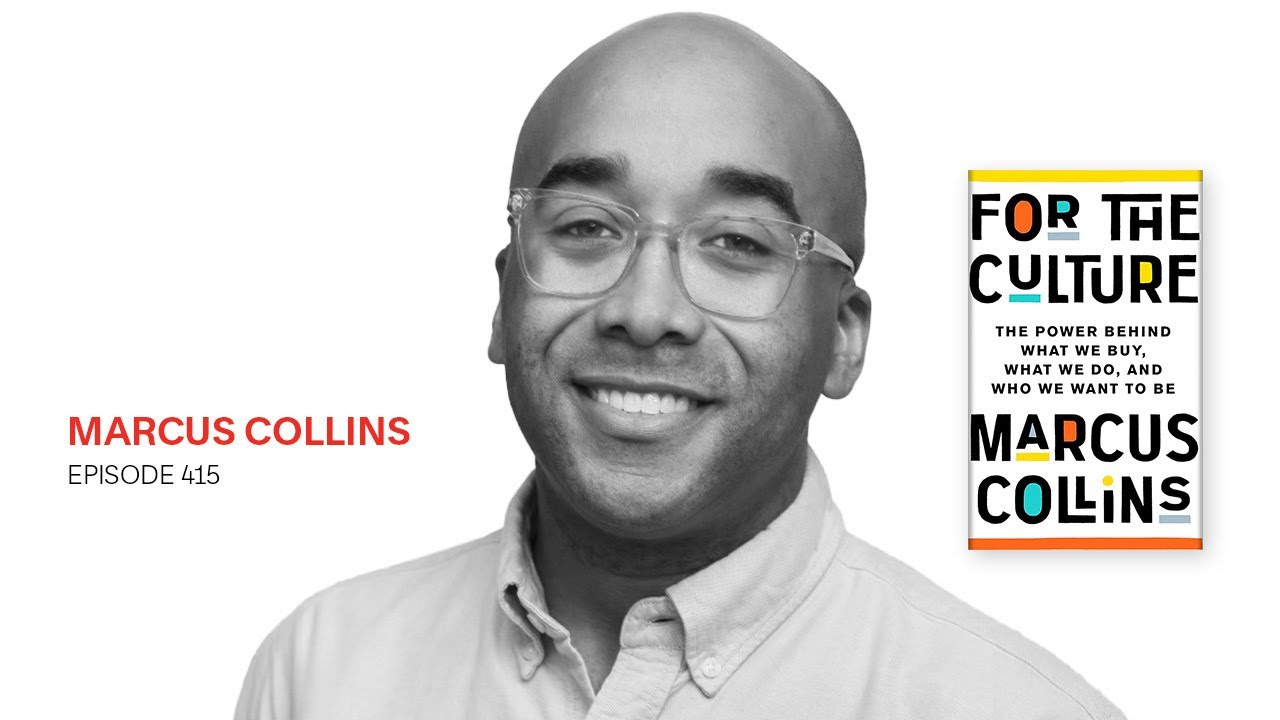

Marcus Collins on why culture is a cheat code for success - Culture First Podcast with Damon Klotz
Marcus Collins: How to Understand Anyone, Market Like a Genius, & Secrets of Culture – 246
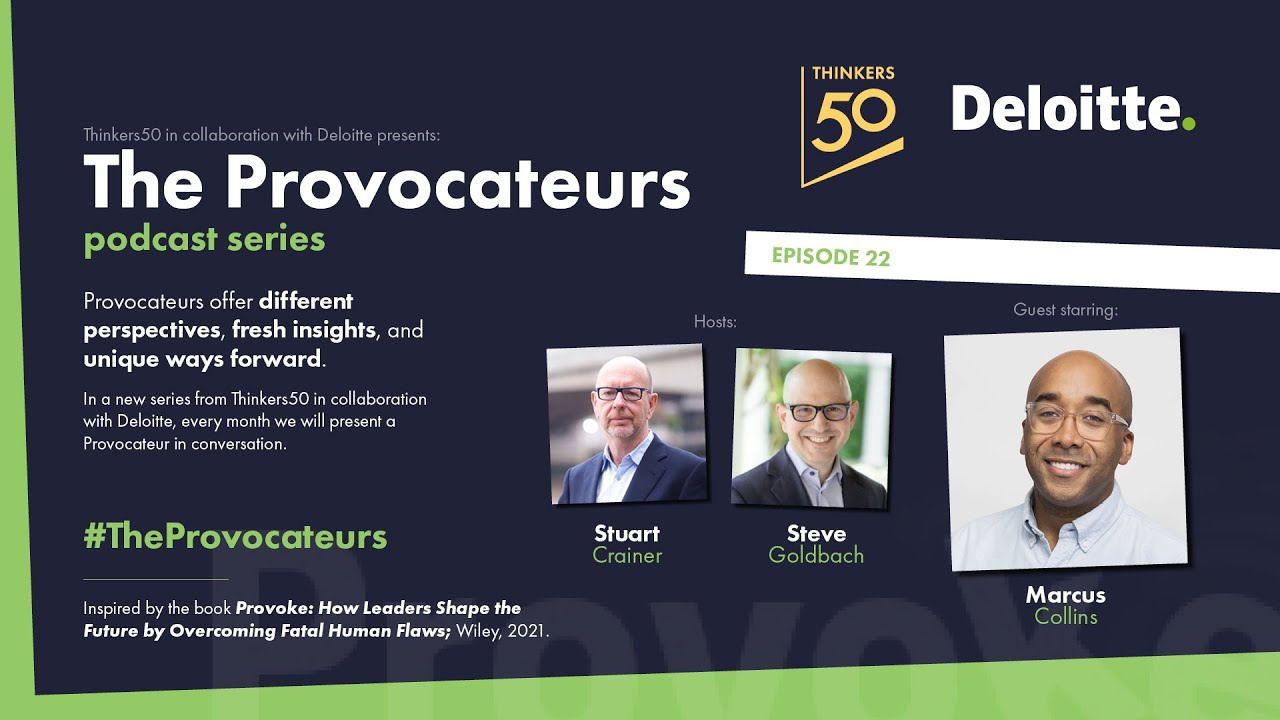
Marcus Collins: Culture, Connections, and Community | The Provocateurs: Episode 22

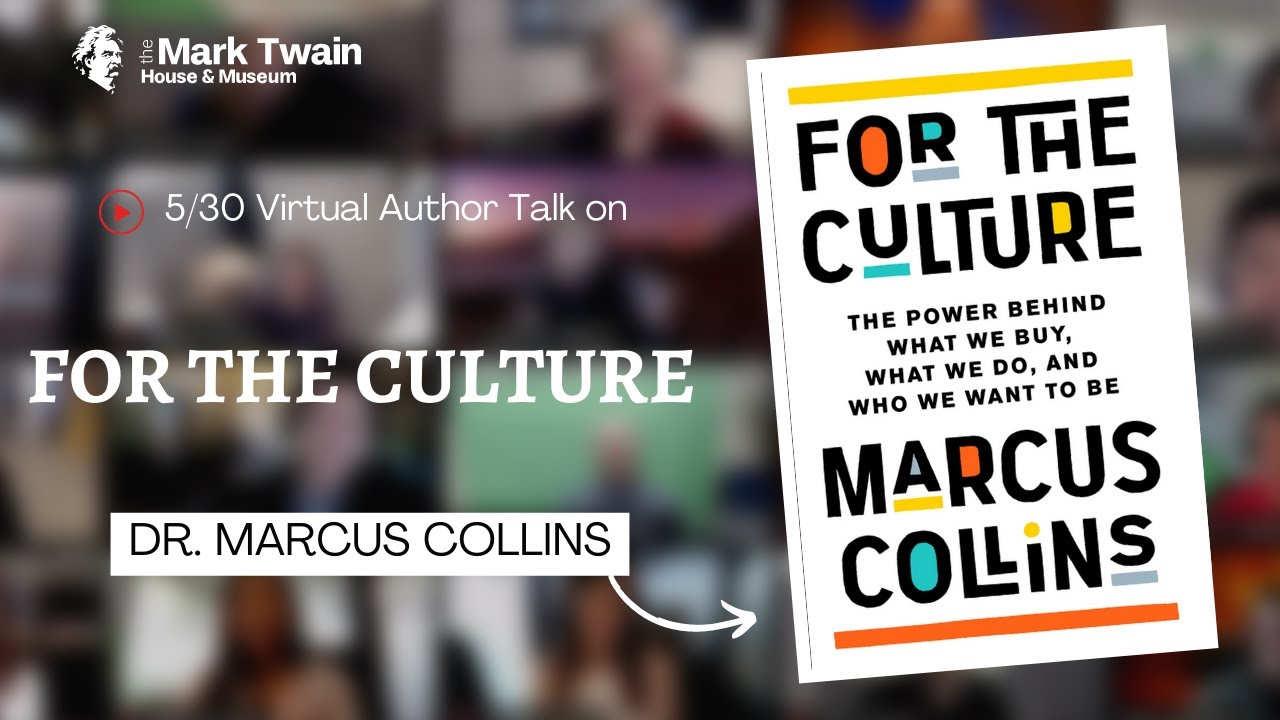
For the Culture: The Power Behind What We Buy, What We Do, and Who We Want to Be

The Power Behind What We Buy, What We Do, and Who We Want to Be | Marcus Collins | Talks at Google