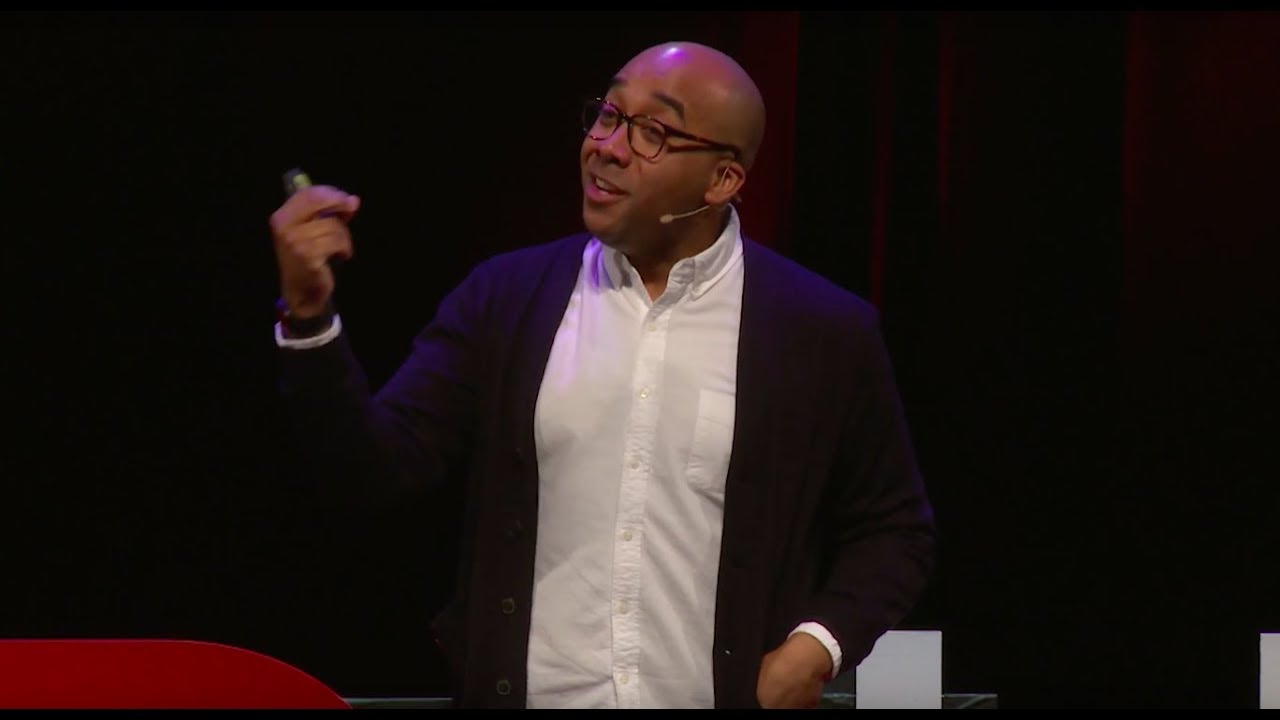
Marcus Collins: Culture, Connections, and Community | The Provocateurs: Episode 22
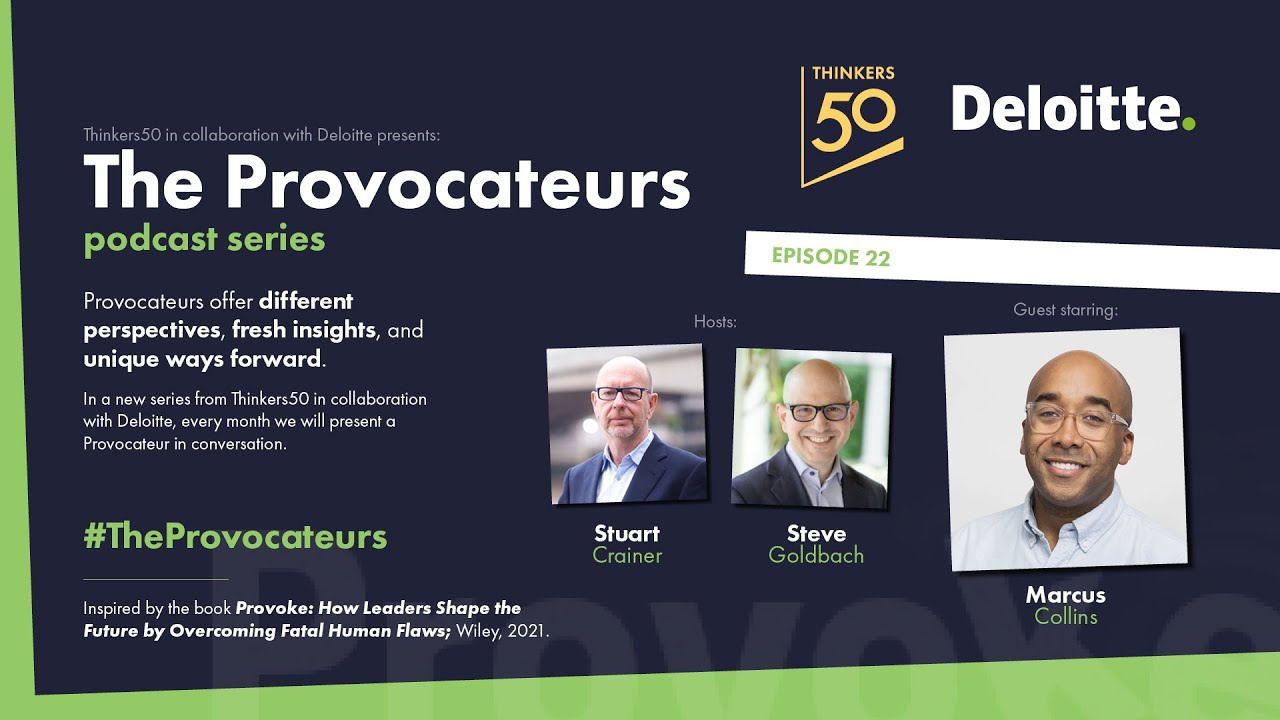
In this Provocateurs podcast episode, host Stuart Craner and co‑host Steve Goldbach interview Dr Marcus Collins, a former iTunes executive, digital strategist for Beyoncé, and now a clinical professor at the University of Michigan’s Ross School of Business. Collins recounts his eclectic career, emphasizing a unifying theme of "connections"—linking disparate elements, from polymer science to songwriting, marketing, and academia. He tells the serendipitous story of how a rejected job search led to a digital strategy role with Beyoncé, illustrating how rejection can redirect to opportunity. The conversation then shifts to Collins’s core thesis from his book For the Culture: culture is a system of conventions and expectations (drawing on Durkheim) that shapes identity and behavior. He argues that culture is the most powerful lever for marketers, a "cheat code" that, when understood, can drive behavior more reliably than demographics. He contrasts demographic segmentation (the "hardware") with psychographic and cultural insight (the "software"), showing how brands like Apple, Prius, and Honest leverage cultural narratives to create network effects. Collins introduces the concept of "foreignness"—the relativity of what is native or alien to different people—and urges leaders to seek commonality across perceived differences. He debates whether marketers should tap existing subcultures or create new ones, concluding that the most effective brands both lead culture (introducing new social facts) and amplify existing beliefs. Finally, he addresses the paradox of cultural marketing in a polarized world, suggesting that marketers must reframe language to transcend tribal identities and appeal to shared humanity, especially on issues like sustainability. Throughout, Collins blends personal anecdotes, sociological theory, and practical marketing advice, positioning culture as the central driver of connection, community, and business success.
Chapters
Welcome to the Provocateurs Podcast, enabling you to think differently about leadership. Hello, I'm Stuart Craner. I'm the co-founder of Thinkers50, and I'd like to welcome you to the monthly podcast series Provocateurs, in which we explore the experiences, insights, and perspectives of inspiring leaders. Our aim is to provoke you to think and act differently through conversations with some fantastic people. This is a collaboration between Thinkers50 and Deloitte. So my co-host today is Steve Goldbach. Steve leads Deloitte's sustainability practice in the US, and with Jeff Tuff, is the author of 2 bestselling books, Detonate, which came out in 2018, and Provoke, which is subtitled How Leaders Shape the Future by Overcoming Fatal Human Flaws. Provoke inspired this series. Steve, welcome. Please, could you introduce today's brilliant guest?
Absolutely, Stuart. It's my pleasure. And it's so good to see Marcus again. The last time he and I saw each other, we shared a nice embrace when Marcus was awarded the Thinkers50 Radar Award in London in November. This was a richly deserved award, and it was awesome. That wasn't the first opportunity I had to meet Marcus when For the Culture, The book that we're going to spend time talking about came out and it became a bestseller. We had the opportunity to meet just a couple of chief strategy officer types getting together and chitchatting. But in For the Culture, Marcus argues that what we wear, what we eat, where we work, who we date, and just about every facet of our social living is informed by our underlying culture. Marcus described himself as a student of cultural contagion and how it manifests in our consumption proclivities, organizational dynamics, and society writ large. He's a clinical professor at the Ross School of Business, University of Michigan, and previously worked as an advertising executive. Along the way, he led some small brands, iTunes Plus, Nike Sports, music initiatives at Apple, and digital strategy for a singer named Beyoncé. Is that right? Is that right, Marcus? We may need to explain her, but welcome. Thank you for joining us today. What an amazing career you've had and such an amazing book. But maybe let's start by unpacking your career a bit. Like, what's the thread between Beyoncé, songwriting, advertising, academia? How do you, how do you assemble it all together into— from your perspective, like, what's the thread?
You know, the thread is easier to see in the rearview mirror than it was going through it. And having studied engineering, particularly material science engineering, I focused on polymers, the idea that things can come together because of their shared interest, in this case, in an electron, or a shared interest in electrons will come together to create new things. As a songwriter, I love the notion that I can come up with an idea that's expressed in 4/4 with some rhythm and chord changes and melody that people can connect to and come together. Working as a marketer, We put things in the world that get people to move, but oftentimes to move in concert with other people. And even my work now as a scholar and academic, you know, it's really about putting ideas in the world that people see themselves in and ultimately get them to act in concert. So ultimately my job is really just about connections, connecting things that normally are disparate. So, they come together and create new and novel things. And it's easier to see those things in retrospect now that I experienced them and say, oh, here's the through line in all of it. But at the time, the decisions I was making in the moment, they're more so driven about this is what I'm excited about and this is what I want to do. And I feel like I could be the best version of myself doing it.
There's not many people when we ask that question go back to polymers and engineering, Marcus.
Yeah. You know, people, you can either look at that and say, you know, hey, you've had— you can look at it in one frame and say your career is so heterogeneous. Wow. It's so awesome how those things have come together to create this unique sort of career trajectory. Or you could say that this guy has no clue what he wants to do and he's kind of all over the place. And maybe it's a combination of the two. I'm not really sure. At least my, my parents— the verdict is out on my parents, by the way.
But so what's the Beyoncé story? How did you begin working with Beyoncé? How did that come about?
You know, it was serendipitous, truly. I had left Apple at the time. I was living in New York and I wanted to be closer to the content creation side. Like Apple iTunes in particular at the time was really just a— it was not just a— it was a retailer and sometimes it acted as a marketer, but by and large it was a retailer. And in doing my work, I felt like I was so down the value chain that I didn't have a lot of headroom to make any impact because the content was already made, the strategies were already devised. Now it's how can iTunes help sort of help extend that? And I'd go, oh man, I wish I could do much, much, much more. So I wanted to be closer on the content creation side, closer to the artist and the label side. And I had been meeting almost every label you could think of, right? Meeting some of the biggest names in the music business when it comes to executives. And it just wasn't panning out. And my then girlfriend, now wife, her cousin Lauren used to work at Ticketmaster. She said, hey, you know, I know the guy who runs digital with Beyoncé. Would you be interested in that? And I go, fine, you know, sure, whatever. Which sounds crazy for me to say now, but at the time I was just so dejected about all the rejection I was experiencing that I was like, fine, sure, I'll, I'll take an interview. We'll see how it goes. Or introduction. was he had goals. So she sent this email to the person who ran digital for Beyoncé at the time, unbeknownst to her that he didn't work there anymore. So my email got bounced to the general manager of the management organization called Music World. And she responds to my girlfriend's cousin, says, hey, you know, so-and-so doesn't work anymore, but we'd love to meet Marcus. And I go, great, let's, let's do this. And, you know, sort of like last minute, hey, can you come into the office quickly and, uh, have a quick meeting? And I go, great. In my mind, I go, you know what, I'm gonna really impress these people because I'd been so disappointed by my other introductions in the past. I'm gonna really impress these folks. I'm already in the city, in New York. Um, at the time I was living in, in the Bronx, so I wasn't gonna go back up to, to the Bronx to change my outfit. So I went to H&M Bought a suit right off the rack, bought a pair of Oxford shoes right off the rack, went to FedEx Kinko to get my portfolio printed and bound and spiral-bound. Like, I'm really going to impress these people. They want to just do lunch? No, no, no. Or we're not just doing coffee here. I want to really impress you. Thankfully, I did, because when I showed up to the office for what was supposed to be a coffee chat, it was a roundtable of people grilling me with interview questions. Had I come in with my polo shirt, jeans, and flip-flops, I don't know if it would have went over so well. And the way the lore goes, as I've been told, that when they met me, they reached out to Matthew Knowles, who was Beyoncé's father at that time, manager, says, hey, we met this guy named Marcus. He is an engineer. He started a music company. He has an MBA from the University of Michigan Ross School of Business. He worked at iTunes. And Matthew, the guy's Black. And Matthew goes, what? No way. This guy isn't real. And she goes, no, no, he's real, Matthew. We were with him. We talked to him. He's real. And he's kind of good. And Matthew goes, I don't believe you. And they're like, no, it's a true thing, Matthew. So Matthew says, tell him to come to Houston, Texas. I want to meet him. So I fly down to Houston to meet Matthew Knowles, and essentially what's for him is just a reconnaissance mission on what, you know, on how I must be a fraud. And we hit it off, and a month later he offered me the job to run digital strategy for Beyoncé. And of course I say I'm taking that job.
That's awesome. That's what a— what an amazing story. And the lesson I think we should all take away from that is not only, uh, You are not a unicorn. You are a real human being, number one. And number two, it's never just a coffee chat, right? It's, you know, whenever someone says it's just a casual conversation, it's never just a casual conversation. But it's amazing how your attention to detail and thoughtfulness, you know, shone through. Although my guess is that you would've had them irrespective of the bound PowerPoint presentation from Kinko's. So your personality would have shone through.
But, you know, it does say a lot, though, about— first of all, thank you. It's very kind of you. But it also says a lot about what rejection can do, like what negative experiences can do for you. We typically see negative experiences as a sign of failure, as an indication of anemia, like something is missing or we didn't show up where we're supposed to. But oftentimes those rejections are just setting you up for the thing that's, that's meant for you. And in those moments when I was getting a lot of nos, a lot— I mean, they were like always close, like we're just right there and we're gonna— I'm gonna get an offer and it just falls apart. And I go, why is this happening? And I, I've come to the resolve that those things just weren't for me. And when the right thing is for you, it'll present itself and you'll have the wherewithal To be presentable for it.
Yeah, I, I, I couldn't agree. I couldn't agree more. You know, we have— I think we have to all see rejection. It's always hard in the moment, right, to see rejection as a learning experience, something we can take away from it. But in hindsight, when we look back, those are often the moments that we, that we learn the most from. As a, as a, and as a parent, I often think when I really want to teach my daughter something, I feel like she has to experience a little bit of discomfort in order to learn from something. And so it's not that I want her to experience it, but it's a way we learn. I want to pull us though to talk about culture because I think you're honing in on something that a lot of marketers have spent a ton of time thinking about it and there's lots of lore around it. But maybe let's start with a simple— can you anchor us in a definition of culture so that when we talk about it, we're all talking from the same page? And so how do you think about it? How do you define it? How do you suggest others define it?
I think that's the perfect place to start, and which really is the biggest pain point, is that we don't typically have the best language or Rosetta Stone to describe it, and therefore we can't Fully leverage it. So I think about culture through a sociological lens, particularly through that of Émile Durkheim, one of the founding fathers of sociology. He says that culture is a system of conventions and expectations that demarcate who we are and govern what people like us do. It's a system of conventions that identify the place that we occupy in the world and also demarcates not only our identity, but what's acceptable for people like us. And as a result, based on how we self-identify, we behave accordingly.
It's interesting because sociology is not really in the mainstream of management, isn't it? Management has stolen from psychology extensively, and management kind of explores biology and other sciences for metaphors. But actually, sociology— Durkheim and Weber, I guess. But usually, kind of culture is seen as is passively described rather than the way you see it. You see it as something active, a tool to be managed and used.
Which is paradoxical, right? Because management, we are managing organizations, right? Groups of people. So what is the study of groups of people? What's the study of social? Sociology, which makes for a very appropriate discipline by which we think about how we get people to adopt behavior and how do we get groups of people to act in concert, what Durkheim referred to as collective effervescence. Like, how do we get people to move in a way that is in sync with the collective and ultimately towards a shared goal?
I like collective effervescence.
Such a great phrase. It's
such a great phrase, isn't it?
It's amazing.
It's amazing it took a French sociologist from the early 20th century to come up with that. Sounds like something that somebody experienced in the 1960s.
But it's such a poetic— it was such a poetic and romantic phrase to talk about something that really is sort of sterile. I mean, we're talking about conformity here. And the idea is that because of how we self-identify and our disposition, our proclivity to want to be connected that we would follow other people just to be in community. You know, Tard, which was Émile Durkheim's contemporary, you know, he said society is imitation. Like, everything is imitation, that we are observing people like us and deciding what people like us ought to do.
So maybe— and I'm gonna foreshadow that In a few moments, a few questions, I'm gonna try to geek out with you on marketing lexicon and technology because this is a topic actually that I've spent a lot of time on and have some great mentors in my life. I'm thinking specifically of Bob Lurie and Mark Bucharski, 2 people I worked with who taught me about segmentation and thinking about it. So I'm gonna come back to that, but maybe just can you tell a couple of stories around like, OK, so in the field of marketing and business, what are some of the cultural stories that have been either activated well or taken advantage of well? So give us a sense of what you're talking about as it relates to the field of building brands.
Yeah, so if culture is a system of conventions and expectations that demarcate who we are and govern what people like us do, so what's its relationship to marketing? Well, marketing, based on what we know from the 1455 definition of marketing, marketing is going to market, going to the people, right? And why do we go to market? We go to market to get people to adopt behavior, to buy, to, to, to, to download, to subscribe, to vote, to take action. So if our job as marketers are meant to get people to adopt behavior and culture is the most influential external force on human behavior, then culture and marketing should be inextricably linked. In fact, marketers should should see culture as sort of the biggest cheat code that they have to get people to do what they want to do. And we use brand, which is a vessel of meaning, an identifiable signifier that conjures up thoughts and feelings in the hearts and minds of people, to help drive that behavior based upon the way meaning is mediated in the minds of people relative to their culture. So to your point then, well, where have we seen that done well in marketing? I go back to brands like Apple, about to go into Super Bowl, so it makes a lot of sense for us to pay a little homage to that, which is now 40 years old, by the way, which seems unbelievable. But Apple took this 60-second advertising to say nothing about the product, nothing about the value propositions at least. They don't even show the product at all. But instead, Apple communicates a point of view of the brand, a belief, an ideology of the brand, and communicated at a time where at least a third of the country are shoulder to shoulder watching a thing. And Apple is basically saying, we see the world this way, a push against conformity, challenging the conventional wisdom, challenging sort of the status quo. At that point, That was, you know, that was another tech company. And Apple says, you know, come 1984, you'll see when 1984 won't be like 1984. And people who see the world like Apple does go, yes, that's my kind of brand. Without knowing a value proposition, without even seeing a product, the brand Apple is preaching a gospel. Communicating its conviction, and people see themselves in it. And therefore, the brand that is Apple, the meaning, the vessel of meaning that is Apple, no longer becomes a shortcut for computers. Instead, it becomes a shortcut for challenging the status quo. And if I subscribe my identity to being a status quo challenger, I go, That's a brand for me. And our consumption behavior is a byproduct of our inward beliefs, right? Like the artifacts we don, the behaviors we take on, the language that we use, the car that we drive, where we go to school, who we marry, where we work. All these things that we do are all outward expressions of inward beliefs. So it's no surprise that our consumption would also be an extension Of of the ideologies that we hold, and when brands can tap into people's identity and their beliefs, then their consumption will shortly follow just as a way for them to to achieve belonging.
But there's a sense in in your work, Marcus, that marketers and and companies know more about us than ever before. They all know that your name's Marcus Collins. Your favorite song is Getaway Jordan by by Take. You've got 2 kids. They know where you live and know everything you like. But I'm not sure fundamentally, isn't there a disconnect between all this knowledge and the effectiveness of the marketing? I get a sense in your work there's kind of a disappointment in that the marketers have got all this and yet still fail to deliver.
Absolutely. And I love you for that, Stuart. Know all the intricacies that make up who I am. And while those data points may exist, You don't really know who I am until you know how I see the world. Again, the fact that I love Take 6 and Getaway Jordan, the fact that I am a father of 2 little girls, these are all outward expressions of inward beliefs. I love Take 6 because I grew up on gospel music and listening to jazz and loving R&B. Take 6 is the alchemy of those 3 things. Without that understanding of who I am, And how my identity has been subscribed, then you go, "He just likes take six." I don't know why. I'm not really sure why he just likes. I guess he likes a cappella music. But understanding why gets us a better understanding of who people are. And while we live in a world where there's more data than ever before, right? Reams and reams and reams of data. We don't have that level of intimacy because we mistake information for intimacy. But with intimacy. Intimacy, we get a better sense of how people see the world and ultimately how they translate the world. And it's that translation, it's that meaning-making system that is culture that demarcates who we are and ultimately governs what people like us do. And as marketers, nothing should be more important. Nothing should be more important than understanding how people make meaning of the world because their behaviors will shortly follow. And our job as marketers is to influence behavior, full stop.
And this seems like the exact right launching point for the geek-out portion of our conversation. And this is where I just, I would love to riff on marketing theory. So it's amazing that you're using the words change behavior, because those are the literal words that I was taught on what the job of the marketer are to do. And the best way to grow a business is to figure out what are the human behaviors that you want to be the cause of that disproportionately impact your business. And the thing that when I was learning, and this is the late 1990s, when I was getting my education in this from a practical way, was We often said that psychographic segmentation, which I would say is a proxy for culture, probably not as deep because I think you would characterize it as it is your underlying beliefs and attitudes, is far more effective. But the problem was that if you're selling diapers, the best distinguisher of diaper consumption and brand consumption is, well, I'm going to buy the premium products when it's my first kid because I'm nervous. But the problem is that nervous parents don't go around with a pin on them that says, hi, I'm a nervous mom. Right. So what's the practical way that we could reach them? And that was through demographics because there were more nervous moms in certain parts of the population. So as we fast forward and now we're, as we've just been discussing, the world is littered with more data to help identify. So what's the link? How do you— I think everyone can agree that culture and psychographics are a better proxy for what you believe, and that's going to be the driver of your consumption. How do I activate it? So what do the best brands do that say, all right, I get that there's this sneaker subculture or this music subculture. How do I tap into that? How do I find these people, or do I— Just hope that they find me. How do you think about that challenge of finding the subcultures that exist when you can discover them?
Yeah, so I love this. I love this. Let's start with the discourse about demographics, psychographics, and culture and then get to, so how do we action on it? For a long time, We leverage demographics because it's easy. It's right there, right? It's the hardware. We can see the hardware. And we would then rationalize behavior based on that hardware as the antecedent. All men do this, all women do that. Until we realized that that's just not true. It's just, you know, it's just not true, right? So we looked at more things.
It's just lazy. It's just, let's call it what it is. It's lazy.
It's the laziest. It's the laziest thing. It's the laziest thing. And while it's easily observable, it's not causal, right? It's not causal at all. So 1950s, 1960s, marketers started using psychology to better understand how people cognate in an effort to understand their consumption behavior. So if you take something like, like a pregnancy test, who uses pregnancy tests? Well, biologically, Demographics are a good, a good way to do that. Either you're a woman, right? Awesome, right? But then psychographically speaking, uh, people who use a pregnancy test, there is a mindset of hopefulness and a mindset of fear, and you talk to them differently. People who are hopeful, you go, you know, don't you want to know right away, right? And you do in a way that speaks to How they're feeling, right? Their their their emotions, their affects. But if they are fearful, like don't you want to know right away?
Or accuracy,
accuracy one thousand percent.
Yeah. Yeah.
So we then will tailor the marketing communications and the product in this way, right? Like if you are hopeful, you probably sell more than one, more than one test. In a package. But if you don't want it, just give me one accurate one. I don't need a bunch of these because I'm going to use this thing once, prayerfully, right? But the idea is that those are our affects, our behaviors, our cognitions. These are byproducts of our cultural subscription, right? That our psychographics are byproducts of who we are and how we see the world. It's the it's the software that gives a better understanding of what people are going to do rather than the hardware, right? And understanding the their identity and how they see the world become moves from a place of being lucky to a place of being likely. For instance, you know which which Alex is more committed to running every day? The Alex who likes to run. Or the Alex who identifies as a runner? The Alex who identifies as a runner, that's the Alex that's gonna get up every morning, even when he, she, or they are tired, it's raining, it's cold, they don't wanna do it, but they're gonna do it because that's just what people like them do. That's what makes culture a far greater indicator of behavioral adoption because it's anchored in identity. So the question becomes then, so how do we find those, those cultures or those subcultures? Well, oftentimes people are actually presenting their identity. Go back to diapers. The value proposition differences between diapers are it holds this much and you could be more flexible. That essentially was the category until Jessica Alba said that, you know what, listen, there's actually a set of mothers who don't want their children exposed to chemicals, right? Like, why? I just feel as a parent, I want an option like this because I believe X, Y, and Z. I believe that things should be organic and the like. Out of that, she creates a new brand called Honest. This brand and its products are more than just diapers. There are all these things that are about childcare. I had never seen an ad for Honest, ever. Never saw an ad for Honest. But we had our first daughter, Georgia, we used Honest exclusively. Why? Because other parents who were like us said, oh, you should be using Honest. And that's the power of culture, that the media is actually driven by the media of people. That Super Bowl spot we talked about with Apple, the lore is that it ran once, but we're talking about it 40 years later. Why? Because we keep talking about it because they are expressions of identity. So we find our people by finding people who are like us. So if I'm honest, I'm a brand, I go preach my gospel to people who already believe. And those people go, finally, someone said it. Finally, someone said the thing that I've always felt but couldn't articulate it. Or a thing that Stuart and I were just talking about the other day. Here it is right here. And then I go, hey, Stuart, check this out. We were just talking about this the other day. Stuart goes, oh, let me go tell Monica. Then let me go tell Tara. Then let me go tell— and we begin to propagate it, not because of what it is, but because of who we are. And doing so helps us connect people who are just like us. And as social animals, I don't think there's anything more powerful than that.
Yeah, I identify as a runner, but I'm increasingly delusional, I think. Yeah. One of the things you talk about, Marcus, which I think is really interesting, is the concept of foreignness and the importance of adopting perspective. Can you tell us a bit about that, the concept of foreignness?
Yeah, you know, foreignness is a, uh, is a respective or a relative statement. That is, things are foreign to you, but what's foreign to you may be native to someone else. So it begs the question, um, how objective are things really? If our idea of things being foreign is only based upon our purview, then what is native to me may be foreign to someone else, which says to me at least And what the literature continues to support is that everything around us is just totally subjective. We think that things are absolute, but they are not. In fact, one great scholar by the name of Obi-Wan Kenobi says, only the Sith deals in absolutes. And the idea in this is that the world around us is subjective. We are constantly imbuing things with meaning. Things are inherently meaningless, but we're giving them meaning. And if that be the case, If we want to better understand people, especially as marketers, managers, leaders, entrepreneurs, and anyone with the best interest of getting people to move, then understanding that your truth isn't the objective truth, I think, is the first step. Like, my truth isn't objective truth. People abide by different meaning-making systems other than my own. People abide by different ethnocentrism that are not mine. That doesn't make them wrong. It just makes them different. So my job now is to absorb, observe what seems to be foreign and find the familiar in the strange. Find like what connects me to this thing that seems odd just so I can better understand it. For instance, I'm not a big car guy, which is odd coming from Detroit, but I'm not like a huge car guy. I mean, I have my favorite cars, don't get me wrong. I'm not like, let me get under the engine and see what's going on. It's not, it's not who I am. It's not who I am, right? But I see how people like fixate over cars and all the intricacies of them, and I go, man, people are kind of crazy. But I stop for a moment, go, you know what, you're the exact same way when it comes to music. Like, you, you, you will fixate over not just the chord changes but the actual voicings of the chords, right? And you actually, you like You've been listening to a song for, for, for 40 years, Marcus. Like, you fixate over things too, dude. Like, come on. And when I can get there, I go, oh, I understand it. I get who these people are. And as leaders, it helps us find, uh, it helps us foster connections and community within our organizations. As marketers, it helps us understand the lenses by which people see the world so that we can meet them based upon their jobs to be done, their functional, emotional, and social jobs. But as humans, it helps us sort of mitigate what typically becomes barriers between us, things that drive divisiveness, and help us come together and go, just like you're crazy about that thing, I'm crazy about this thing, so I understand it. And ultimately, what we're doing is just trying to help us find the humanity that exists in all of us.
I mean, I think the world would be a far better place if we could all appreciate that our own reality is not necessarily the reality of others and have that kind of appreciation that said, what you are for this, I am for that. Perhaps we had the wrong co-author here because Jeff is an absolute music fan. He's a huge Grateful Dead fan. You ever have the pleasure of visiting him in his home, he's got, you know, hundreds and hundreds of records, vinyl on the shelf to pull out, and he can tell you which thing. And I just say, I like this song. But if you ask me about fitness routines and things like that, that's my identity. Let me maybe switch gears a second. Is it more important for a brand or a business to find a culture to tap into, or is it more important for them to be the creators of that subculture? How do you think about that as a marketer? Are we in the creating culture business, or are we in the— tapping into something that already exists, or is that, that a dumb distinction?
No, I think that's a— that is a fair distinction. I would say, uh, yes and maybe. I think about, um, when it comes to like finding people, that the people who already believe what you believe, they're already out there, right? And the idea is to find them. Well, how do you find them? You sign, you shine the bat signal, preach the gospel. Like, I see the world like this. And someone goes, yeah, dude, yes, yes, that, yes. And then they go help you find other people, which as a marketer essentially means that they do the segmentation targeting for you. And not only do segmentation targeting for you, but they evangelize your brand With all the credence that you can never buy, right? Which is just unbelievably powerful. You know, you know, for a while, you know, Uber didn't have a CMO for like four years. They have a CMO four years, like 2011, 2015, no CMO. Why? Because they didn't need to do marketing communications, right? They didn't need one. They didn't need someone in charge of marketing communications in that way because we did the marketing communications for them. Right? We did the convincing. We got people to move. They did the product part and the pricing and the place. If you look at the 4 Ps, Jerome McCarthy. But the marketing communication side, we did that. We told people like, what are you doing hailing a cab? Like, get a Black Car Service in your pocket. Use that. Right? And as a result, people go, oh, that's kind of cool. And then they go tell other people. Now, when it comes to the creation of culture, I think about it this way, that the creation of culture is introducing, is the act of introducing new beliefs, artifacts, behaviors, language to the people through cultural production. And the best advertising, the best marketing communication, I wanna argue it's the best marketing, are the ones that lead culture, not follow it. They lead culture by contributing new social facts. They participate in culture by having a point of view about the social facts that already exist. They follow culture by just replicating, emulating, mimicking what already exists. The ones who lead culture are the ones that go, have you ever thought about it this way? And if you think about the people, the brands that lead culture, they typically come in the formation of artists. Musicians, they bring new ideas. They they challenge the orthodoxy. They introduce new language, new artifacts, new behaviors, and we go, oh, that's kind of cool. And in our collective communities, we negotiate and construct whether or not people like us do something like this. Right? We go through the process of evaluation and legitimation by which we decide what new conventions and expectations. should be demarcated for people like us. And the best brands do this really, really well. You know, I would argue, say like Prius is a good example. Let me just talk about cars for a moment.
Mm-hmm!
You know, Prius is Latin for the first. And before there was the green movement, the going green, Prius preached that gospel and they created a product that was a manifestation of it. And the people who saw the world similarly They were like, oh, I'm definitely driving a Prius as a way to demonstrate my greenness, as an identity project to signal to the world who I am and how I see the world. Ergo, consumption being a cultural act. And I think this is unbelievably powerful because what we really are doing is that instead of populating media with value propositions, we are using media Be it television, print, out-of-home radio, or any cultural surface area at our disposal, we're using those communicative nodes as catalysts to activate a network effect. Once that network effect gets going, it is the gift that keeps on giving.
Marcus, you're an academic now. You're a clinical professor at the Ross School of Business. But you're still a marketer.
Oh, yeah.
So, what new beliefs and behaviors are you trying to create? What are you selling?
That's a really good question, Stuart. And I would say that the book is the product, but what I'm selling is the idea. And the idea is that if we want to be better citizens of the world, If we want to be better managers, if we want to be better business leaders, better marketers, there is no there's no cheat code more more beneficial to us than culture. That's what I'm selling. That's the gospel that I'm preaching, and the hope is that in the market and in in in spaces like this with brilliant people like you all, that there are groups of people who go, you're kind of right. Yeah, I never thought about it that way. And their consumption is realized in, you know, buying the book. But more importantly, the behavior that's driven is that they begin to preach the gospel and it creates a network effect that we all get here. And to Steve's point, not only will we have better business, but I think Maybe this is just sort of the optimist in me, that it would just have a more humane, more civil, more a world that I would want my children to grow up in.
Yeah, look, I am so in that hope category for a world where there's an appreciation of nuance. There's an empathy for my lived experience is not your lived experience. And it would— I've got one more question for you, Marcus, because it would be a shame not to explore this topic with someone who's thought about it as deeply as you. So in a world where the best way to grow a business is to tap into a culture, one of the challenges that I see is that increasingly our society is polarized into tribes where we believe or we don't believe in whatever the thing is. In the space that I operate in now, in my new role as leading sustainability, I get a lot of questions around, is there ESG backlash and things of that sort? So how do you think about, as a marketer, tapping into important communities while not necessarily alienating the folks who are, to some extent, in the opposite camp of that as a community? Yeah. And we've seen some missteps of brands. So what's a productive way to think about tapping into a culture while not simultaneously excluding another culture Because that would, by definition, limit your growth. So how do you think about that conundrum? And there may not be an easy way to solve it, but I'd welcome your thinking on that question.
It is a paradox because I think that what we know of marketing theory is that you can't be everything to everyone. So by its very nature, there is some— there's a limiting factor at play here. And when we are leading with beliefs, then inherently some people are not going to believe, and therefore there is some exclusion that's going to happen. But what I think is that a lot of the things that we tend to sort of, uh, a lot of hand-wringing and, and, uh, and, and, and sort of unproductive, uh, rhetoric are things that we actually benefit from, all of us, like the planet. That's one thing that we all should be on board for, right? Like, if this thing doesn't exist anymore, none of us exist. The challenge is that we don't identify as a collective humanity. Instead, we identify first by our tribes. And because of where we sit in our tribes, I feel like I'm diametrically opposed from you because of who I am, which means for marketers, our job is to rework the language Such that they transcend the boundaries of our tribalism and they can see it through a frame that's more so about our humanity. And that's a challenge, right? But the marketers who can do this well, those are the ones that we look at and say, those are, those are the guys, right? Those are the guys. And some cultures find themselves that, you know, one scholar talks about them as like loose cultures and tight cultures, that in moments of calamity, they come together. Right? In other cultures, in moments of calamity, they sort of separate apart. For instance, like, you know, here at one time in the country, in the States, we had a very, you know, we had a tight culture, i.e., 9/11 happens, we bound together. But you take something more recently like COVID, right? We find ourselves pulling apart. And that's the part that kind of frightens me. It brings great concern to me because it says that we collectively Marketers, leaders, managers, people with a voice, with a platform, we have to find ways to communicate in such a way that we find the shared strange as opposed to the divisive strange.
Marcus, unfortunately, we're out of time. We've ranged widely in the conversation from polymers to Take 6, Durkheim to Detroit. Beyoncé to Belief and collective effervescence along the way. Marcus's book is called For the Culture, available wherever you buy books. Really good book, truly, truly provocative. Marcus's website is called marktothesea.com. We thoroughly recommend you check out his work in all its manifestations. Marcus Collins, thank you very much.
Thank you so much, Franz. Appreciate you.
This podcast is part of an ongoing series of interviews with executives. The executives' participation in this podcast are solely for educational purposes based on their knowledge of the subject, and the views expressed by them are solely their own. Podcast should not be deemed or construed to be for the purpose of soliciting business for any of the companies mentioned, nor does Deloitte advocate or endorse the services or products provided by these companies.
More from Dr.


Marcus Collins on why culture is a cheat code for success - Culture First Podcast with Damon Klotz
Marcus Collins: How to Understand Anyone, Market Like a Genius, & Secrets of Culture – 246

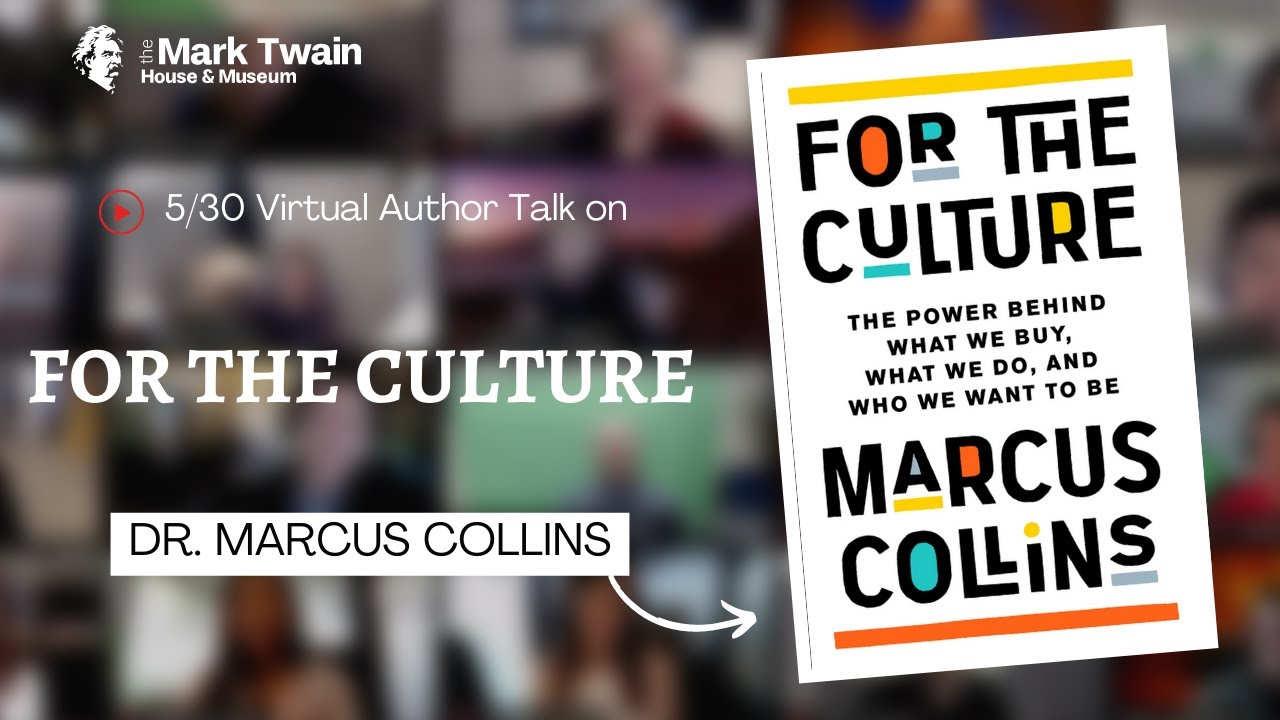
For the Culture: The Power Behind What We Buy, What We Do, and Who We Want to Be

The Power Behind What We Buy, What We Do, and Who We Want to Be | Marcus Collins | Talks at Google