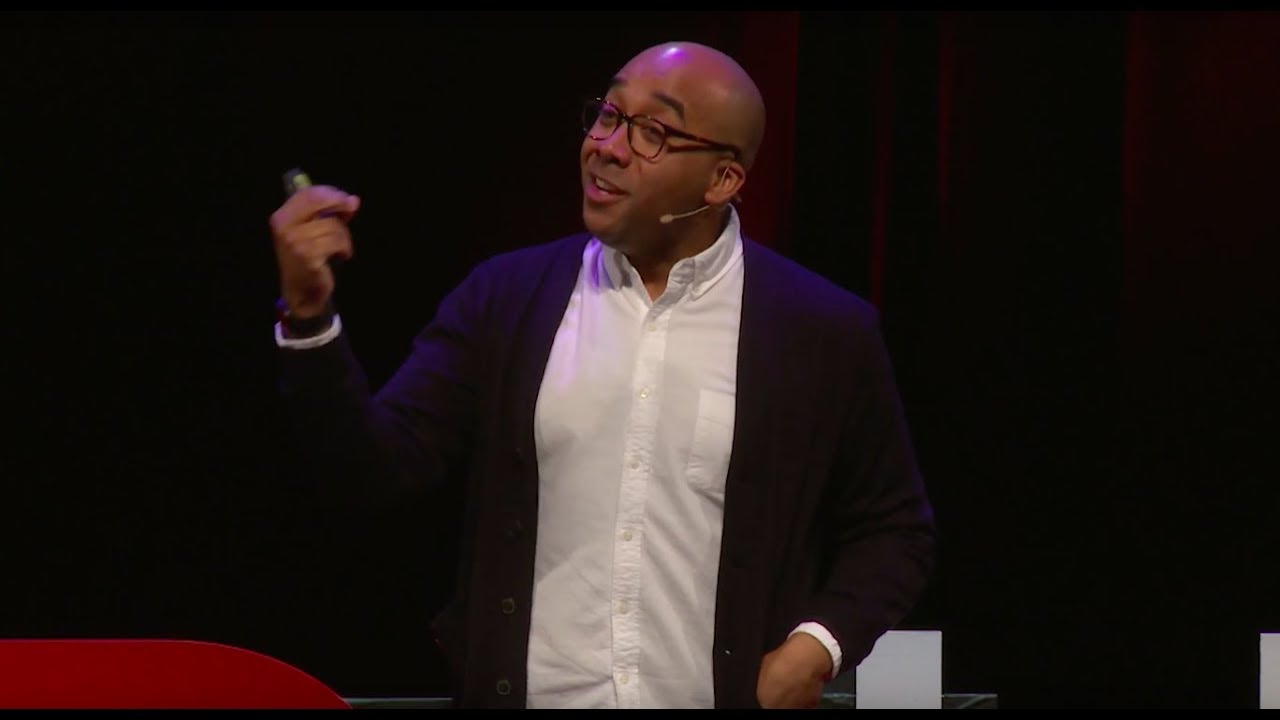
Marcus Collins: For the Culture
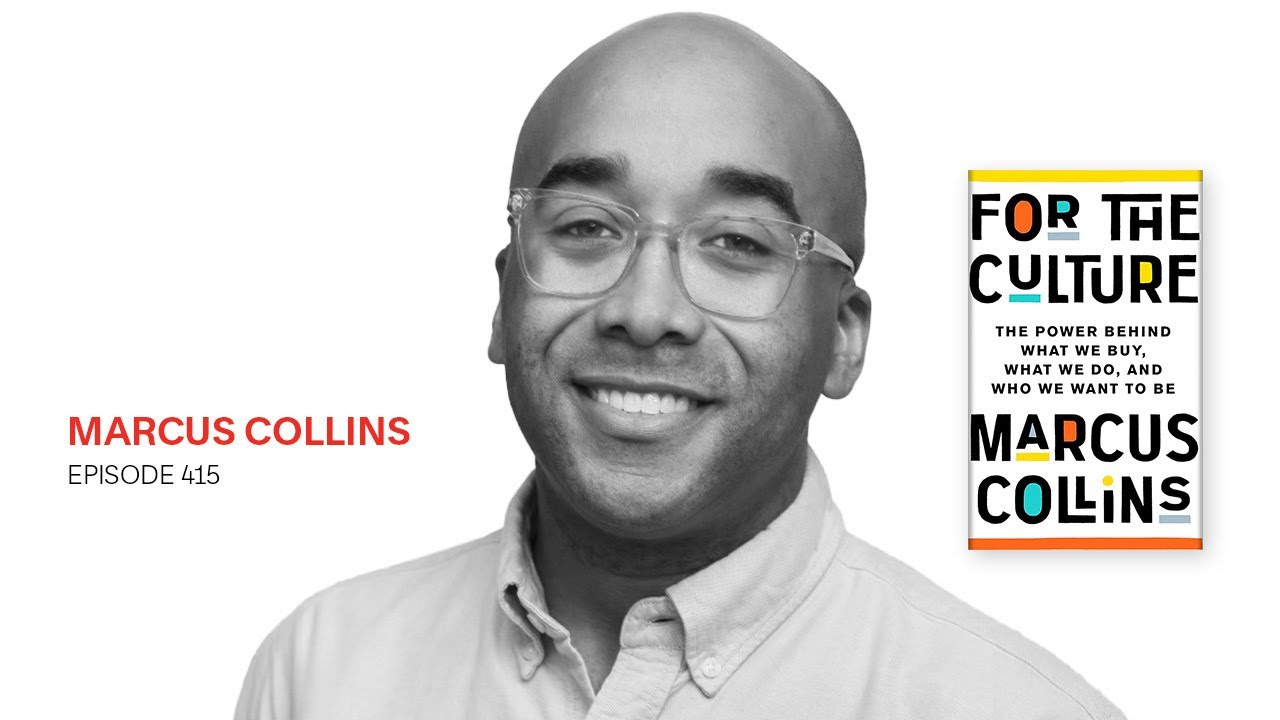
Marcus Collins, who worked with Beyoncé and led advertising agencies, argues that brands succeed by aligning with their audience's cultural beliefs, not by pushing products. He calls loyal communities "congregations" and points to Beyoncé's Beyhive and Nike's athlete narratives as proof that cultural alignment drives loyalty.
Chapters
Hello and welcome back to Franklin Covey's twice-weekly podcast on leadership with Scott Miller. That's me. I am your host each week, twice a week on Tuesdays and Fridays, where for 6 years now, 400+ episodes, we have curated some phenomenal conversations. When I say we, I mean— Everybody. Everybody behind the camera as well. Drew and Ty and Travis and Brandon and Jen and a whole variety of people that help to build this podcast as what is now the world's largest twice-weekly leadership podcast where we interview people of phenomenal insights, whether they are CEOs, board members, founders, chairmen, creators, artists, intrapreneurs, solopreneurs, entrepreneurs, Sometimes they are academics, research scientists. Sometimes they're common people whose name you may not have heard of, but they've discovered or uncovered something useful in your journey as a leader. Perhaps even they experienced something unspeakable or trauma that was a massive setback, lived to tell and teach about it as part of their abundance to make you more effective. As a parent, as a friend, as a leader, as a human being. This podcast comes on the heels of our co-founder, Dr. Stephen R. Covey, who wrote arguably one of the most seminal personal development leadership books in our generation, The 7 Habits of Highly Effective People. This book has sold nearly 60 million copies in every language conceivable. And today Franklin Covey is by most measures the world's most trusted leadership firm. I'm especially proud of my nearly 30-year association formally and informally with this company. Today our guest is a very patient man because I think I've canceled maybe 3 or 4 times on this interview for a wide variety of legitimate reasons, usually family-centric, but I want to first compliment Marcus for hanging in there and joining us today. You know him as the author of the phenomenally successful book, bestselling book released In the last year titled For the Culture: The Power Behind Why We Buy, What We Do, and Who We Want to Be. Marcus Collins, welcome to On Leadership.
Thank you so much for having me. I am stoked to be here.
Well, so I first learned about you actually when I saw your book on the Barnes& Noble shelf as I was coming down the escalator with an armful of books that my boys and I every Saturday we have a ritual. We go to the Barnes& Noble in Salt Lake City after we have breakfast and they have their tennis lessons. We go, we pick up books. We're big readers in our family, as are you. And every day they can buy as many books as they will read. If they all read them, I will buy them. I love that. I'm coming down the escalator and I see this kick-ass cover on the new release list. I take a picture and, 'cause I'd been following you on social, and I say to our booker, get him on the program. After 4 cancellations or more, You have hung in there. Such an honor to have you on today. You are an academic, you are a practitioner, you are a human, you are a researcher, speaker, coach, writer. Your book is phenomenal, and we're going to get into today all things about culture, marketing, brand, connection, communication. Marcus, would you first rewind a little bit, a couple of decades, tell us how you came to be so influential? What some of your roles were. People will be interested to know what your roles were, and maybe finally how you came to culminate that in this recent book, Praise for the Culture.
Well, I'm grateful for it. You know, I feel like my background is sort of serendipitous in nature. Going through it didn't seem like a clear trajectory, but looking back in the rearview mirror, it makes a whole bunch of sense. I'm from Detroit, born and raised, did well in math and science, so I studied engineering. going into college. I studied materials engineering, but didn't realize what engineering really was and didn't realize that though I thought it was interesting, I wasn't quite interested. So when I graduated with my engineering degree, I went into the music industry and wrote love songs for a living. Wasn't terribly successful, but enough to realize that the industry had a lot of anemia to it. So I went back to school to get my MBA, went to go work at Apple doing partner marketing for iTunes. While I was there, I met a gentleman named Matthew Knowles. who has a daughter named Beyoncé. And he says, let me get this straight. You, you have a, you're an engineer, you started a record company, you have your MBA, you work at Apple iTunes, and you're Black. Dude, you're a unicorn. You don't exist. You're not real. I go, no, I'm real. I exist. So he says, you should run digital strategy for Beyoncé. And I go, oh yeah, I should totally do that. So I spent my time in those early years helping, you know, lay one brick on the edifice that is Beyoncé's Queendom. During her I Am Sasha Fierce days. And then from there, I went into the world of advertising, particularly at an agency called Translation that was owned and operated by a record industry executive who turned advertiser named Steve Stout. Started the agency with Jimmy Iovine, his mentor, and his good friend Jay-Z. And it was all about helping brands thrive in contemporary culture. What I realized is that I've been using this word culture over and over ad nauseam in my day-to-day practices, as such was the industry. But I didn't know very much about culture. If I'm being honest, I didn't know very much about people. And it's that realization that set me on a course to start studying the behavioral sciences. Since then, I've had my foot in academia and another foot in practice, trying to bridge the academic-practitioner gap. Taking these things that we rigorously interrogate as scholars and apply it to the world of practice. And since then, I got a chance to work with some of the biggest brands in the world, put ideas in the world that get people to move, to get people to adopt behavior, whether it's McDonald's, Google, State Farm, Nike, Delta, Industry agnostic, category independent. The study has been understanding culture's influence and impact on human behavior and how it gets people to adopt behavior in a pretty predictable manner. And that's been the scholarly pursuit, and that has been the crux of my practice.
Marcus, I'd like to have a broad-ranging conversation with you around brand and culture and marketing. Your book is phenomenal. It's called Praise for the Culture, a fantastic compilation of case studies and projects you've worked on and insights you've uncovered, both, like you said, from academia and as a practitioner. When you speak to chief marketing officers, what is it you need them to best understand about how to best build a brand? You don't build brands overnight. Brands, in essence, are a A trust pack, if you will, with your buyer and consumer and what you're offering. What do you want in a forward-thinking way, 2025, what does anybody responsible for marketing and brand building need to make sure they don't miss or skip over or undervalue?
I think a lot of this boils down to understanding what brands are. What I found, much like close cultures, that we use so much of this language in our day-to-day lives, But if you ask someone to define it, you'll get a whole bunch of blank stares, right? Or a lot of buzzwords and jargon and, and abstractions. But with a better Rosetta Stone, we're able to build for it. So what is a brand, right? Branding as a verb is to permanently mark a thing. And we did that with cattle 4,000 years ago as farmers as a way to signify ownership. But over time, these marks of ownership turned to trademarks that we'd put on our products that we then legalized to turn into legal marks. And then over time, they turned into trust marks that people began to associate cognitions, associate proxies for quality, and they bought those brands or those products that bore that brand mark. Then over time, marketers say, you know, it's not enough for people just to buy our stuff. We want people to love us. So we started to invest And understanding how do we evoke emotion such that people not only trust us, but they develop relationships with us. And brands became these love marks. Well, today the most powerful brands operate as cultural marks, ways by which people express their identity. And it reshapes how we think about brand as a noun, that brands are identifiable signifiers that conjure up thoughts and feelings in the hearts and minds of people. Brands are vessels of meaning that are filled with cognitions and affects, not because of what they are, but because of who we are, which means brands by definition are culturally mediated. And therefore, if CMOs want to navigate the waters of brand, they want to navigate this territory that we call brand marketing, then it is It is essential. It is critical that they understand the cultural frames by which brands are translated and interpreted in the minds of their consumers, in the minds of people.
Marcus, quick detour. As I was listening to you, I know a bit about you because as I mentioned off air, the algorithm on social media thinks you and I should be best friends because you're in my feed every day and I enjoy it. If a venture capitalist came to you this afternoon and said, Marcus, I believe in you. I've got $25 million that I want to put behind you. $25 million this afternoon, writes a check. She says, I want to put this behind you. What would you build with that $25 million?
I would build a cultural graph. I would build a platform by which we're able to not only identify cultural sparks that happen among communities, among networks, among tribes, that we can identify them, but also map the connections that connect people to them such that we can identify who these people are and then unpack the conventions and expectations that are negotiated and constructed by these individuals, particularly using social data, right? Pulling from the Reddits of the world or pulling from the TikToks of the world, the Instagrams of the world, creating a, not a social graph like social networking platforms have done, but a cultural graph such that we're able to see people for who they are, how they self-identify, but also understand, to your point, the algorithm that governs how they show up in the world. I mean, that's what culture is. Culture, as Émile Durkheim, one of the founding fathers of sociology, would often refer to, it's a system, a system of conventions and expectations that demarcate who we are and govern what people like us do. Culture is the governing operating system of humanity. So I would build a technology that allows me to observe social actors, these cultural beings that we are in our cultural environments, practice our cultural subscription. Because if we do that, if we do this and we have the proximity that allows us to see them for who they are, then the likelihood of predicting what they might do becomes Much higher. It moves from us being lucky to being likely with regards to predicting outcomes because of how predictable culture is in its ability to influence our behavior.
Marcus, in my day job, I'm a literary agent and I represent a lot of authors, and I am constantly pleading, cajoling, inspiring, directing my thought leaders about the need for them to build their social media presence, their contribution, their abundance, diversification across some platforms, and I believe continually that social media is one of the, if not the most important vehicles for thought leaders. By the way, you can be a plumber and be a thought leader. You can be a celebrity. You can be an electrician or a florist and be a thought leader in your industry as a business development tool. Right. So I don't think academics or authors are the only thought leaders by any stretch. You can't call yourself a thought leader, but once someone else does, you can say, hey, once someone called me a thought leader. To what extent do you disagree about the impact and the continued reliance that all businesses and brands will have in social media?
I agree with it, full stop. I agree with the provocation that Anyone with anyone with thoughts on a particular genre, a particular area, a particular topic—that if they have leading thoughts, then they therefore are a thought leader. And the social web enables us to find pockets of of heterogeneous topics such that if I'm way into G.I. Joe, there are people who. know GI Joe forwards and backwards, and they're able to talk about the lineage, the history, where it's been, and perhaps where it's going. And if that's where I find my people, then those people, their voices become very, very influential. And if we just sort of unpack the language, social media, what is social media? Well, what is social? Social is people. What is media? Media is the vehicle by which information moves from one Source to another. So social media is people media, and every company knows, every industry, every vector, every category knows that there is no no media more influential than the media of people. We call it word of mouth, right? We we call it you know a a personal referral. All these things. Are intuitive in our nature. We intuitively know these things, but yet we start to put language that seems to be opaque or language that seems to be sort of esoteric. We tend to lose the underlying sort of construct of what it is. Like, social media is unbelievably important because the, the content that we create become currency by which people engage in discourse. And it's through our discourse, through our conversations, that we collectively negotiate and construct meaning that become the orthodoxy of how we navigate life. Social media is the media of people. See, I think— And it's our conversations where we decide what people like us do.
I think that's where my congregation is. You actually have a chapter in your book around find your congregation. Can you define what that means, and then would you just sort of open mic around what do you want thought leaders, CEOs, executives, entrepreneurs to know about what they should be doing with their social media to add value and create value for their organization? Talk about what it means to find your congregation, and then just give us a little bit of a soliloquy, diatribe on what you're seeing are best practices in social and what leaders, founders, creators should do, both in terms of creating value for their congregation, but in return gaining value for their business or their enterprise.
Scott, I love that question. I could just hug you for that, truly. So what do we mean by congregations? Well, I chose the language congregations because the early scholars of sociology, they studied culture By observing religion, right? Observing people practice their religious subscription, and through that they're able to sort of glean what it means to be a cultural practitioner, what it means to be engaged in one's culture. And it was that sort of through line that I kind of pulled on and said, "Hey, as marketers, we use religious theological language in almost everything. You know, we say, you know, let's you know convert those consumers. Let's evangelize." the brand, right? These are all things that come from theology. So I thought, oh, that's interesting. That's something we can kind of play with as an analog or a metaphor. So if we are trying to convert people, the people who are converted make up the believers, the congregation. And though congregation sits in a religious sense, if you remove the deity of it, it's essentially people who believe, people who see the world similarly, people who subscribe to a shared ideology. And the powerful part about this is that culture is anchored in our identity and our shared way of seeing the world, our beliefs and ideologies. So what does that mean for a company, for institution, organization, a leader, a politician, an entrepreneur? It's that when we know what we believe as an organization, as an entity, as an entrepreneur, as a politician, The idea then is to find the people who see the world similarly. Your congregation, the collective of the willing, the people who will hear you talk and go, man, I was thinking the exact same thing. Finally, someone said that. And the things that you create, that you post, the content that you make and you propagate throughout the social web across your channels, people use your content And use it as a way to communicate their point of view in the world, right? They use your work as a proxy for their own worldview, not because they love you so much, not because of what you are, but because of who they are. So the idea then, as a marketer, as a leader, as a as a thought leader as they were, the content that we create. It provides value for people because it allows them to realize their identity project. When people share my content, when they repost it, they're not like, you know, I love this guy Marcus so much, go out and support him. No, no, no. They caption my videos and say this. They caption my videos and say preach, right? Again, another theological term, right? They use the content I create and other people and people who are far more talented and far more successful than I am. They— we use people's content as cultural production, as a way to express the way that we see the world. So we add value to the discourse by communicating the way we see the world, and people go, yes, finally someone said it, and they go preach the gospel for you.
Marcus, build on that. Prescribe for us what every Fortune 5000 C-suite leader, when I say every, generally every Inc. 5000 leader, every Fortune 5000 leader, what you think they should be doing with their social media? Are there some governing tenets that you might say, as practical as here's a good cadence, video is everything, Make sure you're saying something where it ends up with someone forwarding saying, preach. Just give us some guidelines in your marketing background, your digital expertise around here's some things that you think we should all be thinking about with respect to our social presence.
So I don't think that there are best practices because what works for some don't work for all. But there are some governing ideologies, right? Some governing theories and principles. And I think it boils down to, to, to this. Ultimately, we're trying to create things that people not only consume because, you know, they can do that via television, but we're trying to create things that people consume and then they share it, that we are activating a network effect. And those network effects come via congruence. That people see themselves in what you have created, that people take what you have given, what you have put out in the world, and they go and use it as a way to project their own identity with their people. So the idea then for brands, Fortune 500s, uh, and, and, and beyond is to first start with what do you believe? Not what do you make? But what do you believe? How do you see the world? What ideological convictions do you have that goes beyond your category, that transcends the industry in which you operate, but is informed by how you see the world? And then when you go to your social channels, the content you create, what you say, the gospel you preach isn't my razor's sharper, my battery lasts longer, my car goes faster, my shampoo has more body, whatever that means. But instead that this is how I see the world. Wouldn't it be awesome if the world was like this? And then people go, yes, that. And then they go share it. And then they share people who are just like them. And they share people just like them. And so on and so on and so on. A good example of this is Nike. Like Nike believes that every human body's an athlete, big, small, short, tall, we're all athletes. And the only thing keeping us from realizing our best athletic self is us. So what does Nike tell the world? Just do it. Right? And what kind of stories do Nike tell? So story— they tell stories about athleticism. They never talk about where they source their leather or how absorbent the soles are. No, no, no, no. They talk about what it means to be an athlete. And they talk to runners this way. They talk to basketball players that way, talk to swimmers this way, talk about footballers that way. They talk to other footballers this way. Right? They talk to people in a very nuanced, culturally mediated language so that when they talk, people feel like, oh, you're talking to me. And then they go post that content, not so that Nike can, can make more money, but they post that content to communicate their identity. So therefore, the principle for brands, for marketers, for leaders, managers, politicians, institutions, organizations, and the like, Is to start with, how do I see the world? What do I believe? Then find your congregation, the people who see the world the way you do, and then preach the gospel. Not what you make. Preach the gospel. Start with the soul, then end with the sale, and people will go preach the gospel on your behalf.
You may not agree with the premise of this question, so I invite you to challenge me. Do people follow brands or do people follow people?
Ooh, that's a good question. I think that people anthropomorphize brands so they feel more human, right? I mean, if we look at a brand, people do follow vessels of meaning because of what these vessels mean, right? So we take things that are non-human and we give it human characteristics. Meaning helps us do this, you know? So the products that we adorn ourselves with, The products that we use that bear a mark of ownership that we call a brand mark, people pour themselves into it. You know, and sometimes brands are humans, be it, you know, Beyoncé or Taylor Swift or fill in the blank, whomever. So we connect with these things because we don't see them as inanimate objects. We don't see them as things or products that bear a mark. Instead, we see it as something standing in for something else. And it's what those things stand into— stand in for that we follow, right? We follow what it represents, what it signifies, not the thing in and of itself.
You referenced her a couple of times, so I'll ask you a question. Other than just sheer talent, like raw innate talent, or perhaps work ethic and discipline, which I'm sure she has, what has Beyoncé and her team done well that is replicable for other people who are brands or companies who are brands? So work ethic and talent aside, which is sort of table stakes, what has she and her team done that others could do for themselves?
I think there's 2 strategic decisions that Beyoncé and the team have made. One is that they have decided not to focus on fans, but focus on believers. And so in some, some ways I was a part of this in, in running digital strategy for her in her I Am Sasha Fierce days. You know, our goal, at least one of my remits as the head of digital strategy for her, was to move her offline fan club online. Wow. And, you know, we, we went about it like we would any other thing, right? Like we're going after fans. We're trying to get fans to get excited, join us in these online spaces and engage. But unfortunately, that wasn't really happening. And we were sort of like, what's going on here? This is Beyoncé, one of the biggest artists on the planet. Why isn't this happening? Why isn't it working? And the team began to sort of scour the web to see what's going on and stumbled across this community of people who called themselves the Beyhive. They weren't just fans of Beyoncé, right? They were a community. They had their own cultural characteristics. They believed in the same thing Beyoncé believed. Like, Beyoncé has always stood for women's empowerment, right? Whether it was, can you pay my bills? No, no, no, no, no. I'm a survivor to the left. Who runs the world? Girls to get information. Everything about Beyoncé has been about women's empowerment. And these people use Beyoncé's music as a way to express their identity, their beliefs, their ideologies. They had their own language, they had their own artifacts, they had their own behaviors. The team said, let's cut bait on this thing that we were trying to do and let's partner with the Beyhive to become the, the official fan club for Beyoncé. And it has been the case. And those strategic decisions paid off massively because what I learned and what the team learned is that you don't build community, you facilitate it. You find the people who already believe you. You use your resources to help them find each other, to help them connect and remove hurdles and obstacles that keep them from realizing what matters to them most. The first. Secondly, by looking at people as community members, not fans, you see their humanity. You see them as humans. You see them as social actors who abide by cultural characteristics, who abide by the sort of governing operating system that we call culture. And when Beyoncé engages them, she engages them as these humans that have descended together because of their shared beliefs. Yes, she is super, she is super talented. Yes, she's unbelievably disciplined. Yes, she is all of those things. But there are other super talented artists who are unbelievably disciplined that haven't seen the kind of success that she has. There are other people who have great songs that haven't had the same kind of impact when they go to market. That she has. Why is that? Because she has invested in her community and she facilitates the social connections within that community based on the cultural characteristics that govern what it means to be in the Beyhive. And that has been unbelievably impactful and powerful for her as an artist, as a person, and one would arguably say as an icon, a brand, a representation of something far greater than what she does as an entertainer.
Marcus, your wealth of knowledge is remarkable, as is your academic background, your practical brand building, marketing, advertising background. I'm gonna throw out some of my questions, I mean, I'm going to displace them with some follow-up on this, 'cause I don't know of a brand, whether it's a person as a brand or a person leading people towards a brand, or it's an organizational brand that doesn't want to build a congregation, that doesn't wanna find their beehive and facilitate it. And to some extent, these are very eloquent, a little bit even ethereal, aspirational terms. Will you bring it from 30,000 feet down to like 3 feet and speak to anybody who is trying to build or facilitate community? Where do you start? Say you've got a new author. Say you have a new artist, maybe you've got an entrepreneur who has a leisurewear company and she's launching it and wants to facilitate. What are some ways you can start this other than your 800 Instagram followers and your 2,000 Facebook friends? Yeah. How do you— 'cause you can't just facilitate a community, you have to have one. There has to exist one to facilitate. Walk us through a couple of practical things that we can do, entrepreneurs, solopreneurs can do, and then we'll talk about what's next for you.
Yeah. I would start with, okay, what do I believe? Right? Let's just say, let's just say, uh, I believe, let's take a brand like Liquid Death, right? Liquid Death sells water, 2 hydrogens and an oxygen, right? One of the most parity products on the planet, especially in the Western Hemisphere. Right? What we would call a commodity. But Liquid Death believes in death to plastics, right? They're trying to mitigate the invasiveness that plastics has on the planet. So let's say I was starting that today. I would say, okay, this is what I believe. Who believes what I believe? Well, probably environmentalists, probably sustainability folks, probably people who are about recycling. These are folks who are in the tribe, who are in the congregation. They are believers. So say I wanna start with those people. I might look at Reddit. There's subreddits for everything. There's a subreddit. I mean, Reddit is a community of communities. I imagine there are hundreds of subreddits that are focused on, on these, these spaces, sustainability, environmentalism, et cetera. I will look on TikTok. I imagine that there's probably tons of hashtags that help us organize conversations about these things. And I would go into these spaces instead of saying, hey, you guys, you guys care about the environment? You guys care about mitigating the amount of plastic that are on the planet? No, I would actually go in and say something that is reflective of what I believe. I would go in and preach the gospel. I would go make content that demonizes plastic, for instance. And then people would go, yeah, dude, thank— yes, that's what's up. I never heard of these guys. Called Liquid Death. And as a result, you find people exploring, not because of what I make, but because of what I believe. Now, Liquid Death interestingly decided not to do that. Instead, Liquid Death decided to play towards its personality, this idea of irreverence, right? And how do they demonstrate this? Instead of having plastic bottles, because they wanna mitigate plastic, they make tall boy cans, aluminum cans that are recyclable. Where did they start? They started at concerts, right? In these social gatherings where people would typically have beer in their hand, but instead they have water. Or people who go to the gym, instead of having a plastic bottle, they open a tall boy. People go, what are you doing? They go, it's just water, right? These things sort of speak to the irreverence of the brand. People go, I drink Liquid Death because I too am irreverent, right? Not because of the pH balance or the alkaline levels or the electrolytes in the product, but what it represents about me. And therefore, you go find those people in these social spaces who are already engaged in their cultural practices, and you say something, you do something that evokes emotion in them because it's reflective of what they believe.
I'm riveted listening to you. Do you work with companies? Do companies hire you to come and help them build their narrative so that they can find their congregation? Other than an author and speaker and coach and academic teacher, do you consult with organizations helping them build their queendom?
Yeah, yes. I'm quite fortunate enough to work with companies as a professor in residence. So taking these ideas that, to your point, may seem abstract and conceptual on the surface, but applying it directly to the company because I have proximity to the company. I'll get a chance to work with them directly and take these ideas and help them find their people. And not only their external customer, the culture of their external customers, but also help them activate the internal customer, right? Their internal culture such that they're able to have the wherewithal and the capability to operate and execute against these strategies that are informed by the external culture.
Marcus, your book is called For the Culture: The Power Behind Why We Buy, What We Do, and Who We Want to Be. I understand releasing in paperback now in the very near future. I love often to ask our guests, what's next for you?
I am going to be full out supporting this book, of course, but the next sort of project for me So I've been spending a lot of time thinking about the external culture. Now the project for me is start thinking about the internal culture, how organizations rally, how they're able to create the environment, foster the environment that enables us to be innovative, to thrive. 'Cause I think that if we have an understanding of the external culture and the internal culture, it's a one-two punch that can't be beat. You know, Peter Drucker, has been erroneously attributed to saying culture eats strategy for breakfast. And he's right, even though he didn't say it, he's right that without a good understanding of the external culture, a strategy would never work. But without the capability and the wherewithal of the internal culture, the strategy would never work because it can't be executed. We need both of them. So I've been spending a lot of my time thinking about the internal culture, and that's what the next project, the next book is gonna be about.
Perhaps I missed it or you were coy. Is there a working title?
You didn't miss it. I definitely was coy. I'll let you know offline, my friend.
Usually my guests will indulge, but not so today. Marcus Collins, what a delight to have you on today. Look forward to seeing you in about 18 months when we feature your next yet unreleased title talking about your new topics. Thank you, man. You're a class act.
I'm so grateful. Thank you so much for having me.
And we'll see you back here next week for a new conversation on leadership.
More from Dr.


Marcus Collins on why culture is a cheat code for success - Culture First Podcast with Damon Klotz
Marcus Collins: How to Understand Anyone, Market Like a Genius, & Secrets of Culture – 246
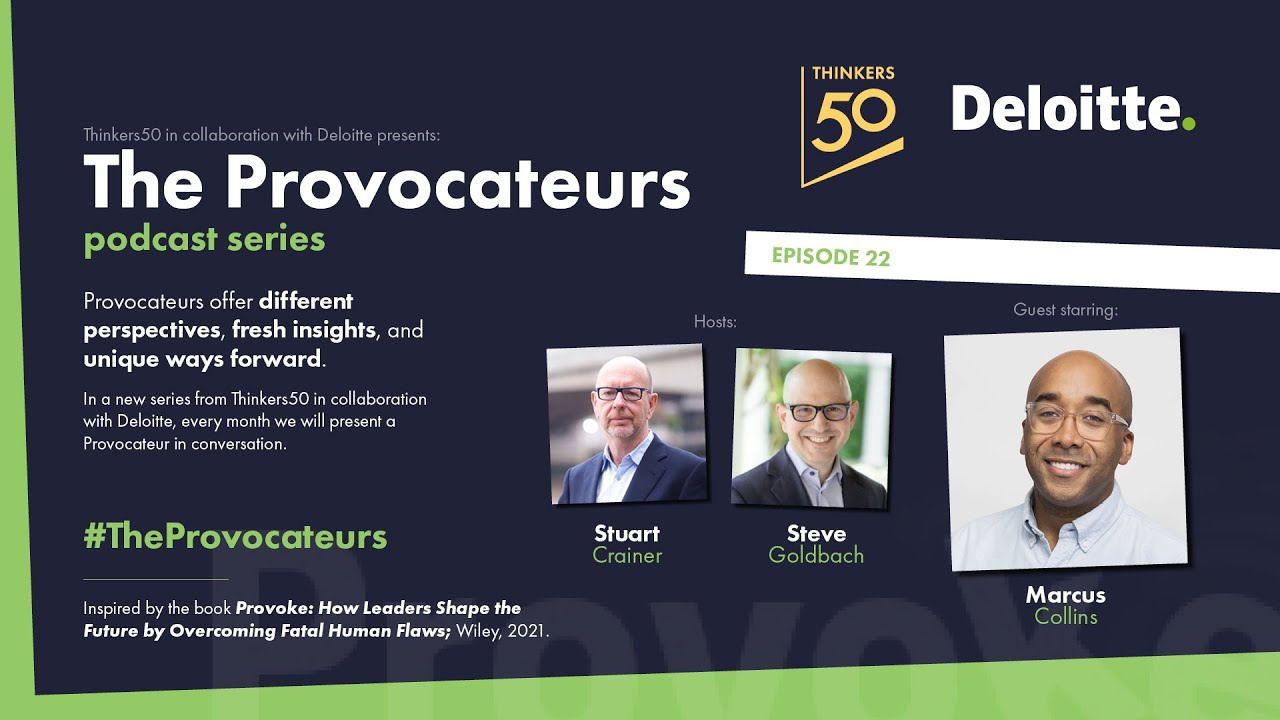
Marcus Collins: Culture, Connections, and Community | The Provocateurs: Episode 22

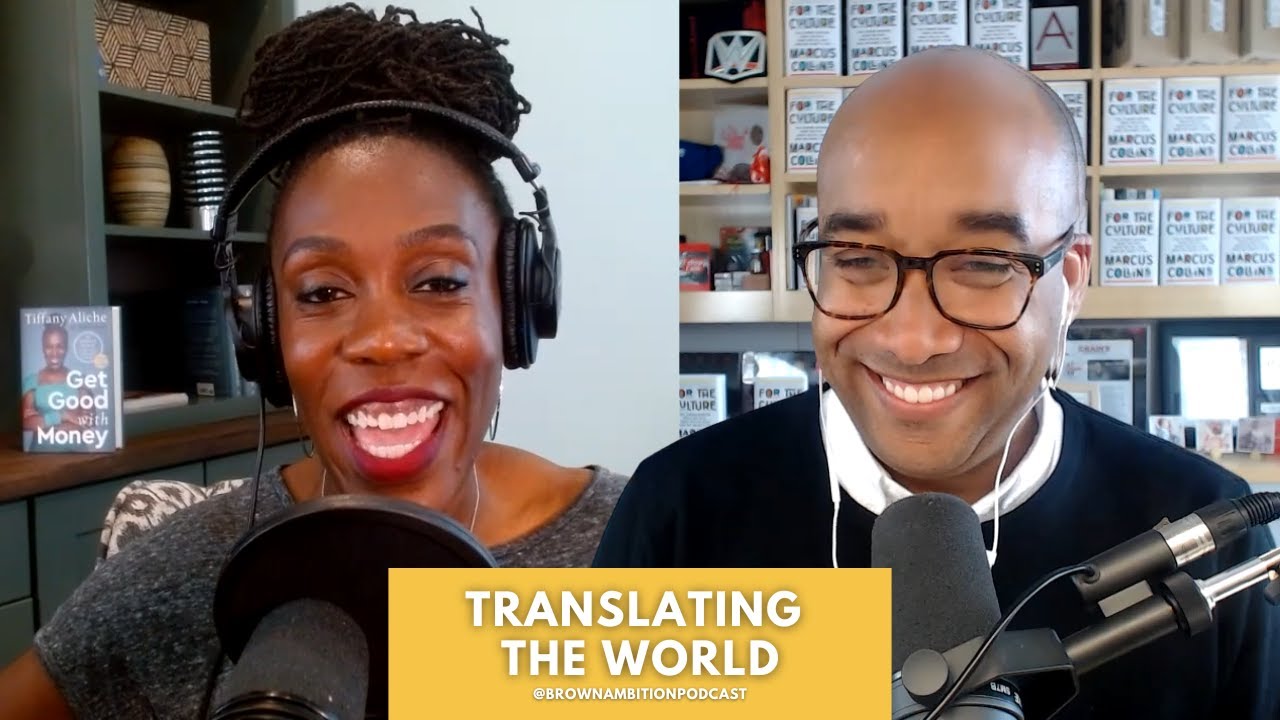
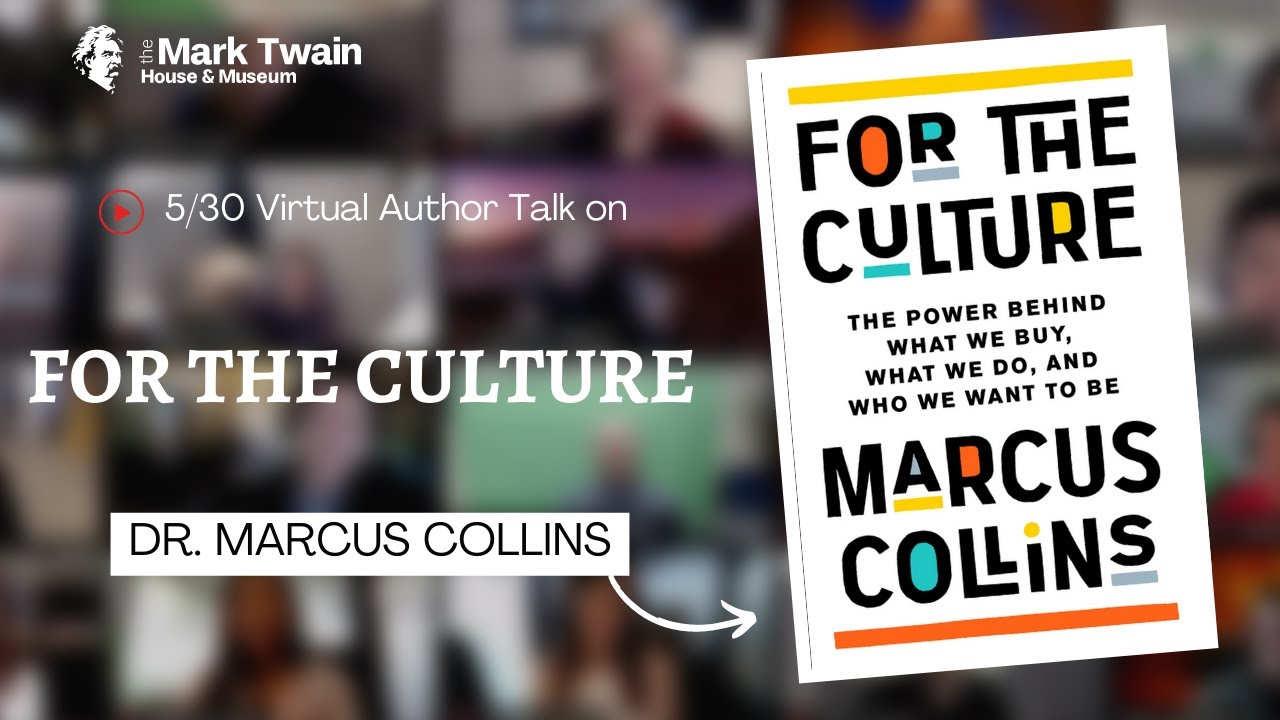
For the Culture: The Power Behind What We Buy, What We Do, and Who We Want to Be

The Power Behind What We Buy, What We Do, and Who We Want to Be | Marcus Collins | Talks at Google