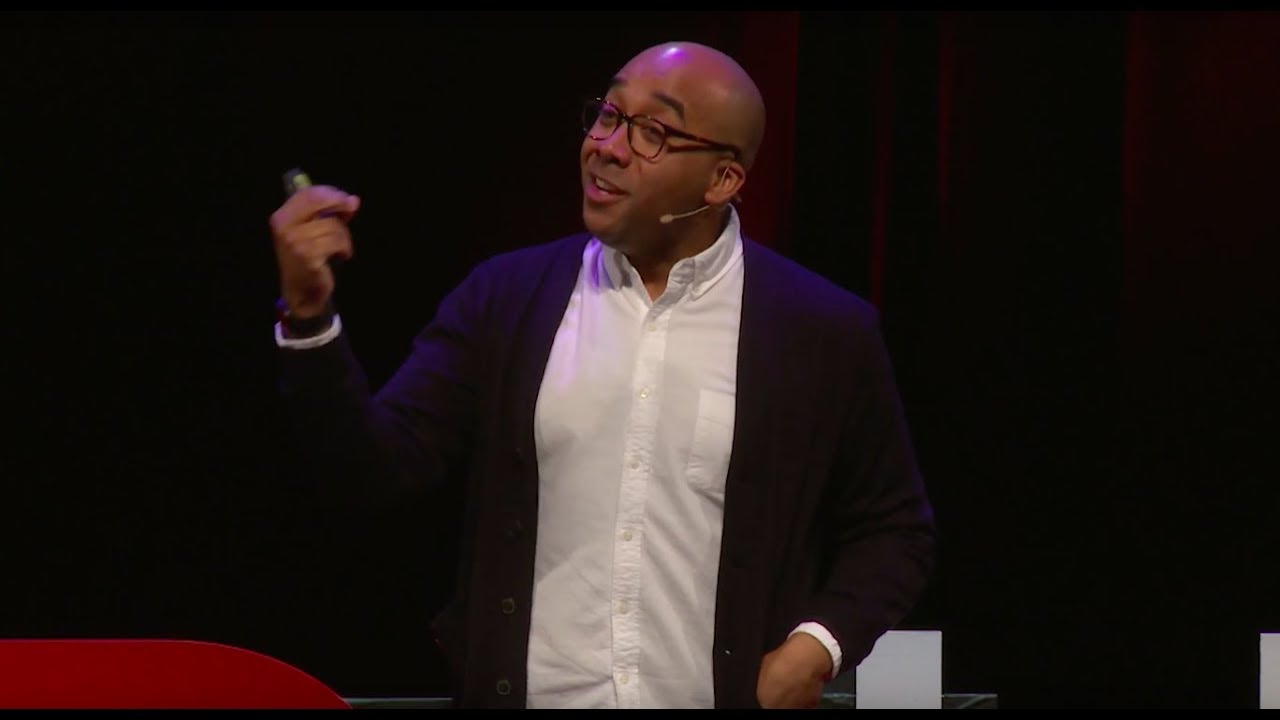
For the Culture: The Power Behind What We Buy, What We Do, and Who We Want to Be
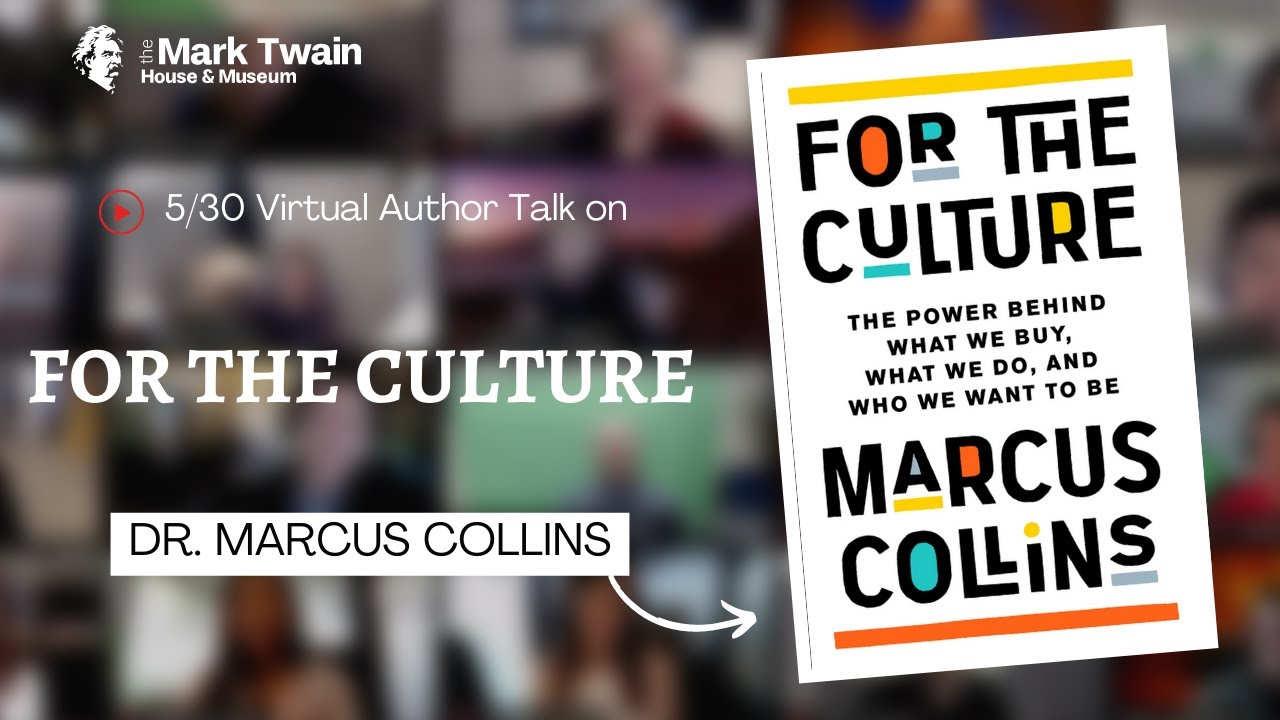
In a virtual conversation hosted by the Mark Twain House & Museum, moderator Donny Walton and host Omar Acevedo interview award‑winning marketer and cultural translator Dr. Marcus Collins about his book For the Culture. Collins traces his unconventional path from engineering student to music‑industry entrepreneur, Apple partner marketer, and finally head of strategy at Wieden+Kennedy New York and a professor at the University of Michigan. He explains why he frames marketing as "cultural translation" and adopts religious language—gospel, evangelism, passion—to describe how brands can align with the deeper convictions of consumers. The dialogue moves through concrete case studies (Sprite’s “Obey Your Thirst,” Bud Light’s trans‑influencer backlash, Patagonia’s anti‑consumer campaign, Ben & Jerry’s activist stance, WeWork’s cult‑like narrative, Theranos’s fraudulent gospel) to illustrate the consequences of conviction versus opportunistic pandering. Collins and Walton discuss the role of culture in identity formation, the thin line between cultural appreciation and appropriation, the impact of misinformation and political messaging, and the ethical responsibility of marketers to tell truthful, empathetic stories. The conversation ends with reflections on power imbalances in the advertising industry, the need for junior voices, and a hopeful vision that better language and cultural awareness can reduce culture wars and foster more civil discourse.
Chapters
Let's get started. We'll slowly have people coming in. Right, yeah, we're climbing in the numbers. Hi, everyone. If you'd like to let us know where you're tuning in from, that'd be awesome. I am not at the Mark Twain House this evening. It's all closed up tight for the evening. Yeah. This is a virtual background. But I am right across the river in East Hartford, Connecticut. Um, Donnie's in Brooklyn, and Marcus, are you in New York or LA?
I'm in New York at the moment.
Awesome. Hi, Emily. Uh, Emily's at Columbia in Columbia, Maryland. Nice. All right, you know, I'll just go ahead and get started as people are coming in. Hi, I'm Omar Acevedo, and I'm the literary program coordinator at the Mark Twain House and Museum in Hartford, Connecticut. Thank you for the program, For the Culture: The Power Behind What We Buy, What We Do, and Who We Want to Be. First, I want to thank our sponsors. Our virtual programs are produced in part with support honoring the late Frank Lord. We are happy to honor his memory with these programs, and we are also incredibly grateful to the Wish You Well Foundation and Connecticut Public WNPR for supporting all of our virtual programs. Please consider supporting our museum by becoming a member. All members receive free admission to our author programs like this one. the house and museum, year-round discounts in the store and cafe, and much more. I'll put a link in the chat and you can take a look at that whenever you're able. Now on to our guests. Our author is Dr. Marcus Collins, who is an award-winning marketer and cultural translator with one foot in the world of practice, serving as the head of strategy at Wieden+Kennedy New York, and one foot in the world of academia as a clinical assistant professor of marketing at the Ross School of Business at the University of Michigan. He is a recipient of Advertising Age's 40 Under 40 Award and an, and an inductee into the American Advertising Federation's Advertising Hall of Achievement. His strategies and creative contributions have led to the launch and success of Google's Real Tone technology, the Made in America Music Festival, and the Brooklyn Nets, among others. Prior to his advertising tenure, Marcus worked on iTunes, Nike sport music initiatives at Apple, and ran digital strategy for Beyoncé. Marcus holds a doctorate in marketing from Temple University, where he studied social contagion and meaning-making. He received an MBA with an emphasis on strategic brand marketing from the University of Michigan, where he also earned his undergraduate degree in material science engineering. And our moderator, Donny Walton, is the author of The Final Revival of Opal and Nev. which was the winner of the Mark Twain American Voice in Literature Award, the 2022 Aspen Words Literary Prize, the VCU Cable First Novelist Award, and the Audi Award for Fiction. Her debut novel was also longlisted for the 2022 Women's Prize for Fiction and was named one of the best books of 2021 by the Washington Post and Esquire and former U.S. President Barack Obama. She is the co-founder and editor— and editorial director of Ursa, an audio production company celebrating short fiction from underrepresented voices, and is the co-host of its accompanying podcast. Formerly an editor of Essence and Entertainment Weekly, she has received fellowships from MacDowell and Tin House and an MFA from the Iowa Writers Workshop. where she has taught a fiction seminar. Now we encourage you to have a conversation in the chat. If you have a specific question, though, you can post that directly into the Q&A section that is at the bottom right, close to stop video and participants. You'll see the Q&A box there. You can also click on captions to see live auto-captioning of this event. And finally, and perhaps most importantly, I will be putting a link in the chat to purchase For the Culture through our museum store. Your purchase will support our museum and our honored guests. Please sit back and enjoy. I'll turn this over to you, Mark and Dawny.
Amazing. Omar, thank you so much to you and to the Mark Twain House for everything you do. And for asking me to moderate this wonderful collection about this super fascinating book. And Marcus and I had a chance to kind of chop it up a little bit a couple of days ago and talk about what we would discuss today. And one of the things I said was, you know, I was at first a little surprised to be asked to give this book, which is like a very serious, like nonfiction, very serious, you know, very scholarly book. And I just write fiction. But the more I read this book, the more it made sense to me why I was chosen, because it has so much to do with pop culture, so much to do with the way that we think and consume now, so much to do with politics and everything. So we're going to get, get to all of that. But first of all, Marcus, welcome and congratulations on the publication of this book.
Thank you so much for having me. And what a way to sort of downplay a scholarly book. Hello. I mean, I feel like Donny, I'm not worthy.
My little fiction stories, whatever.
No, this is amazing. And I'm super grateful for the opportunity. So thank you to the Mark Twain House. And thank you for you for lending your brilliance to this conversation.
Oh my gosh, it's my absolute pleasure. I felt like I learned so much when reading this, things that I felt were in the ether, but this book really articulates in a very brilliant way. And I think I'll start by talking about This work that you do, marketer and cultural translator, which sounds— that cultural translator I just love. What was your journey to this career? And when and how did you realize the study of marketing and messaging and moving people was something that was interesting and fascinating to you?
Well, it was a long and winding road for sure. I had no intentions of going into marketing. definitely no intentions of going to the world of the academy. I was a terrible student undergrad. In fact, I studied engineering because I thought that's what you're supposed to do, right? I'm from Detroit, born and raised, did well in math and science. In my mind, in, you know, the conventions of people like me is that you studied engineering if you did well in math and science. So that's what I did. Struggled all through school, struggled terribly through school. But when I graduated, I went into the music industry because that's what I really wanted to do. And that was Moderately successful, mostly disappointing. Went back to school to study the disruption that was happening in the music business that we know to be digital. Went to go work at Apple doing partner marketing for iTunes, moved to New York, met a gentleman named Matthew Knowles who has a daughter named Beyoncé. And he goes, let me get this straight. You're an engineer, started a music company. You have an MBA, you worked at iTunes, and you're Black. Like, dude, you don't exist. You're a unicorn. Unreal. I'm real. I'm a real person. He says, well, you should run digital strategy for Beyoncé. And I said, I should totally do that. And that sort of was like my real thrust into this world of marketing, business, and culture, even though I didn't have the language to describe it. Found myself in the world of advertising shortly thereafter, and I really kind of hit my stride when I met a gentleman by the name of Steve Stout, who was a record label executive Used to run, used to run Interscope's urban music department, but started an advertising agency with Jay-Z and Jimmy Iovine from Interscope. And he's, he really kind of blended these 2 worlds that I was trying to navigate, but in ways that I'd never thought about before. Now, I went to Stout's agency Translation. It really changed the way I saw the world. And while we talked a lot about culture and helping brands navigate contemporary culture, I realized that we didn't have a great language to describe it, not just the agency, but the industry writ large. And that sort of started me thinking about, oh, that's a problem. If we can't define this thing concretely, how do we ever operationalize it and do the things that we say that we're trying to do as practitioners? And, you know, the world of academia started to open up for me as I started to become much more curious. And I think about myself as this academic practitioner that's taking these things that we rigorously interrogate as academics, but then apply them to— and the translator part is taking what we know of contemporary culture and translating it for clients to understand, for brands to understand what this world is that they don't occupy, but then helping contemporary culture understand these brands and what they intend to mean so that there is congruence between the two talking.
Fantastic. The language, the need for a language. in this work. You know, I find the terminology that you use in the book, and I think some of the words are from, you know, the word to evangelize, meaning to sell, you know, is a word that we sort of use in the parlance. But you yourself, I mean, I think you also like use a lot of religious terminology. So it's not the target audience, it's the congregation. It's not the message, but the gospel. And there's a great section about how marketers, quote, start with the soul and end with the sale. So I'd love to talk about, you know, why do you think the language of religion is fitting for this field of study?
You know, those early scholars in sociology, which is where most of my literature repertoire sits, the Weber, the Durkheims, the Marx of the world, you know, they studied Observing religion. These guys observed religion because they realized that this is a social institution where people would exercise the characteristics that we would now call the social facts or the cultural characteristics that govern a group of people. So when I started to think about the book I was going to write to help provide this Rosetta Stone for people to talk about culture in a concrete, operationalizable way, it's like, man, what angle? What would I grab this, you know, what handle would I use to kind of get at this? And I thought to myself, oh, these, these early scholars, they use religion, and I am a church boy. So I go, oh, okay, wait a minute, this is a good marriage happening here. And all that language that we use colloquially in, in marketing, i.e., to evangelize the brand, you know, all those things come from the religious text. So I use that as kind of a It's not a recurring theme. It's more of a motif, if you will, which one would argue they're one and the same. But like, because those early scholars used religion as a way to observe culture, I use the language or the lexicon of religion to talk about the mechanisms that marketers, leaders, evangelists, politicians, activists can leverage to harness the power of culture.
Yeah. And another word too that you talk about is passion. And the, you know, the fact that that is actually also a religious word,
right?
And people having passion for brands, meaning not just that they love the product or the messaging of the brand, but they're willing to suffer for it.
Yeah, I mean, that's the, that's the religious text. You know, we talk about the Passion of the Christ, it's the suffering of the Christ. So we talk about what we're passionate about. What we really mean to say is, for what are you willing to suffer? Right? Think about people who are passionate about a brand. They'll stand in line for hours and hours and hours to be the first one to get it.
Those sneaker drops.
Those sneaker drops. Exactly. They'll chase every breadcrumb that exists across the internet in an effort to be the first to get the sneaker drop, to get the Supreme drop, or whatever the case may be. Right? They're willing to suffer for it. And that's a powerful thing because, you know, I talk about with brands, it's like, you know, what do you believe? What are you passionate about? Like, what do you— what is your passion as a brand? And ask yourself, for what are you willing to suffer?
Mm-hmm.
Or what are you willing to give up revenue because you're that convicted about it? I think when we identify those things, we start seeing a brand operate above the category, transcend the category to something that's far more, far That's far more internal, that's far more conviction-led.
And so people wanting to wear a brand on their body because they identify with the ethos of the brand rather than they just like the jacket or like the sneakers.
It moves beyond the functionality and becomes a receipt of identity because of what the brand means, what it stands for beyond
the
the value propositions beyond the razor sharper, the battery lasts longer, the car goes faster, because of what the brand means in the minds of people, that I use this brand as a shortcut to my own identity. And that is unbelievably powerful when we think about how we consume and for what we consume and what we're willing not to consume.
I
have a friend of mine, I don't think I mentioned this in the book. I have a friend of mine who has this red, Polo hat, like Ralph Lauren polo hat, and he wears it when he goes running and he loves his hat so much. But after 2016, he stopped wearing the hat.
Yeah, not the red, not the red hat.
That's right. People could see him from afar and thought that he was supporting MAGA because his identity was not congruent to what MAGA stands for, what it believes. And when there is incongruence in that way, we reject it. But when there is congruence, we're more inclined to consume.
Right. This segues nicely to a question that I had. You know, it was difficult. This, this is a book that could constantly, you know, it's very up to the moment, but also there are things happening every day that could go right in this book. And so the book sort of opens with a great example of from Budweiser, you know, the campaign they did. Everyone remembers What's Up and how, how brilliant that campaign was. But of course, in recent news, Bud Light has been having some challenges because of— I'm not sure if it was like a full campaign or even like one ad, but featuring a trans woman, Dylan Mulvaney, and people who don't agree or are not, you know, for trans rights and trans representation, taking their Bud Lights out in the yard and doing all kinds of crazy things with Bud Light. In this moment of like culture wars, you know, how can brands kind of navigate that? You know, what are the things they should be keeping in mind? Is it better to potentially lose one audience to gain another?
Yeah, I mean, it's, it's, it is a valid question, and it's one that requires a lot of discourse. You know,
what I would—
Yeah. Is that, you know, what the brand believes is what it believes, what it's convicted for and about. And conviction, by definition, is what are you willing to stand for, even if you're the only one standing for it? And the sad part about the Bud Light scenario is that Bud Light used to be an advocate for the LGBTQ+ community. In fact, I worked on Bud Light some 12 years ago, and we worked on LGBTQ+ initiatives, i.e., Prop 8, i.e., marriage equality. Like, I did that work, and I had clients legit tell me that this community matters to us. They matter to us, right?
Mm-hmm.
And therefore, we wanna support them in this moment because they matter. So for Bud Light to partner with a trans influencer, that makes all the sense in the world because they've been about that life and—
Right.
They had receipts to prove it, right? So this isn't like them jumping on a trend. They've always been about this. But the moment that they got backlash for it, they backed off. And as a result, not only did they offend the people that were offended, but then they also offended the community for decades, for at least a decade when I worked with them. And so all that goodwill they had garnered, they lost it because they gave up their conviction. Right. And trying to play to the middle essentially puts them in a place of indifference, right? You lose both sides of this. So I would tell Bud Light and any other brand, said, you know, your conviction matters. Because the minute you lose that, you are just a product. You are just— my relationship with you is purely transactional based on what you do, not transcendent to why you do it. And the hope of the book is not only to help steer marketers to make better decisions in those moments of facing resistance, because that's when you're really, you know, put to the test, right? People are pushing against you. Do you stand tall? If you don't, then like, how convicted were you? But also us as individuals, like, what do you stand for? Like, are you going to stand up when people cross the line on what you believe to be right? If you're a politician, do you stand up when the big lie is being professed? Right! Do you know it's a lie? Do you stand up for your convictions even though it may hurt you? Right? Like, the idea is that I suffer for this because I believe in it. And I think that brands like Bud Light are experiencing the blowback in real time of what it means to not be convicted. Right. While brands like Patagonia, who have a very strong conviction and have always had a very strong conviction, stands by it regardless. And even you say, well, Patagonia is a— it's a fashion brand, or they sell coats and jackets, like, that's different. It's much more conspicuous. than like the beer that I drink at home. Well, take a brand like Ben& Jerry's. Since they've been all about activism, like one would argue that like eating Ben& Jerry's is a demonstrative act of protest because of what the brand is all about. And when they came out in 2021, very, very vocal— maybe it was 2020— very, very vocal and said, we dismantle white supremacy. People were like, whoa, I'm not eating Ben and Jerry's no more. Ben and Jerry's said, great.
Great. But the people who love that and love Ben and Jerry's were like, Ben and Jerry's only, all the time.
That's right. That's right.
Right. Yeah.
Consumption becomes a way to make my identity and my cultural subscription tangible, not because of the propositions of the product, not because of the functionality, but because of what it means. And that makes sense for culture because culture is a realized meaning-making system. It's the way by which we make meaning.
Yeah, I would, I would love if you could go back a little bit to talk about Patagonia for the— because I was really— I didn't know that about, about the company and everything they're doing to really put their money where their mouth is. It's very impressive. And I'm not sure that any company is— well, maybe outside of Ben& Jerry's— is really operating at that level. Can you talk about some of the brilliant things that Patagonia is doing.
Yeah, quite literally, Patagonia is about that life for sure.
Yeah.
You know, as a, as a brand, Patagonia believes in mitigating our invasiveness on the environment. The founder, Yvon Chouinard, was an outdoor enthusiast, but the thing that really got him going was mountain climbing. And he would climb mountains, and when he realized that the, the products they were using, the tools they were using to ascend up a mountain, was actually defacing the, the, the, the, the, the stone, defacing the rock. And not only does that make a more invasive ascension, but it also ruins the ascension for people behind you. It makes it less safe. So he decided to create products to help mitigate that, those marks. Now, he, he wasn't a blacksmith, but he started taking blacksmith classes. Like, he wasn't like— this wasn't what he did. It wasn't like, I have the skill set, is there a market fit? He said no. He had a belief. And then he used his ingenuity to go develop these skills to make his belief material. And they just so happened to start making these rivets that you find in mountains, but also making jackets and gear and so on and so on and so on. And interestingly, you know, they have a very famous campaign from Patagonia for Black Friday. They put out an ad in the New York Times, full-page ad, told people do not buy their new jacket. Don't buy it. They're like, this is our new jacket, but please do not buy it. Well, why? Why would they want— why would they say that? They're telling people not to buy it. They're saying instead, why don't you get your, your old jacket repaired or recycled?
Mm-hmm.
Or at the very least, if you don't like the color, Patagonia will help you sell your jacket to someone, right? If the jacket is damaged, they'll repair it, or if they can't repair it, they'll give you store credit to buy a new one, right? And the idea— and by the way, they do that same thing, those free repairs, people who don't even have Patagonia jackets. That's how committed they are. Wow. And almost every move that Patagonia makes, the conventional wisdom would tell them economically would be to their detriment. They'll lose money by doing this. They actually made more money. Why? Because people bought Patagonia not because of what it is, but because of why they do what they do.
Mm-hmm. Not
because of what they do, but because of who these people are. And they wear Patagonia with pride, even though if you put a Patagonia jacket next to a Columbia or North Face jacket and remove the logo, you probably couldn't tell the difference. But once you put that Patagonia logo on there, it means something.
Right.
That name becomes a shortcut to our own identity. And that's unbelievably powerful. To your point, like, put your money where your mouth is. The Chouinard family gave up their ownership of the company. And they've given the, the, the company to a trust that's invested in the, the upkeep and protection of the environment. And that is unbelievably powerful.
So we're going to come back to some of this discussion about corporate responsibility, brand responsibility, especially as it relates to recent years and events. But I wanna like talk about young Marcus for a minute. So we're both Gen X, right? Yeah. And I venture to say that part of the nostalgia we feel is not just for popular culture itself, but for like, really, like, I remember ad campaigns. I remember I Want My MTV was the one that sparks a certain like fun memory for me. Um, what are some of your favorites that you remember, like, maybe not realizing in the moment that they were brilliant, but once you started doing this work, understanding exactly the thought that went into, um, that messaging?
Yeah, well, I talk about this in the book, as you know. Uh, it's got to be Sprite, Obey Your Thirst. I mean, I didn't know anything about marketing. It wasn't at all in my purview, and I wasn't looking at it in any rigorous interrogative stance. However, when I saw it, it's the first time I can remember that I could remember feeling like an ad was talking to me. Right? Like, even I want my MTV. I love, I love those commercials. But we didn't have MTV. So you weren't talking to me. Basic cable. I watched cable at my friend's house. We had basic, you know, rabbit ears anyway. I saw that Obey Your Thirst ad. And I remember it so vividly. It said the first, the first title screen says, one night at the studio, dot, dot, dot, ellipsis. And then you've got Pete Rock and C.L. Smooth, who are not like, they're not household names. Like, they're not Jay-Z. Like, my mama didn't know Pete Rock and C.L. Smooth. But if you were part of that subculture, you go, oh, those are the guys. They reminisce. Like, those are the guys, right?
Yeah.
And then you've got Pete Rock and CL Smooth, they're freestyling in the studio in black and white doing a cypher. And you see the can of Sprite on the mixing console and it looks like it blew up. Then you see another vignette and it's Grand Puba, Large Professor in a literal cypher going back and forth. And it's like, yo, they hugged all the nuances of what it must be to be in the studio with these guys who are cultural producers for the subculture that I subscribe my identity to. And I didn't know, I didn't have the language to talk about it in that articulate way. I just felt like that was dope. That's all I had was like, that was so dope. And every time Sprite brought themselves to the market in that frame of obey your thirst, they just got it right every single time. Their proximity to the culture was Unbelievable.
Yeah.
And what I realized is that that's one of the biggest challenges of marketers today. And arguably, dare I say, anyone with a vested interest in getting people to move, is that we don't have close enough proximity to the people that we're actually trying to move. And because of that, we don't know the nuances. And maybe it's worth actually talking about, like, what is culture?
Yeah. What is culture?
This word that we use all the time, but still have the language to describe it. So I think about it from a Durkheimian view because my repertoire is in sociology and these guys are the founding fathers. And Durkheim, Émile Durkheim, would talk about culture as this system of conventions and expectations that are not only expected, but acceptable for people like us.
Right?
Depending on who you are, there are a set of values, symbols, norms that demarcate who you are, what people like you do. And about a century and a half later, a gentleman by the name of Raymond Williams, you know, he talked about this idea of culture being a system of systems that are anchored in our identity, shaped by the ideologies and beliefs that we have, and then it informs our way of life, right? So because of who I am, I adopt a set of beliefs, the truths that I hold about the world, and ideologies, stories that I tell myself about the world. And because I see the world through these lenses, these truths, these ideologies, I therefore show up in the world a certain way. So when we talk about hip-hop culture, hip-hop culture has an ethos. As you said, it's a belief system. And because of that belief system, we dress a certain way, we act a certain way, and we talk a certain way. And there is cultural production that expresses or reflects what those ethos— what the ethos looks like in a creative format, in a creative modality. And watching that Obey Your Thirst spot, and I was like, dude, they got the artifacts so perfectly. Yeah. They got the language so right. The behaviors were spot on. I didn't have the language to describe it, but that's exactly what I was signaling or what I was feeling when I was emoting when I said that that's dope. And when brands, politicians, institutions, organizations, when they get that closeness, when they get that nuance, so subtle nuance, they understand it, you go, man, you're one of us. You're one of us.
Well, speaking of subtle nuance, we have to talk about your cover. Because I saw this cover, and it immediately conjured a lot of things for me, which I know I was right about, because we talked about this before. But I'd love to hear in your words, because your cover is really sort of like saying, this is what this book is, this is what it's about, this is what I'm about. So we're looking at the lettering, we're looking at the colors. What was it that you wanted to Signal.
So, so like we talked before, like you got it spot on, like spot on. What I told the publisher when they asked me what I wanted in the COVID I said, I want the COVID to feel like I'm talking to people like me. I wanted to be sort of metacognitive in that way, that I wanted the book to feel like a reflection of the cultural production that I grew up consuming, that came of age consuming. And that, of course, was Spike Lee movies. It was Martin, the TV show. It was hip-hop. It was Tribe Called Quest. It was In Living Color. It was— and now though I didn't go to an HBCU, but in the '90s, that HBCU aesthetic was so prevalent. It was just so a part of like everything. Oh yeah. I mean, I had sweatshirts even though I didn't go to Grambling. or Howard. Like, I didn't go to those schools, but like, it was a reflection of me and people like me. And the hope in the book was that people who grew up on that cultural product would see the COVID and go, oh, you talking to me.
Because this graphic style was all of those. For some reason, this was the prevalent graphic style for all of those things. And I went to FAMU, so I had to— Oh, so you already know what's up.
Listen.
Yes, you nailed it. You nailed it with that. Yeah.
I mean, it's so interesting because I hear people say, oh, it's giving Martin vibes. Oh, it's giving Spike Lee vibes. It's like, it's giving both the vibes. Like, you're right, exactly. All that production, like, I wanted it to feel almost like a wave of nostalgia when you picked up the book. You go, man, like, this thing, like, it feels so familiar, so familiar, yet kind of foreign. I mean, even the title of the book, a Jay-Z quote from his song Izzo, I do this for my culture. And that's a part of the vernacular of the predominant Black culture. But if you ask people, what does that mean? And you get a lot of different answers. And the hope is that this takes that language that Jay-Z used to encapsulate why he does what he does. I do this for my culture. And sort of turns it on its head and say like, we all do it for our culture. What we buy, where we go, who we marry, if we marry, where we go to school, if we go to school, how we bury the dead, if you bury the dead, where you eat. All these things that we do, they're all byproducts of our culture. And there's no external force more influential than culture. And the better we understand it, the more likely we are to leverage its power.
Right, right. So there's— this is a book that's stuffed with really interesting case studies, and some of them are, you know, success stories. The Obey Your Thirst, Patagonia, the What's Up, Budweiser. But maybe this says something about my personality. I was very interested in the darker stories and Because I think there's often a lot to learn when things go awry. Yeah. So I want to talk about a couple things on that note. In one section, you focus on 2 figures who were able to move people by, you say, spreading good gospel about bad products. One of those people is Adam Neumann of WeWork. The other person was Elizabeth Holmes of Theranos, who I believe just started her sentence.
That's right. She sure did.
Um, I thought it was interesting that both of those stories have been dramatized for television, limited series watched by many people. I watched both of them. I'm kind of really obsessed by these, with these stories of bad, good gospel spread about bad product. I also tie in cult leaders with this. We talked about how you're obsessed with everything, how cult leaders and the messaging What makes these stories of scammers, grifters, cult leaders— why are we so fascinated? What's going on there?
You know, I think it's the unbelievability of it all. I mean, when things are unbelievable, you go, how could anyone fall for this? How could anyone end up giving up their life, their money, their— how, how, Sway? How does this happen? And we— there's such unbelievability to it that we can't help but dig in. You know, there's a scholar at Carnegie Mellon by the name of George Loewenstein. He calls it the gap in knowledge. And the idea is that when there's a gap in knowledge, it acts as cognitive deprivation in that we've got to close the gap. So when we see cults, I mean, I'll speak for myself, for sure. When I see a cult, I go, how did these people get sucked into this thing? I don't understand. It seems so clear. But as they say, no one ever joins a cult. No one says, I want to join a cult. No, they join a social group and they don't realize it's a cult almost until it's too late.
Yeah.
And if you think about it, like, what is a cult? A cult is short for culture. Something you're committed to. Right. You're committed to this thing. And we all are a part of our own cults. And it may seem crazy that we are part of this thing. I mean, I remember working at Apple. I talk about this in the book too, that like I donned all the Apple vernacular, the Apple wardrobe, the Apple-isms, the behaviors. I did the whole thing when my identity was ascribed to being Apple. employee. And what do we say about Apple and companies like Apple? They have a cult-like following. It seems like a cult, whether you are an employee or a fanboy. And while those people go, no, I just love the thing, it's not a cult. Well, it seems that way on the, on the outside, and it just seems crazy these things will happen. So you look at something like WeWork. I mean, the, the level of devotion people had to this company that really was a bunch of smoke and mirrors. You go, how can this happen? It makes for great storytelling. Amazing.
To your point, like, there was a whole culture that Adam Neumann kind of like created for something like that was just really like office space. It was like, by the end, when it was crumbling, there was a school that people were sending their children to. I mean, that's really—
I mean, it says a lot about like how these things work. I mean, Adam Neumann was a great storyteller. And he told— he preached the gospel, the power of we, right? What we as a species are capable of when we come together, not only when we work together, but when we educate together, when we live together. It was we. I mean, they called themselves the We Company.
Mm-hmm.
And what a beautiful gospel to buy into. We,
right?
Much like, hey, we are God's chosen people, and therefore if you are part of this, you're going to be ascended up through a spaceship and all the other sort of folklore that goes with some of these cults. And you look on the surface and go, this sounds crazy.
Yeah.
But right when this— when the gospel is preached And people see the world similarly, they can't help themselves. We can't help ourselves. And all of us, I mean, we're all a part of our own cults, our own social groups to which there are cultural characteristics that govern what it means to be a part of it. And because we subscribe our identity to it, we fall in line.
Mm-hmm. It was very difficult to read this book and not think about politics.
Oh, yeah. Totally.
And not think about the messaging today around politics and the fact that, you know, there's a line you say in the book where, you know, a message that is repeated over and over again in someone's mind can become true. And we've seen that play out with January 6th, the big lie. And, you know, we spoke and very honestly, the Republican Party have become quite— I don't know if I want to use the word masterful, because in my mind it's very destructive. Yeah. But they know how to spread their gospel in a way that it seems like other folks have not, you know, and it's probably because it is like a constant repeating of Wise. I'm getting, I'm getting on my soapbox, but—
So no, it's, you're right though.
I mean, I just, I, you know, I want to ask you, when you are confronted with messaging like this that is so pervasive, we have misinformation messaging, you know, I was reading something very terrifying earlier today about AI and the, the risk of misinformation and the repetition of misinformation. How can we combat that?
It's difficult. It's really difficult. And, you know, you, you are right to go immediately to politics because I would argue that the, the Republican Party are probably the best at this, full stop. Like, they're better than marketers, they're better than advertisers at this. Their conviction is very clear. Like, what they believe is very clear, and they are very skilled at preaching the gospel. Not only that, but the people who are part of the community, they fall in line.
Right?
Okay, this is what we— this is what we're doing. Let's get behind it.
It's not really room for nuance, which is actually probably effective for them to not have nuance be part of the conversation. It's this or that. And we are this.
Have you ever heard someone explain to you a story with nuance? You'd be like, just get to the point, man.
Yeah.
Just get to the point. Like, don't be caveating everything. And don't— like, I don't— like, get to the point. And unfortunately, in a 2-party system, you have Republicans who have a very clear ideology, a very clear gospel, at least what they preach. And they preach it very well in a way that is easily socializable and easily repeated. Where on the Democratic side, it's far more rational. Logical, linear in thinking, but it requires nuance. It requires caveats. It requires, hey, you know, in this situation, it's this, it's— and that's hard to socialize. And therefore, when you hear the talking points, you go, man, like, that just seemed much more easier to digest. And as a result, we, we take it in easier. I mean, look, the job of the brain is to be judicious about where it allocates information or allocates its energy so that you can stay alive. The job of the brain is to keep us alive, right? So when it's taking in information, it's retaining the things that are easier to digest, taking the things that are easier to process. And Daniel Kahneman, who's a psychologist, a Nobel laureate psychologist at that, you know, he says the quote that I mentioned in the book, that frequent repetition makes it hard for us to distinguish what's true and what's not.
Mm-hmm.
Authoritarians and advertisers have known this for forever. And this is what authoritarians do. They preach the gospel over and over and over and over and over again. And the people who are part of the community preach the gospel over and over and over and over and over again. And before long, you can't decide what's true. So all you lean on is what feels familiar, what feels fluid. And unfortunately, marketers do the same thing. commercial ad after ad over and over and over again, you start to think, oh, maybe that's what it is, because that's what comes to us quickly, the most— in the most quick fashion. So what it means for us then, as a way to combat that, is that we have to tell good stories too.
Right.
We have to get better at telling stories. We had to get better at activating the part of the brain that's associated with behaviors, the limbic system. We have to get better at the stories that we tell. We don't have to tell the same stories, right? My aunt used to say this, that the truth, they tell it like a lie, and people with lies tell it like the truth. And the same thing kind of goes here, that when there is true, like, tell it with conviction. Like, don't— you know, you don't have to over-contextualize it. Just tell it like it is, but tell it in a way that's going to activate people. But unfortunately, we don't have a great ton of that.
Yeah. Oh, I'm just a reminder, put to the audience listening, I, you know, I have more questions for Marcus, but if you have questions for him, please pop them in the Q&A section.
Donnie, you know what's a good point to make, just kind of, kind of put a bow on that?
Yeah, yeah.
That like, the ideas in the book and everything we were talking about right now, you know, they are They're value neutral. They're not good or bad. It just is. Yeah. Like, we're looking at human behavior and taking human behavior to inform how we might activate them. So these things aren't good or bad, they just are. And the idea then is that, you know, we as practitioners, we owe some responsibility to be good stewards of this knowledge and of these skills. And what I end the book with, you know, is kind of charging the reader with like, hey, now you know this stuff, now you have responsibility. In the words of Ben Parker, like, great— with great power comes great responsibility, right? Because these things are value-neutral, we have to be good stewards of it. And that may mean, to the point, uh, that we're just making, is that you need to tell better stories now. Like, you have that responsibility to tell better stories now. It's not enough doing what you've been doing, but you've got to tell better stories to over— Right. The people who've been, you know, 10 miles ahead of
you. Great. Sort of on this note about, you know, responsibility, in recent years we've seen so many brands sort of address sociopolitical issues head on. And the example I'm thinking of is June 2020, in the aftermath of George Floyd being killed by Derek Chauvin. I can't remember his name. But there were a lot of brands, there's a proliferation of statements, you know, we kind of refer to it as the black square Instagram moment, where there was, you know, a day where all brands kind of posted black squares, and their commitment to equity, inclusion, their commitment to various things. But I do feel that many people have complained that That messaging was ultimately meaningless because the brands never really followed up. And those promises were just kind of quickly abandoned. You know, people feel the moment was exploited for these brands to have currency. What do you think about all of that? And how do you think brand promises have changed over the years?
Yeah, the block was hot. So Brands were jumping on the bandwagon, right? It's like, oh, this is what we're doing. This is what we're gonna do too. We're gonna make tons of promises because they believed that the George Floyd execution was a reckoning, a societal reckoning.
Yeah.
Society was like, okay, we're evolving as a culture, right? The culture of the nation by and large was that, nah, nah, nah, we have these expectations from institutions. Institutions said, okay, great. I'll change. And then when people stop holding them accountable, they're like, oh, all good, on, on to the next thing, right? And, and, and I, I would charge us as citizens just as responsible as those brands, right? Like, what's this— I can't misattribute the quote, but the paraphrasing is, you know, you can't count on your oppressor To give you freedom.
Right.
You, you can't count on your oppressor to say, oh, I'm sorry, was I oppressing you? My bad. Here you go. Come on up and live your life fully. And oh yeah, I'll take concessions and I'll take less just to make sure that you're equal, my friend.
Right
now, that's not going to happen. Like, it's not going to happen. Like, it has to be demanded of them. And at that time, people were demanding that of companies. They were like, yo, what are you going to do about this? X, Y, and Z brand. And brand said, we're going to commit this, we're going to do that. And then the minute that, that the pressure was off of them, they didn't feel the need or the responsibility that they're being held accountable. They said, let's just kind of sweep them under the rug. Let's move on to the next thing, the next thing that we're going to be held accountable for. And that is an unfortunate byproduct of A, the— I want to say the performative activism. It's another byproduct of the fact that social networking platforms provide receipts of behavior. So at least brands can say, hey, we were there when it happened, we did the thing. While there aren't necessarily receipts for, all right, did you do the thing or not? By the time people start to check receipts or do an audit, we had moved on to the next thing, unfortunately.
Yeah, yeah. One of my favorite parts of this book is toward the end when you talk about the difference between cultural appreciation, as with the Sprite campaign, Obey Your Thirst, really seeing you as part of this culture and recognizing that and the power of that. Versus cultural appropriation, which would probably be something like the Pepsi commercial that we remember with Kendall Jenner. Again, something else in the wake of that George Floyd moment, where the product is the peacemaker between the protesters and the police, or something very misguided.
That's right.
Can you talk about the difference between those 2 things, and why It's one of the most important things that a marketer can do to not confuse those 2 things when working with culture, when working to integrate culture into campaigns.
Yeah, I think that we often— we have seen as an industry, marketers, we think about cultural appropriation as a race thing, where it is a cultural thing that is predicated on power. And the idea of cultural appropriation, by definition, it is a people of power who takes the cultural markers of another community, strip them of their original meaning, and rework their meaning frames, rework their meaning without any indication or any acknowledgement of the original markers, right? So you think about Historically, Kim Kardashian, she wears cornrows to music awards. Cornrows, yeah. And they go, oh, we just love your hair, Kim. What are those? And they go, they're Boderick braids. No, Kim, they're not. So she took the cultural markers of a group of people and gave it new meaning, essentially robbing it of all its richness and all its history. Like, that's what cultural appropriation is. Like, it's giving new meaning to things. And typically that meaning is given not out of malice and not out of poor intention. It's about ignorance that I don't know. I'm not close to it. And that's the difference between appropriation and appreciation. Appreciation, cultural appreciation is, oh, like, I've learned about what these markers are. And because of it, when asked about them, I attribute them accordingly. Or because I know what they mean in the minds of the people who created these cultural works, I know not to even touch it because of how sacred it is. Much like, you know, kids wearing headdresses at Coachella, right? If they knew what they— what they meant, they would never do that because of what it signified to those people. But because they don't know what it signifies, they go, oh, that's super cool, that looks—
Yeah.
—outfit, and it becomes costumery.
Right.
So the notion of appreciation and appropriation requires an understanding of what the markers actually mean in the minds of people, those people, the people who actually created the works, what it means to them, and then engaging accordingly. Like, culture is meant to be shared. Like, we share each other's culture, but doing so requires understanding, and particularly when there's a power indifference. Hip-hop was birthed out of 2 marginalized communities, Black and brown people in Bronx, New York exchanging their cultural works. And out of that, we got hip-hop, right? Right. There's also— there is a cultural exchange where people who are marginalized in this country take from the dominant culture as a way to acculturate, right? But then the appropriation that we should rightfully be villainizing is when the hegemony, the powerful community takes from a marginalized community. And that is straight theft and robbery.
Right. Yeah, yeah. And speaking of power imbalances, you know, I think a lot of times when people see disastrous things like the Pepsi ad and they say, oh, they must not have had any Black people in the room, When you think about the Peloton ad that you talk about in the book, which was also sort of like the message did not get across, thinking there were no women in this room who made these decisions. But the truth is, often there are women in the room. There are people of color in the room. The problem is, is that they're often, you know, there's only one of them, or they're very junior. What would you say to those junior marketers who want to say something, don't feel empowered? Or I guess more to the point, what would you say to the industry and to the people in power to help give those people a voice?
I think it's unfair to think that those people should speak up. I think it's totally unfair because the— to your point, the power differential is so lopsided that they have so much to lose. So much to lose. It's like, to me, I am a Black executive in advertising. There are very, very, very few of me. There are only 4.2% of the advertising industry are made up of Black people. Very, very few C-level folks. Very few. Right? So to expect me, though I do it anyway, to be the voice of a people— Right. Like that, you're basically saying, hey, Marcus, like you gotta roll the dice on us. And now I do that because I'm senior enough to do that and know that if it doesn't work out, I'll go find a job somewhere else. But when you're a junior, you're just getting there, like, I've worked all this time to have my first time in the room, and now I'm responsible to tell all these people, like, y'all all wrong, y'all all foul. It's, it's an undue burden to put on young people, young people in their career, or people who are just ascending. So I'll say to the industry that it's your job. to be educated. It's your job to have perspectives that are not your own, because having a dominant position in society, that is a privilege. And to say, I just didn't know, that's a privilege to be ignorant.
Yeah.
And that's not fair for people who have worked so hard just to be where you are. So as leaders in this industry, like, it's your job to stop and say, wait a minute, We need to look at this through the lens of someone who's not myself, because I might have a bias, and we all have biases. And as a result, we should go, let's go talk to people who are not negatively impacted if they see something I don't like. And by that, that requires empathy.
Right.
The world through eyes that aren't your own. Yeah.
We are almost out of time. I have one more question for you to end things on a positive note.
Okay.
As a marketer, what gives you hope about the future? What's exciting you right now about this work?
I think that my hope, my true hope, my hope, my true ambition is that, you know, the book allows the thinking that I've put in the last decade So that when we have better language, we can have better discourse. When we realize that the world isn't objective, it's subjective, that we can go, oh, okay, I may not see it the way Donnie does, but like, that's a total valid point of view to have. And when we get there, I think it leads to more productive conversations. It leads to better tolerance and more civility. Because if we realize that the word— our truth is not the only truth, then we can find ourselves in a much more hospitable posture with folks. And so long as your truth doesn't mean mine oppression, all good, right? Like, you know, for some, a cow is leather, for others, a deity, and for some, it's dinner. Which one is it? It's all 3.
Mm-hmm.
And so long as the way you see it Doesn't mean my oppression— I mean, all good. I may not agree with it. I may not agree with it, right? But the fact that I respect that your perspective does not have to be mine for it to be valid, man, like, I think we start to erode a lot of the polar discourse that we're having in politics, in society, in the culture wars and the like. There'll be less culture wars and be more just, oh, there's just multiple cultures.
Right, right. Marcus Collins, thank you so much. Y'all get this book. It is fascinating. Really good read. And yeah, I appreciate you for putting this book in the world and for helping those, those junior folks to make their impact.
Well, I'm so grateful. And I love this conversation. I feel like we literally could have Kept on going.
I know it flew.
I'm grateful. I'm super grateful for it.
Thanks so much, Marcus, for joining us here, and thank you so much, Donnie, for acting as moderator. This was really an amazing conversation. Please, please, please pick up Marcus's book. You can do so through our museum store. And yeah. We will close it out now. Let me just let you all know about an upcoming virtual program we'll be having on June 15th with Aisha Harris about her new book, Wannabe: Reckonings with the Pop Culture That Shapes Me, where she mines the benchmarks of her '90s childhood and beyond to analyze the tropes that are shaping all of us and our ability to shape them right. And please join us for— at the museum for a tour. We're open every day. Check out our website for information on our hours. And that is all for this evening. Have a great— have a great rest of your night.
Thank you so much. Take care.
Thanks, y'all.
Thank you.
More from Dr.


Marcus Collins on why culture is a cheat code for success - Culture First Podcast with Damon Klotz
Marcus Collins: How to Understand Anyone, Market Like a Genius, & Secrets of Culture – 246
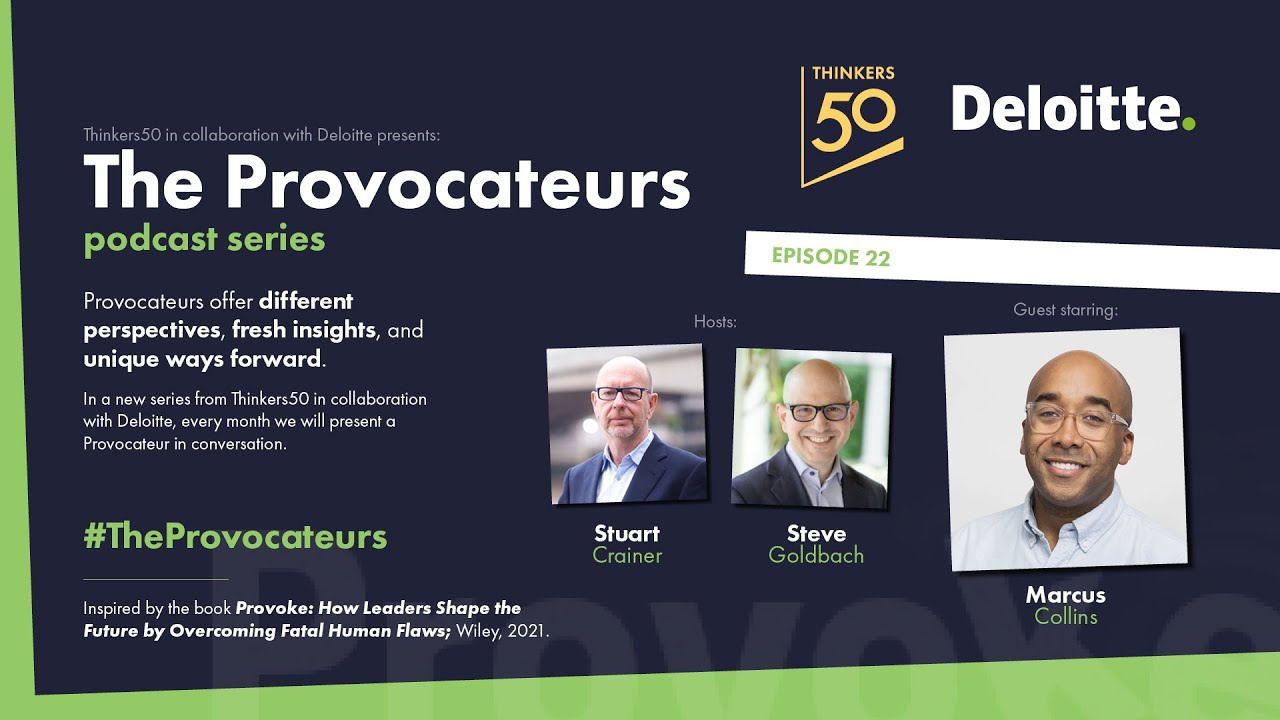
Marcus Collins: Culture, Connections, and Community | The Provocateurs: Episode 22

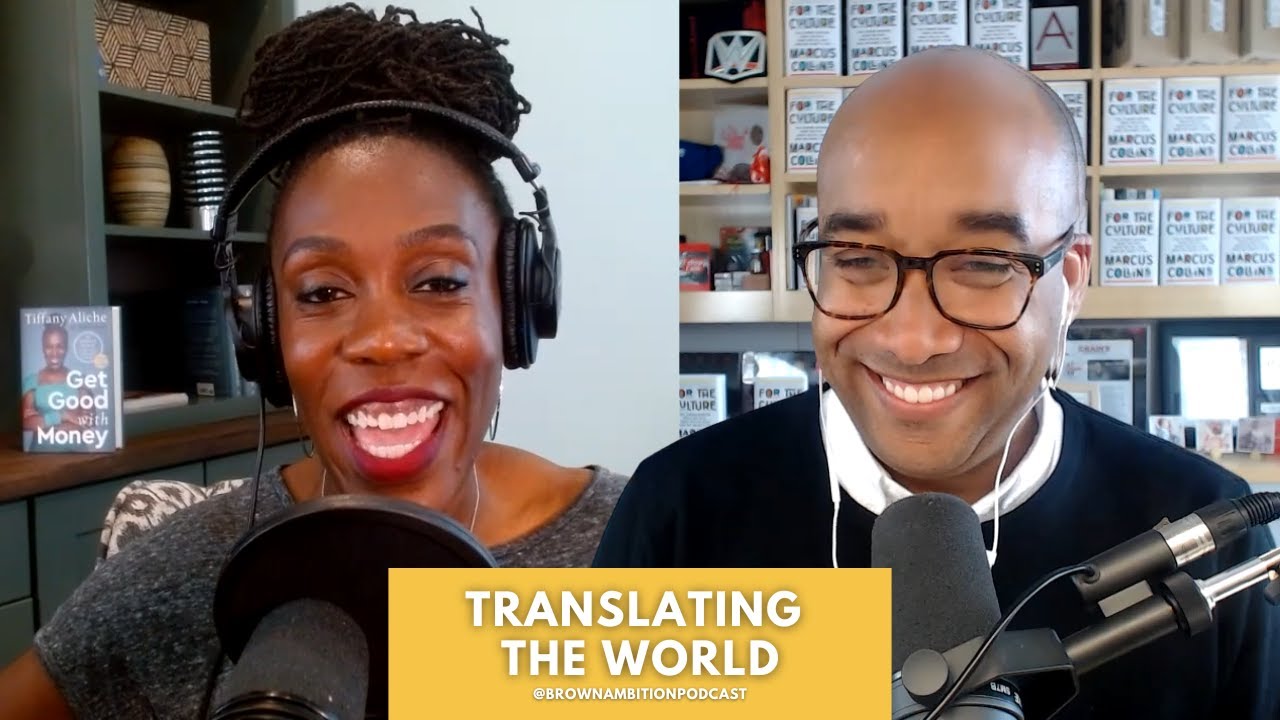

The Power Behind What We Buy, What We Do, and Who We Want to Be | Marcus Collins | Talks at Google