Marcus Collins: How to Understand Anyone, Market Like a Genius, & Secrets of Culture – 246
Dr. Marcus Collins explains how to decode culture through conversation and observation, not assumptions. He uses music as a universal connector, contrasts authentic insight with performative marketing, and shows how brands like Taylor Swift and Budweiser build lasting relevance through cultural festivals and encoded meaning that fans recognize.
Chapters
What does Beyoncé, Made in America Music Festival, and a professor of marketing at University of Michigan all have in common? Well, they are all examples of places and people that our guest today, Dr. Marcus Collins, has worked with. In this episode, we get into his book For the Culture: The Power Behind How We How and What We Buy, as well as strategies behind the Ego and Stranger Things marketing strategy that he developed, and how culture impacts marketing and vice versa.
Learning with Lowell.
Concept of cultural safari. They talk about in your book that you, you often go on to understand cultures for marketing and just, I imagine, just your pure love of learning. So can you tell me about how you do cultural safaris and the potential they have to understand different cultures, tribes, and beliefs that, you know, you meet along the way?
These means of cultural exploration, they are driven by one imperative. It's to see the world beyond your own worldview, right? Set aside your own ethnocentrism and all the biases that are factored into how you see the world and translate it to try to apprehend the world through someone who translates the world through a different meaning-making system than yours. And that could be rigorous in nature, i.e., ethnographic in means, right? The study of humanity through observation and through conversations. Or they can be, you know, in a very colloquial way. Which is this notion of a cultural exploration through dialogue, right? I talk about this in the book, as you know. When I travel, as soon as I get into the cab from the airport to the hotel or wherever I'm going, I am in full chatty-catty mode, like right away. I'm like, how long have you lived here? Where are you from? You know, where do you live in the region? And I always go to, well, what's dating like for you here? And I think that dating just reveals so much about a people. Dating reveals about our ideologies and beliefs. They reveal the norms of our society, and then it gives context to the cultural production thereof. So the notion of cultural exploration is really about tapping into the inquisitive nature that resides in us and asking people about the way they see the world and trying to, at the very least, To try to see the world the way they do, with no with no judgment, with no evaluation. Not that not placing value on how things are, just understanding how people see them.
Yeah, you mentioned cabbies. There's a story either from my college years that or I read somewhere where someone said that when they travel, they ask if they're on a bus or whatever. They'll ask. What's the best way to make a soup? Like, whatever the local, like, soup is that people will make, he'll just ask it very loudly in, like, a bus. And at a certain point, people start arguing about it, and then he always gets invited back to their home, and then he gets to, like, sit in on the families. They make that soup, like, I gotta, I gotta make this soup for you. Is there, uh, it sounds like on a high level, like, cabbies are a little bit of that gateway drug to get in there. Are there other, uh, groups or people that you talk to in a community just to, like, start on a high level to get into it? Imagine like religious ministers or something like that would probably be pretty great. They're always really nice and inviting as well.
Oh, yeah. I think I like cab drivers or Uber drivers, because they talk to a lot of people. And you're in— you're such an intimate space. You know, we're in a car together. I'm literally 5 feet behind— not even 5 feet. I'm like 2 feet behind you in a car. And there's all this dead space, and we don't know each other. And for me, it's like going straight to the intimate. With, uh, with someone I don't know.
At any point in this conversation, if you find value in it, please subscribe. It is hugely beneficial and it tells Google and everyone out there that this is content worth watching. Thank you for everyone thus far who has commented, liked, subscribed, and told their friends.
They, they're uncomfortable for a moment, then they go, it's kind of this. And then before long, we are like really in, in, in conversation. And if you want to see it from somebody else's perspective, I think you identify a culture that you may be interested in, i.e., a religious perspective. You talk to some clergy or someone who self-identifies by some religious subscription, or perhaps you talk to people in sport because their experience is going to be different. And the more you talk to people from these different heterogeneous backgrounds, the more you realized how Consistent people's experiences are, but also how different they are. And it's that that difference, i.e., asking you know the the bus driver aloud so other people weigh in to see just how different the national culture is, and also see how specific or how unified the culture is as well. It's like asking New Yorkers. what neighborhood we're in. It draws a lot of discourse, right? And it's that discourse that gets us to understanding because it's through discourse that we get to meaning.
Would it— would then you advise people to maybe go to like the nearest town? Like you're in the Midwest, like we'd be talking about maybe Chicago or something. Maybe not Chicago. I don't know how Uber is affordable there or not. Like it might be expensive, but And take an Uber drive just from one part of the town to another part and just like listen. It's not so much the destination of mine as the journey of like just talking to the person as a way to like just like, yeah.
That's an— I think, I think it— that works well when you're not from the place at all, right? But if you're a Chicagoan, talk to Chicagoans, that's a— that's, that's, um, that might not be as, as informative because you're, you're one of them. And when we talk about these Anthropological means of study, right? These ethnographies. One person puts it this way, that we're trying to find the familiar in the strange and find the strange in the familiar. So if I am not from the region, I'm not from the town, I'm not from the area, I'm trying to find the familiar in the strange. It's all strange to me. So as I ask questions, I'm trying to connect myself into what it might be like to be here. Mm-hmm. Based on experiences I have to go, oh, I get that. I can see the analog there. But when I'm studying myself or people like me, I'm trying to find the strange in the familiar. I'm trying to find the, oh wow, we do that? That's weird. Mm-hmm. And that, that undertaking, I typically, uh, advise people to just observe first. Just observe people act and go, that's strange that she did that and he did that. And they did that. Okay, this is a thing. What's going on here? And trying to find some explanation to it or about it. And as we do that, we start to uncover meaning. And this is really what this whole process is all about, making meaning or understanding meaning-making. And we either do that either by discourse or we do that by observation. Whatever the case may be, the notion is about seeing the world in ways that aren't your own.
Yeah, from my own observations and from some of my listeners writing in as well, it seems like a lot of people are still almost stuck in that, especially younger people. I have some family members that are in still like K through 12, and it's like a madhouse in terms of like the social developments and stuff. But a lot of them still feel that like kind of locked-in feeling of COVID where it's like they have like the people they were still talking to then. They haven't really found a way to like break out and to connect with new people. I think, you know, Chicago, if everyone is, I imagine saying what, uh, taking what you're saying and operationalizing it, maybe like go to the Bean or something. There's a lot of free, uh, conferences and stuff. And that's another big thing in your book that you talk about is like music as a social lubricant to understand culture. Yeah. But it sounds like, um, if, if you feel that way, if you feel like you're disconnected, you know, go to a social setting that's not too public, you know, not too crowded and just kind of sit there and watch people. And then imagine what you'd advise, like, people just to kind of like, like, observe, observe what's around them, but also observe how they're resonating with it to see if, like, there's something there for them.
And what I think what happens when that, when that happens, what happens is that we are able to engage in a shared experience. You know, to break the wall of social boundaries can be challenging, right? Like, It's like, um, if I want to go up to someone and, and ask them out, like, that's a really big hurdle to overcome. But if we're experiencing the same thing and I look at you and go, man, this is so dope, right? You go, yes, immediately. That's an introduction to, uh, to, to engage. And it's such a small— it's the, the barrier is so small in that way because all we have to do is just talk about what we're experiencing. So if we're at the Bean, this Keeping in the, in the vein of Chicago. If we're at the Bean, we could go, this is just gorgeous, isn't it? And most people, most people will go, yeah, it is. Or they go, it's kind of weird though. And that question mark, that implied question mark becomes an invitation for discourse. And this is what I love about culture, among many things I love about culture. is that when we engage in a cultural practice, it unites us. And that unification is a proxy to the fact that we are experiencing something similarly. And because we're experiencing something similarly in our minds cognitively, it means that we are— you could be trusted, that we are of the same ilk. We are part of the same collective. And that the social barriers that come from protecting ourselves just melt away. And as a result, we find ourselves more inclined to talk, more inclined to, to be in community.
When you're— do you ever do any, like, preparation for a culture safari? Or is it really you land, you get on the cab, and you just kind of have that framework of going? Is there ever, I don't know, like sometimes I'll ping on Reddit or something and say, hey, what's the weird stuff in this town that I don't know about? And it's always like, I couldn't even Google these things.
Yeah. It's so nice.
But yeah, is there any like, yeah, how do you think about preparation?
When I'm doing these explorations colloquially, I don't have like a research agenda. I just, I'm sort of just curious. It's my natural curiosity. And maybe it's, I see something when I'm, boarding the flight there, or I'm getting off the flight, or I see, you know, people waiting for other people. I may see something and go, that's interesting. I, I, like, they do that thing. And when I get in the car, I go, hey, you know, what's this, what's this thing all about? And then people will, will sort of disclose. Um, I'm just inherently curious. I'm just naturally curious guy. Uh, so my go-to is always like, What's day like around here? I mean, I may look to see if they have a wedding ring on, but in some cultures, you know, that's not necessarily a social mandate. Like here in the States, it's far more normal or expected rather than normal expected that if you're married, you wear a wedding ring. So I'll look for that, and then I'll go, you know, hey, what's day like around here? What's it like? What's it like? Maybe I go off like the music they're playing. In the car. And I go, oh man, you know, they play, you know, fill-in-the-blank artist here. And they go, oh yeah, it's a big thing. You know, you hear it in, you know, in the clubs. I go, oh, what's clubbing like? Like, as soon as, as soon as they say something, it becomes an introduction. It can be, or it becomes an entry point to go a little bit deeper. And those, those ancillary sort of openings make for really rich conversations after a while, especially if you're flying from Heathrow into, you know, central London. That's a good 45 minutes. That's a lot of conversation that could take place.
Yeah. And I think if anyone's, you know, maybe has some social anxiety or something that's getting in the way, making them feel like, oh, someone's gonna be mean to me or rejecting. In my experience, and I think you've traveled, like, not even I think, I think verifiably you've traveled the world more than me. I imagine like 99% of the people you're bumping into are generally nice people. Most people are excited to share their world with them. So,
right, I mean, people love to talk about themselves. They love it, right? And to ask people about them, they're more inclined to enter in, especially if it's not perceived as malicious or pernicious or I'm trying to get something out Out of you or from you, but pure curiosity. You know, it's like asking someone for directions. You know, most people don't want to be like, find your own way. People don't do that normally. They'll just go, let's make a left here. And the direction may be wrong, but the inclinations— people are most more inclined to help because we are altruistic by nature, um, and we like talking about ourselves. So when we're— when we inquire of people, there's a want for people— there's an inherent want for people to help you. And we're asking people about themselves, there's an inherent bias for people to talk about themselves. So if there is some social anxiety you may be feeling, because we all have it, no one wants to be rejected. You know, some of us may be a little more outgoing or gregarious than others, but by and large, no one wants to be rejected. So if there is some barrier keeping us from wanting to reach out, finding some commonality is a great way to start, right? Like, again, music on the radio. Like, oh, I love this song. I know they play that here. Great introduction if you're in a cab or if it's just out in public. You know, I love your sneakers. Easy. No one's gonna go say, you know, drop dead because you like their sneakers. At the very least, they'll say, Thanks, right? Even better, they may go, thanks so much, I like your sneakers too. Introduction for conversation. It's really all we're looking for. It's just little ways in, little ways to, to, uh, to, to spark something more meaningful than what's on the surface.
Yeah, imagine if you, uh, like guys don't get complimented that much, you know, from what I understand as well. So if you're just like, hey man, you have like great sneakers, like that's, that probably might be like the only compliment they get all year. So
it probably means a lot too. The last time that I've gotten a compliment just off the street, like love your jacket. Thank thank you. You know what? Thank you. I love this jacket too because we're so I mean I would say gender bias aside or gender aside, you know we all we all just want to fit in. We all just want to belong. We're all walking around with like tons of insecurity even. Even the most beautiful people who get you know hit on all the time, right? Like we're all walking around with tons of insecurity, and for people to see us not as some objectified being or objectified thing to be conquered or to be obtained, but they see us as us. It means a lot, right? And the sneakers I wear. Aren't just, you know, this is the money I spent for them. They're a sign of my curation, you know, that I chose these sneakers. Of all the sneakers I could have chosen, I found them. And someone sees that and go, yo, man, look at you. It's a way of saying you got taste, Marcus. And, and that goes a long way.
I think, uh, just another quick note on dating. I was, I was either reading or watching, I don't know, my brain blends it all together, but apparently the In the Mormon faith, uh, women, when they're asked out on a date, are like kind of expected not to say no. So that's kind of interesting, like the setup. Yeah, it's like, oh wow, even in America we have different concepts of like dating norms. I've never been to Detroit. I don't know if like Detroit has any, uh, interesting colloquialisms when it comes to dating as well.
I, I'm— that's actually really— I've never thought about that. I think, you know, the, the culture of Detroit Much like America writ large, save for cultures, a specific culture, but let's just say kind of generally, the, the, it is expected in a heterosexual cisgender situation that the man will make the advance, that the man will, will, you know, say, hey, how's it going? Right? Something will break the ice, um, that the man will pay for dinner. Yeah. There's expectation. Or buy me drinks, that the man would be the first to call. Like these are all sort of expectations of of the general expectations of dating in this country. However, like I wrote right about in the book in Sweden, you don't ask people out for a date. You don't say, "Hey, you look you look good." Like we love to buy you a drink. No, doesn't happen. Instead, it's like, "Hey, would I get fika at some point?" And what is fika? Fika is coffee, right? It's no direct translation, but essentially is a coffee with a pastry. And sometimes fika could be consumed not just with you and the other person, but you and their friends, right? You're actually hanging out with friends, but that first fika is your first date. I see that's just so fascinating that we have these unwritten rules that we abide by. And even when we aren't very conscious of them, we abide by them, i.e., like dating in the States. But, you know, the example you made that perhaps in the Mormon faith, there is a— there is an implied expectation that if someone asks you out, you go, okay, maybe a shout, like, and that, of course, creates great social lubrication. One would argue that doing such makes it easier Or at least makes it potentially makes it easier for people to date within the faith. And I can imagine that that's probably one of the tenets of the religions, to— for a Mormon to marry another Mormon. And if there are less social barriers, social friction to keep them from doing that, then it's most likely— more likely that they will date each other.
When, when you are out and you're absorbing all this in, Do you ever— so there's a— in psychology, we— most, uh, people probably heard of like this guy named Phineas Gage, where, uh, he was like this really nice guy, and then there was an accident and like a railroad spike went through his brain, and then he was kind of a grumpy guy. And so they're like, oh, this damage to the brain is where, you know, personality comes from. And so for the longest time, the way we understood the brain was basically through, uh, damage of some sort. And so I always wonder, is there like, um— When you're taking this stuff in, Do you look for— do you like test it in that way? Like, you kind of don't know if it's real or if it's like— like, a big thing that you talk about in the book, or one of the things you talk about in the book, it's not a big thing, but lexicon, like the word phraseology, and then understand the context. So I can imagine a scenario where you hear, you hear like plugged in. I think you talked about like you use that phraseology sometimes in your book and in your interviews. You say, I'm plugged in when I'm focused on someone. Plugged in as a phrase. You could use that and say, I'm plugged into this VCR, and people look at you like, why would you say that? You know, like you could test out phrases or things that you think you understand about the culture and see how the culture responds to you to see if you actually have like a direct one-to-one translation, which is just how do you test the assumptions to know that you have like a good read on it?
You know, I typically don't test it, but that's an interesting provocation. I typically, As a researcher, I sort of look at what is, and I look at how pervasive and redundant the behaviors, the artifacts, the language are to say that's a thing. But I've never gone as far, and now you— I feel challenged. This is good. I feel challenged now to be like, all right, when I see a thing, we should go test it by either wearing it. Yeah. Saying it or doing it and seeing what people do. And, and if we, and if we are being, you know, uh, rigorous about this, we probably see this in, in like social experiments like, um, Candid Camera, where they'll record a thing, or Punk'd even, like when I used to be on the air. Well, we'll, we'll record people in situ and people act or do things that are either inherently out of sync. Mm-hmm. Because we know it's antithetical, but to test it is actually much more interesting.
Yeah. Yeah. Especially it's like, um, the responses I think would be quite interesting as well, especially like if you're close or if you're far off. Uh, you know, you can tell when, like, when you're like, you said something like completely, uh, out of, out of tune, so to speak.
Um, you know who does this well? If this is not testing, But probably our closest proxy to it are comedians. Like, I talk about this in the book, as you know, like, you know, comedians, they're just great. They're just great at this because what they do is they take what is normal based on what they've observed, observed, and they've extracted some theory, some reason, some causality-based theory as to why we do that. And then they play it out on stage. And when we see it or hear it, we go, that's so us. Or in this case, you know, they say, why is it that we do X, Y, and Z? Imagine if someone did that in this context. We go, you crazy. And then when they do it, they go, we go, totally, that's totally wrong. And our response in concert in that context, or, or with regards to that, that, that, that joke is a way of signifying, yep. It's a way of validating that. Yep. That's a, that's a, that's a cultural norm.
Yeah, you changed the way I looked at Seinfeld, uh, by pointing out like it's, uh, I said, you know, because, uh, Jerry Seinfeld says it's a series about nothing, you know, like it's actually a series of people like basically deliberately breaking social norms and then reaping the consequences of it. I think you, uh, you mentioned like, you know, peeing in the, in the shower, you know, I have my glasses off, I thought I saw it, you know, I remember that episode. It's like I didn't think of it that way. It's like, but it's true, like the, the, like the schadenfreude of like Them doing these weird things, and you're kind of like at the edge of your seat. It's like, how is George going to get in trouble today? Like, is he going to be the marine biologist? Like, like that idea of like you, you know, you're not supposed to, you know, fib on your profession. Then like the idea that he kept going deep. I love that episode, but they really changed my perspective on Seinfeld. I just, I used to just passively enjoy it, and to think of it as like, like, like, like that comedy of like breaking the social norm. Almost like we're talking about like they, like they were testing out what was real. And it was very successful because of it, which is kind of funny.
Yeah. I mean, famously, to your point, Jerry says, this is a show about nothing. And that's how we describe it. It's a show about nothing, but it's really a show about everything. It's about everything. It's about all the social forces that dictate what's acceptable and what's not. All the social forces that tell us that people like us do something like this. And as a result, we do it. And when it's played back to us, We a see how salient those those forces are in in our daily living, but also in some ways we kind of see how how damning it is when we break the rules. Right? The social consequences are when we go against them, and that's really powerful with regards to normalizing behavior.
Yeah, the there was a there's like tons of interesting stories are like coming to my head, but I'm like there's a The one question I wanted to ask you is like a little bit of a tangent is in— and I actually, I copy and pasted it into a doc so I could like look at it and like describe it appropriately. Yeah. It's like at the center of a series of circles is a handprint. And you talk about symbols, artifacts, these things that like are true in different cultures. But something that's really interesting to me, and I don't have like the word for this, I'm just kind of curious what your thoughts are on this, but like the handprint's like one of those It's in cave paintings 50,000 years old. And it's in today, like one of the first things I remember doing it as a kid, I see kids doing it. Like one of the first things they do is they stencil their hand. Yeah. It's such an interesting thing. It says like, I'm human, I'm here. And I don't know how many different things, like, as I saw that, I was just thinking, I wonder how many other things that are like that, that are like culturally ubiquitous. Like all, you know, like It just made— yeah, it was kind of fun.
So I never thought about this, and I think it's ripe for interrogation that it's no coincidence that our thumbprints, our fingerprints are all unique, right? So it's a way of signifying our personhood as a unique specimen or a unique thing on this planet, but also it's sort of the first way that we engage with things as kids. Like, we touch them, right? We feel them like this, you know, that we do it with volition. Like, you know, we hear and smell and taste just because they are, right? But to touch things, we make that decision to touch things, whether we know it or not. Like, we're we are reaching out to touch a thing. So to trace the thing that gives us volition, that we use volition, the input that we use with our own agency, says a lot about personhood. You know, that I choose the person I wanna be, and who I am is just as unique as my fingerprint. And I mean, whether we have empirical evidence as to why people do that, That theory, uh, is pretty sound considering, uh, you know, having identity, having selfhood. It's just, it's so quintessential to, to, to, to living, to life, um, to not only know who we are, uh, based on our identity, but also know how we sit within, within a social structure. Many things are imperative to, to life. And so it's interesting that that's one of the first things we do is whether we tell kids to draw their hands or how we touch or how we use identity based on fingerprints.
It's interesting. It's also just like a uniquely human thing. But you're also saying, like, to your point, we are very unique as a species. But there I was reading recently that I think in Ethiopia there's some monkeys that have like pseudo-domesticated dogs or like wolves. To like hunt with them. It's like, oh, it's happening again, it's Planet of the Apes. Uh, but so I wonder, yeah, I wonder if there's other species that have like the equivalent of like a handprint, because like birds do, have been found to do, uh, uh, like mourn their dead. There's like, so there's a lot of these, like these almost like microcultures in other species that are really, really smart, like crows that can mimic people, uh, mimic noises and stuff like that. But, um, well, I'm gonna do research later and see if I can find any other handprints, but—
Keep me posted.
Yes. So, uh, anyone listening in, if that like rung something to you that you know in your part of the world, please write it in. But so, uh, in Japan there's this concept of 3 faces. There's the one they show the world, the one they show their family, and the one they show no one. And so something I always wonder about when we're talking about culture, when we're talking about just understanding people, like in your book, how do you differentiate, um, those things, like those different— I don't know, like, uh Not masks, because I think that's kind of a— has like a bad connotation. But as people move through the world, there is like that public persona, there's that personal persona. I think you even talk about how like you like— you're kind of like me in the sense of like it's much easier just to be yourself wherever you go. Um, but at the same time, um, how do you— how do you discern the differences? And are there differences? Are there cultural— are there— is there a way to identify a person's like core cultural identity so you can see through it?
Yeah. So when I think about our identity as social actors, I think it's wise to use masks as the, as the frame, because we are deciding who we want to be in a particular context, in a particular setting. And, you know, that the Japanese saying, I think it's universal in many ways. In that, you know, some people, you know, they turn up at the club but turn down in the office. You may go, well, because it's situational, right? Like the the context is is as such. But who we are in those places seem to be so completely different. And what we would argue is that oh, because I'm just meeting the the the context. But what we know about authenticity is that. Authenticity is about being your most true self regardless of the context. That doesn't mean that, you know, Marcus at the club, which I never go to the club, by the way, but Marcus at the club is gonna act like I'm at the club in, in, in the, in the office. But instead it means like my, my disposition, the, the, the manner in which I navigate the world is gonna be the same. It's gonna be with respect. It's gonna be with dignity. With dignity, it's gonna be with integrity. But when we act a certain way in front of our parents, act a certain way with our friends, act a certain way with our coworkers, particularly with our boss, that if someone sees in a different context, they go, who? I didn't know who you are, right? And as a result, our personhood becomes questioned. You go back to Seinfeld, it's, uh, the worlds are colliding, as George would say, right? Like, Relationship George and Friendship George are colliding, and those 2 people are different. And when there isn't consistency, that becomes an erosion of authenticity. So what I find is that people who are free enough to be themselves Then regardless of the context, they are—they find that they belong. Take Andre 3000, for instance, right? Andre 3000, we can arguably say, I think collectively say, that he is very confident in who he is, right? My man walks around with a flute in hand, right? He dresses in ways that will feel is like weird based on what is standard or what is. Acceptable if you are expected of us. But Andre 3000 can be in almost every setting, any setting, in the way he presents himself normally. Why? Because he is free and he knows who he is, right? He has reached a level of self-actualization that he can show up in different places regardless of the context, like himself. And in many ways, I think we're all kind of in search of that, right? Trying to find who we are. Who am I really? Um, and not who I am when I'm with these people, who I am with those people. Because when we are— we operate in that manner, that we don't have a really full understanding of ourselves. We are reflections. We're mimicking, uh, uh, The people that we're with. But when we go, this is just who I am and I act this way regardless of the setting, then I think we feel a great sense of freedom. And people see that. They see us in that and go, man, I just love that about— I just love that about Marcus. Like, he just— he's going to be himself. I hope that's how people feel, that Marcus is going to be Marcus. And whether you like that me or not, you at least respect it that It's just who he is. And with, with so much inauthenticity, we tend to value that. I mean, it's no wonder that the word of the year according to Merriam-Webster is authentic because people crave that.
So when I hear about Andre or Lil Nas X or Richard Branson, which is, I guess, like 3 somewhat random people, but sometimes I wonder to what extent— Richard Branson, definitely he does lots of like really extreme things for marketing purposes. Lil Nas X, I think, like, you know, sometimes he sings certain songs in certain ways, dressed in a certain way to like evoke a certain response from people.
Sure.
Um, it also sounds— it seems like they, uh, it's like authentic to who they are, but it also seems like to have the play of the marketing thing where like people kind of, uh— I forget who it is, it's like from the '60s where they would do— they would find out the local parent group and then they would let the parents know that they're gonna do something offensive on stage so the parents ground them, say like, you kids, you can't go in there. And then they would always sell out because of it. So like, when is authenticity, you know, these 3 people as examples, almost like a lever to like get you like the marketing stuff you need to like be successful in whatever, whether it's music, business, otherwise?
Sure. It's all performative. Erving Goffman, sociologist, he had a breakthrough metaphor where he related social living to being a thespian, being an actor on stage. And based on that, uh, that, that quote from the Shakespeare play, uh, all the world is a stage and we are merely actors on said stage with our entrances and exits. And this is why sociologists refer to people as social actors. We decide who we want to be, what character we want to play, And with that comes a set of costumery and a set of scripts and demeanors. And Erving Goffman would say, you know, if you aren't careful, soon your mask will become your face, you are, or who you are, right? So we are performing all the time. And the question becomes, to your point, is my performance, is my performance essentially who I want to be? Or who I am, and who I want to be may be such an ambitious stretch from who I am right now that it almost seems like hyperbolic in its nature. Lil Nas X may be an example of this: that he wants so be so much to be free, to be himself, that it almost seems like it's it's on overdrive. You go, okay, man, we get it, we get it, right? Um, but, but that's just how much he's trying to, to, to reach for that because he wasn't able to be himself for, for, for so long. And when we see hyperbolic acts like this, it feels like, oh man, they're just doing it to get attention. And sometimes that may be the intention to get attention, but sometimes it may be just people really just trying everything they can to be free. And it seems so The act is so desperate, and it is so desperate within them that it feels hyperbolic in nature. And other times, people are taking advantage of that; they're exploiting that phenomenon to be jarring, to tap into other people's identity in that something that is so perverse to how I see the world, I'm now inclined, I'm now. Emotionally evoked to now do something against it by telling people don't go there. And then now the psychology of that is people go, don't do something, well, I gotta go see why not. And as a result, I go, which is a big story. We think about the consumption and rise of Red Bull. There were so many stories about if you drink Red Bull while drinking alcohol, It'll kill you. People go, what? I might die doing this? Let me give it a shot. But it's that that level of curiosity, what George Lowenstein refers to as the gap in knowledge, that drives us to to to want to do it. So in some cases, fighting against a thing actually drives people to go check it out.
Yeah, I wonder how like the tick. I think it's called like the tick. TikTokification, the TikTokification of content, how, how, um, really like the, the way to see if someone's being authentic or not is really the context is what I'm hearing from you and your book. And I think, uh, I think people listening would agree as well. Like, how do you, how do you tell when someone's being themselves, um, versus just like doing like, I guess, like a sugar high to achieve a result is the context. And so I wonder like to what extent like the TikTokification Where you have like these really small soundbites and you basically— it's devoid of context— will make it so that people are incentivized to be less authentic. I mean, I was on TikTok earlier and it's like there's this trend where it's like you play like the sad music, a person just published a book and no one's buying it, you know? And then what's going to happen? A bunch of people are going to buy it, which is a beautiful thing. But like, it's a bit like you can tell it's being engineered at this point because there's so many of them. Like, I even like looked for that, like the hashtags for it. And like, there's a lot. I wonder like how that's going to affect how we look at authenticity when it comes to culture, how it looks at, you know, marketing, a huge thing that you do as well. And not only just attention spans, but like how we discern the world.
It's very difficult. And I think that what it requires is, is an understanding of nuance. So to your point, When you first see this content device happen, you go, oh wow, wow. It gets your attention because you haven't seen it before, so it feels like it must be real. But then we see everyone do it, we go, oh okay, I see what this is, I see what it is, it's a bit now. Now because it's framed differently, when we see it as a bit, we therefore engage with it differently. We're less inclined to buy it because we know what it is. And it doesn't play on our psychology like it would have if we did know. And what happens when more people start doing a thing, the early adopters of the thing, they cut bait to go to another thing, right? Mm-hmm. And they, it's this, once it becomes ubiquitous, people now drive for novelty. And it's that novelty that gets our attention. We like newness, right? Sometimes it scares us, but there's a balance between novelty and familiarity. So when things are just a little bit novel, we go, ooh, what's this? And since we don't have a schema to frame it in its inherent framing, we now apply a scheme, our own schema, our own biases and heuristics to try to make sense of it. In the case of this device that you speak of, We tend to, to, to be curious about it. But once we realize that it's just a bit, we go, oh, now our scheme of what a bit is go, oh, it's not real, or it's, it's not, it's not, it's not what I thought it was, and therefore I engage with it differently.
Yeah. I wonder how, I wonder how big brands could use the fact that they have the money to add context. Like you could add like a, related content in TikToks or whatever that people could then look at and see that it's more authentic. Then you, you know, because a lot of the ones I was doing this earlier, I don't know, I was like in the mood for this, so I was like going on the rabbit hole. And the ones that were doing this had like 2 other TikToks in their like repertoire. It'd basically be like, I don't know, like a bunny or something, something random. Then they had this thing that they were trying to sell real quickly. Um, and I think that's— I wonder to what extent it's, um, the thing that might help, uh, with authenticity is People who are trying to get that sugar high and then they're going to the next thing, next thing, next thing. It's usually like, there's like rarely in my experience, I'm very curious to hear your thoughts on this, is they don't really stick with it that long. Like they, it's like they get that, they get that, that like, oh wow, I got that spike and now it's down. It's like, oh, I gotta do something else new and something else, something else new. I was reading that it's similar to like couponing, for instance. Yeah. When you let your customers know that there's gonna be a discount at the end of each quarter, They'll wait till the end of each quarter if they have that prerogative. And so at first you'll have like that uptick of like, oh wow, we have more sales. But over the long term is actually, is a result of like you make less, you're actually like decreasing the value of your brand.
Well, yeah, what we're playing on is the dopamine reward center
in
our brains that again, we like, we like a little novelty and when it's new, we lean into it. But then once we figure out what it is, it's no longer novel. We go, yeah, okay. The the initial allure begins to to to wane, and therefore we go to the next new thing. And in today's hyper-connected media landscape is that there's so many new dopamine hits. Like we're just on a hamster wheel of of a pleasure of pleasure inducers in that. You know, it's like our— it's, you know, someone likened, uh, our news feeds to slot machines that we go, okay, what's in for now? What's happening next? What's happening next? And we start scrolling through our news feed or scrolling through our timeline, and we see a post that we saw maybe 2 hours ago. We go, oh man, what's going on here, right? We like novelty. The brain, the brain loves it. It's, uh, it's like cocaine. It literally is a drug. It's a neural drug that makes us want to keep wanting more. And in a world where there is a ton of content being created, it therefore becomes sort of an arms race on content creation and the prolific nature thereof.
I think in the book, I think it was in the first third, you talk I hope hopefully it was Budweiser, but where they had a, they had a music conference, and I think this is the one story where Jay-Z came in and helped set up like a new way of doing music where it's like kind of like a, like a blend of music so people can see a bunch of different things. And so they were going, you know, down to the right, so they weren't doing very well at these conferences, they weren't doing very well in their sales. And so you guys like revamped the It's not a conference.
Festival. Thank
you so much. It's not a conference. No one parties at a conference, but a festival. And then, um, it's been like, I think you mentioned it's like 10 years later and it's still going well. It's still reinvigorating the brand. They're able to kind of tailor it to really always be on like the forefront of the zeitgeist. Um, seeing as you are on the, you know, I would say you're on the forefront of marketing, not only because you're academia, the fact that you're like, you're You're just aggre— you know, I wouldn't say aggressively, but like you're very enthusiastically curious about the subject. You're reading, you're reading a ton. You're also doing a ton. You're applying it, applying it. Um, how do you see those time horizons changing? Like we're talking about like TikTok and stuff. Like the, these people were able to, uh, this one example, were able to keep it relatively alive and up into the right for over a decade. And now we're talking about, you know, news cycles being like maybe an hour long before something gets old and stagnant, like that arms race you're talking about. Yeah. When you're working with clients now, when you're working with people, how are they adjusting to this? Are they, are like, how do they think long-term when things are, you know, because those dopamine hits are very like almost like short-term.
Yeah. It requires us thinking less about the execution and more about the underlying truth. When Budweiser did the music fest, it was a massive concert, great concert. And he had some of the biggest names in music at the time, like Jackson 5, Michael Jackson, Stevie Wonder, like all these great, great acts, Whitney Houston, Aretha Franklin, all these great acts. And that was the execution, we're gonna do these concerts. But over time, he was still doing the concerts and they were focused on R&B because that was the genre. They would select R&B artists. But what had changed is that R&B was not as dominant as a genre over time. So while they were keeping the same executions, it wasn't working. The underlying truth is the same still, that music is a cultural lubricant, right? Like music becomes a way by which we're able to connect with other people and find shared commonalities as cultural production. But the manner in which it manifests always changes, right? You get, you, You hear the same kind of sound over and over again, you're like, I want something new. The brain likes novelty with a little bit of familiarity, which is why sampling is so powerful and why hip-hop is such a dominant industry, among other reasons. So what we did with Budweiser is we said, well, let's curate, use music still as powerful as the vehicle, but let's curate a musical experience that is most indicative or more indicative of how people actually engage in music. And, you know, people were listening to their music on shuffle, essentially, like literally, you know, thanks to iPods and iPhones, which became much more prolific, that people weren't sitting down with an album listening from COVID to cover like they once did. Instead, you know, they listened to a little this, a little that, a little this, all mixed in together. And music festivals were on the rise at the time, not only because of the economic softness Thanks to the recession, coming outta the recession. But also people wanted to experience music the way they listened to music. And we said, that's the way to do it. Like instead of doing a, a, a concert, a touring concert of artists, you should do a festival of different artists that are unified by a shared theme. Mm-hmm. And that theme in this case was that we're gonna celebrate the makers because that's the American dream, that if you have an idea, in this country, you could potentially make it happen.
What would— how would you approach it differently if it was done today? If you were, if you were like planning out like 20 years before you were going to do it, do it again, how would you change it?
Oh, that's a good question. I think we still listen to music similarly. I think that I would probably— that's a really good question. I think a part of me would probably do some So I'm thinking about discovery, not just artists you know, but artists you don't know. Because I think especially like this is, you know, sort of post when the festival launched, though it's gone on for a decade now, there's just new ways of discovering new artists, i.e., like SoundCloud at one time. And discovery wasn't baked into the festival. So I would probably think about like, how do people discover music today, and how do we add discovery as a part of the process? And I also play in, um, how do we create merch such that people are able to use the iconography as a way of signaling that they are a part of this community? And what are some social norms of what it means to be at the Main America Music Festival That signals that you're one of us. I would think about like, how do we foster, or how do we foster, codify, and socialize the social norms that are established, negotiated, and constructed from people who have gone to the festival year over year that makes it unique, that makes it become a way by which you signify that you are a part of the community? So yeah, discovery and community, uh, community, uh, facilitation would be how I'd focus on it.
I feel like, uh, Taylor Swift's like, uh, emblematic of what you're describing right now. My wife is deep into this and it's like, you can have the right— you have to like, there's people have like the right bracelets. They all have like a certain outfit. They all kind of dance goofily in the same way, I guess. Uh, so it's like a little microcosm of what you're talking about. It's like, uh, no, not like such a huge thing. I think it's probably like one of the biggest tours I don't know how it ranks, but I think they're about to do like a billion dollars or whatever this year because it was massive.
And a lot of it, to your point, it was because this wasn't just a music concert where people got together to share their love for the same artist. Instead, this is about people who were part of a community, even if— so Swifties definitely showed up, but people who were just like, I like the music, like, I just want to see her in concert because I want to see a good show. But what those people saw is they saw the Swifties in action and they go, oh, I, I wanna be a, a part of that. I wanna be included. It's 'cause we're social animals and we want to, to belong. And they go, can I get a wristband? How do, how do I do a thing? Could, could I? And, and what was cool that even at the movie, of the motion picture of her concert, when the show started, everyone rushed down to the front of the, the movie theater. Mm-hmm. And the kids said, the kids, they weren't just kids. The people were exchanging bracelets. It's like, man, even in a proxy experience, they still engage in the, in the social norms. And the folks who were like, I like Taylor, I just wanna go to the concert. I wanted to see the concert. I didn't see it live. They went down there too and was like, gimme a bracelet. This is so cool. They feel like they belong. That, and that's the future of, of, of marketing. It's the future of brand. The brands become ways of signaling our, uh, signaling our community affiliation, not just, uh, our consumption behavior.
Another thing that I read is that, uh, it's not just something— I don't know how she does this, but it's like there was multiple generations going. It was daughters bringing— I mean, it was moms bringing their daughters, sometimes even bringing their grandkids, uh, because they've been like loving the music for so long. Which, you know, I wonder to what extent like other brands could do that as well. It's like there's a consistency in what Taylor Swift does, which I do not understand, though my wife maybe would be able to tell you how she's able to do this where like it's the same but different, like you're talking about, like that, that we were talking about earlier, but that like even though she's changing and moving with the times, it still brings her whole fan base with her. So every time she does something like it gets bigger and bigger and bigger, which is such a novel thing. I don't know how many people are able to do that. Like Apple's a good example of that. Nike is a good example of that. Like These people who do it seem to be able to do it very, very well.
Well, we saw who else won the summer. Beyoncé did it, right? We talk about social norms within the community. When she does Energy, she goes, everybody on mute. And everybody goes quiet. But if you say something, people go, what are you doing? Right? There was no memo that went out saying, hey, when this song comes on, do this. But it was socialized within the community. Beyoncé had a tremendous summer, thanks in part to the Beyhive. But take this outside of music, you look at a brand like Barbie, right? People went to the movies with their mother, with their grandparents, or grandmother in particular. But this is gender— this is gender neutral. These are people who believed in women's empowerment. They believed in feminism, right? Yeah. And wearing pink became a way of signifying that, not just because they love the doll, far greater than the doll. This is what the doll stands in for, what the doll means in the hearts and minds of people. And as a result, even though Barbie has changed over the years and the iterations, the different ways by which, the modalities by which she has gone to market, there's a shared ethos that people buy into. And they're able to see that in each new iteration of Barbie and come together because of their shared belief.
Sounds like maybe the solution to that problem I was bringing up earlier, how do you stay authentic if there's these sugar highs going everywhere with these dopamine hits? The thing that sounds like Beyoncé, Barbie, Taylor Swift, all these people you've been talking about is they have a really long career where people can see and be a part of it and know Taylor Swift like these things. Beyoncé likes, you know, you know, it's like, um, the one that immediately pops in my head is when people say, uh, the, like, the Britney Spears one where it's like, who is it? It's like, it's Britney, bitch. It like puts this big smile on my face because there was like a conference where like everyone stopped and like yelled it at her in like a fun way, not a mean way.
That's right.
Um, so it seems like, uh, the, like, the— if anyone listening in thinking like, how can I internalize what we're talking about today? Um, maybe like the patience of it, like the fact that like find the thing that you're authentic to and know that you're gonna be consistent to it. I know that's a big thing that you talk about as well for yourself, that you've been, you have a decade of experience. And so people who knew you 8 years ago, it's like, he's still like, he's, you know, he's doing the thing that he loves. That's right. The intersection of marketing and academia, which has a great flow as well. 'Cause I was talking to a VC friend of mine and he said at a certain point it's hard to find new things when, 'cause like you start like maybe not recognizing young trends anymore. But being a teacher, I imagine you're, you're like right at the coalface in terms of like new trends coming in. You're learning right from the students as you're teaching them. Then you can apply it to your marketing stuff as well. It's like, like further pollination, like this like really beautiful structure you have going on.
Yeah, I get to observe, I get to observe the negotiation and construction of meaning and how those things manifest In a very curated environment, right? Like, you know, the college campus is not reflective of the world, but it certainly is a hotbed of cultural exploration. People come to college to sort of find themselves and find how and where they fit in the world. And as a result, you're watching people decide. It's sort of— I talk about this in my book and even in my doctoral dissertation. That it's really like, it's really like, like double Dutch, where girls, you know, kids who play double Dutch, right? Like, you know, they're rotating the ropes, and you're like jumping in, right? And the idea is to stay in sync with the ropes turning. And that's sort of how social living is like as well, right? There are these things that are turning as a mechanism that are at play, or there's a process, a system that's at play. And you're just like observing it, trying to realize when to jump in. Then I jump in. Now I do the dance, right? To keep to keep in lockstep with it. And being on a college campus, I get to observe that. It is they're like, okay. I see that these people started first, and now it's starting to propagate out. Perfect example of this was Canada Goose coats. Now I've never seen an ad for Canada Goose. Had no clue what Canada Goose was. My wife and I moved to Michigan in 2016, 2015, after our eldest daughter Georgia was born. So the 3 of us came to Michigan. And I remember being in like one of the Starbucks line at school, at the business school. And I saw people, everyone wearing these kind of puffy parka coats with a really interesting emblem on it, a branded mark on it. I was like, Canada Goose, that's kind of cool. Like, I say, oh man, my wife, you know, she needs a new coat. Like she needs a new winter coat. I'm gonna buy that coat for her. Like she'd be like, oh, all the cool kids are doing it, right? I kind of put it that way. And of course the coat costs $1,000, which is just ridiculous. So I was like, my wife's gonna be cold this winter cuz I ain't buying that coat. But what I thought was interesting is that when I asked people like, oh, how'd you find out about Canada Goose? Like what ad? And they're like, I, I never seen any ad for it. Other than other people wearing it. And what's happening is that people observe other people, and as a result, they adopt behavior. And it's a microcosm of how we collectively adopt behavior in the world in a much broader aspect. And but you can observe the negotiation construction process at that closely. I think it just makes for a really rich intelligence.
There's a quote from your book, and it's Anais Nin, if I'm saying it right.
Yeah, Anais Nin.
Thank you. Anais Nin, we don't see things as they are, we see them as we are. And this is a question I wanted to ask you because you focus on being present, you focus on seeing all these different things coming in. And I don't know if you've seen the movie August Rush, but there's a scene in this movie where the kids at an academy and he's like making music and he basically sees music everywhere. And it kind of feels like that's how you see the world. Like you see like these trends all over, you know, around you because you're so, so curious. How have you trained your brain to do that? Like, what do you do to like maintain that focus to always be— because it's with all these dopamine hits, you know, basically eroding our ability to be present and stuff like that. It seems like a real skill to have.
Yeah. Well, we're all— we all do it. We all block out the things that we feel are superfluous or, uh, or not for us and focus on things that, that, that are. Like, our brain just can't take all the stimuli that comes, that comes to us. It's just like, you know, when you're alone in a room and it's very quiet, you can hear the, the, you know, the lights making a sound. You can hear the humming of whatever. But once you focus on something else, that humming just kind of goes back. It just, it, you become blind to it. And it's just kind of how, how we, how we are. We pay attention to the things that we want to pay attention to based on things that matter most to us. And since I spend so much of my time studying culture and I, I, I've at least uncovered a way by which we can talk about culture in a concrete way. When I observe people, I'm always asking 'em, what do they believe? How do they see the world? Like, it's, it's, it's, it's very Beautiful Mind-like. Not saying I'm a beautiful mind, but it's— that's the only proxy I could think about. That as I see things, all these things kind of come to the surface. And I suppose the way to train your brain to do it is to literally do it a lot. Like kind of force yourself to do it intentionally. I started doing it because I started teaching it and I needed more examples so that students could understand. What these conceptual ideas were by saying it's like this, and they go, oh, I get that. I know what that's like. And as a result, the the idea becomes more stickier. They understand it more. So I needed more proxies. So I started to to just look at things, go, oh, that's a good one. Well, that's a good one. That's a good example. That's a good case study. And over a while, over time, just from surely doing it so often. It's become a part of just my muscle memory that I go, that's weird that she did that. Hmm. Now imagine the same thing would go if I were a comedian. You know, I go, hmm, that's odd. And I started looking to see if I see, see more of it. Um, it's, it's almost like a musician, you know, a singer, when they hear a song, sometimes they're just inclined to sing in harmony with it. But he's like, well, how do you get to that? Because they've done it a lot and it just becomes a part of their Their muscle memory, they can't help themselves.
So you talk about as well that you started reading books and then you— and this is actually great for your book as well because many, many, many times you'd cite your sources, like you named the names and I was like, all right, well, I'm adding that to my list, adding that to my list, which is really fun. But to create the framework that became this book of Social theories, and I think you illustrate like at one point it's like the last 50 years to consolidate the last like 10 years of your life into something that could be a framework that you could teach as well as practice. Do you think that there'll ever be like a 2.0 of this book in the sense of are there more social theories coming out that you learn and then apply in the market for whatever market or in your work, or do you think like the structure of social theories is? relatively stable now to the point where like the examples may change, but the fundamentals are the same? Like, is this like, is this like an evergreen book, I guess, in that sense?
I think that this book will always have space for iteration because things are always changing, but more importantly, that we just know so little about ourselves. That's why there are no laws in the social sciences. Only theories, because we don't know enough about us to say that no matter what, this is what's going to happen. So as we excavate new spaces and researchers who are far smarter than I am start to build on my work and other people in this field and in fields that are adjacent to it, we get new explorations, get new, new, new understandings. And that requires new writing. So whether I write that book or not, I think there's so much more space to, to excavate. My interests move beyond, so like, my thinking is always like, so what now? So I, I agree, we got culture is the most influential force of human behavior, full stop. And this is a mechanism to describe culture, to define culture, to, to, to uncover the, the elements of culture. So now my brain goes, so now what? So, okay, now I know what culture is. Now what? And my work will likely always live in the world of culture because there's just so much more to explore. But there'll always be sort of the next chapter to that thing. I don't think that I would write something that's like completely divorced of it because I'm just too much of an engineer to do that. Like, I'm always like, so what's the next step? What's the next why? What's the next? What's the next? What's the next? that builds on it, that scaffolds on it. It's just kind of my disposition. But I think it'll always be in the space of culture 'cause there's just so much we don't know about ourselves.
Are there questions you're pondering right now that may become books in the future? I think that's like 2 separate questions. Are there questions that you don't have the answer to that you're pondering now?
Yeah, there are questions that I'm asking myself, but I don't know if there's a there there. You know, and I suppose I'm in a space where I'm observing things. I'm going, I wonder why, why is that a thing? You know, but they're not flushed out enough to even sort of start a research agenda that may perhaps become a book. I'm so fully invested in and evangelizing this book to folks, and also thinking about new ways to describe it. I mean, even new ways to teach it. Because I've— the stories, the theories, the anecdotes in the book, a lot of it comes from things I've taught for years. So now the book exists, not to find a new way to teach the material, because the material's in the book, right? Right. So I'm still exploring a lot of ways by which thinking manifests or thinking, the modalities for the thinking.
Would you ever— I do this all the time. I love parables. I love fairy tales like those Bram Stoker books. I love reading about like the Scorpion and the Frog and stuff like that. Because I think these are timeless stories that have existed for a reason. Do you do stuff like that where you dig deep into them and almost like, you know, deconstruct them for your use?
I, I feel like I'm a collector of examples. And I go, oh, that's a really good analog or a really good analogy. Anything that comes from like my songwriting background, that like I hear a thing and go, ooh, that's a song. Ooh, that's, ooh, ooh, that's a thing. And it becomes either an example that I use or, or a framing that, that I use. So I collect, I collect experiences, I collect metaphors like that and I go, oh man, that's really nice. And I try to find ways to workshop them into either a talk that I'm giving or the framing I'll use for a piece that I write.
Abraham Lincoln would do that a lot as well. Like when he would come into contention with someone, instead of just saying like, hey, you're wrong, he would tell a story to illustrate the point and the person would realize, you know, what the story was saying without taking it personally, which is interesting. I've been— I do that a lot now where, uh, instead of being like, hey, this is wrong, or like, I think we should improve upon this, or whatever, sometimes I'll tell the story and then they'll like opt into the story and realize that like there's something true to that. Like, stories are really interesting in how they—
You are the antagonist of this story. It's you.
You're, you're, you're the villain here. You're the villain.
Yeah.
Uh, but yeah, stories are, uh, in terms of leading— this actually relates to a question I wanted to ask you though. And I get to quote you here. Hopefully I'll say this right. I have mild dyslexia, just as a banner warning for everybody. The ones who lead culture, who contribute to the culture characteristics of community, tend to be more successful than those who follow trends. As we talked about Beyoncé, Taylor Swift, mentioned Elon Musk later as well. How do you lead a culture? What does that process look like? Could you describe to me? What that takes.
Yeah. So we start with what is culture? Culture is a system of conventions and expectations that demarcate who we are and govern what people like us do, right? It's a system of beliefs, ideologies, artifacts, behaviors, language, and production— cultural production, shared work— the alchemy of which represent the condition— the conventions, expectations of people like us. So what does it mean to lead those conventions and expectations? Well, we lead them by contributing to them, by bringing new language, new artifacts, new behaviors, oftentimes through shared work as a way of signaling what people like us do. And when we think about like people who create culture, I'll say it in air quotes, people who contribute to culture, they're mostly artists, right? They're filmmakers, they're authors, they're musicians, they're visual artists, they're experiential artists. Like these artists, they're contributing Contributing something to the discourse, and that contribution goes, "Wow! I never thought about it that way. I never thought about that way. Wow! The way you framed that. Wow! The way you said that." And this is America, which someone in the book like, "Oh wow!" Or Spike Lee. Wow! I never thought about that way. Or even Jordan Peele more more contemporarily. Wow! Never thought about it that way. What happens is that people use that work. As a way of expressing their own identity. They use that work to socialize it. They go, man, you got to watch Nope, man. Good night. Like, man, it's the thing. It makes you think. And the idea is that me sharing it becomes an act of community, that you watch it and you go, oh man, totally. It really made me think about things differently. And now we see the world the same. We think similarly. Which brings us closer together. For brands, for politicians, for, for entities and organizations, that's how we— that's how we lead culture is by contributing new language, new artifacts, new behaviors and the like. And it becomes a part of the cultural practices of the people, you know, the sneakers that they wear, the slang that they use, The behaviors that are normative, these things are all byproducts of their cultural subscription that are negotiated, constructed based upon the shared work that's put into the world.
It sounds like if I was, I was trying to ascertain if I was a leader or follower in a cultural movement or in a culture, um, the, my contribution, if picked up by other people, would be a good way to ascertain if I'm on, if I'm on the right track. To the extent that they're doing that as well.
Are people using my language? Are people adopting my mannerisms? My, my— are people adopting the, uh, the, the, the norms that I've tried to establish, right? If, um, are the artifacts that are introduced, are those being adopted into the zeitgeist? Or my— the way I see the world, is that being adopted into the zeitgeist as expressed through their shared way of life, right? Artifacts, behaviors, and language. These— this is ways for which we measure culture. You know, we don't measure culture in and of itself. We measure the adoption of conventions into the cultural zeitgeist as a way of saying that it has impacted culture.
Is there an example of your work where— I know sometimes, especially with music, when you create music, there's something like the first time I like, play with my violin, it like was like, wow, this feels, this feels fantastic. Like, I didn't know it would feel so good to like do music. I know I never did it as a kid, so I did as an adult. It's like, well, this feels so good. And so when you do something well, it has that same feeling, at least for me. I don't know. But, um, is there something, an example of your work where you were working on a marketing, like integrating into a culture, you worked on a marketing initiative of some sort, and the Like the how quickly people adopted it, that, that like that snap in terms of like people just so ingratiated into themselves, which I can only imagine feels really good when you get it, when you really understand them, because then you get to— I mean, it's so validating as well. Is there a good example of that?
That's the intoxicating part about doing advertising. I'd say marketing in general, but advertising in particular, because you're creating, uh, some creative asset, you're putting something in the world. and to see people gravitate towards it, you go, yes. 'Cause what it means is that you have sufficiently decoded and anticipated how people are gonna respond to it, right? Like you efficiently just, again, back to artists, that they put a song in the world, they don't go, I hope people like it. No, they go like, oh, this is the joint. Mm-hmm. I feel really confident this is the joint. And what they're saying intuitively is that, I believe that the way people are gonna see this is the way that I intended them to see it. And that congruence is going to be manifested or demonstrated by their adoption of it. So for me as an advertiser, I mean, constantly doing this, like, it's like, how do I make sure what I say is what they hear? And in my success at, at doing that, that calculus is realized when they adopt it. And I talk about this in the book, this example with Eggo and Stranger Things. The notion was that we were going to tap into fandom of Stranger Things, the Netflix show, by activating their inner sleuth. Realize that to be a hardcore fan of Stranger Things is that You know, people are mini detectives. They're mini sleuths. You know, and it's that that that shared belief among them. We're going to activate that to get these folks moving, get these guys taking action. And you know, we we put in the world faux billboards that for those who may be fans of Stranger Things, you know that set in Hawkins, Indiana. Well, Hawkins, Indiana does not exist. It's not a real place. But they they are. 10 other Hawkinses in North America. There's a Hawkins, Wisconsin. There's a Hawkins, Texas. There's a Hawkins, Wyoming, I think. Anyway, so the notion was like, oh, well, that's kind of cool because the lead character's name is Eleven. And the 11th Hawkins is Hawkins, Indiana. I wonder if fans will get that. So we made these faux billboards, put them in different Hawkinses across the country. And it was just the— '80s retro packaging, a signal to or a hearken to the fact that the show is set in the '80s, with blood dripping from the E in Eggos as signifying the blood that comes from the telekinesis power of the lead character, Eleven. I think we posted these billboards across social web, across social web, totally across social web. We said, You know, stranger things are coming, and the notion is that if this landed, then the hardcore fans will put the pieces together really fast, and they most certainly did. Not only did they realize that we were nodding and winking to stranger things, one may say that's kind of obvious by saying stranger things are coming, but the retro pack scene, the blood drop, they're like, oh, that's eleven, and almost immediately someone did a search and said. Hey, this is in different Hawkinses in the, in the, in, in North America. One was in Canada. So the 11th Hawkins must be Hawkins, Indiana. Got it. Boom. And when it happened, we were like, oh yeah, oh yeah. And when we saw the discourse take place, people started entering the conversation. We realized that what we encoded in that messaging is what was being decoded by the people. And for a marketer, It's just as intoxicating as an artist putting out a song and people like receiving it with the intent that it was that it was delivered
at the level that I'd say you're at. You know, you have these really big brands. You know, Eggo, Stranger Things. Like these are not Beyoncé. These are not like small small things where like if you were to fail. People are like, yeah, all right, let's learn, do better tomorrow. But yet failure is so integral to learning. The difference between someone who's starting and someone who's a master at something is someone who's just failed a lot. How do you fail? How do you learn when the things are so big like this, when you're trying something so grand that is so integrated with— I just feel like that'd be so hard to do.
The stakes are very high, 1,000%. But I have failed over and over and over and over and over again. I am a collection of failure, you know. I, I thought I wanted to be an engineer. I studied engineering, did not do well in it. I finished my degree in it, but I was not good. That was a failure. I said, I really wanna be a songwriter. I went into the music industry, wrote music, wrote songs for a living, was not terribly successful. Another failure. Yeah. Right? I go into marketing to sort of find my footing, and I think I found my footing because I look at the— I look at problems like an engineer, and I solve them like a songwriter. You know, I look at them, ask myself, what are the systems at play here? What are the underlying physics at play here? And then I go, okay, what's the way in which this could be communicated or signaled such that when people see it, they go, Oh yeah, you got it. Like you nailed it. Like you know, I try to I try to be my my best version of babyface when I'm when I'm solving problems. That's only come because I've made a lot of failures, and even operating at the capacity that I do now still riddled with tons of failure. That doesn't change. The difference is that you learn from them. Faster.
Mm-hmm.
And you have a better, uh, a better, uh, response time to them. You know, it's like if you never got punched in the face, yo, you like, what just happened here? Like, yo, what? Like, you're, you're still stunned with the fact you got punched in the face that you don't even see the other, the other, you know, the left hook coming. You, you, you felt the jab. Now the left hook's coming. You don't even, you're not even there to realize it. But having failed so often, or at some point in my life, in my career, that when I get punched in the face, I go, oh, the left hook's coming, you better, you better duck fast. And therefore I can mitigate the pain of the failure, uh, much better than I would have, would have if I'd never failed before.
I think, uh, I was listening to a Gary Vee podcast where he says that one thing that he's doing now Is he sends out like 10 different versions of something. It's like the different like short content, and then he sees what resonates with people, and then he goes to the original and he tailors it based on the feedback that people just gave him in terms of like how to make it resonate with them. Yeah. Um, are there, uh, like how do— like tell me how you, uh, de-risk it. Uh, so I mean, you can't like be perfectly de-risked, but like when you're thinking of like these big campaigns, I imagine there's like maybe focus groups or like maybe you like do like little pilot campaigns or something. But at the same time, like, how do you do that without like the secret getting out? Like, cool ego things are coming, right?
So I don't, I don't do A/B testing though. People do. I used to, I used to do social content, like especially with Anheuser-Busch. We used to do tons of A/B testing for Bud Light, ironically considering where Bud Light has been these last couple of months. So I don't do a ton of A/B testing instead of sort of testing before it goes to market. I just do much more rigorous input analysis, i.e., what we talked about earlier, this cultural exploration. I spend so much time on the exploratory side that I feel much more confident about how it's going to work in the marketplace. And when it comes to creating content for myself, you know, I don't typically kind of go back and redo the thing once I learn about it. I just go to the next piece of content, right? Because that window is so fast, or so short rather, and the turnover is so fast. Again, people want novelty with some familiarity. I go, okay, now I know how to think about the next time. But people are consuming it while the context around them are changing. So it's so much change that I typically, I have now adopted the Rick Rubin approach to creative. When I'm creating content for myself, not for clients, because that's in, that's in service of, of commerce and that requires design. Uh, but I'm, when I'm doing it for me, I'm preaching the gospel.
Mm-hmm.
Trying to evangelize a point of view to help people. And Rick Rubin would say, you know, you don't make content for the audience, you make it for yourself. And I'm making the content that I think best expresses the point of view, uh, in a way in which Marcus from 10 years ago, 20 years ago would be like, thank you for this. And so essentially, I'm talking to people who are like me 5 years ago, 2 years ago, 1 year ago, uh, all the way to 20 years ago and plus and more, who goes, oh man, I've always felt that intuitively, but I never heard it like that. That's so helpful. Thank you.
It sounds like one of the things that these big corporations, you know, like these big-name people like about you is your ability to kind of like ride that wave. If it does go wrong or if it does go well, it sounds like you would know the next steps. Like if you're getting punched in the face or someone's like fawning on you, I guess, like I don't know what like the opposite of being punched in the face is when things go well. But, um, you know what the next step is, you know, not like, it sounds like you would know what the next step is. The next step is, next step is to either seize on the positive thing that's coming in through your marketing efforts, or if there's something negative coming in, how to like, you know, listen to that to then calibrate to move it to where it needs to be. If I'm understanding what you're just saying.
Well, I'm certainly not clairvoyant so that I, I, I can't tell the future, but I do know something about human behavior and What I, what I, what I kind of pride myself on is being able to observe a thing and then apply theory to it to go, okay, I thought this was gonna happen, but this happened instead. So what that means is 1, 2, or 3. Mm-hmm. So now make a decision based off that. And then of those 3 options, if something else happens, I go, okay, so with that in mind, here's what we know. So we never get to probability 100. We never get to full predictability, but we do mitigate and reduce risk. We increase the likelihood of a particular outcome by reducing risk based on what we know of humanity.
So are there— I assume there are. And so there's questions just like, how do you deal with this? But like, especially with artists, like, I just imagine it can get intense sometimes, but like, How do you manage the other players? Because you're not the— I think in many of these situations, you're not the person, you're not like the CEO of the person. You're more the person coming in to like handle the situation.
That's right.
So how do you manage these big egos? And that's like kind of a 2-factor question. It's like letting them know that you have the right take. And at the same time, managing the fact that, you know, there's lots of big people in the room. That, you know, for whatever reason that you have to like kind of be mindful of their thoughts and stuff?
So I'm very, very, very, very fortunate to have typically worked with clients through an institution that they already respected. So whether it was at Translation, whether it was at Wieden Kennedy, or even here at the University of Michigan, like there's a level of respect in credence that people are more inclined to trust what I say. The book has been helpful in that too, that, uh, that people get to know my perspective before we even connect. So if they're coming to me, there's always— there's already some glimmer of alignment,
right?
Mm-hmm. So I don't spend my time convincing people so much, but instead just providing perspective. You know, and going like, hey, here's a way to think about it. And prayerfully, God willing, inshallah, those people are already believers and they go, great, let's go. So we're not fighting or, or, or, or, or kind of going back and forth on, uh, on what it could be, like what reality is rather. Instead, we're debating, negotiating ways in which we might respond to it. I think that's much more fruitful and nourishing of a conversation than like debating what is when it comes to things that are, you know, scientifically, uh, suggested.
So you keep it in the facts, uh, and verifiable, data-driven most likely. And then, um, if there are I was recently talking to a consultant and, uh, who's a lady, and she's— she talked about like she has lots of strategies to give her opinions without like some of the, uh, uh, I don't know, like more conservative people wouldn't have a problem with it.
Yeah.
But like the end result being like the good stuff happens. Um, so I'm always just curious like the strategies people use, uh, to be heard. Um, and it sounds like one of the big things you do is you set the foundation of I'm respected, I've done the work, you can see I have a track record. I have a book here. My thoughts are here, you know. So I don't say that.
I have— I don't say that. It's there for them to find.
Yes.
What I do instead is I go, well, the literature tells us this. That's my thing. It's like I always go, well, well, I hear you. And the literature says this. And what I'm doing is relying on the credence of the literature. You know, people who are a million times smarter than me, who spent their entire life exploring a particular topic and whose exploration has been critiqued by their peers. They're in peer-reviewed journals, so they're critiqued by their peers and in some cases replicated or challenged and still hold water. So I go, this is what literature says. Now, if you believe that your point of view that you just thought about in the last 5 minutes is, you know, more, uh, has more gravitas than literature, well, I don't know if you're the kind of person I want to work with. If you think that like your 2 minutes thinking about this idea has more weight than someone who spent their entire life exploring it, uh, debating it, beating it up, having it critiqued, uh, by their peers and replicated and adopted into the canon of how we think about a particular topic. If you think that your, your, you know, back of the napkin calculus is more rigorous than that, ooh, I don't know if we're going to make for good partners.
I recently was watching an interview with, I think it was Lex Fridman and Jeff Bezos, and he, he said sometimes the gut knows things like when they're, when they're, you know, trying to figure out where to go and stuff like that. There are times that like, like, like data and theory is wrong, more or less. I'm paraphrasing. And like, it's actually people's guts have something there that then they go down and they find something. But I imagine like if you, if you looked at what their gut was in retrospective, like afterwards, you probably would find that there actually was a theory that was validating it the whole time. But they just didn't have a person like you, Jeff Bezos, you should hire you, but to like make sense of it.
I mean, there's a theory for everything. And the thing is, We rely on theory for everything. The challenge is that we often don't use causality-based theory for the thing. Like, for instance, in, in, in, in, in marketing, we'd often say, oh, if it's funny, people will like it and share it. And I go, okay. And the theory is people share things that are funny. That's, that's the theory. However, there are tons of things that I think are hilarious that I will never share on Facebook or even Instagram because my mama's on Facebook and she's on Instagram. And I love toilet humor. Like, I, I, I love South Park, uh, uh, uh, Sarah Silverman. Like, the raunchier the better. And I will never share it even though it's funny. So the causality isn't that people share things that are funny. The causality-based theory is that people share things they have in common with other people. And by sharing it, that asset, that content becomes social currency. And because my toilet humor is not analogous with my mother's form of humor, that actually creates social, uh, uh, social breakage between our, our ties. Wrong theory. Even though we may see the outcome and say people share funny things, that's why so much advertising is funny, or so many things on on social channels are funny. Say well, that's not why people are sharing it, right? Well, we we have um uh uh um this correlation, but the causality is not there. So. For us then, if we, we can accept the truth that we rely on theory for everything, then we need better theory. Because if we have good theory, then we lead to better outcomes. So what does that mean for people's gut, their gut instinct? Well, gut is, is sharpened by experiences. That I've experienced this thing before, therefore I think we should do this. And the more we experience it, The more intuitively we understand what's happening, even though we don't have the language to describe the theory. And that's— and I think that language becomes a really powerful way for us to not only operationalize the thing that we just feel in our gut, we can't really describe it, but also socialize it so that other people can, quote unquote, have that gut as well. Yeah. So gut is important, but what is gut? Understanding what gut is. It's intuition. That intuition has been established because we've experienced the thing a lot, and our gut, our intuition is saying this is the outcome we should be— this, this is the outcome if we go this route, so go that route instead.
And I think that, uh, if anyone want to learn more about, uh, gut, I think Malcolm Gladwell's Blink is a good primer, just like to really dive into it.
Yeah, there's heuristics, cognitive biases that we rely on, these shortcut decisions That we make and we think they, we think they're right because they feel right. But that's the brain just likes fluidity. It just likes to just have just like natural cognitions because that means that we can allocate less energy to making those decisions.
Yes. So I know we're coming to the end, so I have a bunch of just rapid-fire questions related to books. Are there bad marketing books or, you know, reframe that as like, are there books that you recommend people stay away from if they wanna understand marketing and people? Versus books that you recommend people go towards. I would recommend your book for understanding people in marketing. It was like, seriously, it was really great. Anyone listening, I challenge you guys, just try a little sampler and see if you can stop. You won't be able to do it. Yeah. What's like the stay away, go towards when it comes to understanding people in marketing?
I don't have a particular book to stay away from, but I would tell you to stay away from the books that are draped in buzzwords. That's not going to help you. Buzzwords only add to the, the stew of abstractions that marketing has become, or some ways has always been. You need clarity, you need concreteness, not, not buzzwords. So I'll stay away from buzzwordy, like, books. Um, but I would— and I would go to the books that aren't quote-unquote About marketing, but are marketing adjacent. I will look at books that are like the behavioral sciences. I talk about this in my book. That Daniel Ariely's Predictably Irrational changed my life. It rang a bell that I couldn't unring, and it forced me to see the world differently, which created or which was the the first step in this exploration of understanding the social sciences that I've been on for the last decade plus. Uh, but he's not a marketing book, but there's so many marketing implications. Why is that? Because marketing is going to market, and the market is the people. And the better we understand the people, the better, uh, we'll be at going to market.
Makes sense. The— is there a topic or culture anyone listening in— there's massive books, maybe there's some research on this— that, like, which is to say, is there a culture Topic or part of the world that you really want to learn more about?
Ooh, ooh, ooh. Honestly, I'm really curious to learn more about evangelicals. Being Christian, evangelicals is a denomination within that congregation. But some of the some of the conventions expectations are just so different. Than my own, not just in the way in which worship happens because there's just a lot of consistency there, but some of the dogma, the ideologies, and the ideologies, the stories that tell themselves about the world based on their truths. There's just find it so fascinating, and I love to just to learn more. That's what's kind of front and center. Maybe it's because we are you know approaching a very heightened. election season in our politics that we're hearing a lot about evangelicals, the sway they have on particular factions of the country, which makes me want to know more about them beyond the tropes and biases that I have.
Yeah, I'll, I'll have to send an email. I think I might have something for you. But the— yeah. Okay. So the— in one of your interviews, you said someone asked you what do you think is going to have the biggest cultural influence? on the year, and you said Elon Musk. And I'm just curious, as we are at the end of the year, do you think Elon Musk is the person who had the biggest cultural impact after all?
I think that he as an individual, yes. I mean, it would be easy to be like, oh, Taylor Swift, because Taylor Swift had an unbelievable year. But I think that he has had such an impact, uh, on the conventions and expectations of our, of our country. Let me even argue our, our, uh, the globe, considering his destruction of Twitter as we know it, um, considering his unwillingness to stay out of the discourse around hot hot-button topics, uh, uh, like DEI, for instance, um, whereas I don't think his opinion is, is very formed outside of his own biases. Um, you know, his seemingly want to participate in antisemitism, uh, these things have such a large reverberation beyond what he does as a CEO, as a, a car manufacturer, as a rocket builder, and all the things that he does through, through his, his professional ventures, uh, his impact has been disproportionate, uh, relative to what he creates. And he's found himself in, in the discourse on so many important societal topics that his impact has been For better or for worse, undeniable.
Yeah, I see what you mean. You kind of like— I was kind of thinking like, oh, Taylor Swift, she had a pretty good year. But then, yeah, Elon Musk has said his finger in many pies this year and not in a good way. That's right. What do you hope to learn in 2024? If you can learn anything unrelated to evangelicals. Yeah, complete blank slate.
I hope to learn more about myself. Hmm. This experience putting this book in this world, in the world, and, you know, traveling the world to, to share the thinking and evangelize on its behalf have taught me a lot about me, what I like, what I don't like, and sort of the biases that I have. And I just, by the nature of, of of being vulnerable and putting things in the world, I'm seeing more of myself and learning more about myself. And I'm really excited to see who I've become as, as, as I do more and put more things in the world, as I challenge myself more. And I feel like the better I understand myself, much like any, any social actor, the better I understand myself. the more likely I am to realize my potential. And that's what I'm after.
Great. Well then, Marcus, I want to thank you so much for taking your time to be on the show today. This is a fascinating book. Seriously, everyone, I challenge you. But anyways, thank you so much for being on the show today.
My pleasure. Thanks so much for having me. This was a blast.
More from Dr.

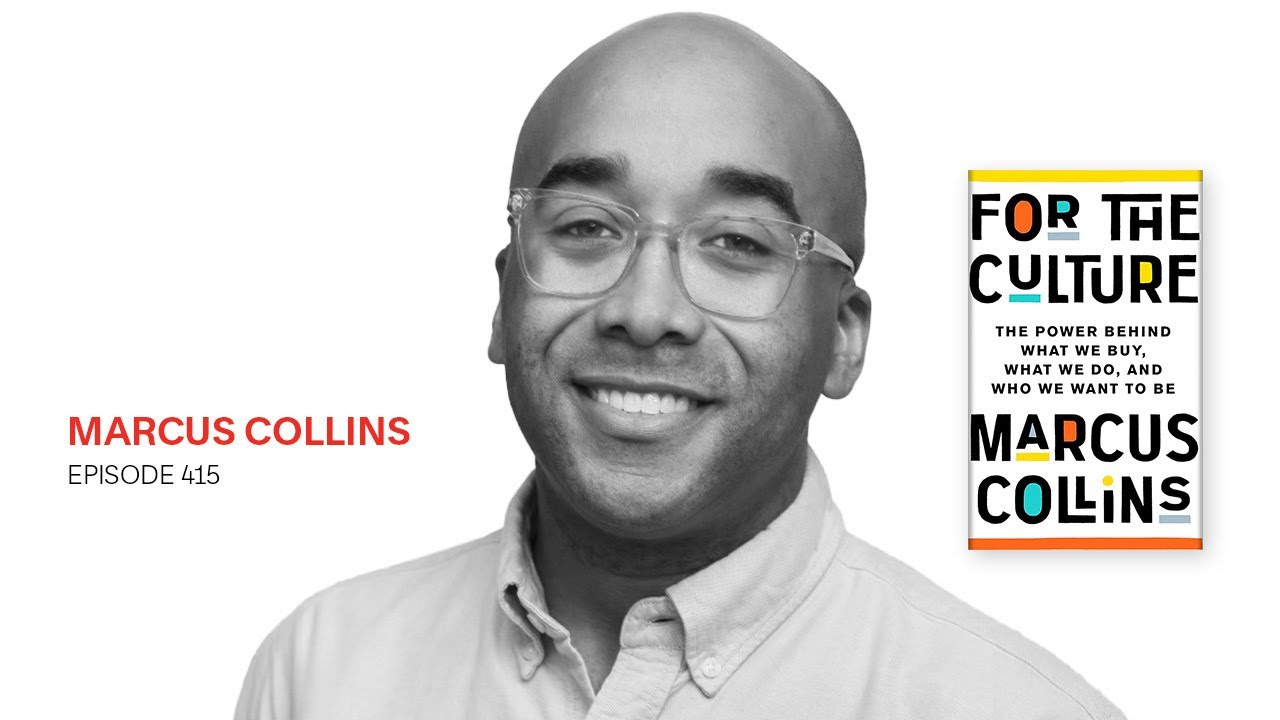

Marcus Collins on why culture is a cheat code for success - Culture First Podcast with Damon Klotz
Marcus Collins: Culture, Connections, and Community | The Provocateurs: Episode 22


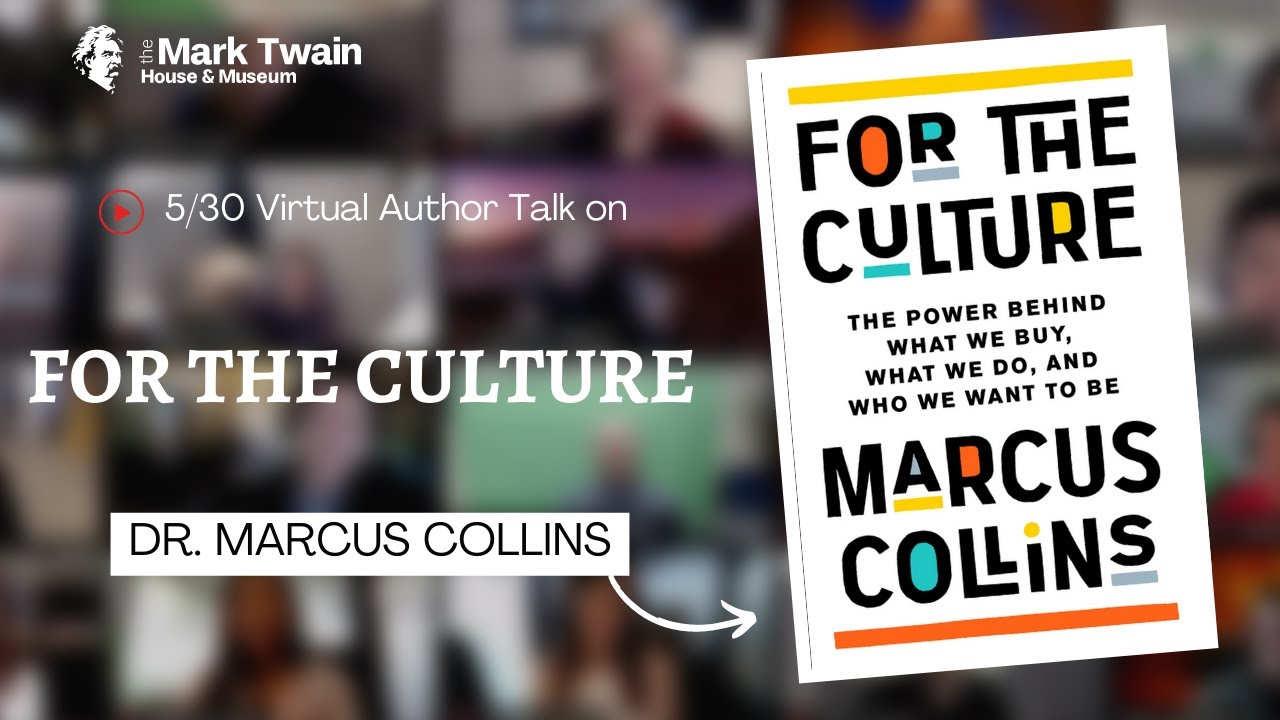
For the Culture: The Power Behind What We Buy, What We Do, and Who We Want to Be

The Power Behind What We Buy, What We Do, and Who We Want to Be | Marcus Collins | Talks at Google