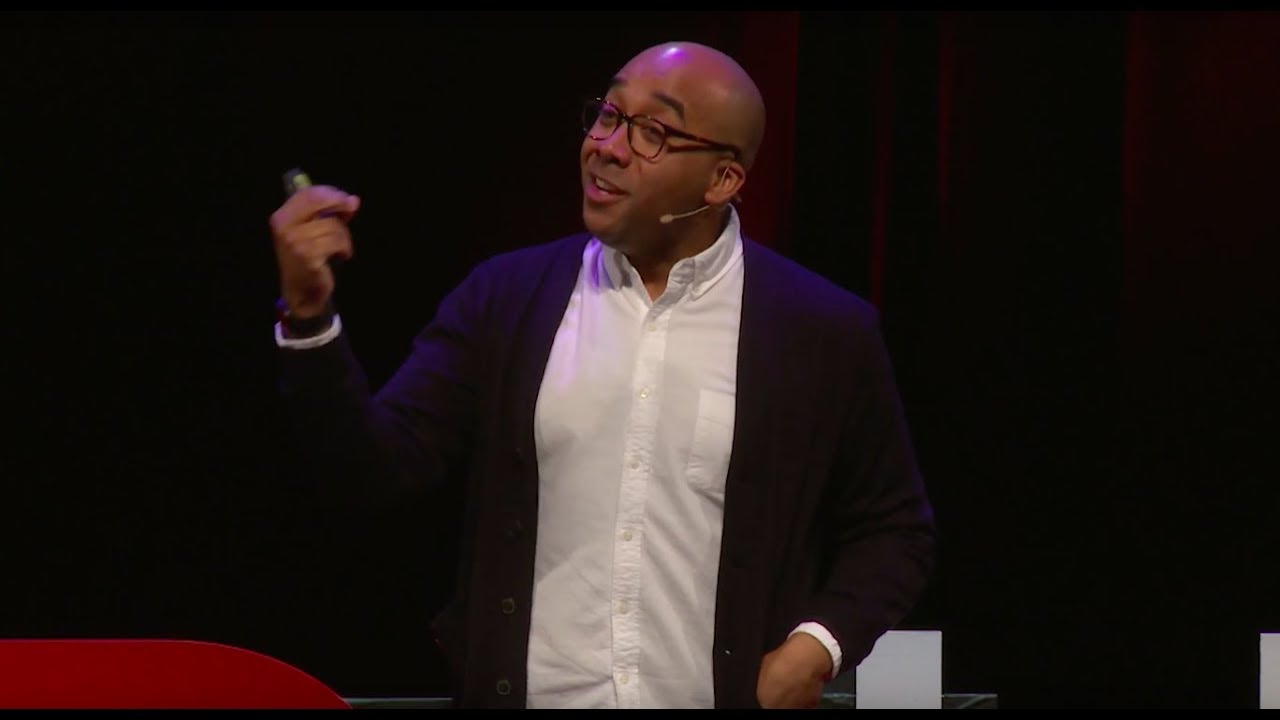
Marcus Collins on why culture is a cheat code for success - Culture First Podcast with Damon Klotz

Marcus Collins, a culture scholar who worked at Apple and with Beyoncé, explains why culture is a company's operating system. He distinguishes between rule-following "map" cultures and belief-driven "compass" cultures, using Patagonia, Beats, and REI as examples of brands that align their promise with their actual culture.
Chapters
I think that from a brand perspective, culture is a shortcut for popular. In an organizational perspective, we use the shortcut of culture as what we do around here, how we do things around here. A map culture is very much that this is our destination, just get in line and follow the directions. And when you do that, sure, you get uniformity, but you don't get a ton of creativity. But when you have a compass culture, you're just pointing to a North Star saying, this is what we believe. Who believes that? Help us get there. And the people who show up there, they're not there to follow the rules. They're there to contribute something great. It's almost too soft a word to say it's an untapped resource. I would say this is the greatest cheat code known to man when it comes to commerce. That many of us are not leveraging or not engaging because we don't understand it. And that's why I have dedicated my scholarship to not only studying the impact and influence of culture on us, but also helping evangelize what culture is, scaling our knowledge of it so that we might be better practitioners in it, and arguably Better contributors to it.
Hello and welcome back to another episode of the Culture First podcast. I am your host, Damon Klotz. This show is called Culture First because it focuses on the impact that company culture has on creating successful organizations, teams, and leaders. But I want to let you in on a little secret. I've actually always been fascinated by culture, and not just really in the workplace setting. I have a love for things like design, branding, consumer behavior, and community building, and all of that world has taught me a lot about the subjects that I focus on in a more professional setting, such as leadership, team performance, and relational intelligence. I guess it's because I've just always been curious about why do we do what we do? How do we signal to the world who we are? And what role do cultures and communities really have on us as humans? And all of these worlds are about to collide in this episode because my guest today is Dr. Marcus Collins, and he's a culture expert with a career that has included time at companies like Apple, working in the world of advertising and all the messages that go out to consumers. But he's also worked with icons, and when I say icons, I mean icons. Like Beyoncé. Marcus brings a very unique perspective to the power of culture and how it shapes us, and we're going to be exploring the deep connection between a company's brand and its culture, why culture is the ultimate cheat code when it comes to success according to Marcus, and how leaders can harness it to drive meaningful change. Our everyday decisions as humans are signals to the world about what we believe in. And to bring this to life, I actually shared a story with Marcus about tote bags. So hear me out. And this comes back to my curiosity about why do we make these decisions? Who are we and how do we signal who we are to the world? So let me paint a picture for you. I have spent a lot of the last decade traveling between the US and Australia. Now, when I am in places like New York, this is the tote bag that I take with me because it signals to people in New York that I like coffee, that maybe I'm not from New York, maybe I'm from Australia, maybe I've been to Australia. So anyone who looks at this bag and knows what it is is able to maybe have a conversation with me about why that's important to me. Now, you might know where this is going. This is the tote bag that I use when I'm here in Melbourne. My Trader Joe's bag, because it also signals to the world that maybe I'm not from Melbourne, maybe I've spent time in other places, maybe I've been to the US, and it's a conversation starter. And really, I think that's why all of these decisions that we make as humans are really interesting, because they are all a chance to connect with someone, to have a deeper connection through conversation. And that's something that I'm super passionate about. It's why I host this show and I do a lot of public speaking about the role of conversation. So Yes, I wanted to show you those tote bags because we do discuss them in this episode. At the end of the day, culture is really just made up of the decisions that we make. And as leaders, we can help shape that culture so it can become the ultimate cheat code for success. So this is an incredibly special episode. I'd love to get really meta about culture. Let's head on over to my conversation with Dr. Marcus Collins. So today on the Culture First podcast, I'm looking forward to chatting with Dr. Marcus Collins. Marcus, thank you so much for joining me.
Thanks for having me. This is a pleasure.
So I'm excited to have this conversation for many different reasons. I've spent my career sort of in these worlds of leadership, culture, marketing, and storytelling. There is so much overlap between all these subjects that doesn't always kind of get discussed, which I think is something that should be discussed more. So I think it's a really great privilege to have you on the show today. Shall we dive into this conversation?
Let's do it.
So you study, uh, culture and its impact and its influence on behavioral adoption, which, uh, you know, I think if you listen to the show, if you study business, that might make sense. But if a curious 10-year-old comes up to you and says, excuse me, sir, what do you actually do for work? How do you respond?
I'd say I study people and how people influence people, uh, to what we buy, where we go, what we do, how we style ourselves, where we work, who we date, what we eat, how we vacation, how we vote, and just about every facet of social living.
I really feel like a lot of our understanding of sort of even why we are attracted to ideas or concepts or people really does start so much in childhood. When you think about some of those early memories in like the playground and in primary school, you're like, what makes that person popular or that person more interesting? And why do you want to spend time over there? Or why are we all playing this game right now? So I feel like a child would have a grasp on sort of why these subjects are important even at a very young age.
Yeah, it's interesting because I think that kids in some ways intuitively know when they're being influenced, where adults, we kind of have a hubris in that we make our own decisions. We have great agency. We have this big formulated prefrontal cortex, and therefore I make data-driven decisions. The truth of the matter is we just don't.
One of my other rituals outside of getting my guests to explain what they do to this curious 10-year-old who is now a very famous persona on this show is for this latest set of episodes this year, I've been playing some of the card games from Esther Perel, who is a friend of the show and advisor to Culture Amp. So I pulled a card that is very specific for you because it does have the word culture in it.
Okay.
So the card I've got for you is something about my culture I wish other people understood.
Oh, something about my culture I wish people understood. Well, I identify by many cultures, but I think for the sake of illustrating the card's point, I would say, as I identify as a Christian, I think that one of the things I wish people understood is that the belief is to be a light to the world, not to necessarily convert everyone.
Yeah, that feeling of belief and just sort of the joy that you can experience as opposed to getting someone to believe the exact same thing that you do.
That's right.
So we've got you sitting in front of me here today. We were just sort of saying before we started that you are in Sydney, I am in Melbourne. We are so close yet so far. We are having this conversation virtually with a very global audience. The man that sits in front of me today, I heard you discuss this and I wanted to bring this up. I'm sure I'm not the only person who's done this, but you've talked about brands and how in many languages, you know, the word can also mean mark or marking. And we've got Marques here. So was Marques always destined to do this work?
Not at all. Not even close. If you would've asked me when I was a kid, when I was a 10-year-old, My ambition in life was to be a musician. And by the time I was 11 years old and Boyz II Men came out with Coolie High Harmony, in my mind, I was going to be the 5th member of Boyz II Men. That was my goal in life. By the time I graduated from high school and went into university, my parents said, you need to be focused on something that's realistic. So, I went into engineering. Didn't like that very much. At least I didn't see it as a career trajectory that I thought I would get a lot out of life, a lot of joy out of life. So, I went into the music industry post-undergrad and gave it a shot before going back to school to get my MBA and then entering in the world of marketing and found myself involved in brands and branding.
So, your career does have this sort of fascinating, like you said, you studied engineering at the University of Michigan and then now you're back there as a sort of lecturer teaching in the business school. But in between all that, you worked at places like Apple and ad agencies. And like you said, with musicians, sort of you went from that, like wanting to be the musician to then working with them. And I understand that, you know, you had this chance meeting when you were working at Apple on the iTunes team where you met Beyoncé's father, and that led you to have this chance to, you know, be able to, you know, do some work with her on both her digital strategy, but also the community building and offline-online world. Obviously, when you think about culture at a macro level and you think about the role that musicians and storytellers and poets and artists play, maybe to start to get sort of the broadest understanding of culture, what did working with artists and musicians really teach you about the work of culture and storytelling?
It's interesting. I think when I started working with Beyoncé and the artists that were inside the roster or on the roster at Music World, the record label and management company for Beyoncé that was ran by her father, Matthew Knowles, I think that I didn't really understand what culture was. I mean, I talked culture, I'd say the word culture, but my understanding was so superficial. Like, it meant like what was popular, what people were doing. And we would attribute artists' relationship to culture because they were essentially creating the things that people listened to. They were creating things that people wore. They created things that people watched. And therefore, we would say, artists and culture were symbiotic in that nature. But now being a bit more initiated into what culture is, I think I have a much more articulate or better— I wouldn't say articulate. I'd say a much more concrete explanation on what these artists mean for culture and the role they play. That essentially artists, they create cultural production. This is the shared expression of a community. And this cultural production becomes a way by which people express who they are based on their shared beliefs of the community, but also reflects what people like them ought to do. So, when we talk about artists, they lead culture because they contribute new artifacts, new literature, new music, film, television, poetry, pottery, and even brands and branded products. become ways by which we kind of peacock ourselves to the world. And the most powerful creators, the most impactful creators, they bring new social facts to the community as such that we adopt them as a way to communicate our identity within the community.
I was actually having a conversation recently with someone about peacocking and like contextual peacocking in different markets. Um, and I've sort of, I spent 8 years living in the US and now I'm back in Australia. And I was telling someone that when I, when I go back to the US, I was just there a couple of weeks ago, the tote bag I bring is of a Melbourne coffee shop. So I can signal to people in the US that I'm not from here and I like coffee and I'm different. And then when you see me walking around the streets of Melbourne, I'm famously always got my Trader Joe's bags on me so I can signal to Australia, like, yeah, but like, I'm from here, but like, I'm also not from here. I've got these other things. So I contextually Peacock in the market that I'm in to tell the story that I want to tell.
Isn't it wild how we recontextualized products as a way to project our identity? I mean, similarly to you, I lived in New York for almost 8 years and I would exclusively wear a Detroit Tigers hat in New York City because I wanted people to know that I'm from the D. In Detroit or in Michigan, I typically wear a Michigan hat because I want people to know that I went to the University of Michigan. I'm an alumni of the University of Michigan. We are constantly trying to project our identity, if nothing else, but to say that we're a part of you but also not. To stand in but also stand out. And secondarily, to find other people like us. Because if you're rocking a Trader Joe's Tote in Melbourne, someone who maybe is from New York or lived in the States, they go, oh, I love Trader Joe's. Yo, me too, right? Connection. Yeah. As social animals, we crave it. And we may not know that we're doing it intentionally, but we're always doing it whether we're aware of it or not.
I think Australians have that experience a lot because this country is so far away from the rest so that when like an Australian next to an Australian in Australia just is like, yeah, whatever, like I won't speak to you on the tram because No one talks on public transport. That's just weird and rude. But an Australian overseas, when you hear an Australian accent, you're like, oh, where are you from? And then when you really work out that, you're like, oh my God, we have so much in common. Where funnily enough, you know, branding and culture and all these things that we explore, we all have things in common. We just don't know if they've been voiced to the world yet, or we don't know what the world is showing us yet to say that, do you believe in this? And that's why the power of language and story is so important so we can create these associations.
That's right. Storyteller— storytelling becomes The way by which we socialize what's normal for people like us. It's the way by which we propagate the social norms, the ideologies, the beliefs, the folkways of our people so that when we see them, there is a level of trust that's imbued. Being here in Sydney, if I see someone with a Michigan Block M. I mean, my heart's just going to swell. And since I see that person, I'm going to say, Go Blue. And they say, Go Blue back, I'm going to feel immediately connected to that person. And it seems so trite on the surface. You go, wow, because that person bought a product that happens to represent a school and maybe that person went to it or not, you feel connected to them. You go, yes, this is what we do. We consume as a way to make our culture material. Yeah. And in doing such, we find ourselves connected to other people who identify the way that we do. And when we do, we just feel a sense of community.
That's why I'm so excited to have this conversation because this show is literally called Culture First. We talk about the role of company culture, but it is often something that can be quite misunderstood or there's misconceptions. So, obviously, you've been teaching this for a while now and you've written a book about it, which Yeah, it's just really like, I'm so glad you wrote that book because it's like the thing that I have been thinking about for forever. I'm like, yep, like how do we like learn more about this and all the different ways that it shows up? So maybe let's start with, we'll get to the definitions in a second, but like misconceptions about what culture is. And either you can answer this maybe from a brand or a business perspective.
Yep. So I'll do both. I think that from a brand perspective, culture is a shortcut for popular. We talk about what's going on in culture. We mean what's popular, what's trending, what people are wearing, what they're doing, where they're going, what they're watching, what they're listening to. In an organizational perspective, we use the shortcut of culture as what we do around here, how we do things around here. And I think that both of them have great shortcomings because culture is more than what's popular, right? Culture which we'll get to definitions in a bit. Culture is a governing operating system of a group of people. And as a result, what is normal for them is seemingly popular because it is normal, right? And when it comes to organizations, I think that how we do things around here is sort of one step removed. There's an antecedent to that. I think when it comes to organizations, It's really the collective assumptions that we have about the world that therefore informs how we do things around here. That there's an antecedent. Because of how we see the world, we therefore navigate in the world accordingly with regards to our collective production of work.
And like that authenticity of really, there's the signal of whether someone believes it. But then, there's the actual authenticity of truly feeling like you believer. Like, like when you're saying if you saw someone where with the, you know, UMich thing and you say, go blue, and then they say, what? And you go, oh, hang on. Like,
like you're just a fan. You didn't go to school in Michigan. You're not one of us.
Exactly. So it's like, it's one thing to have the association and then kind of the understanding. It's another thing to really have that embedded behavioral side where there's like actual repeatable behaviors that you then sort of see, which I think, yeah, like let's double-click onto some of these definitions because I think that they're really useful. And I wanted to, um, bring up this quote from Culture Amp CEO Didier Elzinga because he's also a storyteller and he used to work in, in, in Hollywood and worked on films for a long time before founding Culture Amp. And I'll come back to storytelling as well a few times, but there's this famous line that he uses in a lot of talks that he gives, which is, a brand is a promise to a customer and culture is how you deliver on that promise. So, I would love for you to sort of, yeah, any initial reactions to that and then maybe the difference between a brand culture and a company culture.
Yeah, I think I've heard like some symbols that like brand is a promise. And I like the add-on that culture is the way in which that promise is kept. I think that like, I like the spirit of that. I think the literature might frame it a bit differently. The literature talks about brands as, like you mentioned, a mark, right? It's a mark. And if you translate brand into any romantic or Germanic language, it all translates into mark or marque or marca. Brands are marks. And these marks are filled with meaning. They are imbued with meaning, impregnated with meaning. And so, the literature talks about brands as identifiable signifiers that conjure up thoughts and feelings in the hearts and minds of people. These vessels of meaning, they conjure up affects and cognitions in our hearts and minds relative to a company, a product, a person, institution, organization, entity, creator, and the like. And it's because of that meaning that the brand holds that we either consume it or we don't. We use it to project our identity or we don't. Then, the role culture plays in that is, well, how do we make meaning? We make meaning through our cultural lenses, right? As Raymond Williams would say that culture is a realized signifying system. That is, we see the world through cultural lenses and translate it as such. And therefore, we see a brand. We are translating the brand through our cultural lenses. And to me, that's the relationship between brands and culture. Now, is there a promise embedded in that? Totally. Sure. Like, because of the way I make meaning, the way I translate the brand, there is an implicit obligation that the brand lives up to that meaning. And when the brand doesn't, we feel betrayed. When the brand doesn't, we go, yo, what the F? I thought that— what's going on here? And when we feel betrayed, we go, I'm never buying from them again. No. And not if another brand that we don't have such an affinity for lets us down, we go, to be expected, whatever, you know. But it's almost like your best friend letting you down and you go, I believed in you. I use you to project my identity. How could you? So, I think in that end, I think that's where like the brand as a promise starts to play in, at least according to what the literature would say.
And then are there specific differences when someone's like, give me a definition of culture and you go brand culture versus company culture? Like how do you kind of define those 2 separately?
Yeah. So I think culture is culture and whether it's brand or organization or societal consumption, those are just the contexts, right? But culture as I look at it through a sociological lens, the way Émile Durkheim, one of the founding fathers of sociology, would talk about culture as a system, a system of conventions and expectations that demarcate who we are and govern what people like us do. This system is made up of shared cognitions and kinetics that are ways by which we we act in concert with people like us. It's anchored in our identity because how we self-identify, whether it's how we identify out in the world, in the marketplace as consumers, how we identify as a part of this organization, whether it's us in this organization or you're in finance and I'm in marketing so we operate differently, or it's how we see ourselves out in society. Because of who we are, we have a certain view on the world. We have a certain frame by which we see the world. You go back to organizations. In many companies, the finance department, because we're finance folks, when we think about marketing, we go, man, these guys just be burning money. You got to keep them in check. These guys, man, they need discipline. Where the marketers who are in the same organization identify as a marketer go, the finance people, they're too conservative. They don't get it. Right? It's because of our identity that we see the world the way we do. That's why for some, a cow is leather. For others, it's a deity. And for some, it's dinner. Which one is it? It's all those things depending on who you are. And because of who we are, we see the world a certain way and we navigate life accordingly. Right? So, if you see a cow as a deity, you're not eating it for dinner. Right? Or someone said, hey, you want hamburgers tonight? You feel offended. So, because of who we are, we see the world a certain way, navigate life accordingly, and express ourselves through shared work. And the alchemy of these systems or systems of systems make up our culture, whether we are out in the world consuming, in organizations producing collective work, or out in society contributing to what it means to be a part of a community.
I think one of the biggest overlap areas for brand and culture as well as then I guess company culture specifically is this whole idea that this brand culture is being projected to both the market but also to potential candidates. about saying like, and you know, there's been a lot of conversations and we've had conversations on this show before about, you know, should you go work for your dream company? Like if you love this brand or if you love this sports team, like are there any like kind of drawbacks with going there? So you've got this idea that this brand culture is being projected and you are receiving it, but then a company culture is lived because you then kind of go behind the scenes and you're now part of it and you're living it through your experience that you have there. And then I think from a sort of a people and culture lens, one of the most common ways that this sort of gets discussed is things like the rise of employer branding initiatives. So whole marketing departments coming into the sort of HR world, but then also things like realistic job previews. So, can you discuss like brand consistency? I think it gets spoken a lot about from a company perspective in terms of product consistency. So, when you go to, I think the most famous example is you go to McDonald's everywhere in the world, the product is consistent. So you have a brand association with what you'll get, but culture consistency in terms of the experience you have. is sometimes not as consistent as we might like.
Yeah. I mean, the idea of brand being a mark of ownership, it's not just something that's on the front of the house. It's also in the back of the house. In fact, the more consistent it is, front of the house and back of the house, the more powerful it becomes. I think of it like when you go to like a 5-star Michelin restaurant, And the kitchen is open because they're like, hey, what you see on your plate is just as awesome as how it's made. So much so, we're going to open up the— we're going to open up the curtains so you can see what's happening here. And as you observe it, you go, man, like I'm getting to watch them make the guacamole right next to me. It just tastes so much better as a result of it. I think the same thing goes when companies practice what they preach. A company like Patagonia is a great example of this. They're not just communicating their products through a frame that is anchored in identity or an ideology. But as an organization, they operate accordingly. Favorite example of this has to be e.l.f. Beauty. If you're not following e.l.f. Beauty, good night. Like, you are missing a case study, not just in brand, but a case study in company culture. You know, e.l.f. Beauty has a very clear point of view of the world. They believe in democratized access. Everything about e.l.f. is all about democratized access. And it is not only made or demonstrated in its product that is like, you can buy a prestigious product at the pharmacy for a dollar. Like, whoa. Like, that's democratized access from a product perspective. But they also ensure that everybody who works at e.l.f., a public company, mind you, has equity in the company. Democratized access. Everyone is paid or everyone's bonuses are associated with EBITDA, which creates a bit of uniformity for everyone. Democratized access. Not only that, not only that, but they'll look at the world, look out in the world, and they saw that their board of directors was extremely diverse, like 70% diversity on their board of directors. And instead of doing a victory lap, sort of patting themselves on the back on how, you know, on their achievement. They said, this is sad that our board is so diverse. And that's not like the norm. Like, that should be much more democratized. And in doing some research, they saw that boards are predominantly white males. And most of those males' names are Richard or Dick or Bob or some semblance of— or Richard or Dick or some semblance of that. So, they made a campaign called So many dicks, so few of everyone else, right? Like, has nothing to do with cosmetics, nothing to do with beauty, but everything to do with their ideology. And the people who work at e.l.f., they believe in that too. Their front of the house and their back of the house is consistent. And as a result, here's a company that's had 22 consecutive quarters of growth. Hardly any attrition for employees and nothing else. Their recruitment team is working day and night going through, shifting through all the applications and all the resumes that they get because people say, I don't want to just work for that brand. I want to be a part of that movement. I think that's really, really powerful.
I love that you bring up those 2 examples because actually a couple of episodes ago, we had Vincent Stanley, the Director of Philosophy from Patagonia. on the show doing the full history of like, when did you start thinking about, you know, the culture? And because he's a co-author of their book that they put out every 10 years about the future of being a responsible company with Yvon Chouinard, who then wrote Let My People Go Surfing as well. So just such a great example of like, we can stand for something, but we know what we stand for. We know like that it'll attract a certain type of people. And then, yeah, I had the chance to interview the chief people officer at Elf at a Culture Amp event a few years ago. And again, it was just one of those examples where it's like, such strong messaging about who we are, what we stand for, when— and I think this is where a lot of companies have been struggling over the last couple of years— is, are we an activist company? Do we stand for something more than a product? Do we partake in political conversations and everything else? And that's where maybe, um, I'm not sure what you think about this, but if there aren't really strong brand fundamentals, people don't know where they should put their voice.
That's right. When you don't have a very clear point of view about the world, it becomes really hard to say, well, how do we engage with the world? One would say, if you don't know where you're going, all roads will get you there. And that's a pretty big challenge for companies. But we have a very clear point of view about the world. You go, oh, I weigh in when it sort of pricks or pokes at my worldview. And if I don't have an opinion about it, I don't say anything. Seems pretty clear to me, right? Because having a point of view enables you to be disciplined about when you weigh in, when you jump in, and with what you have permission to be a part of. ELF can be a part of anything, any conversation when there is not democratized access. And when it's not about democratized access, ELF won't say anything. Same thing with Patagonia. Patagonia believes in climbing clean, reducing our invasiveness on the planet. If it has something to do with the planet, Patagonia has a point of view. Yvon Chouinard may have a point of view about abortion, but Patagonia won't weigh in on that topic because it's not within the frame of how they see the world. And it's that level of of specificity acts as a North Star that guides everything, not just the products you make, how you communicate yourself, but how you hire and who you hire. It becomes really, really clear. But that requires a tremendous amount of discipline.
It really allows everyone to be a brand steward in many ways because it doesn't matter if you're the first person that you interact with or if you're the CEO of a company. When there are those strong fundamentals in place, it allows for that decision-making to not be Like, I think how decisions get made is one of the— that was actually, I had Seth Godin on earlier this year as well. And his question for Vincent was, how do you make decisions? What do you say no to? And I think it goes back to your point around when there's the strong fundamentals in place about who we are, what we stand for, what we believe, and the types of behaviors that we expect to be part of this culture, decision-making actually isn't something that slows you down.
That's right. It's like REI saying some years ago that if we believe that life outdoors is life well lived, Why are we open on Black Friday in the States? Does it make any sense? It goes against what we say we're about. And someone would say, well, because we make a lot of money on Black Friday. But yeah, but what are we about? What do we believe? It becomes really, really simple. It's not easy. No way is it easy. But it becomes really, really simple. And at that level of simplicity, I think it makes it very clear or very— it becomes much— you become much more capable of indoctrinating, bringing more people in, interpolating people in to know where they fit in and where they contribute. It's the difference between like having a compass culture and a map culture. Like a map culture is very much that this is our destination. Follow the— just get in line and follow the directions. If you go left, go right, go left, we'll get to our destination. And when you do that, Sure, you get uniformity. Sure. But you don't get a ton of creativity. And I don't think you get a ton of people fired up about being there. But when you have a compass culture, you're just pointing to a North Star saying, this is what we believe. Who believes that? And those who believe that say, come join us. And then, you say, help us get there. Like, you have the heterogeneity of all your ideas. provides so many more solutions than we, the leadership of the organization, the founders of the organization could ever muster. And therefore, we have more path to get us to the place that we're trying to go. And the people who show up there, they're not there to follow the rules. They're not there to follow the lines. They're there to contribute something great. And when we do that, the endowment effect alone Just, it fires off so many neurons, so many dopamines that we feel that much more fired up about being at the organization. And good Lord, the benefit of that is far greater than having pizza Fridays.
Yeah, there's just so much there about really authentic storytelling. And yeah, I'm loving this conversation so far. One of the— and I'm not sure if you've heard this, but certainly throughout my time sort of working in and around the HR industry as well as sort of the marketing industry, is that there's this kind of unofficial rule that marketing is usually 10 years ahead of HR. And like, if you think about, you know, marketing campaigns and then like how that sort of ends up in like how HR thinks about concepts, but even marketing technology from like an investment perspective and where VC money goes and, you know, the way that marketing sort of really went really fast on deep data analytics and then eventually culture and HR sort of, you know, caught up and hence why companies like Culture Amp have been around for a while. But You sort of spoke about how company culture drives things like engagement and performance while brand culture drives or influences customer perception and loyalty. So if we can sort of maybe think about where this is going, what do you think are the measurements that will matter moving forward when people start thinking about these concepts?
Ooh, that's a good question. I think that I would actually sort of reframe the premise of the question in that I think that in some cases, marketing has been ahead of HR. But in many cases, HR has been ahead of marketing, like light years ahead. And by that, I mean, HR has historically done a very good job of thinking about the human, the humanity of people. Where marketers have long and still unfortunately put people in nice, neat little boxes that make the world easy for us to describe them but not very accurate about who they are. HR, they find candidates. They try to find who they are, what lights them up, and where they might be able to fit well to the organization. Where many marketers look at people as machines who eat messages and crap cash. And we go, who's going to eat this message and who's going to pay some money for it? Which almost kind of robs them of their humanity. And as a result, marketers go, why are they not connecting with these people? So, to that I say, there's a lot that each one can learn from each other. Ultimately, the way we measure these things, just like marketing, whose job it is to get people to move, I think HR's job and all the many jobs, say, of HR is to keep people engaged. Right? And whether you're engaged in the recruitment process, whether you're engaged As a new employee, whether you're engaged as a more tenured employee, as you're engaged as a leader, engaged as a manager, engagement. And I think that both of those are predicated on this idea that people feel committed enough to take action. And we are in the behavioral adoption business. And when I talk about marketing, I always say that like, even if you don't have marketing in your title, We're all marketers. Like, we're all bringing something to market, helping the people adopt behavior, right? Whether it's, I hope that my boss gives me a raise. I hope it's that this person hires me. I hope this person gives me her phone number so I can take her on a date. Like, we're constantly going to market. I hope my kids will eat their vegetables. Like, we're constantly trying to get people to adopt behavior. And we're able to identify success Once behavior is adopted. So, that's always the key metric— getting people to move. Now, what is the KPI, the indicator of that movement? That depends on the movement and the context. But by and large, it's about getting people to move. And what gets people to move? What is the most influential external force on human behavior? It's culture, which is why marketers who engage in culture increase the likelihood of people adopting behavior. And HR folks who are able to activate the culture in the organization such that people feel engaged, they're more likely to get people to move also.
Yeah, which is why they're kind of really honing in on what are the types of behaviors that we think makes for great teammates, great leaders? What are the things that we want to— like when we talk about behaviors, we talk about like sort of golden side of your values and the shadow side. So like if we just say that like, here's our values, but we don't really quantify the types of behaviors that we would expect on a golden side of those things versus a shadow side, then you start to go, okay, well actually, is there some level of influence happening here where someone is putting these, you know, these behaviors are being accepted and then they're sort of spreading because other people are seeing that they're being accepted where actually that's not the type of behavior that we meant when we put this mission out to the world. So if you don't get down to the granular, it can be hard to then sort of bring it back as well.
Yeah. And for me, I feel like many times, we sort of exchange beliefs and values, make them interchangeable. But I think that your values are what's important to the organization because of your beliefs. But it starts with like, what do we believe? It's the anchor, identity and belief. are the anchors of culture. What do we believe? And because we believe this, these things are important. When my wife and I are— our children are getting in trouble, we always say that we're Collinses and we believe this. And that's why we— like, we're Collins. Aren't you a Collins? And therefore, we do these things. And we anchor it in our identity. and the beliefs associated with that identity, people have to ask yourself, do I believe this? Or first of all, am I one of them? And do I believe? And in the cases where people say, oh, I work here and I don't believe, that's where you go, well, maybe you're not one of us. And at that point, that person is probably the wrong person to be at that organization.
I want to create a connection point between the We Are Collinses, which means that you have a shared sense of identity. But also, the understanding of individualism within culture. So obviously when a, uh, when a brand expands into a new market, you know, you want some of those brand consistency because it's like they already have maybe some association with us. So when we go into this market, it's like, here's our logo and here's our thing. But then you contextualize your story sometimes to a new market so that it resonates with people who you want to go on that journey with. And then obviously from a company perspective, you know, when we think about things like diversity, equity, and inclusion, and ultimately whether someone feels like there's a sense of belonging. And people can feel that very early on when they start at a company, like they were promised one thing and then they go in, they're like, I'm not sure if I really do belong here. How do you think about balancing taking people and saying, we are part of something, but also having enough fluidity within a system that allows for the individual to still feel like themself?
Yeah, I love that. To me, I think about it like, memetics, like memes, where it's the same communicative node, but it is contextualized based on you. It's like music covers. I heard— I'm telling myself here— I heard Yesterday performed first by Boyz II Men. Not the Beatles. Boyz II Men. It was on a 2-album Boyz II Men. Heard Yesterday. I was like, this song is amazing. Oh my goodness! Someone was like, that's a remake, Marcus. I go, no way! When I heard the Beatles version, I was like, it's okay. Boyz II Men's is better. And what it means is that Boyz II Men's, their recontextualizing of the song created a door that brought me into the idea in a way the Beatles could not. I think that's the way storytelling works within our organization. is that the way you tell your story about working here not only attracts people that maybe someone else's story didn't, but it helps people find where they sit inside the organization as well. And having a diverse heterogeneous way by which we tell stories about one particular theme, it creates derivative works just like a meme does. Same image, different context. And while the way you— the text that you put on top of the The image didn't really— I don't really understand it. It really appealed to me. But that version of it, oh, I get that totally. And because that person recontextualized it, created a meme or their version of the meme or their cover of the Beatles Yesterday, it brought more people in. Similarly, Roberta Flack sang a song called Killing Me Softly, which actually was a cover. of a song before her. And it was number one, came out in the '70s, number one record. This was like, you know, this kind of sappy, you know, quiet storm love ballad. Beautiful. It was then covered by Al B. Sure! in the '80s. But then the late '90s, 3 folks from New Jersey called the Fugees remake it, and it is a massive hit. These are 3 or 4 different iterations of this song that brought different people in. And it only helped bolster the song's popularity and its impact. That's how storytelling goes. We have diverse storytellers in organizations, in society, within communities. It brings different people in who normally wouldn't see themselves inside of it.
I think when you sort of, you know, you do a lot of public speaking and I have done a lot over the years as well. And sometimes people come up to you like, oh, like that was incredible. I would love to host a show like you or give a talk like you or And I'm like, okay, I can give you some fundamentals about what I believe could make for a good talk or could make for a good presentation. But at the end of the day, the only thing that's really going to, you know, allow you to give an incredible presentation is you delivering it in the way that best makes sense for the way you see the world. Because you do not see the world the same way that I do. So when I use humor here or do this there, it's only because it makes sense to me. And yes, there might be some sort of the science of a great 20-minute presentation. But the only lever I get to pull is the lever that makes sense for Damon in that moment.
That's right. It's your lens on the world. I mean, this is why I think stand-up comedic comedy— stand-up comics are the best. I mean, I just love stand-up comedy because they could talk about the exact same thing, the exact same thing happening in the headlines. But their take on it Their timing on it, their sort of tonality. It makes all the difference in the world. And while I may gravitate to a Dave Chappelle, a Sarah Silverman-like object, someone else, Bill Burr may tell the joke and I go, not really for me. Though I like Bill. He's great, right? The idea there is that it's our unique way of telling stories that act as invitations where people see themselves in the story. And as a result, they lean into it, which is why storytelling is so powerful for communities and so powerful for brands and corporations.
There might be people who typically listen to this show are company leaders, people responsible for managing teams of people and things like that. There's probably people listening who are saying, I work at an organization where there's actually 4 or 5 organizations side by side that all look quite the same. We're selling the same service, the same widget, the same thing. What is your take on culture as a competitive advantage? If everything else looks the same, what role does culture play as one of those levers? And I think I've sort of seen you sort of talk about this before where you're like, it is like an underplayed strength that people do not spend enough time thinking about.
Yeah. I mean, you hit it right on the nose. I mean, in most cases, the products we sell are parity. I know that like, that is a tough pill for companies to swallow because you go, no, we invest so much in R&D and we focus so much on making sure that our product is the best of the best of the best. It's like, well, yeah, you know, your blade may be a little sharper than his blade, but people, the layman, they can't tell the difference. It's not that big of a difference. Think of all the bottles of water that are on the market. It's all 2 hydrogens and oxygen. You may say, no, no, no, Marcus. Mine has greater pH balance. And I go, girl, please. For most people, those things don't matter. Those value propositions don't matter as much. But what matters more is when the brand, the mark of ownership is congruent with who I am and how I see the world. When those things happen, there is a catalyst of cognitions and affects to which we apply associations and our identity to things. Now, I talk about this in the book. If you were hard-pressed to buy some headphones quickly on the way to the airport because you forgot yours, need noise-canceling headphones, you may buy Bose headphones and go, I know it's going to be fine because it's Bose. We trust it. They're leaders. They have good quality. And therefore, we go, great! Bose is great. But juxtapose Bose to Beats by Dre. Bose is an empirically better product. It is superior to Beats by Dre. Yet, Beats by Dre continues to mop the floor with Bose year over year over year. How is that? How can an inferior product perform better than a superior product in the marketplace. That's because of what the brand means to people. It's the associations, the cognitive associations that the brand catalyzes within us. And when the brand becomes a receipt of my identity, good night. Like, I'm an Apple guy. I mean, I've worked at Apple and I've had an iPhone in my pocket since 2007. Right. But I have enough wherewithal, Damon, to be honest and say, listen, I know that Android devices have been superior when it comes to value propositions than iPhones. I can say that. I have enough wherewithal to say that. Having said that, you would never catch me dead with a Samsung in my pocket. Never, ever, never. It's not gonna happen. Why? Because I'm an Apple guy. It's a part of my identity. Right. Because of what the brand means. And what it means to me and how it helps me signify who I am to the world, that's far superior than any value proposition could be. So, to your point, this is an untapped— I mean, that is almost too soft a word to say it's an untapped resource. I would say this is the greatest cheat code known to man when it comes to commerce. That many of us are not leveraging or not engaging because we don't understand it. And that's why I have dedicated my scholarship to not only studying the impact and influence of culture on us, but also helping evangelize what culture is, scaling our knowledge of it so that we might be better practitioners in it. And arguably, Better contributors to it.
Well, you're very much speaking to the converted, as one of my several titles at Culture Amp is Work Culture Evangelist. So I am there with you trying to get people to go on that journey. And if you're wondering, you're like, oh, this Marcus guy sounds like he's really got his stuff together. I wonder whether he practices what he preaches. Just go to his website and see that you can buy the merch that says, you know, culture is a cheat code. Like it is, it is, it is all there for you.
Amen. Amen.
So, I've got a couple of questions that I want to really land the plane with. One is around, you know, I've spent 15+ years looking at how HR and people and culture strategies have sort of changed and emerged. And one of the biggest projects that a company can ever really try undertake is this whole idea of a culture transformation or a culture change project. So, what strategies or recommendations from the work that you've done at both a macro level as well as from an academic perspective, what advice do you have for these leaders who are like, you know what, The culture is like, I understand it, but it is not the culture that's going to help us win. It is not the one that's going to keep us in market. What advice do you have for that leader?
Yeah, culture change is very, very challenging. Those transformations are very, very challenging because it requires undoing what has been one's muscle memory, learning new things. And we are in many ways neophobic. We like comfort. The brain loves comfort, right? We love familiarity. And while we like a little novelty in our familiarity, we typically rely on things that are sort of in our schema. And we're talking about transformation. We are talking about change. And change is hard. Change hurts. Change is painful. But it requires that pain To get to where we want to go. So, when we do these changes, we have to be very specific. We have to be very disciplined, and we have to make very tough decisions in a consistent fashion. So, the clarity starts with what do we believe? Everything is that. What do we believe? That is the North Star. Anytime I work with a brand, Or company, but let's just say brand just to be more concrete. Anytime I work with a brand, I always start with what do you believe? And people say, hey, we're not getting enough Gen Zs. We're not whatever. Our sales are down or people don't love the brand anymore. Yada, yada, yada, yada, yada. Now, let's start. Okay, great. Great. Okay, cool, cool, cool. What do you believe? How do you see the world? That's the start, right? Because it's the ideology that the brand has that becomes the North Star that's going to guide everything. And when that North Star is clear, we can then be disciplined so that if we say, hey, we believe that we should be challenging conformity, that conformity stalls progress and therefore, conformity is our enemy. Great! Love that. Now, the question becomes, how do we exercise that? That anytime there is a thing that we normally do around here, we should be challenging it right away. Why do we do this? Why are we doing that? We should be calling out conformity every single time. There's a great scholar. He used to be at the University of Michigan. He's since passed. Probably one of the brightest minds in strategy of our time, a gentleman by the name of C.K. Prahalad, that would talk about this idea of the dominant logic. And his idea of the dominant logic is that every organization, every institution, every category, every industry is dominated by a logic. And that dominant logic becomes the muscle memory by which we operate. In fact, we value the dominant logic such that if you're starting an automotive company today, you may go, well, maybe we should headquarter it in Detroit if you are in the States, of course. Then, you say, let's hire people who've worked in automotive because they'll know how to operate. And then, we'll sell cars in dealerships. Why? Because that's the dominant logic. Until you say, well, what if we built cars in Silicon Valley? And what if we hired people who worked in tech? And what if we sold cars in the mall? Like, those things subvert the dominant logic and therefore disrupt the orthodoxy. It requires starting with, here's how we see the world. And because of how we see the world, we're going to use that clarity To have discipline by challenging the dominant logic of what we normally do around here. That is crucial. It is necessary. It's painful. It's taxing. But it's that level of specificity that helps us build new muscle memory. I'll say it this way. We often use that phrase, practice makes perfect. But that's not true. Practice makes patterns and patterns make routine. So, when we're going through transformational change, we are trying to create new routines that requires creating new patterns. And that pattern requires constant, consistent, disciplined practice.
I think it's such a powerful question that leaders could be asking of other leaders around them when they're trying to do this change is what is the dominant logic that we believe to be 100% true and unmovable? Like a company like this, There is this that says everyone must do it this way. And let's, let's say that it has to be— we have to use this type of material because it's the only way this product could ever be made. And then you go, if that's the only thing that's 100% true, what are the other underlying assumptions we've been operating under for forever? And go, can we start pushing these back as we start saying, what do we believe moving forward?
That's right. You have to ask questions of heresy that normally people go, what? I can't believe you even asked that. No, no, you ask those questions because those questions create the discourse that leads to meaning-making. Yeah. They create the discourse that leads to the negotiation of what's on the other side of the pain, where we want to get to. And we don't get there through comfort. It just does not happen. It requires us to push ourselves in places that we haven't been and ask questions that we have been either afraid Or at the very least, reticent to ask.
I would be completely remiss if I didn't have a chance to ask you this question. This is completely selfish because I'm just very intrigued by this. But I think one of the most dominant new storytellers in the world of business over the last few years has been Ryan Reynolds. When we think about what he's done for both the way he delivers messages from his content strategy, From the brands that he's associated with, from the way that he's working with a football team, which is like, football's my chosen religion. So like seeing what he's doing with that is so interesting. You had the chance to, you know, like I've had the chance to sit down with some incredible people and people was like, oh my God, it's so amazing. Then I'm like, ah, Markus sat down with Ryan Reynolds and you got to ask him questions. So that is pretty cool. What did, what did, what has stayed with you from that conversation about how he sees the world?
I thought that, well, first of all, he is amazing. He's probably like my, my newest man crush. Truly, he is. He is. He's amazing. And what I thought was so powerful about our conversation was the simplicity of it all. You know, like, like he, for him, he looks at a situation and then he just tries things and you go, that's it. That's it. You know, just like someone with their iPhone creates a response to something that happens on the internet. He was doing the exact same thing. Like, the thing that blew me away was the launch of Deadpool. The marketing for it came out of necessity that he worked years trying to get Deadpool made, and all the money that the studio gave him to make the movie, there was nothing left for marketing. So he stole a costume at the end of shooting. Brought it home and he and his friend shot content for Deadpool by themselves, just like every one of us makes content on the social web, which says to me that this isn't about like, had the special lighting and the right this and David Fincher directs it and blah, blah, blah. It's not that at all. You know, this is a level of curiosity and an ability to move quickly. and fail quickly. Because he goes, you know, I get, I get celebrated for things I do well. A lot of things we didn't do so well either, you know. And it's that level of like humanity and, and who he is as an individual that I think reverberates in all that he does as an actor, as a business person, as a content creator, as a marketer, and all, and all the things. And for me, it sort of just boils down to what we do is all about people. And when you can see the humanity in things, your ability to connect with people just gets a lot better.
And it comes down to like one of the ways that large organizations kind of get caught up is they have all these really convoluted systems around how work ends up getting done. You know, people know what to do, but the how ends up becoming quite misconstrued or complicated. And it's like, How many approval processes do we need to go to? And if you go down to the bare necessity of just like, if someone was to do this today with what they have in front of them, what could be possible? And just going down to who can make a decision and can we execute?
And we end up seeing people not as the humans that they are, especially in a big organization. We see them as the box they represent in the org chart. And then we go, all right, so what are the processes by which things happen? Based on the org chart, not with the processes by which things happen based on how Marcus behaves and how Marcus likes to work and how this team works together. That level of proximity, that level of intimacy makes all the difference in the world.
I know that most people do not make it to the end of podcasts. So, if you are still here with us, Marcus and I deeply appreciate you listening and you're getting a secret question just for people who've made it all the way to the end. Marcus, let's imagine that in 4 or 5 years' time, we're having a conversation again about culture and what's happening in the world of work and storytelling. What do you think we're talking about? Bring us home.
Oh man, that's a really good one. What a hard one to leave me with too.
I think that's why it's that bonus question for everyone who's still here. We're getting like, we're getting all of that, um, all of that powerful brain work right now.
Yeah, it's great. That's great. I would say 5 years from now, the conversation we're having is more so not just about how our companies work together, but how we work together with other companies. Because I think more and more, we're either seeing consolidation in industries. We're seeing more partnerships across the board. And it requires a greater relationship between how we function And how we engage in social trade with other organizations. Not unlike merchants around the Black Sea back in the 6th century, that we have to be able to work together but also be able to work together with other entities so they might be able to reach our shared outcomes. I think 5 years from now, there'll be much more of that. Greater consolidation, a truncation of the marketplace, at least the players in the marketplace. Which requires more frenemies than foes.
Yeah, I think it's pretty common that we know, like, you know, LVMH is like a group of companies that all believe one thing, but they only believe it because they're all owned by the same group versus a group of companies who believe in something as a collective because they've got a shared mission, not a shared financial statement. So
that's right. That's right. Big difference.
Yep. Marcus, this has been an absolute joy and pleasure. I highly like— if you've been listening to the show for one episode or for 5 years and you like care about company culture, please dive into Marcus's work because, yeah, you really are writing and sharing incredible insights about culture at this macro level in terms of how we interpret it, how we partake in it, and how we experience it. But there's so much, like you said, it is a cheat code inside of companies. It's something we deeply believe here at Culture Amp. So thank you for bringing your world of work into ours and sharing your insights with us today.
I'm super grateful. I'm grateful and glad to be in the fight with you all.
I'm Damon Cloths, and the Culture First podcast is brought to you by the team here at Culture Amp, the world's leading employee experience platform. Learn more about Culture Amp by heading to cultureamp.com. We believe in creating a better world of work, and if that's important to you, please subscribe and leave us a review to make sure that you don't miss a single episode.
More from Dr.

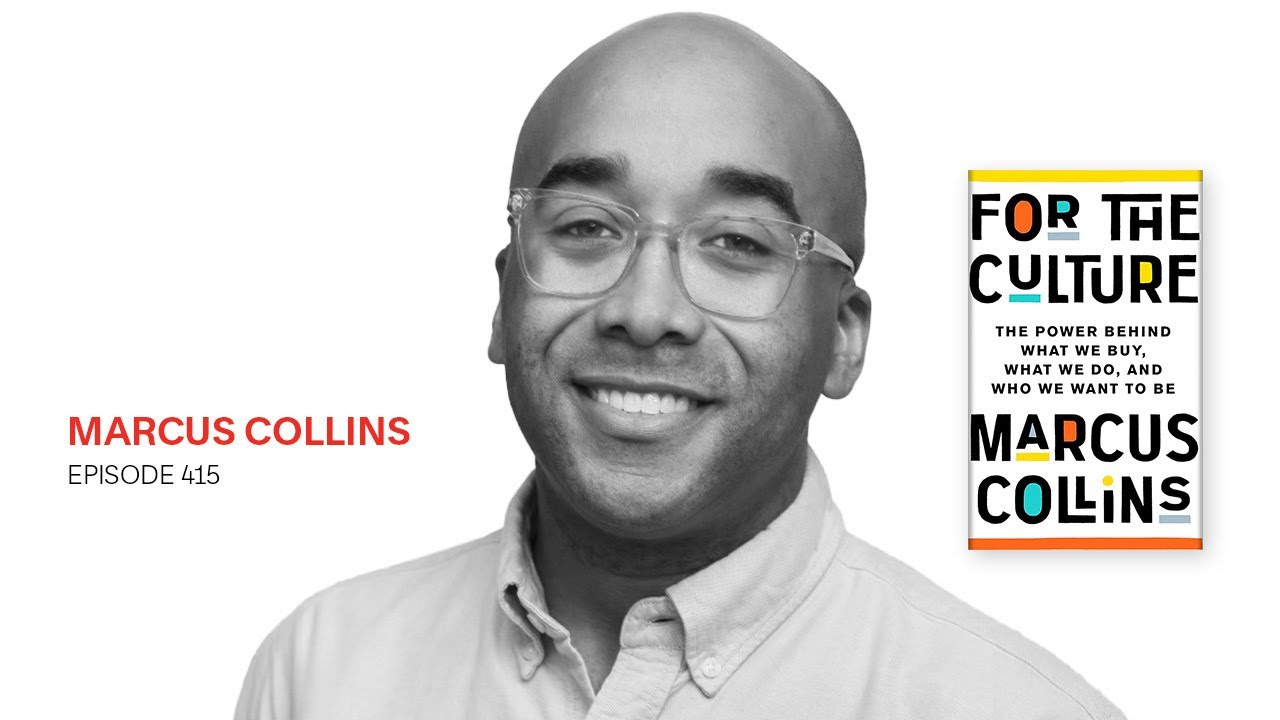
Marcus Collins: How to Understand Anyone, Market Like a Genius, & Secrets of Culture – 246
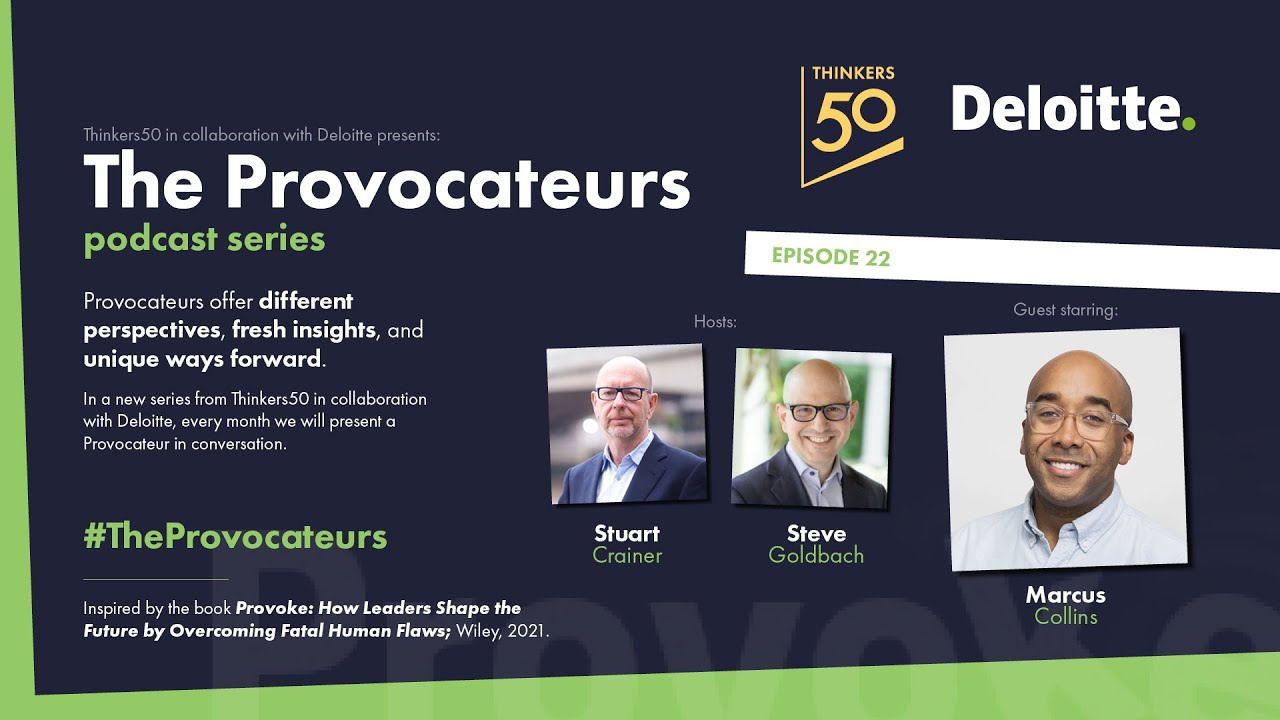
Marcus Collins: Culture, Connections, and Community | The Provocateurs: Episode 22

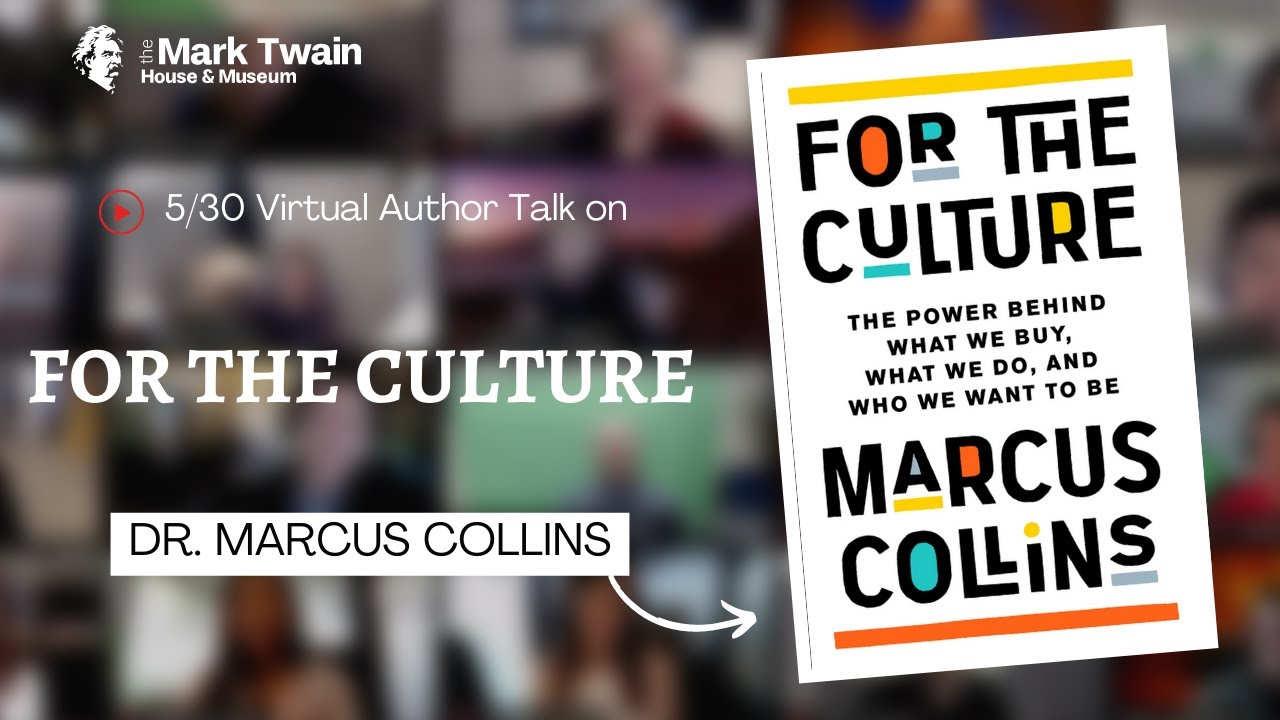
For the Culture: The Power Behind What We Buy, What We Do, and Who We Want to Be

The Power Behind What We Buy, What We Do, and Who We Want to Be | Marcus Collins | Talks at Google