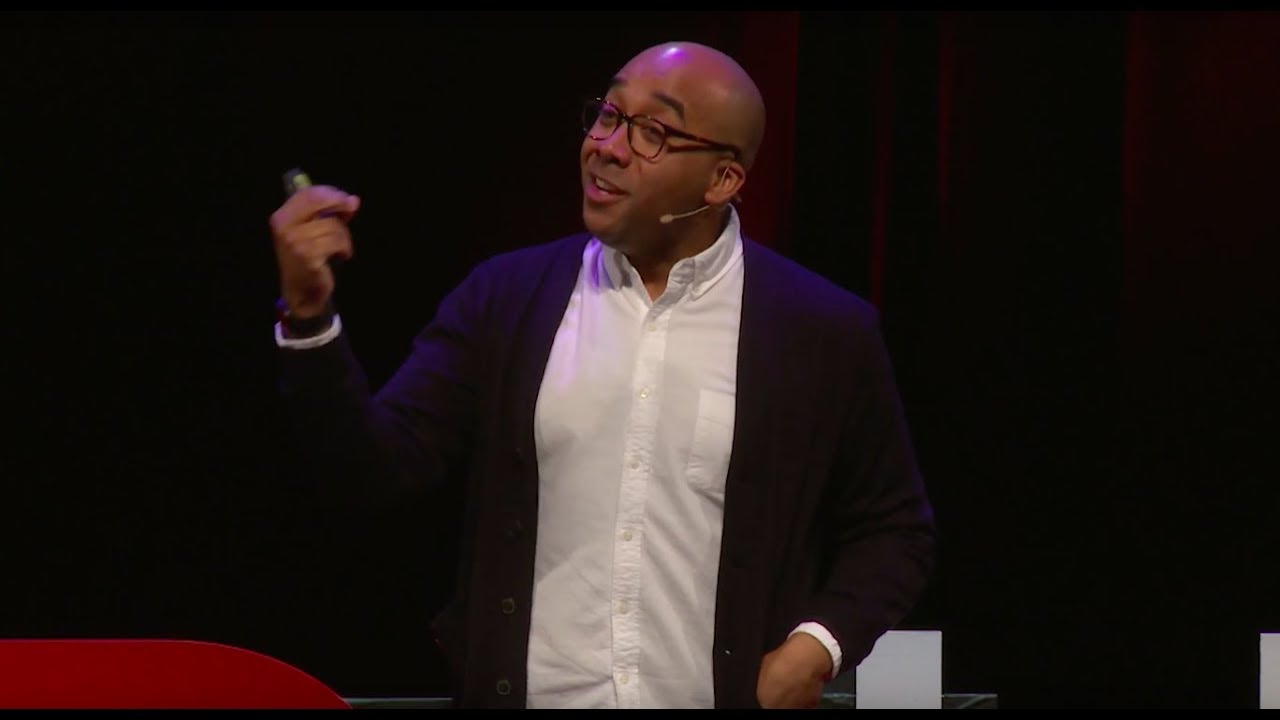
The Power Behind What We Buy, What We Do, and Who We Want to Be | Marcus Collins | Talks at Google

In this virtual Talks at Google conversation, moderator Michael Burke interviews Dr. Marcus Collins, Chief Strategy Officer at Wieden+Kennedy and professor at the Ross School of Business. Collins explains why he wrote his book For the Culture, beginning with a personal struggle to define culture and a professional need to operationalize it for marketers. He defines culture as a system of expectations and conventions rooted in identity, shaping how people interpret symbols, artifacts, language, and behavior. Collins highlights the danger of "missing the codes"—the subtle, context‑specific cues that brands often overlook due to a lack of proximity and intimacy with target subcultures. He advocates ethnographic fieldwork and netnography (online social listening) as methods to gain that closeness, arguing that data alone is insufficient without lived, immersive insight. The discussion moves to brand purpose, where Collins argues that brands must align their internal belief system (their cultural operating system) with the cultural subscriptions of the communities they serve, turning products into identity badges rather than mere functional items. He illustrates this with Nike’s "every human is an athlete" positioning and explains how personal brand is an extension of one’s purpose to serve others. When asked about Google, Collins describes its soul as organizing the world’s data to increase productivity and progress, a cultural mission that guides its products. He then explores how technology (search, Google Lens, social platforms, AI) extends human behavior, facilitating both the creation and diffusion of culture. Influencer culture is framed as modern word‑of‑mouth, amplified by digital megaphones, which forces brands to decide when to speak on social issues. Collins advises that brands should only engage when they have authentic conviction aligned with their cultural identity, rather than chasing headlines. Audience questions probe personal branding timelines, the role of tech companies in shaping culture, how to build inclusive community cultures, and predictions about 2023’s biggest cultural influencer. Collins emphasizes the importance of respecting individual cultural identities, using inclusive language, and cites Elon Musk’s disruption of Twitter as a significant, albeit negative, cultural force. Throughout, the conversation blends theory, practical methodology, personal anecdotes, and forward‑looking insights for marketers, technologists, and anyone interested in understanding how culture drives human behavior.
Chapters
Hello, everybody. Welcome to this Talks at Google virtual event. My name is Michael Burke. I'm Managing Director of Luxury Branded Apparel and Durables here at Google. And in my job, I get the chance to work with hundreds of the world's largest and most loved brands and agencies— Nike, Adidas, LVMH, Lego, Dyson, Levi's. all the brands, and also have the opportunity to sit on the Capital G Advisory Board. And that's what brings me here today to have this conversation. Before we get started with the talk, we are going to be taking questions. So if you have things that you would like to know, questions to ask, please add them to the live chat. And now it is my really distinguished, great honor and privilege to introduce to you Dr. Marcus Collins. Too bad we're virtual, because I know there would be thunderous applause happening behind me. But working in the brand biz, I knew his work. I was familiar with him. I only recently got the chance to meet him in person, and I can tell you this man confidently lives up to the hype. We are so lucky to have him here with us today. For those of you who are maybe a little bit less familiar, Marcus is an award-winning marketer and cultural translator. He's the Chief Strategy Officer at Wieden and Kennedy, greatest creative agency in the world. He's a professor at Ross School of Business, making those Michigan Wolverines really proud. He's all the 40s under 40. He's an Advertising Hall of Famer. He works with the world's top celebrities and brands— Nike, iTunes, Beyoncé— and he's developed a practice for creating culturally contagious ideas that inspire people to take action. And so, Marcus, it really is my absolute pleasure to welcome you back, actually, to the Talks at Google stage. I know that you were here about 5 years ago. Welcome back. How does it feel to be back in that seat?
Thanks so much, Michael. It feels kind of surreal. On one end, it feels like it's been a lifetime ago, but on the other end, it feels like I wasn't gone for very much at all. So I'm super stoked to be here.
Awesome. Well, we are so excited to have you here. And maybe we'll just jump right into it because I know I've got a lot of questions. I'm assuming that folks on the call actually have some questions. So we'll jump right into it. You were a busy man. We were just chatting with life. You're out teaching youth. You're producing iconic campaigns. You're winning awards. What caused you to take a break from all of that to write this book?
You know, it was twofold. I found myself at a place as a practitioner questioning what I do and as a human being questioning sort of what influences those things. And from a practitioner perspective, I found myself in rooms where people say, we need to get our idea out in the culture, or we need to understand culture, it needs to be influenced by culture. And get our ideas informed by culture. But then, when you ask people to define culture, you get a lot of blank stares. And that says to me, that's a problem.
Hmm.
Because if we can't define a thing concretely, how do we ever operationalize it? Right? Without understanding the mechanisms that makes a thing work, we can't really harness the power of culture, which is unbelievably powerful. There's no external force more influential on human behavior than culture. So understanding its power is extremely extremely beneficial, especially for marketers or anyone with the vested interest in getting people to move. So the idea first was like, well, let's unpack this for practitioners. But then the other end, I thought about this from a personal level. I was born and raised in Detroit, went to public schools my entire life. I did well in math and science. In those days, the '90s, if you did well in math and science and you were Black, oh, you're going to be an engineer, full stop. So that was expected of me. based on who I was and what people like me do. So I went to school to study engineering, materials engineering, and realized that it wasn't like the best fit for me. It was interesting, but I didn't love it. And I remember going home after my freshman year of college saying, Mom, Dad, I don't think I want to be an engineer. My mother, who's an academic, says, Wait until you get into your major. You'll love it. And I trust my mom because she's my mom. So I go back into school, go back to my sophomore year, and I really didn't love it. And I ended up taking some music theory courses to offset my not-so-great GPA because I didn't love engineering. And I started to fall in love with major 7ths. And I was like, oh, this is what I want to do. I want to be a songwriter. And I went home that summer after sophomore year, said, Mom and Dad, I think I want to be a songwriter. My parents said, Marcus, we think you're on crack because that ain't about to happen. And what I realized is that there were social pressures being pushed on me, expectations and conventions that were being applied to me that was informing like these really important decisions in my life. And because I didn't have the language to describe what was happening, I didn't really have the agency to do anything about it. So the idea of writing the book was sort of to unpack, what is culture? Why does it have this effect on us? And how might we leverage its power to influence behavior so that we can be better practitioners? And probably at a higher-order level, that we might be better citizens of the world, making better decisions for ourselves and how we navigate our lives.
Yeah, all makes a ton of sense. And I realize as we kicked off, we didn't introduce the book itself. I'm one of the very lucky recipients of an early edition copy. I got it right back here. So I've had the chance to read it. Others on the call absolutely have not. One of the things that you say in it is we're trying to get people to move and there's no force more influential to human behavior than culture, which I thought was a super poignant point. It also begs the question, what is culture? So could you help define, if I asked you, Marcus, not Webster, but Marcus, define culture for us? What's culture?
Yeah. So culture is a system of expectations and conventions that govern what people like us do. It's rooted or anchored in identity, how we self-identify, whether it's an abstract reference, an individual reference, a group reference. Like, I'm a Collins. I'm a part of that group. Because of who I am, there are a set of ideologies and beliefs that govern how I see the world. Right? There are truths that I hold because I am a Collins. There are stories I tell myself about the world because I am a Collins. And because I am a Collins, I play a certain character in that story based on those truths. And because I hold a view of the world, I therefore navigate through the world. I share a way of living with people like me. I don certain artifacts. I participate in certain social norms, behaviors. And I speak through a certain lexicon, language. And because of who I am, I share a set of beliefs. I share a certain way of life. And I participate in a shared expression that we call cultural product. This is the literature that we read, the movies we watch, the music we listen to, and the brands and branded products that we consume. And the alchemy of these 4 things or these systems make up culture, this system for everyday living and the way by which we make meaning.
Hmm. Yeah, makes a lot of sense. As I was, as I was reading, I, I have to reflect on Prof. G. I saw gave an endorsement and said, this is one that's going to keep you up all night. Watch out. I can tell you it's absolutely the case. My, my bags under my eyes will be proof of that. But One of the things is, as I was reading it, there's a chapter that you have called Missing the Codes. And it was really striking to me that all those things that you just said that we kind of naturally maybe understand as humans or individuals, some folks don't seem to pick up on them as much. Others do. And I'm struck by the countless numbers of examples of where brands have released campaigns that have really been off-tune to a certain group.
Yeah.
Talk to me a little bit about how it is that, that we come to accept these things. Some identify, some do not, and, and how that all works.
Well, this is the challenge of culture, that culture requires great proximity to understand the subtle hues in the way we see the world, the artifacts we wear, the behaviors that are normative, and the language that we use. These, the system by which we make meaning is very, very nuanced. So when we find marketing communications that are out of sync with people and their cultural subscription, it's because they're out of sync with the meaning frames. And it's not because of anything malicious. It really is just a lack of proximity. And the paradox of this is that we exist in a world where there's more data than ever before— reams and reams and reams of data. I mean, we're at Google. You guys know this very well. The accessibility and aggregate of data over a period of time have increased exponentially. But our ability to extract insight from that, meaning from that, has only grown marginally. It's because we mistake information for intimacy. We have a lot of information about people, but intimacy requires close proximity. Snoop Dogg said it this way, I keep a blue flag hanging on my backside, only on my left side. Yeah, that's the Crip side. Now, if you don't know that blue means Crip in the community that Snoop is a part of, you see Snoop and go, that guy is really color-coordinated. You miss the codes. You miss the subtle hues that makes all the difference. That may seem trivial as an example, but a third of the country watched Snoop Dogg Crip Walk on the Super Bowl during the halftime show. He was set tripping. My mother was like, oh, he dances so well. I was like, Mom, he is claiming his gang on national television. television. But this is how powerful those codes are and how easy they are to miss when we aren't close to it. So we talk about proximity, we talk about intimacy. It requires us to see the world through lenses that aren't our own. It requires us picking up the lenses of other people and not just walking a mile in their shoes, as we talk about with empathy, but it's about understanding how they make meaning based on their cultural subscription. Because the things that we see on the surface have greater meaning underneath. That's why for some, a cow is leather, for others, it's a deity, and for some, it's dinner. Or for some, a rug is decor, for others, it's a souvenir, and for some, it's a place of worship. Well, which one is it? It's all of them based on the cultural subscription of those people and how they make meaning. If we don't understand how they make meaning, then we run the risk of being out of sync with their daily system of living.
Yeah, all, all super important. And as I talked about, you get the chance to work with some of the greatest brands in the world. So how do you solve for, how do you consult them on their ability to gain proximity to these things that are wildly important to their success?
Yeah, so we leverage what we know of human behavior. We leverage what we know about how scholars study culture. You study it really close, not far away. So, the data that we have access to allows us to look at big patterns, which is amazing. But you got to get much closer to understand it. I liken it to, you could fly over New York City and say, oh, there's Central Park and there's Times Square and there's Meatpacking and there's Murray Hill. Great. But you don't know the city until you walk the streets, until you talk to people. And one would argue, One would argue that you don't know the city until you know how the city moves, the train system. The same thing goes with people. You don't know people until you know the system by which they move, which is culture. So how do we do that? We have to situate ourselves in the cultural contexts of those people. We do ethnographies, right, where we— if we want to know about what's happening with cosplayers, we go to Comic-Con. We dress up like cosplayers. We talk to cosplayers. We hang out where they hang out, eat where they eat. We experience life through their meaning-making frames. We go native, as it were. On the other end, we do netnographic work too, where we use social listening data to help us observe people in their practices as they construct and negotiate meaning through their discourse on social networking platforms. We get to observe this unobtrusively and extract what we see, extract meaning out of what we see. The idea is we take this ethnographic work, the netnographic work, and take the theory that we know of anthropology and bring those 3 things together to help us understand meaning. Now, I think of it this way. I tell my MBA students this all the time, that when we are doing regressions, or we're doing quantitative research, the regression, for instance, or the statistical analysis, that's the research instrument. But when we're doing qualitative work, when we are studying culture, you are the research instrument. You are the instrument by which behaviors are observed and meaning is extracted. But it requires understanding the secret codes, the secret handshakes to be able to navigate those spaces.
Yeah. Yeah. What you're talking about, a lot of that is looking externally at cues and concepts. You talk a lot about this idea of brand purpose. So I'm interested, connect the two for me as I'm looking out and taking reference from external. How does that help influence or does that serve as the foundation for my brand purpose or how do those two things fit together?
So what we're trying to get to is the better we understand these communities, these subcultural communities that are governed by an operating system, that we call culture, right? Beliefs, artifacts, behaviors, and language. We're trying to find the convergence between who they are and who we are as a brand so that there might be alignment, right? Because the brands that are able to navigate culture are more powerful than those who don't because they transcend the value propositions of their products and they become receipts of their identity. They become badges of who I am. And we know identity is what anchors culture, right? So, I wear a brand not just because of what it is but because of who I am. So, we're talking about here is congruence between what the brand believes, how it sees the world, its convictions, its point of view, its purpose as you say. And what are the cultural characteristics, the conventions, and the convictions of these communities where there's the best overlap. So that people aren't buying from the brand just because of what the products are, but they buy from the brand because of who they are. So it requires us first asking ourselves, who are we? What do we believe? Like, what is the cultural, the cultural operating system of the brand? What are the beliefs that we hold? What artifacts have meaning? What behaviors are normative? What language do we use? And once we identify who we are, we then go, OK, Who sees the world like we do? Because those people are more inclined to act. Those people are more inclined to move. And as a marketer, that's our job to get people to move. And those people who see the world similarly, that's the collective of the willing. Because culture moves forward on one simple question. Do people like me do something like this? The answer is yes, I do it. The answer is no, I don't. That informs just about every decision that we make. In fact, I would argue that consumption is a cultural act.
Mm-hmm.
What we buy, what we wear, how we style our hair if you have hair, what you drive, what kind of device you use, where you go to school if you go to school, who you marry if you marry, where you vacation, what you eat, how you sleep, where you bury the dead, if you bury the dead. All these things are byproducts of our cultural subscription. So, brands that create branded products, be it services or product goods, they transcend the value propositions of what they do when they focus on who they are and where there's congruence between the way we see the world and this subcultural community sees the world. And when those 2 things come together, the beautiful part is that they consume from us as a cultural act, and then they go preach the gospel on our behalf to people like them, and they preach it to other people and so on and so on and so on. So it starts with congruence.
Yeah. You open the door to personal reflection. We're talking a lot about brands, but we have you here today. Individuals are brands in and of themselves. So I would love to know what's your personal How do you think about that?
That's right. Well, individuals are brands because brands are identifiable signifiers that conjure up thoughts and feelings in the minds of people with regards to companies, products, institutions, organizations, and people. So we are brands. Like, we want to conjure up thoughts and feelings in people's minds and hearts. So what is my brand? What's the brand purpose? And I came at this not through some sort of valiant effort. I truthfully, I just found myself in New York City, uh, at the time we were living there, and I was working in the agency world, and I was teaching at the same time and starting to give talks. And people say, well, what do you do? I say, oh, well, I work here and I teach here and I do this. It just felt really uninspiring. Every time I say it, I go, ugh, that was weird. They had to really think about it. What do I believe? Like, how do I see the world? The same thing I tell brands, my clients, I would have to do myself. And through some great introspection, it became extremely clear. I believe, me personally, that we're put on this earth to serve, to serve God and serve each other. That's just what I believe. And I believe that the way in which I serve is by helping people realize their fullest potential at the highest fidelity possible. It just so happened to do that in classrooms. I just so happen to do that with clients. I just so happen to do that on stages. And now, in the case of the book, For the Culture, I just happen to do that through prose, right, hoping to scale that impact. But at its core, that's why I exist. That's why I do what I do. That is the driving conviction that wakes me up in the morning, that makes it worth being away from my family, That makes it worth using all the excess capacity I have to do other things to focus on this because I feel like that's my calling. That's what I'm here for. And there's a really interesting thing called the bricklayer's parable. It goes like this. If you saw someone on the street laying bricks— see, I saw you, Michael, on the street laying bricks. And I go, hey, Michael, what are you doing? And you go, I'm laying bricks. You're like, you have a job. You are a bricklayer. You lay bricks. But if I drive down the street and see you laying bricks, And I say, Michael, what are you doing? You go, oh, I'm building a church. Oh, now you have a career. You build churches. But if I see you on the side of the road and I go, Michael, what are you doing, man? And you go, I'm building the house of God. Well, which Michael is more excited about coming to work every day? Which Michael is the one that feels convicted on a day-to-day basis? It's the one with the calling, the one with the purpose. Not only that, which Michael do you think has a greater gravitational pull to bring people closer? That Michael. And the same thing goes for us as individuals. And the same thing goes for brands. I mean, Nike sells a commodity, sneakers. But why do they do it? Because they believe that every human body is an athlete. And they don't talk about the value propositions. No, no, no, no. They inspire people to realize their best athletic self. And Nike sits at a consecrated space in our mind. They're not a sneaker company. They're every human body is an athlete company. They transcend the value propositions. And that's just a far, far, far more powerful place to sit for this vessel of meaning that we call brands.
Yeah. Well, I've been a member of the Google brand for coming up on 20 years now. I'm super excited to get your perspective on that from an external perspective. What if you had to articulate it? What would you say is the soul of the Google brand?
So I've always known the Google brand to be through that language. The world would be more productive if we organize the world's data. I'm sure it's a more specific way in which you articulate it, but it's been that. It's this idea of increasing productivity, increasing progress by organizing the data available to us, making it available and transparent for people. And in a lot of ways, I mean, Google carved out a lot of interesting space to do that. And I remember when Alphabet came into the picture, it's like, that makes a lot of sense because Google were doing things that seem to sit outside of that conviction, outside that belief system. So, they put it somewhere else where it made most sense so that the brand's behavior, what it— the products that it brought to market were demonstrative of its belief system, right? So that there was congruence between who it is and what it does. So every time I think about Google, I think about it in that way. It's about organizing the world's data, making it more accessible and more transparent, democratizing access to it so that we have greater productivity and greater progress, perhaps as a society at large. How'd that— is that close?
I think that's right. Yeah. Organize the world's information and make it universally accessible to all. I think you hit it. I selfishly—
I'm proud of myself.
As a sales leader, I very selfishly hope that something associated with Google is the fact that we're a media company. And there's something that you say, which is brands and marketers put people first. Technology helps accelerate the behaviors we want people to adopt. And so part of my purpose is helping to move people and technology being one of the ways that we do that. I'm interested from your perspective, what do you think, what are the technologies, Google or other, that are moving culture and individuals today?
Oh my goodness. Well, there are the productivity products that help us explore the world, right? Search being a great example of that. But not just search as we know it from a text search, but even Lenses, Google Lenses. This is a phenomenal product, right? Like, These are the ways in which we take in information, that we take in data. So having an interface that does that for us and do the translation for us is tremendously powerful. It is providing accessibility to knowledge where knowledge might be anemic. But then there are social products that are bringing people together, right, that are extending human behavior. And I think that's sort of the take. You know, reminds me of Marshall McLuhan, That says, you know, he says that technology merely extends human behavior. It extends human behavior. And the best technology does that very thing. It extends the eyes. It extends the mind, right? Glasses are extensions of the eyes. Computers are extensions of the mind, taking, you know, syntax and turning into if-then statements, right? Google Lenses extend the connections between what I see and what I think. Yeah. to be able to provide information to that end, right? Social networking platforms, they extend my social networks, right? Like I went to my high school reunion a few years back. I have 20 years, 20 years high school. I know I don't look it, but 20-year high school reunion. And I went with my wife, Alex, and our eldest daughter, Georgia. Our youngest wasn't born yet. And the The scheme I had in my mind that this was going to be like the movies. They have to show up, they're gonna be like, oh, Marcus, I haven't seen you in forever. What have you been up to? Run it down. Like, oh man, you look so different. That's what I was expecting because that's what the movies, the, the, the cultural product has always taught me, that that's what high school reunions were. So that's what I was expecting. But when I got there, it was like, oh, how was your vacation last month? Look, you guys had a blast. Oh, this is Georgia. Oh my goodness, Georgia, you look just like your pictures. And what would normally be a decay in relationships just because of, uh, the sheer nature of time and geography—
Mm-hmm.
Technology is decreasing that decay so that relationships last a little bit longer. And those to me are the most powerful technologies that are helping us extend human behavior. What do people want to do? We are wired to be social. As Aristotle says, we are social animals by nature. The technologies that help us do that are the ones that are the most valuable to us.
Yeah. I can't help but make the connection. I'm very interested in your perspective on this idea of, yes, social media and other digital has provided this amazing broadcast platform for folks who didn't have a voice historically. Do you think that is the impetus or the reason why we have this influencer culture now and this whole host of new folks who are helping influence decisions? Is this a new phenomenon or is it just word of mouth by a different name?
It's word of mouth by a different name. We've always been influenced by our people, right? The Tupperware business started because people threw Tupperware parties. We're constantly asking our people, what should we do? The technologies, to Marshall McLuhan's point, merely extends human behavior. I think that what makes the social networking platforms, these technologies so powerful, is more than just the broadcast capabilities of it. It's about the facilitation of the networks of people. That it's not just Joe Schmo in Denver that's like, I get to hear from. That's interesting and that's cool. But it's really about me Learning how my network of people, my community, my subculture makes meaning. As we're in these spaces that we're in, these technologies, these platforms, we are negotiating, constructing what people like us do. Like, we are watching people decide what is acceptable. For instance, I think about the Oscars last year. Will Smith slaps Chris Rock, and we're all A gasp. What is going on here? We saw the television media replaying the instance for us, the thing that never should happen. We've never seen this happen before, this exogenous shocks to our system. Then we're watching authors write think pieces on it, or like, what does it mean? We're seeing our friends and families, our teammates, fraternity brothers, sorority sisters, congregants, our people, Enter the discourse of social networking platforms discussing these different things, right? Is this you know Chris Rock? You know, Will Smith needs me to take a joke. That was just a joke. Like, it's a joke. Or violence is never acceptable. Or he was protecting his wife. Or you know, or this is not the kind of setting for this. Violence never okay. We're watching the country make meaning. Our people. Make meaning, decide what is acceptable behavior, what conventions are acceptable for people like us. And these technologies allow us to do this in an obtrusive way, as well as an active way we could be participants in the discourse. These are the things that we do at our kitchen table. They're the same things that we do in our offices. They're the same things that we do at the club, if that's what you do. These things happen in a different context. But what's taking place is human. We are making meaning. And as we make meaning, as we enter this discourse, we are collectively shaping and evolving culture, what people like us do.
And the scale is strikingly different to me. The water cooler conversation has always happened. The conversation you have with your friends at church has always been a point of, reflection and distribution of information, but it's lived on a small scale. And unless you had a broadcast desk on the nightly news, your audience really for that opinion was not that great.
That's right.
And we've now provided everyone this megaphone and this distribution platform for their information. So I feel like there's a material difference there. And I wonder back to the idea of brands and the way they're engaging with this. their brands were always talked about and developed and influenced by these conversations, and they were comfortable with it, maybe because they didn't see it, maybe because they couldn't influence it.
Sure.
Now brands are having to wrestle with this idea of not being in, at least in their mind, full control of their brand and having to wake to the idea that all of these influencers in aggregate, depending on how many people follow them or the distribution they have, are the ones who are helping define their brand.
Yeah, I mean, you're absolutely right. Those are the trade-offs, the implications that come with technology, that while they dial up one thing good, they also create some consequences. I would argue though, not though, I would argue, comma, that we as marketers have never been in control of the brand. Never. Because what is brand? It's a vessel of meaning. We can signal meaning, but people make meaning. So we as marketers, we control the product. We control the expression. We control the brand mark, as it were. And we control the way it shows up in the world. But people ultimately decide if it's acceptable, if it is cool. Mm-hmm. If it is legitimated for people like themselves. Therefore, we've always been in discourse, to your point, with communities, with people, with regards to the brand's meaning. We signal something, they say something back, and then we respond in kind. And it's always this volley as we collectively construct what it means. But now that we see these things happening in pockets we've never been a part of, we go, oh man, Should I jump into that discourse? Those people like it. Those people don't. Ah, what do I do? Which goes back to the earlier point. You said, well, how do these things apply to brand? Well, we should be talking to people who matter most to us. And who are those people? The people who see the world the way we do. The people who are most inclined to move because we share the same worldview. And some people will see it and go, I don't agree. And you go, that's totally okay. Totally okay. The focus instead is on people like us, the people who see the world the way we do. Because converting those people who don't agree, it's— I'm gonna say impossible because all things are possible, but it's going to be really, really difficult. And you're far more likely to get Michael to influence me than an ad to influence me. Right. There are more people— there are more people who watch Game of Thrones than there are people who identify as Sci-fi fans. Why? Because your friends were like, yo, you should be watching Game of Thrones, right? I watched 10 hours of Tiger King just so I could keep up with the memes that were happening during COVID right? Because of my, my people.
Yeah, and we maybe we can debate the reasons, but I think it's clear that there's an increased expectation that brands will start to engage in some of this social dialogue that historically they have not participated in. And I think that's a big challenge. Obviously, there are some purpose-led brands who have historically taken a cause and been affiliated with it and have spoken up on it. But the multitude of issues that brands are now being asked to engage on, I believe, is a real challenge. I'm interested in your perspective on, as a brand, how do you choose where to engage and where to sit out when consumer expectation is that you'll have a perspective on these things?
Yeah, I mean, we can't treat this like Law and Order: SBU where we're ripping our marketing out of the front pages of the news. Like, it's not that. It's that we weigh in on the discourse where we have a point of view, just like we would as a human being. If you know nothing about botany, you're not going to jump in the conversation about botany, right? You don't have anything meaningful to add to the discourse. So it starts with who are we? How do we see the world? What What do we believe? What are the convictions? For what are we convicted? That is, what am I willing to stand for even if no one else is standing for it? Those are the things that we weigh into the discourse because we have something to say. I think the challenge that happens when we're chasing whatever's hot in the headlines is that it's less about what we have to say and more about being seen. That we had said something. And I think that, like, that is probably the bifurcation that I would use to talk to clients. It's like, well, what do we have to say about this thing? What meaningful do we add to the discourse? Because if it's just so that we're out there and said something, that's probably not the best thing for us. Yeah. But if it's something that we believe in because it's core to who we are, then I'd say we have license and authority to weigh in on it because of how we see the world. That's the— I mean, that's the North Star. That informs not only what kind of products we put in the world, how we communicate those products, but also how we show up in the world.
Yeah, we talked about this when we chatted earlier. There's authenticity in commitment to a point of view over some period of time. That's right. Which makes a ton of sense. So I promised that we would get to the live chat questions. We have some. I could ask questions all day, but I have not been given all day, so we'll move to those. It sounds like we've had a few here and I can read them to you here. So the first one, thanks for coming today. Thank you for coming today. What is one thing that you want the reader to take away from your book?
It's this, that everything around us, everything that we see, that your eye touches, has no meaning inherently to it. Everything, right? So, take the color red. Take red, for instance. If I say, what is red? You probably say it's a color or it's a wavelength that activates your eye, right? But if you're driving to an intersection and you see a red light, you stop. Red means stop. Now, red doesn't inherently mean stop, but you know in your mind, because of what we have negotiated as a society, that red means stop, like green means go, or if you're like me, yellow means hurry up. These things don't inherently mean— have that meaning, but we collectively as a society decide what these things mean. Everything in the world, almost everything that we see, that we touch, has been negotiated and constructed based on the cultural characteristics of people like me. Therefore, when we see the world, we have to know that the world is only showing up based on our worldview, our ideologies and beliefs. And with that in mind, it should help us realize that, hey, our view is not the only view in the world; that there are different worldviews by which people operate, different meaning systems that govern people's behavior. And as a result, it not only makes us better practitioners, be it a marketer, product provider, or the like, but it should make us better human beings. That even though I don't agree, I understand that you see the world differently than mine and that my truth is not the only truth that exists. If we understand that the world is culturally constructed based on our meaning frames, I think that we'll have a little bit more civility.
Yeah, such an important point and so much broader application than just marketing and media. So thank you for that.
I talk about the book as like the book isn't a marketing book. It's a people book. It's about understanding people and all the many applications, to your point, Maika, that understanding people can provide us.
Yeah, absolutely. So that was Farrah's question. Thank you. I think we have a couple more. So this one from Candace. Candace says, hello, Marcus. A couple questions. So the first is, how long did it take for you to build out your personal brand? And reflecting, firming up what you believe and how you see the world? I don't know if there's a second question, but that's the first one.
It's probably coming again. I think that once I realized what it was, once I had the language— again, language is so important. Having a Rosetta Stone is so important. Once I realized that this is about helping people realize their highest fidelity possible because I'm a servant, because I serve, I'd say that that's been about a 10-year process, almost 10, almost 10 years. that I've said, that's the thing, then everything I'm doing needs to ladder up to that. And every, every opportunity that comes my way, I go, that's an awesome opportunity, but not for me, because I don't think I can serve the way I need to serve that way. Right? It just makes it so much easier for me to navigate the world. And because I believe that, I put not only all my effort, but I put my time into that to ensure That what I say I'm about is what I do. Like, Maika, you referred to this as authenticity. Like, that's what authenticity is. It is consistent demonstration of oneself despite the context. So the hope is that anytime someone bumps into Marcus, they go, that's the same Marcus that's on stage, that's at Widened, that's at University of Michigan. The guy is just the guy. He's always that. And the hope is that People walk away saying, the guy's always just trying to help, man. The guy is just constantly serving.
Yeah, love it. All right, maybe 1 or 2 more questions. We have a couple more minutes. Then I have a final one. I am going to reserve the final question for you. Brooke wants to know, I was wondering what your thoughts are on tech companies' role in culture. And what opportunities do you see for companies like Google to be part of the conversation?
Amazing question, Brooke. So, tech companies' role is twofold. One, tech companies are facilitating the process in which culture is made. The process in which culture is negotiated, constructed, and ultimately evolved. We talked about this with social networking platforms, for instance. Even search, for instance. We are learning about the world through these technologies. Whether it's observing other people or observing other points of view of the world that we did not have. I mean, AI is another example of these things, right? They're providing a worldview that is not our own. And because we have a worldview that's not our own, we instinctively then are changed. I mean, this is kind of come out of the Industrial Revolution. People left their towns, their homes, their villages, their hamlets to come to the major cities to, to, to work. And while they were there, they were bumping into other people who were not themselves. They said, man, I never heard that before. And you believe that? Wow, I never thought about that. And they begin to change. And they weren't the same Marcus from back in the old tribe. They were new. And they built new identities because of it. This is what technology does. It extends human behavior. So, on one end, you are facilitating it just by the sheer nature of the product. As a brand, the question becomes, what are you contributing to it based on what the brand believes, based on what the brand— how the brand sees the world? Now, if the idea is about democratization of the world's information, well, how do we demonstrate that through the lens of the brand in such a way that helps people realize the things that matter most to them? How do we facilitate and contribute to the cultural discourse so that people are able to live the life they set out to live based on the cultural conventions and expectations that govern what people like them do.
Yeah. Love that. Love that. Any other questions? I don't know if we have another one to pop up. Yeah, so we have one more. This is from Kate. Is it possible to create culture within a community? Example would be in elementary school parents, the team at Google, etc., that includes and respects each person's individual cultural identity? And assuming that it is, what's the best way to achieve it?
Yeah, I mean, Kate, what you just said is an ethos, right? Remember, who are we? My identity. What do we believe? We believe that everybody's personal, individual cultural identity should be respected. Therefore, We behave a certain way. Therefore, people dress that is indicative to their cultural subscription. The language that we use is one of inclusivity. In fact, the cultural product you probably take in is you probably read about other people's cultures. I don't just read texts from my culture. I read texts from someone else's, or I watch other people's films, or I listen to different kinds of music. The environment that you are creating is anchored by that belief system alone. And because of that belief system alone, especially if it's in a school, then the pedagogy would be reflective of that. That's why that conviction, that North Star is so important because everything is informed by who we are and how we see the world. And we have a better chance of realizing our ambitions when we're doing it with people who see the world the way we do, even if they exercise it differently.
Great. All right, so I get to answer my— or ask my final question, and it's actually a request for prediction, so I'm going to put you on the spot a little bit on this one. Um, okay, I want to know who you think— what, what brand or person will we look back on and say was the greatest cultural influence of 2023?
Oh, okay. I don't have a crystal ball under my desk, so
Yeah,
this is not a softball question. Thank you. And we're not even halfway through the year, so we know about predictions, that predicting the future is worse the further out it is. But I would say if I were looking at, uh, if I was looking at the, the way things are going right now, I think that Elon Musk might have the greatest influence on culture in 2023, for all the wrong reasons, by the way. All the wrong reasons, by the way. Essentially, what has been done with Twitter is he's disrupted a public square. He's disrupted a place where culture is made, where culture evolves, where meaning is negotiated and constructed in these ways that push people forward. And by disrupting that, he has in a lot of ways diminished the impact that culture could have, that it naturally does have. I mean, right now, a blue check 3 months ago doesn't mean what a blue check means today. We've changed the meaning because of these decisions that have been made. These signs or this iconography of validation are not what they once were. This has a massive reverberation beyond just Twitter because we don't live a life online and offline. We just live life in these different contexts, these different spaces or environments. And the changes that are happening to Twitter are so destructive, I believe that their reverberation is going to be felt much larger than just the 240 characters that are used on the platform.
Great answer, as expected. And we are sadly up on our time, but I will maybe end where I began, which is truly a heartfelt Thank you, and admiration to the work that you do. Thanks for coming into Talks at Google to chat a little bit about your book. I've had the chance to read it now. Everyone will hopefully soon also get their copy and have a chance to read it as well. But thank you, thank you, thank you, Marcus. This really was a wonderful time spent.
My pleasure. Thanks for having me. Love you guys.
More from Dr.


Marcus Collins on why culture is a cheat code for success - Culture First Podcast with Damon Klotz
Marcus Collins: How to Understand Anyone, Market Like a Genius, & Secrets of Culture – 246
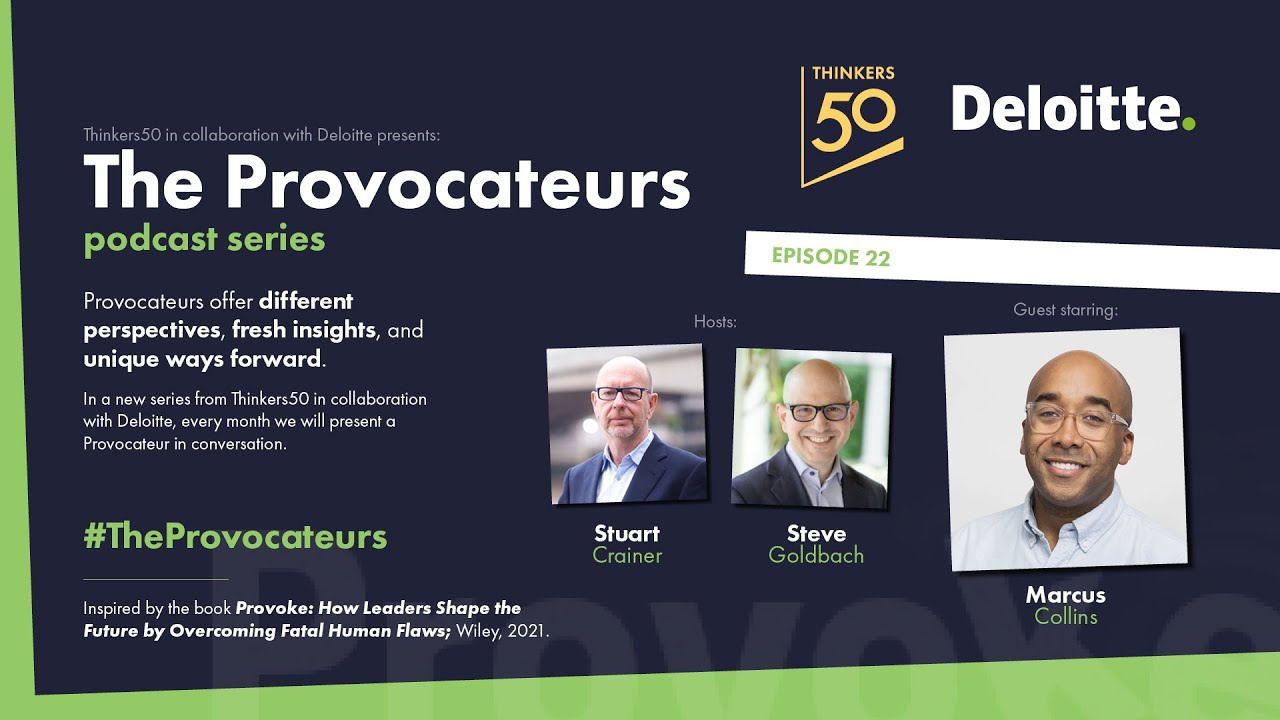
Marcus Collins: Culture, Connections, and Community | The Provocateurs: Episode 22

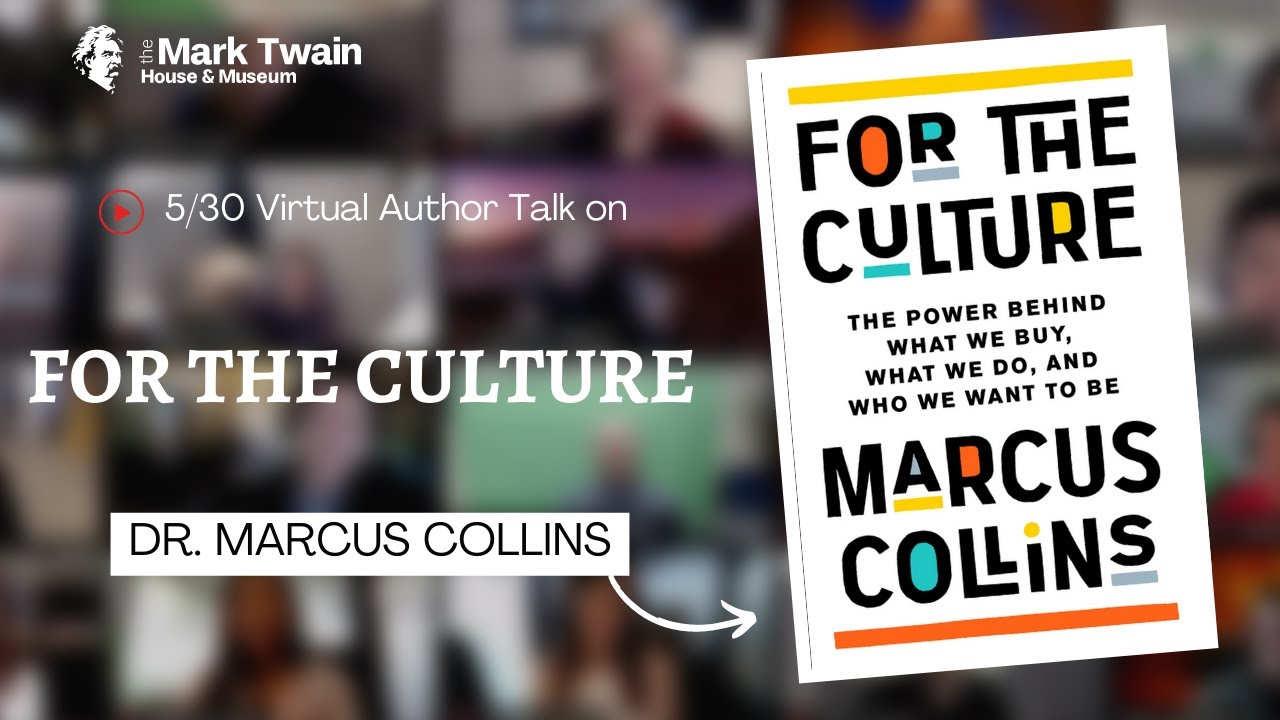
For the Culture: The Power Behind What We Buy, What We Do, and Who We Want to Be