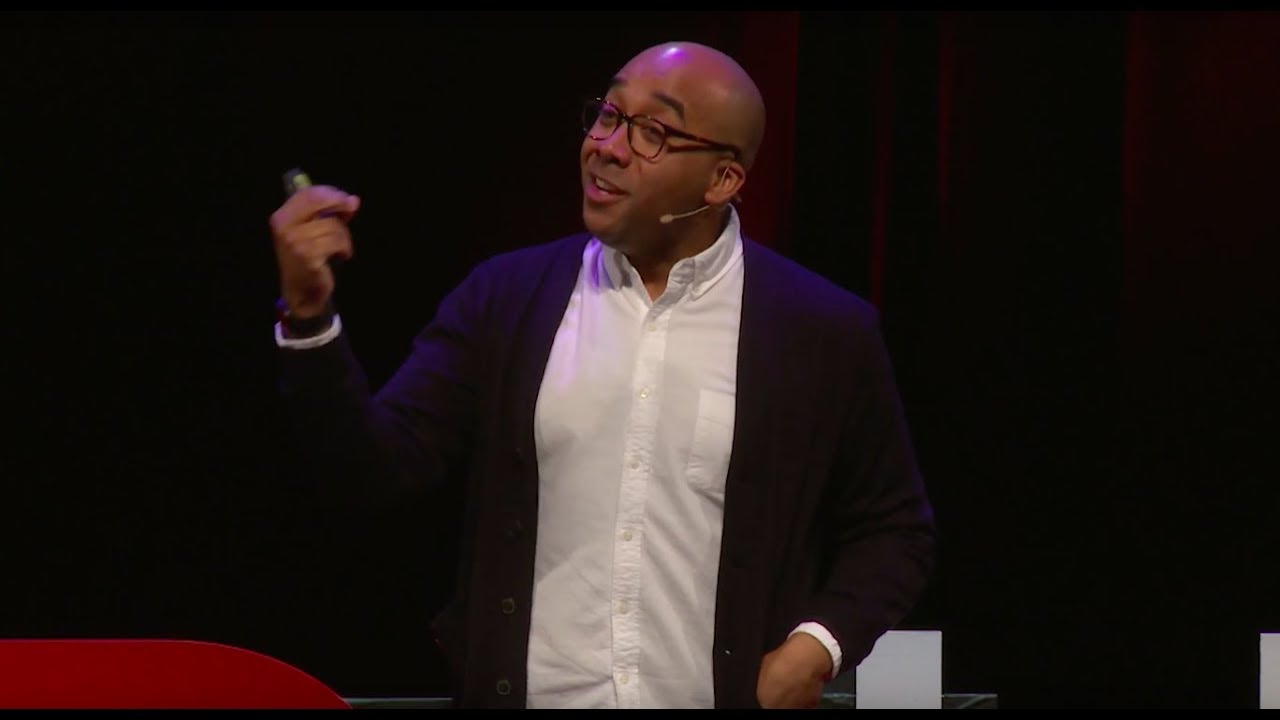
The Power of Culture in Marketing | Live With CMI

The livestream, hosted by Amanda and JK of the Content Marketing Institute (CMI), wraps up the 2024 season of Live with CMI. It opens with a promotion of CMI’s new partnership with the American Marketing Association (AMA) to launch the certified Content Marketing University program. The hosts then introduce Dr. Marcus Collins – award‑winning marketer, former W+K strategist, and professor – for an in‑depth conversation about culture’s role in marketing. Collins defines culture as a system of conventions that shapes human behavior, argues that brands must either lead, participate, or merely follow cultural discourse, and uses a car‑metaphor to illustrate these positions. He stresses authenticity (citing scholar Eric David Brown Jr.) as the prerequisite for sustainable cultural influence. The dialogue moves to community building, contrasting “building” (magnet‑pull) with “facilitating” (enabling existing belief‑based groups) and illustrates the concept with his work on Beyoncé’s fan club, the Beyhive. Collins also discusses his teaching philosophy – bridging academic scholarship with practice, creating cognitive disequilibrium to shift students’ perspectives, and the timeless nature of human behavior despite technological change. The episode concludes with logistical announcements (upcoming CMI events, content‑marketing‑university enrollment, AI workflow tips, content operations advice) and a festive wrap‑up, promising a Season 2 in 2025.
Chapters
We're so excited for our strategic partnership with the American Marketing Association. CMI and AMA have partnered together with a certified course that is our Content Marketing University to become a certified content marketing leader.
I'm super excited about it for what it means for the growth of our profession, for what it means for creating the proper framework for our content marketers to grow and excel. Having certification, having a body of knowledge, having both best and emerging practices, it's really what helps to define a profession.
We couldn't be more excited to be partnering with such a wonderful organization because they're providing the true standard of excellence when it comes to certification in marketing.
And having the opportunity to take the depth of research, knowledge, and practical skill that comes from the Content Marketing Institute content combined with proven approaches, the robust community and leadership that comes from the AMA, I think it's a perfect combination.
If you're a marketing practitioner and you want to upskill your way into becoming a certified content marketing leader, well, then Content Marketing University is for you.
Hello everyone, this is Amanda with the Content Marketing Institute. I'm so happy you're joining us this afternoon for our last episode of the year of Live with CMI. I'm joined by my colleague JK. JK, it's been quite a season 1, right? We've had a lot of fun.
It's been so fun, so enlightening, and greetings. Happy holidays, everyone. Greetings from my little— the soft glow of the leg lamp in the background to add a little Christmas ambiance. I see, Amanda, you have this wonderful holiday theme going around the background with the lovely necklace. But yes, we had a wonderful year full of knowledge and laughs and just so much sharing amongst our community. It was— I mean, I couldn't ask for a better year, and I am so looking forward to year 2.
Yes. Thank you so much. When I said, hey, JK, you want to do this with me this year? And you jumped at the chance because no one just wants to see me on this camera. So thank you. We're going out with a bang this year. We've got a great interview for you. with Marcus Collins. He's an award-winning marketer, keynote speaker, professor, and he chatted with us about how culture impacts marketing and what every marketer needs to know about it. It was a really great interview we did. Marcus is everywhere these days, so I'm so glad he was able to take the time to join us. But that's not all we have, right, JK?
Right. So we are going to count down the best 12 tips that we got from all of our live CMI guests. Live with CMI guests this year, and we have some really great insights in case you missed them. I mean, these are some really, really great folks with really cool, cool, cool insights. And Amanda, I know that you had a really tough time picking, you know, counting down the 12, so it's gonna be great.
Yes, that should be great. But before we get to all of that, as always, we want you to know that this livestream is brought to you by the Content Marketing Institute. And if you don't know what we do, we are the leading training and education organization for All things content and marketing. So you can head over to contentmarketinginstitute.com. We have all kinds of articles and resources there for you. We just released our 2025 predictions from all of the awesome experts that gave us their opinions on what they see ahead for trends and predictions this year. So that's up there as well. So be sure to head over there and check it out. And as you join us today, as always, be sure to give us a virtual wave, say hello, let us know where you're joining us from. We really want to hear from all of you. It makes for a more engaging livestream when you help us by commenting or asking questions, and we'll try to get those up as we go along here today. Nobody wants to hear just JK and I blathering on, so you can add your comments, add your questions. A little color commentary helps us out here today. Well, I wanted to start with this, JK. We have not been on since Content Marketing World. We— the last livestream was right before Content Marketing World, but It was a good time.
Oh my gosh. I'm still in the basking in the glow of, of what we, uh, what we experienced at Content Marketing World in San Diego this past year. I mean, just, I mean, Amanda, you, you have to admit that this year it was just like the confluence of, of new, that I guess it was the new spot, uh, old friends, new faces. And wonderful programming just made for such a fantastic event for us, for us this year. And you know, when you mix in San Diego sunshine, I mean, come on, it's like my favorite spot in the world.
We had puppies. You see on the screen here, we had puppies there for our Yappy Hour. We had this awesome party, and I said it was the best party ever of the Content Marketing Worlds. I don't even know how many I've been to so far, but it was the best party. It was So much fun. I think that everyone had a blast. We had a costume contest. It was really, it was really a great time. Not to mention the awesome speakers, all the awesome stuff people learned, but—
Right.
Really, really a great week. And if you want to come and join us, all the fun next year, we'll be back in San Diego. Registration should open in February. So if you want to be notified when reg opens, we will share that link down in the comments so you can sign up. And yes, Brianne, thank you for joining us. She says happy Tuesday, looking forward to us. Yes, San Diego, we will be back there again next year. So we hope you can join us if you didn't get to or both. So thank you. We hope to see you there. It was so much fun.
You know what's going to make next year's even more special?
What?
Held on my birthday.
Oh, really? Oh no. Oh no. Everyone's gonna have to find JK and like get— buy him a shot for his birthday. And, uh,
I
already know how much fun you like to have at Content Marketing World. This is gonna make it even, uh, even more interesting, JK.
This is true. Uh, yeah. Um, somebody mail me home.
I'm not sitting next to you on the plane. How about
that? Oh man!
All right, back to today's livestream. So, culture. It's something that— it's a word that people use. But it's actually kind of hard to define. Like, I don't even know, like, how would you define culture? But why is that important? And why does that even matter? Well, what if I said it's because no force is more powerful or influential on human behavior Fan culture, right, JK?
Oh, so right. And, you know, we were very fortunate to sit down with Marcus Collins, award-winning marketer who is a former head of strategy at Wieden+Kennedy New York and the clinical assistant professor of marketing at the Ross School of Business at the University of Michigan and a CMWorld alumnus. We had the most wonderful conversation, to the point that after we had this conversation, It continued once my wife got home from work. I had to like just keep going on and on about what Marcus talked about. And I'm so looking forward to reading his book. I mean, this is such a great interview.
Yes. Here's the book. It's called For the Culture: The Power Behind What We Buy, What We Do, and Who We Want to Be. And Marcus explains how if you want to get people to actually take action, you must first understand the underlying cultural forces that make them tick. So, we had a great conversation last week. So, let's take a look here. Marcus, thank you so much for joining us today. And I want to start with this. What is culture and why is it so important for marketers to understand what it is?
Oh yeah. So, culture is, as one of the founding fathers of sociology would say, Émile Durkheim, that culture is the system of conventions and expectations that demarcate who we are and govern what people like us do. It's an organizing operating system that ultimately influences just about everything that we do as humans. And that's important for marketers because our job is to influence behavior. And there is no external force more influential in human behavior than culture, full stop. And those who understand it are more inclined to influence people. And those who do not are more inclined to be influenced by those who do.
I mean, it's, it's so simple to, you know, when you can break it down, like, because it, it's such an open end to some people. It's such an open-ended question.
Oh yeah.
But I like the full stop. This is what it is.
Yeah.
So this leads us, let's, let's, um, and, and we were talking about marketers and, and how the influence of culture. So let me ask you this. How do brands influence culture or conversely, how does culture influence brands?
Oh yeah. You know, they're constantly always in, in discourse. You know, when you launch something, when you put some content in the world, a new campaign, a new product, it is being negotiated and constructed based on the discourse that's happening, right? So, you know, I don't know, say, say you launched a, a new carrot brand when there was an E. coli breakout of carrots. Like, that's not gonna go well for you. You are being negatively impacted because of what's happening in the cultural zeitgeist, right? So marketing is always in discourse with culture. So because we are in discourse always with, with culture, we're in discussion, we're in dialogue. The idea then is that to influence and impact culture is to contribute to the discourse in a meaningful way. You know, I talk about it in my book. That, you know, an example or a metaphor that my friend Eric Holmgren says is that it's like a car. You can drive it where you lead it, you contribute new ideas, new conventions to culture, or you can ride shotgun where you engage in the conventions that already exist. Or conversely, you can suck tailpipe. And that's where you're just basically following whatever is happening with no point of view, No clear conviction. You're just following. You know, you've seen this when this summer where people were like, my pizza is brat. And you were like, oh man, it was a lot of fun until you said that. The minute you said it, it's no longer interesting. And this, these are the ways in which we can engage in culture. We can drive it, lead it, ride shotgun, participate in it, or we can follow it. The brands that lead culture, that contribute new artifacts, new language, new behavior through through their cultural work, through their production, these are the brands that are most likely to win as opposed to those who follow.
Are there any like tips? Like, I hear this and a lot of people hate it, like authenticity, right? You have to be authentic. Like you said, just saying I'm a brat, you know, jumping in on that. Are there any sort of best practices or, you know, how do we navigate that?
Sure. You know, we think about Authenticity. Authenticity. There's a scholar named Eric David Brown Jr. who talks about authenticity being one's truest self despite the context, right? So when I see JK at the store, it's the same JK I see on the street, same JK I see at the gym, same JK I see at work, right? He is who he is consistently despite the context. And the same thing goes with brands. Brands are authentic when they are being their truest self despite the context, despite who they're with, where you find them, they show up the same. And when brands want to engage in culture, engage in the discourse that happens through social actors, through people, it's the ones that are most like themselves that are awarded the level of credence that helps them engage in culture in a meaningful way. You know, if, if J.K. acts one way at the gym, than he does when he's at the bar, I go, dude, I don't know who you are. Who are you? You're always different, right? And even though there are certain expectations of how we act at the gym versus how we act at the bar, being one's truest self despite those expectations is how we award people with the moniker of being authentic. And you— I would arguably say that it is, it is inexorably difficult one would say impossible to engage in culture sustainably, to contribute to culture sustainably if you are known to be inauthentic.
I want to talk a bit about community because, you know, here at CMI, we talk a lot about the, how powerful it can be for marketers to build communities for their brands. And you share in the book about the work you did for Beyoncé. And you explained that you discovered through that work Something I think is really interesting for marketers to understand, that you don't go to build community, you go to facilitate community. So can you kind of explain this distinction and what it means for marketers who do want to tap into the power of community?
Absolutely. So in working with Beyoncé, what a great privilege that was. Part of my job was to help build her online fan club. So take an offline fan club that typically where people write her letters that go unrespondent like most celebrities. But to build an online fan club where these people were able to engage with each other through their fandom of Beyoncé, we realized that the engagement that was happening on the thing that we built, that we were trying to establish, was nowhere, nowhere close to the kind of engagement that was happening within the community that we would later defined and called themselves the Beyhive. And these folks had their own language, they had their own vernacular, they had their own artifacts, their own behaviors. And they weren't just fans of Beyoncé, but they saw the world the way Beyoncé did. Like, Beyoncé believes in women's empowerment, and they too shared the same conviction. And it was that belief system that brought them together. The music was merely— I don't say this patronizingly, but the music itself was just the cultural production that expressed the shared belief, the shared— that that was exchanged among them. And what that illuminated for me is that building a community is that I'm going to bring people and rally them around me and my ideas. When we talk about facilitating community, this is about finding people who already believe what you believe. And you use your resources, your effort, your social capital to help them connect with other people like themselves so that they might collectively achieve the things they set out to achieve together. And what one may see as, you know, wordplay or perhaps hairsplitting, I think that it is foundationally, if not philosophically, different in the manner in which you go about it. Because when you're building community, you are the gravitational pull. You know, you are the magnet and you're gravitating everyone towards you. When you're facilitating community, you're are trying to facilitate or establish the gravitational pull that brings people together. It's not about you, it's about them. And when we do that, we find ourselves in service of people. I think the best marketing is always in service of people getting their jobs done, their jobs to be done, whether it's the functional job, the emotional job, the social job, or the alchemy of all 3 of them together.
So it's like So marketers should be sort of out there looking for these communities that may already exist for their brand or their product or whatever it may be.
That's right. That's right. You find the people who believe what you believe. And that requires the brand being more than a maker of products or the provider of service-based products. Right? The idea then is that the brand, these vessels of meaning that we call brand, that they transcend the value proposition, they transcend the category in which they operate, and they end up elevating at an ideological plane. That is, they operate at an ideological plane based on how they see the world. Then they go out and preach the gospel to people who see the world similarly. And they go, yes, totally. I always thought about it that way. Finally, someone said it. And then these people go preach the gospel for you. They go evangelize, creating network effects that bring people towards you. That's the benefit of facilitating community, that you get to benefit from the network effects that come from community. When you're building community, it's you laying bricks, hoping that people show up.
And I think that this can go for B2B and B2C brands, right? It's just finding what that is for that B2B brand.
Absolutely. I mean, B2B and B2C, it's just context, you know, but we're talking about brands. Brands are vessels of meaning and brands who mean one thing when I'm shopping through the grocery store have the same mechanisms as brands who mean something when I'm in my cubicle trying to decide whether I'm going to buy this, this cloud computing system or that cloud computing system. It all depends on what the brand means to me. You know, you're not saying no one's ever got fired for hiring IBM. That's because within the organization, there is cultural credence. There's trust that the organization has about IBM. And therefore, the cultural social expectations are pushed upon me that even if I see a product that performs better than this IBM product, I'm gonna go with IBM because I'm likely to get it through the system easier. No one's gonna get upset with me. My boss probably pat me on the back and I get all the social capital that comes from that, even though a product may be better. Much like I will buy one pair of headphones that we know to be cool when there's another pair of headphones that actually performs better than the cooler pair. But I buy the cooler pair because of what it means and the social capital that comes from that meaning.
All right, Marcus, so you're— you are super busy teaching and training future marketers every day. Um, what are you focusing on teaching students today and how is your curriculum evolving and maybe for the future?
I would say my focus, uh, in the past has always been about arming students with a reality that there is a there is a brand of marketing that we teach in classrooms that are, that are very much rooted in the scholarship, which is important, but not terribly contemporary with the clinical. So I've always been about like, let's take the scholarship and marry it with the practice. So you get the academic-practitioner gap is what I've always tried to close. And providing sort of an understanding of what it means to actually do it. But over the years to the present day, and which would be sort of the, the catalyst for the future, that it's not enough just to make them aware of it. You have to change people's perspective. And this is really the, the cornerstone of all of my pedagogy, that every class I teach, it's all about providing perspective. Helping you see the world differently. Because I believe that if we see the world differently, then the world will manifest for us differently. It doesn't matter how much information I provide for you, how much knowledge you have, if you're still seeing the world through the same lenses, you're not fully able to action that knowledge, action, uh, that new understanding in a real meaningful way. So my teaching is always about Helping people see the world differently, providing perspective.
Do you think these, uh, the younger crop of, um, students, are they, are they seeing— obviously they're seeing it a little differently, but I'm like, they grew up in a digital age, so their whole perspective, I would seem, would— to approach it might be a little bit different.
I think that by and large, education is still predicated on the same, uh, the, the same provocation. That ultimately we're trying to get people to to find themselves in cognitive disequilibrium, that the world they thought they knew is not representative of the world in which they actually reside. And by breaking the schema, we put them in a state of cognitive disequilibrium that they are now forced to put the world back together again, to see the world differently, and therefore operate in the world differently. Whether that modality is done through zeros and ones, through analog paper, or some combination of the two. Cognitively, we're still playing the same game. And considering the fact that our brains haven't really changed very much since our Sub-Saharan African days, we're still operating with the same hardware. And therefore, we still leverage the same, the same levers by which we help people learn, help people see the world differently. So while the modality shifts, the core operating way by which we learn is still the same.
Human behavior does not change. Exactly.
Technology is fast, but people change very, very, very slowly.
Well, thank you so much, Marcus, for taking the time to chat with us. Where can people find the book or connect with you?
Thank you so much for having me. I'm so very grateful. You can find the book everywhere books are sold, thank God. But also, you can find me across the social web. I go by @MarkToTheSea on all the socials, and you can find me on my website, uh, marktothesea.com.
Awesome,
awesome. Thank you so much, Marcus.
Thank you, it was a blast.
You taking the time, thank you.
Always take care. Ciao.
I'm still— I, you know, I sat through that interview and I'm still sitting here like mesmerized and shaking my head along, just I just love that so much.
I want to go back to school and just take his class. He's so great. And we're so grateful that he took the time to chat with us. He's very busy. He's all over the media. He's speaking all over the world. He even spoke at the Cannes Lions Festival, which is our sister brand here at CMI. He was there this past year as well. So he talked about so much more that I didn't include in this interview. So we have an extended interview with him over on our YouTube page. We talked about so much, the election, a little bit more about teaching kids or students. Sorry, we'll drop the link in the comments for you to check that out as well. So just great stuff. But Marcus wasn't the only awesome guest that we had this year. And JK, I actually forgot about how many great guests we have until I started working on this next segment.
They really were so great, weren't they? We decided to put together some of the best nuggets of knowledge That our guests shared with us in 2004— or 2004— 2024. Please take a second, enjoy this. Amanda, I know you put a lot of work into this. This is so fun. Take a look.
Embrace AI. It's here as a free assistant to do all the stuff you don't want to do, all the bits you don't like about your job. AI can take care of it, and then you can be free to do the creative work and that, that
I call it the Renaissance with a capital AI for your workflow. It is so much more ideation than execution. The typical meme is, you know, when you've got that really long client brief and you're in Photoshop and you spent 10 hours editing this thing and then it crashes on you and you just want to rip your hair out and jump out the window. Well, essentially all of that's gone because you type a few words and then you get a whole new workflow. And then seconds later an image appears. And if you don't like it, you type a few more words and another image appears. Like, it's a totally different workflow.
And so what people need to do more of is figuring out how can they have an original viewpoint? How can they have a new way to think about these things? Because Google is actively looking to boost that. But we've all just been kind of trapped in this idea of like, what are the keywords? What are the questions? What are the things that the tool tells me to say? You need to get back to being an actual human being that's a subject matter expert that has something new to say.
Well, the, the foundational principle that we have all embraced in the content marketing community has not changed. I want us all to just take a deep breath and remind ourselves that our audiences need our help. You can be a helpful, useful internet citizen. That intermediary, that channel, maybe it's been Google for you for a while, maybe it's been social or email or other channels, that may change. But what doesn't change is the connection that people make with each other when they help each other. It's important, the work that we do.
You've got to actually understand your current practices and processes, right? So what's actually happening, not what the workflow says is supposed to happen, not what the documents say, if you have any, but what is actually happening? What are the steps and who are involved in getting content from that ideation all the way through to production, creation, production, publication, distribution, and then eventually archive, right? So to do that, you got to get teams together, get them together and have a working session to actually document and capture current state.
Almost all of the marketing that takes place on social media. You cannot tell whether someone consumed a video or saw a particular post and then came to a piece of content. No way. So attribution fully broken these days, but we're still using it like we used to. Like, the board and leadership teams of the companies we work for, or our clients if we're at an agency, they have to buy into this new method of operating. They have Understand how when you provide attribution, you are going to miss almost every organic channel, every word-of-mouth channel, almost every social engagement channel that's organic. Step 2 is really about saying, what are we going to invest in? Because we believe our audience is here and paying attention. That is going to be hard to attribute but possible to measure.
I don't think many brands take that approach where they say it's not about us. And it doesn't— we don't need to control everything. We want the product and that the result of the product is what's most important. It's not our ego. We don't care who takes credit. It's about how impactful this piece of project is. That's the philosophy we're going to continue.
Marketers in a lot of ways are the front lines of our organizations when it comes to interfacing with our customers and putting our best foot forward. Our customers, right? So we are the ones who are presenting the case of why is our brand highly relevant and the right fit for the customer in the relationship, whether it's B2B or B2C, right? With that in mind, we're the ones who need to be able to know our customers and our prospects the best. And because of that, we need to have a seat at the data table. In other words, we need to be driving the strategy around which our organization is collecting data, designing the infrastructure of our data, and then using our data in order to deliver upon that expectation of the customers.
Once you're creating this content, what does it look like? What is the experience people are having? Like, for example, one, how is your demeanor in the video? Are you like— the difference is clear, clear eyes. Are you like that guy? Or are you allowing yourself to just have a little bit more energy and be engaged? What's happening within the first 1 to 2 seconds of your video? Or if it's written content, if someone lands on you, what is the first thing you have said in your written content? What's the image content? What we call— we call that a hook. What is the reason that someone's going to stop and consume what it is you're putting out? If the thought isn't going into the what we call the hook, then that's a really big indicator of why it's not working. Because you literally, you've got 1 to 2 seconds before someone says scroll, scroll, scroll.
If you don't want to make videos just to make videos, and that's what I really want to nail down, always think of your customer first.
Start with the audience and what you want them to do. So start with thinking, what is the objective? What is the call to action?
And what is it that you're wanting them to take away?
So the number one thing above anything else, if you take nothing else from me in terms of equipment, it is know how to use the equipment that you have. I say that because I see so many people make 2 huge mistakes. Either they get a piece of equipment that they saw someone else use that was cool, We have clients who say, oh, I got my own microphone. It's— and then they have this gamer mic that they got off of Temu or something. It sounds terrible. Or they get a very expensive piece of equipment and use it horribly.
Most of the use cases with AI that we're seeing with large companies, small companies, medium-sized companies are basically extra things that people can do. In other words, more things that resources or people can do with the tool. rather than replacing the activities that, that people did. So in other words, they are
enhancements or additions to the people capabilities rather than efficiencies and needing less people to do it. And I think that trend is going to continue, continue on.
That was so great. I mean, just looking back across that, it's hard. It boggles my mind that we sat through all these interviews and how many great people that we had on and just the amount of information that they shared with us.
But I do want to point out, I loved Andy's comment about the work that we are doing is important. So I hope that people take that into next year as— and they think about that as they go ahead and into next year.
For sure. And hey, in case if any of you missed any of these videos, you can go back and watch them all. They're on our YouTube playlist, Live with CMI. We'll drop that link in the chat. Go back and check them out, rewatch them. I mean, they were just Such great, great, great interviews.
Yeah, and I don't— none of it is really too timely, so like it all is very, uh, applicable still now. And I want to mention one more follow-up. I think that this was my favorite interview of the year with Stuart Butler down at the Myrtle Beach Visitors Bureau. They are doing some really amazing things down there. Oh, let me hide this quick. Um, they— we talked to him about this docuseries that they produced called Traveling the Spectrum, and it's about the challenges that a who have children or family members on the spectrum face when they're going on vacation. It can be difficult. And we are so excited, so happy to announce that Traveling the Spectrum is going to make its debut on the Peacock Network this Thursday, December 12th. We are so happy for Summer and the team. Fantastic. We were, we kind of knew about this this summer and we were just so hoping that this was gonna finally happen. So we are, I can't wait to see it because If you go to the website traveling— let me pull it up here because I always forget it— travelingthespectrumshow.com, you can actually see the trailer and the trailer is so good. So I was so excited to actually watch the rest of it. So if you want to check it out, you want to learn more about the series, it's so great. And I highly suggest checking out the full interview that we did with Stuart this summer. He, I don't know, he just has a really great philosophy about marketing, marketing in particular, particularly content marketing. So I really enjoyed that interview with him.
So Amanda, correct me if I'm wrong, wasn't he, didn't he work at NASA? Wasn't he?
I don't remember.
He was, he was an engineer and got into marketing.
That's right, he was a rocket scientist.
Yeah, he was a rocket scientist. Quite a leap.
He was trained as a rocket scientist and yes, now he's a rockstar marketer. So yeah, really, really smart guy, really great stuff. So we are so happy about that. So we're just about wrapped up here today. It's the end of the year, but we still have a lot of things going on here at Content Marketing Institute. Tomorrow we actually have a Master This digital event on content management and operations at 1:00 PM. We have two great sessions planned, including How to Hack Your Martech Stack: Reimagining Your Technology and Workflows for Smarter Marketing, and then Unlocking Efficiency: Mastering Content Management Operations. We will drop the link for you in the comments that you can register for that great event tomorrow. And we also want to remind you that there is still time left to register for Content Marketing University, our online learning platform. We have some If you have some personal development funds left in your budget, or maybe you just want to invest in yourself, now's the time to do it. Plus, you can earn your content marketing certification from CMI and the American Marketing Association. So head on over to contentmarketinguniversity.com to learn more, and hopefully you will enroll today. So that was a lot today.
It really was. It was a heck of a year, huh?
It was, it was, and it flew by very, very fast. So I guess we'll be back here next year for season 2.
Season 2, I can't wait. Thank you so much, everybody that, that, that, you know, joined us in the community. And a very special thanks to all of our guests over this past year. And Amanda, for me, thank you for inviting me to come along on this crazy little journey that we started. I am having so such a blast. And, um, you know, happy holidays to you and your family and everybody out there.
Yes, everything that JK said. So we are excited to, uh, bring you a bunch of new episodes for next year as well. So, and if you have any, any topics, any guests you'd love to see us have on, just, you know, drop it in the comments. We always are looking for, um, people and, and we want to have topics that are of interest to you. So on that note, we wish you the best rest of the year and hopefully a great start to the new year. Thank you, JK, and I will see you next year. See you, everyone.
Take care.
More from Dr.

Marcus Collins on why culture is a cheat code for success - Culture First Podcast with Damon Klotz
Marcus Collins: How to Understand Anyone, Market Like a Genius, & Secrets of Culture – 246
Marcus Collins: Culture, Connections, and Community | The Provocateurs: Episode 22

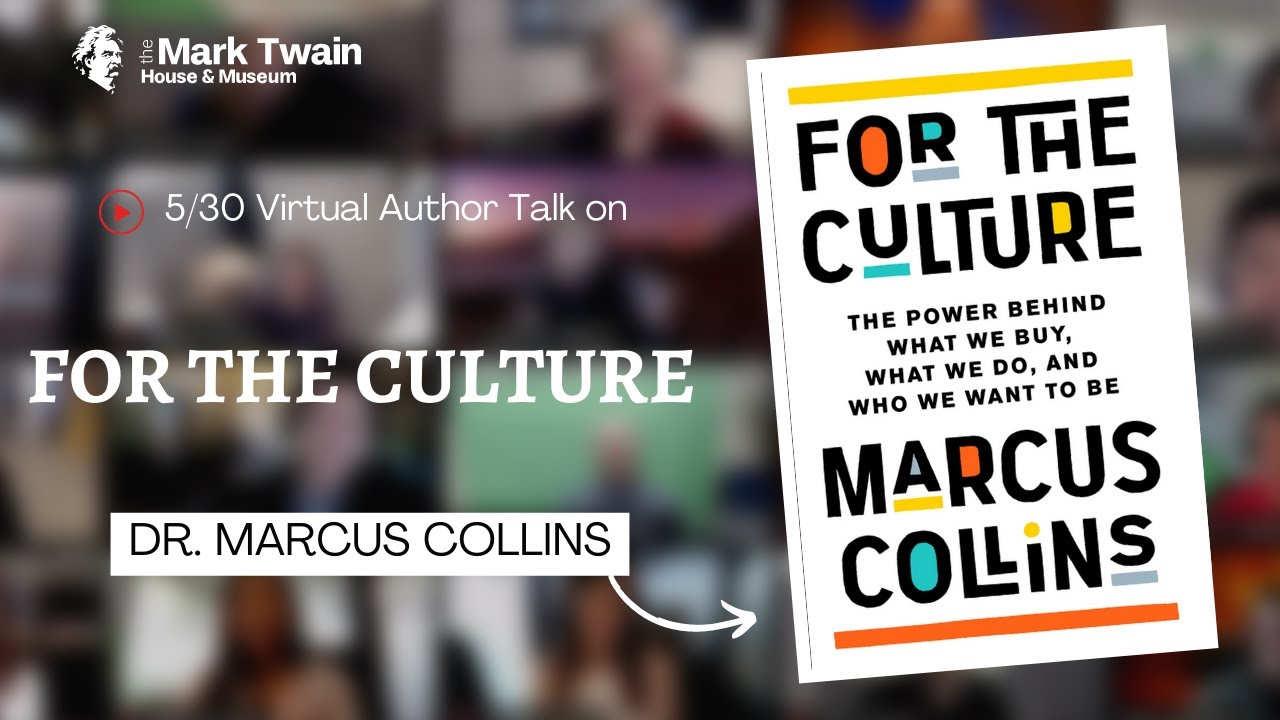
For the Culture: The Power Behind What We Buy, What We Do, and Who We Want to Be

The Power Behind What We Buy, What We Do, and Who We Want to Be | Marcus Collins | Talks at Google