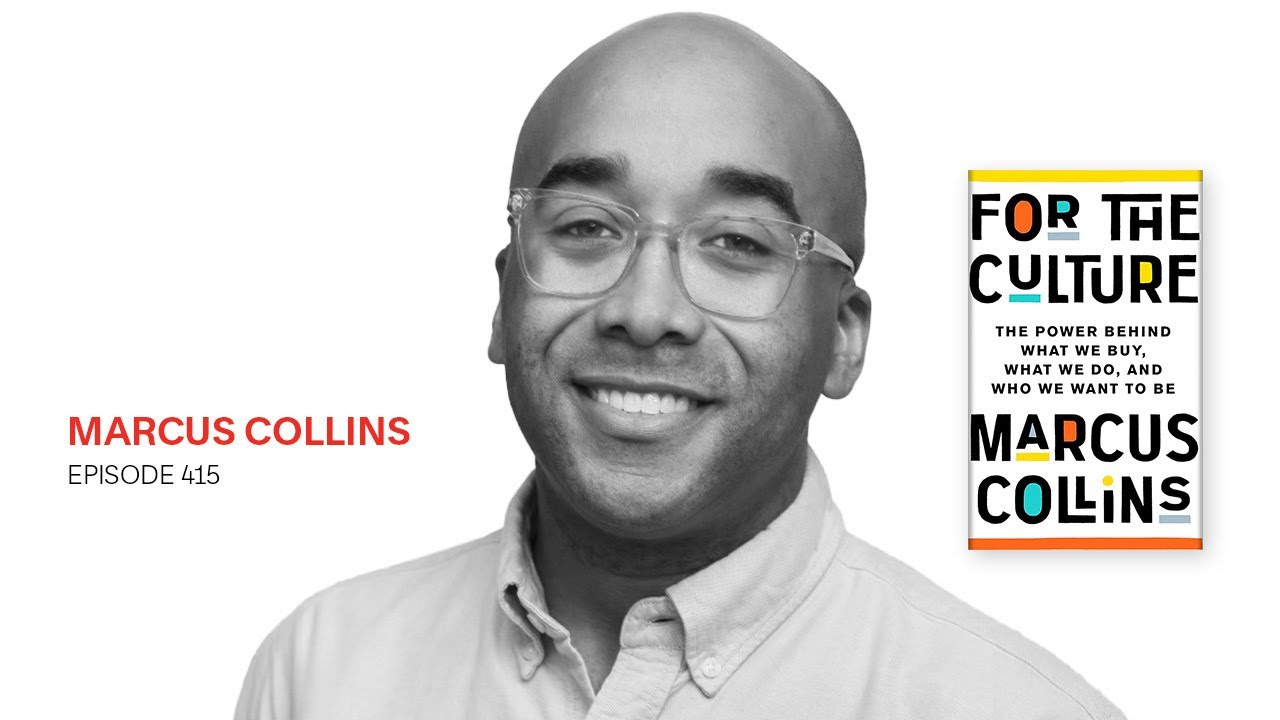
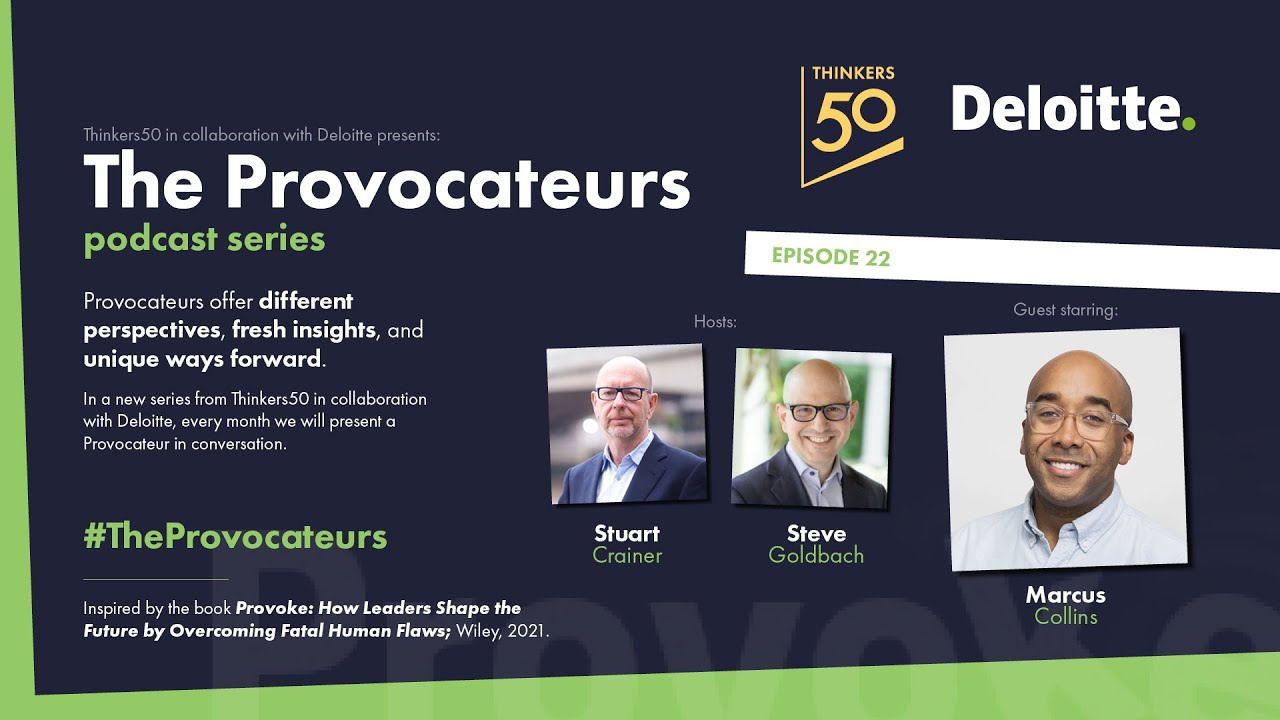
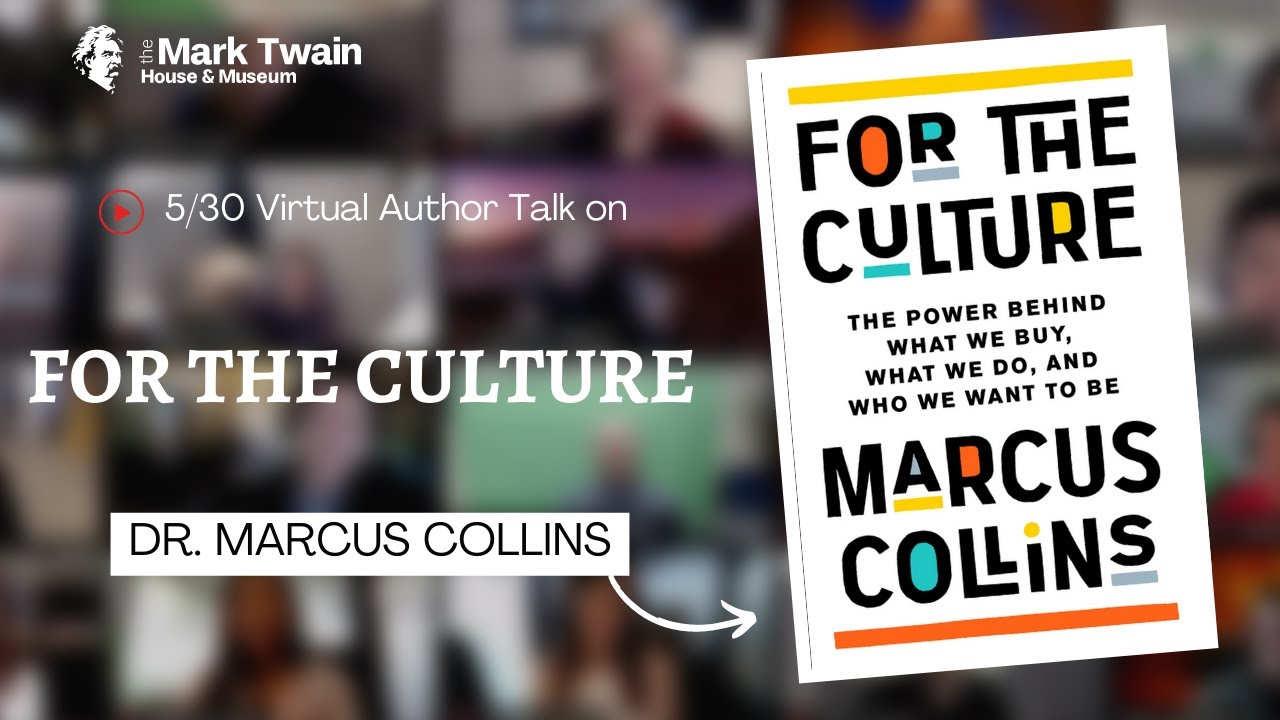
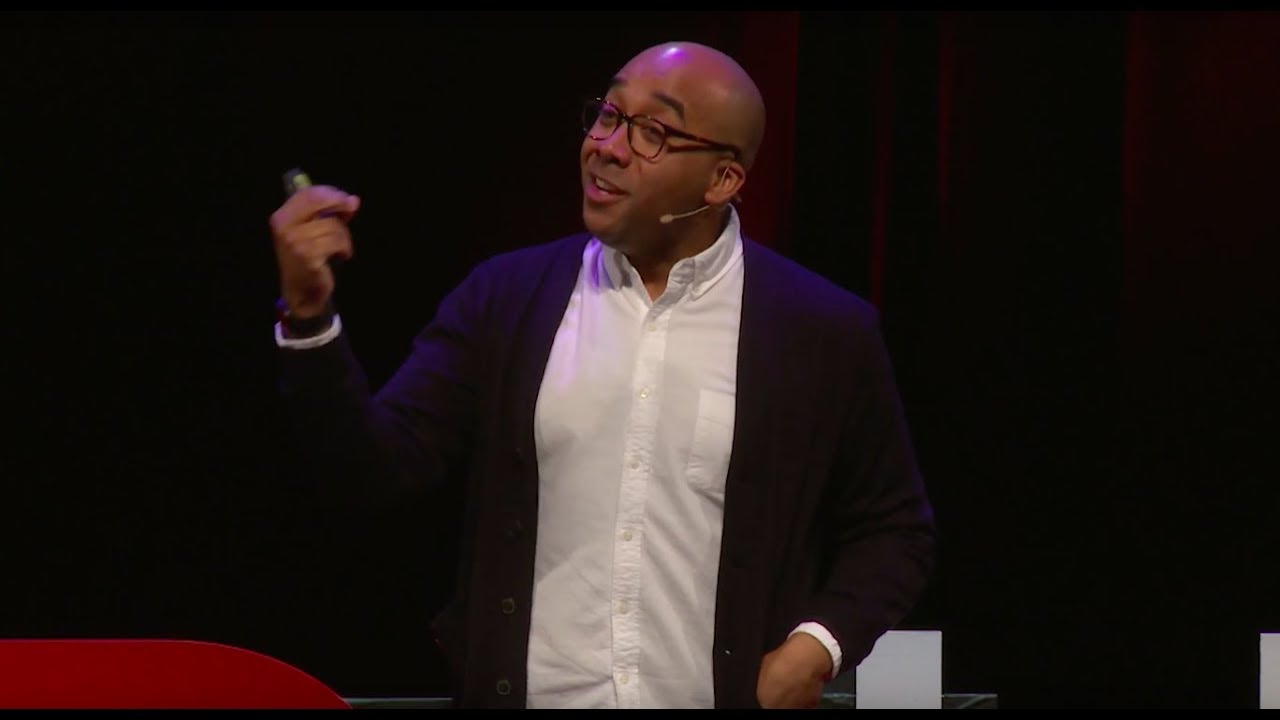
Dr. Marcus Collins, a business professor and author of For the Culture, argues that culture is the most powerful force shaping human behavior. He breaks it into three parts: worldview, shared way of life, and expression. Collins points to his work on Beyoncé's digital strategy, the iTunes-Nike+ partnership, and the Barbie marketing blitz as examples of how brands embed themselves into culture.
Chapters
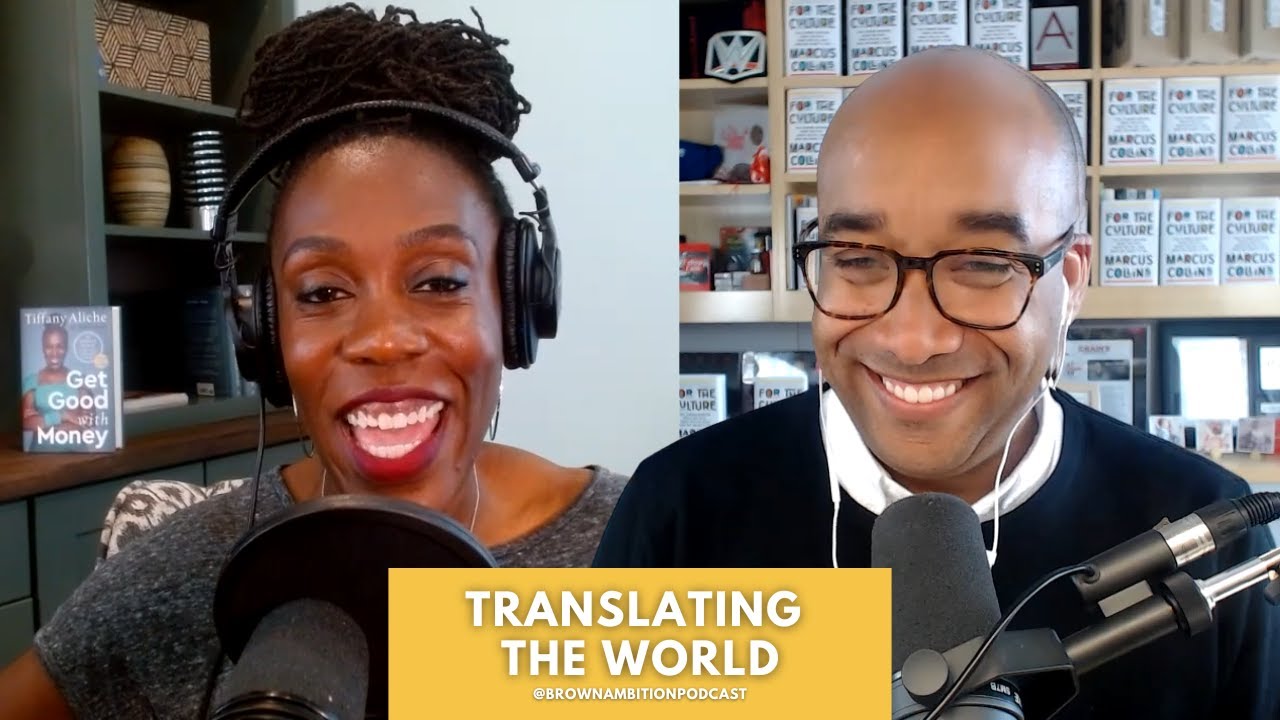
He's an award-winning marketer and cultural translator, giving readers the tools to inspire collective change by encouraging us to always consider not only what culture can do for us, but what we can do for the culture. Dr. Marcus Collins, a professor at the University of Michigan's Ross School of Business, is here to discuss his book, For the Culture: The Power Behind What We Buy, What We Do, and Who We Want to Be. Welcome to the show. First of all, I gotta shout out just your marketing genius with all the books right behind you. Thanks so much for coming on the show. Thank you.
Thank you so much for having me. I'm super, super grateful.
So give us some background on the book and tell us some of the ways that culture influences behavior.
You know, the book makes a very clear argument that there's no force, no external force more influential to human behavior than culture, full stop. And when you hear that, you go, yeah, that makes a whole lot of sense. However, if you ask 5 people to define culture, you'll get 50 different answers. And that's a problem because if we can't Clearly identify what a thing is, we can't define the thing well, then it's hard for us to operationalize it and use it sustainably. So we never get a chance to fully harness the power of culture, this influential force on us. So the book takes the perspective of what culture is, providing a Rosetta Stone that allows us to leverage its power in our day-to-day use.
You say that culture is made up of 3 elements: how we see the world, our shared way of life, and how we express ourselves. How do these things leverage influence, and how does that understanding Excite people to move?
Of course. So because of who I am, we have a set of beliefs and ideologies that shape how we see the world. And because of how we see the world, we therefore abide by the conventions and expectations of what it means to have that belief system— the artifacts we don, the behaviors that are normative, the language that we use. And then we express it through cultural production— music, literature, film, uh, movies, and brands and branded products. Every part of social living is governed by that, that, that rubric. I am a— we believe this, therefore I. And we navigate our, our lives whether we're aware of it or not. All of our decisions are informed by that calculus, and that calculus amounts to our cultural subscription.
You've proven this understanding through your work spearheading digital strategy for Beyoncé, working on the collaboration between iTunes and Nike+, even helping to successfully launch the Brooklyn Nets. At what point in your career did you realize that culture was a driving force in our society?
You know, I had the fortune and pleasure of working at an advertising agency named Translation with a gentleman named Steve Stout. And Steve Stout had been a longtime music executive who started an agency with, with Jay-Z and Jimmy Iovine. And he built that agency to help brands navigate contemporary culture, right? Help brands thrive in contemporary culture. And I never heard culture used in such a proactive way. I've always heard culture used in sort of a way of describing things, but never as a tool, never as a vehicle to drive at some either commercial or behavioral adoption. And that sort of— that shift in perspective made me see the world differently. And I found myself using the word culture all the time without knowing what it really was.
There's no doubt that you have seen just the huge marketing campaign behind the upcoming Barbie movie with more than 100 brand deals. We really haven't seen We haven't seen a marketing tsunami like this in a long time. But what about this marketing campaign is resonating?
Well, I think it's the, the perceived ubiquity, right? The concurrence of the, of the movie makes it seem like everybody's talking about Barbie, right? By having all these different partnerships, they're showing up in different contextual settings to talk to different groups of people. And the marketing is cutting through the clutter. By having it in this many different settings, it becomes at least seemingly ubiquitous. But also you have more people that are invested in Barbie succeeding, right? It's like the peanut butter to their jelly. And from that perspective, it becomes a really, really powerful and compelling proposition for the brand. More importantly, it becomes a very, very powerful vehicle for the Barbie IP that regardless of the movie succeeds in the box office or not, The IP has won for sure.
Of course, very few companies have shifted our culture like Amazon has, but there has been a human cost attached to that with employee lawsuits alleging mistreatment. Should consumers really take these things into account when they decide where to spend their money?
Ideally, we should, right? Ideally, we should be responsible in our consumption. But there are perverse incentives at play that makes it hard for us to do that. I think that if you ask someone On the surface how they feel about workers being mistreated. They'll tell you altruistically they don't like that. However, do they want their products to arrive tomorrow? Absolutely. And it's because of that tension that it forces people, us, to reconcile the incongruence between our ideology, our beliefs, and our behaviors. And this is why culture is so tightly connected, those systems of systems, that we want our beliefs to be aligned with how we show up in the world. So, you know, we don't like the policies for workers have to endure at Amazon, but I want the benefits. So what do we do? We reconcile it, right? We find, you know, we find hurdles to make sense of it, to make sure that I'm still a good person even though I shop at Amazon and I don't like how they treat their employees. If that is your calculus, you find a way to get over those things. And I think that trying to Trying to encourage people to be mindful of their consumption is the right thing. But for us to ever be absolved of any wrongdoing in a capitalist society, I think that's a really hard feat for all of us to overcome.
Dr. Marcus Collins, we thank you so much. For the Culture is now available wherever books are sold.
Thank you so much.
Hi everyone, George Stephanopoulos here. Thanks for checking out the ABC News YouTube channel. If you'd like to get more videos, show highlights, and watch live event coverage, Click on the right over here to subscribe to our channel, and don't forget to download the ABC News app for breaking news alerts. Thanks for watching.