Too Foreign For Here: The Life of a Black Sheep | Marcus Collins | TEDxUofM
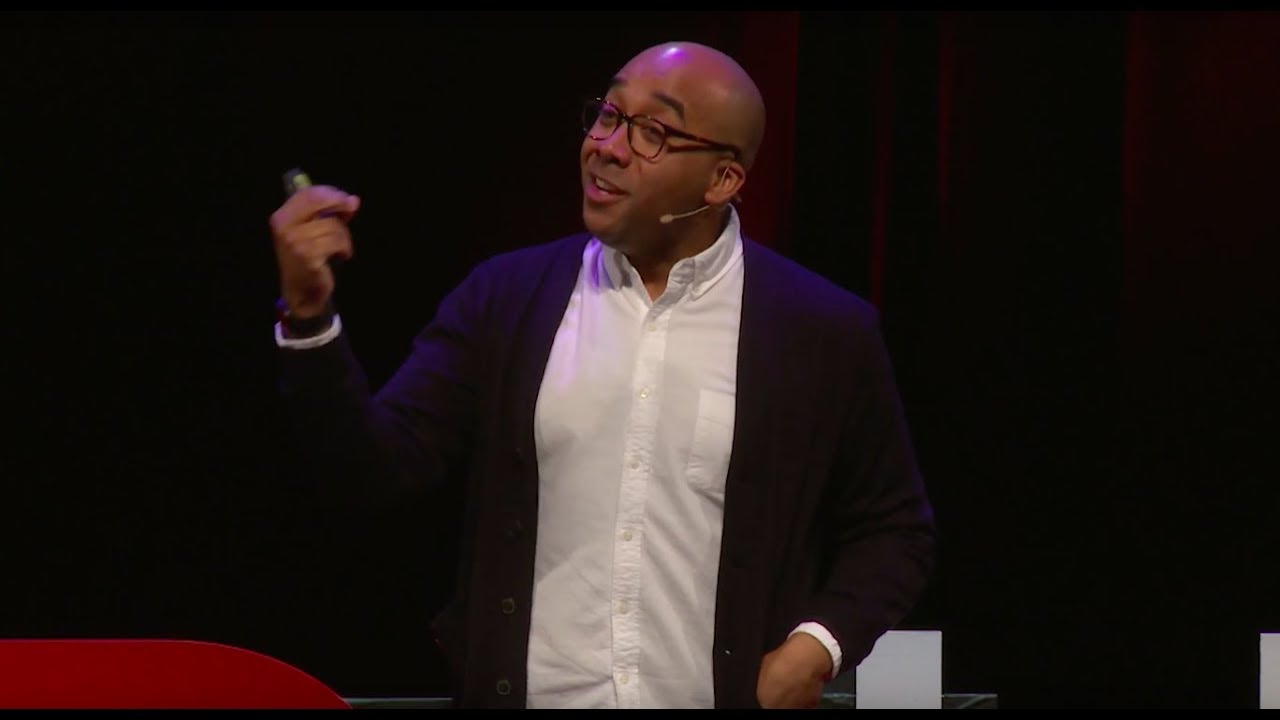
Marcus Collins explores what it means to be a Black sheep in America, caught between worlds. Only 4% of advertising professionals are Black, and he's faced accusations of being too white among Black peers and backlash for marrying a non-Black woman. He traces this loneliness through childhood moments and introduces the silent affirmation of the nod as a path toward belonging.
Chapters
Hi. Hello. Hello. Do me a favor, to your neighbor, just say hello. And then to your other neighbor, just say hello. All right. Now that we're all acquainted, let's get started. There's research that says that right around 7 years old is when we start to develop long-term memories. That is, the memories that we can recall once we're adults and look backwards, the sustained memories, if you will. And it sounds about right, because it was right around 7 years old that I can remember coming home in great delight, saying to my mother, Mom, That's how I used to talk. Mom! The next time I go to the barbershop, I want to get my hair cut like Eric Galvan. This is Eric Galvan. Eric Galvan is white. I am not. But Eric Galvan's hair would blow in the wind, which I thought was just ridiculously cool. And my hair just kind of stood there. It's funny, those things we take for granted looking back, right? But there I was, making a declaration to my mom, Mom, I want to get my hair cut like Eric Galvan next time we go to the barbershop. And my mom looks at me as if to say, Nigga, you know you black, right? Of course I know that I'm black. I knew that I was black, and I know that I am black. Look, I grew up in Detroit, arguably one of the blackest cities in the country. Of course I know that I'm black. I went to public schools my entire life in Detroit, some of the best public schools, mind you. Of course I know that I'm black, because in those public schools, I was told that I had to be 2 times as good as the people in the suburbs. if I were to compete. And those people in the suburbs are people who didn't look like me, who were not black. Of course, I know that I'm black. I was reminded of this when I think about the fact that my brother and I used to swim competitively. I swam from 6 years old to 18 years old, he throughout college. And let me tell you, there ain't a whole lot of black people swimming competitively. Just keeping it real. But I can remember in those years of swimming competitively, feeling the awkward stares, experiencing the passive-aggressiveness, overhearing the whispers that were laden with racial epithets. I know that I'm black. See, even living in New York City, where I lived for 6 years or so, I can remember, more than I'd like to, parking my car in a public parking garage, public parking structure, and on my way out of the garage, another patron will walk by and give me his keys. I know, right? Mistaking me for a parking attendant. I didn't have on a uniform, I didn't have a badge that said, hi, I'm Marcus. But yet, because I'm black, He thought that I worked there. Now look, I got nothing against parking attendants, they're the salt of the earth. But I wasn't a parking attendant. In fact, I have the great pleasure, the great honor to work at this prestigious university as a faculty member. That's right. But I am reminded of my blackness when I look around the student population and I don't see very many people who look like me. Not only in the population, but among my peers as well, as educators. See, not only do I work in an industry where there aren't a lot of black people there to remind me just how black I am, I also work in advertising, as an executive, no less. I work in advertising where there's only 4.2%— or 4.1%, check that— 4.1% of black people in the entire industry. And I can feel it. I can feel the doubt when I walk into a room for the first time, and I can feel them questioning my intellect, my ability, my pedigree, because I'm black. And if that's not enough— trust me, that should be enough— I'm reminded of the fact that I'm black When I consider that I never met my paternal grandfather, my father's father, who was murdered in rural Arkansas in the late 1940s because he too was black, leaving my 7-year-old father and his twin brother and their siblings fatherless. Trust me, I know that I'm black. But this is where things get paradoxical. Because while I've experienced all this time a saliency of understanding my blackness, when I've been among my peers growing up, at the same time, simultaneously, among my peers who were also black, I was called a white boy. Because I swam. Because I spent summers going to band camp, right? Because I loved the Monkees just as much as I loved A Tribe Called Quest. The Monkees were great. Or because I excelled in school, I was somehow diminishing my blackness. And to make matters worse, to exacerbate this issue, I decided to fall in love and marry a woman who was not black. And I was accused, practically, of betraying my race, of unraveling the thread of the black community. Dig this: a few years ago, I shared an article on Facebook from the New York Times that chronicled the increase in interracial marriages in the country. I thought it was interesting because I, myself, was in an interracial relationship. And when I shared this on Facebook, it was met with some delight, some glee from some of my friends. But one friend in particular, a friend that I had known my entire life, at that time, 20-some-odd years of close, close friendship, Share this. No, this. Just kidding. All right. The glorification of interracial marriages is dangerous because it romanticizes diversity. Marriage is an institution for community building, and it is not a decision based on love. This was my friend of 20-some-odd years who was supposed to know me so well, and I saw this in horror because, A, I didn't see the world that way, but I immediately thought of my soon-to-be wife, and she was beside herself, and rightfully so, because this person, who I cherished dearly, didn't know me at all. And one person replied with 2 sentences that I thought was super powerful. And it said this: New America, old habits. And indeed, this was an old habit, because I've experienced this my entire life. When I was among white people, I was too black, couldn't be any blacker. Among my own people, I wasn't black enough. One poet put it this way: too foreign for home, too foreign for here. Never enough for both. What an isolating and lonely feeling. What a feeling of loneliness. Now, why does any of this matter? It's a Friday night. Why does any of this matter? It's pretty heavy. I'll tell you why it matters. Because my experience isn't unique to me. There are tons of people who felt isolated, alone, like a black sheep, because of their race, their ethnicity, their gender, their sexuality, their religion. In fact, Harris did a— the Harris Poll did a recent study that showed that 72% of people in this country have cited feeling lonely. In this hyperconnected world where we're just a tweet and a snap away from everybody, we feel alone. And yet, Man, by nature, is a social animal, as Aristotle will say. We all just want to belong. It's in the fabric of humanity to want to belong. This reminds me of a trip I took last year to Hong Kong for the first time. It's in Hong Kong, and there I didn't feel any need more out of place than I feel here in the United States, in my country, in my home, which is both a liberating feeling and kind of sad. But I remember this remarkable thing happened. I'm walking through the train station, right? So I'm walking through the train station, the metro, and as I'm walking, I see a white American down the way, coming the opposite way of me, right? We're approaching each other. And as we approach each other, We lock eyes, not that kind of way, but we lock eyes. We lock eyes, and then it happened. It happened. He gave me the nod. The nod. The nod. He gave me the nod, y'all. Now for you guys, for some of you guys who may not know. The nod. This is an institution of higher learning. For those of you guys who may not know the nod, the nod is an unwritten rule. It's a social norm among African American people, Black people, Black men in particular. When you see— I don't even know you, but we are minorities in this setting. I see you, dude. You exist. You matter. And it works like this, it's very simple. We see someone who is black, and you go like this, what up? Or you do the opposite, what up? It works both ways. But you can imagine, considering the experience that black people have had in this country, Where our existence, let alone our rights, didn't matter. The nod is superman powerful. And here I am on the other side of the globe, and a white man gives me the nod, as if to say, I see you. You exist. You matter. And here, we are more alike than we are different. Here, you matter. I've often heard stories from friends of mine who are first-generation immigrants. That means their parents came here searching for new opportunities for themselves and their family, and they were the first of their family to be born here— first-generation immigrants. And they're Americans. They're born here, and they assimilate. They adopt to the culture of America. the shared beliefs, the social norms, the unwritten rules, the language, the artifacts that we don. And as much as they adopt to the culture, they still felt different. They still felt like black sheep, typically because of the way they look. Now, on the flip side, if they went to their parents' home country, their homeland, They felt different there also because of the way they talk, because of the way they act. Too foreign for home, too foreign for here, never enough for both. Now, why does this matter? I'll tell you why this matters. It matters because not only do we all want to belong, it's in the very DNA of people to connect. Anthropologists would argue that it was man's ability to socialize that allowed us to evolve the species. One great poet said this, dearly beloved, we've gathered here today to get through this thing called life. And it's true. And because of that, everything about us drives us to connect. In fact, there's a part of the brain called the mirror neuron system whose job it is to mirror what it sees, right? The brain sees something, it says, wow, that's pretty cool, we should try that, and then you try it, right? Like Freud would say that thought is just action in rehearsal. You see it, and before long, you take on the behavior. That's why yawning is so contagious. You see someone yawn, your brain goes, whoa! What was that? Dude, we've got to try that. And before long, You're yawning. We mirror what we see. It's the same reason why when we're watching a horror movie, we see this and we're like, watch out, girl, he gonna kill you! 'Cause your brain is practicing what it might feel like to be like Liv Tyler in that situation. Or my wife watches The Notebook, she just sobs. Oh, she just bawls because in her mind she's practicing what it might feel like to be loved by Ryan Gosling. And that's totally cool. Totally cool. The movie came out before we started dating. It's all good. I'm strong in my manhood. It's all good. But here's the thing. We mirror what we see because mimicking our people brings us closer together. It allows us to be much more empathetic, strengthening covalent bonds between our people because we all want To belong. It's probably why black people in particular have the uncanny ability to code-switch. And that is, we can adopt a way to talk, a way to act, when we're with certain people. For instance, if I get a call from a number I don't recognize, I answer the phone like this: Hello, this is Marcus. And then I realize it's my friend, I'm like, What up, son? What it do? You code-switch. You code-switch, because we all want to belong. Now, why does any of this matter? I tell you why this matters to me personally, because my wife and I are raising our daughter in a world where people will label her as mixed, as biracial, or maybe even Other, they'll marvel at her curly hair. They'll they'll struggle with the ambiguity of her blue eyes. They'll exoticize her olive skin, and they'll think to themselves and maybe be even as bold as to say, "What are you? What are you?" And the sad part about this. That is very clear what she is. She's Black. And she's white. And she's Christian. And she observes the Jewish high holidays, right? She's also very funny. And she loves music and a whole host of other things. But because of those superficial differences, people are going to see her And she'll experience what it's like to be a black sheep in ways that are far more salient than me. And that just breaks my heart. Because when I think about the world that I want my daughter to experience as she navigates her journey in life, I would hope that someone sees her and says, I see you. You matter. You matter. And we are more alike than we are different. Now, why should this matter to you? Well, I'll tell you. This should matter to you because we live in a world more divisive than ever before. There's the haves and the have-nots. There is the liberals and the conservatives, Republicans and Democrats, young and old. And somewhere along the lines, we find ourselves trying to navigate this spectrum, and we all end up feeling like black sheep, out of place, lonely. When I think about that, it makes me wonder— imagine a world where we stopped looking at each other's differences and started looking at the things that we have in common, that we look at each other and say, I see you, and we're more alike than we are different. Imagine that world where we take on people's perspectives, where we allow ourselves to be super empathetic, because it's what we're wired to do. And look, I'm not trying to romanticize diversity. Instead, I'm promoting the unity of humanity because that's the world that I want to live in, and that, I think, is an idea worth spreading. Thank you so much. Thank you.
More from Dr.


Marcus Collins on why culture is a cheat code for success - Culture First Podcast with Damon Klotz
Marcus Collins: How to Understand Anyone, Market Like a Genius, & Secrets of Culture – 246
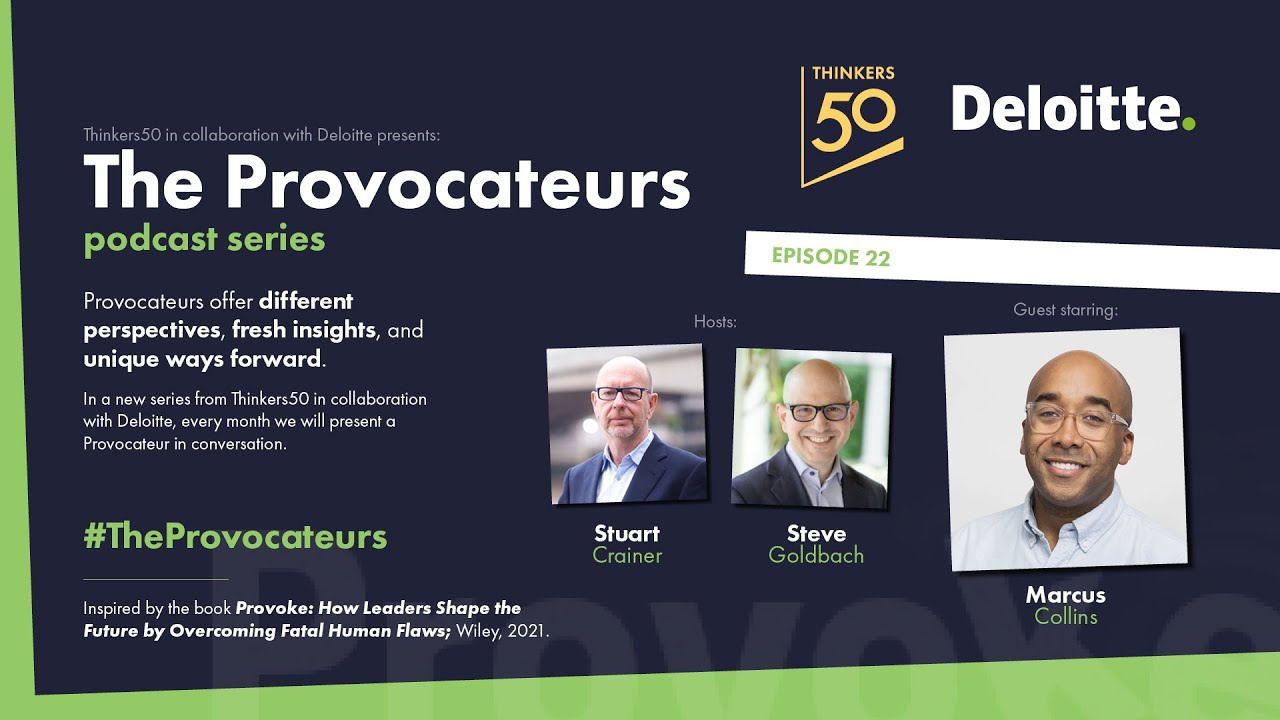
Marcus Collins: Culture, Connections, and Community | The Provocateurs: Episode 22

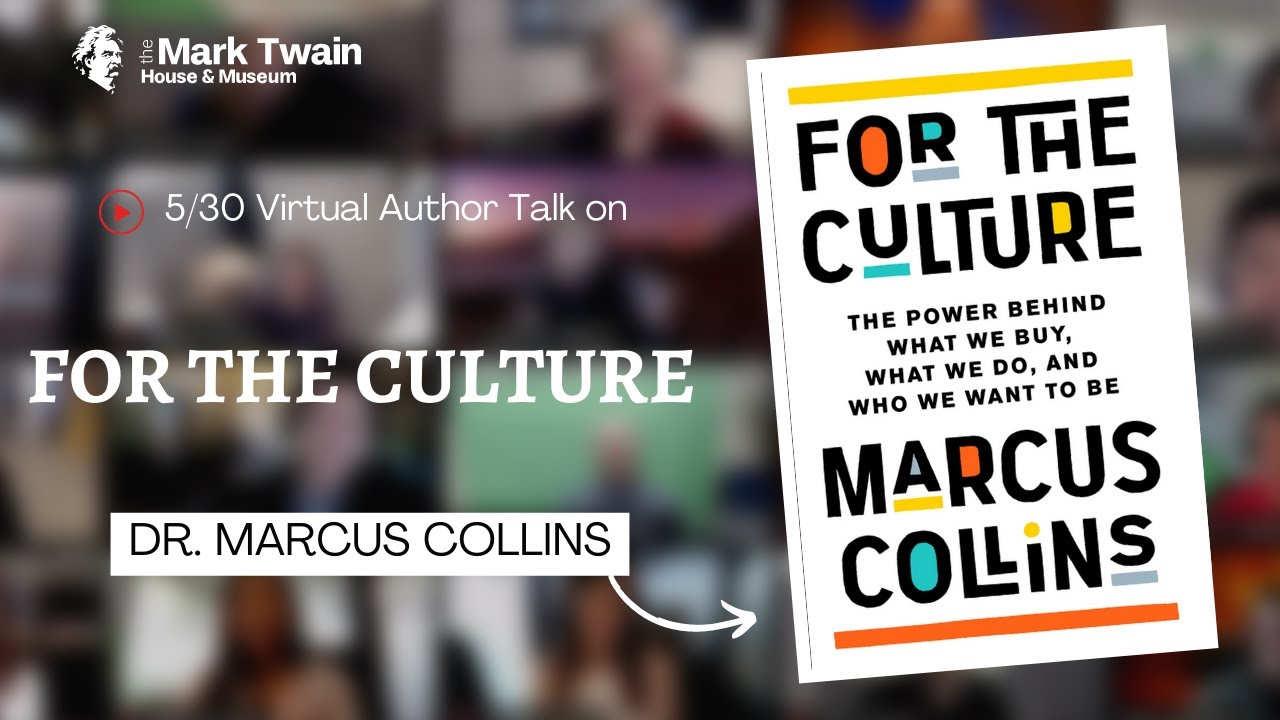
For the Culture: The Power Behind What We Buy, What We Do, and Who We Want to Be

The Power Behind What We Buy, What We Do, and Who We Want to Be | Marcus Collins | Talks at Google