25/01/2024: The crucial role of district heating pipe lifespan in achieving climate objectives
Webinar (IEA DHC TS6) on the role of district heating pipe lifespan in meeting climate goals. Speakers (EU policy officer Madis Laaniste; researcher Stefan Hay; operator Magnus Holson; manufacturer/standards expert Christian Engel) reviewed: EU policy drivers (new Energy Efficiency Directive provisions, long‑term planning for DH systems >5 MW, links to Renewable Energy Directive rules), current European DH statistics (≈190,000 km of DH/DC pipes; renewables share in district heating ≈23%; ≈17,000 DH systems), technical challenges for decarbonization (need to expand networks, secure supply, skilled labour shortages) and why reliable remaining‑service‑life estimates matter for asset management and standards. Practical examples covered operator monitoring and preventive maintenance practices, investment scales (Germany: estimated €33bn to 2030; operator example: Helsingborg replacement ≈€1.2bn), and calls for applied, practice‑oriented research to feed standards and certification updates.
Chapters
Okay, we will start now. Welcome everyone. Thank you for joining this webinar which will focus on the crucial role of district heating pipe lifespan in achieving climate objectives. Just a few housekeeping guidelines. I encourage everyone to use the chat function to submit questions which I will then present to the speakers during the Q and A, which will be done after all the speakers have had their session. And for information, the webinar is being recorded and both the video and the presentations used today will be made available to all attendees at a later date. Today we bring you this webinar in the context of the IEA DHC TS6 project, a project which is trying to identify holistic and innovative approaches to aging and lifetime predictions of district heating pipes. They intend to gain knowledge and prepare results for standardization bodies and are considering improving asset management as an element of transformation strategies for district heating system towards a high renewables rate. Among, among other things, researchers are looking into how obsolete pipes are defined and how this is measured.
So Europe currently has approximately 190,000 kilometers of district heating and cooling pipes. And as the continues to grow and new projects are outlined, it is opportune to ask ourselves what the optimal lifespan of these pipes is to ensure their contribution to the decarbonization of the sector.
I would like to start by welcoming Madis Lanista, Policy officer at TG Energy who works with efficiency aspects in heating and cooling. He will provide an overview of the European Commission's climate objectives. Madis, please.
Yeah, good morning everyone and thank you Greedel for introducing me. So, as said, I'm working for the European Commission for the Energy Efficiency Unit in the DG for Energy and my mission today is to provide a general.
Overview. What are the key elements of the European legislation in the field of district heating and how the involvement of the decarbonization in the district heating is foreseen in in the European policy framework.
So, generally speaking.
About the linkages of the of the European legislation and the district heating networks.
Especially the piping side, there isn't that much said about what should be be the piping of the district heating networks actually look like and what are the conditions for the piping in the district heating networks. But this overall framework and the conditions for the district heating networks, they are defining pretty much for the networks. So these overall conditions are handling the energy supply to the district heating networks and specifically requesting the increase of the share of renewables and waste heat in the district heating networks.
What is the status of the.
Share.
Of the renewables.
In the heating and cooling sector? In general, this is.
Annually monitored by the Eurostat and there are annual figures published by the Eurostat was the share of the renewables in the district heating networks and currently it's approximately 23% in Europe.
Regarding the share of the heat of the renewables in the overall consumption of the heating and cooling in EU and.
As you see, there are differences between the countries. So some of the countries in the Nordics have been achieving quite much in the progress of the deployment of renewables. But there are some countries where the share of the renewables is a little bit smaller. So these structure of the consumption is very different across the member states in the European Union. And this is where we see huge potential to increase the.
Contribution to decarbonization of the European energy system. Considering different alternatives how to decarbonize European economy. Heating and cooling is one of the most promising sectors and therefore there is a huge attention on the heating and cooling sector in the European legislation and also in the policy to achieve the carbonization and reducing the emissions in heating and cooling sector. And this also affects the.
District heating. Regarding the district heating, the situation on the use of renewables is a little bit better in this slide I'm summarizing what's the.
Share of.
Liquid and solid fossil fuels in the derived heat generation and there are some countries where this percentage is quite high. So this is mostly reflecting the consumption of the heat or consumption of the fuels in the district heating sector at the moment. And.
For example, Poland is the country food has the biggest sensitivities in the district heating sector regarding share of renewables. So currently.
The amount of fossil fuels in the Polish district heating sector is huge. And this is especially challenging for several countries in the Eastern European bloc to achieve these goals of the decarbonization in the heating and cooling sector and district heating and cooling sector.
So yeah.
But it's yeah. Also characterizing the role of the district heating in these countries. And you can see where the potential markets of the district heating upgrades are lying. So Poland, Czechia, Finland, Germany.
To some extent also some other little countries.
Where there could be the biggest changes made in the European Union regarding the supply of heat in the district heating and cooling sector.
So what are the key changes in the Energy Efficiency Directive and European legislation regarding the.
Conditions that will favor the use of renewables in the heating and cooling sector and especially in the district heating and cooling sector? First of all, with a new Energy Efficiency Directive adopted in.
July last year and published in September last year, the most important thing is the change of the definition of efficient district heating and cooling. And with this definition there are conditions that what should be the.
Contribution of.
Renewable energy and waste heat in the systems in order to be eligible for the European support instruments and also the national support instruments. So the state date cannot be given if the systems are not meeting the standards of the efficient district heating and cooling or.
And this is a limiting factor for them for the changes in the district heating and cooling systems.
There are also some additional conditions introduced with a new directive for the district heating and cooling systems. And these additional conditions are saying that there would be no more support for the installations that.
Are using only the fossil fuels. So there will be complete plan of the fossil fuel based generation installations as of 2030. And after that time only the support can be given to the systems where the.
Generation installations are using.
Renewable energy sources or waste heat.
There is an additional requirement for the district heating and cooling systems introduced in the directive and namely there is a requirement for long term planning in every district heating and cooling system that is above 5 megawatts.
In total, there are around 17,000 district heating systems in Europe and probably this new requirement will affect quite many of them. And these plans should be made available in these district heating systems how they could be converted into efficient ones as of 2025 or after the adoption of the directives. So Member States have at the moment until.
October 2025 the time to upgrade the legislation and to put in place the policy instruments to achieve the full compliance with the new requirements of the recently adopted Energy Efficiency Directive.
One of the key areas were this new directive intervened was.
The heat reuse from the data centers. So it can be seen that the data centers are becoming more and more important in the energy consumption and the electricity consumption is quite high. And often this heat is not that is released from the data centers, is not used in this way that it can be be supporting the heat consumers. So therefore, there is.
A legislative framework put in place to ensure that data centers waste heat is properly used whenever it's possible. And the directive included also a change definition of the high efficiency cogeneration. What concerns the.
The change of the definition of efficient district heating and cooling? There are many steps planned ahead or adopted that how the structure of the heat heat supply or the fuel supply should change in the efficient district heating and cooling systems. And what are the most important thing is that as of 2028, only high efficiency CO generation is accepted as a energy input to the efficient district heating and cooling Systems. And until 2035, only.
After 2024, 35, only these.
Or installations that are not using.
Only heat from high efficiency coal generation powered by fossil fuels cannot be accepted as a heat supply install to the efficient district heating and cooling Systems. As of 2045.
Again, there will be new requirements that are allowing only renewable energy and waste heat based efficient district heating and cooling and there cannot be a contribution of the high efficiency CO generation using fossil fuels in the efficient district heating and cooling Systems. As of 2050, all the efficient district heating and cooling systems should be using only the renewable energies or waste heat. So these are the key requirements and together with the main definition of the efficient district heating, there is also put in place an alternative approach that allows to use.
Criteria based on the specific emissions limit in the district heating and cooling systems. So whenever the district heating and cooling systems.
Supply of heat meets this condition, it can be considered as.
Efficient district heating and cooling system in the context of European requirements.
So a few words on the district heating and cooling conversion plans. So as I said before, they should be available in all the big district heating and cooling Systems as of 2025. They should ensure more efficient consumption of primary energy and they should show how the systems are planning to reduce the distribution losses and increase the share of renewable energy in heating and cooling supply. And they are going to be periodical so every five years they should be reviewed. And there is also requirement that these plans are.
Approved by the competent authority in the member states. So member States should have this general planning.
Framework available in their the national legislation and in practice as of 2025. So probably just the main attention is about energy supply in district heating and cooling systems. But this is often interlinked with.
Networks and this we hope that these district heating and cooling conversion plants will contribute also the RAM upgrades in the networks to ensure that the networks are also supporting this transition in the heating and cooling systems.
So more broadly, if you're looking at the district heating and cooling, there are also some planning requirements arising from the directive that are targeting the member states in general and also the local governments that to have the population above 45 000. So in both of them there should be a long term plan how to convert heating and cooling sector into more efficient one and.
And how to increase the contribution of the waste heat and renewables in the heating and cooling sector. So these are also supporting instruments for the transition in the district heating and cooling sector. Of course, these plans are much more broader than only touching the district heating and cooling. So these are also addressing the individual heating and transitioning the individual heating.
And.
This conversion of the individual heating is also Important as well of the district heating. So the figures.
That are characterizing the individual heating or saying that this, this task is very big and we have approximately 125 million units still using fossil fuels in the, in, in Europe providing the heat in local.
Heating and cooling solutions. So this, this task is enormous and, but there are different instruments to address this particular sector and particular the echo design and the labeling labeling requirements arising also from the European legislation addressing the local heating and cooling solutions. Okay, that was a brief summary. What, what is the status of the European legislation in this field and and how we are foreseeing the future in the area. Thank you.
Thank you very much, Mattis for the insights into the EU's perspectives on district heating and cooling and heating and cooling more generally and the general expectations for the. For our sector.
You mentioned a package of EU measures to encourage efficient heating and cooling in Europe. Could you please elaborate on the next steps the Commission plans to take to ensure a wider use of efficient district heating and cooling?
Yeah, thank you for the question. So what I can say that at the moment there is a time where the Member States have to adopt European requirements, international legislation and Commission is focusing on.
The support to this activity by.
Publishing the guidance documents how to what are the best practices in the field of.
Adopting the various requirements of the Directive and.
Also doing commissions to the Member States to explain the content of the Directive and meeting different authorities and stakeholders in the area to explain the content of the Directive and in general expectations. But at the same time also the European funding instruments are very important and they are direct European funds that can be supporting the transition in the heating and cooling sector. But as well important and I think even more crucial is the engagement of the private financing in the area of, of the energy efficiency and also in the district heating and cooling. So Commission is doing a lot of work to ensure that the availability of the private financing for the sector is increasing and there.
Capital is available for the new investments in the district heating and cooling sector and other areas. Thanks.
Thank you very much, Matiss. I will now give the floor to Stephan Hay, the task manager of the ongoing IEA DHC TS6 project. Steffen works in the research and development department of the German District Heating association and is currently involved in research on the transformation and decarbonization of district heating systems, the aging remaining service life of district heating pipes and maintenance and strategies in district heating networks. Stefan.
Yes, thank you creditor first of all for this nice introduction and it's a pleasure give the presentation on my topic in such A big audience, more than 130 people already joined in the virtual room. It's really great to see that. The question I would like to discuss in the next couple of minutes minutes. Why is the remaining service life of district heating pipes important to manage the current challenges in our sector is raising that interest in Europe.
AGFW is working with a lot of experienced partner in national and international projects on this topic. And.
Together with iea, DHC and Eurowit and Power we would like today to raise the awareness for our existing networks that are the pillar for the implementation of the climate goals in Europe. And and.
To go further, I think we have to consider the remaining service life of our current networks in order to fulfill the requirements.
Of the security of supply in that case.
But please let me start with more in deep going into the current challenges of our sector.
Many thanks to Lennis to show that the legal framework. Framework Legal framework on goals and on European level are settled. So I will take over this prepared ground in order to to say what makes it really difficult to create the future perspective or what is what is crucial in that.
And it's of course especially on the implementation.
Of these of these goals. And first of all we have to consider the available renewable resource renewable energy sources in our individual district heating area or in the systems. And.
We expect that in the future the heat production will be more decentralized and this will also lead to a high number of adapting of operating parameters in existing district heating networks and systems and of course hopefully into an increased market share of district heating to supply a lot of citizens in Europe with clean energy in this case beside and that therefore also transformation strategies are highly needed. Please consider when we are having a look on this on this very easy picture that we are talking about infrastructure operating systems in big cities and in urban areas where it is really really an issue to create this transformation strategies and to include all the technical and non technical aspects in that. And of course digitalization will be a a strong tool.
To optimize our systems in the future and to create this 100 renewable energy systems until 2050 or whatever your national requirements are.
But therefore we also have to keep in mind that we need to implement.
Further measurement equipment in our systems to to create all this data.
I've shown some insights and a lot of technical issues that needs to be solved that needs to be addressed in the transformation from today to a future perspective. And I think we all know that these aspects are really time limited. We have a goal to fulfill the requirements until 2050 and besides that, we have to be aware that also resources like money available or skilled workers are limited.
By having these discussions already in Germany, we realized that additional challenges are very highlighted to fulfill our climate goals and to implement all these. All these measures we are considering at the moment and especially a shortage of skilled labor is a high point where we are discussing a lot of things about that. And besides that, we need to strengthen the relationship to our customers. And we realized also transparency is probably a typical German German thing talking about that, but that is needed. And besides that, honestly, the crisis we have with COVID and also the wars on the world are increasing the prices for materials like pipe substations and all the other things. So that are more or less the the overall challenges we have to solve in our our sector. And I would now now try to would not. And I would like to. And I would now like to to come to the the question why is remaining service life important to solve these these challenges? And I try to be more specific on Germany due to the fact I have numbers and figures and want to be more precise in the next couple of minutes. So you see in the arrow in the middle two specific goals. Germany have to reduce the CO2 emissions until until 2030 by 65% and to be climate neutral in by 2045. And there's a study published in 2020 having all measures summarized that needs to be done to achieve these goals. And.
It'S very clear that we have to transform our heat generation towards renewable energy sources. And besides that the expansion of existing networks is really really highlighted besides the construction of new network in order to fulfill our climate goals in Germany. And besides that they tried to figure out how many costs that would be. So an estimated total investment until 2030 is 33 billion euros, where half of it is for the expansion of existing networks and the construction of new heating networks in Germany. And what is really really a pity in that is that maintenance of existed heating is not included in that figure.
Please remember we have to implement all these measures in an operating system. And we have to. We have to make sure that the security of supply is really really really high in order not to lose customers.
So based on that have that in mind already said by.
The speakers before. District heating already contributes to this climate goals and already reduced the CO2 emissions in the heat supply. And we have a lot of networks installed and a high number of trench length in Europe. And to already be. To again be more precise, I have brought some figures from Germany with me figures. We we are providing in our Main report about the total length trace from 1970 to 2019. In this in this slide.
The number of the total length increased due to additional statistics we included in our current report. But what is important in that in that figure is that we have we have a significant expansion of district heating networks in Germany between the 1980s and 1990s and the minimal operational lifespan of pipes is according to the standards and recommendations 30 years.
When we are now having in mind the target for 2030 according our our goals roughly 45,000km trace. We have to build a lot of pipes and we have to consider also the maintenance of the existing ones in order to be really really efficient and sustainable.
In our doing.
That in the end leads let me conclude the overall challenges. So we have an average age of existing district heating pipes rising. We have requirements for the security of supply and we want to implement the climate goals. Of course, technical improvements will take place that will help us a lot, but also high investments are needed. So in the end we need targeted maintenance strategies for existing networks to manage all these challenges.
And that is the main reason why IADHC is working on that topic.
The requirements of district heating companies needing reliable asset management simulations is really depending on the pipes used and the large influence of operating parameters causing operational loads on the materials used. On the left hand side you see three examples of different district heating pipe systems used in Europe. And based on the large influences on the operational lifespan, we have also large deviations and lifetime predictions. And in order to be more precise in the future that is needed to fulfill also the requirements for transformation strategies. We have to work on these topics in order to see when our pipes obsolete and how can this we measured and a lot of researchers and a lot of people are working on this on national level in Europe and in this I DHC task share project, we try to summarize the available research and try to.
Make suggestions to improve the current standards in order to fulfill the requirements of our branch.
So far the topic to address why district heating pipes and aging of district heating pipes is really needed to fulfill our our current challenges. And thank you for.
Having the chance to address that, Khalida.
Thank you very much, Stefan. And thank you for mentioning also the challenges Germany is currently facing and touching upon the short of skilled labor, which is something that Euro heat and power we have been noticing in several European countries. But I would like to address one topic you emphasized during your presentation. The importance of estimating the service life of district heating and district heating pipes. Can you tell us what makes this estimation so difficult?
Yes, thank you for the question. Of course, the estimation of service life depends on several topics. The first is the quality of the pipes we received from the factory. Then also the construction sites in the field. And the quality of that has an impact. And then we are operating these pipes under certain conditions and certain operating parameters where aging process are taking place similarly. And in the lab we can only focus on one or two.
Influences that affect service life. And that's what we are working on to be more reliable with our predictions in the lab and having a really good match in the estimation service life by all these. All these issues and all these influences with the pipeline.
Operated in real life.
Thank you.
Thank you.
Thank you very much, Stefan. So now that we've had a look at the policy framework from the European Union and looked a little bit into how research is helping with standards, we will consider the issue from the perspective of district heating operators. And for that I would like to welcome. Welcome Manus Holson, which who is a technical manager at Hursundkraft AB distribution network. Manus, I will leave you the floor.
Okay, thank you. Thank you for the opportunity to be here talking.
Today. I would try to, as you say, give some. Give the Bassoonska perspective on. On how to.
Get the results of the lifespan and actually try to measure the lifespan and get the results of that.
I work as a technical manager in Osunscraft. I've been here since 1999. Always on the distribution side and.
In different kinds of roles. And at this time I'm working with the issue that we are talking about the digitalization of the maintenance work to provide the pipes to be as long as we can into the ground.
So I will try to talk a bit about the network, the building, preventive maintenance and a case with the economy and the sustainability.
We have two networks in Sweden and we are. They are both in the south of Sweden. One is in Engelholm. We started built that in 1977. It uses Reducible heat and wood chips for the heat delivery. And it's about 150, 50 kilometers long and about 2,700 connections we have. We deliver each year about 220 gigawatt hours. So it's a pretty small concerning with the Swedish measures. A pretty small network.
The bigger one we have in Helsink Boy is started in 1964.
Actually it was an initiative from the electricity network that said we can't. We don't have the capacity to deliver heat to all the customers in Helsingborg. So it started with that and of course, to reduce the chimneys, everyone was burning coal, oil and all that stuff. So it's also a pretty foggy town that, you know, we have about 12,000 connections.
506 70km long and delivers about 10,000 GWh.
And also in 1998 we built a small district cooling network with 51 connections and about 15 GWh delivery to our customers.
So what is district heating network? You probably all know that it's pretty simple. Two pipes, one supply, one return and should be or.
We want to be. We want to be. We want it to be real simple.
When we are talking about.
What is the main thing that keeps us doing this? If, if we have to remain reinvest the whole network in Helsingborg that will cost us about 1.2.
Billion euros. And at this day we our reinvestment level that we the economy that Requires is about 3.5. It's what we.
3.5 million euros. I would say we investment every year. Which means that if we stay in this level it takes us about 342 years to replace the whole network in Nsimo. And we don't think that it's going to last that long.
So we did a good job and did a very outgoing reinvestment strategy because it's crucial. It's crucial for the distributing business, is crucial for the whole erwunscraft profitability, it's crucial for the working environment and it's crucial for a long time delivery to our customers.
The main goals that we have said is when we build, we build for 100 years with 5% replacement. Which means if we dig or we put down 100 meters of pipe, we are allowed to change or replace 5 meters of them in 100 years.
So that that's the measure of the quality level that we should.
Build with.
And when they are in the ground, we want to replace the right pipe in the right time. So when they are bad and are not working as well as we want them to, then we are allowed to replace them. And the key thing is keep the pipes whole, clean and dry. And of course measure is to know we need to measure how the condition of the pipes are.
So a little bit about building.
Building in our case looks like this one.
We try to keep the trenches dry. We try to give, yeah, do a good work so it will last this hundred years.
And we have.
Some key figures about that. I'm not going through all of them, but the pipe, can we control them? Can we visit the factory that makes the pipes? Are they clean? Are they knowing what they're doing? The handling and transportation of the pipe. You're not allowed to throw the pipes into the ground. You have to be careful with it. The digging and replacement is very crucial. The welding is also very, very crucial. And the network after that. You should. We always preheat the pipes.
Because we think that the lifespan is getting longer if you preheat the pipe. And of course the alarm detection in the new pipes, the alarm wires should be connected and should be well known where it is. The joining is. Is the same. We have a very good.
Company that. That is doing this for us. And if. Yeah, they are really good. And we are. We are depending on them to do a good work. The backfilling of the soil. We have graveries closest to the pipes. And then we put another kind of material on it. And when it's all done, we need to control the pipes continuously. So can we do this? Can we control this? Yes. The answer is yes. I think it's yes. And if it's yes, the network will last for 100 years.
So the preventive maintenance started in 2005.
For us.
We had the biggest leak in our history.
We did like that. We need to know the construction types that we have.
Concerning concrete and asbestos is the biggest ones and are the oldest ones and the one that we keep a close look at.
We have different kinds of preventive maintenance starting in 68.
For example, heat cameras and alarm wires.
And stuff like that.
And in 2012, we start with the delta thickness, which measures the quality of the steel. In 2021, we put them into a box, a smart active box. In 2022, we put all of these. We tried to put all of these preventive maintenance into one decision support system.
And one key figure is of course, the documentation. We need to know where all the stuff are.
And this is. This is the decision support system which gives us a very good control in what pipes we need to. Yeah. Do certain things with.
And I have a case with sustainability and economy.
It's both for the environment and for the economy.
It is 500 meters of concrete culvert. We measured, we compare to replace or to repair. And we compared with the CO2 echo lens.
It was the same place. And we. And we considered to rebuild or repair it or replace it. And the place is when we replace it, we should do it with the same. On the same spot with a new pipe.
And diesel and steel pipes has a great environmental impact as shown in. In these pictures down here. So the results of the renovation was like this One, as you can see, the diesel are the highest figure.
And then comes the concrete.
The replace. The results of the replace is the same, but there is one new pipe, also a DN600 pipe.
So it's pretty.
If you compare those two, you can see that the climate savings to do the repair instead of replace is about 160,000 CO2.
It's about 49 flights to Thailand from Sweden. I think.
The last picture I have is this one. It's the economy bit. We like to measure, as I said, but we don't just measure, because if you just measure and do nothing about it, it wouldn't be worth the money of it.
So we try to do this. We choose between replace and repair. And we choose. We took the repair and the repair in this case was to repair the concrete. So we repaired.
Those 500 meters of concrete.
And the result is.
Like this. If we're doing this technique in all over 11 kilometers of concrete ducts, we will save a pretty good win at eurojagput.
So it's a lot of money in this one, not only for the environment.
And my lovely slogan is the bitterness of low quality remains long after the sweetness of low price is forgotten.
Okay, thank you indeed. Thank you, Magnus, for highlighting also the importance of asset management and preventive maintenance. Maintenance. And for touching upon the financial impact. I would like to ask you if you can expand on what might be the economic impact of reinvestment for a district heating network.
For our Sunscraft, you mean? Yes, yeah, the whole network. If we are going to replace that, it will cost us about.
1,2 billion euros. 1.2.
And we can't afford that.
Thank you. Thank you very much. I would say Stefan previously touched upon standards when he was discussing the lifespan of pipes. So I will now turn to Christian Engel, who is a business development manager at RMSL. He has over 40 years of experience in developing district heating and cooling networks and is also an expert on standardization of pre insulated piping systems at sens and electric and ISO levels. So Christian will narrow down the focus a little bit more and give us the point of view from standards. Thank you very much, Christian.
Yeah, thank you, Kurida.
Yes, thank you and for inviting me. I think we have a very good, let's say, background to give you. Can you give me the.
Sorry, can you put. Go to the next slide, please.
Oh, yes, here we are. Yes, a little bit about the company I'm. I'm working for. It's Amacel. Amacel Austerflex. We are based in Austria and you see our factory there in the south of Austria with all the PV on the roof. So we are looking for sustainability. And about 80% of the electric demand is produced on our roofs. So we are not only producing energy saving solutions like pre insulated pipes and technical insulation, but we also look for being as a company.
Zero, net zero.
As close as possible. But 20, 30.
A little bit to my background. I started 40 years ago in this business and this was a time when pre insulated steel pipes were just introduced, the so called third generation of pipes. And we had been approached by energy company that said, okay, we want to go more for renewable energy, for using waste heat and we need piping systems for the low, low temperature. So we were kind of early starters in the fourth generation and we developed jointly flexible piping systems that are now, let's say fourth generation district. He.
The 40 years that I'm in this business, I've also been very much involved for the last 25 years into standardization. And I give you here a very quick overview of all the standards that have been developed by, and I really be proud to be part of it by the world leading experts for pre insulated piping system. They are mainly coming from Europe and we have state of the art standardization in Europe helping to define a high quality level for the piping system as well as for design and installation.
What have we achieved? We have achieved the complete set of standards for district heating and cooling piping systems, both rigid steel pipes as well as flexible plastic pipes. And we have also achieved a standard series for design and installation, especially of steel pipes. And as Magnus has shown before, it's extremely important to cover not just the pipe itself, but also the design, installation, maintenance and in cooperation with Euroheat and Power, a certification program has been built up. Also. CRELIDA is very much involved in that and this quality assurance is very much in line with the needs of the European energy companies.
In addition, a system for the training and control of the pipe installers has been built up and the breakdowns in district heating networks could be reduced significantly. So the practical experience.
That we see now in the, in the networks is that these systems can live for at least 50 years, but much longer. As Magnus has explained, target is not 50 years, but it's rather 100 years. And I think we all work towards that goal. Still we need to improve a lot.
The customers would like to have better estimation models for the service life, for the remaining service life and to be able to fill in these knowledge gaps. We need research on more Reliable approaches. And this is also important for the future updates of our standards. And we need a kind of research project where we also can involve international cooperation. And it's not just research work, but it's a combination of research work and practical experience. So what we would like to have is support also from the European Union on.
These kind of projects which is both covering research and practical experience.
A little bit about the future of the transition towards green district heating. This I think it's good news. I have been part of another project on eye level about low temperature district heating implementation and this chart is quite promising because it shows that even the existing building stock with relatively high heat demand can be connected to networks with low temperature. So with flow temperatures below 70 degrees. And that's exactly what we need to change over to renewables. I show you a few examples here from Austria about very successful transition projects for district heating towards real green district heating. And this is for example Villach quite large district heating system. And they already today achieve the goals that the EU sets for 2045.
Another a smaller project within Villach district heating. This is a new built apartment block series and they have in addition to district heating connection they have solar thermal, solar heat on the roofs and geothermal heat pump. So they can source a hell lot of the renewable energy from their own sources. And in addition they would say already white green district heating from Villach is adding up what is important we have we are running this system with very low temperature, 67 degrees flow, 37 return. And that gives a very low heat loss which is also important for the future. We have said we want to reduce the heat losses in the networks is one of the goals and to increase the renewable. Another project here is about a biomass district heating which has later been applied with also with solar thermal. And the solar thermal alone is covering 80 up to 80% of the summer demand for the heating network. Also there the highest level of insulated pre insulated piping system has been installed.
A little bit to the future. How can we support as an industry the fast deployment of district heating networks and to reducing the heat losses? Reducing the heat losses. The best way is when you invest and invest placed in the highest insulation class, which is called Insulation Series 3, which is available both on steel and on plastic pipes. And as I'm more the expert for the plastic pipes, we have seen that the lifetime of plastic pipes that are already installed and that are used can be increased to 95 or even 100 years with temperatures of 70 degrees and below. And to increase the Speed of the expansion of our networks and especially of new networks. The flexible system can be a big help because the installation time goes five times faster than for steel pipes.
Yeah. The key learnings.
The EN standards in combination with the Euroheat and power certification is a very strong backbone and brings a very high quality effect for the industry. The lifetime can be definitely improved and increased by lowering the temperature levels. It's important to get further research projects also with international cooperation and to combine research and scientific findings with practical experience.
So we need this application orientated research projects and we ask for support for this kind of projects in the framework like of Horizon Europe. And we ask also for support for the industry in terms of standardization because we want to keep, definitely keep the leading role of the European district heating and cooling industry. And here we need your support. You have our commitment that we do everything that we can to improve our systems in the right way to achieve this hundred years lifetime for our district heating networks. So thank you very much and I'm happy to answer your questions now.
Thank you very much, Christian, for sharing the perspective of a manufacturer and narrowing the focus on standardization. You remarked on the need for research into more reliable approaches to estimating the service life to be input into standards and more specifically the application oriented research projects at European level covering both research and practical experience. What would you say are the critical influences on the lifespan for district heating and cooling networks?
Yeah, thank you for. From. From my experience, and this is, I have to say, more on the plastic side than on the steel side. It's the. How you operate the network is extremely important. Apart of course from the installation side.
How you operate the network and how you control the temperature levels. So we have seen from our corporation partners in the very beginning in the 1980s that they have networks in operation without problems when they constantly control the flow temperatures and keep them below 80 degrees. And we have some network, one network where they. They didn't control it and went up to 1995 or even above. And they had. After 30 years they had a few problems. So it's really imperative, and Magnus has shown that very clearly that the permanent control in different ways and also to develop these measures even further to permanently control the network work and look for possible improvements over the years. And this is key for a long lifetime.
Thank you very much. If I may ask you another question.
You touched upon the need for support both for the standards. So I would like to see how we can achieve a faster development of district heating networks. How can this be supported?
Well, we have seen From Stefan that Germany has big plans and it's similar in most of the European countries. The deployment and installation of district heating networks.
Has some limitations due to the lack of manpower. And.
So as I would say, one important point is to look as much as possible for let's say the also flexible pre insulated systems as an alternative. I know it's not possible for all the large networks, but I think there's a lot more possible because you save installation time. And the second one, very important one is we need initial subsidies to build up these networks because the initial investment, and Magnus has displayed it very clearly, the initial investment is huge and over the lifetime of let's say 50 or 100 years years, you can easily gain back the investment. However, you need to improve the supporting systems that we have for the networks.
Thank you very much, Christian. I would like to open the Q and A. So I invite all of the attendees to please provide their. To please provide their questions. You can just type them their Q and A and now we'll put them to our panelists. Feel free to mention the name of a panelist if your question is specific to one person. I will start with the question which I believe is for madis. How biomass will be taken into account in the updated EDHC. Will it be a 50% renewable source or something similar? Can you help us with the question, Matiss?
Well, what I can say about this, first of all, thank you for the question, but.
There are quite specific rules set in the Renewable Energy Directive and regarding the calculation of the share of renewables in the district heating and cooling, we are going to refer to these rules that are available from the Renewable Energy Directive. And to my knowledge there isn't any restrictions regarding the share of biomass in the. In the district heating in the. In the Renewable Energy Directive. But of course nationally such special restrictions might be introduced.
Thank you very much. I do have another question for you. Are there any good examples which apply the definition of efficient district heating and cooling in Europe?
Well, indeed, I think that even the current definition of efficient district heating and cooling is not the toughest one. But still the member states have picked up it. And also the associations working in the Konic sector have done their best to ensure that.
These systems are promoted across their countries. And there are a couple of countries where the local district heating and cooling associations are leading this voluntary application of.
The definition of efficient district heating and cooling.
And they are putting in place.
Framework that allows self assessment of the district heating and cooling systems and acknowledging that they are meeting the standards of Efficient district heating and cooling. Cooling. And in other countries, for example Czech, there is a national.
Scheme recognizing efficient district heating and cooling systems run by the state. And, and this is some something where the. The member states have gone beyond the requirements of the directive and done something extra to.
To.
To use this definition.
Thank you.
Add something to this discussion. I think it's from the technical part important to see.
What kinds of renewable energy sources are available in local district heating areas. And to use these renewable energy sources, efficient and really, really, really intelligent and sustainable will bring us to do our business more smarter. And if there comes restrictions for biomass, for example, that could be one solution for an individual case that will not be very helpful for the district heating sector. So we all keep finger crossed that we are aware of the technical issues and that we use the resources that we have very efficient and very smart in the future. And there matters. You can help us a lot in the district heating sector by having a discussion on a. On a technical level.
That would be great.
Thank you.
Thank you both. We'll put another question. Which condition determines the service life of a district heating pipe? Who can answer this question?
Maybe I can answer it.
What we mean is if you keep the pipe whole clean and dry, the pipe will last 400 years. The key conditions are those three especially you have to keep it dry because if you, if you get some, some kind of water from the outside into the pipes, it will get to the corrosion. So you have to keep the one, the whole clean and dry. And of course you have to measure so it stays clean and dry. Measure is to know.
Thank you very much. I actually have another question for you.
Sorry.
Yes, go ahead Christian, please.
On the plastic side, as I said before, it's also controlling the temperature levels. It's pretty important. So ideally it's always below 80, but even better below 70 degrees. With that you can significantly increase the lifetime as I've displayed before. So apart from what Magnus said before, which I fully support, it's in addition for the plastic, it's the temperature control. Thank you.
Thank you both. Manus, I have another question for you. What kind of decision support system do you use and what variables are you looking at?
Right now we are using power bi as a drift and maintenance support.
And for the decision support system we use RKGIs. We use them because we already have both of those system in our company. So maybe they are not the final solution, so to say. But right now we're using them to get experience and to. To get the results that we think that we Want and so far they are. They're good enough.
Thank you.
One question. What is the optimal fluid speed in synthetic pipe to increase the life. The life span of a pipe Pipe.
Synthetics pipe. I don't really know what synthetic pipe means.
If it's. If plastic pipes are.
Considered for plastic pipes. I mean depending very much on the diameter and the setup of the system and the type of connections depends. It can be 1 to 2 meters per second.
We have on the house connections. Usually we have a lower flow speed to avoid noising noises and to have an optimum use of the house station served. But for the the plastic pipe itself there is a higher flow speed in principle possible than because of the very smooth surfaces.
Thank you. Christian. We have a question on the share of pre insulated pipes and pipes inducts in our district heating systems. I believe Stefan is taking over this one.
Yes, more or less. In Germany in general we have roughly 50% of pre insulated pipes, 20% of pipes, latent concrete dust and a high number of pipes and buildings. So roughly also 20%. They are not really.
Figures about it. It depends on the local development of a district heating system. But in general we have have roughly these kind of mixtures and the rest is other pipe systems used in. In the heating system. But it also depends when they initially use district heating and started to build the district heating system.
Thank you. Another question for Manus. How do you choose the number and the area for the thickness measurement Detectors.
As corrosion process can be very local.
Yeah, that's true. That's why we measure the whole concrete and the whole asbestos network and we see the changes into the trend.
For.
The moisture and for the delta thickness. And.
We have seen some locals detections too.
And.
And the moisture detection is very, very good in finding the specific.
Pipes in between two chambers. That is something it's happened to them. So it's a combination of different kinds of methods that we try to do.
Thank you. I have one more. Heating and cooling is often communicated without differentiation. For example Eurostat data, legislation, planning, etc. What are important differences that should be highlighted about cooling? To analyze progress better plan heat cold systems together and not separately. For example, due to specific legislation on cooling. Can anyone take this one?
Perhaps I can start.
Question. So it's especially about the cooling and.
Statistics on the cooling. So yes, indeed it's not available at the moment. And.
We have been focusing very much on single indicator in the heating and cooling sector regarding and focusing on the.
Amounts of the energy supplied from the renewables in these Areas.
Of course this, this is not that much reflecting what's happening in the cooling side what we have currently. But.
Some year ago European Union introduced another piece of legislation. It's about. It's a regulation on the calculating the renewable cooling and I hope this these more clear rules first of all will encourage better measurement and better monitoring of the cooling in heating and cooling or and contribution of the.
Renewables in the cooling side. So there has been a lack of clear understanding how to calculate action it the.
Share of cooling energy in the. In the sector and this is not particularly good when you are trying to do the statistics. So perhaps colleagues can contribute to my answer at this point.
Does anyone have anything to add on?
Thank you. Then I believe this question is for Manus again or Christian. How are pipes monitored?
Well, maybe I should start. We as I said before, we use different kinds of methods and determine on the construction types of the pipes. So the concrete and asbestos.
Is one kind of culvert that we try to measure in a certain way with certain methods. And the newer pipes, the pre insulated pipes, we use the alarm wires a lot there and we document them well and we know them where they are and stuff like that. And we use heat camera for the whole network. So different kinds of methods highly depending on which kind of construction type it is.
Thank you. Have a question for Christian. It was highlighted the need for applied research projects. Could you share some light on it specifically if you have an insight on applied research projects?
Well, I mean the project that is also the basis for this.
Let'S say webinar is based for the on the IA TS6 about the lifetime. This is I think a very good example where both scientific as well as practical experience is combined. And the IA project that I've been participating before was about this transition towards renewable energy and district heating and cooling. Again it was a combination of scientific work but very much on the practical work. And what are practical examples.
Good practice examples and Magnus has shown one on his examples I've tried to show some.
From my experience. So this combination of good work practice and scientific work that is the ideal combination.
In the projects that I've been involved in and I've been in some more European Horizon 2020 projects involved. But again especially in our field district heating and cooling, the practical experience combined with scientific work is so important.
Thank you very much Christian. I will ask Magnus one last question again dealing with preventive maintenance. Is there a one solution for prevention maintenance?
No, I don't think so. I don't think so. There's one solution. There's different kinds of solutions depending on which construction type that you have in your network.
Thank you very much. I still have time for a few questions, so I will take this one. From a European point of view, is the largest potential primary energy from surplus energy industry processes rather than biomass?
Well, if I can come in and respond to this question, Definitely. Waste heat is important source for the for the future energy supply through the district heating system. So biomass has also other potential uses and therefore.
It would be wise for the district heating sector to concentrate on the finding resources from the surplus energy rather than focusing on increasing the use of biomass.
With the biomass we are on the competitive market, so there are various uses where the added value of the biomass use can be higher and.
District heating is not most competitive always with these various.
Alternative uses that are there. Thank you.
Thank you very much Madis and thank you to all of the speakers and of course the audience for very interesting questions. I would say in a few small final remarks, we all know that existing district heating networks and pipes are the pillar of our sector and as such they are essential for the implementation of the climate goals. As we have considered the political, legal and financial challenges associated with the decarbonization of the sector, we must also consider the technical issues which need to be addressed by further research has been suggested. As Madis mentioned, Europe has approximately 17,000 district heating networks, many of which use pipes which are now reaching the lifespan set out in current standards. However, as we have also seen, research into more reliable approaches to estimating the service life is needed. So we must ask ourselves whether the current guidelines for district heating pipes are truly reflect their optimal lifespan. So research projects such as the IEA DHC TS6 which aims to pair the results with the requirements in asset management.
For the utilities are extremely essential for us to progress. We know that European standards for district heating sector are very well developed. They are trusted and relied upon by manufacturers and operators. I'm positioned to know this as I work directly with the certification of these products and I would say that. Sorry, this is why it is crucial to carry out more research to help guide standardization and ensure cost effective solutions for the sector which support the efforts to achieve the climate goals. I take the opportunity to thank all the speakers for sharing their insights into the issue and all of the attendees for joining us today. Also, before I let you go and enjoy the rest of your day, I would like to invite you to join the EHP talks on State of the Art for district energy on 31 January. This will provide an overview of the most innovative District energy projects worldwide.
You will see the results of the Global District Energy Awards showcase there. So, a very interesting subject to tackle. I would like to thank you once again for taking part. Thank you, Christian. Thank you, Manus. Thank you, Madis. Thank you, Stefan. And thank you to the audience. I wish you all a very nice day and hope to see you in our next EHP talks. Of course. Bye. Have a nice day.
And feel free to contact us with further questions.
Indeed. Thank you, Stefan.
More from IEA
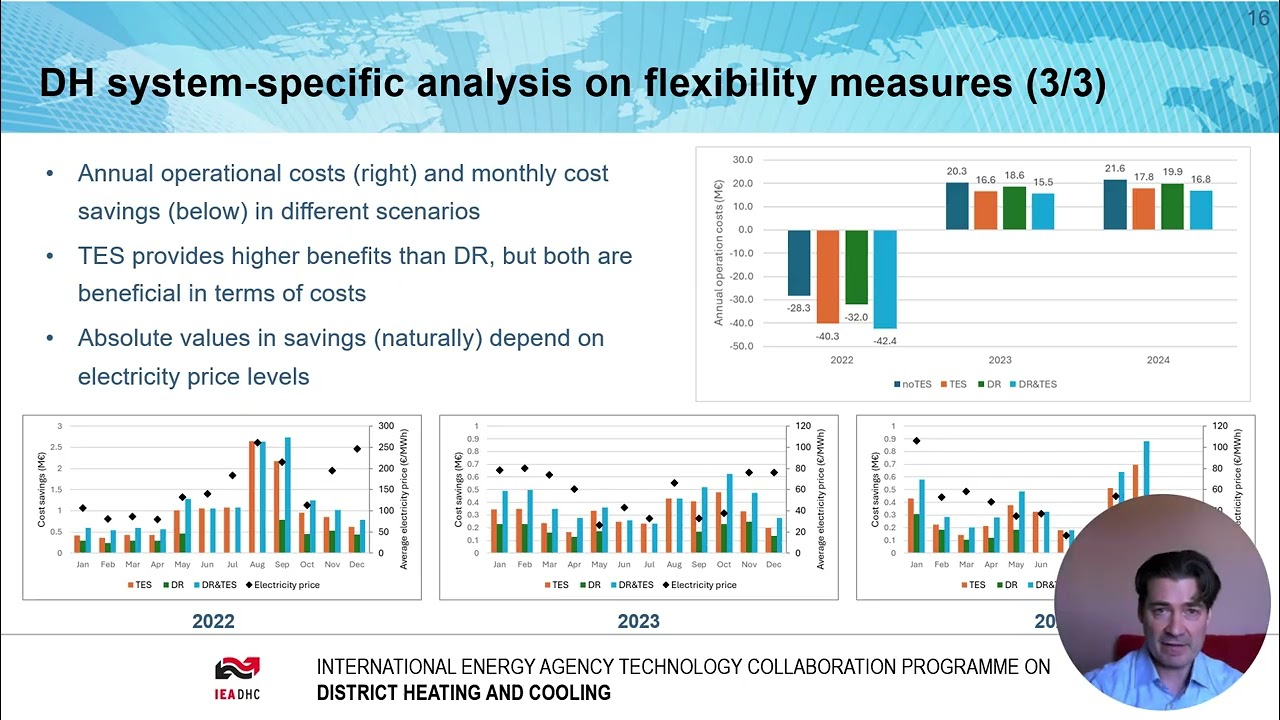
XIV-05: Flexibility and DH value chain (FlexVal) – advanced analysis & compatible pricing
XIV-04: RE-PEAK - How to cover peak loads in district heating networks with renewables.
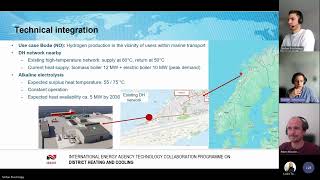

Digitalisation of District Heating: Summary of findings from IEA DHC Annex TS4
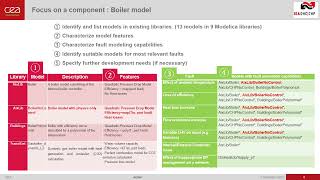
IEA DHC XIII-03 Generation of simulated faulty datasets to ease heating network fault detection
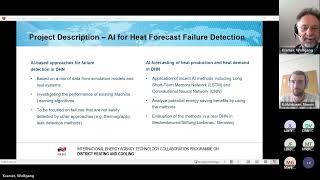

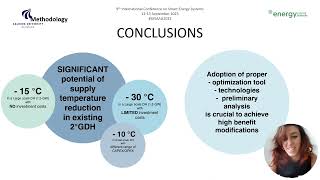
XIII-01: Leave 2nd generation behind: Cost-effective solutions for small to large scale DH networks

XIII-04: Cost Benefit study on the building secondary network for improving DH performance
XIII-05: OPTiTRANS - Optimized transition towards low-temperature and low-carbon DH systems