XIII-05: OPTiTRANS - Optimized transition towards low-temperature and low-carbon DH systems
Mika Rämä presents the OPTiTRANS project findings on converting district heating systems to low-temperature, low-carbon operation. Lowering supply temperature improves competitiveness and reduces heat delivery losses. Heat pumps' share jumped from 2% to 14% when fuel costs rose, and motivation tariffs cut energy use by 22% in well-performing buildings.
Chapters
Hello everyone. This is the final presentation of the project Optimized Transition towards low temperature and low carbon district heating systems funded by the IEA's District Heating and Cooling Technology Collaboration Program and its Annex 13. The idea here is to provide an overview of the work carried out. I am the project manager Mikarema from VTT Technical Research center of fin.
The objective of the project was to focus on practical barriers for developing district heating towards low temperature and low carbon systems. Both of these are integral elements of the concept known as fourth generation district heating. In addition to vtt, the project partners were IVL from Sweden, DTU from Denmark and VITO from Belgium. In the project, IVL focused on long term optimization modelling to assess the pathway in developing district heating into the mentioned low temperature and low carbon systems. VTT's goal was to combine operational network simulation with heat supply optimization models to assess the direct benefits of introducing low temperature distribution into district heating systems. DTU's main objective was to show how building heating systems could be improved in terms of temperature levels. DTU also studied a Danish example of introduction of motivation tariffs for lowering the distribution temperature levels. VITO focused on distributing substation fault detection and control solutions for low temperature operation in a practical case study. In addition to the specific topics, the project included a task on country level analysis. The different research outcomes were analyzed from the perspectives of the participating countries and generalized point both for countries with developed district heating systems and the developing district heating countries. The motivation here was to improve the usefulness of the results.
And now to the project contents and results. The first topic is long term urban strategic investment optimization model. Here the objective was to study the long term development of a district heating system and the potential impact of introducing low temperature distribution. A model called City Heat developed by IVL based on times model generator was used. The three studied scenarios were one a reference case corresponding to the continued use of current temperature levels 2 lowered return temperature and 3 lowered supply and return temperature. A district heating system in the city of Eskilstuna, Sweden was used as a case study.
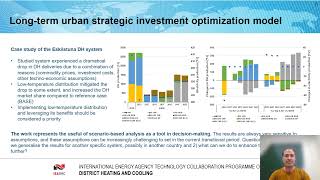
The case study showed a dramatical drop in district heating deliveries but also showed that low temperature distribution could partly mitigate this development and for sure improve the competitiveness of district heating in general. The work showed how potentially surprising and interesting long term scenario based analysis can be. The results themselves are always very sensitive to input assumptions that are very challenging to set at the current operational environment from any district heating operator perspective. The questions to be asked one could this type of development be expected for our system and 2 how could we Implement low temperature distribution efficiently and fully leverage its benefits.
The next topic is on combining heat supply optimization with network simulation. The objective of this task was to combine two different models into a single tool. The main motivation for this was to develop a tool that would be able to assess the benefits of low temperature distribution. The temperature level has a direct impact on the efficiency of virtually any heat supply option, like for example, heat pumps and flue gas condensers. Managing a specific temperature level can also represent a constraint for the heat supply units. In other words, a specific unit within a certain area has to supply heat in order to maintain high enough temperature levels. The temperature levels can also have an impact on the heat transport capacity between specific parts of the network. The model was developed and tested for a Caesar in Lapua, Finland. Lapua district heating system represents a small but versatile district heating system in Finland and and is also a system that could benefit in practice from low temperature distribution. The operation of the existing system and a low temperature scenario were studied. In addition to the distribution temperature level, the impact of additional heat pump capacity was studied for both the current temperatures and for low temperature distribution. These heat pumps were placed on the outskirts of the network in order to support the management of the distribution temperature level.
The optimization model was implemented in Python by using the JULIA programming language and the JUMP modeling package. The network model was implemented within APROS District, a simulation platform developed by VTT focusing on modeling of district heating systems. The modeling process is like this. Both the models are set up based on initial conditions. First, the optimization model is run defining the heat supply operation for the network simulation model. Then the network simulation model is run and the temperature specific efficiencies and possible constraints are calculated and defined for the optimization model. After this, the optimization model is run again and and the results of the two modeling runs compared. If they are the same or almost the same, both the models can proceed into the next time window. If they differ, the network model is run again and the process is repeated until the optimization model output does not change. So the process is iterative and utilizes a moving time horizon.
The efforts to combine the two models were successful. The main results from the case study were that the main CHP unit benefited from the low temperature distribution greatly while the heat pumps were mainly used for managing the temperature level. However, a closer look and a sensitivity analysis showed how this can change with, for example, higher fuel prices. The share of heat pumps in total heat supply increased from 2 to 14% when the fuel price was increased from 20 to €26 per megawatt hour. When studying the modeling results, we also found out that there may be a need to include optimization constraints related to the pressure level management. Also, it seemed that in the case of low temperature distribution in the Lapua case, there could be sense in disconnecting a specific area from the main network.
The next topic of digitalization of demand side and motivation tariffs focused on new strategies on reaching low operational temperatures within buildings for both space heating and domestic hot water. It also included the Danish experiences regarding the use of motivation tariffs. The use of low temperatures in space heating systems were studied both in residential and commercial buildings. Smart future proof domestic hot water substation designs were also presented. The work included methods and concepts as well as evidence for lowering the temperature levels in existing normal buildings. The work on motivation tariffs represents a proven approach for the needs of the district heating operators in order to stimulate commitment in customers to reach lower distribution temperatures.
The figure to the left shows how rare the design conditions actually can be. The cumulative share of annual heat consumption in low outdoor temperatures is only 1 to 2%. Even though this can still take place, the benefits of low temperature distribution are so clear that a very conservative approach can clearly hurt the system performance and in any case the overall temperature levels within the building heating systems can be lowered and regardless of the outdoor temperatures. The figure to the right shows the existing motivation tariff scheme in Vyborg district heating system in Denmark. The three examples are used to present the impact of the tariff. For example, a building coping with low supply temperatures and providing a low return temperature could expect a discount of 22% in heating costs.
The final research topic was building heating system operation where the main objective was to study solutions for fault detection and control in heating systems of existing buildings. VITA offices were utilized as a case example for ensuring low as possible operational temperatures for an old building with outdated equipment. The work included characterization of the case study, analysis of the collected measurement data, planning and implementing corrective actions and validating their outcome. The result can be considered as a practical demonstration of introducing lower temperature operation in an old office building using very low cost measures. In general, they represent a very useful set of actions applicable for the building stock.
In addition to the four research topics, the project included a country level analysis of the results. I won't go into all the details here, but many of the observations and recommendations made are similar. For countries with developed district heating systems and developing district heating countries, systematic mapping of renewable and excess heat sources, introduction of low temperature distribution or design based on it, potential of digitalization and smart use of analysis tools both for increasing the operational efficiency and and assessing long term development are relevant for both target groups. The final report includes a chapter with a more detailed discussion related to specific project results.
As a summary, it can be stated that scenario based long term analysis in developing district heating systems can be a powerful tool for decision making, especially right now. The distribution network plays an increasingly important role in optimization of the heat supply due to the targeted lower distribution temperatures. Lower temperatures within the buildings are possible without any major investment and digitalization can help in implementing the needed changes. Maintenance and proper control of the heating systems are essential and increasing the awareness of both maintenance personnel and and the occupants can be crucial.
The full report and also a summary report can be downloaded from The IES DHC Annex 13 web pages.
Thank you for listening and please do not hesitate to contact us if the research was of interest to you. Bye bye.
More from IEA
XIV-05: Flexibility and DH value chain (FlexVal) – advanced analysis & compatible pricing
XIV-04: RE-PEAK - How to cover peak loads in district heating networks with renewables.
Digitalisation of District Heating: Summary of findings from IEA DHC Annex TS4
25/01/2024: The crucial role of district heating pipe lifespan in achieving climate objectives
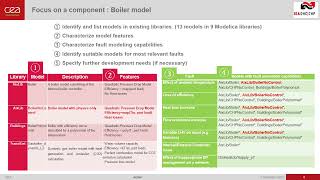
IEA DHC XIII-03 Generation of simulated faulty datasets to ease heating network fault detection

XIII-01: Leave 2nd generation behind: Cost-effective solutions for small to large scale DH networks
XIII-04: Cost Benefit study on the building secondary network for improving DH performance