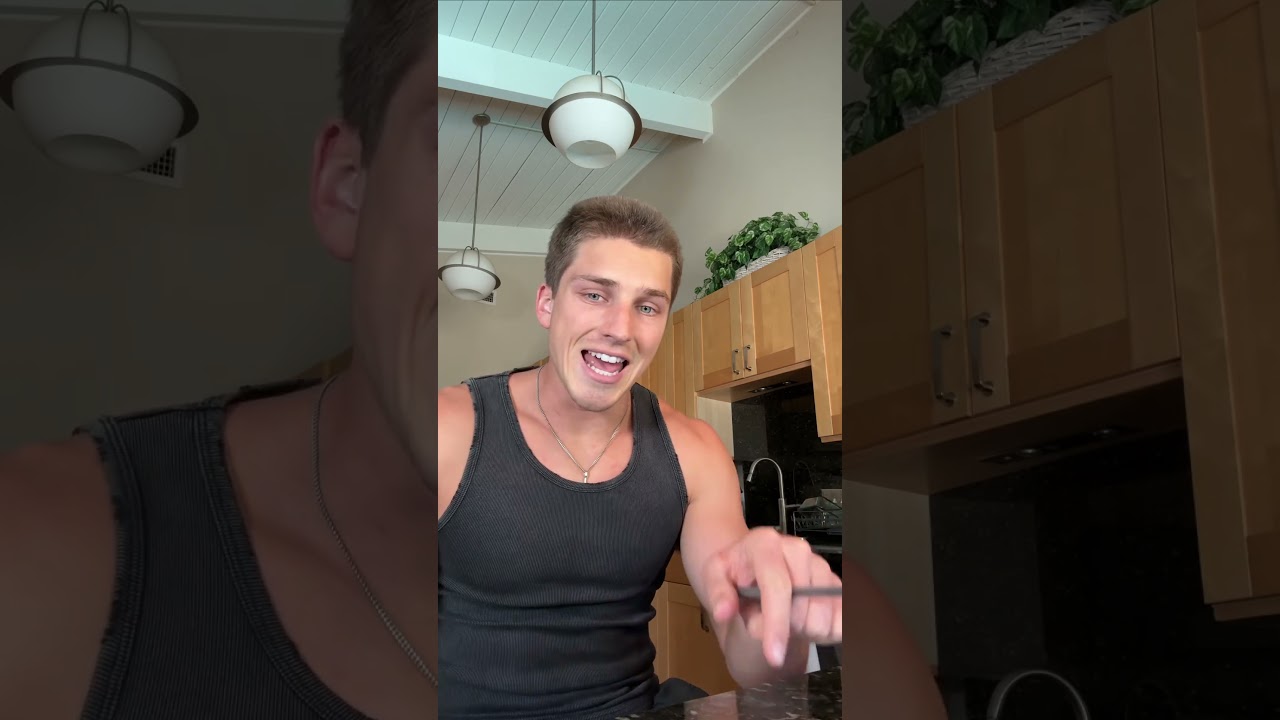
If I wanted to lose belly fat FAST, here's what I'd do (copy me)

In this 2026 YouTube video, fitness coach Josh Heverly delivers a step‑by‑step, faith‑infused protocol for rapid belly‑fat loss. He begins by framing personal discipline as a Christian duty, then explains that belly fat consists of three distinct layers—subcutaneous, visceral, and inflammation—each requiring a different strategy. He outlines six core actions: (1) cut gluten and refined carbs to lower gut‑derived inflammation via gliadin‑induced zonulin; (2) perform fasted high‑intensity interval training (HIIT) to spike adrenaline and activate beta‑adrenergic receptors that preferentially mobilise visceral fat; (3) adopt intermittent (16:8) or periodic (24‑72 hr) fasting to further target visceral stores and lower insulin; (4) manipulate macros using a body‑weight‑based calorie formula (weight × 11 kcal) with a 40/35/25 % split (carbs/protein/fat) and strategic carb‑cycling to keep metabolism active; (5) use progressive overload in resistance training to build muscle, which burns more calories at rest; and (6) dose cardio effectively with 1‑3 weekly fasted HIIT sessions plus 4‑6 low‑intensity incline‑walking sessions. He repeatedly ties each habit to spiritual discipline, citing Proverbs and biblical fasting, and urges viewers to obtain a free 21‑day roadmap or one‑on‑one coaching for a personalized plan. The video concludes with a motivational call to stop “driving south” (misaligned effort) and instead follow a tailored, disciplined program that aligns body, mind, and faith.
Chapters
If I had belly fat to lose and I wanted it gone this year, not next year, this is the exact protocol that I would follow. Before anyone says, man, I've never been able to get rid of my belly fat, my belly fat stays no matter what I do, listen to me for one second. I have helped countless men do this before who have other mouths to feed, who work all day, and they still got the results. So I'm not theorizing here. I'm not just guessing and kind of making stuff up to tell you what works. No, I've seen it firsthand. I've done it firsthand, so I'm gonna give you the exact protocol for you to lose that belly fat. And here's the thing, as a Christian man, whether you realize it or not, getting in shape is your duty. God wants you to be strong and capable so you can handle the tasks that he provides to you, so you can take care of the people that he has entrusted in you. Every time you can't resist that late-night sin, it's because you can't resist that late-night snack. See, this correlates directly to health and fitness. The discipline that you build, the mindset that you build from getting the physique that you want directly correlates to your faith as a Christian man. When you can build that mental discipline, when you can say no to the late night snacks, you realize that saying no to that late night sin becomes much, much easier. You tell yourself to wake up in the morning and read the Bible, but you can't commit to those early morning workouts. It's the exact same thing. So it's not just about fitness and reaching your dream physique. Of course, That's what I'm gonna tell you to do here. I'm gonna show you exactly how to lose that belly fat with the exact protocol and every step to follow. But it's also about the discipline that spills over into the rest of your life, especially as a Christian man. The first step is understanding that your belly is composed of 3 different kinds of fat that all need to be addressed separately, which is exactly why most people go wrong from the very beginning, because most people just do endless cardio, starve themselves, and they're only addressing one layer. That layer that most people want to address is the subcutaneous fat. It's right under the skin. You can pinch it, you can feel it, you can see it. The second is the visceral fat. You can't see it, you can't feel it, but it does the most damage. It literally surrounds your organs, your heart, your liver, your kidney. And at all times that you're overweight and you have an excess amount of visceral fat, it is actively secreting inflammatory compounds that affects every single mechanism in your body. And if you have that protruding belly, a lot of times it's an excess amount of visceral fat That is pushing against your organs and making your belly actually go out. And the last type of fat is actually the inflammation, which ties into that visceral fat, giving you that inflamed belly like my clients Issei and Vinci. The inflammation combined with the visceral fat and the subcutaneous fat, that's where the real danger occurs. But I'm going to tell you how to get rid of each one very specifically. There's 6 different things that determine whether you lose all 3 types of fat, and if you only do 1 or 2 or Maybe even 3, you're not going to get the results that you're after because they respond to different things. It's not 25 things you need to do. It's not a 90-page PDF. It's a very straightforward approach. 6 things that you can do on a daily basis to ensure that you actually get results. And if you want something to apply right now today, click the link in the description to get my 21-day fat loss and body transformation roadmap. It's completely free. First up, I'm going to start with what lowers inflammation the most, because when you address the inflammation, It actually helps everything else like the subcutaneous fat and the visceral fat. Inflammation directly affects the electron transport chain within the cells, the mitochondria, and the cell health overall. And it's proven that the cells and the mitochondria strength directly affect fat loss and building muscle. But here's the catch. The more inflammatory markers you have in your body, the more inflammation you have overall, it directly affects the cell health and the mitochondria strength. So how do we actually fix the inflammation? That's a great question. There's a few specific things that we're gonna do. The first and the simplest thing to do to help your inflammation levels is cut out all gluten and all refined carbs. Inflammation is one of those things that quietly decides whether the mechanisms in your body actually work, especially fat loss, like I said. And cutting out gluten and refined carbs is the most quickest, surefire way to actually reduce that inflammation long-term. And the reason gluten causes inflammation is a bit complex, but Let me try to break it down simply. Gluten has a little protein called gliadin. Gliadin activates zonulin within the gut, and that zonulin actually opens up the tight junctions in the gut. Think of them like little doors that allow things to pass through the gut barrier. This is a really big issue because the more gluten that you eat, there's more gliadin, and more zonulin opens up those tight junctions. When those tight junctions open up, more food particles and poop particles actually seep through the gut, and your body sees those as being dangerous. So it causes inflammatory markers within your body because your body is constantly trying to get those out of the blood. That leads the mitochondria and the electron transport chain within the cell to actually not function the way that they should. So everything becomes less efficient, like building muscle and losing fat. So just by cutting out gluten and refined carbs, eliminating that gliadin, eliminating the zonulin, you can try to heal your gut and remove the inflammation, which Which in turn makes building muscle and losing fat much more efficient. So the first thing that you need to do is cut out the gluten and cut out the refined carbs. And guess what? When you do this, it's not only gonna help your inflammation, it's going to help you lose fat as well. But candidly, from experience and working with clients, cutting this out is one of the hardest things to do. So when you can tell yourself and teach yourself to say no and stick to your word, it makes a world of difference in not just your health and fitness, but your faith as well. When you get that ability to say no, like I said, you can say no to that late-night sin. You say no to that late-night snack. It builds the discipline and the mental fortitude to teach yourself what actually matters in life, realizing that you don't need that extra snack. When you go somewhere, you go to a party, you're with friends, you're with family, and they want you to do something that you know you shouldn't be doing, it gives you that discipline to be able to say no. So again, it's more than just how you look. It's about the way you act. It's about your faith. It's about standing strong with your Christian beliefs. Next up, how do you address the visceral fat specifically? Well, there's 2 specific things. Number one is HIIT cardio, high-intensity interval training, fasted in the morning. The reason HIIT cardio is so powerful is because it spikes your adrenaline. Adrenaline activates the beta receptors that are in your belly and your whole body. Those beta receptors essentially act as fat loss accelerators, and when you're fasted in the morning, The alpha-2 receptors, think of them as fat loss brakes that inhibit your fat loss. Well, when you're fasted in the morning, those are kind of asleep. So when you spike your adrenaline and activate the beta receptors and your alpha-2 receptors are asleep, it allows you to tap into those fat stores much more efficiently. And HIIT cardio is particularly effective at targeting visceral fat for 2 reasons. It triggers the excess post-exercise oxygen consumption, which is essentially just the Afterburn effect. That's all you have to think about. When you do that HIIT cardio and you spike your heart rate, you spike that adrenaline, it actually tells your body to continue using that oxygen and continue burning fat for hours after the workout ends. The second reason that HIIT cardio is so effective at burning that visceral fat is because it releases lipolytic hormones like adrenaline that I just mentioned and growth hormone, which are highly efficient at mobilizing visceral fat cells. So HIIT cardio was the first way to target that visceral fat. The second way is fasting. And in fact, the first type of fat to mobilize when you fast typically is visceral fat. As I mentioned before, visceral fat cells have a high sensitivity to adrenaline, and when you get into that fasted state, your body naturally produces more adrenaline, which in turn targets that visceral fat. Additionally, fasting drops your insulin levels, which is essentially your fat storage hormone. So when your insulin levels drop, it's like a green light telling your body to burn more fat for fuel. My suggestion is 16:8 intermittent fasting every single day, or if you don't want to do that, extended fasts from 24 up to 72 hours every 1 to 4 weeks. Fasting is also phenomenal for religious reasons as well, getting deeper in our faith. As many people know, Jesus actually fasted for 40 days, an extended period of time that I wouldn't necessarily recommend anyone to do, but it's still nonetheless a very, very good practice to get deeper in your faith. So now that we know how to target the visceral fat and the inflammation, we need to learn how to target that subcutaneous fat. And that comes down to 3 things. Number 1, macro manipulation. Number 2, your training. And number 3, effective cardio dosing. But there is one thing that I need to make ultra, ultra clear here. No matter what anyone tells you or what you hear online, there is no shortcuts to this. In Proverbs 13:4, it says, lazy people want much but get little. But those who work hard prosper. So stop dreaming about results. Stop wishing that you started it a few weeks ago, a few years ago. Just do something today and get the ball rolling. And if you work hard but aren't sure what to do, just use the link in the description to see the one-on-one coaching options that I have. So back to the 3 ways to lose the subcutaneous fat, starting with number 1. What do I mean by macro manipulation? Well, you have to kind of manipulate your body and trick your mind to keep your metabolism firing while you bring the calories down. I'm sure you've heard it before, calories in, calories out. That's how you lose weight. And in theory, it's correct. If your body burns more calories than you consume, then you should lose the weight. But the issue is our body is smart. Now, it's a wonderful thing for us humans that our body's smart and it naturally can pick up on when our metabolism needs to slow down to hold on to more fat for fuel. But the issue is that food is so readily available for us now. We have to learn how to manipulate things. If all you do is simply bring your calories down by 500, it very quickly turns into just a couple hundred calorie deficit, and then you're questioning why you're not actually losing fat. So the first step in this manipulation is the macros, and honestly, this is the easiest part. Take your body weight, multiply it by 11, and that's your daily calories. Then take that calorie number and multiply it by 40%, and that's the amount of carbs that you eat. Take that calorie number again, multiply it by 35%, and that's your protein. And then one more time, multiply it by 25%. That's your fats. For a few weeks, these numbers are going to work very, very well. But once the progress stalls a little bit, you need to pull from the carbs, but not necessarily anywhere else. You can't pull from the protein because you need it for the muscle protein synthesis to build muscle while you're losing fat. That's the key thing here. You don't want to lose weight. That makes you look, look soft. That makes you look in the mirror And still see the same body even after you've lost the 50 pounds. What you need to do is focus on losing the fat. Now here's what you do to do that. You want to keep your fats above 50 grams to keep your hormones firing, keep your testosterone high. The only thing that you do is pull from the carbs as you are trying to lose weight. When your fat loss starts to stall, lower the carbs by around 25%. And here's the kicker. When you do lower your carbs that much, Your metabolism is gonna start to stall again. So once per week, you wanna actually up the carbs to give your metabolism that boost. Now I know this is a lot of numbers, kind of confusing, so let me visualize it for you. For a 200-pound, 40-year-old male, these would be the starting calories and macros. It would be 200 times 11, so the total daily calories would be at 2,200. 40% of that for the carbs would be 220 grams. 35% of that would be 192.5 grams. And 25% of that would be 61 grams. And when you start to plateau, drop the carbs by 25%. So your new carbohydrate target would be around 165 grams. Proteins and fats stay, but in theory you could drop the fats a little bit to be just above 50 grams. And lastly, when you drop the carbs by that 25% and you start to plateau a little bit again, one time per week you actually want to up the carbs and bring down the proteins and fats a little. Here's how that would look. You'd multiply your carbs by 2 to 2.5. your protein by 0.7, and you would have 40 grams of fats. As you most likely noticed, the proteins and the fats actually dropped a little bit there. That's because we need to make caloric room for that one specific day of the week to actually allow the uptake in carbs. So that's the first step in losing the subcutaneous fat, is the macro manipulation. The second step is your training, specifically so you can build muscle while you're losing fat at the same time. It's important to note that muscle burns around 6 calories per day At rest, whereas fat burns about 2 calories per day. That's a big, big difference when you break down the amount of muscle that you can put on. So the more muscle you put on over time, the more calories you actually burn at rest, making it easier to lose fat. And there's one proven, most surefire way to put on muscle. That is progressive overload. There's many different ways that you can find success in the gym when it comes to your training schedule, whether it's upper, lower, full body, push, pull, legs. I don't particularly care about that. Obviously, there's some that are better than others, right? I have my clients typically doing a 5-day split, but the number one thing that you need to focus on is that progressive overload. And all progressive overload is, is increasing weights or reps week over week, month over month. Creating more muscle simply comes down to creating more stimulus in the body, which tells your brain that it needs to produce more muscle to To overcome and adapt to what you've done. So that's all progressive overload does. It's really just telling your brain that you're increasing and you need to put on muscle to adapt. And the last part of burning that subcutaneous fat is the effective cardio dosing. First of all, why do I say effective cardio dosing and not just regular cardio throughout the week? It's simple. You do too much and you burn out. You do too little and you don't lose the fat. So you need the happy medium and to do actually the right sorts of cardio. To put it very clearly, here's exactly what you do. The first type of cardio, which I mentioned earlier, is the HIIT, the high-intensity interval training. This would be done 1 to 3 times a week at most. It would be roughly 5 to 25 seconds on at a time and then about 50 seconds to 3 minutes rest. So just for example, this would look like sprinting, assault bike, row erg, where you go as hard as you possibly can for 5 to 25 seconds. And then you would rest or do a very slow pace of that exercise for 1 to 3 minutes and repeat that for about 10 times. The other form that you're going to do is the low steady-state cardio. Incline walking is my favorite, 15 degrees, roughly 30 minutes at 3.5 miles per hour. You wanna do this 4 to 6 times a week. Now, depending on how much you do the HIIT, here's a good rule of thumb for the training and the cardio. 3 to 5 days a week of lifting, 3 to 4 days a week of the low-intensity cardio, and 1 to 3 days a week with the high-intensity cardio. I know that's a lot of information on everything that I just told you to do, so let me sum up the key points. Number 1, cut out gluten and eliminate all refined and processed carbs. Number 2, perform fasted HIIT cardio. Number 3, implement strategic fasting. Number 4, manipulate your macros properly. Number 5, apply progressive overload. Number 6, dose your cardio effectively. And there's 2 more things that I need to tell you that are arguably more important than everything else. You could be doing all of the cardio, you can be doing all of the training, even progressively overloading, You can be following a plan, but if it's not set and fine-tuned for you, it's going to be very challenging to get those results. Think about it like this: you're in Florida and you're trying to get to New York. You're going 120 miles per hour, but you're driving south. No matter how fast you drive, how hard you push down on the pedal, are you ever going to reach New York? No, you're going south. And it's the exact same thing that I see people do all the time with their health and fitness. They're pushing that pedal to the metal. They think that whatever they're doing, they're going to go all in and it's going to get them those results, but they don't realize that they're going south and they're trying to reach New York. And once you have that proper plan set for you, the physique comes at your lowest moments. What I mean by this is being able to say no, being able to resist that late night snack, being able to resist that late night sin when the cravings hit, when your friends want you to go out, for drinks and pizza, and you know it's not the right thing for you, yet you still cave in. And what does that sound like? There's things that God wants us to do. He tells us exactly how to live our life in the Bible, but it's so challenging to stick to it. So when you can stay disciplined with your diet, with your fitness, it directly translates to the rest of your life, to your family, to your kids, to your coworkers. When you can build real discipline and the ability to say no in one area of your life, Everything else becomes that much easier. So if you're ready to stop driving south and you're trying to reach New York, if you want to learn how to say no and build that discipline that translates into the rest of your life, and you want to get real results like my clients Ken, Vinci, Christian, Issei, Dom, Dan—the list goes on—if you want real results like them in a faith-driven community, use the link in my description to book a one-on-one call with me. God bless, and I'll see you next time.