How I would lose fat & build muscle at the same time
Josh Heverly outlines a protocol for simultaneous fat loss and muscle gain: eat 300-400 calories below maintenance with 1-1.1g protein per pound of body weight, time carbs around workouts, do 16:8 intermittent fasting, and prioritize progressive overload in training plus 7-8 hours of sleep.
Chapters
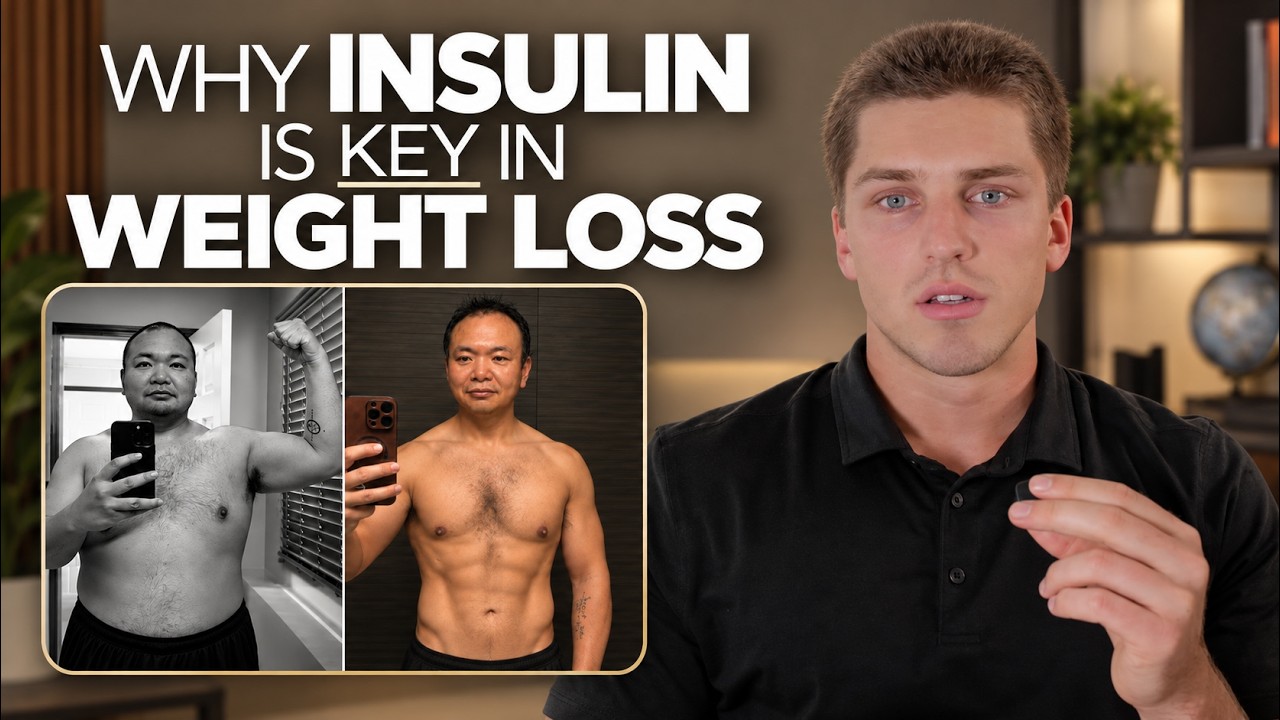
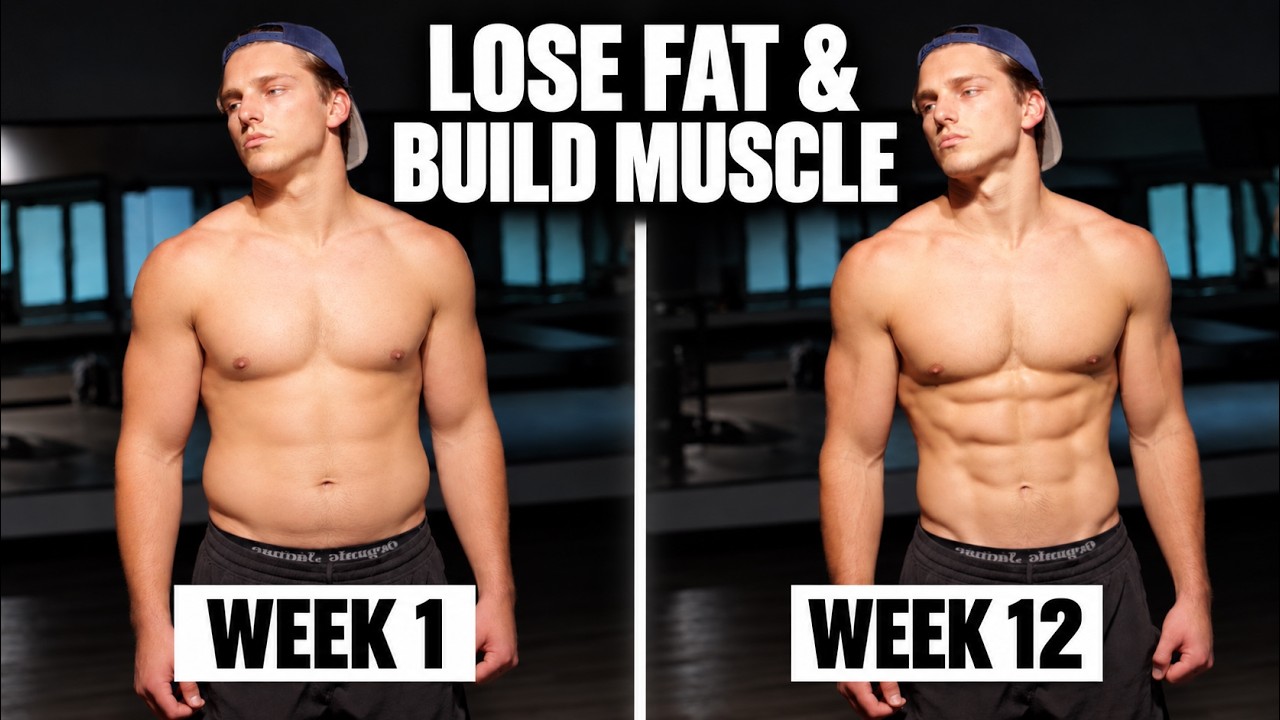
Everyone wants to build muscle and everyone wants to burn fat, but what if you could actually do both of these at the same time? Well, in this video, I'm going to explain exactly how you can do that and get results like my clients Issei, Christian, Vinci, Dom, Dan— build muscle and lose fat at the exact same time. But before we get into it, why should you even listen to me? Well, that's a great question. I studied at the University of San Diego where I also played football for 5 years. Learning from the best of the best in the health and fitness industry— coaches, trainers, nutritionists, holistic doctors, the list goes on. So my knowledge base is extensive, from the schooling to the football and constantly studying on my own. And of course, my resume of clients that have actually gotten results like I just showed you. So without further ado, let me explain how you can actually build muscle and lose fat simultaneously, and doing it pretty easily too. Everyone thinks you need to be in a steep deficit to make this process happen, but That's not the whole truth. You could be in a deficit without hitting your macros, hitting your micros. Your energy will tank and you won't get the results that you're after. You might lose weight, but a good portion of that would actually be the muscle mass. So you'll lose the weight but just be flabby and not have the confidence that you wanted. On top of that, you'd be tired, libido would be tanked, and at the end of the day, you just look soft and chubby and not actually have the physique that you desired. But before I go deeper into the plans and how all of this actually works, I want to establish one thing with you. The only way that you actually get results is if you put this into action, use it in your real life. Now I want to ask you a question right now. How many saved YouTube videos do you have, Instagram videos talking about diet, nutrition, recovery, working out, and how many of them have you actually put into your real life? Now that discrepancy right there is the real reason Why you haven't gotten the results that you're after. The men who get results take the information and implement it within their lives. But then there's also people like my clients who want someone to do it for them. Now, whichever one you are, you have to know that about yourself, whether you want to do it yourself or get some help. Either way is completely okay, but you have to know which type of person you are because that's the only way you're going to get the results. Now, with that said, I'm going to lay out everything super clearly right here so you can build muscle and lose fat at the exact same time. But I want you to try to do one thing. Don't watch another video on how to get this process done. Just go do it, implement it, and watch your physique and life change. Before we talk about macros or calories, the biggest lever for you to pull is the type of food that you're actually eating, because it's much more than just calories, macros. It's inflammation. It's how your body responds to the food that you're eating. You could be eating the exact same amount of calories macros from 2 completely different diets and get 2 completely different results. So first things first, I'm going to establish what that diet should actually look like outside of the calories and the macros. The number one and most important thing is the whole foods. If it came from the earth or it has a mom and dad, it's most likely fine to eat. And the last thing that I have on the actual diet is cutting out all refined carbs, all pasta, cookies, bagels, all wheat and gluten specifically. This ties into zonulin and the gut. The reason for this specifically is because everything breaks down to the cells and inflammation. The reason this is so important with wheat and gluten specifically is because those have a protein called gliadin. Gliadin is broken down in the gut, and zonulin actually opens up tight junctions in the gut. Now, what does zonulin come from? It comes from gliadin. So when you avoid the wheat and gluten, you avoid that zonulin, you heal your gut. Now let me explain why this is actually so important, because every single mechanism breaks down to your cells, to your mitochondria. When you're chronically inflamed, your mitochondria simply do not work the way that they should. The electron transport chain is broken, and the only way to heal that is to reduce the inflammation. You need to focus on the gut because inflammation stems from the gut. So the very first step in this process is cutting out the refined foods, focusing on whole foods, and specifically cutting out the wheat and gluten and all of its byproducts. Now, for fat loss specifically, while you're trying to build muscle and lose fat, you need to be in a slight deficit, not super aggressive one. 300 to 400 calories, nothing more than that. When you go in too steep of a deficit, your body's actually gonna start to pull from lean mass. You wanna avoid that as much as possible. The best way to figure this out is find your total daily energy expenditure. Let's just say that's around 2,500 calories. Now you'd be eating around 2,100 to 2,200 calories total per day. And within that 2,100 to 2,200, you have to have 1 to 1.1 grams of protein per pound of body weight. And this isn't just a theory either. A study out of McMaster University put men through a brutal 40% calorie deficit for 4 weeks training 6 days a week. One group ate about 1.1 grams per pound of body weight. The other group ate about half of that. The high protein group gained about 2.6 pounds of muscle and lost about 10 pounds of fat in this deficit, while the other group barely put on any muscle and lost less fat, all because of the protein intake. Same training, same deficit, The only difference was the amount of protein that they were eating. Now, that's the protein, but what about the carbs? The way that you can actually manage your carbs and your insulin and glucose specifically is going to be one of the biggest levers for fat loss. And there's one specific reason for this. It's insulin and the way your body responds to it. Now, think about it like this. When you have a piece of bread, fruit, honey, whatever it is, it spikes your blood sugar. Now, your body's one job is to pull that blood sugar into the cell to use it for energy. But what does your body use for that? Insulin. So when your insulin is raised and your blood sugar is raised, your body's only goal is to bring that down. It doesn't use fat for fuel. So when you eat carbs, it spikes your insulin, spikes your blood glucose, and its only job is to bring that down. Now, why is that important? Because when it is in that mode and you're eating carbs constantly, it doesn't use fat for fuel. Alternatively, if you focus your carbs around your training specifically, only 2 times per day, You can get into a state of ketosis where your body literally runs on fat for fuel. So here's how this should be done. First of all, your carbs will only be potatoes, rice, oatmeal, and fruit. Now you want to have about 25 to 40% of your daily carbs an hour before your workout, and then within an hour after your workout, that's the rest of your remaining carbs, 60 to 75%. This gives your muscles energy for the gym but also replenishes the glycogen so you can actually build muscle. You need protein and carbs after the gym to build muscle and replenish that glycogen. Outside of that window, before and after the gym, it's mostly going to be proteins and fats for your meals, less carbs. So a recap on the nutrition and the macros: the first thing that you need to focus on is a whole foods diet, cutting out all those refined carbs and cutting out the wheat and gluten specifically. From there, you're going to be in a 300 to 400 calorie deficit, eating at least 1 gram of protein per pound of body weight. Then you're going to be focusing your carbs strictly before and after your training to maximize the insulin response. And then the rest of the day, you want to keep your insulin low. Mostly eating proteins and fats. And the last thing within that, you want to fast for 16 hours of the day. So that's a 16:8 intermittent fasting. This automatically keeps your insulin low and actually activates growth hormone. Growth hormone is activated around 12 hours of no food. We want that extra 4 to be activated to help us burn fat and build muscle. But now on to the training, because this aspect is just as important. You can do everything right with your nutrition, you can even push hard in the gym, And you still might not see results. Why? It's because of progressive overload. There's one thing above all else from training that actually builds muscle. It's creating enough stimulus to tell your brain that it needs to create more muscle to adapt. And the best, and really the only way to do this, is through progressive overload. So what does progressive overload actually mean? It's as simple as this. Let's say you did 100 pounds on bench today for 6 reps. Well, next week, all you want to do is try and beat that number. Next week is either 105 pounds for 6 reps or 100 pounds for 7. Either way, you're increasing. There are other ways to increase, like time under tension, but that's a little bit more advanced. Focus on the reps or focus on the weight, increasing it as much as you can. Progress in the gym is not always perfectly linear though, but as long as you can generally progress over multiple weeks, that's enough to create that muscle stimulus and actually get the muscle growth. Why is progressive overload so specifically important for this fat loss and muscle building journey? In a deficit, it's already harder to put on muscle because your body has less fuel, so you need to train your body and your muscles and your mind in the right way to actually create that stimulus to build muscle. And one specific thing on this, and this is critically important, I cannot stress it enough, you need to be tracking your reps and your weight. What this might look like for the average person is using an app or a journal where all you do is write down the reps and the weight on a weekly basis. For my clients that I showed you before that got the best results, they used my app and it automatically fills in their weight from the previous week with my personal training videos. If you're interested in getting access to that, you can use the link below to apply for my one-on-one program. But if you don't want to use my app, use a journal. I like to write things down. I like to keep it OG. When it comes to the fat loss and muscle building simultaneously, the nutrition and the training are by far the most important parts, but the recovery is a close, close third. Because the thing is, even if you do everything right in the gym, everything right with your nutrition, but your recovery is subpar, it's going to be very challenging to get the results that you're after. And when I say recovery, the most important part of this is your sleep. If you're not sleeping a minimum of 7 to 8 hours a night, it's simply not enough, but also quality sleep. So what's the best way to get quality sleep? Well, this is exactly what I tell my clients to do. First of all, put your damn phone away. Take it out of your room. I literally have a physical alarm clock so I don't have my phone in your room. Stop doom scrolling. Look at yourself in the mirror and ask yourself, is it worth it to continue doom scrolling and get worse results? If you would rather doom scroll and get worse results by all means go for it. But if that's the case, you're not the type of person that should be watching my YouTube. We're here to get results, we're not here to doom scroll. Secondly, on your phone and all the lights in your house as well should be dimmed and red light once the sun goes down. You need to be setting your circadian rhythm. Keep the bright lights out of your eyes. The LED lights, they simulate the sun. The blue light from the phone simulates the sun. It's not allowing melatonin to be produced in your brain naturally. So it's not just that the YouTube and the Instagram is stimulating your brain through entertainment. It's also the blue light that's actually keeping you up at night. The last thing is having a cool and dark room. If all you do is those 3 things at night, your sleep will be significantly improved. But 2 supplements that can really, really help: magnesium glycinate, 30 minutes before bed, around 400 milligrams. Melatonin, start with 5 milligrams. You can build up way more— 10, 20, 30. There's really no harm in it. I'm going to be honest with you, that's what it pretty much comes down to, to lose fat and build muscle simultaneously. It's the nutrition, it's the training, it's the recovery. I'm sure you already knew that though, but now is the time to implement it. Like I said in the beginning, you don't have to watch other videos. I gave you everything that you need in this video right here, but are you going to implement it and do it and get the results that you're after? That's the question. See, my clients like Vinci, Christian, Dan, Dom, Issei, Ken, they got results because they took my advice and they implemented it. These are all working men like you. 40+ hours a week, 50+ hours a week, kids, family, wives, crazy jobs, but they still got it done. They lost the fat, they built the muscle. How? Because they stuck to the holistic protocol. The process is simple. I told them exactly what to do so they didn't have to think about it anymore. You have too much on your plate from your job, from working all the time, your kids and your family. That's enough stress. That's enough things to worry about. All at once. Do you really want to have to prioritize putting together these plans, worrying about your macros? They didn't, so why should you? If you want to get real results in the gym, lose 15 pounds, and actually get your visceral fat levels into a healthy level again within 90 days or less, scroll down to the description and apply for my one-on-one program. I actually guarantee those results or all your money back. Again, 15 pounds lost and getting your visceral fat levels into a healthy range again. But if that's too much for you right now, no worries at all. Watch this video right here. It breaks down exactly how to go from 20 to 12% body fat in 90 days or less. That's all I got for you this time. Stay holistic and God bless.