Would Peptides Actually Help You Lose Belly Fat?

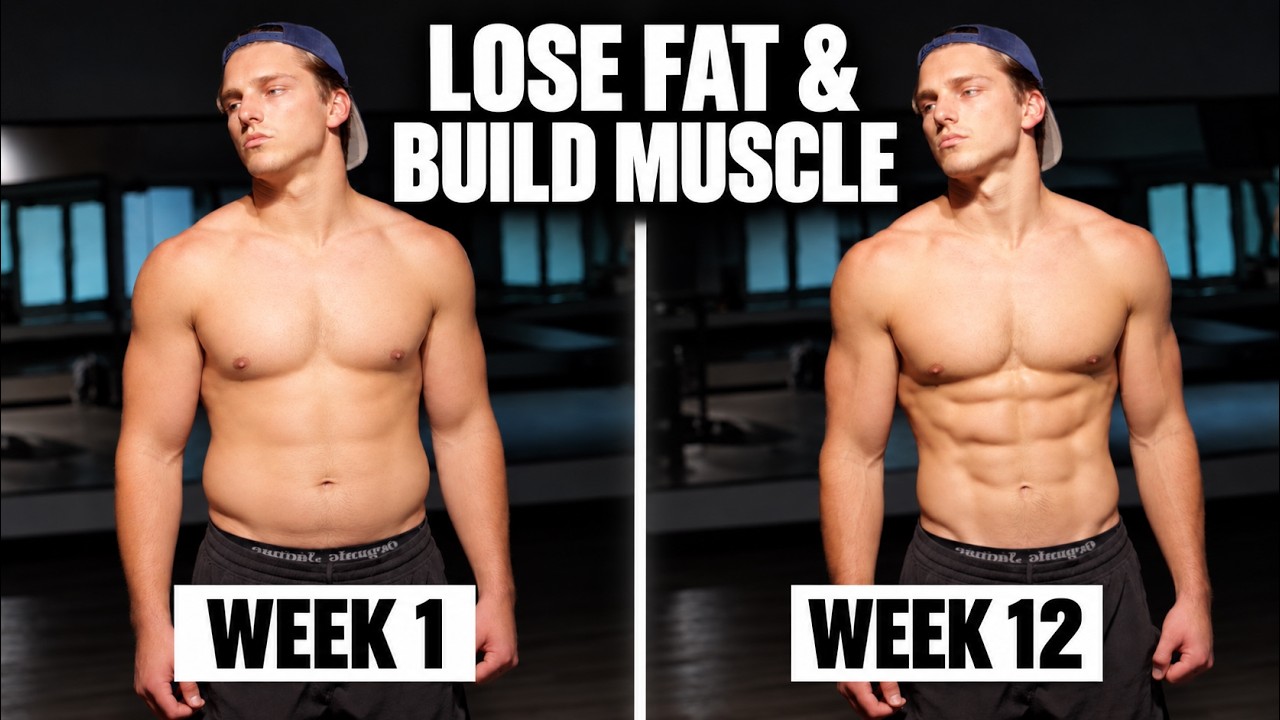
Josh Heverly argues peptide drugs like Ozempic cause muscle loss and bone density loss while creating pharmaceutical dependency. Instead, he outlines a system using calorie math (body weight × 11-12), intermittent fasting, timed carbs, HIIT training twice weekly, and sleep optimization to reduce visceral fat without shortcuts.
Chapters
All right, let's just be honest with each other for a second. You clicked on this video because you're wondering if you can take peptides, Ozempic, or whatever it may be to get a shortcut in your results. I do have 5 questions for you to actually determine if you do need to lose weight. Some of my clients like Vinci, Christian, Dom, Dan, Issei, they were all in your similar situation, needing to lose weight but unsure of the way to do it, wondering if peptides, Ozempic, retatrutide were fit for them. These are all normal guys. They're no different than me and you, working 40+ hour weeks, kids, wives, crazy jobs that they have to take care of, but they stuck to a plan and they got results. First of all, can you technically lose weight with peptides, Ozempic, or something else? Yeah, of course you can.
They work.
But do they have side effects? Yes, they most definitely do. Muscle loss, bone density loss, GI effects, and a whole lot more. You can go down that path, but you're sacrificing your health for a shortcut. I mean, where else in life— in business, relationships, sports, anywhere else in life— can you take a shortcut and get the results that you're after? It doesn't happen. That's not how it works. But for some reason, we've been told by Big Pharma and people online that you can take a pill or inject something and get the results you're after. Why? I'll tell you why right now. Because that keeps you hooked on for life. That pays their bills. But actually changing your lifestyle, actually getting you the results that you're after doesn't pay their bills. So I have 5 questions to ask you right now that will actually determine if you need to lose weight and how you can actually do that. First and foremost, can you walk up 5 flights of stairs without getting winded? If the answer is no, then there's a good chance that you need to get your ass in shape and lose some belly fat. Number 2, can you jog a mile in less than 9 minutes? And it's not that you have to jog to lose weight or to be healthy, it's a measly metric to determine If you need to get your ass in shape. And if it takes you more than 9 minutes to jog a mile, there's a really good chance that you need to lose some belly fat. Number 3, if you put on a form-fitting shirt, can you see the outline of your gut? And I don't mean a really tight shirt, I just mean something that fits your physique that's not too baggy. Can you see the outline of your gut? If that's the case, you probably have elevated visceral fat and too much belly fat that you need to lose. Number 4, are you confident enough to take your shirt off at the beach or the pool? If you're not confident enough, there's a really good chance that you need to lose some belly fat. And lastly, number 5, the waist-to-hip ratio. The waist-to-hip ratio takes the measurements of the waist and the hips and compares them against each other to determine if you have too much visceral fat. There's a 0.93 correlation coefficient, meaning it's highly correlated to show if you have an excess amount of visceral fat. So here's how it goes. Take the measurement of your waist— that would be the midpoint between the lowest part of your rib cage and the highest point of your hip bone. For me, that sits right around my belly button. And then take the measurement of the widest part of your glute/butt. And then all you do is divide the waist number by the hip number. And if you have a measurement at home, Pause this video, come back to it, and then you can analyze your score. So if you are below 0.8 on the waist-to-hip ratio, you're in a healthy range. If you're above 0.8, that's iffy.
It's a little bit close.
But if you're above 0.9, that's definitely dangerous. It shows high levels of visceral fat. Although this does have a high correlation coefficient, it doesn't necessarily mean that it's perfect. If you're below 0.8, you can still have high levels of visceral fat. But if you're above 0.9, it is highly likely that you do have high levels of visceral fat. So if you answer no to any of those questions and your waist-to-hip ratio is above 0.8 to 0.9, it's a really high likelihood that you have too much belly fat and especially too much visceral fat. Visceral fat is what's around your organs— your heart, your liver, your kidneys. That's what does the real damage, and you can't even see it. But the question is, how do you actually lose it? If you want to get real long-lasting results like my clients, I'm going to break down absolutely everything from the nutrition, the training, the protocols— literally everything in this video that you need to get the results you're after. Lose the belly fat, Lose the visceral fat and get the best physique possible. So without further ado, let's just get right into it.
All right, let's break this down. How do you actually lose the fat once and for all and keep it off? Well, first of all, let's establish the outcomes that we want, because when you label things too broadly like get in shape or I want to lose fat, I want to put on muscle, it becomes overwhelming and it becomes confusing. You need specific outcomes that you want. So let's break them down one by one. And I can guarantee you one thing, that by the end of this video, You'll know exactly what to do and how to get there.
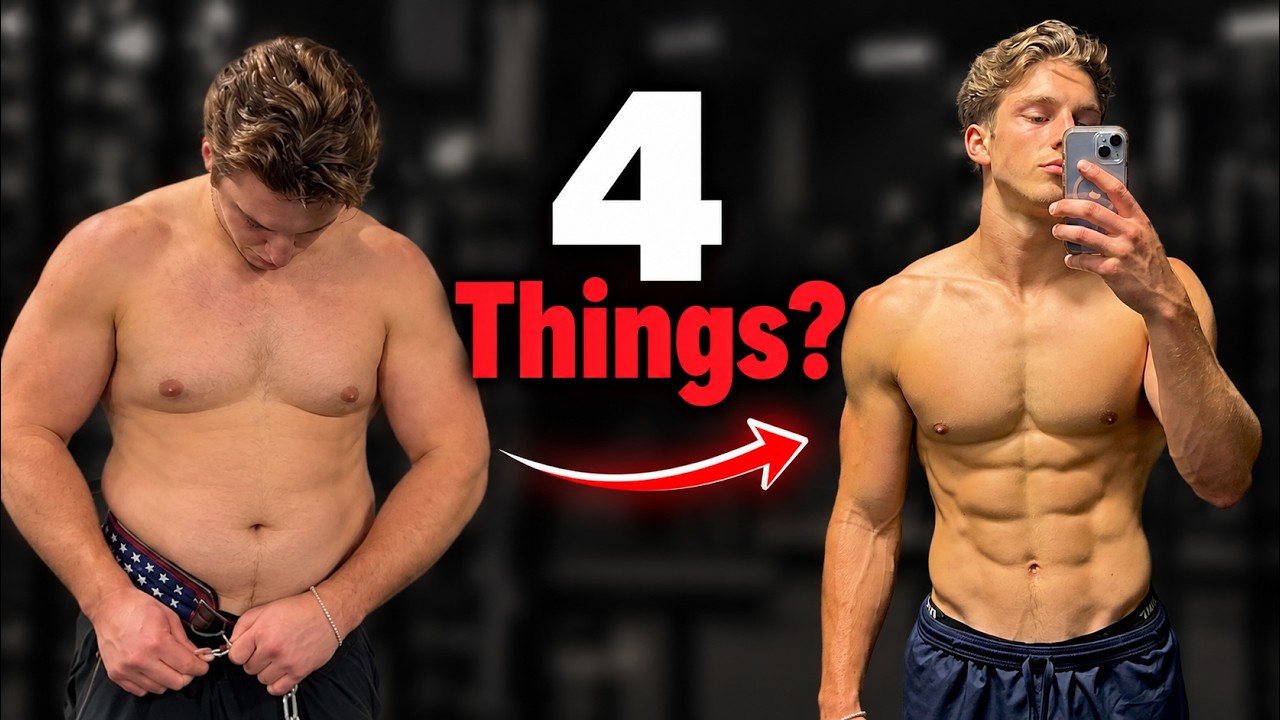
So the 4 outcomes that we're actually after: drop body fat to an optimal level and not just a healthy level. There is a very big difference there. Optimal and healthy are not the same thing. Being grouped into the healthy metrics fits you in with everybody who's overweight, out of shape, and really has horrible health. Being optimal is what we're shooting for. Number 2, attacking and lowering the visceral fat specifically. The visceral fat is what's around your organs, your heart, your liver, your kidney. This is what does the real damage and is linked directly to cardiovascular disease, heart disease, type 2 diabetes, and much more. And if you have an elevated level of body fat, there's a very high chance that your visceral fat is elevated as well. Number 3, how to actually build your dream physique. Now, after you lose the belly fat and the visceral fat, well, this is when you build the muscle. This is when you get the physique that you're after. So how do you actually do that? I'm gonna break it down step by step. And number 4, lifestyle tips to take your health to the next level. How to drop body fat to an optimal level.
It comes down to being in a deficit. Being in a deficit really comes down to burning more calories than you consume. Easier said than done though, right? So it's eating the right foods at the right time. You can lose weight without losing much fat, so the proportions matter. Okay, so what are the actual proportions? Well, the macros— this can be broken down into math. It's simply an equation. The calories Take your body weight times 11 to 12. So for me, I'm 200 pounds, so my body weight would be 200 times 11 to 12. Let's just say 11.5. That would be 2,300 calories for how much I am consuming on a daily basis. For my protein, I'm again 200 pounds, so I'd be 200 times— we'll take 1, and that would be 200 grams of protein on a daily basis. For the fats, again, 200 pounds times 0.3 That would be around 67 grams of fat. Now, one caveat here is if you're less than 150 pounds, your minimum is always going to be 50 grams of fat. You need that for your hormones. Your body's language is hormones. And if those aren't functioning properly, you won't be able to lose the weight. You won't be able to put on the muscle, the visceral fat. It all comes down to your hormones. Your body's language is hormones. So if you're less than 150 pounds, set the floor at 50 grams of fats. Okay. Okay, now what you can do is just put your body weight into this equation and you can get the calories, the proteins, the fats, and the carbs that comes out to whatever remaining calories there are. And it's from, from 5 specific foods, and I'll get into those later. But one specific thing is every 3 to 5 pounds that you lose, your numbers change as your body weight and lean mass change. So you need to account for that.
Every 3 to 5 pounds that you lose, adjust those calories, proteins, fats.
And I guarantee that you'll lose weight. So the next step in this would be intermittent fasting. 16 hours, no food, only water, black coffee, or tea. And I know what you're thinking right now. Josh, what about the zero-calorie sweeteners?
What about the things that don't have calories?
The answer is no. If it's not water, black coffee, or tea, it does not count. 16 hours, no food. Constant eating and being healthy are mutually exclusive. Refined carbs and wheat spike blood sugar. Which spikes insulin.
You do that enough and your cells literally shut off their insulin receptors.
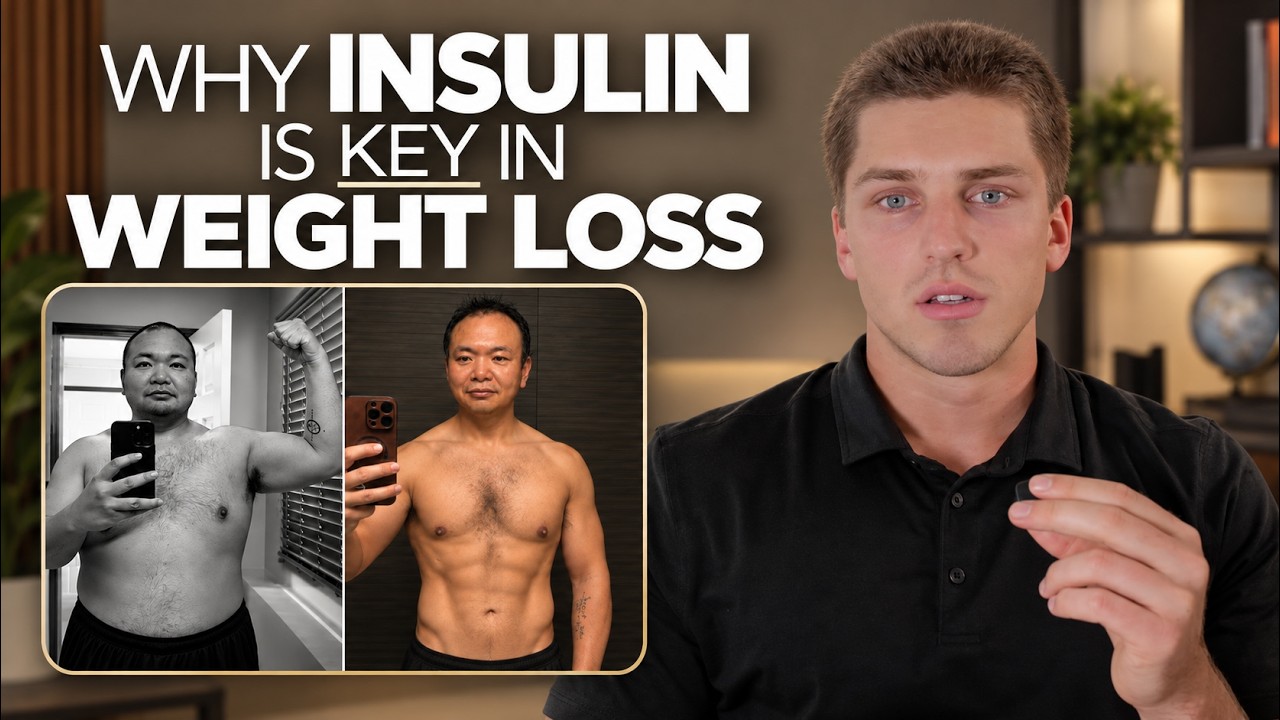
The pancreas pumps out even more and eventually the cells shut off completely. That's insulin resistance and eventually type 2 diabetes. That's why we need to do the intermittent fasting, to allow our body's insulin to actually come down to healthy levels. So, if you're overweight but not diabetic yet, there's a really good chance that you're actually pre-diabetic because of the amount of times that you're eating. And the amount of times that you're spiking your insulin. The second reason to fast, it activates growth hormone, which stimulates muscle growth, fat loss, and a bunch of other things. So all you have to do, 16 hours of no food, the first 4 hours in the morning, the last 4 hours at night, or mix it up however you'd like. Within that intermittent fasting, we want to make sure we're utilizing our carbs properly because it matters when we actually use them.
Insulin is the most anabolic hormone you have.
When it's used right, it builds muscle far more efficiently. When it's used wrong, it spikes your insulin too much, leaving glucose in the blood. So 25% of your daily carbs, 15 to 60 minutes before training, quick-release carbs like fruit, honey, maybe white rice. 75% of your daily carbs after training. So white rice, potatoes, but honestly, white potatoes would be your best choice. Fiber, micronutrients, and more filling as well. So before is fuel, after replenishes the glycogen, which is what actually builds the muscle. You need to replenish the glycogen which you just burned while working out. When you can time your carbs before and after your training, you give yourself energy and you're able to replenish the glycogen but keep your insulin low the rest of the day. This allows you to do multiple things, keep your growth hormone high, actually use the carbs as fuel and to replenish the glycogen, but also keep your insulin low at healthy levels. But what to avoid specifically?
Absolutely no exceptions.
First is the wheat/gluten. So the reason is that it spikes insulin more than anything else, but it's also Very bad for the gut. In a book called Grain Brain, Dr. David Perlmutter, I think that's his name, he specifically says that even if you don't have an allergic reaction to wheat or gluten itself, assume that you are allergic because of the things it does to your health, the insulin, the gut health. Essentially, there's a protein called gliadin. Gliadin activates zonulin within your gut. Zonulin opens up the tight junctions, which gives you leaky gut and inflammation all over. If you want me to go deeper into that in another video, just let me know in the comments and I'd be happy to do so. Next one would be seed oils, extremely inflammatory. That's supposed to say omega-6s, but it got cut off. Processed and refined carbs, that spikes insulin more than anything else, leads to fat gain more than anything else. Pretty much any packaged processed foods in general, stay away from it. If you can stay away from these, you are golden. You basically want to be focusing on foods that come from the earth, have a mom and dad Come from nature. And that's what we're going to be focusing on here.
The protein would be meat, eggs and egg whites, fish, dairy, that'd be like skyr, yogurt.
Carbs, specifically and only these: potatoes, fruit, honey, white rice, oatmeal. Fats: egg yolks/eggs in general, olive oil, coconut oil, grass-fed butter. Now, source the best quality you can find, organic, pasture-raised, grass-fed. It really does make a difference in the overall outcome that you want to achieve for the health, the physique, The way you feel, the way you look. So here's an example day of eating for a 200-pound man wanting to lose about 20 pounds. Okay, so like I said earlier, around 2,300 calories, 190 grams of protein, 70 grams of fats, 200 grams of carbs. So nothing until 9 AM. Let's say I were to wake up around 5 AM. I take that 4-hour buffer in the morning. Okay, breakfast about an hour later, eggs and fruit. Train— that gives me the energy for the training. The lunch would be Ground beef and potatoes, because again, I want to have those carbs after the training session to replenish that glycogen. And then dinner around 4:30, last meal, chicken breasts, vegetables, optional low-sugar sweet treat. But we're really trying to keep our insulin low here and the cutoff would actually be at 5. We have it around 4:30 to ensure that it's cut off by 5 and that's the 8-hour window. Assume that I go to sleep around 9:00 PM, wake up at 5:00, that's the 16-hour. Intermittent fasting.
Now, visceral fat— why is it so dangerous and how do we actually lower it? Well, first of all, what is it? It's the fat that sits around your organs, like I mentioned earlier— your heart, liver, kidney. It's directly associated with all of those diseases— the cardiovascular disease, the heart disease, the type 2 diabetes, and more. But why does that actually happen? Well, visceral fat acts a little bit differently. It releases inflammatory compounds like interleukin-1 and interleukin-6. that actually damage the cells on a mitochondrial level. And every function in your body comes down to that mitochondrial function and the electron transport chain within the mitochondria. The visceral fat attacks that specifically. So the fat that's around your organs doesn't only damage the organs that it's surrounding, it damages every single function in your body. According to the Mayo Clinic, up to 22% visceral fat gain was associated with just 8 pounds. So imagine if you're 10, 20, 30 pounds overweight, what that means for your visceral fat, for the inflammation, for the associated risks of type 2 diabetes, of cardiovascular disease, of heart disease. This is why visceral fat is so important, but I'm going to show you exactly how to lower it right now.
So extended fasts are one of the best ways to do that. Around 18 hours with no food, your body significantly ramps up autophagy. Autophagy is your body's normal process of recycling and clearing out damaged and dead cells. Fasting just makes it more efficient. This directly helps attack visceral fat, but that autophagy also helps the inflammation that that visceral fat caused. So it does 2 for 1. It helps the inflammation in the cells, but it also attacks the visceral fat separately. Extended fasts past 18 hours, 24, 36, even 72 hours can be phenomenal for your health when done properly. Now, the next one would be interval training on how to lose that visceral fat. Sprints, assault bike, even other options. 20 seconds on, 1 minute off for 10 to 20 minutes total twice a week. Get your heart rate up as high as you can each round. This really attacks that deep layer of fat, and it's been specifically shown to attack that visceral fat. Lifting and cardio are great, but the interval training is one of, if not the best ways for training to actually attack the visceral fat. Now, how do you build your dream physique? Nutrition plays a huge part, but training is what stimulates the growth. It doesn't build muscle in the moment, your body grows when you recover, but you need the stimulus first. So here's how I would structure it for you. 3 to 5 days a week is plenty for most people, 30 to 60 minutes, high intensity, pushing yourself to failure. You warm up, movement prep, then supersets of opposing muscle groups, hitting everything so you don't create imbalances. You want to do at least 10 sets per week per muscle group.
That's how you're going to get the optimal growth.
10 to 20 sets is going to be optimal for overall muscle growth. But also train functionally like a human should. Most bodybuilders, most people these days, they forgot how humans are actually supposed to train. It makes you stiff. It does make you strong, but it makes you weak in the tendons, the ligaments, the joints. When you train functionally and train how you're supposed to move as a human, it actually makes you feel better and help you age better. Now for the lifestyle, sleep and recovery. Sleep has a direct implication for nearly every single mechanism in the body. Fat loss, building muscle, losing visceral fat, immune system, staying healthy overall, the list goes on.
Okay.
Now, how do you actually improve your sleep? Well, there's a multitude of things to do. The number one thing is get off your damn phone at night. I see it every single day. So many people are on their phones scrolling in their bed at night. Your bed should be used for sleep. And sex. That is it. Keep your phone outside of the bedroom. Don't even let yourself get near your phone at night. Set the phone outside. Literally, that's what I do. I use a physical alarm clock and I put my phone outside of my bedroom. The second thing is setting your circadian rhythm. The first thing that you should do in the morning is get sunlight in your eyes. And at night, not letting the blue light disrupt your circadian rhythm.
So using red light on your phone, computer, using red light glasses. The next thing is if you need supplements like magnesium, melatonin, these things can really help you relax and actually help you get into a deeper sleep.
The last one would be activating your parasympathetic nervous system. Parasympathetic nervous system helps you relax.
You want to activate that vagus nerve.
One of the best ways to do that is deep breathing techniques at night. So sit on the edge of your bed 10 minutes before you go to sleep and breathe deeply into your stomach, 6 seconds in, 4 seconds out, all through the nose, all into your stomach. Now the most important part, the mindset. The information isn't actually that hard. Take notes, You could build this system out yourself, I guarantee it. It has everything that you need.
But what it comes down to is having the confidence to stick with it.
When something goes wrong, when you plateau, are you going to stick to the plan that you set for yourself? The single biggest determinant of success isn't the training plan or the macros, it's consistency. I have seen it time and time again. The best results always came from people who stuck to the plan the longest.
Now, I want you to think about something for a second. It's called a shortcut for a reason. You're taking a shortcut because you don't want to put in the work. When has taking a shortcut actually resulted in getting the final outcome that you desire? Business, relationships, sports, whatever it is. If you try to take a shortcut, there's going to be penalties. There's going to be outcomes that you do not want associated with it. But for some reason, people believe that they can take a shortcut with their health, take a pill, Take a shot, lose the weight, and that's it. That's not the case. You have to put in the work, and it all comes down to consistency.
Now look at my clients. I know these images are a little bit skewed, but Vinci, he lost over 100 pounds because he stuck with it. Christian, he reached his dream physique in a few months because he went after it and really stuck with the plan. Dom, he dropped 6% body fat in 3 months, followed the plan, didn't ask questions. Now I want you to think about something for a second. If you have a cavity, you don't research how to fix it yourself. You find a dentist, you find a professional. If you want the best return as an investor, you hire a financial advisor, not because you couldn't do it yourself, but because it's not worth your time or the risk. So why risk mediocre results with your own health? I mean, when you get older and you aren't feeling your best, you're not looking your best, are you going to look back and wish that you actually took action and wish that you made and got the results that you promised yourself you would. I mean, now is the time.
The best time to start was yesterday or last year.
The next best time to start is right now. I hear it every single day. I'm going to wait till Monday, Josh. I'm going to get started next month. I'm going to get started January 1st.
But when's that time actually going to come?
Because every single time that I've seen it come, every single time— I am not joking— every single person that has said that to me, they never went through with it. They never got the results. And I bet they're kicking themselves Wishing they just started last year, wishing they started already, but they haven't.
Now here's the thing. I just told you how to lose the body fat, how to lose the belly fat, the visceral fat, build your physique, recover better, have the proper lifestyle, and do the right things to get the results you're after. But it's a matter of actually doing it. There's a difference between information and implementation. You have kids, family, a job. You have a bunch of other things on your plate. And like we talked about, the cavity, the financial advisor, you'd rather find a professional in the places that matter. So does your health not matter to you? I mean, realistically, do you have the time to create the plans, to, to figure everything out, work through the plateaus, work through what's not working? If you do, then go for it.
Shoot for it.
Shoot for the stars and get the results you're after. If not, let me take care of that for you. I run a one-on-one coaching program for men who want to lose fat and visceral fat. I guarantee 20% of your visceral fat gone and your belly to be gone in 90 days or less, or you don't pay. Now, I want to take this off your hands. I want to make this simple. I want to tell you exactly what to do, exactly how to lose the weight and become the healthiest person that you possibly can. If that sounds like something that you're interested in, definitely scroll down, use the link in the description and book a call directly with me. I'd be happy to talk, and I can't wait to see you. Stay holistic. God bless.