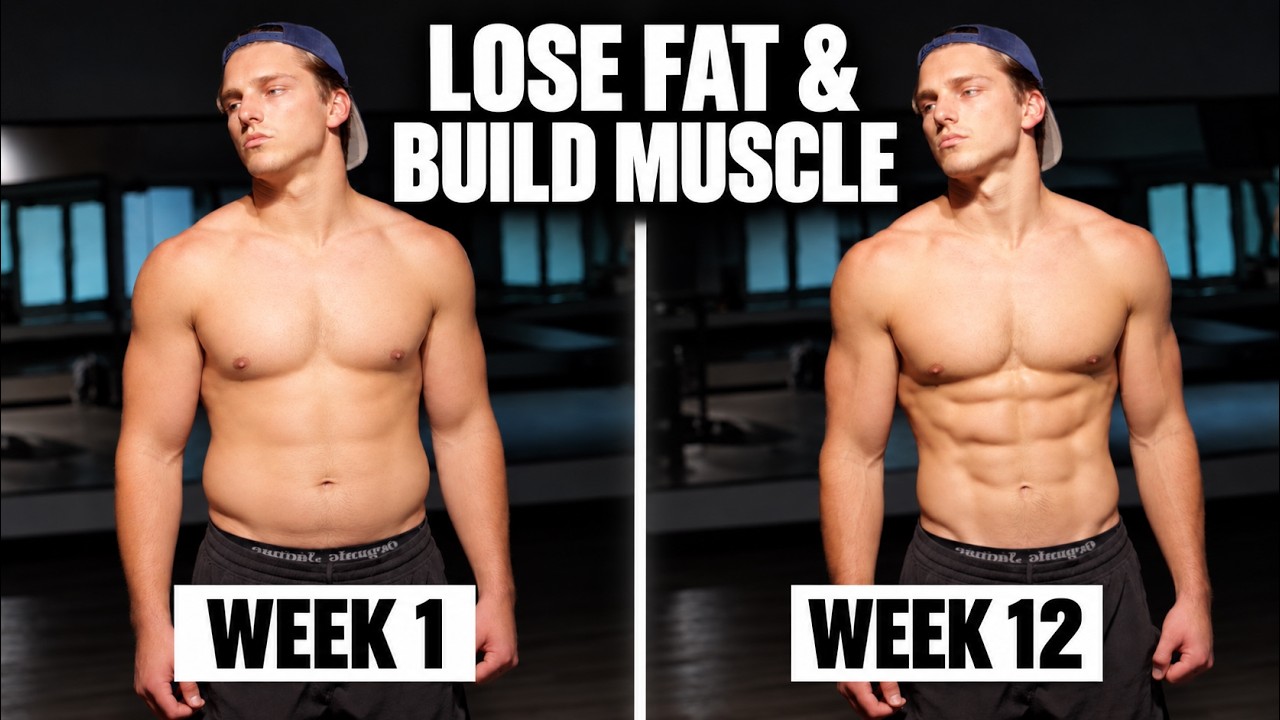
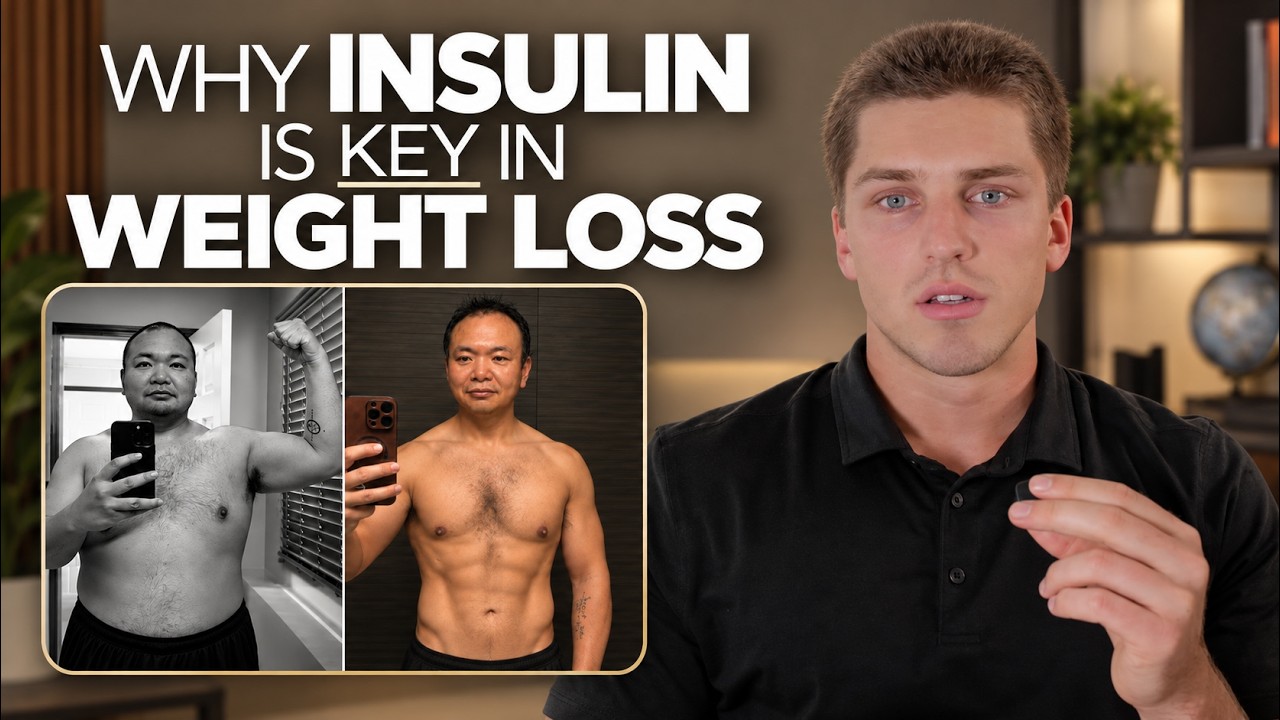
In this YouTube monologue, the speaker traces the historical vilification of dietary fat, beginning with a 1967 New England Journal of Medicine review that blamed fat and cholesterol for heart disease while downplaying sugar. He reveals that the Sugar Research Foundation paid the review’s authors, influencing the narrative to favor sugar and demonize fat. This industry‑driven bias helped shift U.S. dietary guidelines in the 1980s toward high‑carbohydrate, low‑fat recommendations, which the speaker links to the dramatic rise in diabetes and heart disease. He cites the American Diabetes Association’s 1994 recommendation for 60‑70% of calories from carbs and shows how diabetes prevalence tripled by 2015, arguing that excess refined carbs, not fat, are the primary driver. The speaker then reviews epidemiological data showing higher mortality risk with high carb intake and lower risk with high fat intake, and a meta‑analysis indicating saturated fat does not increase heart disease risk when refined carbs are limited. He discusses the 2018 DIETFITS trial, noting that low‑fat and low‑carb groups lost similar weight because both minimized added sugar, refined flour, and trans fats, underscoring that refined carbs are the key lever for weight loss. The talk outlines three dietary patterns: (1) high carb + high fat (worst), (2) high carb + high protein + low fat (moderate), and (3) high protein + high fat + low carb (best) for belly‑fat reduction, emphasizing insulin’s role in fat storage and the importance of timing carbs around training. He explains that LDL cholesterol is only harmful when oxidized or glycated—a process driven by high blood sugar—citing Grain Brain’s findings that high‑carb diets increase cognitive impairment risk while high‑fat diets lower it. The speaker describes visceral fat, its measurement via DEXA or waist‑to‑hip ratio, and its link to cardiovascular disease. Concluding, he advocates a personalized high‑protein, high‑fat, low‑carb diet with strategic carb timing, while noting the need for individualized plans, training, recovery, and coaching, and promotes his one‑on‑one coaching services.
Chapters
For over 40 years now, people have claimed that excessive fat consumption leads to fat gain and high cholesterol. So should you be avoiding dietary fat if you want to lose belly fat? Well, let me take you back a sec. In 1967, the New England Journal of Medicine published a review that blamed fat and cholesterol for heart disease and brushed sugar aside. But there's one flaw in that, and it's something that people didn't know for over 50 years. The Sugar Research Foundation, the sugar industry's own trade group, They actually paid the Harvard scientists behind that review about $6,500. That equates to about $50,000 today, and it was never disclosed because journals didn't require it back then. So now you're probably thinking, well, why would the sugar industry do this? Why would they pay them off? Well, it's really quite simple. Humans actually evolved on proteins and fats, and the sugar industry saw a flaw there. They realized that if they can promote sugar as heart-healthy, as good for your overall health, cholesterol, and losing body fat, well, they can make a ton of money off of that. So by paying off those scientists, they made it seem like sugar was completely okay and even good for your health, and they demonized fat. And this in turn led to the rapid increase in processed carbs, cereals, sugary foods, etc., simply because these now randomly all of a sudden turned into heart-healthy, overall healthy foods to consume, even though that wasn't true in the slightest. And what did this lead to? Well, diabetes, heart disease, and a bunch of other diseases have skyrocketed in the last 40, 50+ years. And officially around 1980, the U.S. dietary guidelines switched from a proteins and fat-based diet to proteins and carbs. They told Americans to cut the total fat, cut the cholesterol, and replace it with the processed carbs. And to make things even worse, replace the naturally occurring fats with things like margarine and processed fats. So people did exactly as they were told— they cut the fats and they ate more carbs. And in 1994, The American Diabetes Association recommended that Americans eat up to 60 to 70% of their total calories in carbs. I want you to think about that for a second. 60 to 70% of their calories from carbs. What does diabetes stem from? It stems from glucose and hyperinsulinemia. What do those stem from? Stem from carbs. So the association that's profiting off of people getting diabetes is telling you to eat more carbs, which gives you diabetes. Think about that for one second. And in 1994, when they put that out, about 7.7 million Americans had diabetes at the time. And just about 20 years later in 2015, there was now 23.4 million people with diabetes. Of course, other factors did play a role, but unequivocally the number one thing was the increase in carbohydrates in the diet. Carbs in excess without the appropriate fat or protein to come with the carbs, that's when the issue occurs. And then the processed carbs, the cereals, the sugars, that's where the diabetes comes from. So from 1994 to about 2015, there was about 3 times more diabetes cases in the US. And the biggest change there was the American Diabetes Association telling you to eat more carbs. And furthermore on this, the biggest study comparing fats and carbs has some pretty interesting data. The people eating the highest amount of carbs had a 28% higher risk of death, and the people eating the most amount of fat had a 23% lower risk of death. And there's some more interesting data from the American Journal of Clinical Nutrition. When they pooled the studies, saturated fat showed no significant increase in heart disease risk, and their conclusion was that the focus should be on limiting refined carbs and excess body fat. So now I've got that out of the way, let's discuss if cutting fat actually helps you lose fat. Well, from the Journal of the American Medical Association in 2018, the DIETFITS study, There were 609 adults followed for 12 months. Half ate a healthy low-fat diet, half ate a healthy low-carb diet. And the results were pretty interesting. The low-fat group lost about 12 pounds where the low-carb group lost about 13 pounds. The difference was basically the same. But there was one thing that most people missed. Both groups were actually told something very similar. It was to minimize added sugar, refined flour, and trans fat. So neither group was eating the combination of refined carbs and fats. Cutting fat didn't give a statistical advantage in losing fat, it was cutting the refined carbs. So what this shows is that calories still matter to lose or to gain weight, but one of the biggest levers was cutting out the refined carbs, the original thing in 1994 that they said was perfectly okay to eat. So if you can see where I'm going with this, the main culprit is fat and sugar together. But granted, there is technically a best way to lose the fat, and I'll explain to you what that is in a moment. There's technically 3 different options of eating. One of them results in a lot of fat gain. The other one results in great results to lose overall belly fat. So option 3, this is the worst. High carbs, high fats. Think pastries, fried food, fast food, et cetera. High in fats, high in calories, high in carbs. First, it spikes your blood sugar and insulin and keeps them elevated. Insulin tells your body to hold onto fat. And secondly, you're also taking in more unhealthy fat, the processed kind. So your body is actually holding onto more fat from the insulin because it's a storage hormone. And it's also taking in more unhealthy dietary fat. And according to Grain Brain, when blood sugar is high, those fats and proteins get oxidized and glycated. That's how you get the damaged and elevated LDL that actually causes the risks. So option 2 to lose belly fat: high carbs, high protein, low fat. This would be the second best option. You could get results, but not optimal for overall health or efficiency. You get the protein, that's great, everybody knows that. The benefit of the carbs is that you get the glycogen to refuel in the muscle and also give you fuel for your workouts. But the downside is that you miss out on the fats that are actually crucial for your hormones. And with the excessive amount of carbs, you're also spiking your insulin and glucose. And in this feeding study, the low-fat, high-carb diet actually had the highest triglycerides at 107, and with that, the worst insulin sensitivity. This option is better than 3, but still not the best, because when your insulin is raised, you can't burn fat for fuel. And the best option to actually burn your belly fat Is high protein, high fat, and low carbs. And according to the same study, a strategy to reduce glycemic load rather than dietary fat may be advantageous. When you reduce the glycemic load and you reduce the glucose and insulin in your blood, your body starts to run on ketones and fat for fuel. So the best way to use this option— proteins and fats for most of your day, and then around your training or around your most strenuous activity of the day, That's when you have your carbs. So it's not no carbs completely, it's timing the carbs properly. That's the biggest thing that you need to consider. And one thing on the cholesterol is that some studies do show that reducing saturated fats lowers cardiovascular events. But here's what I think they miss. It's not about the amount of cholesterol you have, it's about the state that it's actually in. What do I mean by that? Well, again, according to Grain Brain, LDL is a transport particle that carries cholesterol to your brain and cells. It becomes especially harmful when when it's oxidized or glycated. And what glycates things? Sugar. When blood sugar stays high, sugar binds to proteins and fats and speeds up oxidization. And that's what causes the dangerous LDL. LDL in and of itself is healthy. It is something that is crucial for your brain and overall health. But when it gets oxidized, that's where the issues occur. And according to Grain Brain again, older adults eating the most carbs had nearly 4 times the risk of mild cognitive impairment. And those eating the most healthy fats had 42% lower risk. On top of that, belly fat predicts heart disease better than BMI. You wanna know why? Because that belly fat is directly tied into the visceral fat. The visceral fat is what's around your organs, your heart, your liver, your kidney, your intestines. It's what does the real damage, but you can't see it. There's 2 main ways to measure it. One would be a DEXA scan, but not everybody has those capabilities. The other is the waist-to-hip ratio. You take the measurement of your waist and then divide that by the measurement of your hips. So if you're above 0.9, I like to say honestly above 0.8 or 0.85, you have to assume that you have elevated visceral fat. And again, that visceral fat is what does the real damage. So if you have belly fat, that leads to that visceral fat, which is a direct indicator to cardiovascular disease, heart disease, and a whole lot more. And what's the best way to lower that? A high protein, high fat, and low carb diet. So based on the data, a high protein, high fat, low low-carb diet is the best for overall health, best for reducing belly fat, and best for cognitive function as well. Now, of course, when it comes to losing belly fat, when it comes to being your most healthy self, there's a whole lot more that you have to consider— the training, the nutrition, the recovery, and everything else in between. And on top of that, everybody's unique. Everybody needs their own personalized plan, because if you follow somebody else that you see online, it's not going to work for you. You live your own life. You have your own kids, work, job schedule. Everything is a bit different. You like your own foods. You like to do what you like to do on the weekends. So why would you follow somebody else's plan if that's what they do and it's not meant for you? So what you need is your own personalized plan, and that's exactly what I do for my own clients like Vinci, Christian, Dom, Dan, Issei, Ken. The list goes on. The reason they were able to get such great results is because I walked them down the path and I told them exactly how to lose that belly fat and get their dream physique. And if you don't feel like doing all of that extra stuff, having to track everything and figure out exactly what to do and how to make it work for you, use the link in the description and see what options I have for my one-on-one coaching program. Now that's all I got for you today. Stay holistic. God bless.