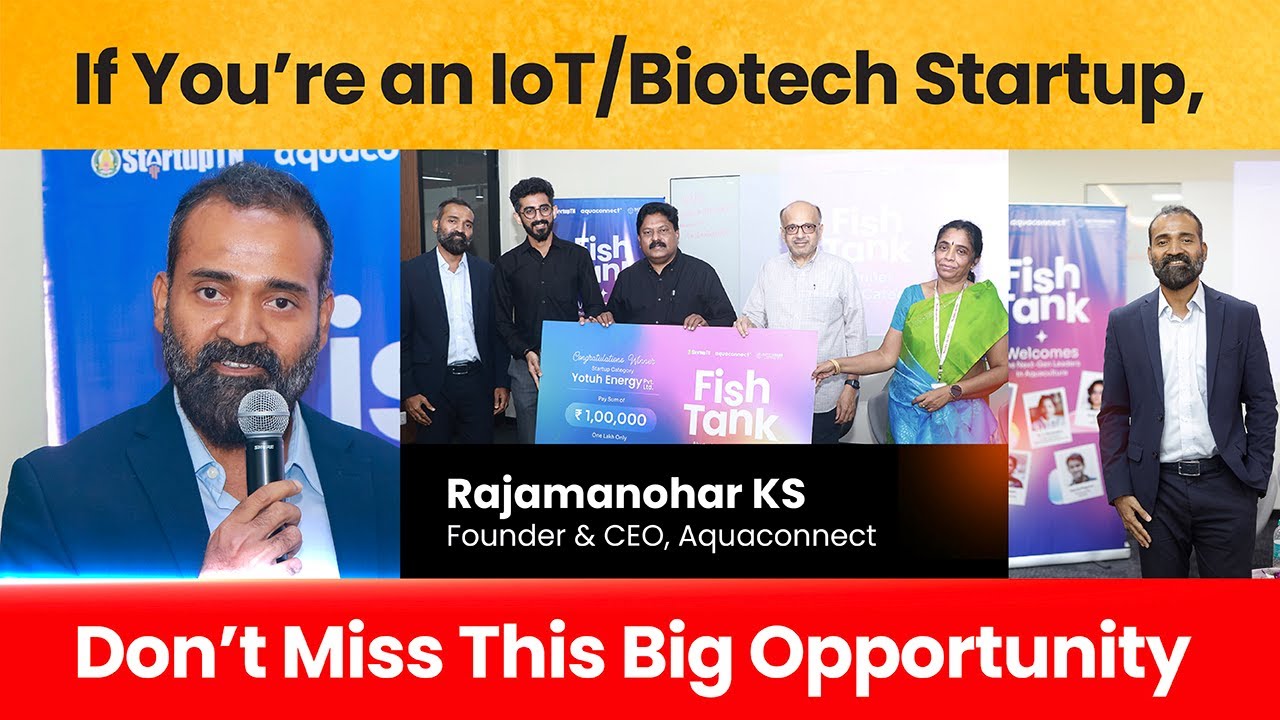
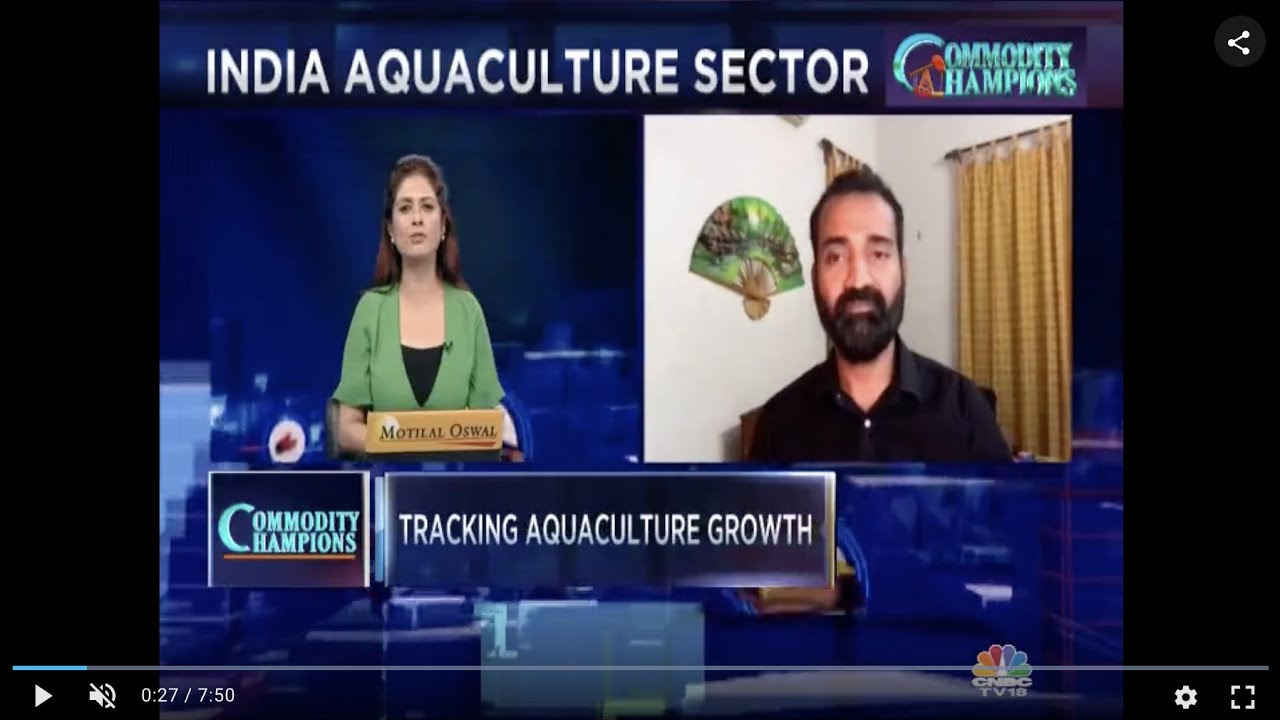
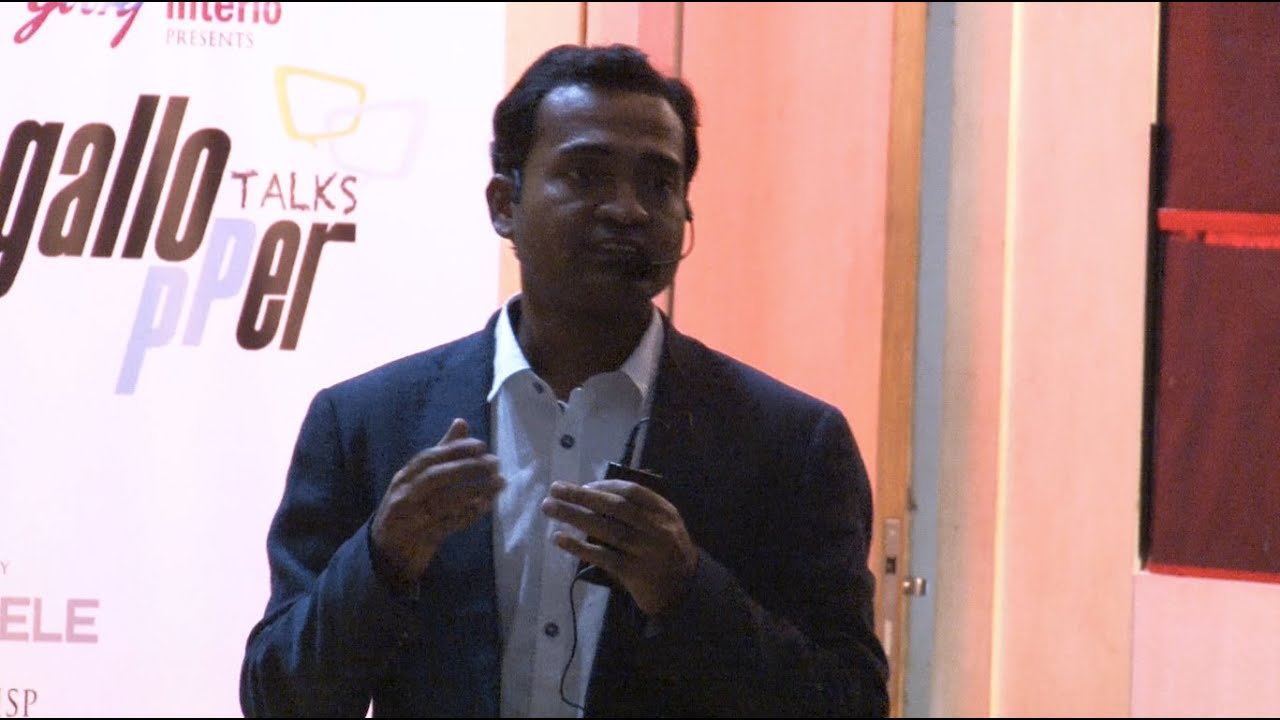
In a Business Lunch interview, Raj Somasundaram, CEO and founder of Aquaconnect, explains how the company secured a $15 million Series A round despite a funding winter, attributing success to a sustainable, full‑stack aquaculture model with positive net margins and solid unit economics. Aquaconnect offers technology solutions and market‑linkage services across six Indian states, connecting farmers, input retailers, and seafood buyers, and bringing formal capital to the value chain. Raj outlines the Indian aquaculture market as a $25 billion opportunity, driven largely by shrimp exports that generate about $7 billion in foreign exchange annually, and growing at a 10 % CAGR. He highlights the low penetration of technology on farms, citing awareness and financing as key barriers, and calls for greater tech adoption and incentives. Looking ahead to Budget 2023, he proposes two policy actions: government‑backed awareness and financial incentives for farm‑level technology adoption, and campaigns to boost domestic seafood consumption, which would stabilize prices and improve farmer revenues. The interview concludes with a brief wrap‑up and transition to other business news.
Chapters
Welcome back. Joining us on the show now is Raj Somasundaram. He's CEO and founder at Aqua Connect. Raj, hi, welcome to the show. You know, we were discussing not too long back ago on how many of the startups in 2022 did not end up making money, but the way your model has been a phygital and you are spread out in 6 states and aquaculture is what you do, Tell us what went right for you in last one year. You especially got another round of funding as well.
Thank you very much for having me here, Manisha. So, yep, despite the funding winters, we managed to attract fresh capital. That's about $15 million from both domestic venture capitalists as well as foreign venture capitalists. Thanks to our sustainable business model, as well as we managed to drive a business with a positive net margin, and then we have got sustained sustainable, you know, unit economics as well. So that's what probably, you know, worked well for us in raising new capital. So as you know, like, we are a full-stack aquaculture technology provider, and wherein, like, we are offering technology solutions as well as market linkage solutions to the multiple stakeholders in this value chain, be it a farmer, be it a retailer who provides inputs to the farmer, or someone who is buying seafood from the farmers. And finally, nowadays, we had managed to, you know, bring formal capital to the aquaculture value chain through the financial providers.
Raj, help us with what is the overall total market in India when you talk about aquaculture? What is the kind of growth that we're looking at? And when you do talk about tech penetration, how much is that?
Sure. So we're talking about a $25 billion market opportunity in aquaculture in India. So largely the shrimp, you know, gets the limelight because of the export oriented business. But there is a huge opportunity in the fish aquaculture business as well. So we are like— these statistics would help us understand the business better. So India is the 2nd largest aquaculture producers in the world, and we are one of the largest exporters of frozen shrimp to the world. By just exporting seafood, we are earning close to $7 billion worth of foreign exchange every year. And this sector is considered to be a sunrise sector as it is growing, you know, 10% CAGR every year. So, and rightly said, like the government is also placing much of importance to this sector so that they will be able to improve the farmers' income.
Clearly. You know, the other thing that as every sector is looking at is sustainability. When it comes to aquaculture, how is that?
Sure. Like, of course, in India, there is a very limited penetration of technology that impacts negatively about the farm production efficiency, as well as the market linkages. So as we move forward, I see like we need to be having like more thrust on the technology adoption. So the biggest pain point in technology adoption in India is like twofold. One is like, you know, the right kind of awareness needs to be created, as well as we need to, you know, come up with the right business model so that like we will be able to, you know, fund the technology adoption as well. So this is kind of, you know, that's when we need startups as well as the policies that need to, you know, support this kind of transformation in Indian agriculture. Sector, as well as we need to be like also move from the export-focused, you know, business to we need to be like also focusing on the domestic market penetration. So with the domestic market penetration, we will be able to, you know, command the right price for the commodity of the seafood because it would be like less susceptible to the international fluctuations of seafood.
Raj, I want to squeeze in one final question. And this is about Budget 2023. I mean, you know, with less than one month to go and all the factors that you pointed out to us, what are the 2 listings that you would want to put out to the Finance Minister?
Right. So there are 2 things that I already talked about. The one is, you know, improving the production efficiency at the farms by improving the technology adoption. So somewhere we need support from the government on, you know, raising awareness of technology adoption in the farms. And the second thing is, is there a way we could incentivize the technology adoption at the farm level? And that's the first one. The second one is improving the domestic market consumption. By, you know, creating some new, you know, campaigns like, you know, like we had created increasing the egg consumption in the poultry sector. The same way we need to be also, you know, talking about how do we improve the domestic consumption of seafood in India. So it will eventually help farmers to, you know, improve their revenues through the aquaculture activities.
Okay. All right. Thanks, Manisha, for taking us through that conversation. Well, more updates flowing in. Dabur is flashing on your screen. Screen. India business expected to report low to mid-single-digit revenue growth. So a bit of, a bit of a subdued outlook which is coming in there. But we'll put the entire update into context for you. The healthcare portfolio returned to positive growth trajectory. A couple of more statements coming in. We'll do one thing, we'll wrap up on the show, but Business Lunch will take this and all the other stories forward.