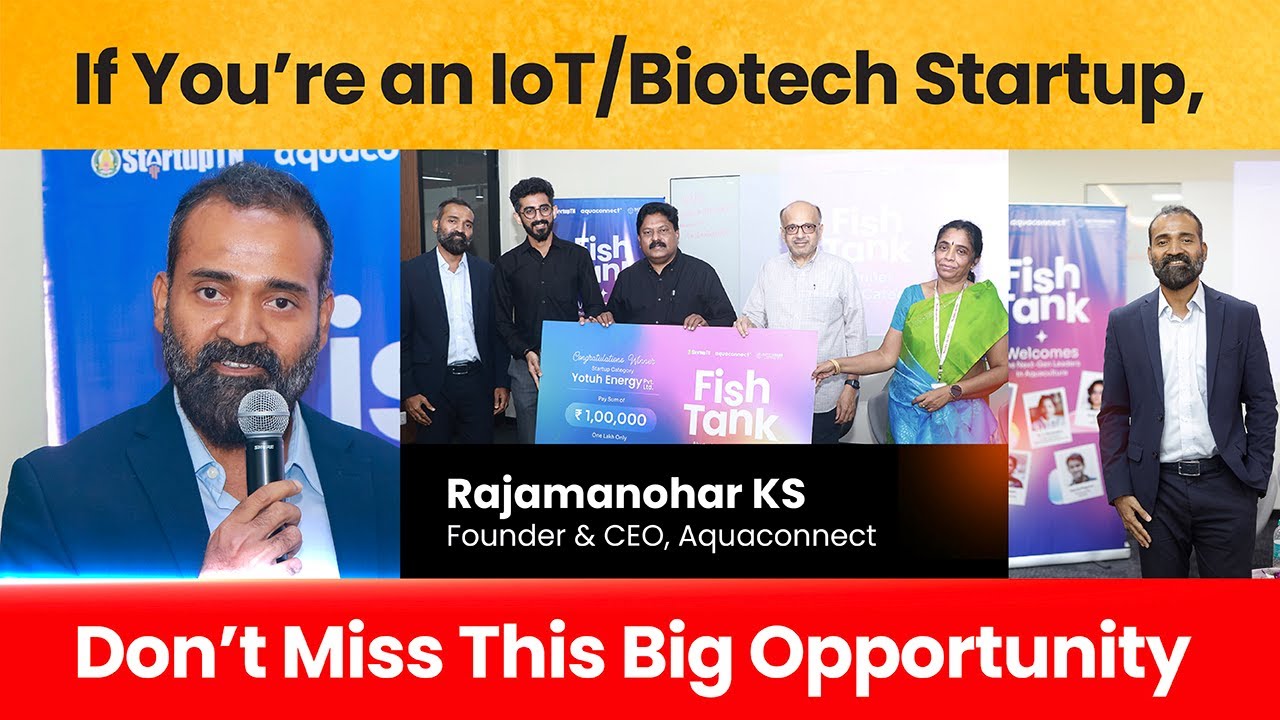
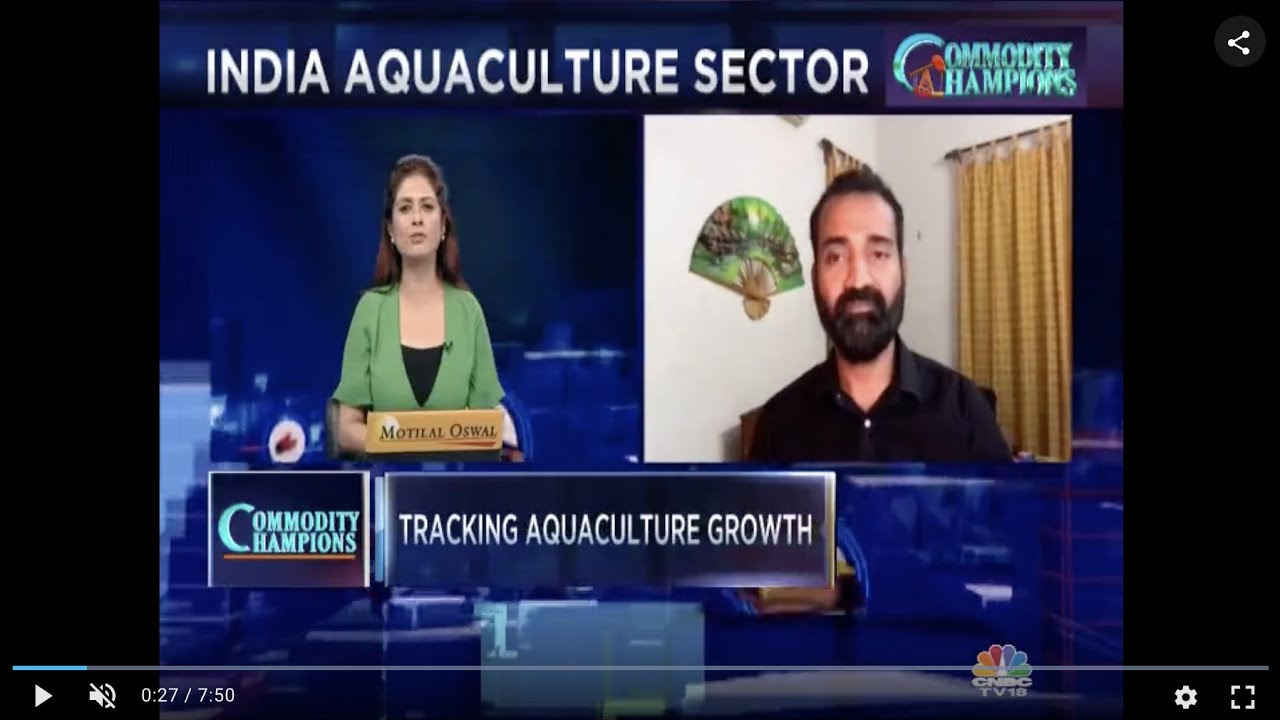
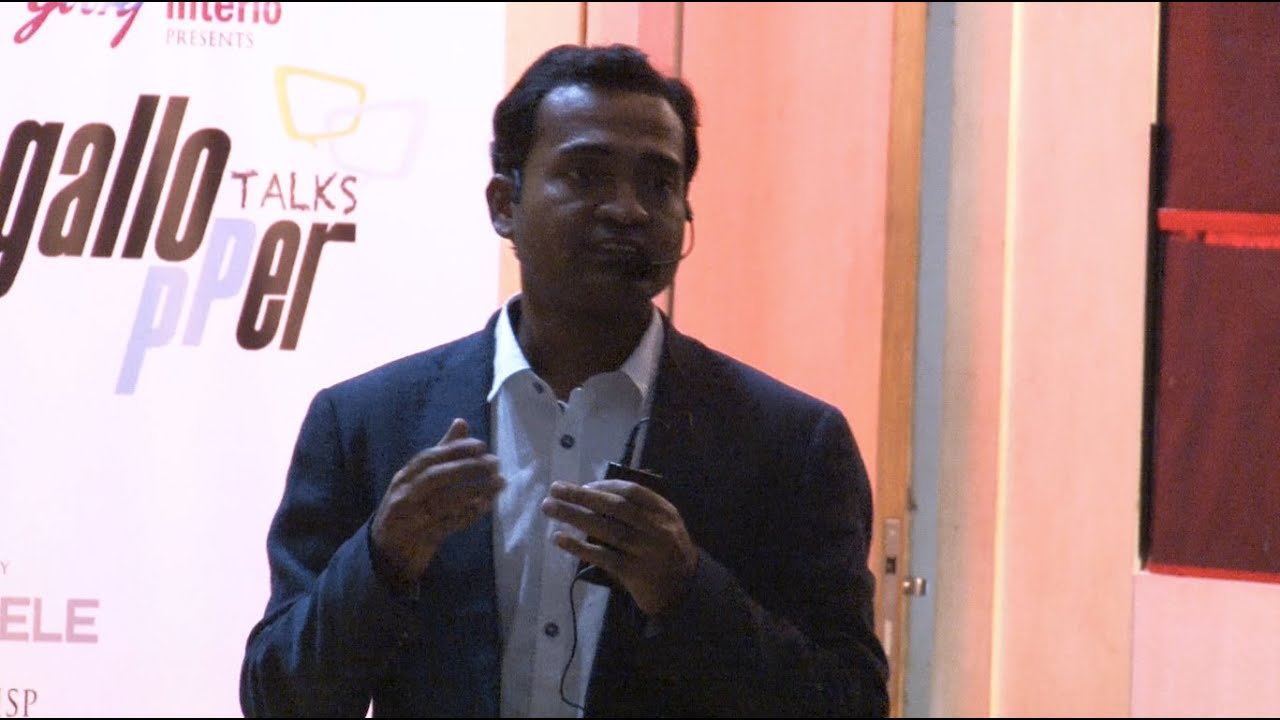
Rajamanohar, CEO of Aquaconnect, explains how AI can improve India's seafood value chain by helping farmers boost productivity and access markets. The company serves 90,000 farmers and uses geospatial imagery to avoid data bias. The biggest hurdle: farmers can't afford the technology, so Aquaconnect is building financing models to make it work.
Chapters
I want to just plant that seed for everyone, but then shift quickly to 3 folks who can speak to their direct experience. So Raj, Fabrizio, and Jeremy, I think the 3 of you could share a lot about how you've used AI, how you've turned to AI in your work, just to give us some examples, concrete examples of how AI can be leveraged to counterbalance the doom and gloom. What are the promising aspects of AI that we need to be keeping in mind? So maybe, Raj, we can start with you.
Thank you very much for having me here. And thank you, Urvashi, for setting the context here on usage of AI in the— You know, sort of like— so one of the popular quotes that I always say is, you can only control things when you can measure it. You can only control things when you can measure it. Okay, in my worldview, the biggest impediment for any development is lack of data and lack of data-driven decision-making capabilities. So talking about decision-making capability, AI is one of the tools that can help us make decisions better and efficient. So before I deep dive into the challenges of AI implementation that we have seen in the developing world context, I would like to give a brief about the work that we do in India. So I work with fish and shrimp farmers in India to improve the efficiency of the productivity, improve the market linkages, and get them access to formal capital. Right. And it doesn't stop there. And it further goes into improving the whole seafood traceability and improving— not— I'm not getting to improving, but I'm getting into measuring what is the kind of carbon footprint that's been used while production and then while it is kind of transferred to the consumer market.
Right.
So before we kind of get into the solutions, There are 3 challenges that we have in the developing world. The first one, as Urvashi had rightly mentioned, we haven't started to see the AI being at work yet, right? We are still at the data collection stage. So, there are a lot of challenges in the data collection itself because not everyone is holding the power of digital and they're not providing us the right information. So, the information that you're getting could be from one demography, right? So that demography may have negative impact on the learning abilities of that AI model that you are bringing up, right? So the first point here is understanding how effectively we can collect the data. And mostly in our way of work, we collect data from non-intrusive sources. We take geospatial imageries and then we make insights out of that. And that way, we are improving the lives of farmers as well as improving the whole value chain's sustainability as well, right? The point 2 is the tussle between AI versus AI. So when I say the first AI, it is ancestral intelligence. So there is a lot of knowledge that's available with certain demography. The second AI is artificial intelligence, right? So the way I would like to view this is to, you know, these two are complementary. So, one is the way you could combine them is through the right use of data collection methods. You need to be able to access multiple demographics so that you would be able to, you know, bring, you know, multiple stakeholders' participation. I'm talking about inclusivity here so that, like, we'd be able to get the right participation from all the stakeholders. And the third point is financing AI. So, we are talking about who is going to pay for the technology here. So, it's not often going to be the end user. In our circumstances, it is the farmers who are benefiting from these technologies, but most probably they may not be paying for these technologies. So, we need to be finding robust models to bring in, you know, to finance these technologies as well. So these are some of the challenges that we had been working on. So at this moment, we work with close to 90,000-odd farmers. And then to some extent, yes, there is a hope that we are bringing in here, Urvashi, through the limited datasets that we have. And then we do have also, you know, bringing some financial model around it so that we are providing incentives for the participants in this experiment. Thank you.