CIAC Conversations: A Conversation with Raj Somasundaram, Founder and CEO of Aquaconnect
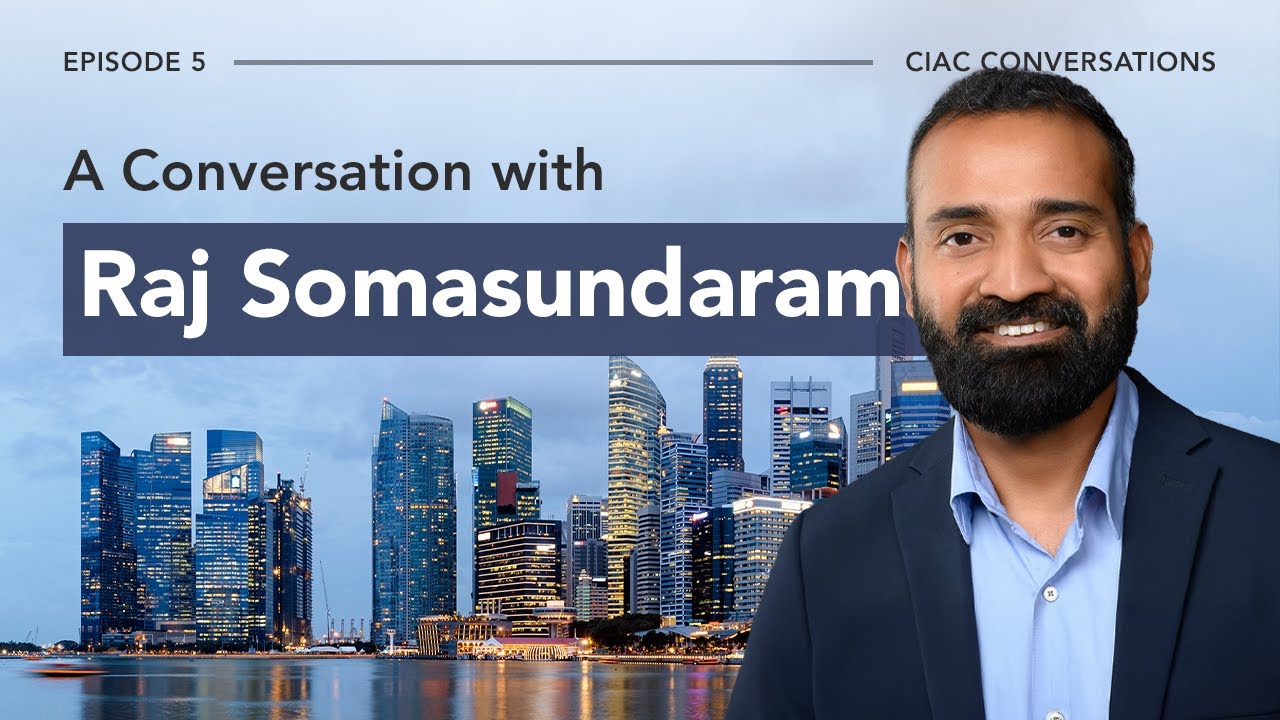
Raj Somasundaram built AquaConnect, an Indian startup using satellite imagery and AI to help small-holder shrimp and fish farmers track their operations and reach international buyers. The platform combines remote sensing with on-ground partners to monitor fragmented farms at low cost. AquaConnect has raised about $30 million and plans to expand globally.
Chapters
Hello and welcome to our latest APF Canada episode of Kayak Conversations, recorded on the sidelines of our annual Canada in Asia Conference in Singapore. Singapore in February. I'm Mike Roberts, the Asia-Pacific Foundation of Canada's Communications Director. In this episode, I'm joined by Raj Sumasundaram, the founder and CEO of India's AquaConnect, a full-stack aquaculture platform that leverages the power of AI and geospatial technologies to bring predictability to the aquaculture value chain. Raj is a tech entrepreneur with 2 decades of experience in developing internet and mobile technology-driven businesses. He's an He's an alumnus of IIT Kanpur and holds a diploma from Harvard University and a fellowship from Stanford. The World Economic Forum recognized him as one of the Young Global Leaders in 2012. His company, AquaConnect, operates in 7 Indian states, enabling market linkages for farmers, retailers, and seafood buyers to access formal credit, farm inputs, and post-harvest markets. Please enjoy this fascinating conversation with Raj Sumasundaram, exploring the intersection of new technologies Hello and welcome to Asia-Pacific Conversations.
This is a special subset of our regular programming. We are at CAIAC 2025, APF Canada's Canada in Asia 2025 conference. in sunny Singapore. And today in our traveling studio, I'm joined by Raj, who is the CEO of AQUAConnect. And he's going to tell us about his company and what it's doing in the space in India, but also globally, regionally, in the aquaculture market primarily. Welcome, Raj, to the studio.
Thank you, Michael, for inviting me, and glad to be here.
Excellent. So I'm going to dive right in. For our listeners who may not be familiar with AQUAConnect, Can you tell us a little bit about your company, what it does, who it serves, and what your ultimate mission and goal is?
Absolutely. AquaConnect is a full-stack aquaculture technology platform which works with multiple stakeholders in the aquaculture value chain. We are leveraging satellite remote sensing as well as artificial intelligence to improve the efficiency of the production as well as the overall value chain efficiency. And we're also expanding our use cases to bring traceability of the seafood industry.
So Raj, can you expand on what is meant by full-stack aquaculture tech platform? I mean, how high technology is being brought alongside traditional aquaculture through your company? And what are some of the results that you've seen so far? But maybe take us into that full-stack concept. What does it mean for your company? And how does it look on the ground? in the projects and in the regions and communities that you work?
Sure. When I say full-stack, it is end-to-end technology intervention that we do for the entire seafood value chain. So we work with the production base as well as consumption base. So at the production level, we work with the shrimp as well as fish producers. They are a large number of small and medium holding farmers. We provide them advisory, we provide them farm inputs, as well as we help them with the market intelligence. We connect their offtake with the market. So that's the kind of production level intervention that we have. So we use geospatial images as well as AI so that like we'd be able to have better insights into the value chain. We would be able to understand demand and supply prediction better. So this eventually helps all the stakeholders to improve the production efficiency as well as market intelligence. That's on the production level story. The other one is to connect the offtake to the international market. As the seafood value chain is growing, people are looking at traceability as an important So since we are deeply working with the production value chain, it is helping us to bring traceability to the product that we are connecting with the international market.
So can I unpack that a little bit? By traceability, you mean end product consumers are mindful of the traceability of the product. So are they looking here at sustainability or good practices? Is that what you mean here by traceability, or is it more on the data side? and the efficiencies of the value chain?
It's a bit of both, I would say, because the biggest challenge for development of any sector in the world is lack of data, right? So the moment you bring data, data can bring visibility. With this visibility, you can build predictability. And finally, you'd be able to, you know, understand the traceability better, right? So there are like side— if you sidestep that, there is a way you can could quantify the carbon emission that happens at the pond level, because you have been tracing and monitoring at the pond level. So this is actually helping to measure the sustainability of the farmed shrimp that is coming to your table as well.
Oh, excellent. Okay. So from visibility to traceability, interesting stuff. So we're talking about big technologies here. We're talking about artificial intelligence or AI. We're talking about geospatial tracking, which I assume involves satellites and that sort of technology. It must be hard to kind of scale this sort of technology or maybe reverse scale the smallholder farm landscape to kind of bring these technologies on board. How do you intersect these big concept tech pieces with, you know, someone who's running a community shrimp or fish output location in a rural community? Sure.
Sure, so we have a hybrid technology intervention model. We call it like boots on the farm and then eyes in the sky, right? So, what I believe is there is no single solution that can, you know, work with the smallholder farmers. So, it has to be a hybrid solution, right? So, that's when we latched on to geospatial images for the scalability. For an example, for a smallholding farmer, he has got a very short horizon for the return of investment. So, if you are asking him to, you know, put up a sensor in the water for him, he's going to say no, straight no, because of the affordability of that sensor as well as there is a learning curve associated with it. So, the way we work with the farmers are like, it's just that like let the farmers do their work on their regular course with the non-intrusive technologies. Like geospatial images, I have eyes in the sky. So, with this non-intrusive technology, I can scale to any geography. It need not be just, you know, India. The implications are beyond India as well, right. So, this is actually giving me a power to scale exponentially, whereas the hardware-based technologies have got its own, you know, impediments to scale.
Interesting. Okay, I like that— boots on the ground to eyes in the sky. So we're talking about hardware and software. Obviously, there's some uptake issues with hardware. There's an expense, there's a learning curve. What sort of software are you bringing to the table here? Is it kind of open-source software? Is it something that people can adapt to maybe tools they already have, maybe mobile phones or computers in their communities? How does that play out? piece match the software and the hardware?
So these are the pieces that are meant for the enablers, not for the end users like farmers, right? So as I told you, like, the farmers are given advices through our community engagement leaders who are our Aqua partners. So the tools that are developed are for the Aqua partners as well as the Aqua Connect team members, right? So with these tools, we understand the demand and supply better. And we have better insights into the farm operations. So this is helping the Aqua partners to provide better advisory to the farmers. So at the end of the day, I believe it is the person-to-person, face-to-face interaction that matters a lot in these, you know, emerging economies. And the places where we are serving are rural parts of India. So the face-to-face interaction is a must to, you know, engage with the farmers.
Excellent. Okay, so as you mentioned, Aqua Connect works with retailers, with farmers, with distributors, really everyone along the supply chain from the pool or the river to your plate and your fork sort of thing. So I just wanted to get back a little bit into the sustainability piece and the community-based model that you're kind of positioning your organization around. So when it comes to sustainability and supply chain efficiency, where do you see that going in the next 5, 10 years? Because there's a lot of talk out there right now about some of the negative aspects of big data, who owns it, who has access to it. Also AI, will it go rogue and use this stuff for its own purposes? I'm being a little bit histrionic, but you know what I mean. So how does the future of this model look to you from where you sit now, 5, 10 years out? And what do you think the benefits will be, not just for the folks that are the producers, but the end users as well?
Like, if I may walk through my memory lane, like 8 years ago, we started— I mean, the term AI never occurred to us. We were talking about machine learning, right? So the simple use case that I had in my mind was if I had to put a sensor, I would be able to get better data collection that can be done through the farms. But it was expensive and the farmers were not willing to pay for it. And there was an improvement that was not possible. And then came the geospatial non-intervention idea wherein like I first wanted to identify which one is a regular pond and which one is an aquaculture pond, right. So, the quest started with like identifying the pond boundaries, right. And then we went on and then we went on identifying whether it is an active aquaculture pond then what kind of species that could be like grown, farmed there, right? Whether it's a shrimp or fish, and when possibly this farmer could go for harvesting. So these were the insights that we would like to understand from the sky, and partially we were successful about it, right? With the improving, ever-growing AI LLMs right now, so had you asked this question a year ago, I would have answered it differently. After ChatGPT, I slightly had a different tone in my answers. And after this DeepSeek and then ever-growing new LLMs coming into the market, I do see more positives than negatives. Of course, like, people have been, like, cautious about adopting AI in many use cases. But here, what I see here is there could be a lot of potential in terms of genomics, fish genomics, as well as other aquaculture-based species genomics. And there could be improvement in terms of automating the advisories, right. So finally, the traceability enforcement can happen, and then the authentication of the traceability can also be automated, right. So these are the potential positive use cases that I see around. And of course, we may have to have debate on the ownership of the data and who is making sense of it, how well that can be balanced for the good of all the stakeholders.
Excellent. Good stuff. Well, I know you've got some serious cachet in the tech entrepreneurship space. You were recognized as a Young Global Leader in 2012 by the World Economic Forum for work on an earlier project you were doing called Mobile for Good. That really sort of helped you leap forward in your career. So, you've got this cachet, you've got this awesome company doing these very cool things with emergent tech and integrating it at the community level. I just wanted to ask you a little bit about what you thought was the kind of next phase for your company when it comes to Bringing in public and private funding. Where do you go for money to expand your company? What does that kind of look like from a funding position, or an investment position, should I say?
See, I've always ran a profit company, for-profit companies, right? So I had always gone in for private funding, and Aqua Connect is venture-backed by international venture capitalists. We have raised close to $30 million so far, and we will continue to go into the private market to raise more money as we expand our services in the international markets. Like, we are now foraying into aquaculture biologicals, wherein, like, we are earmarking about $4 or $5 million commitment for aquaculture biological research. So that's one way we are thinking that we would be able to change the status go on animal nutrition and animal welfare side of the business. And we are also expanding into international market for the offtake, like whatever that we are taking it from the farmers, like we are now looking at connecting the global markets to India, and traceability becomes one of the centerpiece Excellent.
Here at our Canada in Asia Conference 2025, one of the underpinning themes is the connection of Asian and Canadian entrepreneurs, innovators, researchers, businesses, thinkers, thought leaders, etc. I— you are probably aware that Canada has something of an aquaculture sector of its own on, on both coasts. On the West Coast where I live, Aquaculture is seeing a pivot to fish farms, both in the ocean, in the water column offshore, but also land-based fish farm. We're also looking at the effects of pollution and such on our rivers, on our spawning fish. Have you met or spoken with anyone from Canada or anyone that's from even North America where they are looking at you and your technology with a potential application in in the North American and specifically Canadian market?
Sure. So let me highlight that, like, I'm a strong believer of one solution doesn't fit all, right? So the geography is different, the demography is different, and thus the solutions would have different, you know, nuances towards it, right? So we have large numbers of small and medium holding farmers, whereas, like, North America would have a consolidated vertically integrated aquaculture production systems, right. So, the systems that we have developed are largely focused into emerging markets. And so, those kind of business, while the technologies can be applied in different forms and shape in North America, but these solutions come with the context, right. So, with this context, I do believe with the same shape and form, it won't be serving any different market. But I'm hopeful that the technology, you know, cooperations can, you know, lead to viable prospects.
Excellent. Good answer. I look forward to us being then an end user of your company in the sense that the shrimp and fish will find their way to our markets in Canada. Fantastic. I wanted to ask you about something that popped up when I was doing a little research on your background, Raj. And it was something interesting that I wasn't aware of, that Aqua Connect was actually featured in the 2nd season of the Disney startup series, The Great Indian Disruptors. Can you give us a little plug for that project? And I know your company was involved. What was that like? How did it help your cause, so to speak? And what it means to provide platforms to young startups who may be watching these sort of series, particularly with— from the Indian disruptors perspective?
Absolutely. So we were like really, really in— it was an incredible program and we were really happy to be part of that and featured as an emerging startup. So India as a whole, like after Israel, it's now the startup nation in the world, I would say. Like 10 years ago, like I haven't heard this kind of an enthusiasm among the youngsters, but now I do see that like More than going to a job, people would like to open up a startup, right? So this one program is also encouraging folks like the wannabe startups to kind of, you know, gather some inspiration from the other startups who have been doing a good job, right? So that way they reached out to us. And then as I told you, like we were really, really fortunate to be part of that cohort. And it did bring us some visibility because fishery as a sector in India has never received this kind of an importance, right. So, there was a need inherent need for us to reach out to the common public and it actually appeared on OTT, it is still available for the masses. I am sure like there were like more than a million views that our episode alone has received. So it was an incredible opportunity.
That sounds like a lot of fun. It sounds fantastic too. Before we sign off today, Raj, I wanted to turn back to our Canada in Asia conference, CAIAC 2025, here in Singapore. You've been on a panel. You've been— I've seen you around the conference floor. You've been attending sessions. Can you tell me what was the most interesting session maybe that you've attended, or maybe one of the most interesting kind of themes that you latched onto and followed through the conference as it progressed in Singapore? Singapore over the past 3 days? And what are you going to be taking away from this experience in relation to cooperation between Canada and India moving forward?
So I was in a number of sessions, particularly 2 sessions stood out for me because one was on the agri-finance, like what are the new instruments that people are looking at to finance the agritech sector? And the other one is, of course, the blue economy theme. So I see there is plenty of synergy between Canada as well as the Asian actors here. So since I look at things from the startup lens, I see that there is plenty of opportunities for startups to collaborate in the blue economy theme. I see Canada has developed certain technologies that can be put into use in the Asian demographic, right? With the right kind of, you know, technology and the price points, they should be able to, you know, find markets in Asia, as well as the Asian startups now are gearing up for you know, space and automation. So these are the knowledge sharings that can be done in the long run. So I think Canada in Asia program has brought these actors together and, you know, find the synergies.
Fantastic. Well, I'm glad to hear that you've been able to find those takeaways. And of course, you know, you mentioned Canada-India, Canada-Asia. There are differences, you know, the geography, the different culture around business and corporate control and such and so forth. But also there are those synergies, there are those opportunities, there are those gaps, particularly for small, for the emerging startup tech companies. So I think just fantastic. So I appreciate you taking the time, Raj, to appear on our podcast episode today. I hope you enjoy the rest of Canada in Asia Conference 2025, and I wish you the best of luck with Aqua Connect in your future endeavors.
Thank you so much for hosting us.
Thank you for listening to our latest episode of Kayak Conversations. For more of APF Canada's work and podcasts, please visit us online at www.asiapacific.ca. Until next time, thank you for listening. Thank you.
More from Rajamanohar
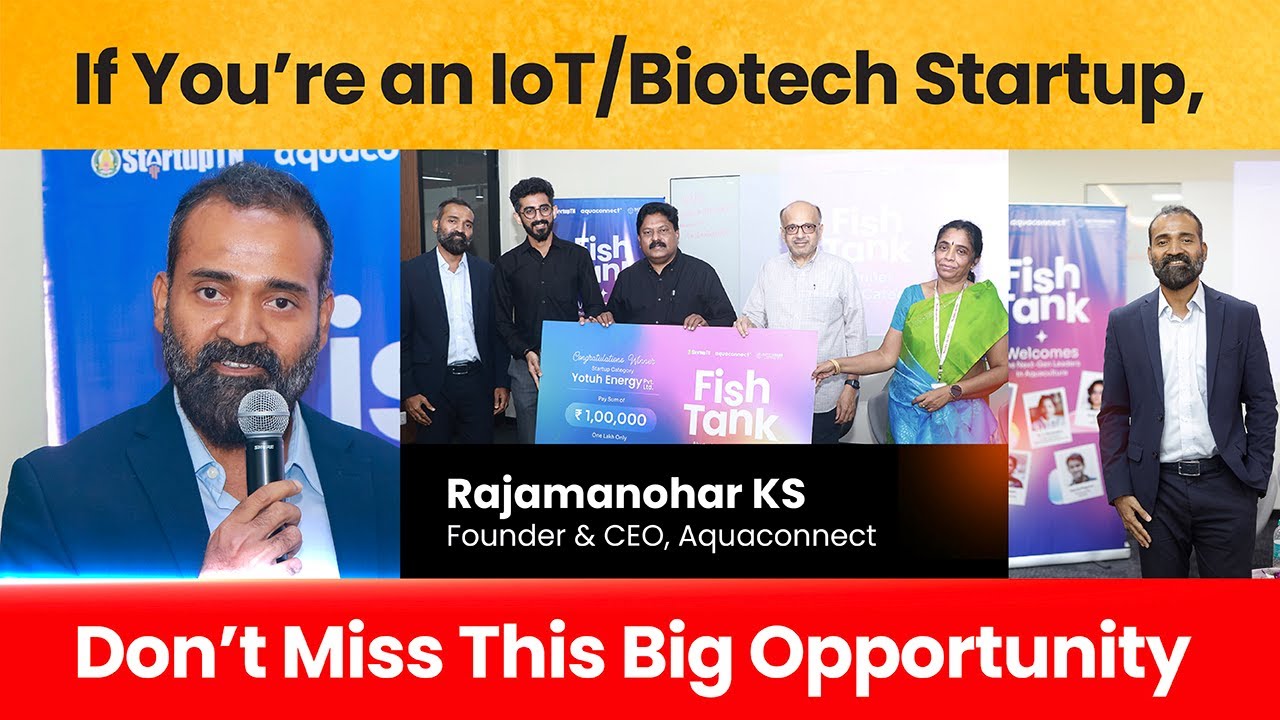

Aquaconnect raises $15 million in #SeriesA amid funding winter. Rajamanohar, CEO shares future plans

Aquaconnect's Rajamanohar Somasundaram Exclusive On The Outlook For India Aquaculture Market

How can AI help transform the seafood value chain? | Rajamanohar, CEO-Aquaconnect
EP 166 : Streamlining Fish & Shrimp Farming - Rajamanohar, Founder & CEO - Aquaconnect
Rajamanohar Somasundaram - CNBC interview on Aquaculture sector's Challenges and opportunities