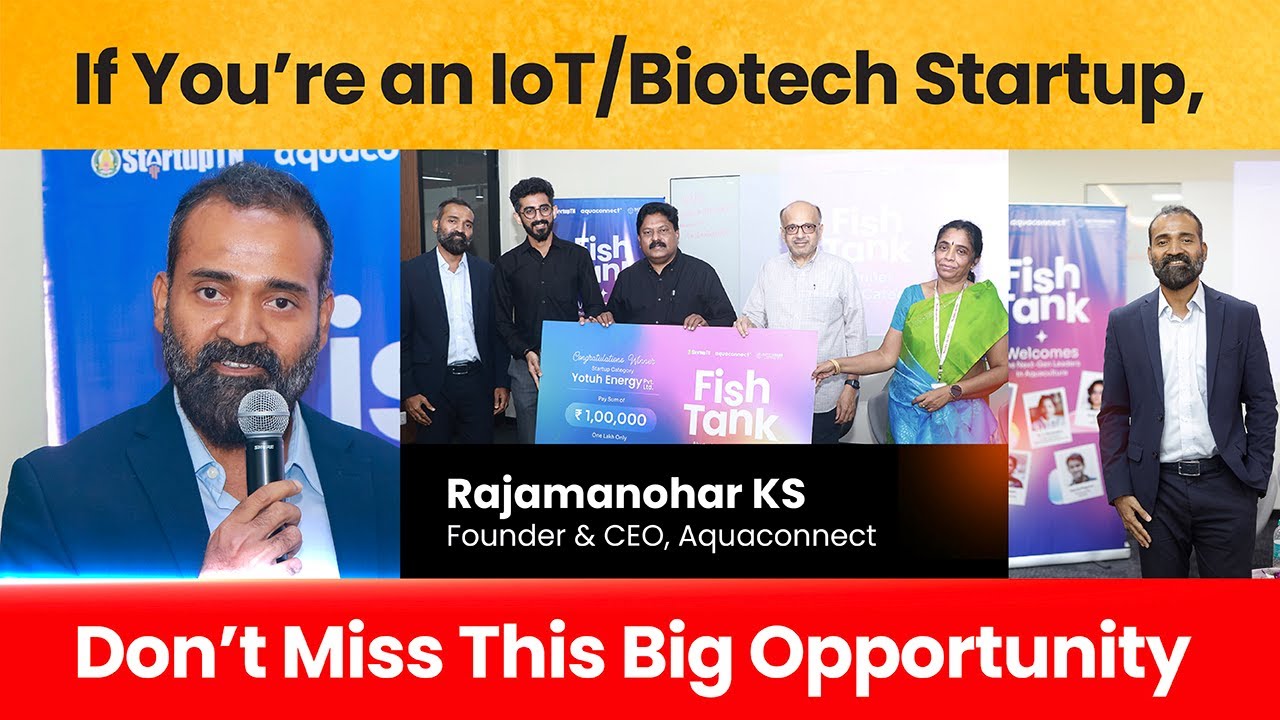
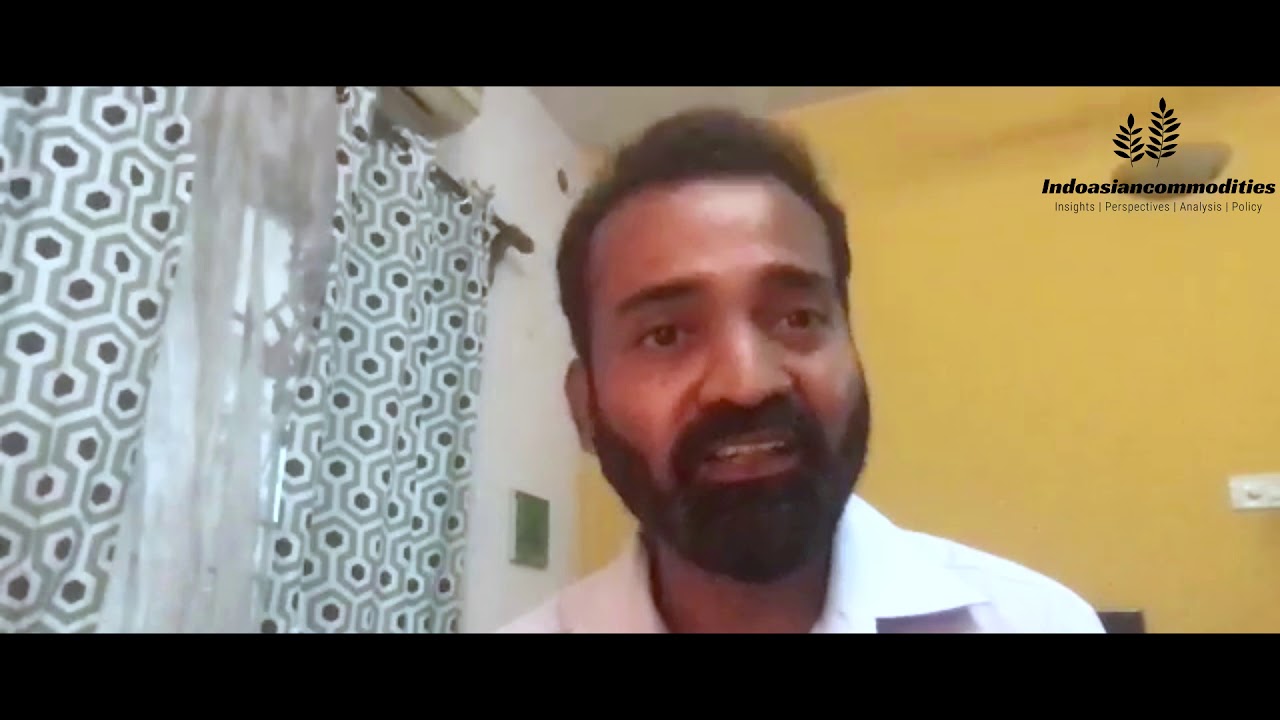
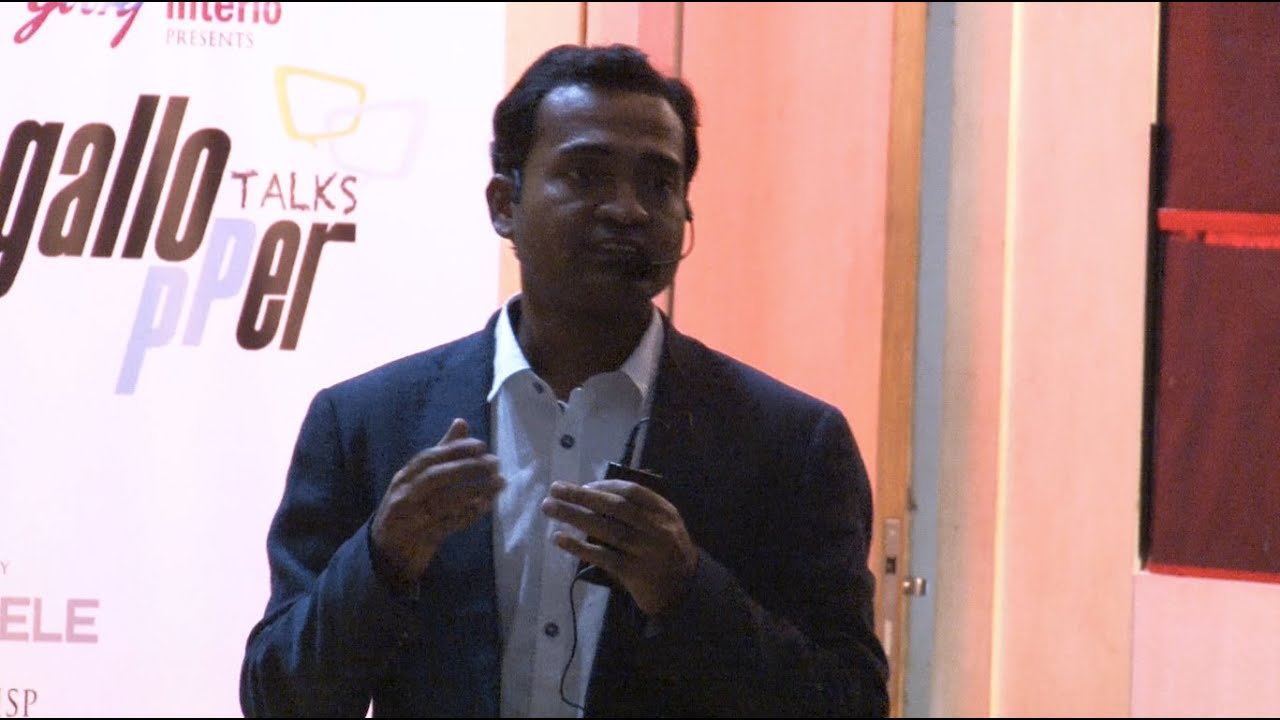
In his closing address at the Fish Tank Finale, Rajamanohar, Founder & CEO of AquaConnect, thanks partners, jurors, and collaborators before reflecting on the evolution of India’s aquaculture startup ecosystem. He recounts how an accidental meeting with a farmer in 2017 led to the founding of AquaConnect, at a time when only one other aquaculture startup existed. By 2023, the Fish Tank program received 217 applications, evidencing rapid sector growth. Drawing parallels to the early software industry, he explains the program’s purpose: to deliberately construct an aquaculture industry by creating “railroads” – a distribution network linking roughly 50,000 farmers and 700 rural retailers. He outlines the sector’s diverse subsectors (marine, land‑based, biotechnology, processing, logistics) and the unique challenges of scaling agri‑manufacturing ventures compared to software. Emphasizing collaboration, he invites startups, academia, and government bodies to plug into the existing value‑chain infrastructure, encouraging cross‑industry participation (e.g., clean‑tech) and mutual support. The speech concludes with a call to sustain and expand this collaborative platform annually.
Chapters
Thank you everyone for coming and raising this event. I firstly thank Mr. Subrata for his support, and he has been an inspiration for all of us in putting up this, you know, Fish Tank program together. First of all, thank you, sir. And I thank the industry partner, Sathyabama University team, Dr. Shaila and your team has been really, really supportive of putting this program together. Yes. I thank the jurors for, you know, bringing the insights into evaluating the applications that we have received. See, firstly, I was really surprised to receive about 217 applications. I was never, never imagining that like there are so many aquaculture-related startups in India, right. So that was one thing that surprised me because I tell you, we started this company in the month of April 2017, right. So when I came into this industry, I came into this industry accidentally. So I saw a farmer in a serendipitous meeting, that's when I got introduced to aquaculture. And that's how we kind of, you know, came into this sector and that's my introduction to aquaculture, right. So when I was researching this sector, there were just— there was just one another startup that was into aquaculture in 2017 when you had, you know, 10,000-20,000 startups that are working in IT, IT services. So that's the state of affairs in 2017. Fast forward 2023, we had about 217 applications. So we have to give it up to all the entrepreneurs who are, you know, participating in this value chain. So when we floated this program, Vishthan, people asked us like, why, right? So in Tamil, there is a saying, thani marum topagadhe, right? So that essentially means that we would like to create an industry, right? So there is an agenda for us also, like we will also be getting benefited. So when software industries were, you know, as an industry, software never started as an industry. There were like 2 or 3 entrepreneurs who started, you know, Infosys, TCS, and this kind of Wipro kind of an organization. Slowly this has become an industry. Right. So with fish tank kind of initiatives, what we are trying to do is we are trying to build an industry together, right. So we painstakingly created the railroads. They say like, when I said like there were only 2 startups, one us and there was one more startup. And now we see that like there are plenty of startups that are coming into this sector, right. So when I talk about aquaculture, aquaculture has got many, you know, subsectors as well. Right, so we are talking about marine aquaculture, we're talking about land-based aquaculture. In the aquaculture value chain, there is a production value chain, there is behind that, there is a biotechnology innovation value chain. On the other side, we have got like food processing, exports, logistics. So there is plenty of opportunities, right. So when people from outside, when they look at us, oh, are you an IoT startup? Are you doing this? That? What I see here is There is plenty of opportunity. And as an aquaculture startup, what we are trying to do here is we are trying to build an industry, right, with the right support from the government, like startup team and the academia. So this is how we'll be able to, you know, build an industry. And also, I'll tell you what other problems that I had when we started, right. So unlike the IT startups, Or the software startups. You cannot start anything in the manufacturing or such kind of, you know, agro industry that like in one room I'll just take, you know, 4 tables and 4 computers and I'm kind of gonna transform this whole industry. I'll create a TikTok, I'll create a LinkedIn, I'll create this. So this is not going to be possible, right? So as Mr. Santana has rightly pointed out, you've got to be on the ground, you've got to talk to different stakeholders. Their life is completely different, they speak different languages. Right? They may have finances, they may not have finances. So there are plenty of challenges, and when there are plenty of challenges, I see there are plenty of opportunities as well. So those opportunities cannot be just leveraged by one study, right? So this needs to be an industry. So what we are trying to do with the support of government and the other academia is to create an industry. We are creating the railroads. With the railroads, let's say like we have been working with about 50,000-odd farmers and then about 700 other retailers who are present in the nooks and corners of Indian rural India, right, rural villages. So this gives a huge distribution opportunity for us to take your technology and plug and play it in any farm. So you don't have to painstakingly develop all these railroads, railroads have already been built with startups like us. I'm not just claiming Aqua Connect, I'm just claiming whoever has built in this kind of a market value chain, right? So there is a benefit for any new startup or a student who is innovating a new technology can talk to us or similar startups who have got a value chain railroad. So they'll be able to plug and play. So we wanted to invite startups to collaborate with us or with our similar nature companies as well, so that they will be able to speed up their market reach out, right? So that's one idea why we had initiated this program. And I just want to thank Mr. Gautam from your team, sir. He was an ex-startup student, so he tremendously collaborated with my team to be able to come up with this program. So I really thank him for his contribution on this event. And this is a start, I would say. I'm looking forward to participate, collaborate with Startup TN and other academic institutions as well to be able to bring this program every year and invite new startups that they will be able to have a kind of affinity towards this industry. Even though if you are working from a different industry, let's say like you are into the clean tech, water clean tech industry, but you would like to, you know, engage with aquaculture industry. So this could be one of the platforms where you can, you know, come and start working with us and the fellow startups as well, right? So that is the whole intent of putting this program together. I sincerely welcome you all to this the new world that we have created. And I look forward to be, you know, collaborating and also invite helping each other. It's not that like we are there and then the new startups, they have to seek help, but we would also seek help from them. So it's a truly collaborative platform that we would like to create with the help of StartupTN and other academia. So thank you so much. Thank you.