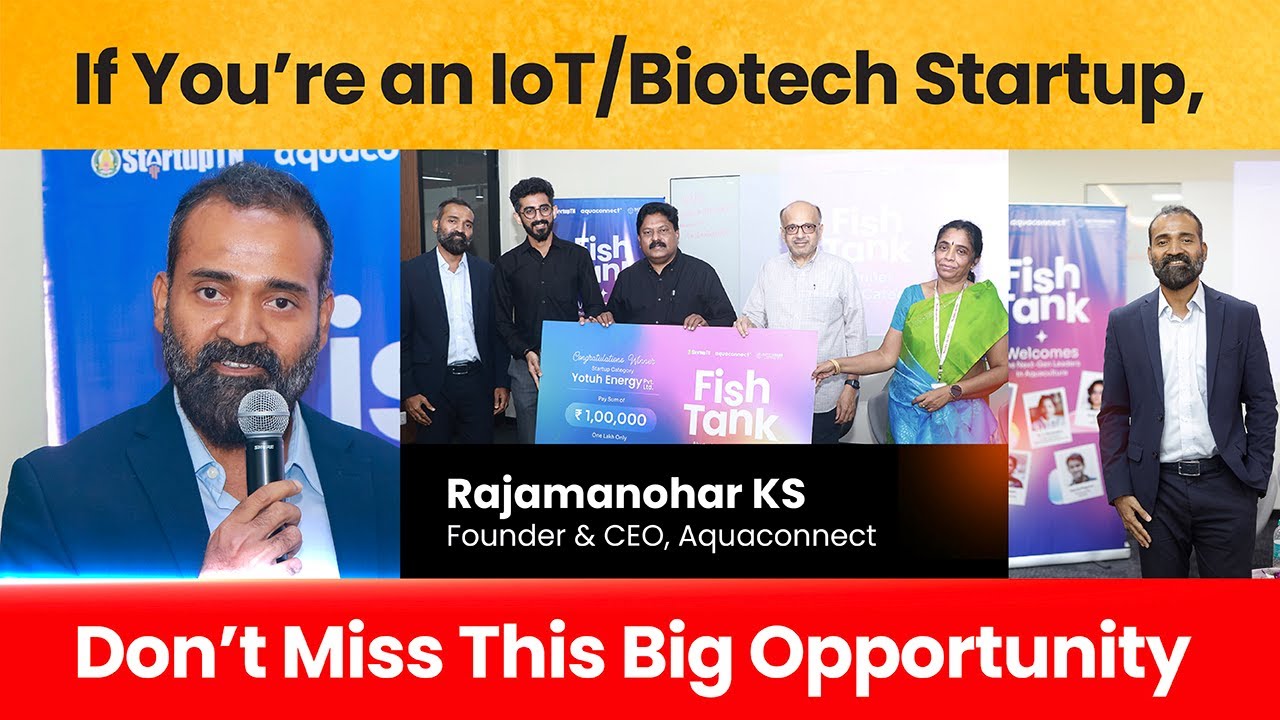
In this interview, Appan asks Rajamanohar Somasundaram, CEO of AquaConnect, about the challenges of lending to Indian aquaculture farmers and how technology can address them. Raj identifies the core barrier as a lack of reliable data, which makes banks and insurers reluctant to finance the sector despite a $17 billion opportunity. He explains that real‑time farm monitoring through IoT, satellite remote sensing, GIS, and machine‑learning analytics can generate trustworthy production data, enabling banks to create credit and risk scores for farmers. AquaConnect’s Aqua Connect app aggregates these data, while its AquaCredit solution offers a risk‑management platform for financial institutions, including asset monitoring capabilities. Raj also notes the cost of technology adoption as a hurdle, which AquaConnect tackles through business‑process innovations such as ground agents (“runner boys”) who collect water samples and act as the banks’ eyes on the field. The overall message is that data‑driven tech can unlock institutional credit for small and marginal aquaculture producers.
Chapters
Raj, I would like to now move on to you, and I'll now lead with some specific questions, starting with you. I mean, India has done well in terms of aquaculture. However, there are still challenges. One of the major ones being that despite the fact that there is almost, I mean, no formal finance channels available, we have been able to do well. So what do you think are inherent challenges in lending in aquaculture to agriculture farmers, and can technology intervention help resolve this? Over to you.
Thank you, Appan. I always, you know, start with this. The biggest impediment for any sectoral development is lack of data. And lack of data-driven decision-making capability. So while it is a $17 billion financing opportunity, the Indian banks, financial institutions, and the insurance players are staying away from this sector. The reason is, the culprit is, we do not have, they do not have the data, and the farmers are not able to make use of their data and leverage it for getting it for financing. So So this is where technology plays a major role. So the moment you have data, this data could do wonders for them, right? So the real-time farm monitoring solutions using IoT, satellite remote sensing analytics shall provide reliable data points on production. So we can, you know, say with confidence that this farmer has been performing aquafarming for the past 5 years. And right now he is at the, you know, 4th week of his culture in this pond. So I can say this with confidence using the satellite remote sensing analytics. And also this has to be sandwiched with people on the— I mean, with the efforts of people on the ground. And we have an application, Aqua Connect app, which is also, you know, put together all this data, it can make a lot of sense to the banks and other financial institutions. So So this data shall help banks to create credit scores, risk scores for the farmers. Now the banks shall have better transparency on the production and offer credit products to the farmers based on their creditworthiness. So one of the major challenges would be the cost of adoption of such technologies. So startups like us are working on business process innovation that would make the technology affordable. So now, as you would know, like we are using the runner boys on the ground to collect the water sample, to deliver the, you know, orders that we have received for the imports. And they are also acting as eyes and like hands of, you know, these big banks. So they would be able to now offer loans based on the data that they are getting it from various resources. So at AquaConnect, we are now working on an aquaculture risk management solution for banks. So this is called AquaCredit. So AquaCred offers risk management solution to BFSI stakeholders to improve the underwriting, and also we'll be able to help them asset monitoring, you know, build asset monitoring capabilities through GIS, remote sensing, other machine learning technology frameworks. So our offering shall boost institutional credit access by making the loan available process smoother and accessible to small and marginal farmers. So that would be my comment on, you know, how we could— how technology could enable credits for this sector, which is really, really needing that kind of an instrument to sustain. Thank you.